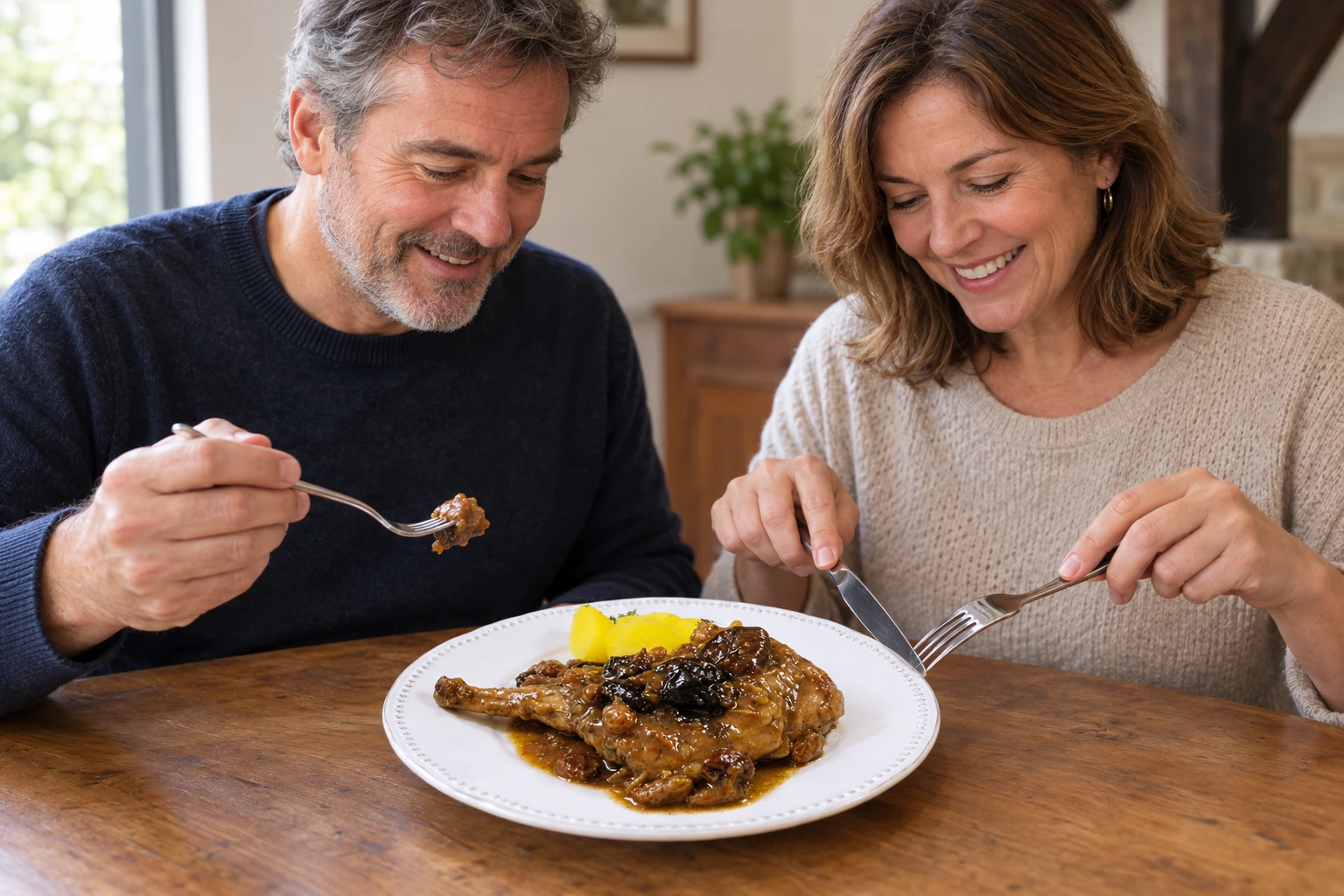
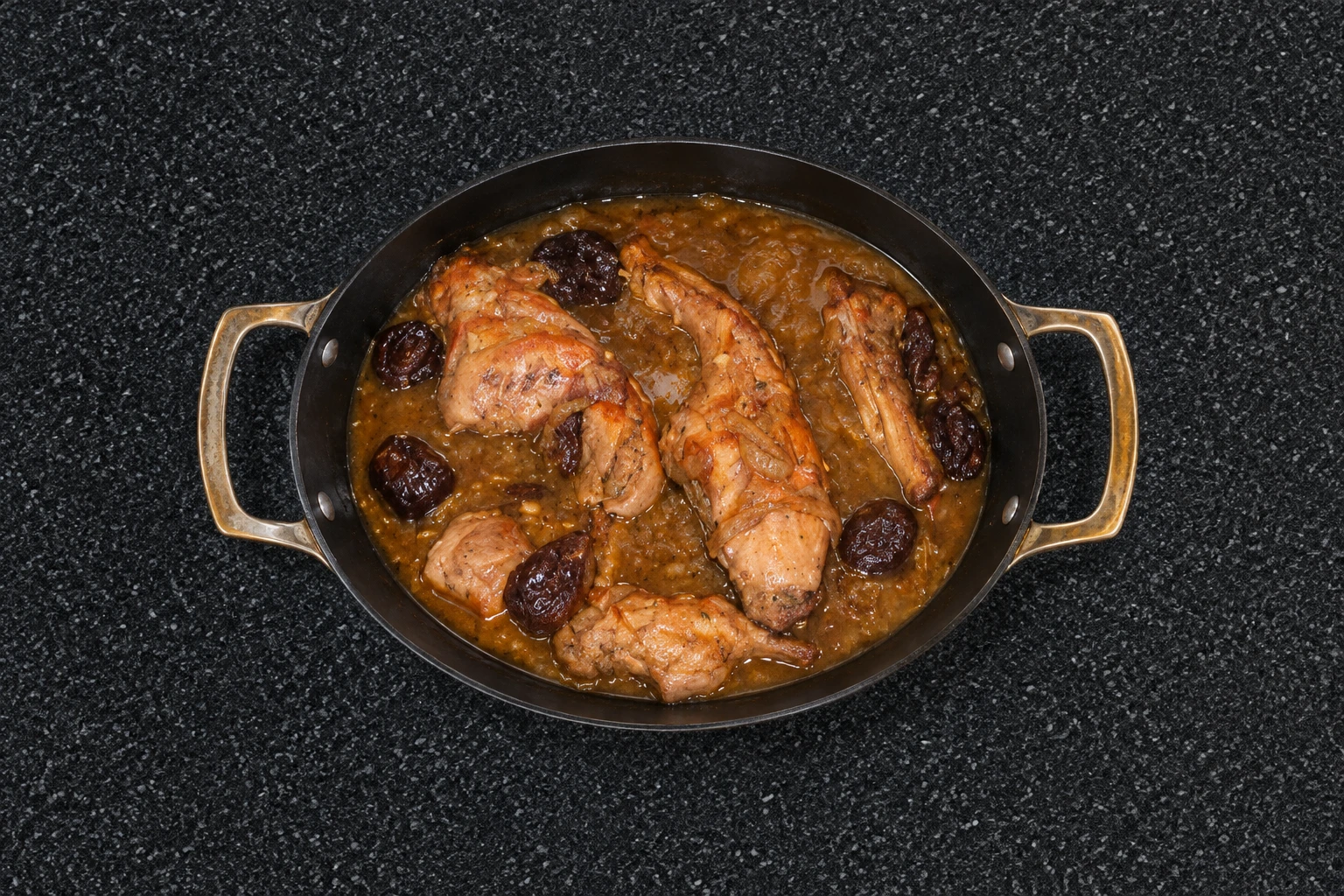
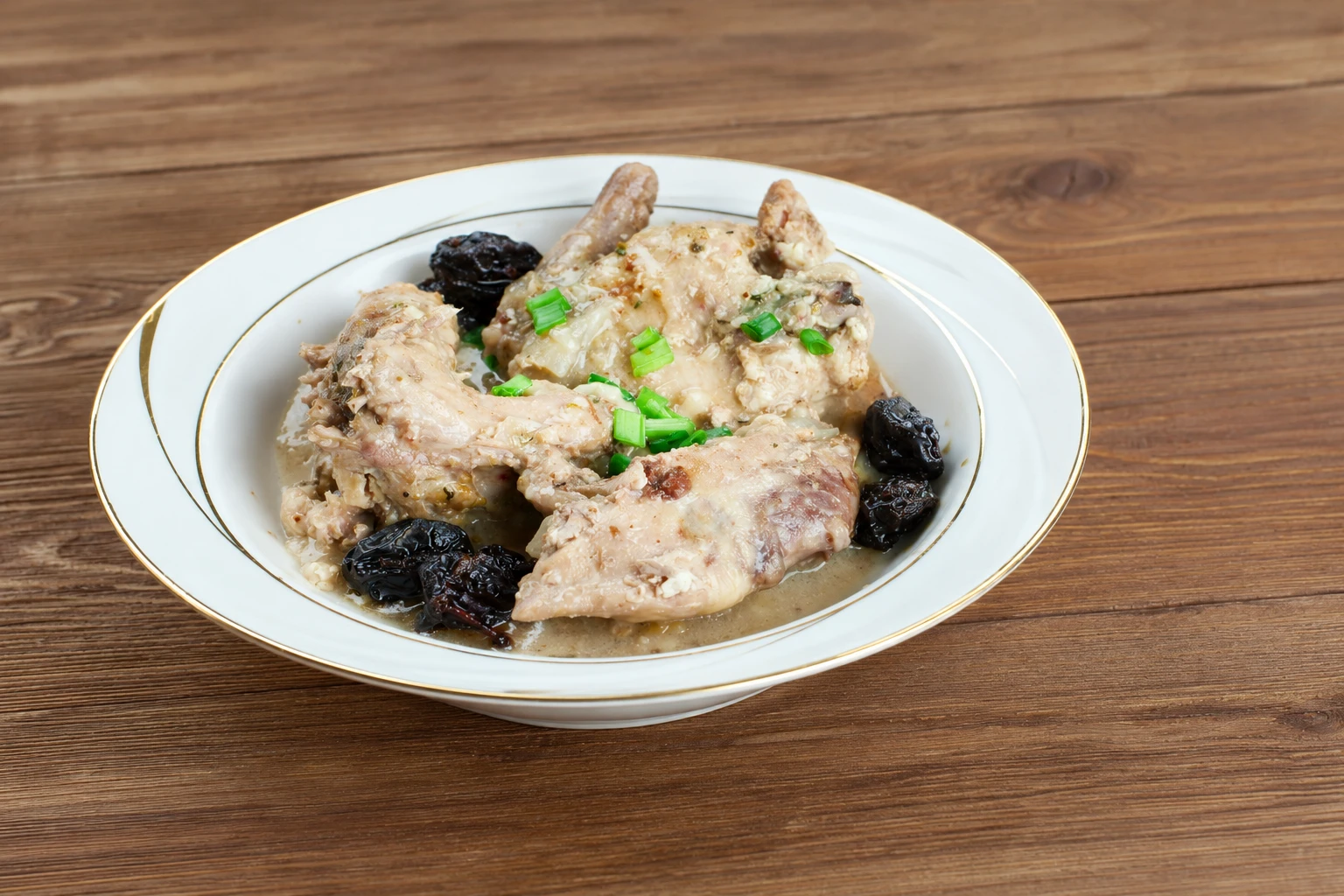
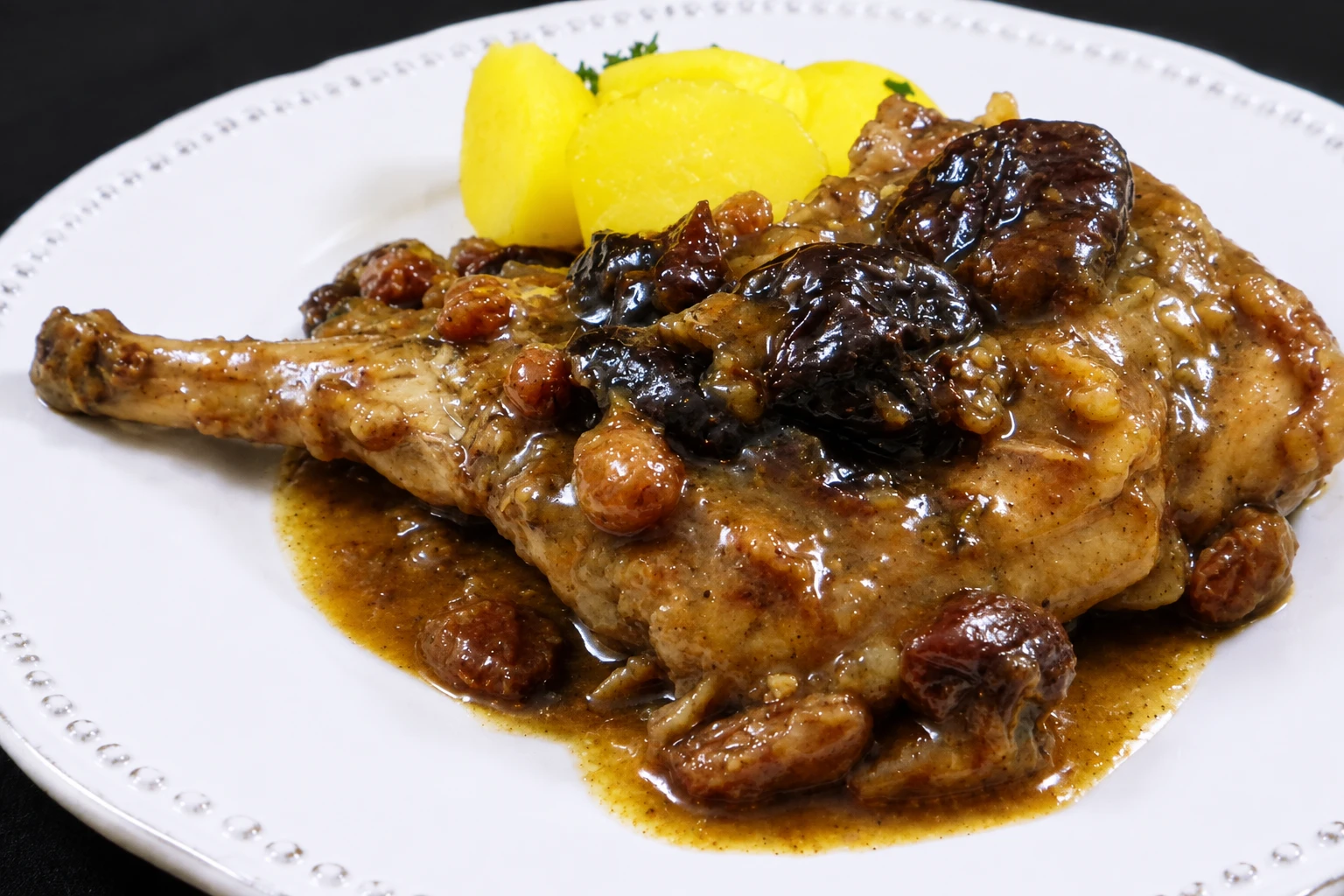
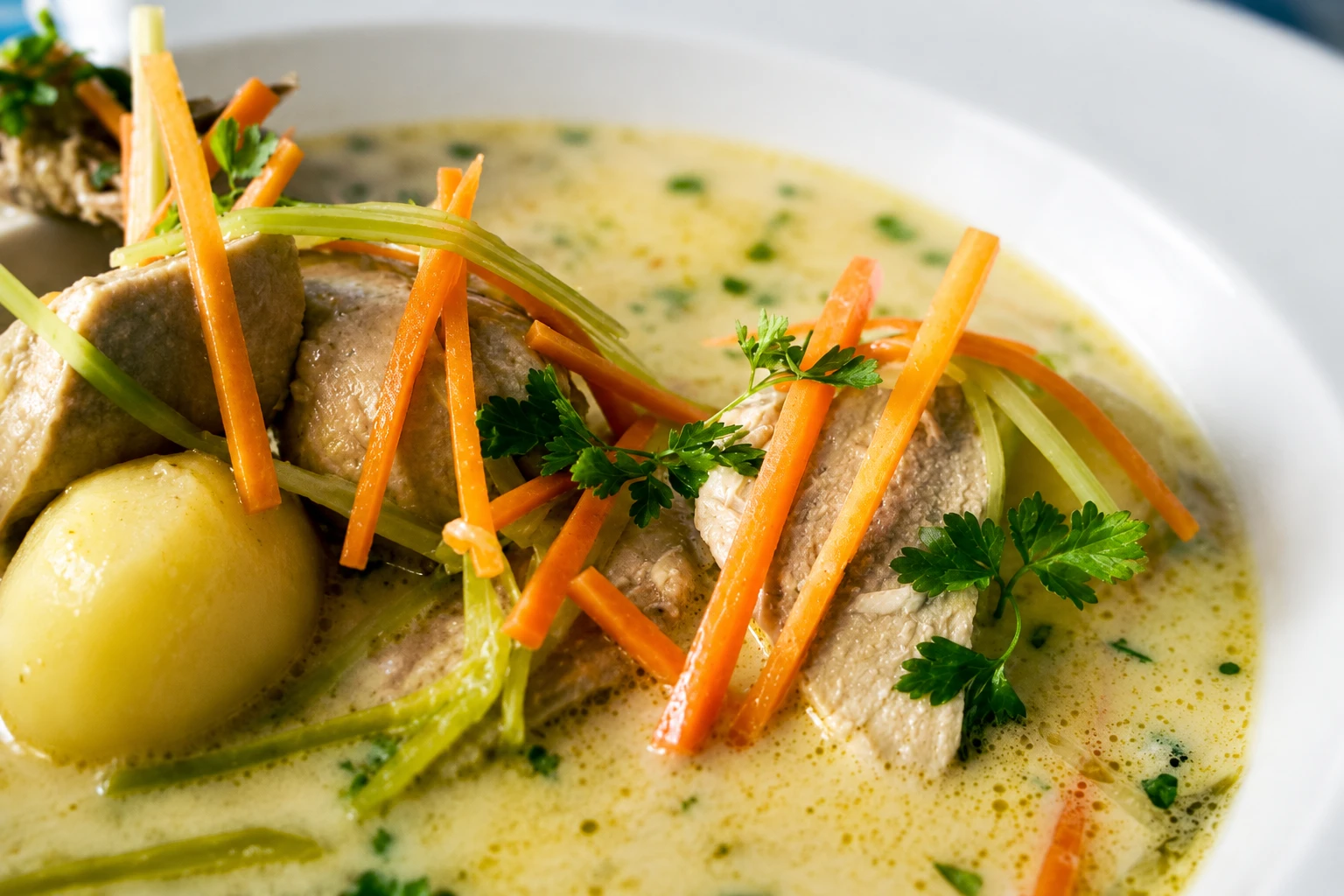
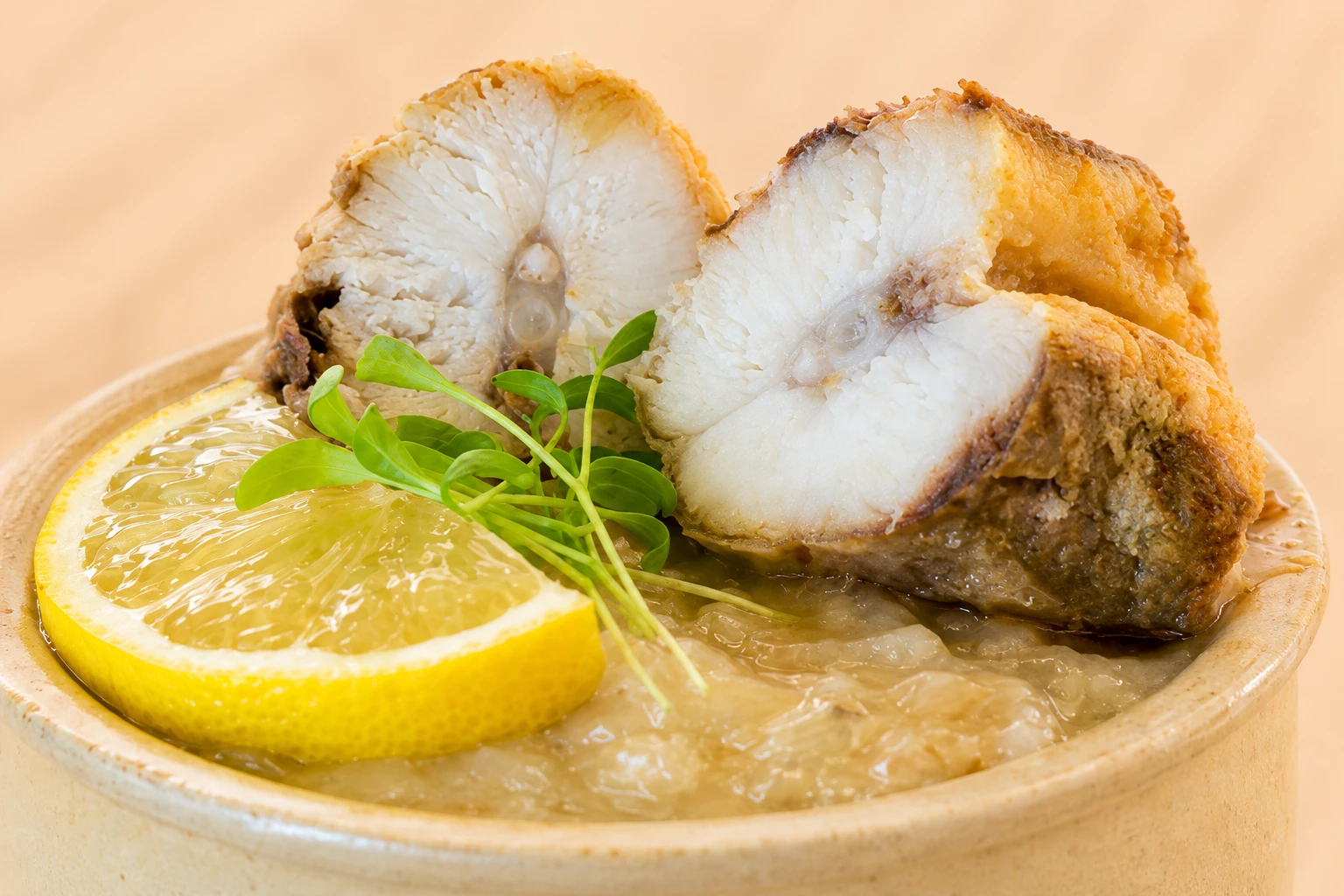
Lapin à la tournaisienne is rabbit cut into pieces, browned in butter with onion and slowly simmered with thyme, bay leaf, a little vinegar and, in some recipes, brown sugar. At the end black plums and raisins are added, which make the sauce sweet-and-sour. It is served with boiled potatoes.
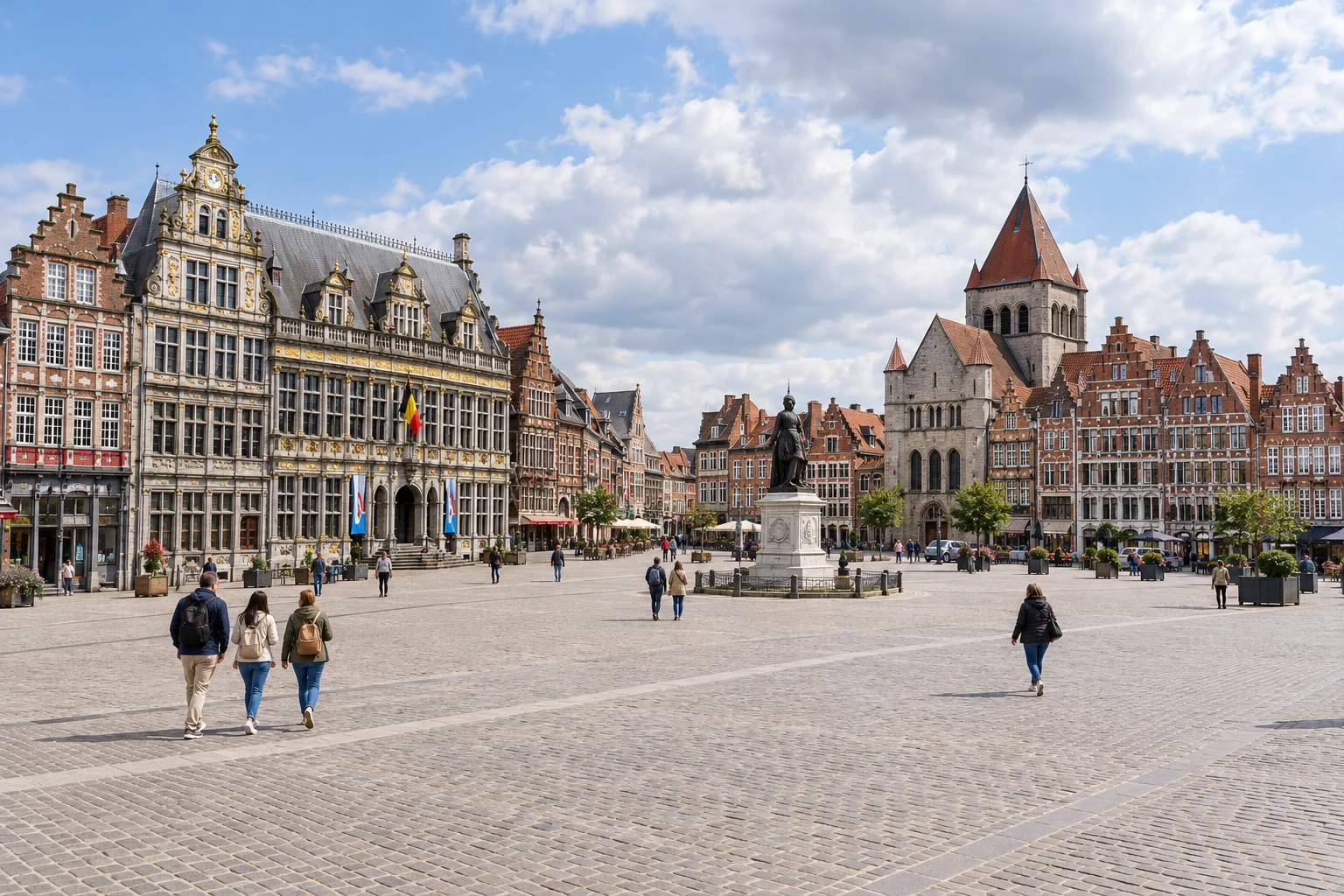
The dish is at the center of Lundi perdu, or lundi parjuré, the first Monday after Epiphany. In the past it was the day gifts from the year-end were distributed: the butcher gave sausage to good customers and workers received tips. The earliest written references to the custom date to the 13th century. In Tournai it is called the third réveillon.
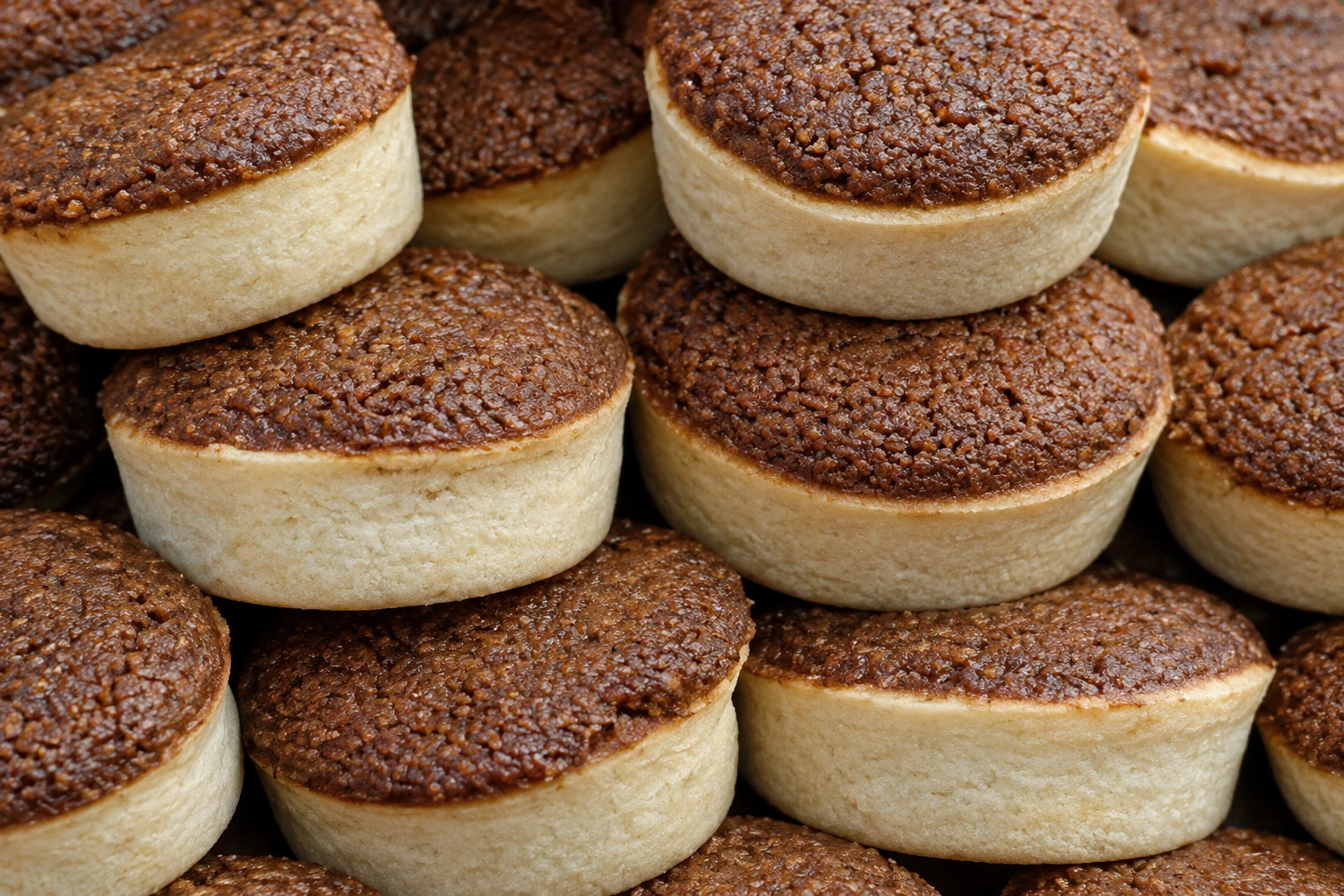
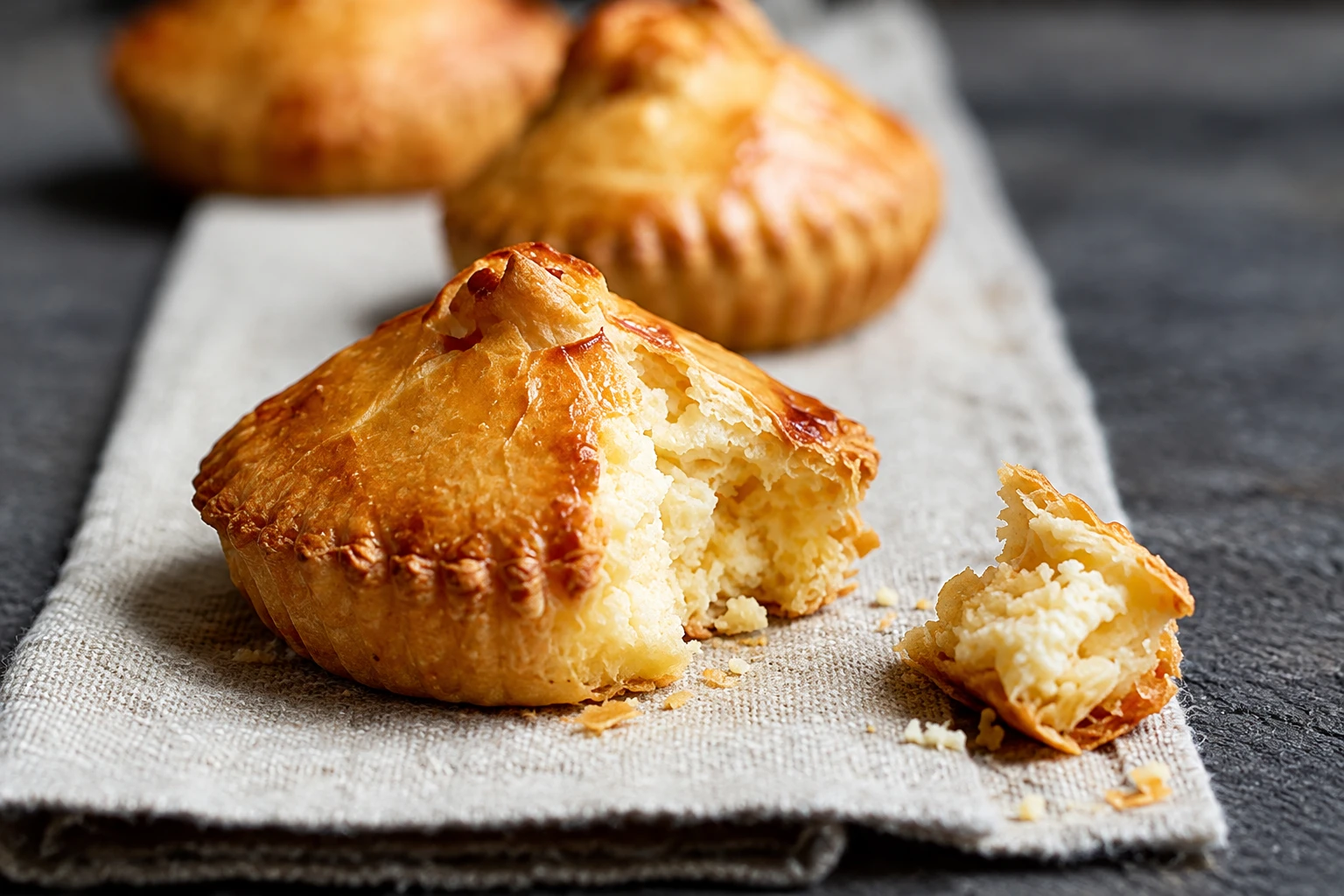
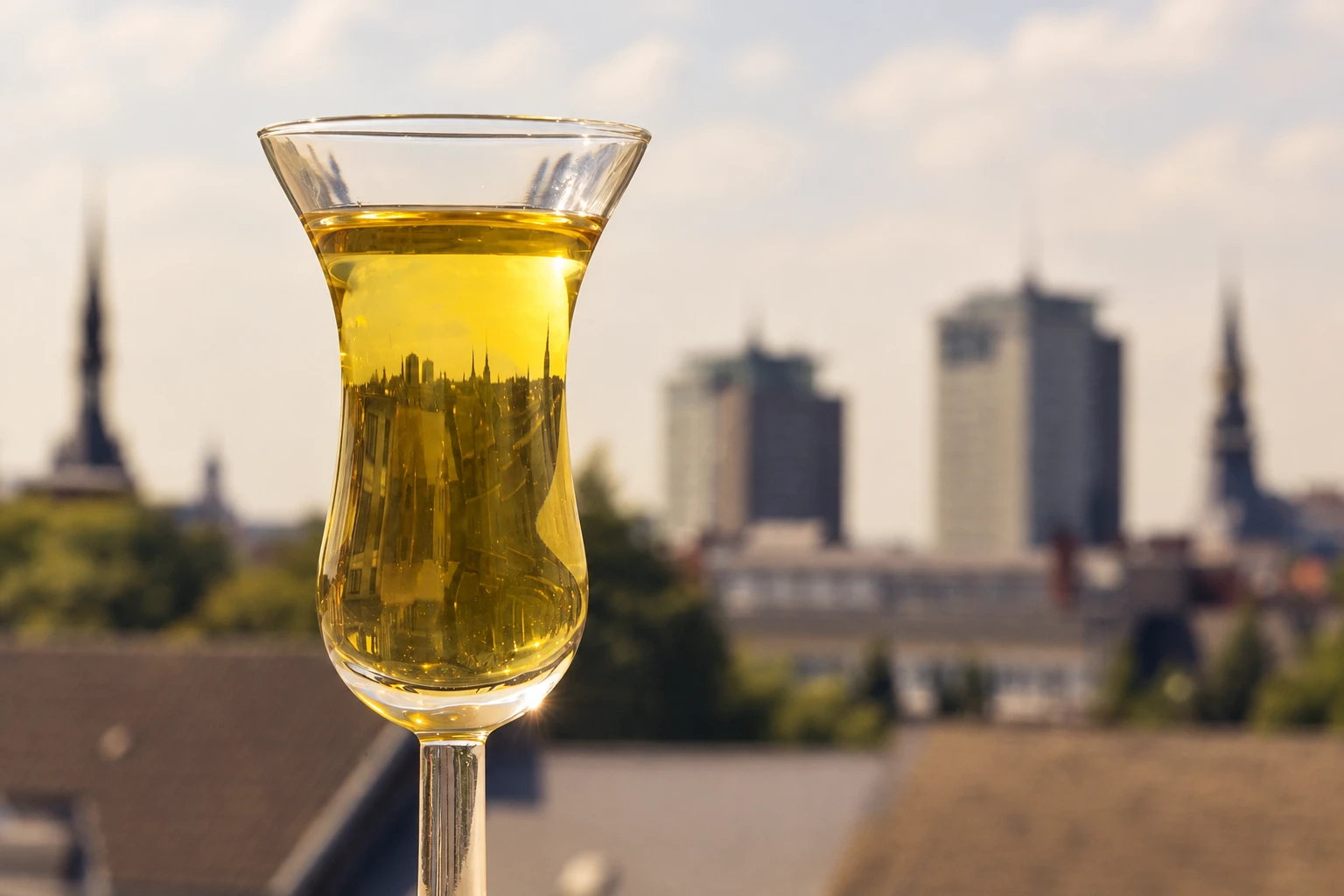
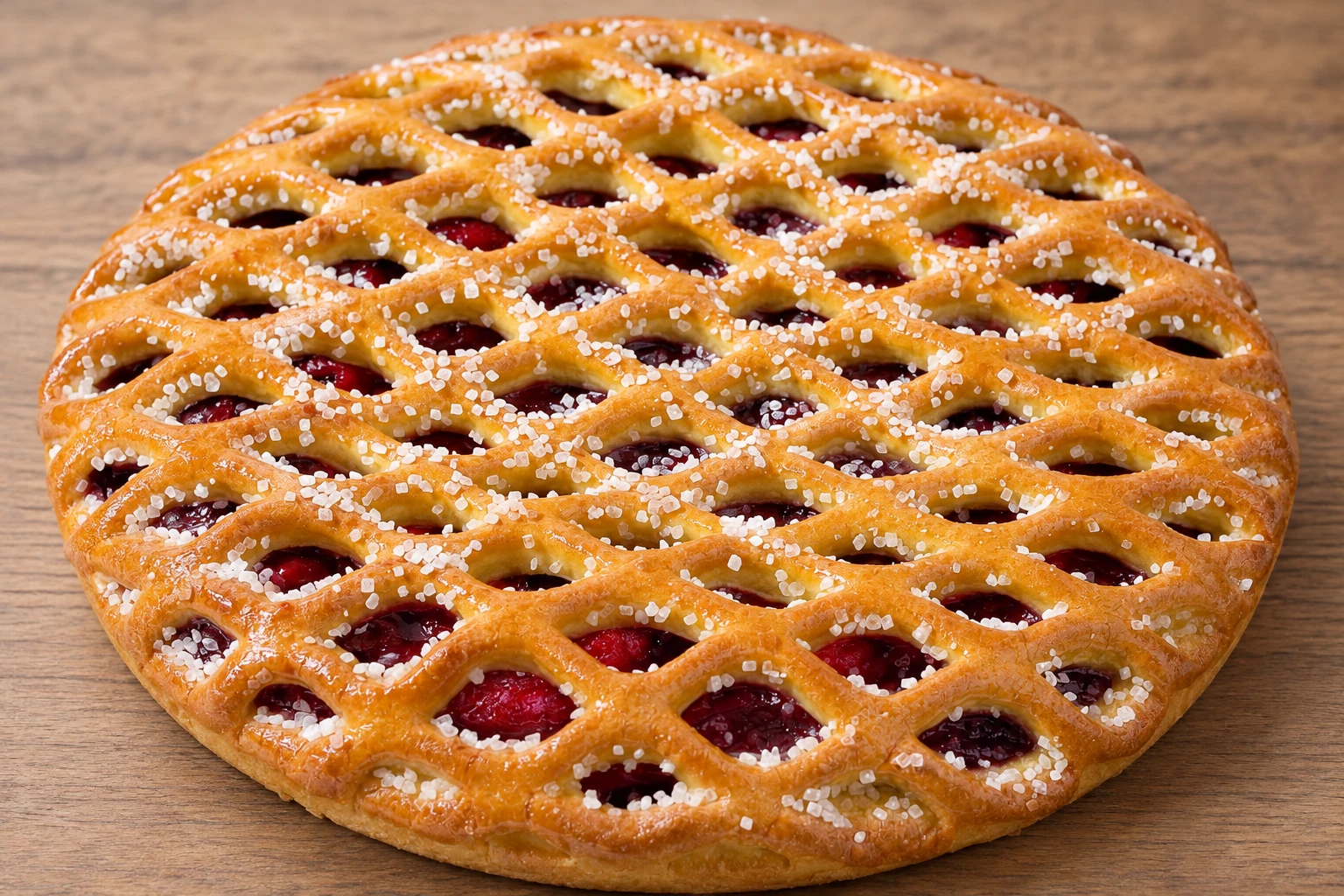
The dinner follows an order: first the small sausage, with compote or cabbage; then the rabbit; next the salade tournaisienne, with many ingredients; and finally the Epiphany cake with the hidden bean. At the table each guest draws a slip that defines their role in the celebration. When the one who drew the king raises their glass, everyone drinks together, and there are songs in the local dialect, Picard.
The Fédération Wallonie-Bruxelles recognized the Lundi perdu rabbit dinner as a masterpiece of the oral and intangible heritage. At this time of year many restaurants in the Tournai area put the rabbit on the menu and hold banquets.
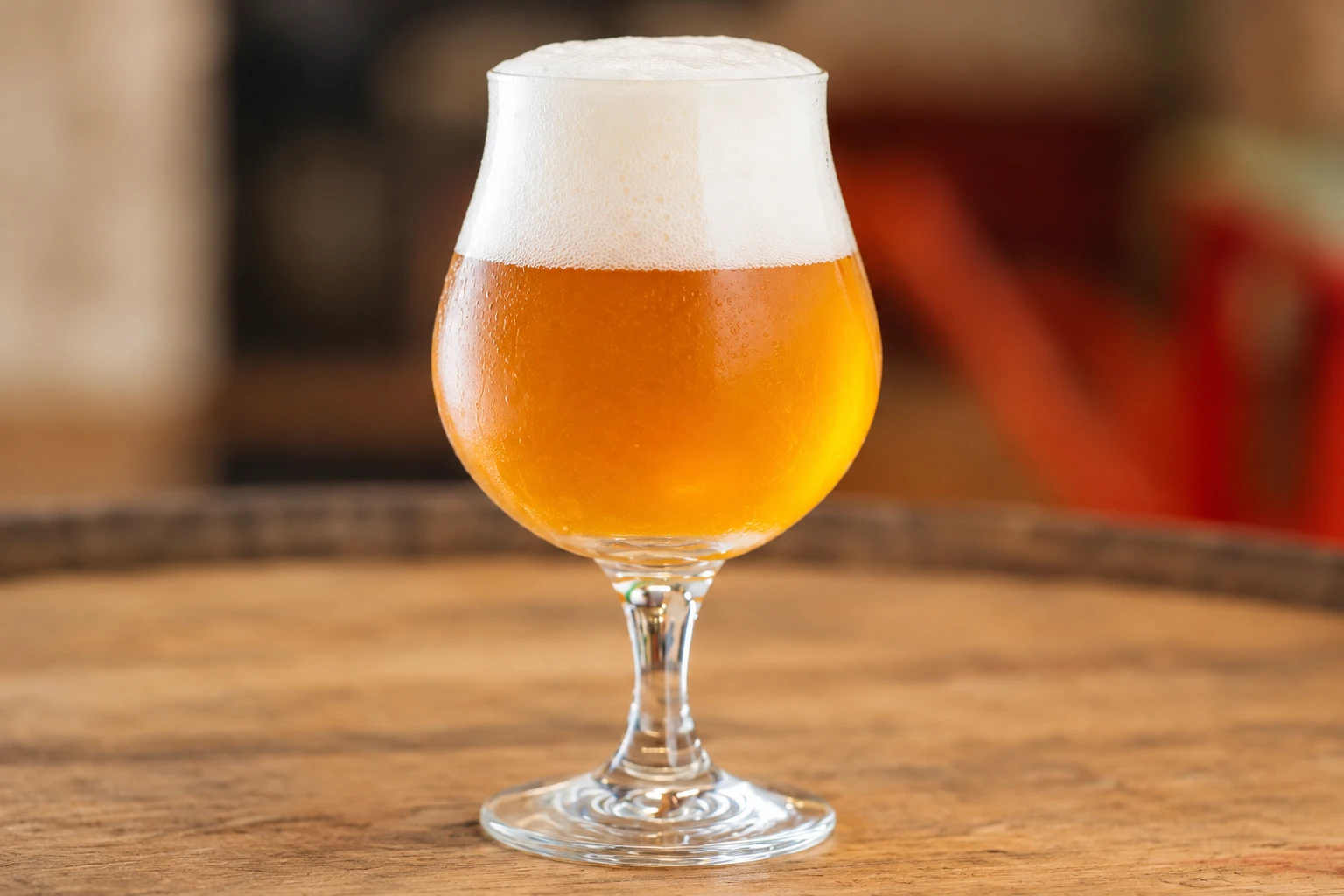
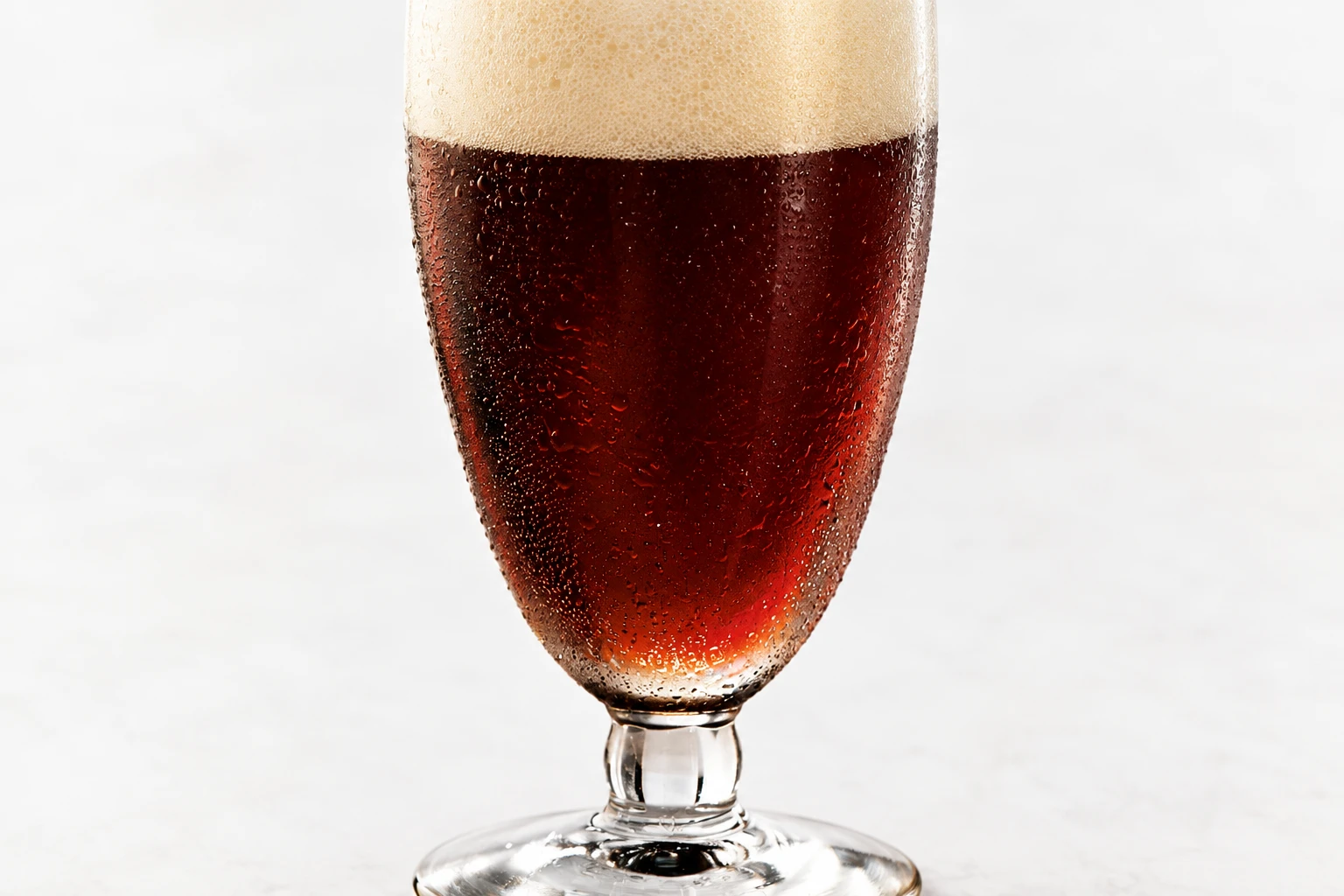
There is no single recipe. For traditionalists the rabbit is cooked in water, as in the simple original dish; other families use dark beer and add gingerbread. Each household defends its version.


 Brazil
 Antarctica
 Argentina
 Bolivia
 Chile
 Colombia
 Ecuador
 Falkland Islands (Malvinas)
 French Guiana
 Guyana
 Paraguay
 Peru
 Suriname
 Uruguay
 Venezuela
 Austria
 Croatia
 Denmark
 Finland
 France
 Germany
 Greece
 Hungary
 Iceland
 Ireland
 Italy
 Luxembourg
 Norway
 Poland
 Portugal
 Slovakia
 Slovenia
 Spain
 Sweden
 Switzerland
 the Czech Republic
 the Netherlands
 the United Kingdom
 Turkey
 Bermuda
 Canada
 Greenland
 Mexico
 Saint Pierre and Miquelon
 the United States
 the Dominican Republic
 Japan
 Egypt
 South Africa
 Australia
 Fiji
 New Zealand
 Papua New Guinea