Colonia del Sacramento

Colonia

Colonia del Sacramento

City founded by the Portuguese in 1680 opposite Buenos Aires, with a historic district that is a World Heritage Site, and Carmelo, land of wineries and a 1912 swing bridge.

West Coast

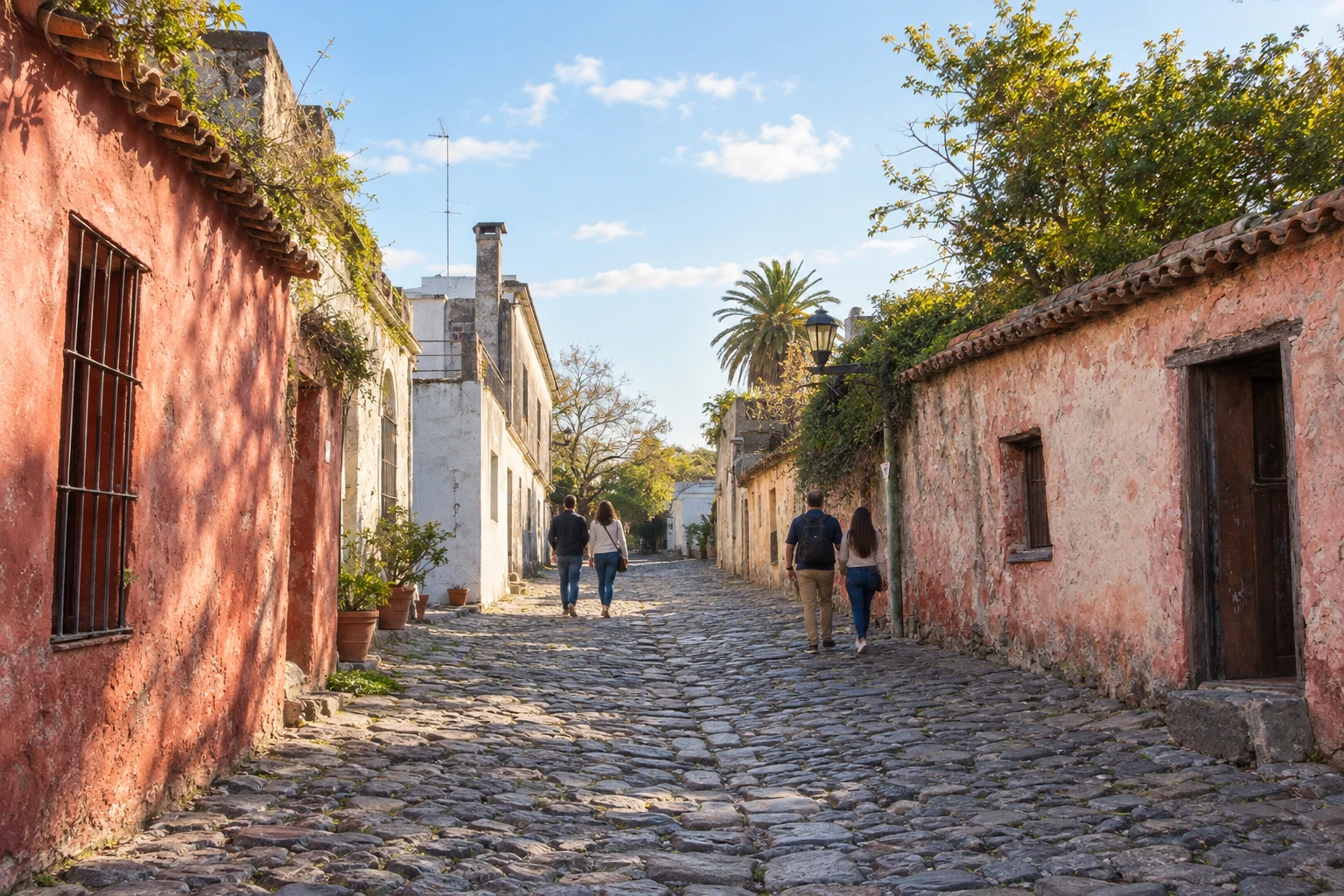
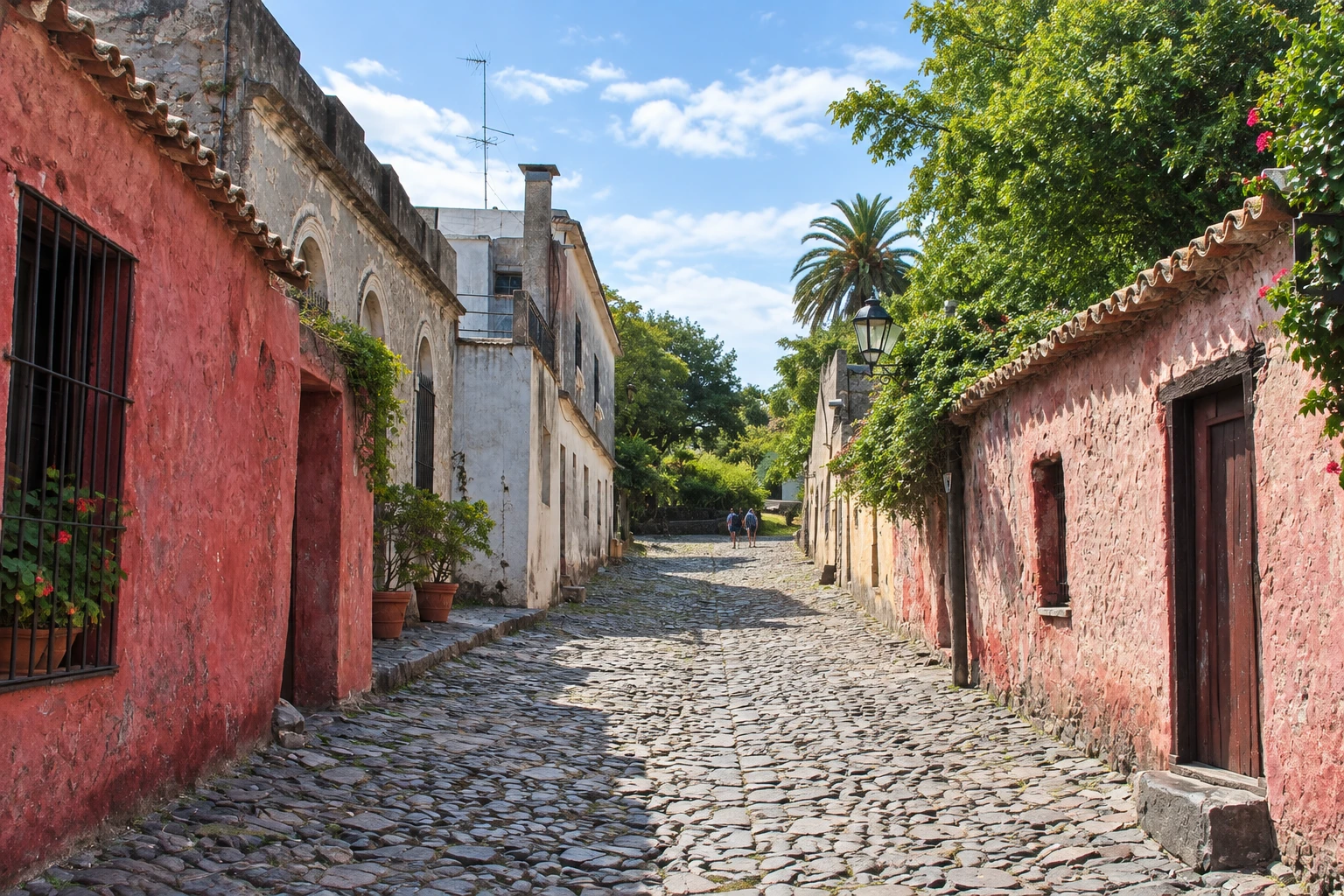
In the photo: Calle de los Suspiros, Colônia do Sacramento

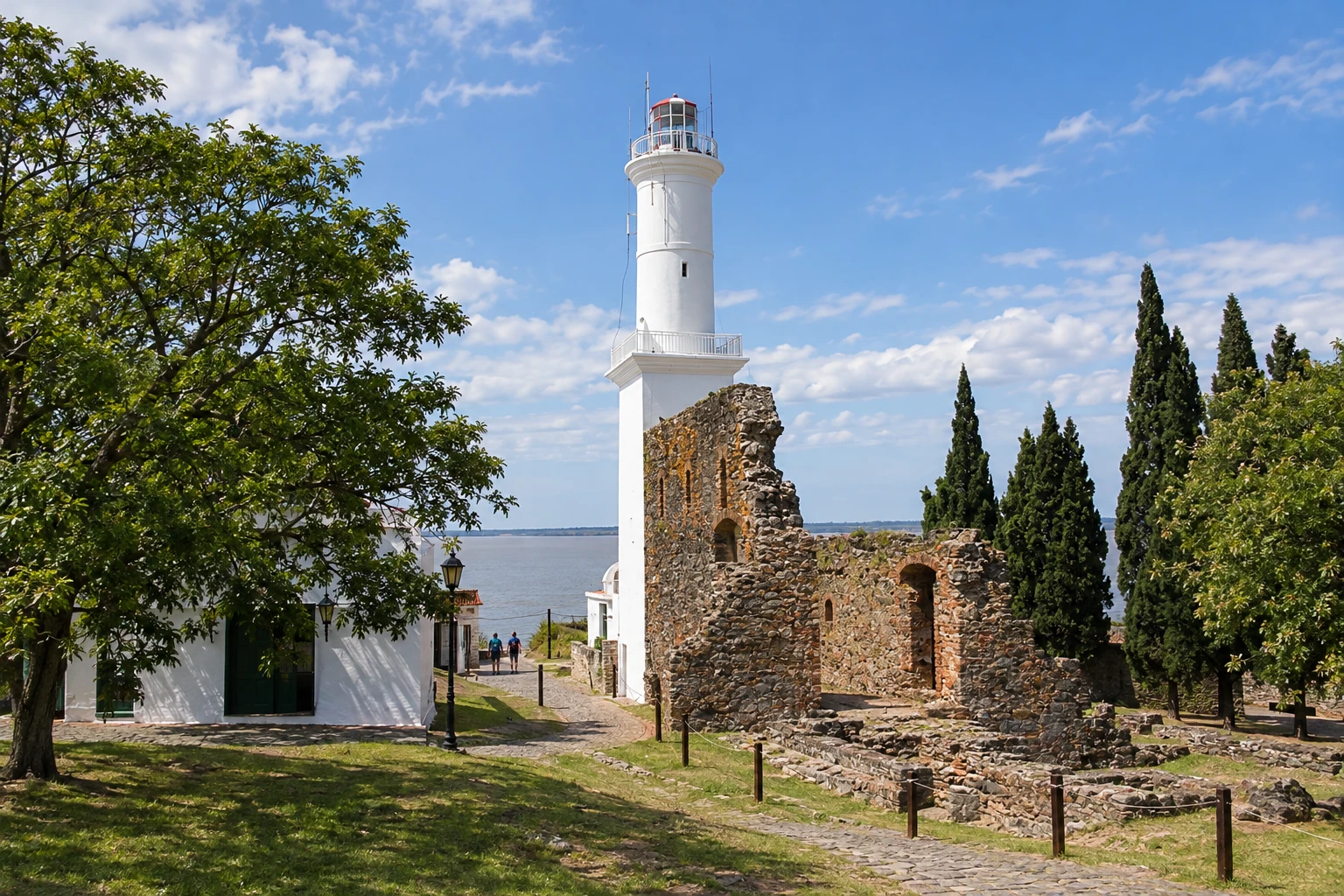
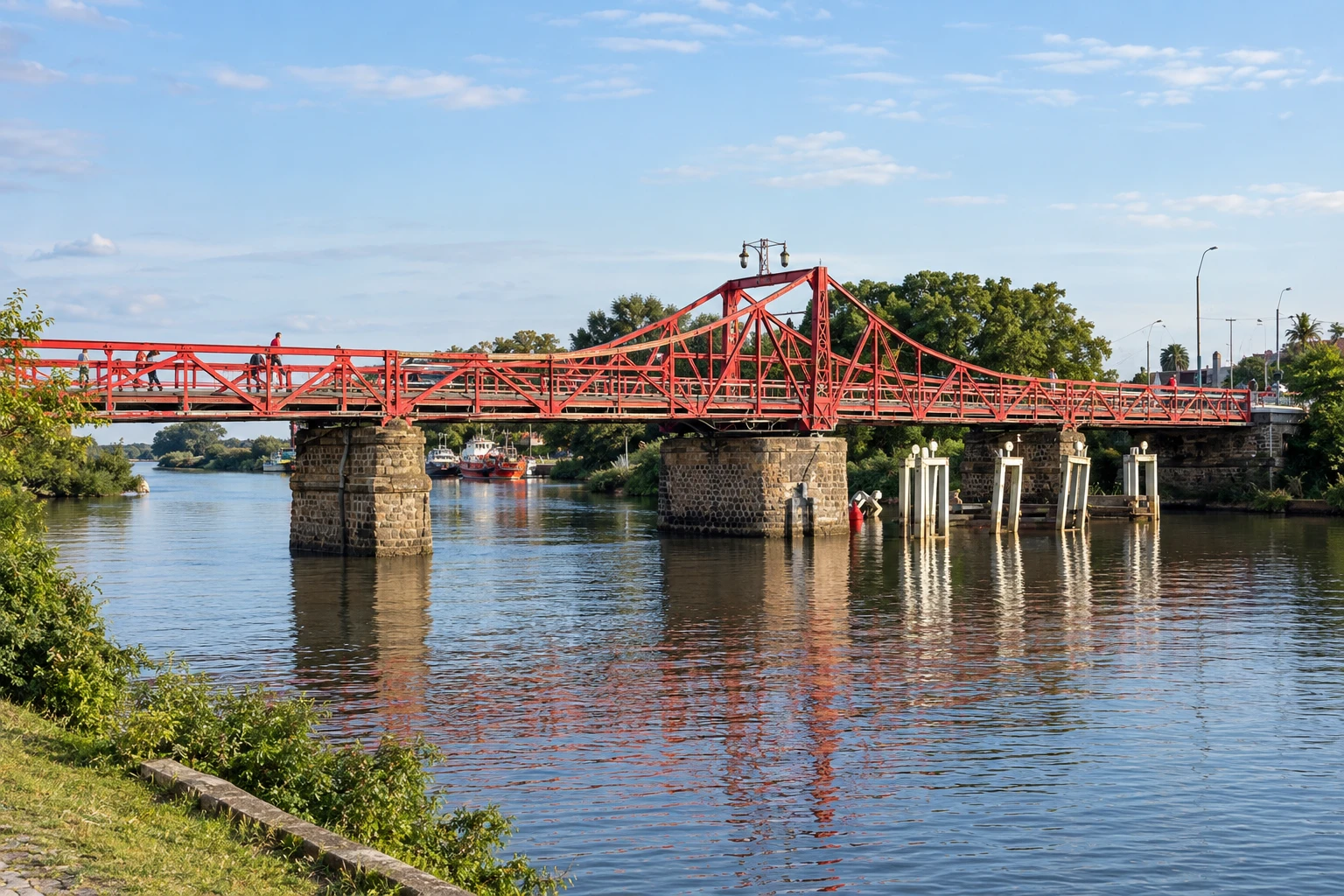
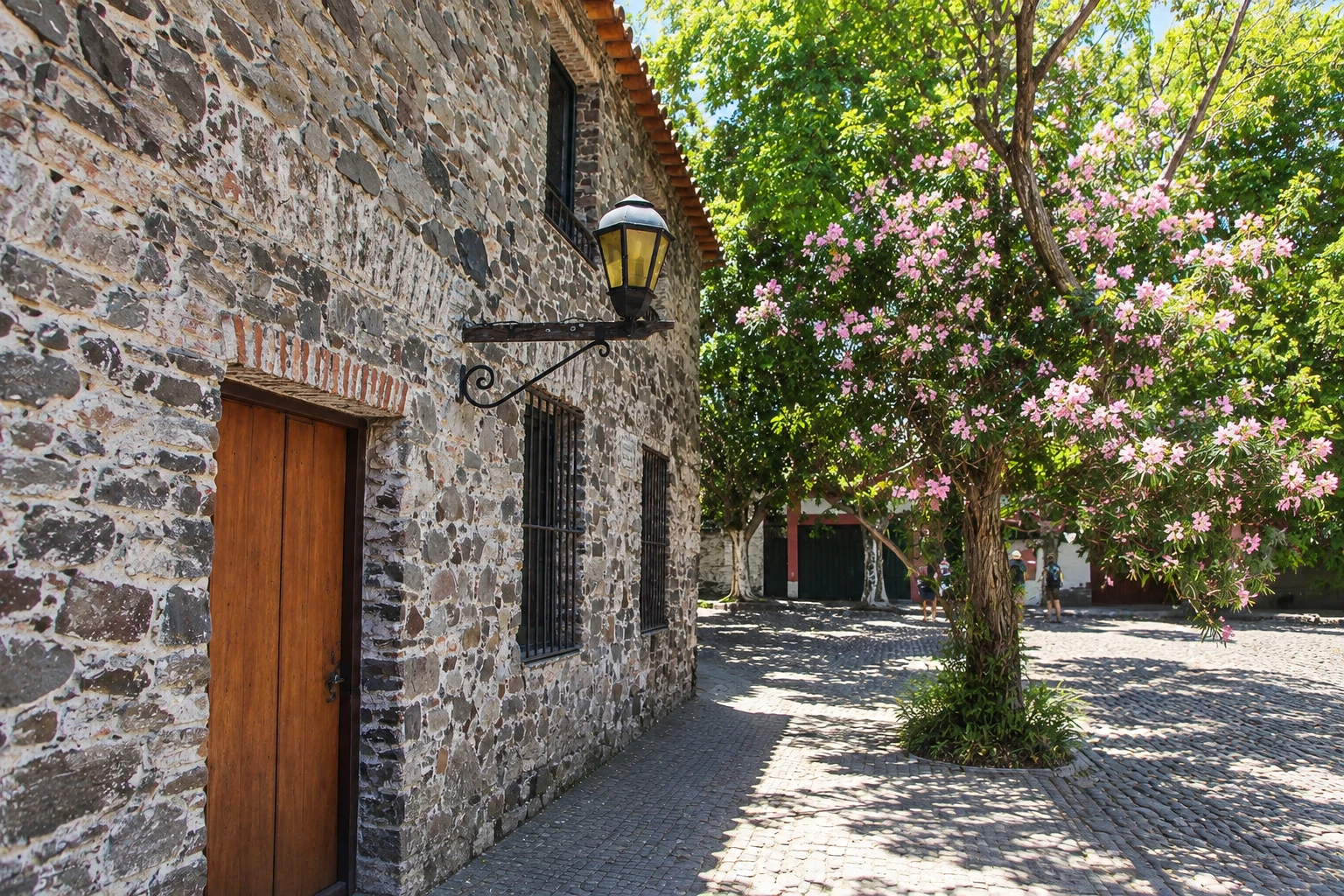
Illustrative images. The pictures in this guide are illustrations based on the real place, not photographs, and may differ from it.

Get it on Google Play

Get to know the place

A region to enjoy
at your own pace.

Colônia do Sacramento was founded in 1680 as a Portuguese outpost on the north bank of the Río de la Plata, right opposite Buenos Aires. Portugal and Spain contested the town for more than a century, and that history is written into the cobbled streets of the Barrio Histórico, declared a World Heritage Site by UNESCO in 1995.

The old core can be covered on foot: the Portón de Campo, the Calle de los Suspiros, the Faro built over the ruins of a convent, the Basílica del Santísimo Sacramento and the spaces of the Museo de Colonia are all a few minutes from each other. About 5 km to the north, the Plaza de Toros Real de San Carlos, from 1910, was restored and turned into a cultural center with a museum.

Following the coast along Ruta 21, Carmelo lies near the mouth of the Arroyo de las Vacas on the Río de la Plata. The town, founded by Artigas in 1816, has the Puente Giratorio, from 1912, operated by human power, and the Plaza Independencia with the church of Nuestra Señora del Carmen. In the surroundings there are wineries that receive visitors, such as Zubizarreta, Narbona and El Legado, and the Jesuit ruins of the Calera de las Huérfanas.

For Brazilians, the region pairs well with Buenos Aires across the river and with Montevideo, about 180 km away. The language is Spanish, and dinner usually starts after 9:00 p.m.

This destination brings together 2 cities: Colonia del Sacramento, Carmelo.

Share: WhatsApp
Traveler, share your experiences through photos Up to 5 photos of each place you visited.

One destination, many paths

The cities on this trip

Start with one city or combine several in your itinerary.

Where Colonia del Sacramento is The star marks the capital, Colonia del Sacramento.
Colonia del SacramentoCarmelo

Outlines: Servicio Geográfico Militar / IDE Uruguay, Licença de Dados Abertos. Adapted by Cidade Turismo.

How to get there: Colonia del Sacramento

Aeropuerto Internacional de Carrasco (MVD), in Ciudad de la Costa · 200 km to Colonia del Sacramento

From Buenos Aires, ferries cross the Río de la Plata to Colônia's port in about 1h15 to 1h30. From Montevideo it's roughly 180 km via Ruta 1. From Brazil by road you enter through Chuí and follow Ruta 9 to Montevideo and then Ruta 1, around 520 km. Connections to Brazil may be direct flights or require a connection, depending on the season and the airline. Confirm before buying.

Suggested arrival point: Colonia del Sacramento

The local experience

Things to do in Colonia del Sacramento

Carmelo · Colonia · Bridge

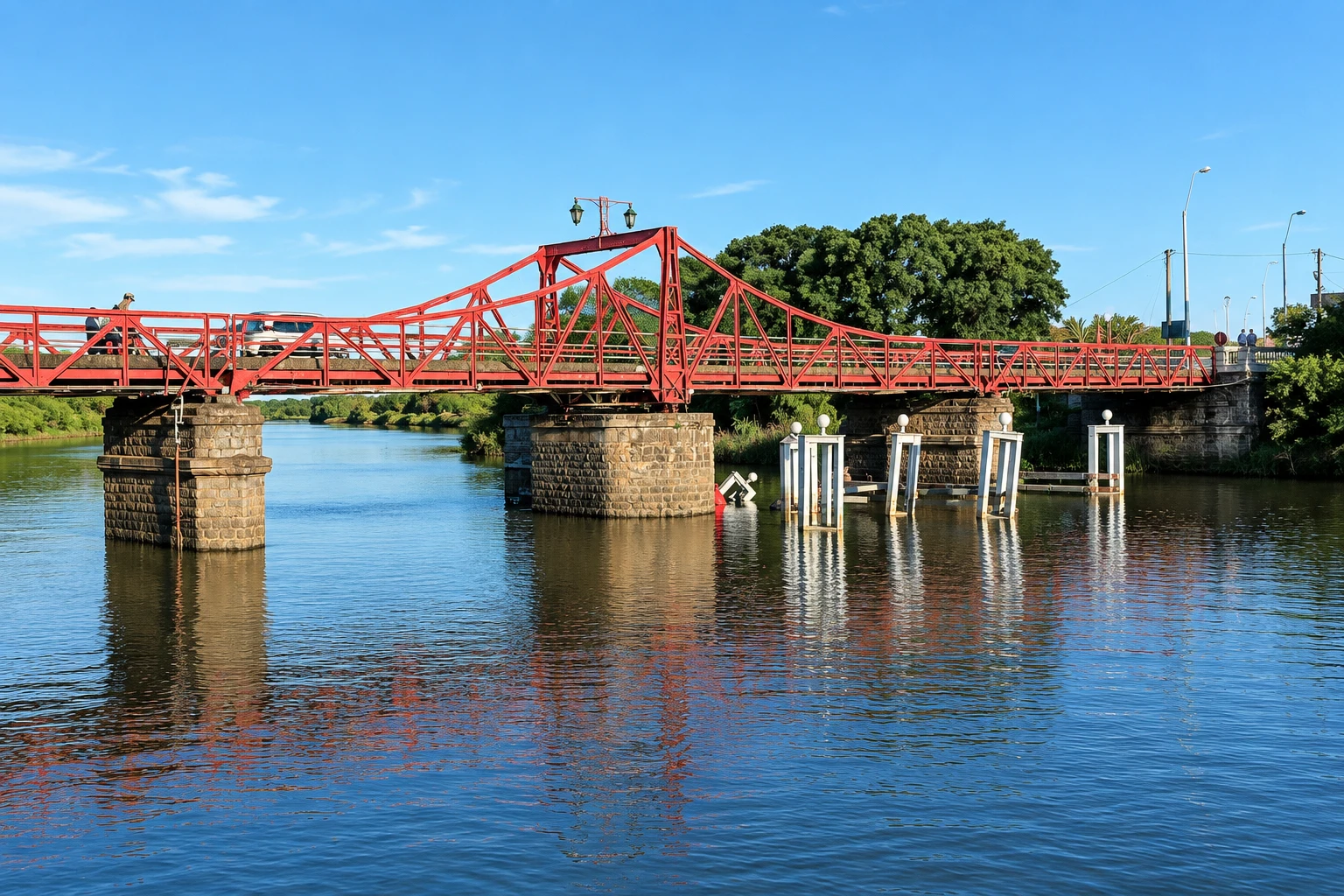
Carmelo Swing Bridge

A 1912 iron bridge over the Arroyo de las Vacas, considered the first swing bridge in South America. The central span rotates by human power to let boats pass. It is a National Historic Monument.

Explore Carmelo Swing Bridge

Colonia del Sacramento · Colonia · Street

Street of Sighs

One of the most typical streets in the Barrio Histórico: uneven stone paving, low colonial houses and the river in the background. It begins beside the Plaza Mayor and slopes down toward the riverbank.

Explore Street of Sighs

Carmelo · Colonia · Square

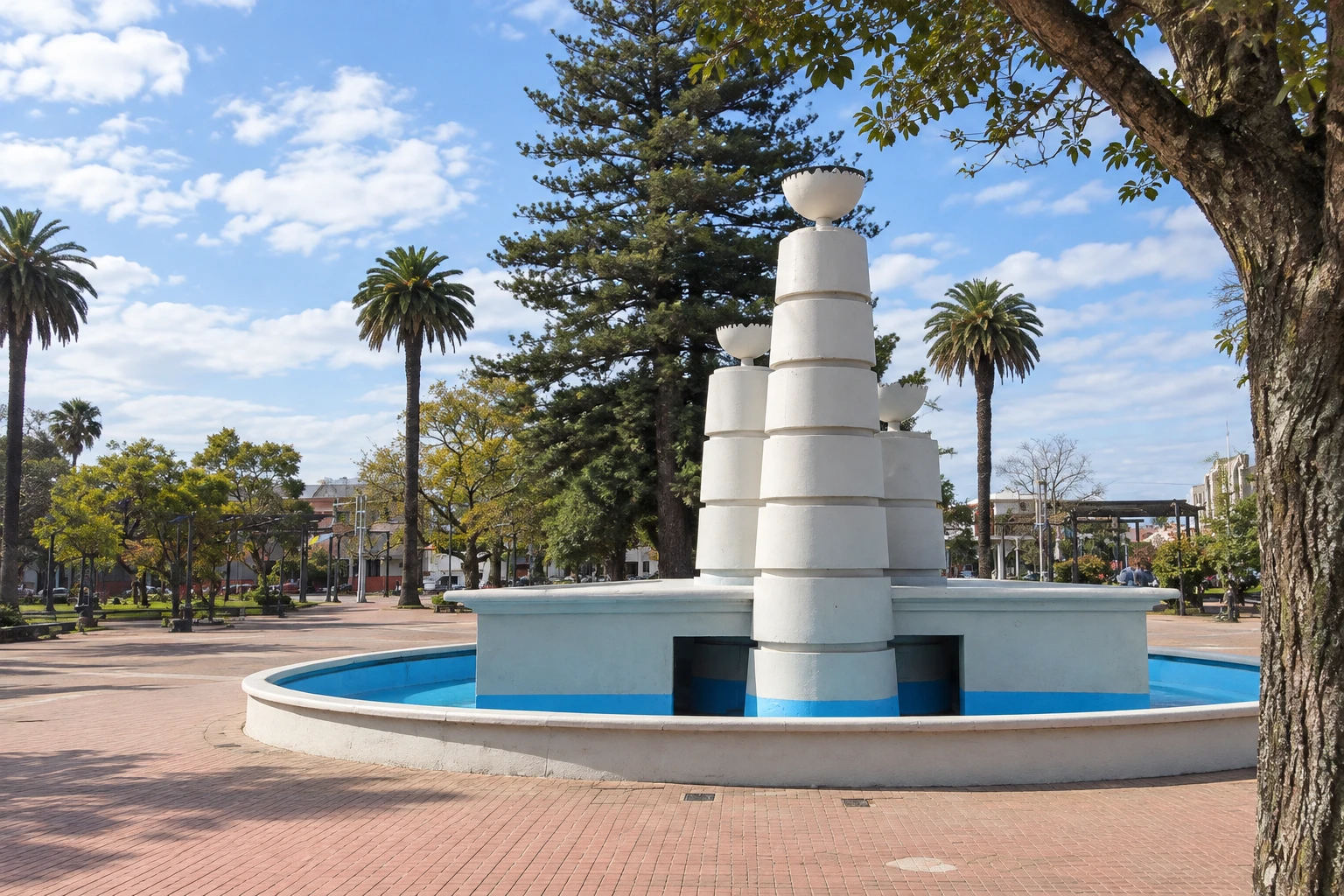
Plaza Independencia

Carmelo's central square, with the church of Nuestra Señora del Carmen, the town's patron saint, and cafés and restaurants around. It's the starting point for exploring the centre on foot.

Explore Plaza Independencia

See 9 more places in Colonia del Sacramento

To choose before you go

Tours in Colonia del Sacramento

Where each tour starts, how long it takes, how it is done, what is included and the price range.

Walk through Colonia del Sacramento Historic Quarter

From Plaza de Armas or Portón de Campo, Colonia del Sacramento On foot, independently or with a local guide about 3 hours morning easy

The Colonia del Sacramento Historic Quarter has been a UNESCO World Heritage Site since 1995. The town was founded by the Portuguese in 1680 and changed hands between Portugal and Spain until 1777. The result is a colonial layout that blends the architecture of both countries, with irregular stone streets, low houses and the Río de la Plata shoreline always nearby. A common route starts at the Plaza de Armas, where the Basílica del Santísimo Sacramento is located. From there you go down the streets on the north side to the coast and continue along the Paseo de San Gabriel by the river. The walk reaches the Plaza Mayor 25 de Mayo, with the ruins of the Casa del Virrey, the spaces of the Museo de Colonia and the Faro de Colonia del Sacramento, built among the ruins of an old convent. Nearby is the Calle de los Suspiros, the most photographed stone street in town. The walk ends at the Portón de Campo, the old entrance to the fortress, with the restored section of the wall, the wooden bridge and the moat. The neighborhood is small: you can see everything in a few hours, and it’s worth detouring down the cross streets. Cafés, restaurants, studios and shops are open year-round.

Stops: Colonia del Sacramento Historic Quarter, Plaza de Armas, Basílica del Santísimo Sacramento, Paseo de San Gabriel, Plaza Mayor 25 de Mayo, Calle de los Suspiros, Portón de Campo.

Includes: Walk through the neighborhood’s streets and squares. Admission to the Museo de Colonia sites and the climb to the lighthouse are paid separately; check the current fee schedule.

Tip: Wear comfortable, already broken-in shoes: the stone pavement is quite uneven. On Calle de los Suspiros, there is usually less activity very early or late in the afternoon.

Best time: All year round. From October to April the weather is more pleasant for walking; from June to August it is cold and windy on the riverbank.

Ascent to the Colonia del Sacramento Lighthouse

From Plaza Mayor 25 de Mayo, Historic Quarter On foot, climbing the lighthouse's internal staircase about 30 minutes morning moderate

The Colonia del Sacramento Lighthouse was built in 1857 among the ruins of the 17th-century Convento de San Francisco, next to Plaza Mayor 25 de Mayo. It is still operational and open to visitors. The climb has 118 steps. From the top you can see the layout of the Barrio Histórico, the roofs of the colonial houses, the port and the Río de la Plata. On a clear day you can make out the buildings of Buenos Aires across the water. The visit is short and pairs well with a walk around the neighborhood and the museum circuit, which are on the same square.

Stops: Colonia del Sacramento Lighthouse, Ruins of the Convento de San Francisco, Plaza Mayor 25 de Mayo.

Includes: Admission to the lighthouse, with entry fee paid separately; check the current pricing.

Tip: The staircase is narrow: those who have difficulty with steps can appreciate the convent ruins below. On days of strong wind or rain, the ascent may be suspended.

Best time: All year, preferably on a clear day to see farther.

Museo de Colonia circuit

From Espacio Dr. Bautista Rebuffo, Plaza Mayor 25 de Mayo On foot, with a single admission ticket for the sites about 2 hours afternoon easy

The Museo de Colonia brings together several small spaces spread across the Barrio Histórico, almost all in colonial houses. A single ticket, sold at the Espacio Dr. Bautista Rebuffo, covers them all, and each one can be visited in a short time. The Espacio Dr. Bautista Rebuffo, the municipal museum, has a model of what the city looked like in 1762, rooms with 19th-century furniture, weapons, indigenous objects, skeletons of the region's megafauna and a collection of native birds. Next door, the Vivienda Portuguesa shows how a poor Portuguese family lived around 1750. The Espacio Portugués recounts the periods when Colonia was under the Portuguese crown, between 1680 and 1777, with navigation charts, uniforms and weapons. The Espacio del Azulejo houses French, Catalan and Neapolitan tiles. The Archivo Histórico Regional holds documents about the city and an exhibition on the restoration of the neighborhood and its UNESCO recognition. The Espacio Español and the Espacio Indígena share the same townhouse and cover the Spanish settlers and the original peoples. The spaces close on different days of the week, so there is usually at least one open.

Stops: Museo de Colonia, Espacio Dr. Bautista Rebuffo, Vivienda Portuguesa, Espacio Portugués, Espacio del Azulejo, Archivo Histórico Regional, Espacio Español, Espacio Indígena.

Includes: Single ticket for the Museo de Colonia spaces, paid separately; check the current price list.

Tip: Start at the Espacio Dr. Bautista Rebuffo, where the ticket is purchased, and fit the other sites in along the route. Some spaces may be closed for exhibition changes.

Best time: Year-round; a good option for rainy or cold days.

Basilica of the Most Holy Sacrament and Plaza de Armas

From Plaza de Armas, Barrio Histórico On foot about 30 minutes morning easy

The Basilica of the Most Holy Sacrament sits on the Plaza de Armas at the entrance to the Barrio Histórico and is considered the oldest church in Uruguay. It began as a thatch hut in 1680, the year the city was founded, and was rebuilt in stone soon after. The building endured sieges, bombardments and a fire. In 1823 a lightning strike hit the sacristy, which stood over an old Portuguese powder magazine, and the explosion destroyed the high altar. The church was rebuilt afterwards, and later restorations have revealed original sections of the walls. The visit is brief: the interior is sober, with white walls and exposed stone. In the square in front there are remains of old colonial structures.

Stops: Basilica of the Most Holy Sacrament, Plaza de Armas, Barrio Histórico of Colonia del Sacramento.

Includes: Visit to the temple. Respect Mass times.

Tip: Fit the basilica in at the start of your walk through the neighborhood. During Masses, visitor movement is restricted.

Best time: All year.

Real de San Carlos and Plaza de Toros

From Colonia del Sacramento center Taxi, city bus, bicycle or electric cart about 2 hours afternoon easy

The Real de San Carlos is about 5 km from the Historic Quarter, on the city’s northern shore. At the beginning of the 20th century, Argentine businessman Nicolás Mihanovich planned a leisure complex there for the Buenos Aires public, with a bullring, hotel-casino, Basque pelota fronton and a boat terminal. The Plaza de Toros Real de San Carlos opened in 1910 and hosted bullfights for a short time, until they were banned in Uruguay. It stood in ruins for decades and, after a full restoration, became a cultural venue with performances, guided tours and self-guided visits. Inside it operates the Museo Taurino, with bullfighter costumes, capes and original posters, projections and audio features. Around it are the fronton and other period buildings, as well as the waterfront, which is good for a walk.

Stops: Plaza de Toros Real de San Carlos, Real de San Carlos, Frontón del Real de San Carlos, Museo Taurino.

Includes: Admission to the Plaza de Toros, with guided or self-guided visit, paid separately; check the current pricing. Transportation to the Real de San Carlos is the visitor's responsibility.

Tip: Guided tours usually have a scheduled time and can be booked in advance; if there is availability, you can buy a ticket on the spot. The route along the waterfront is flat and is good for cycling.

Best time: All year. In summer, prefer late afternoon.

Late afternoon on Colonia's Rambla

From Paseo de San Gabriel, Historic Quarter On foot about 1 hour afternoon easy

Colonia del Sacramento faces west, on the Río de la Plata, and the late afternoon is one of the city’s most popular activities. The rambla follows the coast with benches facing the water, and the Paseo de San Gabriel, in the Historic Quarter, wraps around the tip of the peninsula near the river rocks. At the end of the day the area gets busier, with residents and visitors walking or sitting by the river. When the sky cooperates, the sun sets over the water, toward Buenos Aires. It’s an activity without a fixed route: just pick a stretch of the waterfront and arrive a little before sunset.

Stops: Rambla de Colonia del Sacramento, Paseo de San Gabriel, Historic Quarter of Colonia del Sacramento.

Includes: Free walk along the waterfront.

Tip: Bring a warm layer: near the river it can be windy and cool down quickly when the sun goes down, even in summer. The sunset depends on the weather.

Best time: Year-round. From December to March the late afternoon is longer and busier.

See 8 more tours

Bicycle or electric cart along the coast

From Rental points in downtown Colonia del Sacramento Bicycle or electric cart rented in town about 3 hours afternoon easy

Outside the Barrio Histórico, the town stretches along the waterfront, and bicycles or small electric carts rented downtown help you reach more distant areas. The route along the shore is flat. To the south is Playa Ferrando, one of the river beaches best known in town, close to the center. To the north, the rambla continues to the Real de San Carlos, with the Plaza de Toros. Along the way there are beaches and stretches of waterfront with benches. The ride gives you the freedom to stop wherever you want and pairs well with a visit to the Plaza de Toros or an evening on the rambla.

Stops: Rambla of Colonia del Sacramento, Playa Ferrando, Real de San Carlos, Plaza de Toros Real de San Carlos.

Includes: Bike or cart rental, paid separately; check the current rate. Attraction tickets not included.

Tip: Electric carts often require a driver’s license; bring yours. In the Barrio Histórico the cobblestones make biking uncomfortable: it's better to walk there.

Best time: From October to April, with longer days and less wind.

Carmelo: Puente Giratorio and town center

From Colonia del Sacramento or Carmelo town center Car or regular bus via Ruta 21; on foot in Carmelo about 3 hours in Carmelo morning easy

Carmelo is about 75 km from Colonia del Sacramento via Ruta 21, near where the Río Uruguay meets the Río de la Plata. It was founded by José Gervasio Artigas in 1816 and is the only city he personally founded. The town’s postcard image is the Puente Giratorio, opened in 1912 over the Arroyo de las Vacas. It is considered the first swing bridge in South America, and its mechanism is operated by human power. The bridge is a National Historic Monument. Along the stream runs the Rambla de los Constituyentes, with the port and boats. In the center are the Plaza Independencia, the main square with shops around it, and the Plaza Artigas, with the founding monument and the church of Carmen. Carmelo is the base for the region’s wineries and for the Calera de las Huérfanas.

Stops: Carmelo, Puente Giratorio, Plaza Independencia, Plaza Artigas, Rambla de los Constituyentes, Arroyo de las Vacas.

Includes: Self-guided walk through the center and the waterfront. Transport on your own.

Tip: Combine Carmelo’s town center with a winery or with the Calera de las Huérfanas on the same day. Whoever is driving should not drink at the tastings.

Best time: Year-round. From December to February the vineyards are heavy with grapes.

Calera de las Huérfanas

From Carmelo Car or taxi from Carmelo about 2 hours morning easy

Calera de las Huérfanas is located on the outskirts of Carmelo, on the former Estancia del Río de las Vacas, associated with Jesuit missionaries. It is a National Historic Monument and a witness to a productive estate from the colonial period, with lime kilns, walls and the ruins of the Capilla de Belén. The site is part of the Camino de los Jesuitas, a route that brings together places of Jesuit presence in South America. The visit goes through the ruins and a trail to the Hornos de Cal, with a bridge and a viewpoint along the way. The complex is undergoing restoration works, and the chapel is receiving consolidation work on its walls and arches. The setting is rural and tranquil. It pairs well with a visit to downtown Carmelo and the region’s wineries.

Stops: Calera de las Huérfanas, Capilla de Belén, Hornos de Cal, Carmelo.

Includes: Visit to the site, with a visitors center and a trail. Check opening days and whether a fee applies before you go.

Tip: Bring water and sunscreen: much of the route is outdoors. During restoration work, some sections may be closed.

Best time: From September to May, with milder temperatures for walking.

Wineries of Carmelo

From Carmelo Car, taxi or bicycle, with visits booked in advance about 5 hours full day easy

The wineries of Carmelo are a few kilometers from the center, scattered across the rural area. Visits usually include a tour of the vineyards and the cellar, with explanations about cultivation and production, followed by a tasting with a cheese or cold-cut board. Some serve lunch in the countryside. Bodega Zubizarreta has produced wine artisanally since 1957, founded by a Basque immigrant. Visits take place at the Casa de Aitona, a manor from the early 20th century. El Legado Bodega Boutique is a family project in the Colonia Estrella area, where Campotinto and Almacén de la Capilla are also located, close to each other. Bodega Familia Irurtia, one of the oldest in the region, is a few kilometers from town and offers guided visits with a museum and cellar. The focus of the visit is the families’ history, the landscape and the work in the vineyard. Tasting is optional.

Stops: Bodega Zubizarreta, El Legado Bodega Boutique, Bodega Familia Irurtia, Bodega Campotinto, Almacén de la Capilla, Colonia Estrella.

Includes: Guided tour and tasting depend on the winery, paid separately; check the current price list. Lunch only by reservation.

Tip: Book in advance: several wineries only receive visitors by appointment. If you drive, don’t drink; for those who want to taste, take a taxi or a driver-led tour. Tasting activities are for those 18 and older.

Best time: All year round. From December to February the vineyards are full, and the harvest usually takes place at the end of February.

Guided visit to Narbona

From Carmelo Car or taxi via Route 21, with reservation about 2 hours afternoon easy

Narbona is about 13 km from downtown Carmelo, to the north, in the Puerto Camacho area. The estate preserves the original ranch house from the early 20th century and includes vineyards, cellar, farm, store, and restaurant. The guided tour goes through the old and the current cellar and ends with a tasting of cheeses, breads and house products, with optional sampling. There is also picnicking among the vineyards, weather permitting, and other activities by prior reservation. The store offers cheeses, dulce de leche, fresh pasta, olive oil and other farm products. The restaurant serves visitors by reservation.

Stops: Narbona, Puerto Camacho, Carmelo.

Includes: Guided visit with tasting of house products, paid separately; check the current price list. Restaurant and other activities are extra.

Tip: Book in advance, especially for the restaurant and the picnic. tasting activities are for those 18 and older, and the driver must not drink.

Best time: All year. From December to February the vineyards are full of grapes.

Wineries near Colonia del Sacramento

From Colonia del Sacramento Car via Ruta 21 or Ruta 50, with visits booked in advance about 4 hours afternoon easy

If you sleep in Colonia del Sacramento and don’t go on to Carmelo, there are wineries about 30 to 40 km from the city. Bodega Los Cerros de San Juan, on Route 21, halfway to Carmelo, has been operating since 1854, founded by German immigrants, and is considered the oldest in Uruguay. Its old stone warehouse is a national heritage site. Viñedos y Olivares del Quintón, northeast of Colonia, shows vineyards and olive groves, with olive oil tasting. Bodega Fripp, farther north near Conchillas, is a family winery offering visits and lunches on set dates. Visits go through the vineyards and the cellar, with explanations about the production and optional tastings.

Stops: Bodega Los Cerros de San Juan, Viñedos y Olivares del Quintón, Bodega Fripp.

Includes: Visit to the vineyards and the cellar, with an optional tasting paid separately at each winery; check the current price list.

Tip: It can’t be fitted into a same-day round trip: reserve a full afternoon and book in advance, as visits have fixed days and times. If you drive, don’t drink.

Best time: All year round. From December to February the vineyards are full.

Nueva Helvecia, the Swiss colony

From Colonia del Sacramento Car or regular bus via Ruta 1 about 5 hours full day easy

Nueva Helvecia is in the eastern part of the Colonia department, about 120 km from Montevideo, near Ruta 1, on the route between the capital and Colonia del Sacramento. It was founded in 1862 by immigrants, mostly Swiss, and for that reason it is known as the Swiss Colony. The heritage appears in the coats of arms of the Swiss cantons on the facades, in the Plaza de los Fundadores, in the Molino Quemado and in the Catholic and Evangelical churches. The town is the center of Uruguay’s cheesemaking tradition: the first dairies appeared at the end of the 19th century, and dairy products such as cheeses, dulce de leche and yogurt remain the foundation of the local economy. The region has other colonies of European immigrants, such as Colonia Valdense. The visit works well as a stop on the route between Montevideo and Colonia del Sacramento.

Stops: Nueva Helvecia, Plaza de los Fundadores, Molino Quemado, Colonia Valdense.

Includes: Free self-guided visit of the town. Transport and purchases on your own.

Tip: If you go by car you can stop in Nueva Helvecia on the way to or from Montevideo. Ask locally about the dairies that receive visitors.

Best time: Year-round. In December the town usually holds its beer festival.

Colonia in one day departing from Buenos Aires or Montevideo

From Buenos Aires (Puerto Madero) or Montevideo (Terminal Tres Cruces) Boat from Buenos Aires or bus from Montevideo about 10 hours, including travel full day easy

Many Brazilians visit Colonia del Sacramento on a day trip from Buenos Aires or Montevideo. From Buenos Aires, Buquebus and Colonia Express boats cross the Río de la Plata in about one hour to one hour and fifteen minutes and arrive at the Terminal Fluvial, about a ten-minute walk from the Barrio Histórico. Uruguayan immigration is carried out at the Buenos Aires terminal. From Montevideo, buses depart from Terminal Tres Cruces and take about two and a half hours on direct services, and close to three hours on services with stops. Colonia's bus station is next to the Terminal Fluvial. A day is enough to walk the Barrio Histórico, climb the lighthouse, visit one or two Museo de Colonia spaces and have a relaxed lunch. The Plaza de Toros and Carmelo are for those who stay overnight in the city.

Stops: Barrio Histórico of Colonia del Sacramento, Faro de Colonia del Sacramento, Calle de los Suspiros, Portón de Campo, Museo de Colonia.

Includes: Self-guided itinerary. Boat or bus paid separately; check the current price list.

Tip: Buy the boat ticket in advance, especially on holidays and in summer, and arrive at the Buenos Aires terminal with time for immigration. Spending a night in Colonia lets you see the sunset on the rambla.

Best time: Year-round. On Argentine and Uruguayan holidays and in summer, boats fill up faster.

Day by day

2, 3 and 5-day itinerary in Colonia del Sacramento

Suggestions to plan the trip. Change the order of the days according to the weather and tour availability.

2 days · Colonia del Sacramento in 2 days

For Someone arriving from Montevideo who wants to explore the Barrio Histórico at a relaxed pace, staying one night in the city · Based in Colonia del Sacramento
  1. Day 1 · Arrival and Barrio Histórico

    From Brazil, flight to Montevideo and bus from Terminal Tres Cruces to Colonia del Sacramento, about two and a half hours on direct services. After dropping your bags, take the Walk through Colonia del Sacramento’s Barrio Histórico, passing the Basílica del Santísimo Sacramento and Plaza de Armas, the Calle de los Suspiros and the Portón de Campo. At the end of the day, enjoy the late afternoon on Colonia’s Rambla.

  2. Day 2 · Lighthouse, museums and Real de San Carlos

    In the morning, climb the Faro de Colonia del Sacramento and follow the Museo de Colonia circuit, starting with the Espacio Dr. Bautista Rebuffo. In the afternoon, visit Real de San Carlos and the Plaza de Toros by taxi, bicycle or electric cart, stopping at Playa Ferrando on the way back. Bus to Montevideo in the late afternoon.

3 days · Colonia del Sacramento and Carmelo in 3 days
For Anyone who wants to add the Barrio Histórico to winery visits and Carmelo’s Puente Giratorio · Based in Colonia del Sacramento (2 nights) and Carmelo (optional)
  1. Day 1 · Arrival and first stroll through the Barrio Histórico

    Flight from Brazil to Montevideo and bus to Colonia del Sacramento. In the afternoon, walk through Colonia del Sacramento’s Barrio Histórico, including the Basílica del Santísimo Sacramento and Plaza de Armas. Finish with the late afternoon on Colonia’s Rambla.

  2. Day 2 · Lighthouse, museums and Plaza de Toros

    Morning including the climb of the Faro de Colonia del Sacramento and the Museo de Colonia circuit. In the afternoon, bicycle or electric cart along the coast to Real de San Carlos and the Plaza de Toros, with a visit to the Museo Taurino.

  3. Day 3 · Carmelo and wineries

    Take Ruta 21 to Carmelo, about 75 km. In the morning, Carmelo: Puente Giratorio and the town center, including Plaza Independencia and the Rambla de los Constituyentes. In the afternoon, visit Carmelo’s wineries with a booked tour, or the Calera de las Huérfanas. If you drive, do not drink. Return to Montevideo by road or stay the night in Carmelo.

5 days · Colonia, Carmelo and Nueva Helvecia in 5 days
For For those driving who want to explore the Colonia department unhurriedly, with museums, wineries and history · Based in Colonia del Sacramento (3 nights) and Carmelo (1 night)
  1. Day 1 · From Montevideo to Colonia, with a stop at the Swiss Colony

    Arrival from Brazil to Montevideo and drive along Ruta 1. On the way, stop at Nueva Helvecia, the Swiss colony, with the Plaza de los Fundadores and the region’s cheese factories. Arrive in Colonia del Sacramento in the late afternoon and enjoy the evening on Colonia’s Rambla.

  2. Day 2 · Barrio Histórico in depth

    Walk through Colonia del Sacramento’s Barrio Histórico in the morning, including the Basílica del Santísimo Sacramento and Plaza de Armas. Climb the Faro de Colonia del Sacramento. In the afternoon, follow the Museo de Colonia circuit, allowing time for the smaller spaces.

  3. Day 3 · Coast, Real de San Carlos and nearby wineries

    Morning by bicycle or electric cart along the coast, visiting Playa Ferrando and Real de San Carlos and the Plaza de Toros. In the afternoon, wineries near Colonia del Sacramento, such as Bodega Los Cerros de San Juan, with a reserved visit.

  4. Day 4 · Carmelo and Calera de las Huérfanas

    Along Route 21 to Carmelo. In the morning, Calera de las Huérfanas. In the afternoon, Carmelo: Puente Giratorio and the town center, including Plaza Independencia and the Rambla de los Constituyentes. Night in Carmelo.

  5. Day 5 · Carmelo wineries and return

    Morning at Carmelo wineries, such as Bodega Zubizarreta or El Legado Bodega Boutique, or a guided visit to Narbona. The driver does not drink. In the afternoon, return to Montevideo via Route 21 and Route 1 for the flight to Brazil, or an extra night in Montevideo.

Best time to go

When to go: Colonia del Sacramento month by month

Spring (October and November) and autumn (March to May) have mild days for walking in the Barrio Histórico and visiting wineries. Summer, from December to March, brings heat and more activity, with highs that often exceed 28 °C in January. From June to August winter is cold and windy on the riverfront.

The seasons shown are the most usual ones; nature doesn't always follow the calendar.

January Some rain

High season · Long days

Mid-summer, with hot, humid days and brief storms some afternoons. It is vacation month in Argentina and Uruguay, and the town receives more people, especially on weekends. Carmelo’s vineyards are full. Book boats and winery visits in advance.

February Some rain

Grape harvest · Carnival

It is still summer, with heat and high visitor numbers up to Carnival. Grape harvest usually takes place at month’s end in Carmelo’s wineries and surroundings. Late afternoons on the rambla remain long. After Carnival, activity decreases.

March Some rain

End of summer · Fewer people

Days remain warm, but visitor numbers drop after the holidays. It’s a good time to walk through the Barrio Histórico and cycle along the coast. Long holidays, such as Easter when it falls in March, fill the town.

April Some rain

Autumn · Mild weather

Autumn with pleasant daytime temperatures and cooler nights. Easter, when it falls in April, brings many Argentine and Uruguayan visitors. Good month for museums, the Plaza de Toros and the wineries, with shorter waits.

May Some rain

Autumn · Low season

It starts to get cold, especially at night and near the river. Visitor numbers are low, but businesses in the Barrio Histórico remain open. Bring a coat and an umbrella. The wineries operate year-round, with visits by reservation.

June Some rain

Winter · Wind on the river

Early winter, colder than southern Brazil on most days, with wind along the waterfront and persistent drizzle at times. Days are short: concentrate outdoor activities around midday and save museums for the colder hours.

July Some rain

Coldest month · Winter break

This is the coldest month of the year, with strong wind on the riverbank. Winter school vacations in Argentina and Uruguay bring some activity. The Barrio Histórico, museums and wineries operate normally; a waterfront late afternoon calls for a windbreaker.

August Some rain

Winter · Quiet

Still cold and windy, with short days. Few people in the streets, which makes walking through the Barrio Histórico more peaceful. Schedule visits to the wineries and the Plaza de Toros in advance, because opening hours may be reduced.

September Some rain

Spring · Longer days

Spring brings milder temperatures, but wind and cold still appear. The vineyards start to bud. A good month for walking and visiting the Calera de las Huérfanas without intense heat.

October Some rain

Spring · Pleasant weather

Pleasant weather for walking and cycling along the coast, with longer days. Long holidays in Argentina and Uruguay can bring more activity on weekends. Good time to combine Colonia del Sacramento and Carmelo.

November Some rain

Spring · Long late afternoons

Warm days and still cool nights. Activity increases on weekends. Late afternoons on the rambla become longer and busier. Good month for the wineries, with the vineyards green.

December Some rain

Start of summer · Vines becoming full

Summer begins, with heat and long days. Activity increases around year-end celebrations and on weekends. Carmelo’s vineyards begin to become laden with grapes. In Nueva Helvecia, December usually features the beer festival.

Plan the journey

How to get there: Colonia del Sacramento

From Brazil by plane

The most common route is to fly to Carrasco International Airport, in Montevideo, and continue by bus or car to Colonia del Sacramento, about 180 km. There are year-round direct flights from São Paulo (Guarulhos). Other cities, like Porto Alegre and Florianópolis, have direct flights depending on season and airline. From other cities, travel usually connects in São Paulo or Buenos Aires. Confirm routes before purchasing. It is also possible to fly to Buenos Aires and cross the Río de la Plata by boat to Colonia.

By land from Brazil

By car, the most commonly used entry from Rio Grande do Sul is the Chuí/Chuy border. From Chuy you follow Ruta 9 and then Ruta 8 or the Interbalnearia to Montevideo, about 340 km, and then Ruta 1 to Colonia del Sacramento, another roughly 180 km, for a total of about 520 km. There are also crossings via Jaguarão/Río Branco and via Santana do Livramento/Rivera. By bus, there are routes from Porto Alegre to Montevideo operated by companies such as EGA and TTL; in Montevideo you change buses at the Tres Cruces terminal.

By bus from Montevideo

Buses depart from Terminal Tres Cruces in Montevideo. COT and Turil operate the route. The trip takes about two and a half hours on direct services and close to three hours on those that make stops. Buy tickets a few days in advance to secure your time. In Colonia del Sacramento, the bus station is next to the Ferry Terminal, about a ten-minute walk from the Barrio Histórico. There are also direct buses from Montevideo to Carmelo.

By boat from Buenos Aires

Buquebus and Colonia Express make the crossing of the Río de la Plata between Buenos Aires and Colonia del Sacramento, about 60 km, on fast boats that carry passengers and cars. The trip takes around one hour to one hour and fifteen minutes. In Buenos Aires, both terminals are in Puerto Madero, on opposite piers. Uruguayan immigration is done still at the Argentine terminal; arrive well in advance. There are also launches between Tigre, north of Buenos Aires, and Carmelo, a trip of about three hours.

By car within Uruguay

From Montevideo to Colonia del Sacramento is about 180 km along Ruta 1, a dual carriageway with two automatic tolls that require an electronic tag (Telepeaje), obtained from the rental company or at the first toll booth. From Colonia to Carmelo is about 75 km along Ruta 21, a single-carriage route. Carmelo’s wineries lie along Ruta 21, Ruta 97 and rural roads. Nueva Helvecia is near Ruta 1, on the route between Montevideo and Colonia.

How to get around the destination

The Barrio Histórico is explored on foot, and the stone paving calls for comfortable shoes. El Real de San Carlos and the Plaza de Toros are about 5 km away, reachable by taxi, city bus, bicycle or rented electric cart. There are regular buses to Carmelo from Colonia del Sacramento. The wineries and the Calera de las Huérfanas are located outside the towns: a car, taxi or a tour with a driver helps, and anyone driving should not drink.

Documents for Brazilian travelers

Brazilian citizens enter Uruguay with a valid RG or passport (Mercosur). Check requirements before traveling. There are specific rules for minors traveling, especially without both guardians: confirm the requirements before going. The time zone is the same as Brasília. Those arriving by boat from Buenos Aires go through Argentine and Uruguayan immigration at the boarding terminal.

Tickets and fees

The Barrio Histórico is open and has no entrance fee. The spaces of the Museo de Colonia require a single ticket, sold at the Espacio Dr. Bautista Rebuffo. The climb to the Colonia del Sacramento Lighthouse and the visit to the Plaza de Toros Real de San Carlos are charged separately. Winery tours and tastings are also paid. Check the current table.

Before you go

Practical information

A little planning leaves more time to enjoy the journey.

When to go

Spring (October and November) and autumn (March to May) have mild days for walking in the Barrio Histórico and visiting wineries. Summer, from December to March, brings heat and more activity, with highs that often exceed 28 °C in January. From June to August winter is cold and windy on the riverfront.

The seasons shown are the most usual ones; nature doesn't always follow the calendar.

How many days to stay

A full day is enough for the Barrio Histórico, including the Faro, the Basílica and one or two sections of the Museo de Colonia. With two days you can add the Plaza de Toros Real de San Carlos and a relaxed sunset by the river. Adding Carmelo, 75 km away, allow one or two more days for the swing bridge, the Calera de las Huérfanas and the wineries.

Which city to stay in

In Colônia, the Barrio Histórico concentrates guesthouses in old houses and allows you to do everything on foot; it's the choice for those who want the cobbled streets at night. The commercial center, around Avenida General Flores, is a few blocks away and offers more variety. The Real de San Carlos, to the north, is more residential and quiet. In Carmelo there is accommodation in the town center, near Plaza Independencia, and in the rural area at wineries and estancias along Ruta 21 and in the Colonia Estrella region.

Respect the place

Take your trash with you, follow the signs and support local businesses. In natural areas, follow the visiting guidelines.

Beyond the guide

Your questions

Frequently asked questions about Colonia del Sacramento

How to get to Colônia do Sacramento from Brazil?

The most common route is to fly to Montevideo or Buenos Aires. From Montevideo it's about 180 km via Ruta 1 by car or bus. From Buenos Aires, ferries cross the Río de la Plata in about 1h15 to 1h30. If driving from Brazil you enter through Chuí and follow Ruta 9 and Ruta 1, roughly 520 km. Connections to Brazil may be direct flights or require a connection, depending on the season and the airline. Confirm before buying.

Is it possible to do a day trip from Montevideo or Buenos Aires?

Yes. From Buenos Aires the ferry arrives a few blocks from the Barrio Histórico, and a one-day trip is common. From Montevideo it's about 180 km each way; a day trip is possible but tiring, and staying one night in Colônia is more rewarding.

How many days to stay in the region?

One day for Colônia do Sacramento, two if you want to include the Plaza de Toros and see the sunset without rushing. Carmelo requires one or two more days, especially to visit wineries, which operate by reservation.

Do you need a car?

For Colônia, no: the Barrio Histórico is walkable, and the Real de San Carlos is about 5 km away, reachable by city bus, taxi or bicycle. For Carmelo and the wineries, a car is very helpful because they are spread out across the countryside along Ruta 21 and Ruta 97.

What's the best time to go?

October, November and March to May usually have pleasant temperatures for walking. Summer, from December to March, is hot and busy. From June to August it's cold and windy on the riverbank.

What document does a Brazilian need?

Brazilians enter Uruguay with a valid RG (national ID) or passport. Requirements may change: confirm before traveling.

Explore other destinations Search by state and city