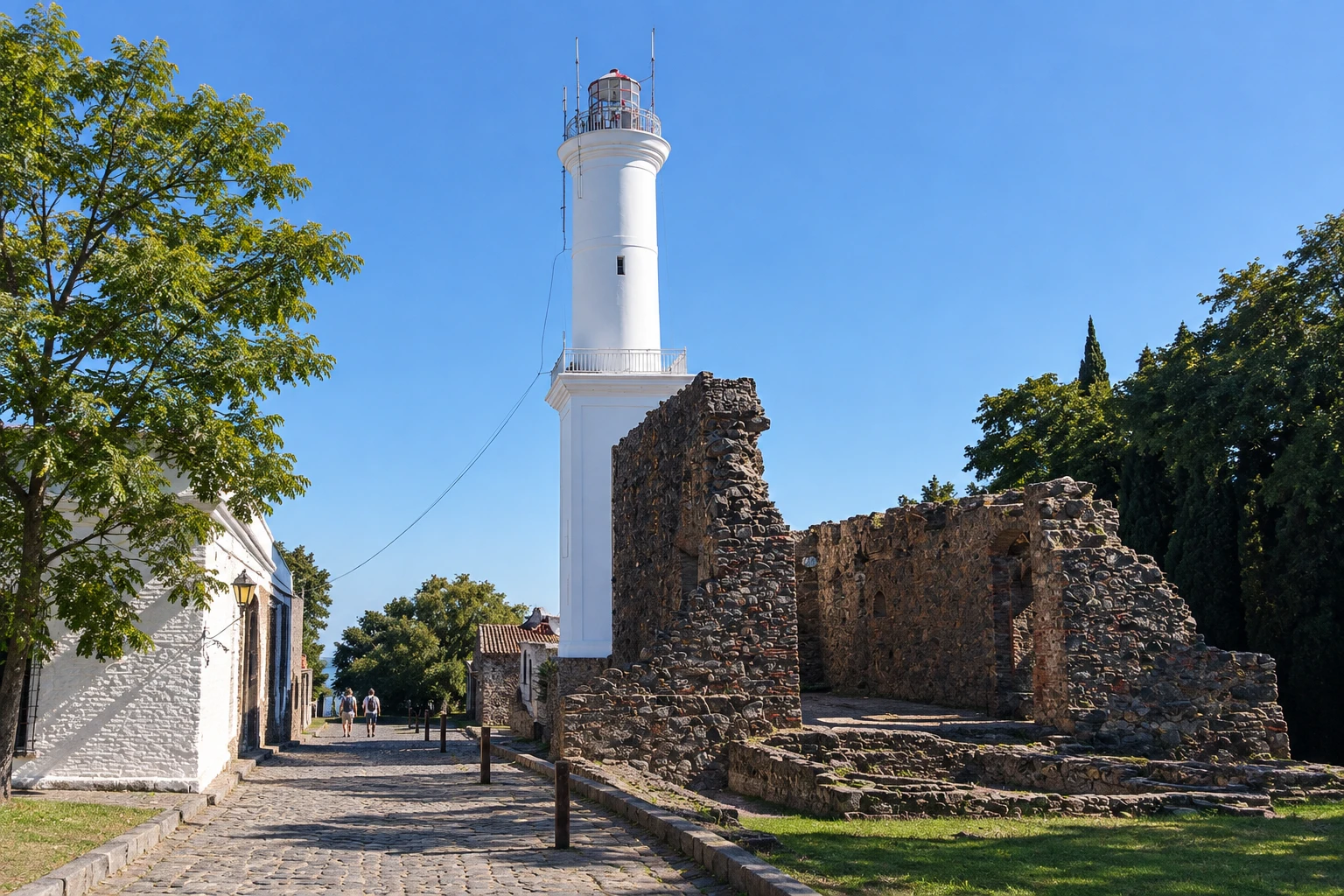
Illustrative images. The pictures in this guide are illustrations based on the real place, not photographs, and may differ from it.
The city
What to expect from Colonia del Sacramento.
Capital of the department of Colonia, the city lies on the north bank of the Rio da Prata, opposite Buenos Aires, and was founded by the Portuguese in 1680. The Barrio Histórico, a UNESCO World Heritage Site, includes the Portón de Campo, the Calle de los Suspiros, the Faro, the Basílica del Santísimo Sacramento and the Museo de Colonia sites. About 5 km to the north, the Plaza de Toros Real de San Carlos, from 1910, has become a cultural center.
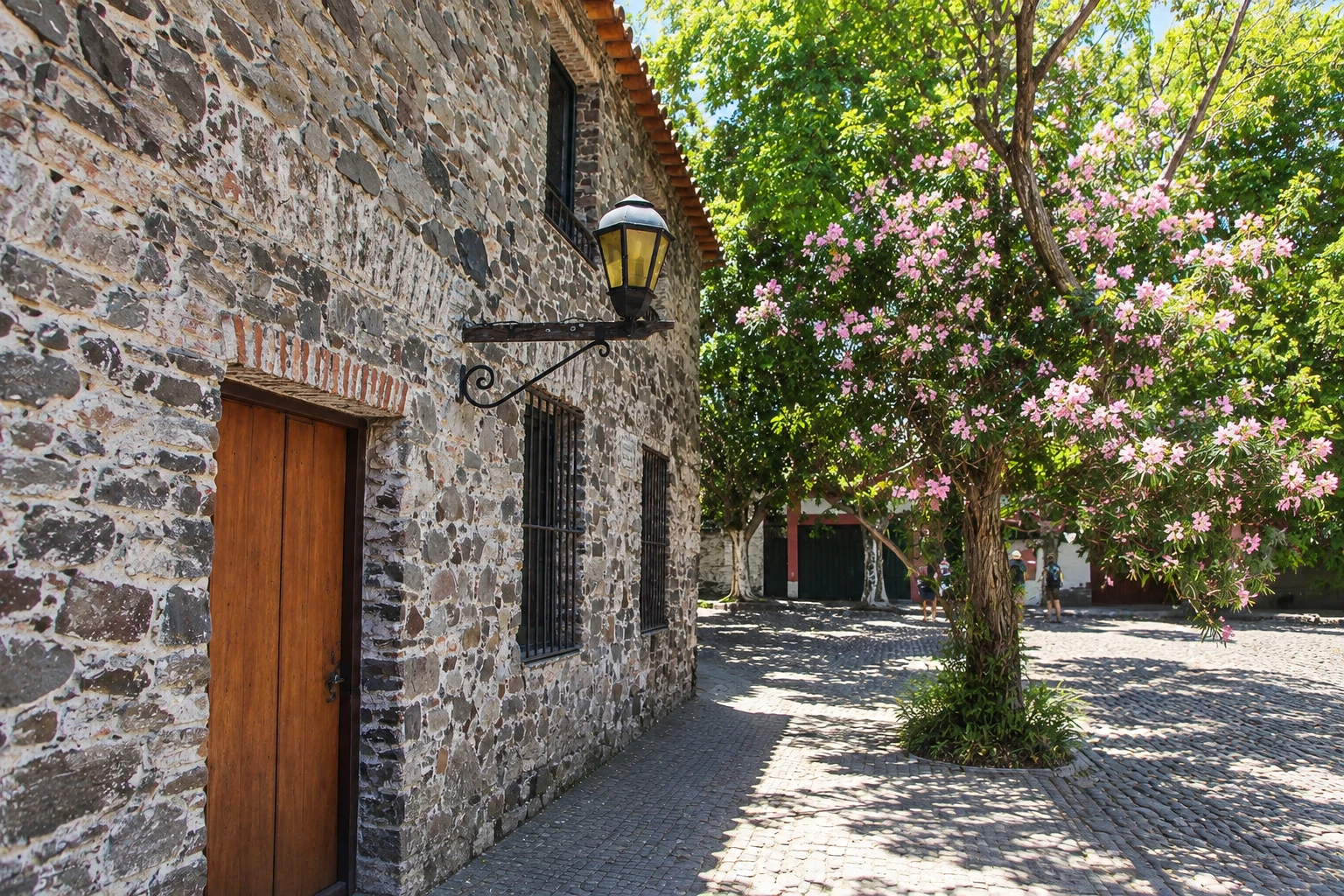
The core founded by the Portuguese in 1680, a UNESCO World Heritage Site since 1995. Cobblestone streets, single‑story houses, the Plaza Mayor 25 de Mayo, the Faro, the Basílica and the museums are concentrated within a few blocks at the tip of the peninsula.
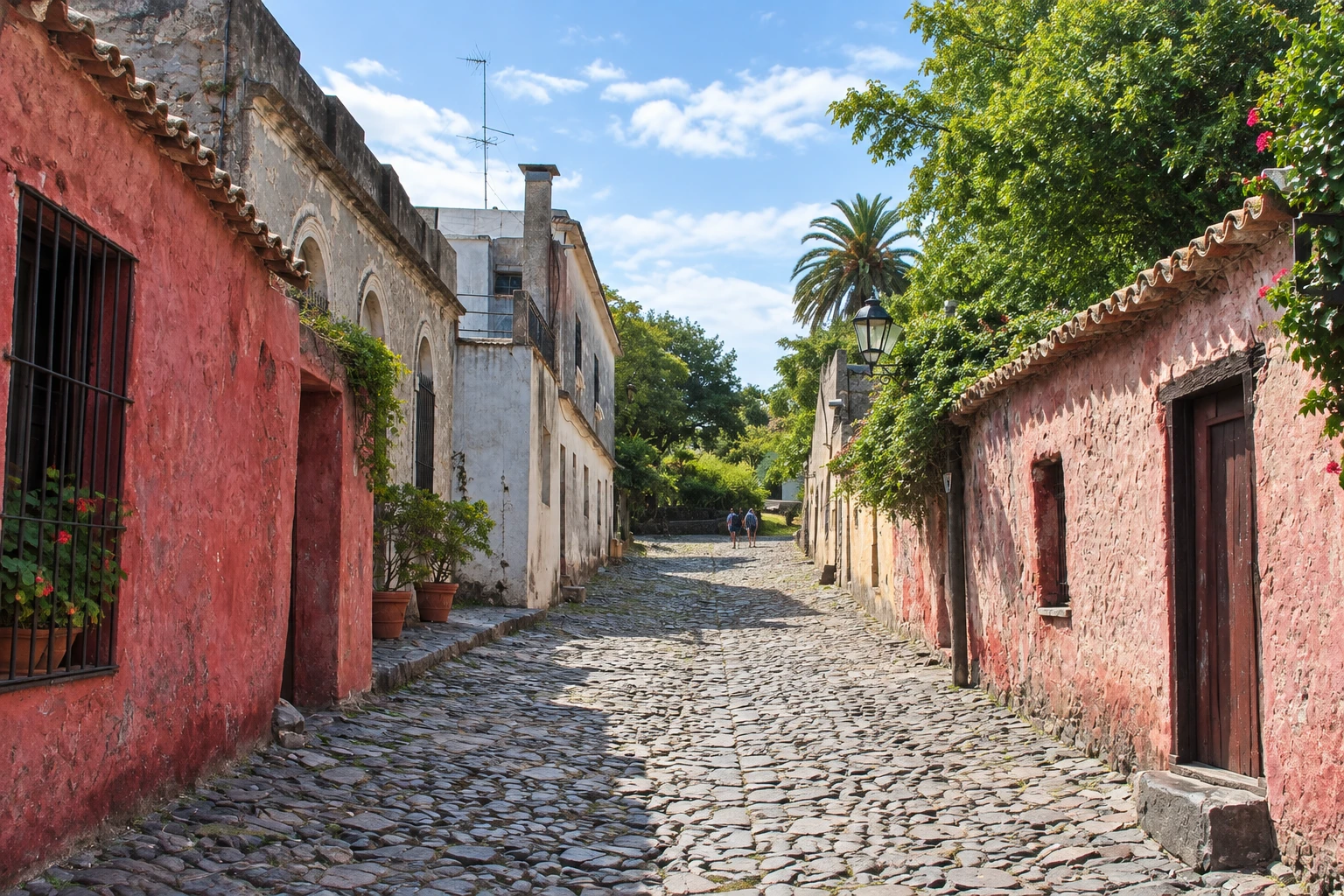
One of the most typical streets in the Barrio Histórico: uneven stone paving, low colonial houses and the river in the background. It begins beside the Plaza Mayor and slopes down toward the riverbank.
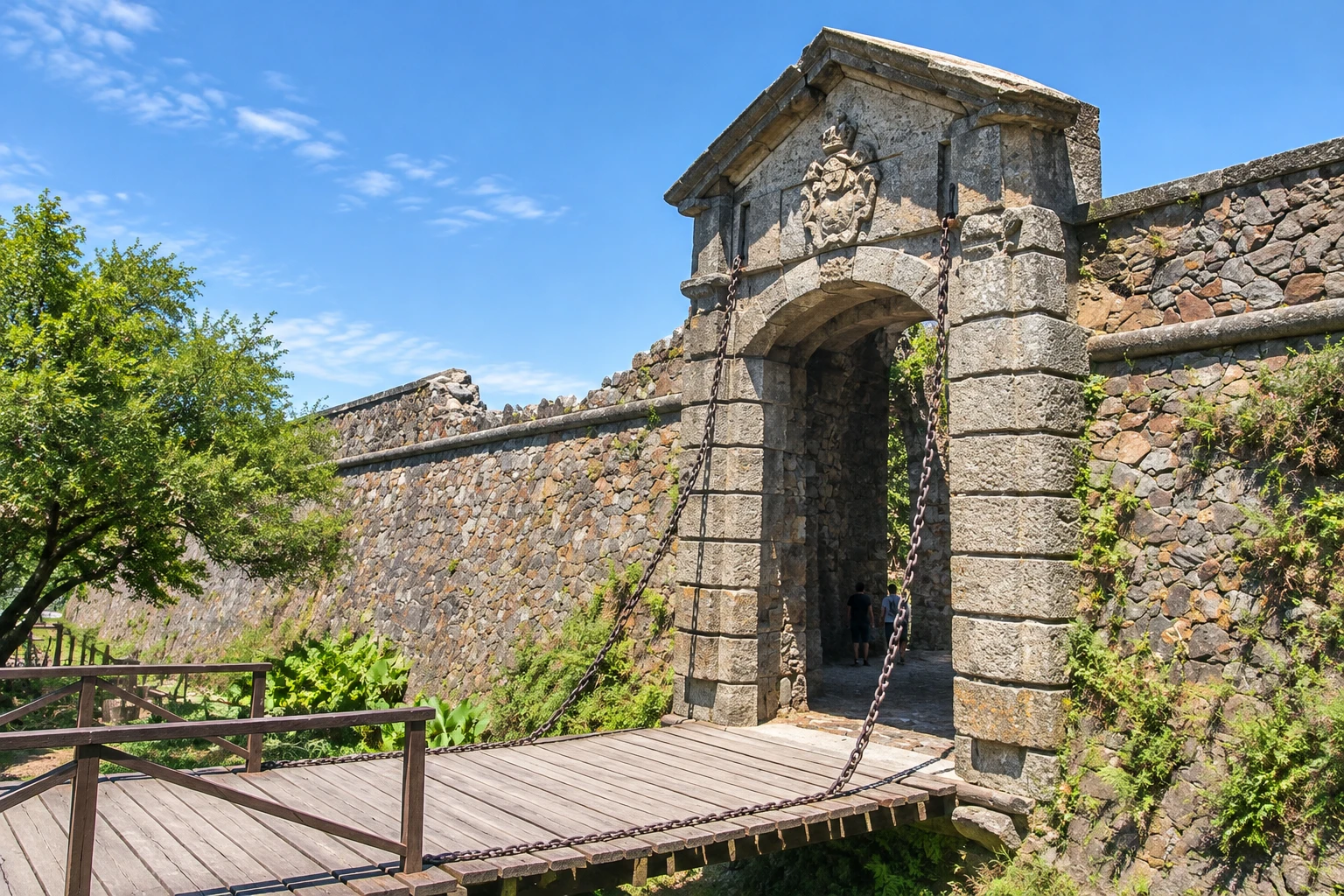
The entrance gate of the old Portuguese citadel, from 1745, with a wooden drawbridge and sections of the wall. It is the traditional access to the Barrio Histórico coming from the center.
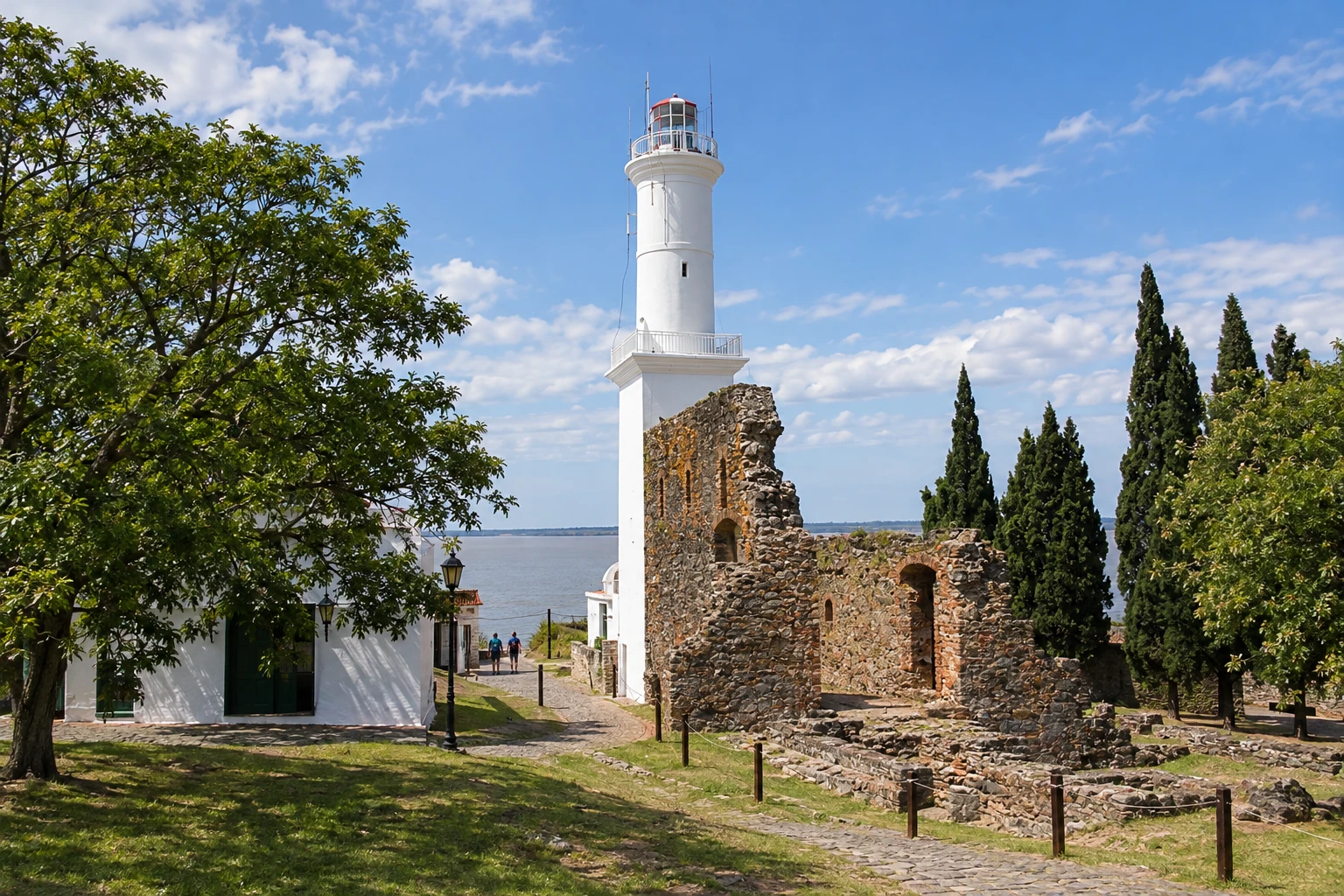
1857 lighthouse built on the ruins of the Convento de San Francisco. Still in operation, it can be climbed via a spiral staircase to a viewpoint over the Barrio Histórico and the Rio de la Plata.
Aeropuerto Internacional de Carrasco (MVD)Ciudad de la Costa · 200 km
Terminal de Ómnibus de Colonia del Sacramento1 km
Approximate distances. Check flights and bus, train or boat schedules before you travel.
From Buenos Aires, ferries dock at the port, a few blocks from the Barrio Histórico, after about 1h15 to 1h30 of crossing. From Montevidéu it is about 180 km via Ruta 1, by car or by bus. The nearest international airport is Carrasco (MVD), around 200 km away. Connections with Brasil may be direct or with a stopover, depending on the season and the airline. Check before buying.
How many days
One day is enough for the Barrio Histórico, including the Faro, the Basílica and some spaces of the Museo de Colonia. With two days you'll have time for the Plaza de Toros Real de San Carlos, the waterfront and to watch the sunset over the river at a relaxed pace.
When to go
October, November and March to May usually have mild weather, good for walking. From December to March is summer, with average highs near 29 °C in January and more visitors. In winter, June to August, highs are around 15 °C and it is very windy on the riverfront.
The seasons shown are the most usual ones; nature doesn't always follow the calendar.
Do you need a car?
No. The Barrio Histórico and the center can be explored on foot, and the Real de San Carlos, about 5 km away, has urban buses and taxis; many people rent bicycles or golf carts. A car only makes sense if you continue to Carmelo and the wineries along Ruta 21.
Suggested itinerary
An order that works
Built with the places on this page. No rush: it's paced so you have time to see them.
One day in Colonia del Sacramento
manhã
Portón de Campo, Plaza Mayor 25 de Mayo and Calle de los Suspiros
Enter the Barrio Histórico via the drawbridge at the Portón de Campo, walk to the Plaza Mayor 25 de Mayo and descend the Calle de los Suspiros while the streets are empty.
tarde
Museo de Colonia and Basílica
Buy the single ticket at Espacio Rebuffo and visit two or three museum spaces, such as Casa de Nacarello. Then go to the Basílica del Santísimo Sacramento, next to the Plaza de Armas.
fim de tarde
Climb to the Faro
Climb the spiral staircase of the Faro, above the ruins of the Convento de San Francisco, to see the neighborhood and the river from above. Then walk along the waterfront to the port.
noite
Dinner in the Barrio Histórico
Dine in one of the old houses in the neighborhood. In the Uruguai, restaurants fill up from around 21:00.
2 days in Colonia del Sacramento
Day 1
manhã
Entrance via the Portón de Campo
Start at the Portón de Campo and the Plaza Mayor 25 de Mayo and take a leisurely walk along the Calle de los Suspiros and the surrounding cobbled streets.
tarde
Museo de Colonia spaces
Visit Espacio Rebuffo, Casa de Nacarello, Espacio Portugués and the other spaces open that day, with a break for lunch in the neighborhood.
fim de tarde
Basílica and Faro
Stop by the Basílica del Santísimo Sacramento and end the day at the top of the Faro, with views over the Rio da Prata.
noite
Neighborhood streets at night
Walk the illuminated streets of the Barrio Histórico before dinner, which in the Uruguai usually starts after 21:00.
Day 2
manhã
Rambla toward the Real de San Carlos
Rent a bicycle or a golf cart and follow the waterfront about 5 km to the Real de San Carlos neighborhood.
tarde
Plaza de Toros Real de San Carlos
Visit the former 1910 bullring, now a cultural center, and the museum that tells its history with interactive exhibits.
fim de tarde
Return along the waterfront
Return along the riverfront, which often offers beautiful sunsets over the Rio da Prata on clear days.
noite
Dinner in the center
Choose a restaurant in the commercial center, near Avenida General Flores, or return to the Barrio Histórico for the last night.
Check before you go. Opening hours and days change, and places may close for renovations, holidays or events. This itinerary is a suggestion from Cidade Turismo, not a commitment: plan yours by checking directly with each place you intend to visit.
Before you go
Frequently asked questions
Is Colônia do Sacramento worth a day trip from Buenos Aires?
Yes. The ferry takes about 1h15 to 1h30 and arrives a few blocks from the Barrio Histórico, which can be seen on foot in one day. Staying one night lets you see the neighborhood quieter, early in the morning and at night.
How long does it take from Montevidéu to Colônia?
It's about 180 km via Ruta 1, by car or bus, which connects the two cities frequently.
Can you do everything on foot in Colônia?
The Barrio Histórico and the center, yes. For the Plaza de Toros, about 5 km away, use the urban bus, taxi, bicycle or golf cart.
Is Portuguese spoken in Colônia?
The official language is Spanish. The city receives many tourists, and in the shops of the Barrio Histórico it's often possible to get by with patience, but don't count on Portuguese.
What is the best time to visit?
Spring and autumn, October to November and March to May, are usually more pleasant for walking. In winter, June to August, it is windy and cold on the riverfront.


 Brazil
 Antarctica
 Argentina
 Bolivia
 Chile
 Colombia
 Ecuador
 Falkland Islands (Malvinas)
 French Guiana
 Guyana
 Paraguay
 Peru
 Suriname
 Venezuela
 Austria
 Belgium
 Croatia
 Denmark
 Finland
 France
 Germany
 Greece
 Hungary
 Iceland
 Ireland
 Italy
 Luxembourg
 Norway
 Poland
 Portugal
 Slovakia
 Slovenia
 Spain
 Sweden
 Switzerland
 the Czech Republic
 the Netherlands
 the United Kingdom
 Turkey
 Bermuda
 Canada
 Greenland
 Mexico
 Saint Pierre and Miquelon
 the United States
 the Dominican Republic
 Japan
 Egypt
 South Africa
 Australia
 Fiji
 New Zealand
 Papua New Guinea