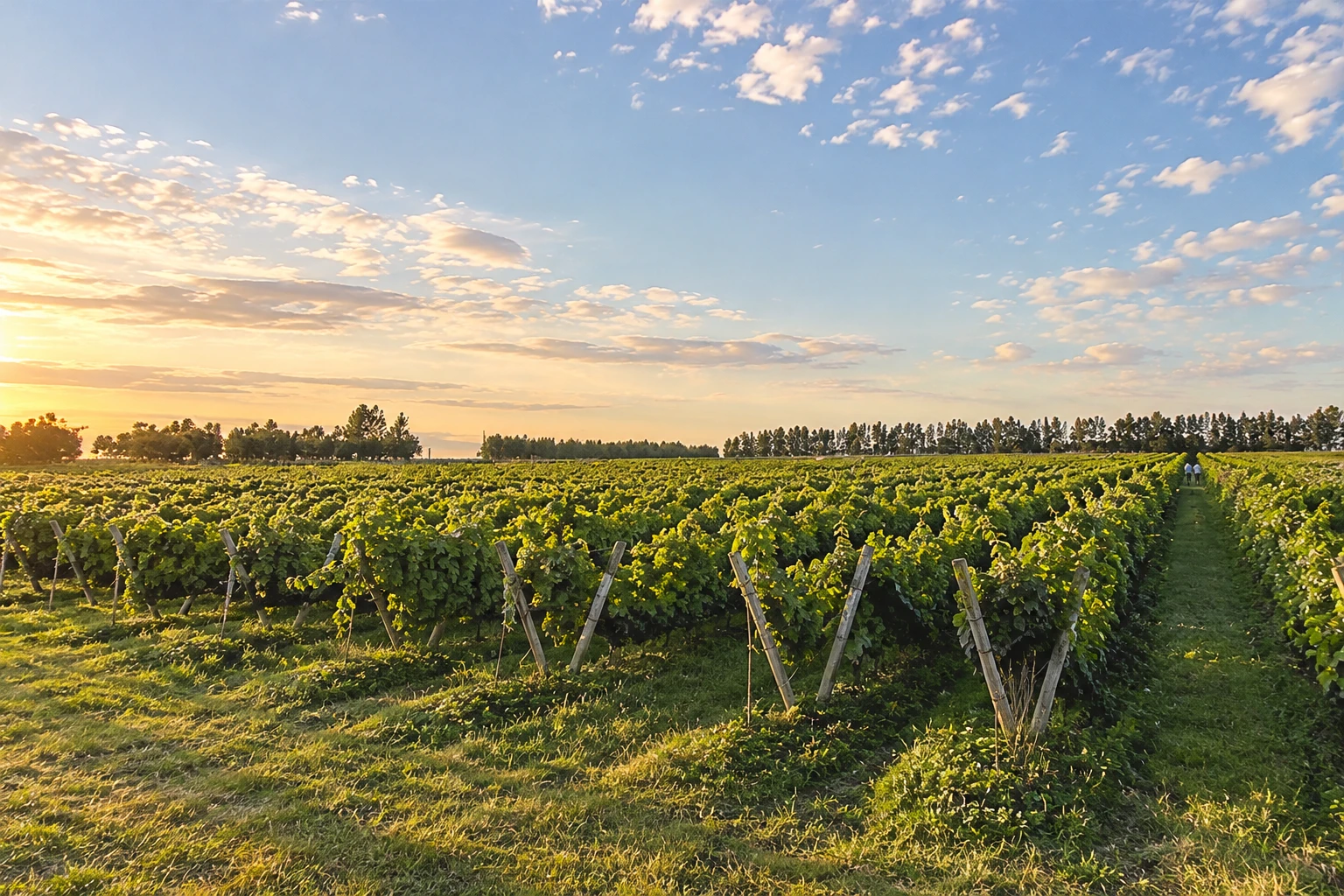
Illustrative images. The pictures in this guide are illustrations based on the real place, not photographs, and may differ from it.
The city
What to expect from Carmelo.
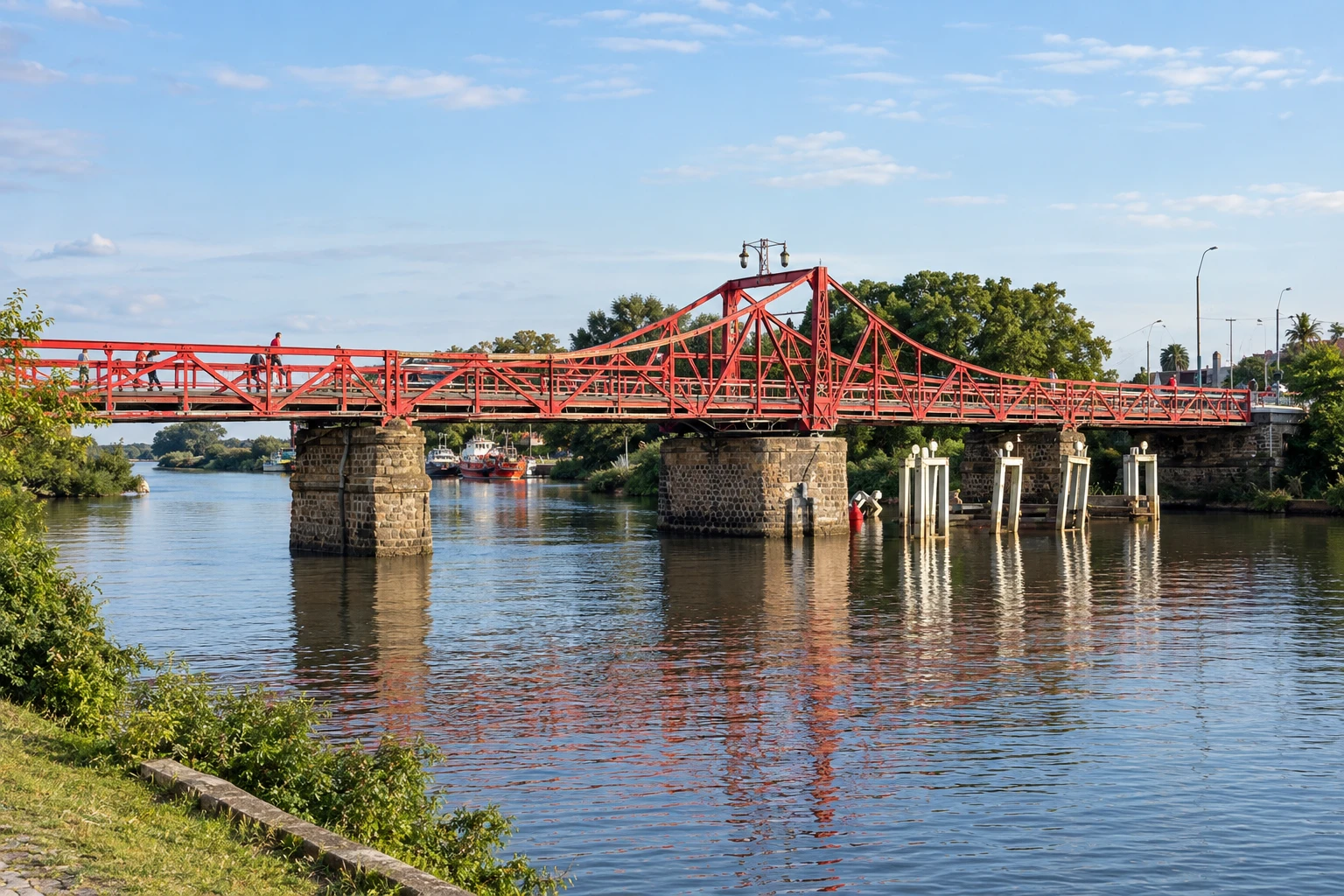
Carmelo lies near the mouth of the Arroyo de las Vacas on the Río de la Plata, 75 km from Colônia do Sacramento along Ruta 21. Founded by Artigas in 1816, it has the Puente Giratorio, from 1912, operated by human power, and the Plaza Independencia with the church of Nuestra Señora del Carmen. Around it are the Jesuit ruins of the Calera de las Huérfanas and wineries that receive visitors, such as Zubizarreta, Narbona and El Legado.
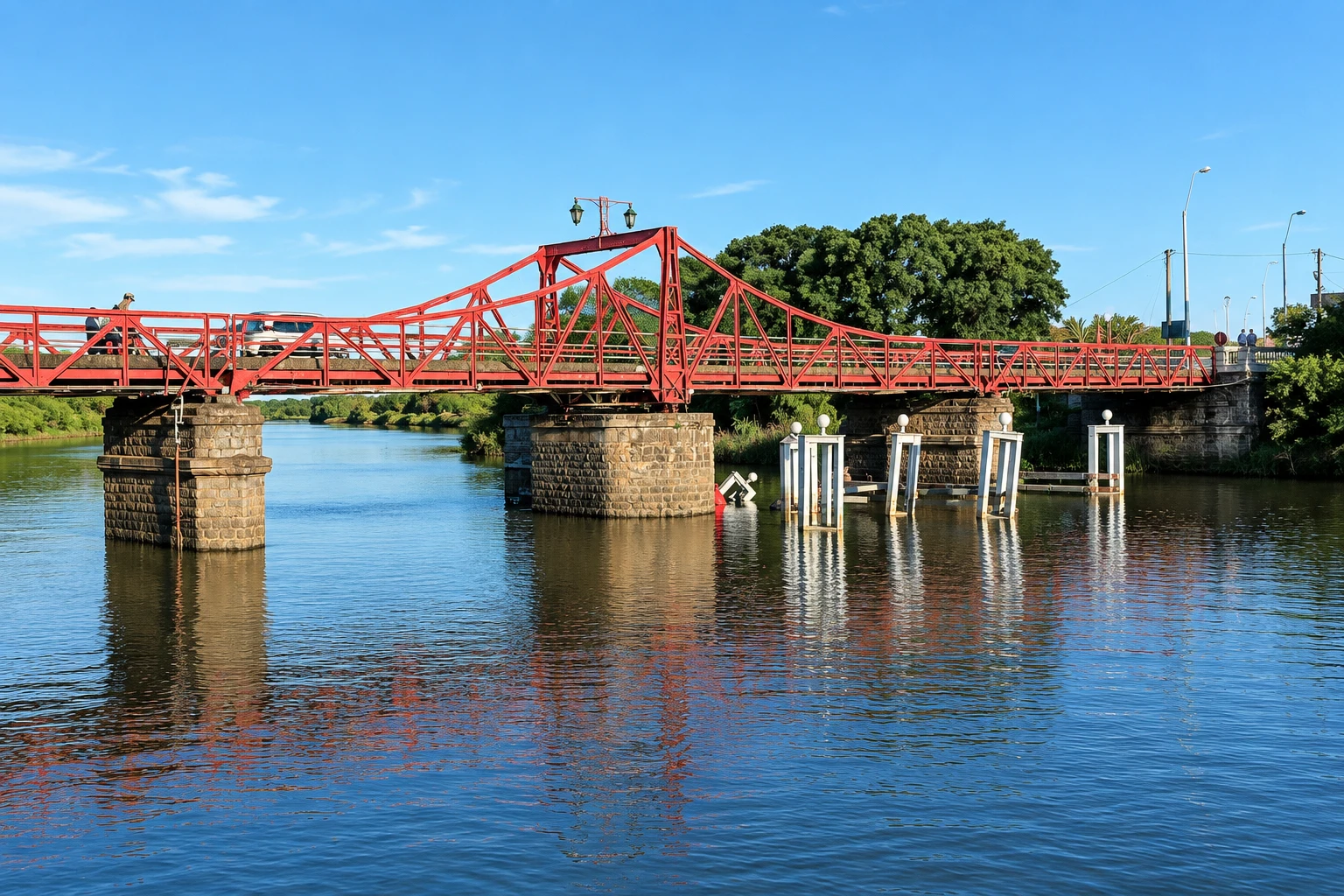
A 1912 iron bridge over the Arroyo de las Vacas, considered the first swing bridge in South America. The central span rotates by human power to let boats pass. It is a National Historic Monument.
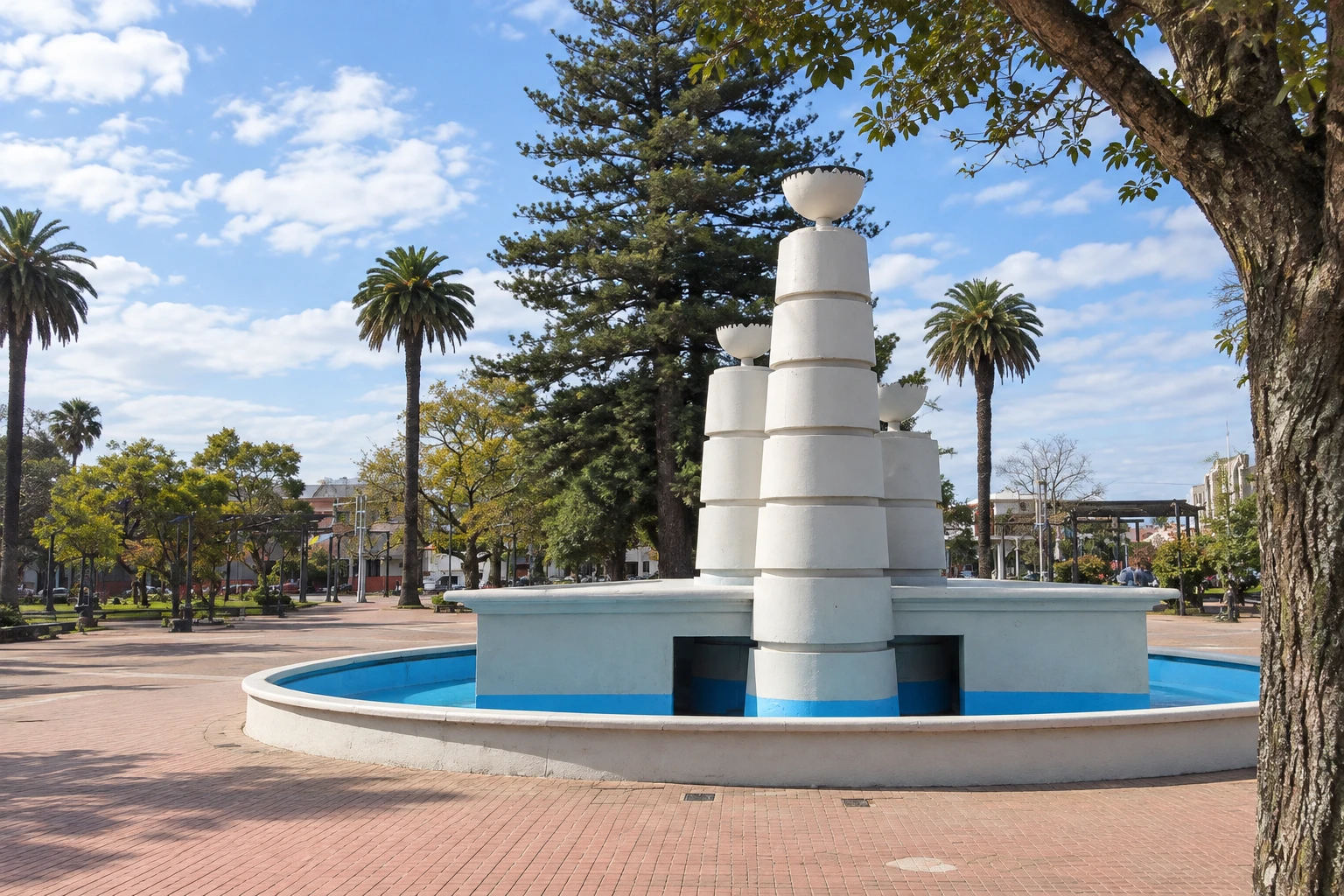
Carmelo's central square, with the church of Nuestra Señora del Carmen, the town's patron saint, and cafés and restaurants around. It's the starting point for exploring the centre on foot.
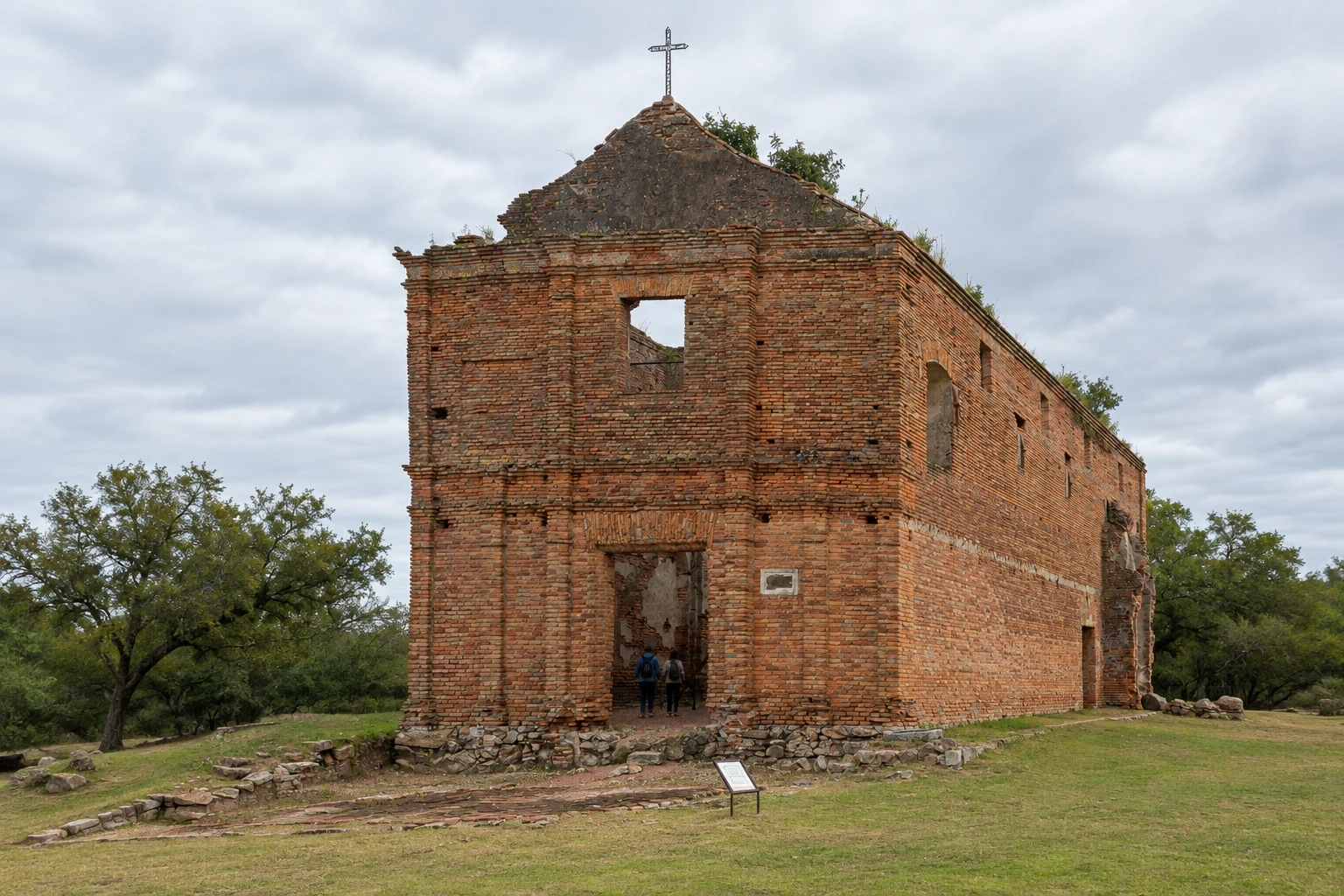
Ruins of the Estancia de Belén, founded by the Jesuits in 1741, with the chapel, walls and the lime kilns that gave the place its name. A National Historic Monument, about 16 km from Carmelo.
Family winery of Basque origin, producing wine since 1957 on lands of the former Calera de las Huérfanas. It offers guided tours, tastings and lunch at Casa de Aitona, an early-20th-century manor house.
Carmelo – UruguayDestination Colonia del Sacramentoabout 75 km from Colonia del Sacramento
How to get there
Aeropuerto Internacional de Carrasco (MVD)Ciudad de la Costa · 260 km
Approximate distances. Check flights and bus, train or boat schedules before you travel.
From Colônia do Sacramento it's 75 km via Ruta 21, about an hour by car, and there are buses between the two towns. From Montevideo it's about 240 km. From the town's port boats depart for the Tigre delta in Argentina. The nearest international airport is Carrasco (MVD). Connections to Brazil may be direct flights or require a connection, depending on season and airline. Confirm before buying.
How many days
One day is enough for the town center, the Puente Giratorio and a winery with lunch. With two days you can include the Calera de las Huérfanas and one or two more wineries, with time to spend on the banks of the Arroyo de las Vacas.
When to go
October, November and March to May are usually pleasant for touring wineries. Harvest (vendimia) typically takes place between February and March. Summer, from December to March, is hot and brings activity to the coast. From June to August the cold is damp and windy on the coast.
The seasons shown are the most usual ones; nature doesn't always follow the calendar.
Do you need a car?
For the centre and the bridge, no: everything is done on foot. For the wineries and the Calera de las Huérfanas, scattered across the rural area, a car makes a big difference. The alternative is taxi, bicycle or an organized tour.
Suggested itinerary
An order that works
Built with the places on this page. No rush: it's paced so you have time to see them.
One day in Carmelo
manhã
Centre and Puente Giratorio
Start at Plaza Independencia, with the church of Nuestra Señora del Carmen, and walk to the Puente Giratorio. Cross the bridge on foot and continue along the bank of the Arroyo de las Vacas.
tarde
Lunch at Bodega Zubizarreta
Drive to km 241 on Ruta 21 for the wine-paired lunch at Casa de Aitona, reserved in advance.
fim de tarde
Calera de las Huérfanas
On the same route, explore the Jesuit ruins of the Estancia de Belén and the trail to the lime kilns.
noite
Dinner in the centre
Return to the centre and dine near Plaza Independencia. Restaurants fill up from around 9 pm.
2 days in Carmelo
Day 1
manhã
Plaza Independencia and the bridge
Walk through the centre, enter the church of Nuestra Señora del Carmen and go down to the Puente Giratorio and the Rambla de los Constituyentes.
tarde
El Legado
Head to Colonia Estrella and take the tour with tasting and lunch at El Legado, reserved in advance.
fim de tarde
Bank of the arroyo
Back in town, walk along the bank of the Arroyo de las Vacas, by the rowing club and the moored boats.
noite
Dinner near the plaza
Dine at one of the restaurants around Plaza Independencia.
Day 2
manhã
Calera de las Huérfanas
Explore the ruins of the Estancia de Belén, the chapel and the trail of the lime kilns, about 16 km from the town.
tarde
Bodega Zubizarreta
Have lunch or a tasting at the winery neighboring the Calera, on Camino Juan de San Martín.
fim de tarde
Narbona
Follow Ruta 21 to Narbona, northwest of the town, for the wine-and-cheese tasting by reservation.
noite
Dinner at Narbona or in the town centre
Stay for dinner at the estancia's restaurant or return to Carmelo's centre.
Check before you go. Opening hours and days change, and places may close for renovations, holidays or events. This itinerary is a suggestion from Cidade Turismo, not a commitment: plan yours by checking directly with each place you intend to visit.
Before you go
Frequently asked questions
Is it possible to do Carmelo as a day trip from Colonia?
Yes. It's 75 km via Ruta 21, about an hour by car. Since wineries require reservations and are spread out, staying overnight is more worthwhile.
Do you need a car in Carmelo?
In the centre, no. For the wineries and the Calera de las Huérfanas, yes — otherwise taxi, bicycle or an organized tour.
Do Carmelo's wineries require reservations?
Most do, especially for lunches and full tastings. Book before you leave home.
Can you go from Carmelo to Argentina?
Yes. Fast boats depart from Carmelo's port to the Tigre delta, near Buenos Aires. Check days and times before you go.
What's the best time for visiting the wineries?
From spring to autumn. Harvest usually takes place between February and March, and October, November, April and May have mild weather.


 Brazil
 Antarctica
 Argentina
 Bolivia
 Chile
 Colombia
 Ecuador
 Falkland Islands (Malvinas)
 French Guiana
 Guyana
 Paraguay
 Peru
 Suriname
 Venezuela
 Austria
 Belgium
 Croatia
 Denmark
 Finland
 France
 Germany
 Greece
 Hungary
 Iceland
 Ireland
 Italy
 Luxembourg
 Norway
 Poland
 Portugal
 Slovakia
 Slovenia
 Spain
 Sweden
 Switzerland
 the Czech Republic
 the Netherlands
 the United Kingdom
 Turkey
 Bermuda
 Canada
 Greenland
 Mexico
 Saint Pierre and Miquelon
 the United States
 the Dominican Republic
 Japan
 Egypt
 South Africa
 Australia
 Fiji
 New Zealand
 Papua New Guinea