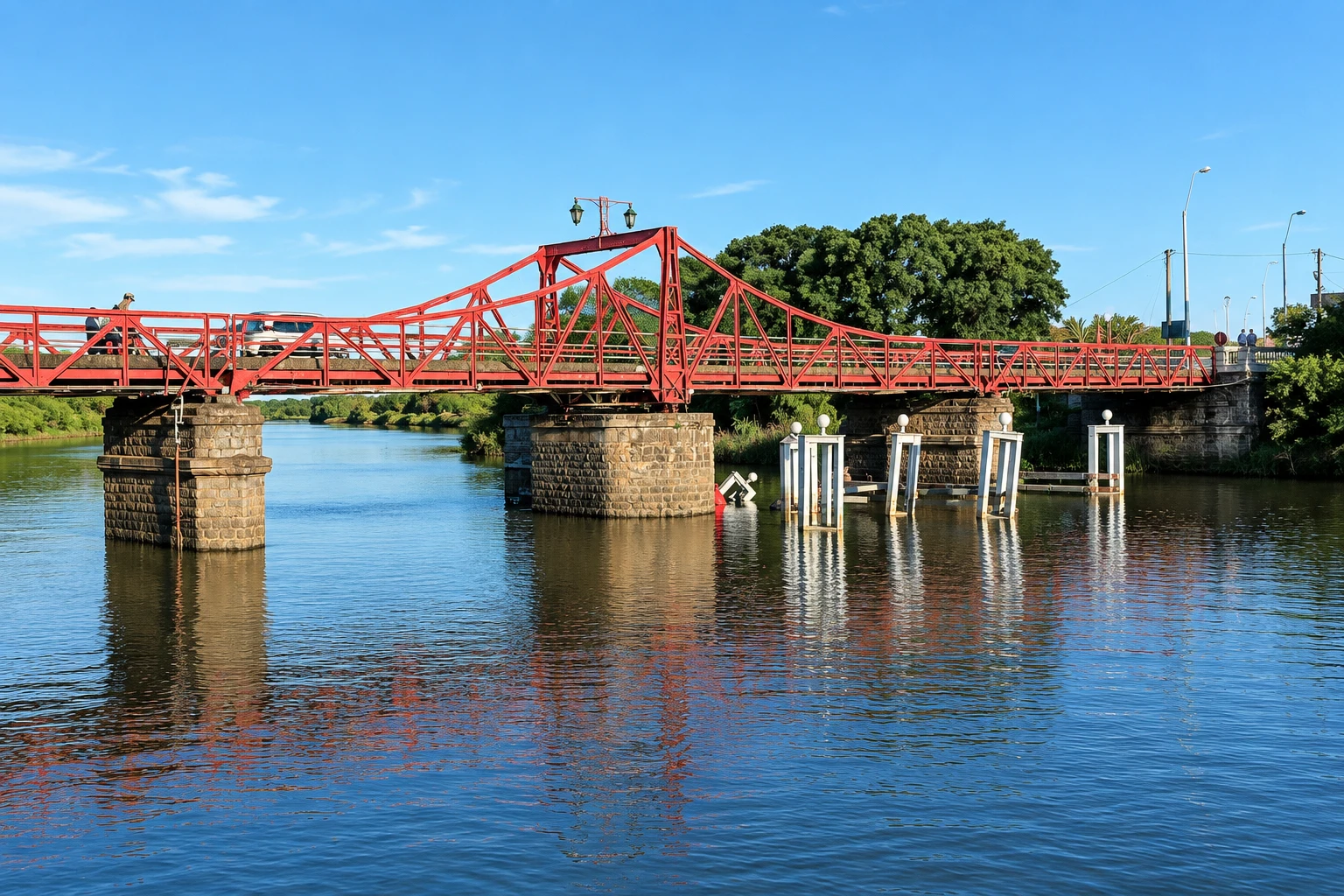
Carmelo Swing Bridge · CarmeloA 1912 iron bridge over the Arroyo de las Vacas, considered the first swing bridge in South America.
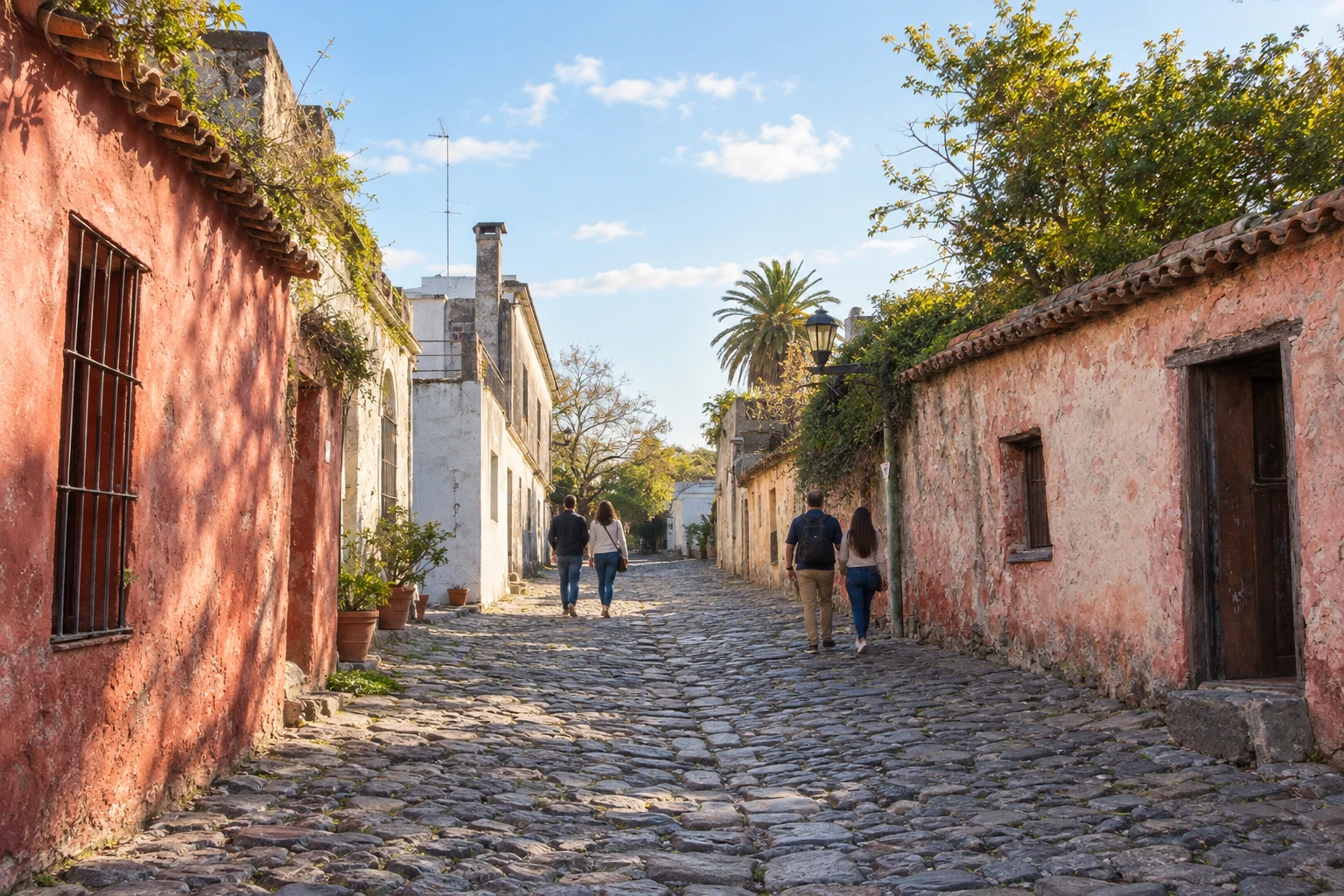
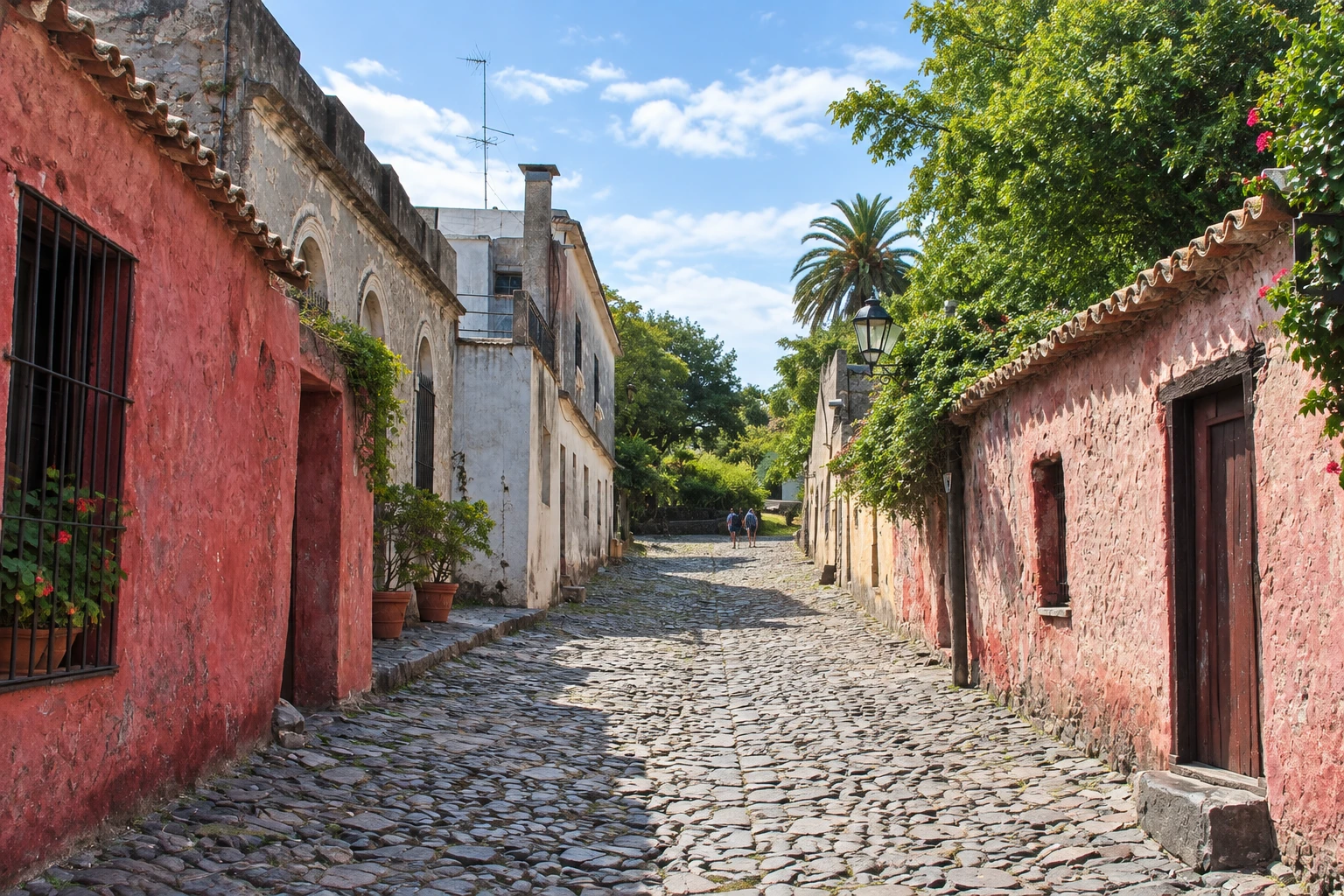
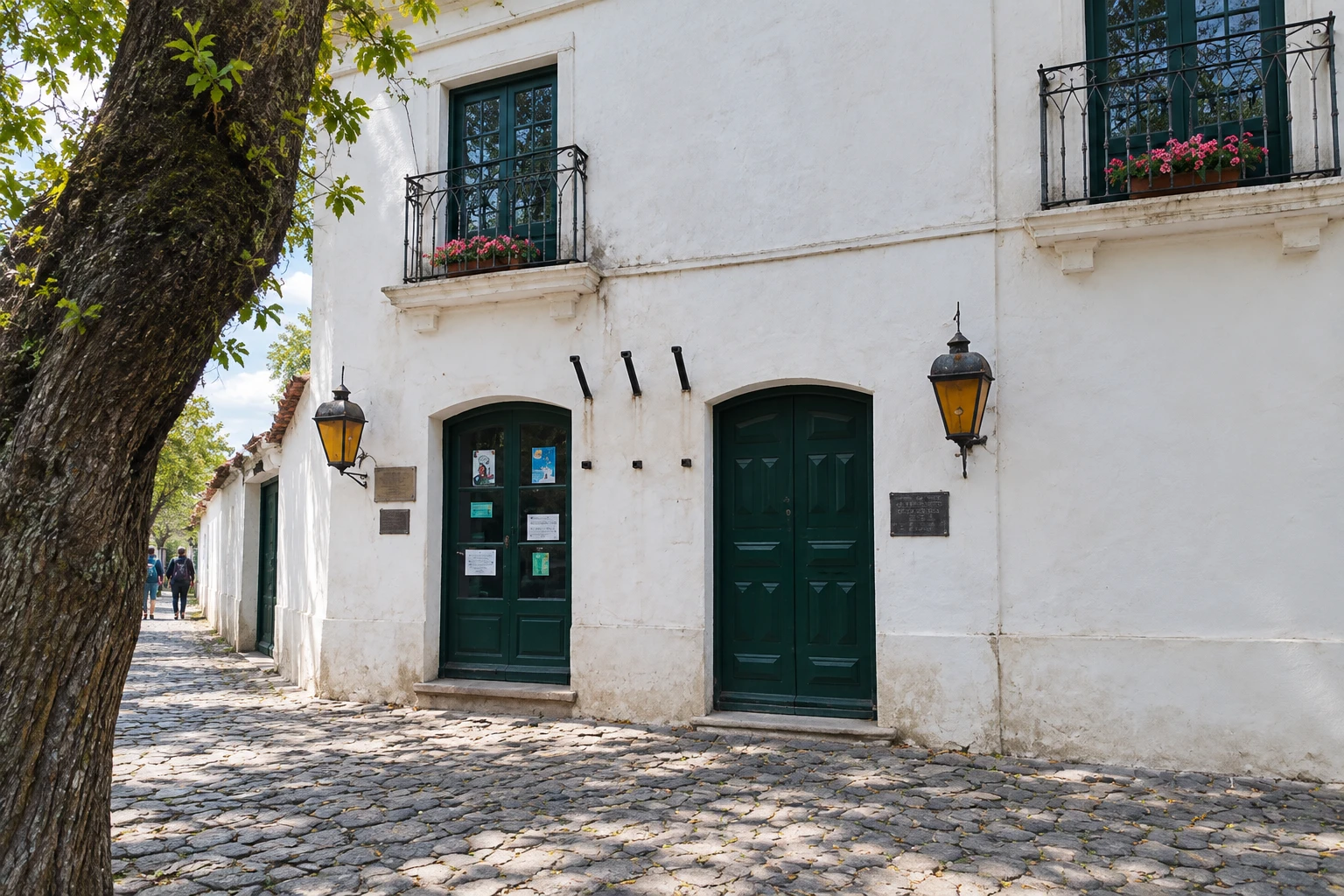
Street of Sighs · Colonia del SacramentoOne of the most typical streets in the Barrio Histórico: uneven stone paving, low colonial houses and the river in the background.
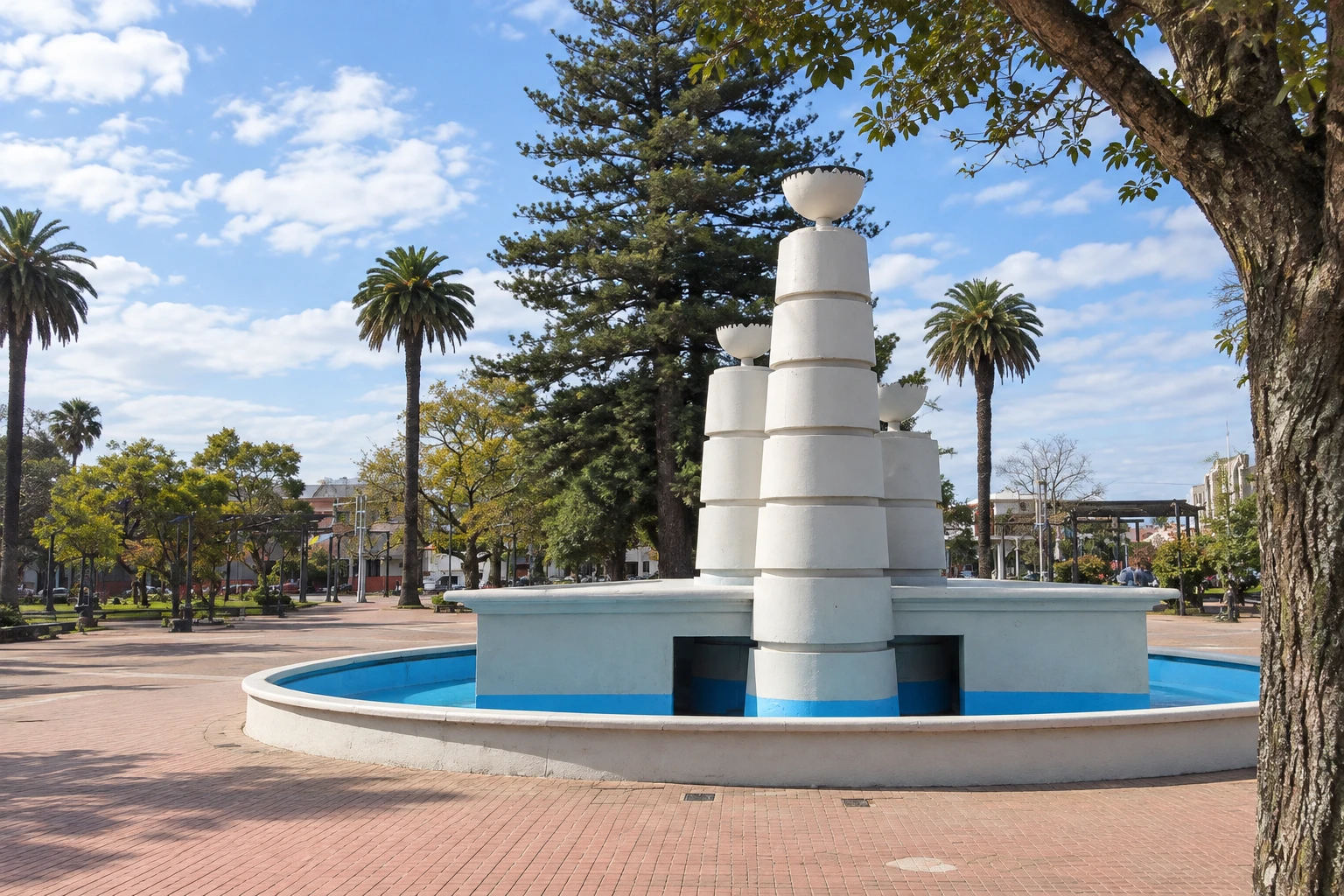
Plaza Independencia · CarmeloCarmelo's central square, with the church of Nuestra Señora del Carmen, the town's patron saint, and cafés and restaurants around.
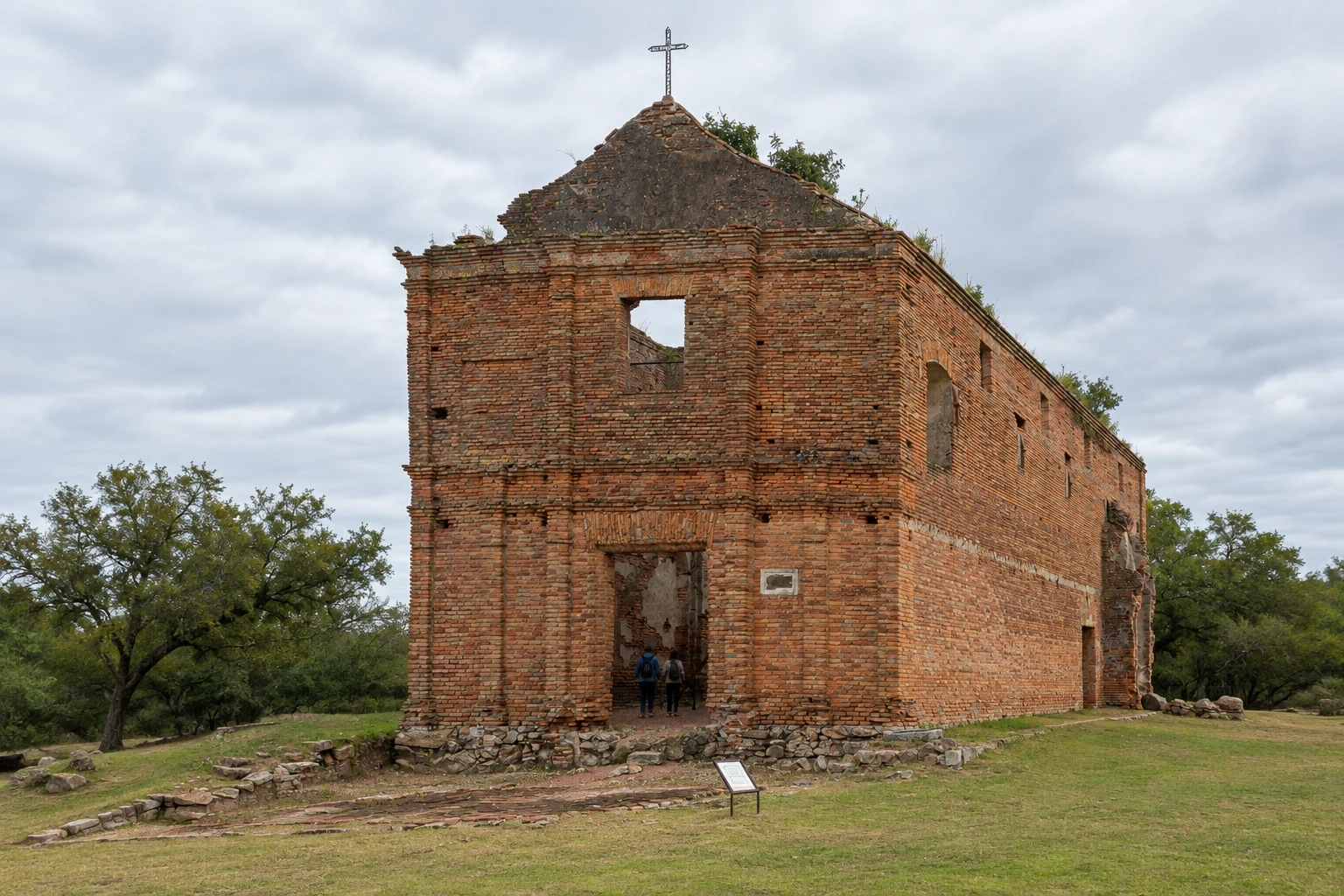
Calera de las Huérfanas · CarmeloRuins of the Estancia de Belén, founded by the Jesuits in 1741, with the chapel, walls and the lime kilns that gave the place its name.
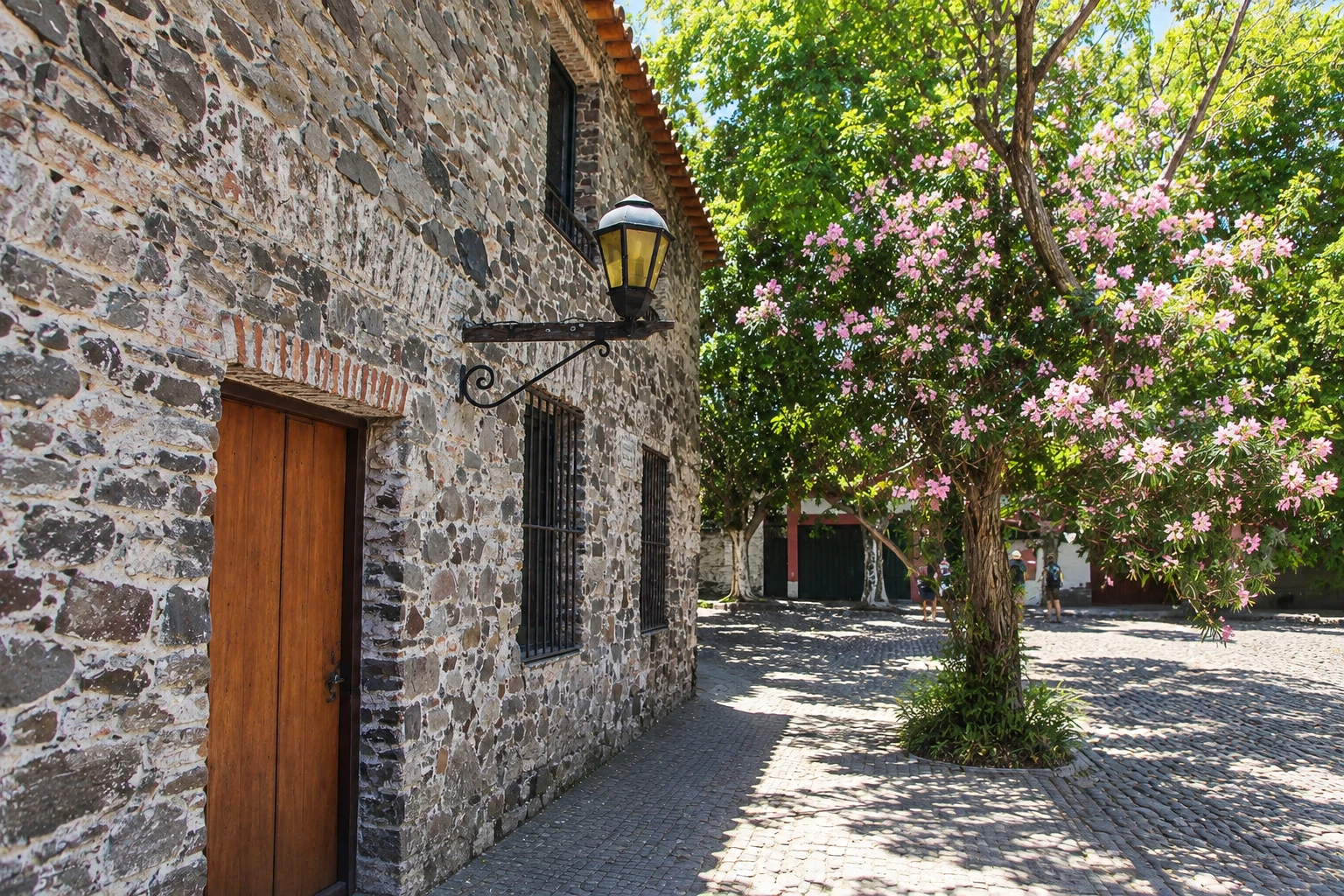
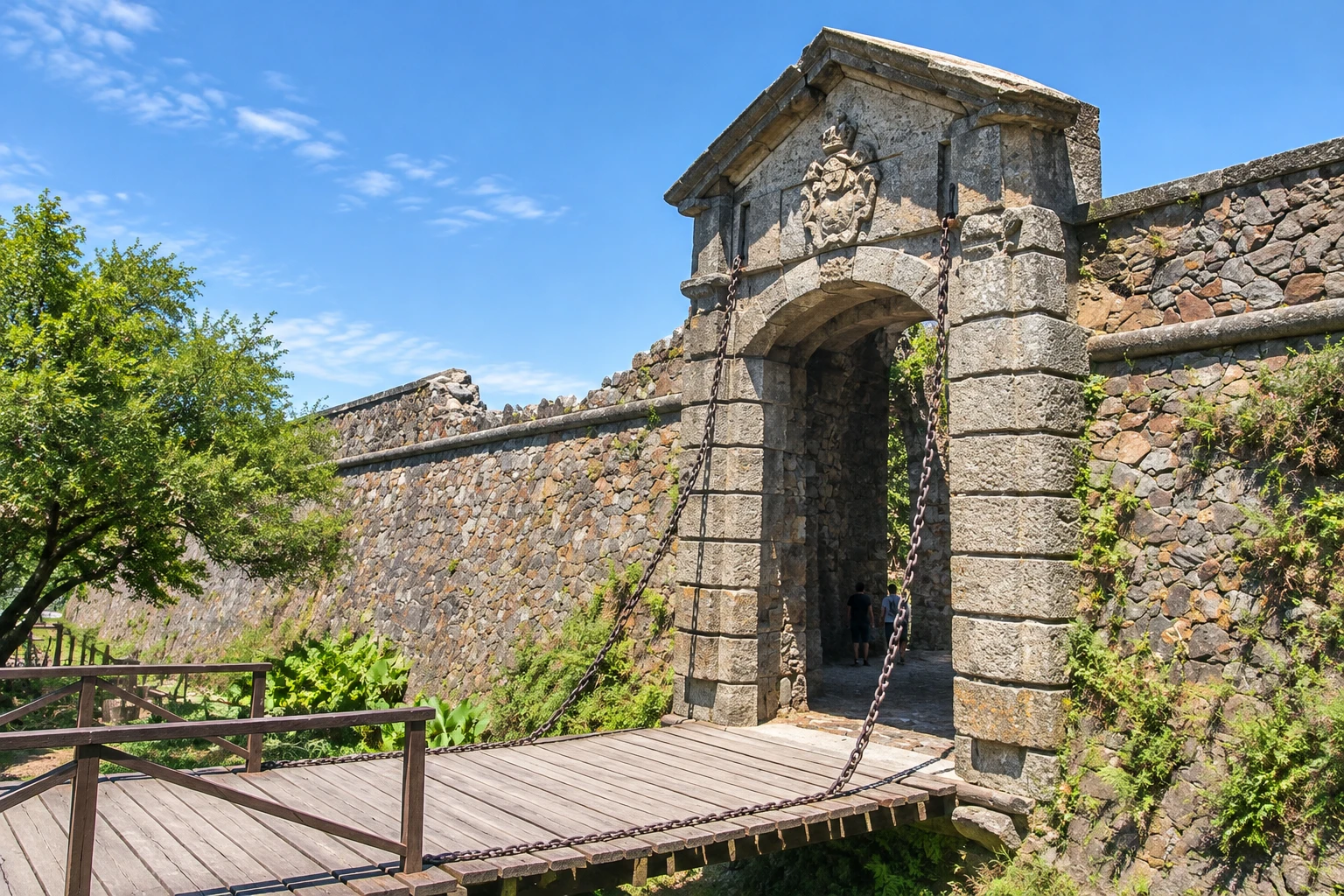
Portón de Campo · Colonia del SacramentoThe entrance gate of the old Portuguese citadel, from 1745, with a wooden drawbridge and sections of the wall.
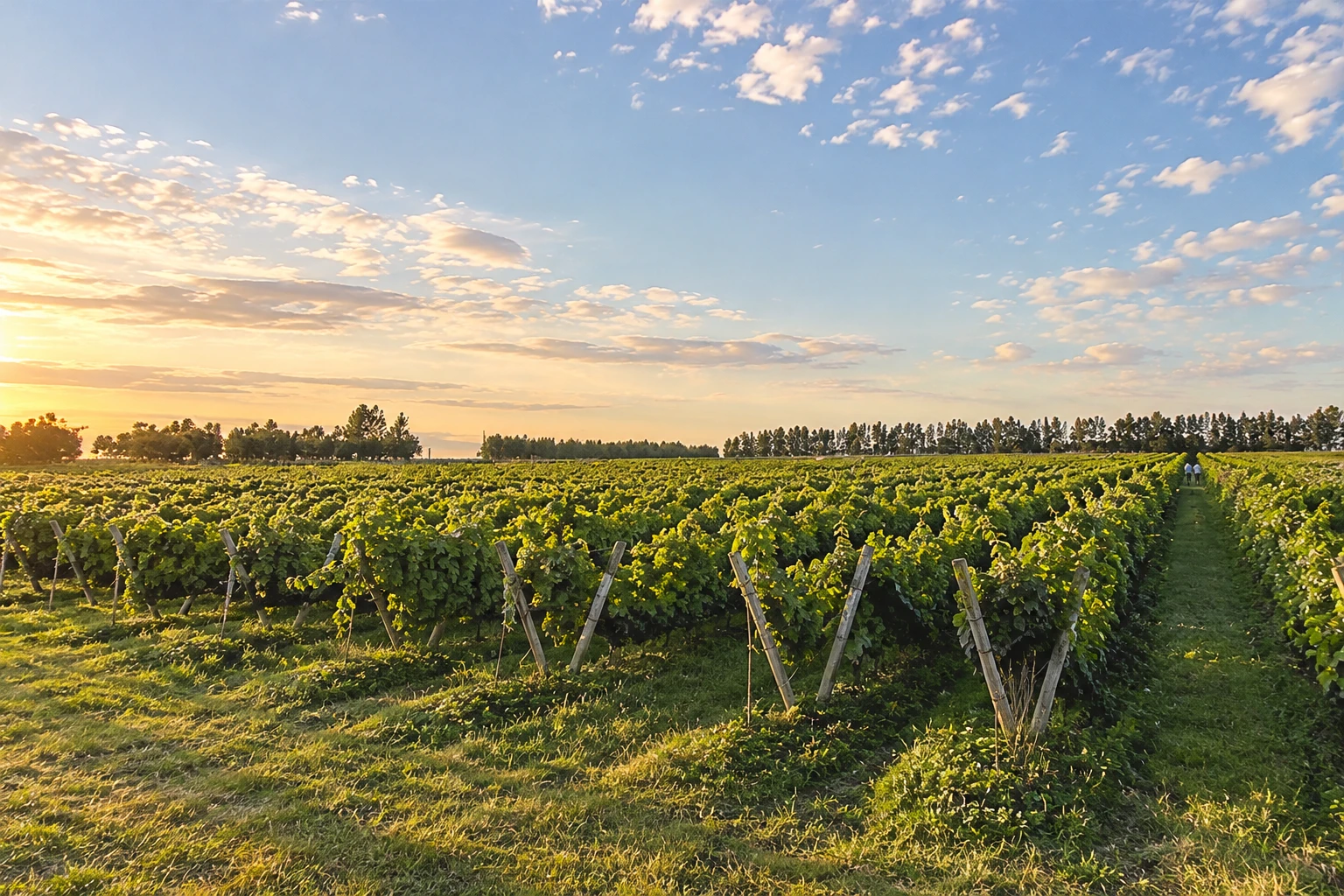
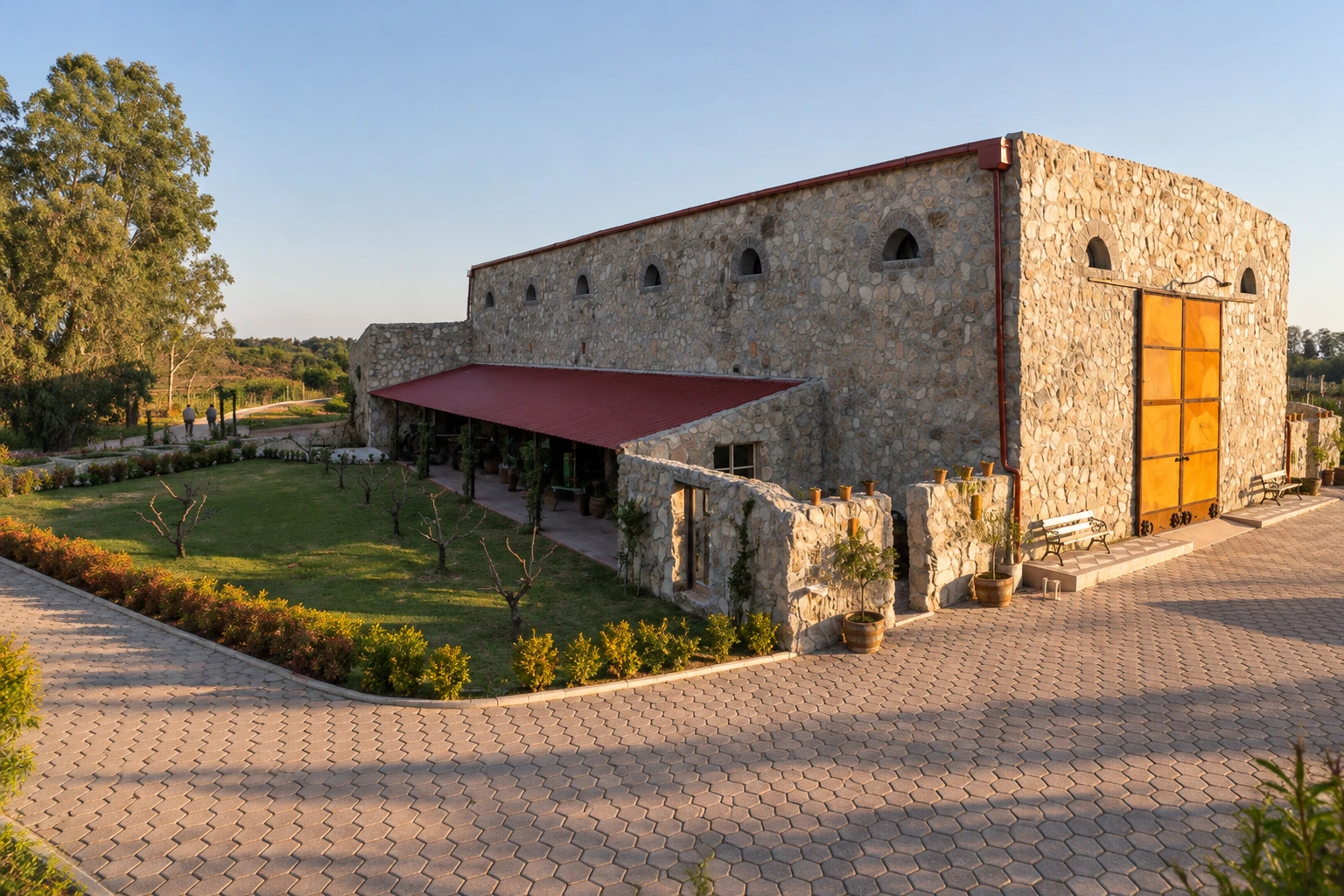
Bodega Zubizarreta · CarmeloFamily winery of Basque origin, producing wine since 1957 on lands of the former Calera de las Huérfanas.
The core founded by the Portuguese in 1680, a UNESCO World Heritage Site since 1995. Cobblestone streets, single‑story houses, the Plaza Mayor 25 de Mayo, the Faro, the Basílica and the museums are concentrated within a few blocks at the tip of the peninsula.
A 1912 iron bridge over the Arroyo de las Vacas, considered the first swing bridge in South America. The central span rotates by human power to let boats pass. It is a National Historic Monument.
One of the most typical streets in the Barrio Histórico: uneven stone paving, low colonial houses and the river in the background. It begins beside the Plaza Mayor and slopes down toward the riverbank.
Carmelo's central square, with the church of Nuestra Señora del Carmen, the town's patron saint, and cafés and restaurants around. It's the starting point for exploring the centre on foot.
Ruins of the Estancia de Belén, founded by the Jesuits in 1741, with the chapel, walls and the lime kilns that gave the place its name. A National Historic Monument, about 16 km from Carmelo.
The entrance gate of the old Portuguese citadel, from 1745, with a wooden drawbridge and sections of the wall. It is the traditional access to the Barrio Histórico coming from the center.
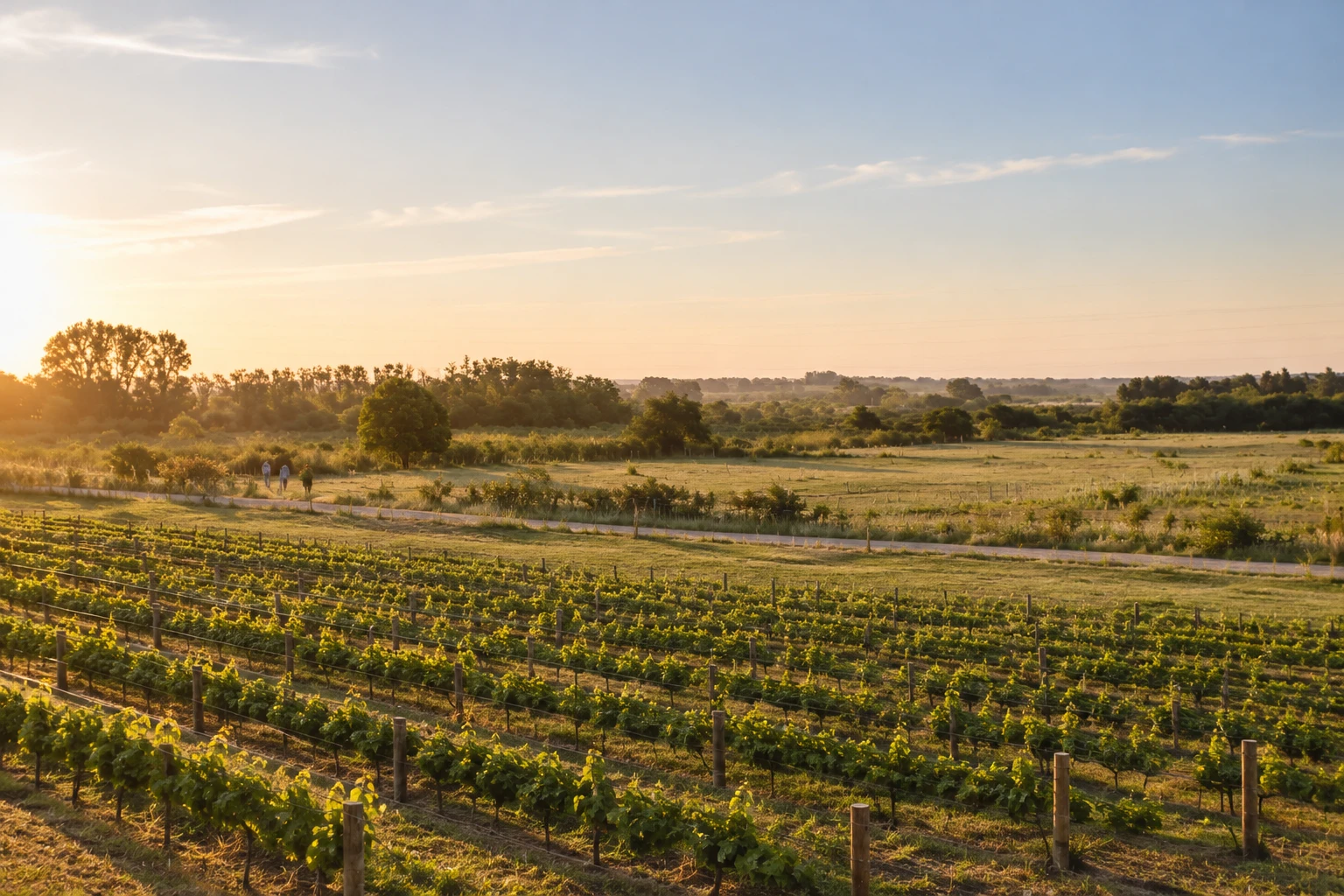
Family winery of Basque origin, producing wine since 1957 on lands of the former Calera de las Huérfanas. It offers guided tours, tastings and lunch at Casa de Aitona, an early-20th-century manor house.
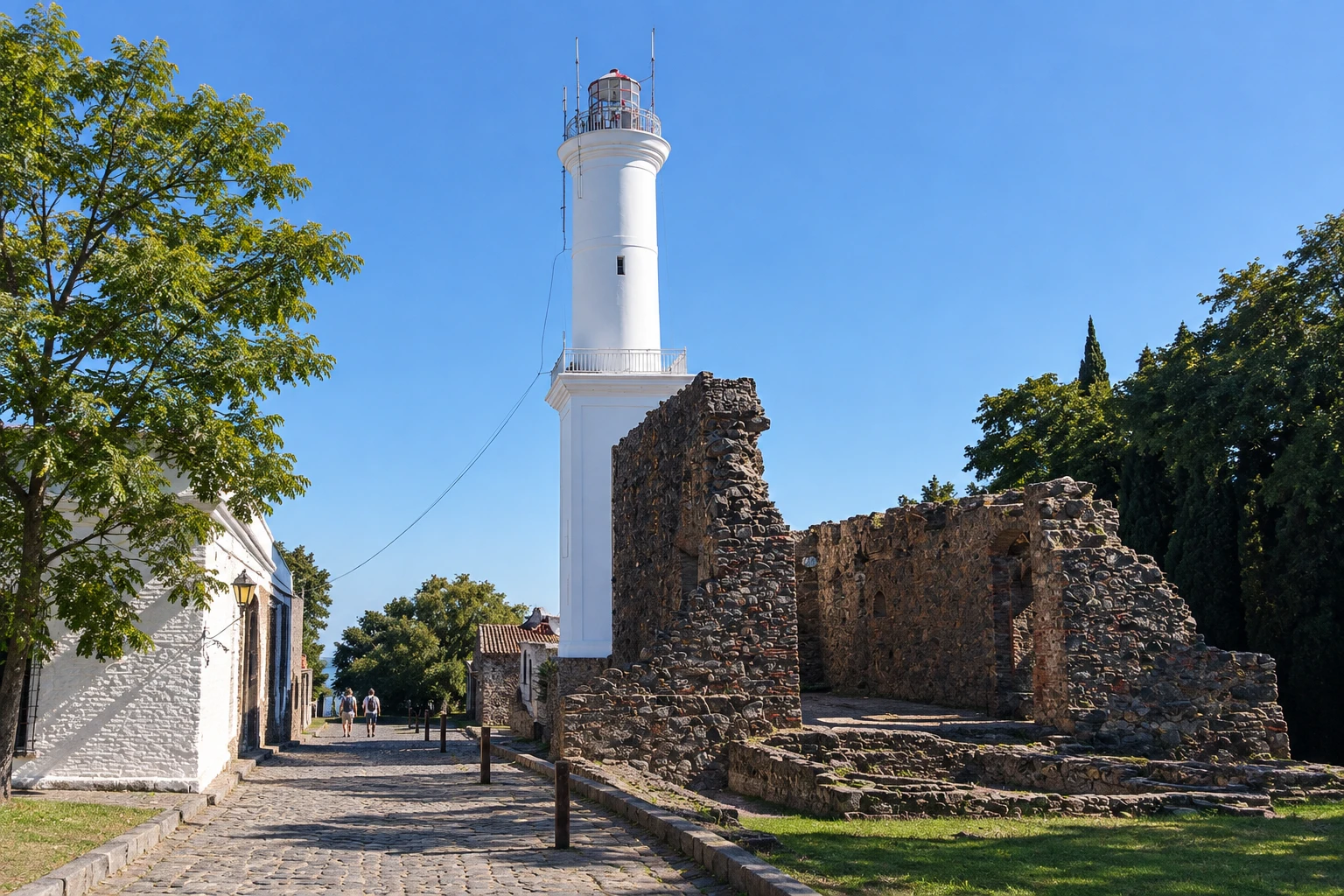
1857 lighthouse built on the ruins of the Convento de San Francisco. Still in operation, it can be climbed via a spiral staircase to a viewpoint over the Barrio Histórico and the Rio de la Plata.
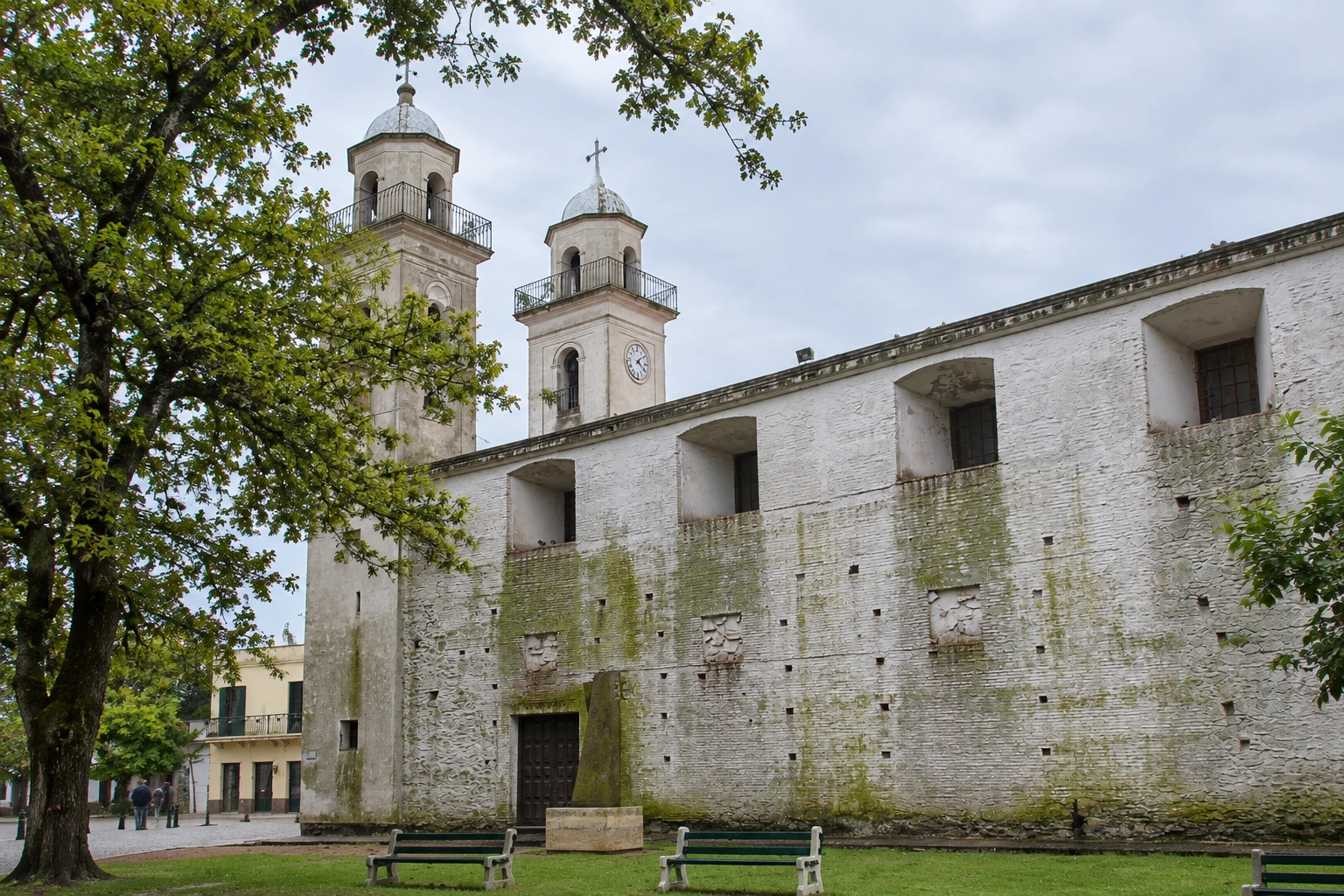
Considered the oldest church in Uruguay, with the parish established in 1680. The current temple dates from the early 19th century and was rebuilt after a lightning strike caused gunpowder stored in the sacristy to explode in 1823.
Former estancia from 1909, founded by Juan de Narbona, transformed into a winery, restaurant and lodging on Ruta 21. It offers guided tours with tastings of wines and cheeses produced on the property, by reservation.
Small family winery in the rural area of Colonia Estrella, near downtown Carmelo, with vineyards planted from 1968. It hosts visits by reservation, with tastings, snacks or lunch.
Municipal museum spread across historic houses in the Barrio Histórico, with a single ticket: Espacio Rebuffo, Espacio Portugués, Vivienda Portuguesa (Casa de Nacarello), Espacio Español, Espacio Indígena and Archivo Regional.
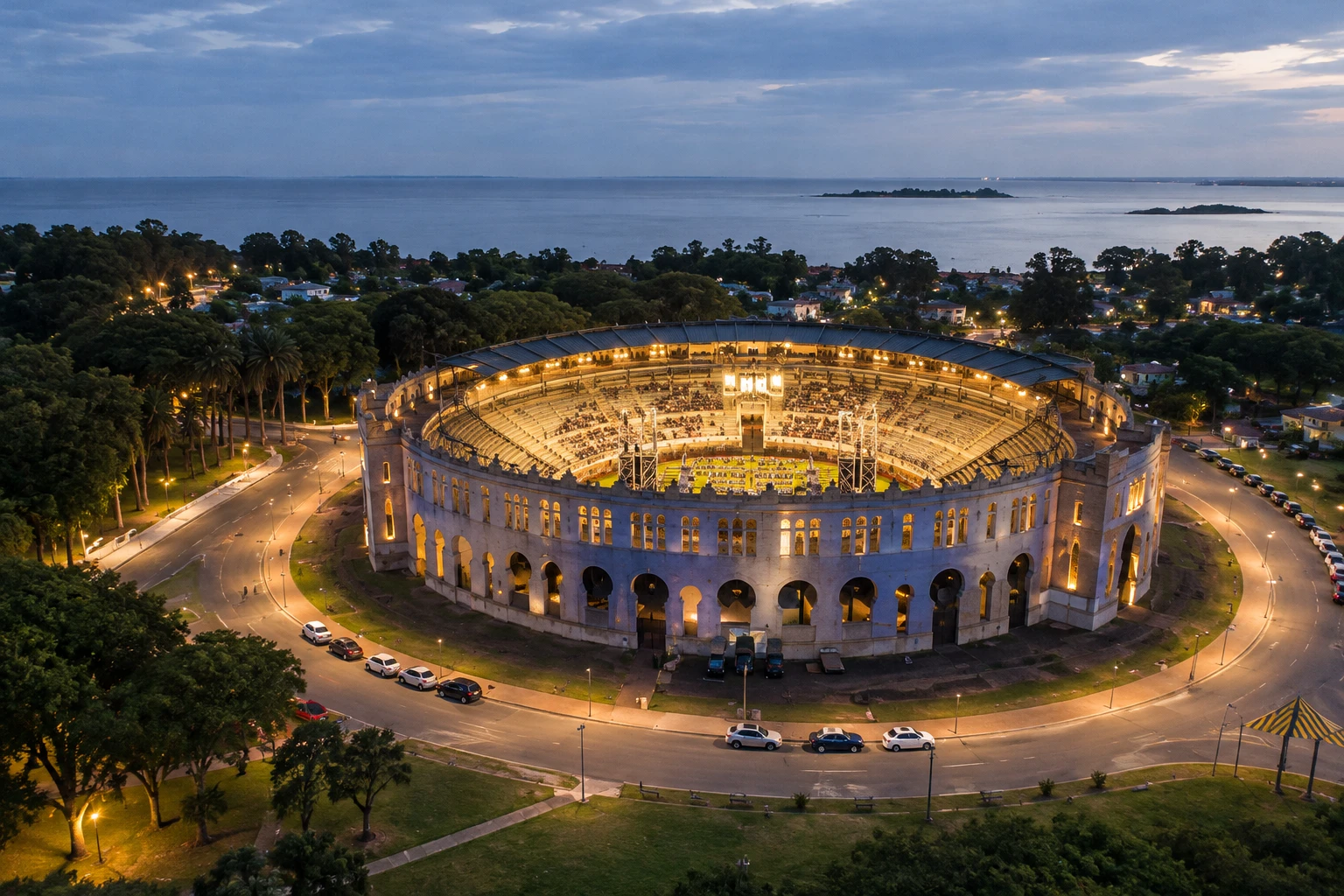
Former bullring in Moorish style, inaugurated in 1910 and closed shortly afterwards with the ban on bullfighting. Restored, it now functions as a cultural center and houses a museum about its history.
How many days should you set aside to see Colonia del Sacramento?
The guide's itineraries cover 2, 3 and 5 days: Colonia del Sacramento in 2 days; Colonia del Sacramento and Carmelo in 3 days; Colonia, Carmelo and Nueva Helvecia in 5 days.
What to do Colonia del Sacramento in one day?
Arrival and Barrio Histórico. From Brazil, flight to Montevideo and bus from Terminal Tres Cruces to Colonia del Sacramento, about two and a half hours on direct services. After dropping your bags, take the Walk through Colonia del Sacramento’s Barrio Histórico, passing the Basílica del Santísimo Sacramento and Plaza de Armas, the Calle de los Suspiros and the Portón de Campo. At the end of the day, enjoy the late afternoon on Colonia’s Rambla.


 Brazil
 Antarctica
 Argentina
 Bolivia
 Chile
 Colombia
 Ecuador
 Falkland Islands (Malvinas)
 French Guiana
 Guyana
 Paraguay
 Peru
 Suriname
 Venezuela
 Albania
 Austria
 Belgium
 Croatia
 Denmark
 Finland
 France
 Germany
 Greece
 Hungary
 Iceland
 Ireland
 Italy
 Luxembourg
 Norway
 Poland
 Portugal
 Slovakia
 Slovenia
 Spain
 Sweden
 Switzerland
 the Czech Republic
 the Netherlands
 the United Kingdom
 Turkey
 Bermuda
 Canada
 Greenland
 Mexico
 Saint Pierre and Miquelon
 the United States
 the Dominican Republic
 Japan
 Egypt
 South Africa
 Australia
 Fiji
 New Zealand
 Papua New Guinea