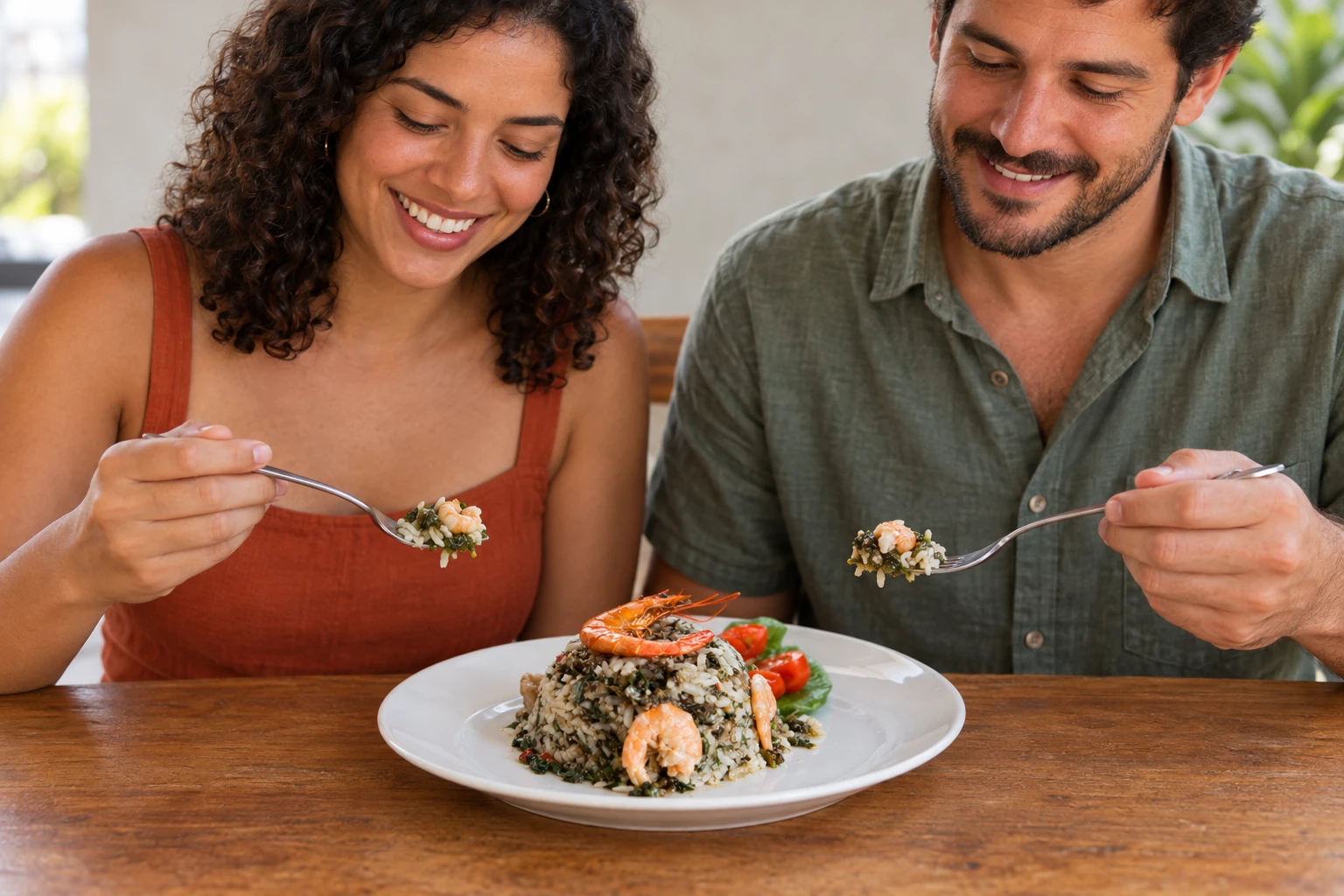
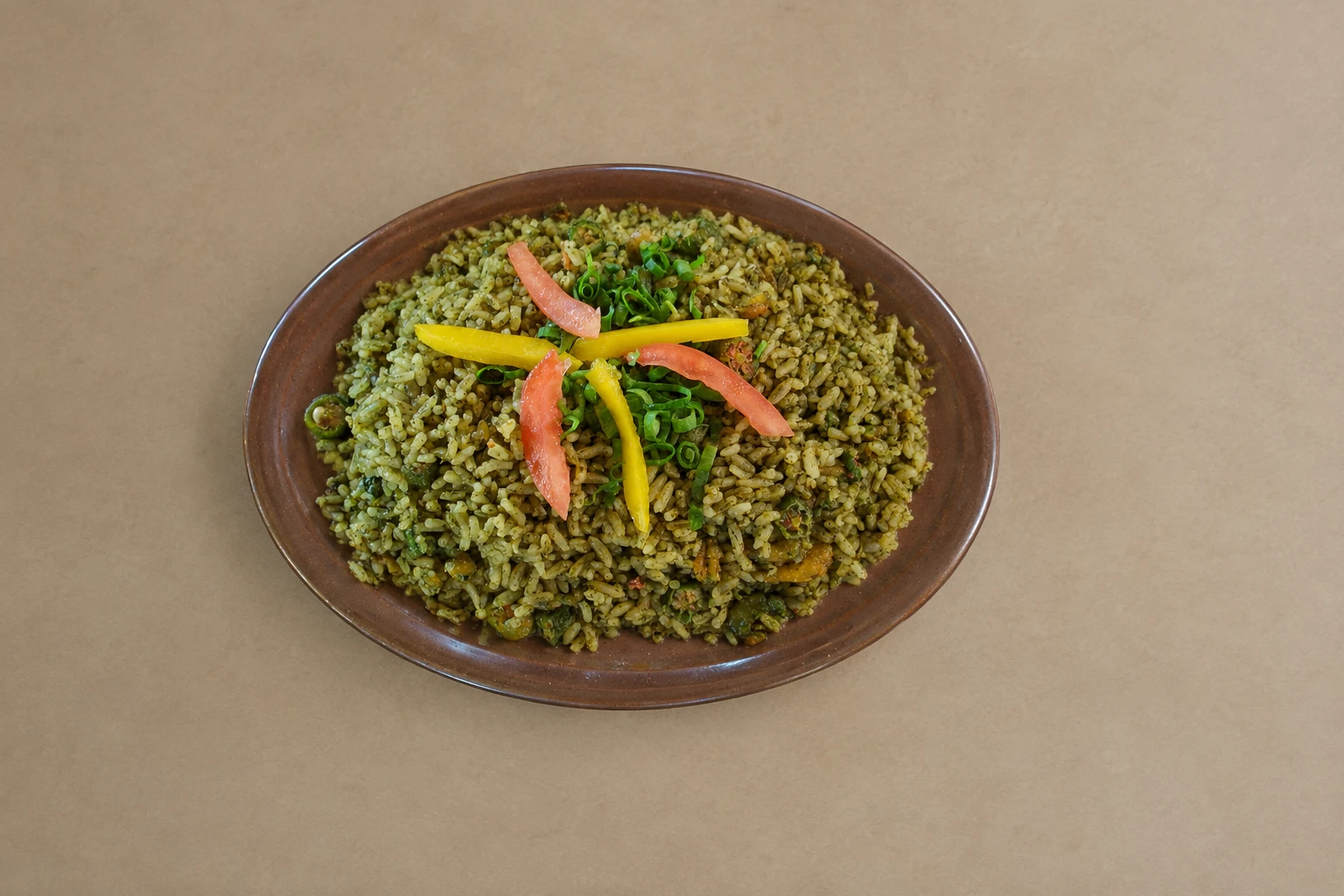
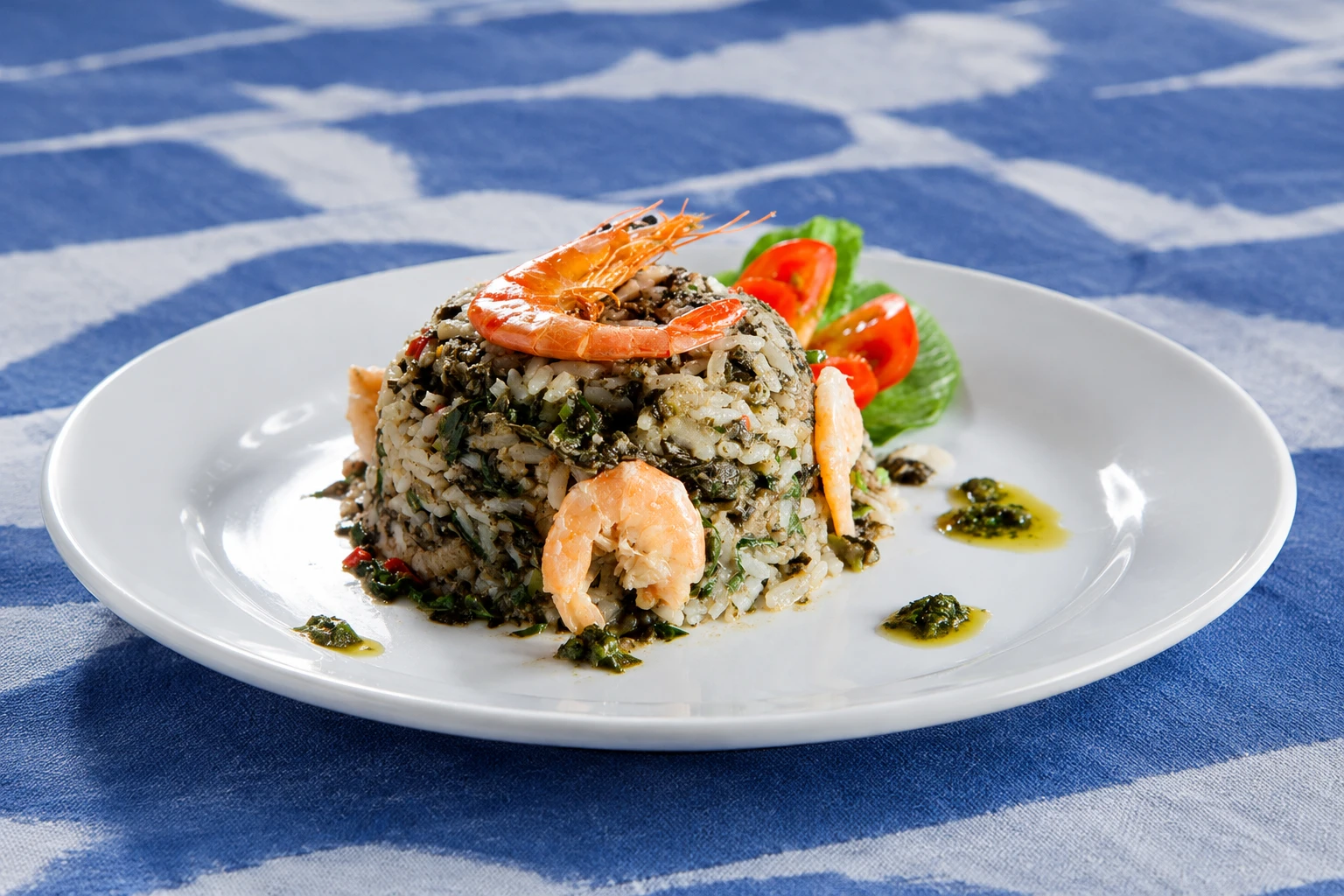
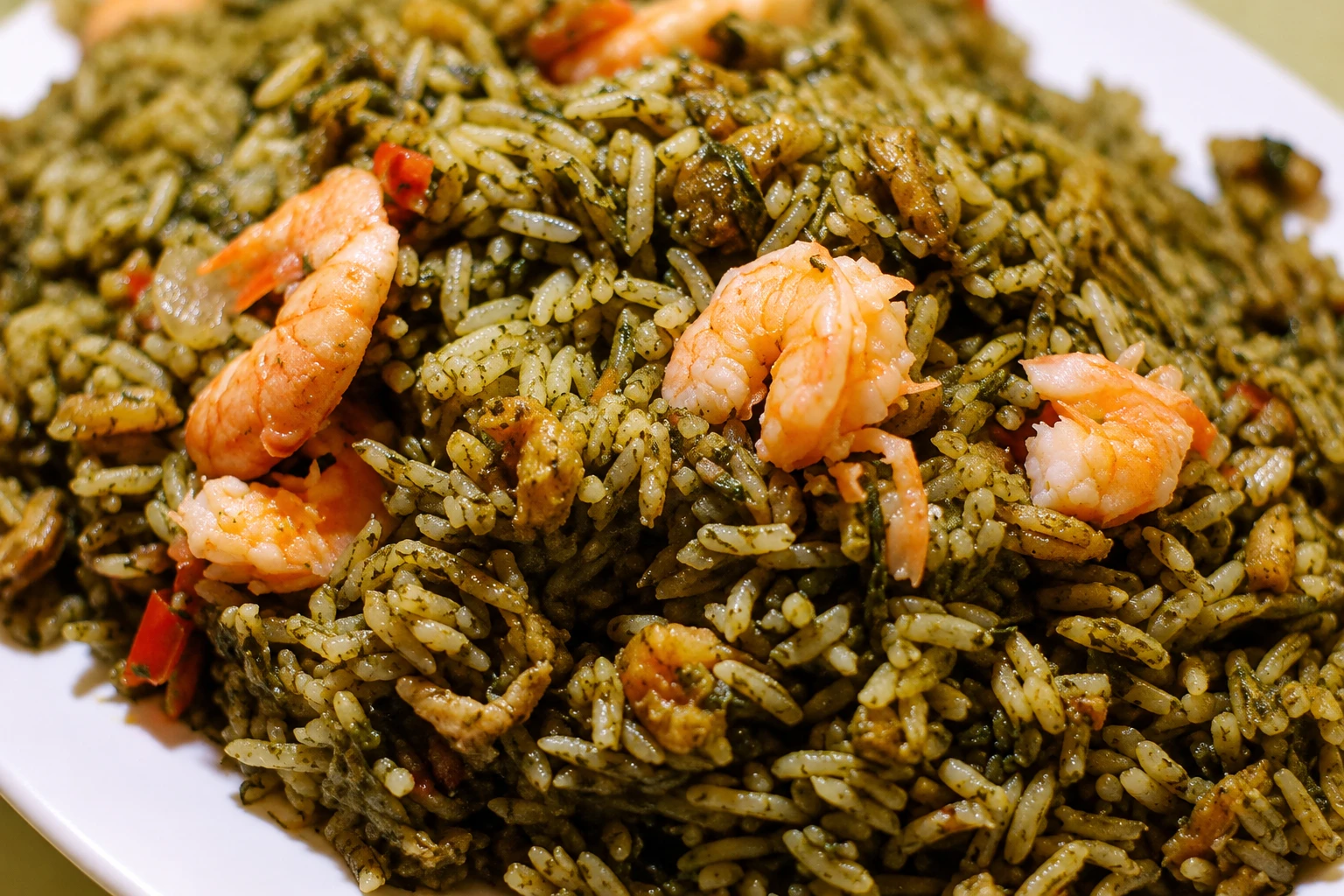
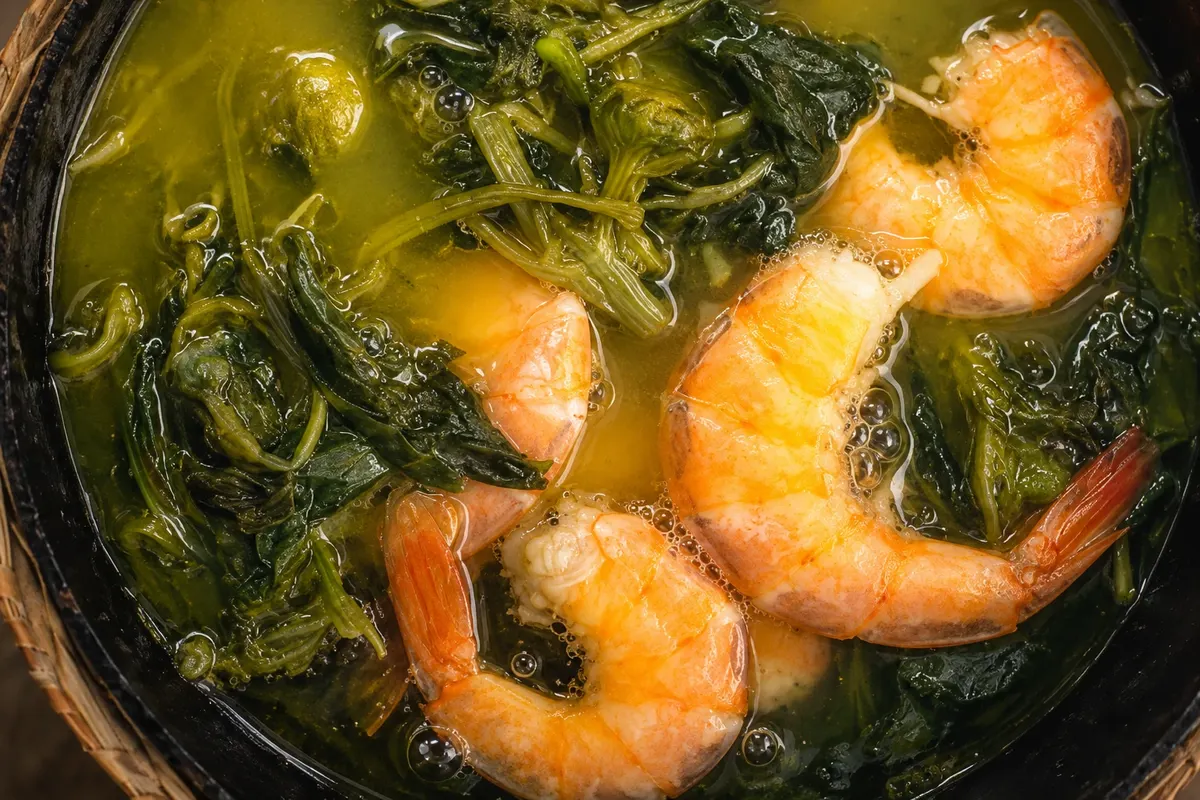
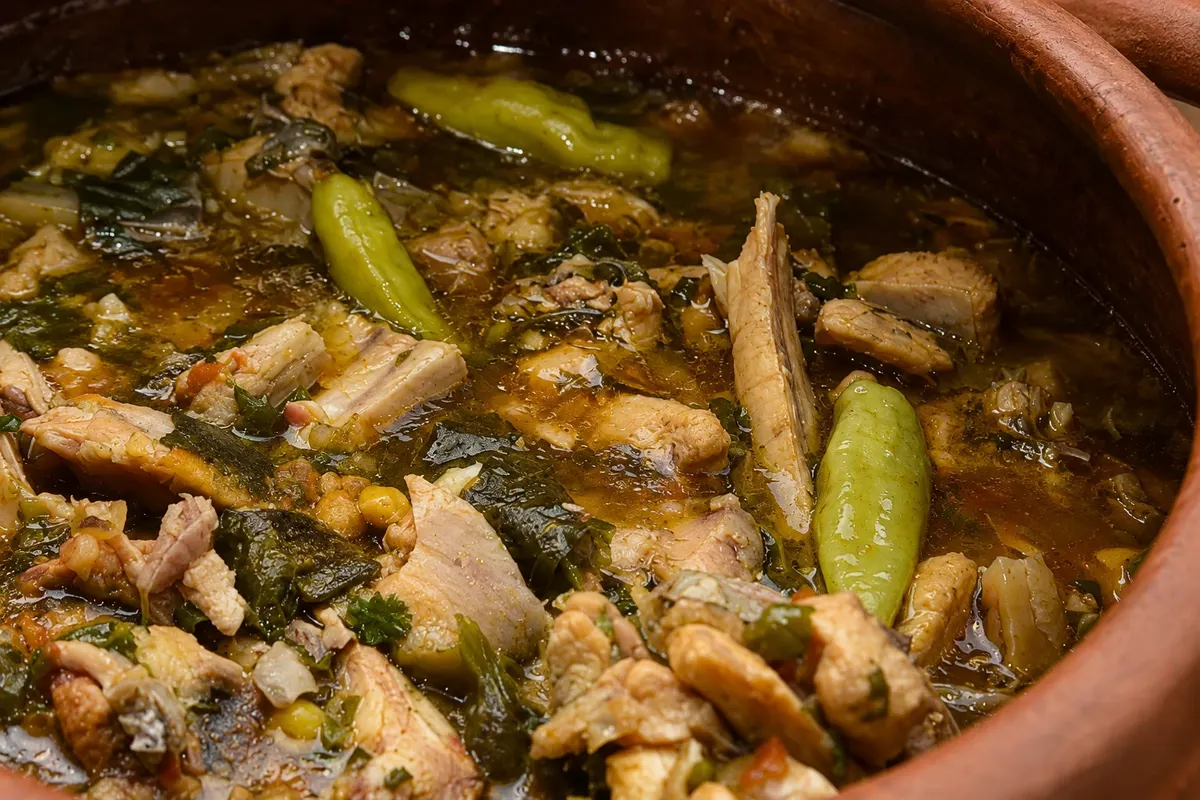
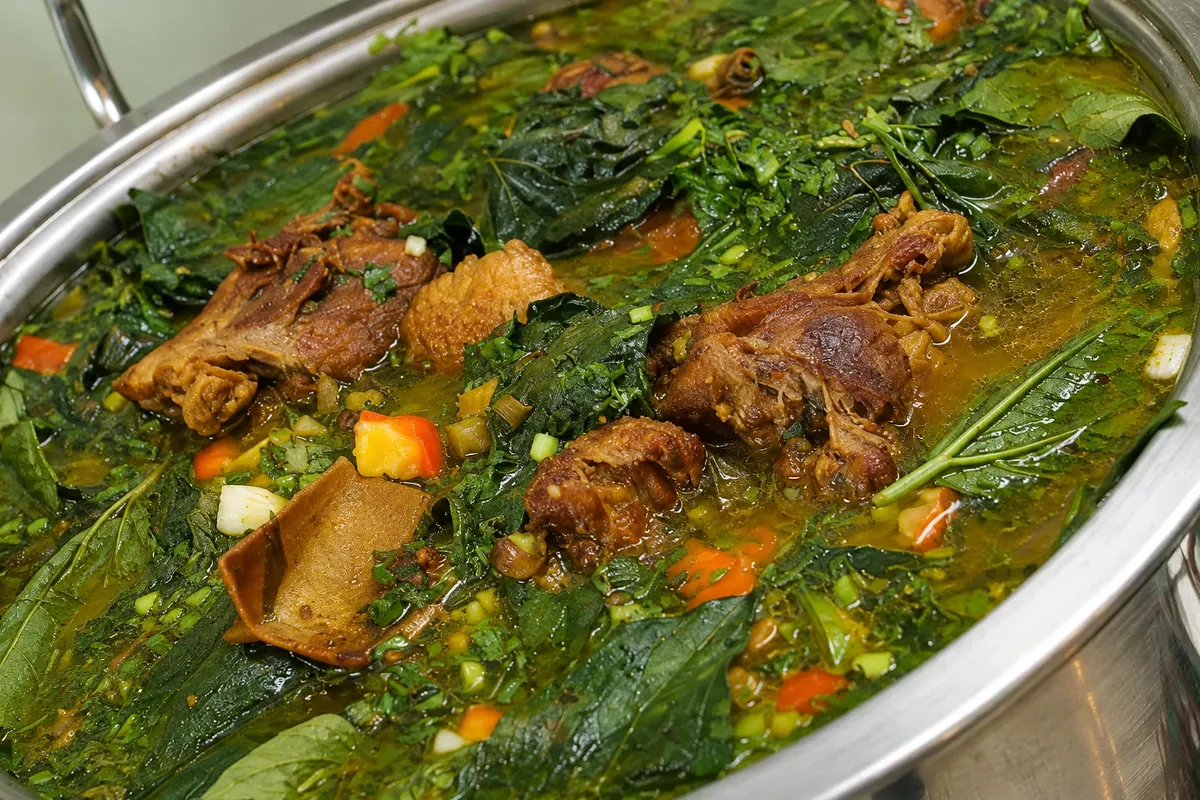
Cuxá rice is white rice mixed with cuxá, a green, slightly tart sauté. The base is vinagreira, a plant with acidic leaves (Hibiscus sabdariffa), cooked and chopped, to which toasted, ground sesame, dried shrimp, manioc flour and seasonings like onion, bell pepper and pimenta-de-cheiro are added. The result is a green rice with a tangy, toasted flavor.
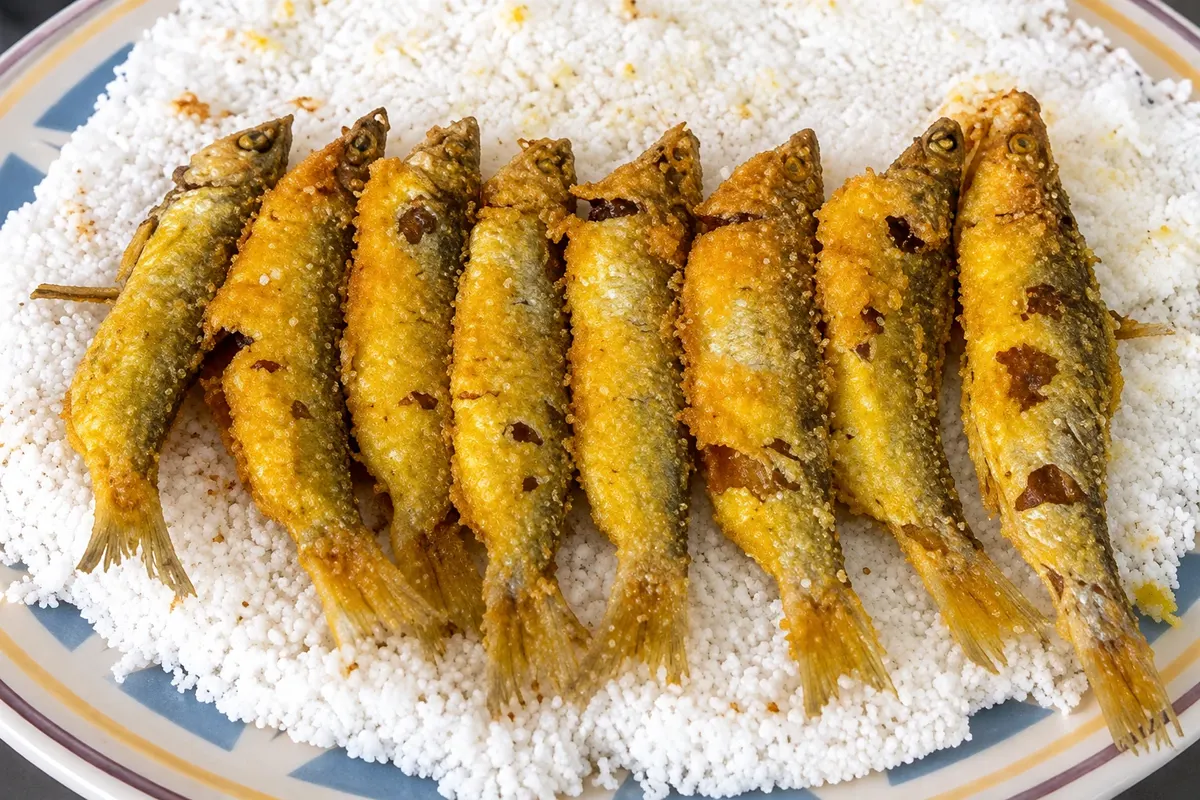
Vinagreira arrived in Brazil from Africa, and the dish combines African, Indigenous and Portuguese influences. In the 19th century, cuxá rice was consumed in the bohemian life of São Luís. For a long time it was sold by Black women on trays on the sidewalks, and by boys who walked the streets with pots on their heads, served with fried fish.
In the 20th century, cuxá gained other meanings and came to be seen as comfort food and a symbol of Maranhense identity, present at family tables and in June festivals. An academic study reconstructed this trajectory from newspapers, chronicles and poems.
Using vinagreira requires care: in excess it makes the dish bitter. Each cook has her own measure.


 Antarktika
 Argentina
 Bolivija
 Čile
 Kolumbija
 Ekvator
 Gvajana
 Francoska Gvajana
 Falklandski otoki (Malvini)
 Paragvaj
 Peru
 Surinam
 Urugvaj
 Venezuela
 Nemčija
 Avstrija
 Belgija
 Hrvaška
 Danska
 Slovaška
 Slovenija
 Španija
 Finska
 Francija
 Grčija
 Nizozemska
 Madžarska
 Irska
 Islandija
 Italija
 Luksemburg
 Norveška
 Poljska
 Portugalska
 Združeno kraljestvo
 Češka
 Švedska
 Švica
 Turčija
 Bermudi
 Kanada
 Združene države Amerike
 Grenlandija
 Mehika
 Sveta Peter in Mihael
 Dominikanska republika
 Japonska
 Južnoafriška republika
 Egipt
 Avstralija
 Fidži
 Nova Zelandija
 Papua Nova Gvineja