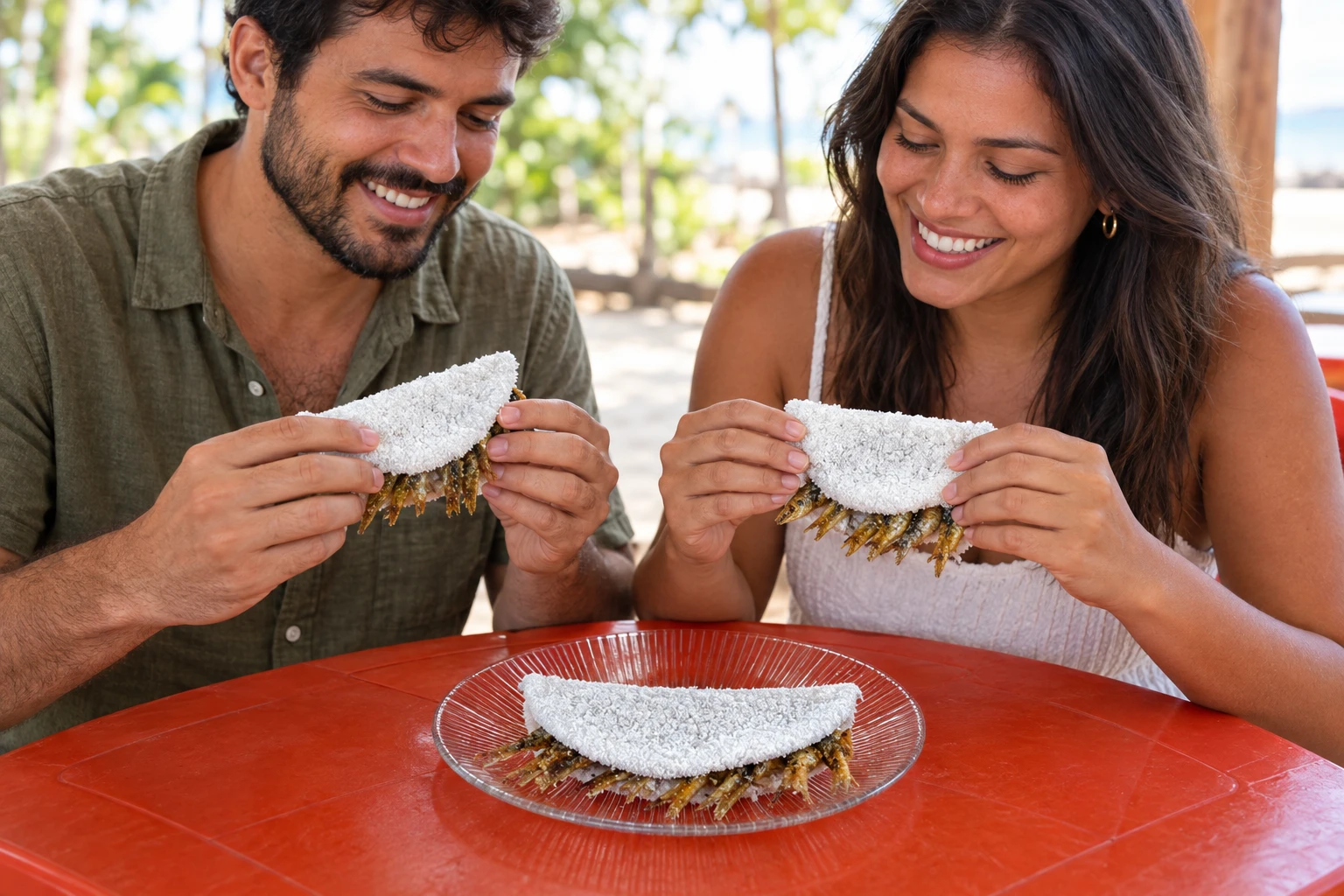
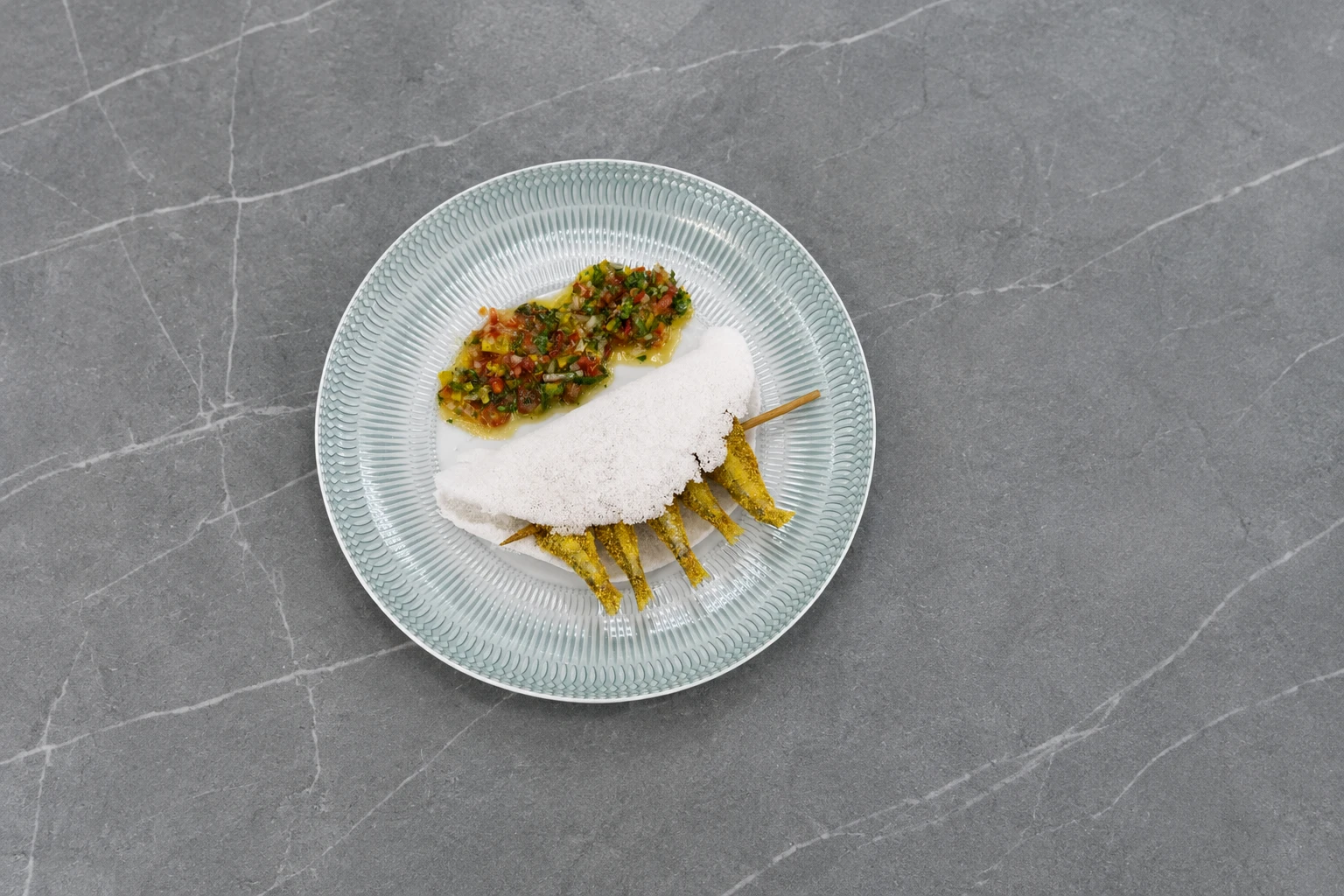
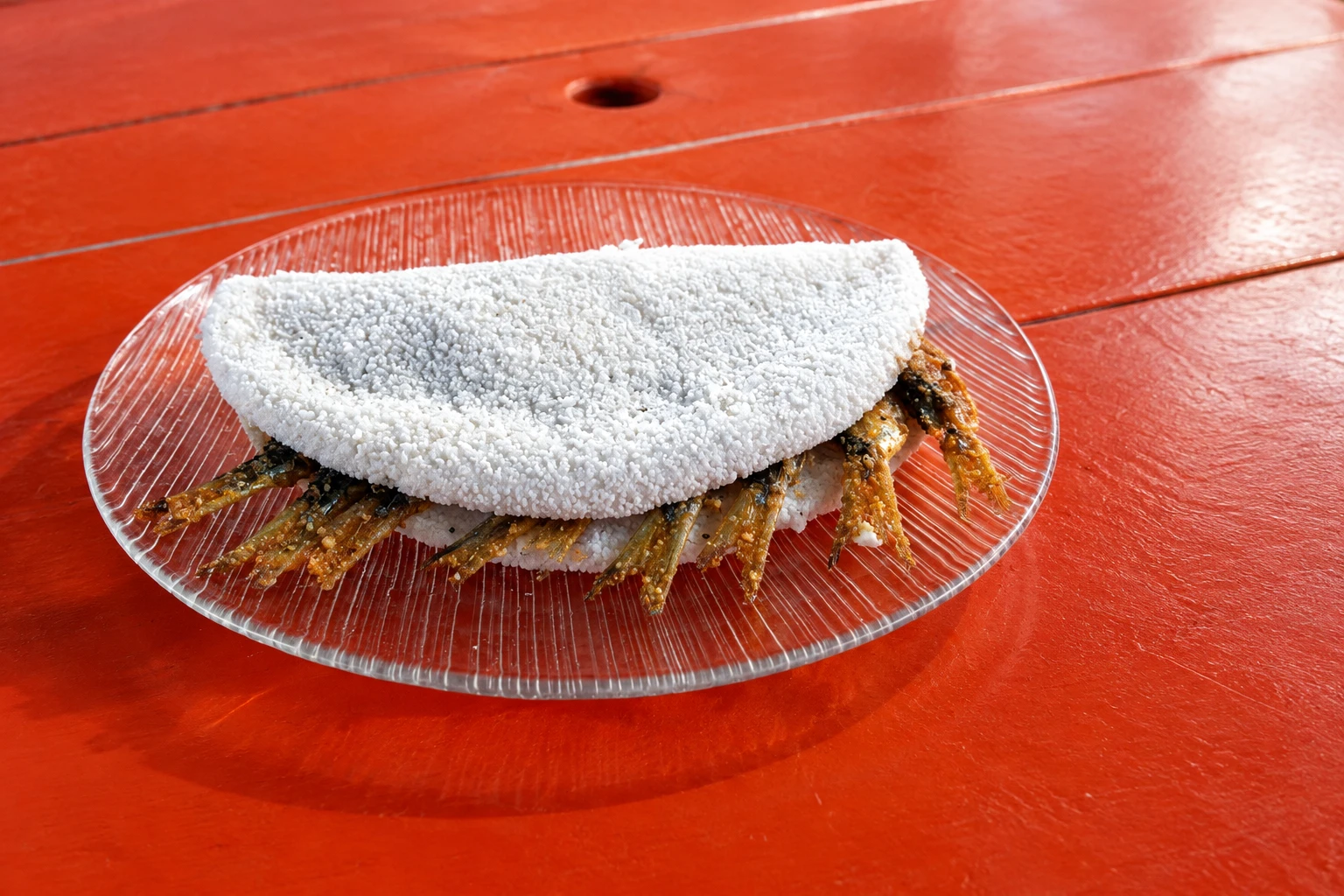
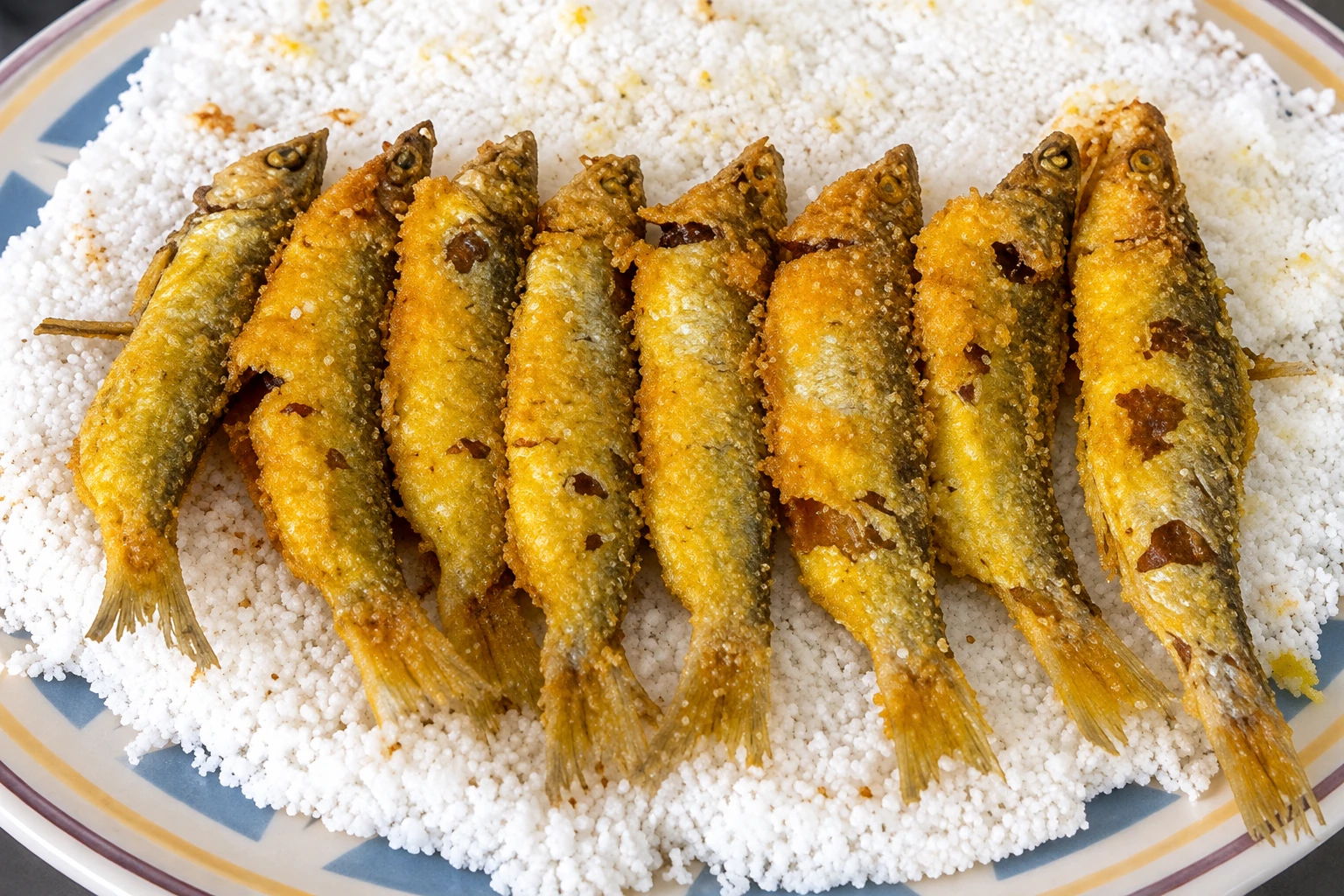
The ginga is a small fish, 10 to 15 centimeters long, like the manjubinha. The little fish are skewered in rows on a stick, fried in a mixture of oil and dendê palm oil and served on a coconut tapioca. It is eaten like an open sandwich.
The dish was born in Redinha, a beach in the north zone of Natal, on the banks of the Potengi River, created by local fishermen more than fifty years ago. The Redinha Public Market is the best-known point of origin and sale, and some of today's vendors are descendants of those who started preparing the dish.
Ginga with tapioca is recognized as intangible heritage of Natal and of Rio Grande do Norte. Natal’s Tourism Secretariat promotes the Ginga Festival, featuring contests among Redinha merchants and new recipes using the little fish.
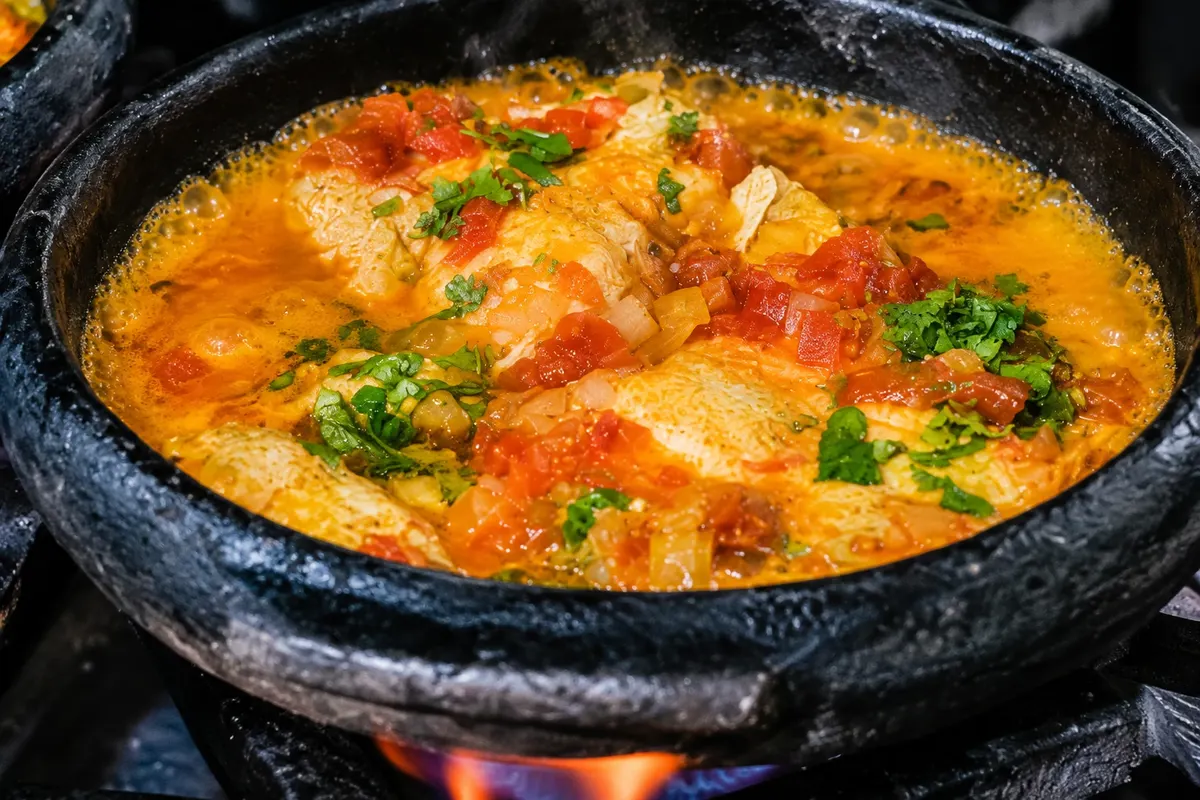
After the recognition, the dish also began appearing in restaurants in other neighborhoods and in creative versions, such as moquecas and ginga crepes. The traditional form remains the same: fried little fish on tapioca, eaten with the hands, facing the sea.


 Antarktika
 Argentina
 Bolivija
 Čile
 Kolumbija
 Ekvator
 Gvajana
 Francoska Gvajana
 Falklandski otoki (Malvini)
 Paragvaj
 Peru
 Surinam
 Urugvaj
 Venezuela
 Nemčija
 Avstrija
 Belgija
 Hrvaška
 Danska
 Slovaška
 Slovenija
 Španija
 Finska
 Francija
 Grčija
 Nizozemska
 Madžarska
 Irska
 Islandija
 Italija
 Luksemburg
 Norveška
 Poljska
 Portugalska
 Združeno kraljestvo
 Češka
 Švedska
 Švica
 Turčija
 Bermudi
 Kanada
 Združene države Amerike
 Grenlandija
 Mehika
 Sveta Peter in Mihael
 Dominikanska republika
 Japonska
 Južnoafriška republika
 Egipt
 Avstralija
 Fidži
 Nova Zelandija
 Papua Nova Gvineja