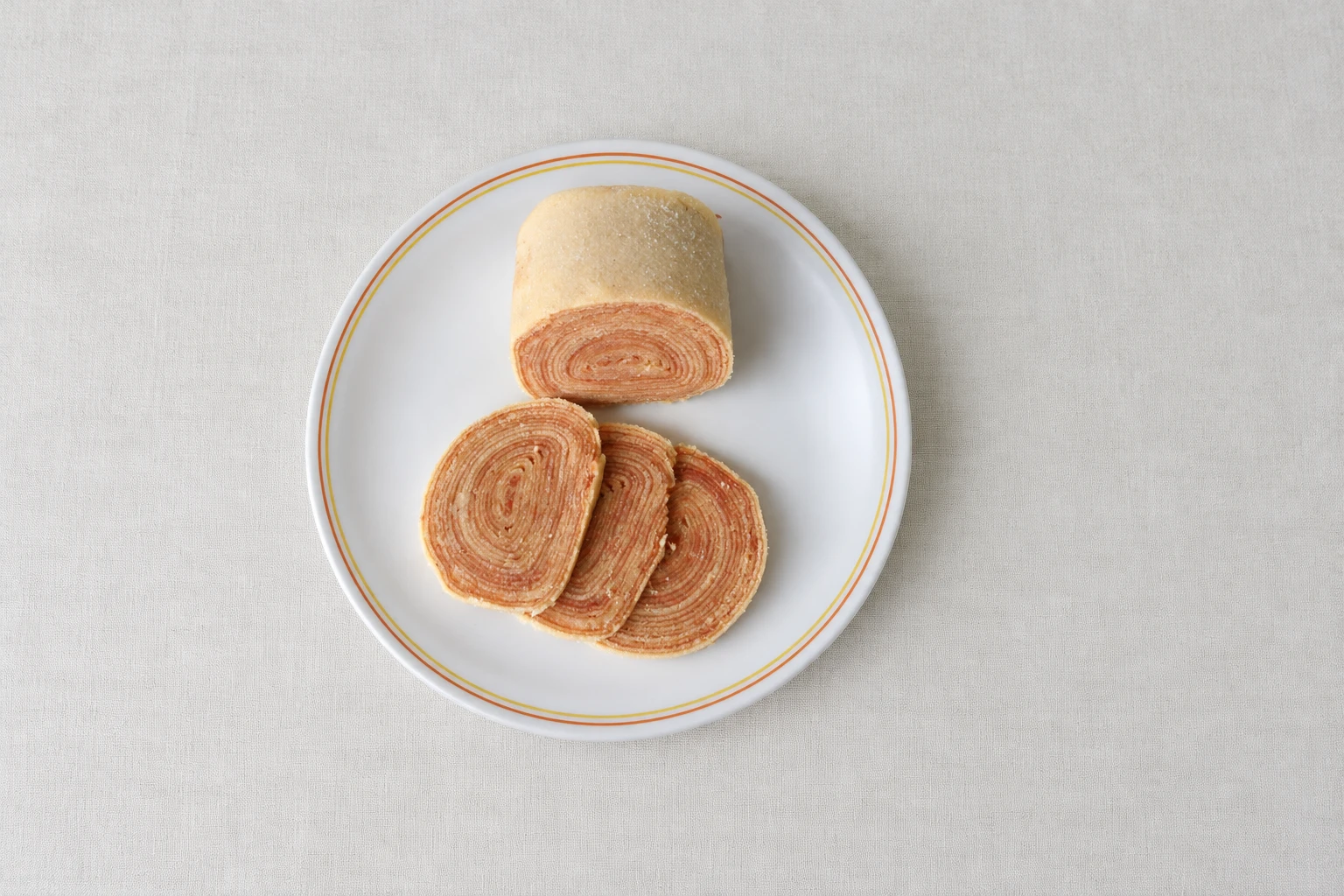
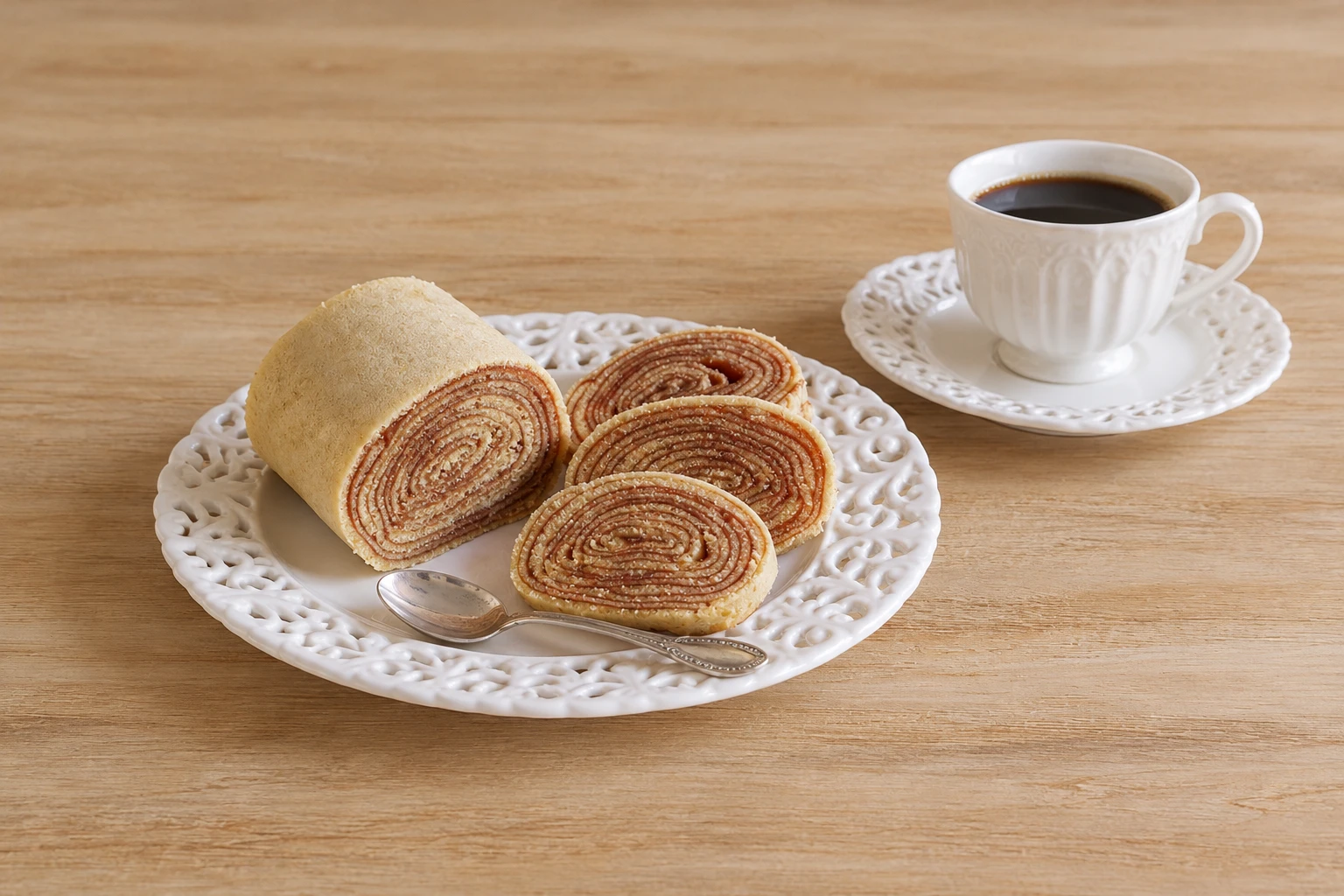
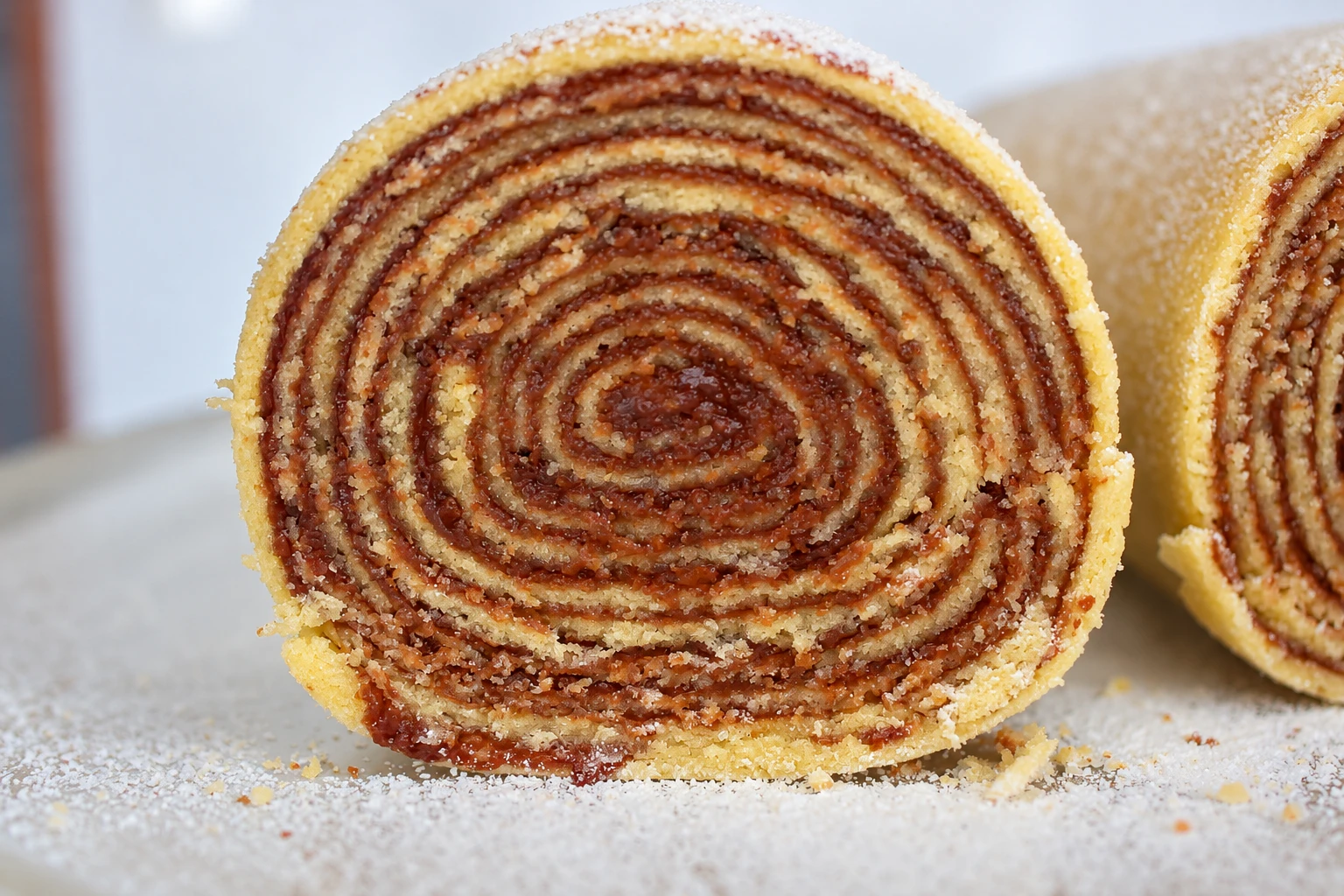
Bolo de rolo is made of buttered batter layers so thin they resemble paper. Each layer is baked, spread with melted guava paste and rolled over the previous one, until a firm roll is formed. When sliced, the piece reveals a spiral of thin lines of batter and guava paste.
The recipe descends from a Portuguese cake called colchão de noiva, rolled and filled with almonds. In Pernambuco, land of sugar mills, the almonds were replaced by guava paste, made from the abundant guava of the Zona da Mata, and the batter became progressively thinner.
A state law recognizes bolo de rolo as cultural and intangible heritage of Pernambuco. The state also granted the same title to other sweets of the sugar tradition, such as bolo Souza Leão.
Pernambucans insist on the distinction: bolo de rolo is not the same as rocambole. Rocambole usually has a thicker batter; bolo de rolo is made of many very thin layers of batter and guava paste.
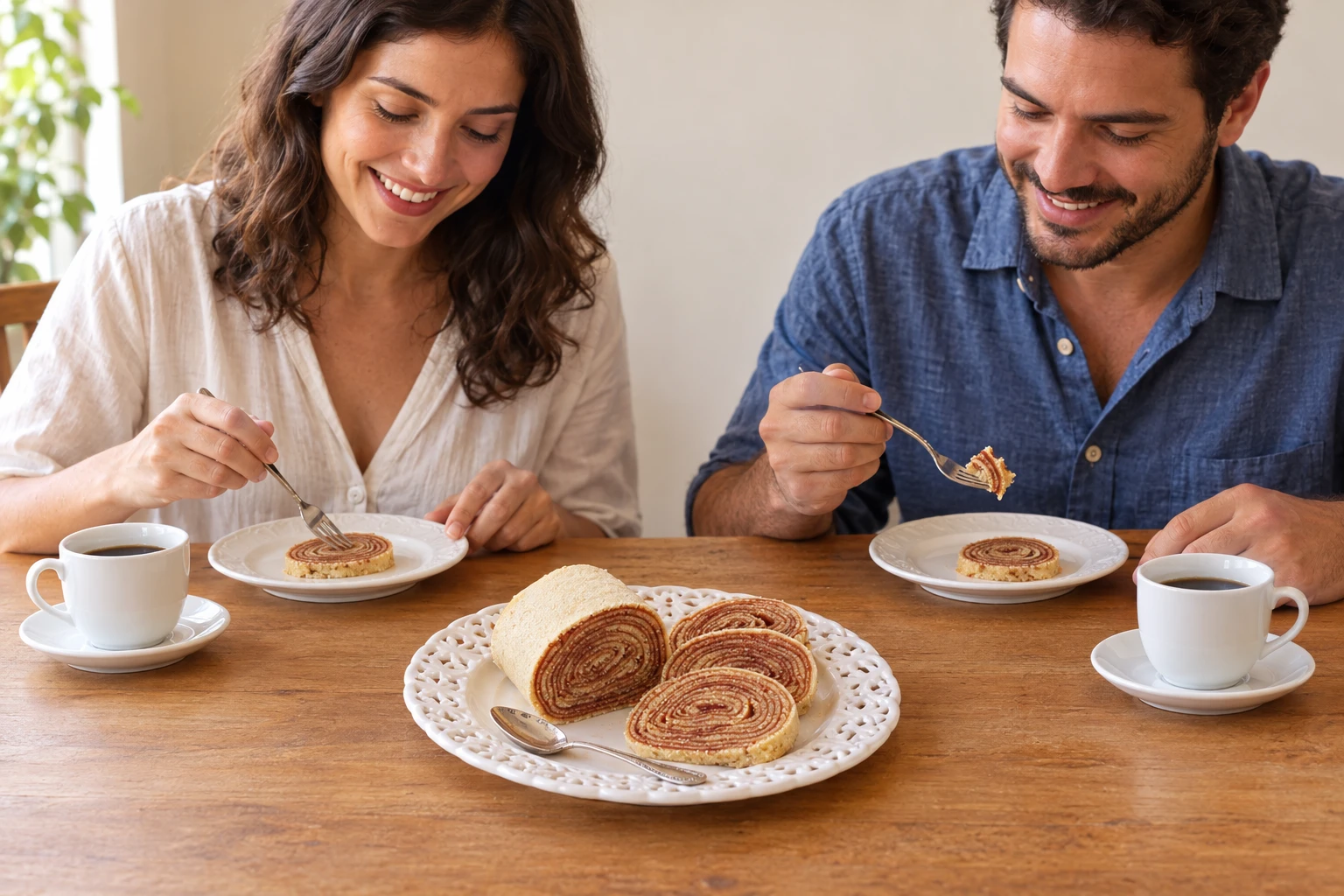
The cake is served in thin slices, with coffee, and is commonly found at visits, parties and in the luggage of those leaving Pernambuco. Besides guava paste, there are versions with other fillings, but guava is the traditional one.


 Antarktika
 Argentina
 Bolivija
 Čile
 Kolumbija
 Ekvator
 Gvajana
 Francoska Gvajana
 Falklandski otoki (Malvini)
 Paragvaj
 Peru
 Surinam
 Urugvaj
 Venezuela
 Nemčija
 Avstrija
 Belgija
 Hrvaška
 Danska
 Slovaška
 Slovenija
 Španija
 Finska
 Francija
 Grčija
 Nizozemska
 Madžarska
 Irska
 Islandija
 Italija
 Luksemburg
 Norveška
 Poljska
 Portugalska
 Združeno kraljestvo
 Češka
 Švedska
 Švica
 Turčija
 Bermudi
 Kanada
 Združene države Amerike
 Grenlandija
 Mehika
 Sveta Peter in Mihael
 Dominikanska republika
 Japonska
 Južnoafriška republika
 Egipt
 Avstralija
 Fidži
 Nova Zelandija
 Papua Nova Gvineja