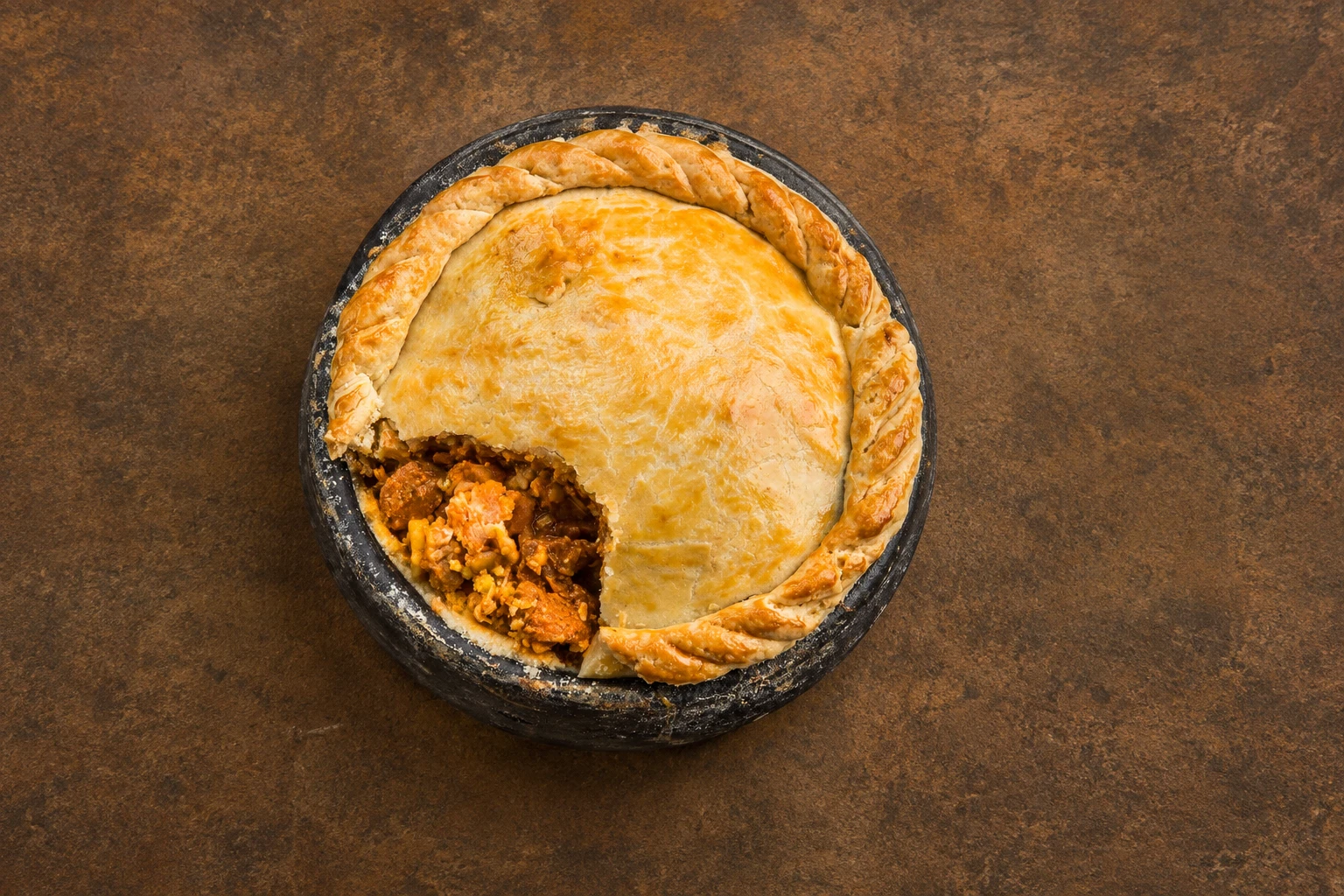
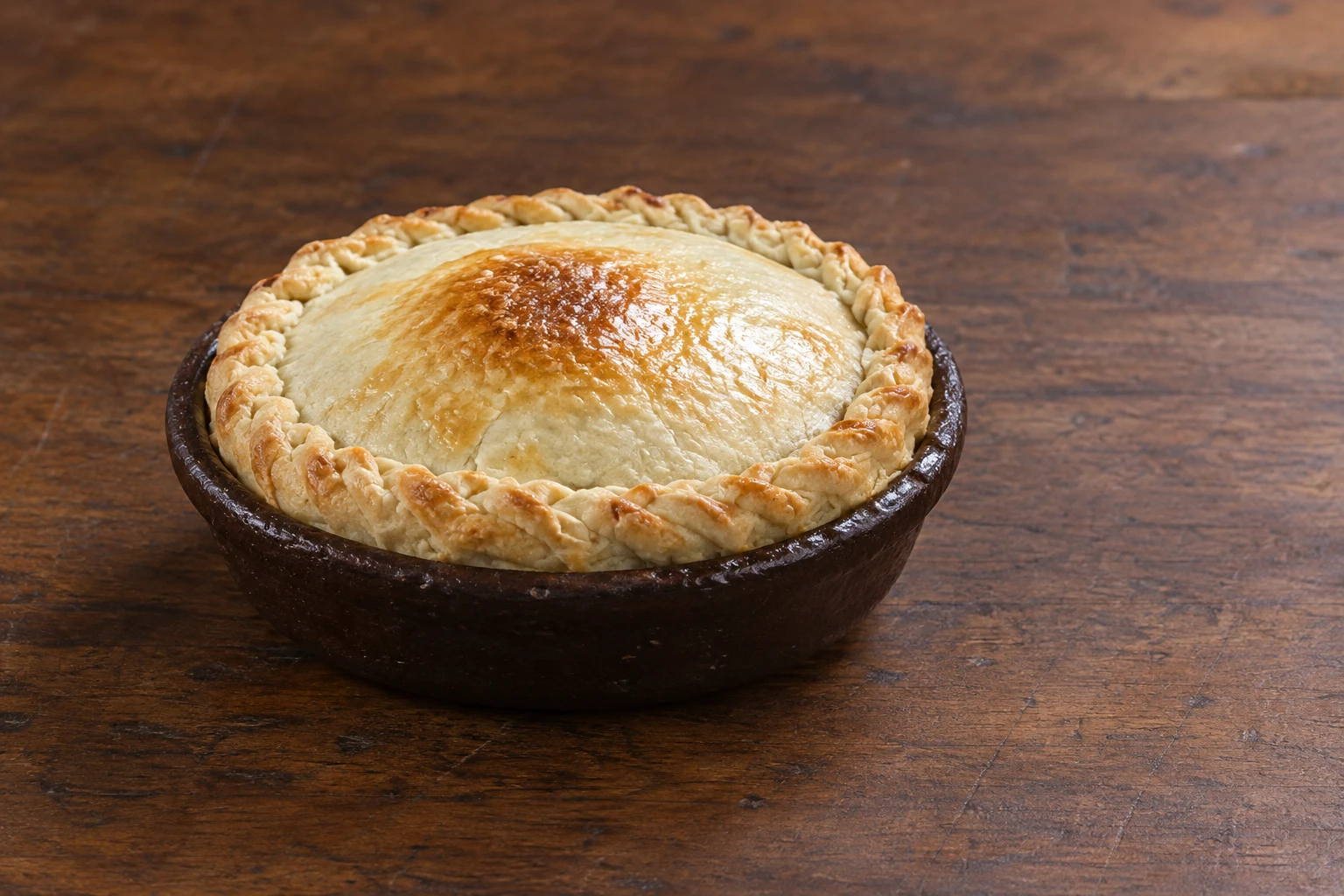
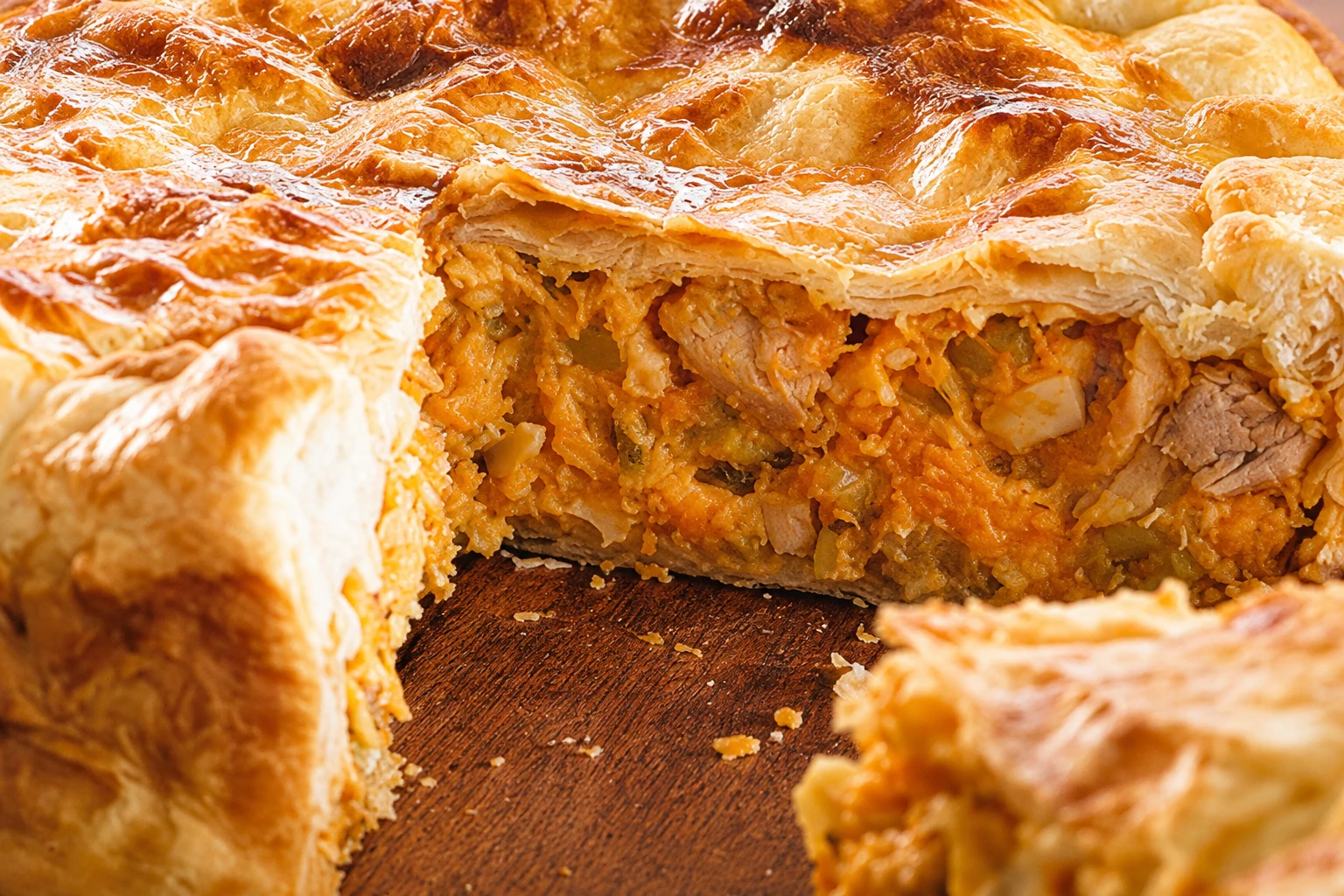
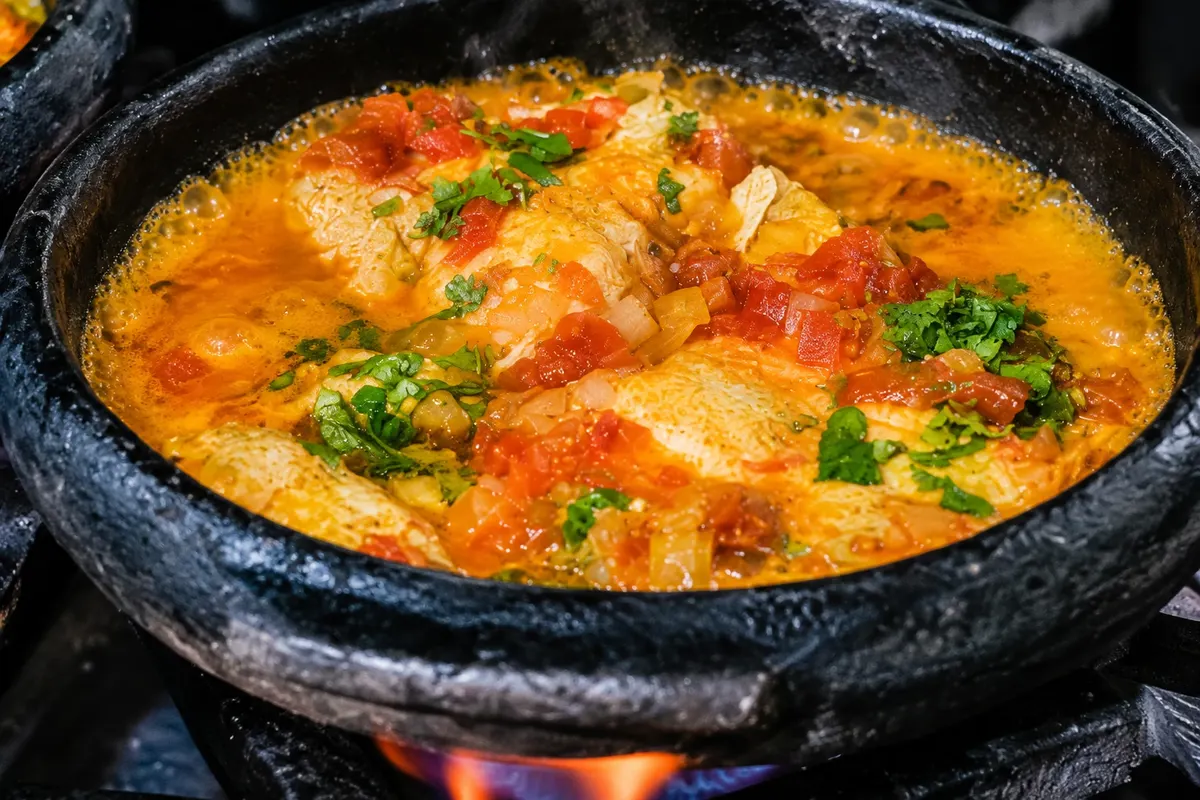
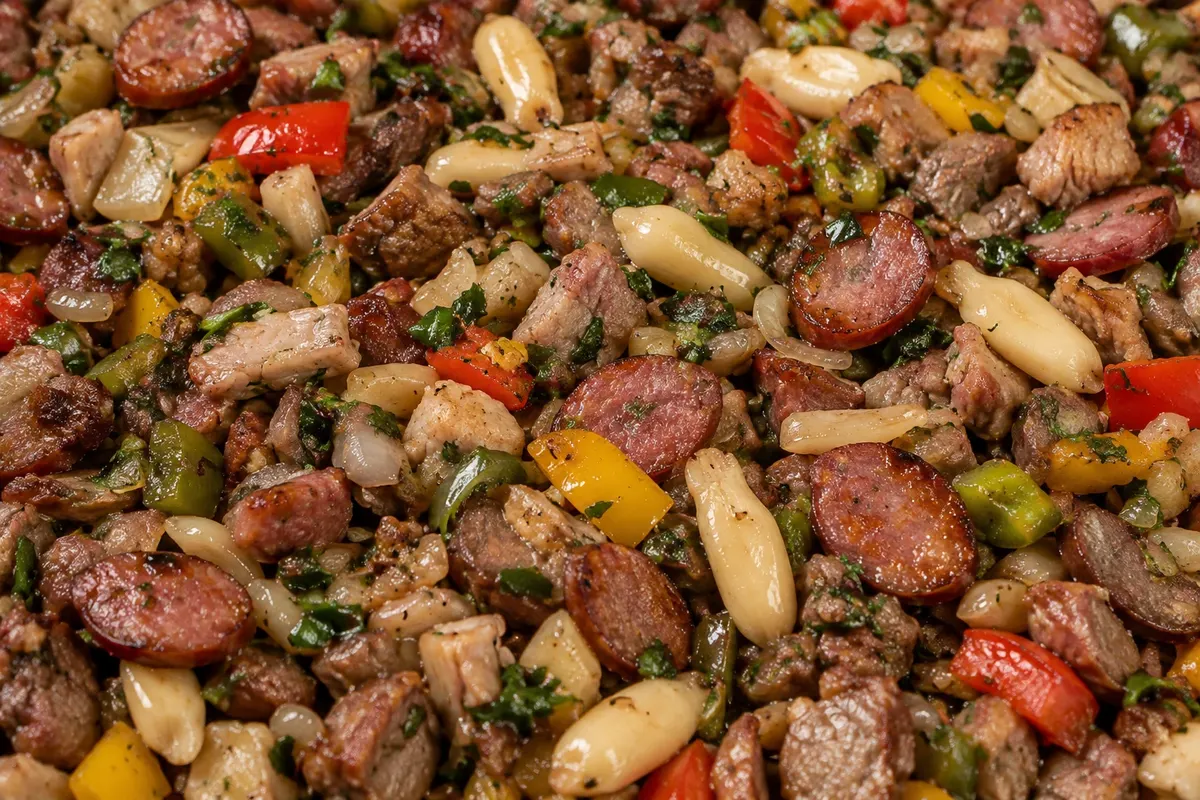
The empadão goiano is larger than an ordinary empada and is baked in special molds, made of clay or aluminum. The crust is thin and lines the entire mold, and the filling is plentiful: chicken, pork, sausage, olive, palm heart, cheese, hard-boiled egg, tomato sauce and bread crumb. Some versions include guariroba, a bitter palm heart from the cerrado, or pequi.
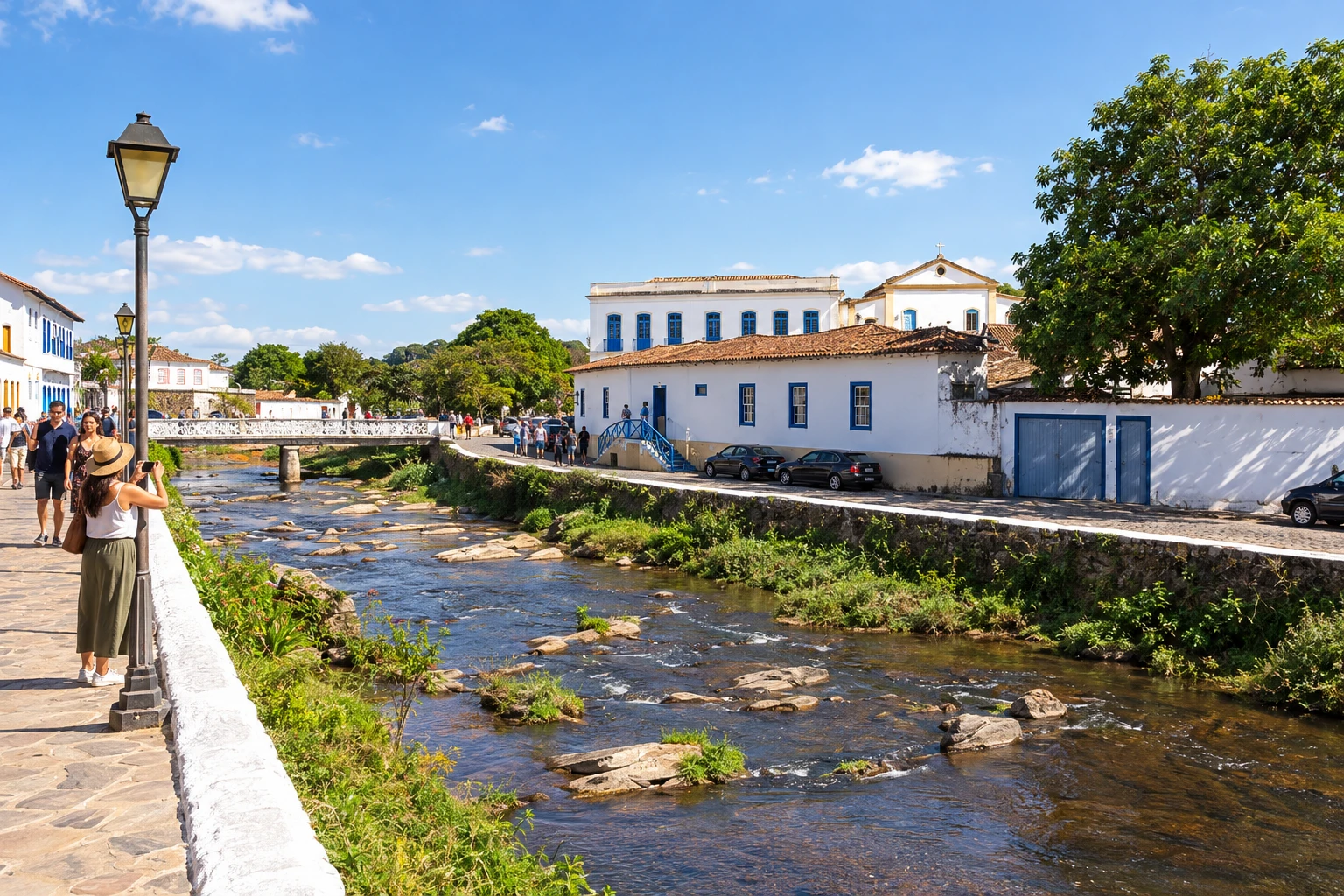
According to the justification of the bill that recognizes it as heritage, the recipe appeared about 150 years ago in Cidade de Goiás, the former Vila Boa, then the state capital, and later spread through the Center-West. State Law 22.120, of July 21, 2023, recognizes the gastronomy and culture of the empadão goiano produced in the region of the Municipality of Goiás as intangible cultural heritage of Goiás.
In Cidade de Goiás, the empadão is part of domestic tradition and of specialized shops. Research by the Universidade Estadual de Goiás recorded the knowledge of the city’s empadão masters and collected recipes in a digital book.
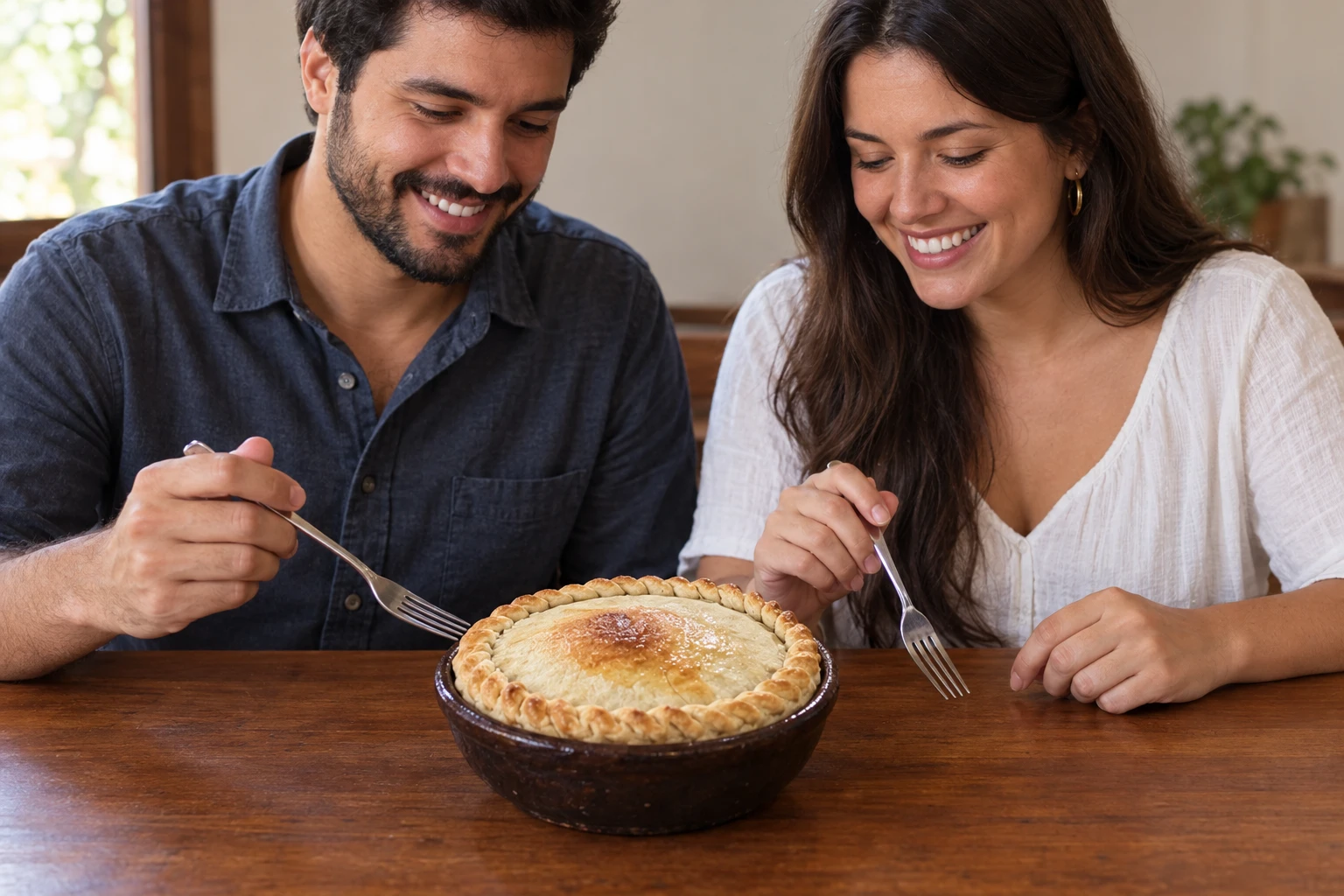
The empadão is the subject of classes and tastings at the city’s gastronomic festival and is eaten hot, whole, in its own mold.


 Antarktika
 Argentina
 Bolivija
 Čile
 Kolumbija
 Ekvator
 Gvajana
 Francoska Gvajana
 Falklandski otoki (Malvini)
 Paragvaj
 Peru
 Surinam
 Urugvaj
 Venezuela
 Nemčija
 Avstrija
 Belgija
 Hrvaška
 Danska
 Slovaška
 Slovenija
 Španija
 Finska
 Francija
 Grčija
 Nizozemska
 Madžarska
 Irska
 Islandija
 Italija
 Luksemburg
 Norveška
 Poljska
 Portugalska
 Združeno kraljestvo
 Češka
 Švedska
 Švica
 Turčija
 Bermudi
 Kanada
 Združene države Amerike
 Grenlandija
 Mehika
 Sveta Peter in Mihael
 Dominikanska republika
 Japonska
 Južnoafriška republika
 Egipt
 Avstralija
 Fidži
 Nova Zelandija
 Papua Nova Gvineja