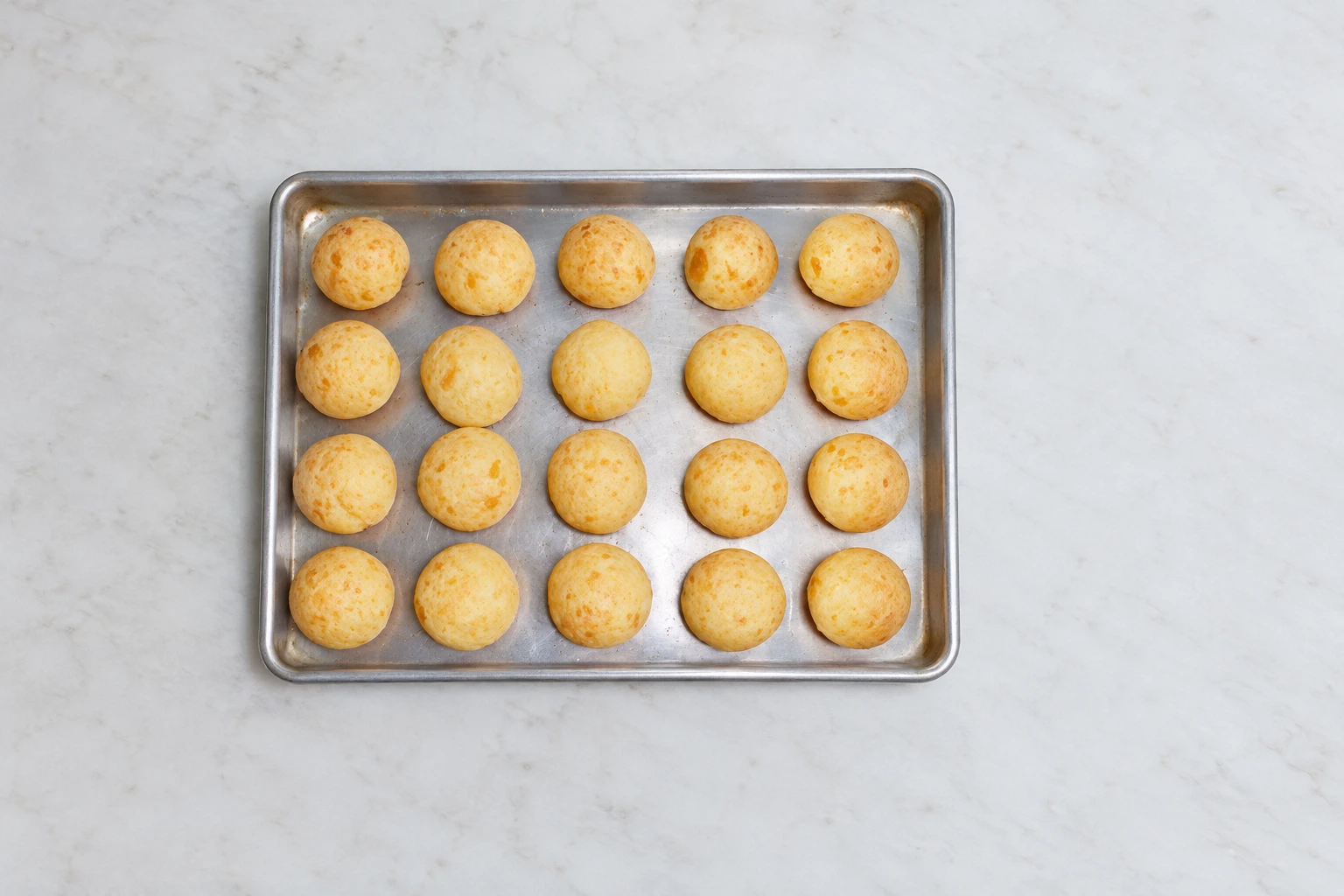
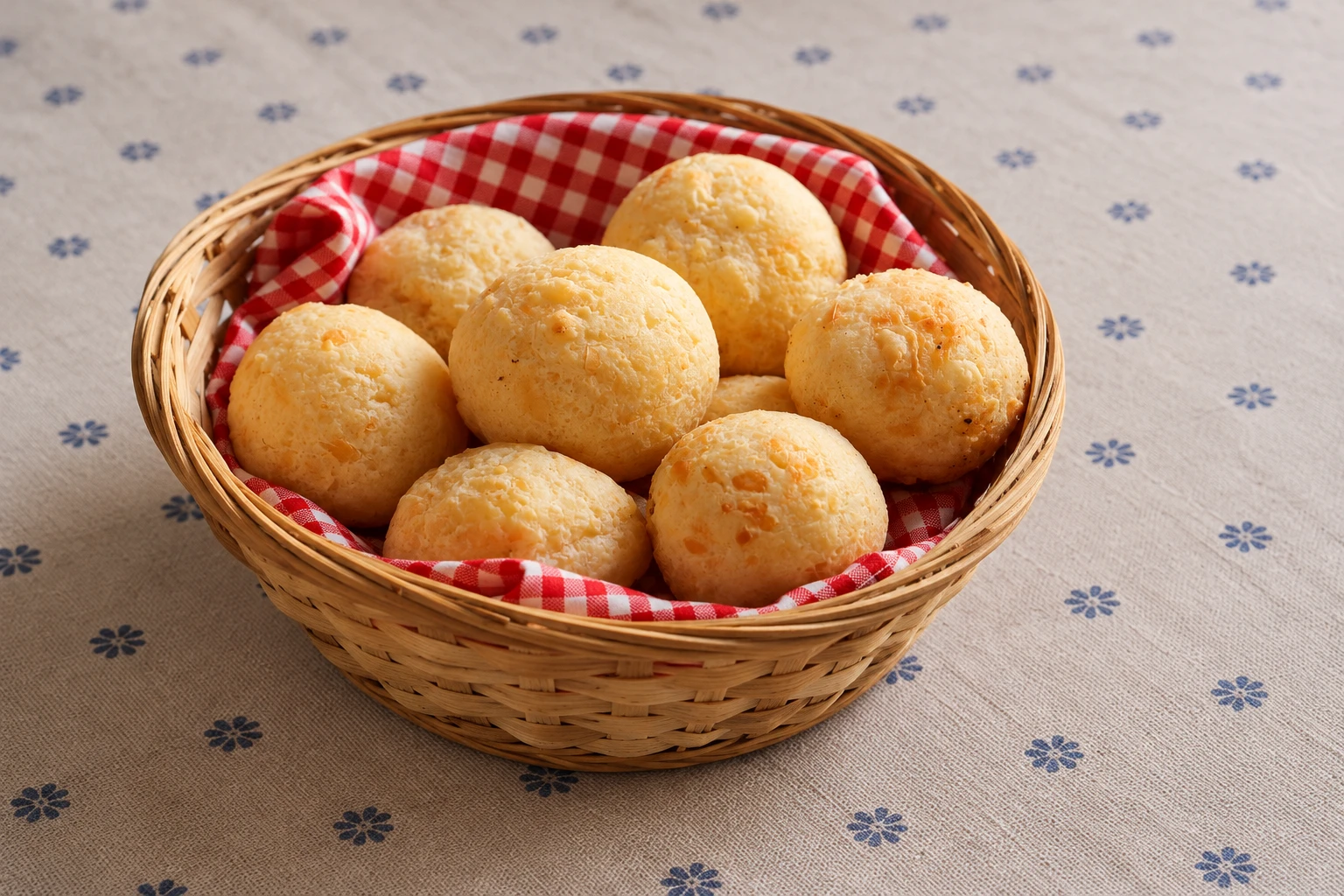
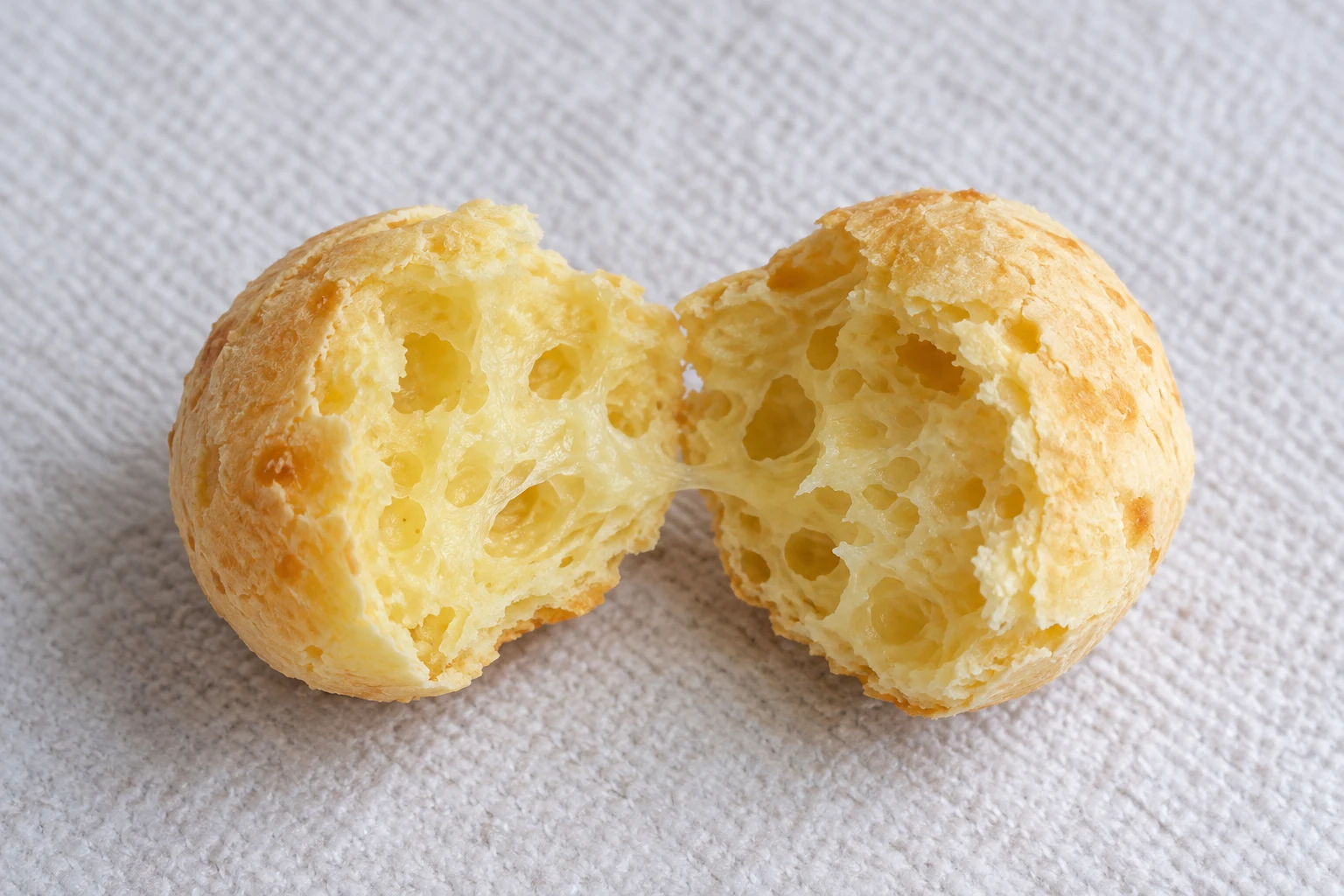
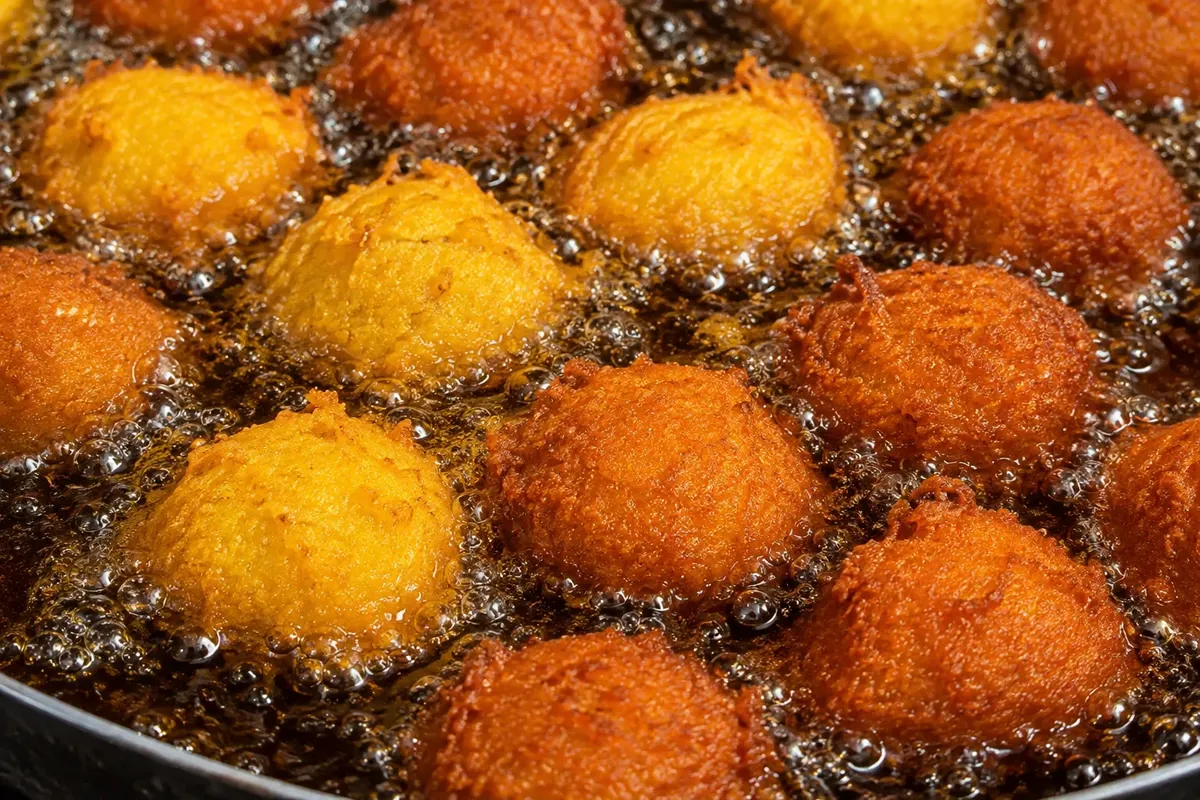
Pão de queijo is made with polvilho, the starch extracted from cassava, scalded with milk and fat and mixed with eggs and grated cured cheese. The little balls go into the oven and come out golden, with a crispy crust and an elastic, moist interior.
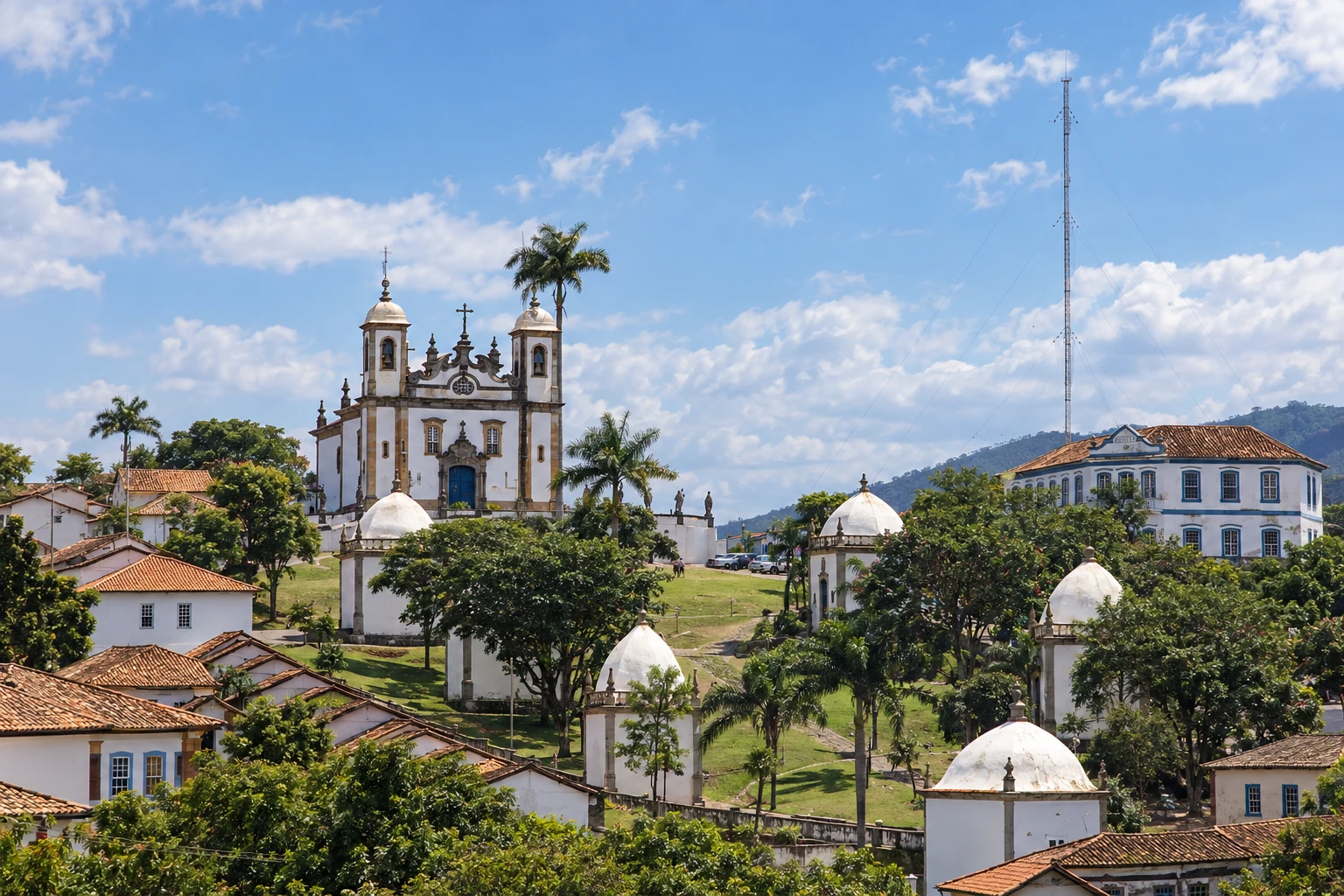
The most told history links pão de queijo to the farms of Minas Gerais in the 18th century, during the gold cycle. Wheat flour was expensive and rare in the countryside, and cooks used polvilho, which was abundant, and cheese made from production leftovers, already cured. Each farm had its own recipe, passed down from generation to generation.
For a long time it was a homemade snack, served with coffee. From the 1950s it reached bakeries and snack bars in Minas cities, and later, with frozen dough, it spread across Brazil.
In Minas there is no single recipe. A survey by Faculdade Senac in Belo Horizonte collected recipes from different regions of the state and found various methods of preparation, with different ingredients and proportions. In research with consumers, pão de queijo appeared as the food most offered to visitors.
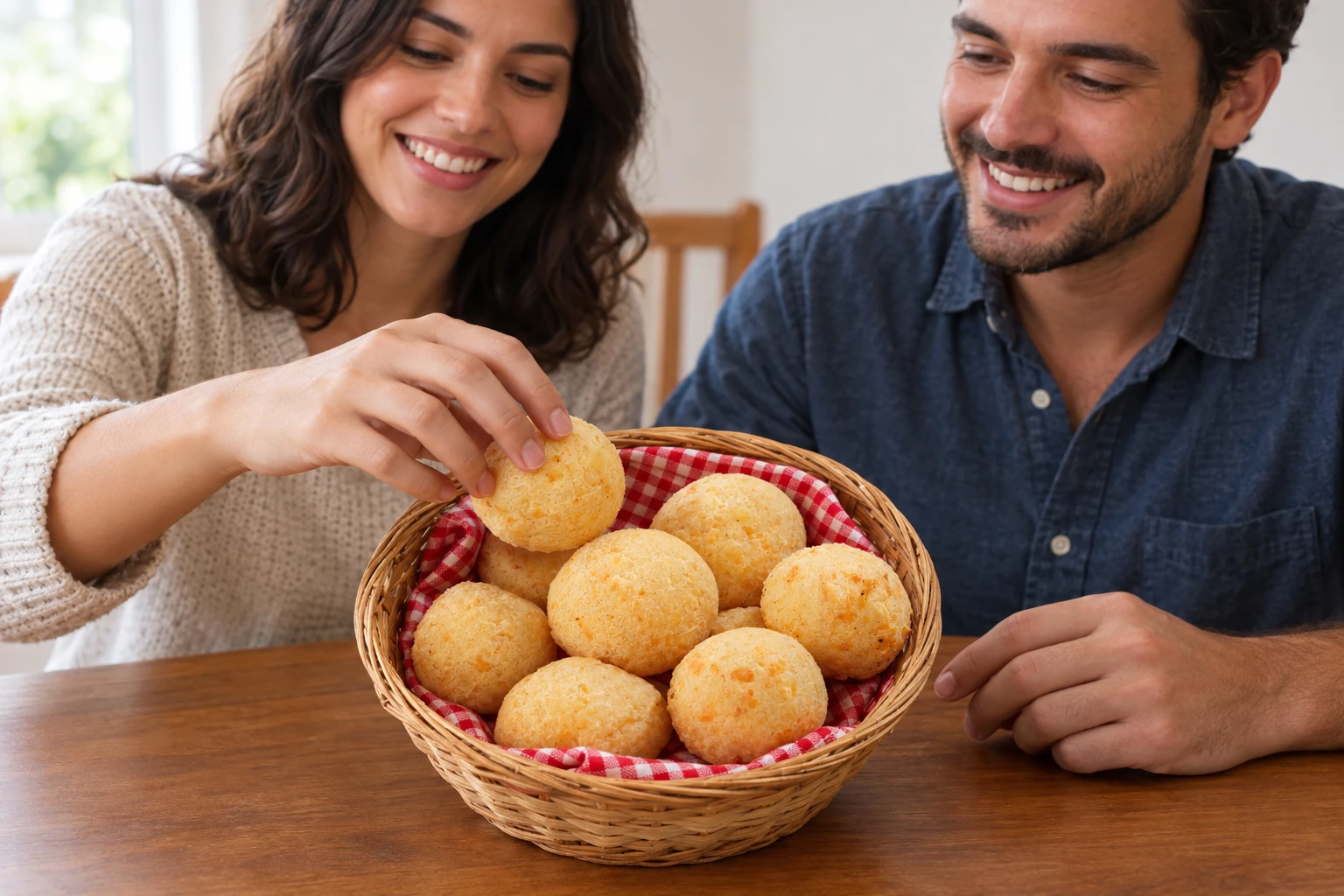
It is eaten hot, straight from the oven, preferably with a filtered coffee.


 Antarktika
 Argentina
 Bolivija
 Čile
 Kolumbija
 Ekvator
 Gvajana
 Francoska Gvajana
 Falklandski otoki (Malvini)
 Paragvaj
 Peru
 Surinam
 Urugvaj
 Venezuela
 Nemčija
 Avstrija
 Belgija
 Hrvaška
 Danska
 Slovaška
 Slovenija
 Španija
 Finska
 Francija
 Grčija
 Nizozemska
 Madžarska
 Irska
 Islandija
 Italija
 Luksemburg
 Norveška
 Poljska
 Portugalska
 Združeno kraljestvo
 Češka
 Švedska
 Švica
 Turčija
 Bermudi
 Kanada
 Združene države Amerike
 Grenlandija
 Mehika
 Sveta Peter in Mihael
 Dominikanska republika
 Japonska
 Južnoafriška republika
 Egipt
 Avstralija
 Fidži
 Nova Zelandija
 Papua Nova Gvineja