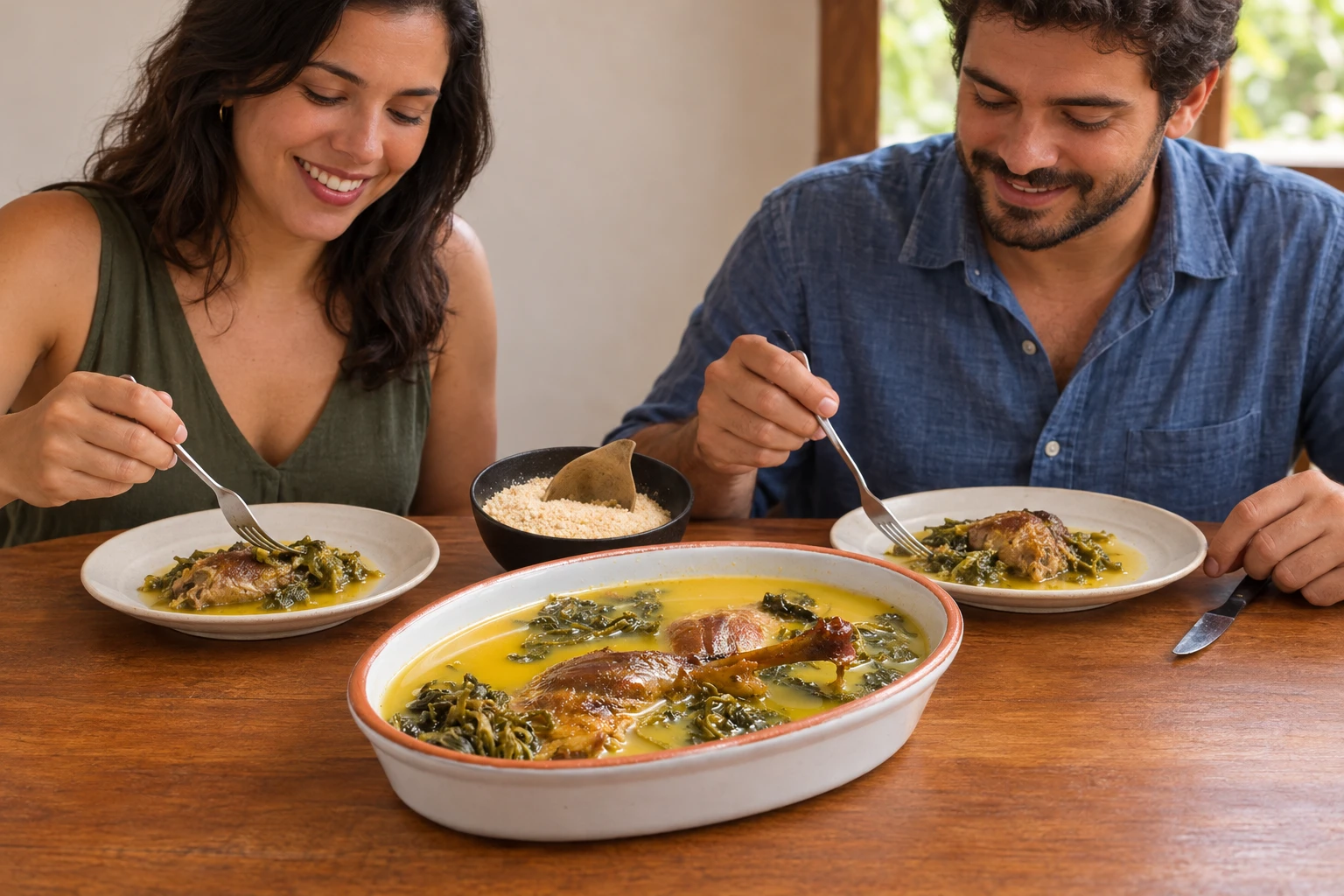
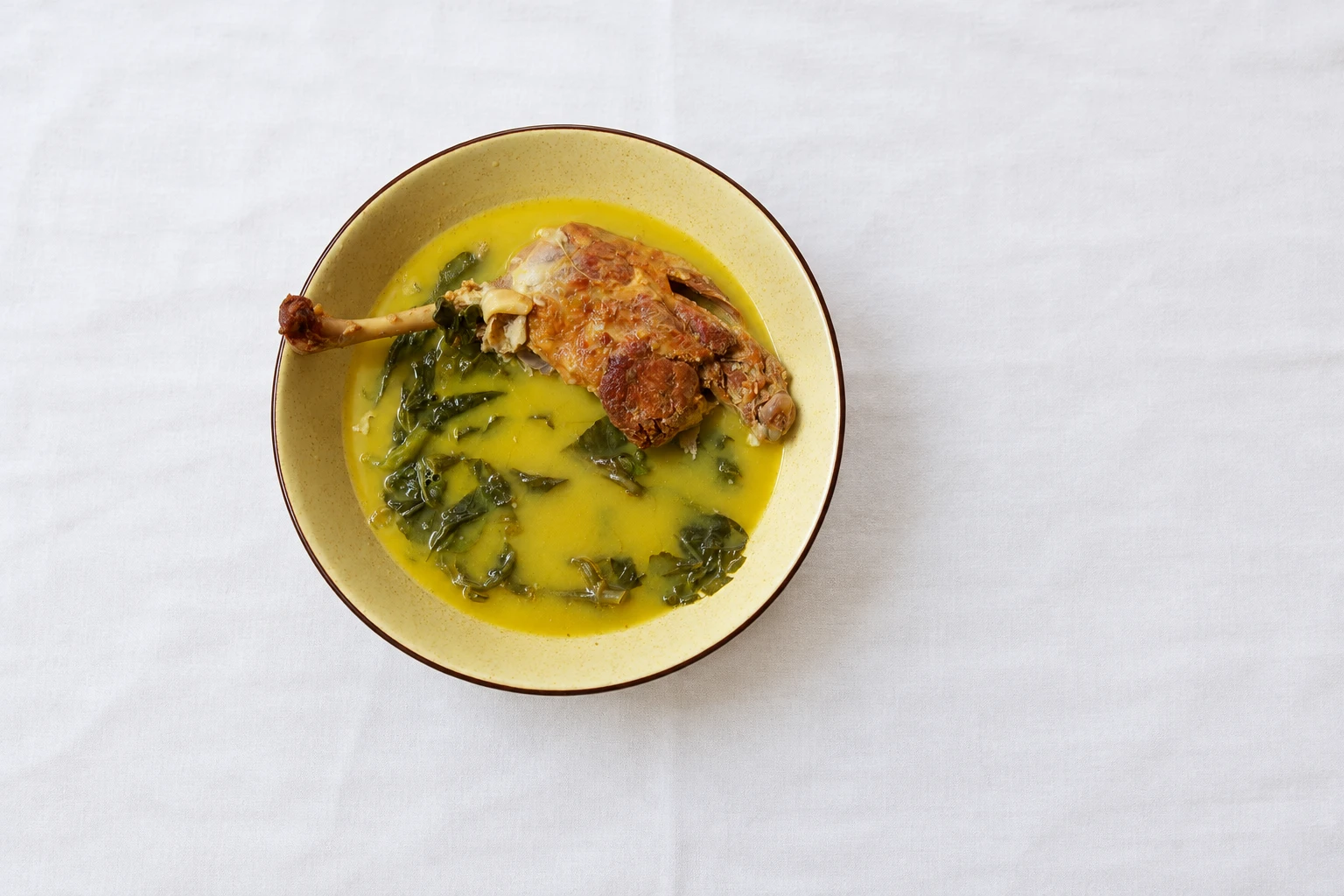
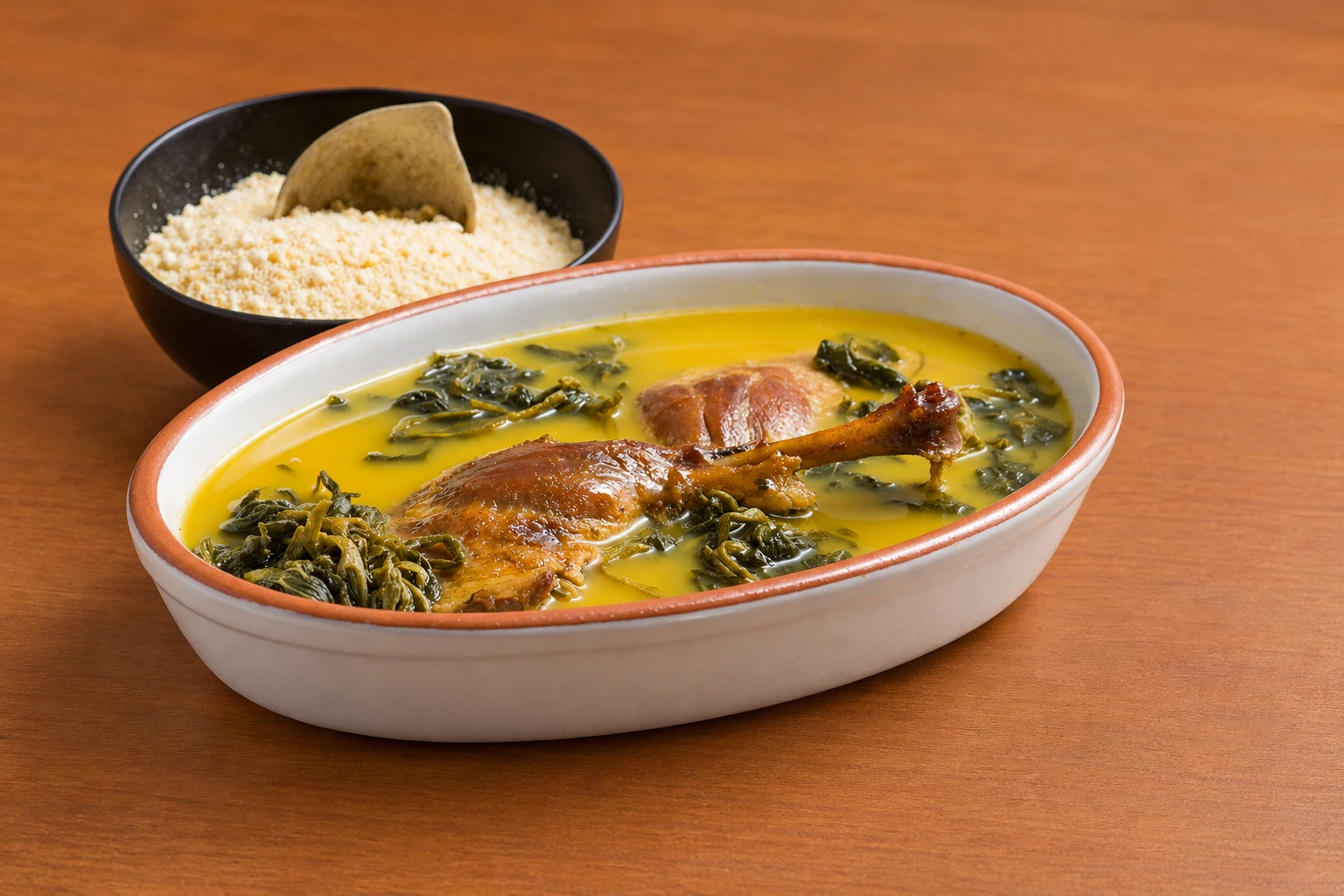
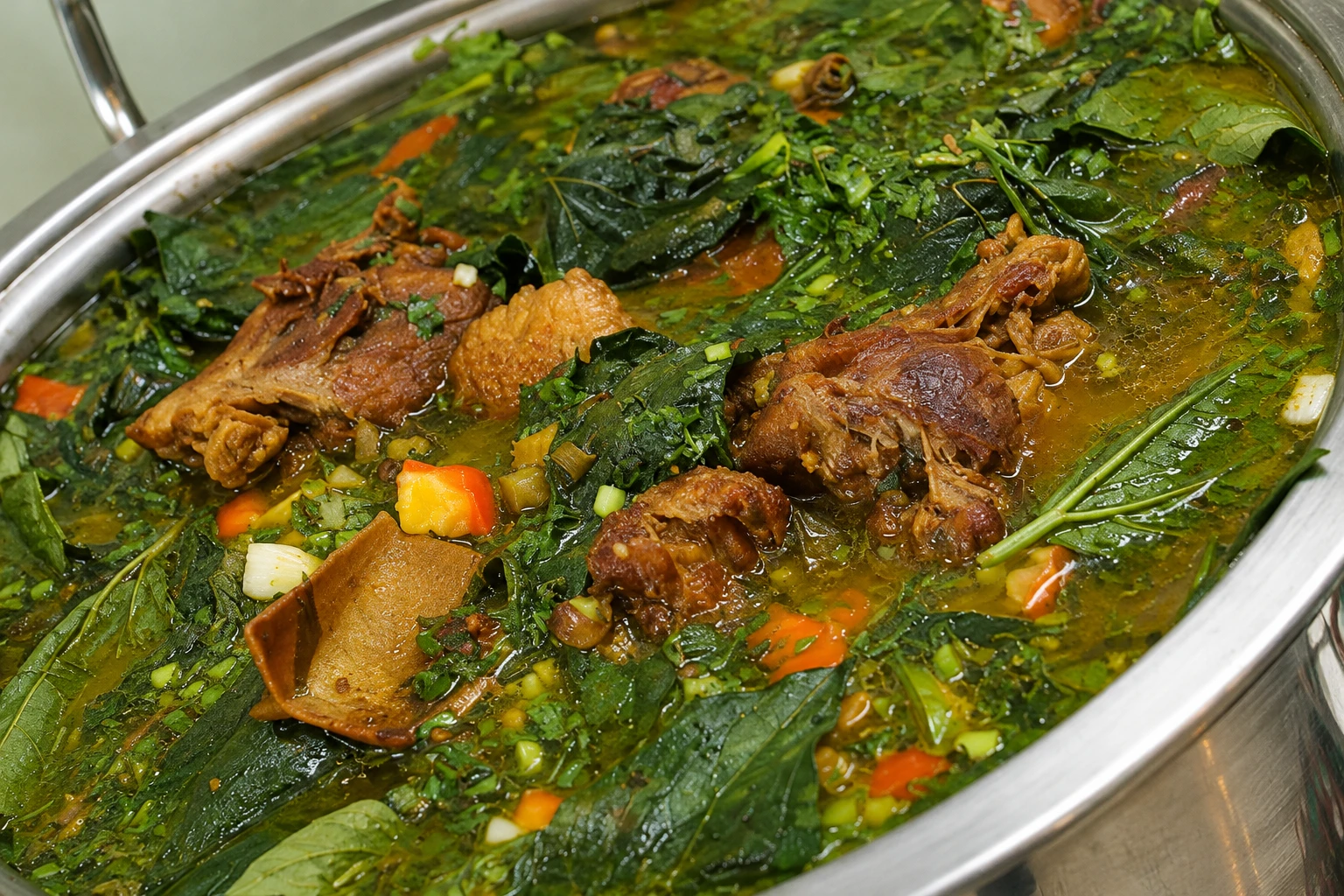
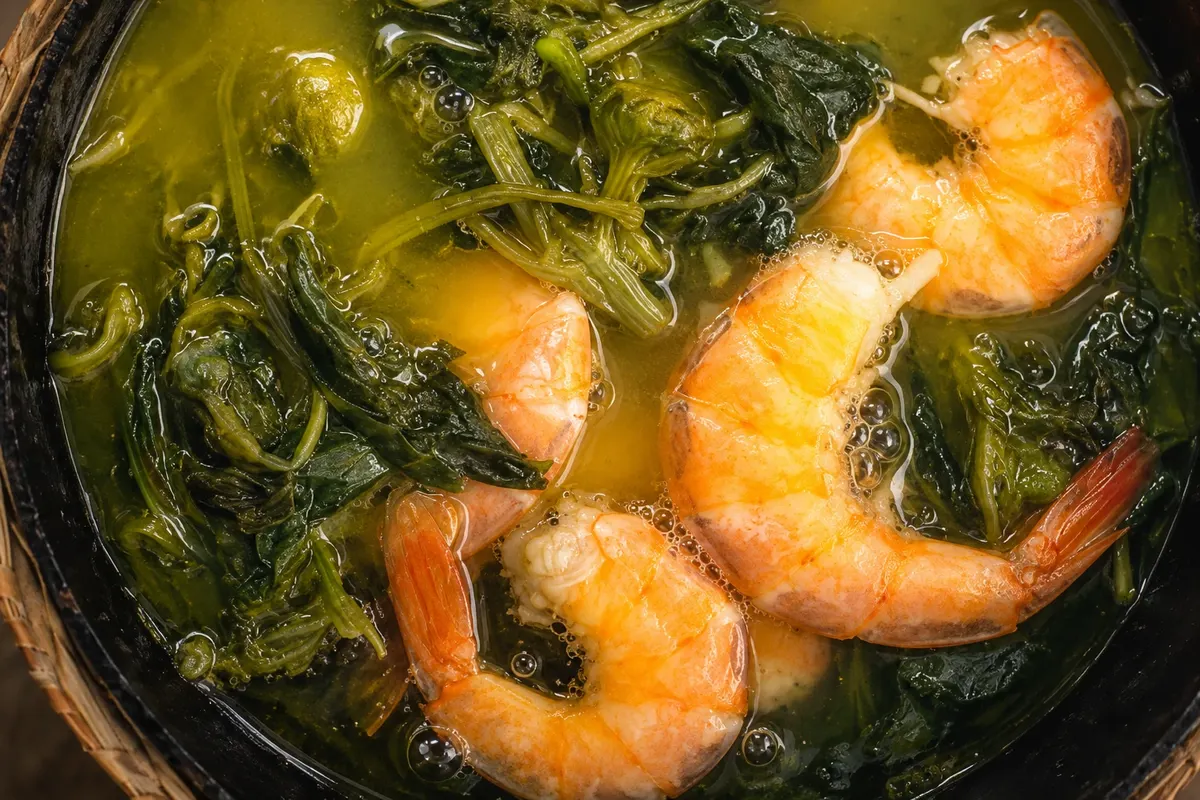
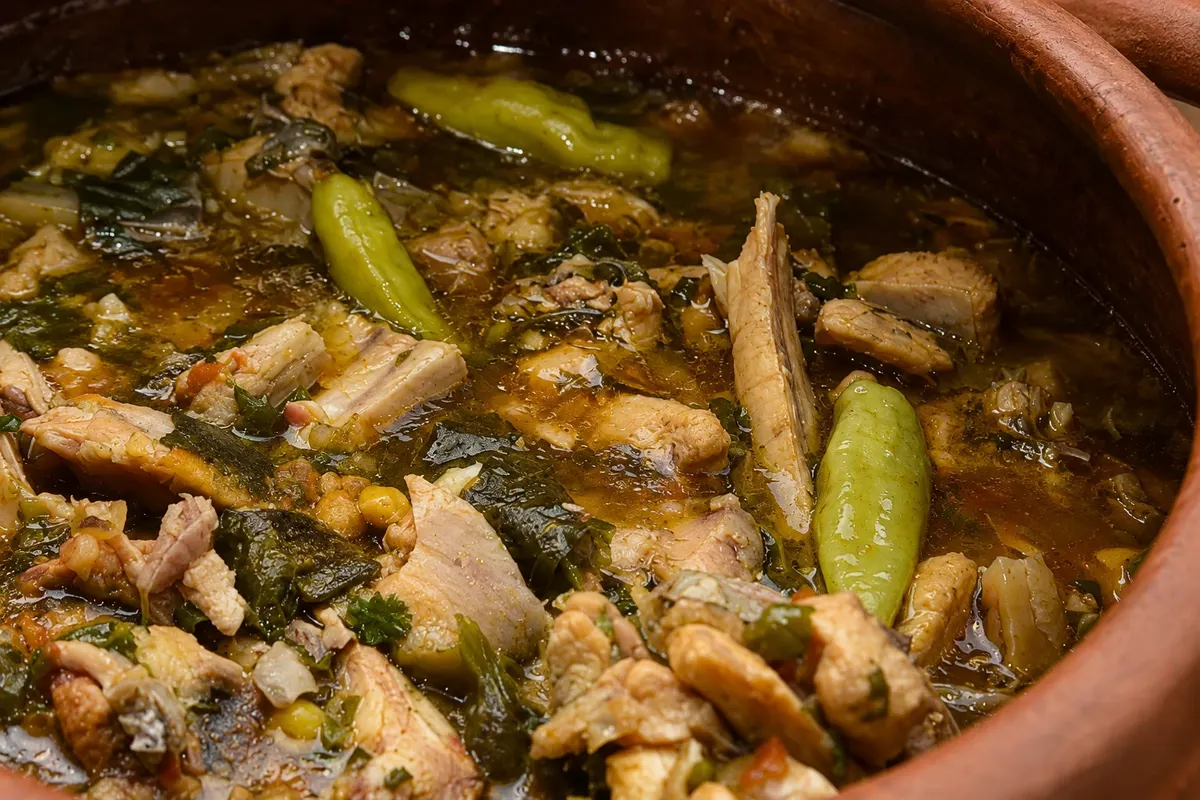
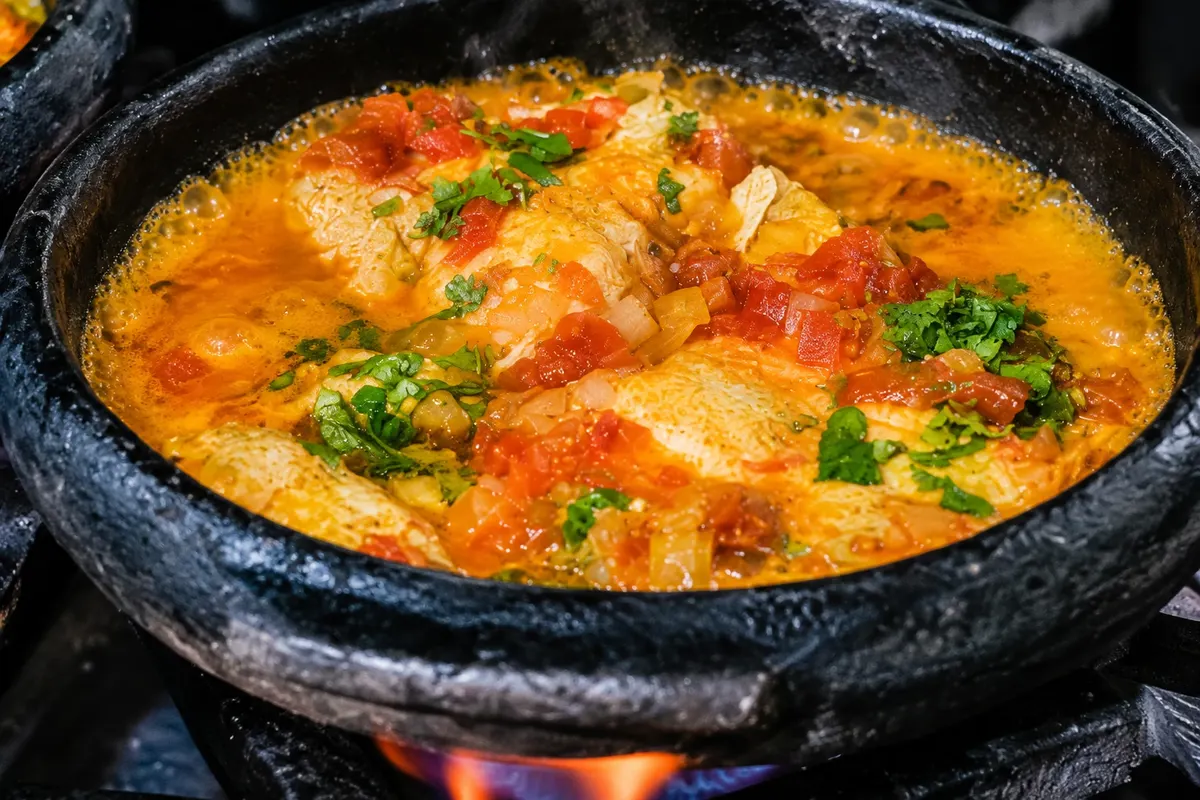
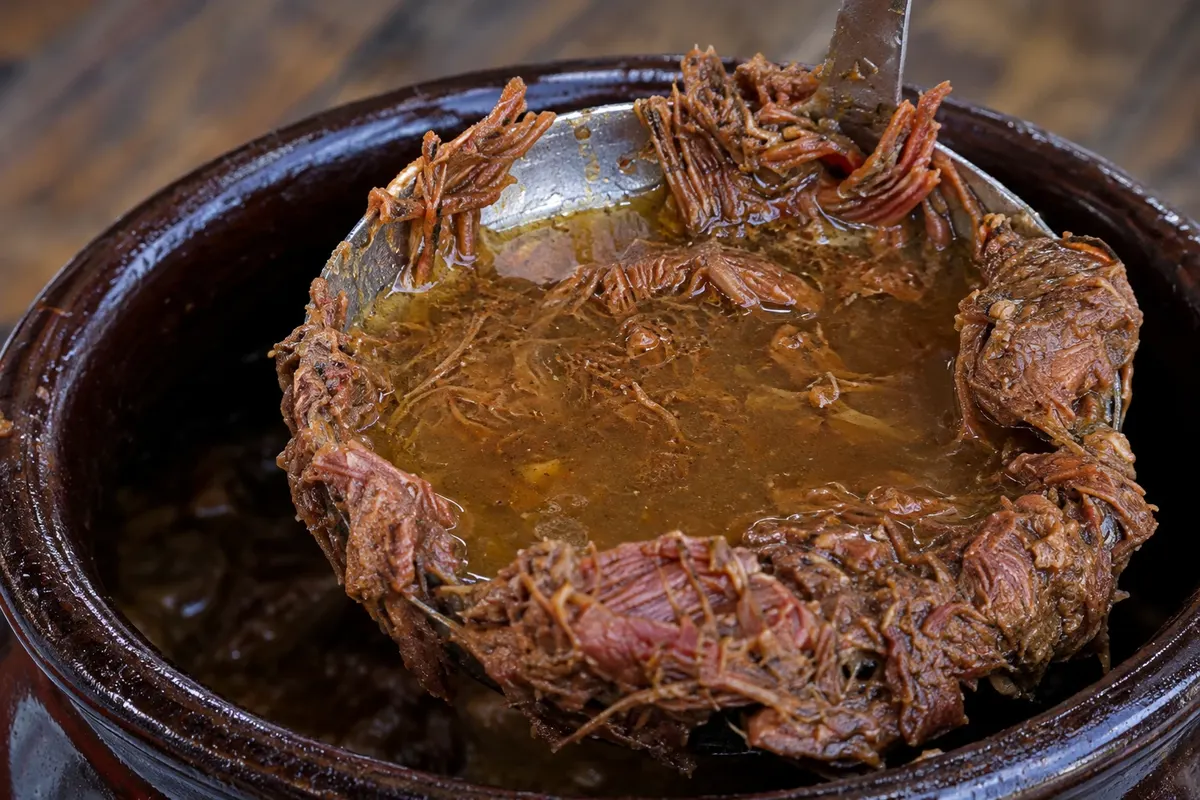
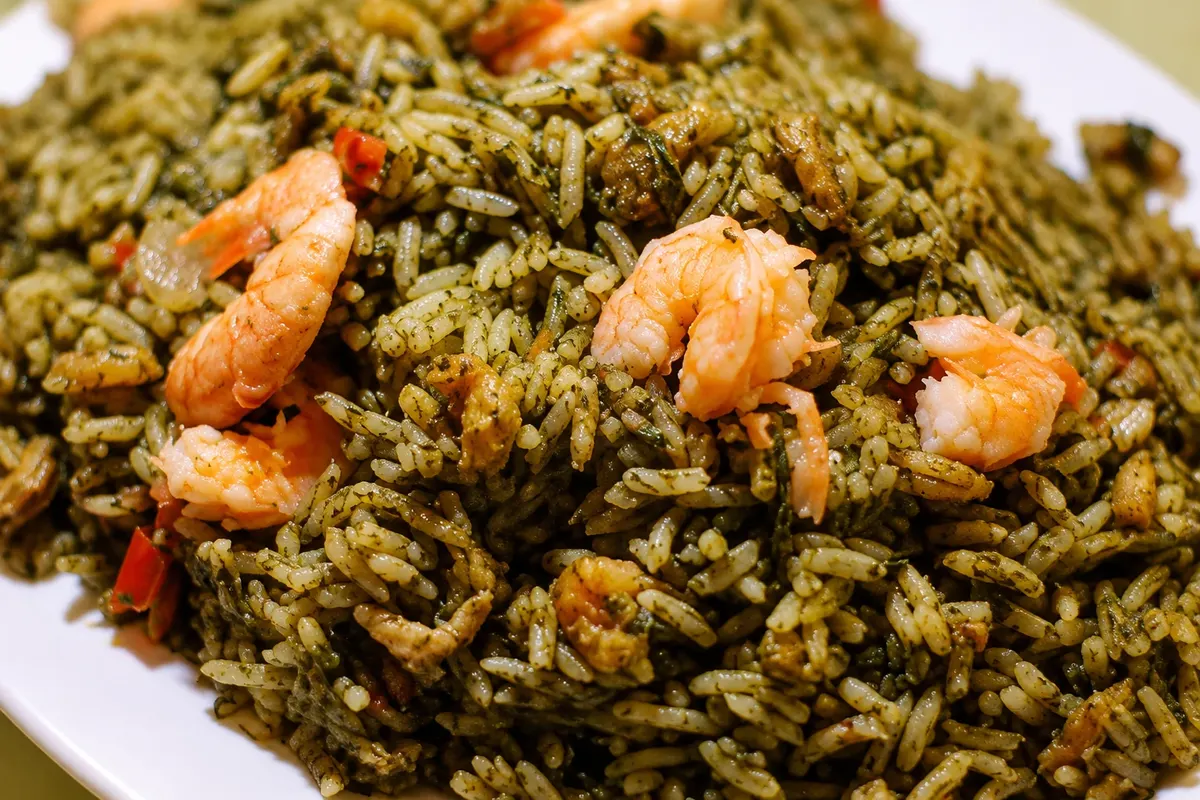
Pato in tucupi is prepared in two stages. First the duck is seasoned and roasted; then it is cut and cooked in tucupi, the yellow acidic broth extracted from bitter cassava, with garlic, chicory and alfavaca (native basil). Finally the jambu leaves are added, which leave the mouth slightly numb. It is served with white rice and manioc flour.
Tucupi must be boiled for a long time before use because bitter cassava is toxic when raw. The dish combines an indigenous base —duck cooked in tucupi with flour and pepper— with techniques brought by the Portuguese, such as roasting the bird first and serving it with rice.
It is the lunch dish of the Círio de Nazaré, the major religious festival in Belém, on the second Sunday of October. On that day, families gather at home after the procession, and pato in tucupi shares the table with maniçoba. In the weeks beforehand, demand for duck, tucupi and jambu rises in the city's markets.
Pará includes pato in tucupi among the typical foods of its intangible cultural heritage and, by its own law, declared it intangible cultural heritage.
Outside the Círio, the dish appears year-round in restaurants serving Pará cuisine.


 Antarktika
 Argentina
 Bolivija
 Čile
 Kolumbija
 Ekvator
 Gvajana
 Francoska Gvajana
 Falklandski otoki (Malvini)
 Paragvaj
 Peru
 Surinam
 Urugvaj
 Venezuela
 Nemčija
 Avstrija
 Belgija
 Hrvaška
 Danska
 Slovaška
 Slovenija
 Španija
 Finska
 Francija
 Grčija
 Nizozemska
 Madžarska
 Irska
 Islandija
 Italija
 Luksemburg
 Norveška
 Poljska
 Portugalska
 Združeno kraljestvo
 Češka
 Švedska
 Švica
 Turčija
 Bermudi
 Kanada
 Združene države Amerike
 Grenlandija
 Mehika
 Sveta Peter in Mihael
 Dominikanska republika
 Japonska
 Južnoafriška republika
 Egipt
 Avstralija
 Fidži
 Nova Zelandija
 Papua Nova Gvineja