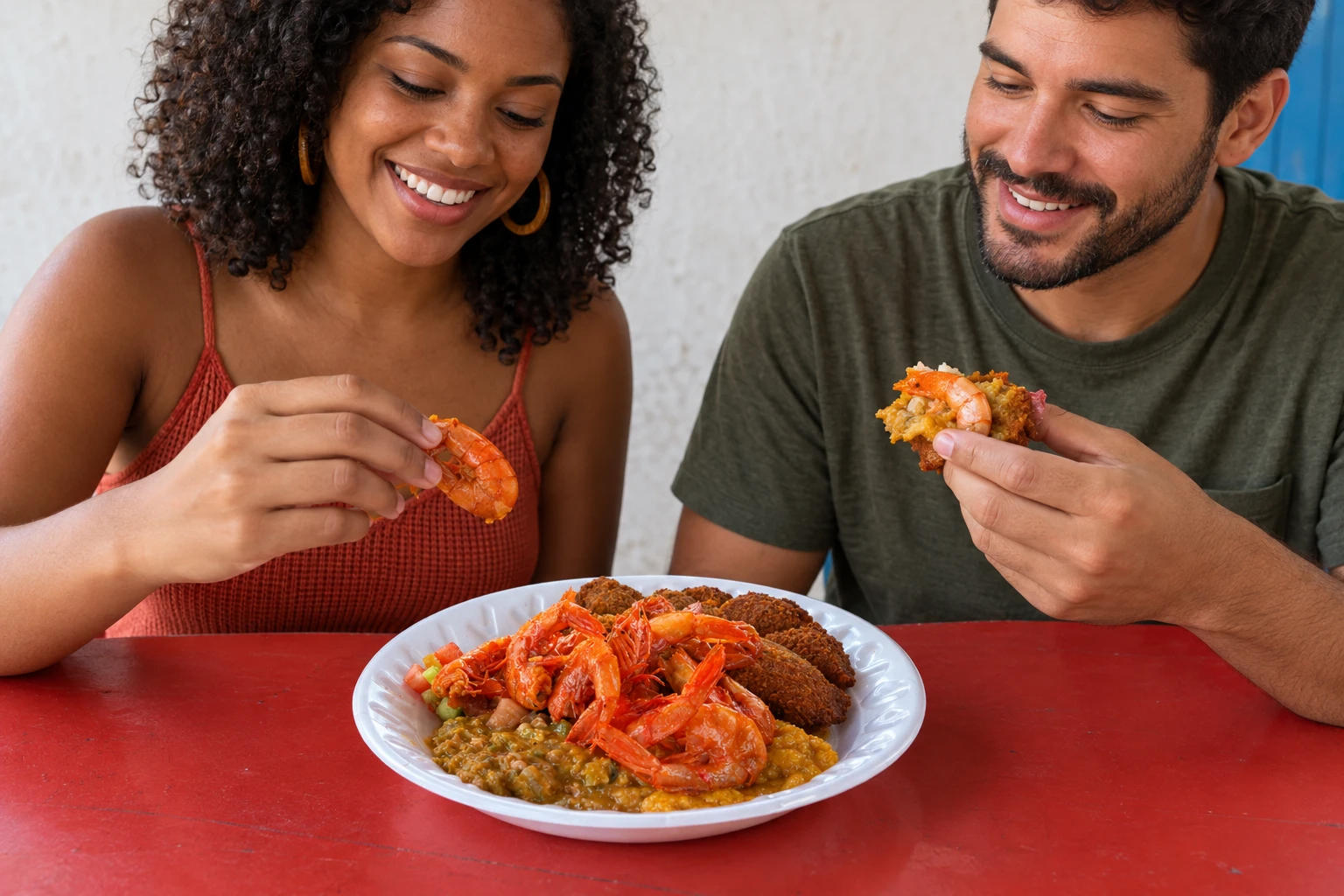
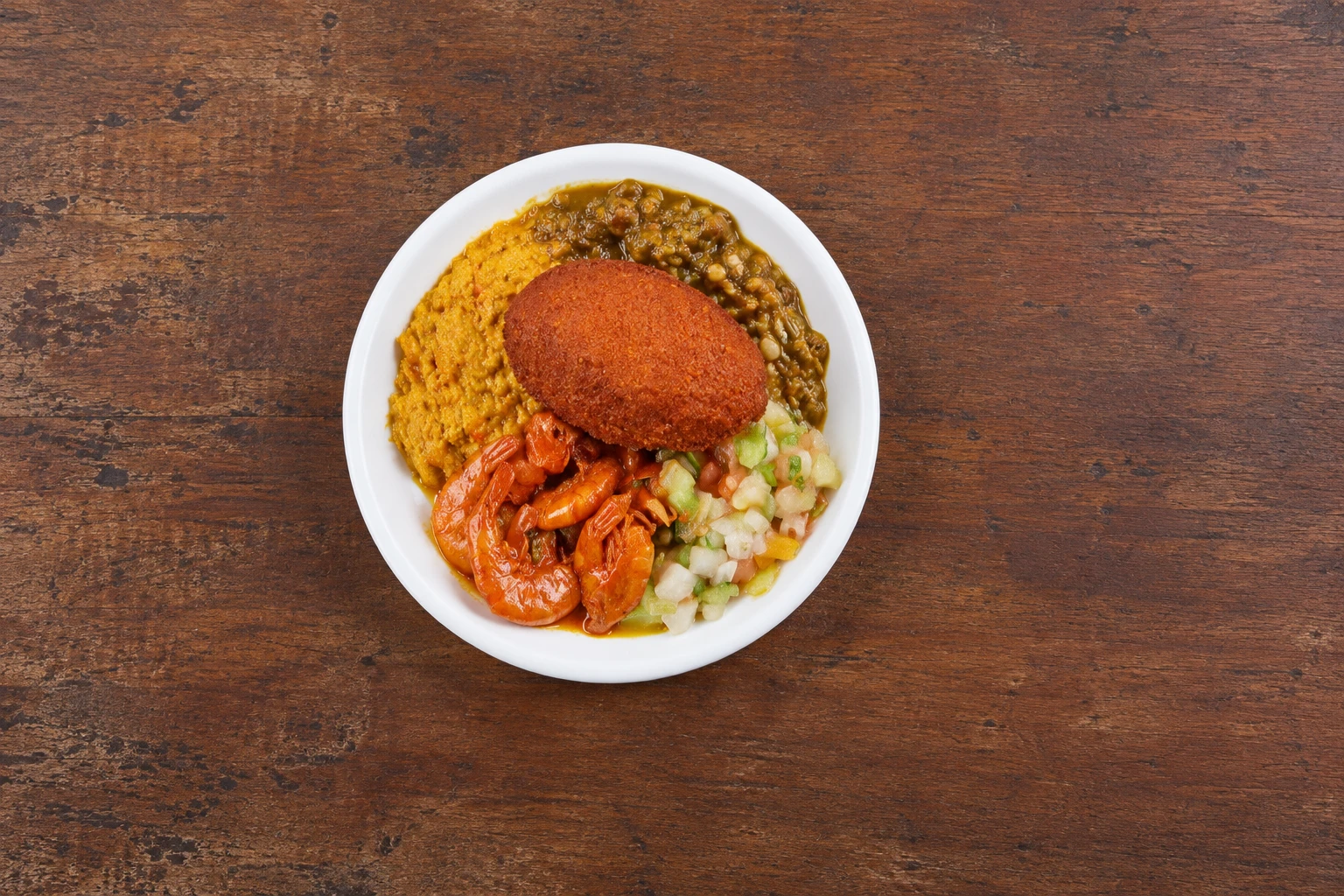
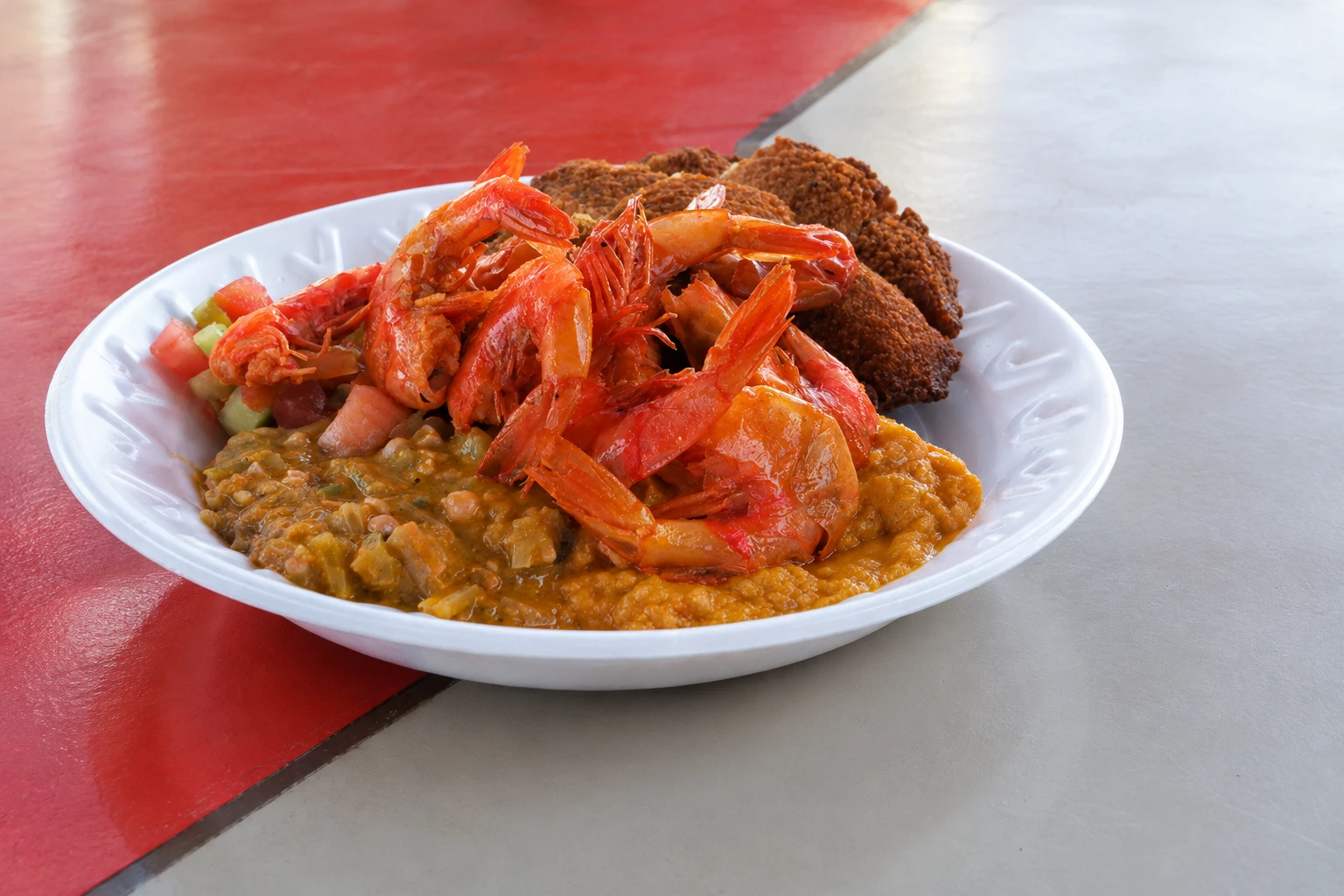
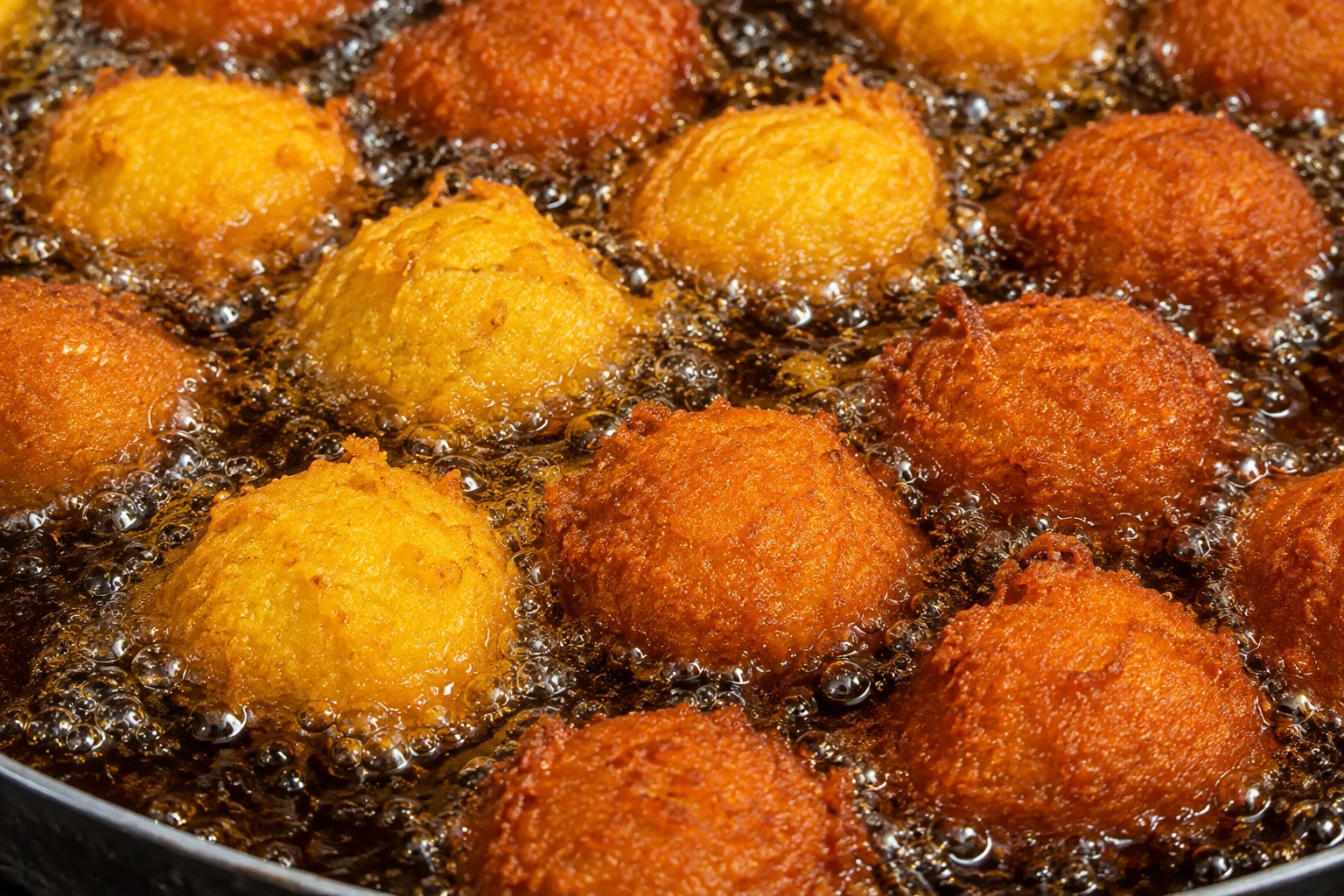
Acarajé is a fritter made from cowpea (feijão-fradinho) dough, onion and salt, fried in dendê oil until golden and crispy on the outside. It is then split open and filled, at the buyer’s request, with vatapá, caruru, dried shrimp, tomato salad and chili. The name comes from Yoruba: akará means ball of fire, and jé means to eat.
The recipe came from West Africa, where similar bean fritters are still made. In Bahia it became strongly associated with candomblé: acarajé is food for the orixás, offered especially to Iansã. At the same time it became street food. Enslaved women sold snacks in the streets of Salvador, and through that work many bought their own freedom and that of relatives.
IPHAN registered the craft of the baianas de acarajé in the Book of Knowledges as Cultural Heritage of Brazil. The registration includes the preparation, the tray, the white dress, turbans and beaded strings, and the places where the baianas set up. In Salvador, a municipal law declares acarajé itself a cultural heritage of the city.
The baiana’s tray also carries other snacks, like abará, made from the same dough but steamed wrapped in banana leaf, and bolinho de estudante, a tapioca-and-coconut sweet. Baianas usually set up in squares, wide plazas and along the city’s shoreline, especially late in the afternoon.
When ordering, the baiana asks whether the acarajé will be hot or cold: the word refers to the amount of chili, not the temperature. It is eaten by hand, while still hot, right after being filled.


 Antarktika
 Argentina
 Bolivija
 Čile
 Kolumbija
 Ekvator
 Gvajana
 Francoska Gvajana
 Falklandski otoki (Malvini)
 Paragvaj
 Peru
 Surinam
 Urugvaj
 Venezuela
 Nemčija
 Avstrija
 Belgija
 Hrvaška
 Danska
 Slovaška
 Slovenija
 Španija
 Finska
 Francija
 Grčija
 Nizozemska
 Madžarska
 Irska
 Islandija
 Italija
 Luksemburg
 Norveška
 Poljska
 Portugalska
 Združeno kraljestvo
 Češka
 Švedska
 Švica
 Turčija
 Bermudi
 Kanada
 Združene države Amerike
 Grenlandija
 Mehika
 Sveta Peter in Mihael
 Dominikanska republika
 Japonska
 Južnoafriška republika
 Egipt
 Avstralija
 Fidži
 Nova Zelandija
 Papua Nova Gvineja