Causa limeña
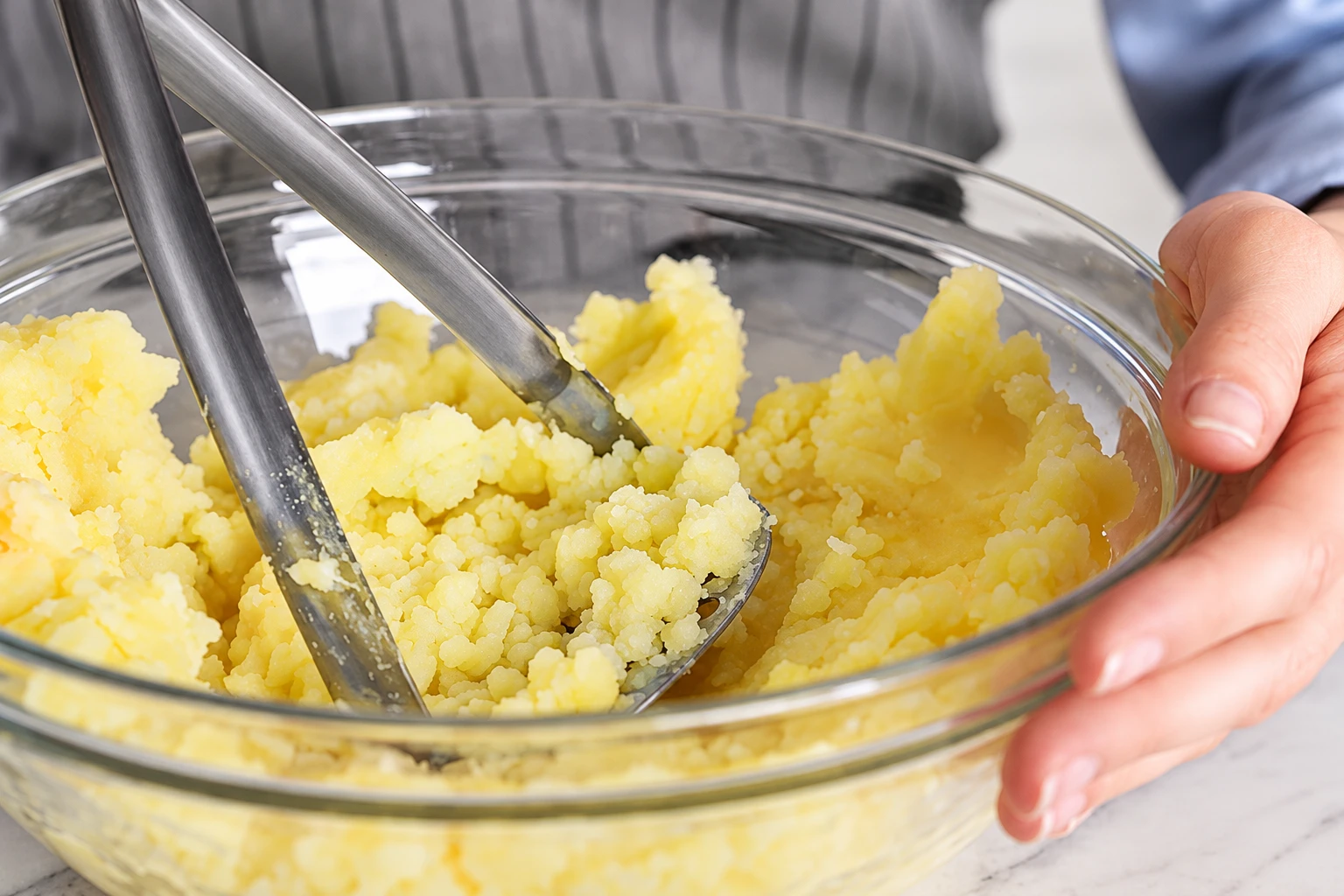
Cold mashed yellow potato dough seasoned with ají amarillo and lime, layered with a filling of chicken, tuna, or seafood. It bears Lima in the name and is linked to the history of Independence.
Antarctica
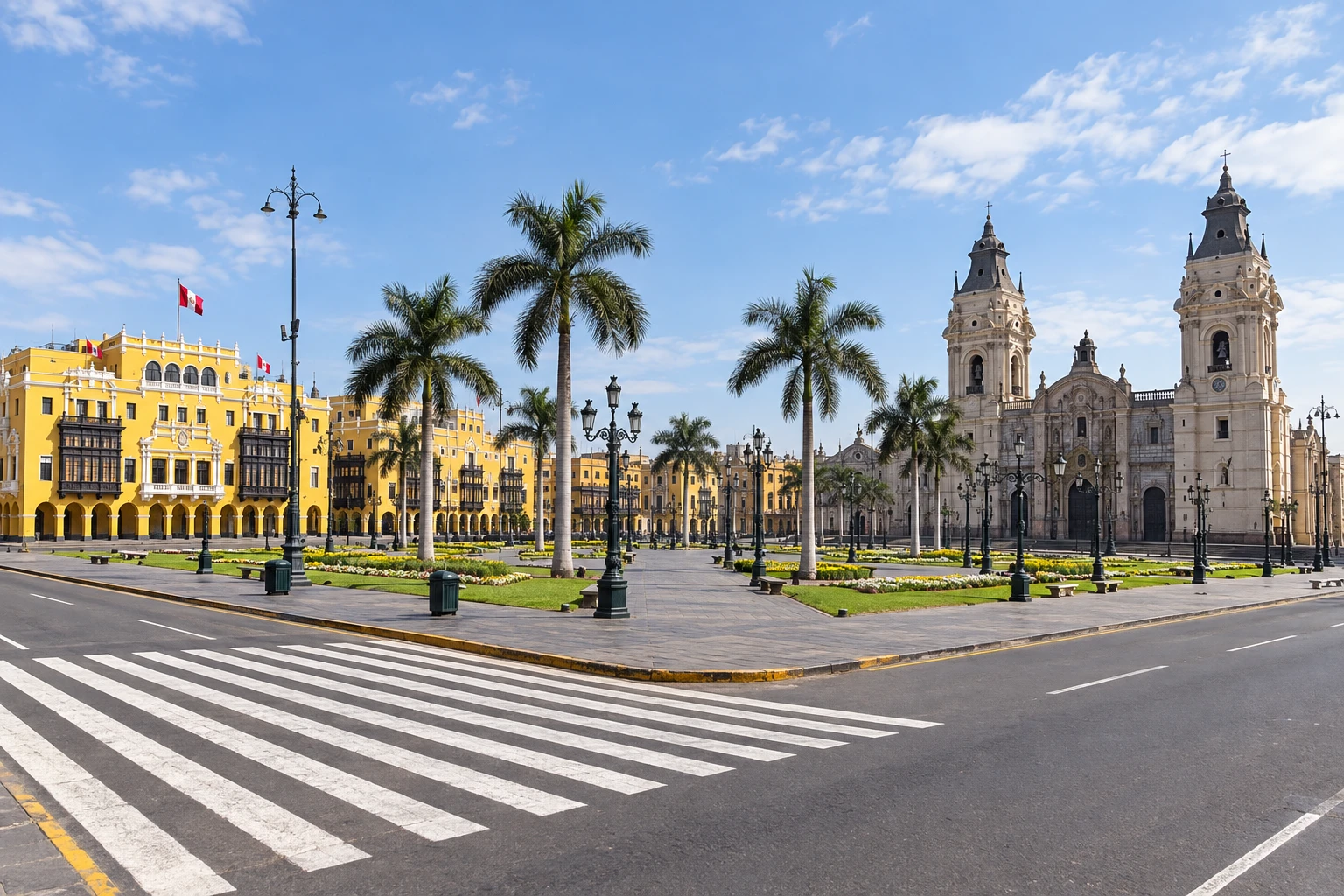
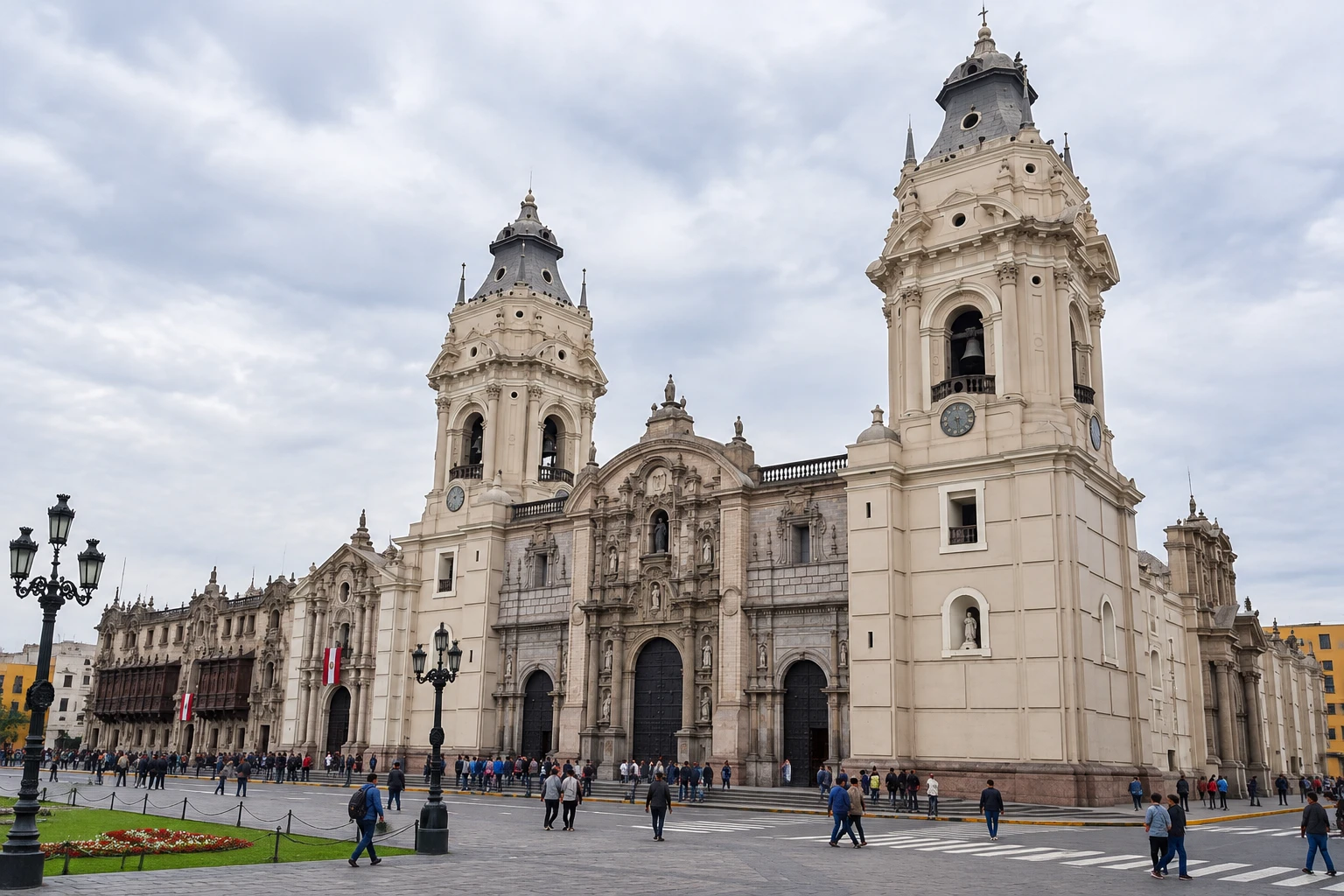
In the photo: Plaza Mayor de Lima.
Illustrative images. The pictures in this guide are illustrations based on the real place, not photographs, and may differ from it.
The city
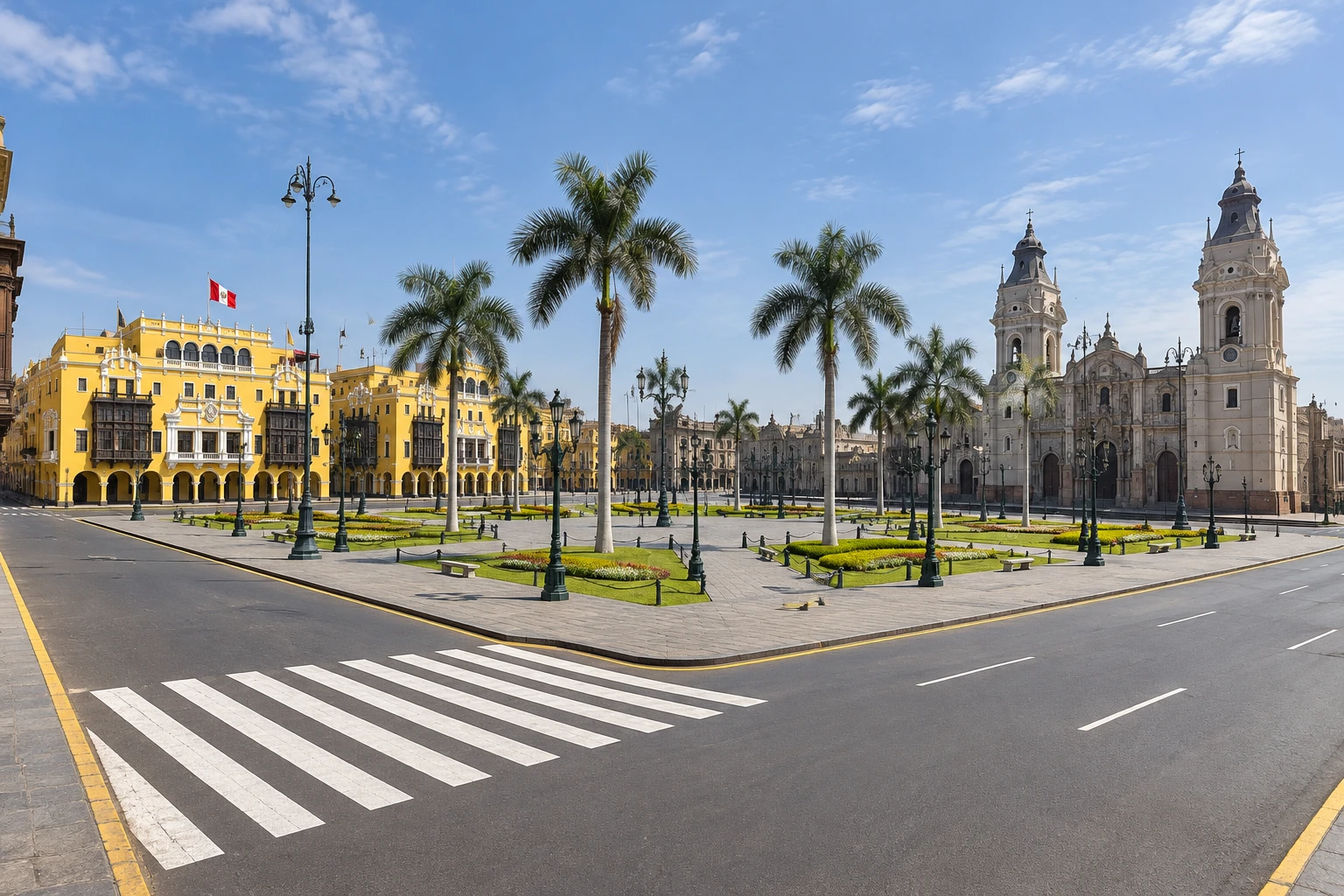
Capital of Peru, Lima stretches for tens of kilometers along a desert coast between the Pacific and the Andes. The colonial historic center, a World Heritage Site, is around the Plaza Mayor; Miraflores and Barranco, on the cliffs, concentrate hotels, restaurants and the Malecón. Amid the neighborhoods there are pre‑Inca adobe pyramids, and museums like the Larco and the MALI tell the country’s history.
There's no accommodation in the guide yet in Lima.
Tem hotel, pousada ou casa de temporada aqui? Cadastre a suaHotéis e restaurantes da cidade no mapa.
how to get there · how many days · itinerary · questions
Flavors of Peru

Cold mashed yellow potato dough seasoned with ají amarillo and lime, layered with a filling of chicken, tuna, or seafood. It bears Lima in the name and is linked to the history of Independence.

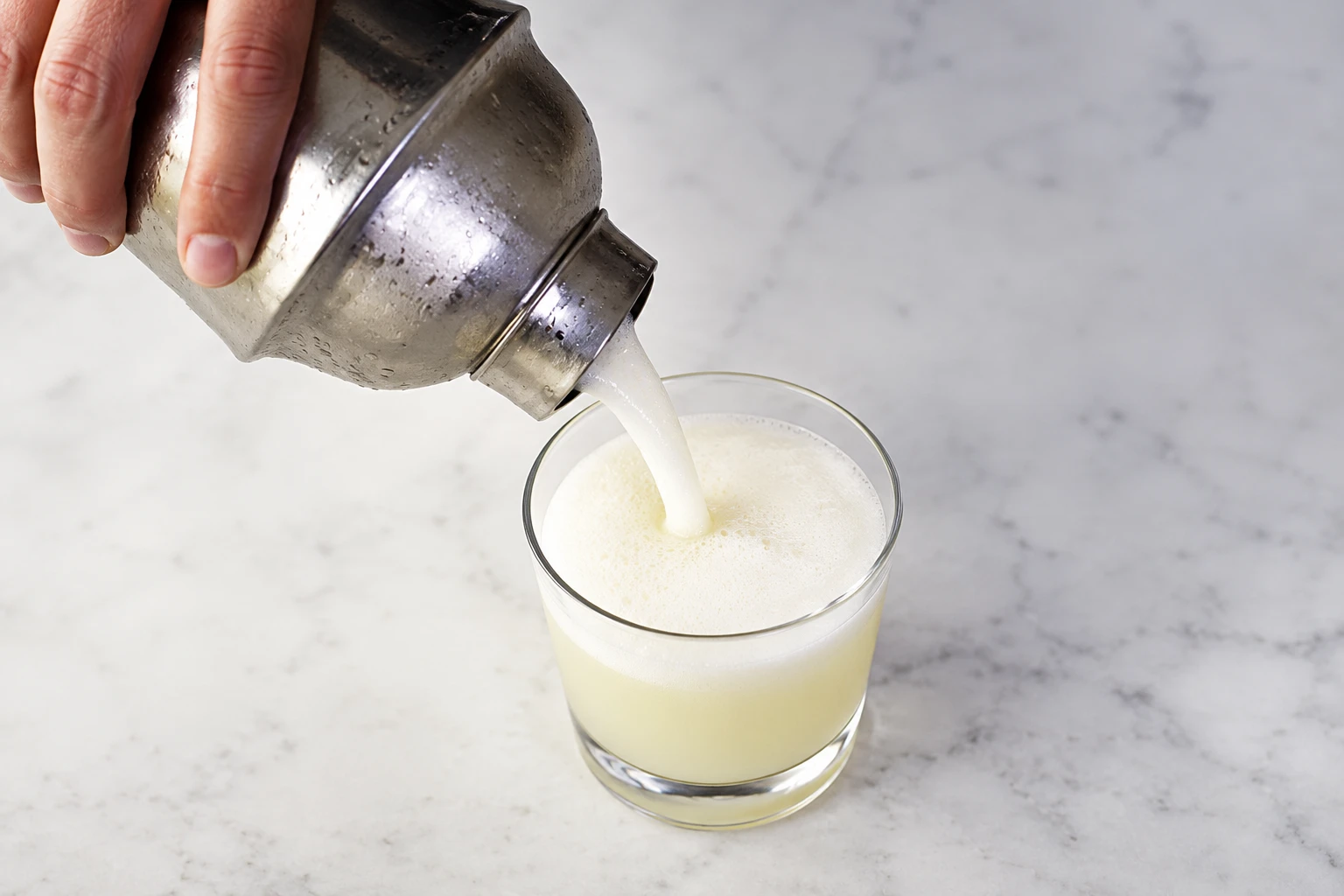
Cocktail of pisco, lime juice, sugar syrup and egg white, shaken with ice and served with drops of bitters.

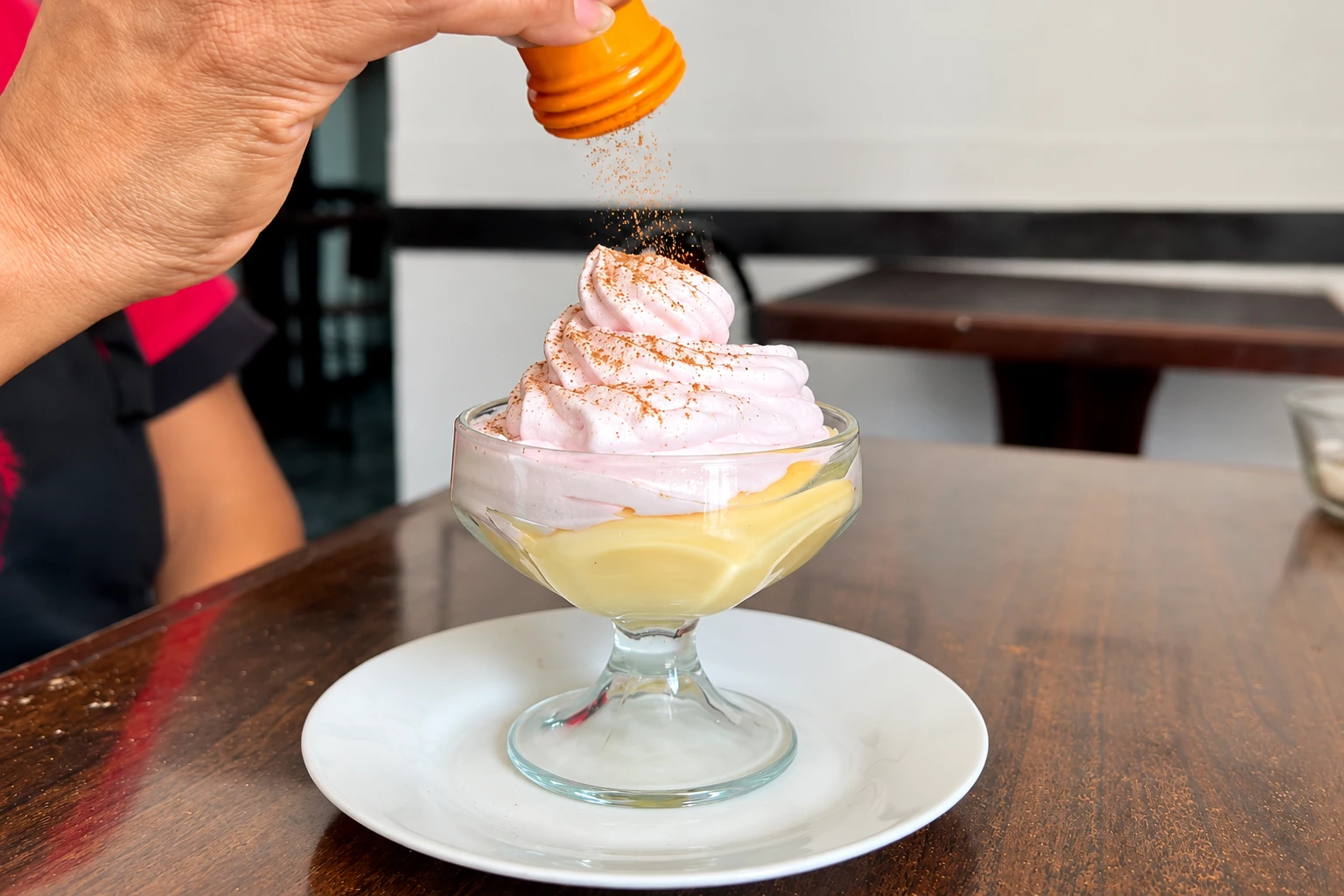
Lima sweet in two layers: a manjar blanco of milk, sugar and egg yolks, topped with meringue made with Port wine and cinnamon. The name means "suspiro de la limeña" (the limeña’s sigh).

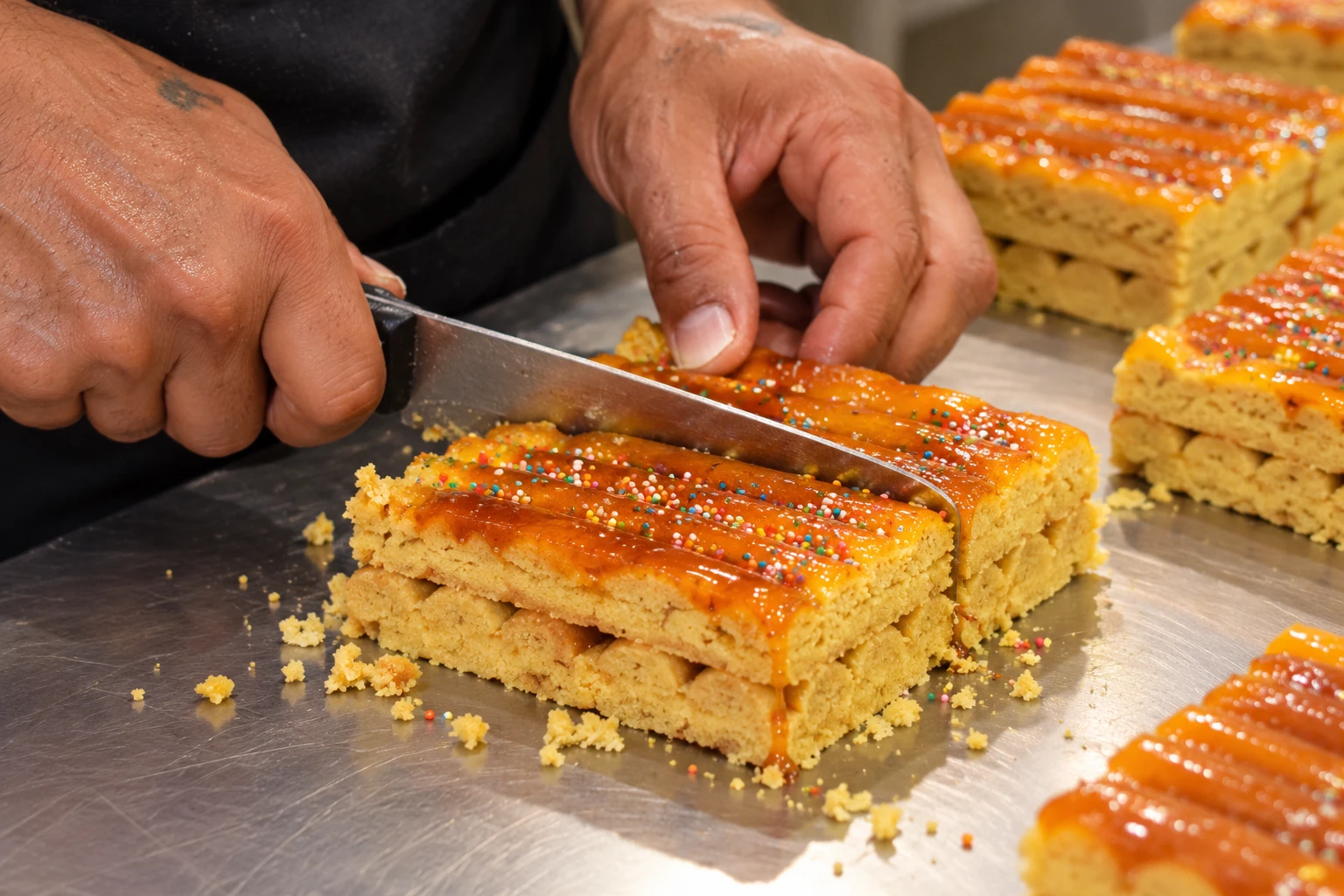
Sticks of flour dough flavored with anise, layered, coated in chancaca honey and topped with colorful sprinkles. It’s the October sweet in Lima, the month of the procession of the Señor de los Milagros.
The local experience
The square where Pizarro founded Lima in 1535, with the Cathedral, the Government Palace, the Municipal Palace and the Archbishop's Palace with wooden balconies around, and the bronze fountain from 1651 in the center.
The cathedral of the Plaza Mayor, rebuilt several times after earthquakes, with the chapel of Francisco Pizarro’s tomb, the carved wooden choir stalls, and a museum of religious art.
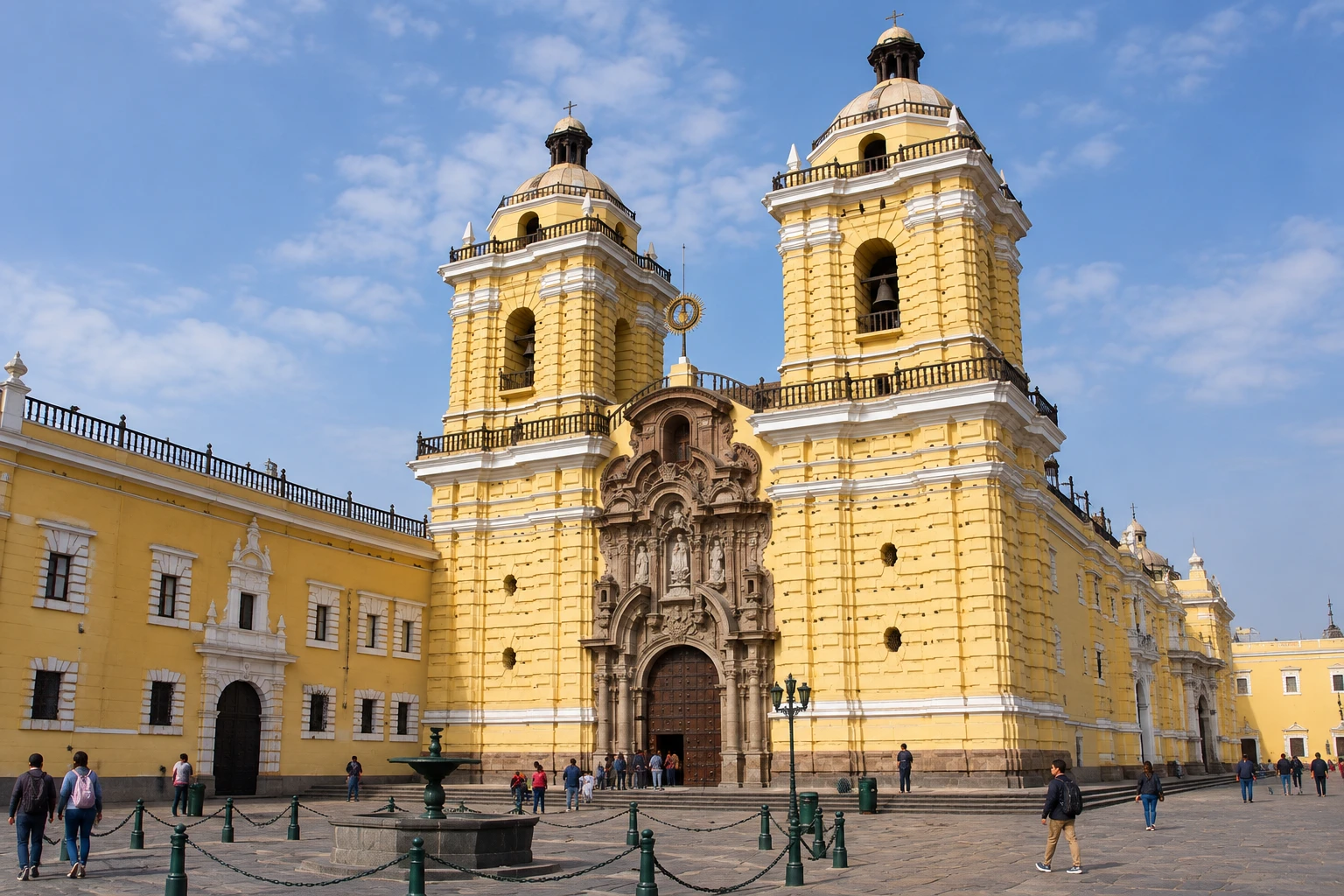
A 17th-century Franciscan complex two blocks from the Plaza Mayor, with the catacombs that served as the city's cemetery, an old library, and cloisters decorated with Seville tiles.
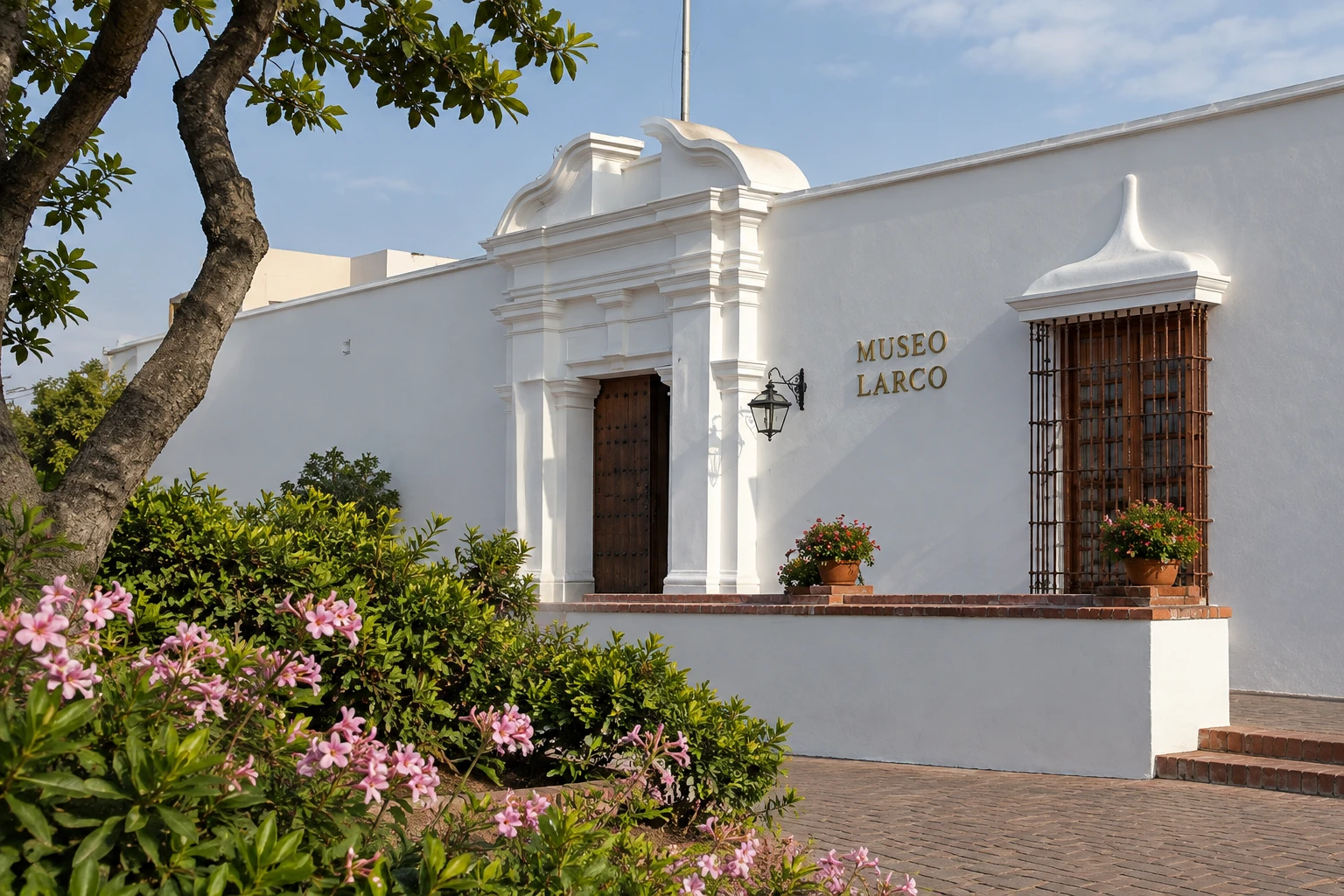
Museum of pre-Columbian art in an 18th-century mansion in Pueblo Libre, with Moche ceramics, gold and silver pieces, textiles and a conservation reserve open to visitors. It has gardens and a restaurant.
Before you go
Lima – Peru Capital
Approximate distances. Check flights and bus, train or boat schedules before you travel.
Connections with Brazil can be direct or with a stopover, depending on the season and the airline. Confirm before buying. Aeropuerto Internacional Jorge Chávez is in Callao, about 17 km from the historic center and roughly 20 km from Miraflores. From the airport official taxis, transfers and buses depart for Miraflores; at peak times the trip can take over an hour. Buses to the south of the country (Paracas, Ica, Nazca, Arequipa) depart from the bus companies’ own terminals.
Two days for the essentials: one for the historic center and the Convento de San Francisco, another for the Museo Larco, the Huaca Pucllana and the late afternoon on the Malecón and in Barranco. With three days you can add Pachacamac, the MALI and the Circuito Mágico del Agua at night.
All year round. From December to April it's usually sunny and warm, with beaches crowded on weekends. From June to October the sky is generally gray, with fine drizzle (garúa) and high humidity, and evenings call for a light jacket. Heavy rain is rare at any time.
The seasons shown are the most usual ones; nature doesn't always follow the calendar.
No. Traffic is slow and parking is difficult. App-based taxis are the most used option between Miraflores, Barranco, San Isidro and the center. The Metropolitano, a bus on an exclusive corridor, connects Barranco and Miraflores to the historic center. For Pachacamac, a tour or a taxi that waits works better than driving.
Suggested itinerary
Built with the places on this page. No rush: it's paced so you have time to see them.
Start at Plaza Mayor, with the Cathedral, the Government Palace and the Municipal Palace. Enter the Cathedral to see the chapel housing Pizarro's tomb and the choir stalls. Around noon there is often a changing of the guard in front of the palace; check the day.
Walk two blocks to the Convento de San Francisco for the guided tour of the catacombs, the library and the cloisters with Sevillian tiles. Afterwards, have ceviche for lunch — in Lima it's eaten at midday, not at night.
Head to Miraflores and walk along the Malecón to the Parque del Amor, with the sea and the Costa Verde below. On clear days the sun sets over the Pacific.
Finish in Barranco, at the Puente de los Suspiros and the streets of old houses around it, with bars and restaurants. Try the pisco sour, in moderation.
Day 1
Plaza Mayor, Cathedral and the streets of wooden balconies up to the church of Santo Domingo.
Catacombs and library of the Convento de San Francisco, with lunch in the center.
Go to the Parque de la Reserva to see the lit fountains in the Circuito Mágico del Agua; check the days it's open.
Return to Miraflores and dine near Parque Kennedy.
Day 2
Go to the Museo Larco in Pueblo Libre for the Moche ceramics, gold and textiles galleries. Allow two hours.
Guided visit to the adobe pyramid of Huaca Pucllana, in Miraflores, including the site's workshops and native animals.
Walk along the Malecón to the Parque del Amor for the late afternoon overlooking the sea.
Puente de los Suspiros, the viewpoint over the beach and dinner in the neighborhood.
Day 1
Historic center in the morning, with the Cathedral and the palaces around the square.
Catacombs of San Francisco and the cloister of Santo Domingo, with lunch in the center.
Head to the Parque de la Exposición for the MALI's colonial and republican art galleries.
Cross over to the Parque de la Reserva for the illuminated fountains and the light-and-water show.
Day 2
Gold, silver and pre-Columbian ceramics in the colonial mansion of Pueblo Libre.
The adobe pyramid of the Lima culture, in the middle of Miraflores.
Walk along the Malecón to the Parque del Amor.
Dinner in Miraflores, near Parque Kennedy.
Day 3
Leave early for Pachacamac, 30 km to the south: the site museum, the Temple of the Sun and the view of the Lurín valley down to the sea.
Return to Lima to have lunch and rest in Miraflores.
Puente de los Suspiros, the murals and Barranco's viewpoint.
Dinner in Barranco, featuring Peruvian seafood cuisine.
Check before you go. Opening hours and days change, and places may close for renovations, holidays or events. This itinerary is a suggestion from Cidade Turismo, not a commitment: plan yours by checking directly with each place you intend to visit.
Before you go
Miraflores is the most sought-after, for its location overlooking the Malecón and for its restaurants and services. Neighboring Barranco is more bohemian and has old houses and galleries. The historic center is close to the monuments but empties at night.
It's about 20 km. Without traffic the trip takes 40 minutes to an hour; in peak hours it can be longer. Use the official airport taxi, a pre-booked transfer or the bus that connects the airport to Miraflores.
Yes, along the Costa Verde, below the cliffs of Miraflores and Barranco, but the Pacific water there is cold year-round and the beaches are rocky. Lima residents go more in summer, from December to March, and many surf all year.
Fish ceviche with lime, red onion and chili, tiradito, causa limeña made with yellow potato, lomo saltado and anticuchos. Pisco sour is the city's signature drink. Ceviche is a lunchtime dish: many cevicherías close in the afternoon.
Almost never. The city sits in a coastal desert. From June to October the sky is usually overcast with fine drizzle, which locals call garúa. From December to April it's usually sunny.