

 Brazil
 Antarctica
 Argentina
 Bolivia
 Chile
 Colombia
 Ecuador
 Falkland Islands (Malvinas)
 French Guiana
 Guyana
 Paraguay
 Suriname
 Uruguay
 Venezuela
 Austria
 Belgium
 Croatia
 Denmark
 Finland
 France
 Germany
 Greece
 Hungary
 Iceland
 Ireland
 Italy
 Luxembourg
 Norway
 Poland
 Portugal
 Slovakia
 Slovenia
 Spain
 Sweden
 Switzerland
 the Czech Republic
 the Netherlands
 the United Kingdom
 Turkey
 Bermuda
 Canada
 Greenland
 Mexico
 Saint Pierre and Miquelon
 the United States
 the Dominican Republic
 Japan
 Egypt
 South Africa
 Australia
 Fiji
 New Zealand
 Papua New Guinea
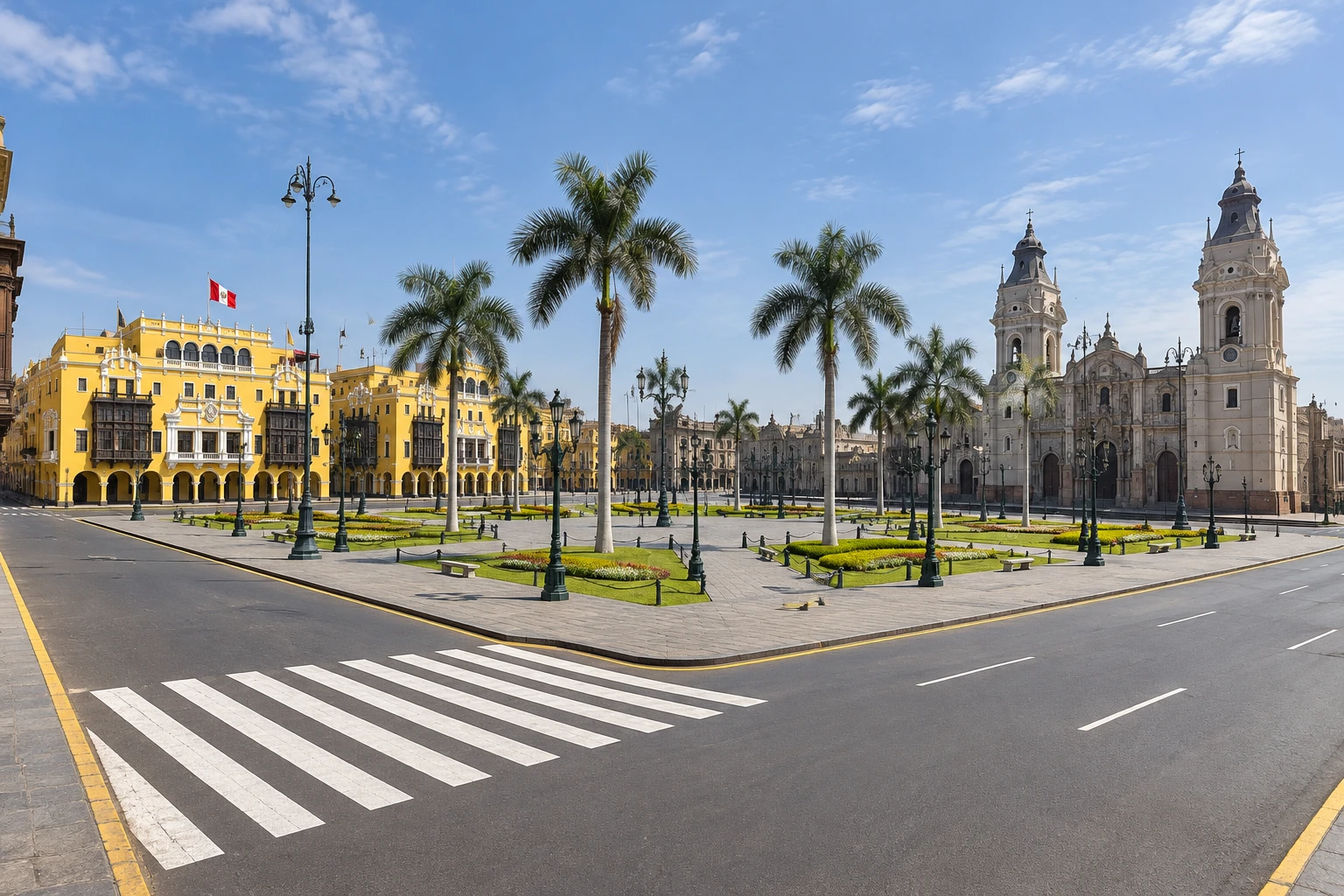
Square · Lima, Peru
Plaza Mayor of Lima
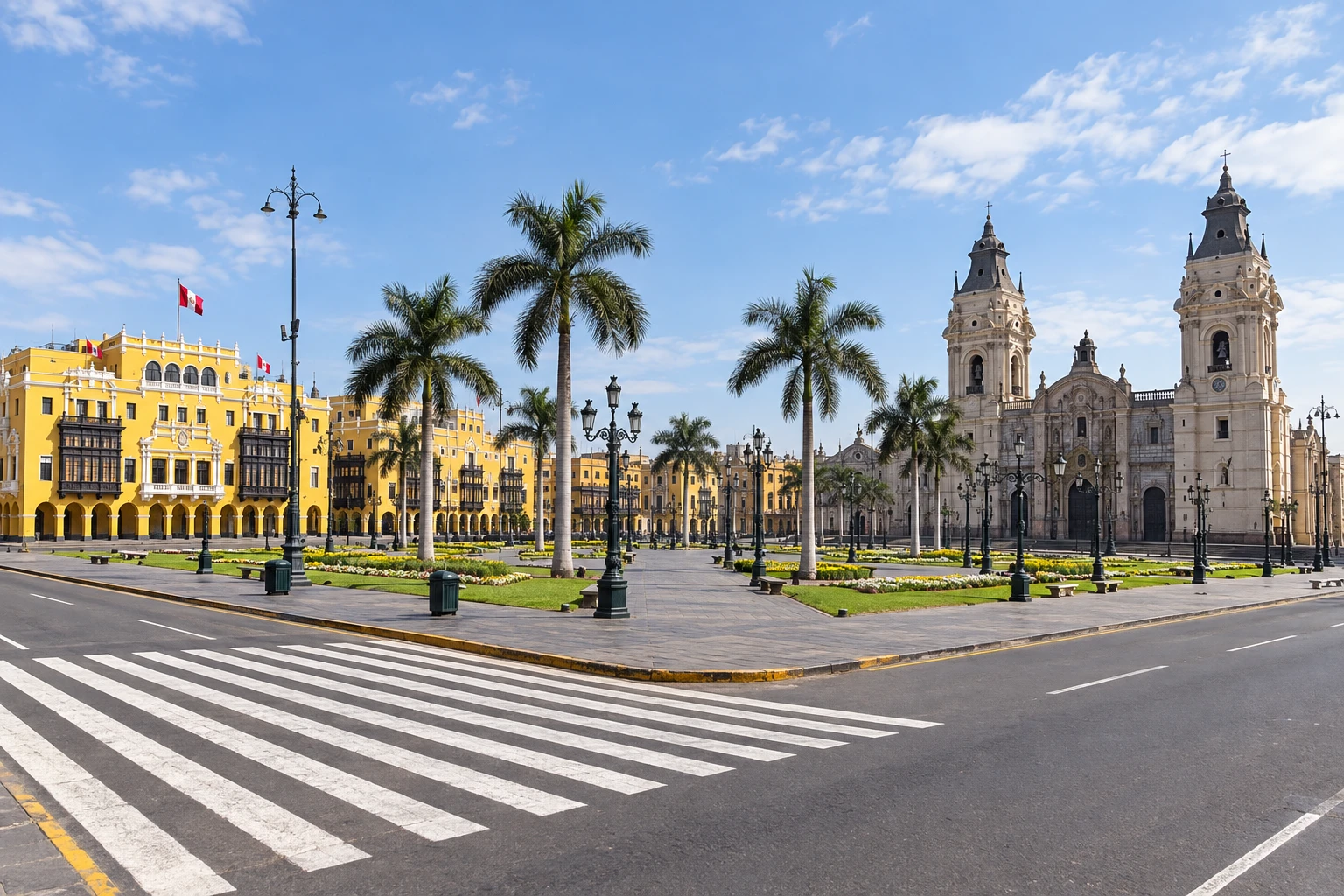
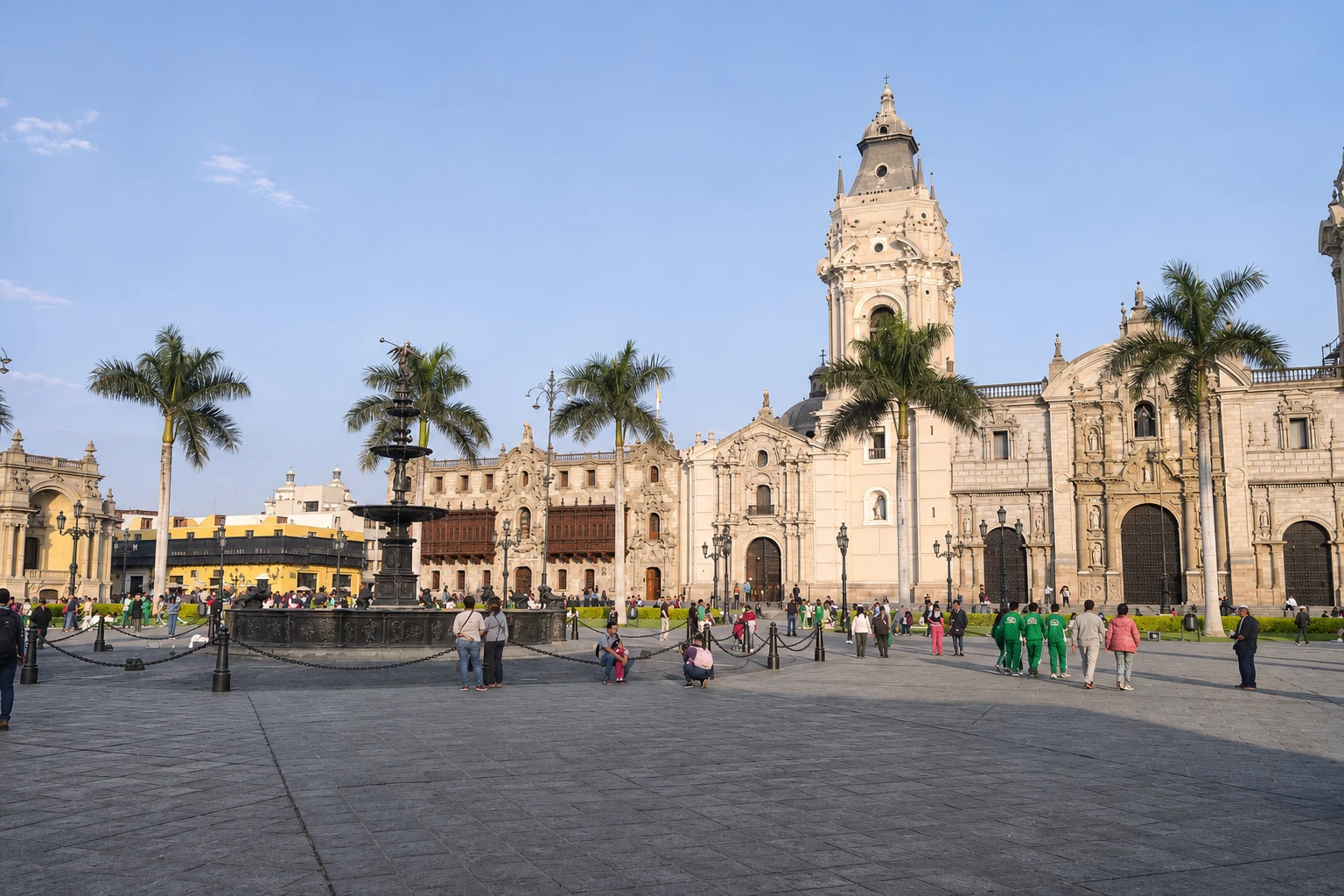
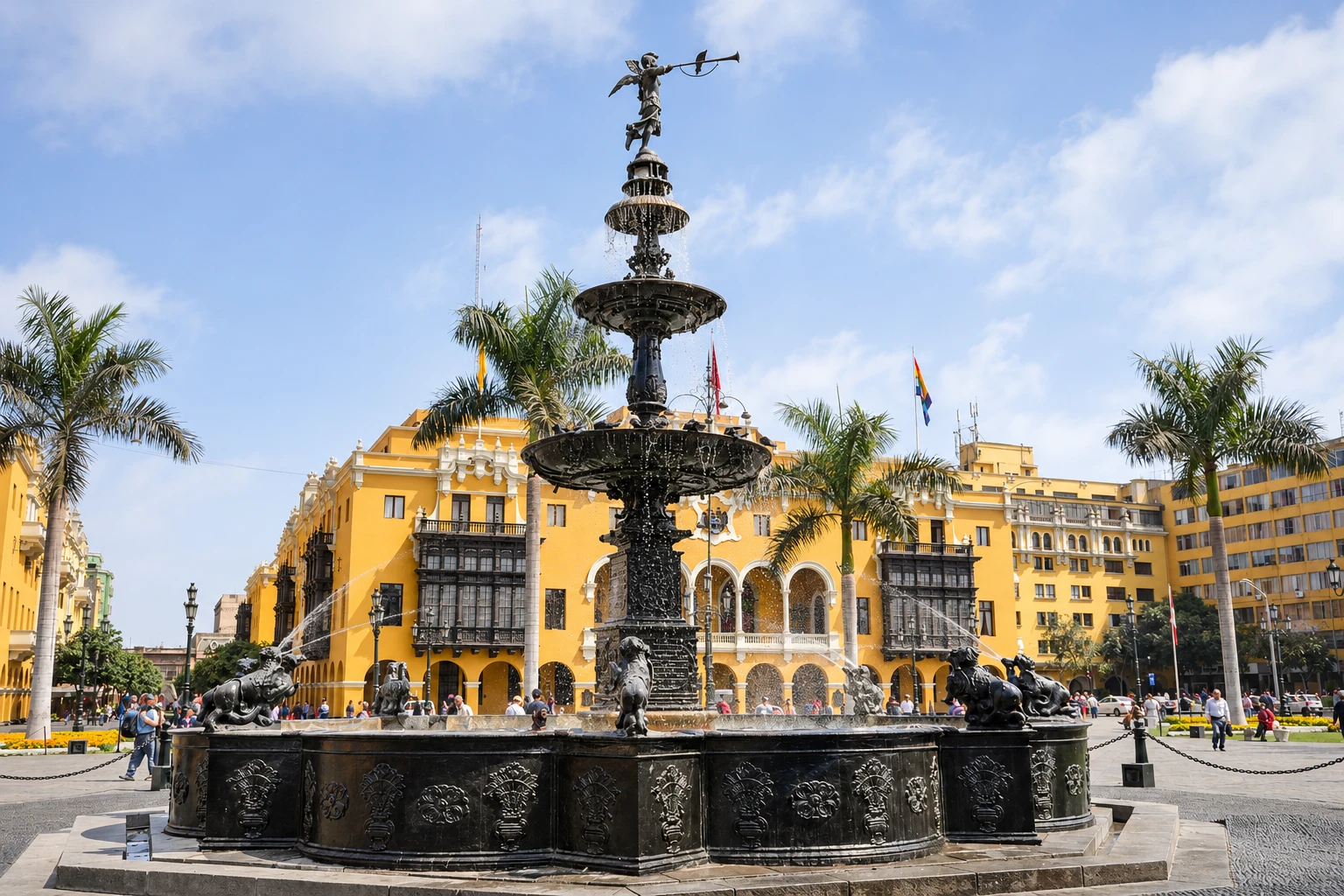
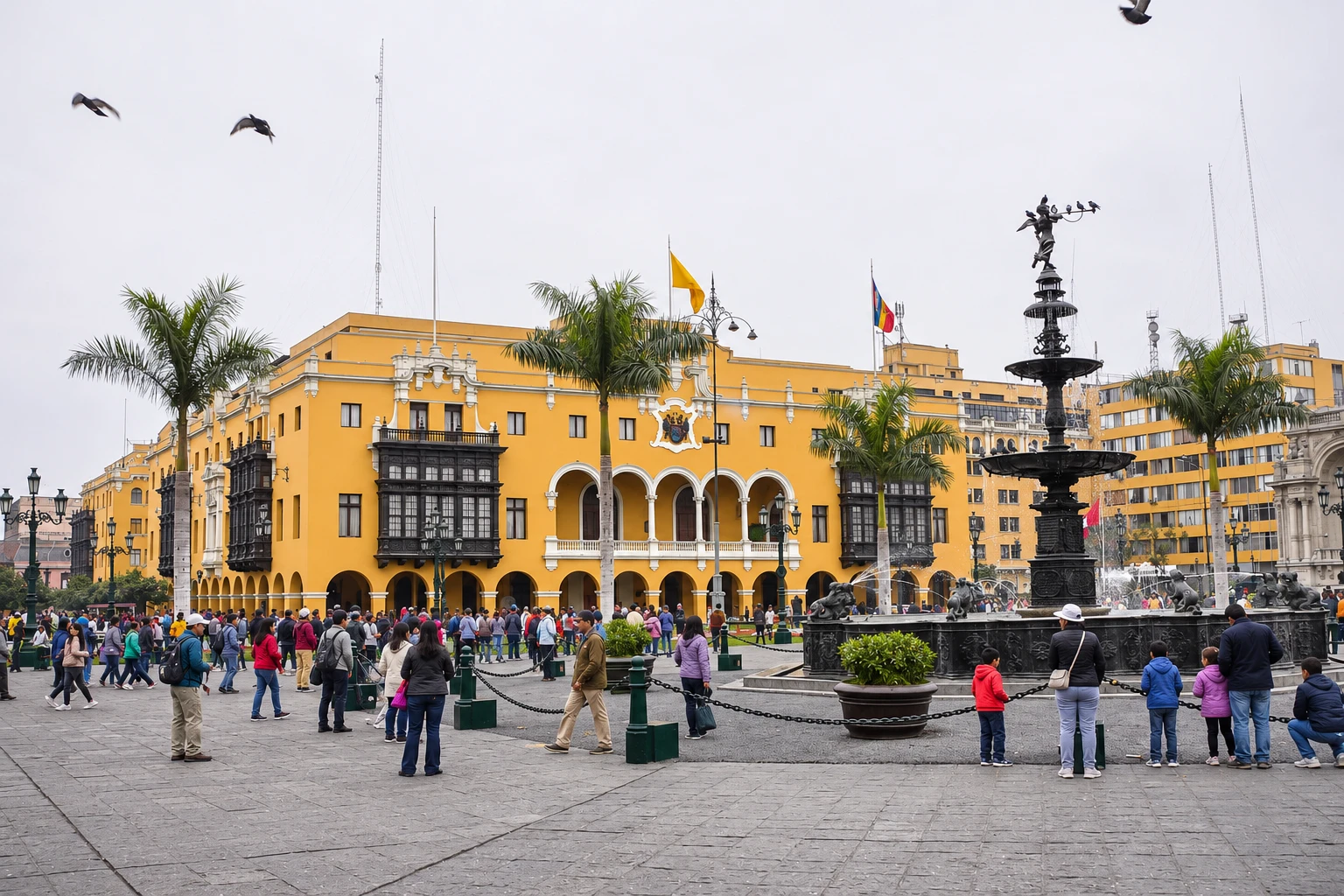
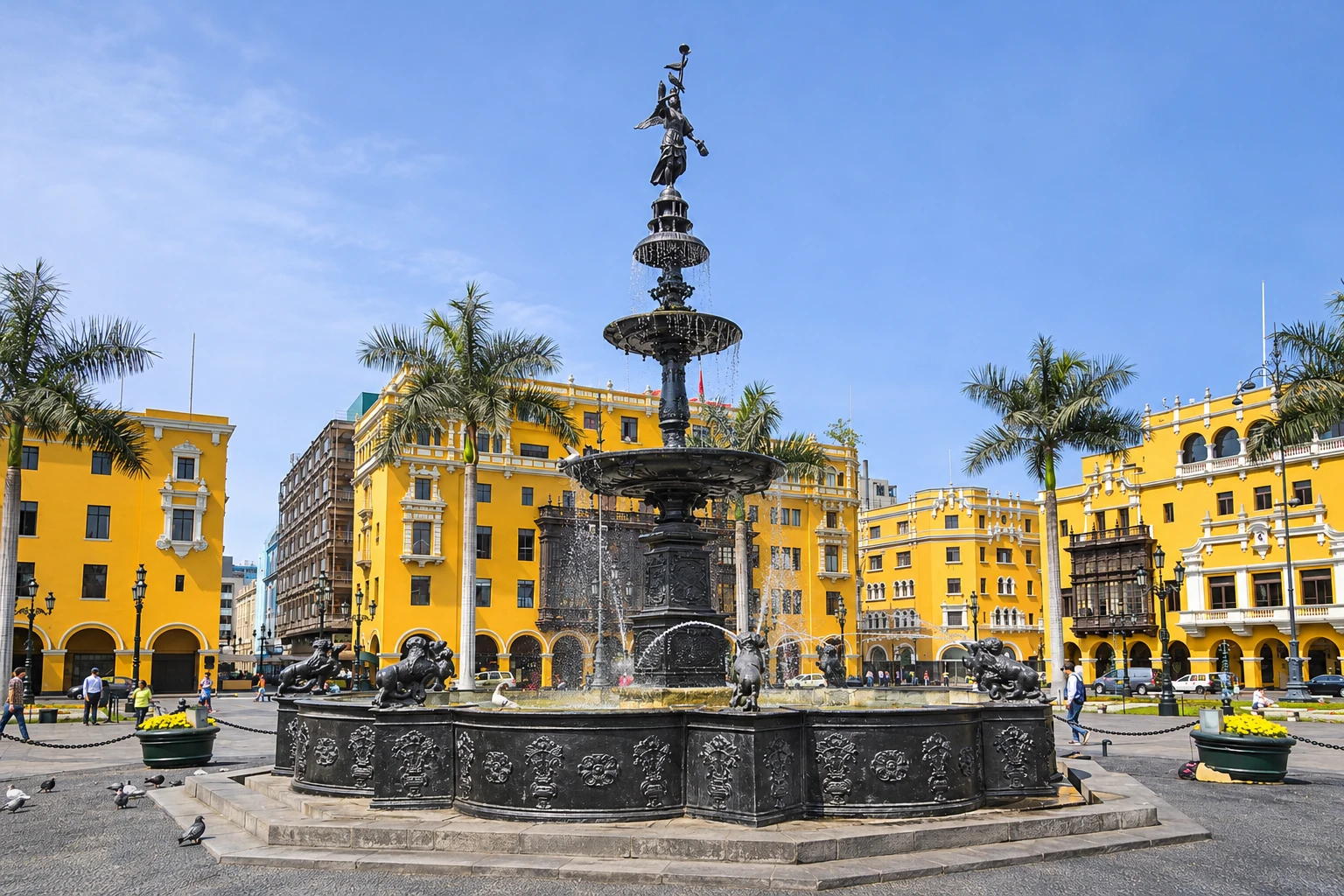
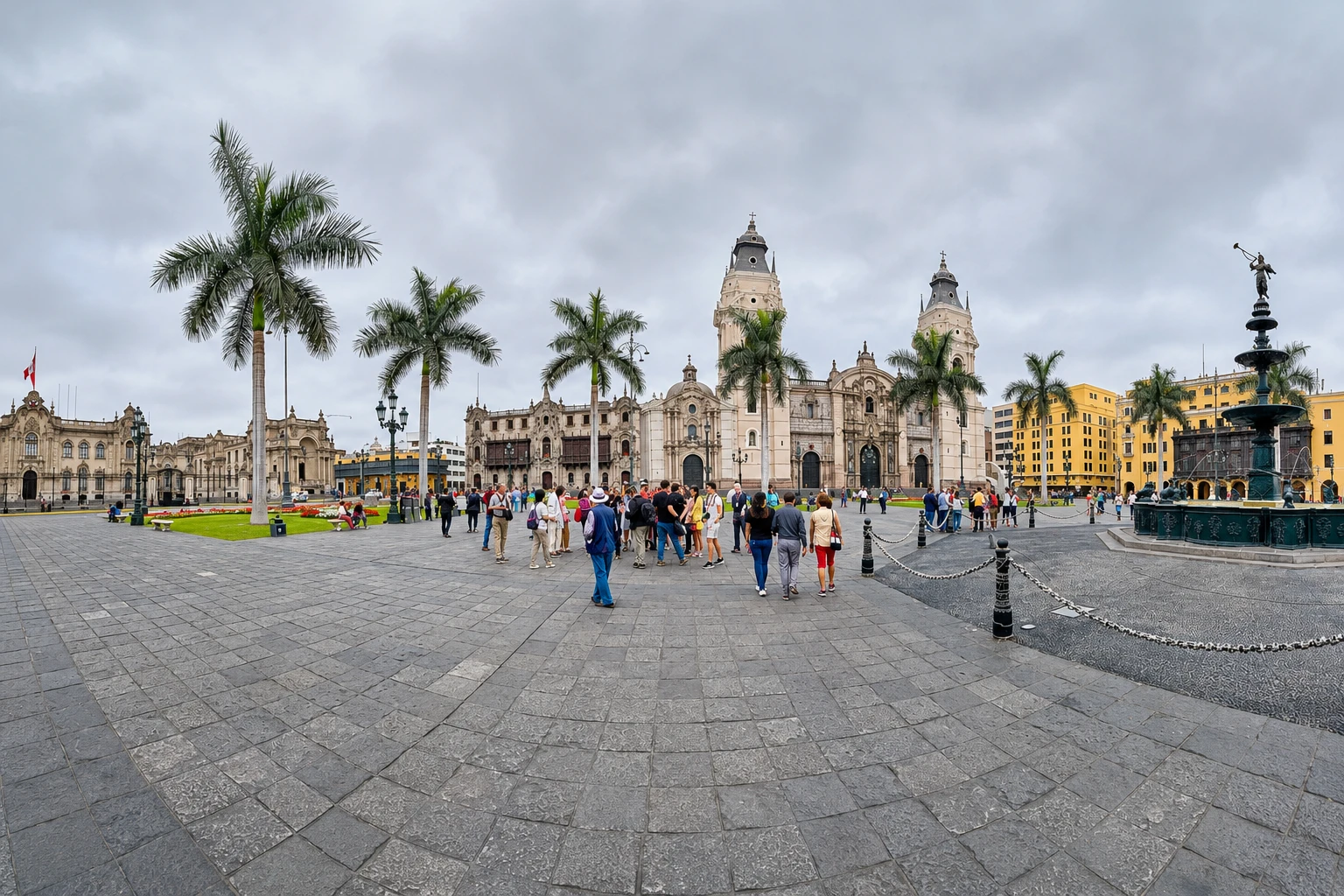
The square where Pizarro founded Lima in 1535, with the Cathedral, the Government Palace, the Municipal Palace and the Archbishop's Palace with wooden balconies around, and the bronze fountain from 1651 in the center.
Illustrative images. The pictures in this guide are illustrations based on the real place, not photographs, and may differ from it.

A look at the place
Plaza Mayor of Lima in pictures
These pictures are illustrations based on the real place, not photographs. They may differ from the place.
Click the picture to enlarge it.
Discover
About Plaza Mayor of Lima
The Plaza Mayor, also called Plaza de Armas, is the spot where Francisco Pizarro laid out the city on January 18, 1535. This is where Lima’s historic center begins, a UNESCO World Heritage Site since 1988, and the streets of the colonial grid run out from here. In the middle of the square stands the 1651 bronze fountain, the oldest surviving element of the original complex.
On the north side is the Palácio de Governo, the presidential seat, built on the site of Pizarro’s house. In front of it the changing of the guard usually takes place, with band and cavalry, around noon. On the east side are the Cathedral and the Palácio Arzobispal, whose façade has two of the city’s most elaborately closed wooden balconies. On the west side, the Palácio Municipal and the Club de la Unión close the square with arcades.
The square is the starting point for walking the center. To the north, behind the palace, runs the Rímac river. Along the pedestrian street that continues from the square you reach the church of Santo Domingo, with its tiled cloister and the tombs of Santa Rosa de Lima and Saint Martin de Porres. Two blocks to the east is the Convento de San Francisco. The pedestrian Jirón de la Unión street links the square to Plaza San Martín, the other major square in the center.
The closed wooden balconies, a legacy of the Moorish architecture brought by the Spanish, appear on many of the mansions in the area. The Casa de Aliaga, opposite the palace, is one of the oldest colonial houses in the Americas, occupied by the same family since 1535; visits usually require a reservation.
Before you go
Practical information
Cidade Turismo reviews its information regularly, but something may have changed. Check with the place before planning your trip.
How much time to set aside
About 1–2 hours for the square and surrounding streets; with the Cathedral and Santo Domingo, half a day.
Best time
In the morning, when the buildings are open and the square is active. The changing of the guard usually happens near noon on certain days of the week; check in advance. At night the square and the palaces are illuminated.
How to get there
The square is in central Lima, about 10 km from Miraflores. By ride-hailing taxi the trip takes 30–50 minutes depending on traffic. The Metropolitano, a busway system, connects Miraflores and Barranco to the center, with stations a few blocks from the square.
Tip
Combine the square with the Cathedral and the Convento de San Francisco on the same walking tour. To see the wooden balconies at leisure, follow the street by the Palácio Arzobispal and the streets toward the church of Santo Domingo.
Your questions
Frequently asked questions about Plaza Mayor of Lima
What's around the Plaza Mayor?
The Palácio de Governo, the Catedral, the Palácio Arzobispal, the Palácio Municipal and the Club de la Unión. A few blocks away are the Convento de San Francisco, the church of Santo Domingo and the Casa de Aliaga.
When is the changing of the guard?
It usually takes place around midday in front of the Palácio de Governo on certain days of the week. The day and time vary: check before you go.
Why are the wooden balconies famous?
They are enclosed balconies with latticework, a Moorish heritage brought by the Spaniards, which allowed people to see the street without being seen. Lima has hundreds of them in the historic center, and the Palácio Arzobispal has two of the most elaborate.