1 city

 Search
 Brazil
 Antarctica
 Argentina
 Bolivia
 Chile
 Colombia
 Ecuador
 Falkland Islands (Malvinas)
 French Guiana
 Guyana
 Paraguay
 Peru
 Suriname
 Uruguay
 Venezuela
 Austria
 Belgium
 Croatia
 Denmark
 Finland
 France
 Germany
 Greece
 Hungary
 Iceland
 Ireland
 Italy
 Luxembourg
 Norway
 Poland
 Portugal
 Slovakia
 Slovenia
 Spain
 Sweden
 Switzerland
 the Czech Republic
 the Netherlands
 the United Kingdom
 Turkey
 Bermuda
 Canada
 Greenland
 Mexico
 Saint Pierre and Miquelon
 the United States
 the Dominican Republic
 JapanTurkey
 Egypt
 South Africa
 Australia
 FijiNew Zealand
 Papua New Guinea
Region · Central North Island
Bay of Plenty brings together Rotorua, with geysers, boiling mud and Māori culture, the beaches of Mount Maunganui and Tauranga, and the kiwi orchards of Te Puke.
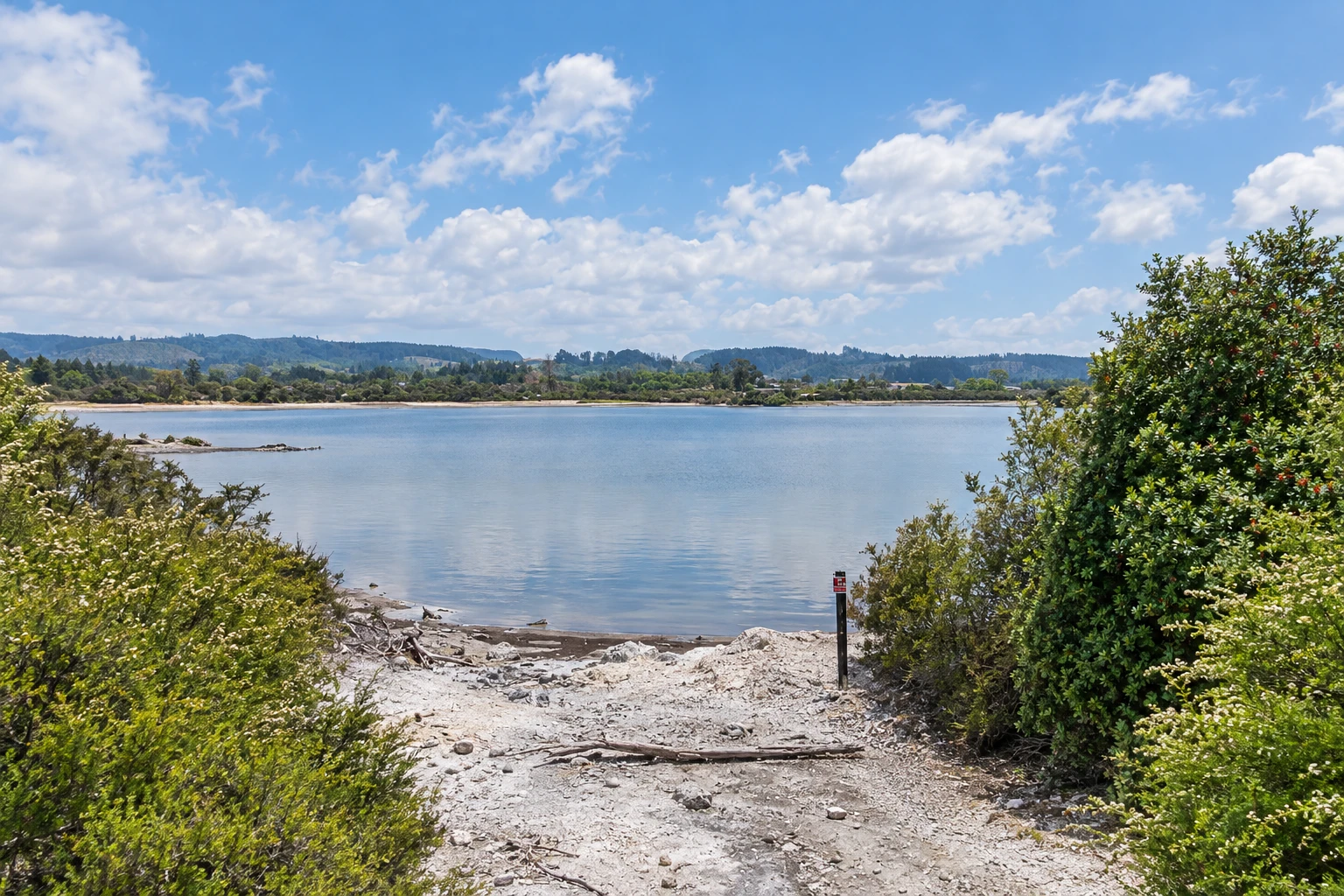
In the photo: Lake Rotorua
Illustrative images. The pictures in this guide are illustrations based on the real place, not photographs, and may differ from it.

Region
Bay of Plenty (Toi Moana) occupies the coast of the bay of the same name on the north of the North Island, and extends inland to the lakes of Rotorua. The name was given by James Cook in 1769 because of the abundance of food he found in the area. The regional council’s headquarters are in Whakatāne.
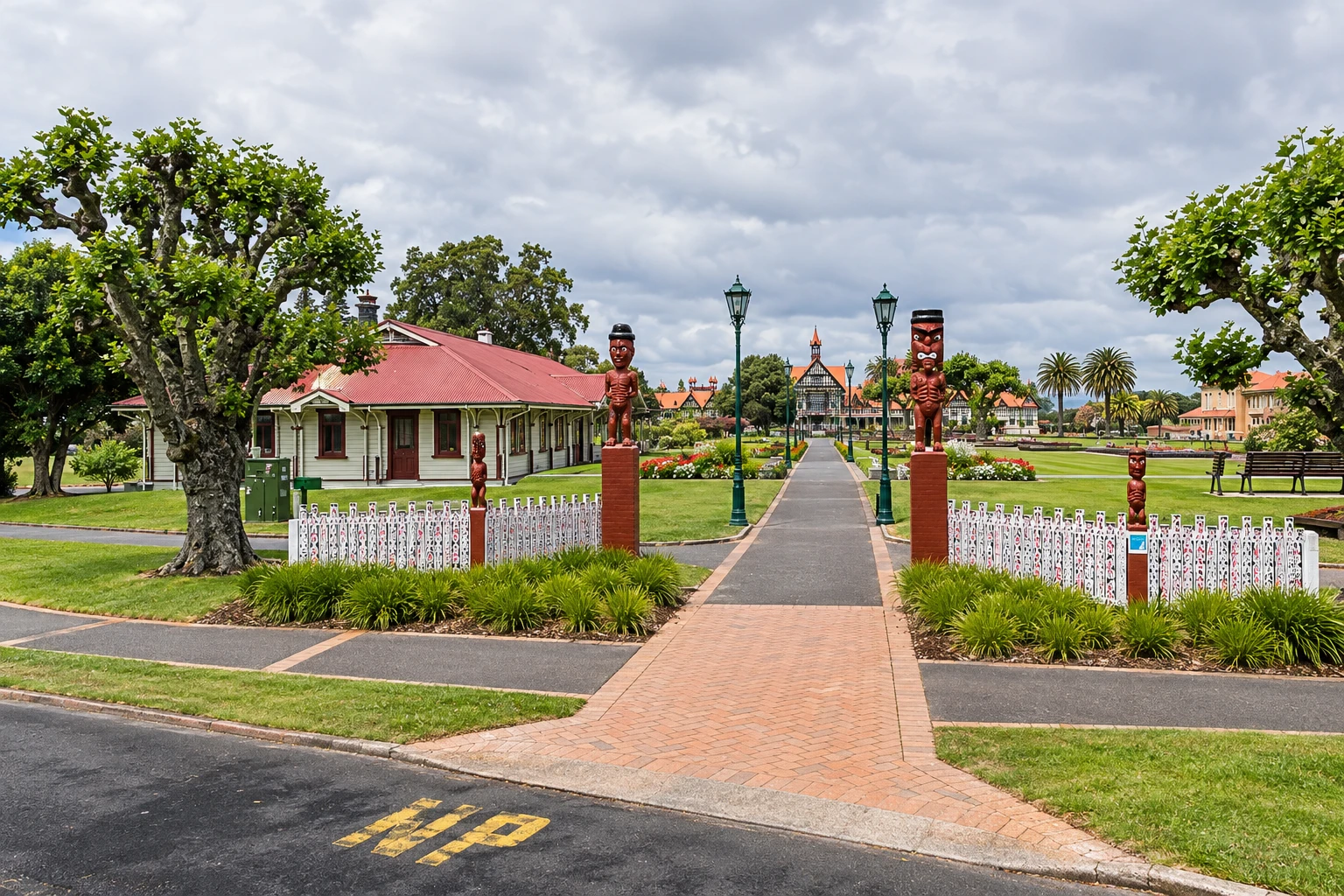
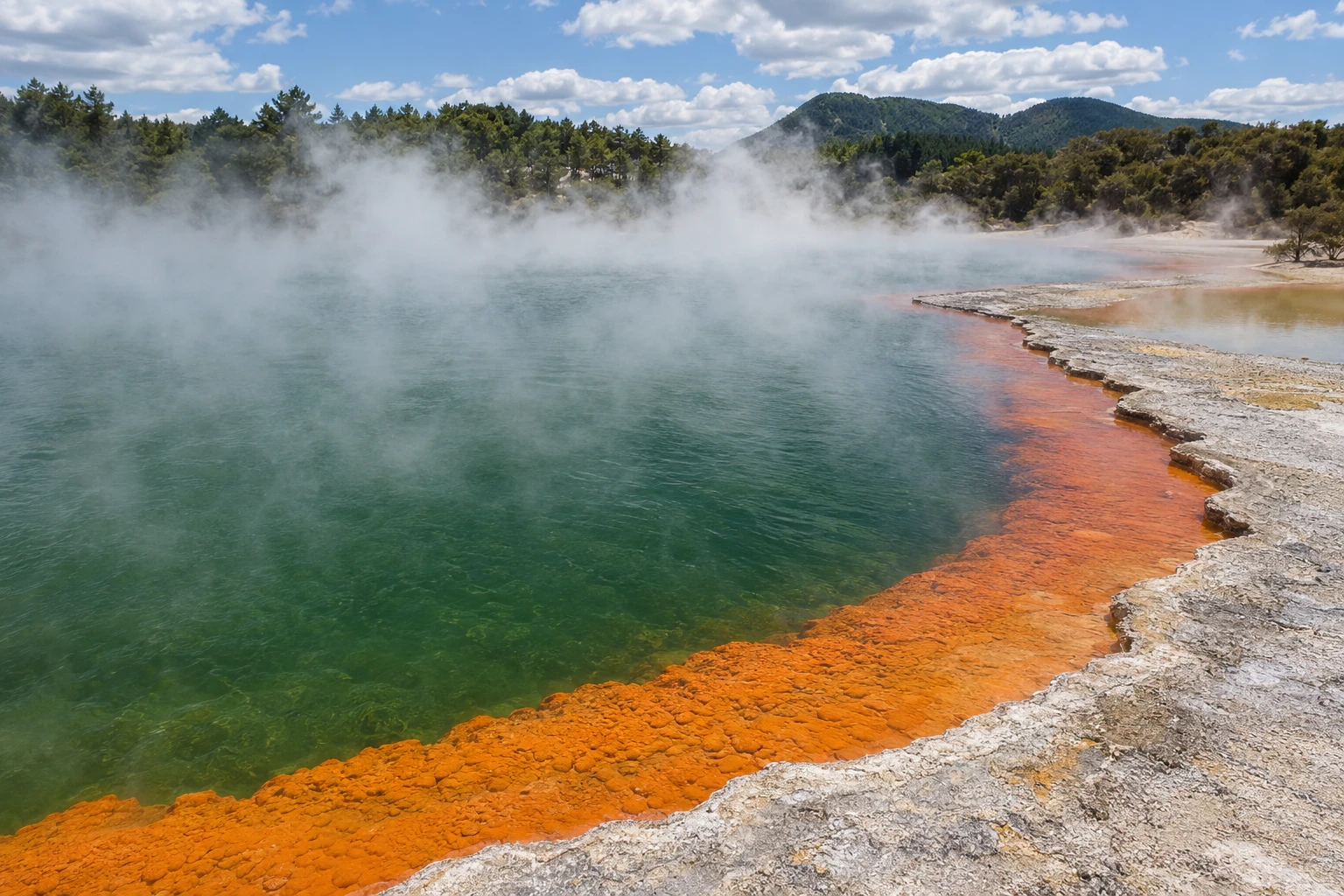
Rotorua sits above an active geothermal area: steam rises from parks and gardens, there are pools of boiling mud and hot springs. At Te Puia, in the Whakarewarewa valley, the Pōhutu geyser typically erupts several times a day, and there is a Māori carving and weaving school.
Rotorua is the main centre of Māori culture for visitors. The Te Arawa people have lived in the region for centuries, and villages and marae open to visitors offer singing and dance performances (kapa haka) and hāngī, food cooked in an earth oven. The town also has lakes, the Whakarewarewa redwood forest (The Redwoods) with suspended walkways among the trees, and mountain-bike trails.
On the coast, Tauranga is the region’s largest city and a cruise port. At Mount Maunganui, the Mauao cone has trails to the summit and a surf beach at its base. Te Puke, nearby, is the country’s kiwi-growing centre. To the east, Whakatāne and Ōhope have long beaches and boat departures.
Destinations
On the coast, summer—from December to February—is the beach season and the busiest time in Tauranga and Mount Maunganui. Rotorua operates year‑round: from June to August the steam from geothermal areas is more visible in the cold air, and the hot pools attract more visitors. From March to May days are usually stable and there are fewer people.
Rotorua is about 230 km from Auckland, roughly a 3‑hour drive, and has an airport (ROT) with domestic flights. Tauranga also has an airport (TRG), and Whakatāne receives flights from Auckland. Between Rotorua and Tauranga it is about 60 km. Long‑distance buses link Rotorua with Auckland, Taupō and Wellington.
Beyond the guide
Your questions
Yes. The gas emitted from the geothermal ground has a rotten‑egg smell, stronger in some parts of town and in the geothermal parks. Most visitors get used to it after a short time.
Te Puia and the village of Whakarewarewa, where Māori families live beside the hot springs, have guided visits and performances. Several villages and marae offer evenings with cultural performances and a hāngī dinner, usually by reservation.
Two days allow for a geothermal park, a cultural evening with hāngī, the hot pools and the redwood forest. With three days there is time for the lakes, mountain biking or a trip to Hobbiton, about an hour’s drive away.
Yes — at the hot‑pool complexes in town and on the shore of Lake Rotorua. In geothermal areas always follow marked paths: natural lakes and pools can have boiling water.