

 Brazil
 Antarctica
 Argentina
 Bolivia
 Chile
 Colombia
 Ecuador
 Falkland Islands (Malvinas)
 French Guiana
 Guyana
 Paraguay
 Peru
 Suriname
 Uruguay
 Venezuela
 Albania
 Austria
 Belgium
 Croatia
 Denmark
 Finland
 France
 Germany
 Greece
 Hungary
 Iceland
 Ireland
 Italy
 Luxembourg
 Norway
 Poland
 Slovakia
 Slovenia
 Sweden
 Switzerland
 the Czech Republic
 the Netherlands
 the United Kingdom
 Turkey
 Bermuda
 Canada
 Greenland
 Mexico
 Saint Pierre and Miquelon
 the United States
 the Dominican Republic
 Japan
 Egypt
 South Africa
 Australia
 Fiji
 New Zealand
 Papua New Guinea
Route · Portugal · Spain
Porto–Vigo–Santiago de Compostela by train
From Porto to Galicia by train: the Celta crosses the Minho to Vigo, and a regional train takes you to Santiago de Compostela in about an hour.
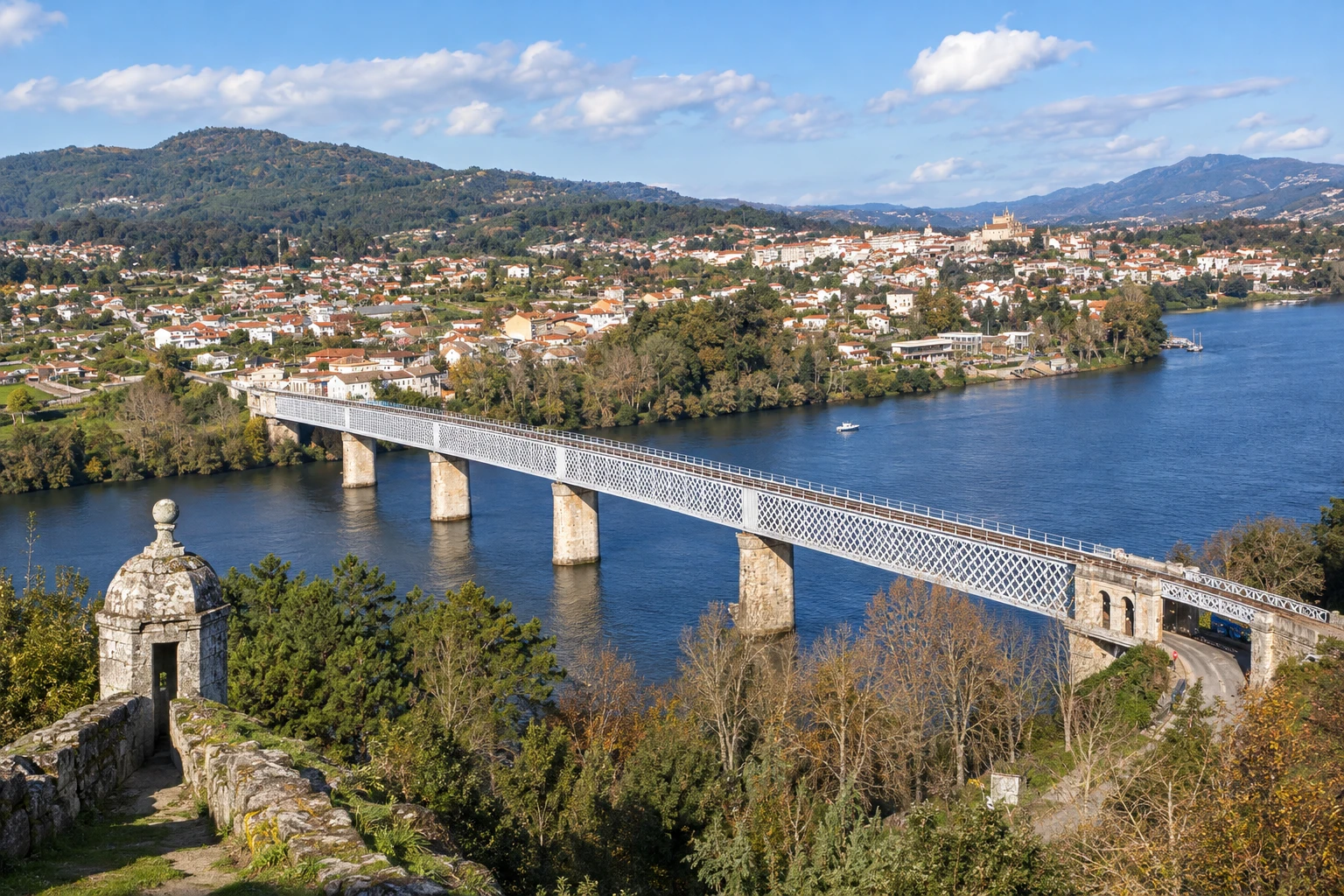
In the photo: Valença–Tui International Bridge over the Minho River
The route
What the Porto–Vigo–Santiago de Compostela by train is
The rail connection between northern Portugal and Galicia is done in two parts. The Celta, an international train operated by CP and Renfe, departs from Campanhã station in Porto and reaches Vigo in about 2h20. Along the way it stops at a few Portuguese stations, such as Nine, Viana do Castelo and Valença, and crosses the Minho River on the international bridge between Valença and Tui, already in Spain. In Vigo, another train continues along the Atlantic Axis to Santiago de Compostela, passing through Pontevedra.
There are only a few Celtas per day, and in some periods part of the journey may require a train change or a bus: check before buying and again the day before. Between Vigo and Santiago there are trains throughout the day.
Portugal and Spain are in the Schengen area and use the euro, but Spain is one hour ahead of Portugal: set your watch when crossing the Minho.
The map
Porto–Vigo–Santiago de Compostela by train
The journey
City by city
Distances and times are approximate: check before you set off.
-
 1 ·
 Portugal · Porto
Porto
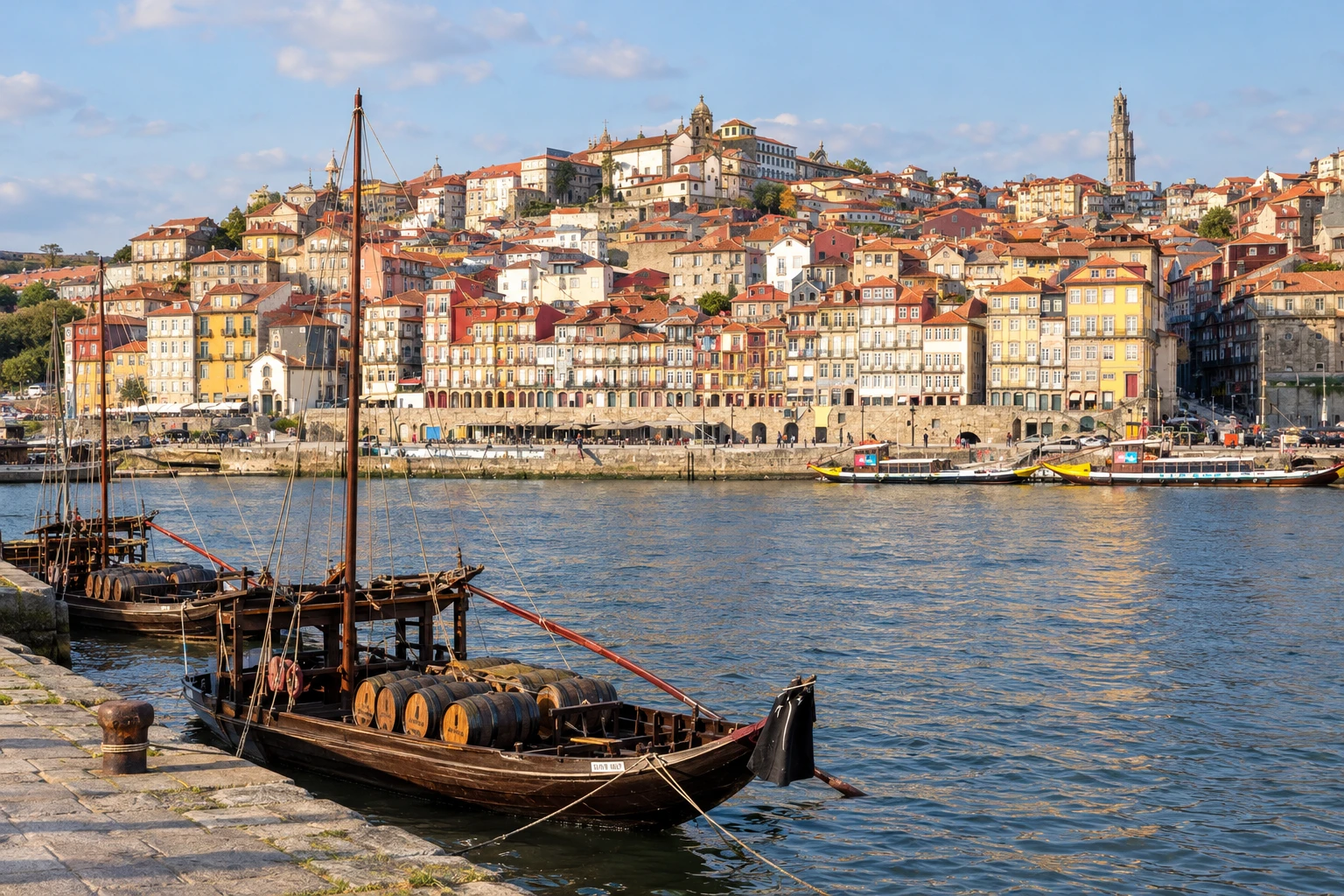
The route begins at Campanhã station, connected to the metro and suburban trains that take you to São Bento station in the city center. In Porto, the Ribeira, the Dom Luís I bridge, the Clérigos Tower, the Livraria Lello and the Port wine cellars across the Douro in Vila Nova de Gaia.
→ Valença about 1h45 to 2h Celta, operated by CP and Renfe, from Porto-Campanhã to Valença along the Minho line, calling at Nine and Viana do Castelo. In some periods there may be a train change or a bus section: check before traveling.
-
 2 ·Portugal · Viana do Castelo
Valença
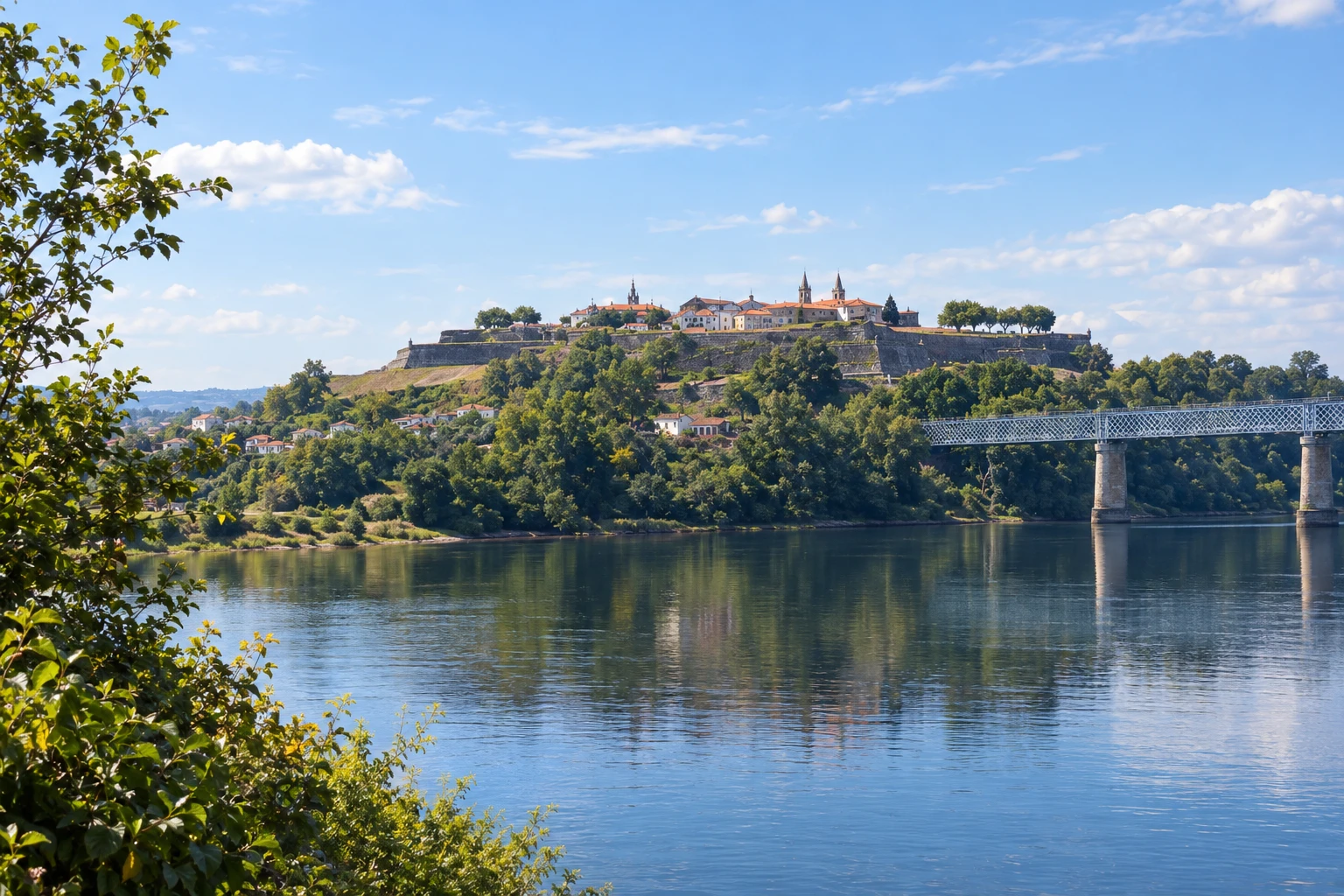
The train’s last stop in Portugal. It’s worth getting off to walk around the star-shaped fortress overlooking the Minho River and to cross the international bridge on foot to Tui.
→ Tui around 20 to 30 min, plus 1 hour time difference On foot, via the international bridge over the Minho River, between Valença and Tui. About 2 km between the central areas; time varies depending on your starting point.
-
 3 ·
 Spain · Galicia
Tui
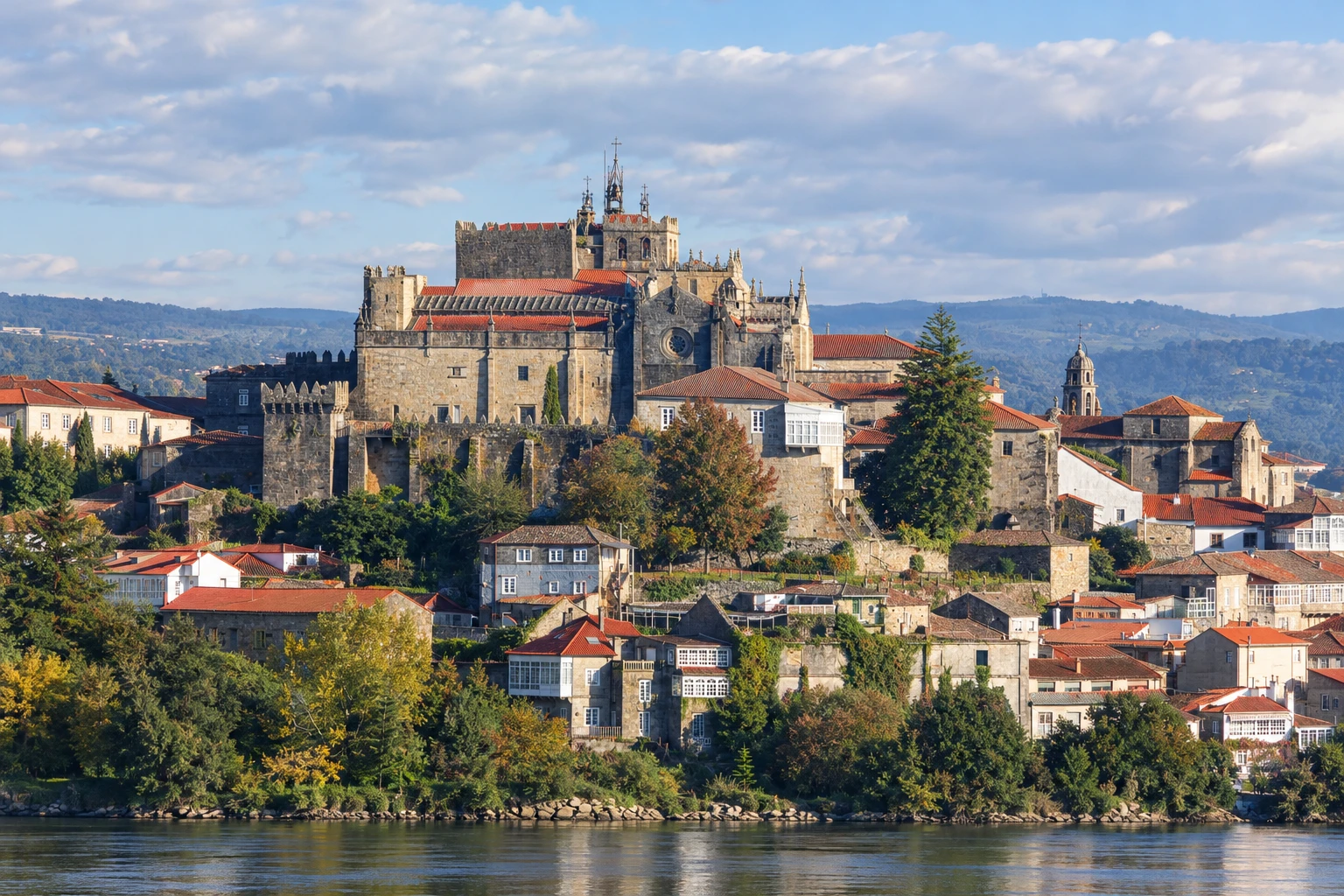
On the other side of the bridge, already in Galicia, the cathedral-fortress overlooks the river. This is where many pilgrims begin the Portuguese Way, a little over 100 km from Santiago.
→ Vigo about 40 min to 1h About 30 km to Vigo, by bus or train depending on available connections. Check timetables and the departure station; the Celta does not usually stop in central Tui.
-
 4 ·Spain · Galicia
Vigo
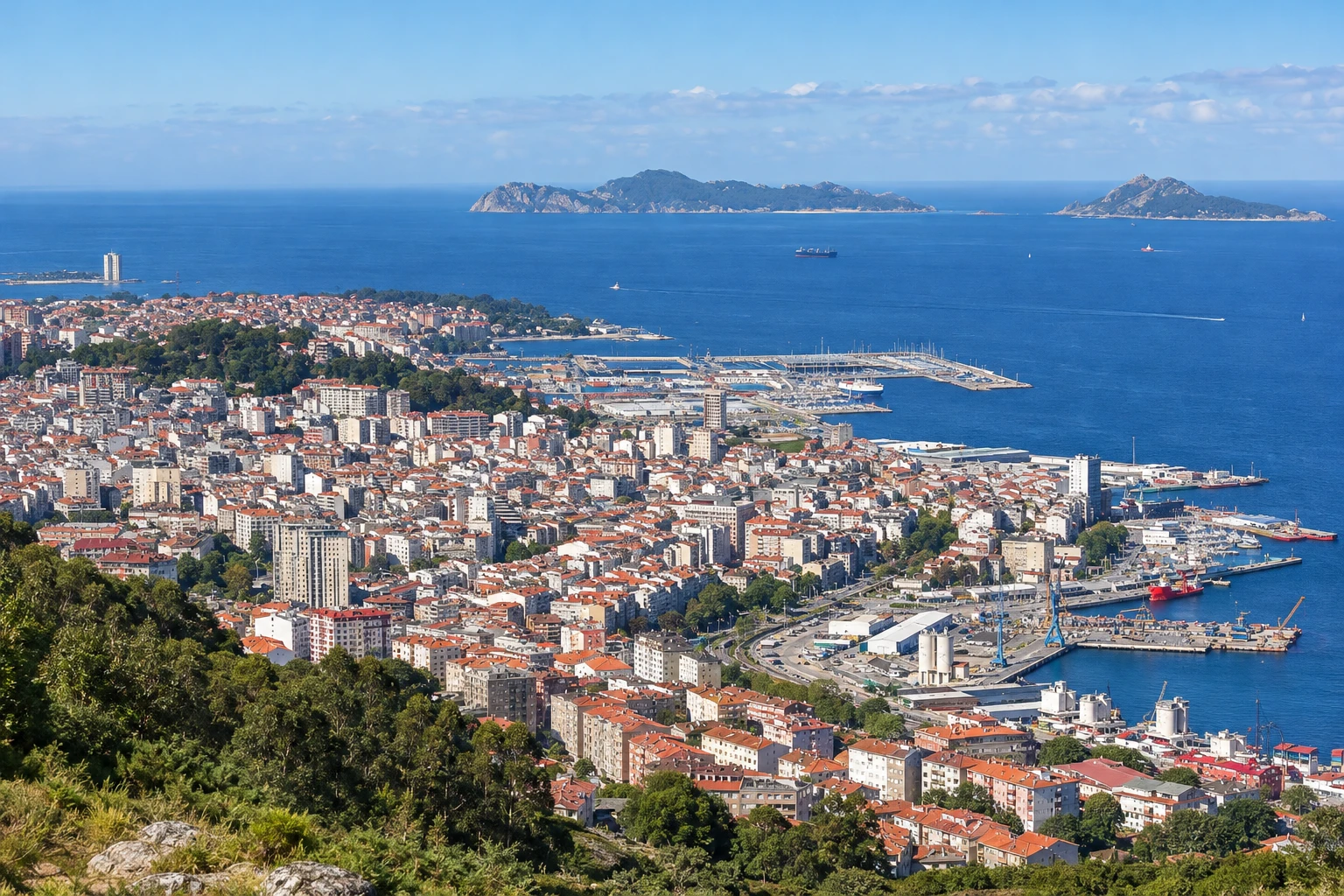
Before reaching Vigo, the Celta stops at Valença, the fortified town on the Minho’s bank, and crosses the river to Tui, already in Galicia. Vigo is the largest Galician city, with a fishing port, the old quarter Casco Vello, the viewpoint on Monte do Castro and the ria full of mussel rafts. Boats depart from the port to the Cíes Islands, which require prior authorization in summer.
→ Santiago de Compostela about 50 min to 1h15 Renfe train along the Atlantic Axis, stopping at Pontevedra. There are several departures per day; check your ticket to see whether the train departs from Vigo-Urzaiz or Vigo-Guixar.
-
 5 ·Spain · Galicia
Santiago de Compostela
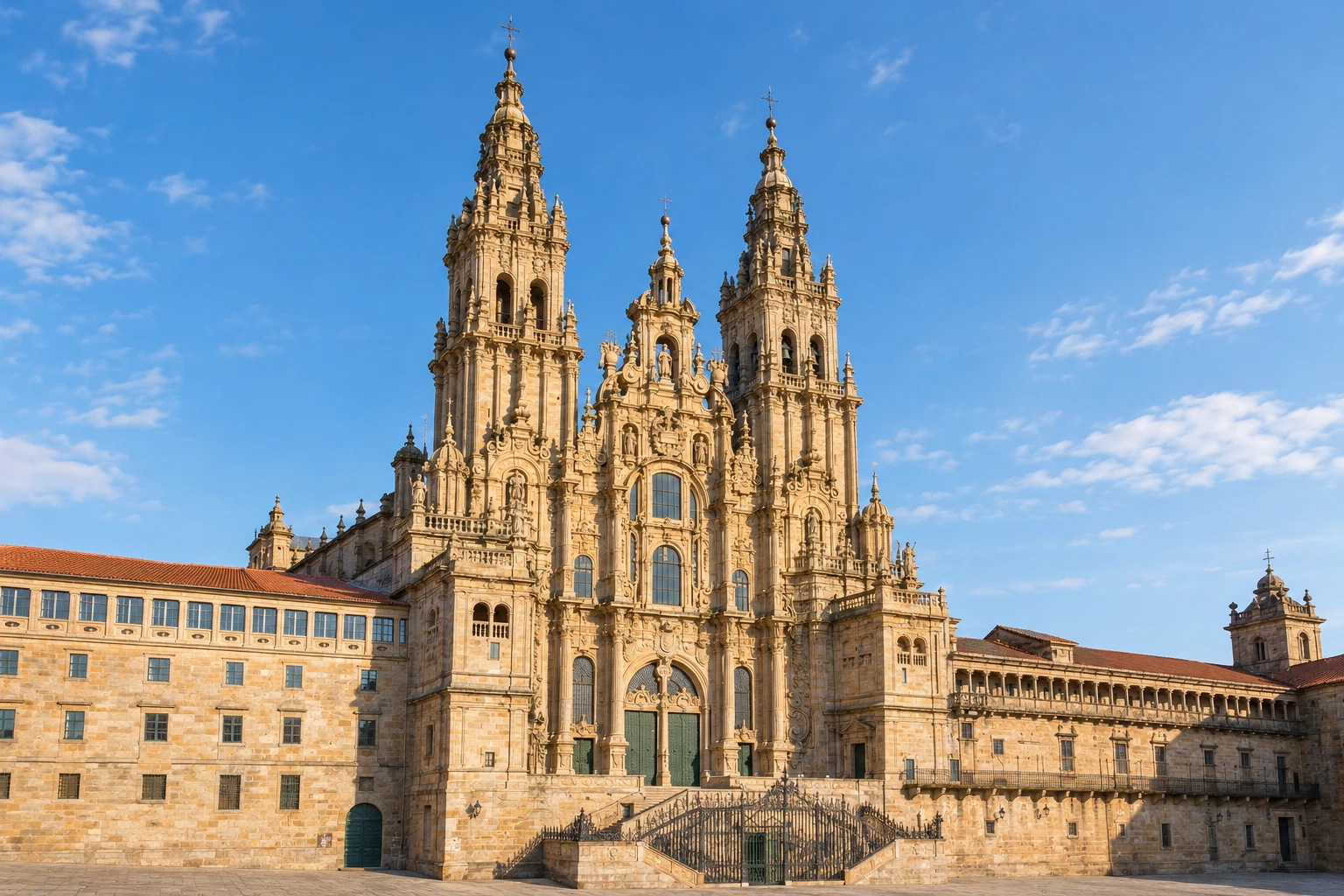
The train arrives at Santiago de Compostela station, within walking distance of the old town. On the way from Vigo it passes through Pontevedra, a city with a stone historic center. In Santiago, the cathedral and the Praza do Obradoiro, the cobbled streets of the old quarter, the Mercado de Abastos and the arrival of pilgrims from all routes.
How many days
Trains cover the whole route in about 3h30, including the change in Vigo. To visit all three cities, allow 5 to 7 days; with 4 days, stay in Porto and Santiago and pass through Vigo on the way.
Best time to go
From May to June and in September: long days and pleasant coastal temperatures. Northern Portugal and Galicia tend to be rainy in autumn and winter. July and August are high season, with Santiago busier because of pilgrims.
The seasons shown are the most usual ones; nature doesn't always follow the calendar.
How to travel it
By train, with two tickets: the Celta from Porto to Vigo and a Renfe train from Vigo to Santiago. The Celta usually arrives at Vigo-Guixar station, and some trains to Santiago depart from Vigo-Urzaiz station, a short walk away: check the station on your ticket and allow time between the two trains.
Who it's for
For travelers who want to combine northern Portugal and Galicia without a car, for those going to Santiago de Compostela without walking the Camino, and for those who want to explore the Rías Baixas coast from Vigo.
Your questions
Frequently asked questions about Porto–Vigo–Santiago de Compostela by train
Is there a direct train from Porto to Santiago de Compostela?
No. The Celta runs from Porto to Vigo, and from Vigo to Santiago you must take another Renfe train. The whole journey takes about 3h30, including the change.
How many Celta trains run per day?
Only a few, and the number varies by season. Check timetables on the CP or Renfe websites and buy in advance.
Does the Celta run the entire route by train?
Most of the time, yes. In some periods, due to works or lack of rolling stock, part of the route may require a train change or a bus. Check before buying and the day before.
Do you need to show your passport between Portugal and Spain?
Both countries are in the Schengen area and there is no fixed border control. Still, carry your passport with you during the trip.
Does the time change when entering Spain?
Yes. Spain is one hour ahead of Portugal. Arrival times in Vigo are already shown in Spanish time.
Can you get off in Valença or in Tui?
The Celta stops at Valença on the Portuguese side. From there, Tui is on the other side of the bridge over the Minho and is within walking distance. It’s a good place for those who want to start the Portuguese Way on foot.