

 Brazil
 Antarctica
 Argentina
 Bolivia
 Chile
 Colombia
 Ecuador
 Falkland Islands (Malvinas)
 French Guiana
 Guyana
 Paraguay
 Peru
 Suriname
 Uruguay
 Venezuela
 Albania
 Austria
 Belgium
 Croatia
 Denmark
 Finland
 France
 Germany
 Greece
 Hungary
 Iceland
 Ireland
 Italy
 Luxembourg
 Norway
 Poland
 Slovakia
 Slovenia
 Sweden
 Switzerland
 the Czech Republic
 the Netherlands
 the United Kingdom
 Turkey
 Bermuda
 Canada
 Greenland
 Mexico
 Saint Pierre and Miquelon
 the United States
 the Dominican Republic
 Japan
 Egypt
 South Africa
 Australia
 Fiji
 New Zealand
 Papua New Guinea
Route · Portugal · Spain
Lisbon–Évora–Mérida–Cáceres–Madrid by car
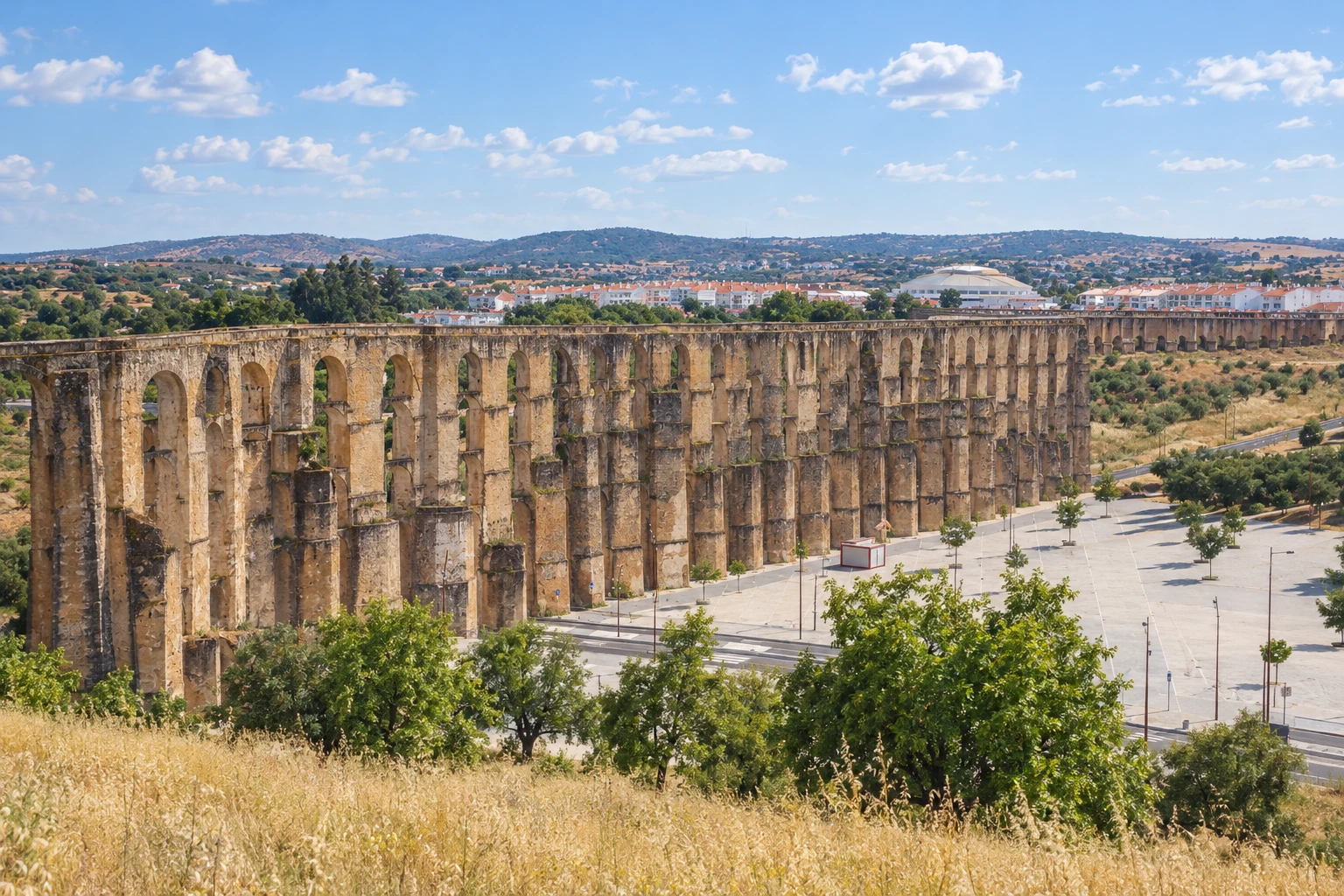
By car between the two capitals of the peninsula: the Alentejo around Évora, Roman Mérida and medieval Cáceres on the route from Lisbon to Madrid.
In the photo: Aqueduct of Amoreira, Elvas
The route
What the Lisbon–Évora–Mérida–Cáceres–Madrid by car is
Lisbon and Madrid are about 630 km apart by road, and the most interesting route between them passes through three World Heritage cities: Évora in the Alentejo, and Mérida and Cáceres in Spain’s Extremadura. By car you can cover the whole trip in one long day, but it’s more rewarding over three or four days, staying overnight on the way.
There is currently no direct train between Lisbon and Madrid. You can travel by train with changes, in a long journey: on the Portuguese side via the regional Raiano train from CP between Entroncamento and Badajoz, and on the Spanish side via Renfe trains departing Badajoz and Mérida. Work is underway on a new line between the two countries, which does not yet allow a direct trip. For this route the practical options are driving or taking a bus, with services between the two capitals and to Évora, Mérida and Cáceres.
Portugal and Spain are in the Schengen area and use the euro, but Spain is one hour ahead of Portugal.
The map
Lisbon–Évora–Mérida–Cáceres–Madrid by car
The journey
City by city
Distances and times are approximate: check before you set off.
-
 1 ·
 Portugal · Lisbon
Lisbon
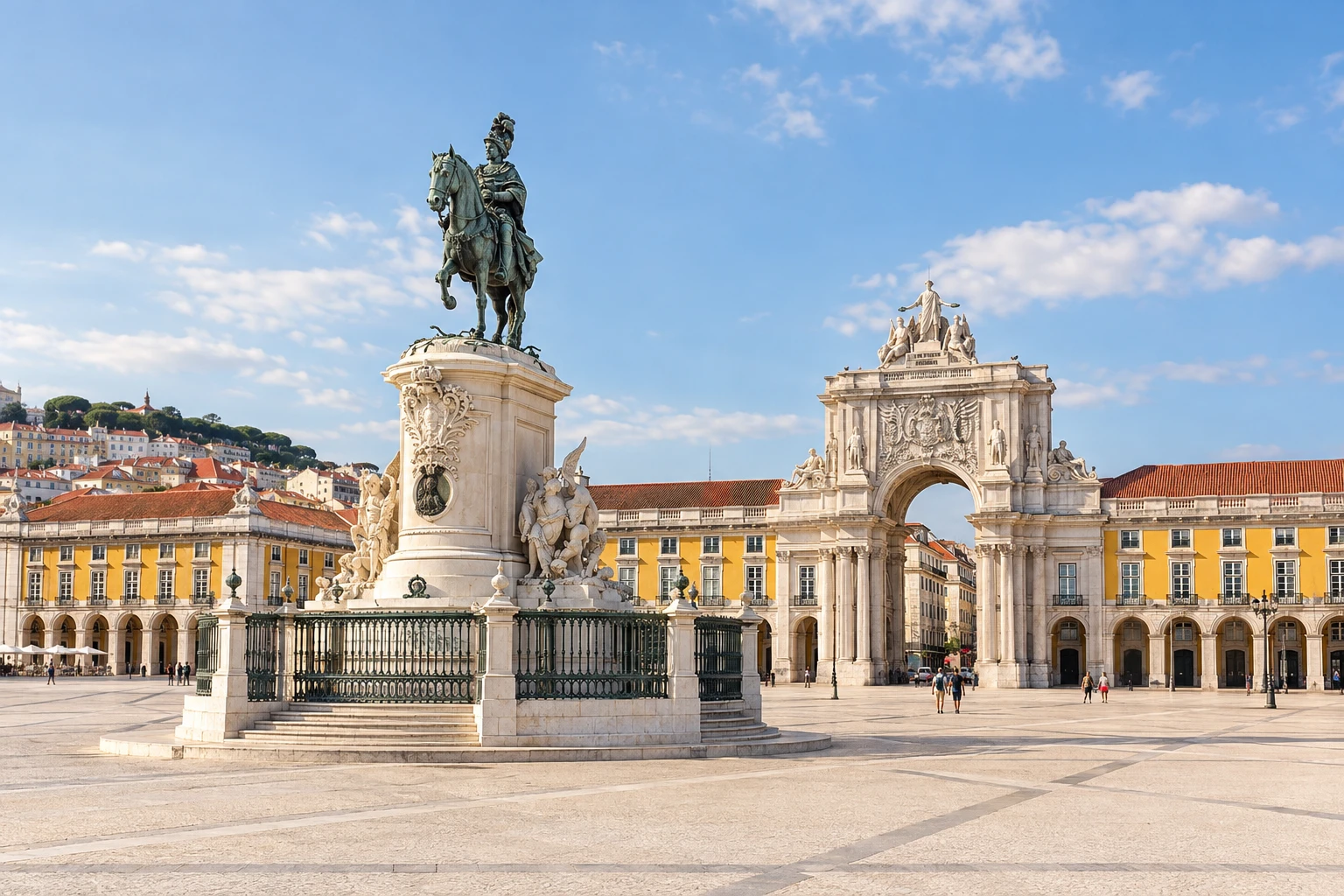
The route begins in Lisbon. In the city, visit Alfama, São Jorge Castle, the Baixa, the viewpoints and Belém, with the Jerónimos Monastery and the Belém Tower. Leave via the Vasco da Gama Bridge or the 25 de Abril Bridge to take the highway into the Alentejo.
→ Évora about 1h30 About 135 km via the A2 and A6 highways, crossing the Tagus and entering the Alentejo.
-
 2 ·Portugal · Évora
Évora
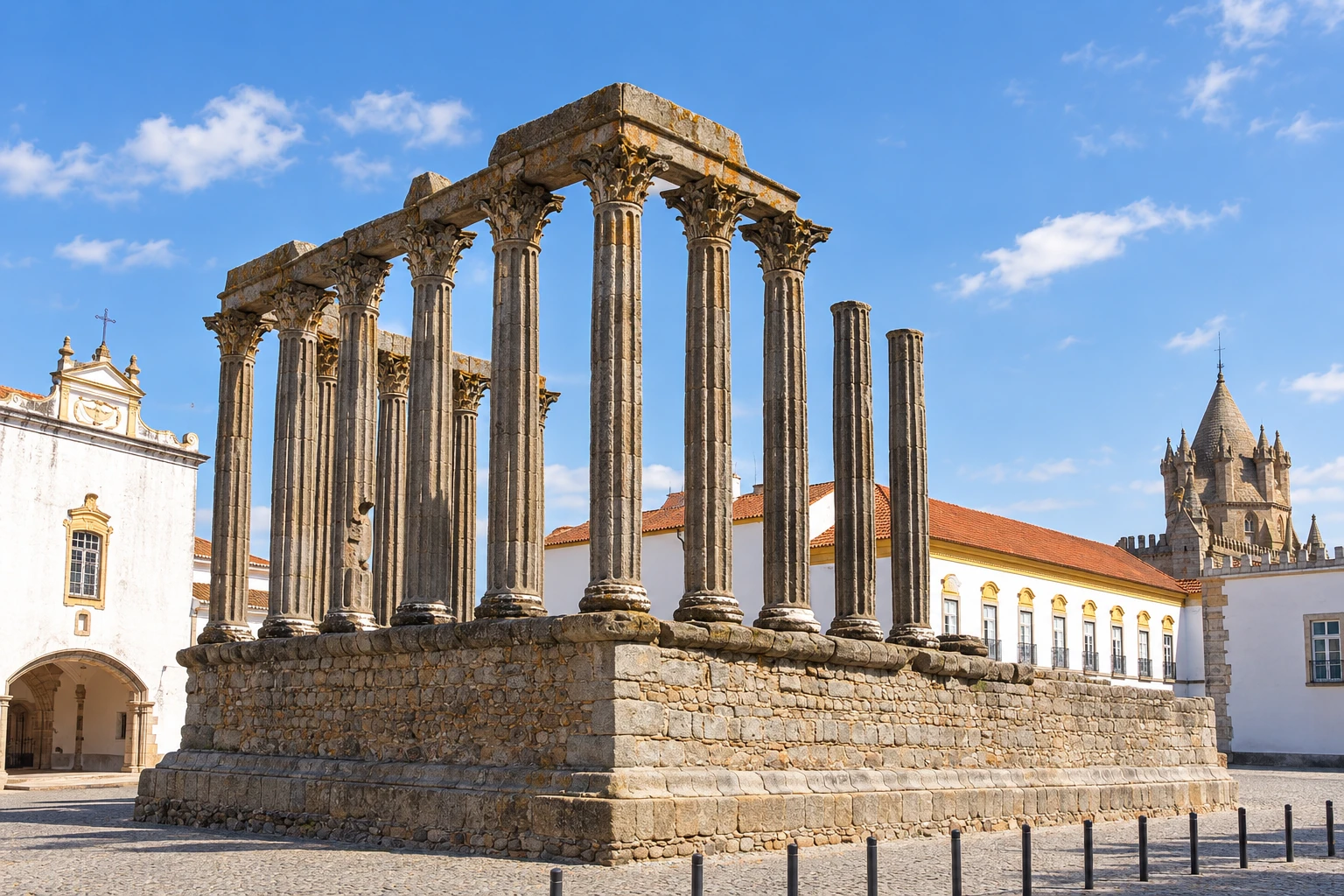
Évora is the capital of the Alentejo, enclosed by walls. In the center: the Roman Temple, the Cathedral, the Chapel of Bones in the Church of São Francisco and the Praça do Giraldo. Near the city are the Cromeleque dos Almendres, a prehistoric stone circle, and regional wineries. After Évora the road continues to Elvas, a fortified border town, and to Badajoz, already in Spain.
→ Elvas about 1h About 90 km via the A6 from Évora to Elvas in the Alentejo.
-
 3 ·Portugal · Portalegre
Elvas
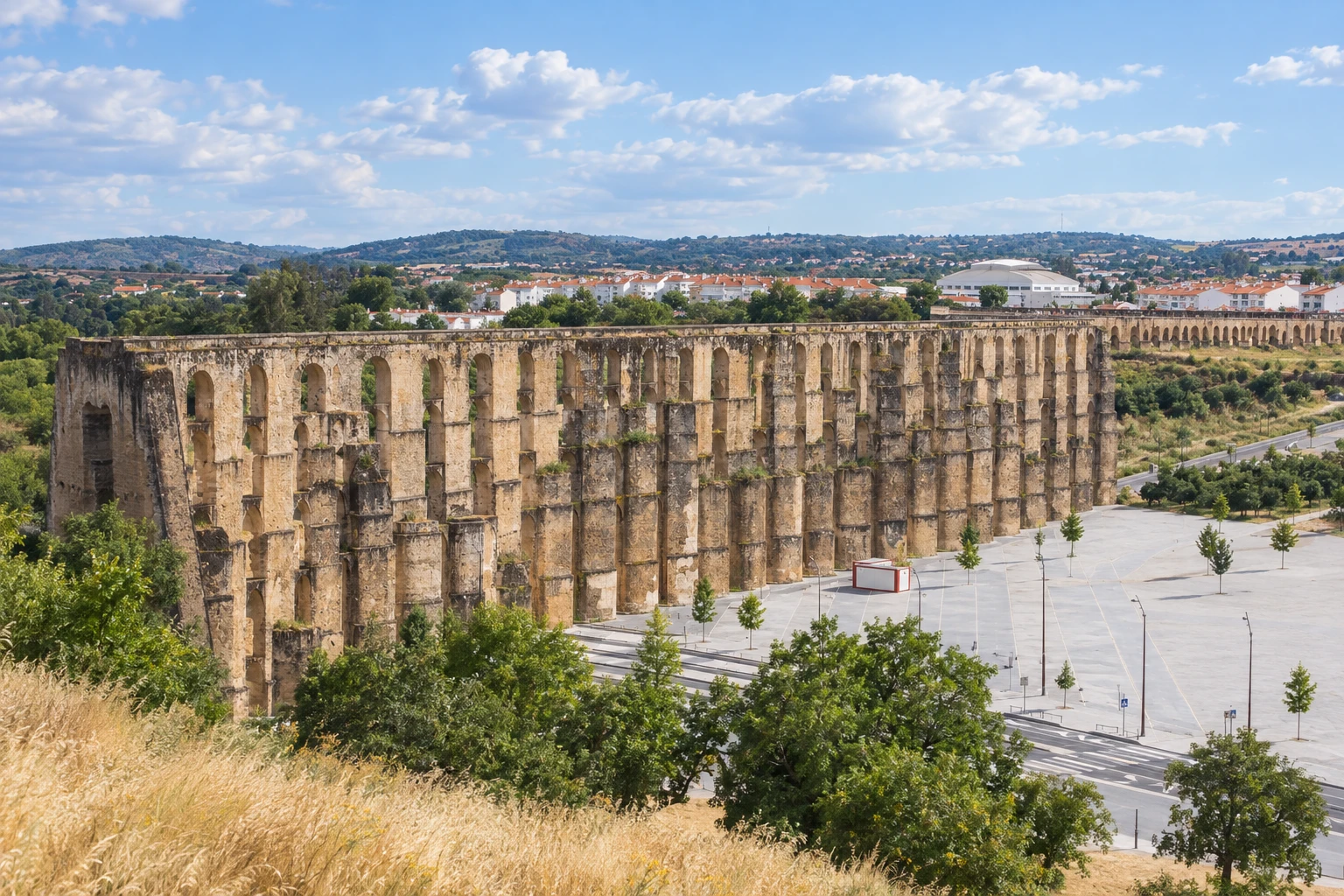
The last Portuguese city before the border. It’s worth stopping to walk the star-shaped fortifications and see the Aqueduct of Amoreira, which enters the city on arches. On the other side of the border, Badajoz is just minutes away.
→ Mérida about 55 min, plus 1 hour time difference About 80 km via the A6 to the Caia border and then the A-5 motorway, passing Badajoz, to Mérida.
-
 4 ·
 Spain · Extremadura
Mérida
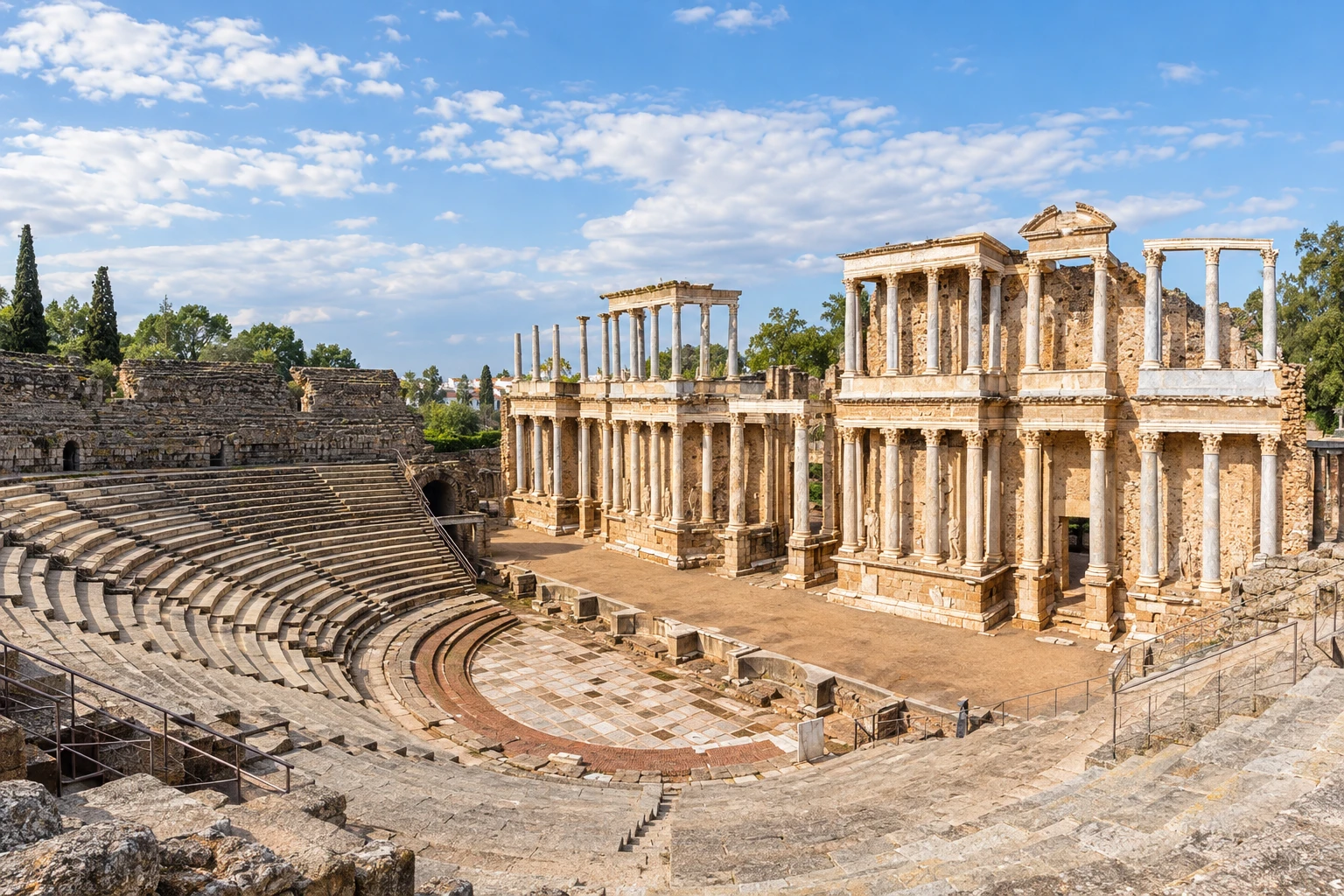
Mérida was the capital of a Roman province and preserves the Roman theatre and amphitheatre, the National Museum of Roman Art, the Roman bridge over the Guadiana River and the Los Milagros aqueduct. In summer the theatre usually hosts a classical theatre festival.
→ Cáceres about 50 min About 75 km via the A-66 (Ruta de la Plata), northwards.
-
 5 ·Spain · Extremadura
Cáceres
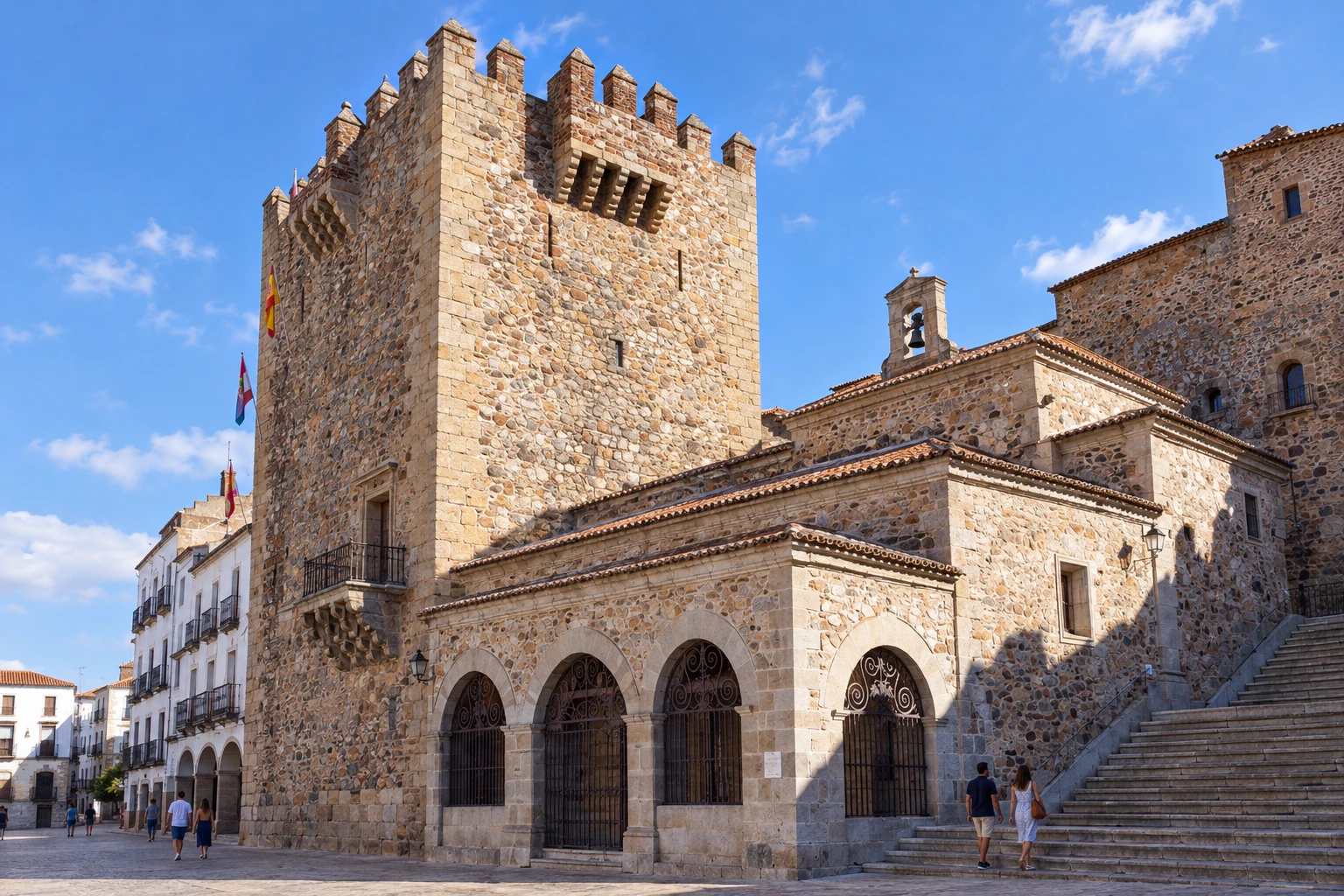
Cáceres has a walled old town of stone, with palaces, towers and churches, and the Plaza Mayor at the foot of the walls. At night, lit up, the ensemble looks even more beautiful. Between Cáceres and Madrid the road passes Trujillo, a town with a castle and medieval square that’s worth a stop.
→ Madrid about 3h About 300 km via the A-58 to Trujillo and then the A-5 motorway, which leads to Madrid.
-
 6 ·Spain · Community of Madrid
Madrid
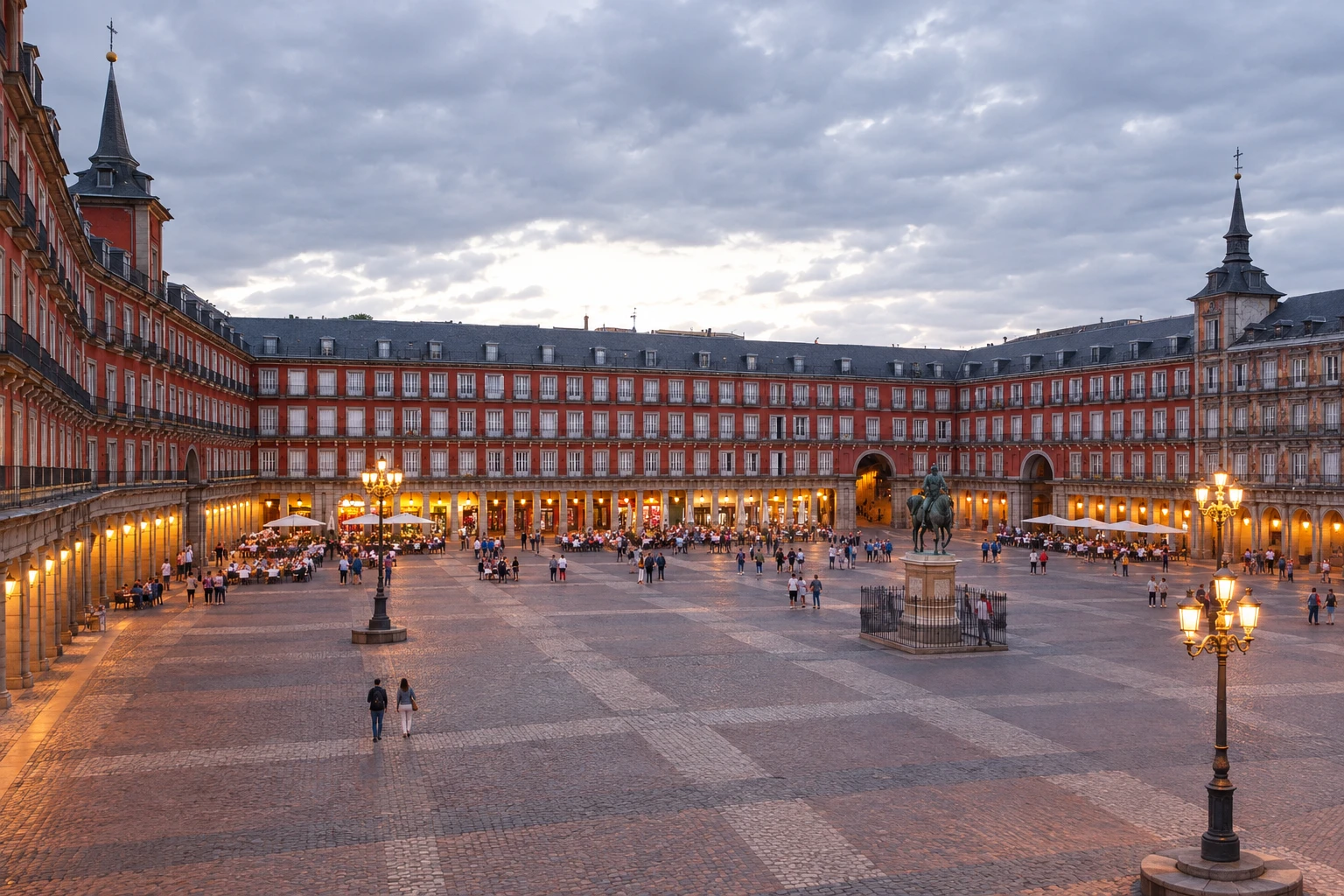
The end of the route is Madrid. In the city: the Prado Museum, the Reina Sofía, Retiro Park, Puerta del Sol, Plaza Mayor and the Royal Palace. Return the car before driving into the center, where there are traffic restrictions for non-local vehicles.
How many days
Driving time is about 6 to 7 hours total. To visit the five cities, allow 7 to 10 days, with at least two in Lisbon and two in Madrid; if you plan 4 days on the road, overnight in Évora and in Mérida or Cáceres.
Best time to go
April, May, October and early November: mild temperatures and green or golden fields. The Alentejo and Extremadura are very hot in July and August, with strong heat in the afternoons. In winter mornings and nights are cold, but days are usually dry and sunny.
The seasons shown are the most usual ones; nature doesn't always follow the calendar.
How to travel it
By rental car picked up in Lisbon and returned in Madrid, or vice versa. Returning a car in another country usually carries a fee: check with the rental company before booking. If you don’t drive, you can make the route by bus with changes in Évora, Badajoz or Mérida.
Who it's for
For travelers who want to combine Portugal and Spain in one trip, who enjoy Roman history and walled towns, and who prefer the road to flying between the two capitals.
Your questions
Frequently asked questions about Lisbon–Évora–Mérida–Cáceres–Madrid by car
Is there a direct train from Lisbon to Madrid?
No. The overnight train that linked the two capitals no longer runs, and today travelling by train requires changes, via Entroncamento and Badajoz, and takes many hours. Work is underway on a new line between the two countries. Check CP and Renfe websites before planning.
How long does it take by car from Lisbon to Madrid?
By the direct route about 6 hours driving, not counting stops, plus 1 hour time difference. Going via Évora, Mérida and Cáceres the driving time is similar.
Do you need to show a passport at the border?
Both countries are in the Schengen area and there is no fixed border control. The crossing is on the highway between Elvas and Badajoz without stops. Carry your passport with you.
How do tolls work in Portugal with a rental car?
Some Portuguese highways have toll booths and others are electronic-only with no booths. Ask the rental company for the electronic toll device (such as Via Verde) when you pick up the car. On the Spanish motorways of this route there are usually no tolls.
Can you do the route by bus?
Yes. There are buses between Lisbon and Madrid and services that call at Évora, Badajoz, Mérida and Cáceres. Check timetables, because not all services stop in every town.
Does the time change in Spain?
Yes. Spain is one hour ahead of Portugal. Consider this for museum opening times and car return schedules.