

 Brazil
 Antarctica
 Argentina
 Bolivia
 Chile
 Colombia
 Ecuador
 Falkland Islands (Malvinas)
 French Guiana
 Guyana
 Paraguay
 Peru
 Suriname
 Uruguay
 Venezuela
 Albania
 Austria
 Belgium
 Croatia
 Denmark
 Finland
 France
 Germany
 Greece
 Hungary
 Iceland
 Ireland
 Italy
 Luxembourg
 Norway
 Poland
 Slovakia
 Slovenia
 Sweden
 Switzerland
 the Czech Republic
 the Netherlands
 the United Kingdom
 Turkey
 Bermuda
 Canada
 Greenland
 Mexico
 Saint Pierre and Miquelon
 the United States
 the Dominican Republic
 Japan
 Egypt
 South Africa
 Australia
 Fiji
 New Zealand
 Papua New Guinea
Route · Portugal · Spain
Portuguese Way to Santiago on foot
On foot from Portugal to Santiago de Compostela: the pilgrimage route that starts in Lisbon or Porto, follows yellow arrows and ends at Obradoiro Square.
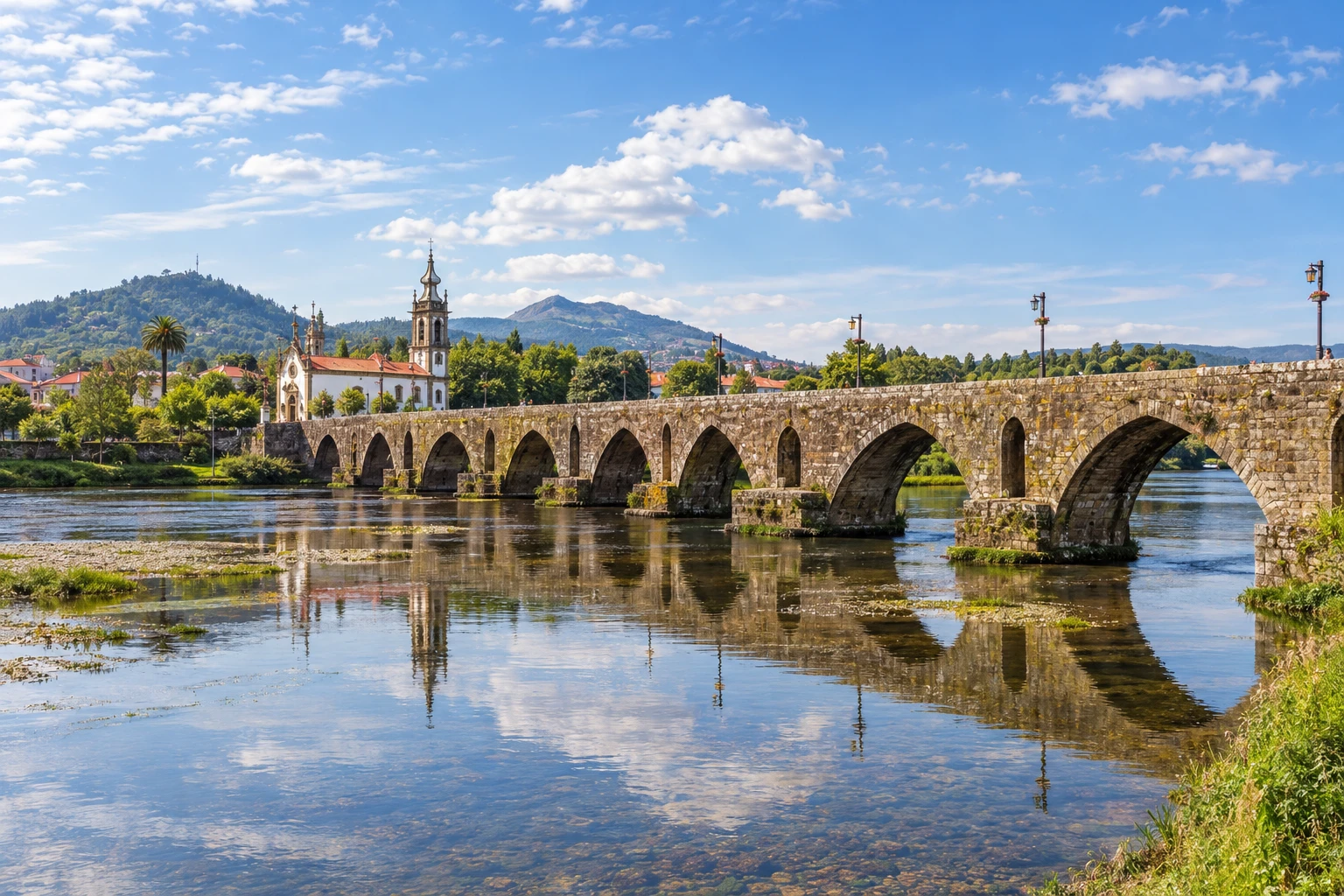
In the photo: Medieval bridge of Ponte de Lima
The route
What the Portuguese Way to Santiago on foot is
The Portuguese Way is one of the pilgrimage routes to Santiago de Compostela, used for centuries. The main route starts in Lisbon, goes through Santarém, Tomar and Coimbra to Porto, crosses the Minho and enters Galicia via Valença and Tui. It is about 617 km from Lisbon to Santiago, taking almost four weeks of walking.
Most pilgrims do only a part. From Porto it is about 242 km on the Central Way, via Barcelos and Ponte de Lima, or about 273 km on the Coastal Way, which follows the coast and passes through Vigo. The two routes join in Redondela and continue together through Pontevedra, Caldas de Reis and Padrón to Santiago. Those with a week usually start in Tui, on the border, about 118 km from the cathedral.
The route is marked with yellow arrows and the scallop shell, and there are pilgrim hostels along the way. Anyone who walks at least the last 100 km and stamps their credential can request the Compostela, the pilgrimage certificate, upon arrival in Santiago.
The map
Portuguese Way to Santiago on foot
The journey
City by city
Distances and times are approximate: check before you set off.
-
 1 ·
 Portugal · Lisbon
Lisbon
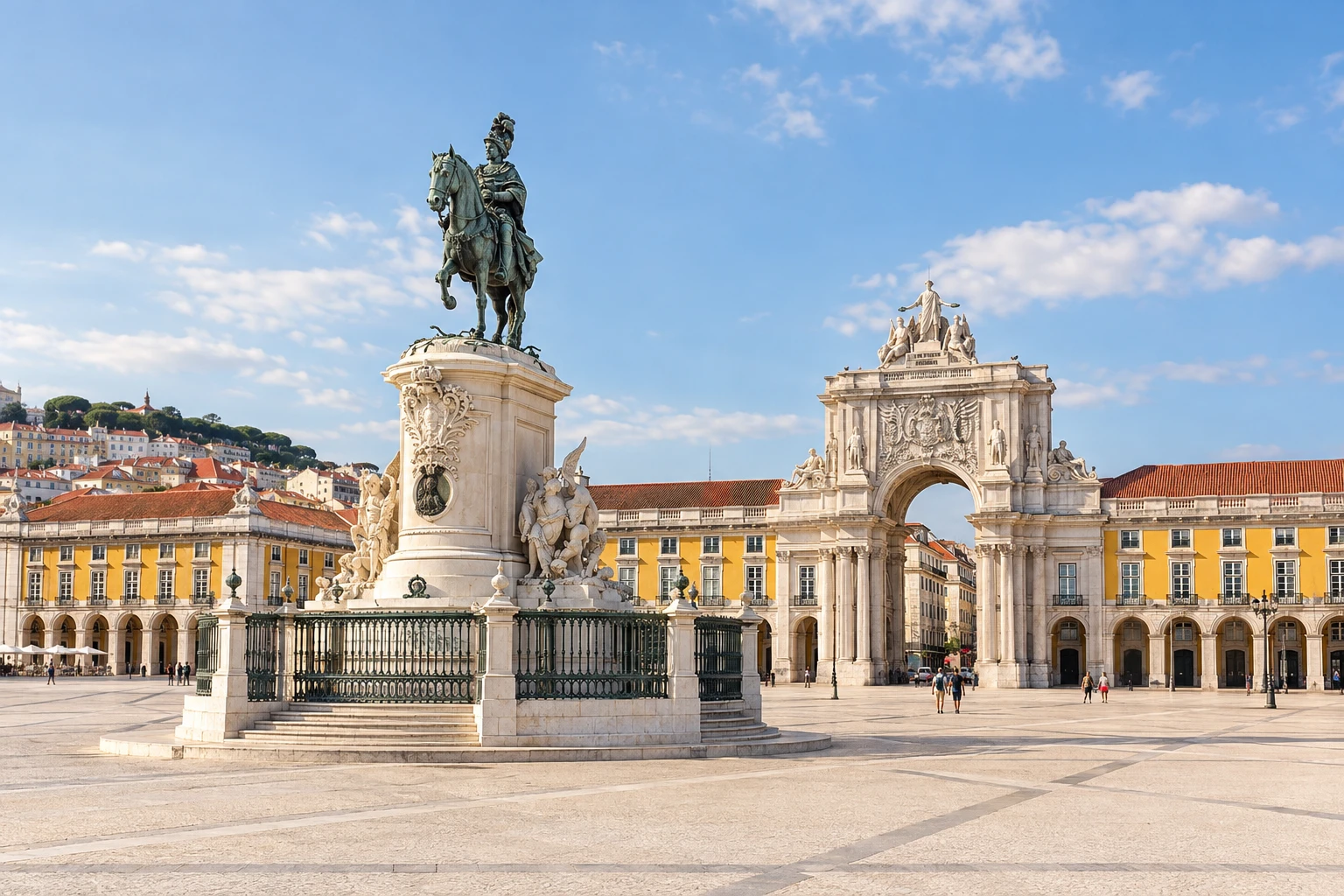
The starting point of the Central Way is Lisbon Cathedral (Sé de Lisboa), where many pilgrims get their first stamp. The first days follow the Tagus River, along flat sections and roads, to Santarém. This is the section with fewer pilgrims and fewer hostels.
→ Tomar about 156 km about 6 days on foot Central Way, in 6 stages, mostly flat, through the Tagus valley: Lisbon, Alverca, Azambuja, Santarém, Golegã and Tomar. The stage from Azambuja to Santarém is one of the longest.
-
 2 ·Portugal · Santarém
Tomar
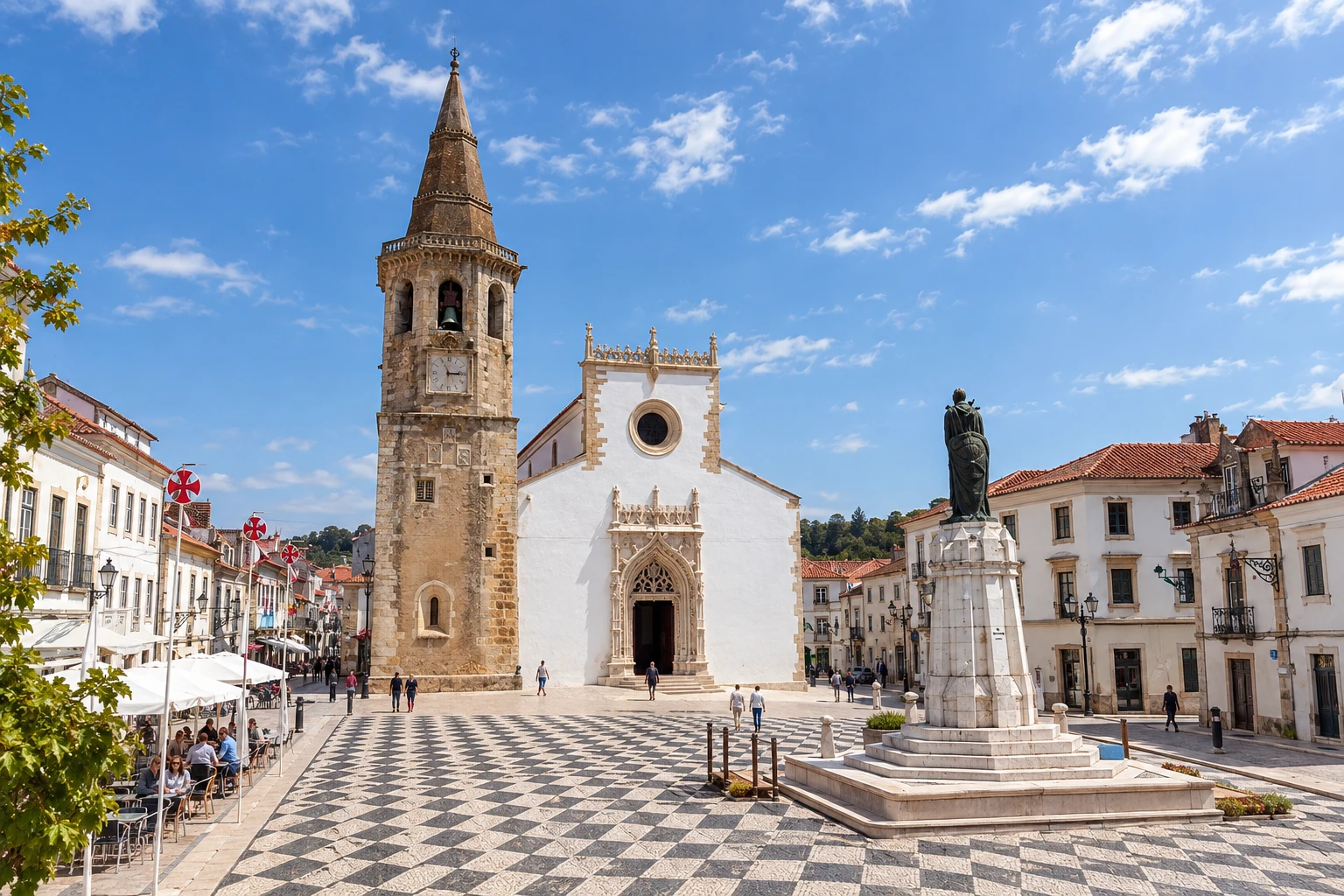
After Santarém and Golegã, the route reaches Tomar, a Templar town with the Convent of Christ on a hilltop. From Tomar the route becomes more rugged, crossing the hills of the Sicó region.
→ Coimbra about 92 km about 4 days on foot Central Way, in 4 stages, with climbs through the Sicó hills: Tomar, Alvaiázere, Ansião, Conímbriga and Coimbra.
-
 3 ·Portugal · Coimbra
Coimbra
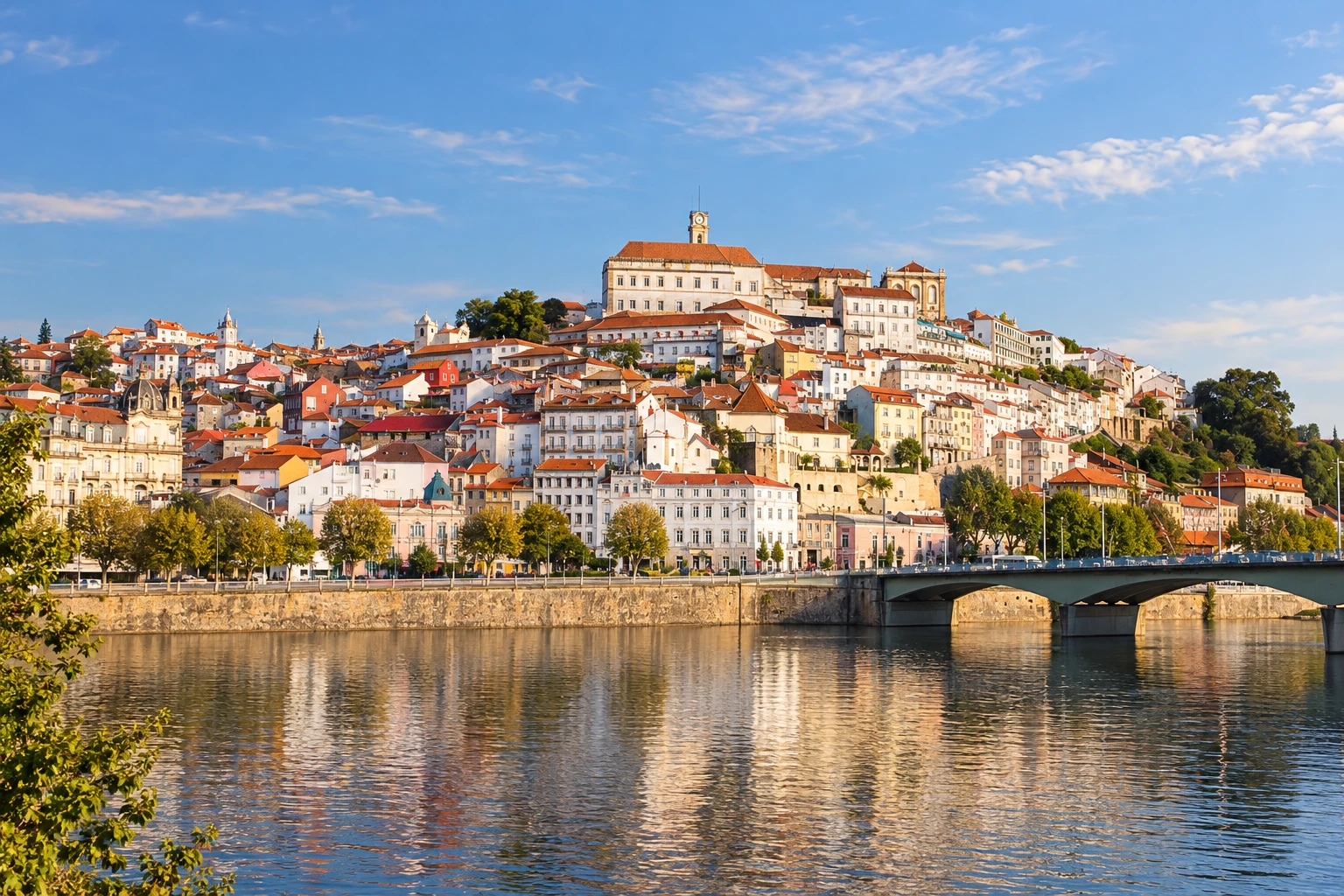
Before Coimbra the route passes the Roman ruins of Conímbriga. Coimbra has the old university on the hilltop, the Joanina Library and the Old Cathedral (Sé Velha). After that, the route crosses the Bairrada and goes through Águeda and Albergaria-a-Velha on the way to Porto.
→ Porto about 127 km about 6 days on foot Central Way, in 6 stages, through the Bairrada and interior: Coimbra, Mealhada, Águeda, Albergaria-a-Velha, São João da Madeira, Grijó and Porto.
-
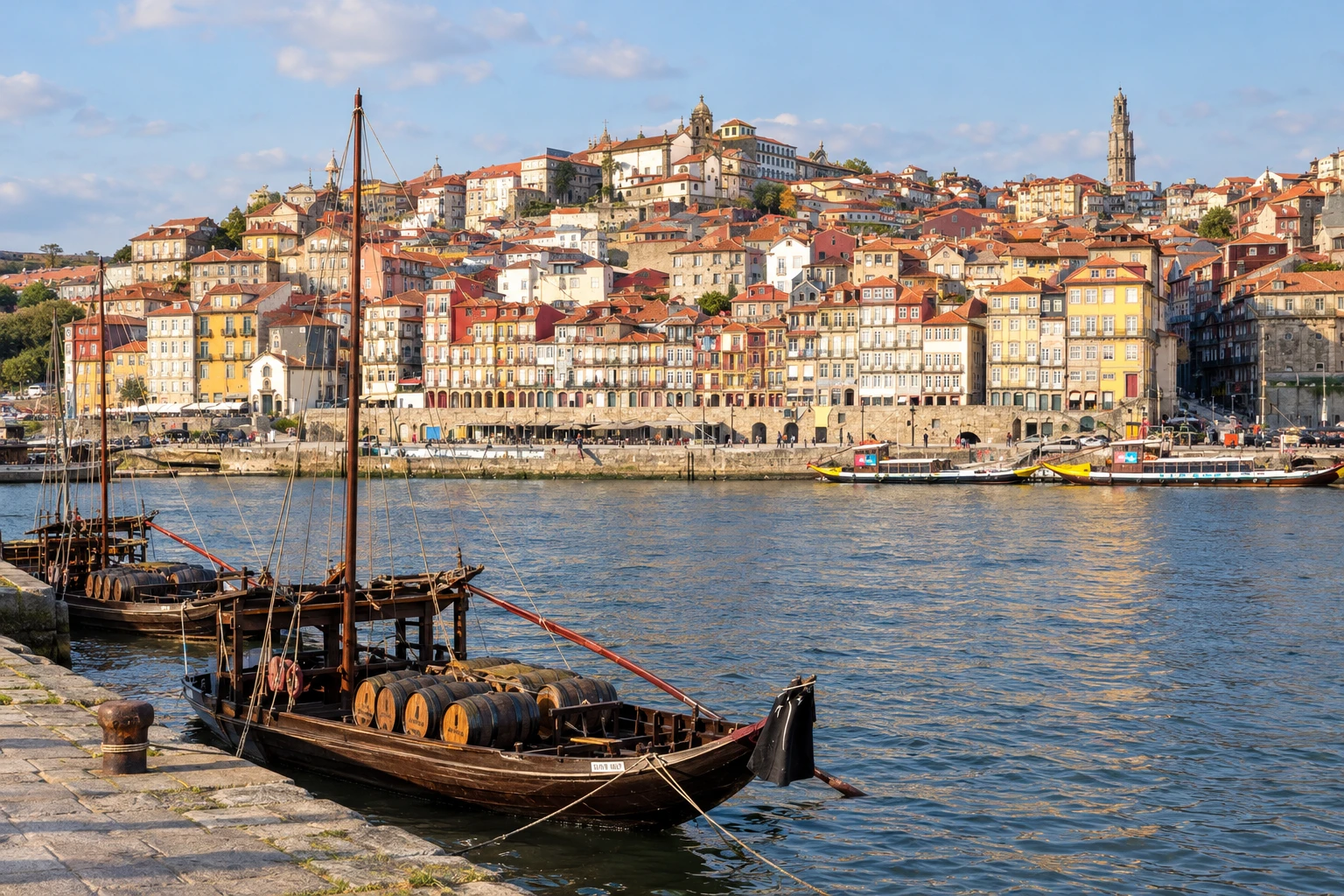 4 ·Portugal · Porto
Porto
Porto is the most popular starting point. Porto Cathedral (Sé do Porto) usually sells the credential and gives the first stamp. From here two routes depart: the Central, via Barcelos, Ponte de Lima and Valença to Tui, and the Coastal Way, along the coast through Vila do Conde, Esposende, Viana do Castelo and Caminha to Galicia.
→ Vigo about 174 km about 7 days on foot Coastal Way in 7 stages, via Póvoa de Varzim, Esposende, Viana do Castelo, Vila Praia de Âncora, A Guarda and Baiona to Vigo. Alternative via the Central: Porto–Tui, about 125 km in 5 stages, via Barcelos, Ponte de Lima and Rubiães.
-
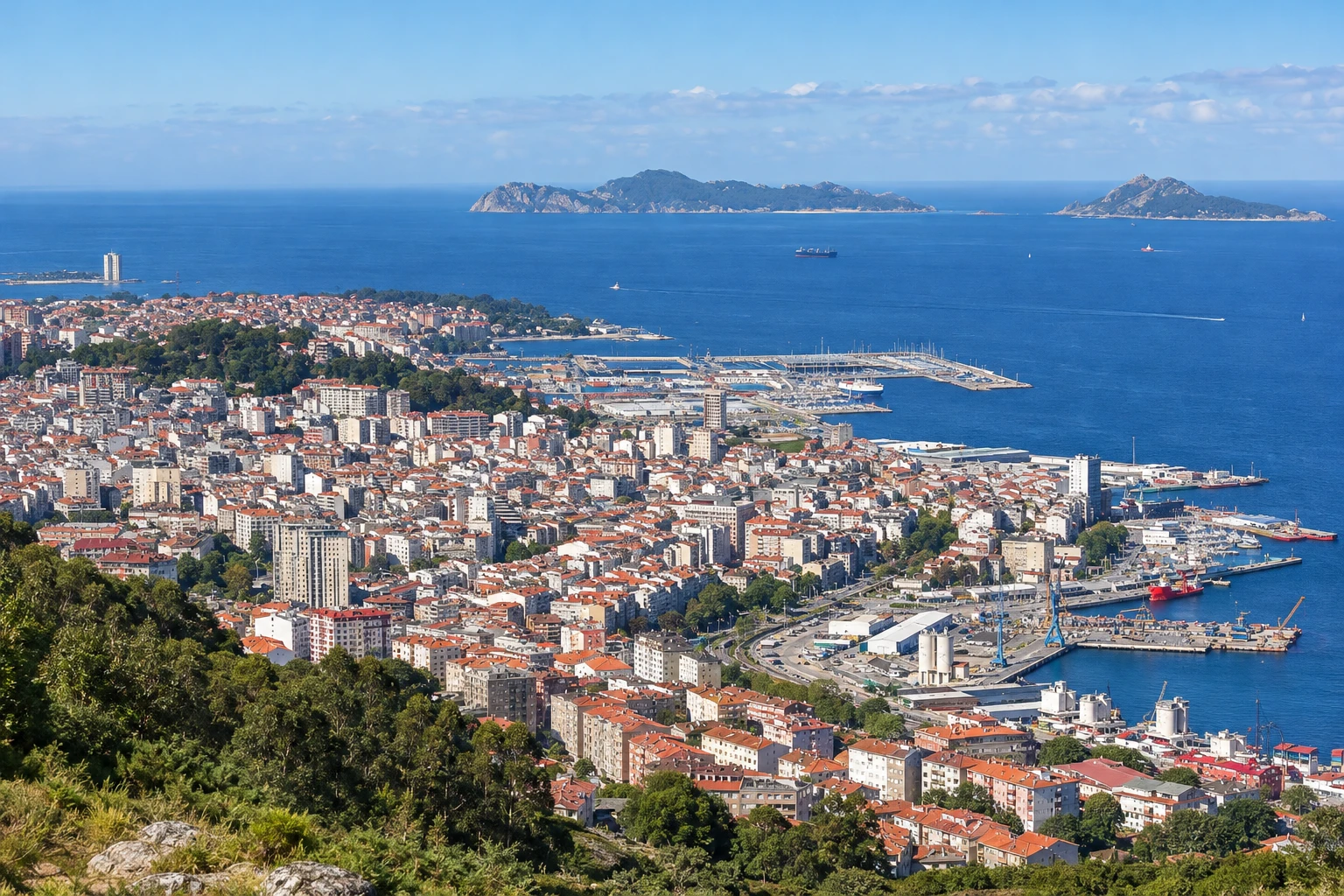 5 ·
 Spain · Galicia
Vigo
The Coastal Way enters Galicia at A Guarda, continues through Baiona and reaches Vigo, the largest Galician city, with its old quarter (Casco Vello) and views over the ria. From Vigo to Santiago is about 99 km, slightly less than the 100 km required for the Compostela: those who want the certificate start earlier, in Baiona or A Guarda.
→ Santiago de Compostela about 99 km about 5 days on foot Coastal: Vigo–Arcade (23 km, via Redondela), Pontevedra (12), Caldas de Reis (21), Padrón (19) and Santiago (24). Central: Tui–Santiago, about 118 km in 6 stages, via O Porriño, Redondela, Pontevedra, Caldas de Reis and Padrón.
-
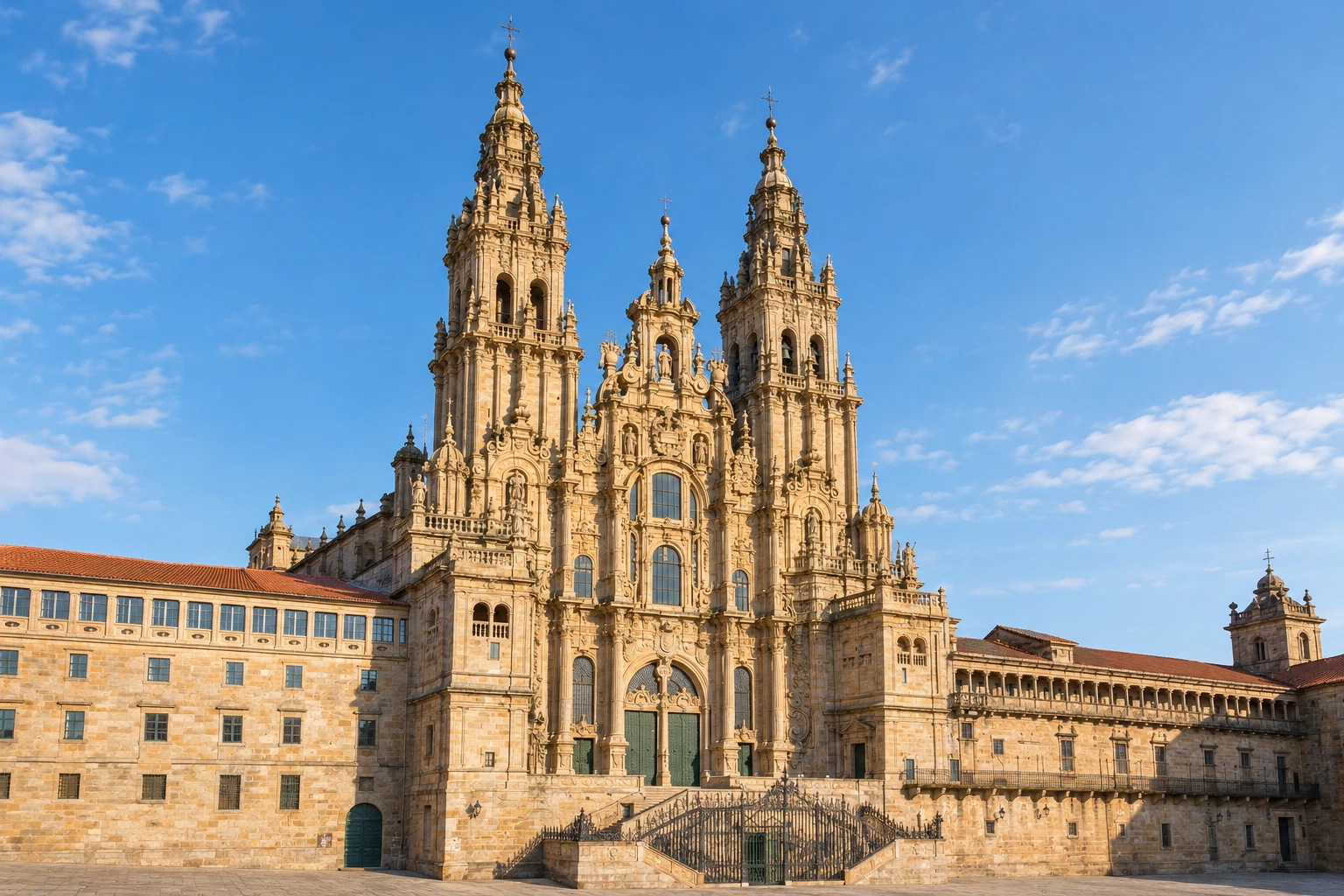 6 ·Spain · Galicia
Santiago de Compostela
After Vigo the route reaches Redondela, where it joins the Central Way coming from Tui, and continues through Pontevedra, Caldas de Reis and Padrón. The arrival is at Obradoiro Square, in front of the cathedral. The Pilgrim Office, near the cathedral, issues the Compostela.
How many days
From Tui to Santiago, 6 days of walking. From Porto, 11 to 13 days depending on the route. From Lisbon, about 4 weeks. Allow one extra day in Santiago on arrival and one day to reach your starting point.
Best time to go
May, June and September, with early October: pleasant temperatures for walking and long days. July and August are hot on the Portuguese section and busy in Galicia, with full hostels. From November to March it rains a lot in the Minho and Galicia, and some hostels close.
The seasons shown are the most usual ones; nature doesn't always follow the calendar.
How to travel it
On foot, following the yellow arrows, with a backpack or using luggage transfer services between stages offered by companies and some hostels. Stages are generally 15 to 30 km. To reach the starting point use train or bus: from Porto, the Celta train and regional trains stop at Valença, opposite Tui.
Who it's for
For those who want to do the Way to Santiago by a shorter, less crowded route than the French Way, for people who enjoy walking several days in a row, and for anyone seeking a journey of faith, reflection or physical challenge.
Your questions
Frequently asked questions about Portuguese Way to Santiago on foot
How many kilometers is the Portuguese Way?
About 617 km from Lisbon to Santiago via the Central Way. From Porto, about 242 km via the Central or about 273 km via the Coastal Way. From Tui, about 118 km. Distances vary slightly depending on the source and route variants.
Where do most people start?
In Porto, for those who have around two weeks, or in Tui, for those who have one week. Tui is on the other side of the Minho River, opposite Valença, and is the most common starting point for those who want to walk just over the 100 km required for the Compostela.
What is the Compostela and how do you get it?
It is the pilgrimage certificate issued by the Pilgrim Office of Santiago Cathedral. According to the Office, you must walk at least the last 100 km consecutively on a recognized route, finishing at the cathedral, and show a stamped credential. Check the rules on the Pilgrim Office website before you set out.
What is the pilgrim's credential?
It is the pilgrim’s passport, where the route stamps are collected. It grants access to pilgrims’ hostels and serves as proof to request the Compostela. It can be obtained at churches, associations of Friends of the Way, hostels and at the Pilgrim’s Office itself; there is also a digital version in the Office’s app.
How many stamps are needed?
Stamps are collected at hostels, churches, cafés and town halls along the route. In the last 100 km, it is customary to get at least two dated stamps per day. Check the current rule on the Pilgrim’s Office website.
Do you need to book hostels?
Public hostels generally operate on a first-come, first-served basis without reservations and only for those with the credential. Private hostels accept bookings. In summer, book private places or arrive early at public ones.
Which route is better from Porto, the Central or the Coastal way?
The Central is the most traditional, passing through inland villages, woods and fields, with more hostels. The Coastal route follows the sea and beaches, with flatter, longer stages, and goes through Vigo. The two join at Redondela.