Nikko · Japan · Shrine
Nikkō Tōshō-gū Shrine
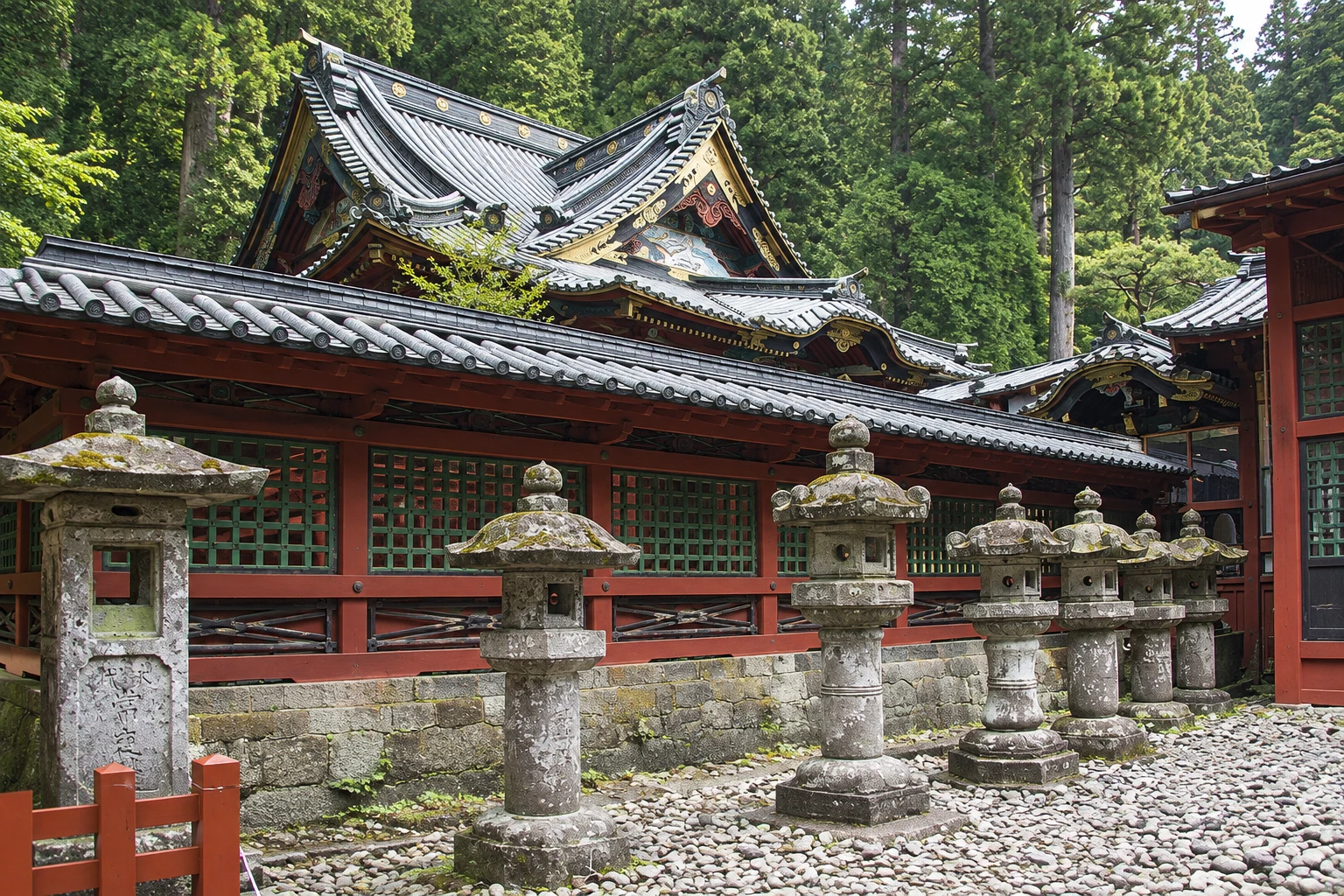
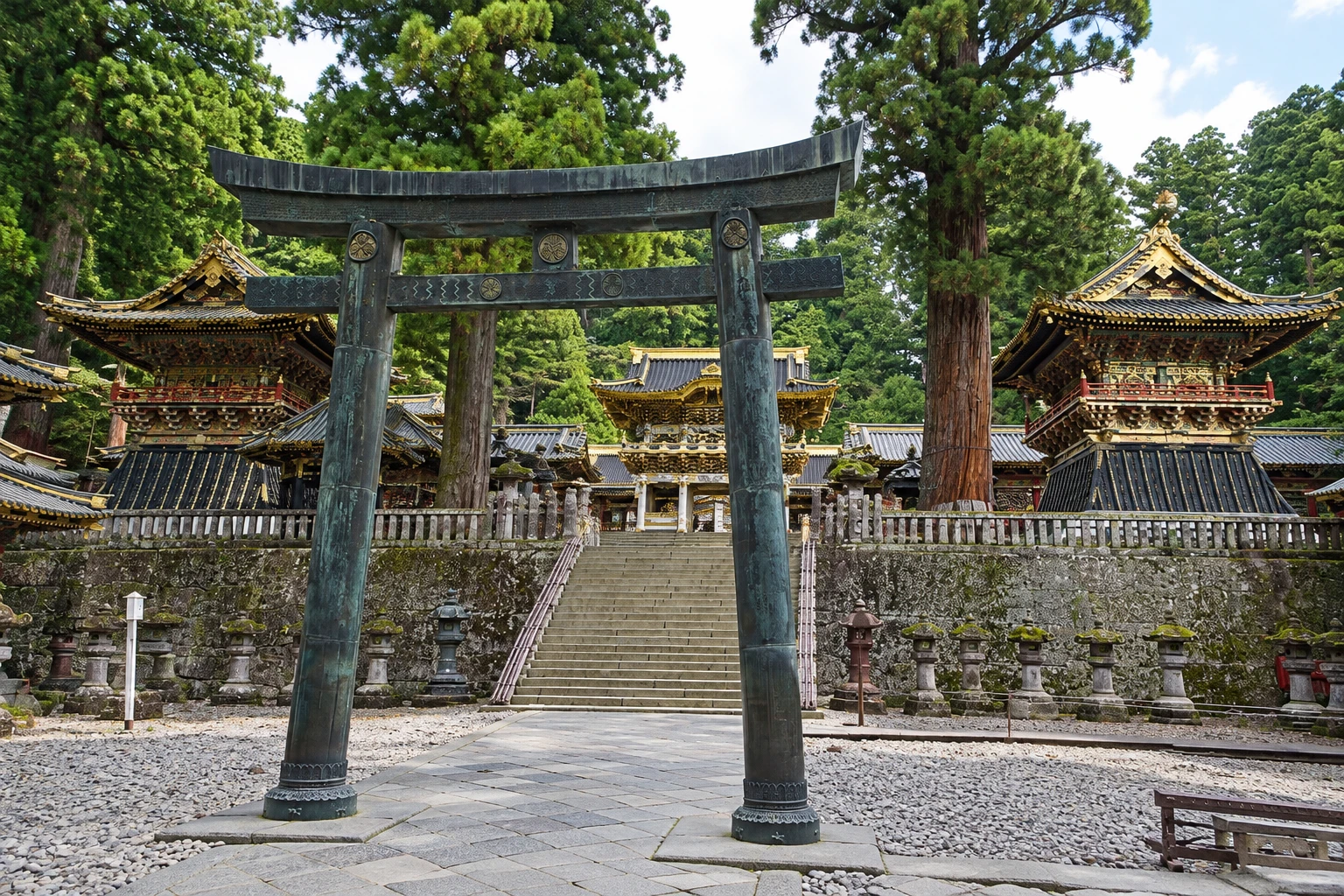
The mausoleum of Tokugawa Ieyasu, covered in colorful carvings and gold leaf, featuring the Yomeimon gate, the three monkeys and the sleeping cat; World Heritage site.

 Search
 Brazil
 Antarctica
 Argentina
 Bolivia
 Chile
 Colombia
 Ecuador
 Falkland Islands (Malvinas)
 French Guiana
 Guyana
 Paraguay
 Peru
 Suriname
 Uruguay
 Venezuela
 Austria
 Belgium
 Croatia
 Denmark
 Finland
 France
 Germany
 Greece
 Hungary
 Iceland
 Ireland
 Italy
 Luxembourg
 Norway
 Poland
 Portugal
 Slovakia
 Slovenia
 Spain
 Sweden
 Switzerland
 the Czech Republic
 the Netherlands
 the United Kingdom
 Turkey
 Bermuda
 Canada
 Greenland
 Mexico
 Saint Pierre and Miquelon
 the United States
 the Dominican RepublicJapanTurkey
 Egypt
 South Africa
 Australia
 Fiji
 New Zealand
 Papua New Guinea
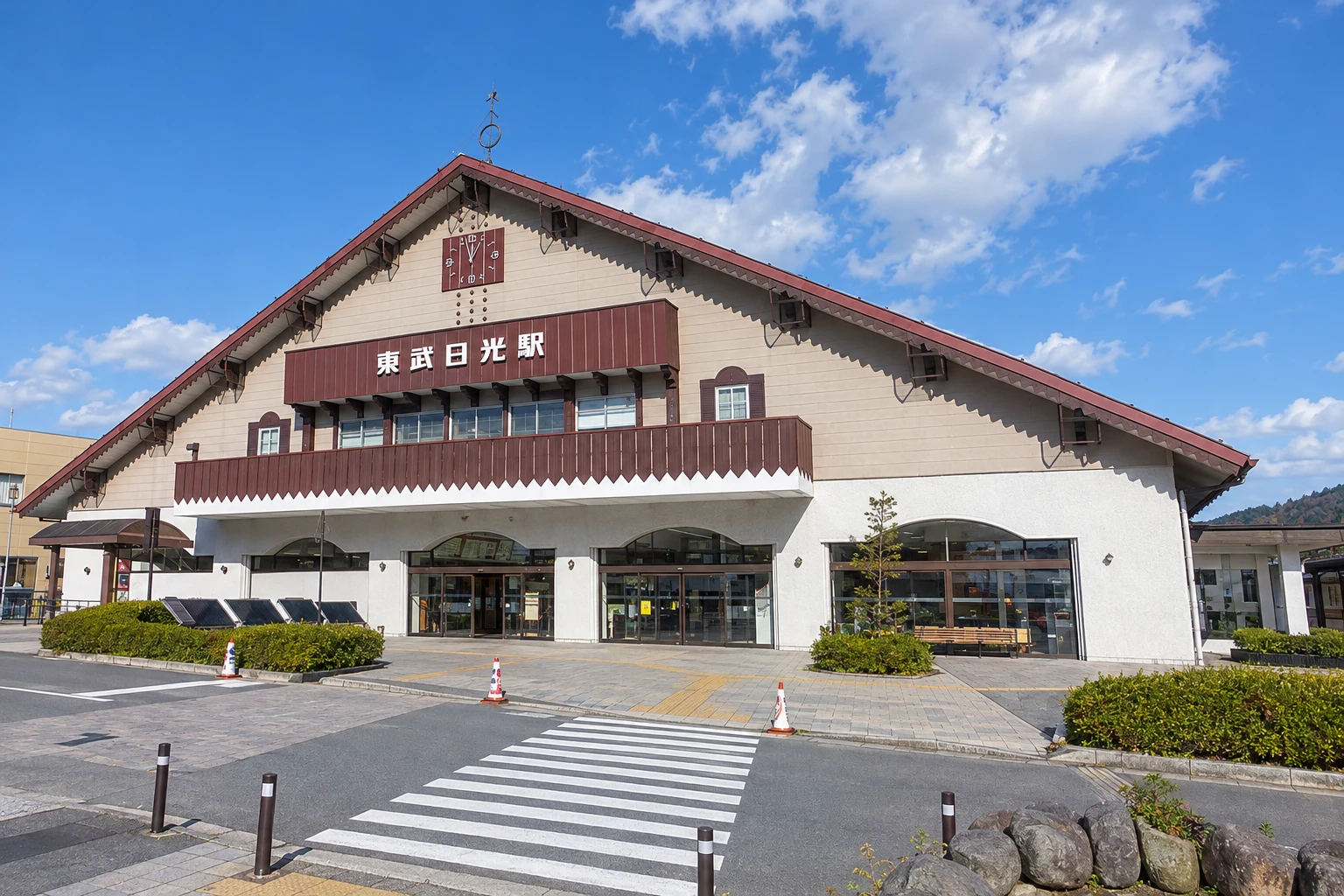
In the photo: Tobu-Nikko Station.
Illustrative images. The pictures in this guide are illustrations based on the real place, not photographs, and may differ from it.

The city
Nikko, in Tochigi, brings together the Shrines and Temples of Nikko, a World Heritage Site: Toshogu, the carved mausoleum of Tokugawa Ieyasu, Rinno-ji, Taiyuin and Futarasan Shrine, on a cedar-covered slope beyond the red Shinkyo Bridge. High in the mountains are Lake Chuzenji, Kegon Falls and the Senjogahara marsh, within Nikko National Park.
There's no accommodation in the guide yet in Nikko.
Tem hotel, pousada ou casa de temporada aqui? Cadastre a suaThere are no restaurants in the guide yet in Nikko.
Know a good one? Recommend it to usHotéis e restaurantes da cidade no mapa.
how to get there · how many days · itinerary · questions
The local experience
The mausoleum of Tokugawa Ieyasu, covered in colorful carvings and gold leaf, featuring the Yomeimon gate, the three monkeys and the sleeping cat; World Heritage site.
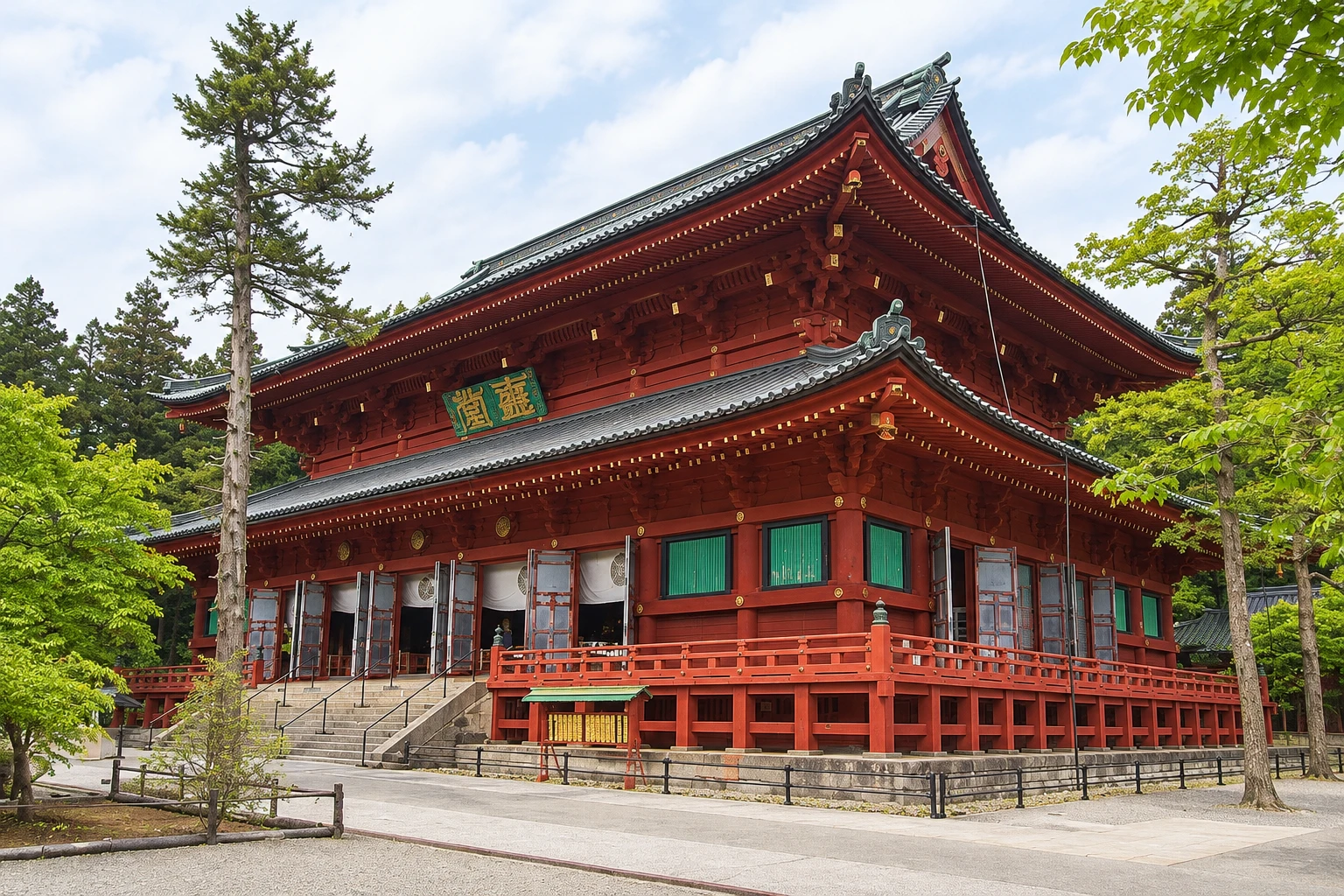
Nikko’s main Buddhist temple, with the Sanbutsudo hall and three large gilded statues, and the Taiyuin, mausoleum of the third Tokugawa shogun; World Heritage site.
The shrine of Nikko’s three sacred mountains, founded in the 8th century, owning a vast area that includes Kegon Falls and the summit of Mount Nantai; World Heritage site.
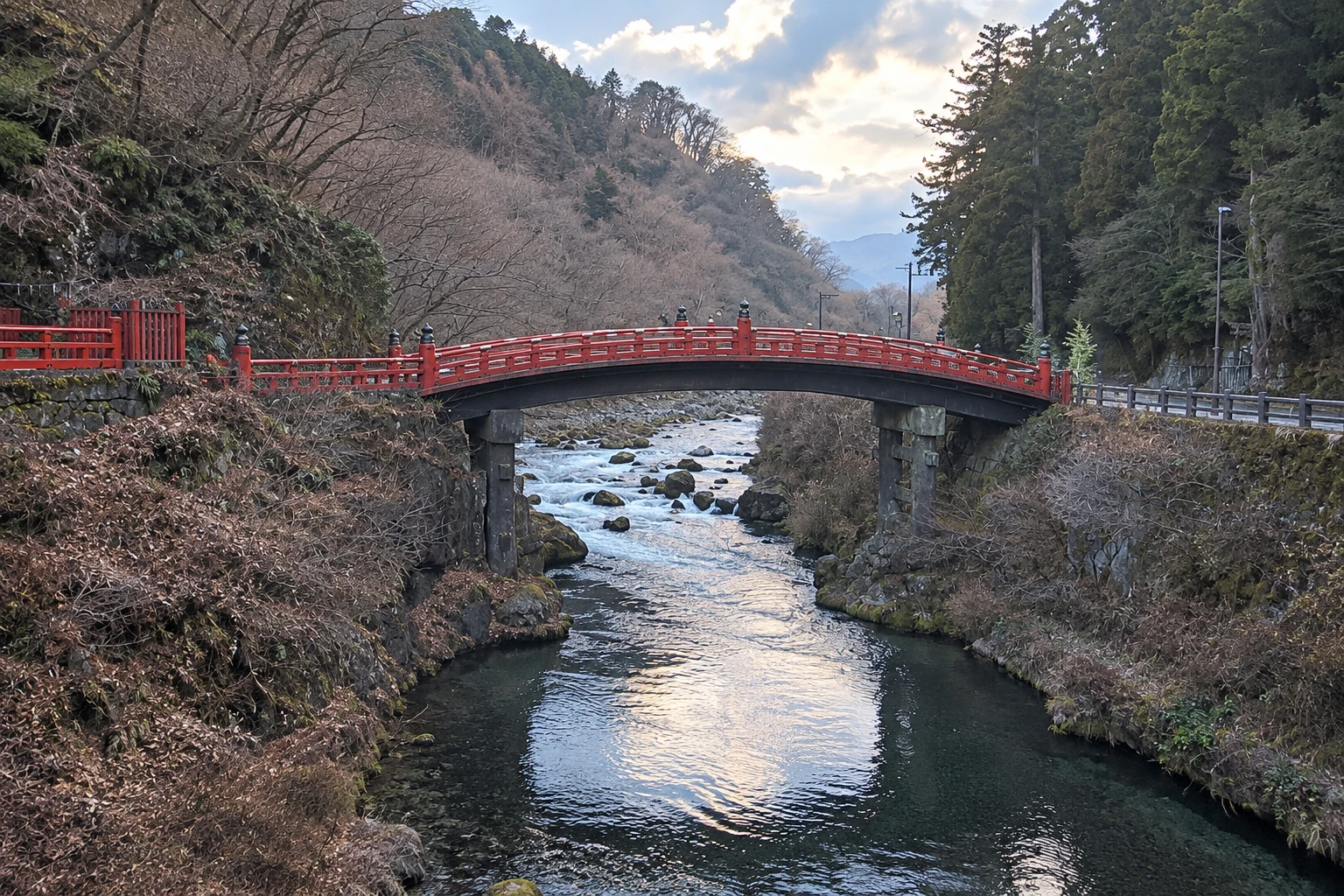
The red-lacquered bridge over the Daiya River at the entrance to Nikko’s sacred area, and upstream, the Kanmangafuchi gorge with its stone statues.
Before you go
Nikko – Japan
Approximate distances. Check flights and bus, train or boat schedules before you travel.
Two adjacent stations receive trains: Tobu-Nikko, the terminus of express trains from Asakusa, and JR Nikko, connected to Utsunomiya, where the northbound bullet train stops. By either route, the trip from Tokyo is about 2 hours. The two stations are side by side, about 2 km from the shrines.
The shrines take one day. The mountains require another: the lake, Kegon Falls and the marsh walkways. Those who stay three nights can relax in the hot springs of Yumoto or Kinugawa.
Autumn colors flow down from the mountains to town between October and early November. In late spring the slopes are green and there are fewer visitors. Winter is cold, with snow at the shrines, and summer is cooler than in Tokyo.
The seasons shown are the most usual ones; nature doesn't always follow the calendar.
No. Buses run from the stations to the shrines, Lake Chuzenji and Yumoto, and there are tourist bus passes. In leaf season, traffic on the Irohazaka Road becomes slow.
Suggested itinerary
Built with the places on this page. No rush: it's paced so you have time to see them.
Walk up from the station to Shinkyo Bridge and visit Toshogu at opening time, including the climb to Ieyasu’s tomb.
Head to Futarasan Shrine and the Taiyuin mausoleum and finish at Rinno-ji’s Sanbutsudo. Try yuba at lunch.
Day 1
Visit Toshogu early and stop by Rinno-ji’s Sanbutsudo.
Visit Futarasan Shrine and Taiyuin and walk to the Jizo statues at Kanmangafuchi.
Day 2
Take the bus up the Irohazaka Road and go down via the elevator at Kegon Falls.
Visit the former embassy houses, take the boat cruise or walk across Senjogahara.
Check before you go. Opening hours and days change, and places may close for renovations, holidays or events. This itinerary is a suggestion from Cidade Turismo, not a commitment: plan yours by checking directly with each place you intend to visit.
Before you go
They are side by side. Tobu-Nikko receives trains from Asakusa; JR Nikko serves trains from Utsunomiya. Buses to the shrines and the lake stop at both.
It is the skin that forms on heated soy milk, collected in thin sheets. In Nikko it is served rolled, fried, in soups and with rice, and it is the town’s typical dish.
Yes. There are passes that cover the buses between the stations, the shrines and Lake Chuzenji, and Tobu passes that include the train from Tokyo. Check the current options.
Visit the Shinkyo Bridge, Toshogu, Futarasan Shrine, Taiyuin and Rinno-ji. If you’re short on time, you can go up to Kegon Falls in the afternoon.
Yes, especially around Lake Chuzenji and up on the highlands. In the town, snow is more occasional, and the shrines with snow attract photographers.