

 Brazil
 Antarctica
 Argentina
 Bolivia
 Chile
 Colombia
 Ecuador
 Falkland Islands (Malvinas)
 French Guiana
 Guyana
 Paraguay
 Peru
 Suriname
 Uruguay
 Venezuela
 Albania
 Austria
 Belgium
 Croatia
 Denmark
 Finland
 France
 Germany
 Greece
 Hungary
 Iceland
 Ireland
 Italy
 Luxembourg
 Norway
 Poland
 Portugal
 Slovakia
 Slovenia
 Spain
 Sweden
 Switzerland
 the Czech Republic
 the Netherlands
 the United Kingdom
 Turkey
 Bermuda
 Canada
 Greenland
 Mexico
 Saint Pierre and Miquelon
 the United States
 the Dominican Republic
 Egypt
 South Africa
 Australia
 Fiji
 New Zealand
 Papua New Guinea
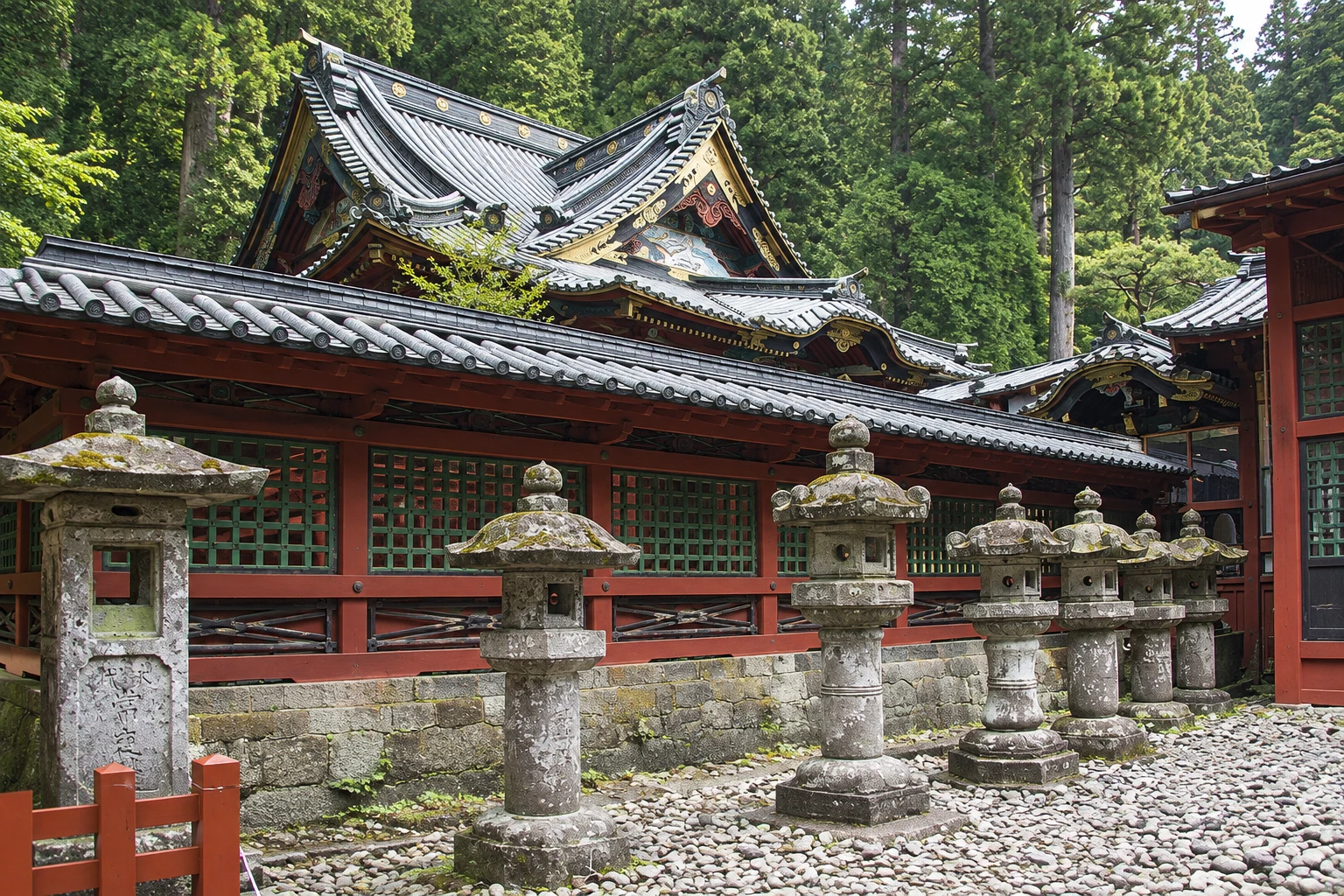
Shrine · Nikko, Japan
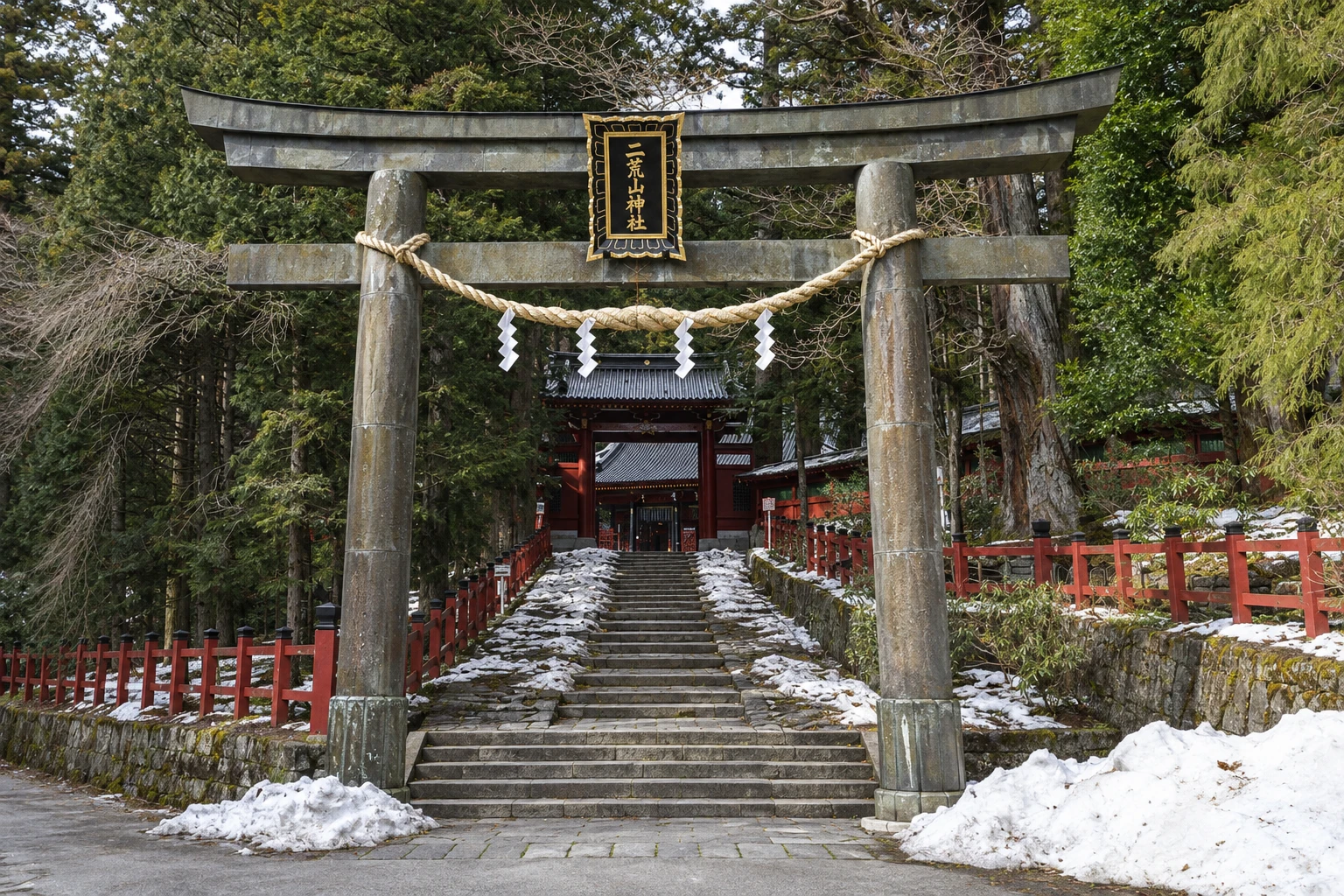
Futarasan Shrine
The shrine of Nikko’s three sacred mountains, founded in the 8th century, owning a vast area that includes Kegon Falls and the summit of Mount Nantai; World Heritage site.
Illustrative images. The pictures in this guide are illustrations based on the real place, not photographs, and may differ from it.

A look at the place
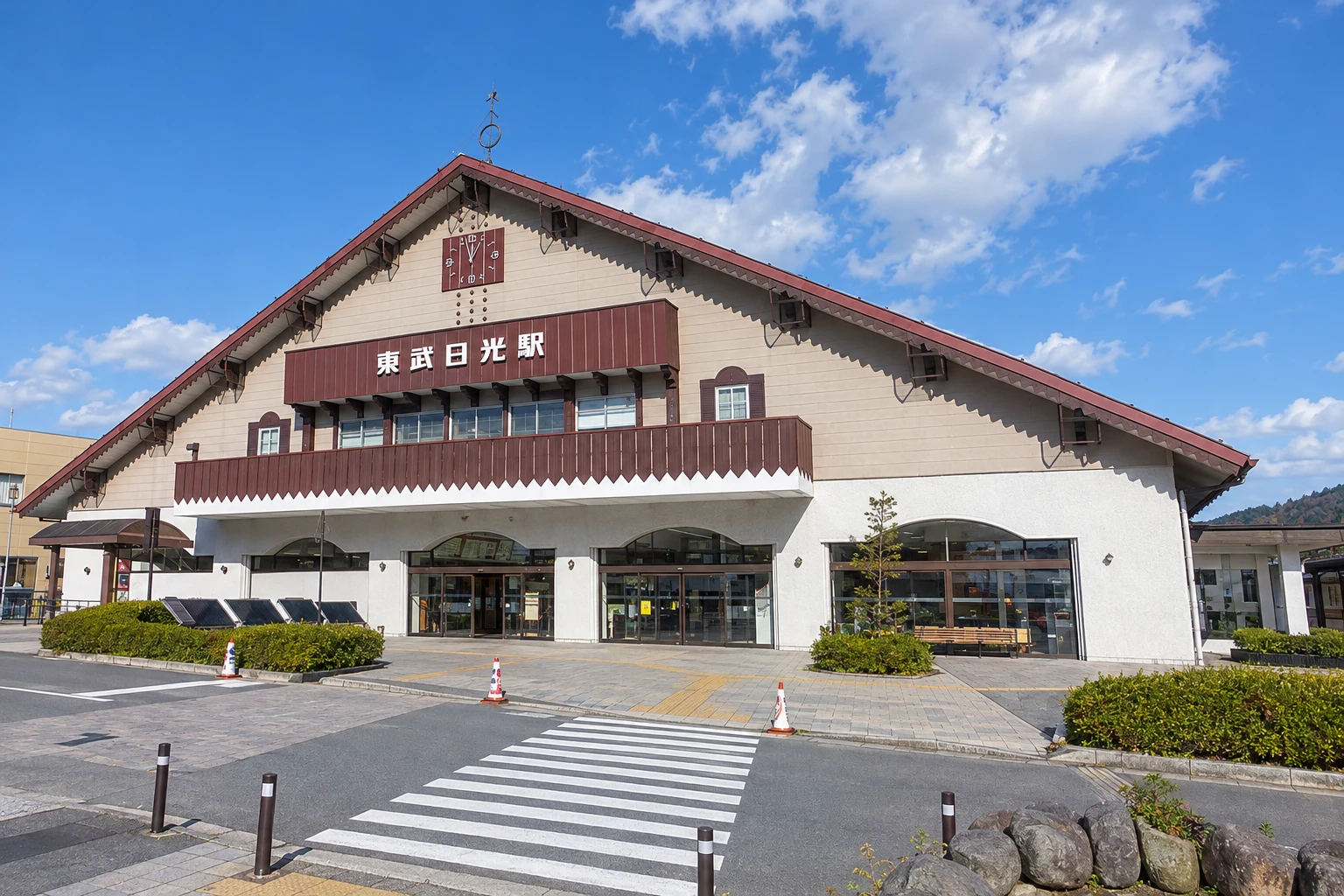
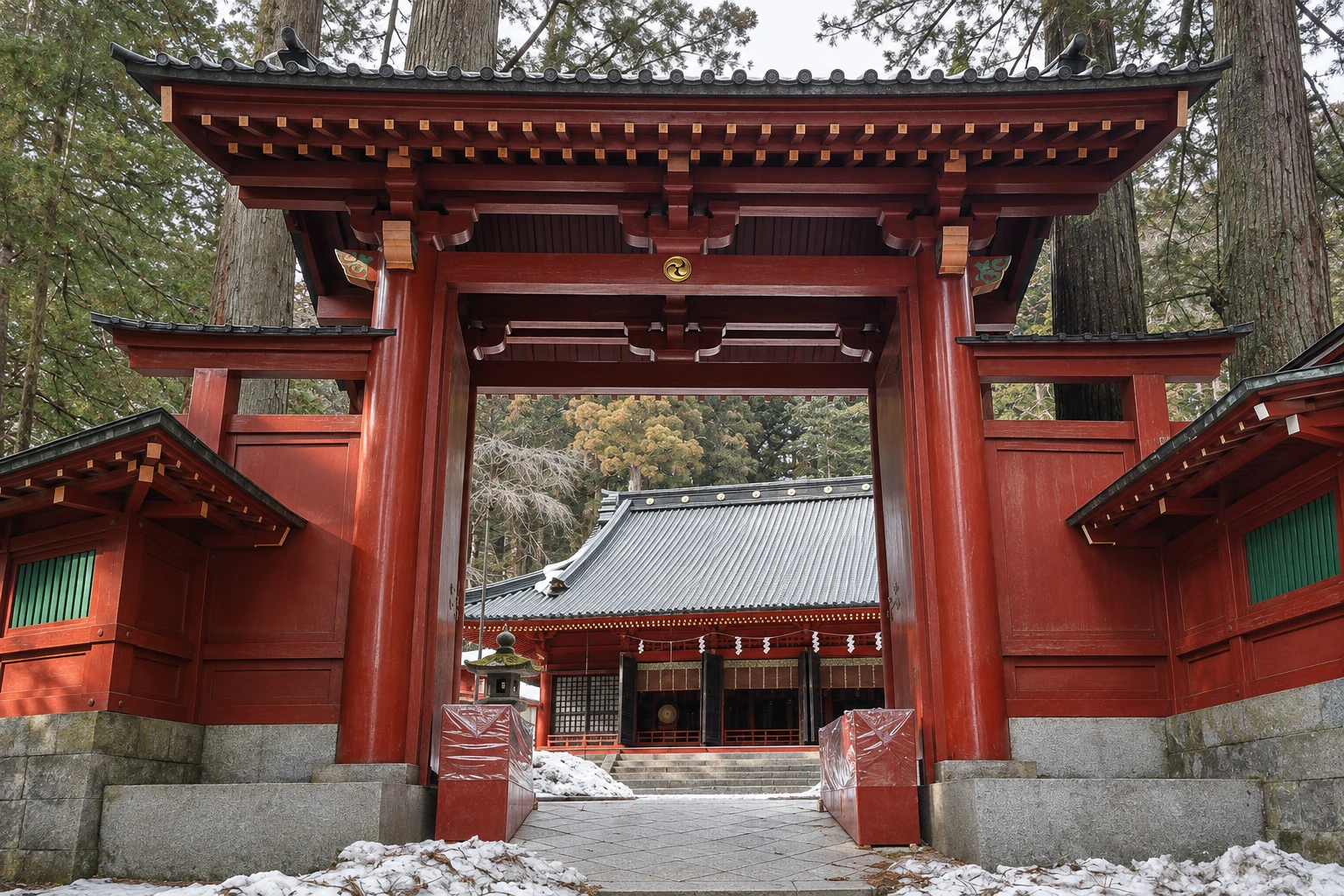
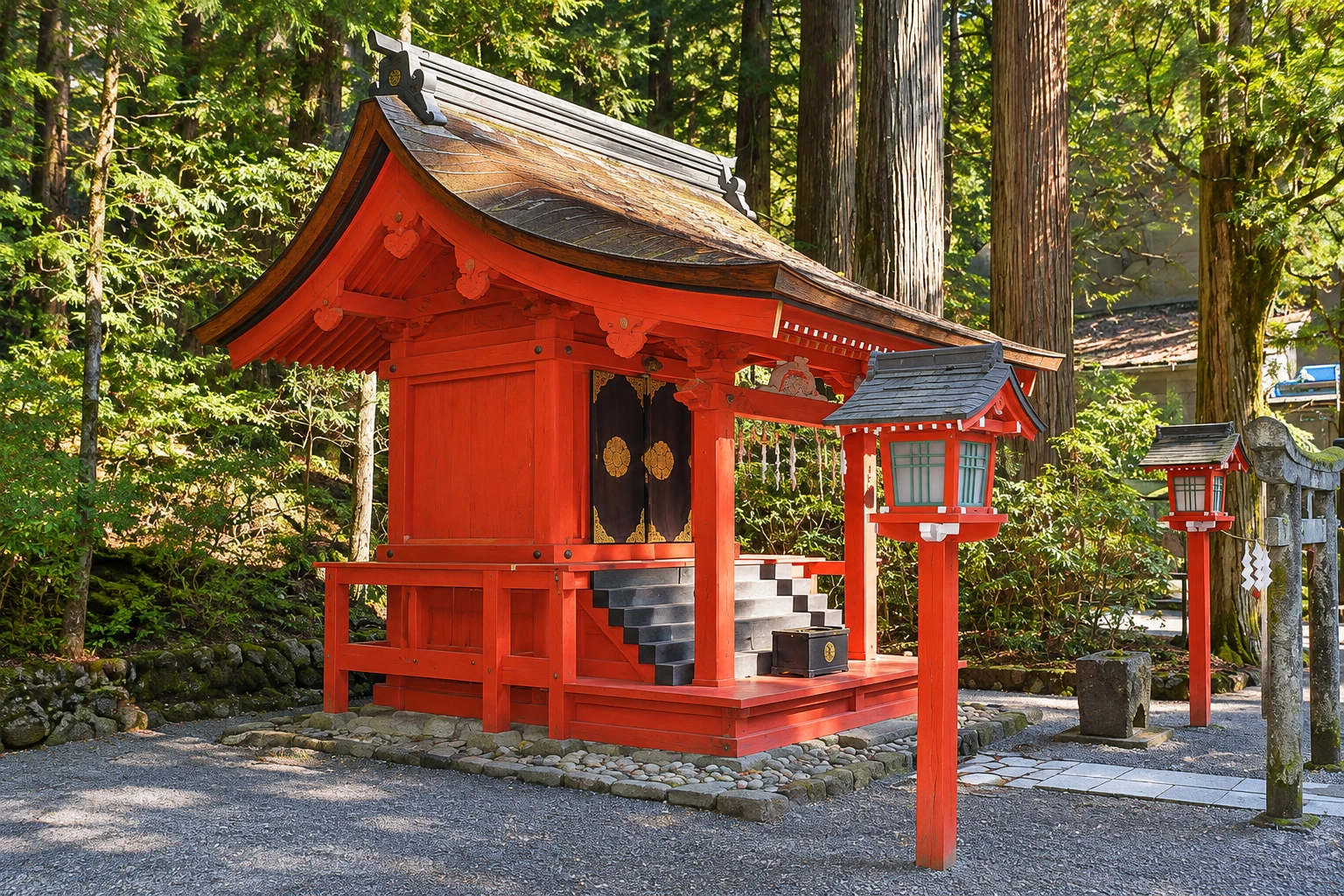
Futarasan Shrine in pictures
These pictures are illustrations based on the real place, not photographs. They may differ from the place.
Click the picture to enlarge it.
Discover
About Futarasan Shrine
Futarasan Shrine (Futarasan Jinja) was founded at the end of the 8th century by the monk Shodo and is dedicated to the deities of three mountains of Nikko: Nantai, Nyoho, and Taro. It is older than Toshogu and is part of the UNESCO World Heritage Site. The shrine owns a vast area of the mountains, which includes Kegon Falls and the summit of Mount Nantai.
The shrine has three parts. The main shrine, Hongu, is in the town, between Toshogu and Taiyuin, within a cedar forest; Chugushi sits on the shore of Lake Chuzenji, at the foot of Mount Nantai; and Okumiya is on the mountain summit at 2,486 meters, reachable by a trail open in summer and early autumn.
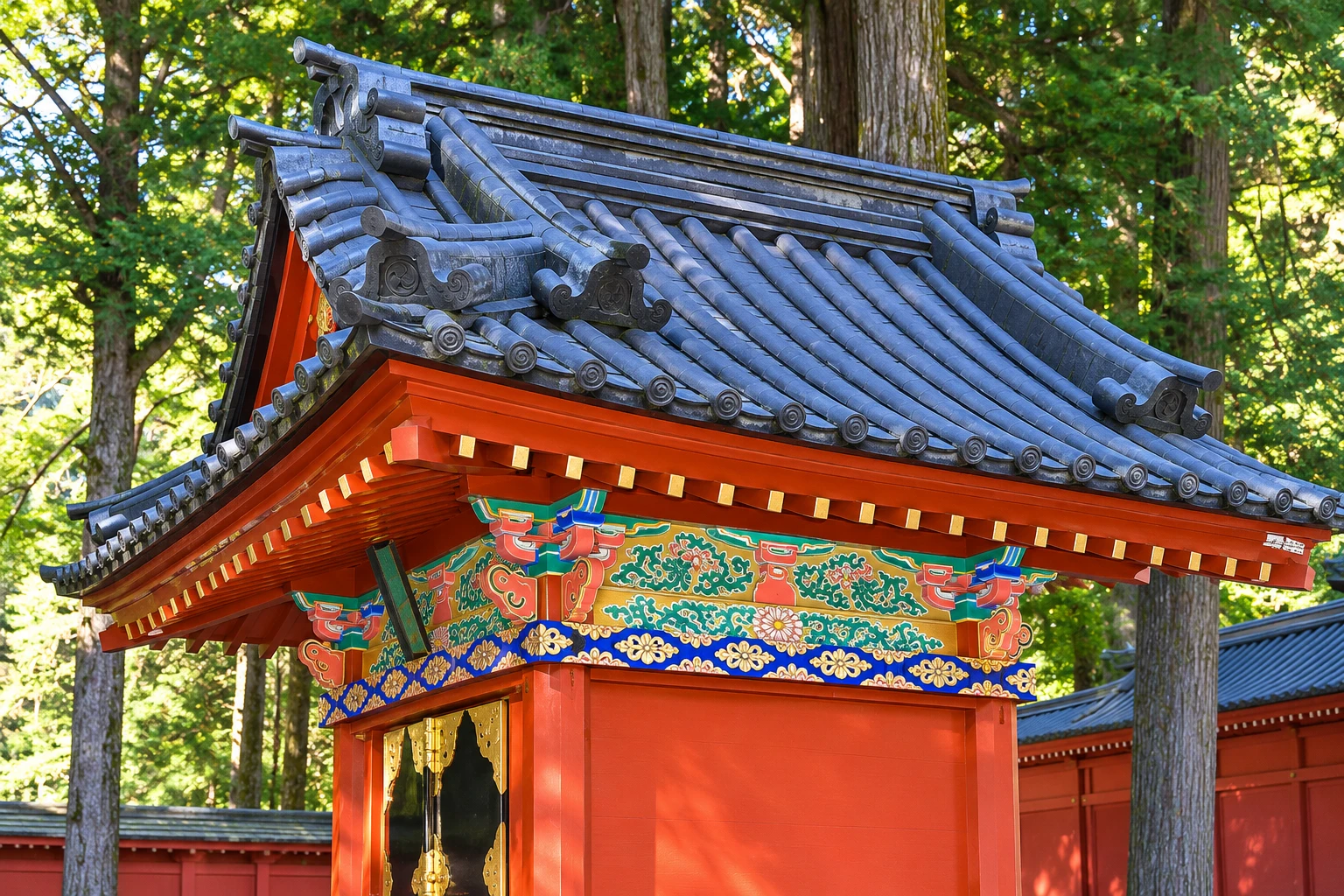
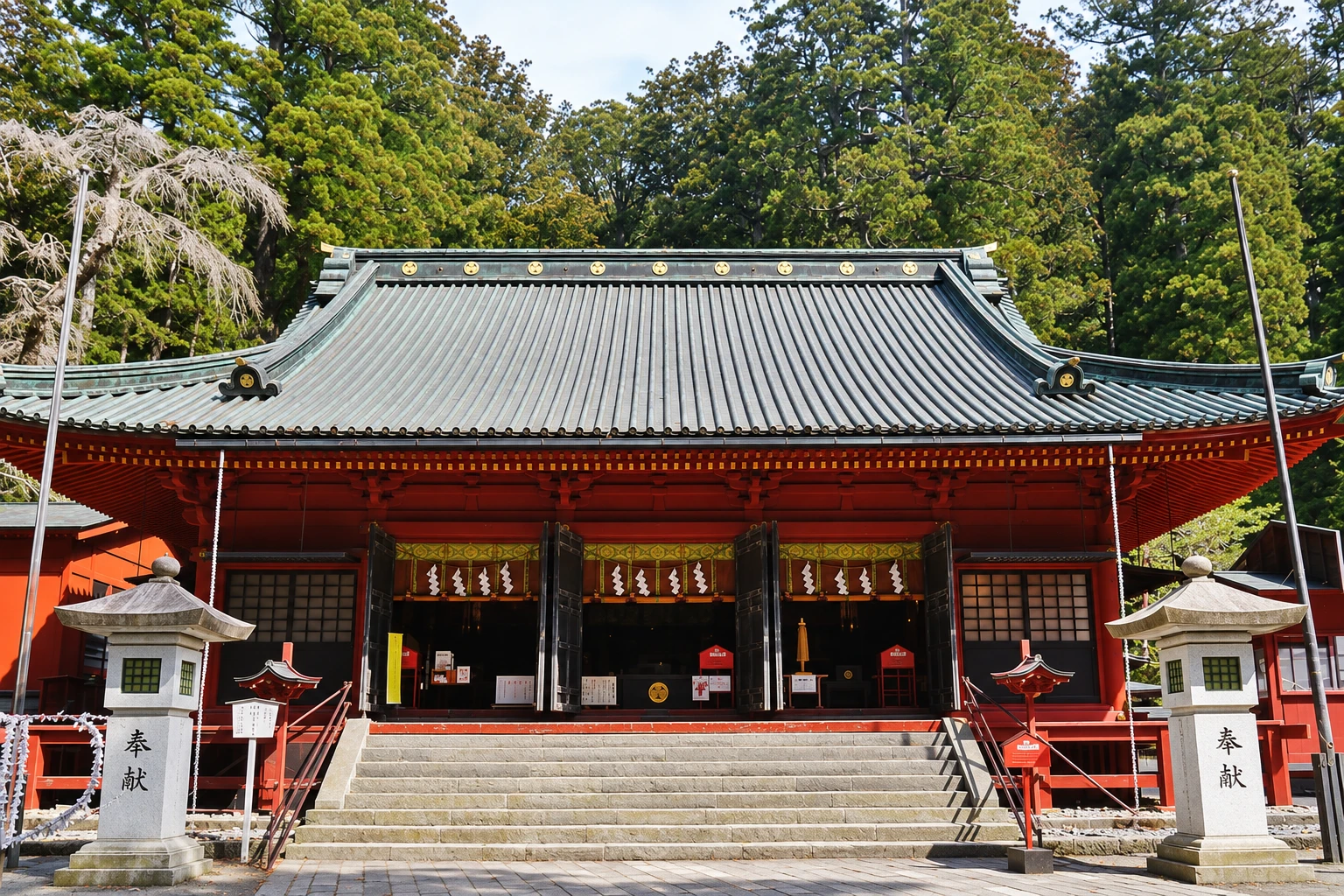
The main shrine, lacquered red, is simpler than Toshogu and has a tree-lined courtyard with sacred trees, such as a pair of cedars joined at the roots, which attracts couples seeking blessings for marriage. A bronze lantern in the courtyard bears sword-cut marks, tied to the legend that at night it turned into a spirit.
The Shinkyo Bridge, at the entrance to Nikko, also belongs to the shrine. At Chugushi, on the lakeshore, a museum houses swords and objects related to mountain worship. In August, pilgrims climb at night to the summit of Nantai to watch the sunrise, an ancient tradition.
Before you go
Practical information
Cidade Turismo reviews its information regularly, but something may have changed. Check with the place before planning your trip.
How much time to set aside
About 20 to 30 minutes to the main shrine; another 30 minutes to Chugushi at the lake.
Best time
In the morning, with light filtering through the cedars. The ascent to the summit of Mount Nantai is generally open only from early May to the end of October: check before you go. In autumn, the Chugushi area turns colorful in October.
How to get there
The main shrine is about a 10-minute walk from Shinkyo Bridge, between Toshogu and Taiyuin. Chugushi sits on the shore of Lake Chuzenji, a few minutes from the Futarasan-jinja Chugushi bus stop.
Tip
Visit the main shrine between Toshogu and Taiyuin on the same route. If you go to Lake Chuzenji, also stop at Chugushi, where the Mount Nantai trail begins.
Official website
Your questions
Frequently asked questions about Futarasan Shrine
What is Futarasan Shrine?
A shrine founded in the 8th century, dedicated to the deities of Nikko’s three mountains, with one main site in the town, another at Lake Chuzenji and another on the summit of Mount Nantai.
Is there an admission fee for Futarasan Shrine?
The main precinct does not charge admission. Some inner areas and the Chugushi museum are paid.
Can you climb to the summit of Mount Nantai?
Yes, via the trail that starts at Chugushi, on the shore of Lake Chuzenji; it is generally open from early May to the end of October. It is a long and steep ascent.
How do I get to Futarasan Shrine?
On foot, about 10 minutes from Shinkyo Bridge, between Toshogu and Taiyuin.
Does Futarasan Shrine own Kegon Falls?
Yes. The shrine’s lands include much of the Nikko mountains, including Kegon Falls and the summit of Mount Nantai.