

 Brazil
 Antarctica
 Argentina
 Bolivia
 Chile
 Colombia
 Ecuador
 Falkland Islands (Malvinas)
 French Guiana
 Guyana
 Paraguay
 Peru
 Suriname
 Uruguay
 Venezuela
 Albania
 Austria
 Belgium
 Croatia
 Denmark
 Finland
 France
 Germany
 Greece
 Hungary
 Iceland
 Ireland
 Italy
 Luxembourg
 Norway
 Poland
 Portugal
 Slovakia
 Slovenia
 Spain
 Sweden
 Switzerland
 the Czech Republic
 the Netherlands
 the United Kingdom
 Turkey
 Bermuda
 Canada
 Greenland
 Mexico
 Saint Pierre and Miquelon
 the United States
 the Dominican Republic
 Egypt
 South Africa
 Australia
 Fiji
 New Zealand
 Papua New Guinea
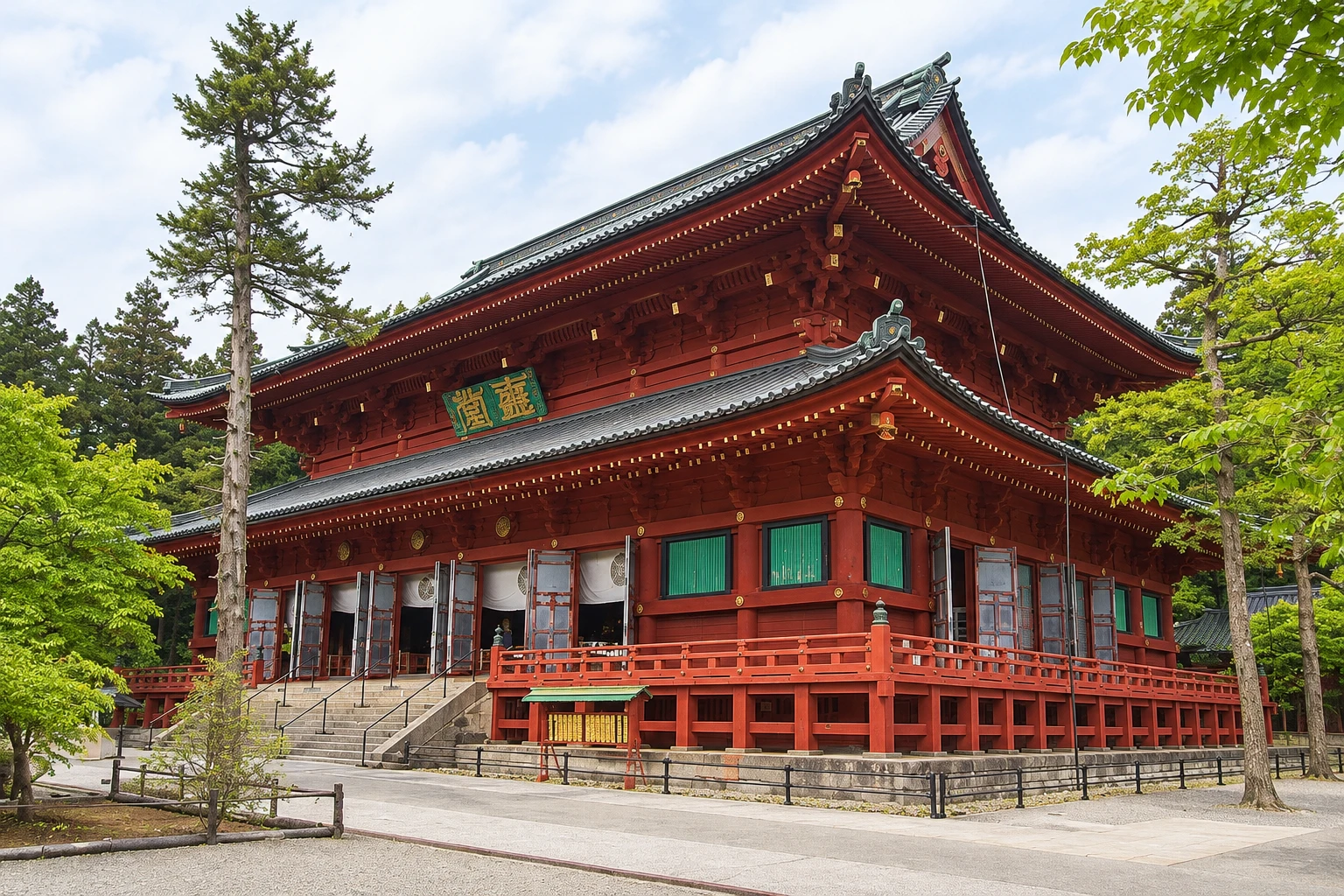
Temple · Nikko, Japan
Rinnō-ji and Taiyū-in
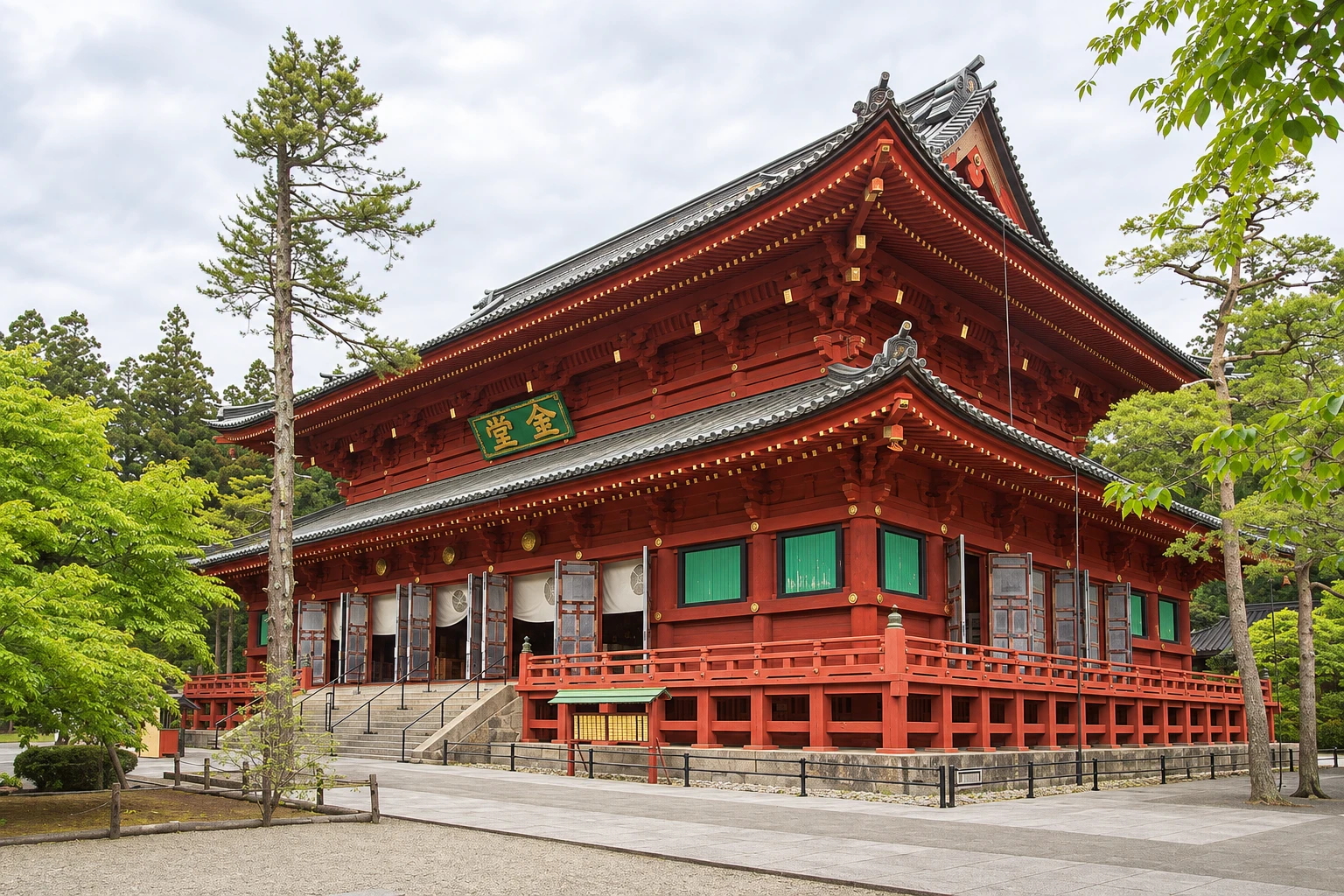
Nikko’s main Buddhist temple, with the Sanbutsudo hall and three large gilded statues, and the Taiyuin, mausoleum of the third Tokugawa shogun; World Heritage site.
Illustrative images. The pictures in this guide are illustrations based on the real place, not photographs, and may differ from it.

A look at the place
Rinnō-ji and Taiyū-in in pictures
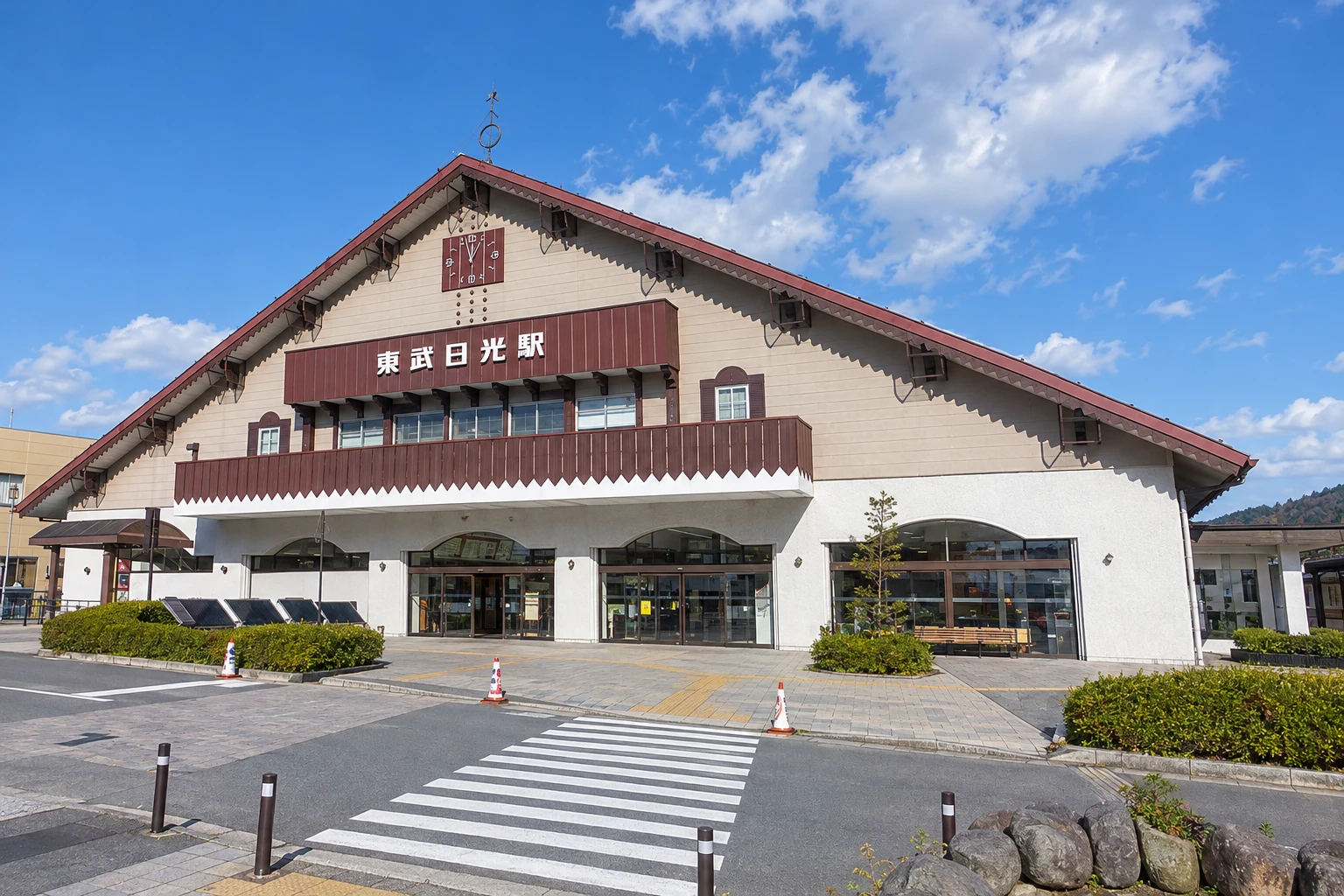
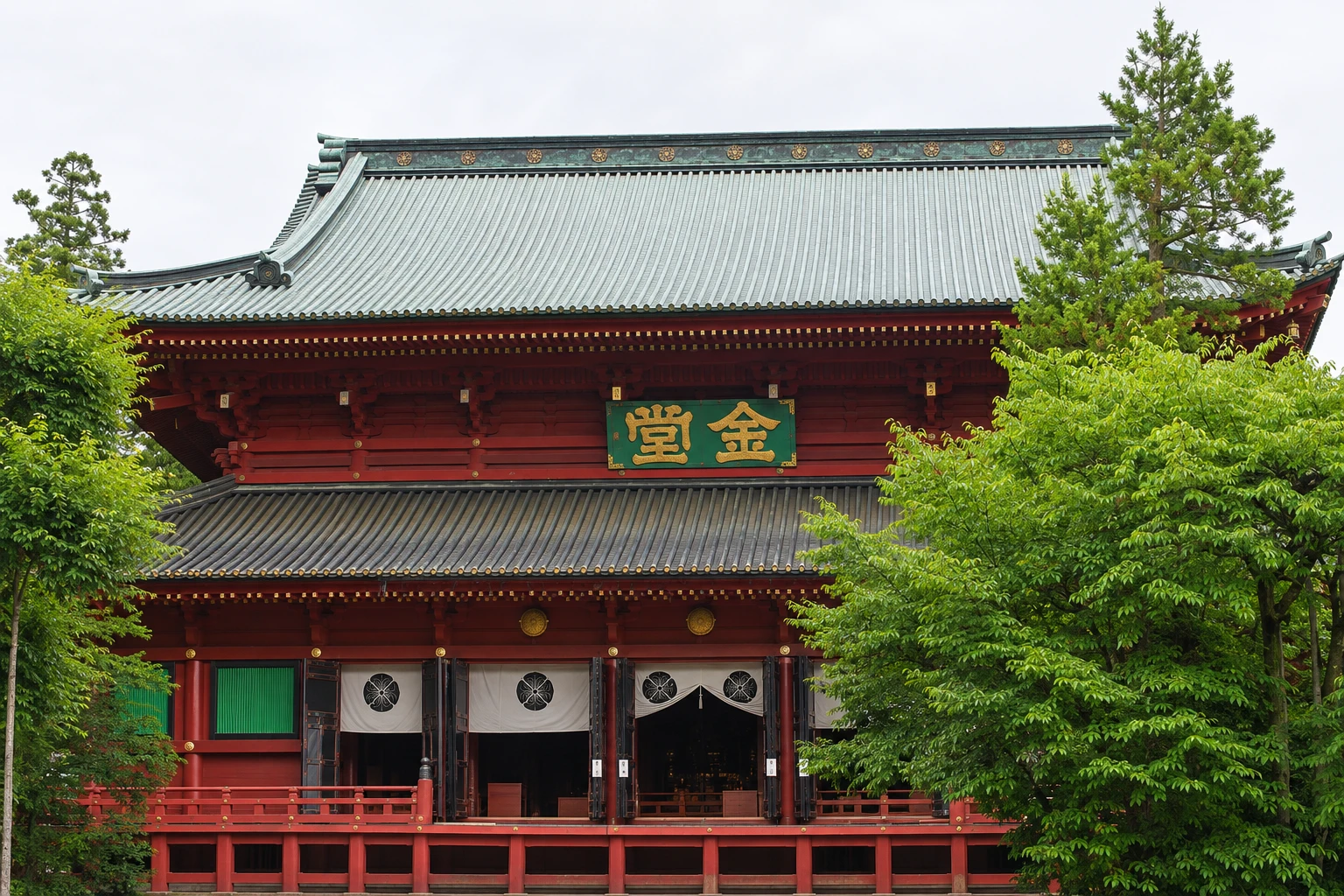
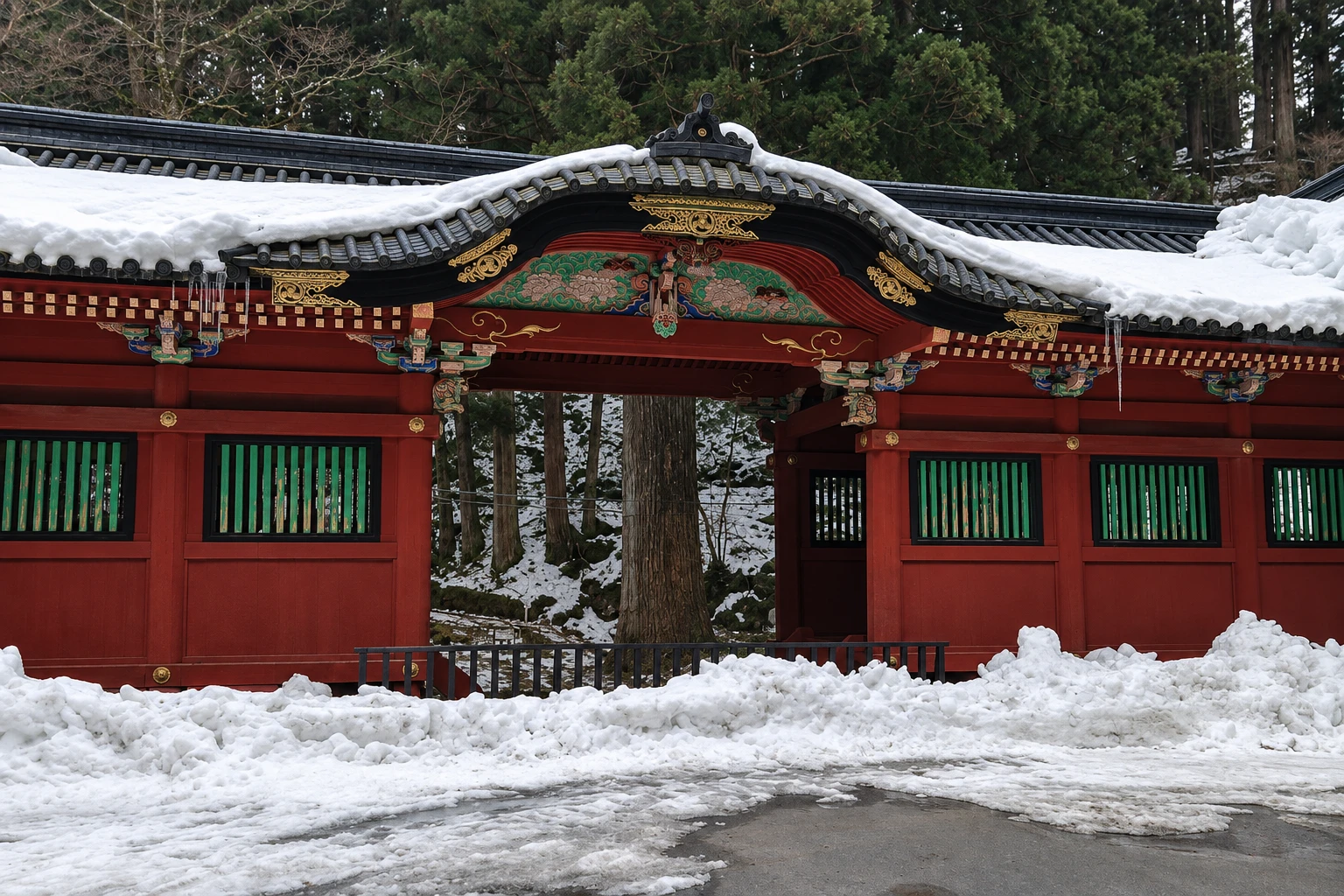
These pictures are illustrations based on the real place, not photographs. They may differ from the place.
Click the picture to enlarge it.
Discover
About Rinnō-ji and Taiyū-in
Rinno-ji is the most important Buddhist temple in Nikko, of the Tendai school. Its origins go back to the monk Shodo, who founded the first temple in the region in the 8th century. Over the centuries the temple administered Nikko’s shrines and, in the Edo period, was led by a prince of the imperial family. It is part of the UNESCO World Heritage.
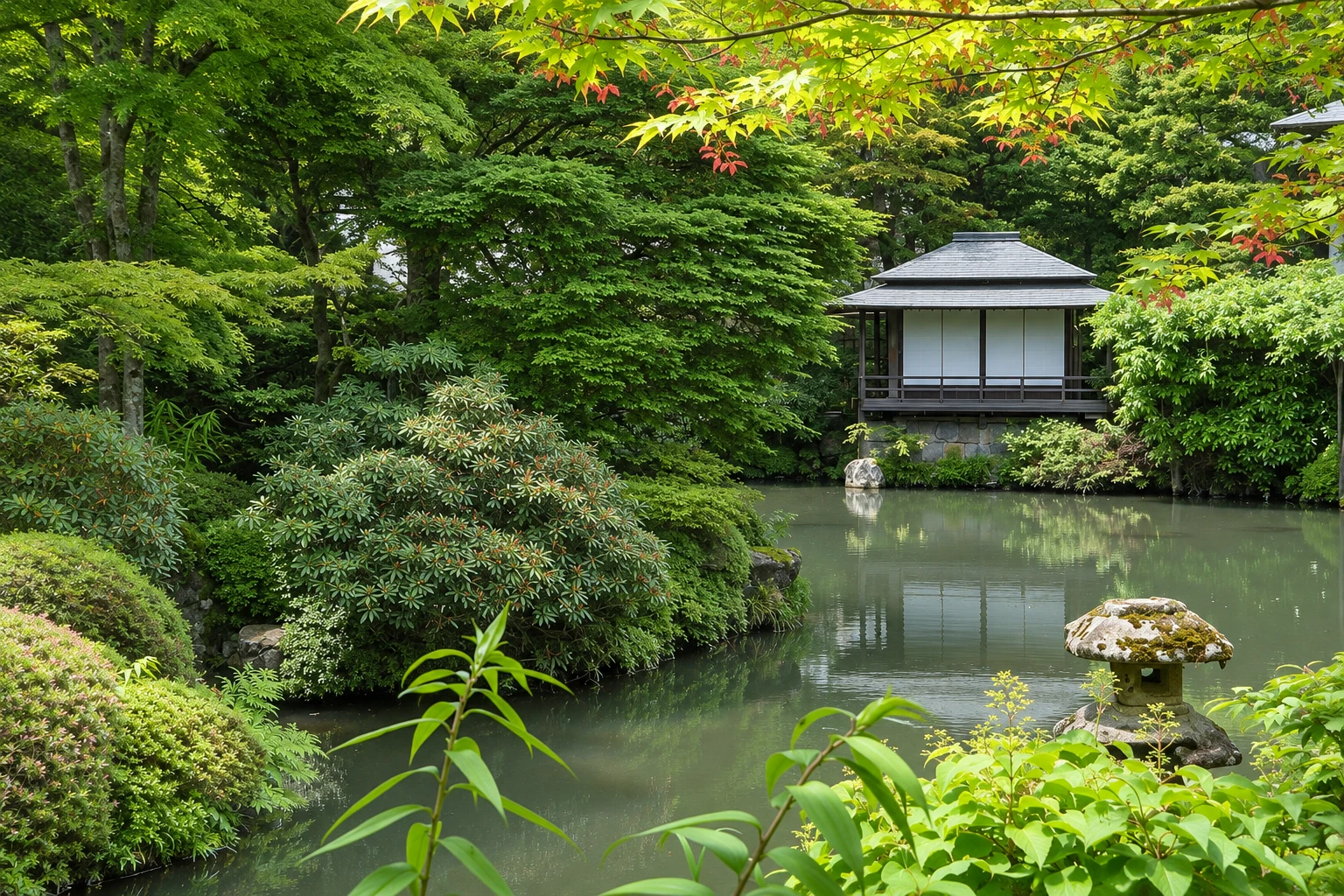
The main building is the Sanbutsudo, the Hall of the Three Buddhas, the largest wooden building in Nikko. It houses three large gilded statues, about 8 meters tall: Amida, the thousand-armed Kannon, and the horse-headed Kannon, representing the deities of Nikko’s three sacred mountains. Beside it lies the Shoyoen garden, with a pond, stones and maples that turn red in autumn.
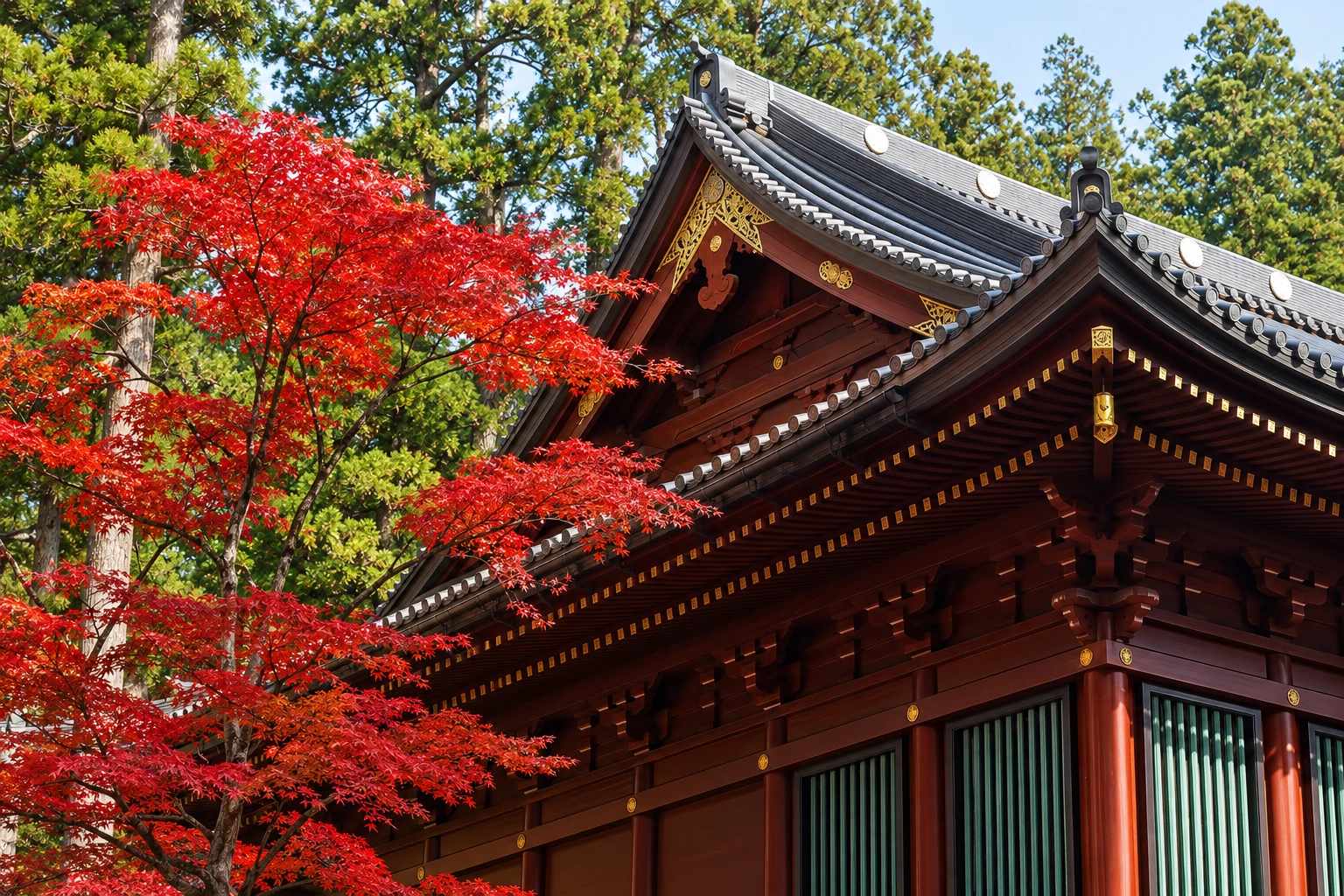
The Taiyuin, a little higher up on the same hillside, is the mausoleum of Tokugawa Iemitsu, the third shogun and grandson of Ieyasu. It also belongs to Rinno-ji and was built in 1653. Iemitsu requested that his tomb not surpass his grandfather’s, and the complex is smaller and more somber than Toshogu, with predominance of black and gold, but equally rich carvings.
The approach to Taiyuin climbs through a sequence of gates, each on a different level of the slope, guarded by statues of wind and thunder deities and Buddhist guardians. The surrounding cedar forest makes the place quieter and damper. Many visitors find Taiyuin more tranquil than Toshogu, which is only a few minutes’ walk away.
Before you go
Practical information
Cidade Turismo reviews its information regularly, but something may have changed. Check with the place before planning your trip.
How much time to set aside
About 30 minutes for Sanbutsudo and the garden; 45 minutes to 1 hour for Taiyuin.
Best time
In the morning, when Taiyuin is usually quieter. The Shoyoen garden typically turns red from late October to early November. Temple hours change with the season: confirm before you go.
How to get there
Sanbutsudo is about a 5-minute walk from the Shinkyo Bridge and the Shinkyo bus stop. Taiyuin is about a 10-minute walk from there, past Futarasan Shrine.
Tip
Visit Taiyuin after Toshogu and compare the two mausoleums. There is a combined ticket for Sanbutsudo and Taiyuin.
Official website
Your questions
Frequently asked questions about Rinnō-ji and Taiyū-in
What is Rinno-ji’s Sanbutsudo?
It is the Hall of the Three Buddhas, the largest wooden building in Nikko, housing three gilded statues about 8 meters tall.
What is Taiyuin?
It is the mausoleum of Tokugawa Iemitsu, the third shogun and Ieyasu’s grandson, built in 1653. It is smaller and darker than Toshogu.
Is it worth visiting Taiyuin in addition to Toshogu?
Yes, if you have time. It is quieter, only a few minutes on foot, and has rich black-and-gold carvings.
Is there an admission fee for Rinno-ji?
Yes. The Sanbutsudo, the Shoyoen garden and Taiyuin have paid entry, with a combined-ticket option.
How do I get to Rinno-ji?
On foot, about 5 minutes from Shinkyo Bridge and the nearby bus stop of the same name.