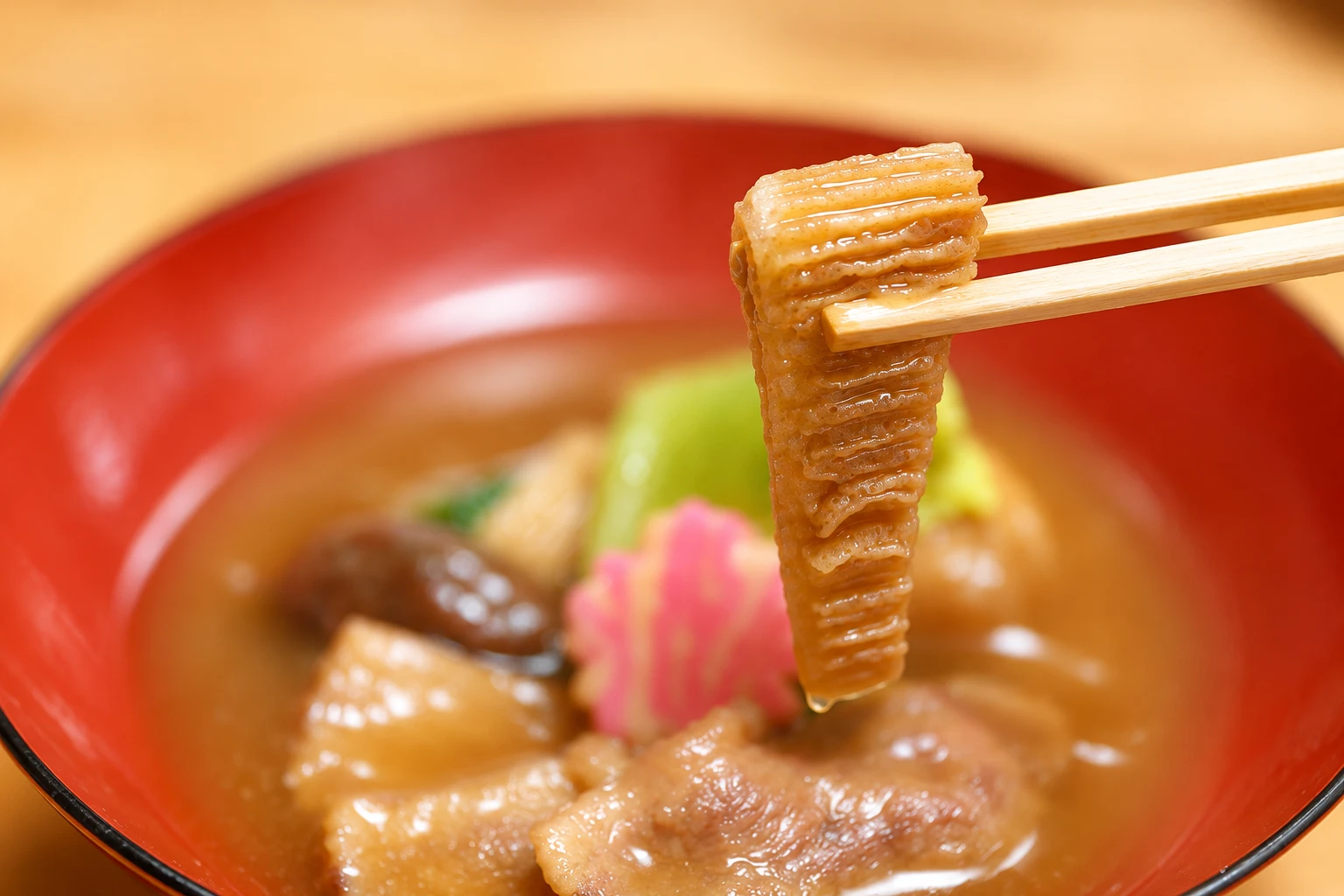
Jibuni
Duck dusted in flour and cooked with sudare-fu (wheat gluten), vegetables and mushrooms in a slightly thickened shoyu broth, served with wasabi. A dish of Kaga cuisine, traditional in Kanazawa.
Antarctica
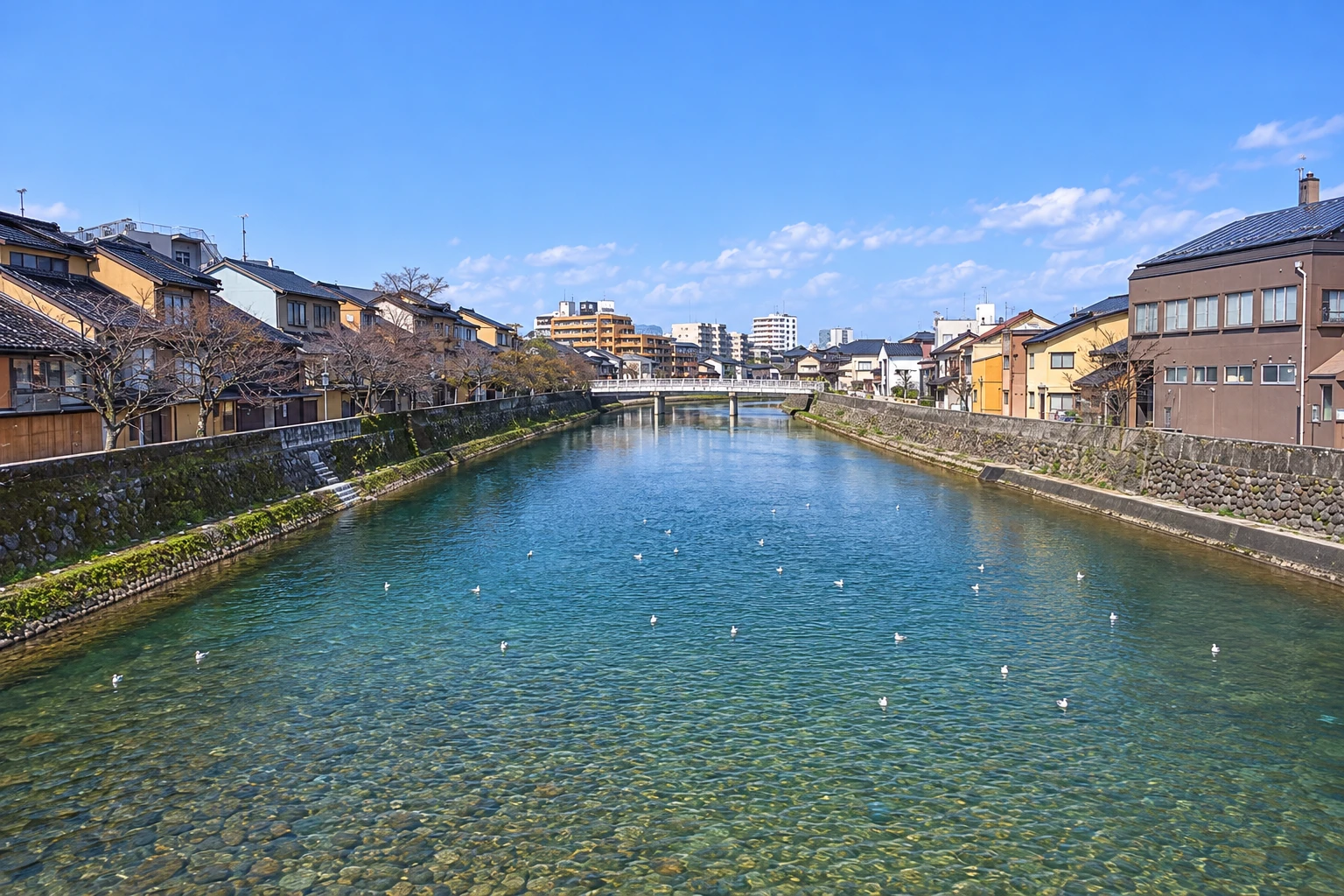
In the photo: Asano River in Kanazawa.
Illustrative images. The pictures in this guide are illustrations based on the real place, not photographs, and may differ from it.
The city
Kanazawa, capital of Ishikawa, was the seat of the Maeda clan and preserves Edo-period neighborhoods. Kenroku-en garden, beside the castle, is one of Japan’s most famous; Higashi Chaya has geisha tea houses; Nagamachi has the samurai streets. Omicho Market sells fish and seafood from the Sea of Japan, and the 21st Century Museum shows contemporary art. The city is a starting point for Shirakawa-go.
There's no accommodation in the guide yet in Kanazawa.
Tem hotel, pousada ou casa de temporada aqui? Cadastre a suaThere are no restaurants in the guide yet in Kanazawa.
Know a good one? Recommend it to usHotéis e restaurantes da cidade no mapa.
how to get there · how many days · itinerary · questions
Flavors of Japan
The local experience
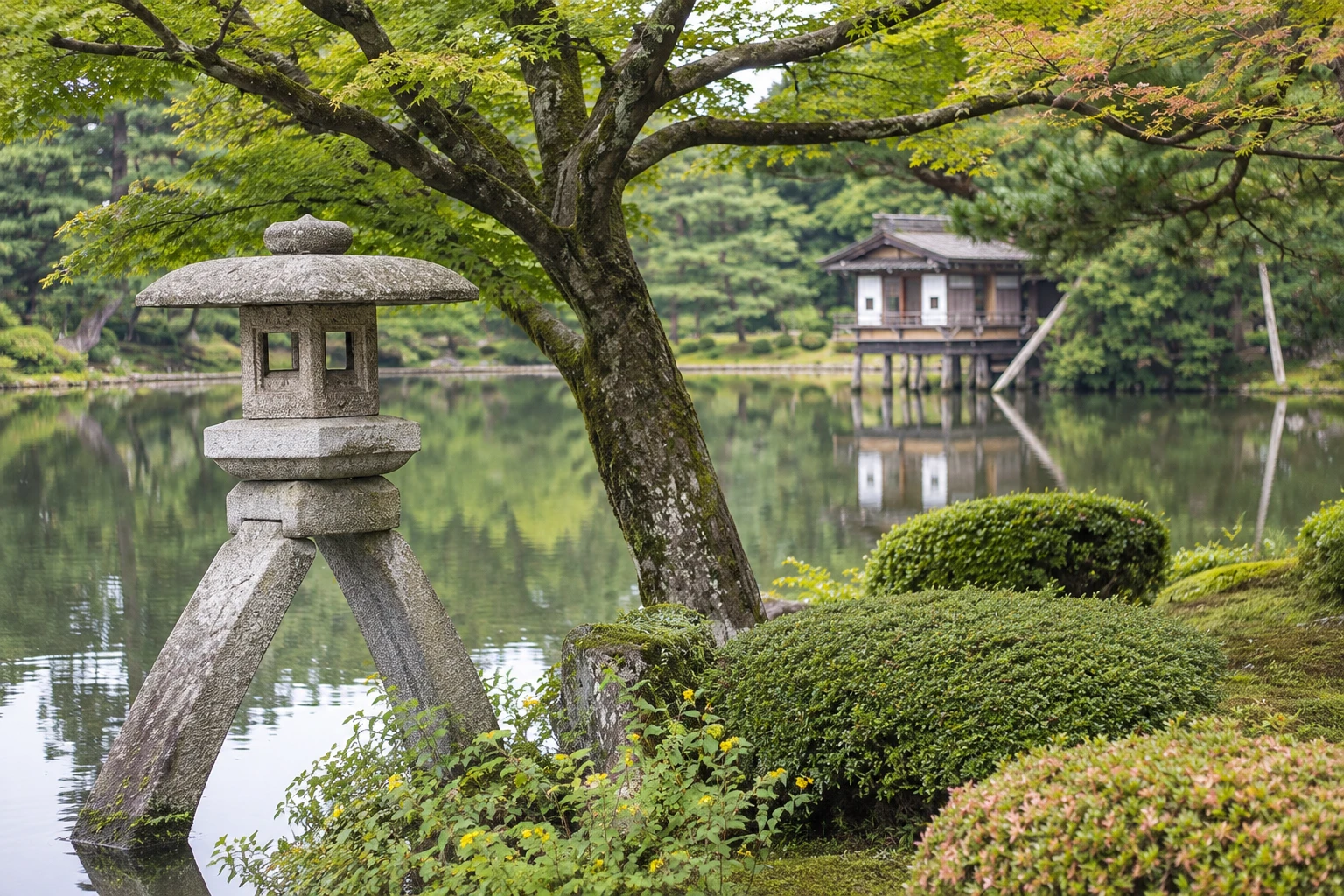
The Maeda clan garden, one of Japan’s three most celebrated gardens, with ponds, pines, the two-legged stone lantern, the country’s oldest water fountain and the winter yukitsuri ropes.
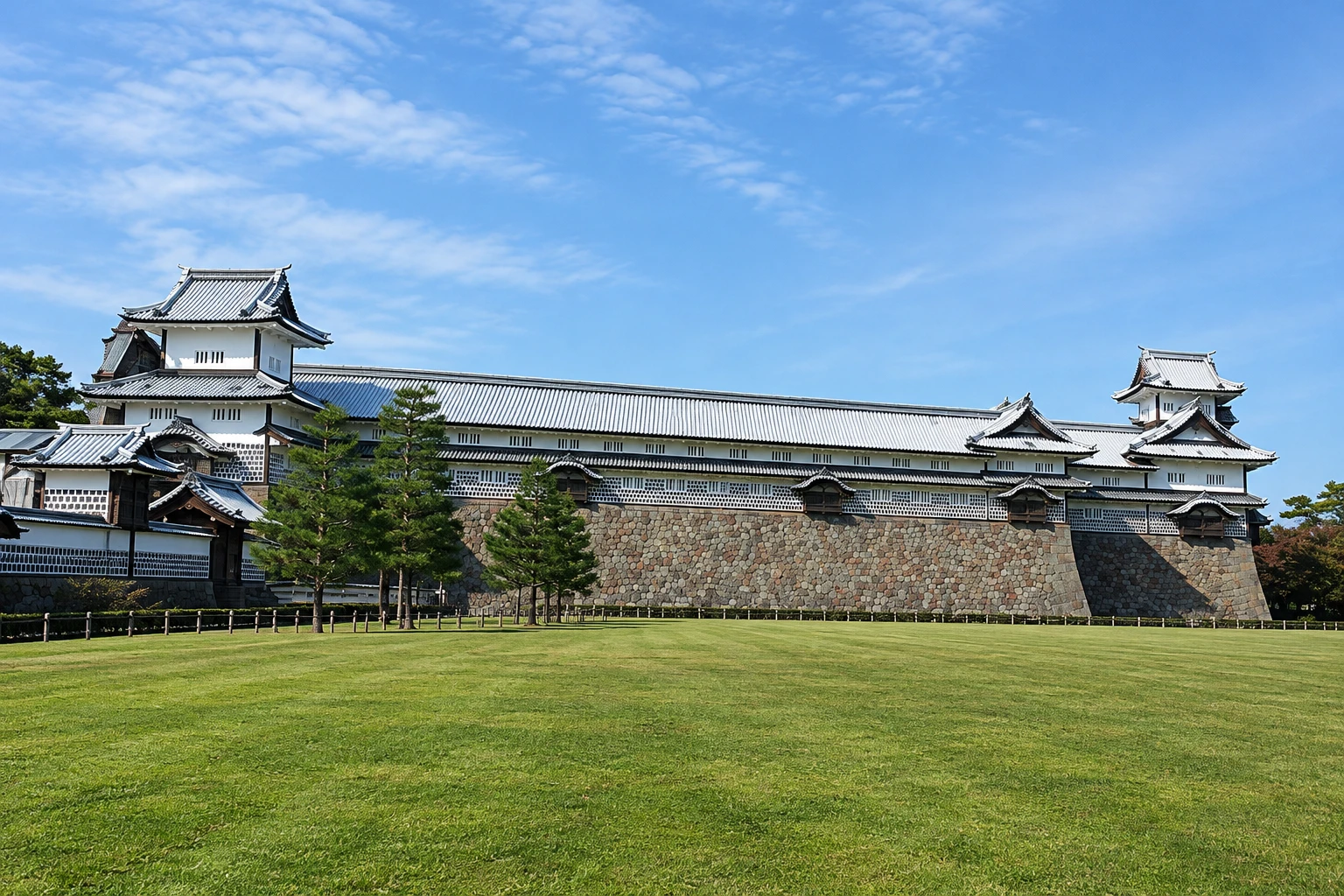
The Maeda clan castle park, with the original Ishikawa Gate, long wooden storehouses rebuilt using traditional techniques, stone walls and gardens.
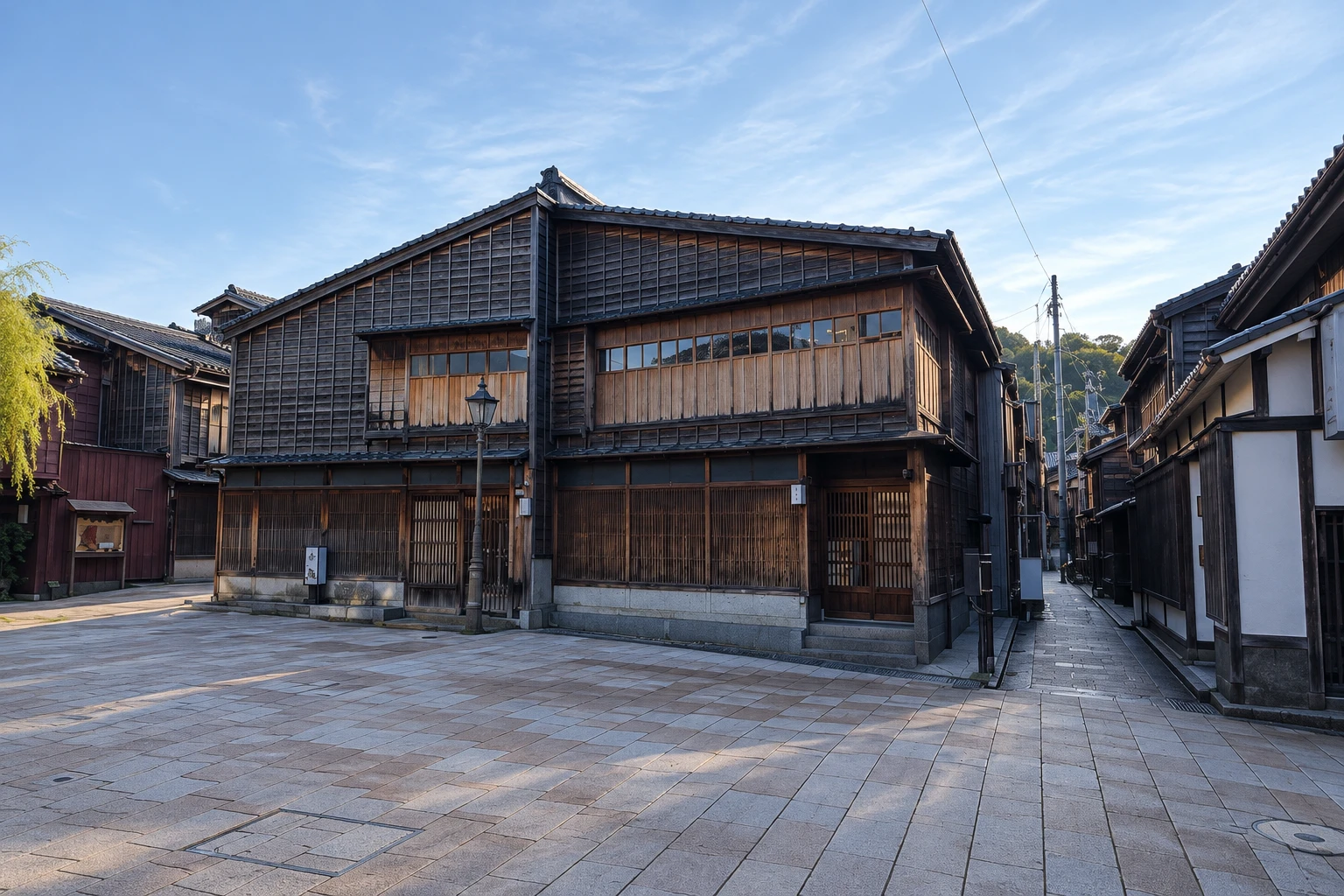
Kanazawa’s geisha teahouse district, with streets of wooden houses featuring thin latticework, the Shima teahouse open to visitors, and gold leaf shops.
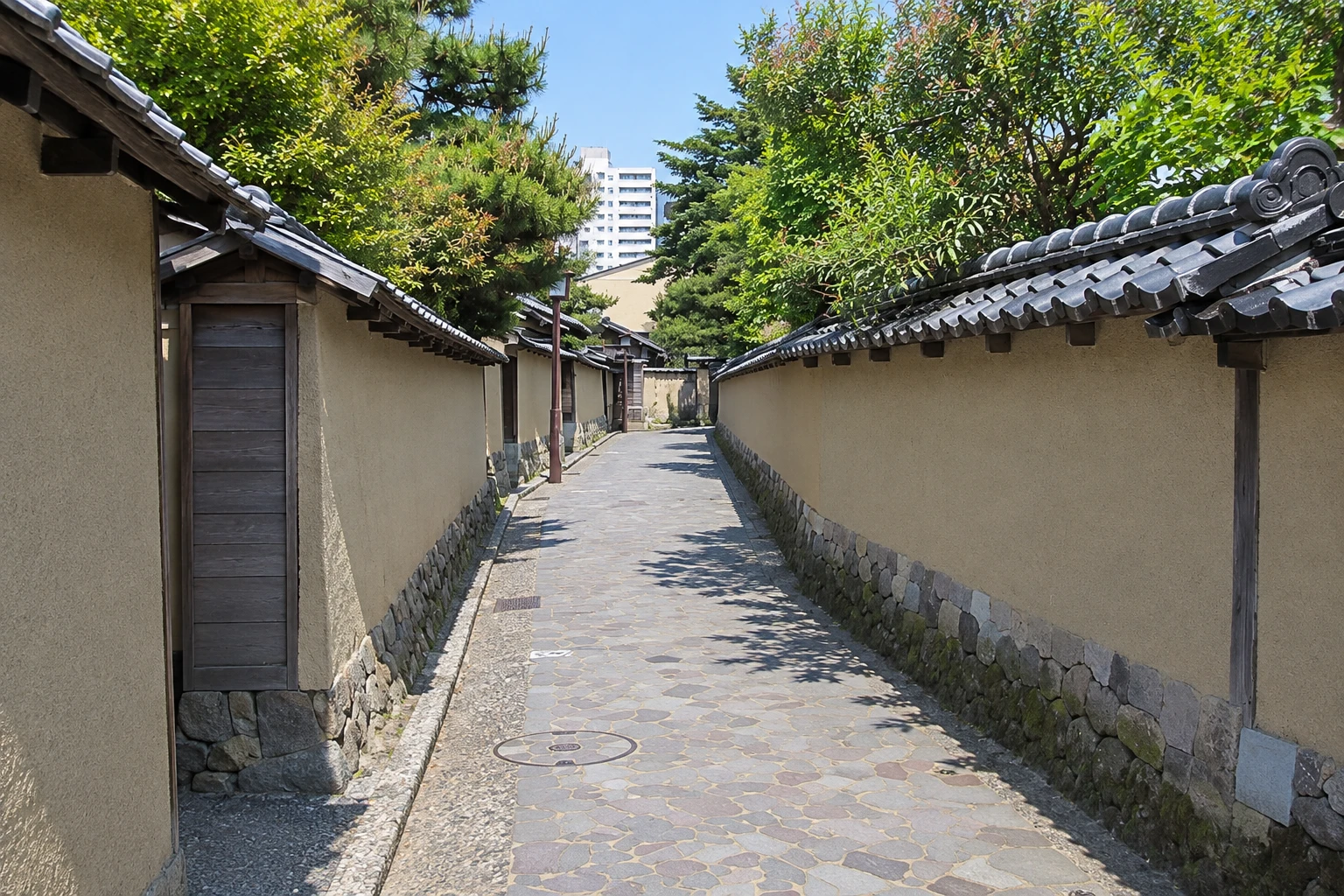
The samurai district of Kanazawa, with earthen walls, canals and the Nomura family residence with its small pond garden.
Before you go
Kanazawa – Japan Capital
Approximate distances. Check flights and bus, train or boat schedules before you travel.
Kanazawa Station, with its wooden drum-shaped gate, receives the Hokuriku Shinkansen coming from Tokyo and Ueno in about 2h30. Travelers from Osaka or Kyoto change trains at Tsuruga. Komatsu Airport is about a 40-minute bus ride away. Highway buses connect the city to Shirakawa-go and Takayama.
The historic center is compact: in two days you can see the garden, the castle park, the geisha and samurai districts, the market and the round glass museum. The third day is for the temple of secret passages, a gold leaf workshop or a visit to the thatched houses of Shirakawa-go.
April, for the cherry blossoms, and November, for autumn leaves and the start of crab season. In winter, from December to March, there is snow, yukitsuri on the pines and straw-covered walls in Nagamachi. Summer is hot and humid.
The seasons shown are the most usual ones; nature doesn't always follow the calendar.
No. The tourist circulator bus and city buses link the station to the historic districts, and the center is walkable. There are shared bicycles.
Suggested itinerary
Built with the places on this page. No rush: it's paced so you have time to see them.
Have breakfast at Omicho Market and cross the castle park to Ishikawa Gate.
Visit Kenroku-en, have tea at the Shiguretei house and continue to the 21st Century Museum.
End in Higashi Chaya at dusk, with the tea houses’ lanterns lit.
Day 1
Arrive early at Kenroku-en and cross the castle park.
Visit the Nomura residence in Nagamachi and the 21st Century Museum.
Day 2
Eat at Omicho Market and head to Higashi Chaya and the Shima tea house.
Take the reserved guided tour of Myoryu-ji and stroll through Nishi Chaya and Teramachi.
Check before you go. Opening hours and days change, and places may close for renovations, holidays or events. This itinerary is a suggestion from Cidade Turismo, not a commitment: plan yours by checking directly with each place you intend to visit.
Before you go
Omicho Market and the castle in the morning, Kenroku-en and the 21st Century Museum in the afternoon, and Higashi Chaya at the end of the day.
Yes. The tourist circulator bus leaves from the station and passes Omicho Market, Higashi Chaya, the castle, Kenroku-en and Nagamachi. One-day passes are available.
Seafood from the Sea of Japan at Omicho Market, such as kaisendon, winter crab and nodoguro; jibuni, a duck stew; and Kanazawa curry.
At the gold leaf and Kutani pottery shops in Higashi Chaya, at shops in the city center, and at the Prefectural Crafts Center near Kenroku-en.
Yes, generally from December to February, with days of rain and snow. The Kenroku-en pines with yukitsuri and the Nagamachi walls covered in straw are classic winter scenes.