

 Brazil
 Antarctica
 Argentina
 Bolivia
 Chile
 Colombia
 Ecuador
 Falkland Islands (Malvinas)
 French Guiana
 Guyana
 Paraguay
 Peru
 Suriname
 Uruguay
 Venezuela
 Austria
 Belgium
 Croatia
 Denmark
 Finland
 France
 Germany
 Greece
 Hungary
 Iceland
 Ireland
 Italy
 Luxembourg
 Norway
 Poland
 Portugal
 Slovakia
 Slovenia
 Spain
 Sweden
 Switzerland
 the Czech Republic
 the Netherlands
 the United Kingdom
 Turkey
 Bermuda
 Canada
 Greenland
 Mexico
 Saint Pierre and Miquelon
 the United States
 the Dominican Republic
 Egypt
 South Africa
 Australia
 Fiji
 New Zealand
 Papua New Guinea
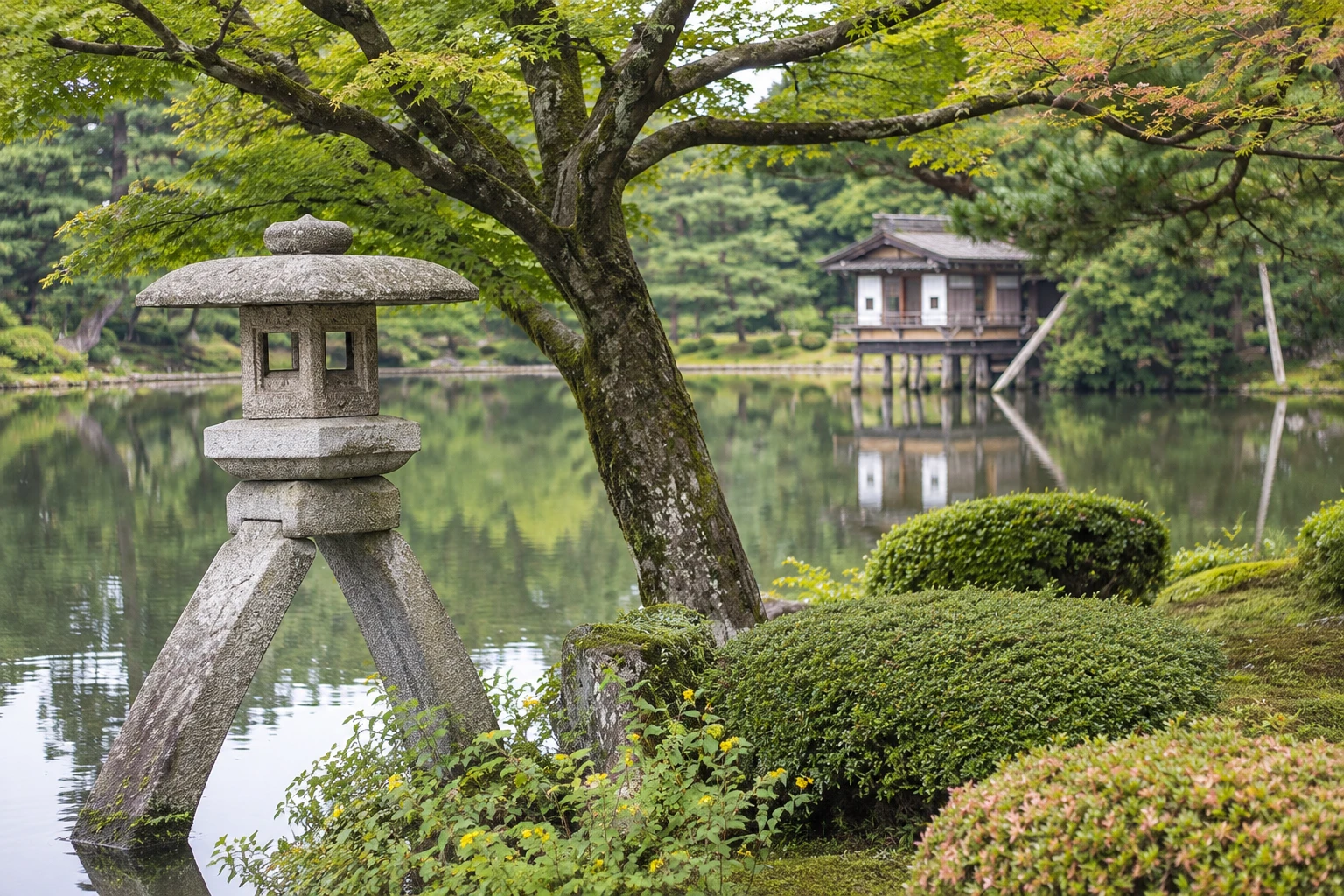
Garden · Kanazawa, Japan
Kenroku-en Garden
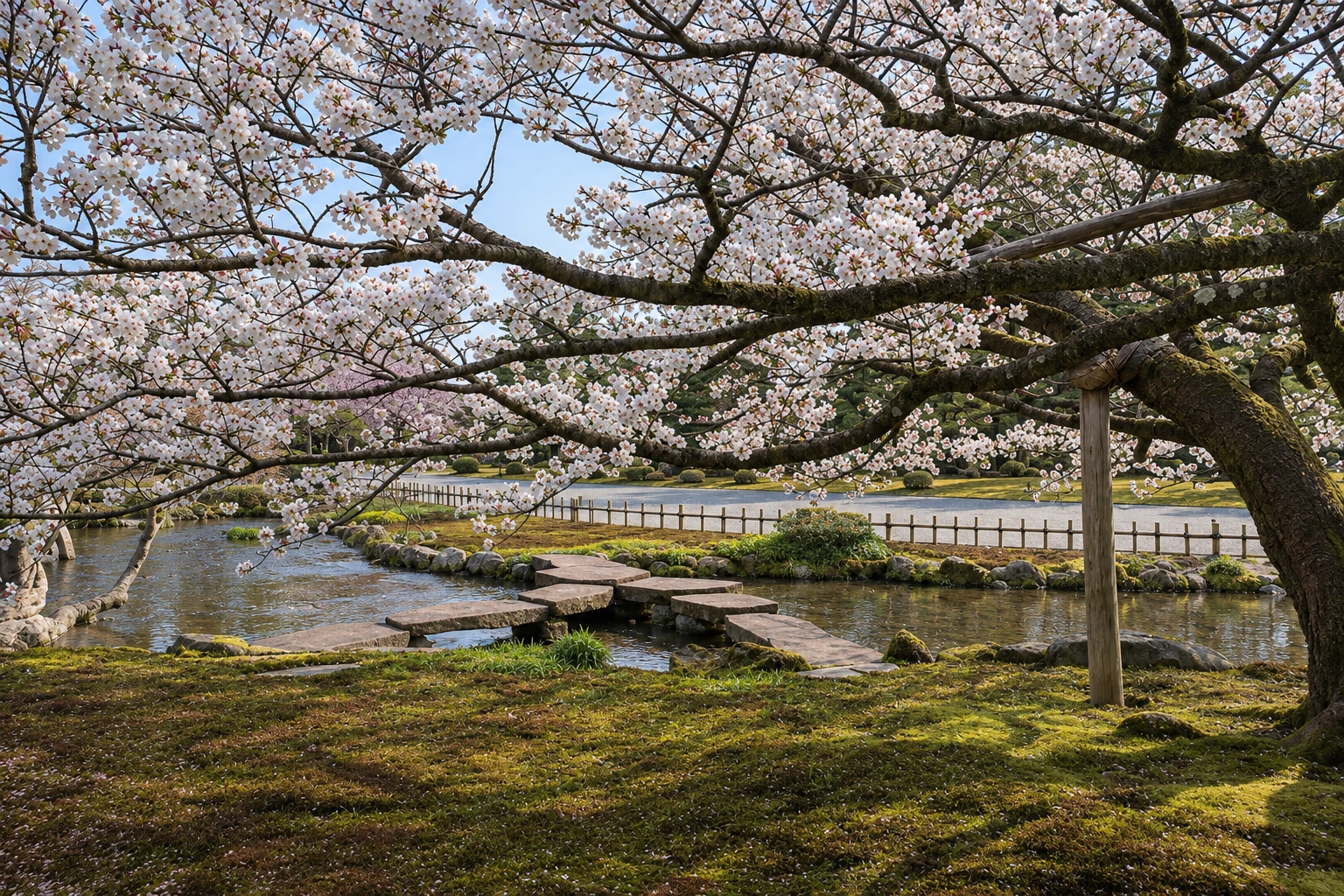
The Maeda clan garden, one of Japan’s three most celebrated gardens, with ponds, pines, the two-legged stone lantern, the country’s oldest water fountain and the winter yukitsuri ropes.
Illustrative images. The pictures in this guide are illustrations based on the real place, not photographs, and may differ from it.

A look at the place
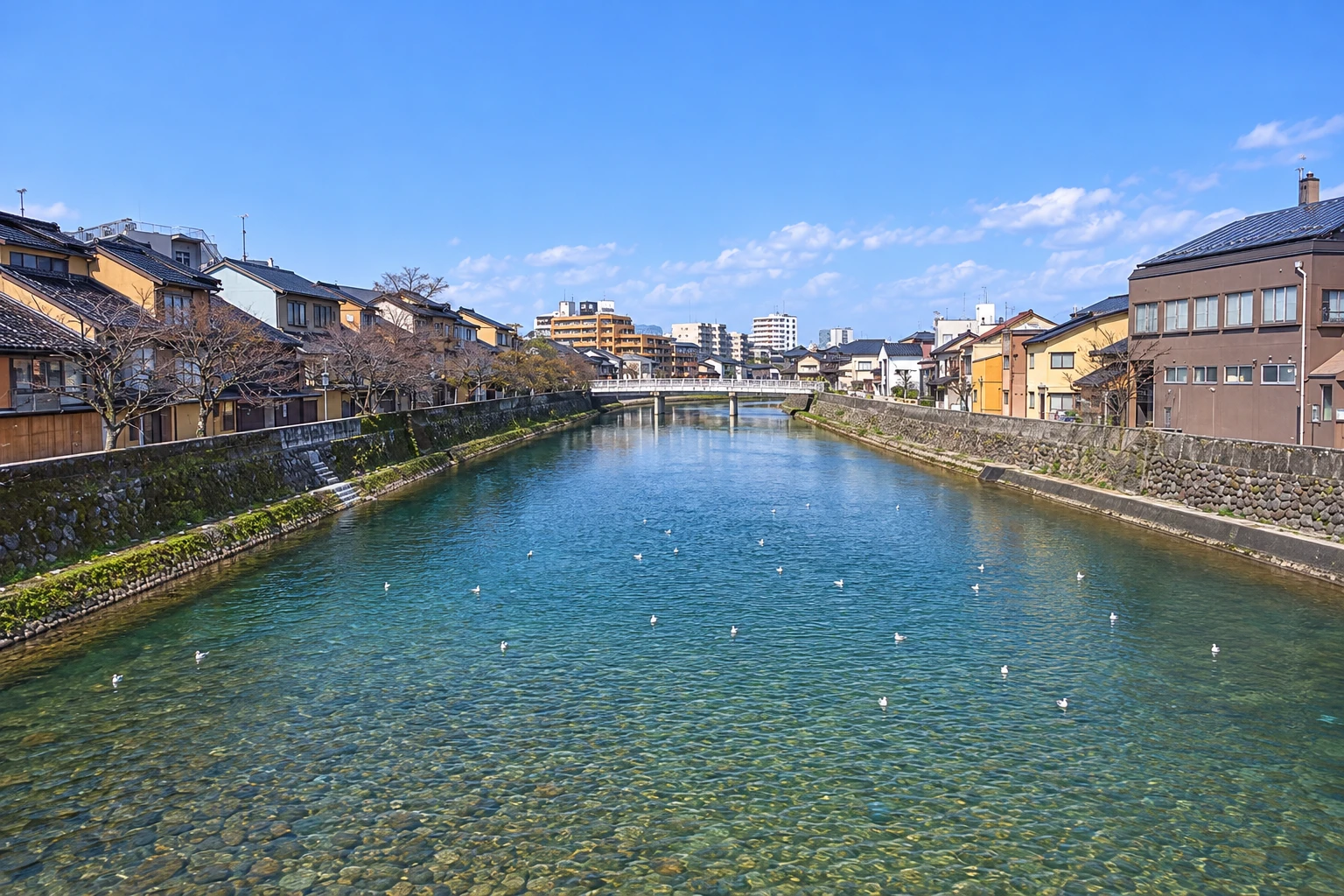
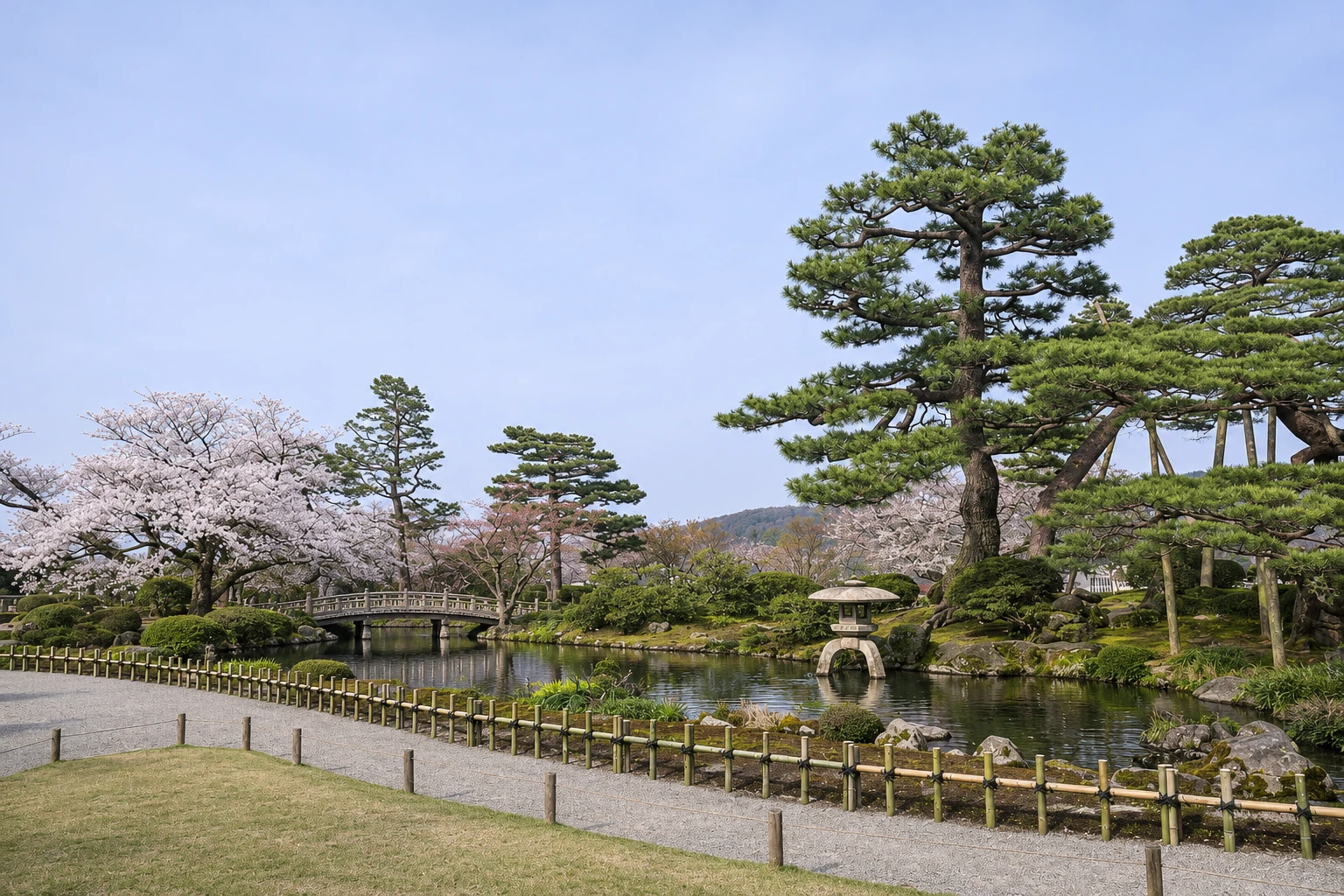
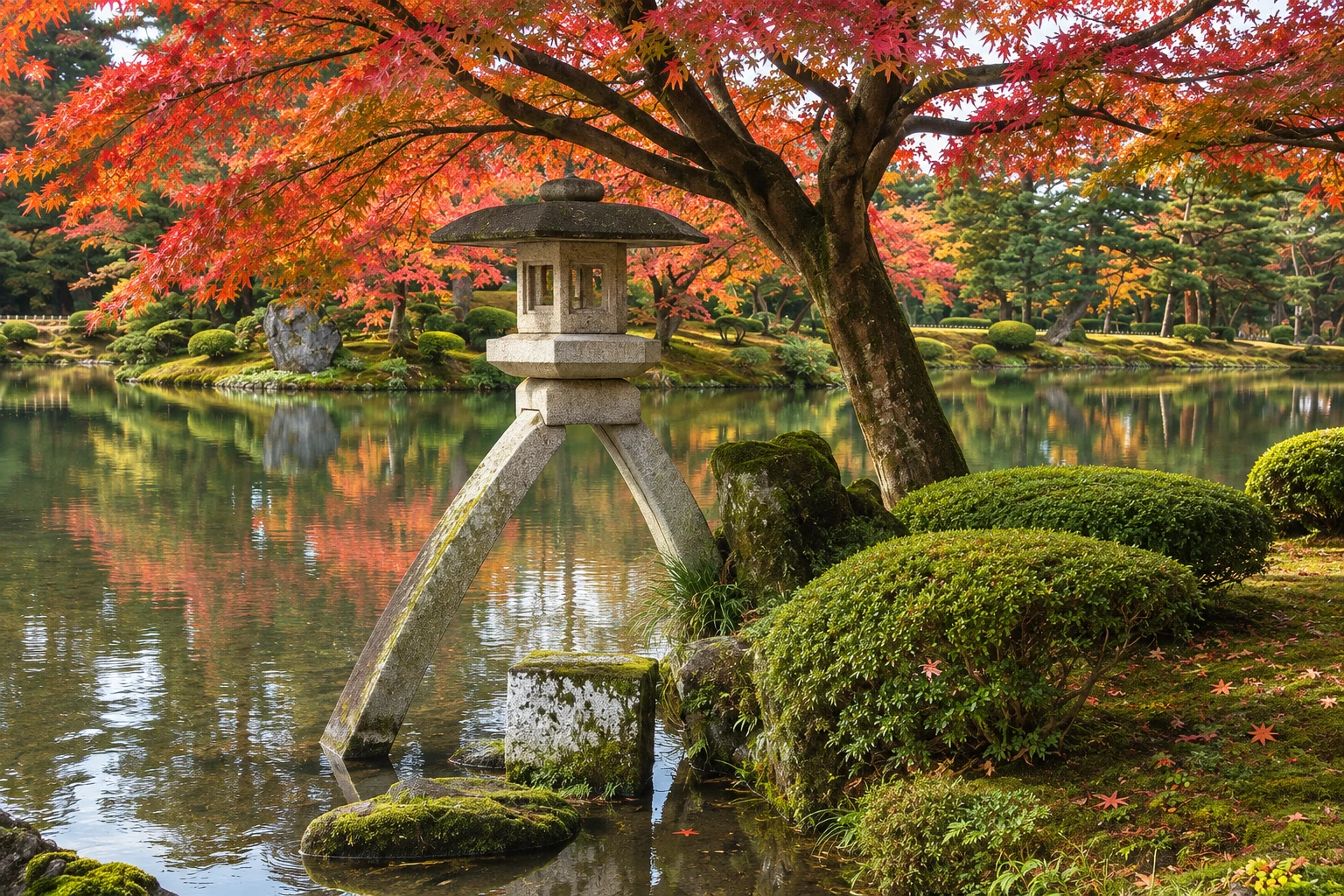
Kenroku-en Garden in pictures
These pictures are illustrations based on the real place, not photographs. They may differ from the place.
Click the picture to enlarge it.
Discover
About Kenroku-en Garden
Kenroku-en is the former outer garden of Kanazawa Castle, developed by the Maeda lords over nearly two centuries from the 17th century onward. It opened to the public in 1874 and is considered one of Japan’s three most celebrated gardens, along with Kairaku-en in Mito and Koraku-en in Okayama. It covers about 11 hectares in the city center.
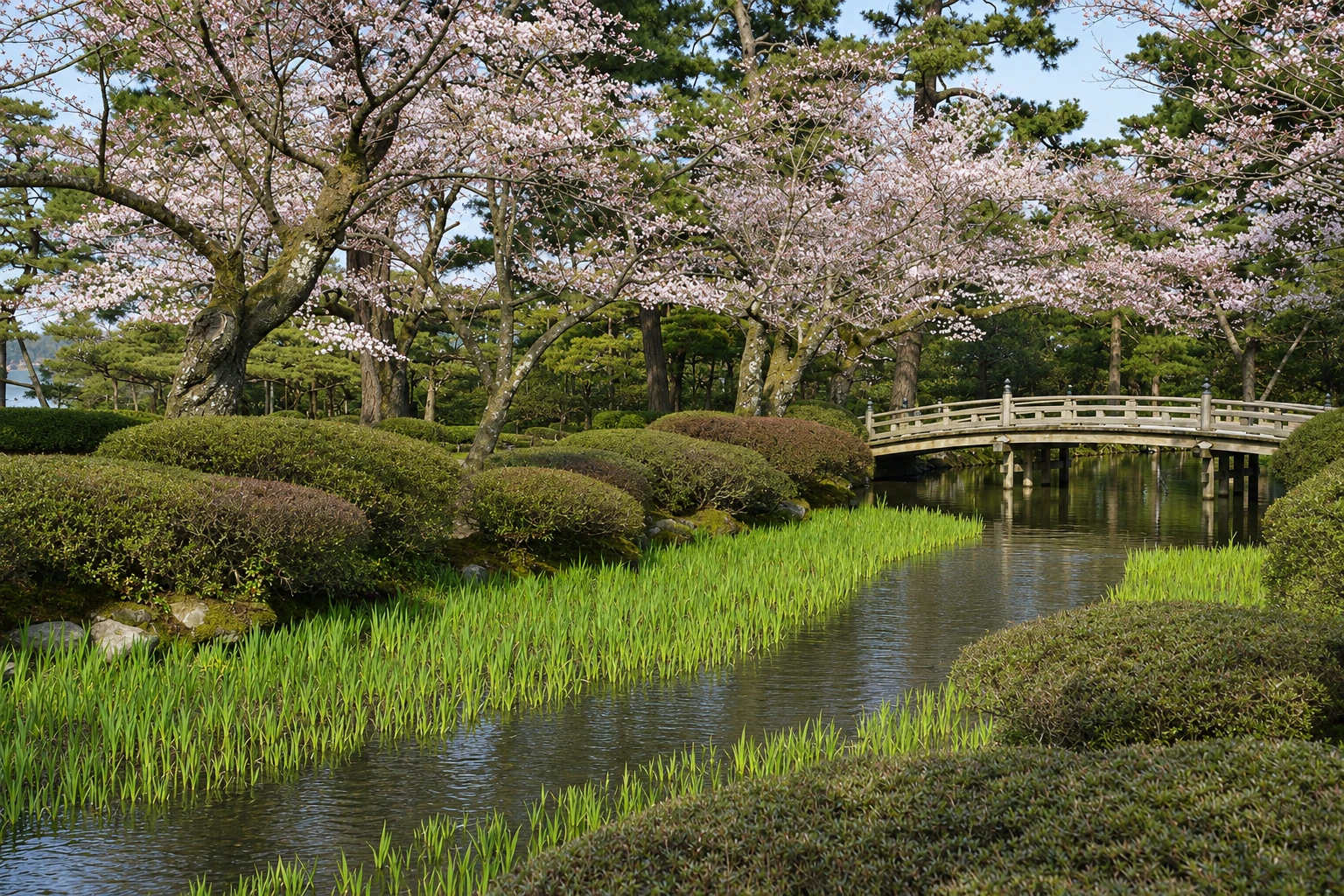
The name means “garden of six qualities,” based on a Chinese concept: spaciousness and seclusion, artistry and antiquity, flowing water and broad views — qualities hard to combine in one place. The garden is designed to be walked, with paths that lead from one pond to another, across hills, stone bridges, tea houses and pines shaped over centuries.
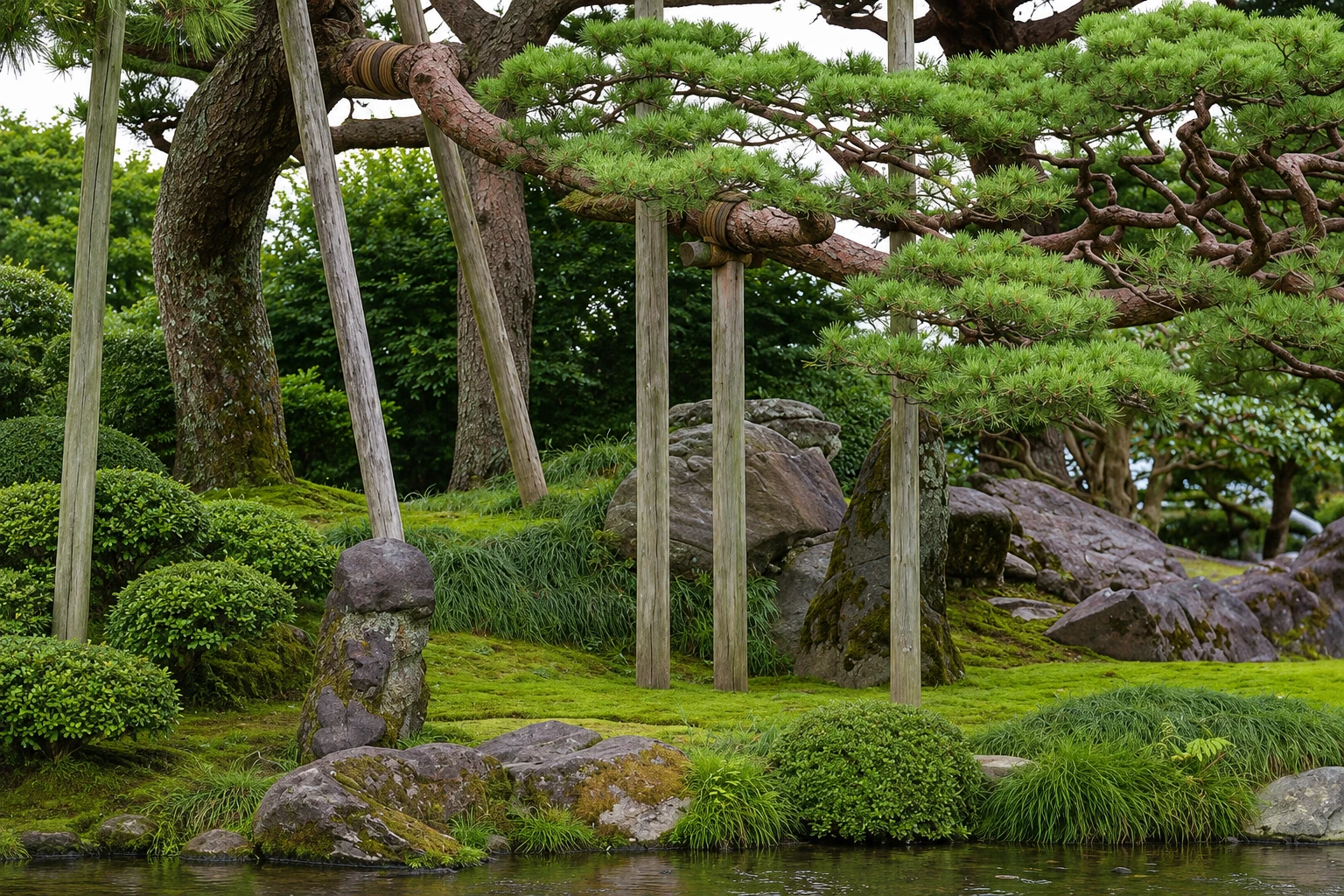
The most famous feature is the Kotoji stone lantern, with two legs of different heights, at the edge of Kasumigaike Pond; it resembles the bridge of a stringed instrument. The garden also has a fountain powered only by water pressure, considered the oldest in Japan, and the Karasaki pine, with long branches supported by stakes.
In winter, from November to March, the pines are fitted with yukitsuri: ropes attached to a central pole in a parasol shape to protect the branches from the weight of snow. In spring, cherry and plum trees bloom; in May, azaleas and irises; in autumn, the maples turn red. The Shiguretei tea house serves green tea and sweets with views of the garden, and the nearby Seisonkaku villa was built for the mother of a clan lord.
Before you go
Practical information
Cidade Turismo reviews its information regularly, but something may have changed. Check with the place before planning your trip.
How much time to set aside
From 1 to 1.5 hours.
Best time
Early in the morning, just after opening, when the garden is peaceful. Cherry trees usually bloom in early April; maples in November; yukitsuri are on the pines from November to March, and with snow the garden is entirely white. On some seasons there is night illumination.
How to get there
Buses from the station drop off at the Kenrokuen-shita or Hirosaka stops, by the gates, after about 15 minutes. From the castle, the Katsurazaka gate is on the other side of the street.
Tip
Combine the garden with the castle across the street and the 21st Century Museum of Contemporary Art a few minutes away. Have tea at Shiguretei, facing the garden.
Official website
Your questions
Frequently asked questions about Kenroku-en Garden
Why is Kenroku-en famous?
It is considered one of Japan’s three most celebrated gardens, developed by the Maeda clan over nearly two centuries, featuring ponds, pines, the Kotoji lantern and the country’s oldest fountain.
What is Kenroku-en’s yukitsuri?
They are ropes attached to a central pole in an umbrella shape that protect pine branches from the weight of snow, used from November to March.
How to get to Kenroku-en?
By bus from Kanazawa Station to Kenrokuen-shita or Hirosaka, in about 15 minutes.
How long does a visit to Kenroku-en take?
About 1 to 1.5 hours.
Is there an entrance fee for Kenroku-en?
Yes, there is an admission fee. Check the price list and opening hours on the garden’s website.