2 cities

 Search
 Brazil
 Antarctica
 Argentina
 Bolivia
 Chile
 Colombia
 Ecuador
 Falkland Islands (Malvinas)
 French Guiana
 Guyana
 Paraguay
 Peru
 Suriname
 Uruguay
 Venezuela
 Austria
 Belgium
 Croatia
 Denmark
 Finland
 France
 Germany
 Greece
 Hungary
 Iceland
 Ireland
 Italy
 Luxembourg
 Norway
 Poland
 Portugal
 Slovakia
 Slovenia
 Spain
 Sweden
 Switzerland
 the Czech Republic
 the Netherlands
 the United Kingdom
 Turkey
 Bermuda
 Canada
 Greenland
 Mexico
 Saint Pierre and Miquelon
 the United States
 the Dominican RepublicJapanTurkey
 Egypt
 South Africa
 Australia
 Fiji
 New Zealand
 Papua New Guinea
Province · Chubu
Shirakawa-go and the gassho houses, Takayama’s old town, Hida Furukawa, Magome on the Nakasendo, Gujo Hachiman and cormorant fishing on the Nagara River.
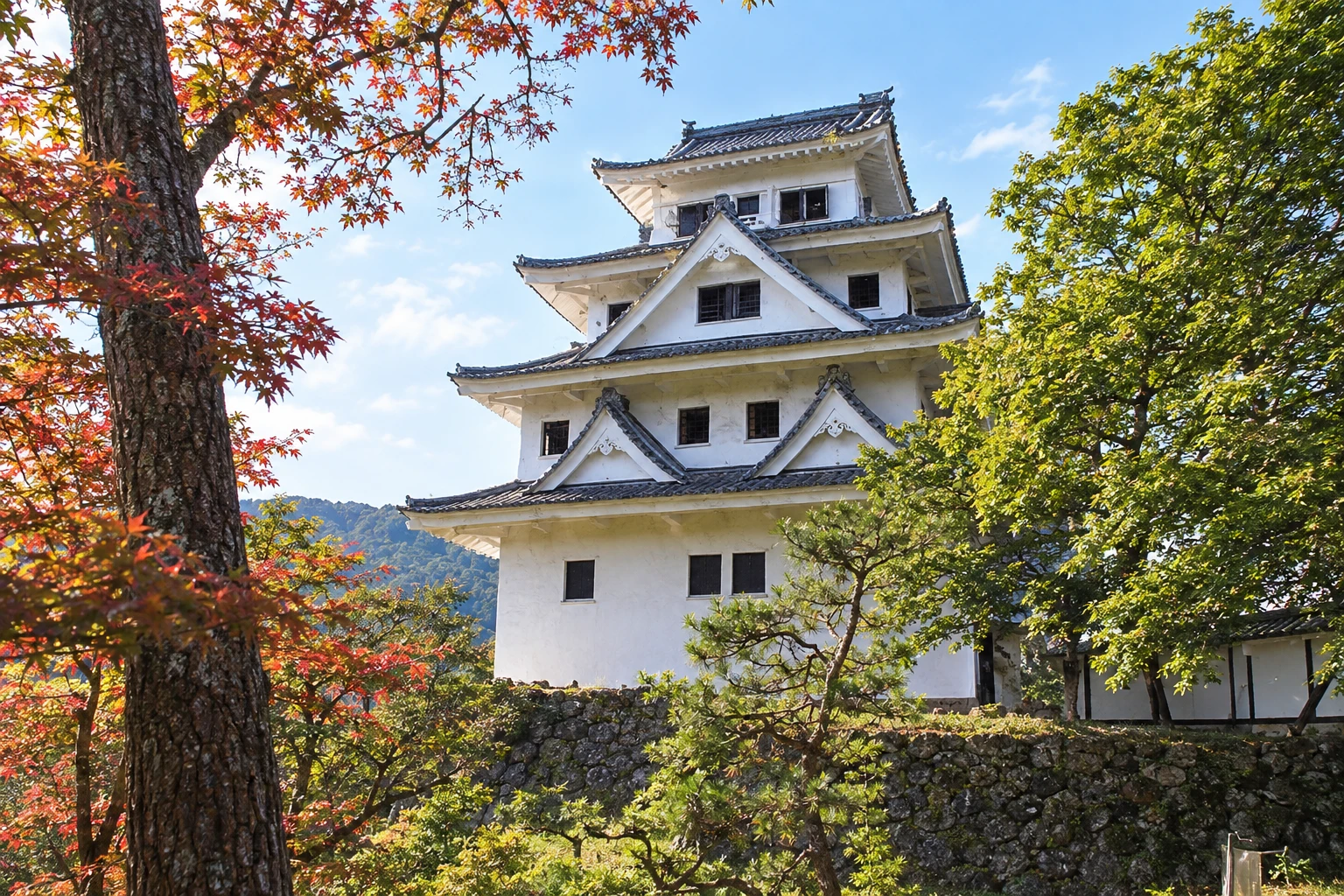
In the photo: Gujo Hachiman Castle, in Gifu.
Illustrative images. The pictures in this guide are illustrations based on the real place, not photographs, and may differ from it.

Province
Gifu is in central Japan, landlocked. The north, Hida, is mountainous and snowy; the south, Mino, is a plain cut by rivers. Seki has been making knives and swords for centuries, and Mino paper is part of UNESCO’s intangible heritage, alongside other washi papers.
Takayama preserves merchant streets from the Edo period, with dark wooden houses, sake breweries and two morning markets. The Takayama Jinya was the local shogunate government office. Twice a year, in April and October, the Takayama Festival parades decorated floats. Hida beef is served grilled or on skewers. Nearby, Hida Furukawa has canals with carp.
Shirakawa-go, in the Shō River valley, gathers very steep thatched-roof houses, the gassho-zukuri, which resemble hands in prayer and withstand the weight of snow. The village of Ogimachi has been a UNESCO World Heritage site since 1995, together with the villages of Gokayama in Toyama. A hill viewpoint shows the whole village. Some houses operate as museums and others host guests.
Gujo Hachiman is a town of canals and springs where, in summer, locals and visitors dance the Gujo Odori in the streets. In the city of Gifu, the castle stands atop Mount Kinka, and at night torchlit boats showcase cormorant fishing on the Nagara River. To the southeast, Magome is a post town on the Nakasendo, linked to Tsumago by a trail.
Destinations
Cities
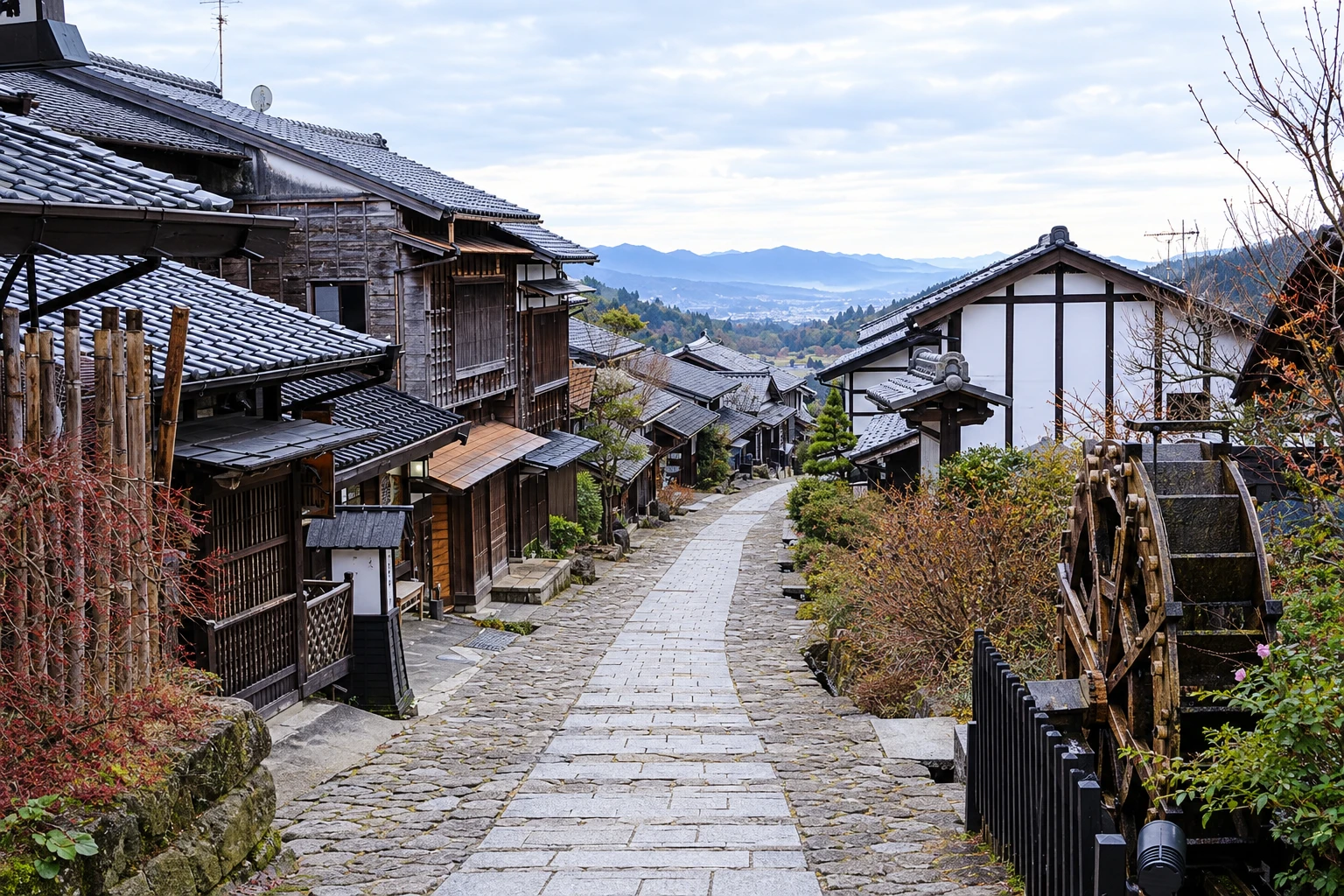
Nakatsugawa is a city in eastern Gifu, in the Kiso River valley, about one hour from Nagoya. The former post town of Magome, on the Nakasendo Road, lies in the municipality on a hillside about 15 km from the city center; from there the trail to Tsumago departs, across the Magome Pass. The town is known for kurikinton, the autumn chestnut sweet.
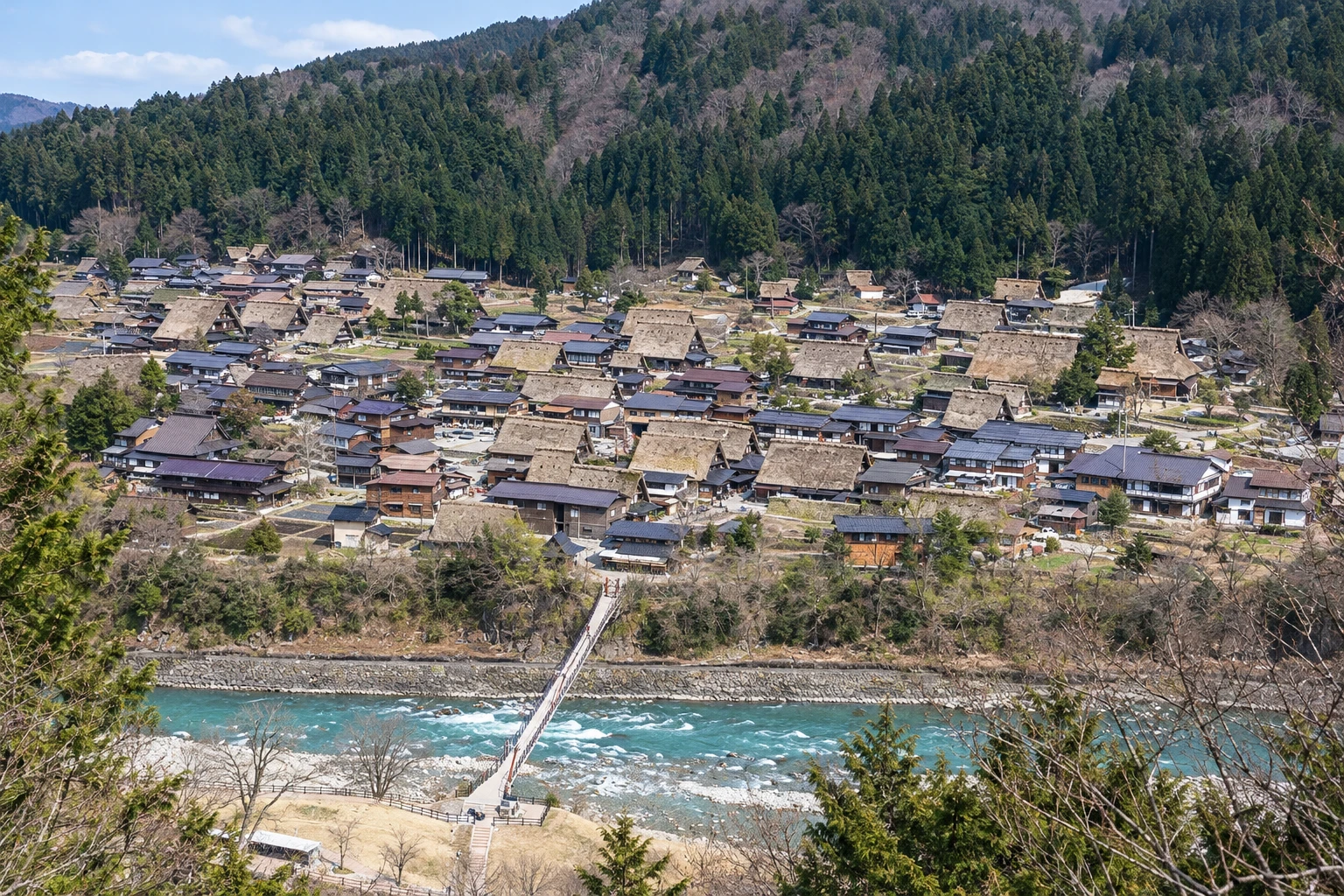
The village of Shirakawa sits in the Sho River valley in northwest Gifu and is known to visitors as Shirakawa-go. Its Ogimachi hamlet, with thatched houses shaped like hands pressed together, shares World Heritage status with two villages in Gokayama. The Shiroyama viewpoint overlooks the whole village, and houses such as Wada are open to visitors. Some houses host guests and serve dinner by the hearth.
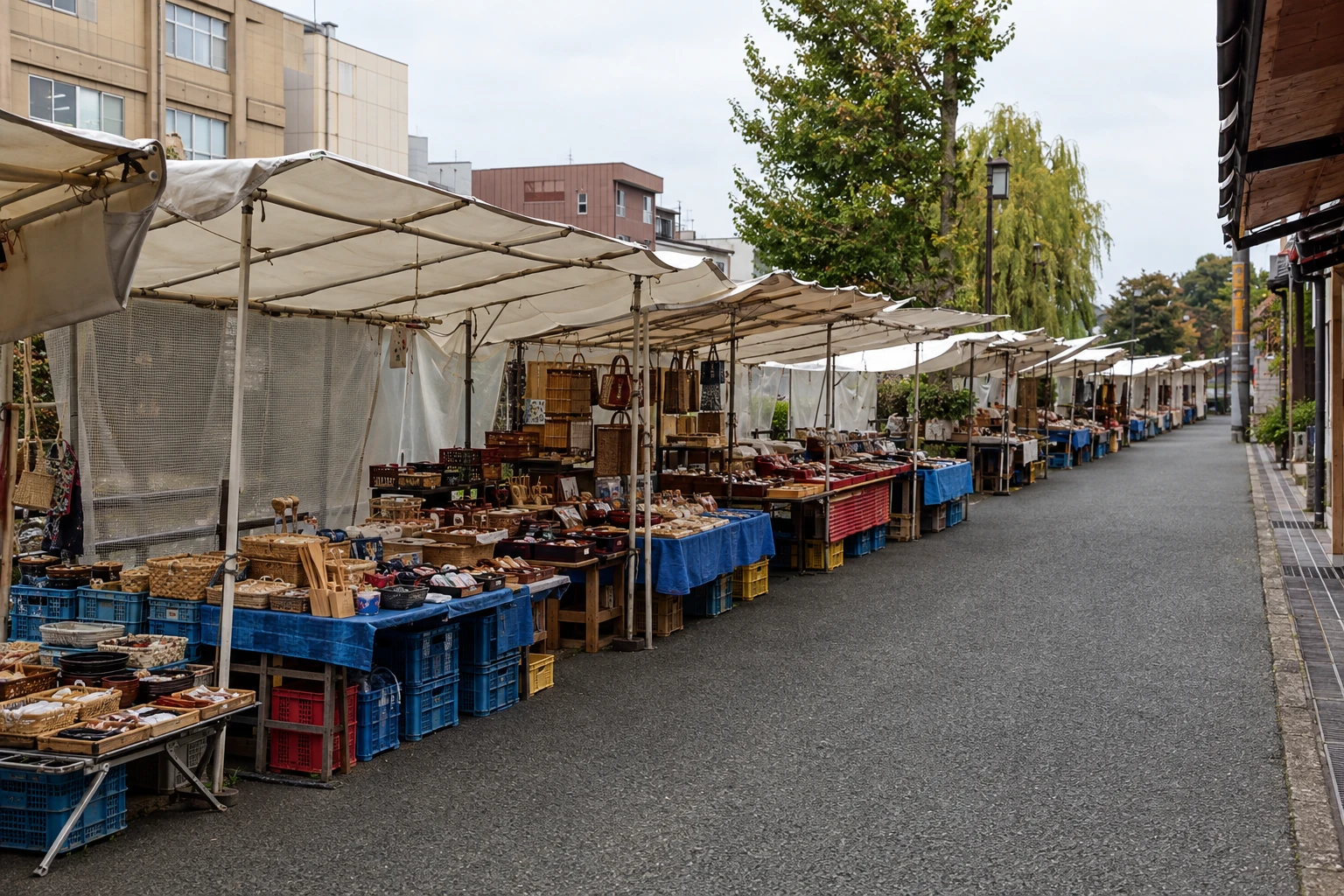
Takayama, in the Hida Mountains of Gifu, preserves the Sanmachi old town with merchant houses from the Edo period, sake breweries and morning markets by the river. Takayama Jinya is the only surviving magistrate’s office from the shogunate in the country, and the Takayama Festival, in spring and autumn, fills the streets with carved festival floats. The town is a base for Shirakawa-go and Hida Furukawa.
The Takayama Festival takes place in April and October. From summer to early autumn there is cormorant fishing, from May to October, and the Gujo Odori dances from July to September. The Hida mountains show fall colors in October, and the southern part of the prefecture in November. From December to February, snow covers Shirakawa-go, and on some winter nights the village is illuminated, with access controlled by reservation.
The Hida limited express trains connect Nagoya to Takayama in about 2 hours 20 minutes, passing through Gifu. Buses link Takayama to Shirakawa-go in about 50 minutes and Shirakawa-go to Kanazawa in about 1 hour 15 minutes; there are also buses from Shinjuku to Takayama. Gifu city is about 20 minutes by train from Nagoya. For Magome, buses depart from Nakatsugawa Station on the JR Chuo Line.
Beyond the guide
Your questions
By bus, in about 50 minutes, with advance reservation recommended for the busiest times. The same buses continue to Kanazawa, and you can bring luggage, storing it in lockers near the village terminal.
Yes. Some houses operate as small family-run guesthouses, offering dinner and breakfast. Availability is limited and fills up early, especially in winter.
Twice a year: the spring festival in mid-April, and the autumn festival in early October. The decorated floats can be seen year-round in a museum beside Hachiman Shrine.
From May to mid-October, at night, on the Nagara River. Sightseeing boats accompany the fishermen, who guide the birds by torchlight. Fishing does not take place on full-moon nights nor when the river is in flood.