Shirakawa · Japan · Historic village
Ogimachi Village (Shirakawa-go)
The largest village of Shirakawa-go, with dozens of gassho-zukuri thatched houses among rice fields and the Sho River; a World Heritage site.

 Search
 Brazil
 Antarctica
 Argentina
 Bolivia
 Chile
 Colombia
 Ecuador
 Falkland Islands (Malvinas)
 French Guiana
 Guyana
 Paraguay
 Peru
 Suriname
 Uruguay
 Venezuela
 Austria
 Belgium
 Croatia
 Denmark
 Finland
 France
 Germany
 Greece
 Hungary
 Iceland
 Ireland
 Italy
 Luxembourg
 Norway
 Poland
 Portugal
 Slovakia
 Slovenia
 Spain
 Sweden
 Switzerland
 the Czech Republic
 the Netherlands
 the United Kingdom
 Turkey
 Bermuda
 Canada
 Greenland
 Mexico
 Saint Pierre and Miquelon
 the United States
 the Dominican RepublicJapanTurkey
 Egypt
 South Africa
 Australia
 Fiji
 New Zealand
 Papua New Guinea
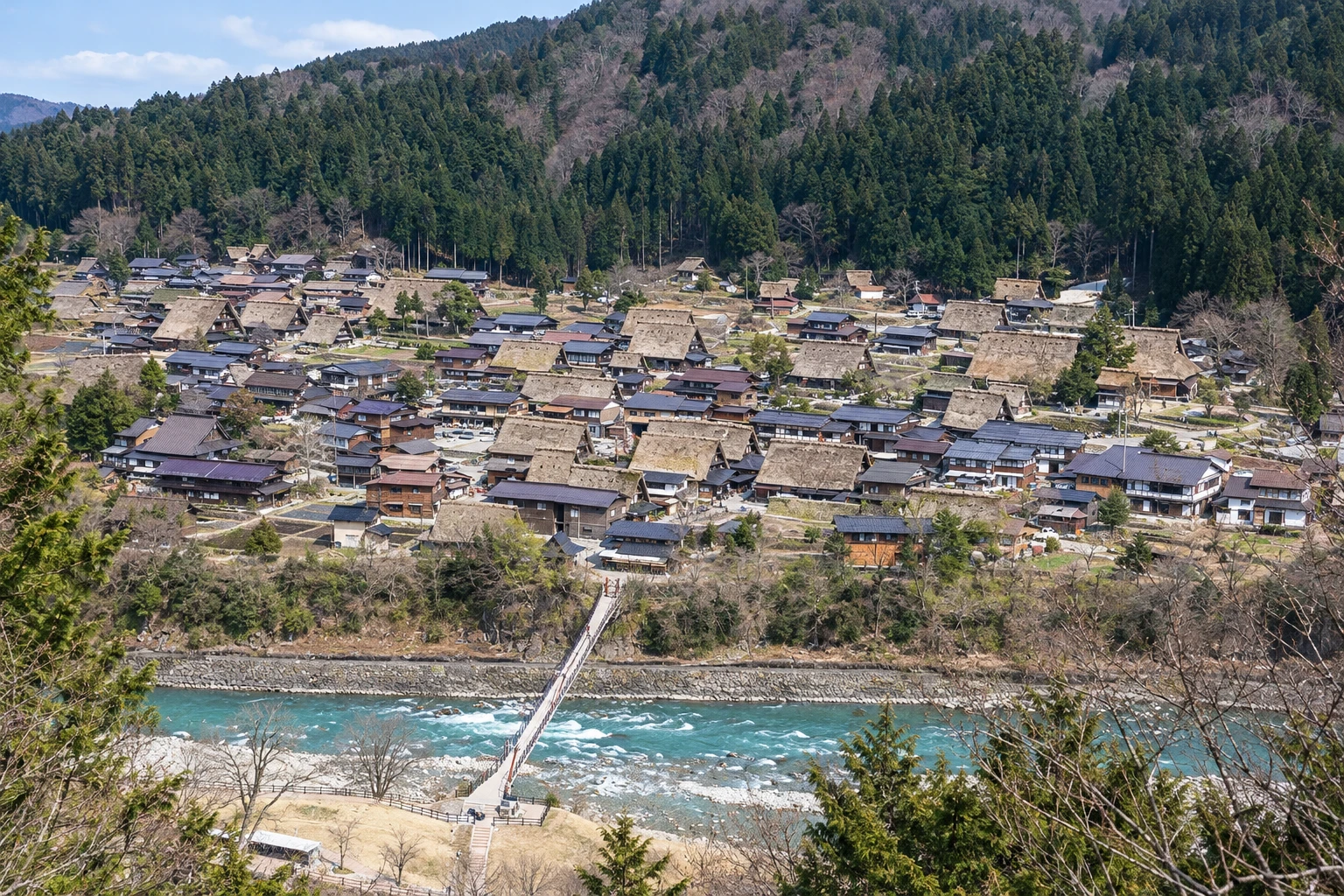
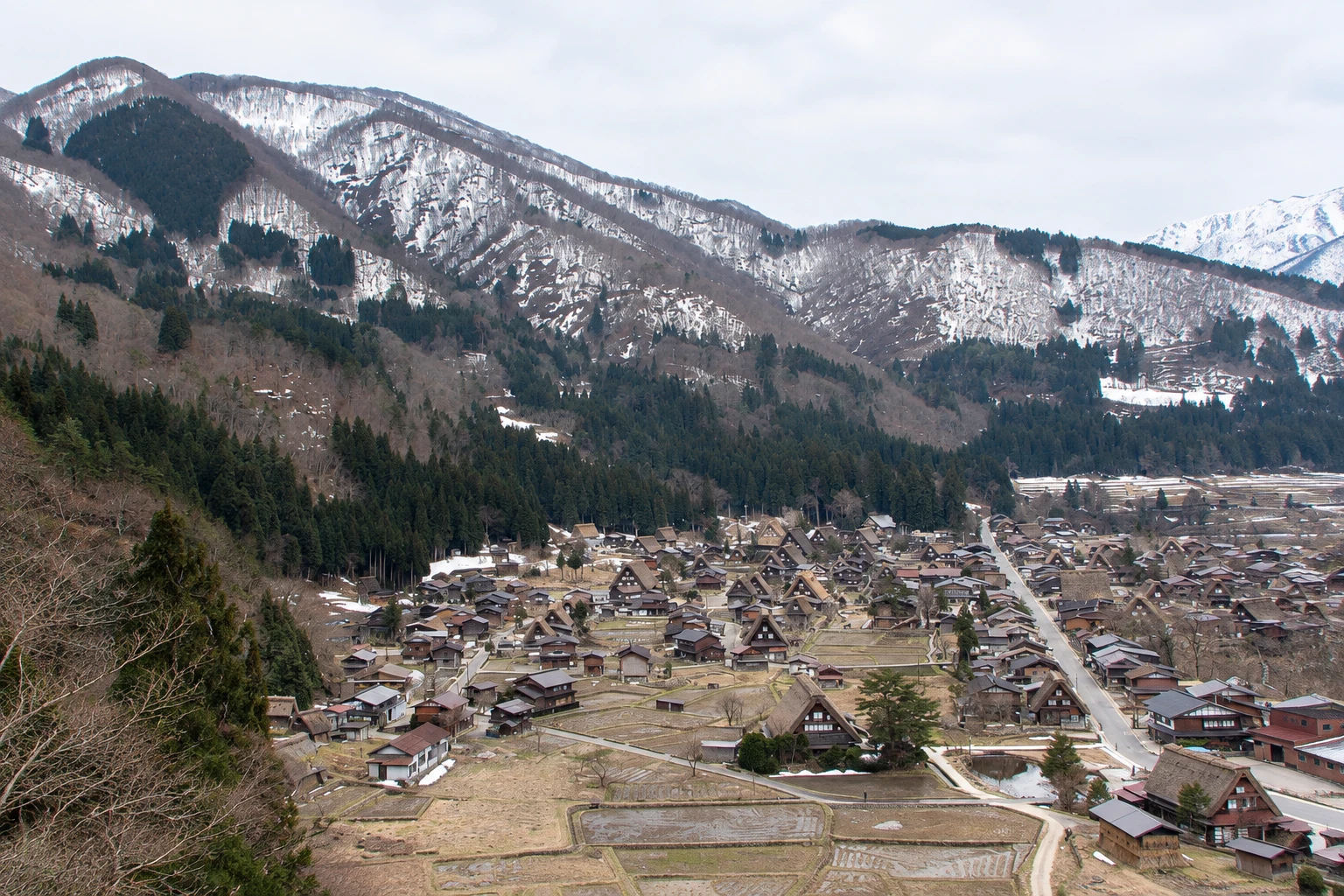
In the photo: Shirakawa and the Shokawa River.
Illustrative images. The pictures in this guide are illustrations based on the real place, not photographs, and may differ from it.

The city
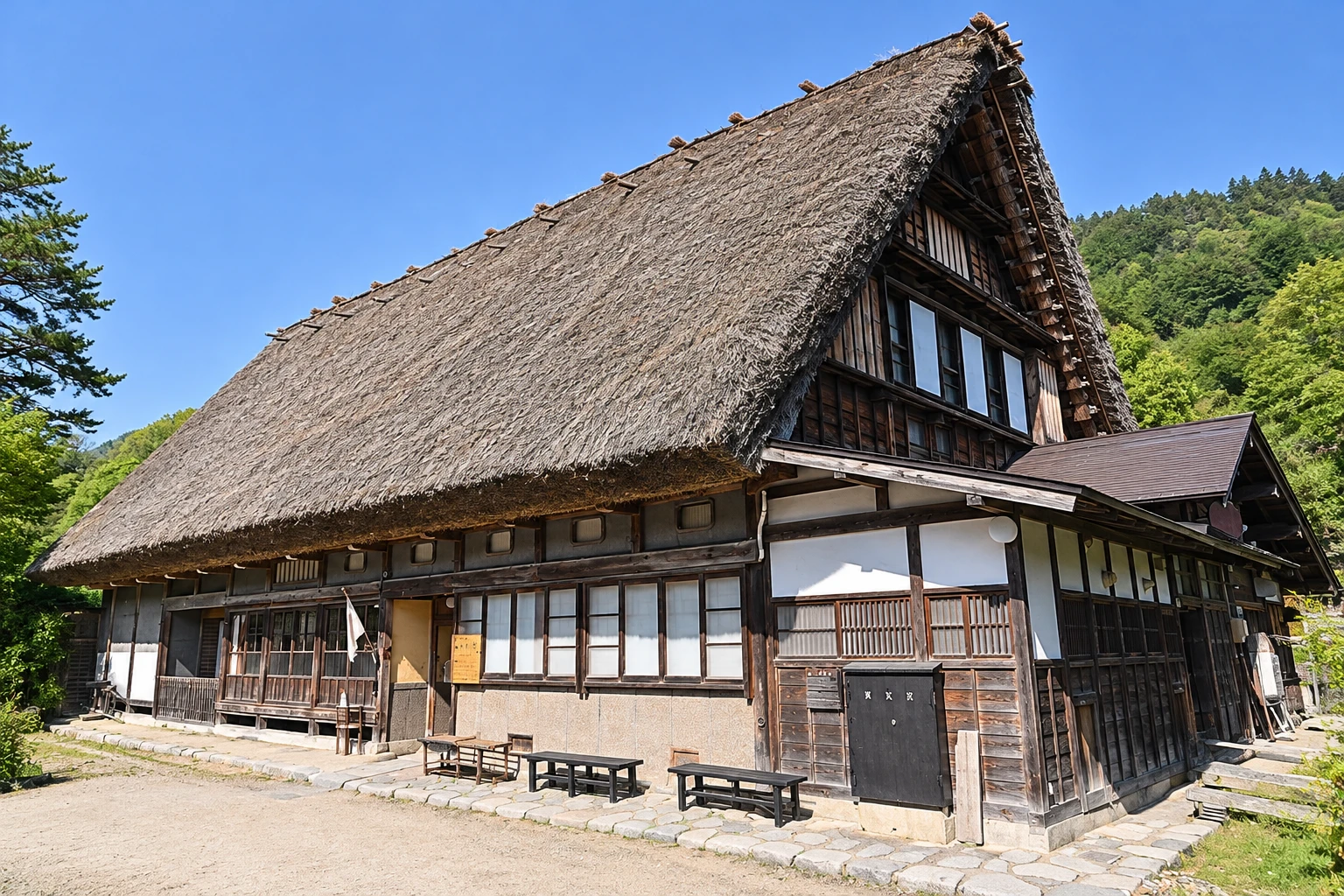
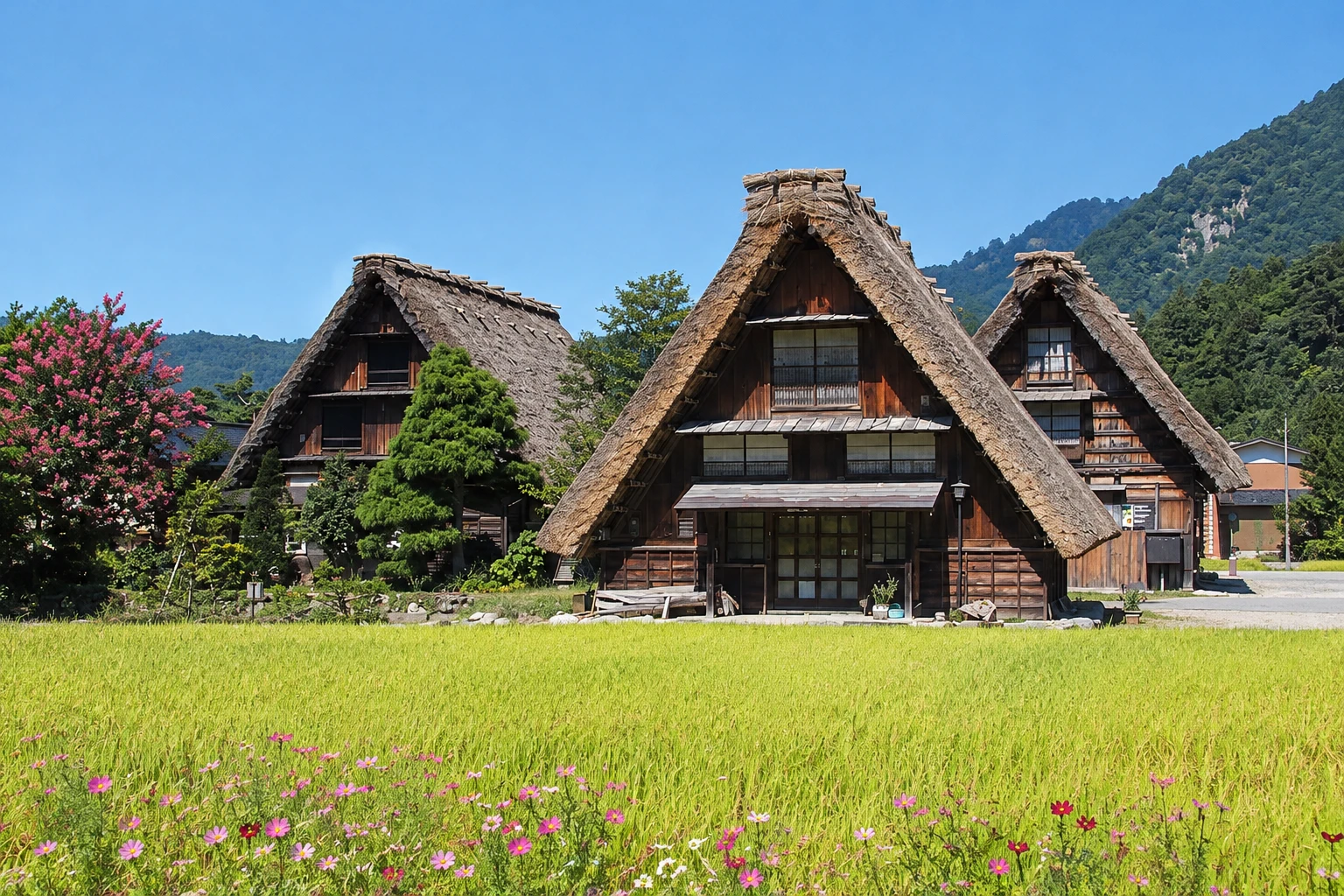
The village of Shirakawa sits in the Sho River valley in northwest Gifu and is known to visitors as Shirakawa-go. Its Ogimachi hamlet, with thatched houses shaped like hands pressed together, shares World Heritage status with two villages in Gokayama. The Shiroyama viewpoint overlooks the whole village, and houses such as Wada are open to visitors. Some houses host guests and serve dinner by the hearth.
There's no accommodation in the guide yet in Shirakawa.
Do you run a hotel, guesthouse or vacation rental here? List itThere are no restaurants in the guide yet in Shirakawa.
Know a good one? Recommend it to usThe city's hotels and restaurants on the map.
how to get there · how many days · itinerary · questions
The local experience
The largest village of Shirakawa-go, with dozens of gassho-zukuri thatched houses among rice fields and the Sho River; a World Heritage site.
The viewpoint on the hill of the former Ogimachi castle ruins, from which you can see the entire village of Shirakawa-go, with the thatched roofs among the fields.
The largest gassho-zukuri house in Ogimachi, from the village headman’s family, open to visitors, with the hearth on the ground floor and the upper floors displaying silk-working tools.
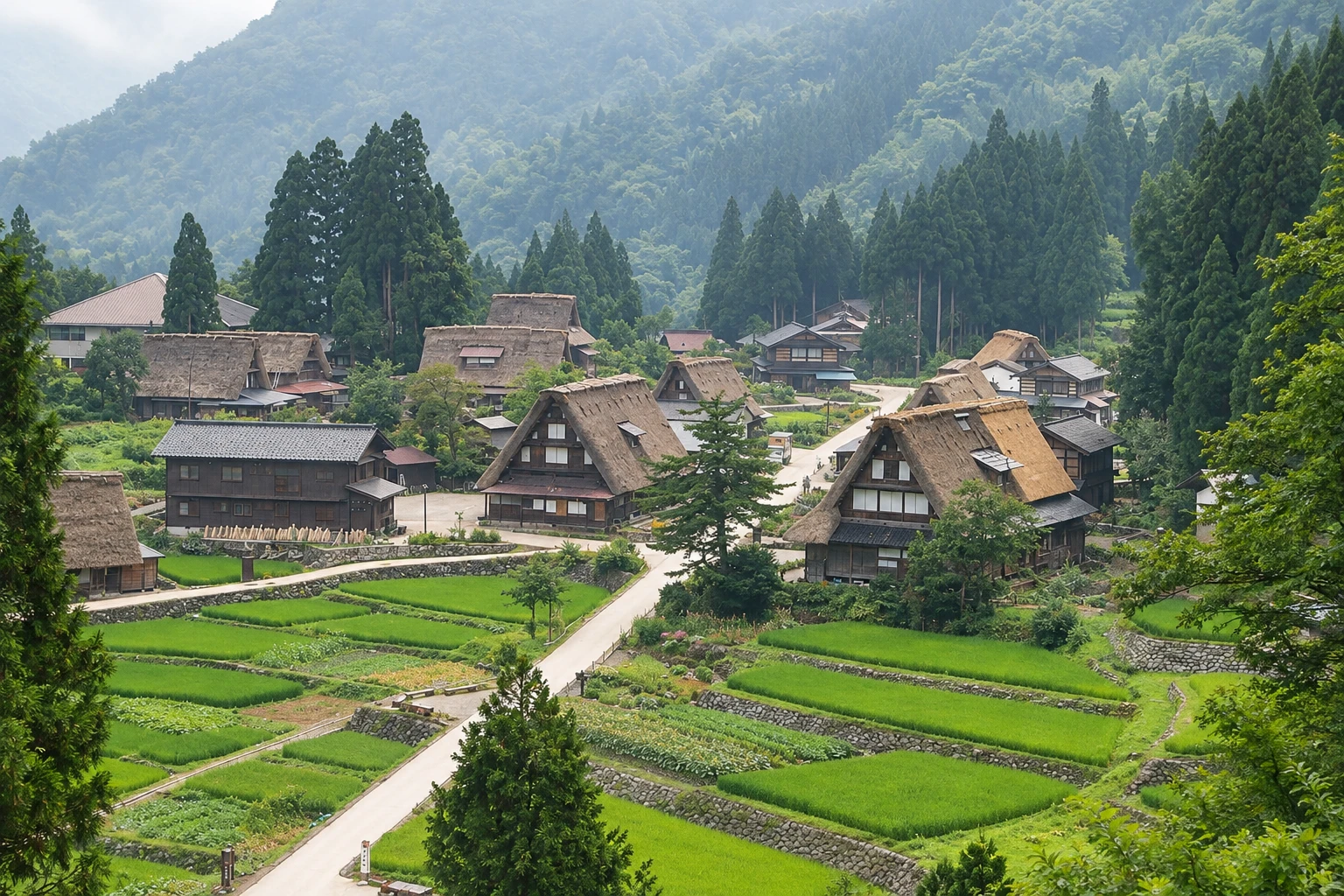
The villages of Ainokura and Suganuma in Toyama, with gassho-zukuri houses in a mountain valley, quieter than Shirakawa-go and part of the same World Heritage site.
Before you go
Shirakawa – Japan Destination Takayama and Shirakawa-go
Approximate distances. Check flights and bus, train or boat schedules before you travel.
Highway buses arrive at the Shirakawa-go terminal from Takayama in about 50 minutes and from Kanazawa in about 1h15–1h30; there are also buses from Nagoya and Toyama. Several departures require reservation. By car, use the Tōkai-Hokuriku Expressway.
Most visitors spend about half a day. Those who stay overnight in the village see the streets empty in the late afternoon and the next morning; by car, you can combine it with Gokayama.
Winter, from December to March, when snow covers the roofs and there are illuminated nights in January and February by reservation. May and June, with flooded rice fields; late October and early November, for the autumn leaves. Winter requires clothing and footwear suitable for snow.
The seasons shown are the most usual ones; nature doesn't always follow the calendar.
No. Highway buses reach the village, and Ogimachi is explored on foot. A car helps to reach Gokayama and the nearby hot springs; the village asks drivers to leave cars in parking lots outside the settlement.
Suggested itinerary
Built with the places on this page. No rush: it's paced so you have time to see them.
Arrive early by bus, cross the suspension bridge and visit the Wada house and the village streets.
Climb to the Shiroyama viewpoint and continue by bus or car to Gokayama, or head on to Kanazawa or Takayama.
Check before you go. Opening hours and days change, and places may close for renovations, holidays or events. This itinerary is a suggestion from Cidade Turismo, not a commitment: plan yours by checking directly with each place you intend to visit.
Before you go
Yes. From Takayama it’s about 50 minutes by bus; from Kanazawa, 1h15 to 1h30. Book the services that require reservations.
Yes, at the bus terminal, with limited space. Travelers doing the route between Takayama and Kanazawa with large suitcases can send them via delivery service.
At midday and on weekends, yes — there are many tour buses. Early morning and late afternoon the village is calmer.
Do not enter private property, do not use drones, keep your voice low and take your trash with you. Many houses are inhabited.
Cold and very snowy, usually from December to March. Bring boots and waterproof clothing; the road may require a bus or a car with snow tires.