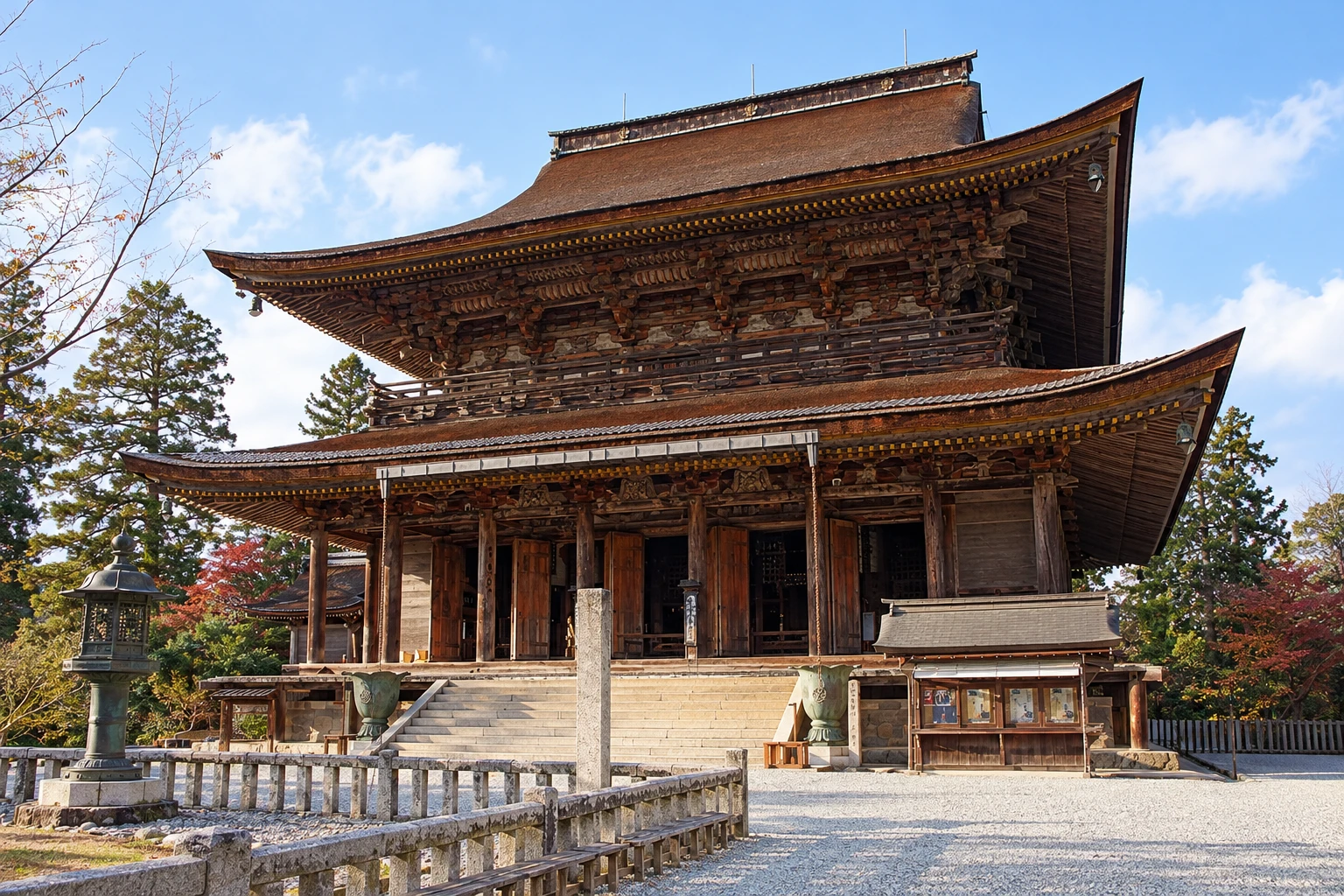
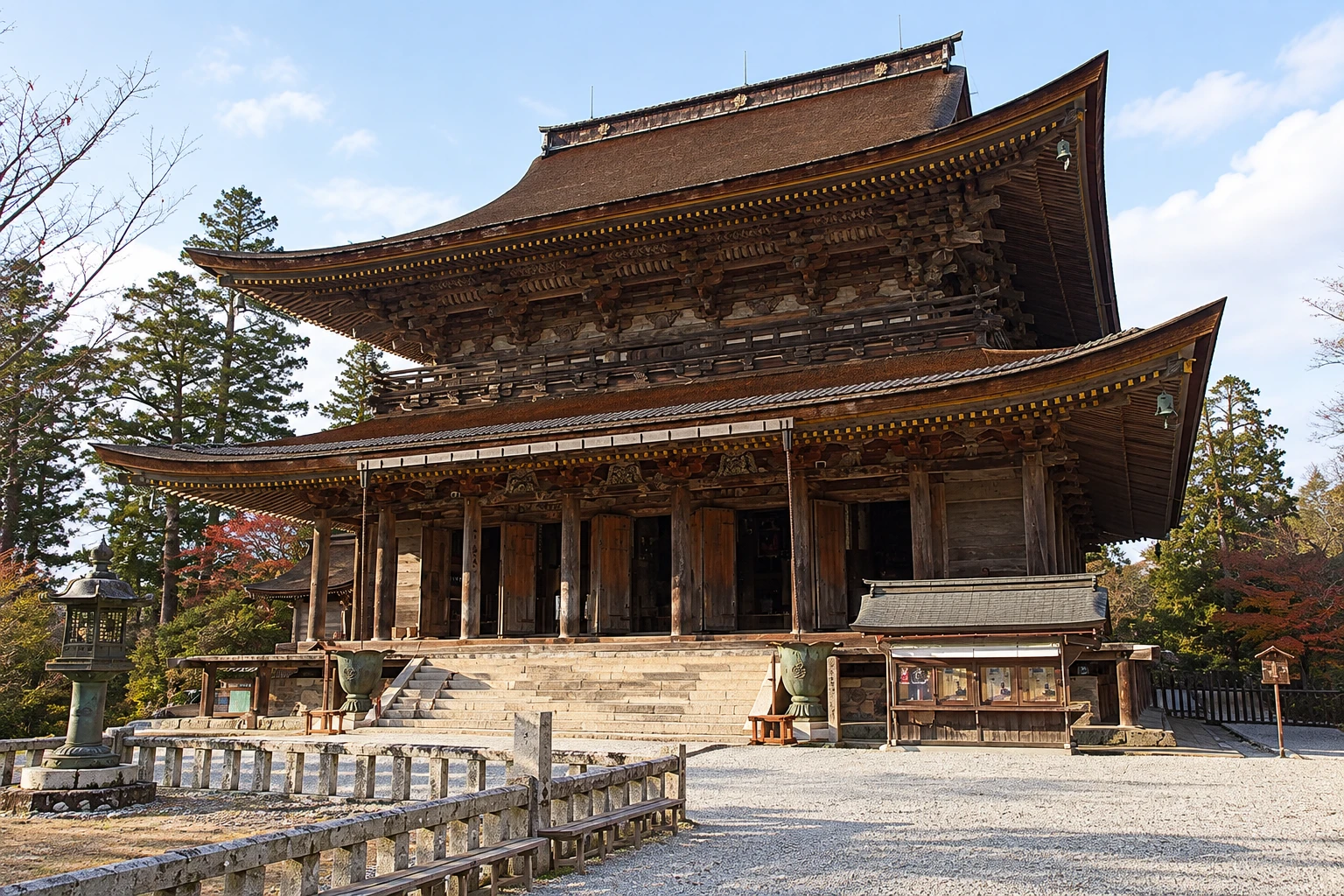
In the photo: Zao-do Hall of Kinpusen-ji Temple, in Yoshino.
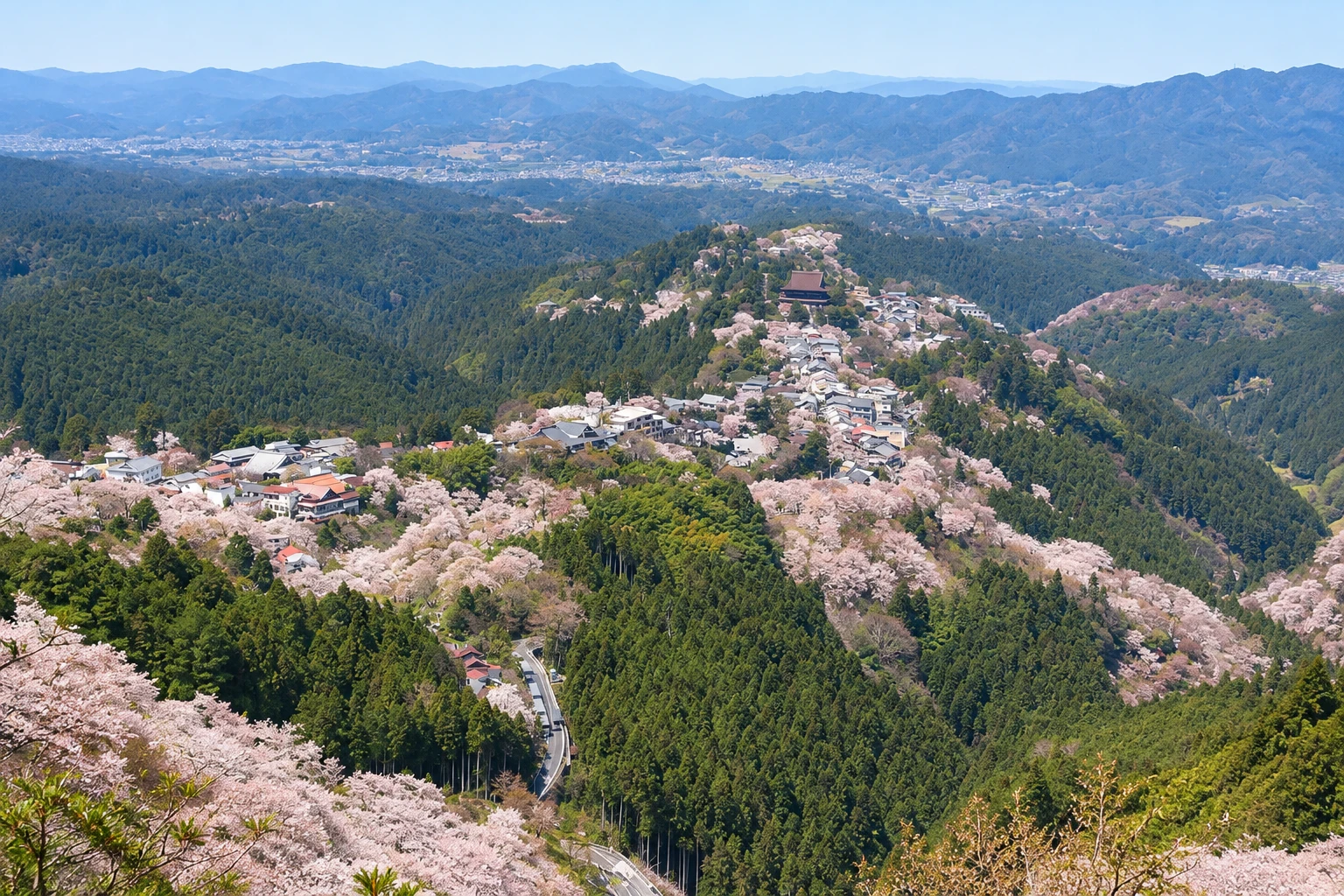
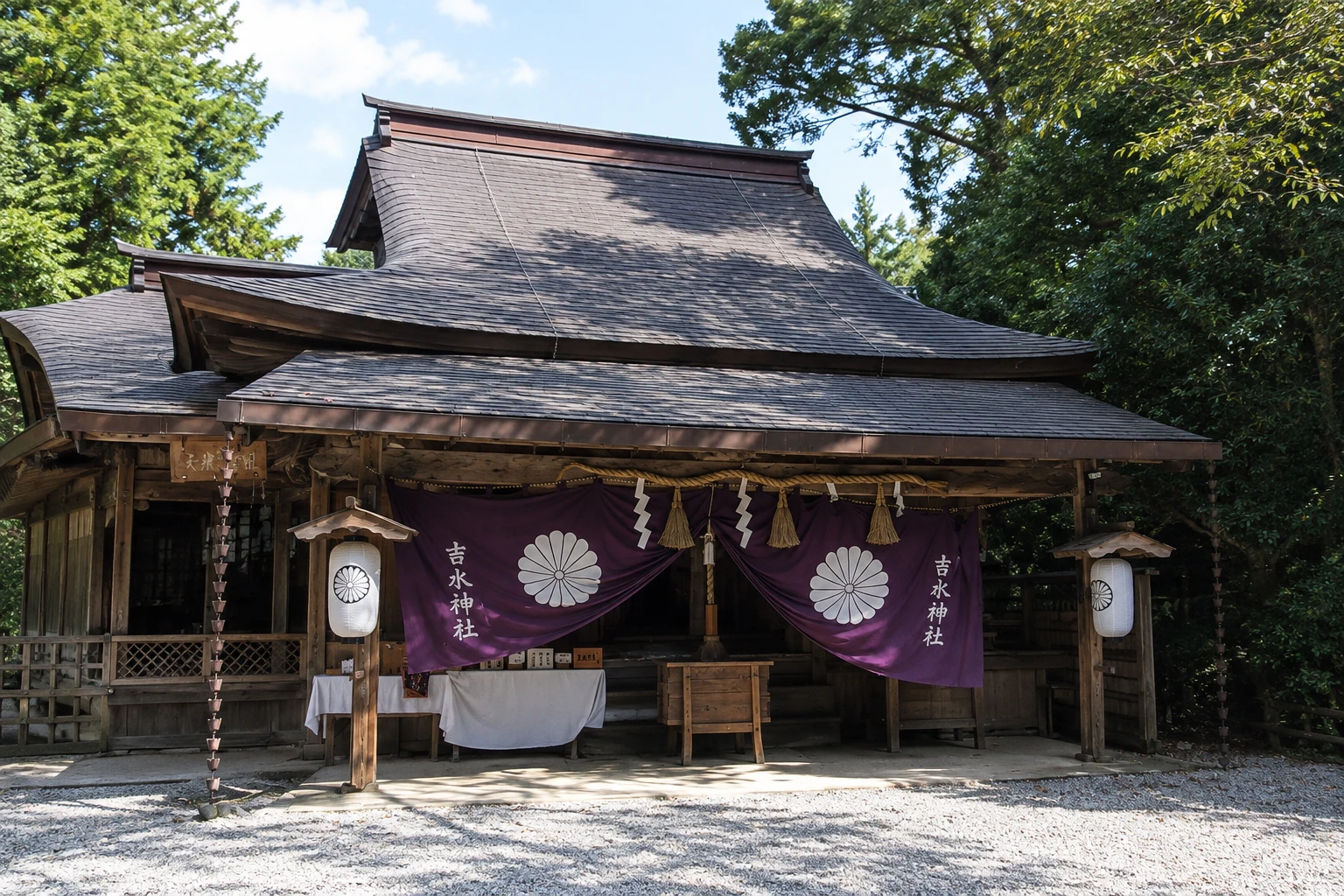
Illustrative images. The pictures in this guide are illustrations based on the real place, not photographs, and may differ from it.
The city
What to expect from Yoshino.
Town in southern Nara on the banks of the Yoshino River, which includes Mount Yoshino in its territory, known for about 30,000 cherry trees and the temples of the sacred Kii Mountain area. On the ridge, the village of Yoshinoyama brings together Kinpusen-ji, Yoshimizu Shrine, teahouses and lodgings.
A mountain ridge in southern Nara with about 30,000 cherry trees in four zones at different elevations that usually bloom in sequence in April, plus viewpoints, shrines, and trails through cedar forest.
The central Shugendo temple on Mount Yoshino, with the Zao-do hall, one of the largest wooden buildings in Japan, a national treasure that houses three large blue statues of Zao Gongen.
A shrine on Yoshinoyama, formerly a temple where the warrior Minamoto no Yoshitsune took refuge and where Emperor Go-Daigo set up his court in the 14th century, with an old reception hall and the classic thousand-trees viewpoint.
Aeroporto Internacional de Kansai (KIX)Izumisano · 83 km
Estação de Yoshino4 km
Approximate distances. Check flights and bus, train or boat schedules before you travel.
Yoshino Station, the terminus of the Kintetsu Yoshino Line, is about 1 hour 15 minutes from Osaka Abenobashi. From there, a ropeway, buses or a walk of about 20 minutes climb up to the village of Yoshinoyama. The city hall is in Kamiichi, about 4 km from the station.
How many days
One day for Shimo and Naka Senbon, with Kinpusen-ji and Yoshimizu Shrine. If you spend a night on the mountain, you can climb to Kami and Oku Senbon and see the village at night and early in the morning.
When to go
April, for the cherry blossoms, with more people and difficult reservations; November, for autumn leaves. Spring and autumn have mild weather. Winter is cold, and summer is humid, with the forest green and fewer visitors.
The seasons shown are the most usual ones; nature doesn't always follow the calendar.
Do you need a car?
No. The ropeway and buses link the station to the ridge, and buses go up to Kami Senbon. During cherry season, car access to the mountain is restricted.
Suggested itinerary
An order that works
Built with the places on this page. No rush: it's paced so you have time to see them.
One day in Yoshino
manhã
Ascent to Yoshinoyama
Climb from Yoshino Station to the village of Yoshinoyama and visit Kinpusen-ji, with the Zao-do hall.
tarde
Yoshimizu Shrine
Visit Yoshimizu Shrine and see the thousand-tree view from the garden, and have kakinoha-zushi for lunch on the main street.
fim de tarde
Naka Senbon
Walk along Naka Senbon Street to the viewpoints over the cherry-covered slopes.
noite
Yoshinoyama
Sleep in a ryokan or a temple in Yoshinoyama, or descend to catch the train back.
2 days in Yoshino
Day 2
manhã
Kami Senbon
Take a bus or walk up to Kami Senbon, with the Hanayagura lookout and Yoshino Mikumari Shrine.
tarde
Oku Senbon
Continue to Oku Senbon and Saigyō’s hermitage, then walk down to the station.
Check before you go. Opening hours and days change, and places may close for renovations, holidays or events. This itinerary is a suggestion from Cidade Turismo, not a commitment: plan yours by checking directly with each place you intend to visit.
Before you go
Frequently asked questions
Where is Mount Yoshino in relation to the town?
On the southern side of the town, accessible from Yoshino Station. The administrative center is in Kamiichi, about 4 km from the station.
How do you climb from the station to the village?
By cable car, by bus or on foot, taking about 20 minutes. Check whether the cable car is operating that day.
Can you stay in temples in Yoshino?
Yes. Some temples on Yoshinoyama host overnight guests and offer vegetarian meals and morning ceremonies. Book in advance.
What to eat in Yoshino?
Kakinoha-zushi, mackerel or salmon sushi wrapped in persimmon leaf, and kuzu sweets and dumplings made from a local starch.


 Brazil
 Antarctica
 Argentina
 Bolivia
 Chile
 Colombia
 Ecuador
 Falkland Islands (Malvinas)
 French Guiana
 Guyana
 Paraguay
 Peru
 Suriname
 Uruguay
 Venezuela
 Austria
 Belgium
 Croatia
 Denmark
 Finland
 France
 Germany
 Greece
 Hungary
 Iceland
 Ireland
 Italy
 Luxembourg
 Norway
 Poland
 Portugal
 Slovakia
 Slovenia
 Spain
 Sweden
 Switzerland
 the Czech Republic
 the Netherlands
 the United Kingdom
 Turkey
 Bermuda
 Canada
 Greenland
 Mexico
 Saint Pierre and Miquelon
 the United States
 the Dominican Republic
 Egypt
 South Africa
 Australia
 Fiji
 New Zealand
 Papua New Guinea