

 Brazil
 Antarctica
 Argentina
 Bolivia
 Chile
 Colombia
 Ecuador
 Falkland Islands (Malvinas)
 French Guiana
 Guyana
 Paraguay
 Peru
 Suriname
 Uruguay
 Venezuela
 Albania
 Austria
 Belgium
 Croatia
 Denmark
 Finland
 France
 Germany
 Greece
 Hungary
 Iceland
 Ireland
 Italy
 Luxembourg
 Norway
 Poland
 Portugal
 Slovakia
 Slovenia
 Spain
 Sweden
 Switzerland
 the Czech Republic
 the Netherlands
 the United Kingdom
 Turkey
 Bermuda
 Canada
 Greenland
 Mexico
 Saint Pierre and Miquelon
 the United States
 the Dominican Republic
 Egypt
 South Africa
 Australia
 Fiji
 New Zealand
 Papua New Guinea
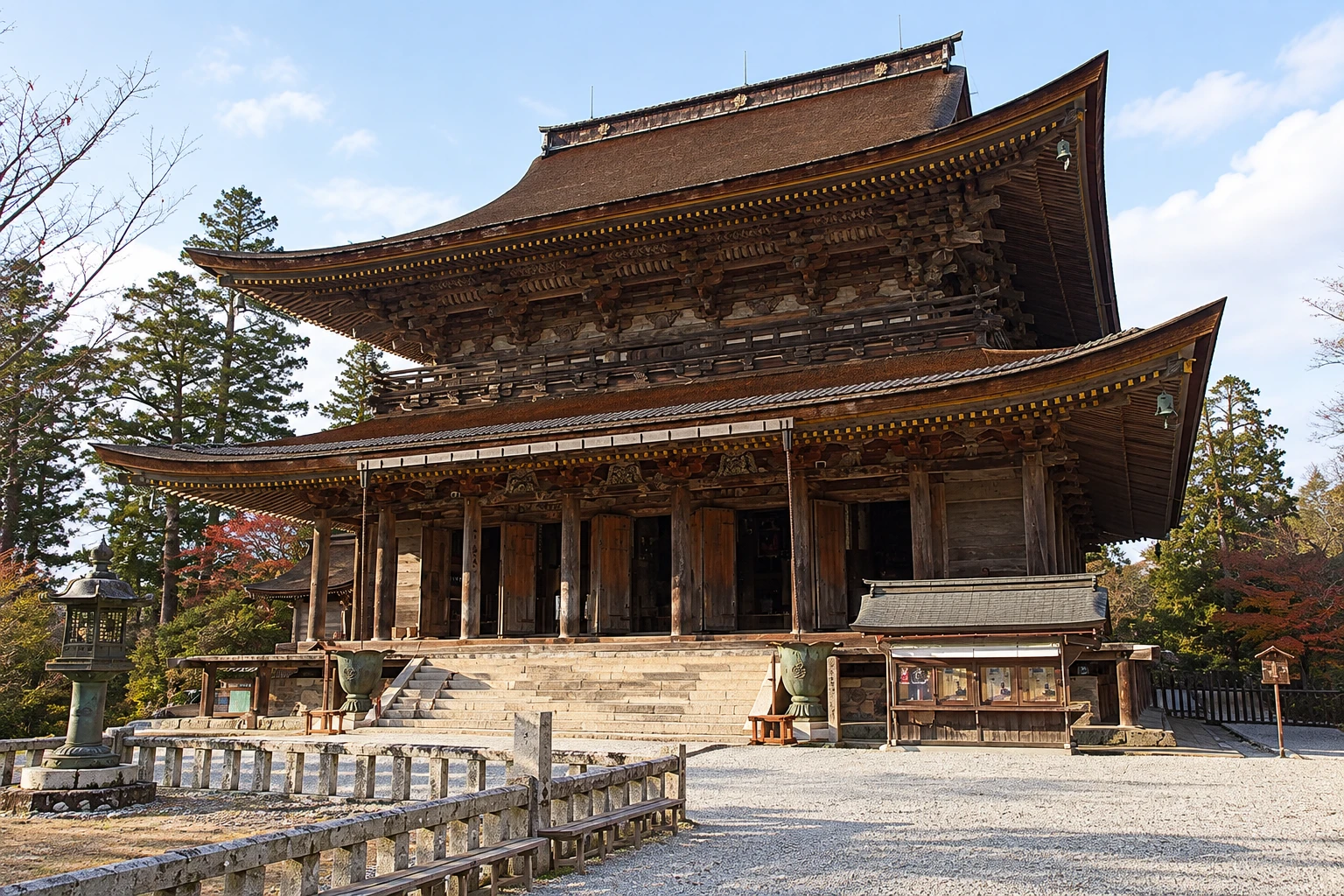
Temple · Yoshino, Japan
Kinpusen-ji Temple
The central Shugendo temple on Mount Yoshino, with the Zao-do hall, one of the largest wooden buildings in Japan, a national treasure that houses three large blue statues of Zao Gongen.
Illustrative images. The pictures in this guide are illustrations based on the real place, not photographs, and may differ from it.

A look at the place
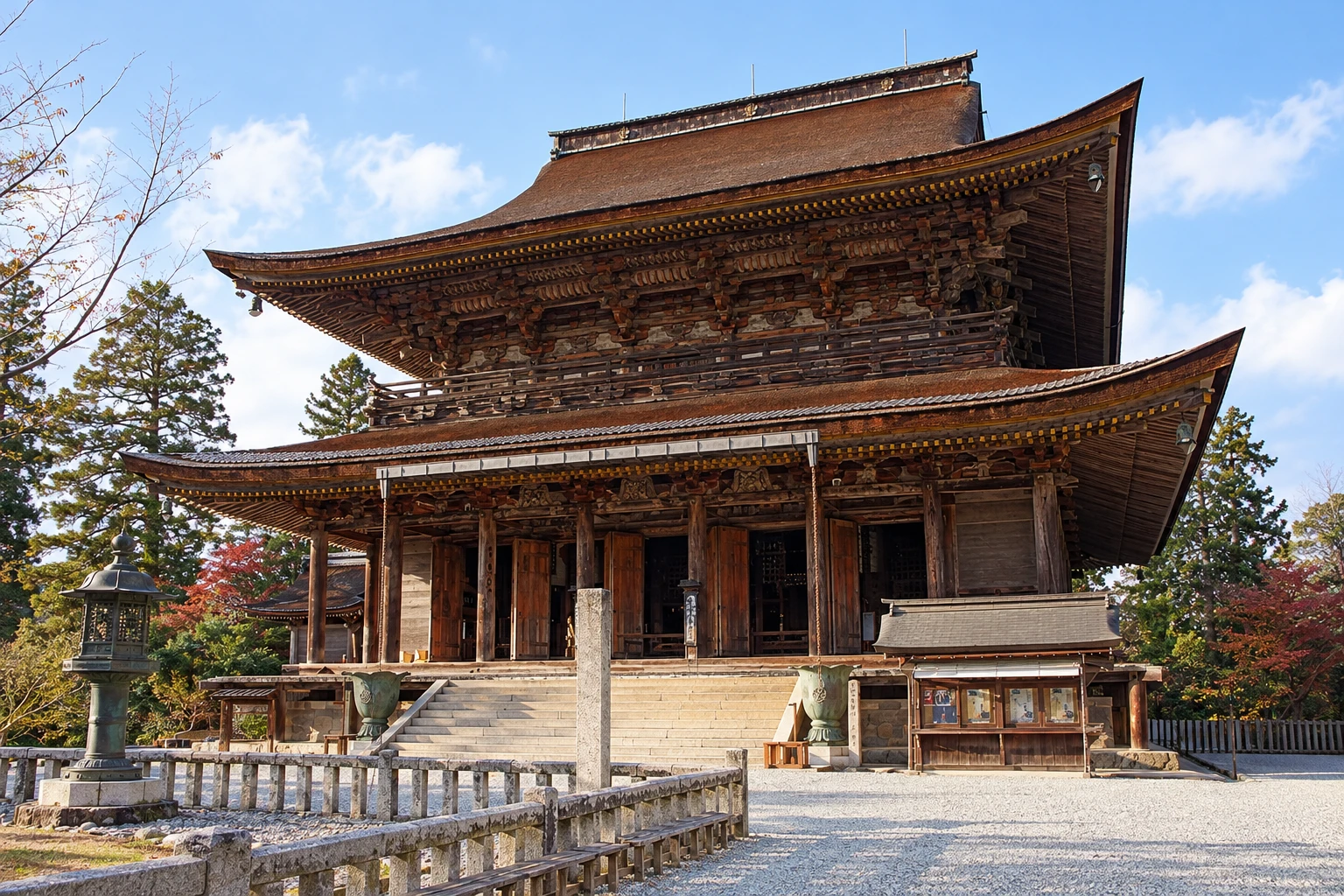
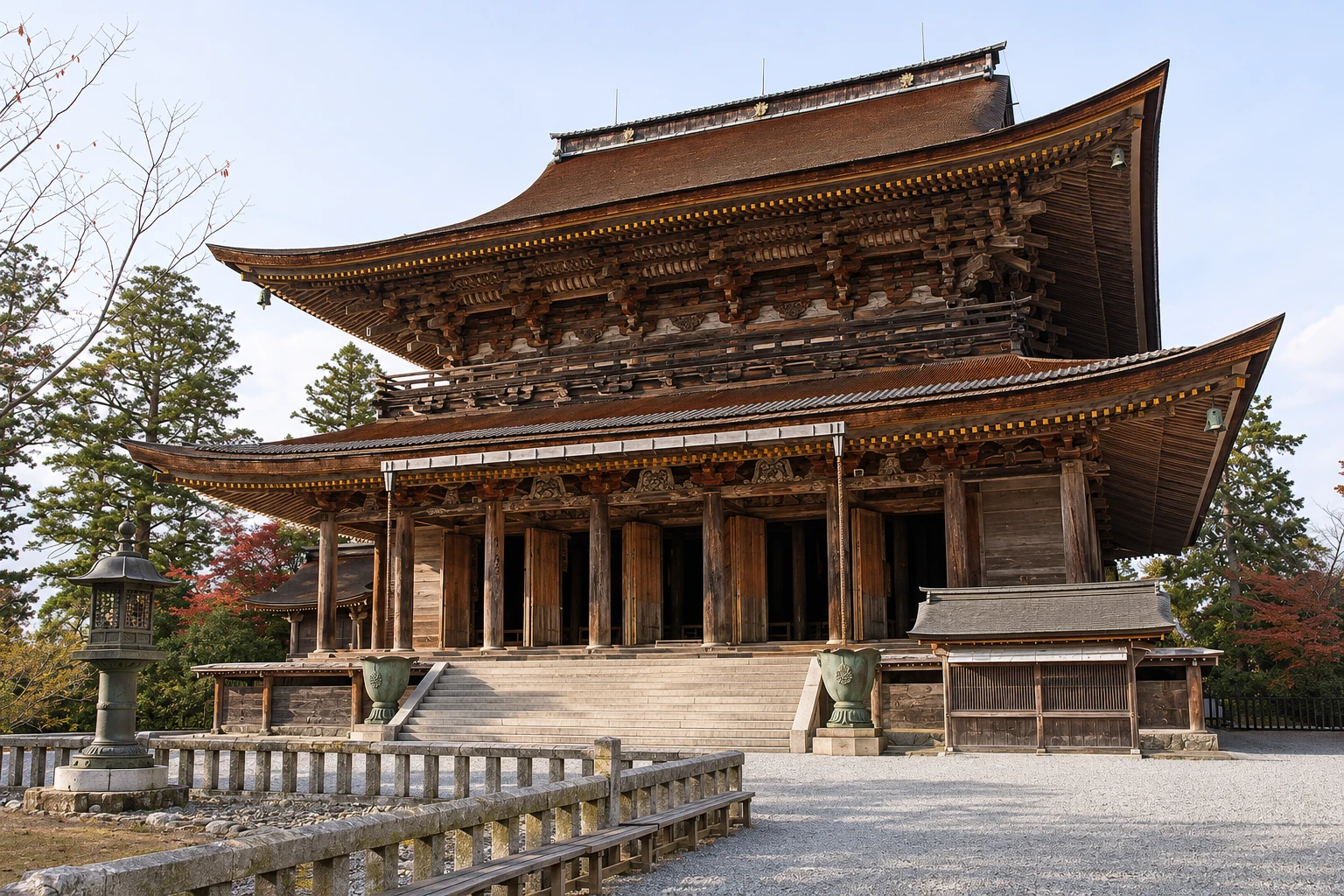
Kinpusen-ji Temple in pictures
These pictures are illustrations based on the real place, not photographs. They may differ from the place.
Click the picture to enlarge it.
Discover
About Kinpusen-ji Temple
Kinpusen-ji is the main temple of Mount Yoshino and one of the centers of Shugendo, the practice of mountain ascetics. Tradition attributes its founding in the 7th century to En no Gyoja, who is said to have seen the deity Zao Gongen in a vision on Mount Sanjogatake, farther south, and carved its image from cherrywood. Since then, Yoshino has been the starting point for pilgrimages to the Omine mountains.
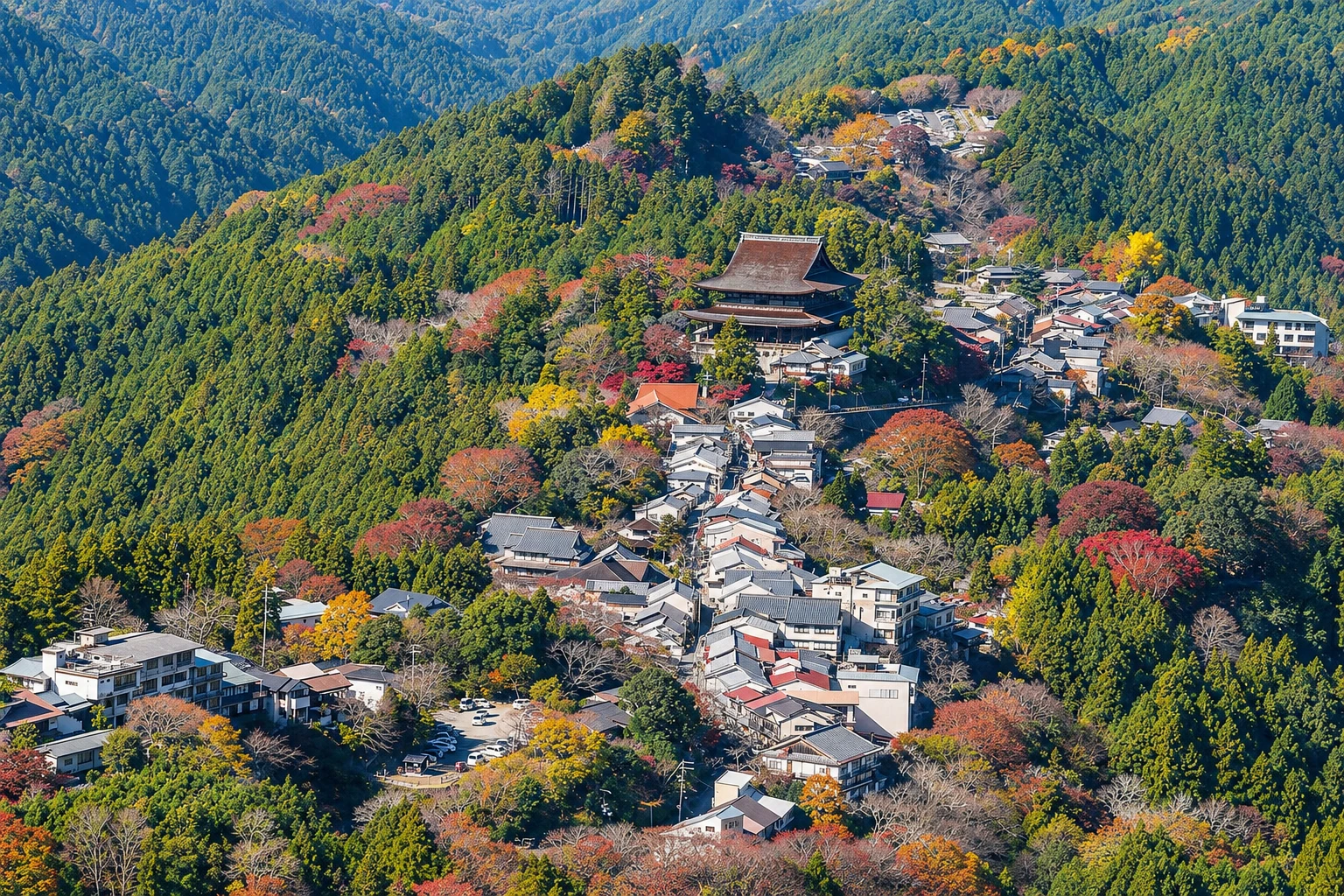
The main hall, the Zao-do, was rebuilt at the end of the 16th century and is about 34 meters high, supported by columns made from whole trunks of different trees, some still retaining their natural shapes. It is one of the largest wooden structures in Japan and a national treasure. From outside, the cypress-bark roof dominates the village of Yoshinoyama.
Inside, three Zao Gongen statues of about 7 meters, blue, with bristling hair and one leg raised, represent the deity in its wrathful, protective form. They are shown to the public only during special opening periods announced by the temple; at other times they remain behind closed doors. The temple is also part of the World Heritage listing for the Kii Mountains.
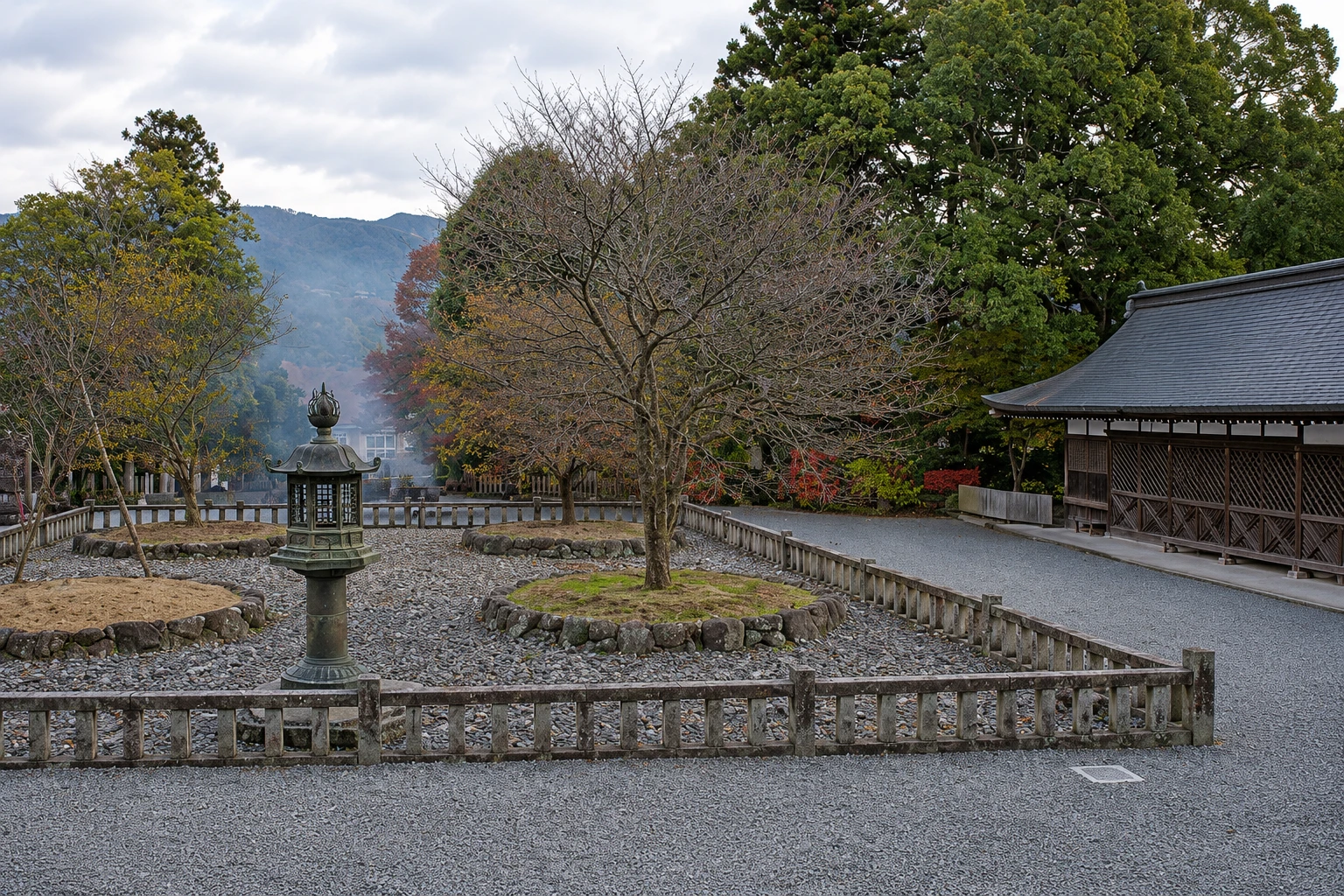
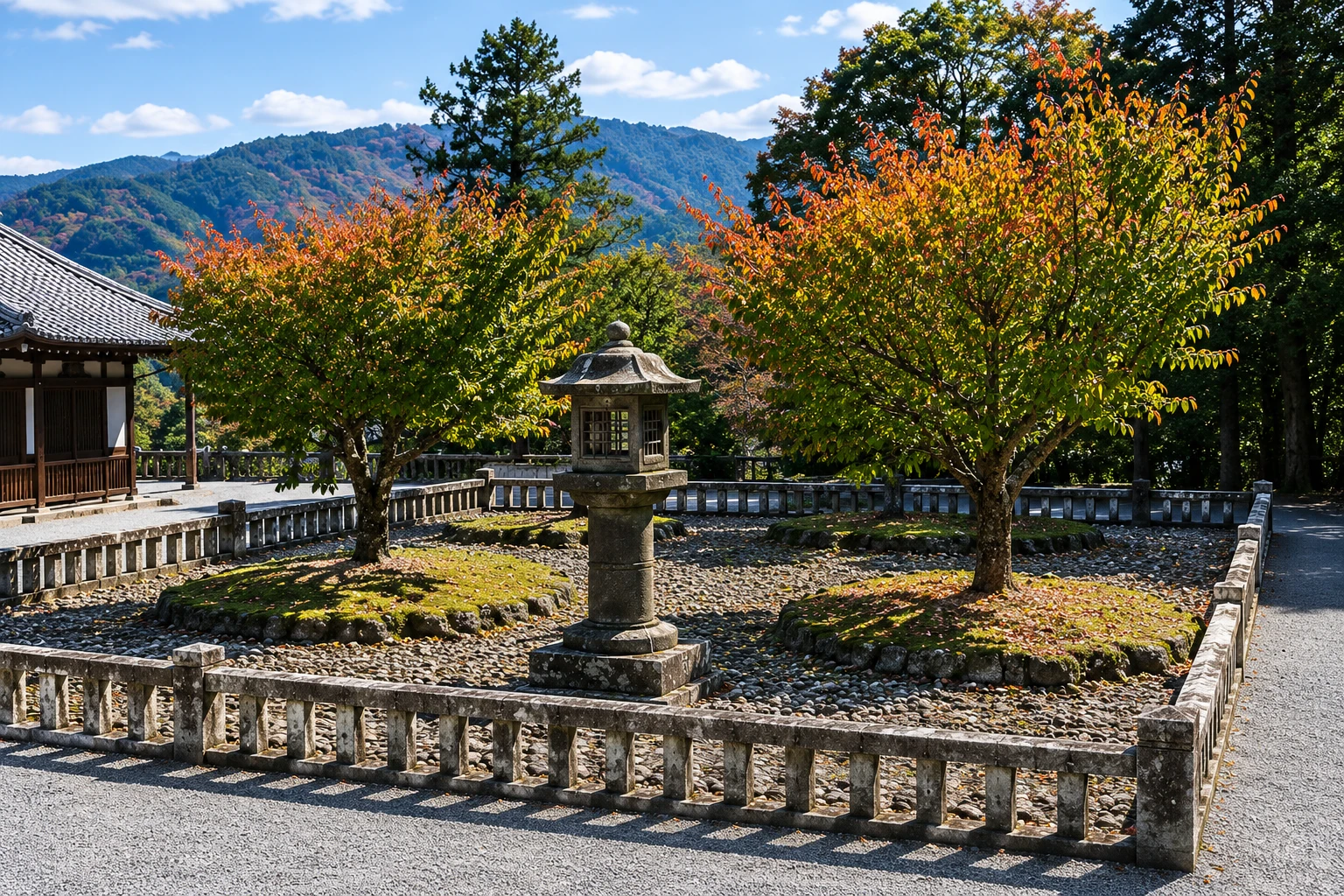
Around the hall are other halls, stone lanterns and, in the courtyard, four fenced cherry trees, a reminder of the place where a 14th-century prince held his last party before a battle. On the main street, a few steps away, there are teahouses and shops selling kuzu and religious items.
Before you go
Practical information
Cidade Turismo reviews its information regularly, but something may have changed. Check with the place before planning your trip.
How much time to set aside
About 30 minutes to 1 hour.
Best time
In the morning, before the tour groups. During special opening periods there are lines to see the statues. Check the temple calendar and opening times.
How to get there
About a 20-minute walk from Yoshino Station, or a 10-minute walk from the upper ropeway station, along Yoshinoyama’s main street.
Tip
Check in advance whether there will be a special opening of the Zao Gongen statues on the date of your trip. Notice the natural-trunk columns inside the Zao-do.
Official website
Your questions
Frequently asked questions about Kinpusen-ji Temple
What is the Zao-do of Kinpusen-ji?
The temple’s main hall, about 34 meters tall, one of the largest wooden structures in Japan and a national treasure.
Can you see the statues of Zao Gongen?
Only during the special opening periods announced by the temple. Outside those times, the statues remain behind closed doors.
What is Shugendo?
A Japanese religious practice of mountain ascetics that blends Buddhism with the worship of nature deities. Yoshino is one of its centers.
How long does a visit to Kinpusen-ji take?
About 30 minutes to 1 hour, including the Zao-do and the courtyard.