Verona and Lake Garda

Veneto · Trentino-South Tyrol · Lombardy

Verona and Lake Garda

The city of the Roman Arena and of Romeo and Juliet, half an hour from Italy's largest lake, with Scaligeri castles, boats between the villages and the Monte Baldo cable car.

North

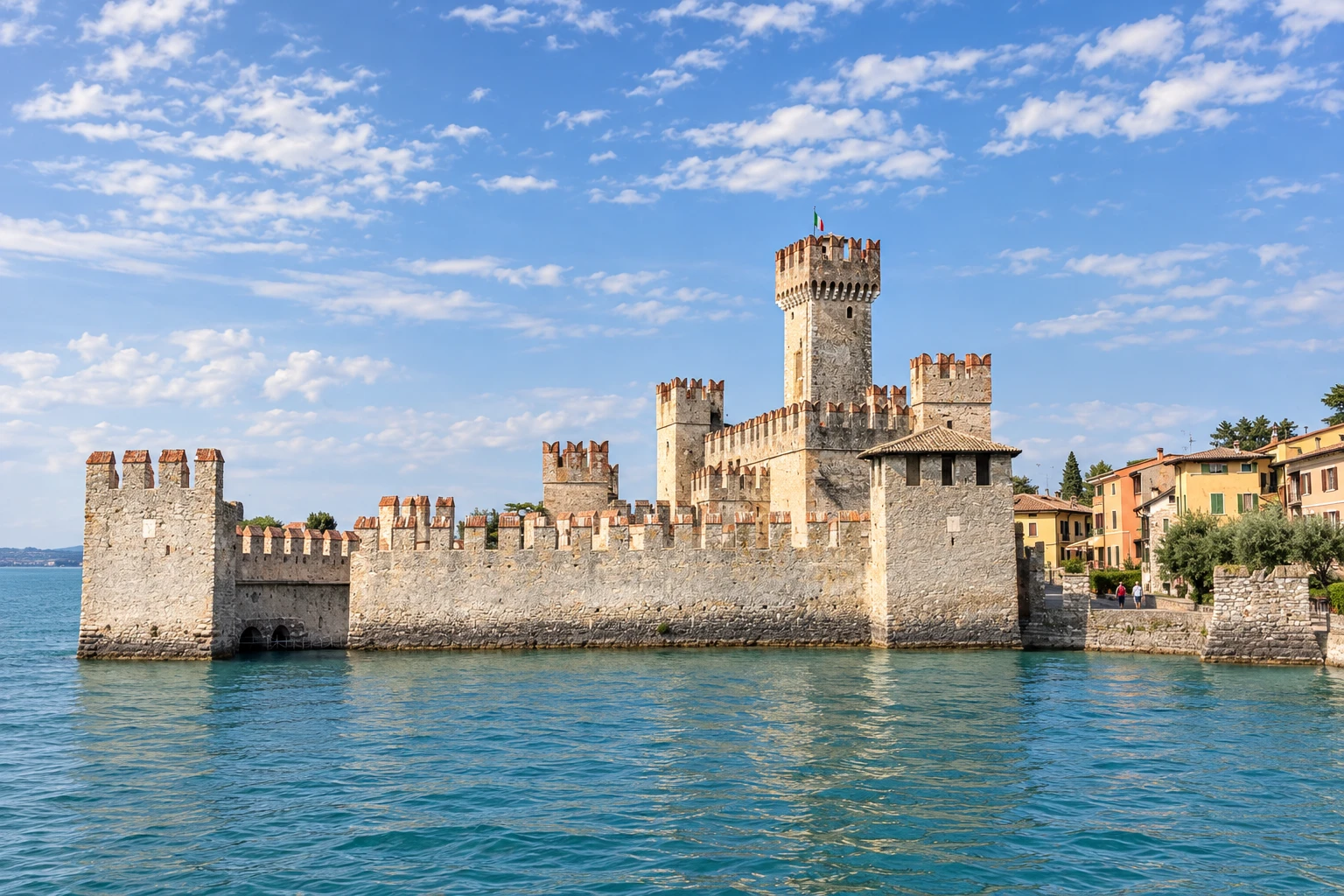
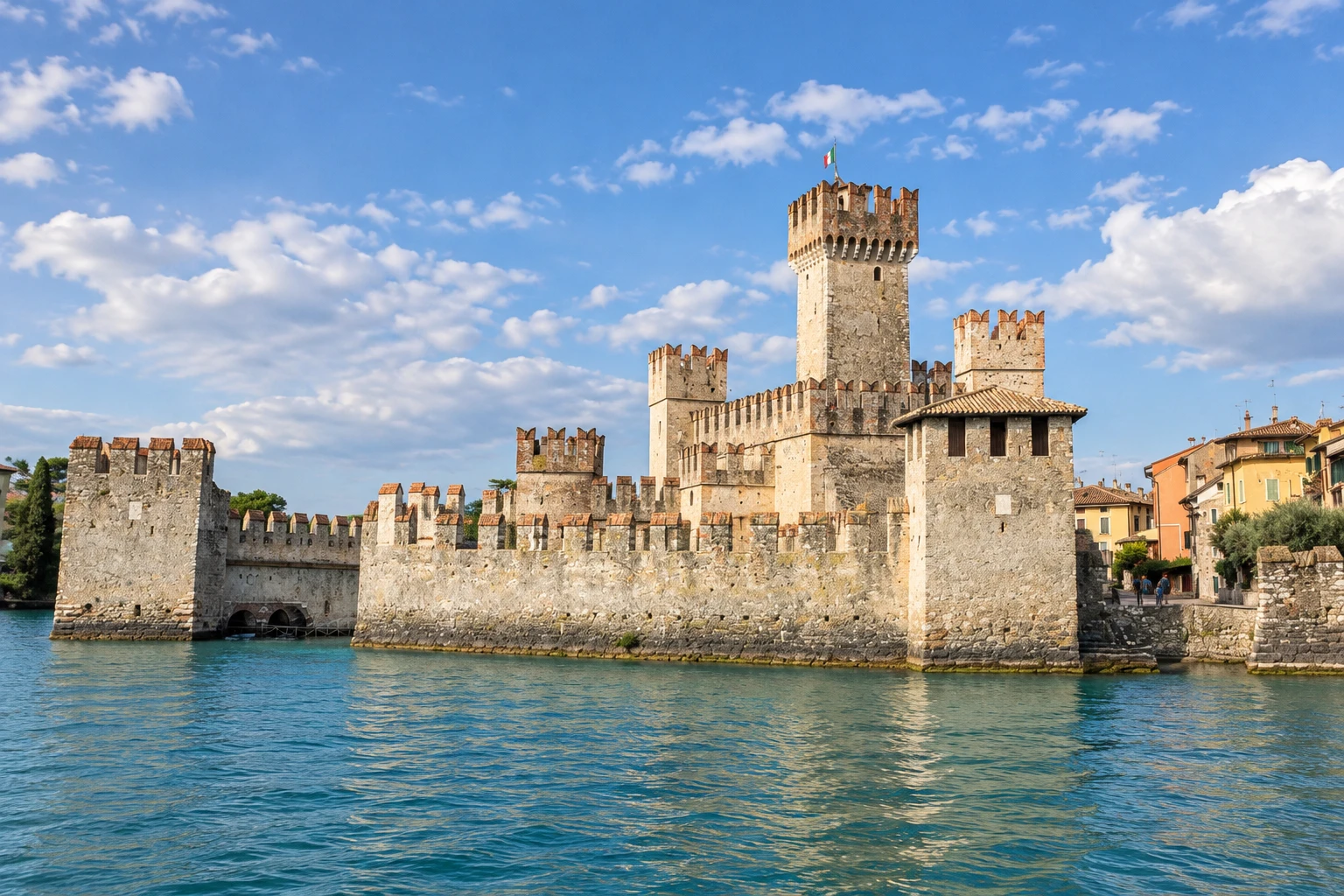
In the photo: Castello Scaligero de Sirmione, Lago de Garda

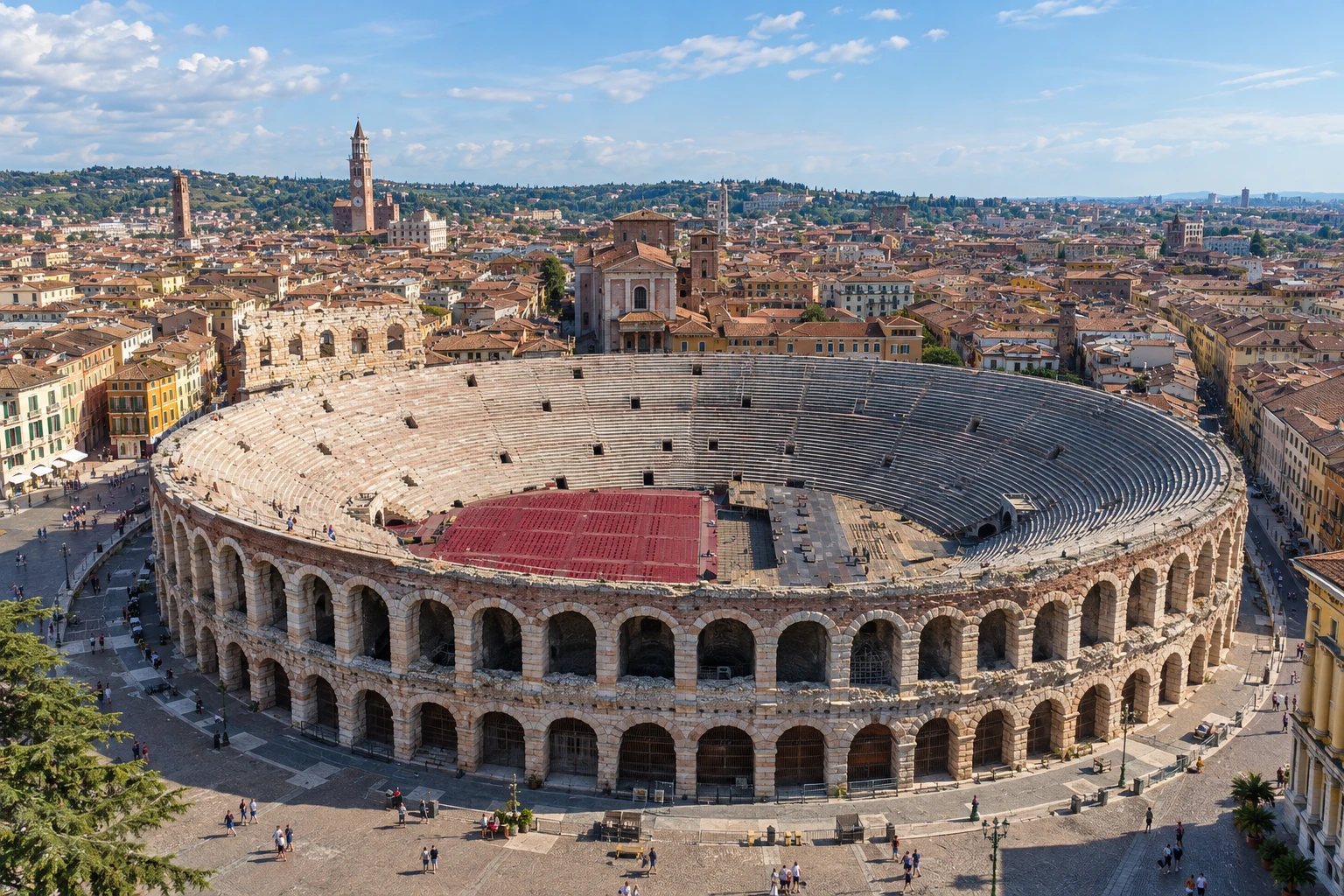
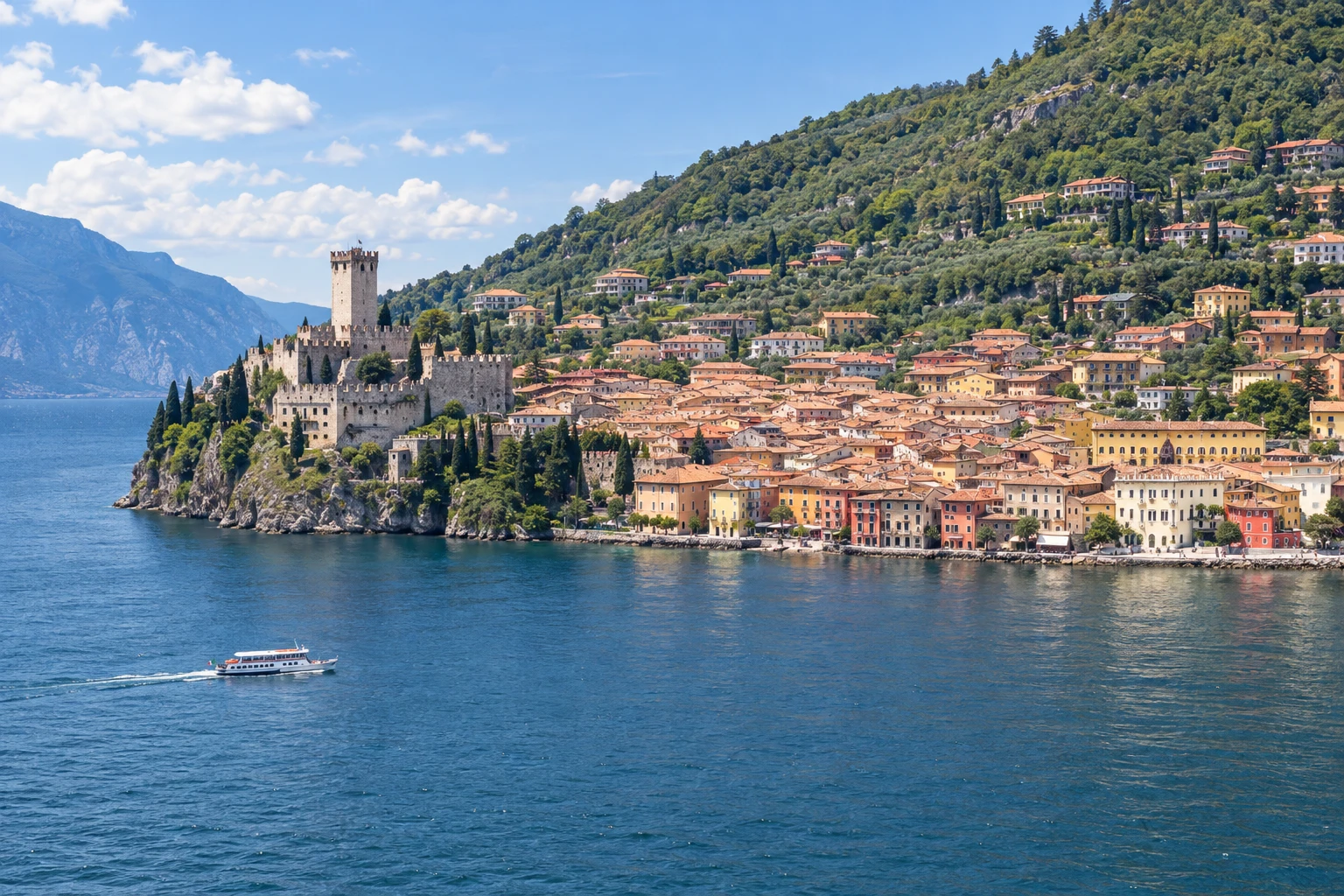
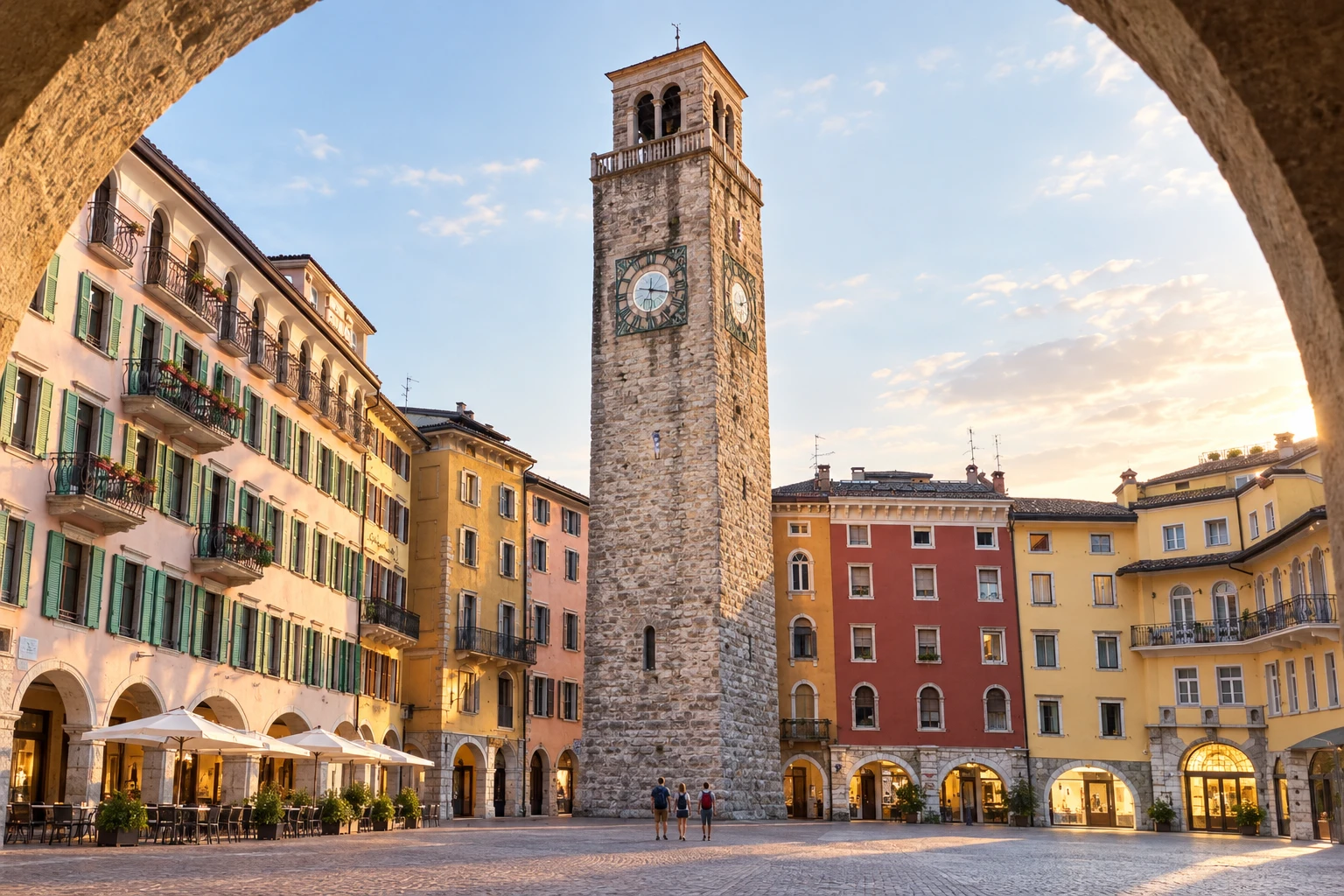
Illustrative images. The pictures in this guide are illustrations based on the real place, not photographs, and may differ from it.

Get it on Google Play

Get to know the place

A region to enjoy
at your own pace.

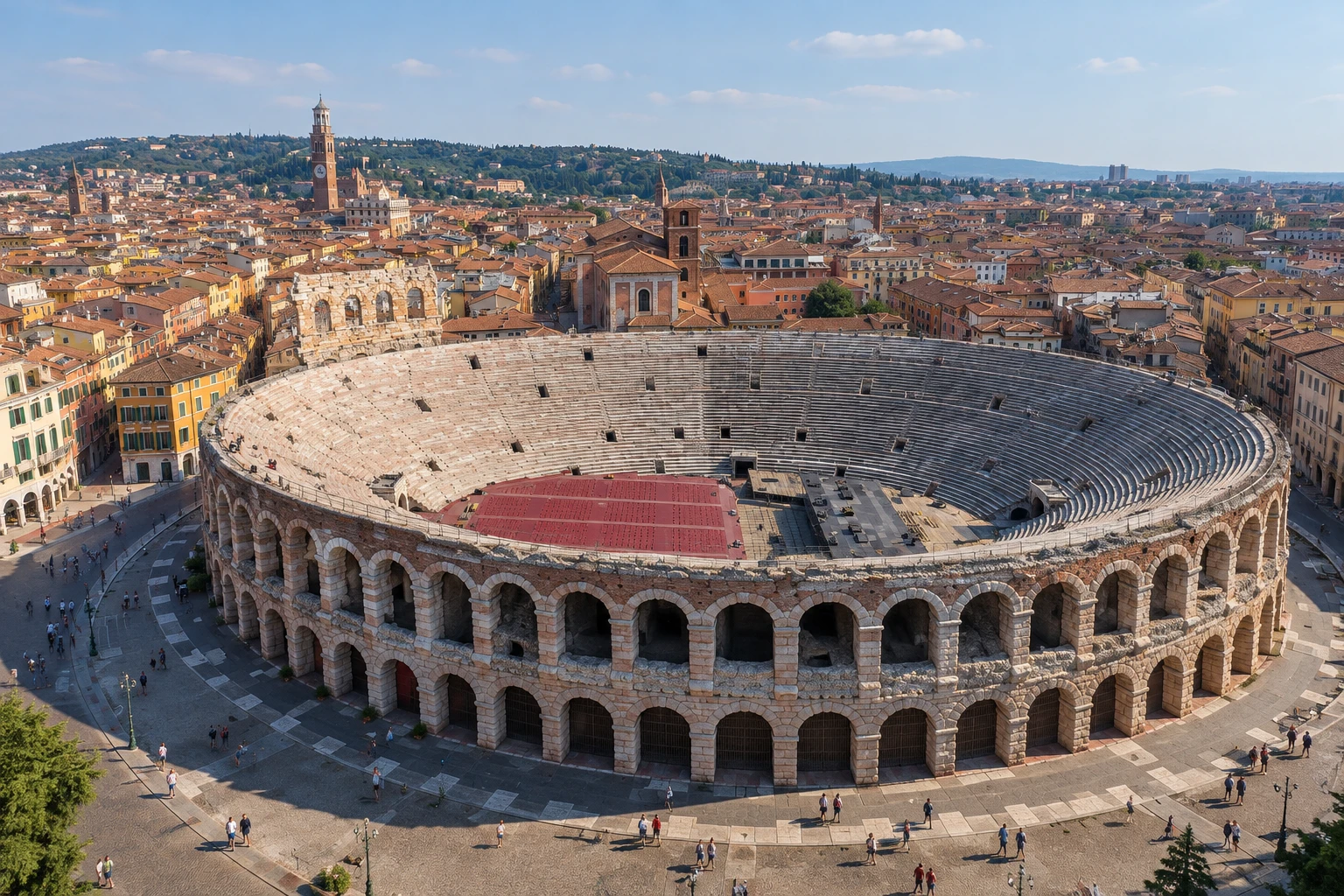
Verona is in Veneto, on the banks of the Adige River, on the route between Milan and Venice. The historic center, a UNESCO World Heritage site, houses a 1st-century Roman arena still used for opera, medieval squares and the Romanesque and Gothic churches built during the time of the Scaligeri, the Della Scala family that ruled the city in the 13th and 14th centuries. It is also the city where Shakespeare set Romeo and Juliet.

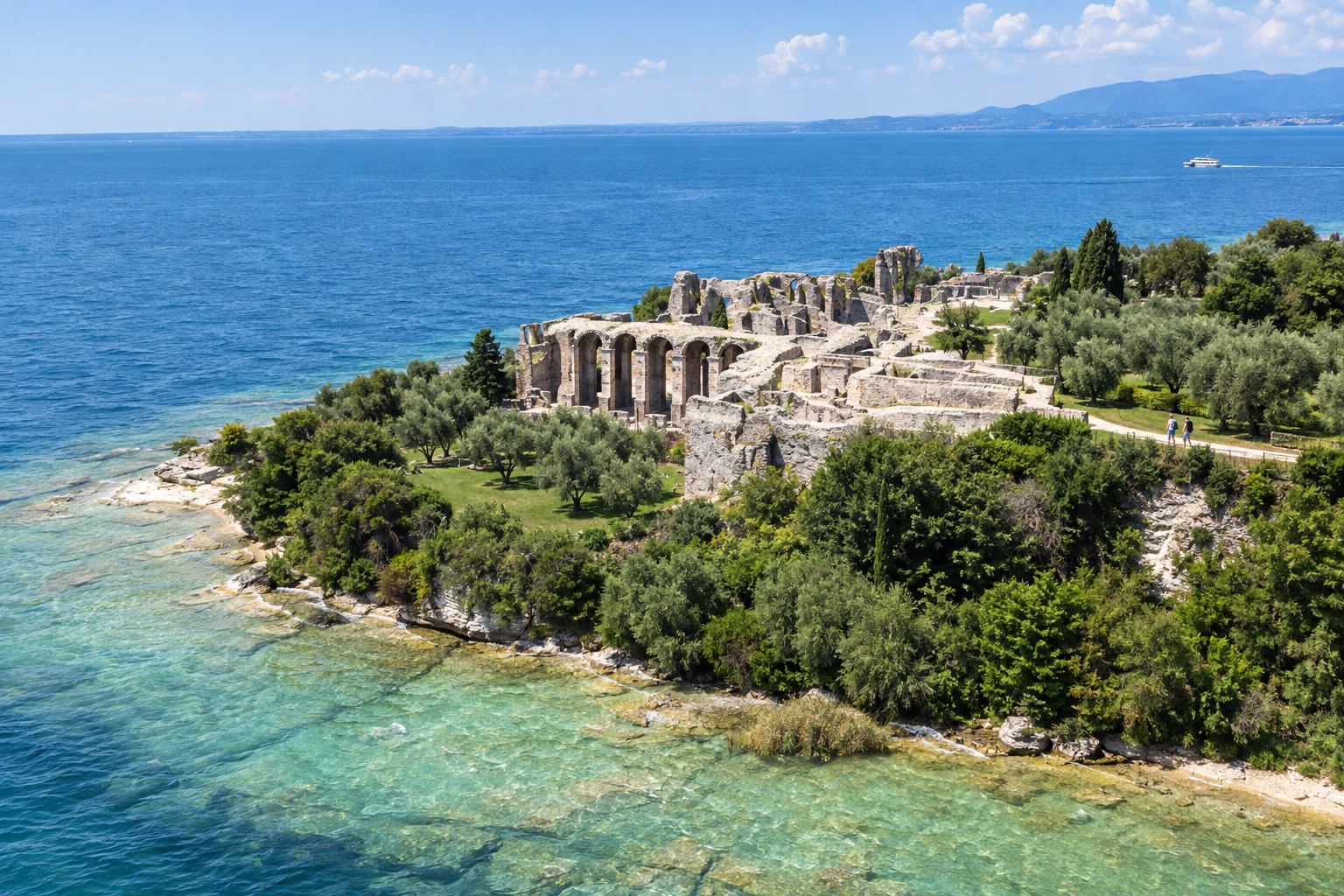
About 30 kilometres to the west begins Lago de Garda, the largest lake in Italy. Its shores are divided among three regions: Lombardy to the west, Veneto to the east and Trentino-Alto Adige to the north. In the south, where the lake is wide and surrounded by hills, sits Sirmione, on a narrow peninsula with a castle surrounded by water and the ruins of a large Roman villa.

Heading up the eastern shore, the Gardesana road passes fishing villages until Malcesine, at the foot of Monte Baldo, with another Scaligeri castle and a cable car that climbs nearly 1,800 metres. At the northern end, where the lake narrows between rock walls, Riva del Garda has squares with an Austrian feel, a fortress on the water and a waterfall that runs inside a gorge.

For Brazilians, Verona works well as a base: Verona Porta Nuova station receives high-speed trains from Milan, Venice and Bologna, and regional buses and trains run to the lake. In season, the Navigazione Laghi boats link the lakeside villages and are a way to see the lake without facing Gardesana traffic.

This destination brings together 4 cities: Verona, Malcesine, Riva del Garda, Sirmione.

Share: WhatsApp
Traveler, share your experiences through photos Up to 5 photos of each place you visited.

One destination, many paths

The cities on this trip

Start with one city or combine several in your itinerary.

Where Verona and Lake Garda is The star marks the nearest capital, Trento.
TrentoVeronaMalcesineRiva del GardaSirmione

Outlines: ISTAT, limites administrativos 2026, CC BY 4.0. Adapted by Cidade Turismo.

How to get there: Verona and Lake Garda

Aeroporto di Verona-Villafranca Valerio Catullo (VRN), in Villafranca di Verona · 12 km to Verona

Aeroporto di Venezia Marco Polo (VCE), in Veneza · 125 km to Verona

Connections from Brazil usually involve a stopover in another city. Check before booking. Verona Villafranca Airport (VRN) is about 12 km from the centre. You can also arrive via Venice (VCE) or Milan (MXP) and continue by train. High-speed trains link Verona Porta Nuova with Milan, Venice and Bologna; to the lake, take buses, regional trains to Desenzano or Peschiera and boats.

Suggested arrival point: Verona

Verona
Veneto · Verona and Lake Garda Suggested arrival point

Verona

Verona is the city of the Arena di Verona, a Roman amphitheatre that hosts opera in summer, and of the Casa di Giulietta, linked to Romeo and Juliet. The centre, surrounded by the bend of the Ádige, has the Piazza Bra, the Piazza delle Erbe, the Torre dei Lamberti and the Piazza dei Signori. There is also the Museo di Castelvecchio, the churches of San Zeno, Sant'Anastasia and the Duomo, the Ponte Pietra, the Teatro Romano, the Castel San Pietro and the Giardino Giusti.

Malcesine
Veneto · Verona and Lake Garda

Malcesine

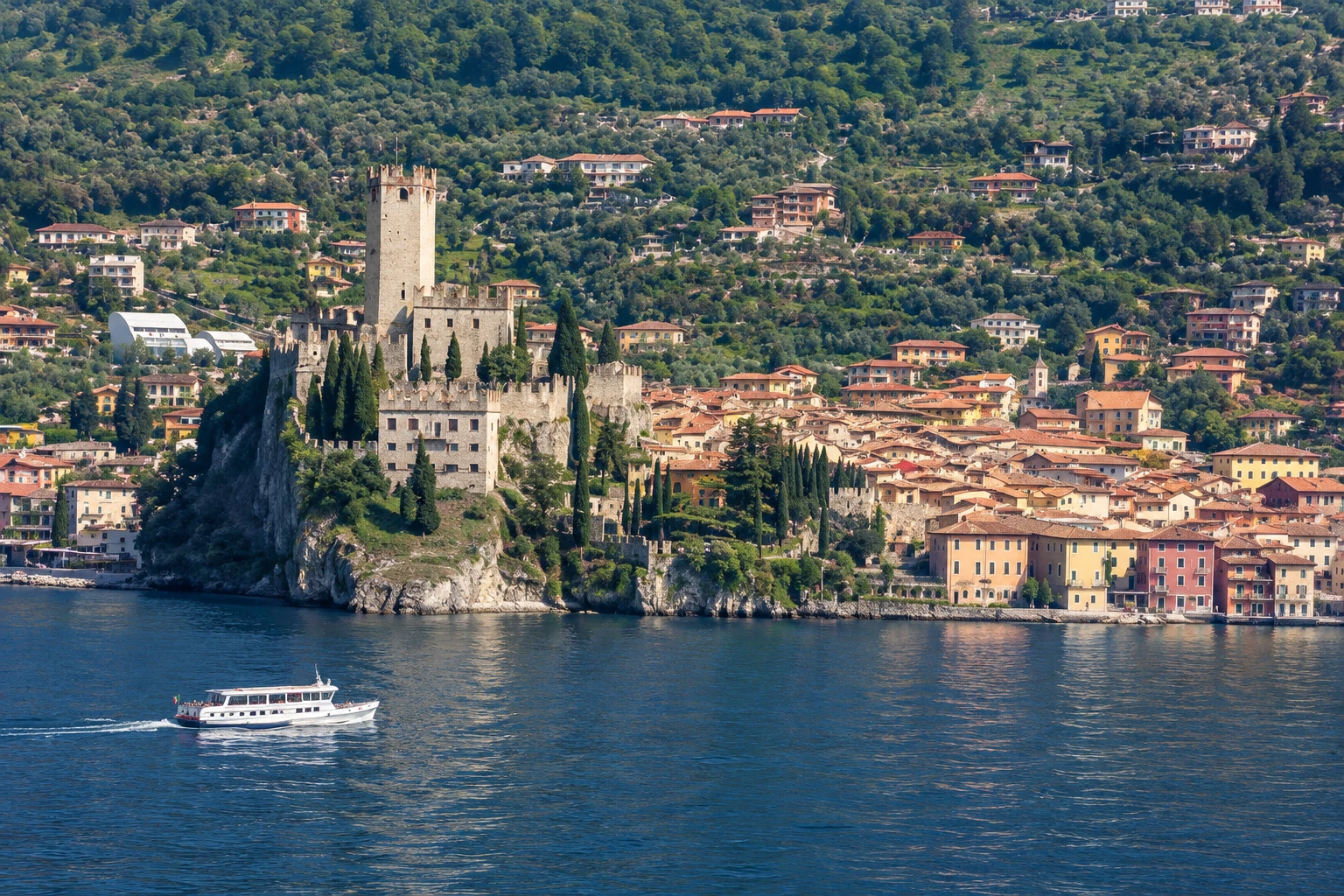
Malcesine is the northernmost village on the Veronese shore of Lago de Garda, at the foot of Monte Baldo. The centre, with narrow stone streets descending to the small harbour, is dominated by the Castello Scaligero di Malcesine, perched on a rock by the water, which Goethe sketched in 1786. From the upper part of the village the Funivia Malcesine–Monte Baldo departs — a cable car that climbs nearly 1,800 metres to the pastures and trails of Monte Baldo.

Riva del Garda
Trentino-South Tyrol · Verona and Lake Garda

Riva del Garda

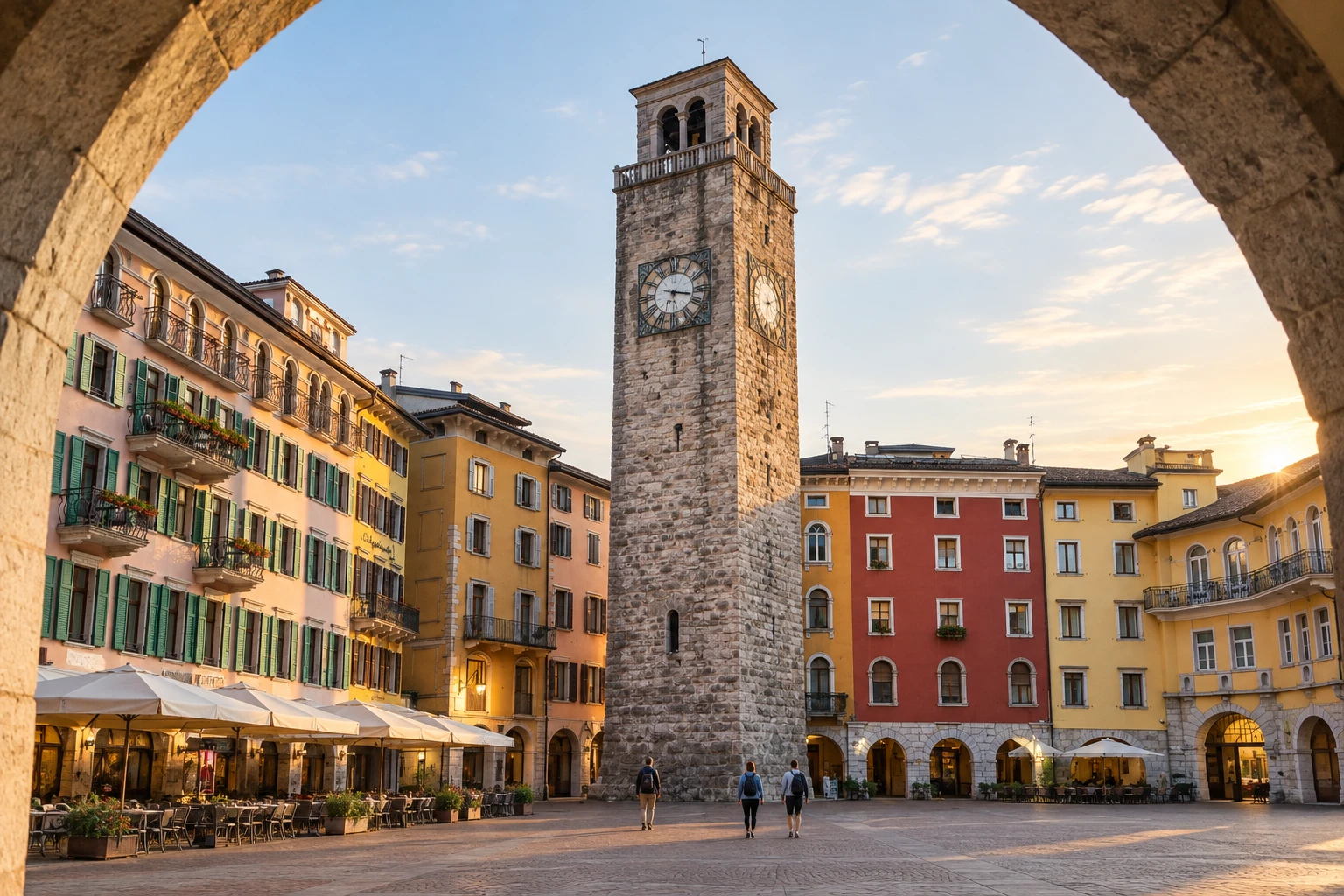
Riva del Garda lies at the northern tip of the lake, where the water narrows between mountains. It was Austrian until 1919, and that shows in the architecture. The Torre Apponale overlooks Piazza III Novembre and the old harbour; next to it, the Rocca di Riva, a waterside fortress, houses the MAG Museo Alto Garda. The baroque church dell'Inviolata, the Bastione viewpoint, the Strada del Ponale carved into the rock, and the Cascata del Varone round out the visit.

Festivals and events

Festivals Verona and Lake Garda

Dates change every year: check this year's date before you travel.

Festival calendar in Italy

The local experience

Things to do in Verona and Lake Garda

Verona · Veneto · Archaeological site

Verona Arena

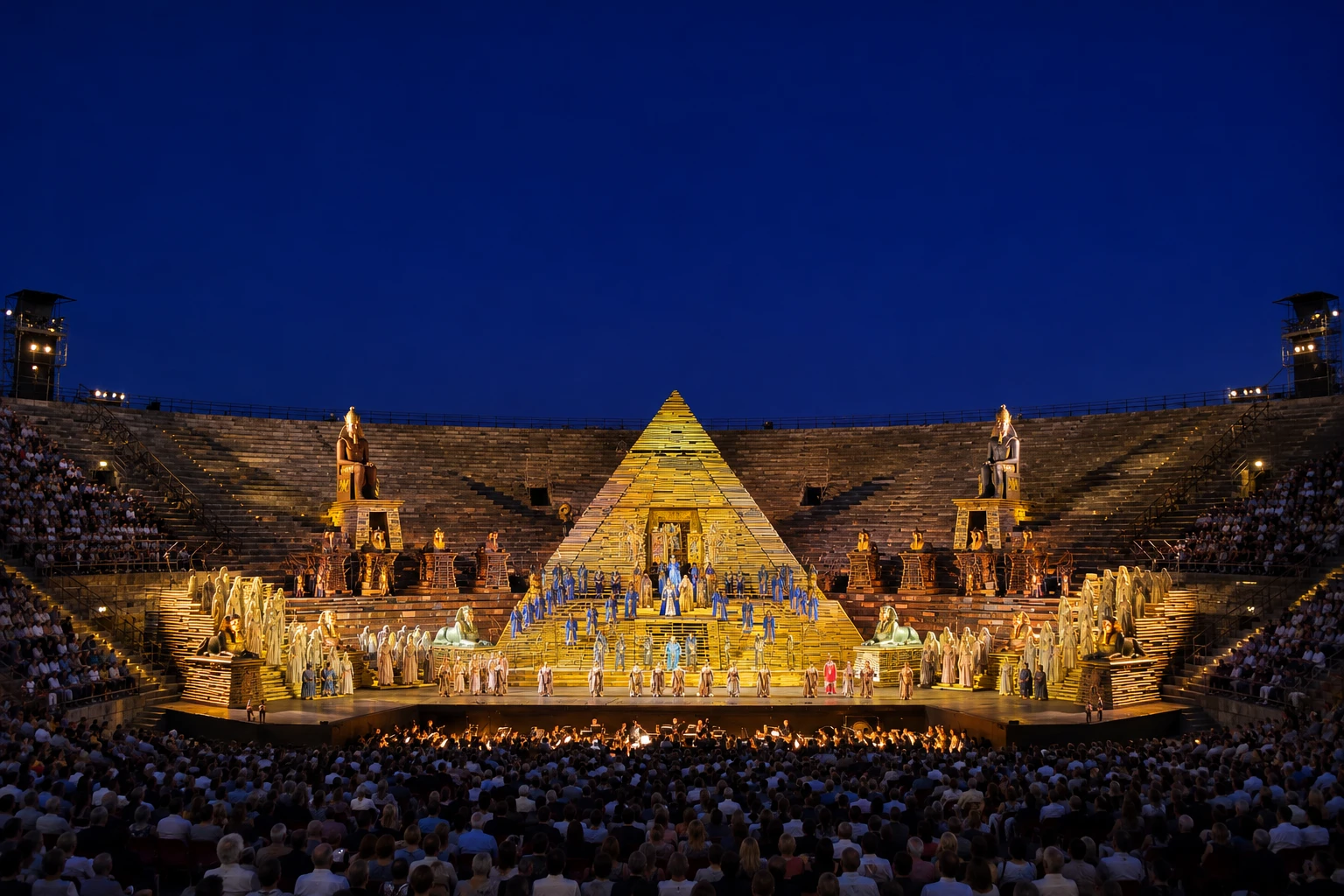
1st-century Roman amphitheatre, one of the best-preserved in the world. Since 1913 it has hosted the summer opera festival and, for the rest of the year, concerts and visits to the monument.

Explore Verona Arena

Riva del Garda · Trentino-South Tyrol · Monument

Apponale Tower

Medieval tower 34 metres high on Piazza III Novembre, facing the old harbour, with an internal staircase to the top and the angel weather-vane that became a symbol of Riva.

Explore Apponale Tower

See 21 more places in Verona and Lake Garda

To choose before you go

Tours in Verona and Lake Garda

Where each tour starts, how long it takes, how it is done, what is included and the price range.

Arena di Verona and Piazza Bra

From Piazza Bra (15 min on foot from Porta Nuova station) Amphitheatre visit and walk about 2 hours morning easy (steps on the stands)

The Arena di Verona, the Roman amphitheatre from year 30, is the third largest in Italy and the best preserved, with 44 stone tiers originally for 30,000 spectators; it lost the outer ring in an earthquake in 1117 (the "ala", the section of four arches, remains), but the stands and the arena are intact. Since 1913, with Verdi’s Aida, it hosts the Summer Opera Festival, the largest open-air opera festival in the world, with about 15,000 people per night from June to September; during the day you can visit the interior and climb the high steps, with Piazza Bra below. The square, Verona’s largest, features the Liston, the pink marble promenade of cafés, the Palazzo Barbieri (city hall), the Gran Guardia and gardens; at Christmas the Arena’s metal star crosses the square. The pedestrian Via Mazzini links the Bra to Piazza delle Erbe.

Stops: Arena di Verona, Piazza Bra.

Includes: Separate paid ticket for the daytime visit (box office on site or online; the Verona Card includes it); festival performances have their own tickets on the Fondazione Arena website. Square is free.

Tip: For the opera, buy in advance on the official website; the places on the stone steps (gradinata), with unreserved seating, are the cheapest and require arriving early with a cushion; bring a jacket and insect repellent. Daytime visits close on performance evenings.

Best time: Year-round for visits; the opera festival runs June to September.

Casa di Giulietta, Piazza delle Erbe, Torre dei Lamberti and Piazza dei Signori

From Via Cappello, Verona Walk through the center with a climb up the tower about 3 hours morning or afternoon moderate (368 steps or elevator)

Casa di Giulietta is the 13th-century Gothic house that the city identified in the 1930s with Shakespeare’s Capulet family, with the balcony added at the same time and a bronze statue of Juliet in the courtyard whose right breast is touched for luck; the courtyard is free and crowded, the house is a museum. Piazza delle Erbe, the Roman forum, is the market with the Madonna Verona fountain from 1368, the column of St. Mark and the painted façades of the Case Mazzanti; Torre dei Lamberti, 84 m high, begun in 1172, is climbed by stairs or elevator for views over the squares and the hills. The Arco della Costa, with a whale rib hung from it, leads to Piazza dei Signori, the power square, with the statue of Dante, exiled in Verona, the Loggia del Consiglio and the Palazzo del Capitano; beside them are the Arche Scaligere, the Gothic tombs of the Della Scala, the city’s rulers, with knights on top.

Stops: Casa di Giulietta, Piazza delle Erbe, Torre dei Lamberti, Piazza dei Signori.

Includes: Juliet’s courtyard free of charge; house-museum with admission; Torre dei Lamberti with admission (combined ticket with the Galleria d'Arte Moderna); squares free of charge.

Tip: Go to Juliet’s courtyard before 9:00 or after 19:00 to avoid competing for the balcony; the house-museum is dispensable. Climb the tower at late afternoon. Piazza delle Erbe has stalls by day and bars at night.

Best time: All year; in December Piazza dei Signori hosts the Christmas market.

Castelvecchio, Ponte Scaligero and the Basilica di San Zeno

From Corso Castelvecchio, Verona Museum and riverside walk about 3 hours afternoon easy

The Museo di Castelvecchio occupies the brick castle of the Della Scala, from 1354 to 1376, on the banks of the Adige, restored by Carlo Scarpa between 1958 and 1974 in one of the most studied museography projects of the 20th century: medieval sculpture, Pisanello, Mantegna, Bellini, Veronese and the equestrian statue of Cangrande I, suspended on a concrete pedestal. The Ponte Scaligero, the castle’s fortified bridge, from 1355, was blown up in 1945 and rebuilt with the original stones; it crosses the river with its battlements. From there, a 15-minute walk along the bank leads to the Basilica di San Zeno, Romanesque, dating from 1120 to 1138, with the Wheel of Fortune rose window, the 48 bronze panels on the doors from the 11th and 12th centuries depicting biblical scenes, the crypt with 49 columns where the body of the patron saint lies, and Mantegna’s triptych on the altar; tradition says Romeo and Juliet were married in the crypt. The cloister has Romanesque and Gothic arches.

Stops: Museo di Castelvecchio, Basilica di San Zeno.

Includes: Castelvecchio with separate paid admission (Verona Card includes it); San Zeno with a small admission fee (combined churches ticket for Verona).

Tip: Allow two hours for Castelvecchio and take time to see Scarpa’s layout. Buy the combined ticket for the four churches (San Zeno, Duomo, Sant'Anastasia, San Fermo) at the first one you visit.

Best time: All year round.

Duomo, Sant'Anastasia, Ponte Pietra and the Roman Theatre

From Piazza Duomo, Verona Walk through the northern old town and the river about 3 hours morning easy

The Duomo di Verona, Romanesque from 1187 with a Gothic façade, houses Titian’s Assumption, the baptistery of San Giovanni in Fonte with the marble font from 1200, and the Basilica of Sant'Elena with 4th-century mosaics. The Basilica di Santa Anastasia, the city’s largest church, Gothic, built from 1290 to 1481, features the “gobbi,” two hunched figures that support the holy water basins, and Pisanello’s 1435 fresco of Saint George and the princess. The Ponte Pietra, the Roman bridge from the 1st century BC, rebuilt after 1945, crosses the Adige toward the Roman Theatre and Museo Archeologico, the 1st-century BC theatre excavated on the San Pietro hill, with stands reused in summer for the theatre and jazz festival, and the museum in the former convent above, with mosaics and statues; from there the funicular or the stairway climb to Castel San Pietro, offering the view of Verona with the river bending in an S.

Stops: Duomo di Verona, Basilica di Santa Anastasia, Ponte Pietra, Roman Theatre and Museo Archeologico.

Includes: Duomo and Sant'Anastasia with the combined churches ticket; Roman Theatre and museum with admission (Verona Card includes); Ponte Pietra free of charge.

Tip: Do Ponte Pietra and Castel San Pietro at the end of the day, with the low light over the city; in the morning, visit the churches. The Roman Theatre summer festival has tickets on the Estate Teatrale Veronese website.

Best time: All year; from June to September, performances at the Roman Theatre.

Castel San Pietro and Giardino Giusti: the two views of Verona

From Ponte Pietra (funicular) and Via Giardino Giusti Viewpoint and garden about 2 h 30 late afternoon moderate (stairway or funicular)

Castel San Pietro is the terrace high on the hill across the river, on the site of the castle and the Austrian fortress of 1854, offering the full view of Verona: the Adige curving, the towers, the Arena in the background and the hills; you reach it by the 2017 funicular, a 1-minute ride next to the Roman Theatre, or by a 10-minute staircase. Nearby is Giardino Giusti, from 1570, the Giusti family’s Renaissance garden, protected and open to visitors, with the cypress tunnel Goethe described, the boxwood maze, statues, grottoes and the stone “mascarone” at the top of the stairway, from which you see the city from another angle; Mozart and Goethe visited. Between them lies the Veronetta district, the university side and the cheaper bank of the river, with trattorias.

Stops: Castel San Pietro, Giardino Giusti, Ponte Pietra.

Includes: Castel San Pietro free of charge; funicular paid separately; Giardino Giusti with admission.

Tip: Go up to Castel San Pietro half an hour before sunset; the terrace fills up but is spacious. Giardino Giusti closes at dusk: visit it first.

Best time: All year; in spring the garden is at its best.

Sirmione: Castello Scaligero, Grotte di Catullo and the thermal baths

From Sirmione (bus from Desenzano or ferry; car only up to the entrance) Village on the peninsula and Roman site about 4 hours morning or late afternoon easy

Sirmione is the 4 km peninsula that juts into the Lago di Garda from the south, with the medieval village at the tip, surrounded by water and closed to cars from the entrance. The Castello Scaligero di Sirmione, from 1277, with battlements, the fortified harbor (the only preserved medieval dock) and the 47 m tower offering lake views, guards the drawbridge that leads into the village. The Grotte di Catullo, at the tip, are the largest Roman villa in northern Italy, from the 1st century, on terraces above the lake, traditionally attributed to the poet Catullus, born in Verona, with the olive grove and the museum; it is a 20-minute walk via the shopping streets or reachable by tourist train. The Chiesa di San Pietro in Mavino, from the 8th century, at the highest point, has frescoes and a bell tower. The thermal baths of Sirmione, with sulfurous water at 69 °C, include the Aquaria spa park, with pools over the lake; Jamaica Beach, the stone slabs at the foot of the Grotte, is the lake bathing spot.

Stops: Castello Scaligero di Sirmione, Grotte di Catullo, Chiesa di San Pietro in Mavino.

Includes: Castle and Grotte di Catullo with separate paid tickets (state sites free on the first Sunday of the month); church free of charge; thermal baths paid separately.

Tip: Go before 10:00 or after 17:00; at midday in summer the village is crowded. Leave the car in the entrance parking lot and enter on foot. The ferry from Desenzano, Peschiera or Garda is the most scenic arrival.

Best time: From April to October; July and August are crowded; in winter the village is quiet and the thermal baths operate.


See 4 more tours

Malcesine: Castello Scaligero and the Monte Baldo cable car

From Malcesine (bus from Verona/Garda or boat) Village, castle and rotating cable car about 5 hours morning easy (cable car; optional trails)

Malcesine, on the eastern shore of the lake at the foot of Monte Baldo, is the village of stone alleys around the harbor and the Castello Scaligero di Malcesine, the 1277 castle on a rock in the water, where Goethe was detained for a day in 1786 while sketching it, suspected of espionage; inside are the natural history museum, the Goethe room and the tower with lake views. The Funivia Malcesine–Monte Baldo rises in two sections to 1,760 m in 15 minutes, with rotating cabins on the upper section, moving from the Mediterranean climate of olive trees to alpine meadows with the whole lake below and, on clear days, the Alps and the plain; at the top there are ridge trails, paragliding and, in winter, skiing. Monte Baldo is called the 'garden of Europe' for its abundance of flowers. The village has the harbor square, the Palazzo dei Capitani and pebble beaches.

Stops: Castello Scaligero di Malcesine, Funivia Malcesine–Monte Baldo.

Includes: Castle with admission; cable car paid separately (return; long queues in August, online tickets available); trails on the summit free of charge.

Tip: Take the first cabin in the morning for clear skies and no queue; at the top it is about 10 °C cooler. The cable car closes for maintenance during periods in spring and autumn: check the website.

Best time: From April to October for the lake; the cable car operates most of the year, with maintenance pauses.

Riva del Garda: Torre Apponale, Rocca, Bastione and the Cascata del Varone

From Riva del Garda (center) Lakeside town walk with ascent and waterfall about 4 hours morning or afternoon moderate (ascent to the Bastione, 20 min)

Riva del Garda, at the northern tip of the lake in Trentino territory, is the city of winds, with sailors and windsurfers in the morning (the Pelér) and in the afternoon (the Ora), tucked between the mountains. The Piazza III Novembre, at the harbor, has the Torre Apponale, from 1273, with 34 m and 165 steps to the terrace, and the Palazzo Pretorio; the Rocca di Riva, the 1124 fortress surrounded by water, houses the MAG Museo Alto Garda, with a picture gallery and archaeology; the Chiesa dell'Inviolata, from 1603, is the octagonal Baroque church with stuccoes. The Bastione di Riva del Garda, the Venetian tower from 1508 on the hillside, a 20-minute climb (or by panoramic elevator), has a terrace overlooking the town and the lake. The Cascata del Varone, 3 km away, is a 98 m waterfall inside a rock gorge, visited by walkways on two levels inside the cave, with a constant spray; it is reachable by local bus or by bicycle. The lakeside cycle path goes to Torbole.

Stops: Torre Apponale, Rocca di Riva and MAG Museo Alto Garda, Chiesa dell'Inviolata, Bastione di Riva del Garda, Cascata del Varone.

Includes: Tower, MAG, Bastione (elevator) and Cascata del Varone with separate paid tickets; church free of charge.

Tip: Do the waterfall route in the morning and the Bastione at sunset. Riva is the base for the Strada del Ponale and the Arco trails; renting a bike is the way to get around town.

Best time: From April to October; the waterfall is open year-round, with reduced hours in winter.

Strada del Ponale: the old cliffside road, on foot or by bicycle

From Riva del Garda (trailhead at the end of the waterfront, Porto San Nicolò) Trail or bike path on an old road about 3 hours morning moderate (300 m ascent)

The Strada del Ponale is the road carved into the cliff above the lake between 1848 and 1851 to connect Riva to the Ledro Valley, closed to cars since 1992 and converted into a path for pedestrians and bicycles: it climbs in switchbacks and through tunnels cut into the rock, with the lake 100 m below and Riva shrinking behind you, for about 6 km to the fork toward Lago di Ledro, with Austrian First World War fortifications along the way. It is one of the most popular walks around the lake—wide and nontechnical, but largely unshaded and with cyclists descending fast; the first 3 km give the full view, with the Punta Larici viewpoint above. By bicycle you continue to Lago di Ledro, at 650 m, and return the same way or by bus. The path is closed on days of rockfall or strong wind.

Stops: Strada del Ponale, Bastione di Riva del Garda.

Includes: Path with no fee; bicycle or e-bike rental in Riva paid separately.

Tip: Leave early, with water and a hat; by 11 a.m. the sun hits the entire rock face. On foot, climb to the Ponale tunnel and the viewpoint and return (2 hours); by e-bike, ride to Ledro. Check at the entrance whether it is open.

Best time: From March to November; in summer only in the morning.

Boat on Lake Garda: from Sirmione to Riva with Navigazione

From Desenzano, Sirmione, Garda or Riva (pier) Regular boat on the lake about 4 hours (entire stretch) full day easy

Lago di Garda (Lake Garda) is Italy’s largest lake, 52 km long and 370 km², spanning three regions (Lombardy, Veneto and Trentino): wide and Mediterranean in the south, with olive trees, lemon trees and vineyards, narrow and alpine in the north, between rock walls. Navigazione Laghi scheduled boats link all the towns: the south-to-north crossing, from Desenzano or Sirmione to Riva, calls at Garda, Bardolino, Malcesine, Limone (the village of terraced lemon trees, on the west shore) and Torbole, taking 4–5 hours by slow boat or under 2 hours by hydrofoil, and it’s the way to see the lake change character; there are single-leg tickets and day passes, and motor boats carry bicycles. A car ferry links Maderno with Torri del Benaco and Limone with Malcesine. In strong wind services are suspended.

Stops: Castello Scaligero of Sirmione, Castello Scaligero of Malcesine, Torre Apponale.

Includes: Regular boats are paid separately (per segment, or daily passes for a zone or the whole lake; hydrofoil with supplement).

Tip: Use the boat as transport between villages and buy a day pass if you will stop at more than two. Sit on the open deck; bring a jacket in the north, even in summer. Check the day’s timetable on the Navigazione website: winter service is very limited.

Best time: Full timetable April to October; few boats November to March.

Day by day

2, 3 and 5-day itinerary in Verona and Lake Garda

Suggestions to plan the trip. Change the order of the days according to the weather and tour availability.

2 days · Verona in 2 days: Arena, Juliet and the squares

For Someone stopping in Verona between Venice and Milan who wants the city of Romeo and Juliet. · Based in Historic centre, near Piazza Bra or Piazza delle Erbe
  1. Day 1 · Arena and the historic center

    Arrival at Verona Porta Nuova (from Venice 1 h 10, from Milan 1 h 15, from Bologna 50 minutes by high-speed train). Arena in the morning; Via Mazzini, Casa di Giulietta, Piazza delle Erbe, Torre dei Lamberti and Piazza dei Signori; dinner at Piazza delle Erbe; opera at the Arena, if in season.

  2. Day 2 · River, churches and viewpoints

    Castelvecchio and Ponte Scaligero in the morning; San Zeno; Duomo and Sant'Anastasia; Ponte Pietra, Roman Theatre and Castel San Pietro at sunset; Giardino Giusti if time allows.

3 days · Verona and Lake Garda in 3 days
For Verona and a full day at the lake, by train and boat. · Based in Verona (2 nights) and Sirmione or Desenzano (1 night)
  1. Day 1 · Verona

    Arena, Casa di Giulietta, Piazza delle Erbe, Torre dei Lamberti, Piazza dei Signori; Castelvecchio in the afternoon; Castel San Pietro at sunset.

  2. Day 2 · Verona: churches and river

    San Zeno, Duomo and Sant'Anastasia in the morning; Ponte Pietra and Roman Theatre; Giardino Giusti; train to Desenzano late afternoon (25 minutes) and bus or boat to Sirmione.

  3. Day 3 · Sirmione and the lake

    Castello Scaligero and Grotte di Catullo early; swim at Jamaica Beach or thermal baths; scheduled boat on the lake in the afternoon to Garda or Bardolino; return to Verona by bus or train for the next destination.

5 days · Verona and Lake Garda in 5 days: from the south to the north of the lake
For The city and a circuit of the lake by boat and bus, staying overnight in Sirmione and Riva. · Based in Verona (2 nights), Sirmione (1), Riva del Garda (2)
  1. Day 1 · Verona

    Arena, Casa di Giulietta, Piazza delle Erbe, Torre dei Lamberti, Piazza dei Signori; Castelvecchio; Castel San Pietro at sunset.

  2. Day 2 · Verona: churches, river and garden

    San Zeno, Duomo and Sant'Anastasia; Ponte Pietra, Roman Theatre and Giardino Giusti; opera at the Arena in the evening, in season.

  3. Day 3 · Sirmione

    Train to Desenzano and boat to Sirmione; Castello Scaligero, Grotte di Catullo, San Pietro in Mavino; swimming and thermal baths; night in Sirmione, with the village quiet.

  4. Day 4 · Boat to Malcesine and Riva

    Scheduled boat on the lake from Sirmione to Malcesine (stop for the castle and the Monte Baldo cable car) and to Riva del Garda late afternoon; Torre Apponale and the harbour; night in Riva.

  5. Day 5 · Riva: Ponale and Varone

    Strada del Ponale in the morning, on foot or by bicycle; Cascata del Varone and Bastione in the afternoon; bus to Rovereto (train to Verona or Bolzano) or direct to Verona (2 h).

Best time to go

When to go: Verona and Lake Garda month by month

May, June and September usually have pleasant weather, with long days and less crowds than in the height of summer. July and August are hot and busy, and that's when the Arena opera festival takes place. The full boat season on the lake generally runs from late March to early November. In winter, from December to February, it is cold and many lake attractions reduce their hours.

The seasons shown are the most usual ones; nature doesn't always follow the calendar.

January Low rain

winter · fog in Verona, sun at the lake

Winter. At the Verona Villafranca station, normals 1991–2020; the lake is slightly milder in winter: average 2.9 °C (minimums near -1 °C) and about 43 mm of rain. Fog in the plain, short days; at the lake, the microclimate gives sunny afternoons of 8–10 °C and outdoor lemon trees, but boats and cable cars reduced and half of Sirmione closed. Verona is a winter city: churches, museums and wine bars.

February Low rain

winter · Carnival and Valentine’s Day

Winter. At the Verona Villafranca station, normals 1991–2020; the lake is slightly milder in winter: average 4.5 °C and about 45 mm of rain. Verona Carnival (Bacanal del Gnoco, on Fat Friday, with the Papà del Gnoco parade); around February 14, 'Verona in Love' fills the city with couples and the Casa di Giulietta has queues. Mimosas bloom at the lake at the end of the month.

March Low rain

spring beginning · lake reopening

Early spring. At the Verona Villafranca station, normals 1991–2020; the lake is slightly milder in winter: average 9.1 °C and about 45 mm of rain. Regular boat services return to seasonal timetables at the end of the month or in April; almond trees and the first sunny outdoor tables in Sirmione. Vinitaly, the wine fair, fills Verona at the end of March or in April. European daylight saving time on the last Sunday: 4 hours difference to Brasília.

April Some rain

spring · Easter and Vinitaly

Spring. At the Verona Villafranca station, normals 1991–2020; the lake is slightly milder in winter: average 13.2 °C and about 72 mm of rain, in showers. The lake fully reopens at Easter, with hotels in Sirmione and Malcesine; flowers on Monte Baldo and in the Giardino Giusti; Vinitaly and Easter sell out hotels in Verona for days. The lake is still cold for swimming.

May High rain

spring · ideal month at the lake

Full spring. At the Verona Villafranca station, normals 1991–2020; the lake is slightly milder in winter: average 18.4 °C and about 82 mm of rain, in late‑afternoon storms. Long days, pleasant temperatures for the Ponale and Monte Baldo, the lake without July’s crowds; Garda begins to accept swimming at the end of the month. Busy weekends with German visitors.

June Some rain

summer · opera at the Arena

Summer. At the Verona Villafranca station, normals 1991–2020; the lake is slightly milder in winter: average 22.7 °C (highs of 28 °C) and about 72 mm of rain. The Arena’s Opera Festival begins in the second half of the month; the lake is warm enough for swimming, sailors in Riva. Verona hot in the afternoons: lively squares at night. Book the opera and hotels.

July Some rain

summer · heat and crowded lake

Summer. At the Verona Villafranca station, normals 1991–2020; the lake is slightly milder in winter: average 24.9 °C (highs above 31 °C) and about 63 mm of rain, in storms. Sirmione and Malcesine crowded, lakeside roads slow: use the boat. Opera at the Arena nearly every night. Monte Baldo and Ponale best visited in the morning.

August Some rain

summer · Ferragosto

Summer. At Verona Villafranca station, normals 1991–2020; the lake is a bit milder in winter: average 24.6 °C and about 72 mm of rain, with strong storms at the end of the month. Peak season at the lake with Ferragosto (August 15) and fireworks in the towns; Verona is emptier of residents but crowded at the Arena. Book everything in advance.

September High rain

late summer · harvest and a calm lake

Late summer. At Verona Villafranca station, normals 1991–2020; the lake is a bit milder in winter: average 19.6 °C and about 91 mm of rain, concentrated in a few days. The lake remains warm and drops after the first week; harvest in Valpolicella and Bardolino, with the grape festival in Bardolino at the end of the month; final operas at the Arena. One of the best months.

October Some rain

autumn · golden light

Autumn. At the Verona Villafranca station, normals 1991–2020; the lake is slightly milder in winter: average 13.9 °C and about 86 mm of rain. Yellow vineyards in Valpolicella, chestnuts, lakeside villages with an end‑of‑season pace; boat services reduce at the end of the month. European daylight saving time ends on the last Sunday: 5 hours difference to Brasília.

November High rain

autumn · wettest month

Late autumn. At the Verona Villafranca station, normals 1991–2020; the lake is slightly milder in winter: average 8.4 °C and about 96 mm of rain, the wettest month. Fog in the plain, the lake with few boats and hotels closed; Verona is for museums and wine. Christmas markets open at the end of the month.

December Some rain

winter · Christmas in Verona

Winter. At the Verona Villafranca station, normals 1991–2020; the lake is slightly milder in winter: average 3.6 °C and about 65 mm of rain, sometimes snow. Nuremberg Christmas market on the Piazza dei Signori, the Arena’s star crossing the Piazza Bra, nativity scenes in the Arena (Rassegna dei Presepi); the lake has markets in Garda and Riva and lights in Sirmione. The city fills up between Christmas and New Year’s.

Plan the journey

How to get there: Verona and Lake Garda

From Brazil by plane: via Rome, Milan or Venice

There are no direct flights from Brazil to Verona. You can fly direct from São Paulo or Rio to Rome Fiumicino and take the high‑speed train Rome–Verona (about 3 h, with a change in Bologna or direct), or connect through another European city to Verona Villafranca (VRN), 12 km away, linked to Porta Nuova station by a 15‑minute bus, or fly to Milan, Venice or Bergamo. Confirm before booking. For the lake, the nearest airports are Verona and Brescia (Montichiari).

By train: Verona and the lake stations

Verona Porta Nuova sits at the junction of the Milan–Venice and Brennero lines: to Milan in about 1 h 15, to Venice in 1 h 10, to Bologna in 50 minutes, to Rome in about 3 h, to Florence in 1 h 30, to Bolzano in 1 h 30 (Frecciarossa, Italo and regional trains). The lake has stations on the south shore: Desenzano del Garda–Sirmione (25 minutes from Verona, 45 from Milan) and Peschiera del Garda (15 minutes from Verona), from which buses and boats leave for Sirmione; to the north, Rovereto (Brennero line) is 30 minutes by bus from Riva del Garda. Malcesine and Riva do not have rail service.

By bus and boat on the lake

ATV operates buses on the east shore: Verona–Garda–Malcesine–Riva (line 163/164, about 2 hours to Riva, with lake views) and Peschiera–Sirmione; Trentino Trasporti links Rovereto and Trento to Riva; Arriva covers the west shore from Desenzano to Riva via Salò and Limone. Navigazione Laghi boats connect all the towns from April to October, with daily passes; the car ferry crosses at Maderno–Torri and Limone–Malcesine. In summer buses get crowded; the boat is more comfortable.

By car: the Gardesana and towns without parking

The A4 (Milan–Venice) runs through Verona, Peschiera and Desenzano; the A22 Brennero goes from Verona to Rovereto and Trento, with an exit for Riva. The Gardesana Orientale (SS249) and the Occidentale (SS45bis) circle the lake; they are narrow, with tunnels and slow traffic in summer (the full loop is 160 km). Sirmione is closed to cars: parking at the entrance to the peninsula; Malcesine and Riva have limited paid spaces. Verona has a ZTL (restricted traffic zone) in the center, with cameras and fines sent via the rental company: park at the Cittadella or the Arsenale and walk in.

Tickets and reservations

Opera at the Arena: tickets on the Fondazione Arena website, book in advance for the best seats. Verona Card (24 or 48 hours) includes the Arena, Castelvecchio, Torre dei Lamberti, the Roman Theatre, Casa di Giulietta, the churches and the city bus. Monte Baldo cable car: online purchase avoids the queue in August. Grotte di Catullo and castles: ticket office on site; state sites free on the first Sunday of the month. Verona and the lake municipalities charge a tourist tax per night, paid at your accommodation. Check the current schedule.

Documents and time zone for Brazilians

Italy is in the Schengen area: Brazilians enter with a valid passport, visa‑free for tourism up to 90 days. Entry requirements for Europe can change: confirm before you travel. On entry they may ask for a return ticket, proof of accommodation and means to support your stay; travel insurance with medical coverage is required for the Schengen area. Minors traveling without both parents: check requirements before you go. The time zone is Central European Time (CET): Italy is 4 hours ahead of Brasília during European summer time, from late March to late October, and 5 hours the rest of the year. The plug is two‑ or three‑round‑pin, 230 V.

Your base to explore

Where to stay and where to eat

Before you go

Practical information

A little planning leaves more time to enjoy the journey.

When to go

May, June and September usually have pleasant weather, with long days and less crowds than in the height of summer. July and August are hot and busy, and that's when the Arena opera festival takes place. The full boat season on the lake generally runs from late March to early November. In winter, from December to February, it is cold and many lake attractions reduce their hours.

The seasons shown are the most usual ones; nature doesn't always follow the calendar.

How many days to stay

Verona requires one or two days. For the lake, allow at least two more: one for Sirmione in the south, and another for Malcesine and Riva del Garda in the north. With four or five days in total, you can spend one or two nights by the lake and travel by boat between the villages at a relaxed pace.

Which city to stay in

In Verona, the historic centre between Piazza Bra and Piazza delle Erbe makes everything walkable; the area near Porta Nuova station is practical for day-trippers. At the lake, Sirmione and nearby Desenzano del Garda in the south have train stations close by. In the north, Riva del Garda and Malcesine serve as bases for Monte Baldo, the hiking trails and boat trips in the narrow part of the lake.

Respect the place

Take your trash with you, follow the signs and support local businesses. In natural areas, follow the visiting guidelines.

Beyond the guide

Your questions

Frequently asked questions about Verona and Lake Garda

How do I get to Verona coming from Brazil?

Connections from Brazil usually involve a stopover in another city. Check before booking. Many flights arrive in Milan or Venice and the rest of the journey is by train: it takes about 1h15 from Milan and about 1h10 from Venice to Verona Porta Nuova on high-speed trains operated by Trenitalia and Italo. Check schedules. Verona Villafranca Airport (VRN) also receives flights from other European cities.

Can you visit Lago de Garda on a day trip from Verona?

Yes — especially Sirmione, which is about 40 km away. By train, go to Desenzano del Garda-Sirmione or Peschiera del Garda station and continue by bus or boat. Malcesine and Riva del Garda are further north: travelling there by bus or boat makes for a rushed day. For those, it's worth spending a night at the lake.

Do I need a car for Lago de Garda?

It is not mandatory. In season, which usually runs from late March to early November, boats link the lakeside villages and bus lines run along the Gardesana road. A car gives more freedom off-season, but the lakeside road is narrow and gets crowded in summer, parking is paid and historic centres, like Sirmione's, have a ZTL — a limited-traffic zone closed to outside cars.

What's the best time to go?

May, June and September usually combine pleasant weather and fewer crowds. July and August are hot, with a full lake and the Arena of Verona opera festival. In winter, from December to February, the seasons are reversed compared with Brazil: it is cold, boats largely stop and many lake attractions reduce their hours.

What's the time difference and typical meal times?

Italy is 4 or 5 hours ahead of Brasília, depending on the time of year. Lunch is usually served around 12:30–14:30, and dinner from 19:30 or 20:00. Outside those hours many restaurants are closed, but bars serve snacks.

Explore other destinations Search by state and city