Sicily

Sicily

Sicily

The largest island in the Mediterranean: Palermo with Arab-Norman heritage, the Greek temples of Agrigento, Cefalù by the sea, the Etna, Taormina, Catânia and Siracusa.

Islands

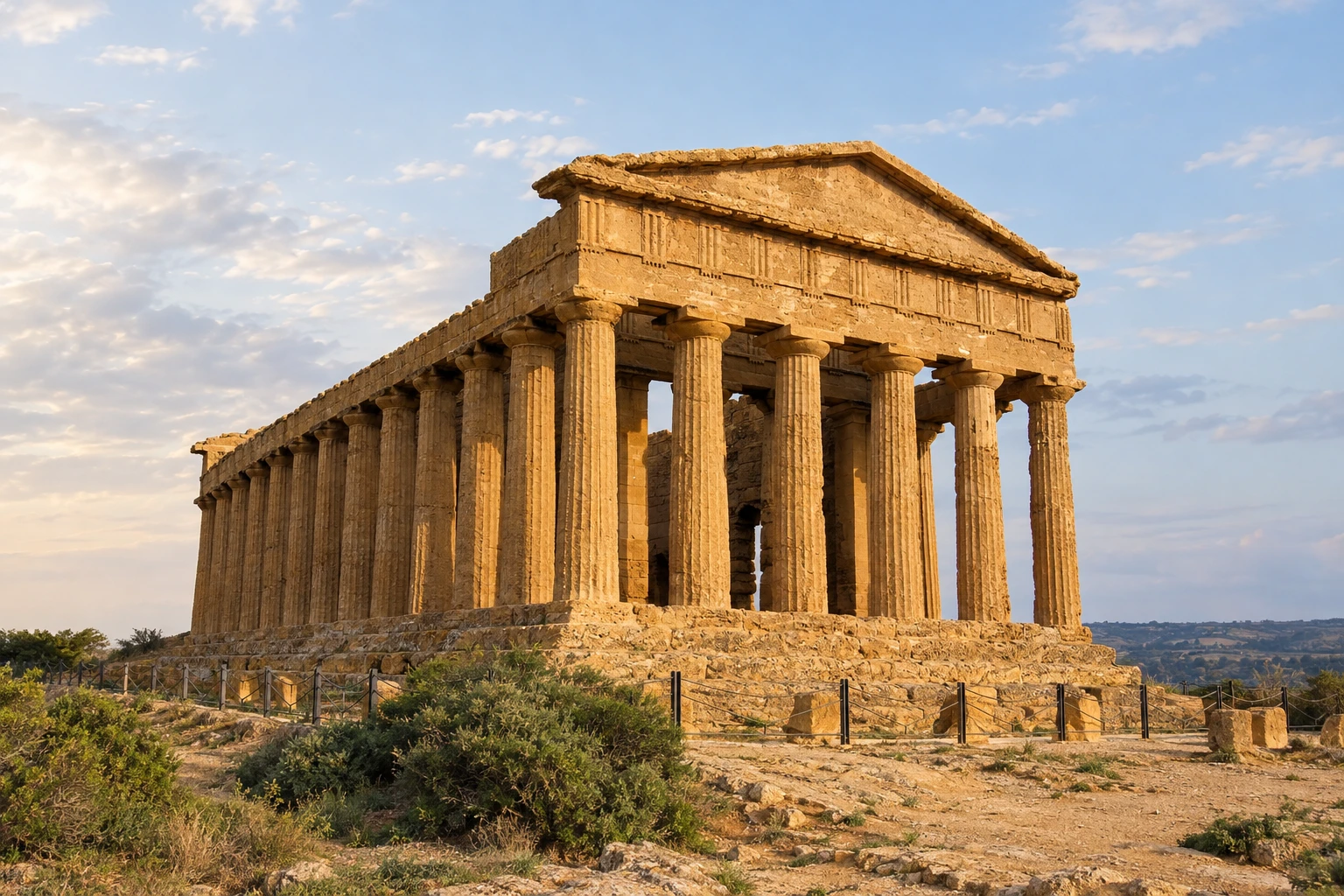
In the photo: Tempio della Concordia, Agrigento

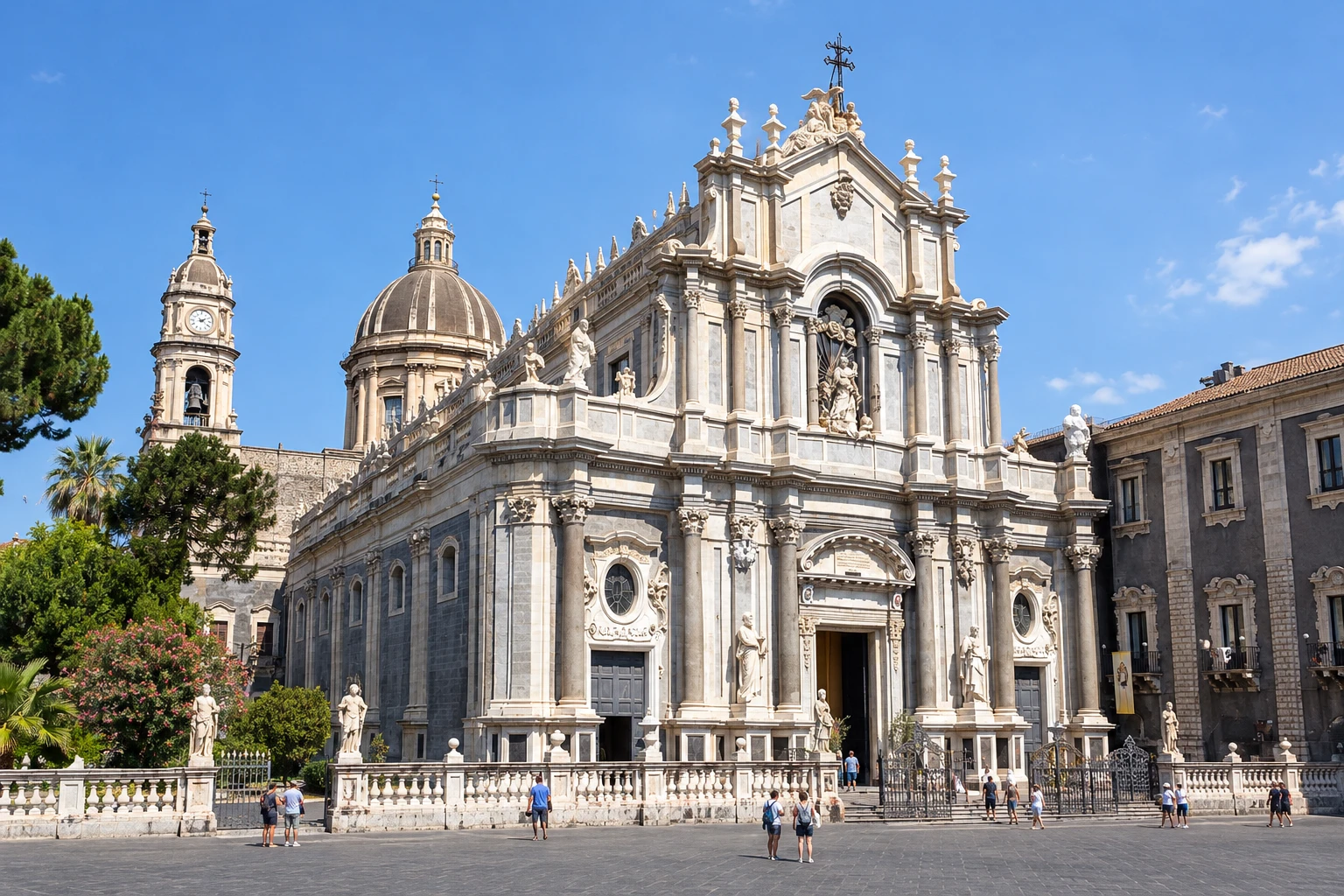
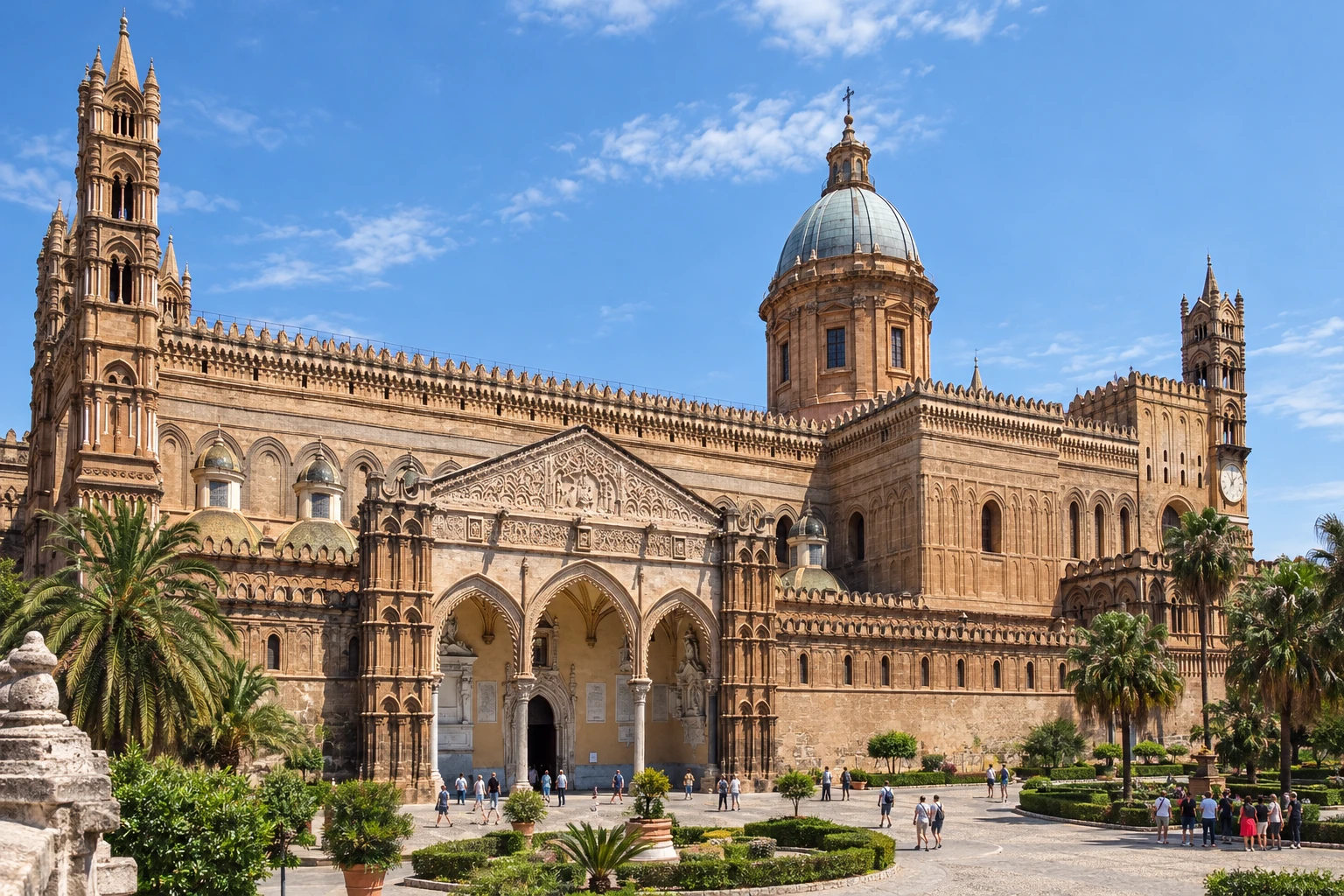
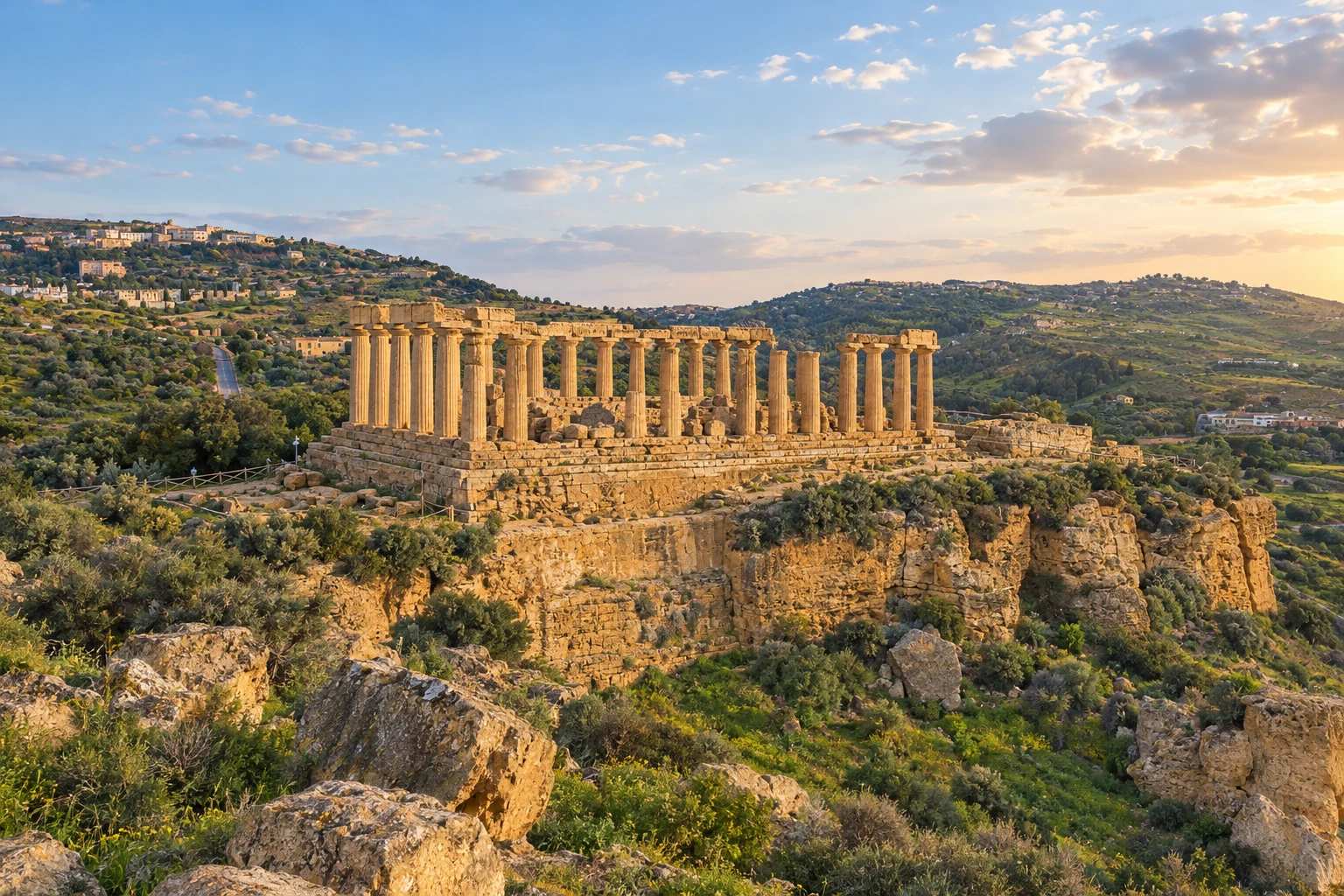
Illustrative images. The pictures in this guide are illustrations based on the real place, not photographs, and may differ from it.

Get it on Google Play

Get to know the place

A region to enjoy
at your own pace.

Sicília is the largest island in the Mediterranean and an autonomous region of Italy, separated from Calabria by the Strait of Messina. Greeks, Romans, Byzantines, Arabs, Normans and Spaniards have passed through here, and each left a mark on the architecture, the food and the dialect. Doric temples, golden mosaics, baroque churches and street markets appear along the same itinerary.

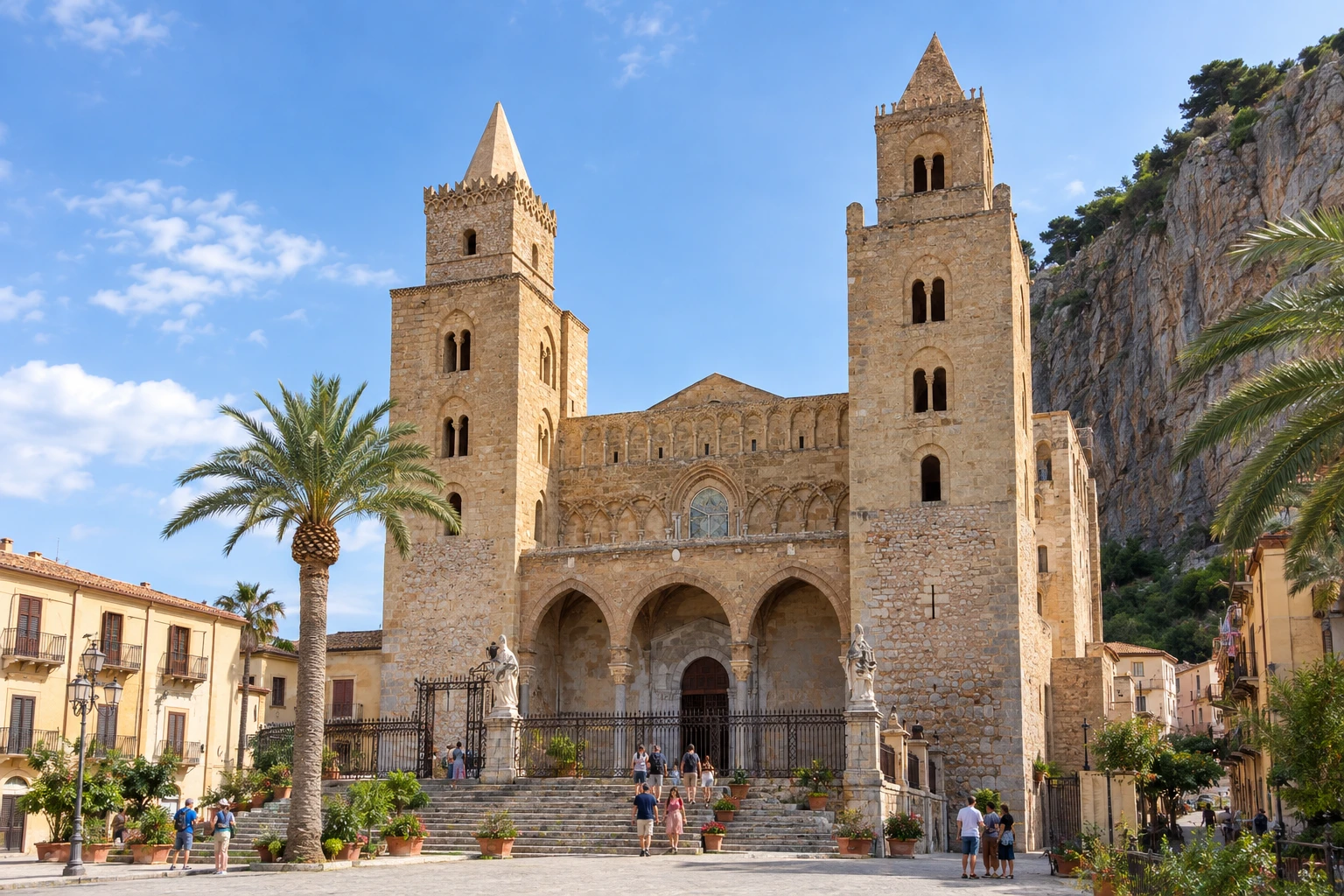
Palermo, the capital, is the gateway on the western side. The cathedral, the Palazzo dei Normanni with the Cappella Palatina, the Martorana and the Duomo di Monreale form the Arab‑Norman ensemble recognized as a UNESCO World Heritage Site, together with the cathedral of Cefalù. Cefalù is about an hour by train, sitting between the beach and a rock nearly 270 meters high. To the south, Agrigento holds the Valle dei Templi, with the Tempio della Concordia, and the Scala dei Turchi on the neighboring coast.

On the eastern side, Catânia is the baroque city at the foot of the Etna, the active volcano that dominates the landscape at over 3,300 meters. Taormina perches on a hill above the Ionian Sea, with the ancient theatre facing the volcano. Siracusa has the island of Ortigia and the Neapolis archaeological park, with the Greek theatre.

For Brazilians, the most practical plan is to choose an entry point (Palermo or Catânia, both with airports) and cross the island by train, bus or car. Food is part of the trip: arancina, cannolo, granita with brioche, caponata and fresh fish. The pace is slower than in northern Italy, and many places close in the early afternoon.

This destination brings together 6 cities: Catania, Palermo, Agrigento, Cefalù, Syracuse, Taormina.

Share: WhatsApp
Traveler, share your experiences through photos Up to 5 photos of each place you visited.

One destination, many paths

The cities on this trip

Start with one city or combine several in your itinerary.

Where Sicily is The star marks the capital, Palermo.
PalermoCataniaAgrigentoCefalùSyracuseTaormina

Outlines: ISTAT, limites administrativos 2026, CC BY 4.0. Adapted by Cidade Turismo.

How to get there: Sicily

Aeroporto di Catania-Fontanarossa Vincenzo Bellini (CTA) · 5 km to Catania

Connections from Brazil usually involve a stopover in another city. Confirm before booking. The quickest route is a domestic flight from Rome or Milan to Palermo (PMO) or Catânia (CTA). There are also Intercity trains from Rome that cross the Strait of Messina by being loaded onto a traghetto (ferry), and overnight ferries from Naples, Civitavecchia and Genoa to Palermo.

Suggested arrival point: Catania

Syracuse
Sicily · Sicily

Syracuse

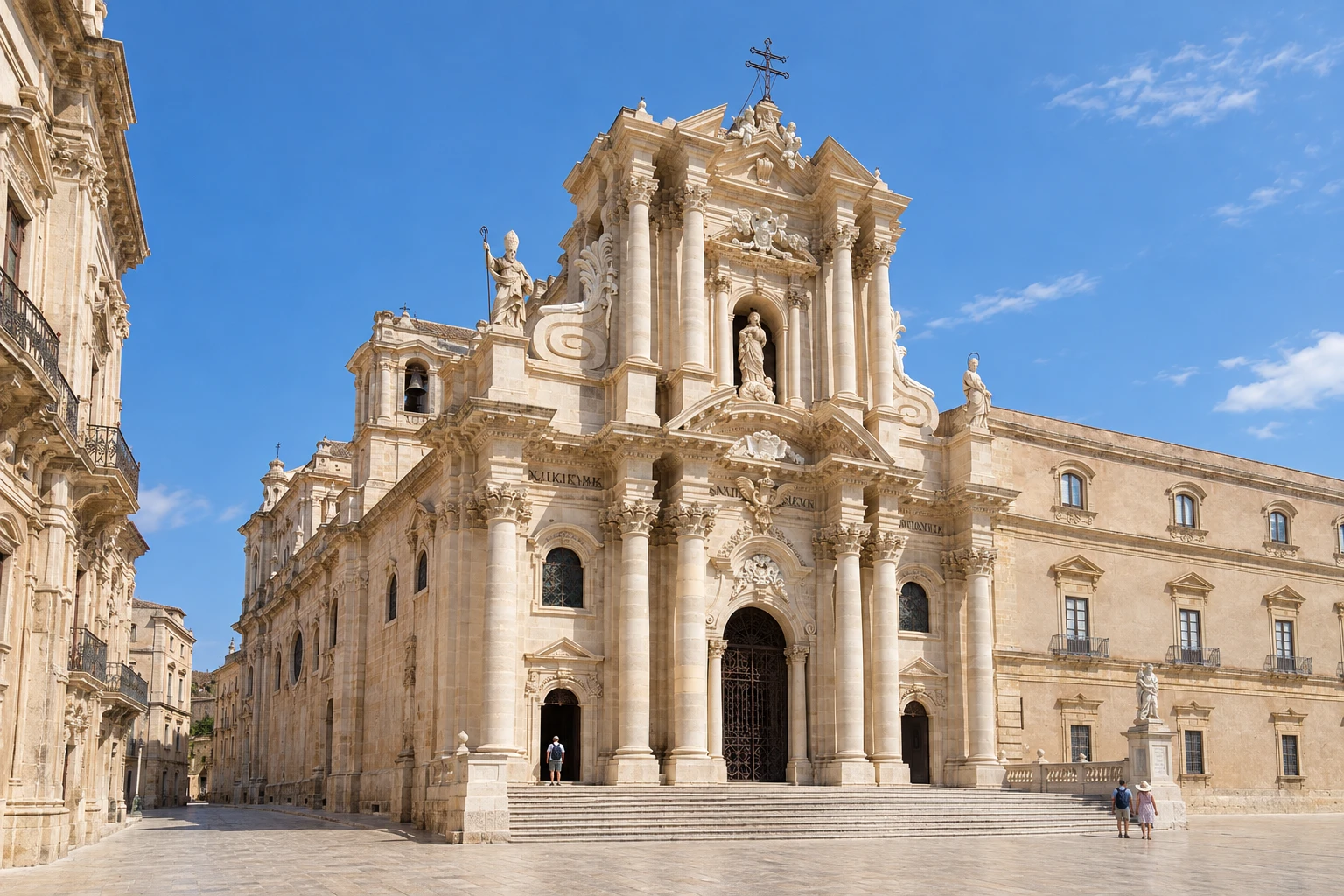
Siracusa, in southeast Sicily, was founded by Greek settlers from Corinth in the 8th century BC and came to rival Athens. It is the city of Archimedes. The old town is on the island of Ortigia, with the Duomo built over a Greek temple, the Fonte Aretusa and the Temple of Apollo. On the mainland, the Parco Archeologico della Neapolis has the Teatro Greco and the Orecchio di Dionisio, and the Museo Paolo Orsi houses the island's archaeology. Noto, the Baroque town, is nearby.

Festivals and events

Festivals Sicily

Dates change every year: check this year's date before you travel.

Festival calendar in Italy

The local experience

Things to do in Sicily

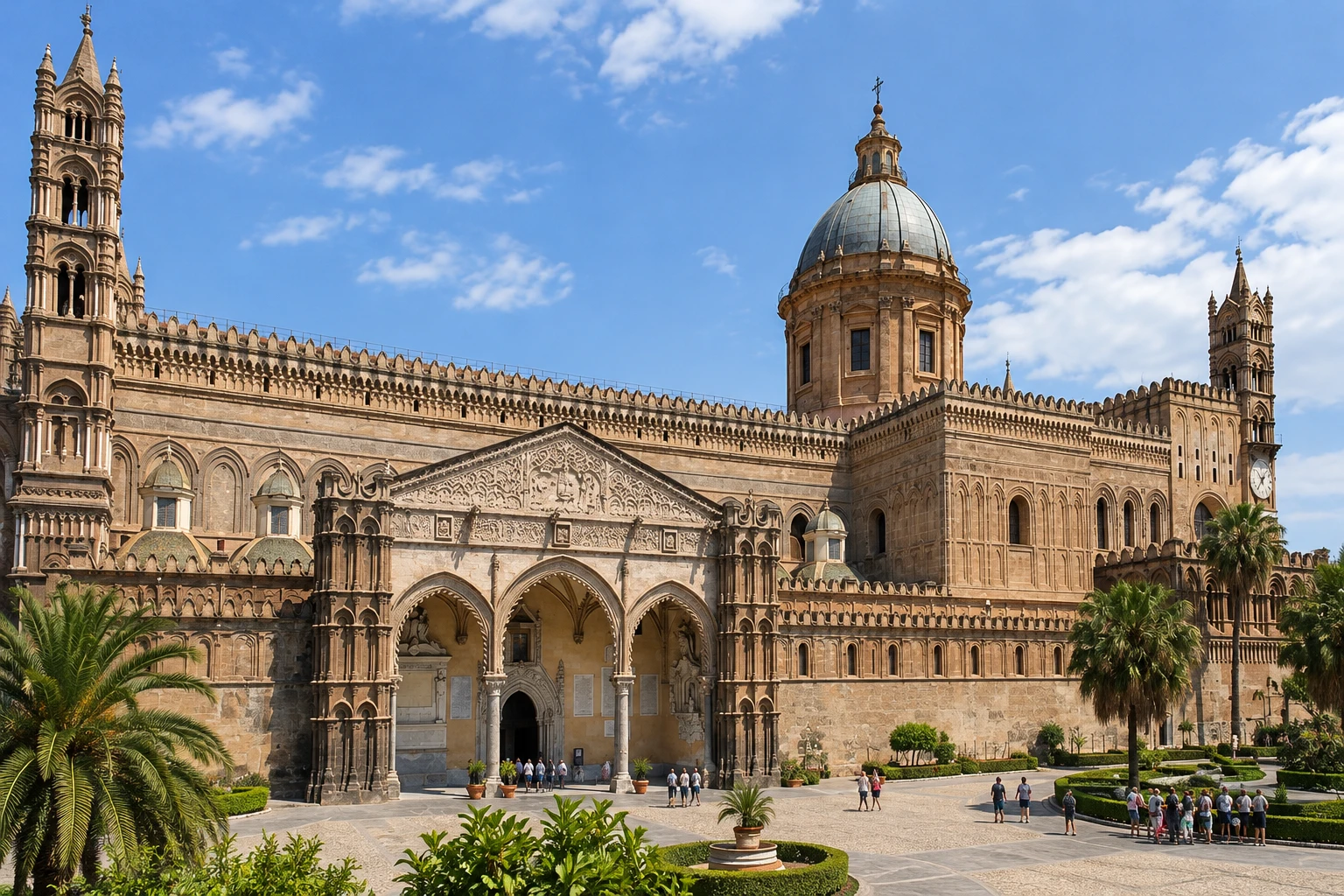
Palermo · Sicily · Cathedral

Palermo Cathedral

The cathedral of Palermo, built beginning in 1185, mixes Norman, Catalan Gothic and Neoclassical styles. It houses tombs of kings and emperors and the silver reliquary of Santa Rosália.

Explore Palermo Cathedral

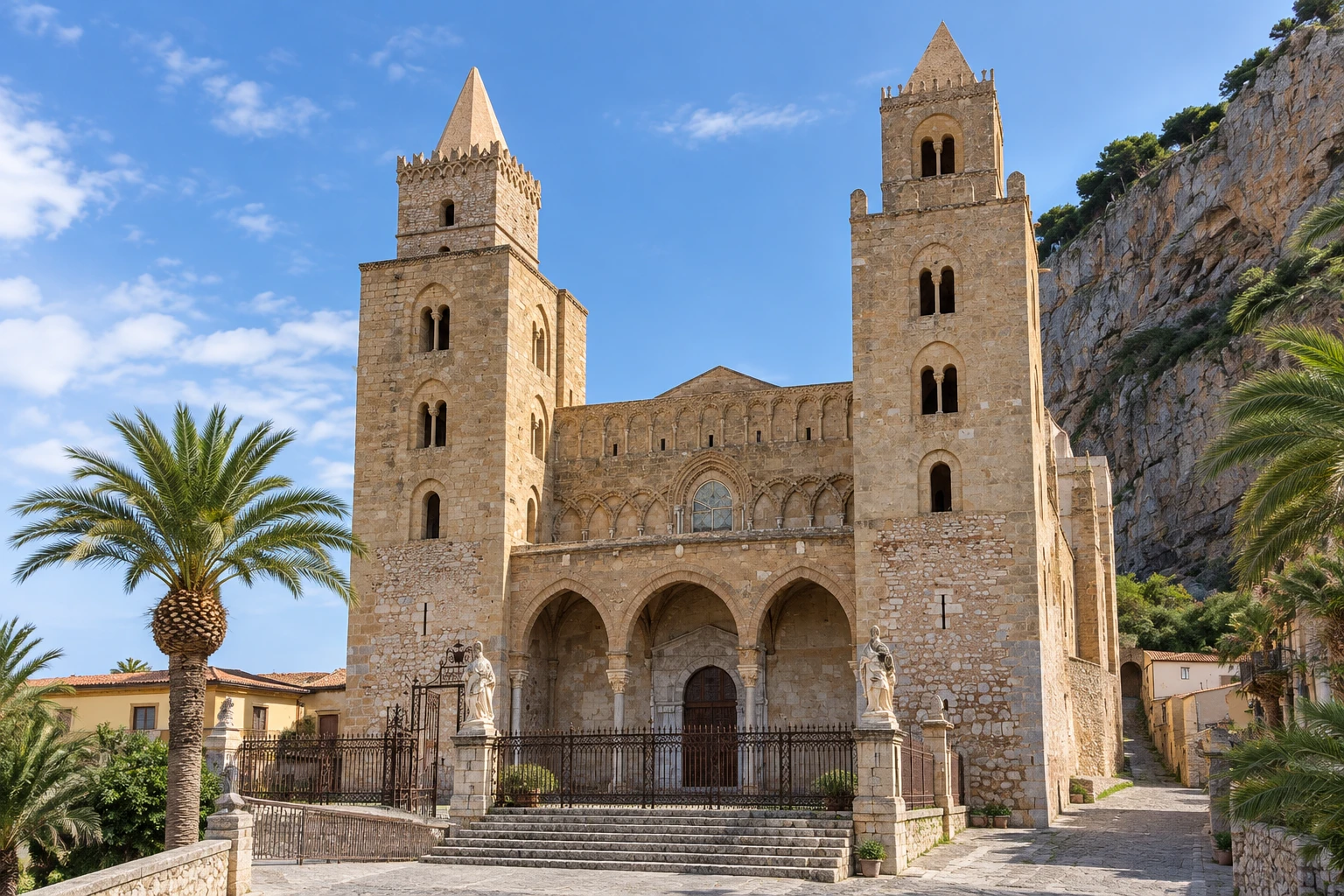
Cefalù · Sicily · Cathedral

Cefalù Cathedral

Norman cathedral begun in 1131 by Roger II, with two towers on the façade and the Christ Pantocrator in a golden mosaic in the apse. UNESCO World Heritage.

Explore Cefalù Cathedral

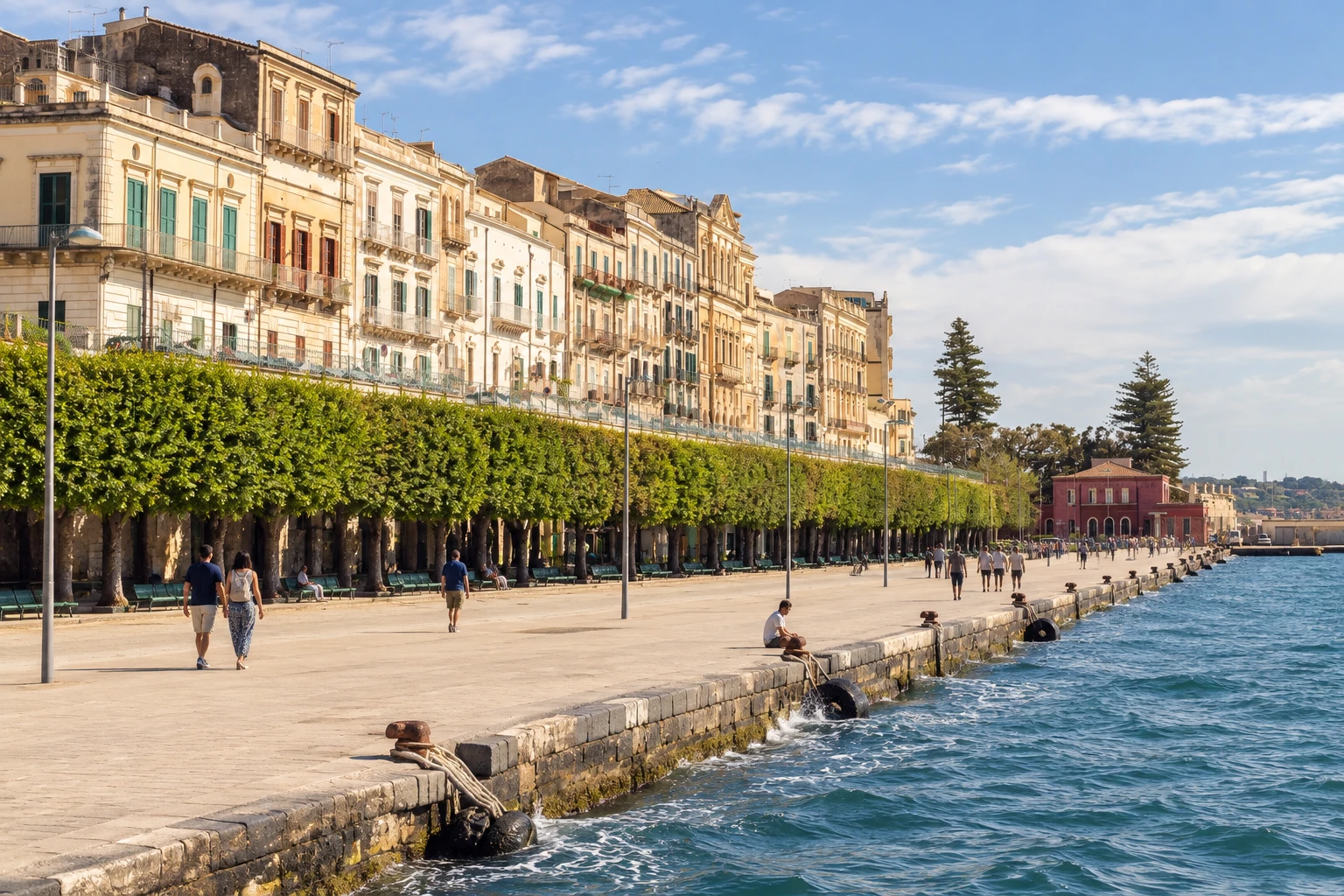
Syracuse · Sicily · Historic quarter

Ortygia

The island where Siracusa was founded, with narrow streets, Baroque palaces, the Temple of Apollo, the street market, the seafront and the Castello Maniace at the tip.

Explore Ortygia

See 38 more places in Sicily

To choose before you go

Tours in Sicily

Where each tour starts, how long it takes, how it is done, what is included and the price range.

Arab-Norman Palermo: Cattedrale, Palazzo dei Normanni and the Cappella Palatina

From Piazza Indipendenza, Palermo Walk with palace visit about 3 hours morning easy

Palermo was the capital of the Arab emirate in the 10th century and of the Norman kingdom in the 12th century, and the Arab-Norman ensemble is a UNESCO World Heritage site. The Palazzo dei Normanni (Palace of the Normans), now home to the Sicilian parliament, houses the Cappella Palatina, King Roger II’s chapel consecrated in 1140, with Byzantine gold-ground mosaics covering walls and dome and a wooden ceiling painted by Arab craftsmen in muqarnas; upstairs is the Sala di Ruggero, with hunting mosaics. The Cattedrale di Palermo (Cathedral), from 1185, mixes Catalan Gothic at the portico, Norman towers and an 18th-century dome; inside are the porphyry tombs of the Norman kings and of Frederick II, the treasury with the crown of Constance of Aragon, and the roof walk offering the city at your feet. The Chiesa di San Giovanni degli Eremiti, with five red domes and an orange-tree cloister, is the city’s most Arabesque church from 1136.

Stops: Cattedrale di Palermo, Palazzo dei Normanni, Chiesa di San Giovanni degli Eremiti.

Includes: Palazzo dei Normanni and Cappella Palatina with separate paid entry (the royal apartments close on days when parliament sits); Cathedral: nave free, treasury, crypt, tombs and roofs with paid entry. San Giovanni degli Eremiti with entry.

Tip: Go to the Cappella Palatina at opening, Tuesday to Saturday, when you can also see the Sala di Ruggero; on Sunday mornings there is a mass. Climb to the cathedral roofs in the late morning, with the sun behind you.

Best time: All year; in July and August do the walk before 11 a.m.

Baroque Palermo on foot: Quattro Canti, Piazza Pretoria, Martorana and Teatro Massimo

From Quattro Canti (Via Maqueda with Corso Vittorio Emanuele) Walk through the city center about 3 hours afternoon easy

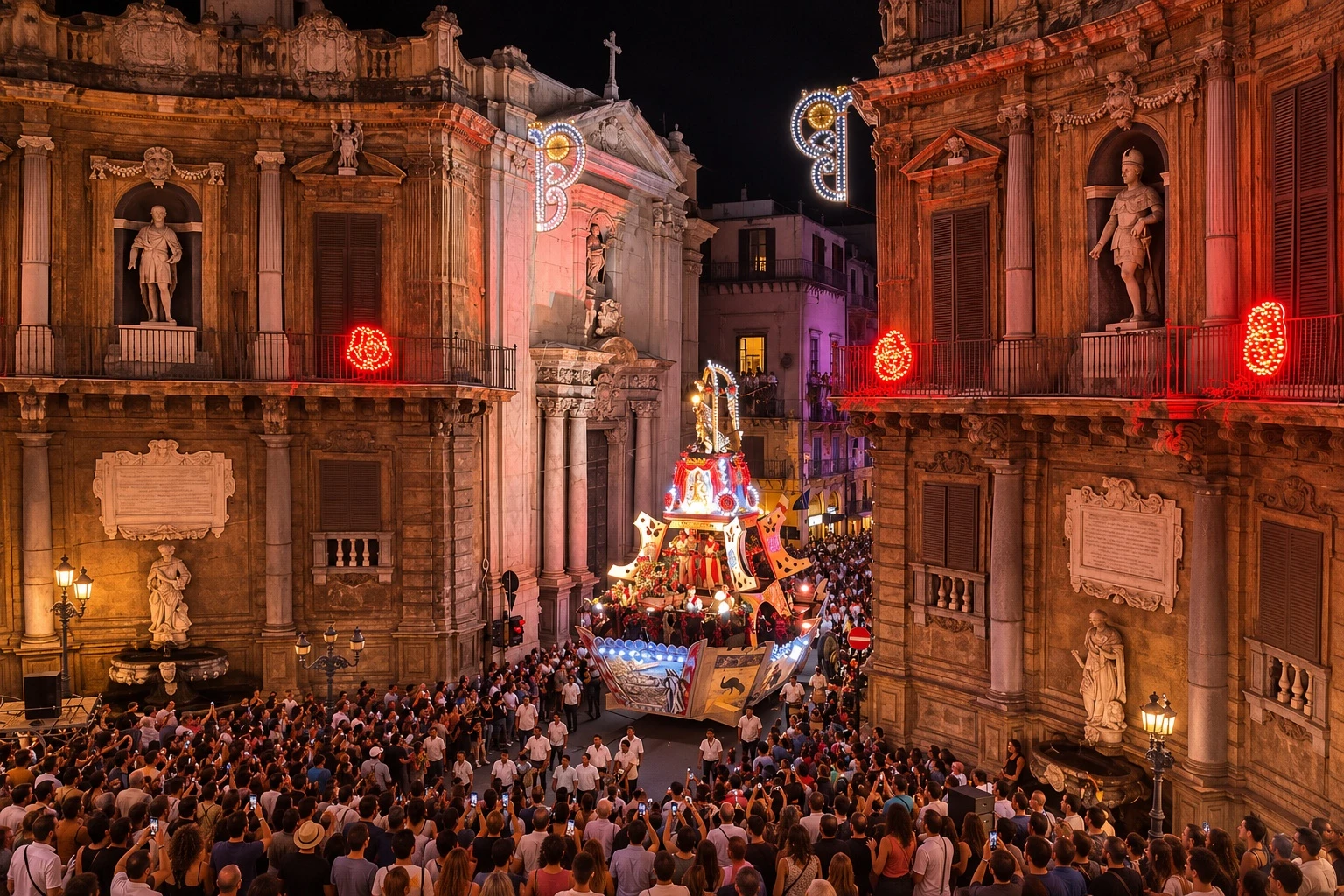
The Quattro Canti are the octagonal square of 1609 at the crossing of the two main streets, with four concave facades of statues representing the seasons, the Spanish kings and the patron saints of the quarters. Next to it is Piazza Pretoria, with the Florentine fountain of 1554 surrounded by nude statues that Palermitans nicknamed the “fountain of shame”, and the town hall. The Chiesa di Santa Maria dell'Ammiraglio, the Martorana, from 1143, has the oldest Byzantine mosaics in Sicily, with Roger II crowned by Christ; beside it is San Cataldo, with three red domes. Along pedestrian Via Maqueda you reach the Teatro Massimo, from 1897, the largest opera house in Italy, with the staircase where the final scene of The Godfather III was filmed; the guided tour shows the auditorium and the ventilating opening ceiling. The street continues along Via Ruggero Settimo to the Politeama, the other theatre.

Stops: Quattro Canti, Piazza Pretoria, Chiesa di Santa Maria dell'Ammiraglio, Teatro Massimo.

Includes: Squares free of charge. Martorana and San Cataldo require small admission fees; Teatro Massimo has a guided tour for an extra fee (fixed times) and performances require tickets.

Tip: Do the walk in the late afternoon and finish with an aperitivo on Via Maqueda; the Martorana closes at midday and reopens in the afternoon. For opera at the Massimo, buy tickets on the theatre’s website.

Best time: All year round.

Palermo markets and street food: Ballarò, Vucciria and Capo

From Mercato di Ballarò (Via Ballarò, near the station) Walk through markets about 2 h 30 morning easy

The Mercato di Ballarò (Ballarò Market), in the Albergheria neighborhood, is Palermo’s liveliest market and one of the oldest, heir to the Arab souks: stalls of swordfish and tuna, fruit, olives, cheeses and the vendors’ sung calls ('abbanniate'), with street food stalls in the middle: panelle (chickpea fritters), arancine, sfincione (focaccia with onion and anchovy), pane ca' meusa (spleen sandwich) and stigghiola. Mercato del Capo, near the cathedral, is similar and less visited; Vucciria, near the port, has become a night market and bar area. Around Ballarò you’ll find the church of il Gesù (Casa Professa), with an interior covered in inlaid marbles, and the Chiesa di Santa Caterina, with the convent’s sweets. Markets run Monday to Saturday, in the morning until early afternoon.

Stops: Mercato di Ballarò.

Includes: Markets free of charge; street food paid separately. Casa Professa and Santa Caterina have small entrance fees.

Tip: Go between 9:00 and 11:00, with small change; the pane ca' meusa is the city’s test of courage. There are half-day guided food tours, bookable in advance. Keep your bag in front of you, as in any crowded market.

Best time: All year; in summer the market closes earlier.

Monreale: the Duomo of the golden mosaics

From Palermo (AMAT bus 389 from Piazza Indipendenza or the tourist bus) Short round-trip to the cathedral about 3 hours morning easy (stairs to the terraces)

The Duomo di Monreale (Cathedral of Monreale), 8 km from Palermo on the hillside above the Conca d'Oro, was built by William II between 1174 and 1189 as a rival to Palermo Cathedral: inside, 6,400 m² of Byzantine mosaics on a gold background depict the Old and New Testaments, with a 13 m Christ Pantocrator in the apse—the largest set of medieval mosaics in Italy after Venice. The Benedictine cloister, with 228 paired columns—each with a different capital and many inlaid with mosaic—and the Arabic fountain in the corner, make up the other half of the visit. The terraces above the cloister offer views of the town and the gulf. The village around the cathedral has a square with cafés and mosaic shops.

Stops: Duomo di Monreale.

Includes: Cathedral: nave with admission, cloister and terraces charged separately (separate or combined tickets). Bus fares extra.

Tip: Go early on the first bus, before tour groups arrive; bus 389 departs from Piazza Indipendenza next to the Palazzo dei Normanni and takes 30–40 minutes. On Sunday mornings there is mass and access is restricted.

Best time: Year-round.

Catacombe dei Cappuccini, La Zisa and the Santuario di Santa Rosalia

From Piazza Cappuccini, Palermo (bus 327 or taxi) Catacombs, Arab palace and mountain sanctuary about 4 hours morning or afternoon easy

The Catacombe dei Cappuccini (Capuchin Catacombs) house about 8,000 mummified bodies from 1599 to 1920, displayed in corridors by category (friars, professionals, women, children), dressed in their period clothes; the best known is little Rosalia Lombardo, from 1920, embalmed with a technique that kept her intact. It’s a powerful visit, with photography not allowed, that reveals a lot about the Sicilian relationship with death. Nearby, La Zisa, the summer palace of the Norman kings built by Arab craftsmen in 1165, with the fountain room and its ventilation system, houses the museum of Islamic art. The Santuario di Santa Rosalia, on Monte Pellegrino at 430 m, is the grotto where, according to tradition, Palermo’s patroness lived as a hermit in the 12th century and where the bones were found that, in 1624, were said to have ended the plague; the road climbs in curves with views of the gulf, and on September 4 the faithful make the ascent on foot.

Stops: Catacombe dei Cappuccini, La Zisa, Santuario di Santa Rosalia.

Includes: Catacombs and La Zisa require separate paid tickets; the sanctuary has no charge. Bus 812 to Monte Pellegrino is paid separately.

Tip: The catacombs are not suitable for very young children or anyone easily disturbed. Combine La Zisa and the catacombs, which are close to each other; Monte Pellegrino is worth a visit late in the afternoon, with the light over the city.

Best time: All year. From July 10 to 15, the Festino di Santa Rosalia takes place, featuring the saint’s cart along the Cassaro and fireworks over the sea.

Mondello and Palermo beach

From Palermo (bus 806 from Piazza Sturzo/Politeama) Beach about 4 hours afternoon easy

Mondello is Palermo’s beach, 12 km from the center: a 1.5 km bay of white sand and green water between Monte Pellegrino and Monte Gallo. It was a swamp until it was drained in the 19th century and became a belle époque seaside resort, with the Antico Stabilimento Balneare, the 1913 liberty-style building on stilts over the sea, which houses a restaurant. The beach is divided between private establishments with chairs and the free stretches; the water is shallow for dozens of meters. The promenade has street-food kiosks (pane e panelle, sfincione) and gelaterias; the fishing village at the northern tip has a small harbor and seafood restaurants. The Riserva di Capo Gallo, at the tip, has trails and rocky coves.

Stops: Mondello.

Includes: Public beach in stretches; chairs and umbrellas charged separately. City bus fares extra.

Tip: Go on weekdays; on summer Sundays the beach and the bus get crowded. The free (public) stretch is in the center of the bay and at the headlands. The water is usually good for swimming from May to October.

Best time: May to October for swimming; year-round for strolling along the promenade.

See 10 more tours

Cefalù: the Norman Duomo, the Rocca and the beach

From Palermo (regional train, 1 hour) Round-trip train day trip with village, cathedral, climb and beach about 7 hours full day moderate (ascent to the Rocca, 270 m)

Cefalù, 70 km from Palermo along the coast, is a fishing village squeezed between the sea and the Rocca, the 270 m rocky outcrop. The Duomo di Cefalù (Cathedral), begun by Roger II in 1131 as a mausoleum and a UNESCO site, has two fortress towers and, in the apse, the Christ Pantocrator mosaic of 1148, earlier than those in Monreale and Palermo and, for many, the most expressive in Sicily, with a cloister of paired columns. The Rocca di Cefalù climbs by a stone trail in about 45 minutes to the walls, the Temple of Diana from the 9th century BCE, and the castle at the top, with the whole village, the sea and the Madonie at its feet. The Museo Mandralisca houses the Portrait of an Unknown Man by Antonello da Messina, from 1465. The Spiaggia di Cefalù, with fine sand, begins beside the old centre, with the medieval washhouse and the old harbour from where the village is photographed. Corso Ruggero is the main street; Piazza del Duomo has the cafés.

Stops: Duomo di Cefalù, Rocca di Cefalù, Museo Mandralisca, Spiaggia di Cefalù.

Includes: Regional train paid separately. Cathedral: nave free (cloister, towers and terraces charged); Rocca requires a ticket; Museo Mandralisca requires a ticket. Beach free in sections.

Tip: Take an early train from Palermo Centrale (Cefalù station is a 10-minute walk from the centre), climb the Rocca in the morning before the heat (the trail closes in strong wind and extreme heat), and leave the beach for the afternoon. In July and August the village gets crowded: go on weekdays.

Best time: From April to October; May to September for swimming. On August 6th, the Feast of the Saviour with a swimming crossing.

Catania on foot: Piazza del Duomo, La Pescheria, Via Etnea and the Monastero dei Benedettini

From Piazza del Duomo, Catania Walk through the Baroque centre about 3 hours morning easy

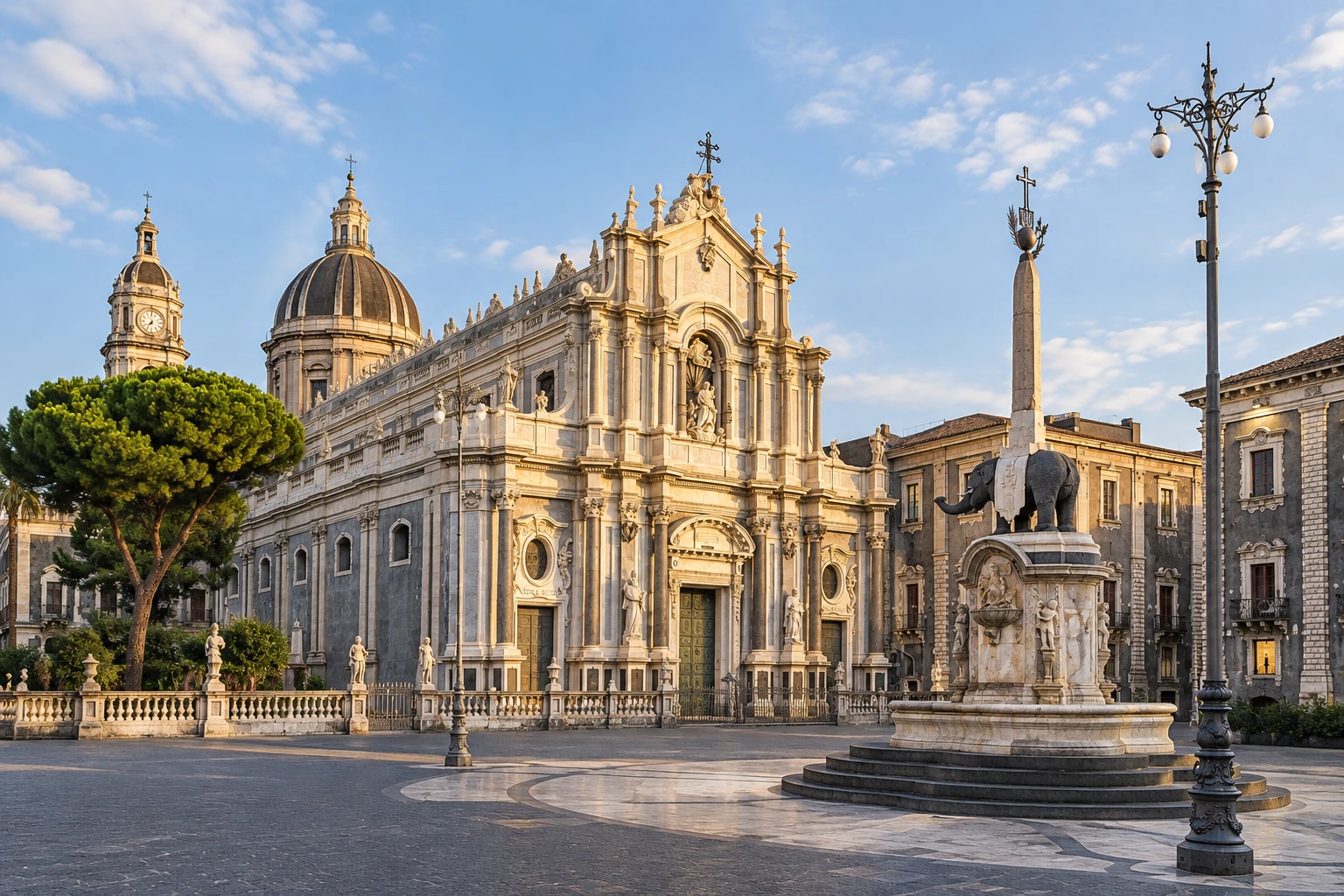
Catania was rebuilt in black lava-stone Baroque after the 1693 earthquake, and the Piazza del Duomo and the Fontana dell'Elefante are the centre: the lava elephant with an Egyptian obelisk on its back, the city's symbol; the Cattedrale di Sant'Agata, with Vaccarini's façade and the tomb of Bellini, who was born here; and the Palazzo degli Elefanti, the town hall. Beside them is La Pescheria, the fish market that fills the square behind the Amenano fountain with tuna, swordfish and shouting from dawn. The Via Etnea, the straight 3 km street pointing to Etna, climbs between palaces, Villa Bellini (the garden) and cafés serving granita and brioche. The Monastero dei Benedettini di San Nicolò l'Arena, from the 16th century and now the humanities faculty, is one of the largest monasteries in Europe, with cloisters, kitchens built over the 1669 lava and guided visits to the undergrounds; the adjacent church, unfinished, has a dome with a view.

Stops: Piazza del Duomo and Fontana dell'Elefante, Cattedrale di Sant'Agata, La Pescheria, Via Etnea, Monastero dei Benedettini di San Nicolò l'Arena.

Includes: Free walk; market has no charge. Monastery with guided visit paid separately (fixed times); San Nicolò dome paid separately.

Tip: The Pescheria operates Monday to Saturday in the morning: go at 8:00. Almond or pistachio granita with brioche at breakfast is the custom. On February 3, 4 and 5, the feast of Sant'Agata, one of Italy’s largest, takes over the city.

Best time: All year; in July and August Catania’s heat is strong in the afternoon.

Etna: the ascent of the volcano via Rifugio Sapienza and the cable car

From Catania (AST bus to Rifugio Sapienza) or car Bus, cable car and walk or 4x4 on the volcano about 8 hours full day moderate (altitude, wind and ash)

The Etna, at about 3,350 m (height changes with eruptions), is the highest active volcano in Europe, listed by UNESCO, with frequent eruptions that close and reopen access. On the south side, the road climbs from Catania and Nicolosi, through lava flows of different ages, up to Rifugio Sapienza at 1,900 m, with the Silvestri craters from 1892 that can be walked around in 20 minutes; the Funivia dell'Etna cable car rises to 2,500 m, and from there 4x4 buses with a volcanology guide take you to around 2,900 m, near the summit craters, depending on activity and the Civil Protection alert level. Above 2,500 m you may only go with an authorized guide. On the north side, from Linguaglossa and Piano Provenzana, there are trails and 4x4 tours with fewer people. The Ferrovia Circumetnea circles the volcano by train, from Catania to Riposto, via the towns of Randazzo and Bronte.

Stops: Etna.

Includes: AST bus Catania–Rifugio Sapienza paid separately (one trip in the morning and one return in the afternoon); cable car paid separately; 4x4 bus with guide paid separately; Silvestri craters free of charge. Organized excursions from Catania and Taormina are paid separately.

Tip: Bring a winter jacket, gloves and goggles even in August: at the top it can be 0 °C with wind. Check the volcano's condition on the day and whether the cable car is operating (it stops in strong wind and during eruptions). The AST bus departs from Catania at about 8:00 and returns at 16:30: confirm the timetable for the year.

Best time: From May to October with more days open; in winter there is snow and skiing, with variable access. Active volcano: everything depends on the day.

Taormina: Teatro Antico, Corso Umberto and Isola Bella

From Taormina-Giardini (train) and bus up to the town, or bus from Catania Walk in the old town and beach about 5 hours full day moderate (stairs and cable car to the beach)

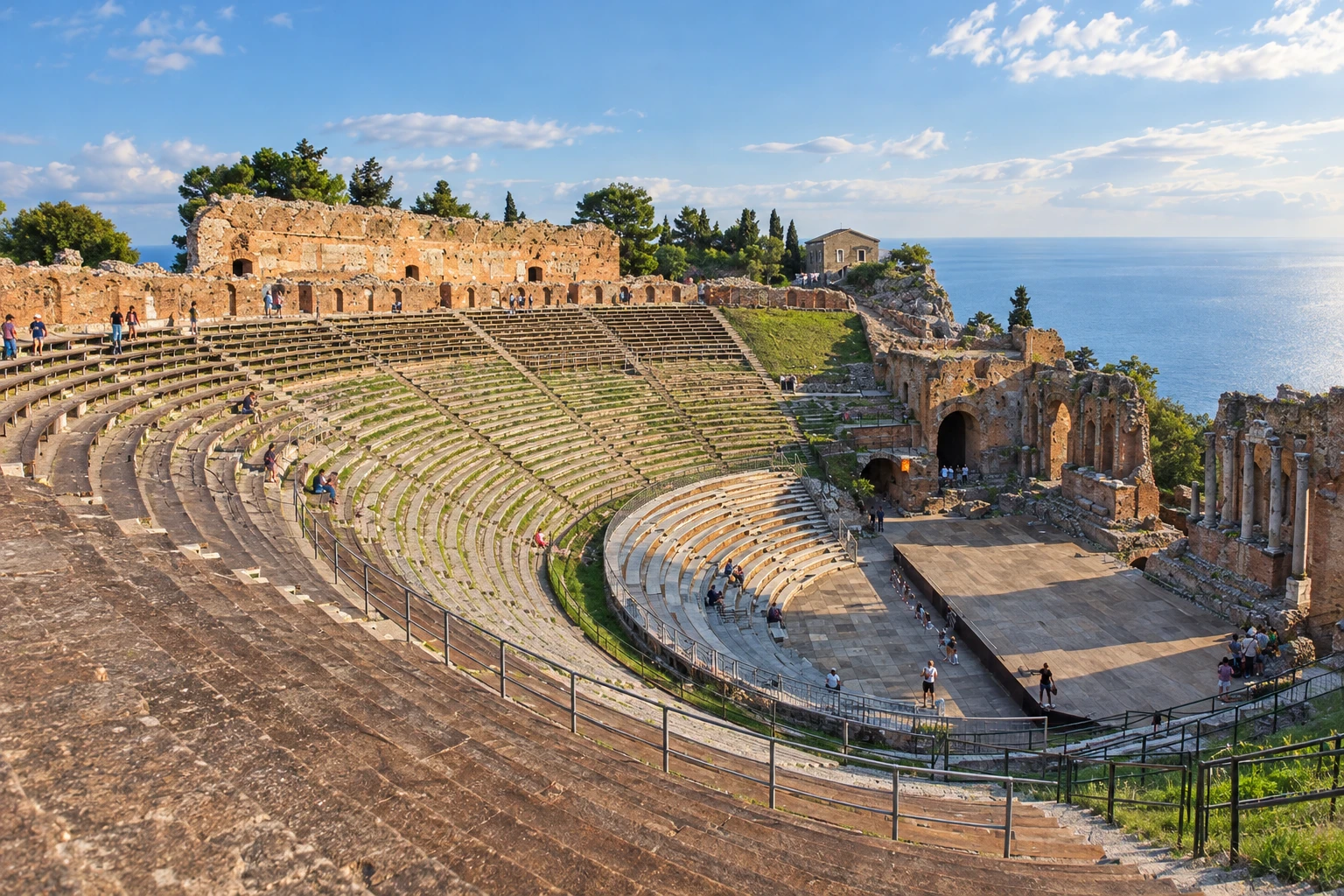
Taormina stands 200 m above the Ionian Sea, on a terrace between Mount Etna and the coast, and has been Sicily’s summer town since the 19th century. The Teatro Antico di Taormina (Ancient Theatre), Greek from the 3rd century BC and rebuilt by the Romans, with a 109 m diameter, has a ruined stage framing Etna and the bay, the island’s most famous image; it hosts concerts and the film festival in summer. The Corso Umberto, the pedestrian street between Porta Messina and Porta Catania, includes Piazza IX Aprile, the terrace with the view, Piazza del Duomo with the centaur fountain, palaces and cafés serving granita. The Villa Comunale di Taormina, the garden created by an Englishwoman in 1890, has the folies (brick pavilions) and the sea view. The cable car descends in 2 minutes to Mazzarò, and the beach at Isola Bella, the islet joined by a strip of pebbles, is a nature reserve with clear water for swimming and tour boats to the grottos.

Stops: Teatro Antico di Taormina, Corso Umberto, Villa Comunale di Taormina, Isola Bella.

Includes: Teatro Antico with separate paid admission (online booking on busy days). Corso and Villa Comunale free of charge. Cable car paid separately; Isola Bella: free beach on a stretch, paid facilities, visit to the islet with admission.

Tip: Go to the theatre at opening time, before the heat and the cruise ships, and sit high on the seating. Taormina is expensive and crowded in July and August; from April to June and in September it is more pleasant. Castelmola, the village 5 km above, gives the view of Taormina from above.

Best time: From April to October; June to September for the beach.

Castelmola: the village above Taormina

From Taormina (Interbus bus or on foot via the staircase) Lookout village about 2 hours late afternoon moderate (300 m climb or bus)

Castelmola is a village of about 1,000 inhabitants clinging to a rock at 530 m, 5 km above Taormina, with the ruins of the Norman castle on the top, Piazza Sant'Antonio with its stone mosaic pavement, and cafés that serve almond wine, produced in the village. The view includes all of Taormina below, the theatre, Isola Bella, the coast as far as Siracusa on a clear day, and Mount Etna across the way. You can reach it by bus in 15 minutes along the hairpin road, or on foot via an old stair trail from Porta Catania in about 1 hour. Bar Turrisi, decorated with phallic symbols, is the local curiosity; the mother church and the small Duomo are in the square. It’s a late-afternoon outing to watch the sun set behind Etna.

Stops: Castelmola, Teatro Antico di Taormina.

Includes: Bus paid separately; village and castle free of charge.

Tip: Take the late-afternoon bus and return on the last one, or walk down with a flashlight; Interbus services depart from Taormina bus station. On windy days the village feels cold even in summer.

Best time: Year-round; the sunset viewing season from April to October.

Syracuse: Ortigia, the Duomo and the Arethusa Fountain

From Syracuse (train station or bus; Ortigia is the island-center) Walk around the island of Ortigia about 3 hours morning or late afternoon easy

Syracuse was the largest Greek city in the West, rival of Athens, homeland of Archimedes, and Ortigia is the 1 km island where it was born in the 8th century BC, connected to the city by two bridges. The Duomo di Siracusa (Cathedral) is the Doric temple of Athena from the 5th century BC converted into a church in the 7th century: the Greek columns appear embedded in the walls, inside and out, and the 1753 Baroque façade closes the oval square, one of the most beautiful in Sicily, with the bishop’s palace and Santa Lucia alla Badia, which houses Caravaggio’s Burial of Saint Lucy. The Arethusa Fountain, the freshwater spring by the sea where papyrus reeds grow, is the place of the myth of the nymph who fled from Alpheus; legend says the river Alpheus runs under the sea coming from Greece. Nearby: the Temple of Apollo, from the 6th century BC, earlier than all the others on the island; the morning market on Via De Benedictis; Castello Maniace at the tip; and the Lungomare di Levante, from which you can see the open sea; at night the narrow streets fill with tables.

Stops: Ortigia, Duomo di Siracusa, Arethusa Fountain.

Includes: Free walk; Duomo with a small entrance fee; Castello Maniace and Santa Lucia alla Badia may require tickets or be free, check.

Tip: Stay overnight in Ortigia: early morning and at night the island has a different feel. The market closes at midday. On Sundays the churches hold mass at visiting hours.

Best time: All year; from May to October for swimming on the stone platforms of the Lungomare.

Parco Archeologico della Neapolis and the Museo Paolo Orsi: Greek Syracuse

From Viale Paradiso, Syracuse (bus or 25 min on foot from Ortigia) Archaeological site and museum about 4 hours morning easy (paved paths)

The Parco Archeologico della Neapolis brings together the Greek Theatre, from the 5th century BC, rebuilt in the 3rd century, with 67 rows carved into the rock for 16,000 people, where Aeschylus premiered tragedies and which still hosts the classical theatre festival in May and June; the Latomia del Paradiso, the former quarry turned into a garden, featuring the Orecchio di Dionisio, the 23 m high grotto with an echo so strong that the tyrant, legend says, could hear prisoners; the Ara di Ierone, the 198 m sacrificial altar; and the Roman amphitheatre. Ten minutes away, the Museo Archeologico Regionale Paolo Orsi, one of Italy’s most important museums for prehistory and Greek colonization, houses the Vénus Landolina, sarcophagi and finds from the Greek coastal cities; beside it are the Catacombs of San Giovanni, the largest after those of Rome, visited with a guide.

Stops: Parco Archeologico della Neapolis, Museo Archeologico Regionale Paolo Orsi, Ortigia.

Includes: Park and museum require separate paid admissions (combined ticket available); free on the first Sunday of the month. Catacombs require an extra fee and a guide.

Tip: Go to the park at opening: tour groups arrive by 10:00. In the seasons of classical theatre (May and June) wooden stands cover part of the theatre, but seeing a Greek tragedy in the Greek theatre is worth it; tickets available on the INDA website.

Best time: All year round; April to June and September to October are more comfortable.

Noto: the capital of Sicilian Baroque

From Syracuse (Interbus/AST bus or regional train, 30–40 min) Baroque town day trip about 3 hours late afternoon easy

Noto was rebuilt from scratch after the 1693 earthquake, 8 km below the old town, as a Baroque stage set of golden limestone, listed by UNESCO along with the other towns of the Val di Noto: the Corso Vittorio Emanuele, from the Porta Reale, rises through three squares with stairways, churches and palaces with balconies supported by grotesque figures (the Palazzo Nicolaci), up to the Cattedrale di San Nicolò, whose dome collapsed in 1996 and was rebuilt in 2007; opposite, the Palazzo Ducezio, the town hall, has a terrace overlooking the town. The church of San Carlo has the tower with views of the entire Corso. The stone turns honey-colored at sunset, the time to visit. On the third weekend of May, the Infiorata covers Via Nicolaci with carpets of petals. 15 km away, the Vendicari reserve has beaches and flamingos; Marzamemi, the fishing village, has the tonnara square.

Stops: Noto, Ortigia.

Includes: Self-guided walk; San Carlo tower, Palazzo Nicolaci and the Ducezio terrace with small tickets. Bus or train paid separately.

Tip: Go late in the afternoon and stay until the lights come on; the Interbus to Syracuse is more convenient than the train, whose station is far from the center. By car, combine Vendicari and Marzamemi in the same day.

Best time: All year; May has the Infiorata; from June to September, Vendicari’s beaches.

Agrigento: Valle dei Templi and the Giardino della Kolymbethra

From Agrigento (train station or bus; local bus to the park) Archaeological site about 4 hours morning or late afternoon moderate (2 km on a slope, no shade)

The Valle dei Templi (Valley of the Temples), a UNESCO site, is the 1,300-hectare ridge where the Greek colony of Akragas, founded in 580 BC, built a row of Doric temples facing the sea: the Temple of Concordia, from 430 BC, one of the best-preserved in the Greek world because it became a church in the 6th century; the Temple of Juno, at the highest point; the Temple of Hercules, from the late 6th century BC, with eight re-erected columns; the Temple of Olympic Zeus, which would have been the largest Doric temple ever built, now in ruins, with a copy of one of the telamons (the 7.5 m stone giants); and the temples of Castor and Pollux. The Via Sacra links everything over 2 km, with millenary olive trees and almond trees that bloom in February. The Museo Archeologico Regionale Pietro Griffo houses the original telamon and the Agrigento Ephebe. The Giardino della Kolymbethra, in the valley between the temples, is the citrus garden and the restored ancient Greek pool rehabilitated by the FAI, offering shade and a stream.

Stops: Valle dei Templi, Museo Archeologico Regionale Pietro Griffo, Giardino della Kolymbethra.

Includes: Park entrance ticket paid separately (combined ticket with the museum); no charge on the first Sunday of the month. Giardino della Kolymbethra has a separate entrance fee. Local bus paid separately.

Tip: Go at sunset, when the temples turn golden and the park often stays open into the evening in summer, or go at opening; at midday there is no shade. Enter via the Gate of Juno (high) and walk down to the Gate of Hercules, then take the bus back. The valley lies 3 km from town and is little visited; the Scala dei Turchi is the beach for the next day.

Best time: Year-round; February hosts the Sagra del Mandorlo in Fiore, with the almond trees in bloom; in summer there are night openings.

Scala dei Turchi: the white cliff of Realmonte

From Agrigento (bus to Realmonte/Porto Empedocle or car, 15 km) Cliff and beach about 3 hours afternoon easy

The Scala dei Turchi (Stair of the Turks) is a white marl cliff, soft and smooth, formed in steps that descend to the sea between two sandy beaches, near Realmonte, 15 km from Agrigento; the name comes from Saracen pirates who, tradition says, climbed it. The contrast of the white cliff with the blue sea and late-afternoon light makes it one of the most photographed spots in Sicily; it appears in Andrea Camilleri’s Inspector Montalbano novels. Access to the rock is regulated by the municipality for safety and protection, with periods when you may walk on it and others when you can only view it from the beaches and roadside viewpoints: check the current rules. The beaches on both sides, with golden sand, are suitable for swimming, with facilities in summer. In Porto Empedocle, Camilleri’s hometown, there is a statue of Montalbano.

Stops: Scala dei Turchi, Valle dei Templi.

Includes: Access to the beaches is free; paid parking is separate; access to the rock depends on current rules. Bus costs extra.

Tip: Go late afternoon for the light; bring water and sandals for the hot sand. Respect the barriers and signs: the marl erodes and the rock has previously been closed due to vandalism. Without a car, there are buses from Agrigento to Realmonte with infrequent services; shared taxis are the alternative.

Best time: From May to October for the beach; year-round for the view.

Day by day

5, 7 and 10-day itinerary in Sicily

Suggestions to plan the trip. Change the order of the days according to the weather and tour availability.

5 days · Sicily in 5 days: the east, from Catania to Syracuse and Taormina

For For travelers arriving via Catania who want the volcano, the Greek city and Taormina without a car. · Based in Catania (2 nights), Syracuse/Ortigia (2 nights), Taormina (1 night)
  1. Day 1 · Catania

    Arrival via Catania (European connection or flight from Rome). Piazza del Duomo, the Pescheria, Via Etnea and the Monastero dei Benedettini; granita with brioche; night in the city centre.

  2. Day 2 · Etna

    AST bus or excursion to Rifugio Sapienza; cable car and 4x4 as far as the volcano allows; Silvestri craters; return to Catania in the afternoon.

  3. Day 3 · Siracusa

    Interbus or train to Siracusa (1 h 15); Parco della Neapolis and Museo Paolo Orsi in the morning; Ortigia in the afternoon, with the Duomo and the Fonte Aretusa; night in Ortigia.

  4. Day 4 · Noto and Ortigia

    Free morning in Ortigia (market, Castello Maniace, swim at the Lungomare); Noto in the late afternoon, with the Corso at sunset; return to Siracusa.

  5. Day 5 · Taormina

    Train or bus to Taormina (about 2 h); Teatro Antico, Corso Umberto, Villa Comunale; cable car to Isola Bella; Castelmola at sunset; depart the next day for Catania.

7 days · Sicily in 7 days: from Palermo to Catania along the southern coast
For The classic island traverse, by car starting from Agrigento or by bus. · Based in Palermo (3 nights), Agrigento (1 night), Syracuse (2 nights), Catania or Taormina (1 night)
  1. Day 1 · Arab-Norman Palermo

    Arrival in Palermo (European connection or train/plane from Rome). Palazzo dei Normanni and the Cappella Palatina, the Cathedral with its roofs, San Giovanni degli Eremiti; Quattro Canti and Via Maqueda at night.

  2. Day 2 · Monreale and Baroque Palermo

    Monreale on the first bus; in the afternoon, Martorana, Piazza Pretoria, Teatro Massimo; Ballarò market late morning or the next day; dinner at the Vucciria.

  3. Day 3 · Cefalù

    Train to Cefalù: Duomo and the Rocca in the morning, beach in the afternoon; return to Palermo (or, by car, Catacombe dei Cappuccini and Mondello instead of Cefalù).

  4. Day 4 · Agrigento

    Bus or car to Agrigento (about 2 h); Scala dei Turchi in the afternoon; Valle dei Templi at sunset, with the museum beforehand; night in Agrigento.

  5. Day 5 · Siracusa

    Drive or bus from Agrigento to Siracusa along the southern coast (about 3 h), with an optional stop at Ragusa Ibla or Modica, the Baroque towns of the Val di Noto. Ortigia in the afternoon and evening: the Duomo, the Fonte Aretusa, Castello Maniace and dinner in the narrow streets.

  6. Day 6 · Neapolis and Noto

    Parco Archeologico della Neapolis at the start, with the Teatro Greco and the Orecchio di Dionisio, and the Museo Paolo Orsi before lunch; free afternoon in Ortigia; bus to Noto late afternoon for the Corso at sunset; return and evening in Ortigia.

  7. Day 7 · Etna or Taormina

    Continue to Catania (1 h 15): Etna by bus or tour; or Taormina for the Teatro Antico and Isola Bella. Departure via Catania.

10 days · Sicily in 10 days: the complete circuit
For For those who have time for both halves of the island, with a car along the southern coast. · Based in Palermo (3 nights), Cefalù (1), Agrigento (1), Syracuse (3), Taormina (2)
  1. Day 1 · Arab-Norman Palermo

    Arrival in Palermo. Palazzo dei Normanni with the Cappella Palatina, the Cathedral with its roofs and San Giovanni degli Eremiti in the morning; Quattro Canti, Piazza Pretoria and Via Maqueda at night, with an aperitif and street food.

  2. Day 2 · Monreale and the Baroque centre

    Monreale on the first bus, with the Duomo and the cloister; Ballarò market late morning; Martorana, San Cataldo and a visit to the Teatro Massimo in the afternoon; dinner at the Vucciria.

  3. Day 3 · Catacombs, Zisa and Mondello

    Catacombe dei Cappuccini and La Zisa in the morning; bus to Mondello for an afternoon at the beach; Sanctuary of Santa Rosalia and Monte Pellegrino at sunset, with views over the gulf.

  4. Day 4 · Cefalù

    One-hour train to Cefalù; Duomo with the Pantocrator and the cloister; climb the Rocca before the heat; beach and Museo Mandralisca in the afternoon; evening in the town, with dinner at the old harbour.

  5. Day 5 · Agrigento

    Rental car from Cefalù or Palermo (or SAIS bus from Palermo) to Agrigento, about 2 h 30 via the inland route; Museo Pietro Griffo in the afternoon and the Valle dei Templi at sunset, from the Gate of Juno to the Gate of Hercules; night in Agrigento.

  6. Day 6 · Scala dei Turchi and Siracusa

    Scala dei Turchi in the morning, with swimming at the neighbouring beaches; drive along the southern coast to Siracusa (about 3 h), with a stop at Ragusa Ibla or Modica; night in Ortigia.

  7. Day 7 · Greek Syracuse

    Parco della Neapolis at the start and Museo Paolo Orsi; afternoon in Ortigia, with the Duomo, the Fonte Aretusa, Castello Maniace and a swim from the Lungomare platforms; dinner in the alleys.

  8. Day 8 · Noto and Vendicari

    Noto in the morning, with the Corso, the cathedral and the San Carlo tower; Vendicari reserve and Marzamemi in the afternoon (by car); back to Noto at sunset or straight to Ortigia.

  9. Day 9 · Taormina

    Drive or train to Taormina (about 2 h), returning the car in Catania if applicable; Teatro Antico, Corso Umberto and Villa Comunale; cable car to Isola Bella; Castelmola at sunset.

  10. Day 10 · Etna

    Etna excursion departing from Taormina (or AST bus from Catania): Rifugio Sapienza, cable car and 4x4 as far as the volcano allows; return to Taormina or Catania for departure the next day.

Best time to go

When to go: Sicily month by month

April to June and September to October usually offer good temperatures for cities, ruins and the sea. July and August are very hot, especially in Agrigento and inland, and the beaches get crowded. Winter, from December to February, is mild on the coast with more rain; there can be snow high on the Etna. The seasons are reversed compared with Brazil.

The seasons shown are the most usual ones; nature doesn't always follow the calendar.

January Some rain

winter · almond trees and Etna with snow

Winter. At Palermo Boccadifalco (117 m) and Catania Sigonella stations, 1991–2020 normals: average 12 °C in Palermo and Catania (highs around 15 °C) and about 64 to 71 mm of rain. The coolest month, with Etna snow-covered and skiing at the mountain refuges; alternating sunny and rainy days, cold sea. Empty towns, Agrigento temples without queues. Light jacket and rain parka.

February Some rain

winter · Sant'Agata and Carnival

Winter. At Palermo Boccadifalco (117 m) and Catania Sigonella stations, 1991–2020 normals: average 12 to 12.5 °C and about 46 to 65 mm of rain. From February 3 to 5, Sant'Agata in Catania, with a procession of one million people; almond trees in bloom in Agrigento (Sagra del Mandorlo in Fiore); Carnival in Acireale and Sciacca. Low activity outside the festivals.

March Some rain

spring beginning · flowering fields

Spring beginning. At the Palermo Boccadifalco (117 m) and Catania Sigonella stations, 1991–2020 normals: averages of 13.7 to 14.2 °C and about 43 to 59 mm of rain. Green fields and flowers inland, long days for archaeological sites; the sea still cold. European summer time started last Sunday: 4 hours ahead of Brasília.

April Low rain

spring · Easter

Spring. At the Palermo Boccadifalco (117 m) and Catania Sigonella stations, 1991–2020 normals: averages of 16 to 17.7 °C and about 30 to 44 mm of rain. Holy Week features processions in Trapani (the Misteri), Enna and Caltanissetta; Easter fills Taormina and Cefalù. Ideal climate for Agrigento and Siracusa; Etna still with snow near the summit.

May Low rain

spring · Greek theatre and Infiorata

Full spring. At the Palermo Boccadifalco (117 m) and Catania Sigonella stations, 1991–2020 normals: averages of 20 to 21 °C and about 18 to 26 mm of rain. A month of pleasant temperatures and a sea that begins to accept swimming; the classical theatre festival in Siracusa (May and June) and the Infiorata of Noto (third weekend). High crowds on weekends.

June Low rain

summer · warm sea

Summer. At the Palermo Boccadifalco (117 m) and Catania Sigonella stations, 1991–2020 normals: averages of 24 to 25 °C and about 11 to 12 mm of rain. Beaches of Mondello, Cefalù and Isola Bella at their best; archaeological sites in the mornings. Long evenings in Ortigia and Taormina. Taormina film festival at the Teatro Antico.

July Low rain

summer · heat and scirocco

Summer. At the Palermo Boccadifalco (117 m) and Catania Sigonella stations, 1991–2020 normals: averages of 26.7 to 28.3 °C, with highs above 35 °C when the scirocco (Sahara wind) blows, and almost no rain. Festino di Santa Rosalia in Palermo (July 10–15). Hikes and temples only at sunrise or sunset; Etna at altitude is the only cool place. Beaches and Taormina crowded.

August Low rain

summer · Ferragosto and heat

Summer. At the Palermo Boccadifalco (117 m) and Catania Sigonella stations, 1991–2020 normals: averages of 27.3 to 28.9 °C and about 10 to 13 mm of rain. The hottest and busiest month; Ferragosto (August 15) across the island with fireworks on the beaches. Catania and the interior exceed 38 °C on scirocco days. Book everything and plan your day around the sea.

September Some rain

end of summer · warm sea without crowds

End of summer. At the Palermo Boccadifalco (117 m) and Catania Sigonella stations, 1991–2020 normals: averages of 24 to 25 °C and about 42 to 50 mm of rain, in short storms. The sea remains warm, beaches empty after the first week and the temples are again visitable during the day; harvest on Etna. One of the best months in Sicily. On September 4, the ascent to Santa Rosalia.

October Some rain

autumn · still swimming in the sea

Autumn. At Palermo Boccadifalco (117 m) and Catania Sigonella stations, 1991–2020 normals: average 21 to 21.5 °C and about 59 to 77 mm of rain. Sunny days of 25 °C and swimming in the sea possible until mid-month; first heavy rains. European summer time ends on the last Sunday: 5 hours difference to Brasília.

November High rain

autumn · wettest month

Late autumn. At Palermo Boccadifalco (117 m) and Catania Sigonella stations, 1991–2020 normals: average 16.7 to 17 °C and about 66 to 94 mm of rain, the wettest month in Palermo. Empty towns, pleasant sites between showers, new olive oil and mushrooms on restaurant menus. Taormina and Cefalù in winter mode.

December High rain

winter · Christmas and Saint Lucy

Winter. At Palermo Boccadifalco (117 m) and Catania Sigonella stations, 1991–2020 normals: average 12.8 to 13.4 °C and about 78 to 81 mm of rain. On December 13, Saint Lucy in Syracuse, with the procession of the silver saint; live nativity scenes in villages (Custonaci); Christmas markets in Catania and Palermo. Between Christmas and New Year Sicilians return home and towns fill up.

Plan the journey

How to get there: Sicily

From Brazil by plane: via Rome with a connection to Palermo or Catania

There are no direct flights from Brazil to Sicily. Arrival is via the direct flight from São Paulo or Rio to Rome Fiumicino and a connecting flight to Palermo (PMO) or Catania (CTA), about 1 hour, or via a connection in another European city. Confirm before you buy. From Palermo Falcone-Borsellino, 35 km away, the Trinacria Express train reaches the central station in about 1 hour and the Prestia e Comandè bus in 50 minutes; from Catania Fontanarossa, 5 km away, the Alibus takes 20 minutes to the station and the center. Trapani and Comiso receive low-cost flights. There are also overnight trains from Rome to Palermo and Catania (about 11 to 12 hours), which cross the Strait of Messina on a ferry with the carriages on board.

By train and bus within the island

Sicily has trains (Trenitalia) on the coastal lines: Palermo–Cefalù 1 hour, Palermo–Catania about 3 h, Catania–Siracusa 1 h 15, Catania–Taormina‑Giardini 45 minutes, Palermo–Agrigento about 2 h; the Siracusa–Noto line is regional and slow. Buses are faster and more frequent on many sections: SAIS Autolinee (Palermo–Catania 2 h 40 via highway; Palermo–Agrigento 2 h), Interbus (Catania–Siracusa 1 h 15; Siracusa–Noto; Catania–Taormina), AST (Catania–Etna; Siracusa–Noto). Bus stations are next to train stations. Buy online or at the ticket office; on Sundays services are reduced.

By car: the most practical way to see the inland

The car frees you to visit Val di Noto, Vendicari, Scala dei Turchi, Segesta, Selinunte, the Madonie and Etna from the north. Highways: A19 Palermo–Catania (about 2 h 15), A20 Palermo–Messina along the northern coast (with Cefalù), A18 Messina–Catania–Siracusa (with Taormina), A29 Palermo–Trapani; the road from Catania to Agrigento inland (SS640 and SS117bis) takes about 2 h 30, and the southern coast from Agrigento to Siracusa about 3 h. All towns have ZTL (limited traffic zones) with cameras, and Palermo and Catania have chaotic traffic: park outside the center. Scala dei Turchi and Taormina have paid parking with shuttle buses.

How to get around in cities

Palermo: AMAT buses, trams and bus 389 to Monreale; the center is walkable via Via Maqueda and the Cassaro. Catania: short metro, AMTS buses, Alibus from the airport; the center is walkable. Siracusa: Ortigia on foot, city bus to the Neapolis. Taormina: cable car to the beach, Interbus to Castelmola and the station. Agrigento: TUA bus from the center to the Valley of the Temples. Tickets at tabaccherie; validate on board.

Tickets and reservations

Cappella Palatina, Duomo di Monreale, Catacombe dei Cappuccini, Teatro Massimo (visit), Teatro Antico di Taormina, Parco della Neapolis, Museo Paolo Orsi and Valle dei Templi have separate paid tickets, with on-site box office and online sales; regional parks do not charge on the first Sunday of the month. Classical theatre in Syracuse (May and June) and Taormina festival with online tickets. Etna: cable car and 4x4 ticket on site, subject to the volcano’s conditions. Scala dei Turchi: access regulated, check in advance. The comuni charge a tourist tax per night, payable at the accommodation. Check the current table.

Documents and time zone for Brazilians

Italy is in the Schengen area: Brazilians enter with a valid passport, without a visa for tourism up to 90 days. Entry requirements for Europe can change: confirm before you travel. At entry you may be asked for a return ticket, proof of where you will stay and means to support your stay; travel insurance with medical coverage is required for the Schengen area. Minors traveling without both parents: check the requirements before you go. The time zone is Central European Time (CET): Italy is 4 hours ahead of Brasília during European summer time, from late March to late October, and 5 hours the rest of the year. The outlet is the two- or three-round-pin type, 230 V.

Your base to explore

Where to stay and where to eat

Before you go

Practical information

A little planning leaves more time to enjoy the journey.

When to go

April to June and September to October usually offer good temperatures for cities, ruins and the sea. July and August are very hot, especially in Agrigento and inland, and the beaches get crowded. Winter, from December to February, is mild on the coast with more rain; there can be snow high on the Etna. The seasons are reversed compared with Brazil.

The seasons shown are the most usual ones; nature doesn't always follow the calendar.

How many days to stay

With one week you can do Palermo (two or three days), Cefalù, Agrigento and a stretch of the east like Taormina and the Etna. With ten to fourteen days you can see the island at a relaxed pace: Palermo, Cefalù, Agrigento, Siracusa, Catânia, Taormina and the volcano. If you only have four or five days, stick to one side: the west from Palermo, or the east from Catânia.

Which city to stay in

In Palermo, the historic centre between the cathedral, the Quattro Canti and the Teatro Massimo allows you to do almost everything on foot; the Politeama and Via Libertà area is more modern and orderly. In Cefalù, the old town next to the Duomo and the sea. In Agrigento, the upper town on Via Atenea, or country houses near the Valle dei Templi. In the east, Catânia is the most practical base for the Etna, Taormina sits high above the sea and Siracusa has accommodation on the island of Ortigia.

Respect the place

Take your trash with you, follow the signs and support local businesses. In natural areas, follow the visiting guidelines.

Beyond the guide

Your questions

Frequently asked questions about Sicily

How to get to Sicília from Brazil?

Connections from Brazil usually involve a stopover in another city. Confirm before booking. From Rome or Milan, the domestic flight to Palermo (PMO) or Catânia (CTA) takes about an hour and a bit. You can also take an Intercity train, with the crossing of the Strait of Messina on a ferry, or an overnight ferry from Naples, Civitavecchia or Genoa. Brazilians enter Italy with a valid passport. entry requirements for Europe can change: check before travelling.

Can you go by train from Rome to Sicília?

Yes. The Intercity and Intercity Notte trains from Rome run along the coast to Villa San Giovanni, where the carriages are loaded onto a traghetto and cross the Strait of Messina in about 30 minutes. On the other side, the line splits towards Palermo along the north coast and towards Catânia and Siracusa on the eastern side. The journey to Palermo takes most of the day or the whole night.

How many days to allow for Sicília?

One week is the minimum to see both sides of the island without rushing: Palermo, Cefalù and Agrigento in the west, and Taormina, the Etna, Catânia or Siracusa in the east. With ten to fourteen days the trip is more relaxed. In four or five days, pick one side only.

Do I need to rent a car in Sicília?

It helps, but it's not mandatory. Regional trains link Palermo with Cefalù and Agrigento, and intercity buses run many routes, including Palermo–Catânia. A car makes a difference for the Scala dei Turchi, the interior and the villages around the Etna. In the centres of Palermo and other cities there are ZTLs (limited traffic zones): leave the car outside the historic centre.

What is the best time to go to Sicília?

April to June and September to October usually combine enough warmth for the sea with pleasant temperatures for visiting the ruins. July and August are very hot and crowded. In winter, from December to February, the coast is mild but some boats and tours are reduced.

Do I arrive via Palermo or via Catânia?

It depends on your itinerary. Palermo is the best gateway for Cefalù, Monreale and Agrigento. Catânia is closer to the Etna, Taormina and Siracusa. A good plan is to arrive at one and depart from the other, crossing the island by bus, train or car—about 2h30 to 3 hours between the two cities.

Explore other destinations Search by state and city