Apulia and Matera

Apulia · Basilicata

Apulia and Matera

The heel of the Italian boot: Bari and its old town, the cliffs of Polignano, the trulli of Alberobello, the baroque of Lecce and the Sassi of Matera.

South

In the photo: Trulli di Alberobello

Illustrative images. The pictures in this guide are illustrations based on the real place, not photographs, and may differ from it.

Get it on Google Play

Get to know the place

A region to enjoy
at your own pace.

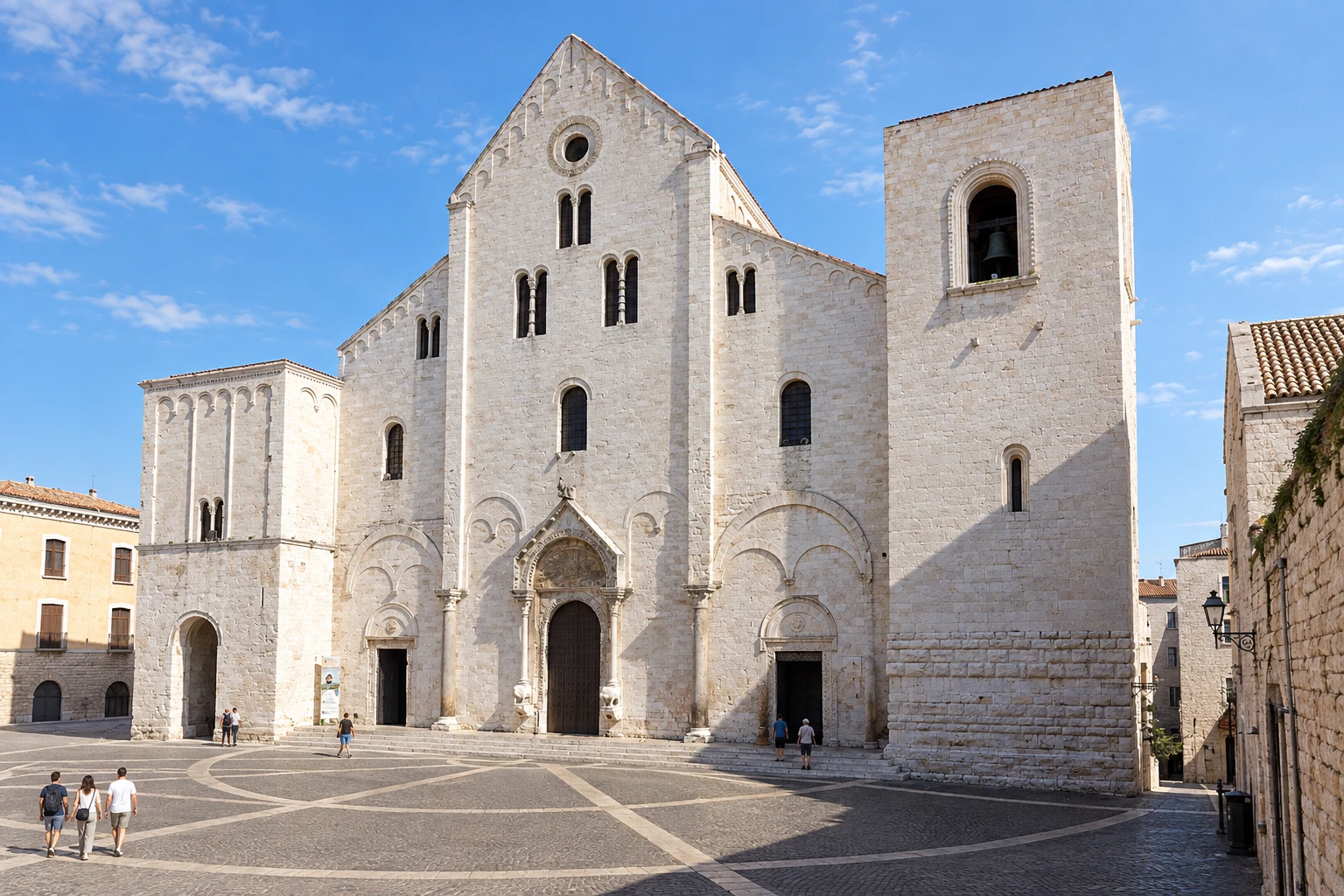
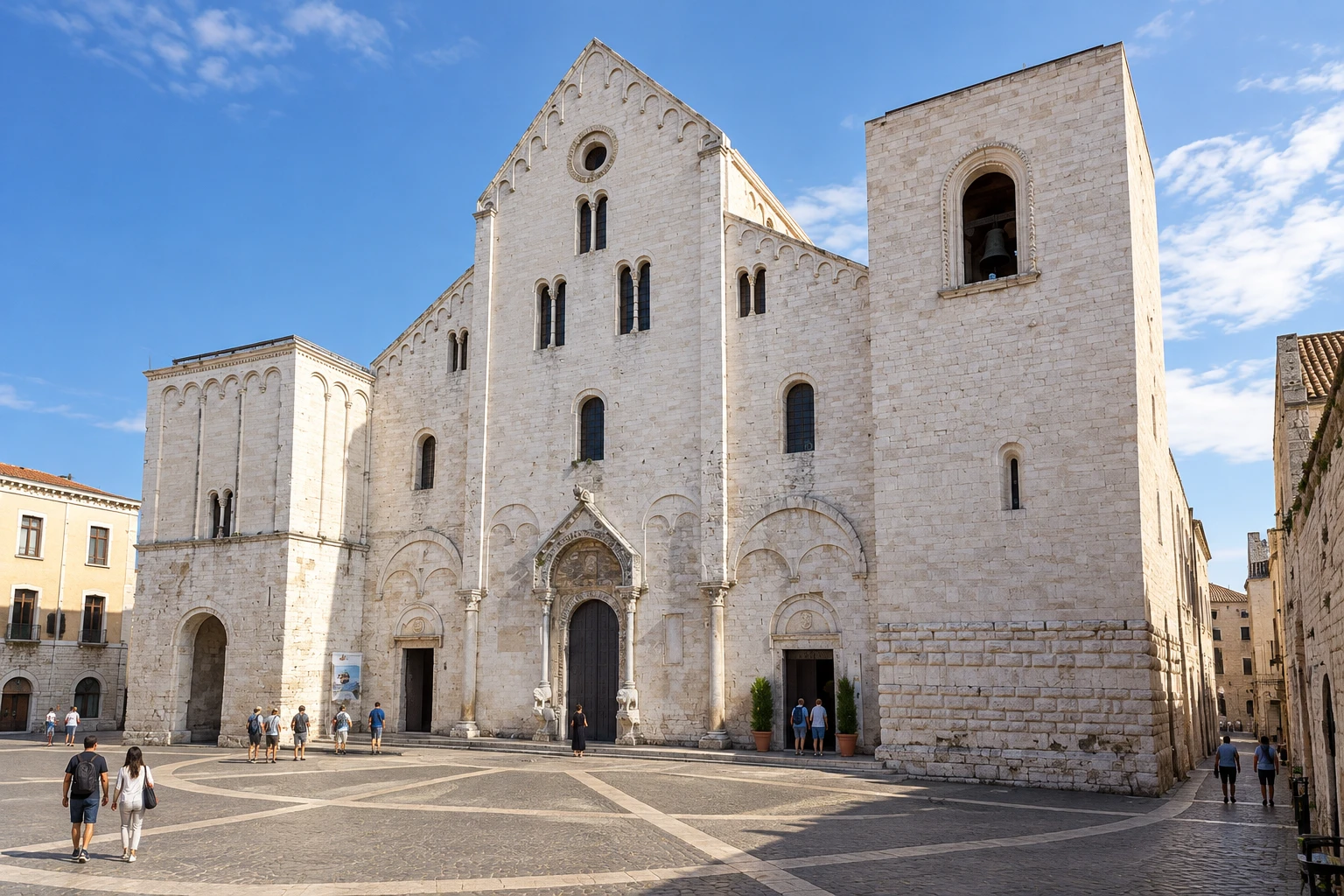
Apúlia (Puglia, in Italian) is the region of the heel of the boot, in southeastern Italy, washed by the Adriatic and the Ionian Sea. The capital is Bari, a port city with a medieval center enclosed by walls, where the Basilica di San Nicola is located, which houses the relics of Saint Nicholas. Bari is also the main gateway to the region, with an airport and trains to the rest of the country.

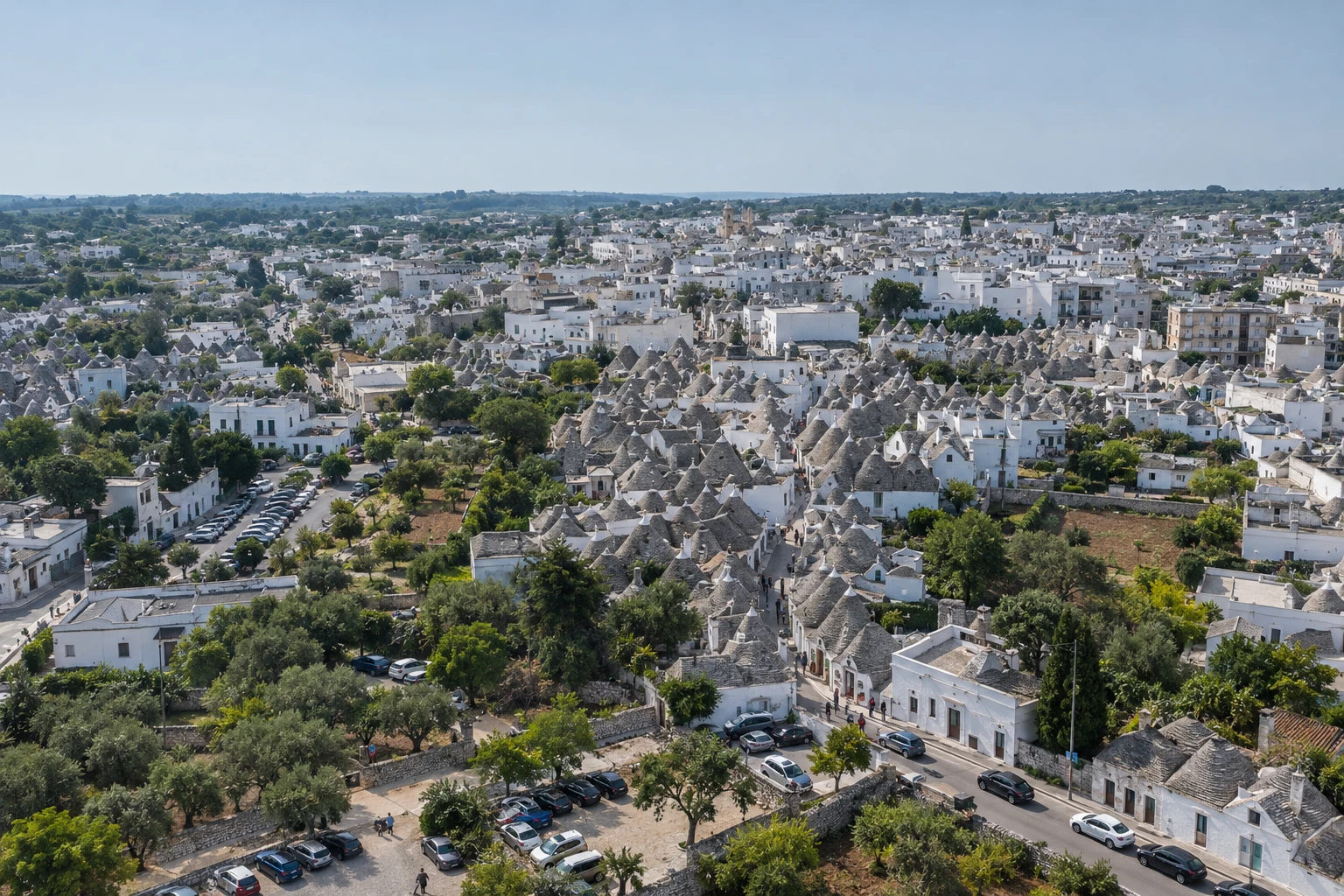
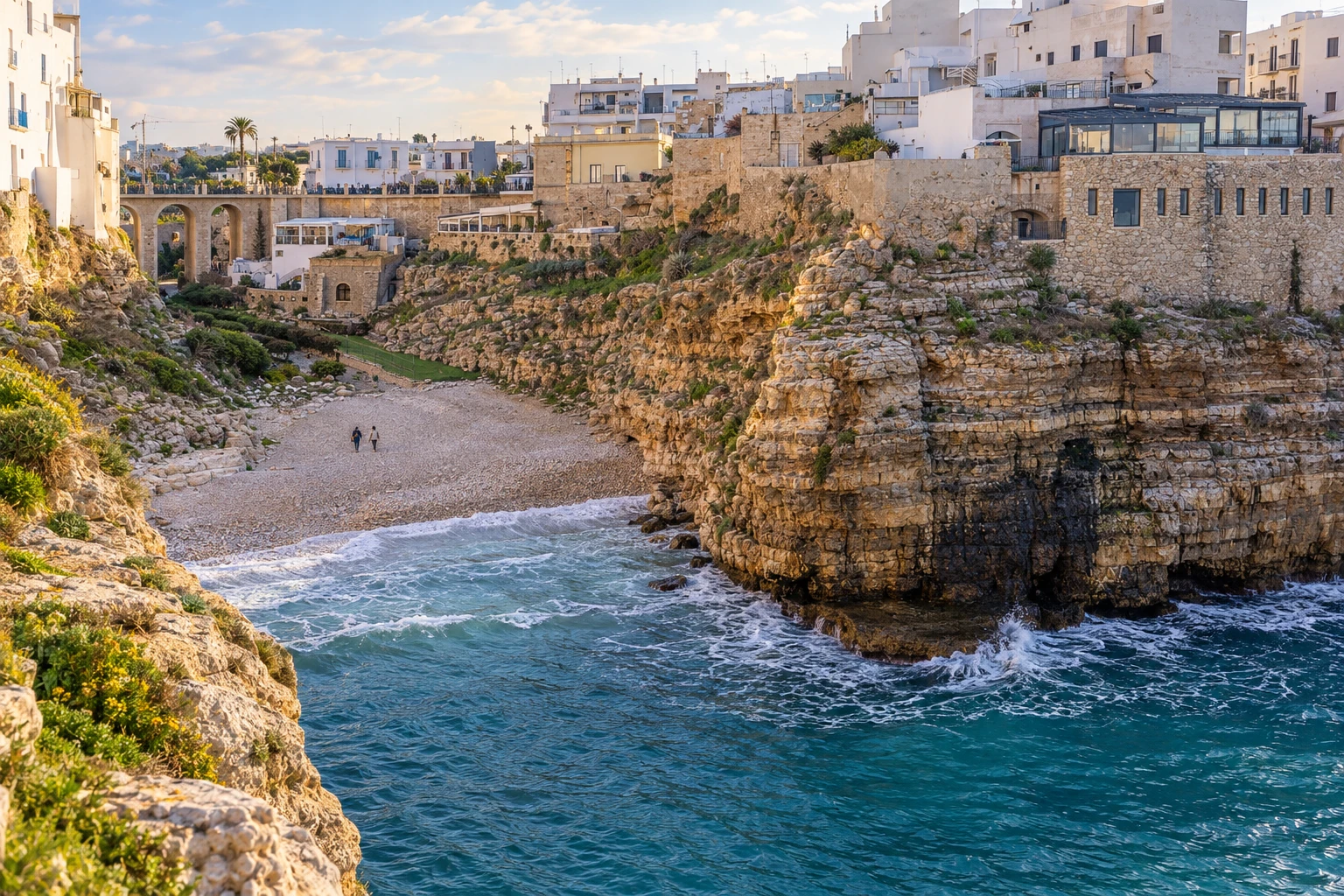
South of Bari, the high coastline forms coves and sea caves. Polignano a Mare, about 35 km away, has its historic center on a cliff and the small beach of Lama Monachile between rock walls. Inland, Alberobello concentrates more than 1,500 trulli, the dry-stone houses with conical roofs, recognized by UNESCO as a World Heritage Site in 1996, at the entrance to the Valle d'Itria.

Further south, Lecce is known for churches and palaces with baroque façades carved in the region's pale stone. Matera, about 65 km from Bari, is already in the neighboring Basilicata: the Sassi, neighborhoods of houses and churches dug into the rock, have been a UNESCO World Heritage Site since 1993.

The region's cuisine is based on fresh pasta, such as orecchiette, olive oil, vegetables, bread and fish. The rhythm is that of southern Italy: lunch around 1 pm, shops that close in the early afternoon and activity that returns at the end of the day, with a walk through the central streets.

This destination brings together 7 cities: Bari, Alberobello, Polignano a Mare, Lecce, Matera, Brindisi, Otranto.

Share: WhatsApp
Traveler, share your experiences through photos Up to 5 photos of each place you visited.

One destination, many paths

The cities on this trip

Start with one city or combine several in your itinerary.

Where Apulia and Matera is The star marks the capital, Bari.
BariAlberobelloPolignano a MareLecceMateraBrindisiOtranto

Outlines: ISTAT, limites administrativos 2026, CC BY 4.0. Adapted by Cidade Turismo.

How to get there: Apulia and Matera

Aeroporto di Bari Karol Wojtyła (BRI) · 11 km to Bari

Flights from Brazil usually connect through another city. Confirm before booking. Bari Airport (BRI) and Brindisi Airport (BDS) receive flights from Rome, Milan and other European cities. From Rome, high-speed trains reach Bari Centrale in about 4 hours. From Bari depart trains to Polignano, Lecce, Alberobello and Matera.

Suggested arrival point: Bari

Bari
Apulia · Apulia and Matera Capital Suggested arrival point

Bari

Bari, capital of Apulia, is the largest Italian city on the Adriatic and the gateway to the region. The old town, Bari Vecchia, sits on a peninsula between two harbors and houses the Basilica di San Nicola, with the relics of Saint Nicholas, the Cattedrale di San Sabino and the Castello Normanno-Svevo. Next to it, the Quartiere Murat, laid out in the 19th century, has shopping streets, and the Lungomare Nazario Sauro leads to the Pinacoteca Metropolitana Corrado Giaquinto.

Alberobello
Apulia · Apulia and Matera

Alberobello

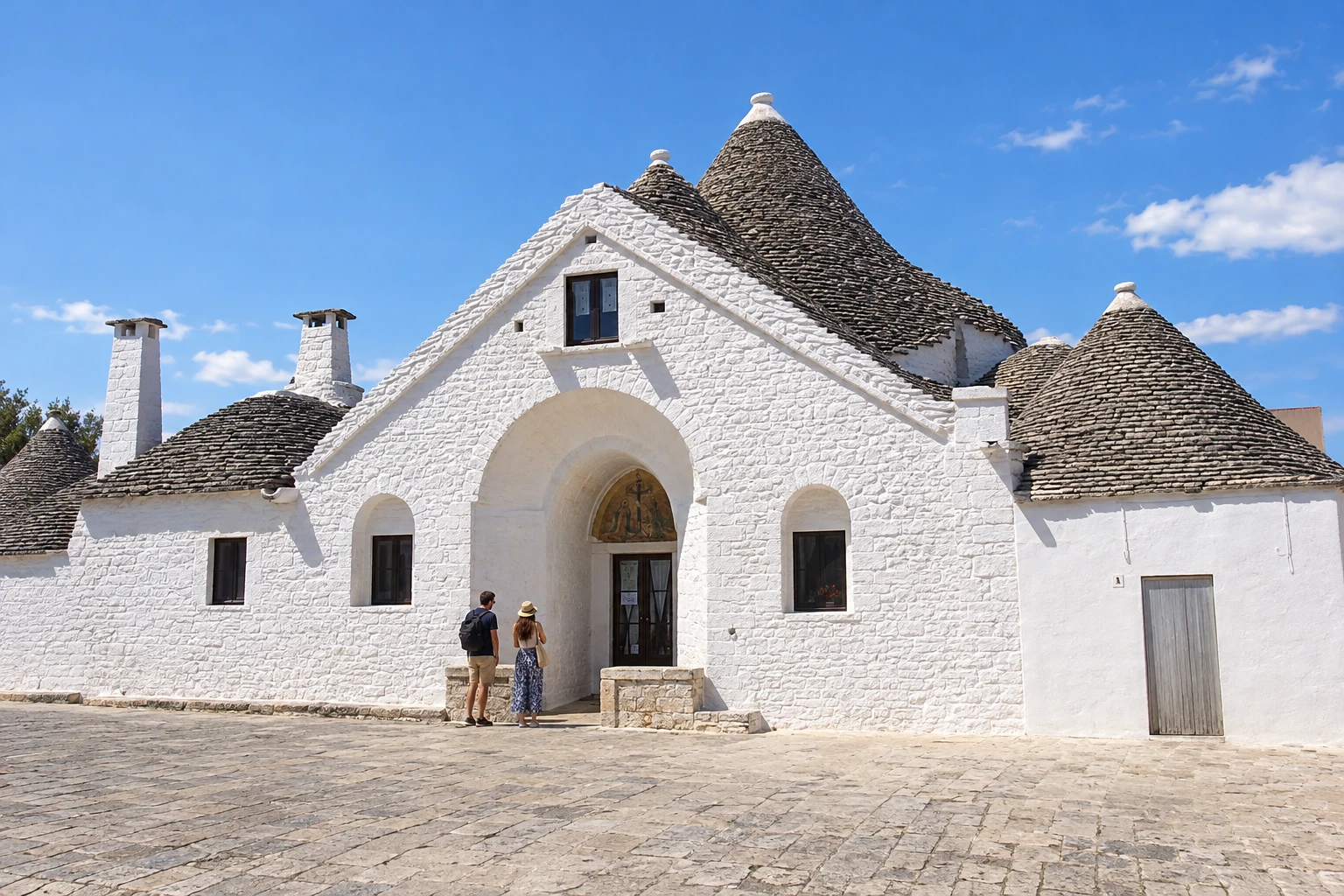
Alberobello, about 55 km from Bari, at the entrance to the Valle d'Itria, has the largest concentration of trulli, the dry-stone houses with conical roofs, recognized by UNESCO in 1996. The Rione Monti gathers about 1,030 trulli on the hillside, with the church of Sant'Antonio at the top. In the upper part are the Basilica dei Santi Medici and the Trullo Sovrano, the only two-storey trullo open as a house-museum, and in the center the Casa Pezzolla museum.

Lecce
Apulia · Apulia and Matera

Lecce

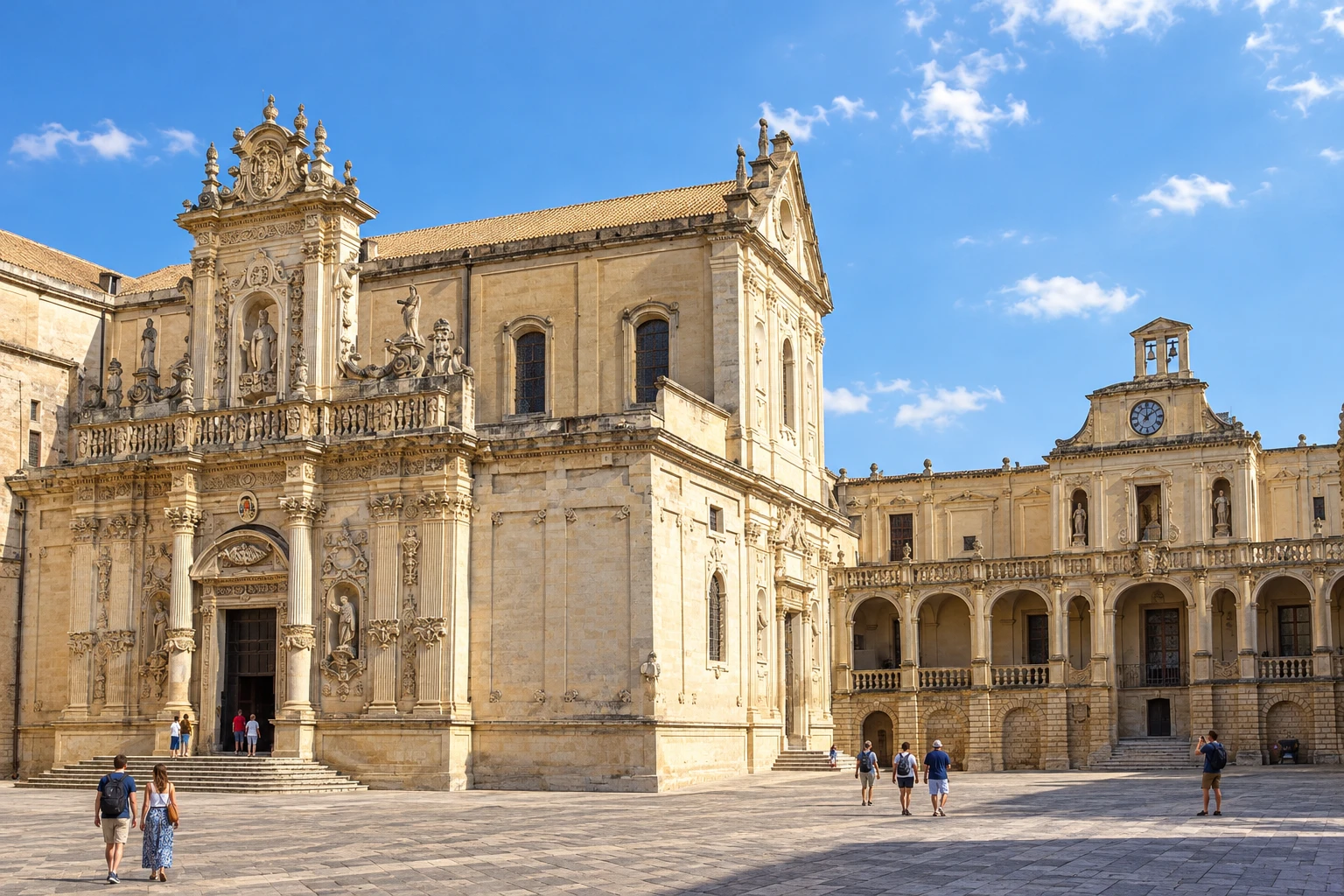
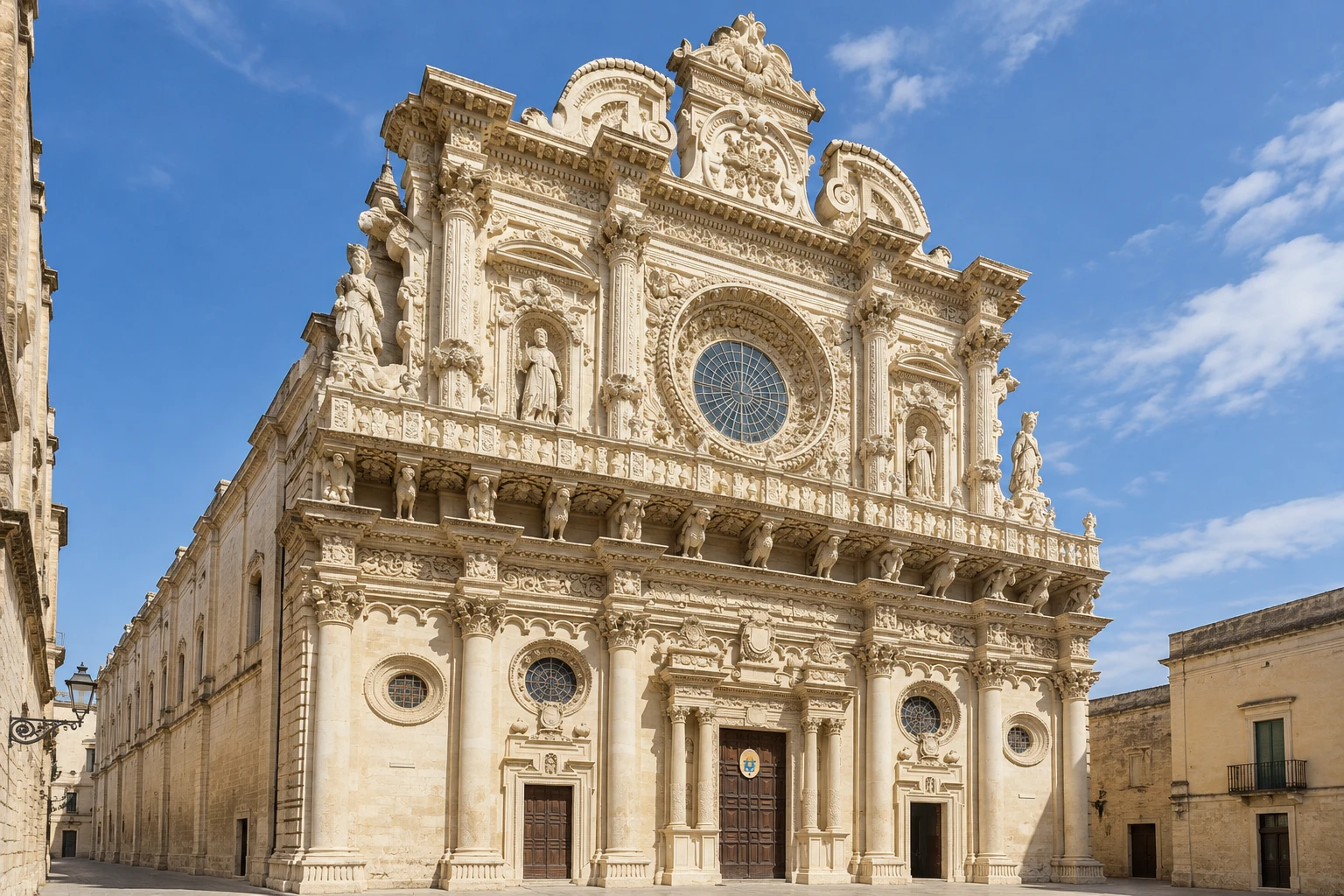
Lecce is the main city of the Salento, the heel of the Italian boot, and became famous for the barroco leccese, carved in the light, soft stone of the region between the 16th and 18th centuries. In the centro storico (historic center) are the Basilica di Santa Croce, the Piazza del Duomo with the cathedral and the 70-metre bell tower, the Piazza Sant'Oronzo with the Anfiteatro Romano, the Porta Napoli and the Castello Carlo V. Otranto, on the Adriatic, is about 45 km away.

Matera
Basilicata · Apulia and Matera

Matera

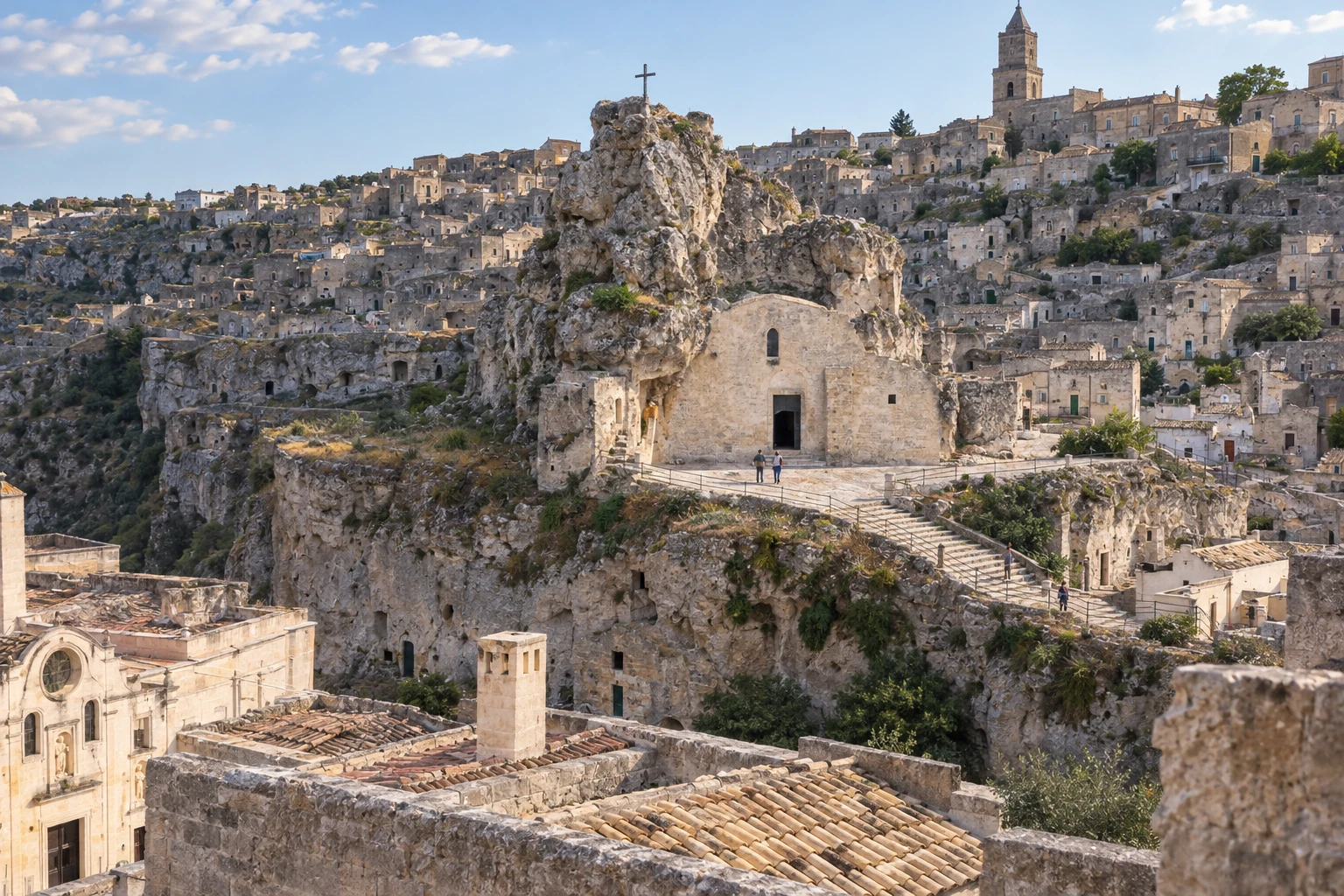
Matera, in the Basilicata region, near the border with Apulia, is known for the Sassi: the Sasso Caveoso and the Sasso Barisano, neighborhoods of houses and churches carved into the rock above the Gravina ravine, a UNESCO World Heritage Site since 1993. Between the two lies the Civita, with its Romanesque cathedral. There are rock-hewn churches with frescoes, the furnished Casa Grotta, the Palombaro Lungo cistern and viewpoints such as the one at Parco della Murgia Materana on the other side of the ravine.

Brindisi
Apulia · Apulia and Matera

Brindisi

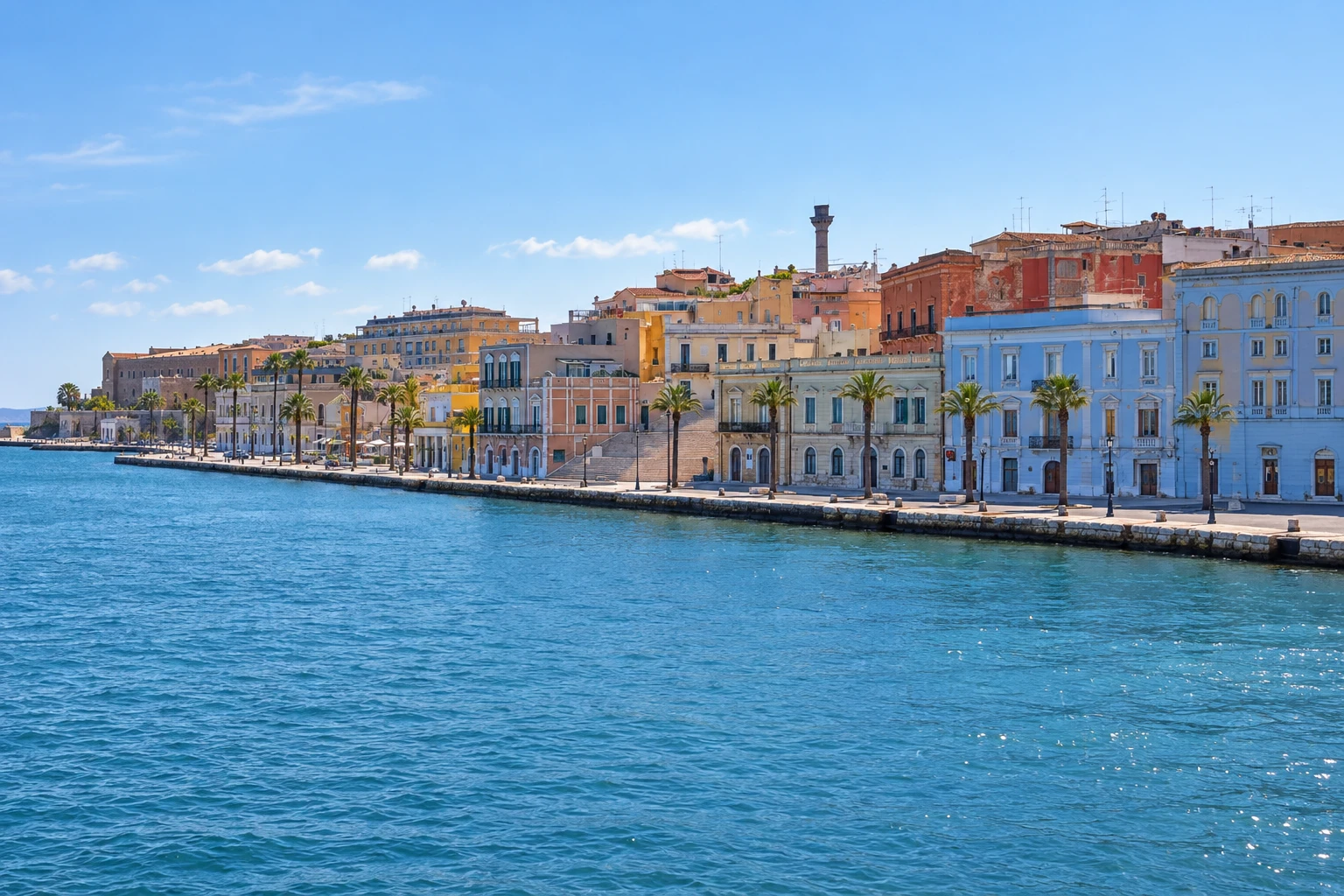
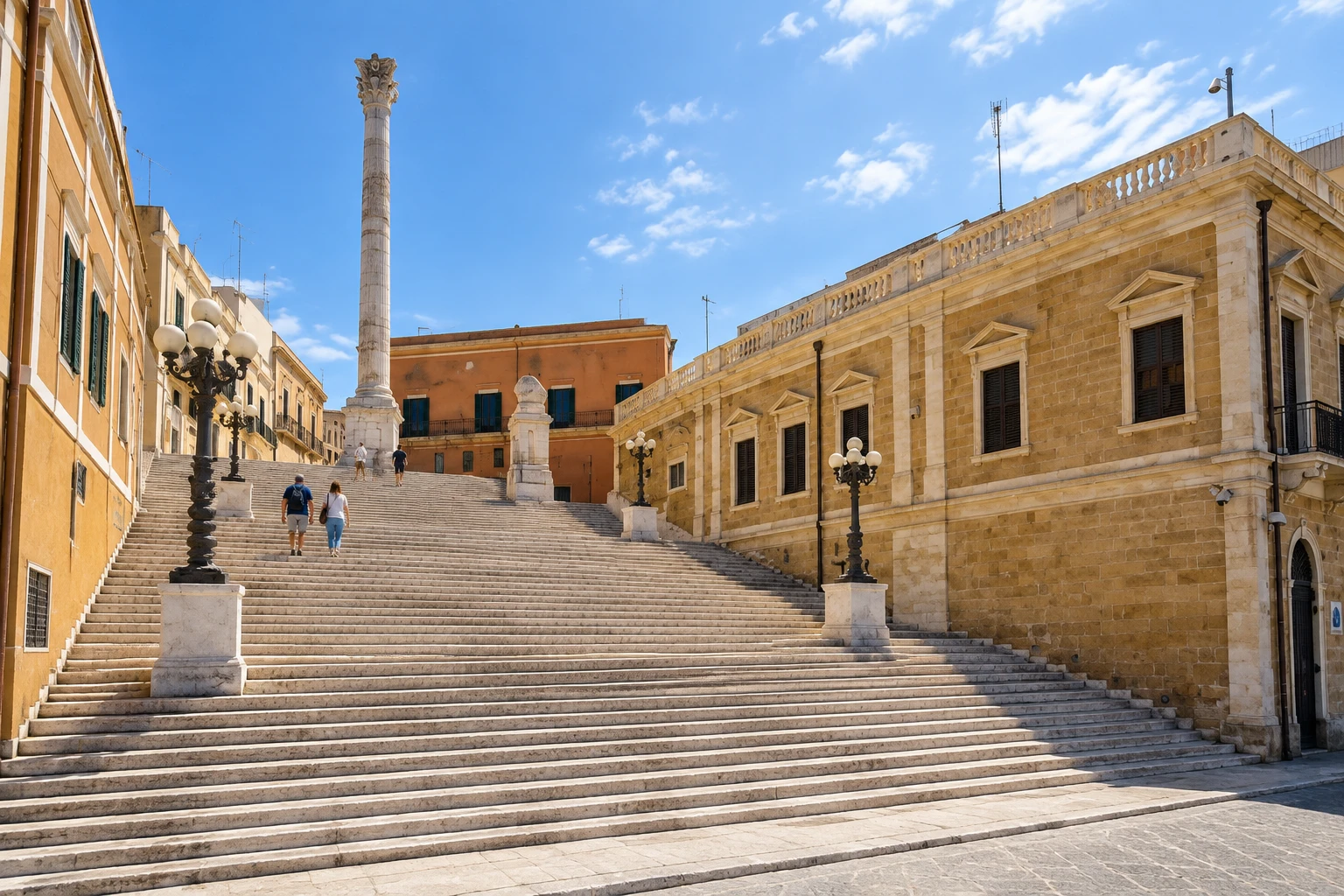
Brindisi is the port city in the south of Puglia, in a bay of the Adriatic used as a port since Roman times. At the top of the harbour staircase stands the Roman column that marks the end of the Via Ápia, and tradition says Virgilio died nearby. The historic centre includes the cathedral square, with the archaeological museum, and the round church of San Giovanni al Sepolcro. The waterfront faces the Monumento ao Marinheiro, and near the airport is Santa Maria del Casale, with 14th-century frescoes. Ferries to Grécia depart from the port. Italian is spoken.

The local experience

Things to do in Apulia and Matera

Bari · Apulia · Church

Basilica of St. Nicholas

Romanesque basilica from the 11th century, in the heart of Bari Vecchia, built to house the relics of Saint Nicholas, brought from the city of Myra (now in Turkey) in 1087. It is a destination for Catholic and Orthodox pilgrims.

Explore Basilica of St. Nicholas

Lecce · Apulia · Church

Basilica of Santa Croce

16th–17th century basilica considered the masterpiece of the barroco leccese, with a façade full of grotesque figures, animals and a large rose window. Beside it is the former convent of the Celestines.

Explore Basilica of Santa Croce

See 39 more places in Apulia and Matera

To choose before you go

Tours in Apulia and Matera

Where each tour starts, how long it takes, how it is done, what is included and the price range.

Bari Vecchia: Basilica di San Nicola, the Cattedrale and the orecchiette at Arco Basso

From Piazza del Ferrarese, Bari Walk through the old town about 3 hours morning easy

Bari Vecchia is the old center of Bari, a maze of white alleys on the peninsula between the two harbors, where women make orecchiette by hand in the doorways of houses on Strada Arco Basso, sold in bags to visitors. The Basilica di San Nicola, from 1087 to 1197, was built to hold the relics of Saint Nicholas (the Santa Claus of northern traditions), taken from Myra in Turkey by sailors from Bari; it is a destination for Russian and Greek Orthodox pilgrims, and the crypt with the saint’s tomb contains the “manna,” the liquid collected each year on May 9. The Cattedrale di San Sabino, from 1292, Romanesque, has the rose window and a crypt over Roman ruins. The Castello Normanno-Svevo, of Frederick II, from 1233, with its moat, houses exhibitions and the plaster cast gallery. The sea-facing walls are the locals’ promenade; the Piazza Mercantile has the column of justice where debtors were displayed.

Stops: Bari Vecchia, Basilica di San Nicola, Cattedrale di San Sabino, Castello Normanno-Svevo.

Includes: Self-guided walk; basilica and cathedral free of charge; castle with separate admission fee (closed on Tuesdays).

Tip: Go in the morning, when orecchiette are being made at Arco Basso; buy a bag and ask the price beforehand. From May 7 to 9, the feast of Saint Nicholas, with the procession of the statue by sea.

Best time: All year.

Lungomare Nazario Sauro, Quartiere Murat and the Pinacoteca

From Piazza del Ferrarese or Corso Vittorio Emanuele, Bari Seafront walk and shopping about 2 h 30 late afternoon easy

The Lungomare Nazario Sauro is Bari’s monumental seafront, from 1930, featuring the fascist-era palaces (the Palazzo della Provincia, the Teatro Margherita over the sea) and the iron lampposts where Bari residents stroll at dusk and on Sunday mornings, with the San Nicola breakwater and the open sea; the 'Nderr'a la lanze', the fishermen’s market in Piazza del Ferrarese, sells raw octopus and sea urchins on the spot. The Quartiere Murat, the grid-layout district opened by Joachim Murat in 1813, is the modern center, with Via Sparano of shops, the Teatro Petruzzelli (1903), rebuilt after the 1991 fire (guided visits), and the cafés of Piazza Umberto. In the Palazzo della Provincia, the Pinacoteca Metropolitana Corrado Giaquinto houses Puglia painting from the 11th to the 20th century, including Giovanni Bellini, Tintoretto, Giaquinto and the Macchiaioli, with sea views from its windows.

Stops: Lungomare Nazario Sauro, Quartiere Murat, Pinacoteca Metropolitana Corrado Giaquinto.

Includes: Free walk; Pinacoteca with separate paid admission (closes on Mondays); visit to the Petruzzelli with separate paid admission.

Tip: Do the seafront promenade at sunset, starting from Teatro Margherita; the raw octopus from the market is the typical starter. The Petruzzelli has an opera and concert season; tickets on the website.

Best time: All year round.

Alberobello: the trulli of Rione Monti and the Trullo Sovrano

From Alberobello (FSE train from Bari, 1 h 30, or car, 55 km) Walk among the trulli about 3 hours morning or late afternoon easy (gentle slopes)

Alberobello, a UNESCO site, is the town of the trulli, the dry-stone houses with conical slab roofs, built without mortar, according to tradition, so they could be dismantled when the tax collector of the Kingdom of Naples arrived. Rione Monti, on the hillside, has about a thousand trulli on streets that climb up to the Chiesa di Sant'Antonio di Padova, from 1927, the trullo-shaped church; most have become shops, restaurants or accommodations, with symbols painted in lime on the cones. Rione Aia Piccola, on the other side, with 400 trulli, is where people still live. The Trullo Sovrano, from the 18th century, is the only two-storey trullo, with a furnished interior open to visitors; the Museo del Territorio Casa Pezzolla brings together 15 adjoining trulli, with the history of their construction. The Basilica dei Santi Medici Cosma e Damiano, from 1885, holds the relics of the patrons, celebrated on September 27 and 28. The Belvedere Santa Lucia viewpoint frames the cones of Rione Monti.

Stops: Rione Monti, Trullo Sovrano, Chiesa di Sant'Antonio di Padova, Basilica dei Santi Medici Cosma e Damiano, Museo del Territorio Casa Pezzolla.

Includes: Self-guided walk; Trullo Sovrano and Casa Pezzolla have small admission fees; churches free of charge. FSE train paid separately.

Tip: Go before 10:00 or after 17:00: between those times tour buses fill Rione Monti. Stay in a trullo in Alberobello or nearby to see the town empty at night. The surrounding Valle d'Itria (Locorotondo, Cisternino, Martina Franca) has trulli in the fields and white villages.

Best time: All year; more shops open from April to October; at the end of September the patrons’ festival with luminarias.

Polignano a Mare: Lama Monachile, the historic centre on the cliff and Modugno

From Polignano a Mare (regional train from Bari, 30 min) Walk in a village on the cliff about 3 hours morning or late afternoon easy

Polignano a Mare sits on a 20 m cliff with white houses on the edge and grottos beneath, 30 minutes by train from Bari. The Lama Monachile (or Cala Porto) is the pebble beach wedged between two rock walls under the 1839 bridge (the old Via Traiana), the most photographed image of Puglia, crowded in summer. The centro storico di Polignano a Mare, through the Marchesale arch gate, has narrow streets with poems written on steps and doors by a local resident, sea-facing terrace viewpoints (Grottone and Santo Stefano) and the mother church. The Statua di Domenico Modugno, from 2009, with arms outstretched like in 'Volare', honours the singer born in the town; it stands at the end of the promenade with sea-cliff views. The Fondazione Museo Pino Pascali, in the old seafront slaughterhouse, is the region’s contemporary art museum. The Grotta Palazzese, the grotto with a restaurant, can be seen from the sea on the boat trips.

Stops: Lama Monachile, Centro storico di Polignano a Mare, Statua di Domenico Modugno, Fondazione Museo Pino Pascali.

Includes: Self-guided walk; Pino Pascali museum with admission. Pleasure-boat trips to the grottos are paid separately. Train fare extra.

Tip: Go early or late in the day; at midday in summer Lama Monachile has no room. The 1-hour boat to the grottos departs from the small harbour and shows the town from below. In July or September the Red Bull Cliff Diving event jumps from the cliff.

Best time: All year; for swimming from June to September.

Lecce: the 'Florence of the South', baroque in golden stone

From Lecce (station or Porta Napoli) Walk through the baroque center about 3 hours late afternoon easy

Lecce, the capital of the Salento, is the city of leccese baroque, carved in the local limestone, soft and golden, which allows richly decorated façades. The Basilica di Santa Croce, built from 1549 to 1695, has the city's most exuberant façade, with the rose window, caryatids and animals supporting the balcony, and a wooden ceiling; next to it, the Palazzo dei Celestini. The Piazza del Duomo, closed on three sides, with the cathedral, the 68 m bell tower (with elevator and view), the episcopal palace and the seminary, is a 17th-century courtyard square. The Piazza Sant'Oronzo has the patron's column and the Anfiteatro romano di Lecce, from the 2nd century, only half excavated, originally seating 25,000. The Porta Napoli, the 1548 triumphal arch, opens the center; the Castello Carlo V, from 1539, houses exhibitions and the papier-mâché museum, the local art. Caffè leccese (with almond milk and ice) and pasticciotto are must-stops.

Stops: Basilica di Santa Croce, Piazza del Duomo, Anfiteatro romano di Lecce, Porta Napoli, Castello Carlo V.

Includes: Self-guided walk; Santa Croce, the bell tower and cathedral with a combined ticket paid separately (LeccEcclesiae); castle with admission. Amphitheatre visible from the square, no charge.

Tip: Do the walk at late afternoon, when the stone turns golden and the locals of Lecce go out for the passeggiata; the center is a ZTL and entirely pedestrian. The papier-mâché workshops are on the streets around the Duomo.

Best time: All year; from August 24 to 26 the feast of Sant'Oronzo, with street illuminations.

Museo Faggiano and Museo Castromediano: Lecce beneath Lecce

From Via Ascanio Grandi and Viale Gallipoli, Lecce Two museums about 2 h 30 morning easy (narrow stairs in the Faggiano)

The Museo Faggiano began in 2001, when the owner of a house on Via Ascanio Grandi broke the floor to fix a pipe and found, meter by meter, two thousand years of history: Messapian tombs from the 5th century BC, Roman cisterns, a Franciscan convent, a Templar crypt, ovens and passages, excavated by the family over seven years and opened as a private museum, with the climb to the tower via the convent staircase. The Museo Sigismondo Castromediano, dating from 1868 and the oldest public museum in Puglia, houses the archaeological collection of Salento (Messapian and Greek vessels, the finds from Rudiae and Cavallino), the art gallery and the sacred art section, in a 1970s building near the station. Both show the city that existed before the Baroque.

Stops: Museo Faggiano, Museo Sigismondo Castromediano.

Includes: Museo Faggiano with separate paid admission; Museo Castromediano free of charge (check).

Tip: Do the Faggiano visit with the family-led explanation, in Italian and English; it is not for those with claustrophobia. The Castromediano is the stop for rainy or very hot days.

Best time: All year.

See 6 more tours

Otranto: the mosaic cathedral and the castle, from Lecce

From Lecce (FSE train or bus to Otranto, about 1 h 15; car, 45 km) Day trip to the walled town and the beach about 5 hours full day easy

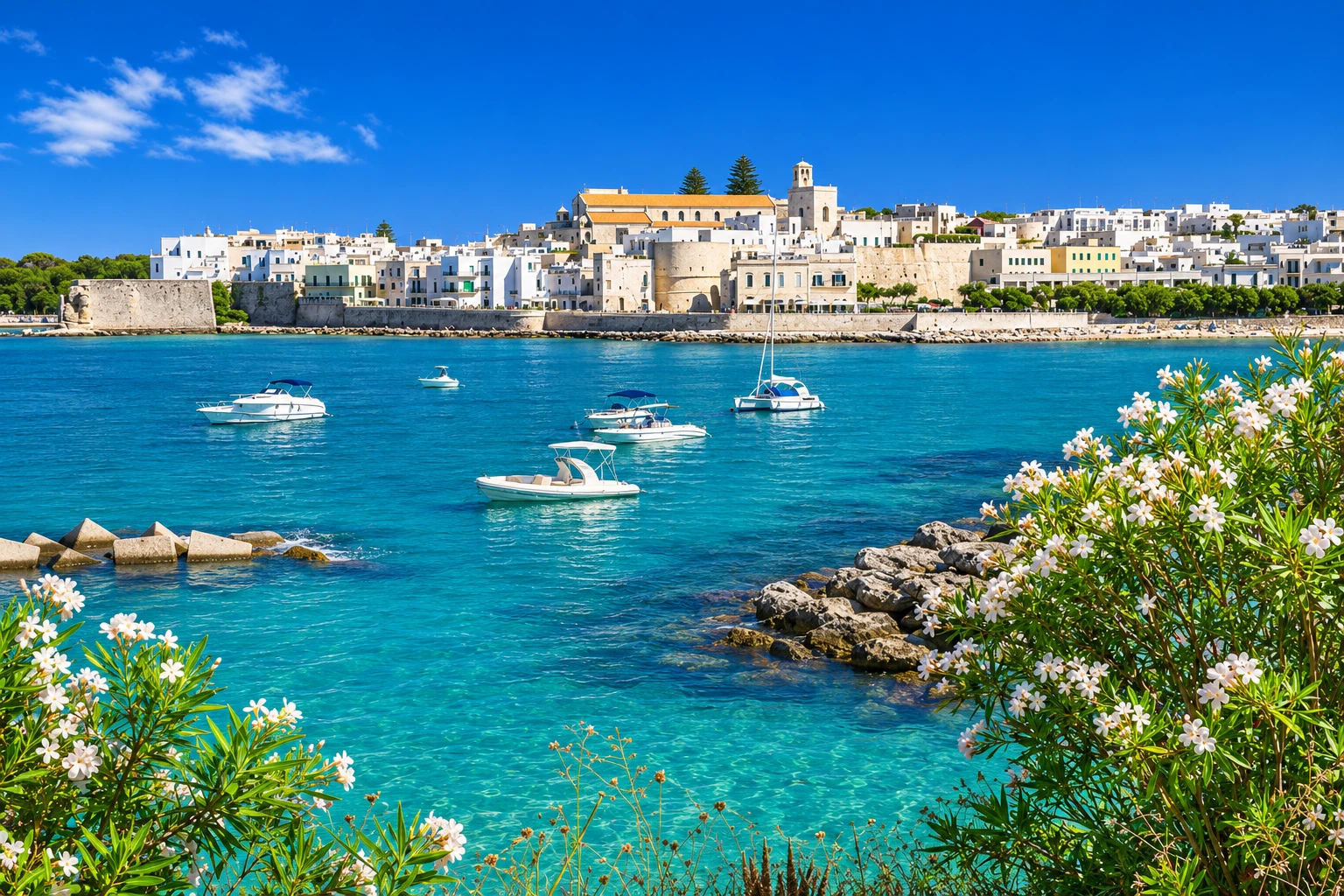
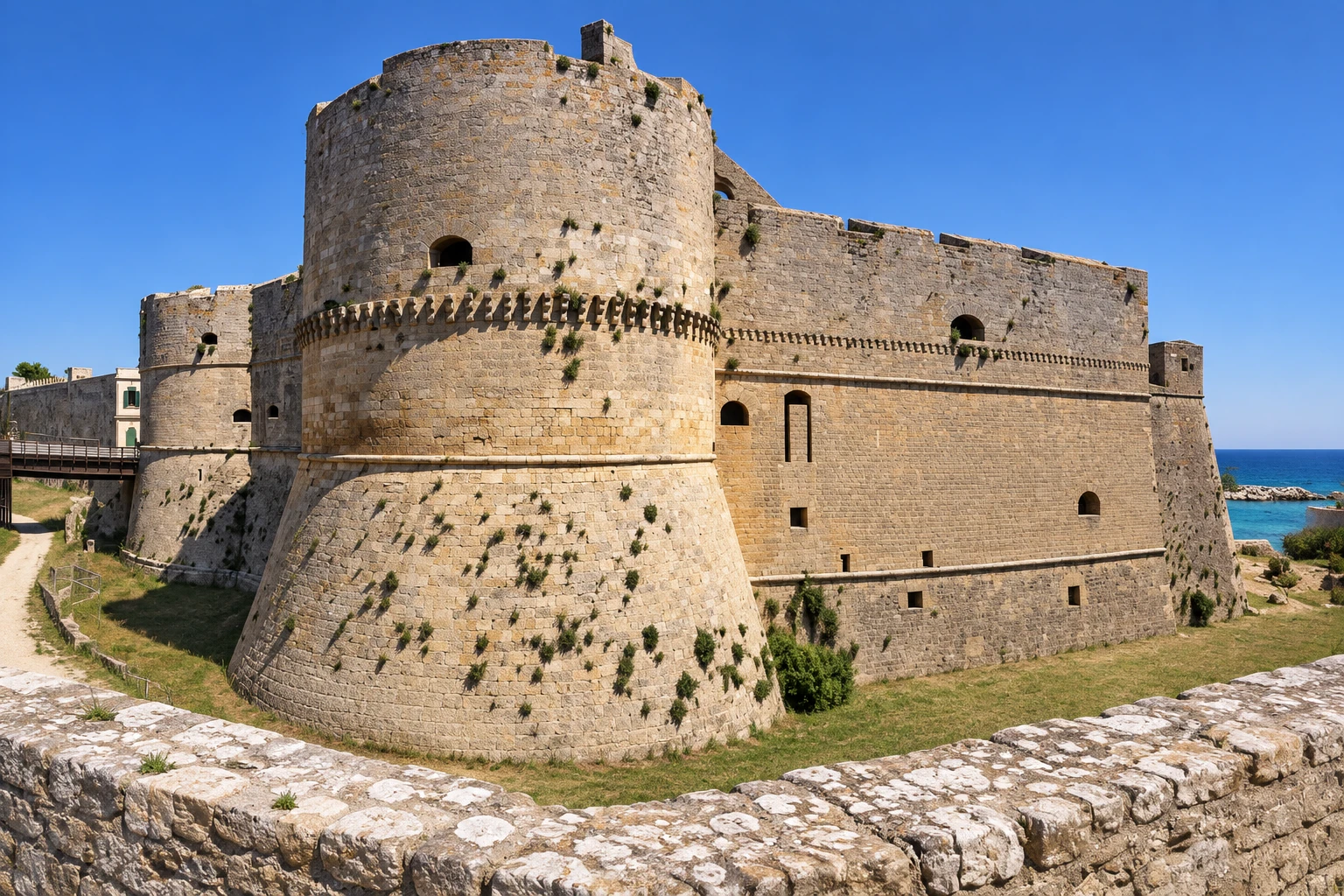
Otranto, at the easternmost point of Italy, 45 km from Lecce, is the walled town overlooking the Adriatic Sea, with the Aragonese castle of 1485 that lent its name to the first English Gothic novel. The Cattedrale di Otranto, from 1088, has its entire floor covered by the Tree of Life mosaic, made by the monk Pantaleone between 1163 and 1165, with 600 m² of biblical and pagan figures, King Arthur and the zodiac; in the side chapel, the bones of the 800 martyrs of 1480, beheaded by the Turks for refusing to convert, are displayed in glass cabinets. The crypt has 42 reused columns. In the white alleys there are shops and the 10th‑century Byzantine church of San Pietro, with frescoes. Beaches lie to the north (Baia dei Turchi, Alimini) and to the south, with the bauxite quarry with a green lake and the Punta Palascìa lighthouse, the point where the sun rises first in Italy.

Stops: Cattedrale di Otranto, Castello Carlo V.

Includes: Cathedral free of charge (crypt with suggested donation); castle with separate paid admission. Train and bus fares not included.

Tip: Go early to the cathedral, which closes at midday, and leave the afternoon for the Baia dei Turchi (on foot via a pine-lined trail) or for the bauxite quarry by car. The FSE train requires a change at Maglie; the summer bus is direct.

Best time: All year; June to September for swimming; August 13–15 for the martyrs’ feast.

Matera: the Sassi on foot, Caveoso and Barisano

From Piazza Vittorio Veneto, Matera (viewpoint) Walk through the cave districts about 3 hours morning or late afternoon moderate (stairs and slopes)

Matera, in Basilicata, is the city of cave dwellings inhabited since the Neolithic, a UNESCO World Heritage site and European Capital of Culture in 2019; in the 1950s the Sassi were emptied by decree due to poor living conditions and were reoccupied in the 1980s. From Piazza Vittorio Veneto the viewpoint opens onto the Sasso Barisano, the more rebuilt district with hotels and restaurants in the grottoes; the Sasso Caveoso, on the other side of the Civita (the central hill with the Cattedrale di Matera, from 1270, Romanesque, with a façade that turns golden in the late-afternoon sun), retains more excavated houses and stair-streets above the Gravina ravine, with Piazza San Pietro Caveoso and the rock churches. You walk along Via Fiorentini and Via Buozzi, descending and climbing steps between terraces that are the roofs of the neighbors below; 'The Passion of the Christ' and other films were shot here because of the resemblance to ancient Jerusalem.

Stops: Sasso Caveoso, Sasso Barisano, Cattedrale di Matera.

Includes: Free walk, no charge; cathedral free of charge. Guided visits require separate payment.

Tip: Start at the Piazza Vittorio Veneto viewpoint in the morning (Barisano with good light) and finish at the Caveoso at sunset; at night, the lights of the Sassi seen from the Belvedere Luigi Guerricchio. Wear shoes with firm soles: the stones are smooth.

Best time: All year round; on July 2, the Festa della Bruna, with the papier-mâché carro destroyed by the crowd.

Rock-hewn churches and the Casa Grotta: how life was in the Sassi

From Piazza San Pietro Caveoso, Matera Visit to rock-cut churches and cave-house about 2 hours morning easy (stairs)

Matera has more than 150 rock-hewn churches, carved into the rock between the 8th and 13th centuries by Byzantine and Benedictine monks. The Chiesa rupestre di Santa Maria de Idris, inside the Monterrone rock that rises in the middle of the Sasso Caveoso, contains frescoes from the 12th to the 17th centuries and connects to the crypt of San Giovanni in Monterrone via a corridor cut in the stone; the Chiesa rupestre di Santa Lucia alle Malve, from the 9th century, was the first church of the Benedictine nuns, with frescoes of the Madonna del Latte and tombs carved into the terrace in front. The Casa Grotta di Vico Solitario is the cave-house reconstructed as it was until the 1950s: a single room with the high bed, the kitchen, the loom, the mule stall at the back and the cistern, where families of ten lived, with explanations about life in the Sassi before the evacuation. The Palombaro Lungo, the cistern beneath Piazza Vittorio Veneto, is a separate visit.

Stops: Chiesa rupestre di Santa Maria de Idris, Chiesa rupestre di Santa Lucia alle Malve, Casa Grotta di Vico Solitario.

Includes: Rock churches with a separate combined-ticket (urban circuit); Casa Grotta with a small admission fee.

Tip: Buy the combined ticket for the rock churches at the first site; frescoes may not be photographed. The Casa Grotta has audio in Portuguese.

Best time: Year-round.

Palombaro Lungo, MUSMA and Palazzo Lanfranchi: Matera of the museums

From Piazza Vittorio Veneto, Matera Cistern and two museums about 3 hours afternoon easy

The Palombaro Lungo is the giant cistern excavated beneath Piazza Vittorio Veneto in the 19th century, 16 m high and holding 5 million liters, which supplied the town with rain and spring water; it was rediscovered in 1991 and is visited via walkways with a guide in 20 minutes. MUSMA, the Museum of Contemporary Sculpture, occupies the 16th-century Palazzo Pomarici in the Sasso Caveoso, with works displayed in caves and halls: Italian and international sculptures from the 20th and 21st centuries, in one of Italy’s most original installations. Palazzo Lanfranchi, from 1668 and formerly a seminary, is the National Museum of Medieval and Modern Art of Basilicata, with the region’s sacred paintings and the Carlo Levi room (author of 'Christ Stopped at Eboli'), featuring the 18 m panel 'Lucania 61'. On the same square is the viewpoint over the Sasso Caveoso.

Stops: Palombaro Lungo, MUSMA, Palazzo Lanfranchi.

Includes: Palombaro Lungo with ticket and guided visit; MUSMA and Palazzo Lanfranchi with separate paid admissions (Lanfranchi free on the first Sunday of the month).

Tip: Palombaro has short visiting slots and a line in summer: buy your ticket at the plaza ticket office when you arrive. MUSMA is the museum to visit on a hot afternoon.

Best time: year-round.

Parco della Murgia Materana: the hike to the other side of the gorge

From Matera (Sasso Caveoso, descent to the Gravina, or drive to the belvedere) Trail and rock-hewn churches on the plateau about 3 hours morning or late afternoon moderate (150 m elevation change, bridge)

The Parco della Murgia Materana is the limestone plateau across the Gravina, the 100 m ravine that separates the Sassi from the Murgia, with 150 rock-hewn churches, Neolithic settlements and shepherds. The trail starts from Sasso Caveoso, descends to the bottom of the Gravina, crosses the stream via a Tibetan (suspended) bridge and climbs to the Belvedere di Murgia Timone, the viewpoint from which you can see all of Matera on the opposite cliff face—the film image; it takes about 1 hour each way, with strong sun. On the plateau are the churches of San Falcione and the Madonna delle Tre Porte, with frescoes, and the Centro Visite Jazzo Gattini, the old corral with the visitor centre. By car you can reach the viewpoint via the Taranto road in 10 minutes.

Stops: Parco della Murgia Materana, Sasso Caveoso.

Includes: Trail and park free of charge; guided visits to the park’s rock-hewn churches paid separately (some only with a guide).

Tip: Do the trail early in the morning or late in the afternoon, with water and sneakers; the Tibetan bridge closes in rain or wind. From the belvedere, illuminated Matera at dusk is the photo: return by car or along the trail with a flashlight.

Best time: From March to June and from September to November; in summer only at the ends of the day.

Cripta del Peccato Originale: the rock-cut “Sistine Chapel”

From Matera (14 km, by car or transfer with reservation) Guided visit to the crypt with frescoes about 1 h 30 (including travel) morning or afternoon easy

The Cripta del Peccato Originale (Crypt of Original Sin), in a cave on the slope of the Gravina di Picciano, 14 km from Matera, was discovered in 1963 by local youths and houses the cycle of frescoes from the 8th or 9th century painted by an anonymous Benedictine artist, the “Painter of the Flowers of Matera”: the Creation, Adam and Eve, the archangels and the apostles, in vivid colors on the rock, considered the most important group of rock painting in southern Italy. Visits are guide-only, in small groups on scheduled times, last about 1 hour, part outdoors; the foundation that manages it restored the site between 2002 and 2005. It is on a farm property with valley views and has no public transport.

Stops: Cripta del Peccato Originale.

Includes: Separate paid ticket, with guided visit included and mandatory reservation (foundation website or phone). Transfer from Matera paid separately if you don’t have a car.

Tip: Book a few days in advance; tours run morning and afternoon, except on Mondays. Combine it with the road to Puglia, heading toward Altamura.

Best time: Year-round, with reservation.

Day by day

3, 5 and 7-day itinerary in Apulia and Matera

Suggestions to plan the trip. Change the order of the days according to the weather and tour availability.

3 days · Puglia in 3 days: Bari, Alberobello and Polignano

For For those arriving via Bari who want the essentials by train. · Based in Bari (centre or Murat)
  1. Day 1 · Bari

    Arrival via Bari (European connection or Rome). Bari Vecchia, Basilica di San Nicola, Cattedrale, orecchiette at Arco Basso; Castello; Lungomare at sunset and dinner in the Murat district.

  2. Day 2 · Alberobello

    FSE train to Alberobello (1 h 30; does not run on Sundays): Rione Monti, Trullo Sovrano, Casa Pezzolla; return to Bari or stay overnight in a trullo.

  3. Day 3 · Polignano a Mare

    Regional train to Polignano (30 minutes): Lama Monachile early, historic center, Modugno statue, boat to the grottos; Monopoli, the next station, for the afternoon; return to Bari.

5 days · Puglia and Matera in 5 days
For For those who want to combine Puglia’s towns with the Sassi, by car or by buses. · Based in Bari (2 nights), Matera (2 nights), Alberobello or Polignano (1 night)
  1. Day 1 · Bari

    Arrival via Bari and train to the center. Bari Vecchia in the morning, with the Basilica di San Nicola, the Cattedrale and the orecchiette at Arco Basso; Castello Normanno‑Svevo; Lungomare and the Quartiere Murat in the afternoon, with the Pinacoteca if it rains; dinner in the Murat district.

  2. Day 2 · Polignano and Alberobello

    Train or car to Polignano a Mare in the morning, with Lama Monachile and the cliffside town center; Alberobello late afternoon, when the tour groups leave, with Rione Monti and the Trullo Sovrano; overnight in a trullo.

  3. Day 3 · Matera

    Car (1 hour) or FAL train from Bari (1 h 30) to Matera; viewpoint at Piazza Vittorio Veneto, Sasso Barisano and the Cattedrale in the afternoon; Sasso Caveoso at sunset and the lights of the Sassi from the Belvedere; overnight in a cave house.

  4. Day 4 · Matera: churches and museums

    Rock-hewn churches of Santa Maria di Idris and Santa Lucia alle Malve and the Casa Grotta in the morning; Palombaro Lungo and MUSMA in the afternoon; walk along the Gravina to the Belvedere della Murgia at dusk, or go by car.

  5. Day 5 · Crypt and return

    Crypt of the Original Sin reserved for the morning; drive back to Bari for the flight (or, with more time, continue to Lecce, about 2 h by car, toward the Salento).

7 days · Puglia and Matera in 7 days: from Bari to the Salento
For One week by car: Bari, Valle d'Itria, Matera, Lecce and Otranto. · Based in Bari (1), Alberobello (1), Matera (2), Lecce (3)
  1. Day 1 · Bari

    Arrival and car pick‑up at the airport. Bari Vecchia with San Nicola, the Cattedrale and Arco Basso; Castello Normanno‑Svevo; Lungomare Nazario Sauro at sunset and dinner in the Murat district.

  2. Day 2 · Polignano and Alberobello

    Polignano a Mare early, with Lama Monachile and a boat trip to the grottos; Monopoli and its old port at lunchtime; Alberobello late afternoon, with Rione Monti and the Trullo Sovrano; overnight in a trullo.

  3. Day 3 · Valle d'Itria and Matera

    Locorotondo and Cisternino in the morning, the white villages of the Valle d'Itria; drive to Matera (about 1 h 30); Sasso Barisano and the Cattedrale; Sasso Caveoso at sunset.

  4. Day 4 · Matera

    Rock-hewn churches and Casa Grotta in the morning; Palombaro Lungo, MUSMA and Palazzo Lanfranchi in the afternoon; walk or drive to the Belvedere della Murgia at dusk to see the Sassi lit up.

  5. Day 5 · Crypt and Lecce

    Crypt of the Original Sin reserved for the morning; drive to Lecce (about 2 h); baroque centre at sunset, with Santa Croce, the Piazza del Duomo and the amphitheatre; caffè leccese and pasticciotto.

  6. Day 6 · Otranto and the coast

    Otranto in the morning, with the mosaic cathedral and the castle; Baia dei Turchi for a swim; Punta Palascìa lighthouse and the bauxite quarry in the afternoon; return to Lecce for dinner.

  7. Day 7 · Lecce and return

    Faggiano Museum and Castromediano Museum in the morning; Gallipoli or Santa Maria di Leuca in the afternoon if time allows; return the car in Bari or Brindisi (the airport is 40 minutes from Lecce).

Best time to go

When to go: Apulia and Matera month by month

From May to June and from September to October the weather is usually good for walking and for the sea. July and August are hot and crowded, especially August, due to Italians' vacations. The beach season usually runs from June to September. In winter, from December to February, the climate is mild, but part of the coastal trade closes.

The seasons shown are the most usual ones; nature doesn't always follow the calendar.

January Some rain

winter · empty towns

Winter. At the Bari Palese station (normals 1991–2020; Lecce uses normals 1981–2010 and Matera is a little cooler at 400 m): average 8.3 °C (highs of 12 °C) and about 51 mm of rain. Short, windy days, rare snow in Matera. Alberobello and Polignano empty, Matera with the Sassi quiet and the caves heated. Coat and rain cape.

February Low rain

winter · Carnival of Putignano

Winter. At the Bari Palese station (normals 1991–2020; Lecce with normals 1981–2010 and Matera a little colder at 400 m): average 8.7 °C and about 37 mm of rainfall. The Carnival of Putignano, 40 km from Bari, is one of Italy’s oldest, with floats on Sundays. Low activity; almond trees flowering in the Valle d'Itria.

March Low rain

spring beginning · green fields

Spring beginning. At the Bari Palese station (normals 1991–2020; Lecce with normals 1981–2010 and Matera a bit cooler at 400 m): average 10.9 °C and about 41 mm of rainfall. Green wheat fields and poppies, good days for walking in the Sassi and the Murgia. European daylight saving time on the last Sunday: 4 hours ahead of Brasília.

April Low rain

spring · Easter and Holy Week

Spring. At the Bari Palese station (normals 1991–2020; Lecce with normals 1981–2010 and Matera a little cooler at 400 m): average 13.9 °C and about 42 mm of rainfall. Holy Week with hooded processions in Taranto and Molfetta; Easter and April 25 fill Alberobello and Matera. Ideal weather for most activities, the sea still cold.

May Low rain

spring · Saint Nicholas and flowers

Full spring. At the Bari Palese station (normals 1991–2020; Lecce with normals 1981–2010 and Matera a little cooler at 400 m): average 18.5 °C and about 30 mm of rainfall. From May 7 to 9, the feast of Saint Nicholas in Bari, with a procession at sea; white villages with bougainvillea. High activity on weekends; the sea begins to be suitable for swimming by the end of the month.

June Low rain

summer · warm sea and Salento

Summer. At the Bari Palese station (normals 1991–2020; Lecce with normals 1981–2010 and Matera a little cooler at 400 m): average 23 °C and about 29 mm of rainfall. Beaches of Polignano, Otranto and the Salento with warm water; Matera hot in the afternoons. Long days for the Valle d'Itria. The first pizzica festivals (the dance of Salento).

July Low rain

summer · heat and the Festa della Bruna

Summer. At the Bari Palese station (normals 1991–2020; Lecce with normals 1981–2010 and Matera a little cooler at 400 m): average 25.4 °C (highs around 31 °C; Matera and the inland above 35 °C) and about 18 mm of rainfall. On July 2, the Festa della Bruna in Matera, with the float destroyed by the crowd. Sassi and villages visited only in the mornings and evenings; beaches crowded.

August Low rain

summer · Ferragosto and Notte della Taranta

Summer. At the Bari Palese station (normals 1991–2020; Lecce with normals 1981–2010 and Matera a little cooler at 400 m): average 25.4 °C and about 13 mm of rainfall, the driest month. Ferragosto (August 15), the Notte della Taranta in Melpignano at the end of the month with tens of thousands of people, and the feast of Sant'Oronzo in Lecce. This is the busiest month in the Salento; book everything in advance. Matera and Alberobello crowded at night.

September Some rain

end of summer · warm sea without crowds

End of summer. At the Bari Palese station (normals 1991–2020; Lecce with normals 1981–2010 and Matera a little cooler at 400 m): average 21.2 °C and about 42 mm of rainfall, often in storms. The sea remains warm through the end of the month and the beaches empty; Alberobello holds its patron saints’ festival on September 27 and 28. Harvest of Primitivo and Negroamaro. One of the best months.

October Some rain

autumn · golden light in Lecce and Matera

Autumn. At the Bari Palese station (normals 1991–2020; Lecce uses normals 1981–2010 and Matera is a little cooler at 400 m): average 17.2 °C and about 54 mm of rain. Days of 22 °C, the stone of Lecce and Matera golden in the late afternoon, new olive oil at the masserie. European summer time ends on the last Sunday: 5 hours difference to Brasília.

November Some rain

autumn · rainiest month

Late autumn. At the Bari Palese station (normals 1991–2020; Lecce uses normals 1981–2010 and Matera is a little cooler at 400 m): average 13.2 °C and about 62 mm of rain, the rainiest month. Quiet towns, museums in Matera and Lecce with no queues; some seaside hotels close. Umbrella and sturdy shoes for the wet Sassi.

December Some rain

winter · nativity scenes and Christmas in the Sassi

Winter. At the Bari Palese station (normals 1991–2020; Lecce uses normals 1981–2010 and Matera is a little cooler at 400 m): average 9.6 °C and about 47 mm of rain. Matera stages living nativity scenes in the Sassi on weekends before Christmas, with hundreds of participants; Alberobello and Lecce have lights and markets. Between Christmas and New Year the towns fill up.

Plan the journey

How to get there: Apulia and Matera

From Brazil by plane: via Rome with a connection to Bari or Brindisi

There is no direct flight from Brazil to Puglia. Arrival is usually via a direct flight from São Paulo or Rio to Rome Fiumicino and a connecting flight of about 1 hour to Bari (BRI) or Brindisi (BDS), or via connection in another European city; it is also possible to take the train from Rome to Bari (about 4 h, Frecciargento or Intercity). Confirm before purchasing. Bari Palese is 10 km from the center, with a 20-minute train to the central station; Brindisi is a 40-minute bus ride from Lecce. Matera has no airport: Bari is the closest (65 km).

By train: Trenitalia and the local railways

Trenitalia links Bari with Polignano (30 minutes), Monopoli, Brindisi (1 hour) and Lecce (about 1 h 30), and Rome with Bari in around 4 h. Local railways cover the rest: the Ferrovie del Sud Est (FSE) run from Bari to Alberobello (about 1 h 30, no service on Sundays) and from Lecce to Otranto and Gallipoli (with a change); the Ferrovie Appulo Lucane (FAL) connect Bari to Matera in about 1 h 30, departing from the station next to the central one (Bari Centrale FAL), also with no Sunday service, when buses run. Local tickets are bought at stations and via apps; validate before boarding.

By car: the way to see the Valle d'Itria and the Salento

A car is what lets you see the trulli in the fields, the white towns (Locorotondo, Cisternino, Ostuni), the masserie and the Salento beaches. Roads: A14 from Bologna to Bari and Taranto; SS16 along the coast Bari–Lecce (about 2 h); SS96 and SS99 Bari–Matera (about 1 h); SS172 through the Valle d'Itria. Mostly toll-free. Historic centers have ZTLs (limited traffic zones), including Matera (the Sassi are closed to outside cars; park in the upper-town lots), Lecce, Polignano and Alberobello. Rent in Bari or Brindisi.

How to get around Matera

The Sassi are explored on foot; the upper town (Piano) has hotels, the FAL station and the buses. From the center to the Murgia Belvedere, on foot via the trail (1 hour) or by car (10 minutes); there are minibuses that descend to the Sassi. The Cripta del Peccato Originale is 14 km away, with no public transport: car, taxi or a transfer combined with a booking. Guided walking tours depart from Piazza Vittorio Veneto.

Tickets and reservations

Cripta del Peccato Originale: mandatory reservation. Palombaro Lungo, rupestrian churches (combined ticket), MUSMA, Palazzo Lanfranchi, Casa Grotta, Trullo Sovrano, Museo Faggiano, Santa Croce and Lecce bell tower (combined ticket): box office on site, no reservation needed outside high season. Castello di Bari and the Pinacoteca: on site. State museums are free on the first Sunday of the month. Municipalities charge a tourist tax per night, payable at your accommodation. Check the current table.

Documents and time zone for Brazilians

Italy is in the Schengen area: Brazilians enter with a valid passport, without a visa for tourism up to 90 days. Entry requirements for Europe can change: confirm before traveling. On entry you may be asked for a return ticket, proof of where you will stay and means to support your stay; travel insurance with medical coverage is required for the Schengen area. Minors travelling without both parents: confirm the requirements before you go. The time zone is Central European Time (CET): Italy is 4 hours ahead of Brasília during European summer time, from late March to late October, and 5 hours ahead the rest of the year. The outlet is the two- or three-round-pin type, 230 V.

Your base to explore

Where to stay and where to eat

Before you go

Practical information

A little planning leaves more time to enjoy the journey.

When to go

From May to June and from September to October the weather is usually good for walking and for the sea. July and August are hot and crowded, especially August, due to Italians' vacations. The beach season usually runs from June to September. In winter, from December to February, the climate is mild, but part of the coastal trade closes.

The seasons shown are the most usual ones; nature doesn't always follow the calendar.

How many days to stay

Five to seven days allow you to see the essentials: 1 or 2 days in Bari, one day between Polignano a Mare and the coast, one day in Alberobello and the Valle d'Itria, 1 or 2 days in Lecce and 1 or 2 days in Matera. With less time, Bari serves as a base for day trips to Polignano, Alberobello and Matera.

Which city to stay in

In Bari, the quartiere Murat, the modern part with straight streets, is close to the station and the old town; Bari Vecchia has accommodations in the townhouses of its alleys. On the coast, Polignano a Mare and the neighboring Monopoli serve those who want the sea. In the Valle d'Itria there are accommodations in trulli in Alberobello and in masserie, former fortified farmhouses in the countryside. In Lecce, the historic center within the gates; in Matera, the Sassi or the upper part of the city, near Piazza Vittorio Veneto.

Respect the place

Take your trash with you, follow the signs and support local businesses. In natural areas, follow the visiting guidelines.

Beyond the guide

Your questions

Frequently asked questions about Apulia and Matera

How do I get to Apúlia from Brazil?

Connections from Brazil usually involve a stopover in another city. Confirm before purchasing. The most common route is to fly to Rome or Milan and then take a domestic flight to Bari or Brindisi. From Rome there are also high-speed trains to Bari Centrale in about 4 hours.

How many days should I allocate for Apúlia and Matera?

Between 5 and 7 days. That way you can visit Bari, Polignano a Mare, Alberobello, Lecce and Matera without rushing. With 3 or 4 days, the most practical option is to stay in Bari and make day trips to Polignano, Alberobello and Matera.

Do I need to rent a car?

It's not mandatory. Regional trains connect Bari to Polignano a Mare and to Lecce; Alberobello is served by FS Sud Est by train or bus; and Matera by Ferrovie Appulo Lucane. A car helps to explore the Valle d'Itria and the masserie in the countryside. Historic centers have ZTL, a limited-traffic zone closed to outside cars: leave the car in parking outside it.

What's the best time to go?

May, June, September and October usually have pleasant weather and fewer crowds than the height of summer. July and August are hot and crowded on the coast. Remember that the seasons are reversed compared to Brazil and that Italy is 4 or 5 hours ahead of Brasília, depending on the time of year.

Can you do a day trip from Bari to Matera?

Yes. Matera is about 65 km from Bari, in Basilicata. Ferrovie Appulo Lucane trains depart from Bari and take about 1h30; there are also buses. By car the trip takes just over an hour. To see the Sassi at leisure, many people prefer to spend a night there.

Is it possible to visit Polignano and Alberobello on the same day?

Yes, especially by car: the two are about 30 km apart. By public transport it is possible, but you must combine the regional train to Polignano with FS Sud Est trains and buses to Alberobello, which have fewer departures on Sundays. Check schedules before you leave.

Cross-border routes

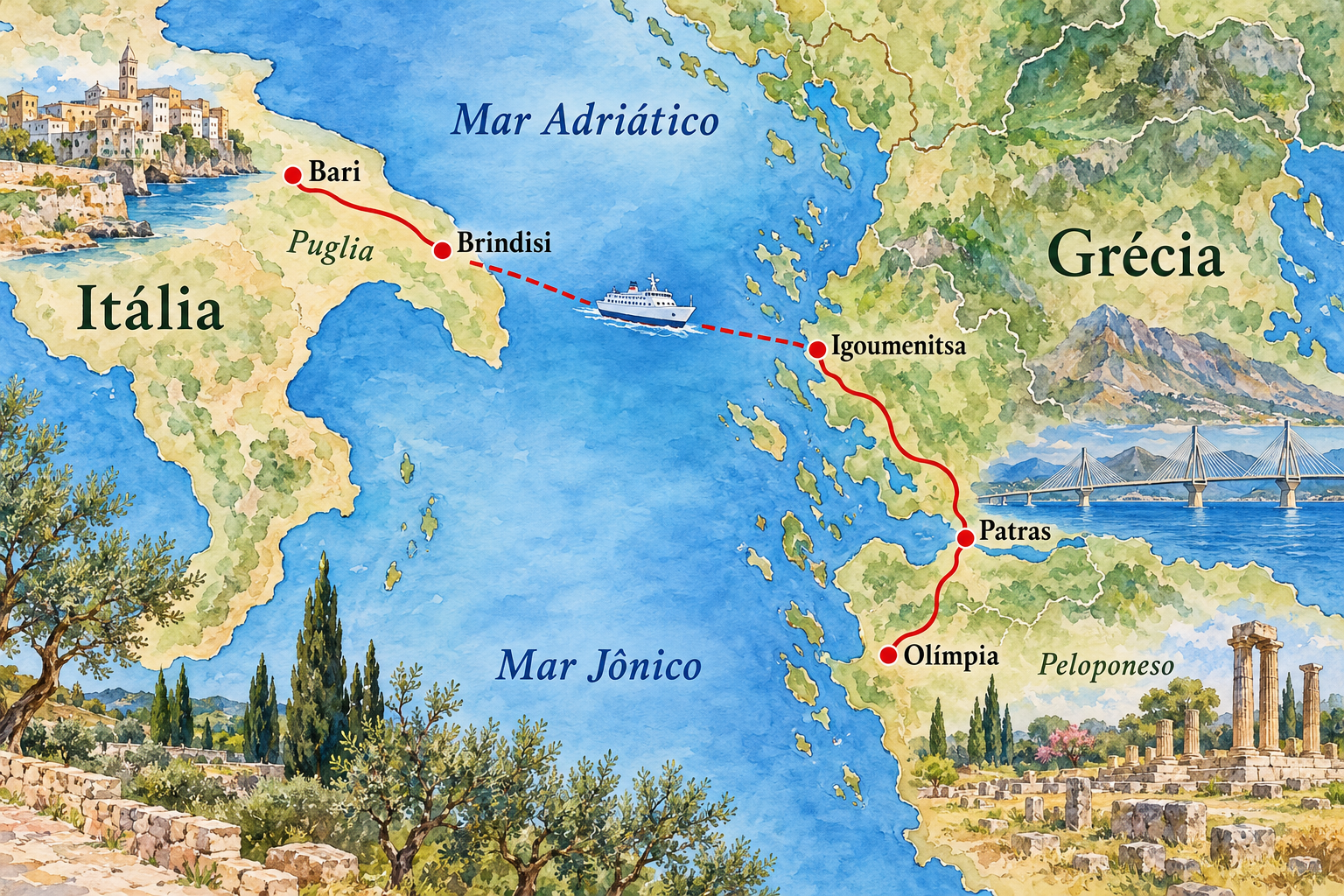
Apulia and Matera is on the Italy–Greece ferry across the Adriatic

From Puglia to Greece by sea: overnight ferries depart Bari and Brindisi and arrive in the morning at Igoumenitsa, in Epirus, or continue to Patras, the gateway to the Peloponnese.

Illustrative map, not to scale. Tap a city to open its page.
Illustrated map of Italy–Greece ferry across the Adriatic
Explore other destinations Search by state and city