7 places to visit Bari (Italy), chosen by the Cidade Turismo guide.
Illustrative images. The pictures in this guide are illustrations based on the real place, not photographs, and may differ from it.
To start
The 7 main places Bari
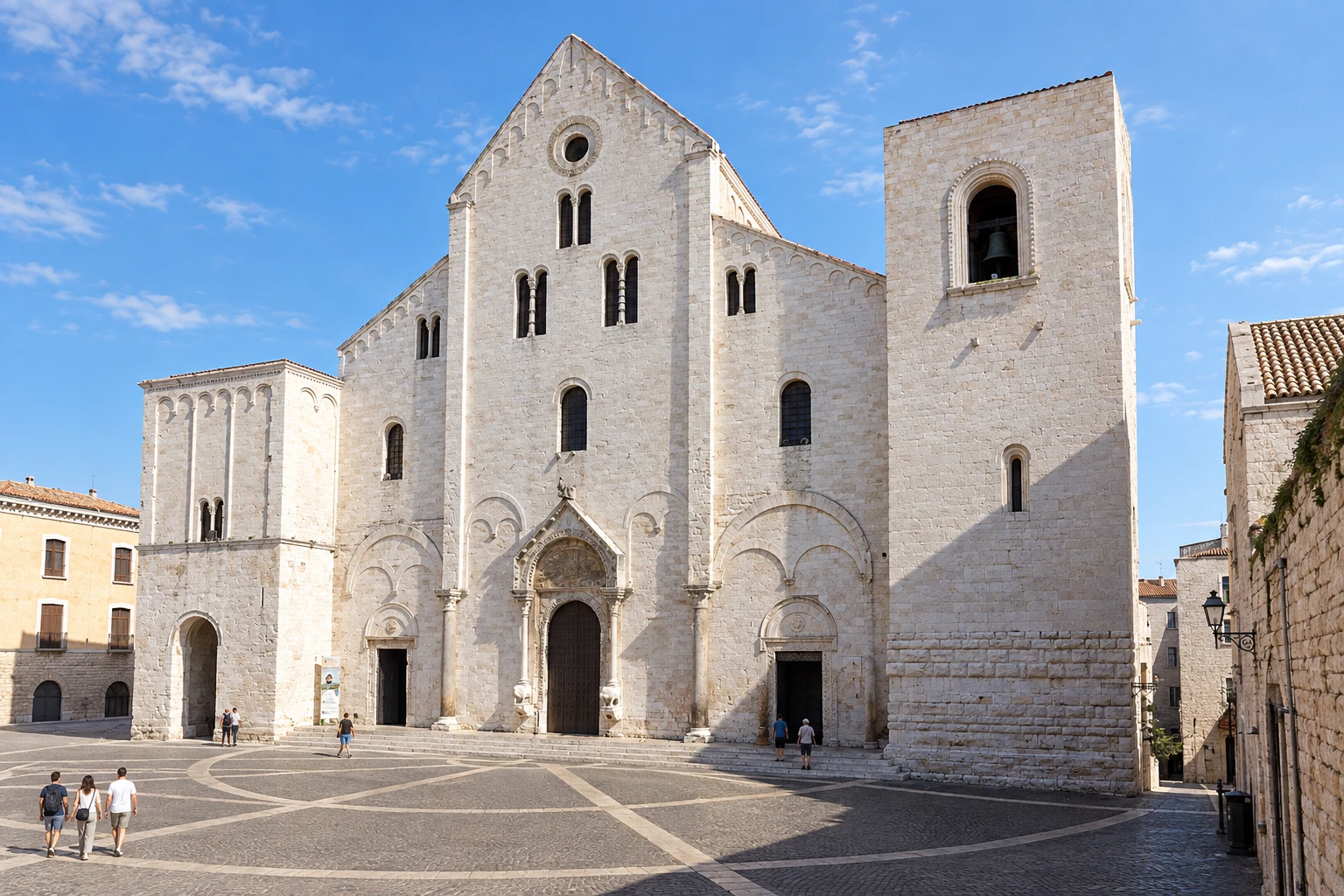
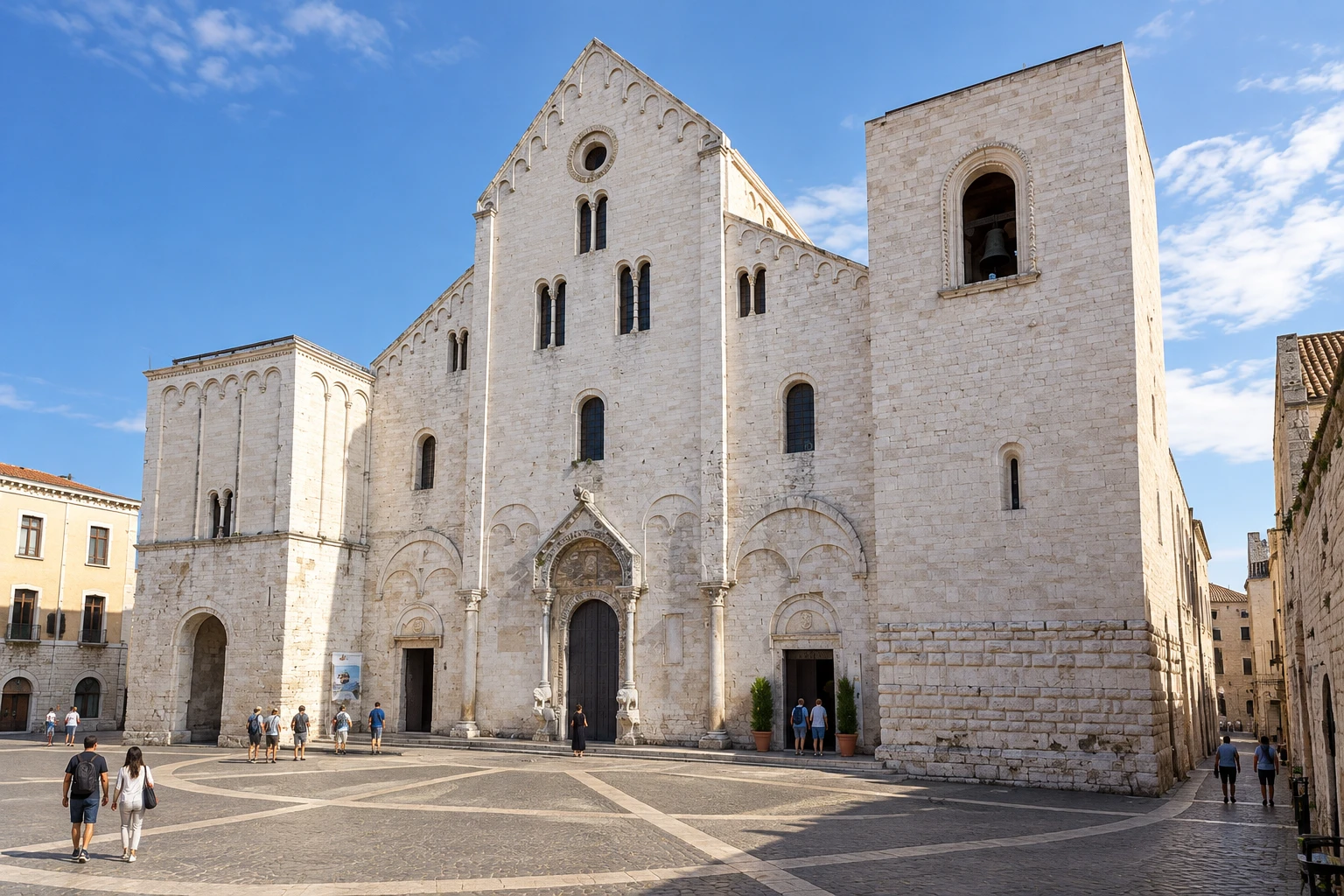
Basilica of St. NicholasRomanesque basilica from the 11th century, in the heart of Bari Vecchia, built to house the relics of Saint Nicholas, brought from the city of Myra (now in Turkey) in 1087.
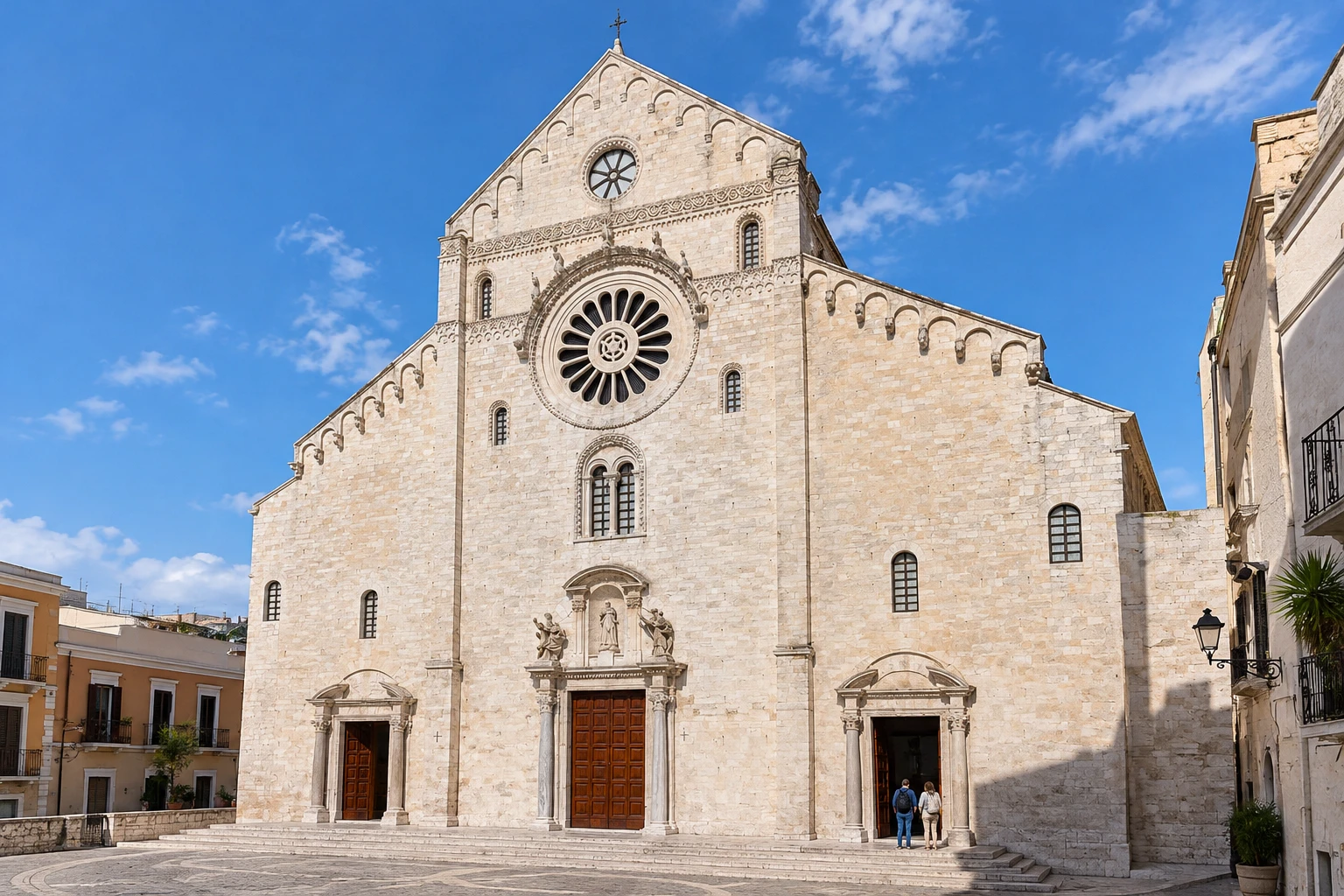
Bari CathedralBari's cathedral, in Apulian Romanesque style, was built between the 12th and 13th centuries over the ruins of older churches.
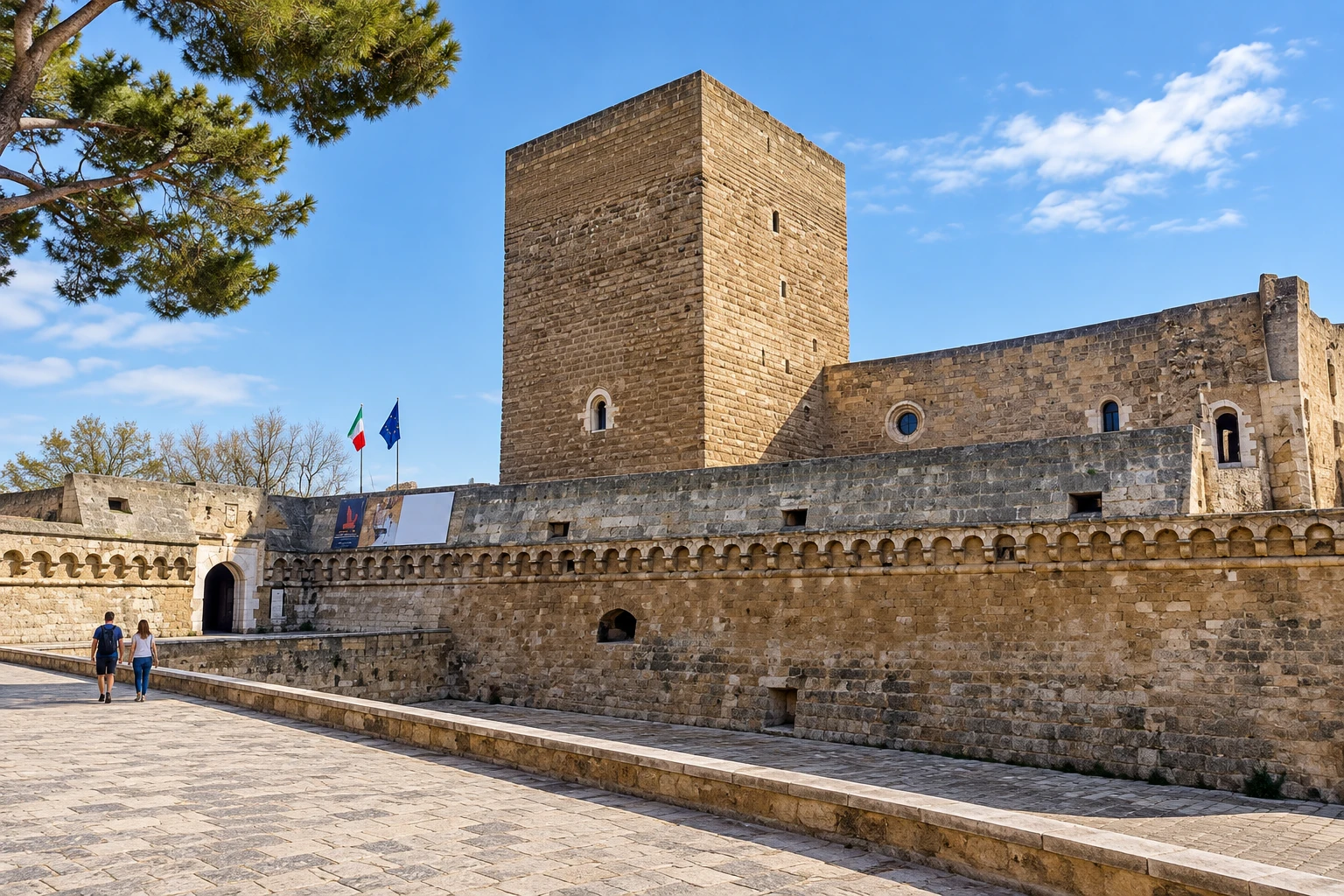
Norman-Swabian CastleFortress on the edge of the old town, erected by the Normans in the 12th century and rebuilt by Frederick II in 1233.
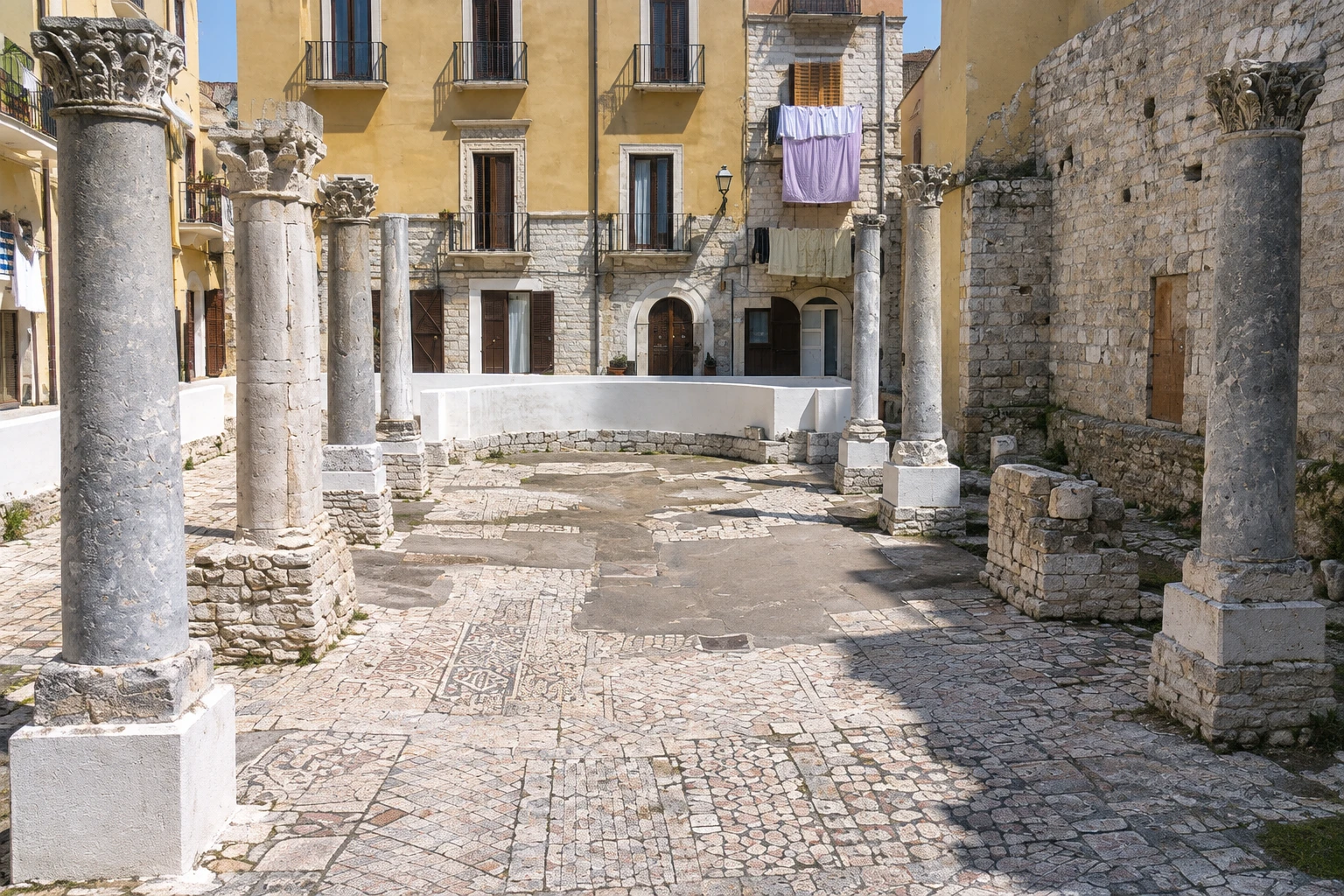
Bari Old TownBari's old town occupies a small peninsula between the old port and the new port, surrounded by the ancient wall.
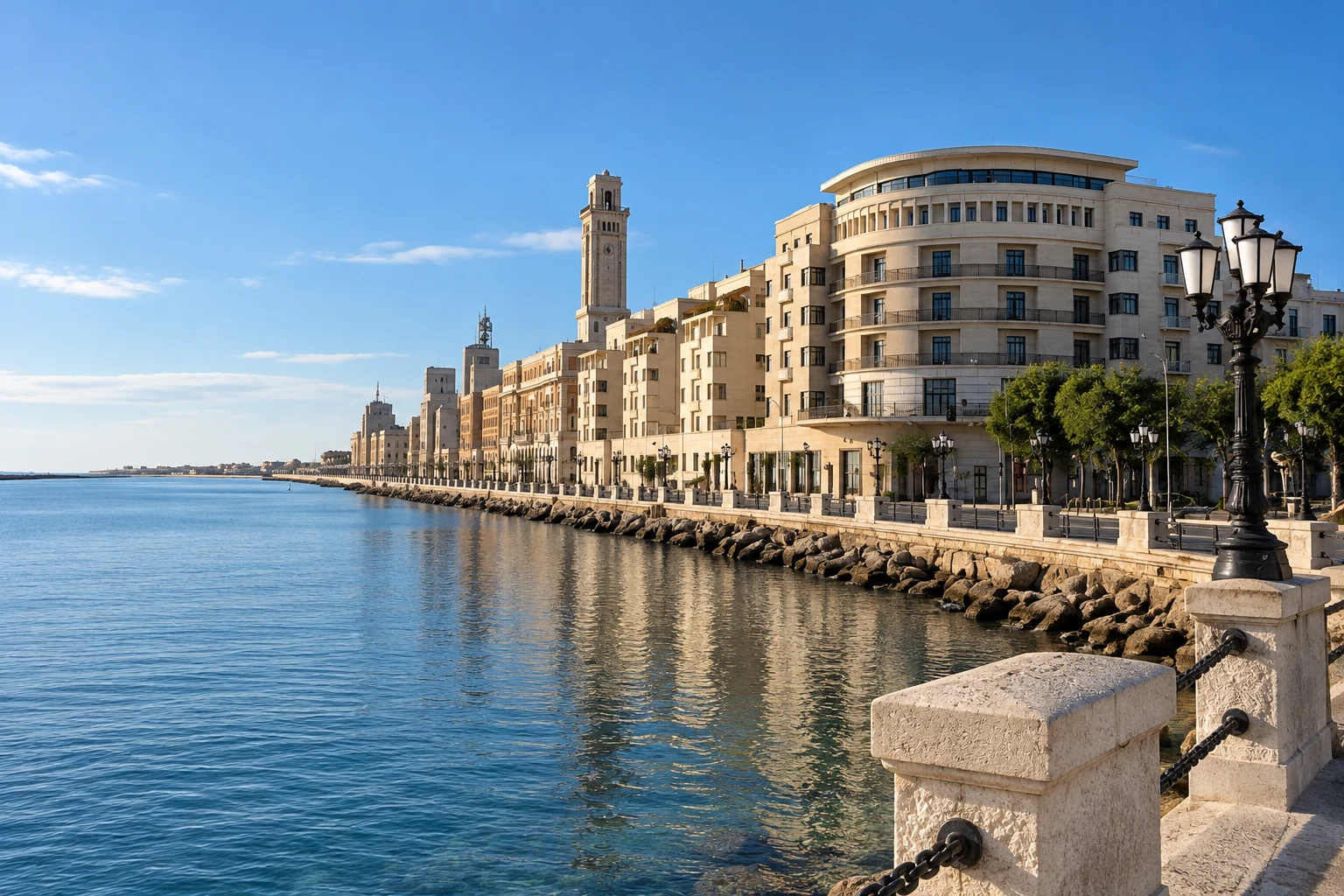
Lungomare Nazario SauroSeafront avenue that runs from the old town toward the south, with a promenade, public buildings from the 1920s and 1930s, and views of the Adriatic.
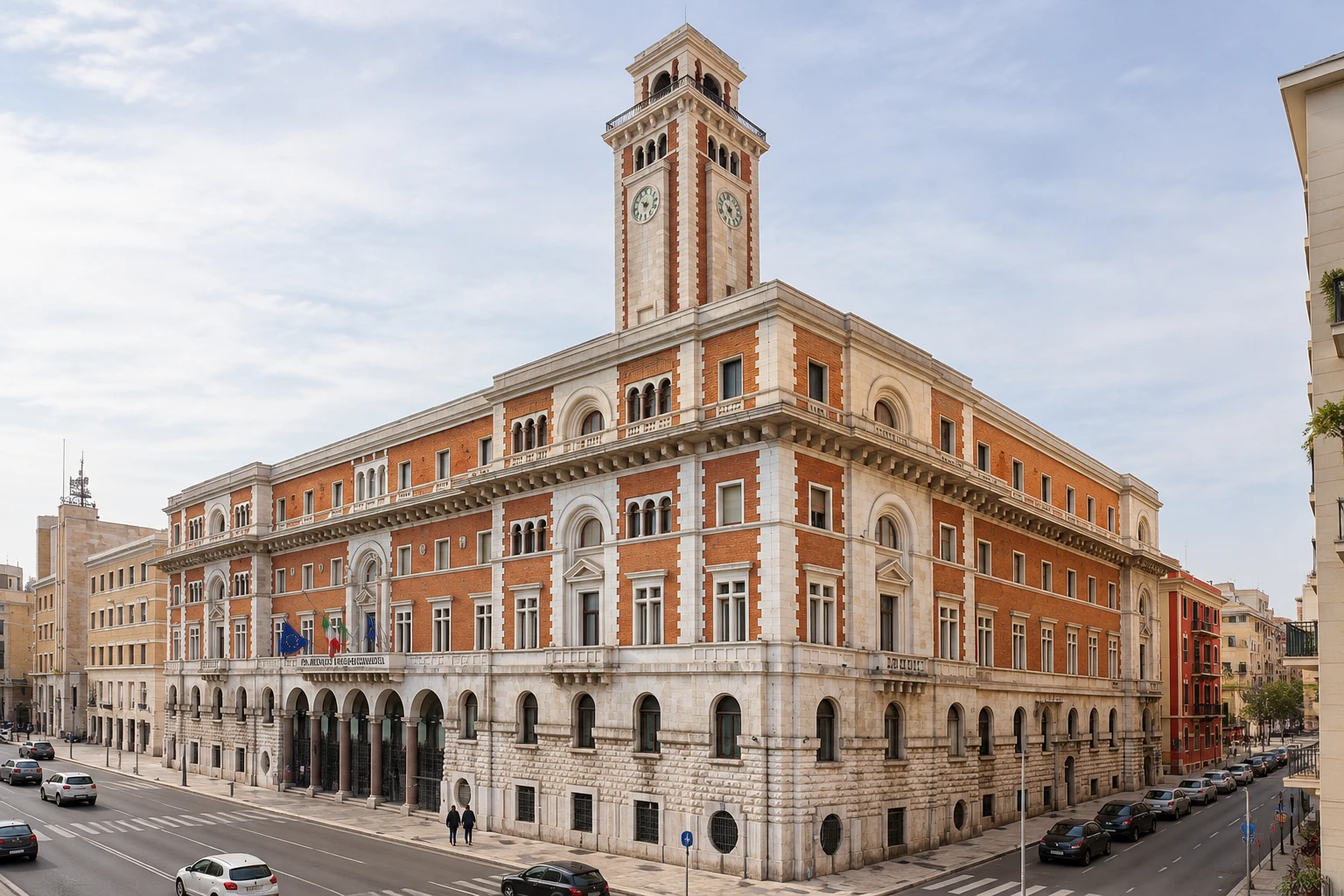
Corrado Giaquinto Metropolitan Art GalleryMuseum of Apulia art in the Palazzo della Provincia by the sea, featuring medieval sculptures, Byzantine icons, Venetian paintings by Giovanni Bellini, Tintoretto and Veronese,...
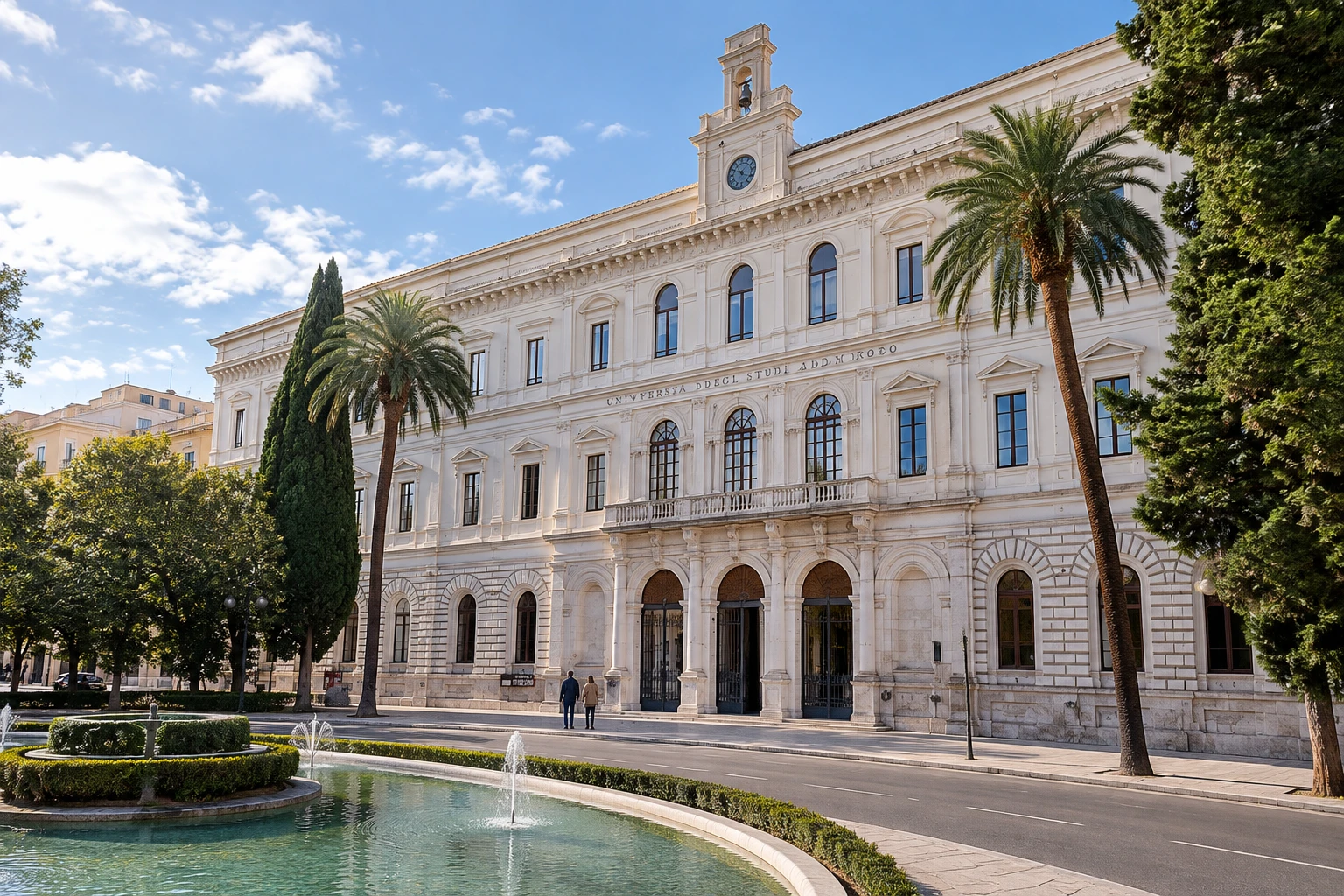
Murat DistrictThe part of the city laid out in the 19th century, with straight streets, between the station and the old town.
Romanesque basilica from the 11th century, in the heart of Bari Vecchia, built to house the relics of Saint Nicholas, brought from the city of Myra (now in Turkey) in 1087. It is a destination for Catholic and Orthodox pilgrims.
Bari's cathedral, in Apulian Romanesque style, was built between the 12th and 13th centuries over the ruins of older churches. It features a rose window on the façade, a Baroque crypt and remains of medieval mosaics.
Fortress on the edge of the old town, erected by the Normans in the 12th century and rebuilt by Frederick II in 1233. It has a moat, stone towers and rooms with exhibitions and a gipsoteca, a collection of plaster casts.
Bari's old town occupies a small peninsula between the old port and the new port, surrounded by the ancient wall. Medieval lanes, squares, dozens of churches and the neighborhood life of its residents.
Seafront avenue that runs from the old town toward the south, with a promenade, public buildings from the 1920s and 1930s, and views of the Adriatic. It's the locals' late-afternoon stroll.
Museum of Apulia art in the Palazzo della Provincia by the sea, featuring medieval sculptures, Byzantine icons, Venetian paintings by Giovanni Bellini, Tintoretto and Veronese, and works of the Neapolitan Baroque.
The part of the city laid out in the 19th century, with straight streets, between the station and the old town. It includes Via Sparano, a pedestrian shopping street, Corso Vittorio Emanuele, the Teatro Petruzzelli and liberty-style buildings.


 Brazil
 Antarctica
 Argentina
 Bolivia
 Chile
 Colombia
 Ecuador
 Falkland Islands (Malvinas)
 French Guiana
 Guyana
 Paraguay
 Peru
 Suriname
 Uruguay
 Venezuela
 Austria
 Belgium
 Croatia
 Denmark
 Finland
 France
 Germany
 Greece
 Hungary
 Iceland
 Ireland
 Luxembourg
 Norway
 Poland
 Portugal
 Slovakia
 Slovenia
 Spain
 Sweden
 Switzerland
 the Czech Republic
 the Netherlands
 the United Kingdom
 Turkey
 Bermuda
 Canada
 Greenland
 Mexico
 Saint Pierre and Miquelon
 the United States
 the Dominican Republic
 Japan
 Egypt
 South Africa
 Australia
 Fiji
 New Zealand
 Papua New Guinea