46 places to visit and 19 tours, chosen by the Cidade Turismo guide.
Updated
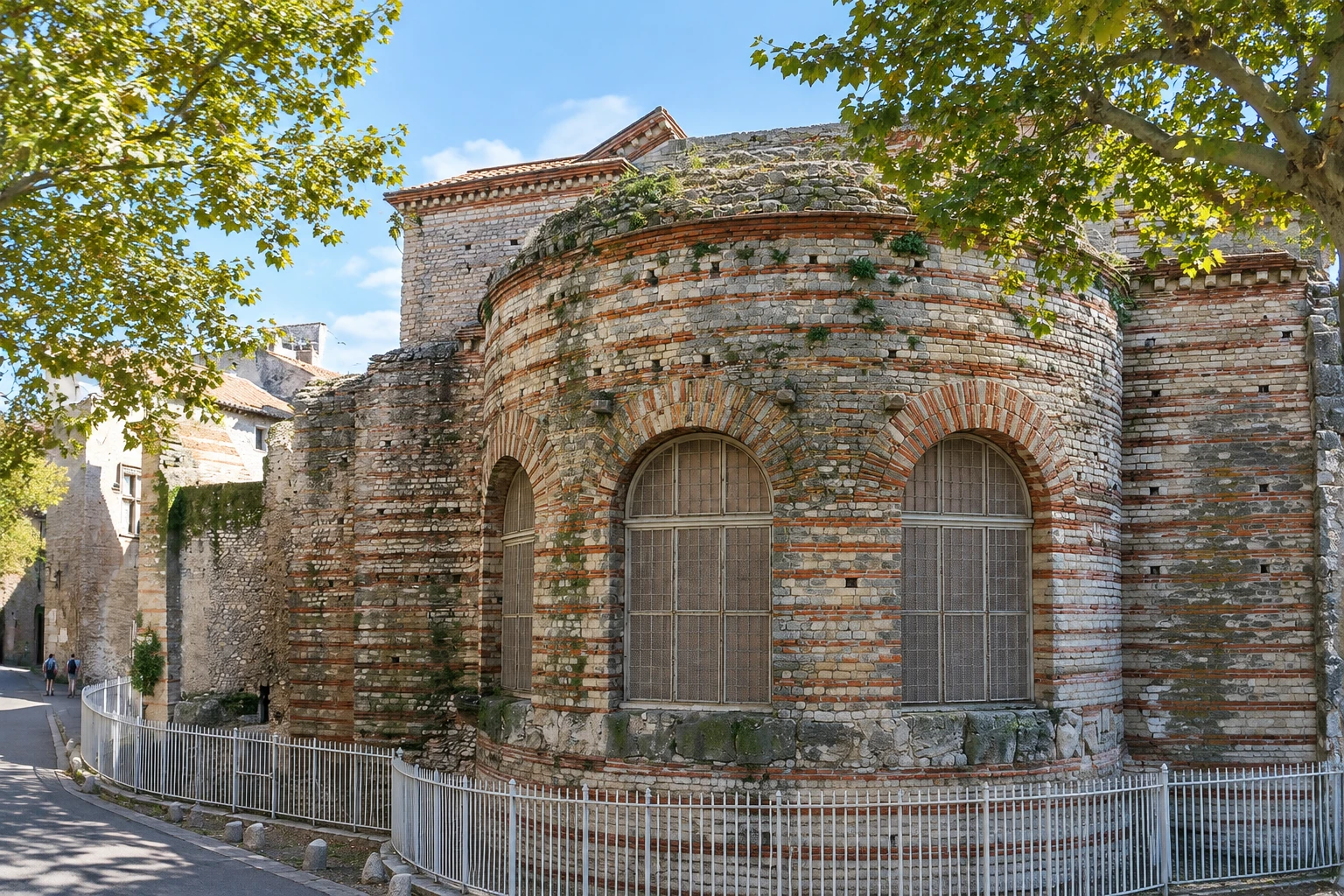
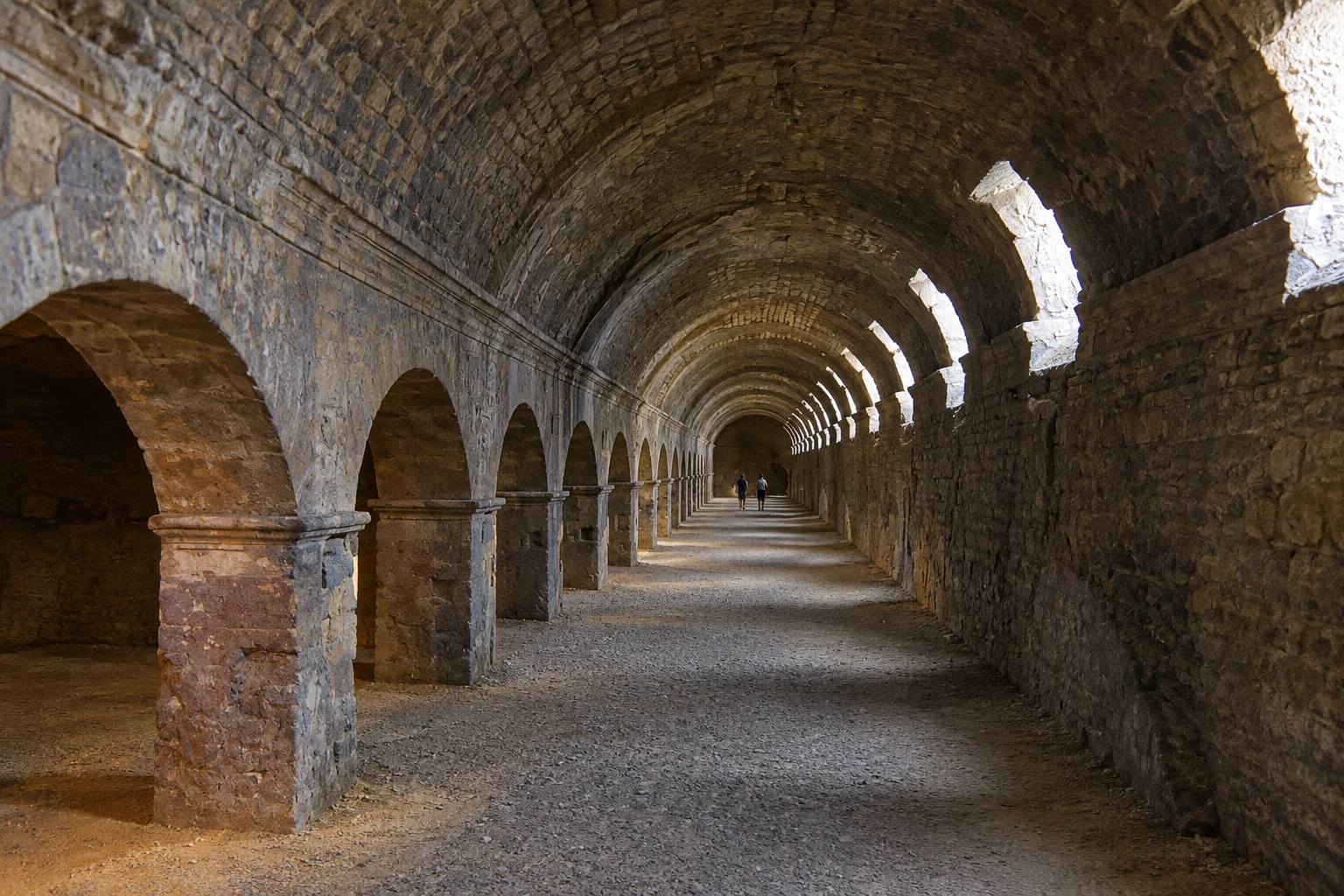
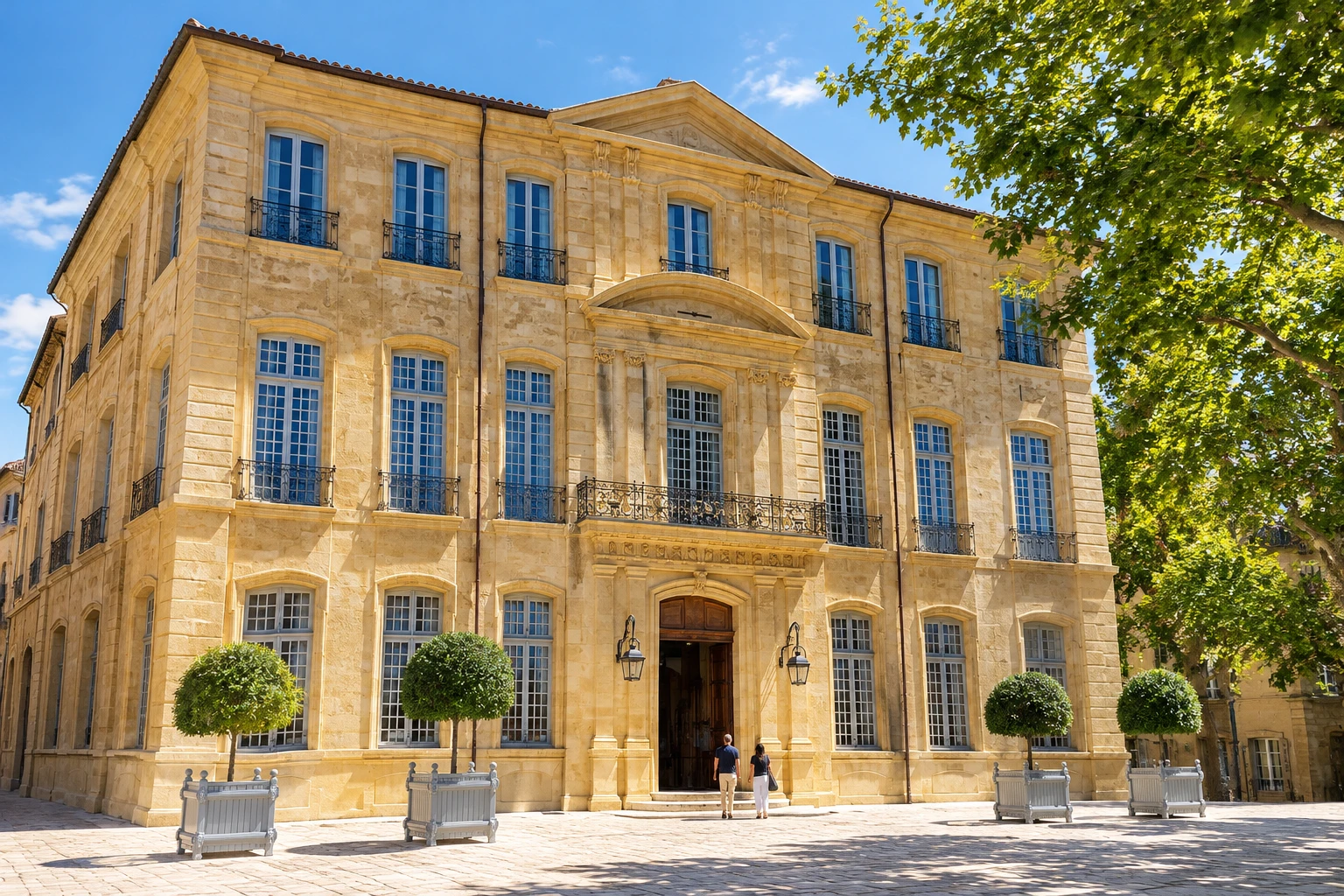
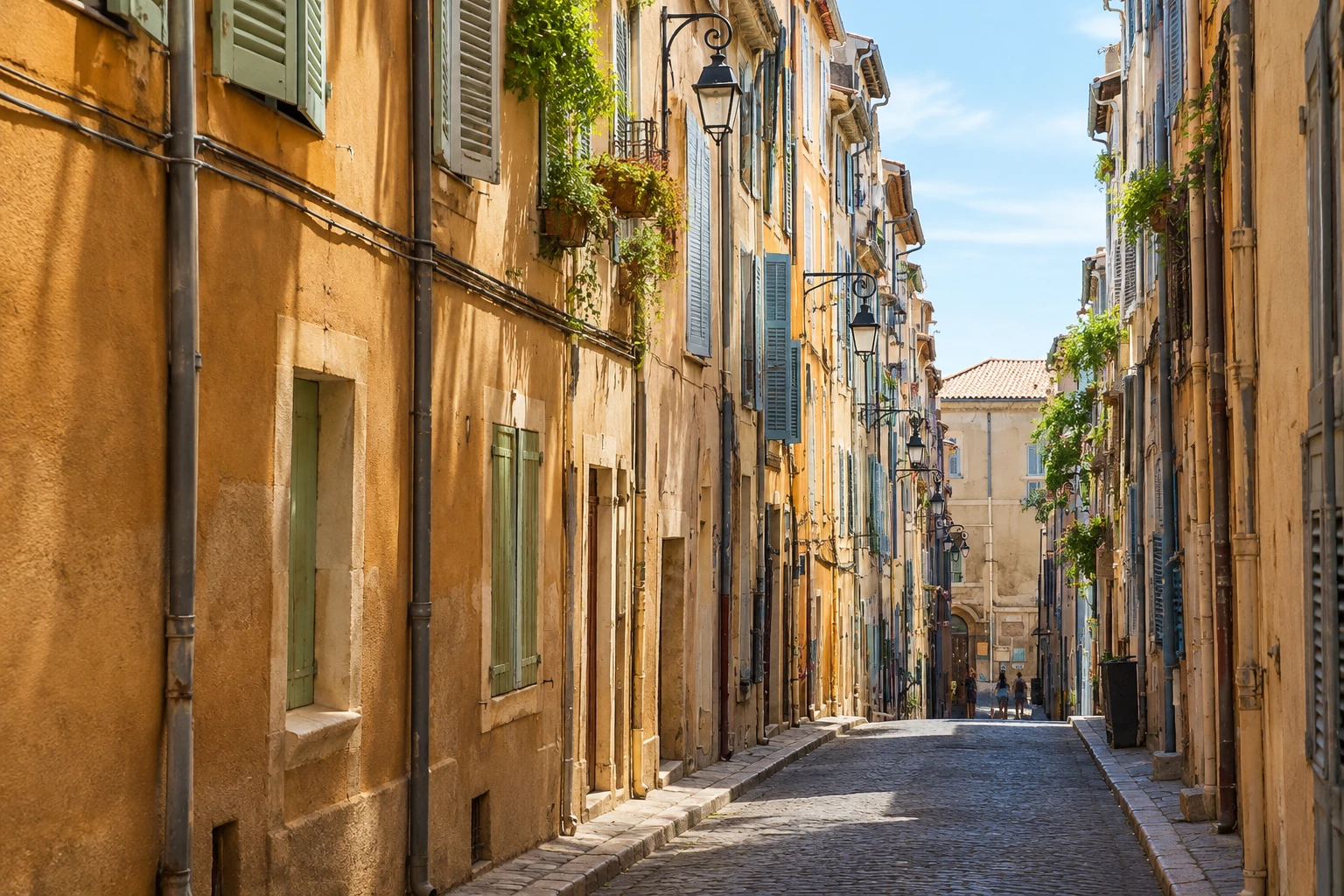
Illustrative images. The pictures in this guide are illustrations based on the real place, not photographs, and may differ from it.
To start
The 10 main places Provence
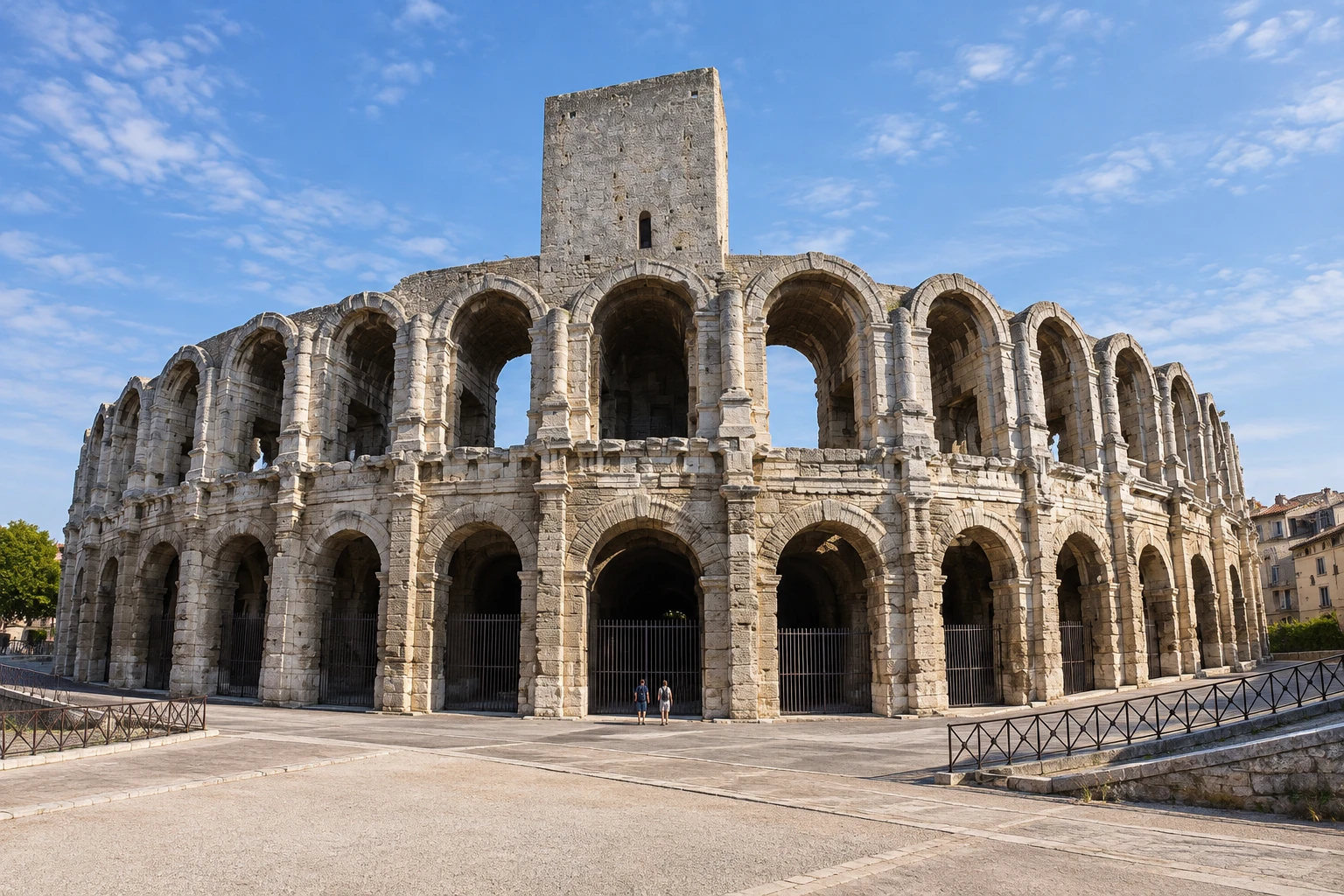
Arles Amphitheater · ArlesThe Roman arena of Arles, built around the year 90 for about 25,000 spectators, with two rows of arcades and medieval towers on top.
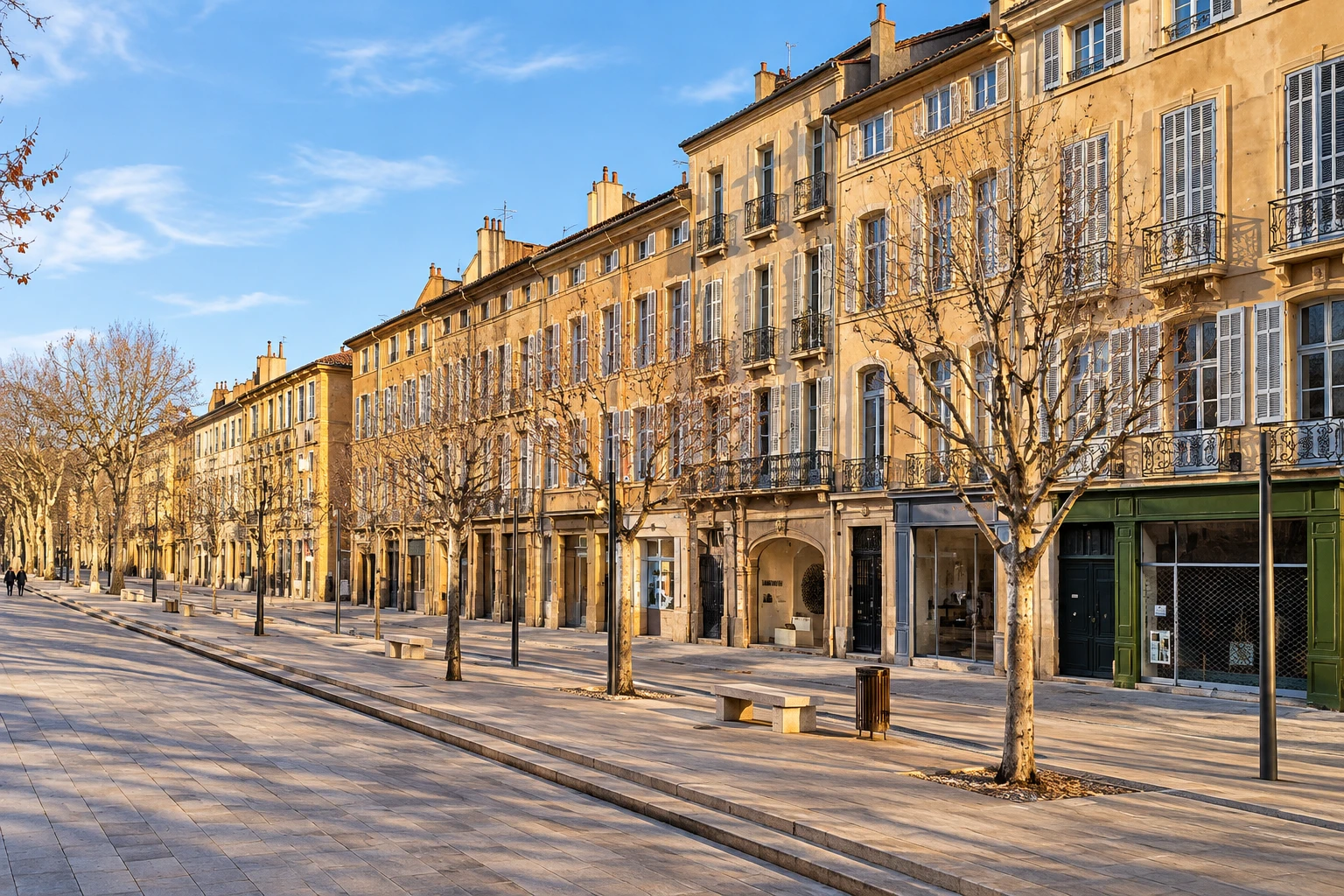
Cours Mirabeau · Aix-en-ProvenceAix's main avenue, lined with plane trees, mansions and cafés, with fountains along the way.
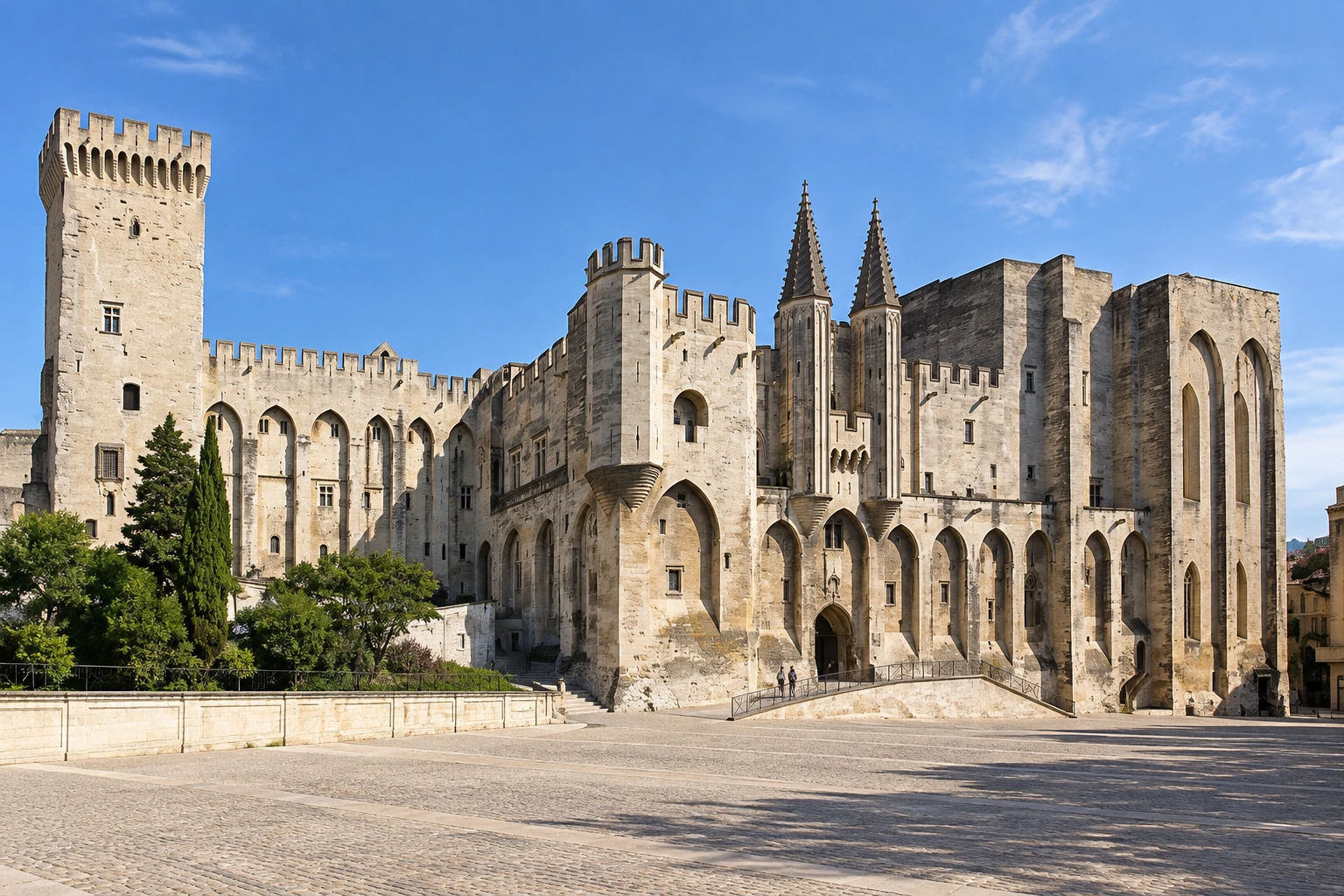
Palace of the Popes · AvignonThe popes' residence in Avignon in the 14th century, one of the largest Gothic buildings in Europe, with ceremonial halls, chapels with frescoes and the Jardins pontificaux.
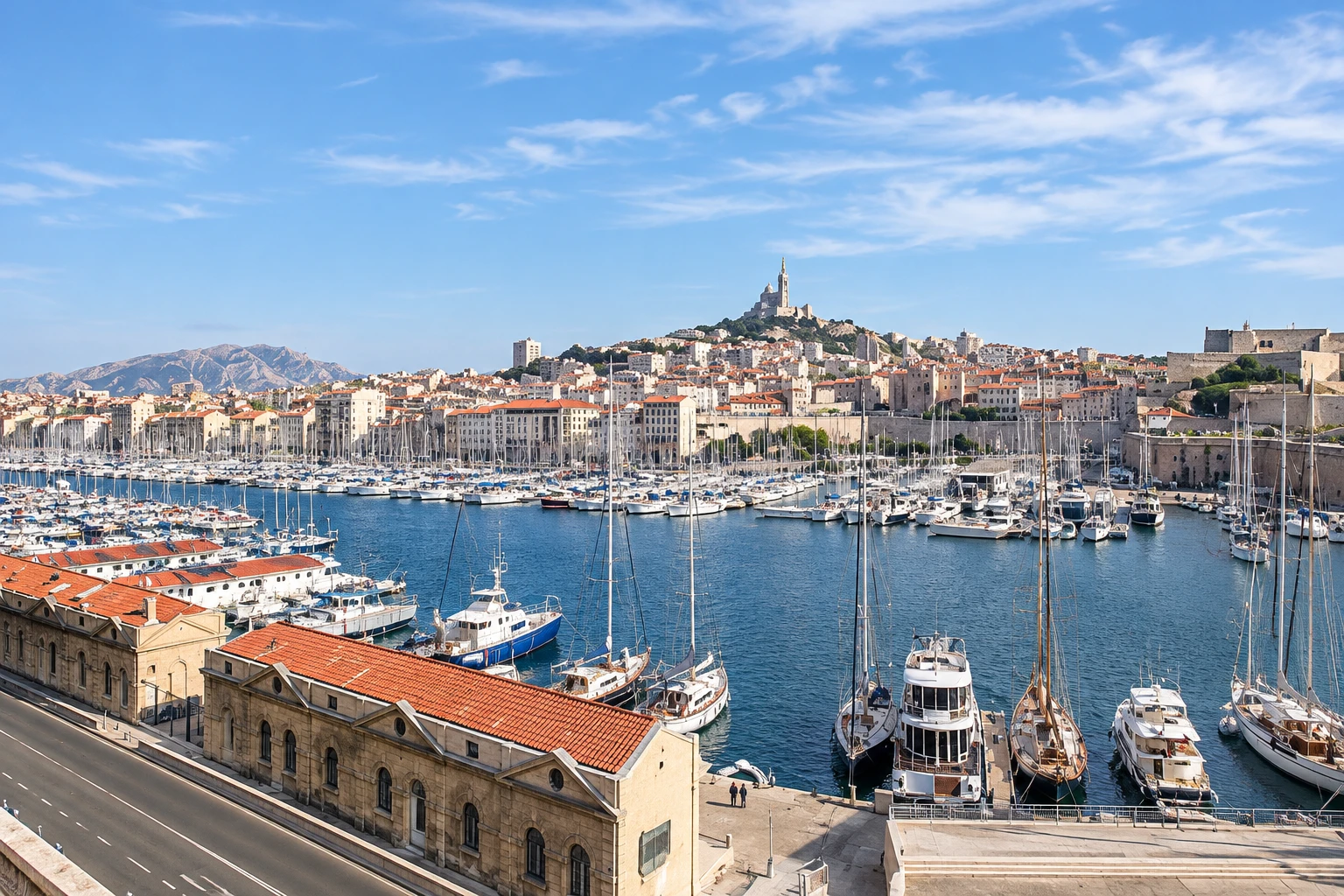
Old Port of Marseille · MarseilleThe old port where the Greeks founded the city around 600 BC.
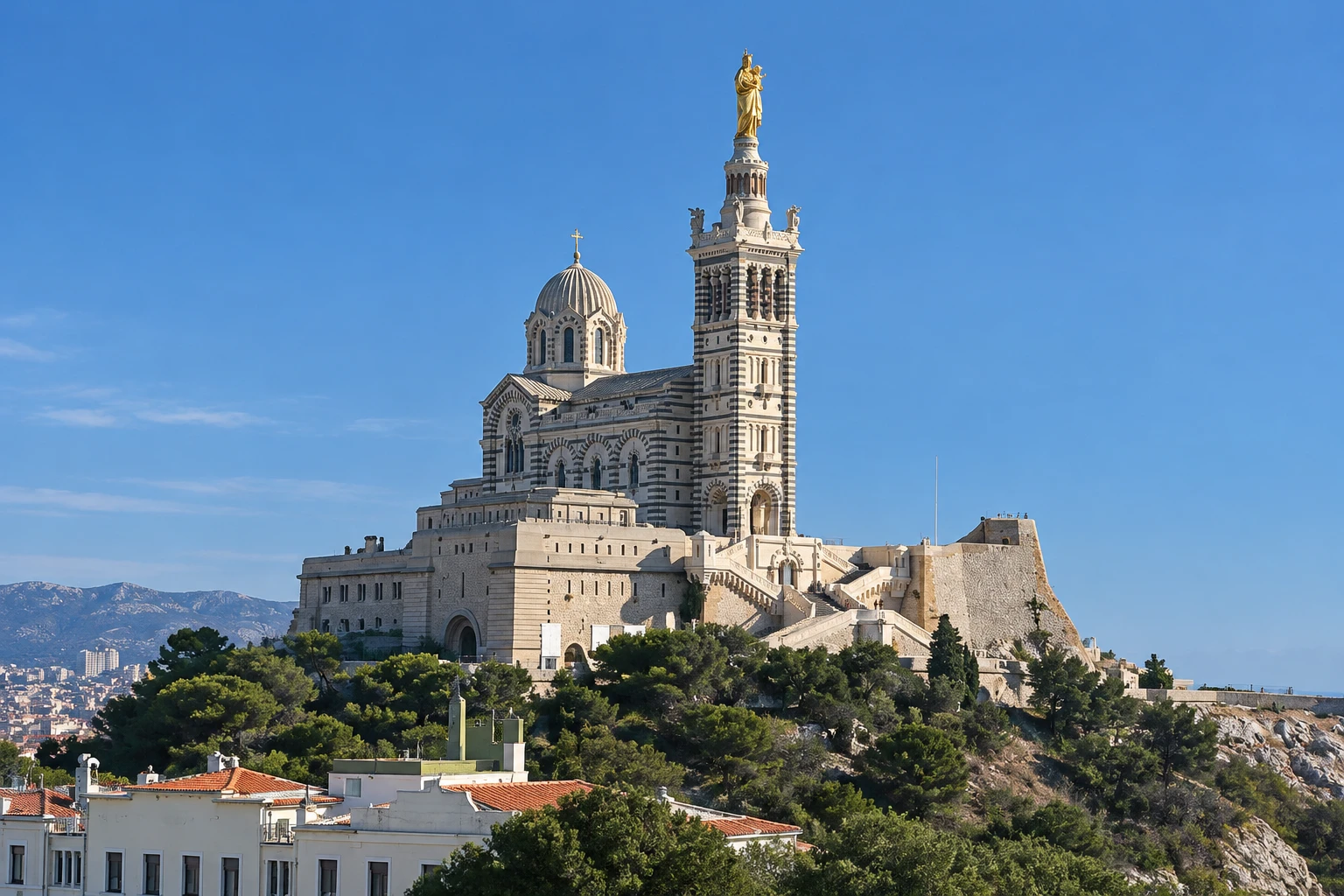
Notre-Dame de la Garde Basilica · MarseilleThe 19th-century basilica at the highest point of the city, with the large gilded statue of the Virgin and Child.
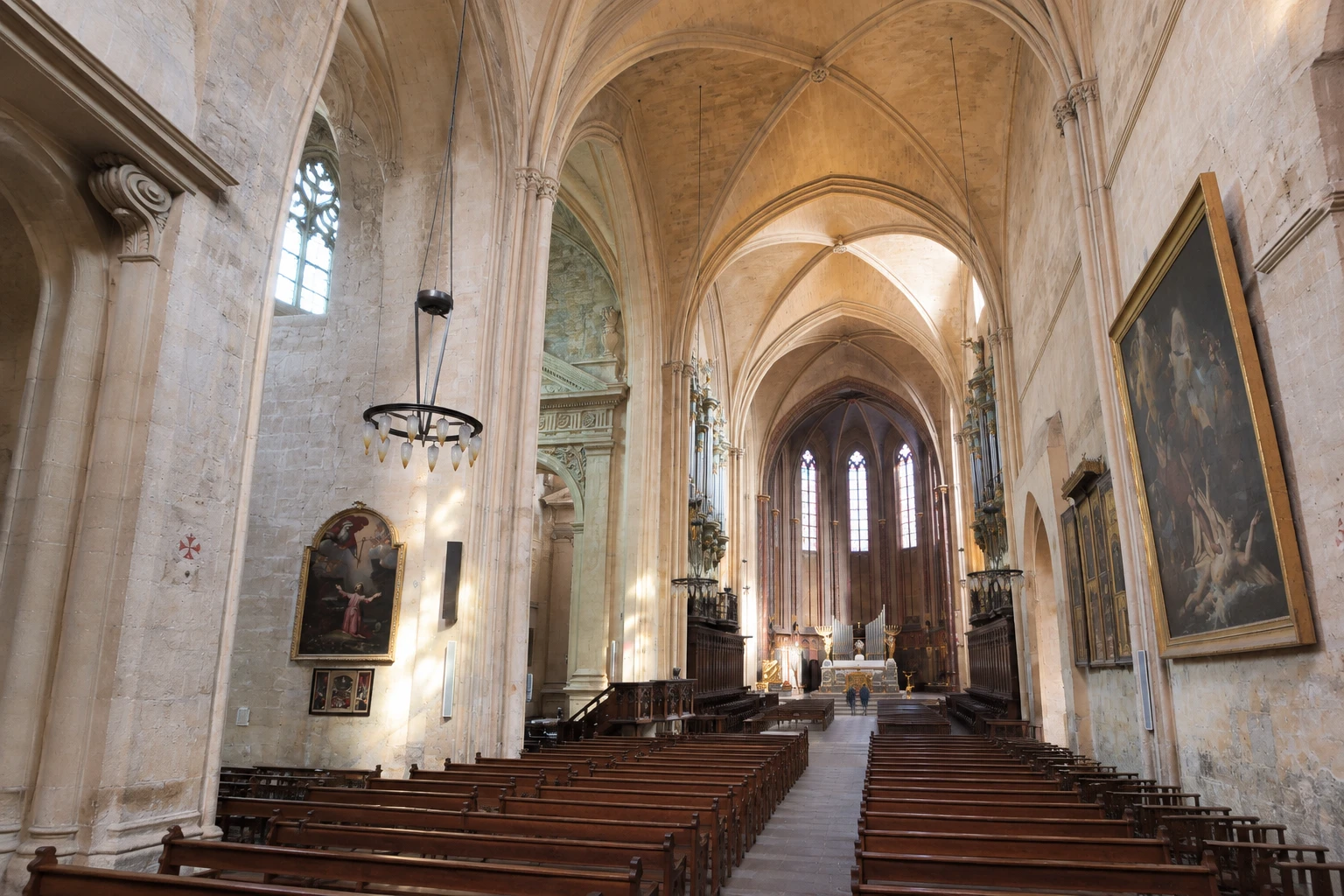
Aix Cathedral · Aix-en-ProvenceAix's cathedral brings together parts from several periods, from the 5th-century baptistery to the Gothic, with a Romanesque cloister and the Buisson ardent triptych, painted by...
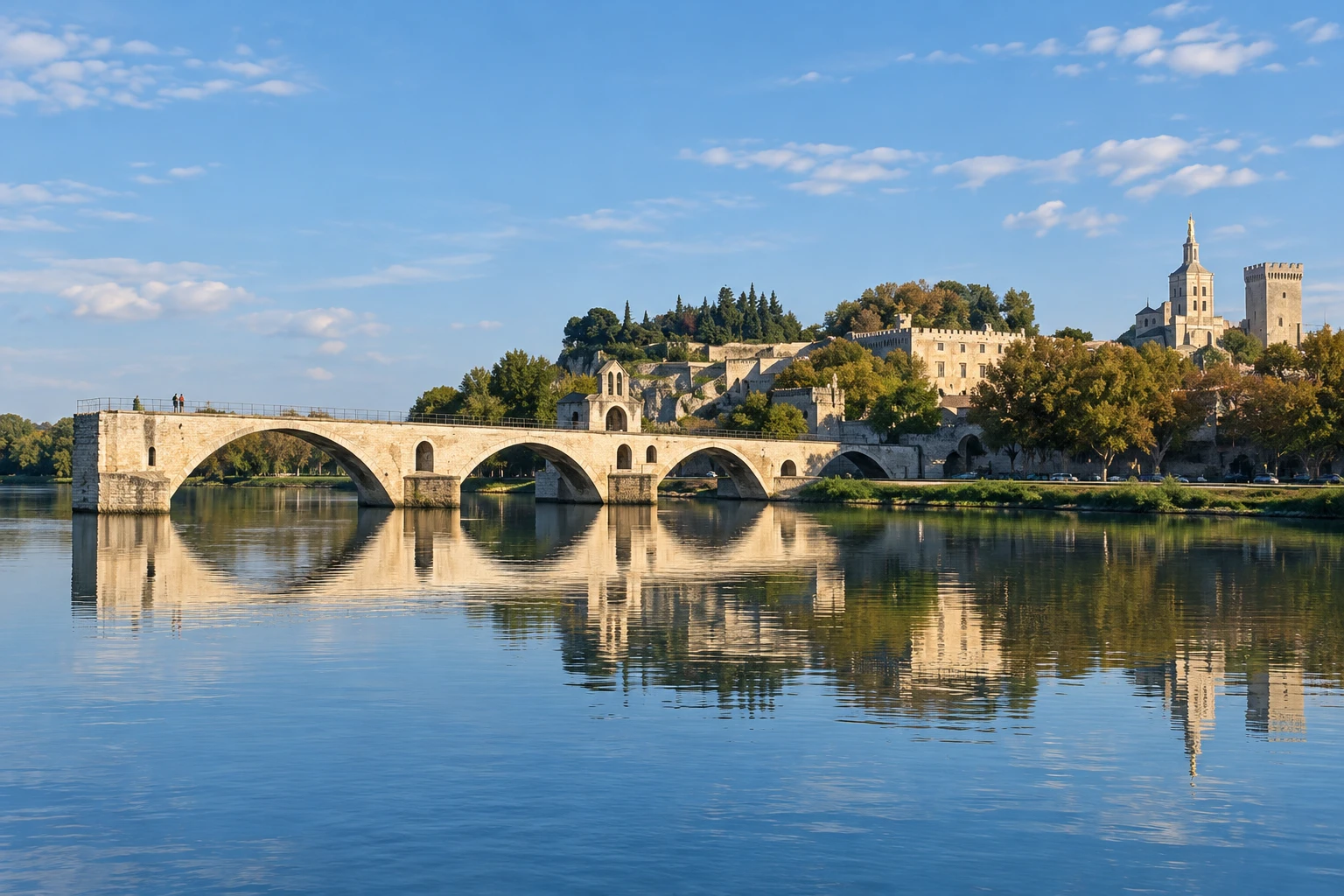
Avignon Bridge · AvignonThe Avignon bridge from the children's song: four medieval arches that extend over the Rhône and stop in the middle of the river, with a small chapel on one of the piers.
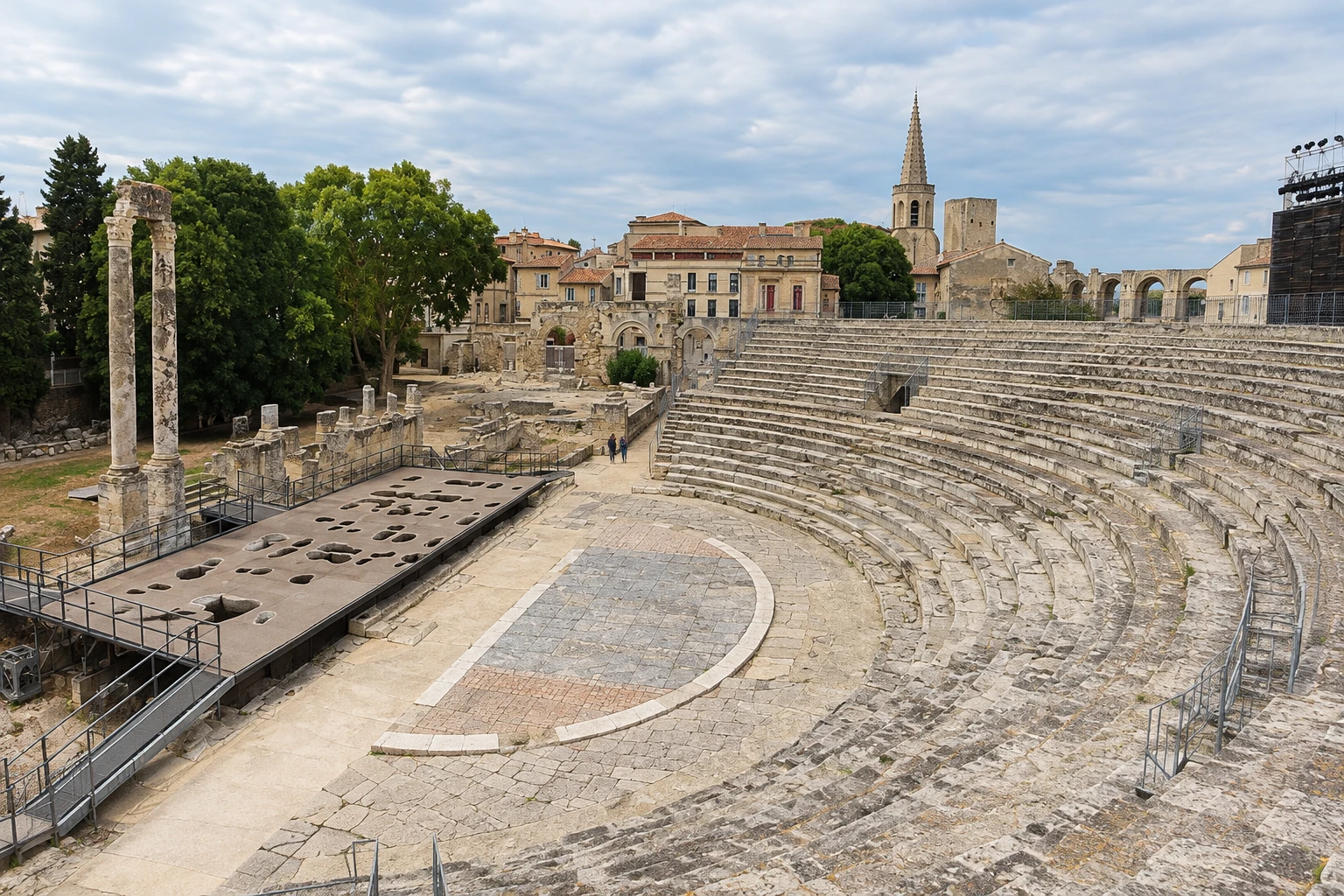
Roman Theater of Arles · Arles1st-century BC Roman theatre, one of the earliest stone theatres in the Roman world, with two marble columns still standing at the back of the stage.
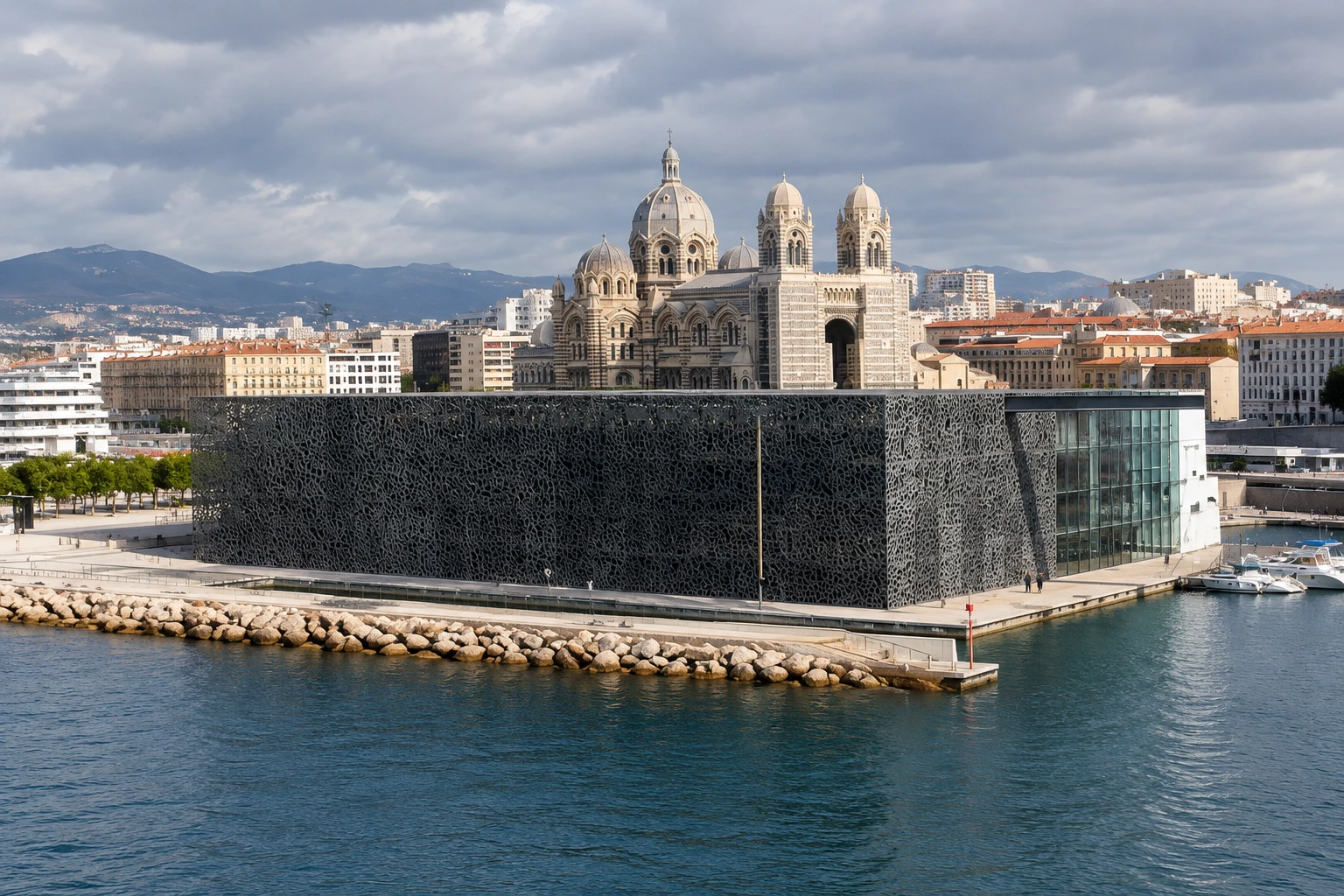
MuCEM · MarseilleNational museum dedicated to the civilizations of Europe and the Mediterranean, opened in 2013 in a cube covered by a concrete lace, at the entrance to the Vieux-Port.
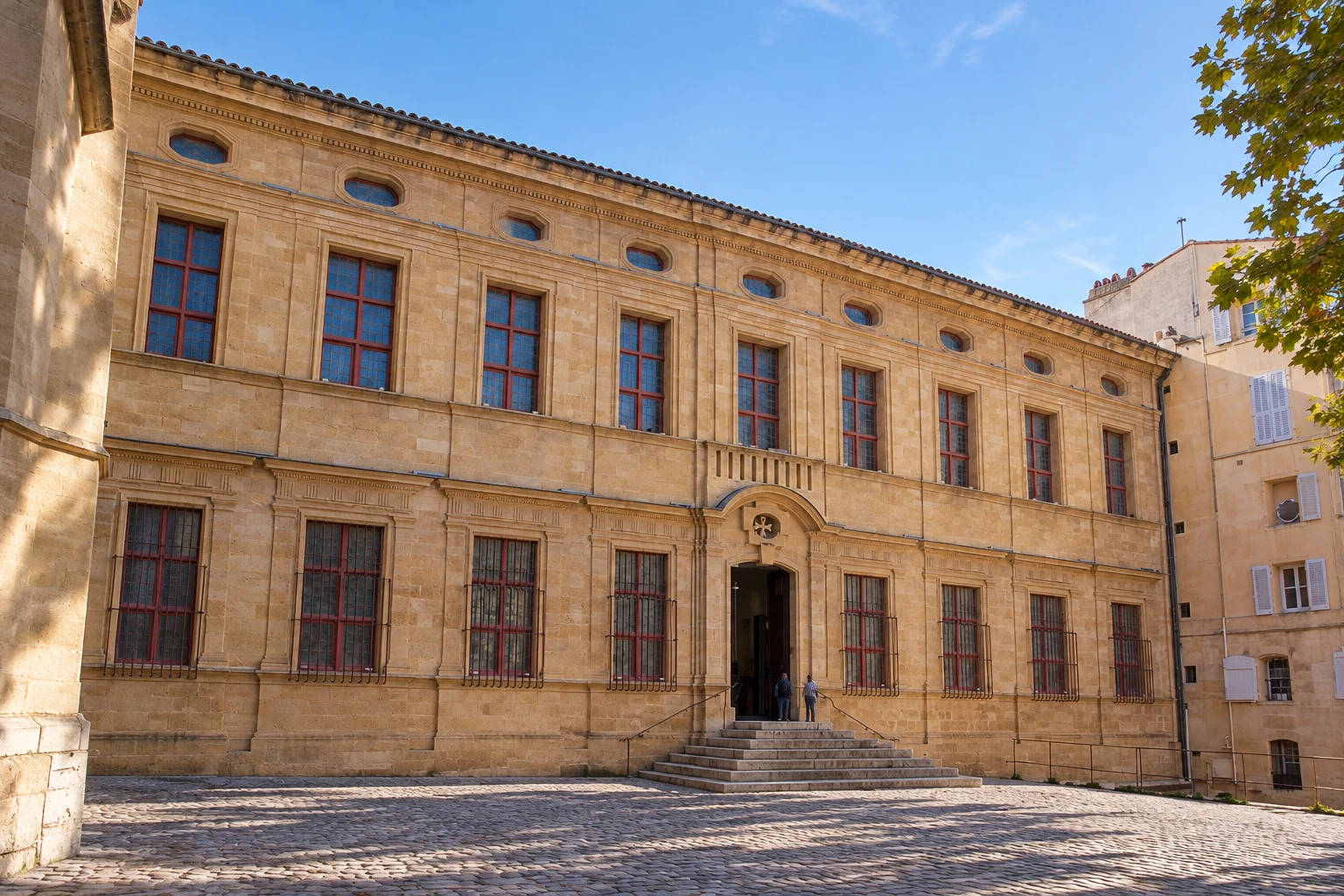
Musée Granet · Aix-en-ProvenceAix's fine arts museum, in the quartier Mazarin, with European painting from the 14th to the 20th century, canvases by Cézanne and, in a chapel next door, the Jean Planque colle...
One by one
All the places, with photos
Arles · Provence-Alpes-Côte d'Azur · Historic site
The Roman arena of Arles, built around the year 90 for about 25,000 spectators, with two rows of arcades and medieval towers on top. It still hosts the course camarguaise and other events.
Aix's main avenue, lined with plane trees, mansions and cafés, with fountains along the way. It links the Rotonde to the fontaine du Roi René and separates the old town from the quartier Mazarin.
The popes' residence in Avignon in the 14th century, one of the largest Gothic buildings in Europe, with ceremonial halls, chapels with frescoes and the Jardins pontificaux. It is the core of the historic ensemble listed by UNESCO.
The old port where the Greeks founded the city around 600 BC. Today it is Marselha's central square, with fishing boats, a morning fish market, Norman Foster's mirrored Ombrière and the departure point for boats to Château d'If and Frioul.
The 19th-century basilica at the highest point of the city, with the large gilded statue of the Virgin and Child. The people of Marselha call it 'Bonne Mère'. From the terrace you can see the entire city, the port, the islands and the sea.
Aix's cathedral brings together parts from several periods, from the 5th-century baptistery to the Gothic, with a Romanesque cloister and the Buisson ardent triptych, painted by Nicolas Froment in the 15th century.
The Avignon bridge from the children's song: four medieval arches that extend over the Rhône and stop in the middle of the river, with a small chapel on one of the piers.
1st-century BC Roman theatre, one of the earliest stone theatres in the Roman world, with two marble columns still standing at the back of the stage. Hosts performances in summer.
National museum dedicated to the civilizations of Europe and the Mediterranean, opened in 2013 in a cube covered by a concrete lace, at the entrance to the Vieux-Port. A footbridge links it to Fort Saint-Jean, with gardens and ramparts that can be accessed for free.
Aix's fine arts museum, in the quartier Mazarin, with European painting from the 14th to the 20th century, canvases by Cézanne and, in a chapel next door, the Jean Planque collection with Picasso, Monet and Van Gogh.
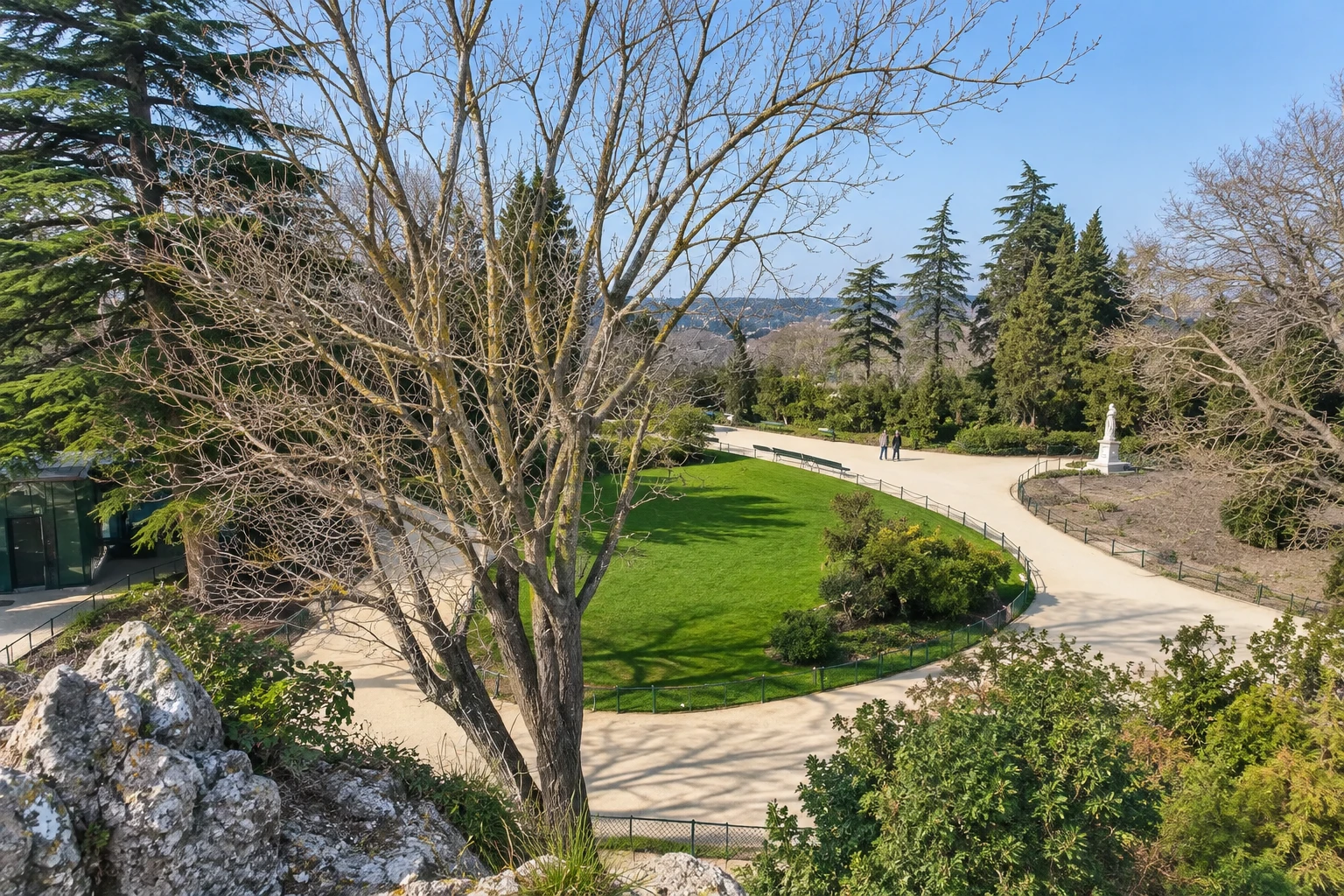
Public garden on top of the rock where Avignon originated, beside the Palais des Papes, with views over the Rhône, the Pont Saint-Bénézet and Villeneuve-lès-Avignon. Admission is free.
Roman underground galleries in a U shape that supported the forum of Arles, with access via the town hall. Being underground, they are cool even in summer.
An 18th-century mansion in the quartier Mazarin, transformed into an art centre with period rooms, a French-style garden, a café and two major temporary exhibitions a year.
The oldest neighborhood of Marselha, on the hill north of the Vieux-Port, where the Greek city once stood. Narrow lanes, stairways, colorful facades, studios and Marseille soap shops, and the Centre de la Vieille Charité, a 17th-century almshouse that now houses museums.
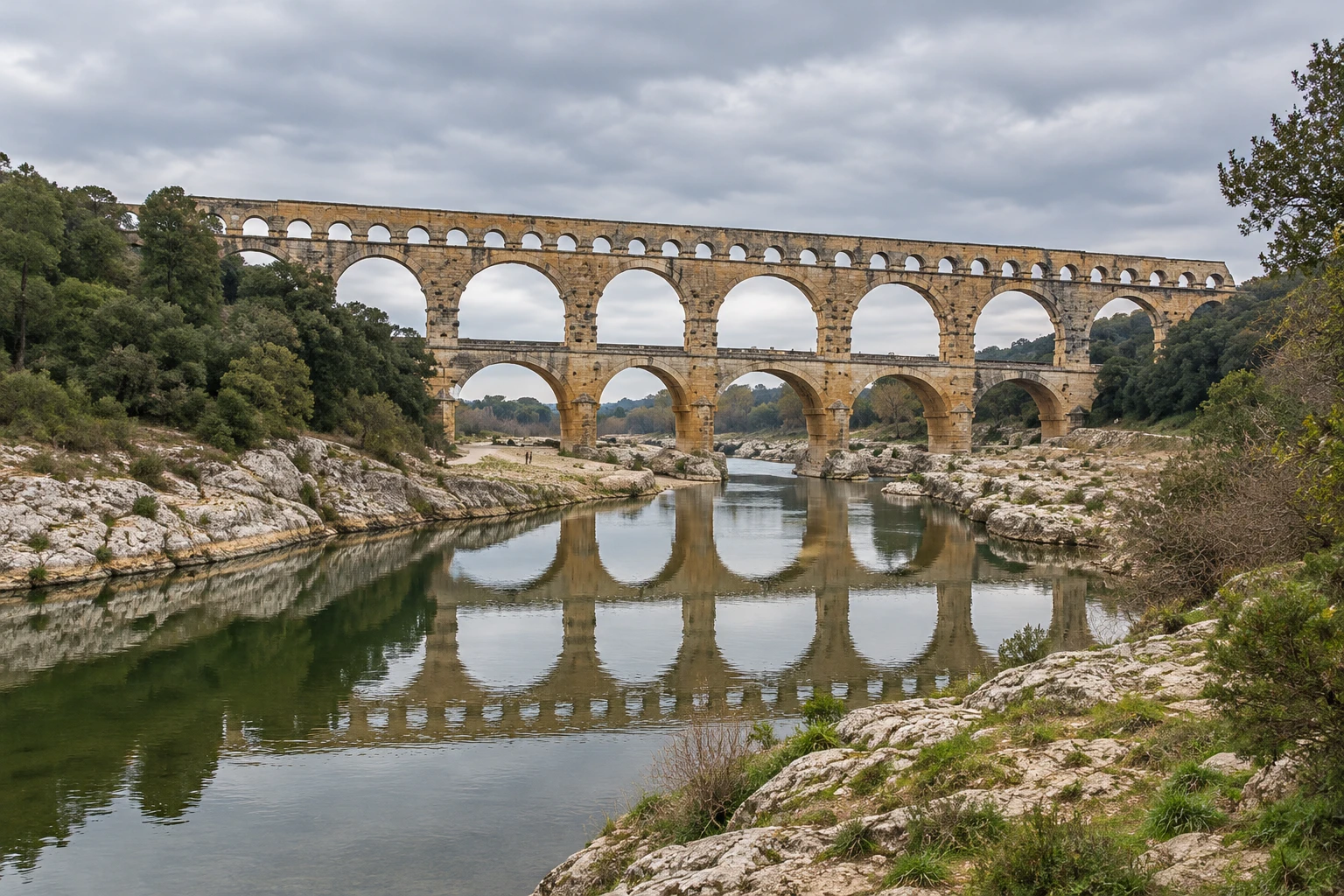
Roman aqueduct of three tiers across the Gardon River, built in the 1st century to bring water to Nîmes. It is the tallest aqueduct-bridge known from the Roman world and a UNESCO World Heritage Site.
The studio Paul Cézanne built on the colina des Lauves and used until his death in 1906, with his working objects. It opens seasonally, from July to October, while undergoing restoration.
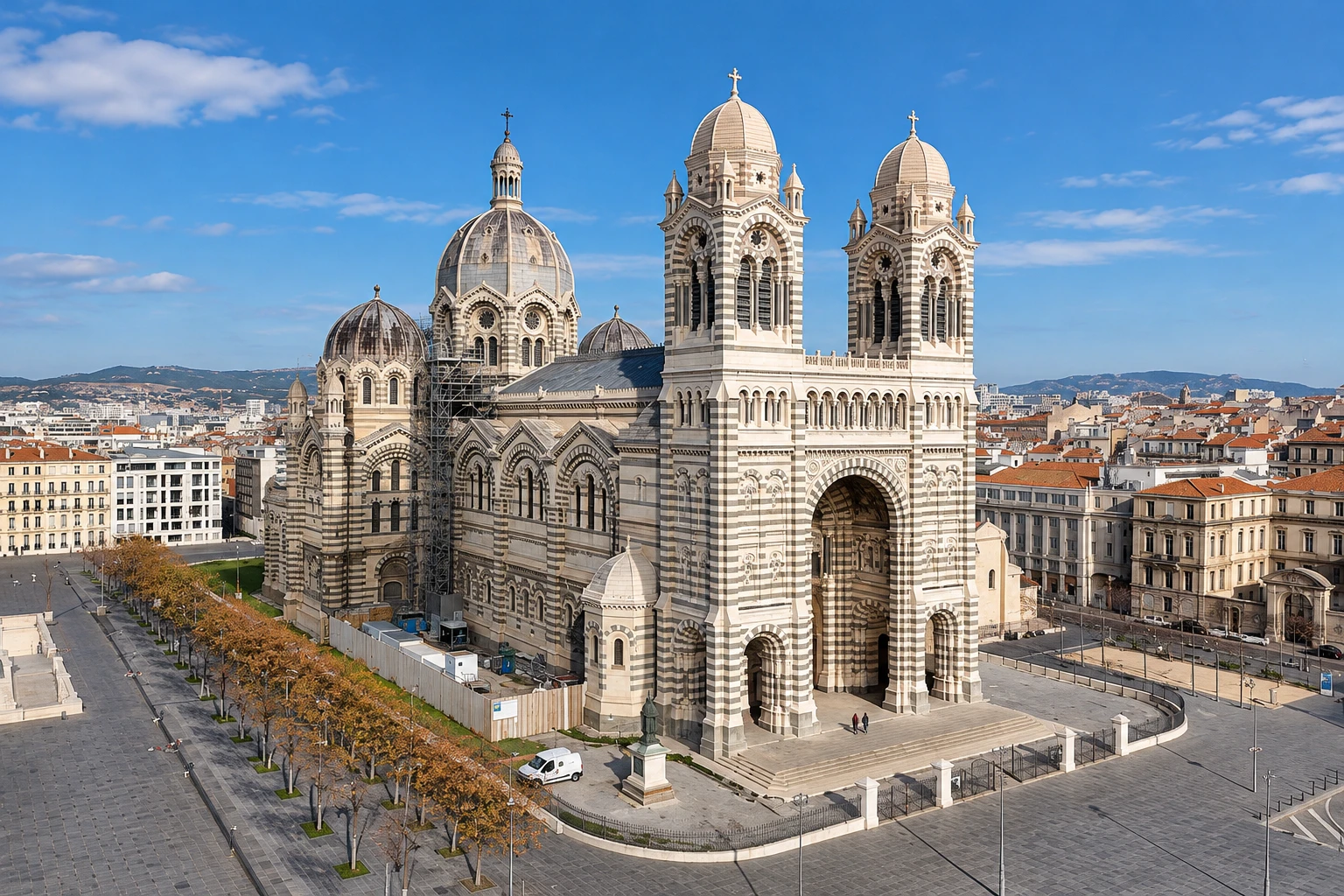
The cathedral of Marselha, built from 1852 to 1893 in a neo-Byzantine style, with bands of light and dark stone and domes. It stands on an esplanade above the port, between the Panier and the MuCEM, next to the small Vieille Major, the earlier Romanesque cathedral.
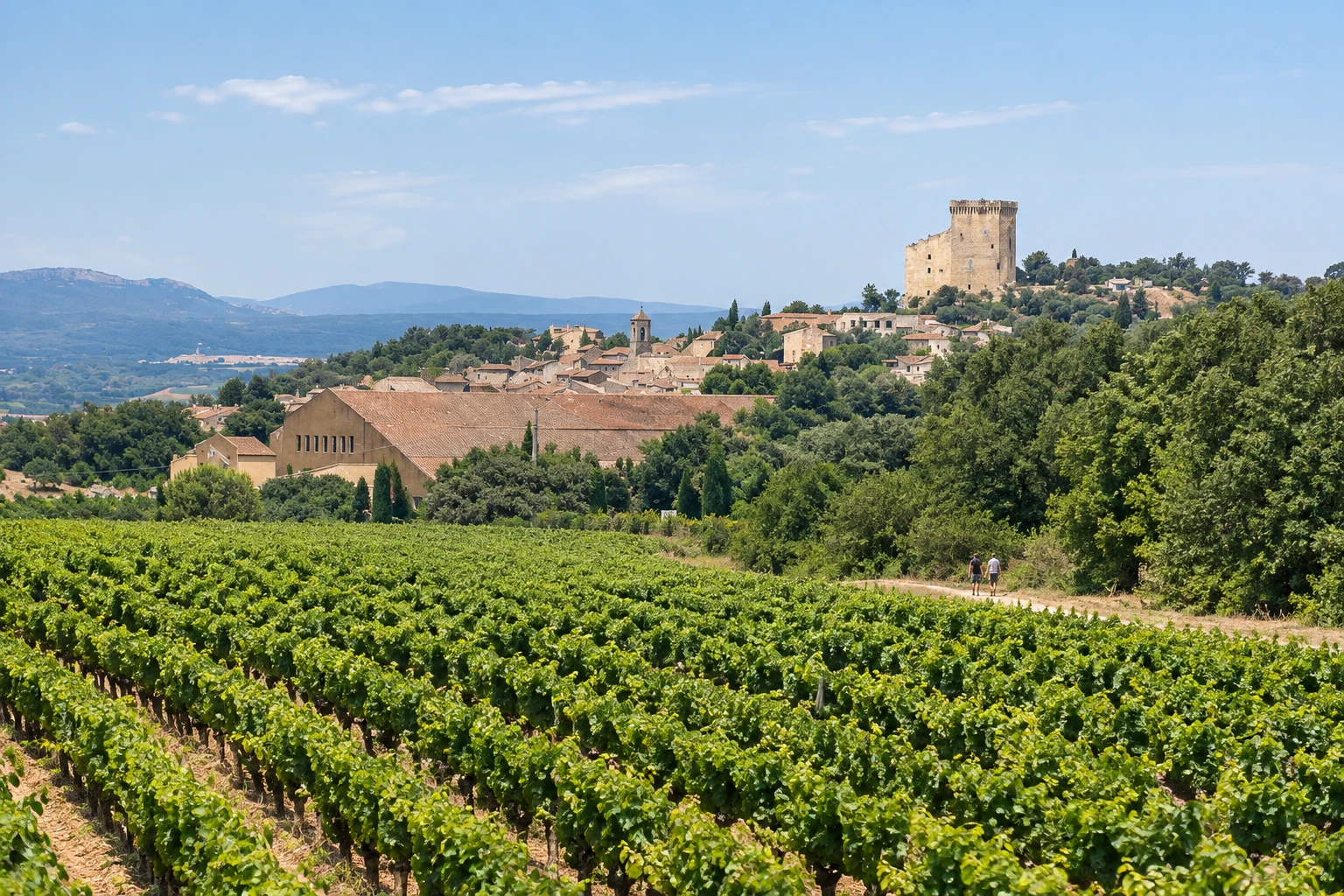
Small village surrounded by vineyards between Avignon and Orange, with the ruins of the popes' summer castle on the hill and dozens of wineries that welcome visitors for tastings.
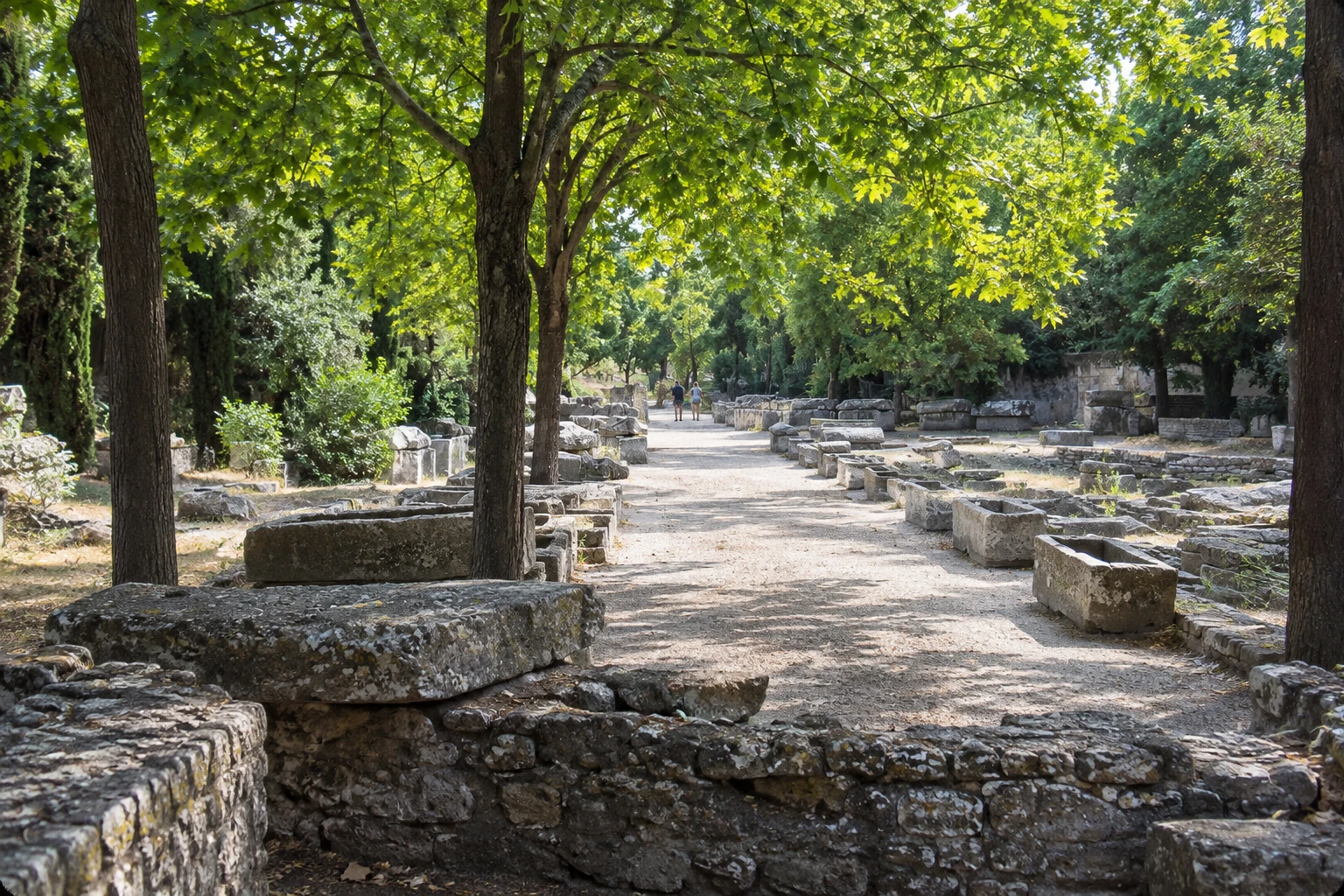
Ancient Roman and Christian necropolis, with an avenue of sarcophagi under the trees leading to the Romanesque church of Saint-Honorat. Van Gogh and Gauguin painted the site in 1888.
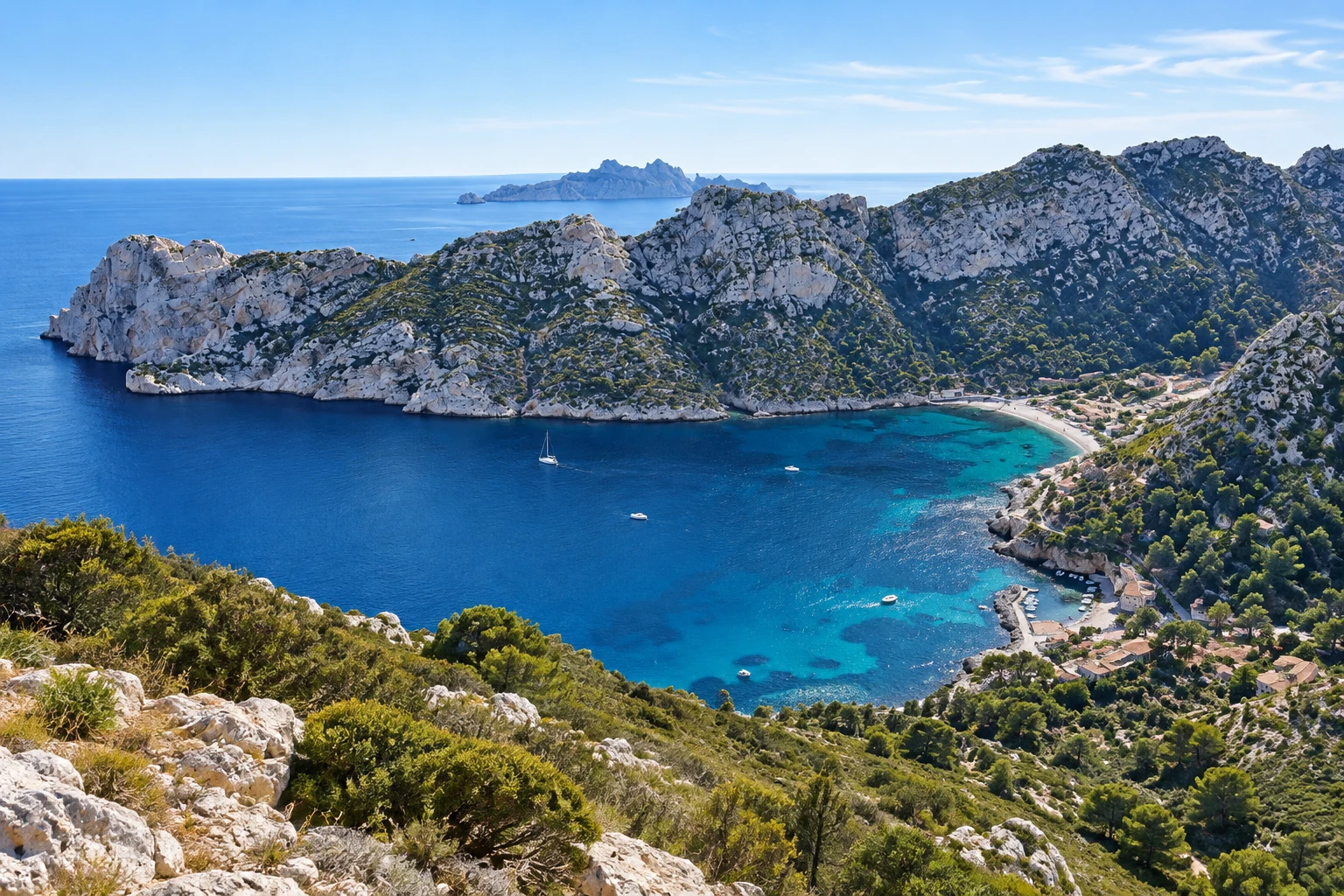
One of the largest calanques of Marselha, within the Parc national des Calanques, with a sandy beach, a small harbour and fishermen's cabanons. It is the calanque with the easiest access from the city and a good first introduction to the calanques.
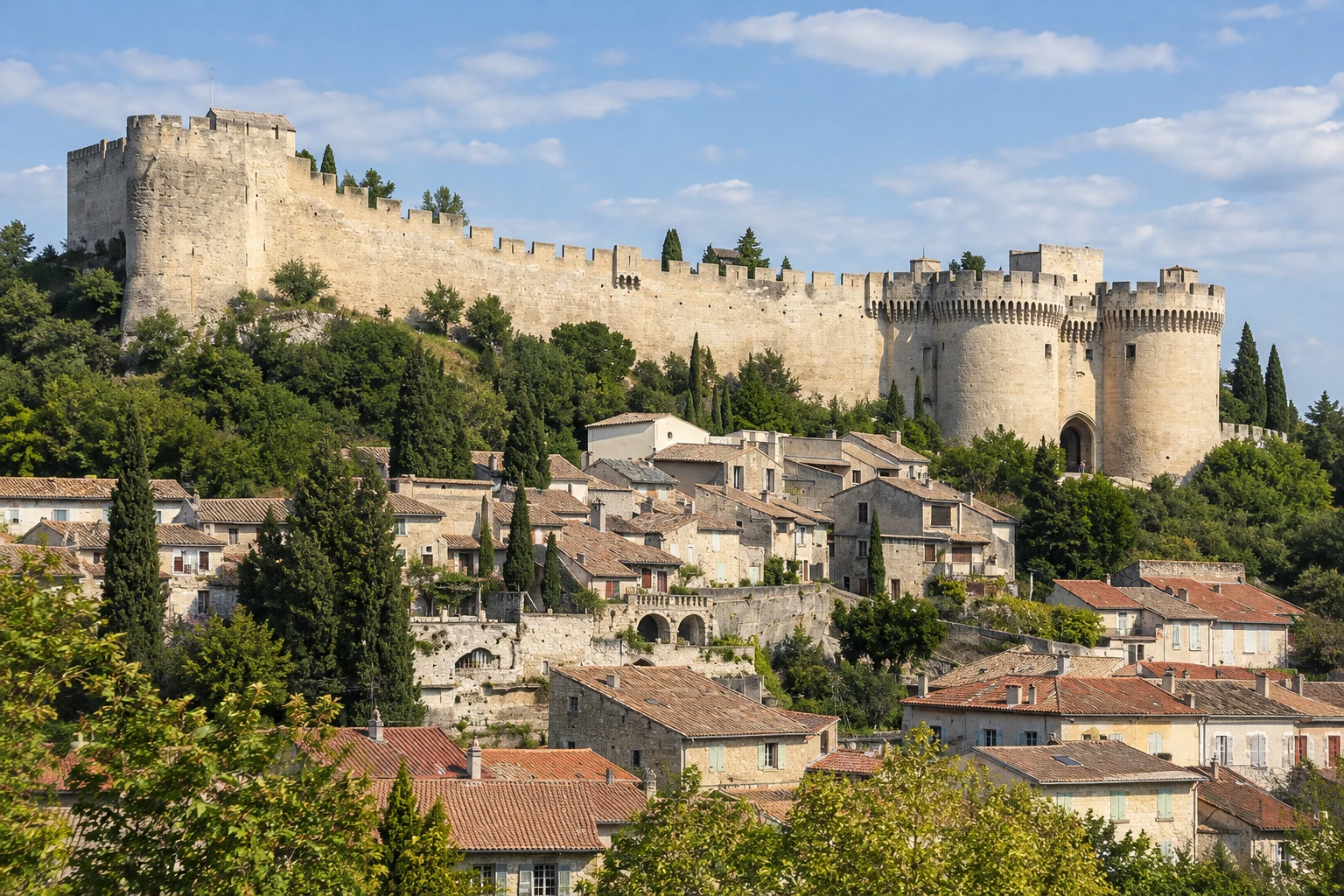
Medieval fortress atop Mont Andaon in Villeneuve-lès-Avignon, on the far side of the Rhône, with twin towers, ramparts and views of the Palais des Papes.
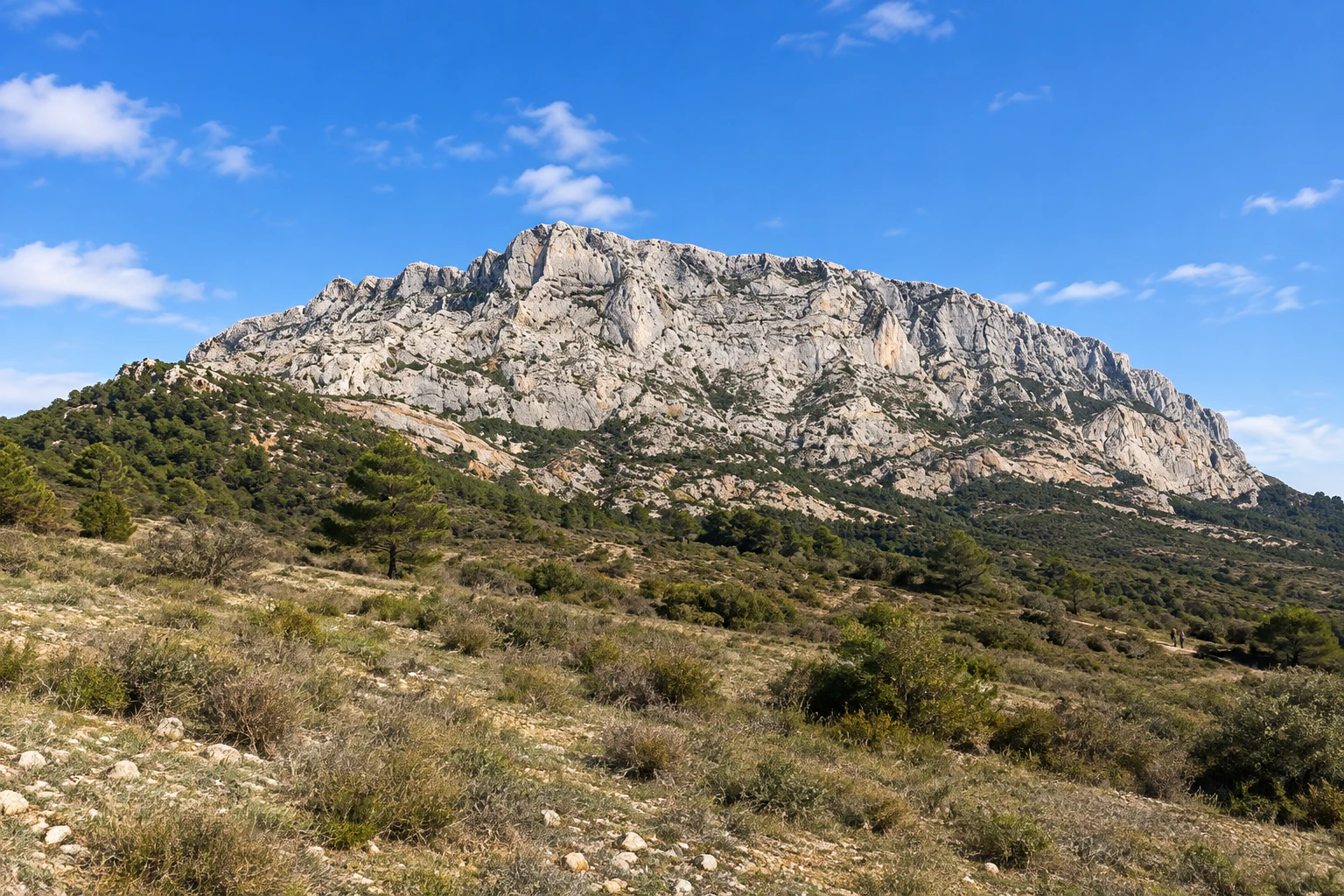
Limestone massif east of Aix, painted more than 80 times by Cézanne, with trails up to the Croix de Provence and the priory at the summit. In summer, access can be restricted due to fire risk.
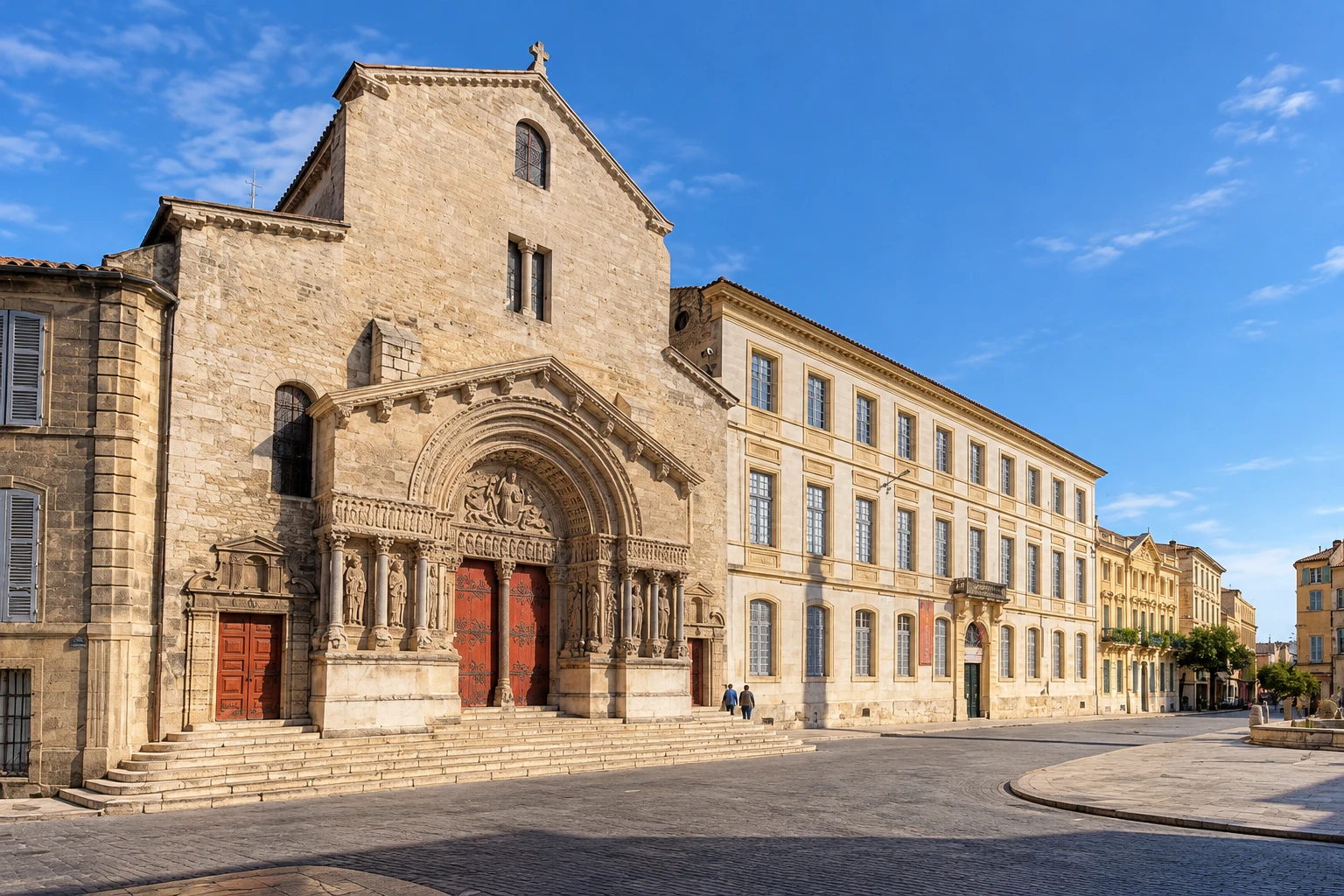
Former cathedral of Arles, with one of the best-known Romanesque sculpted portals in Provence, and the cloister beside it, with Romanesque and Gothic galleries.
Calanque of clear waters next to the Luminy campus, with the Torpilleur rock in front. The trail from Luminy is one of the most used. For part of the summer access to the beach section may require a reservation, which is free of charge.
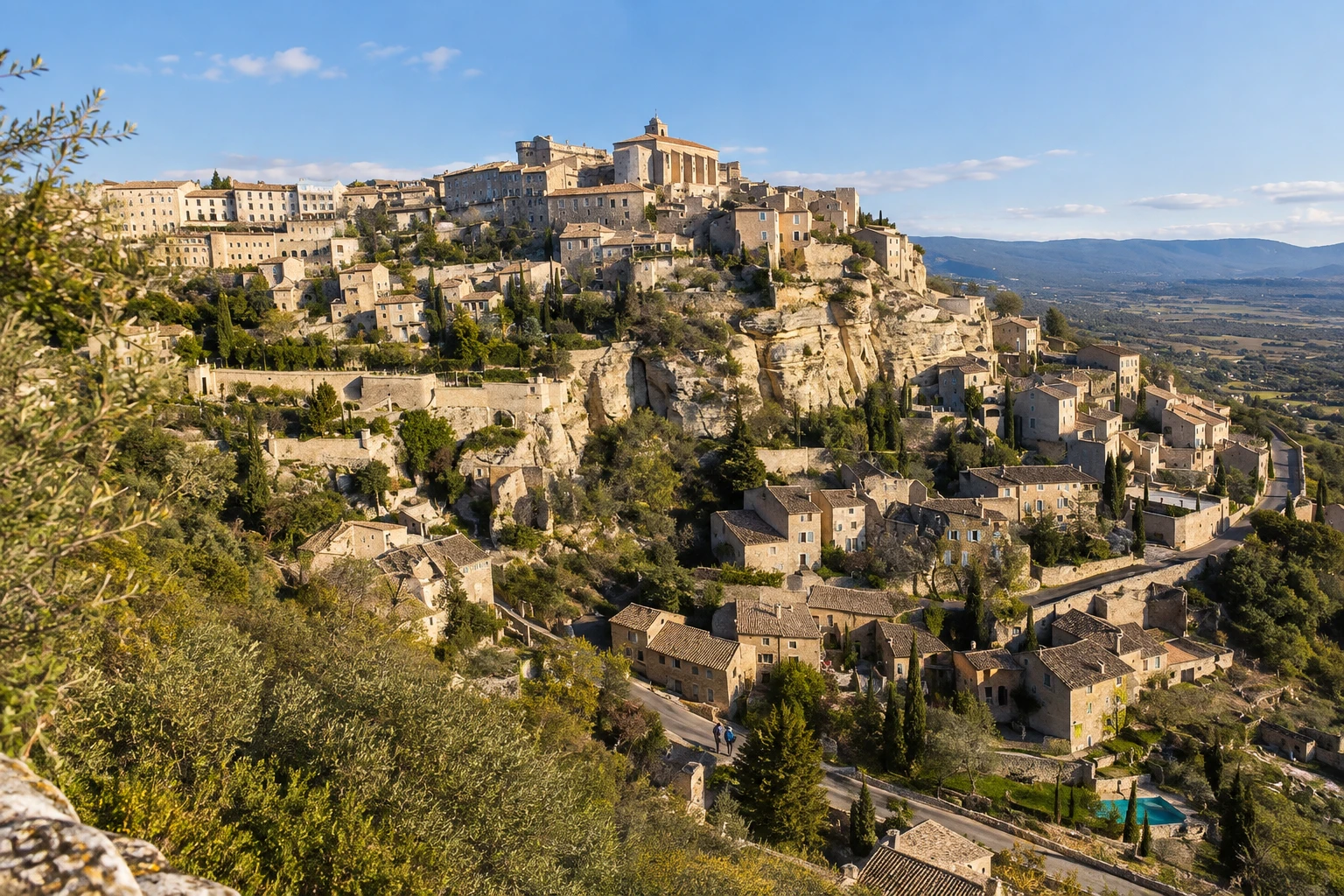
Stone village perched on a hill of the Monts de Vaucluse, on the edge of the Luberon, with a Renaissance castle at the top and houses that step down the slope.
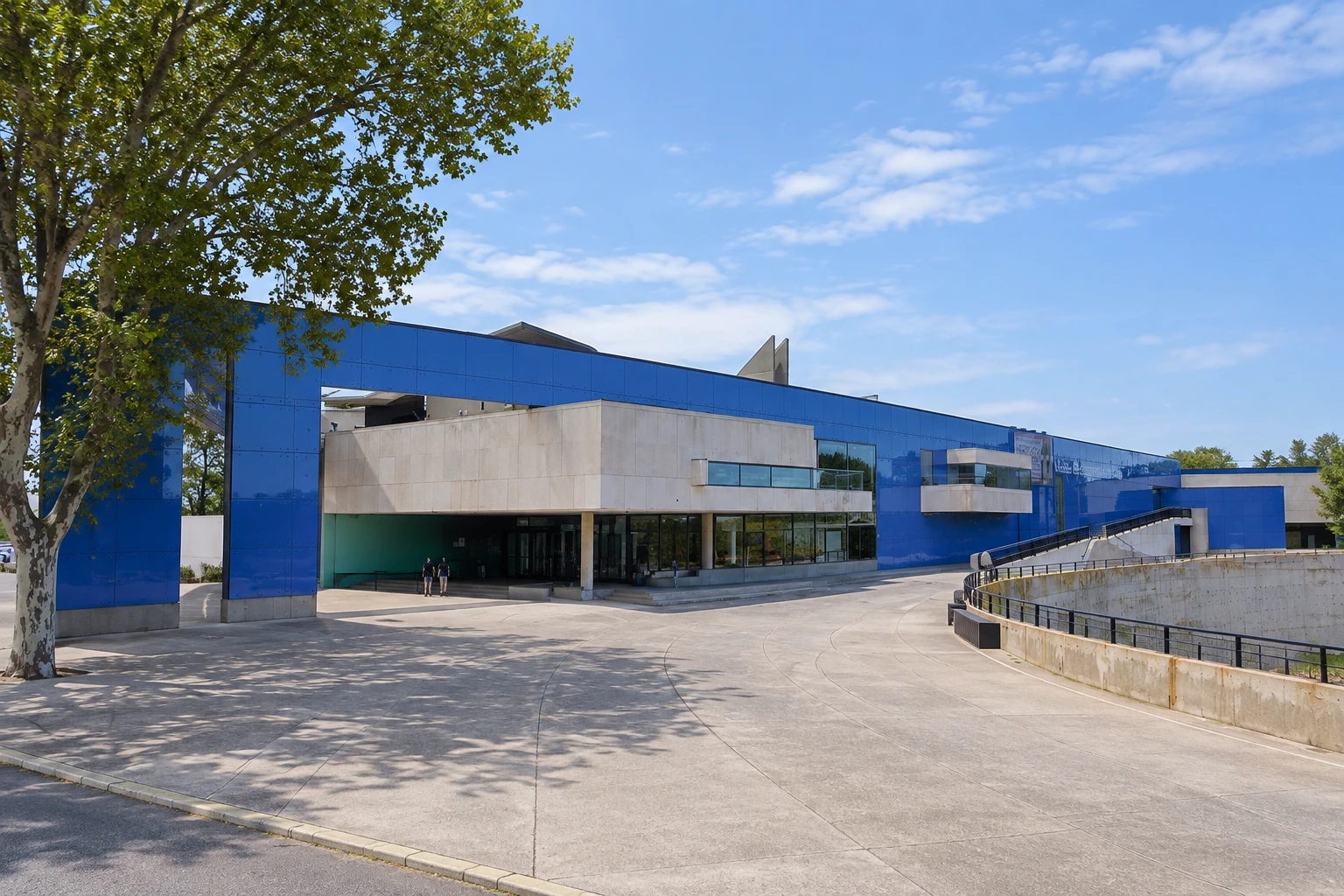
The archaeology museum of Arles, in a blue building on the banks of the Rhône, with mosaics, sarcophagi, a 31-metre Roman boat taken from the river and the bust attributed to Julius Caesar.
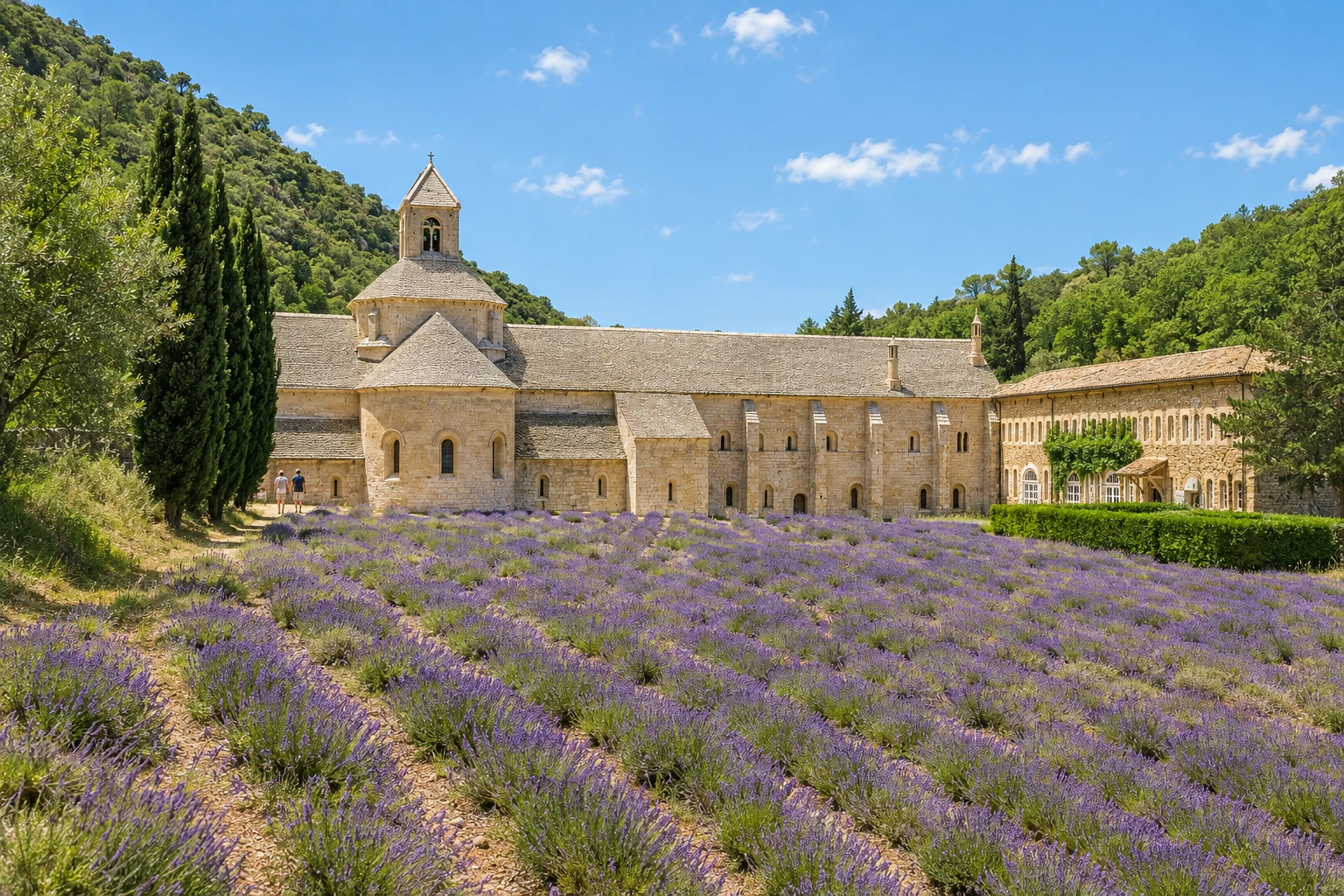
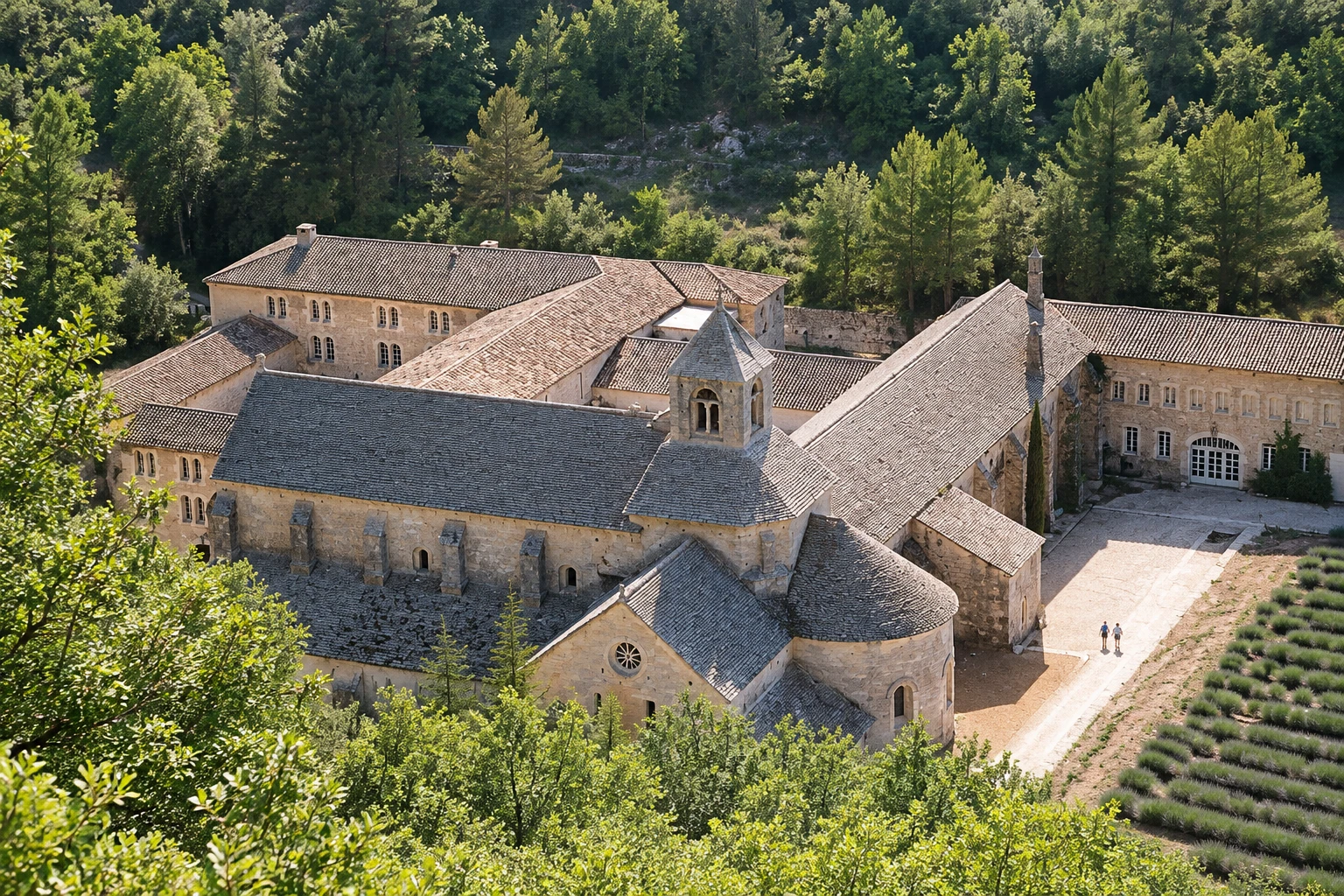
12th-century Cistercian abbey still inhabited by monks, in an isolated valley near Gordes. In front of it, a lavender field usually blooms from mid-June to mid-July.
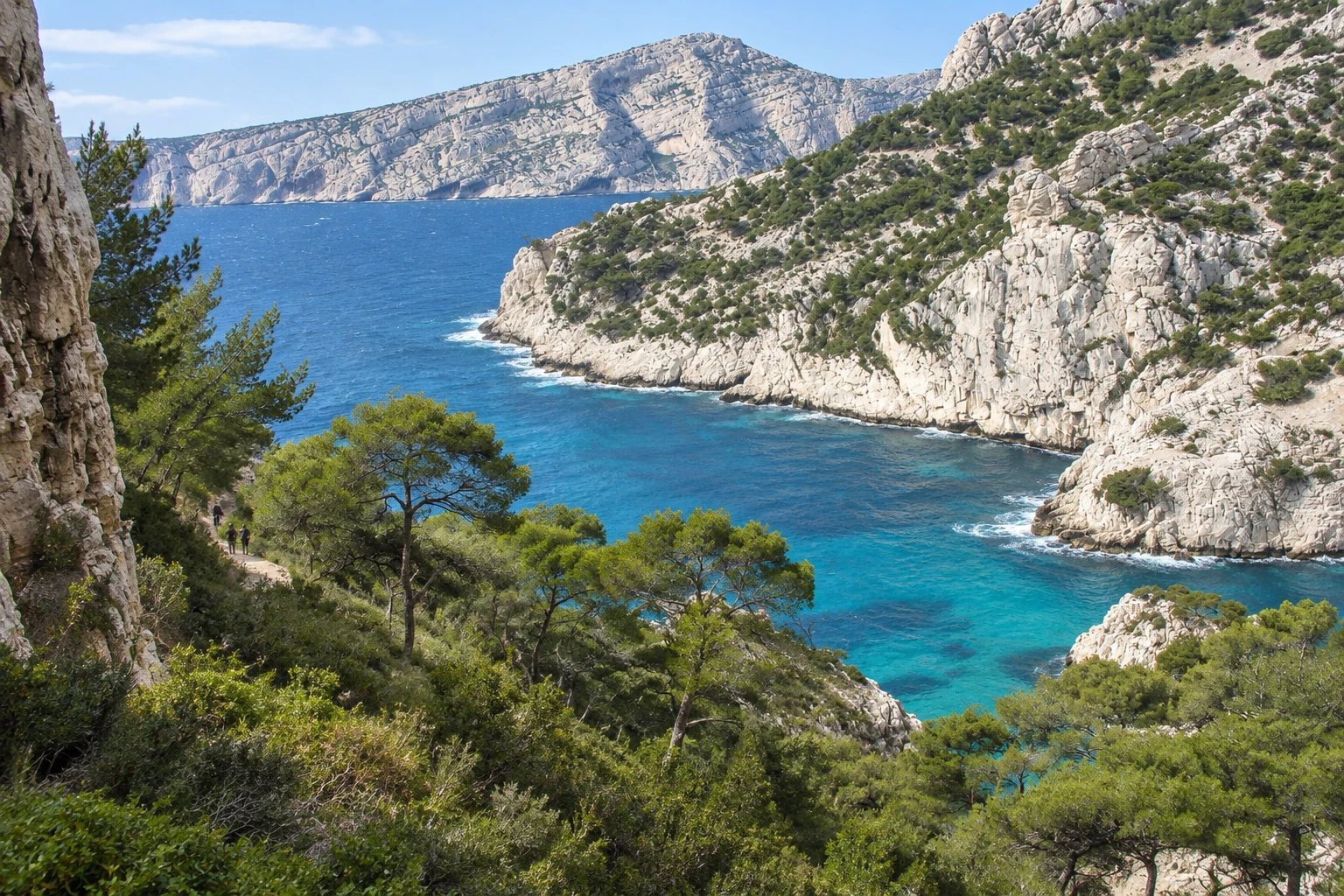
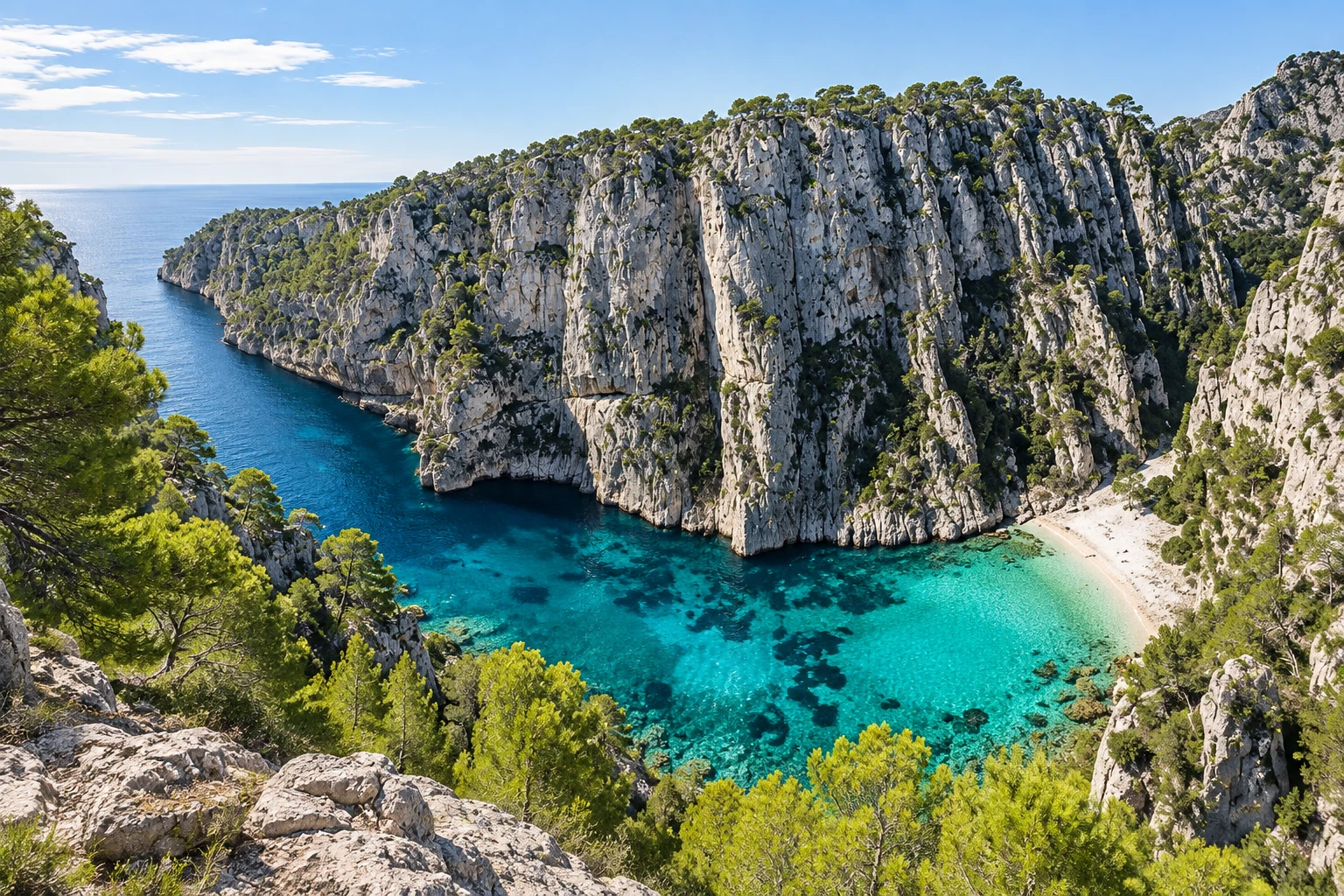
The deepest, most enclosed calanque of the massif, with high cliffs, a pebble beach and green-blue water. It's located between Marseille and Cassis and is reached by trail from Cassis, passing Port-Miou and Port-Pin, or by boat—without disembarking—on excursions that depart from the port.
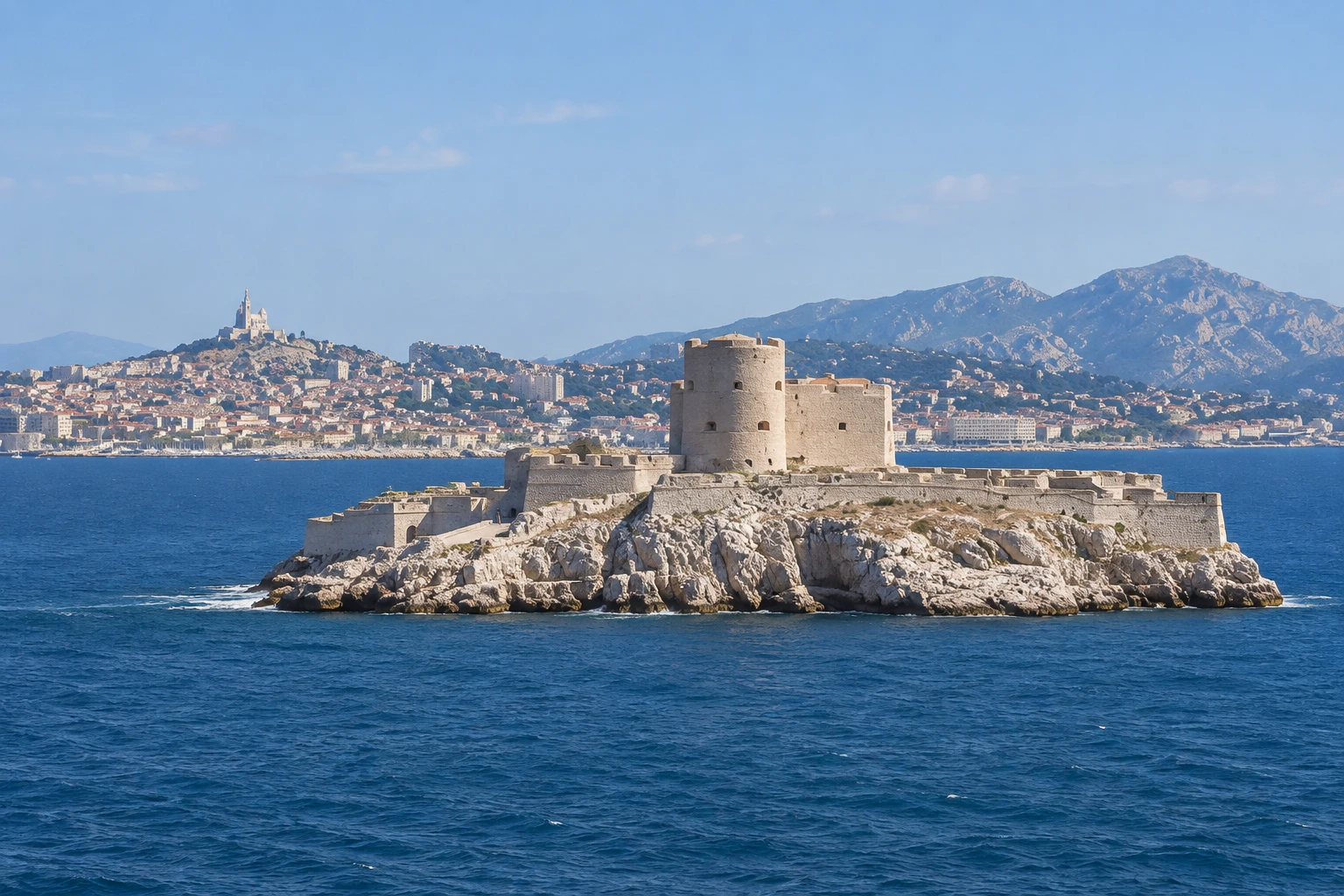
16th-century fortress on a small islet in front of the harbor, which served as a prison for centuries and became famous as the setting of The Count of Monte Cristo by Alexandre Dumas. It is reached by boat from the Vieux-Port.
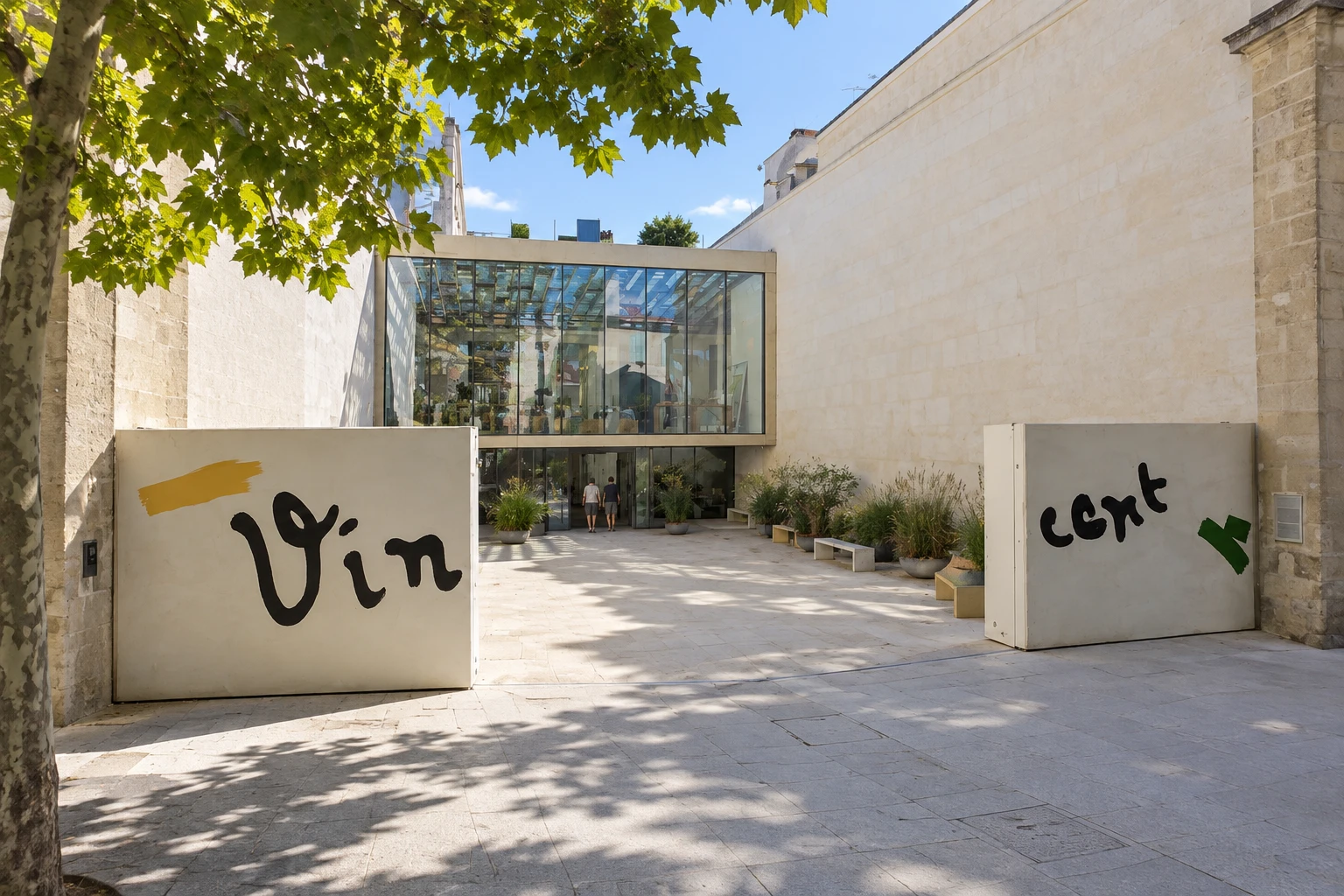
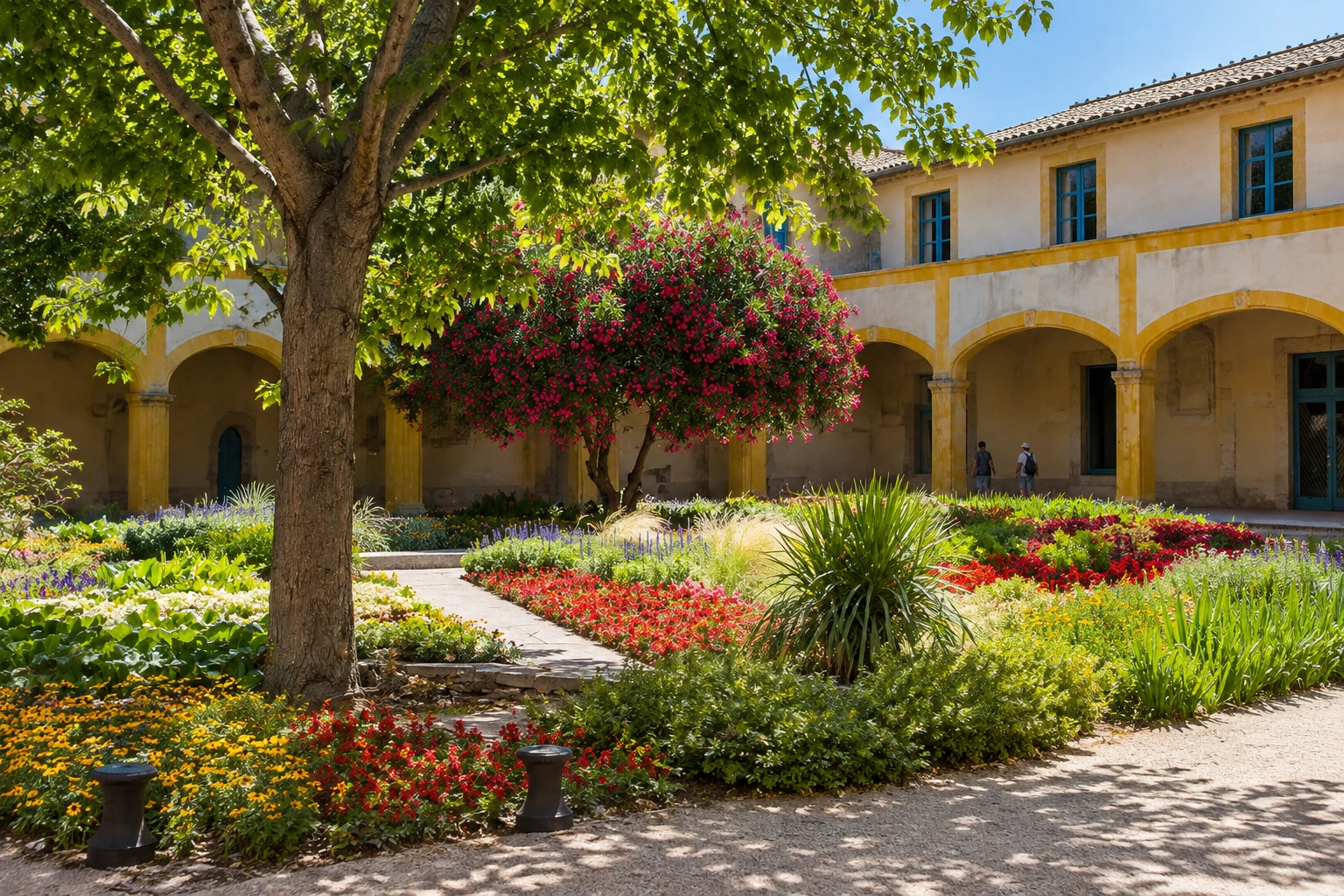
The former Hôtel-Dieu, the hospital where Van Gogh was treated in 1888 and 1889, with the courtyard garden he painted. Today it is a cultural centre and entry to the courtyard is free.
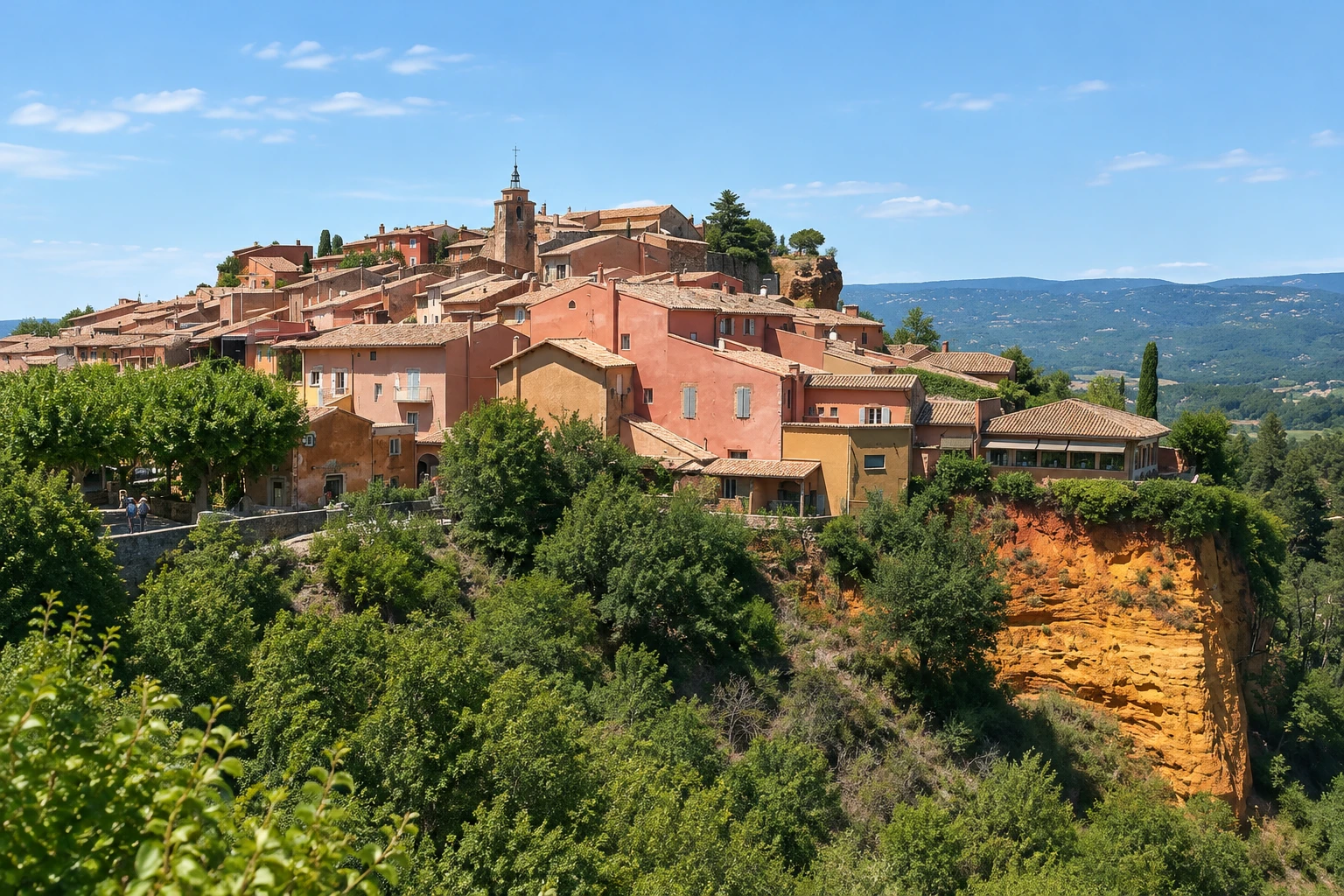
Luberon village built on ochre deposits, with houses painted in shades of red and orange and the Sentier des Ocres trail winding among colorful cliffs.
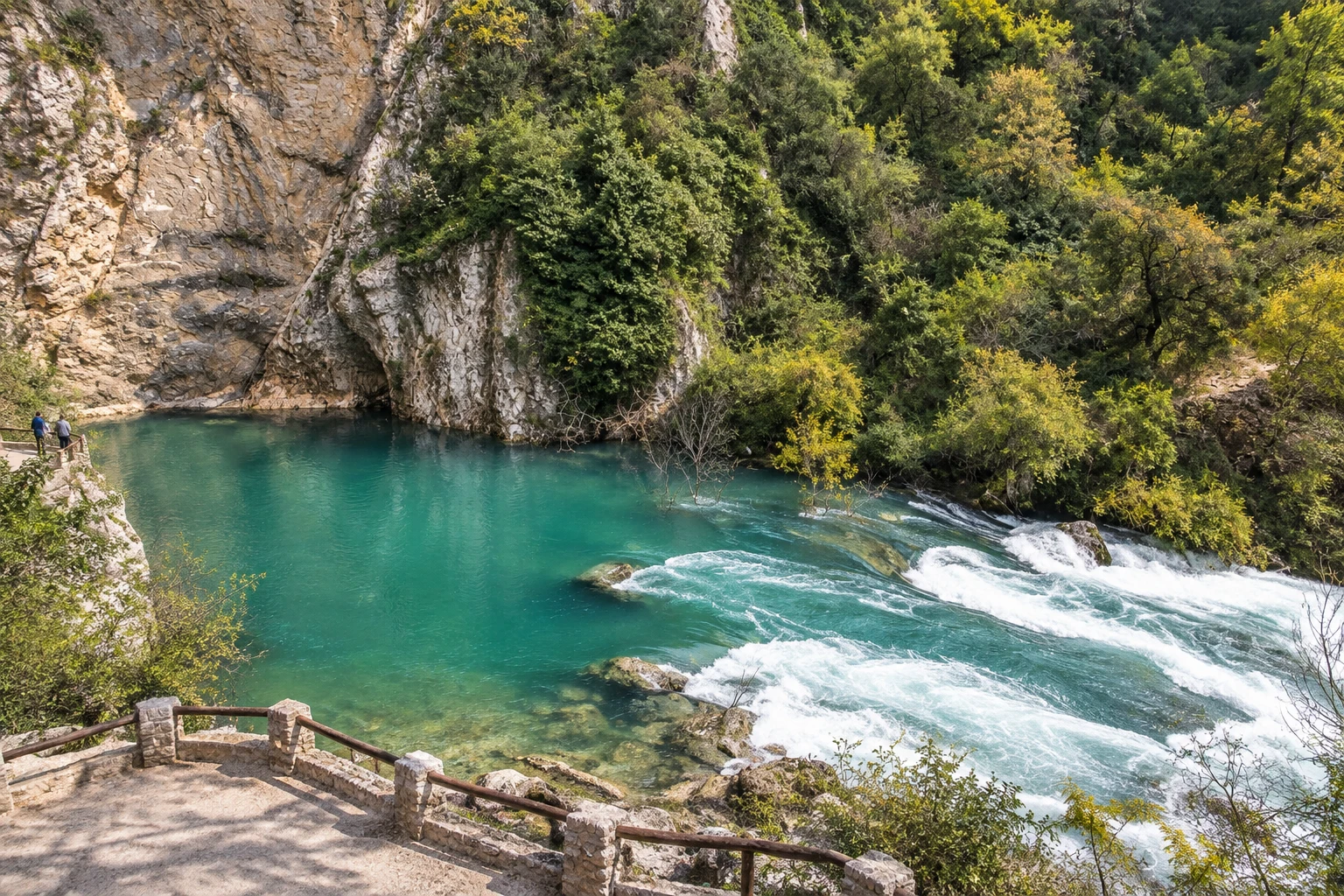
The source of the river Sorgue, at the foot of a rock cliff, the largest in metropolitan France by water volume. A riverside path leads from the village to the cave where the water springs forth.
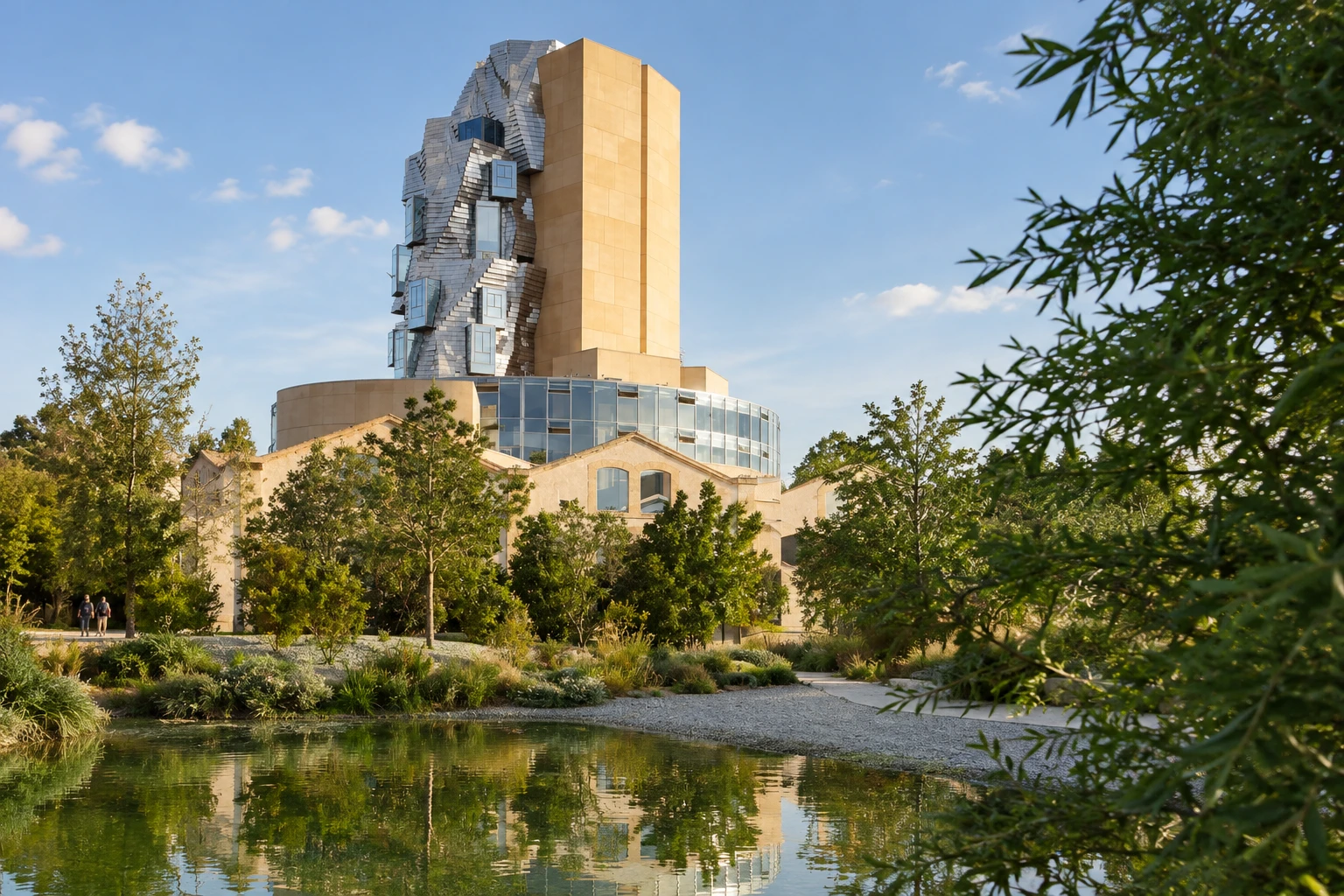
Contemporary art center in a former railway workshops courtyard, featuring Frank Gehry's steel tower, 19th-century sheds with exhibitions, and a park with a lake.
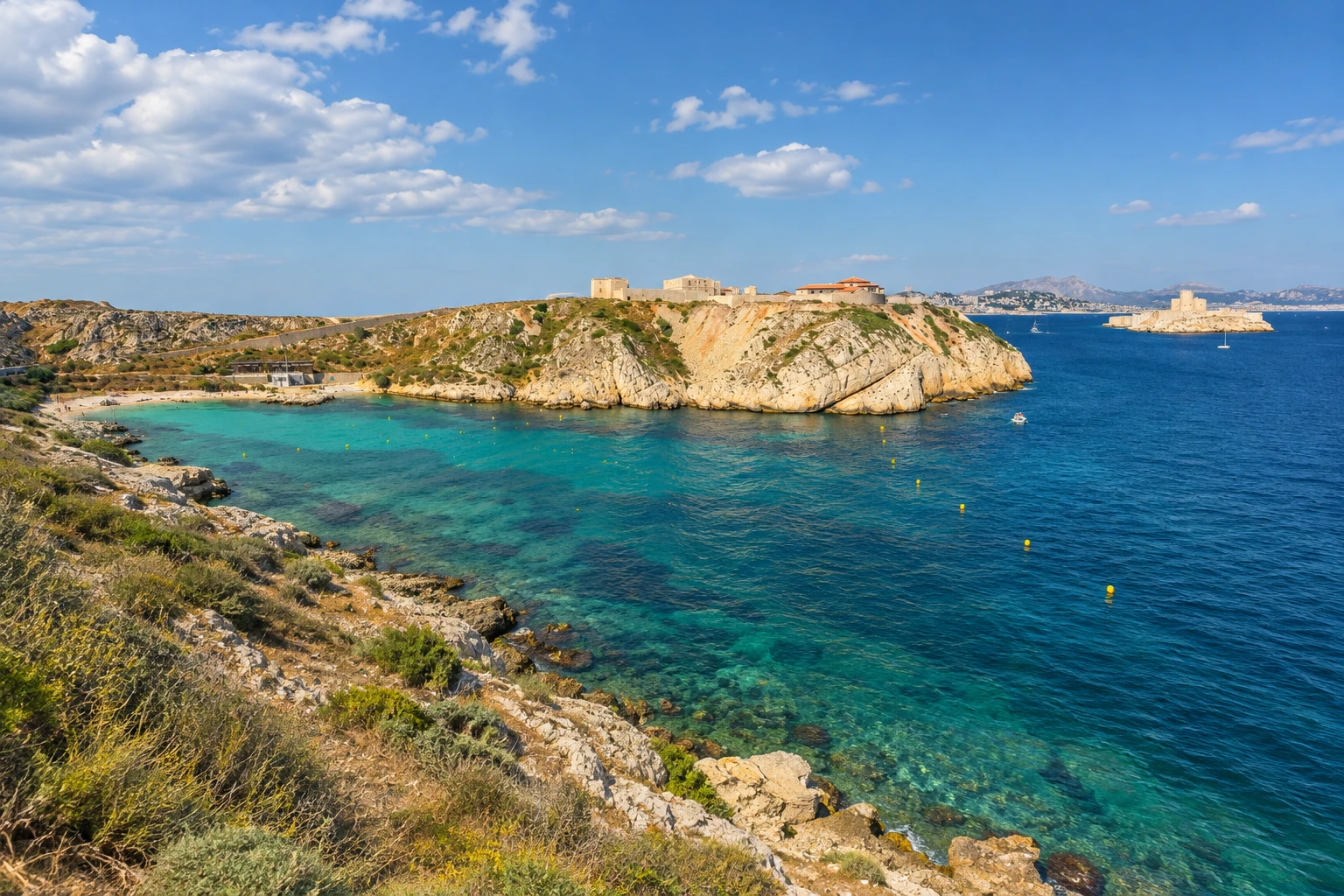
Archipelago off Marseille, part of the Parc national des Calanques. The islands of Ratonneau and Pomègues, connected by a causeway, have small beaches, coves and trails over limestone rock, with views of the city.
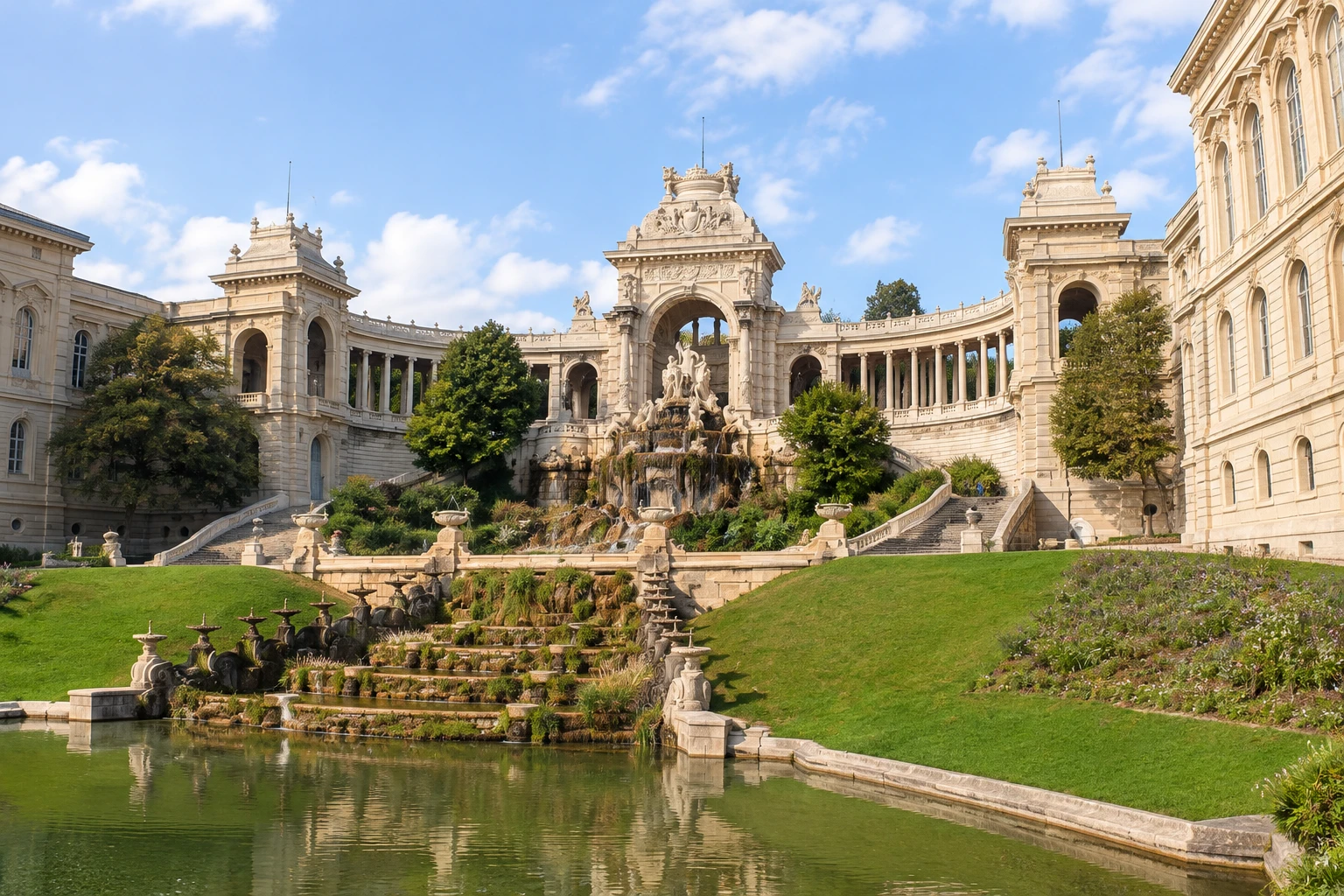
Monumental 19th-century palace with a cascading fountain, built to celebrate the arrival of water from the river Durance to Marseille. The wings house the Musée des Beaux-Arts and the Muséum d'histoire naturelle, and behind it lies the Parc Longchamp.
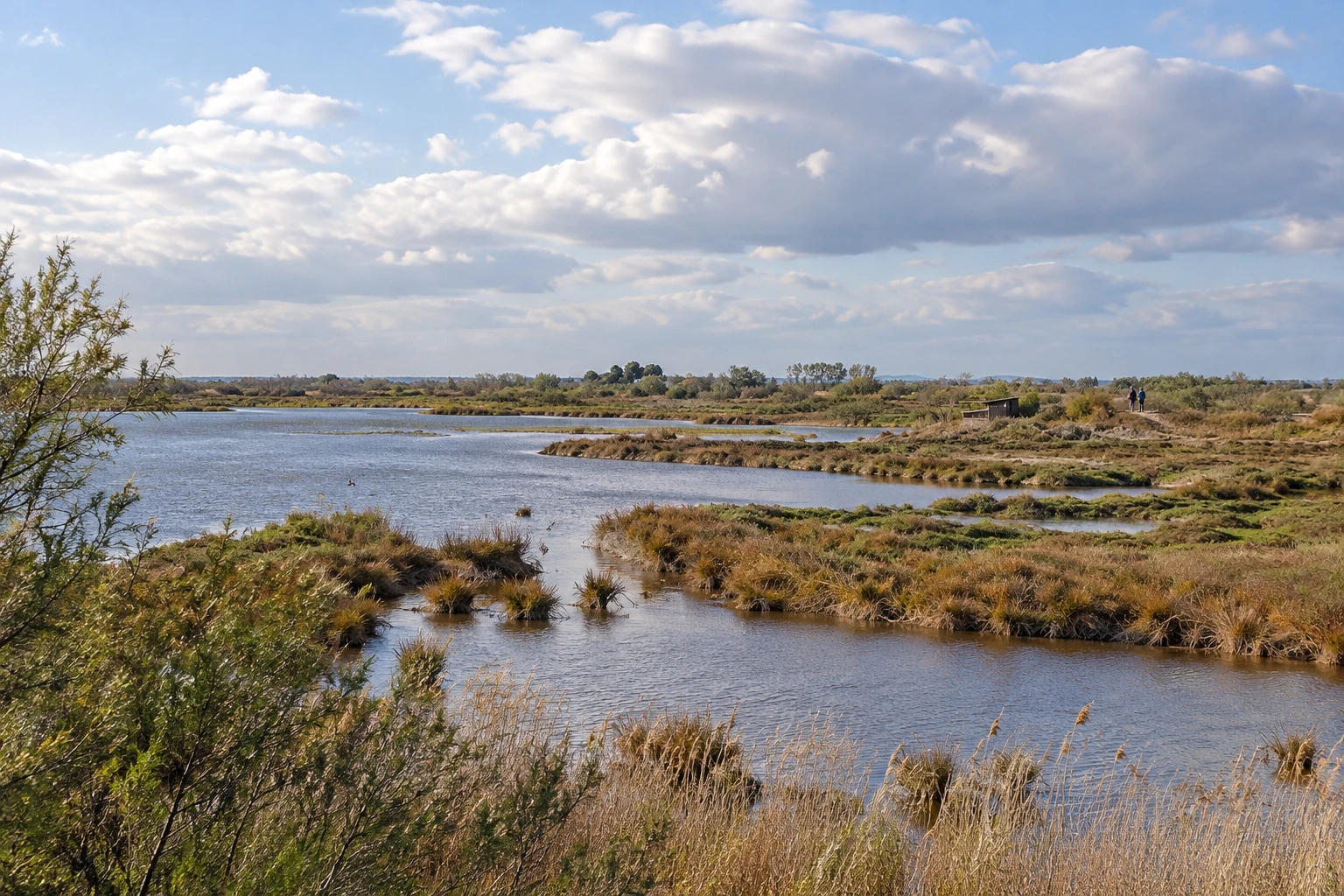
A 60-hectare park of marshes and reedbeds in the Camargue, with trails and hides for watching flamingos and other birds. It is 4 km from Saintes-Maries-de-la-Mer.
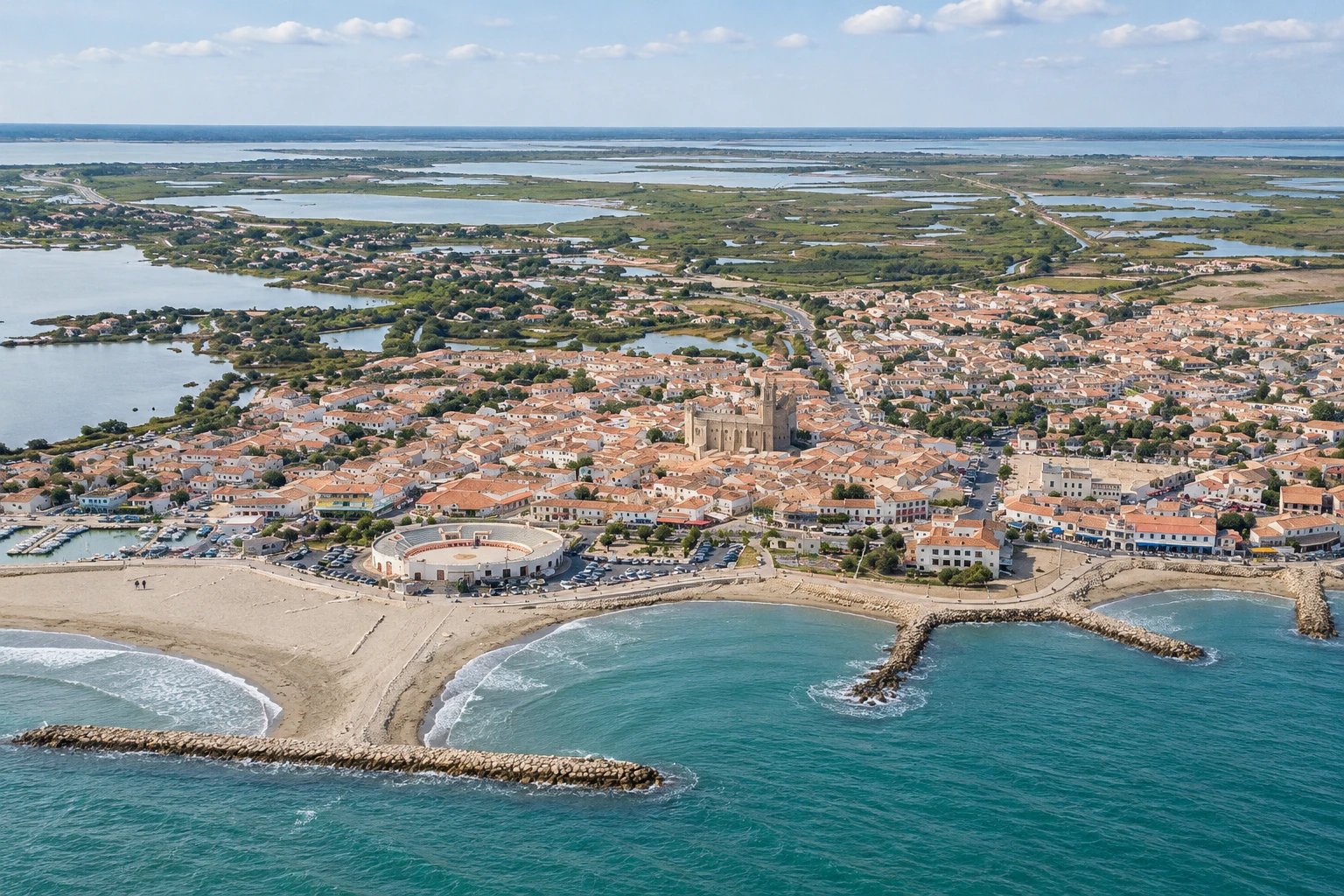
The capital of the Camargue, on the Mediterranean coast, with a fortified Romanesque church, beaches, horse rides and located in the Rhône delta. It hosts the Roma pilgrimage in May.
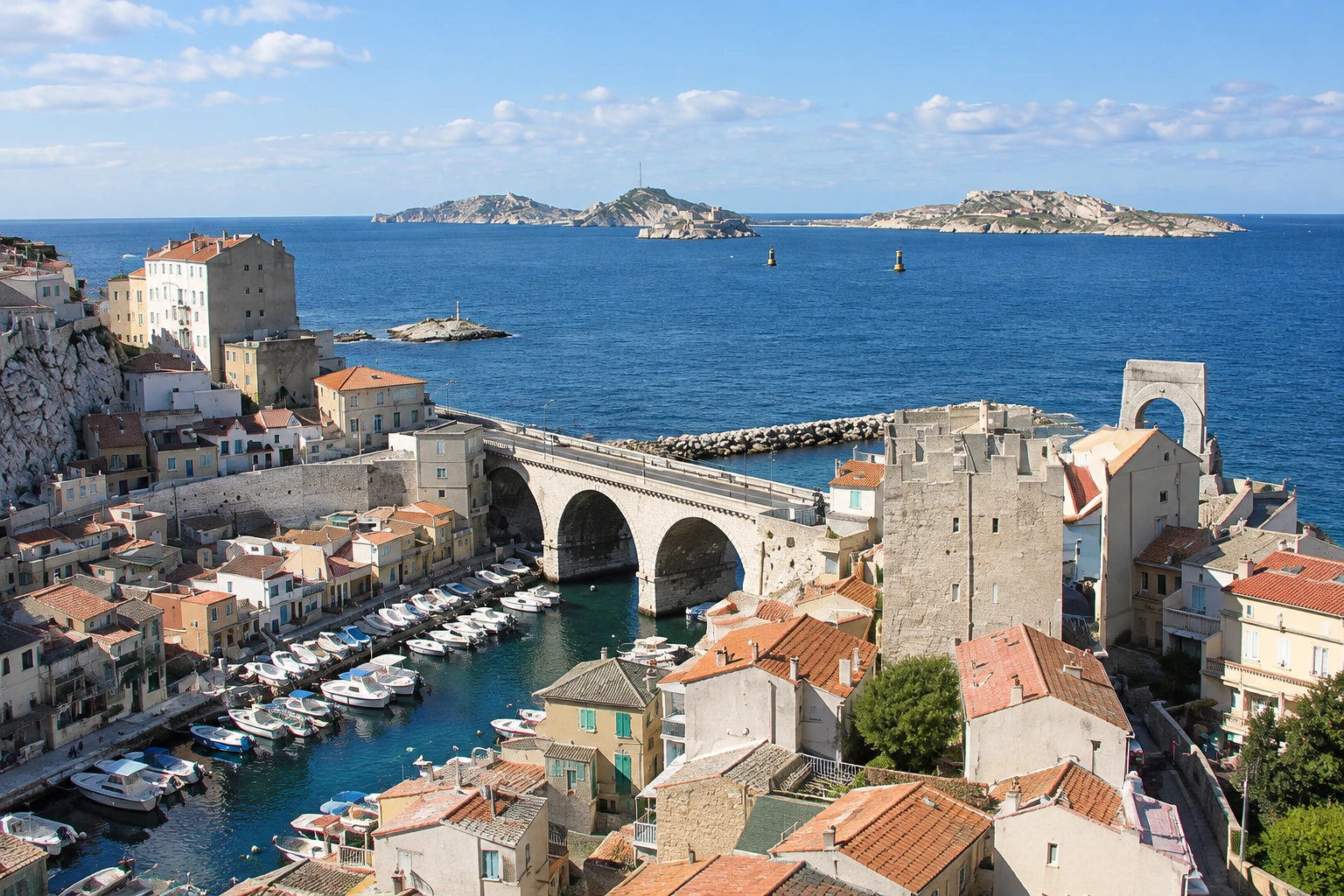
Small fishing port hidden under a three-arched bridge of the Corniche Kennedy, with colorful little houses and traditional boats. The Corniche runs for almost 4 km along the sea, with views of the islands.
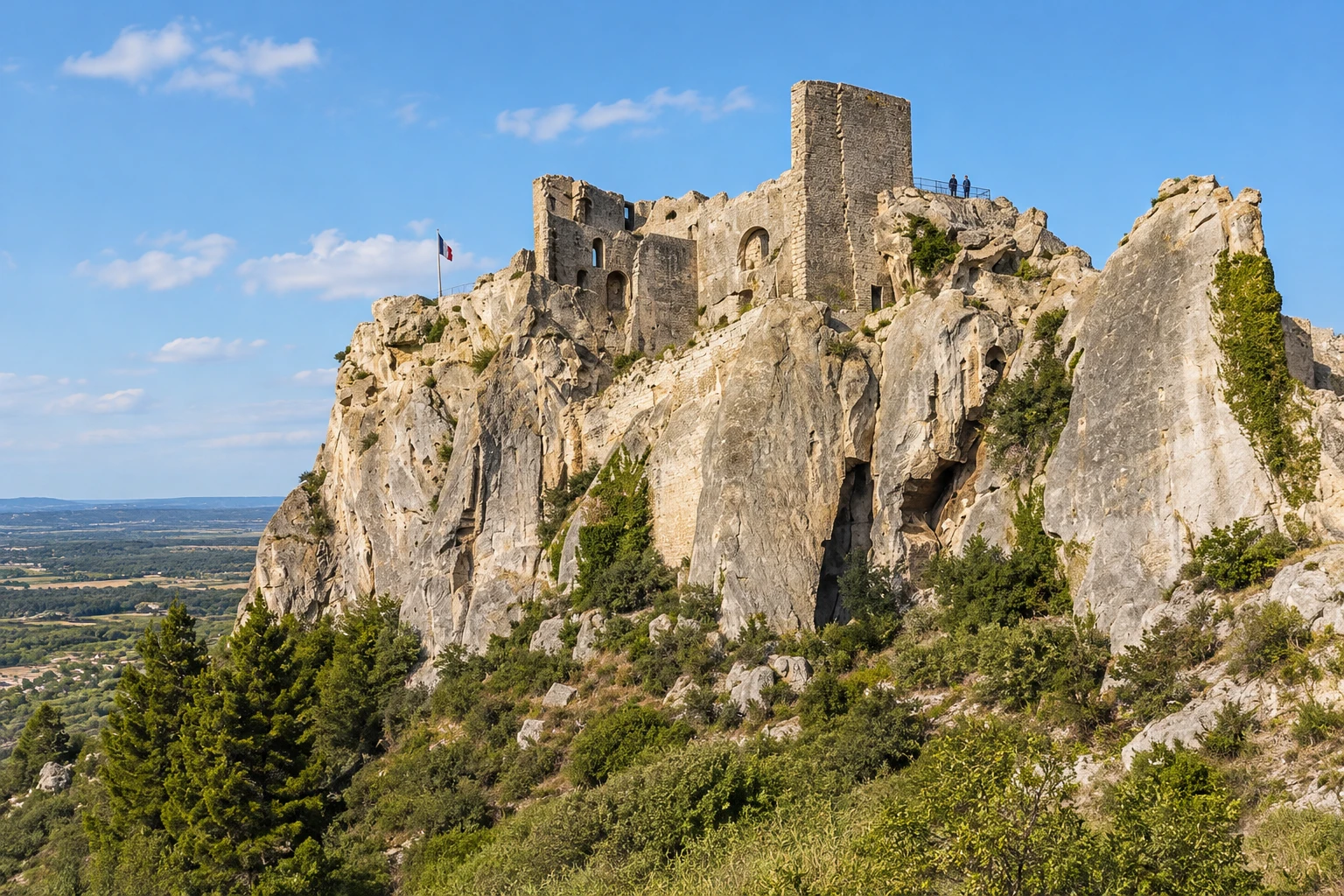
Ruins of a medieval fortress atop a rocky outcrop in the Alpilles, above the village of Les Baux-de-Provence, with views over the olive groves and the plain as far as the Camargue.
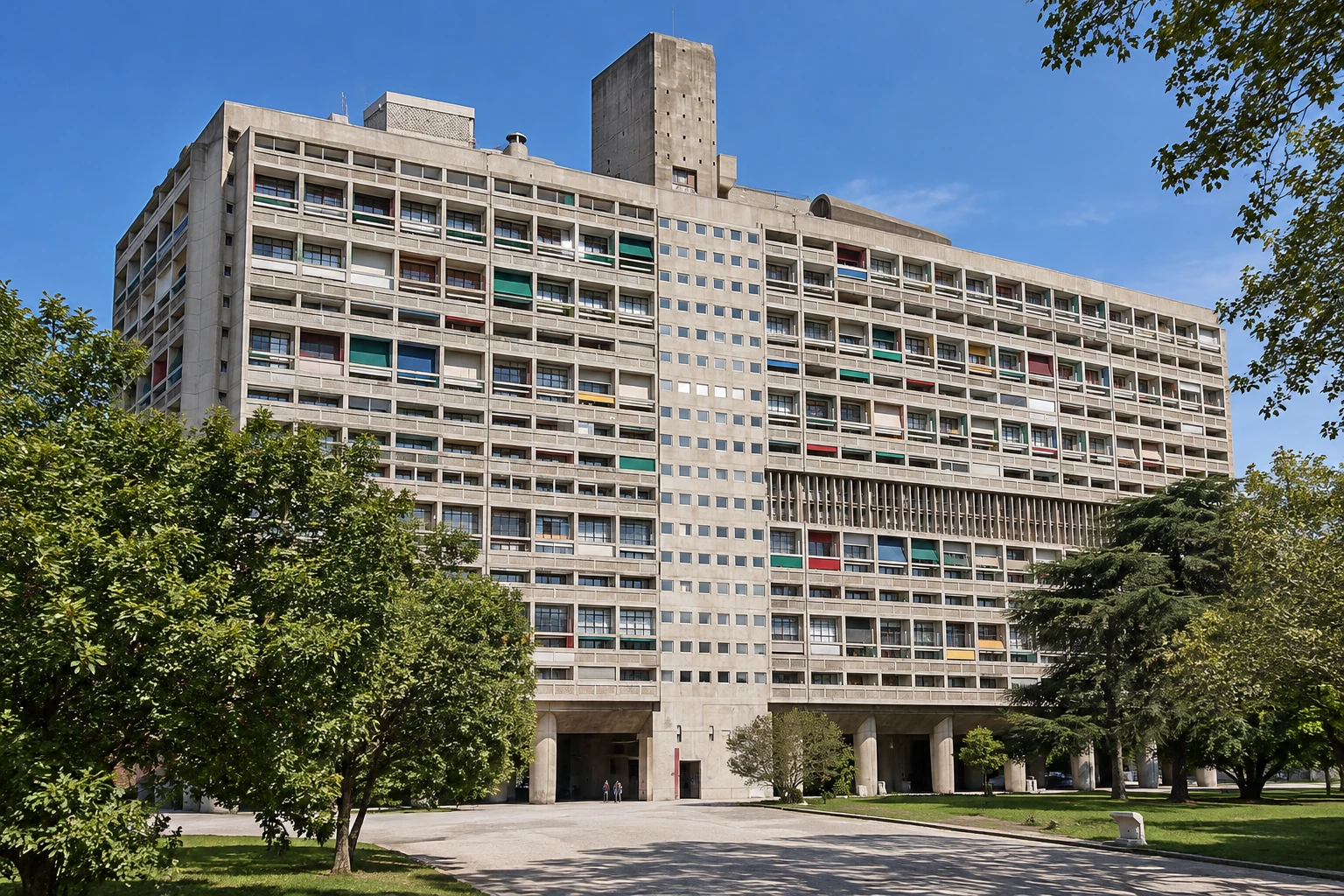
Residential building by Le Corbusier, built from 1947 to 1952, which put into practice the idea of a "vertical village" with internal streets, shops, a hotel and a roof terrace. It has been a UNESCO World Heritage Site since 2016 and remains inhabited.
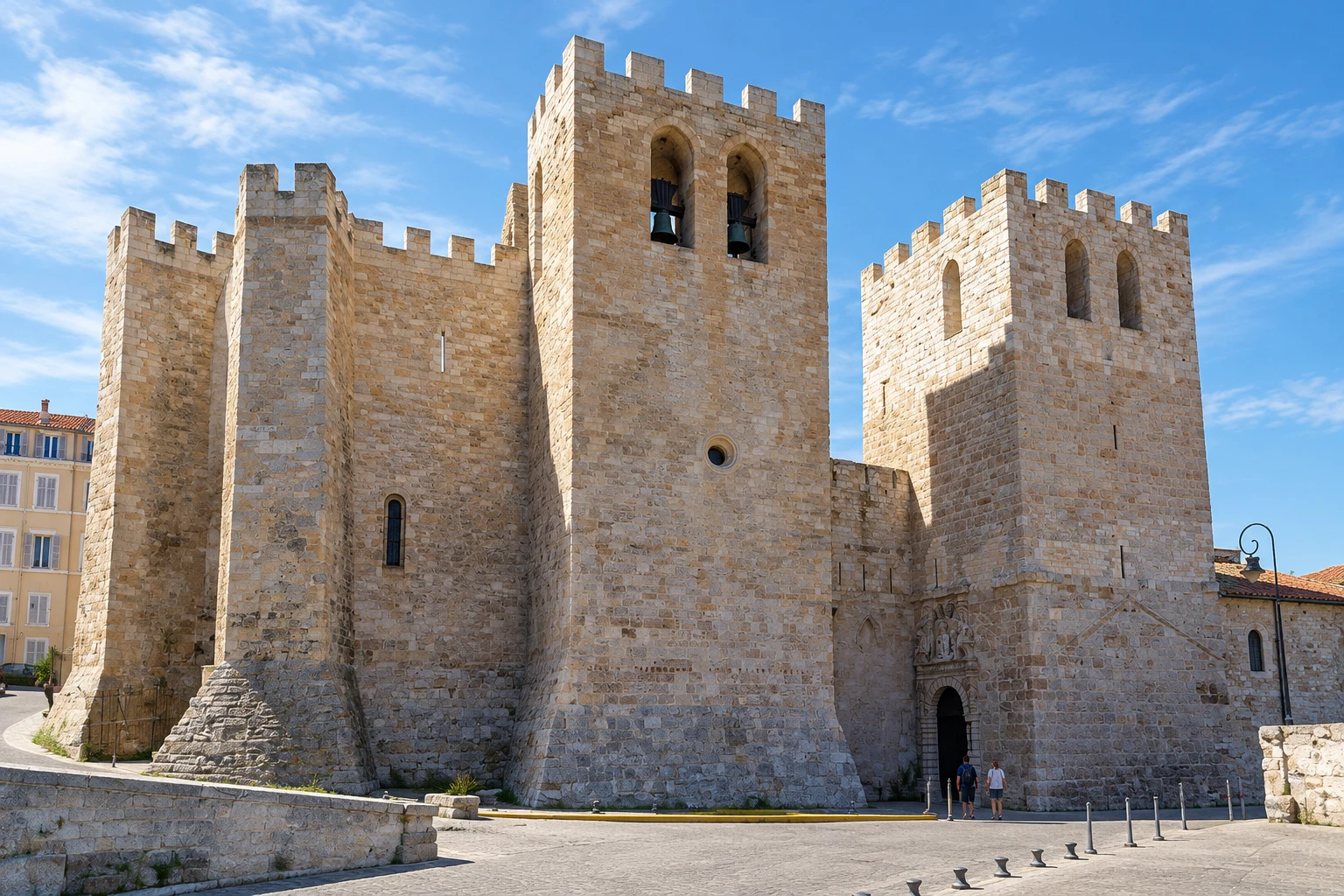
One of the oldest churches in France, with the appearance of a fortress, near the Vieux-Port. The crypts hold sarcophagi from the 4th and 5th centuries and the Black Virgin, venerated in the Candlemas procession on February 2.
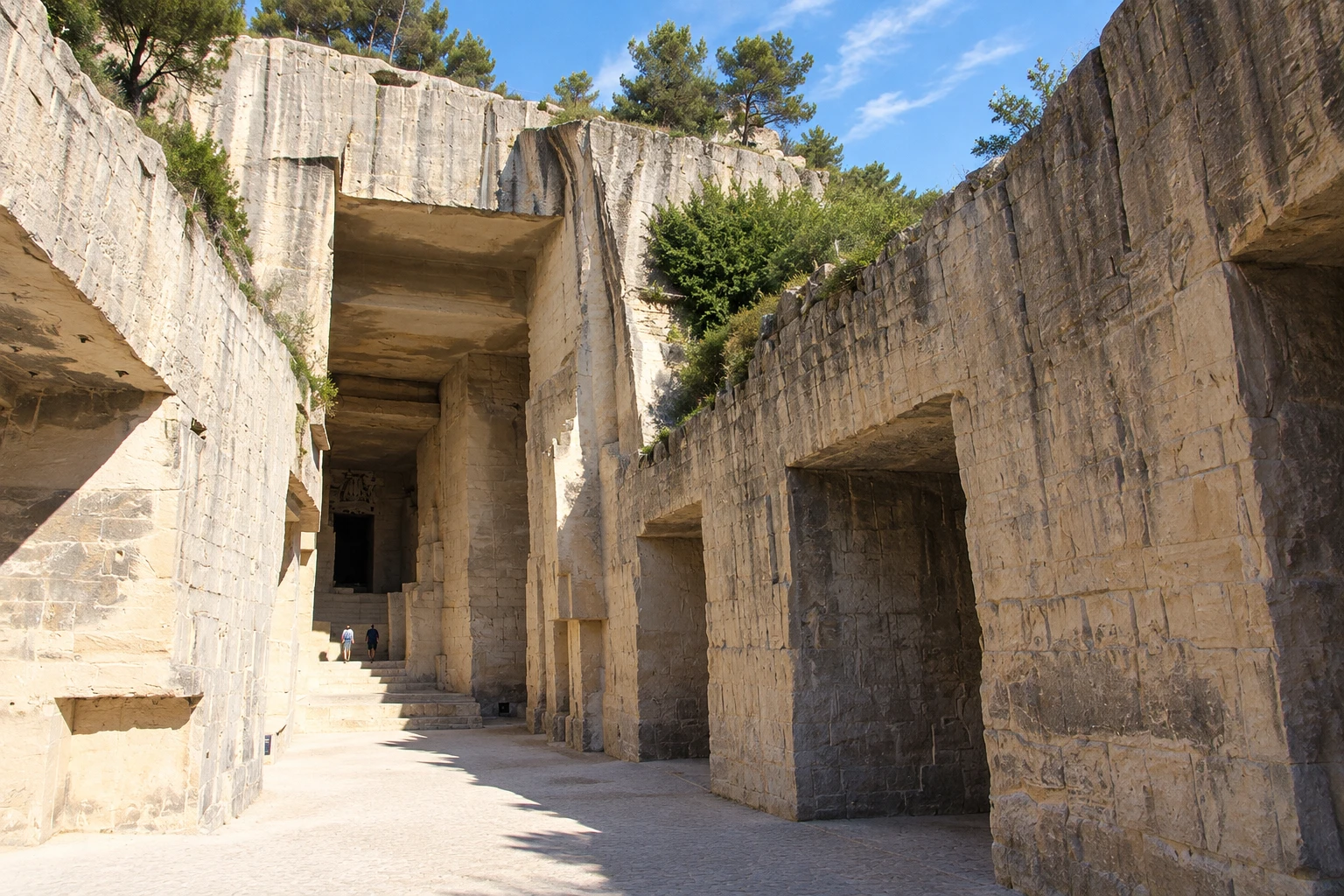
Former limestone quarries in Les Baux-de-Provence, with high walls where immersive art-and-music exhibitions are projected. The program changes each season.
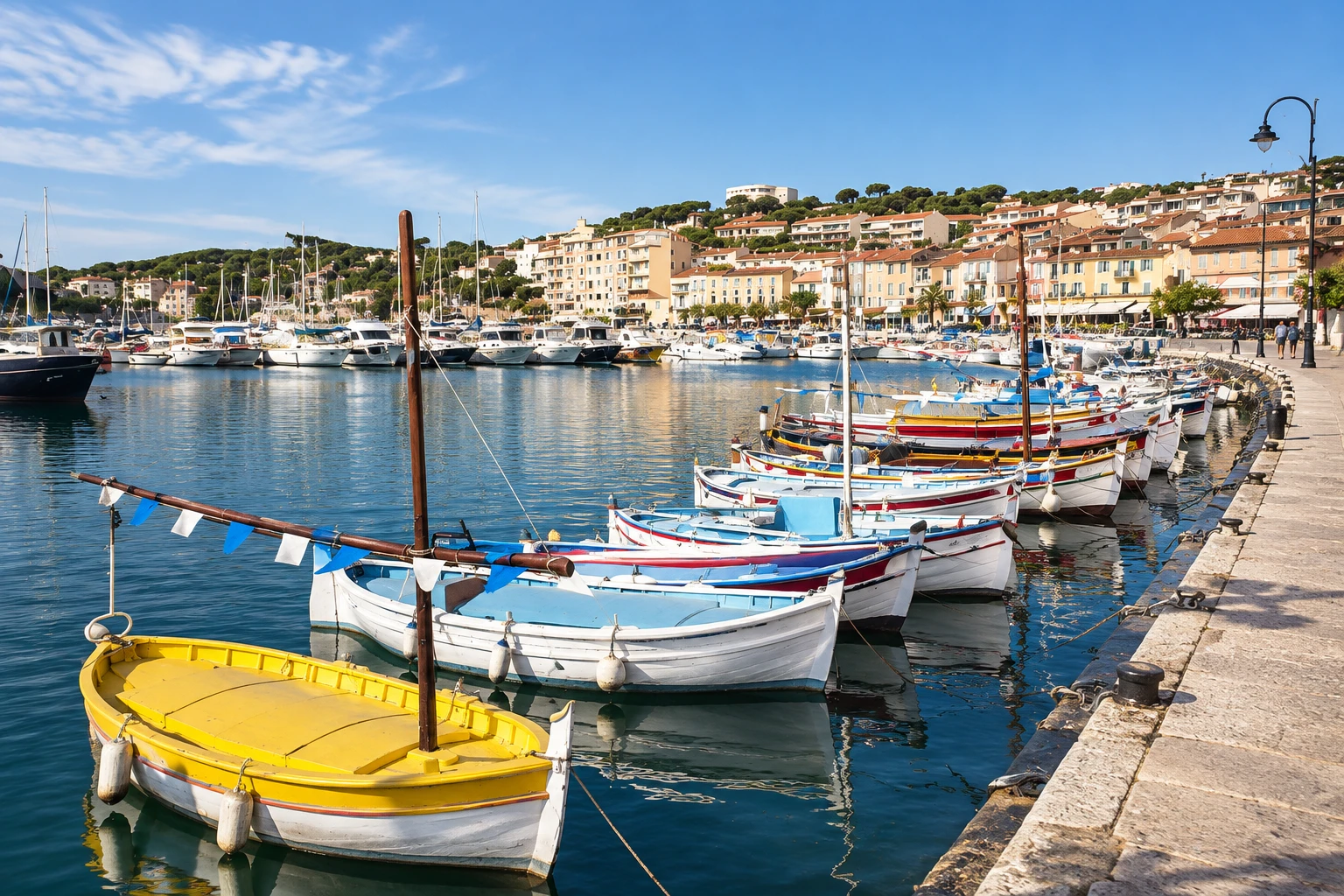
A fishing village about 20 km east of Marselha, with a harbor of colorful houses, beaches, its own white wines and boat departures for the calanques. Above it rises Cap Canaille, with the highest sea cliffs in France.
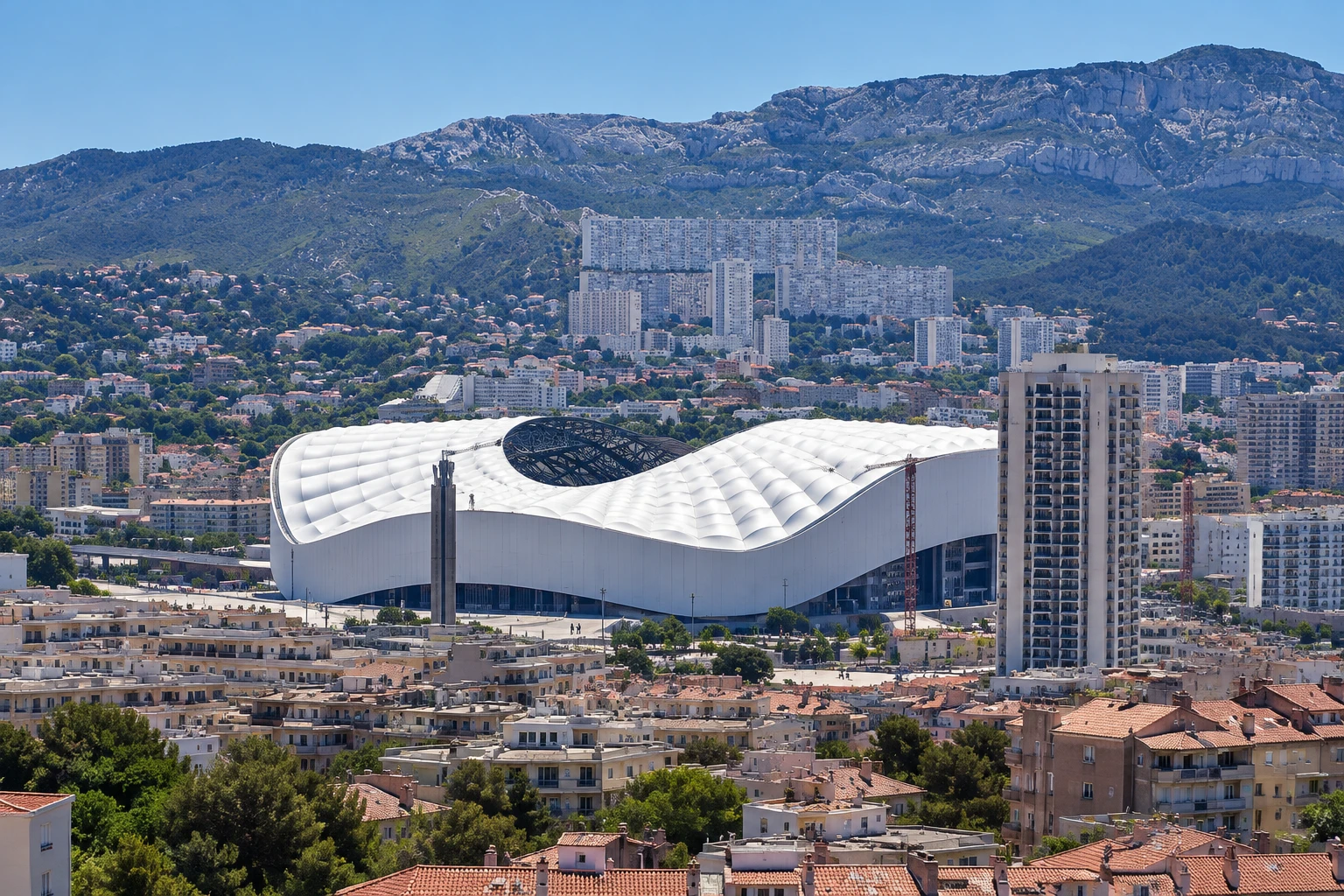
Home of Olympique de Marseille since 1937 and the second-largest stadium in France, with about 67,000 seats. It has hosted Football and Rugby World Cup matches and offers guided behind-the-scenes tours. Since 2026 it has been officially named CEPAC Vélodrome.
How many days should you set aside to see Provence?
The guide's itineraries cover 3, 5 and 7 days: Marseille, the calanques and Aix-en-Provence in 3 days; Marseille, Aix, Arles and Avignon in 5 days, by train; in 7 days, coast, Arles, the Camargue, Avignon and the Luberon.
What to do Provence in one day?
Paris, TGV to Marseille, Vieux-Port and Notre-Dame de la Garde. For travellers arriving from Brazil: the overnight flight arrives in the morning at Charles de Gaulle. Go to Paris Gare de Lyon, or check whether there is a TGV at the airport station itself, and take the TGV to Marseille-Saint-Charles, about 3 hours. Another option is a connecting flight to Marseille Provence airport. If you prefer to arrive well rested, spend the first night in Paris. In the late afternoon, walk around the Vieux-Port and the Basilique Notre-Dame de la Garde to see the city at sunset. Night in Marseille.
When is the best time to go to Provence?
It generally rains less from February to March and from May to August. The rainiest months are usually from September to November. The guide covers each month, with the weather and what changes on the tours.


 Brazil
 Antarctica
 Argentina
 Bolivia
 Chile
 Colombia
 Ecuador
 Falkland Islands (Malvinas)
 French Guiana
 Guyana
 Paraguay
 Peru
 Suriname
 Uruguay
 Venezuela
 Austria
 Belgium
 Croatia
 Denmark
 Finland
 Germany
 Greece
 Hungary
 Iceland
 Ireland
 Italy
 Luxembourg
 Norway
 Poland
 Portugal
 Slovakia
 Slovenia
 Spain
 Sweden
 Switzerland
 the Czech Republic
 the Netherlands
 the United Kingdom
 Turkey
 Bermuda
 Canada
 Greenland
 Mexico
 Saint Pierre and Miquelon
 the United States
 the Dominican Republic
 Japan
 Egypt
 South Africa
 Australia
 Fiji
 New Zealand
 Papua New Guinea