10 places to visit Avignon (France), chosen by the Cidade Turismo guide.
Illustrative images. The pictures in this guide are illustrations based on the real place, not photographs, and may differ from it.
To start
The 10 main places Avignon
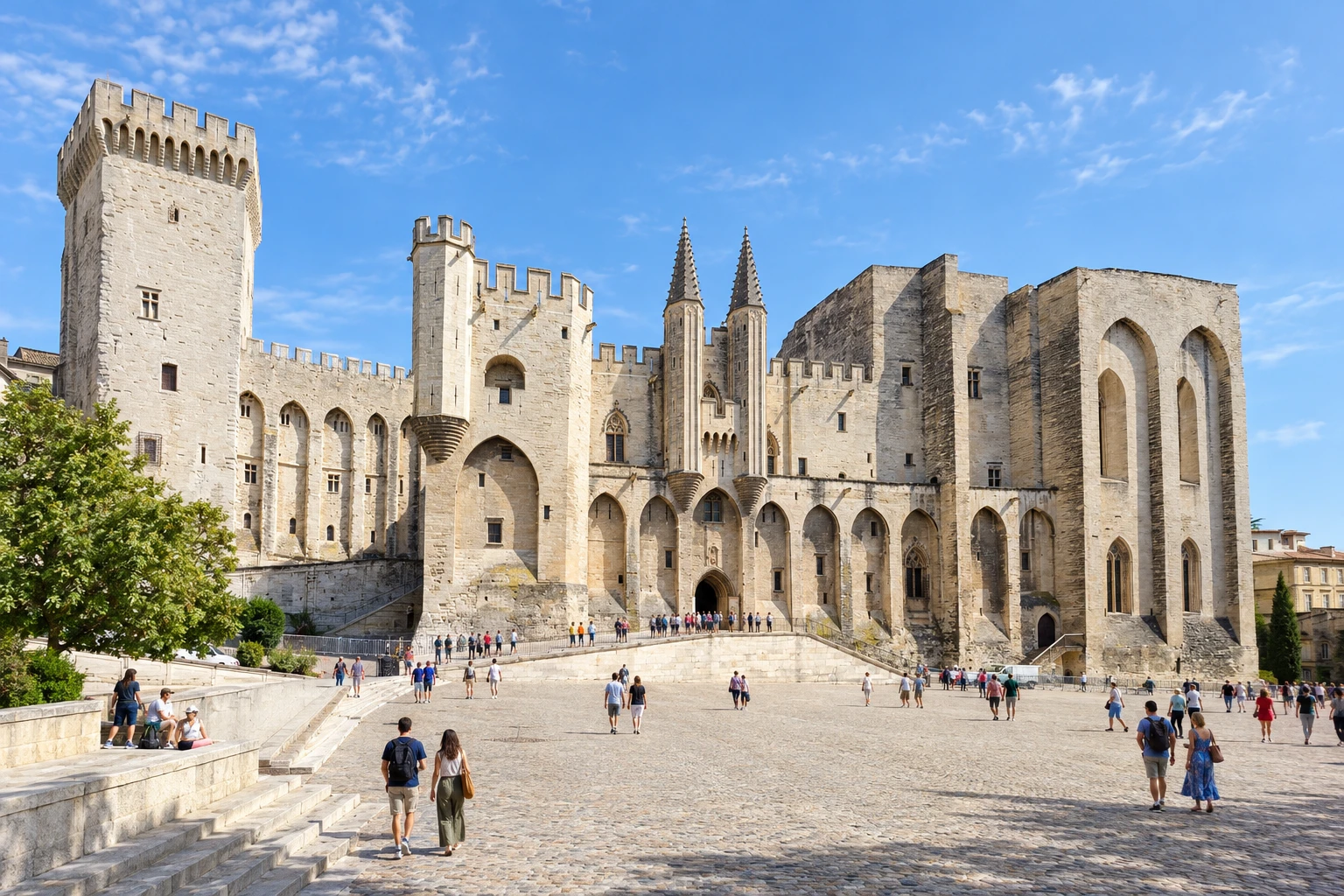
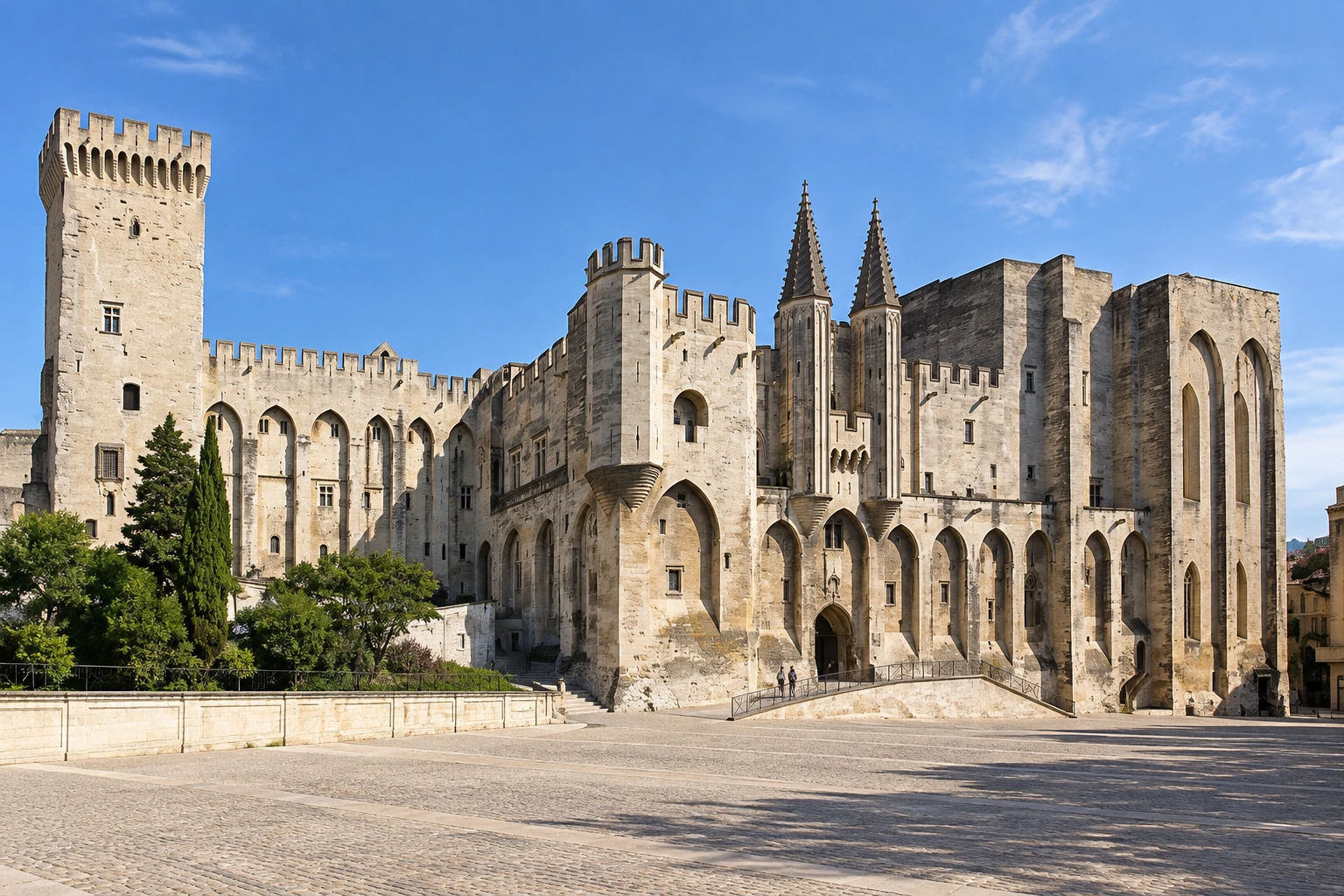
Palace of the PopesThe popes' residence in Avignon in the 14th century, one of the largest Gothic buildings in Europe, with ceremonial halls, chapels with frescoes and the Jardins pontificaux.
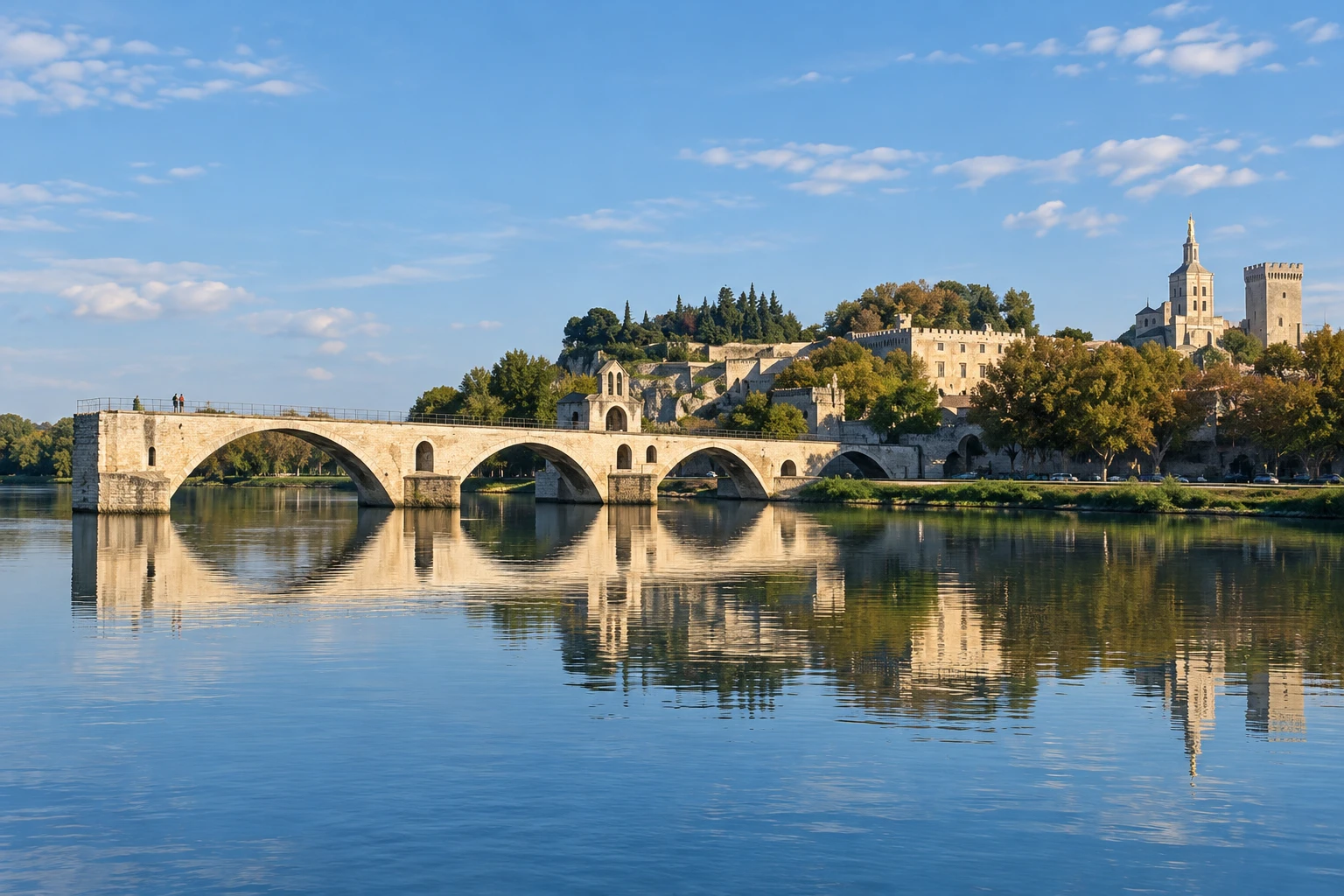
Avignon BridgeThe Avignon bridge from the children's song: four medieval arches that extend over the Rhône and stop in the middle of the river, with a small chapel on one of the piers.
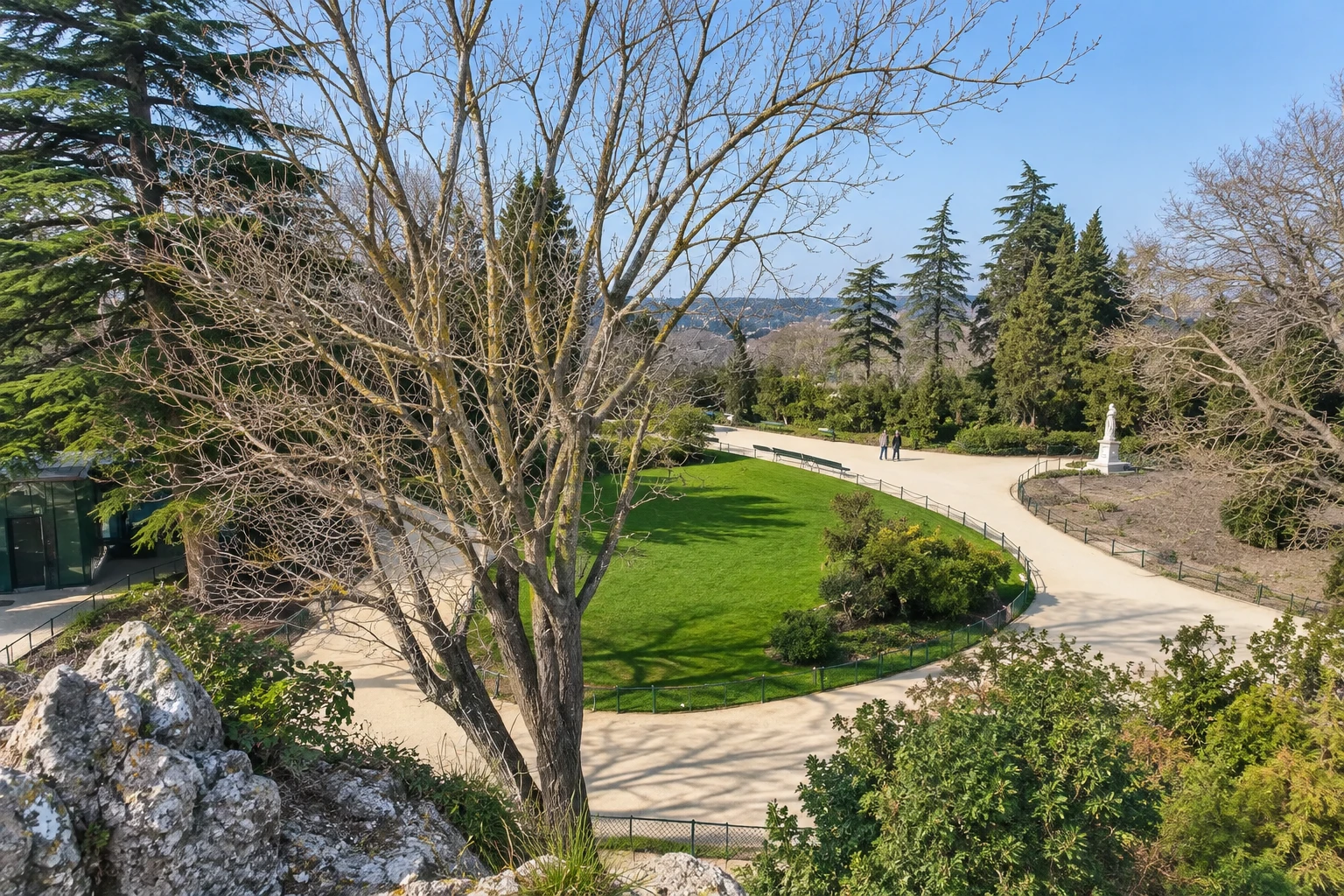
Rocher des DomsPublic garden on top of the rock where Avignon originated, beside the Palais des Papes, with views over the Rhône, the Pont Saint-Bénézet and Villeneuve-lès-Avignon.
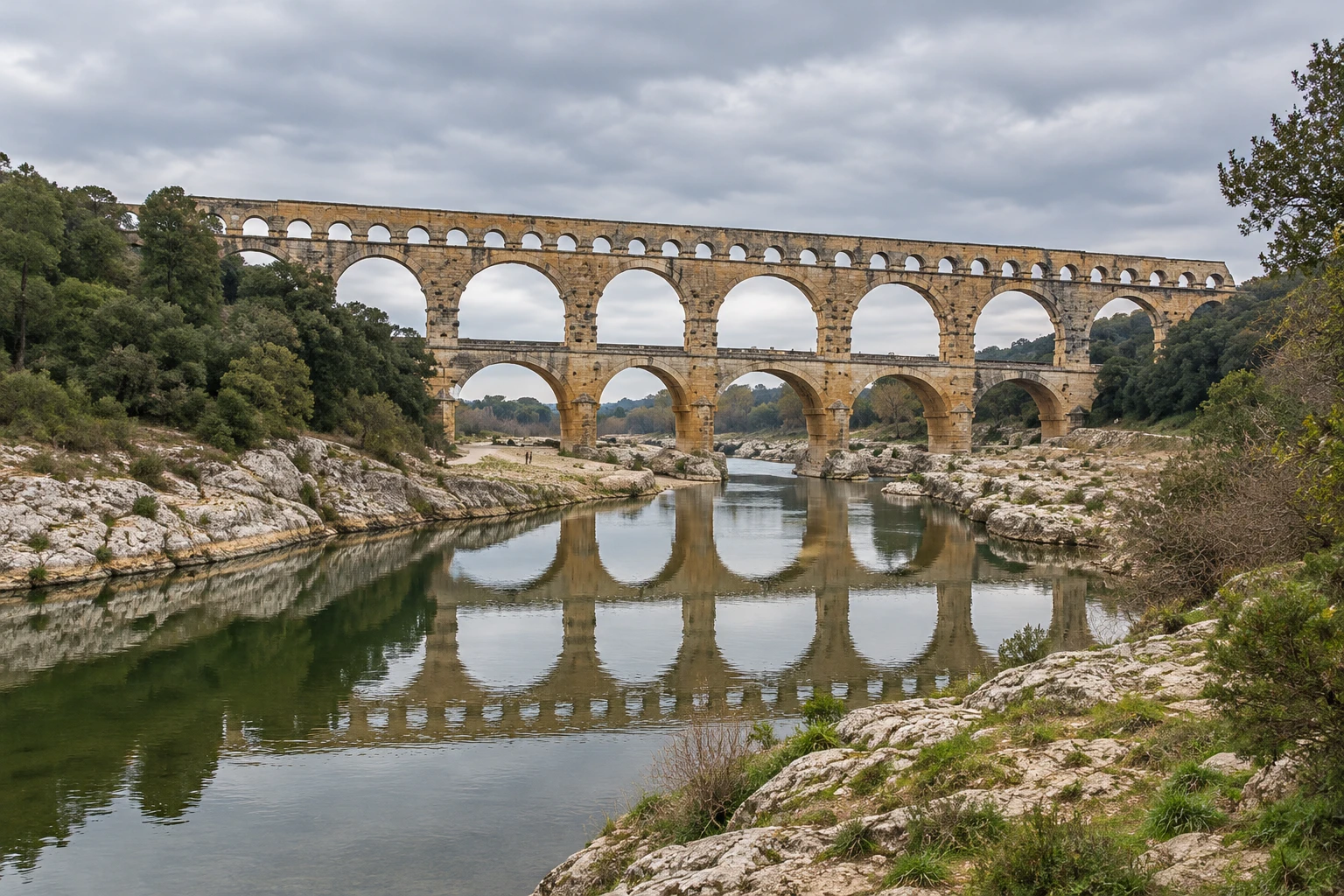
Pont du GardRoman aqueduct of three tiers across the Gardon River, built in the 1st century to bring water to Nîmes.
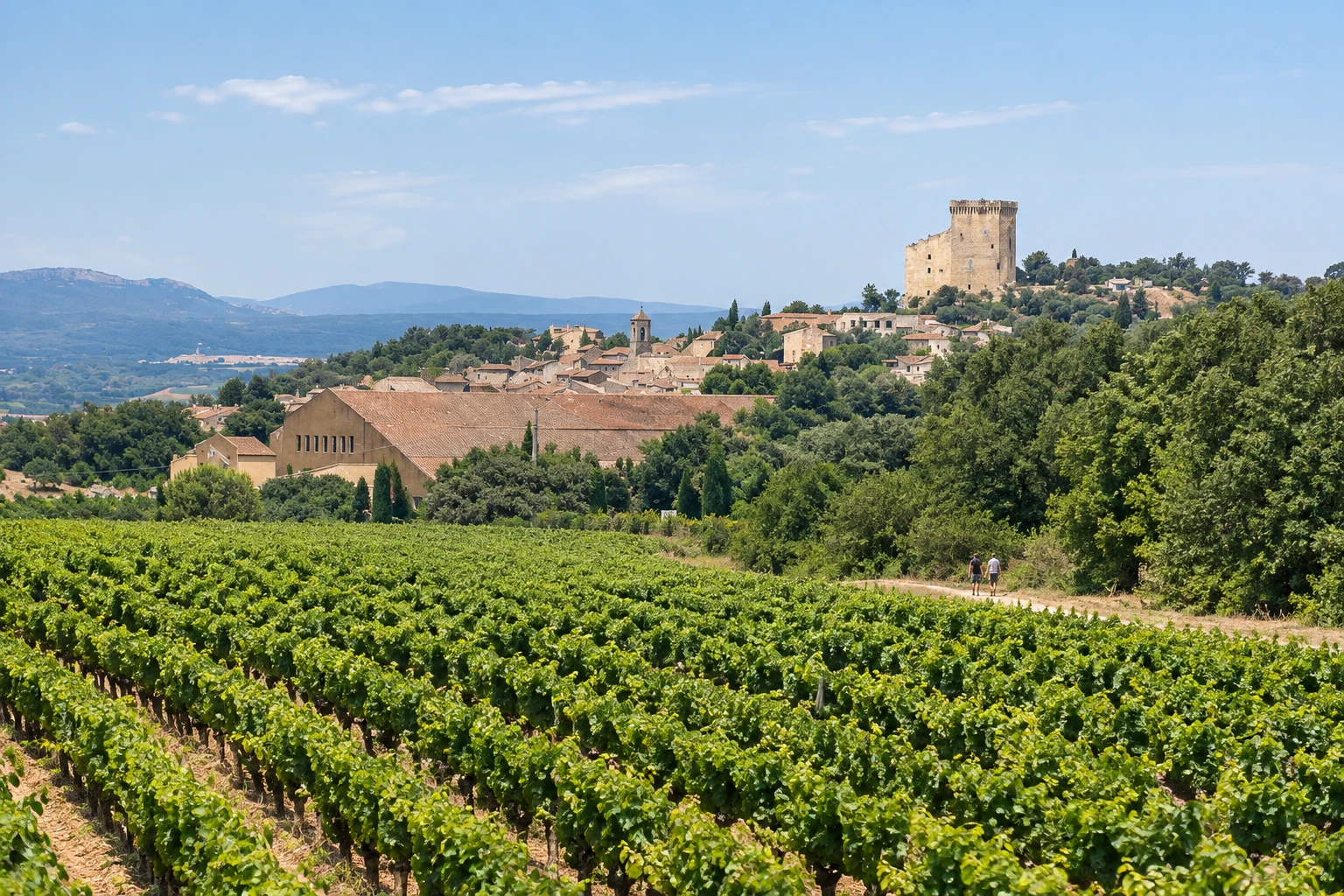
Châteauneuf-du-PapeSmall village surrounded by vineyards between Avignon and Orange, with the ruins of the popes' summer castle on the hill and dozens of wineries that welcome visitors for tastings.
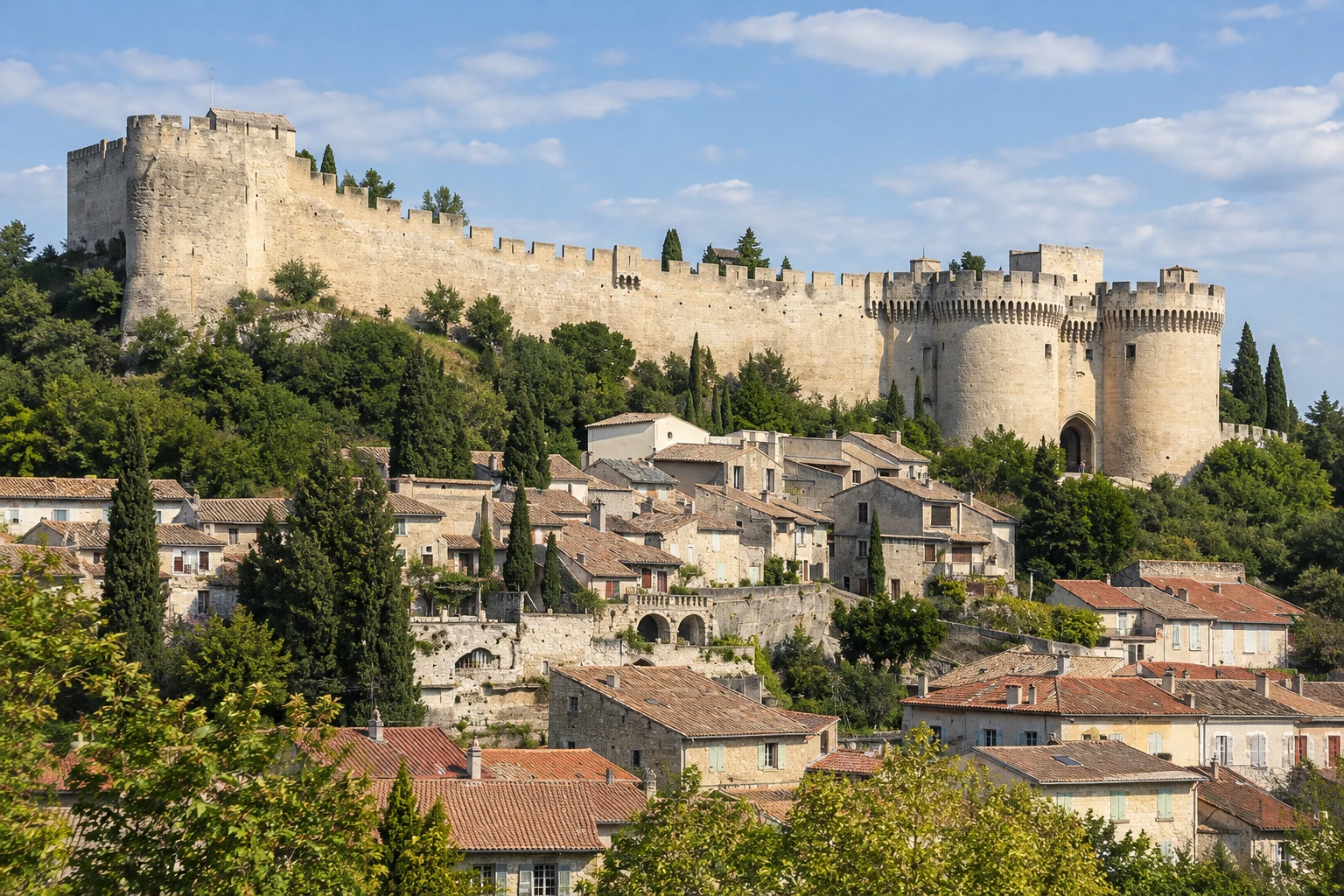
Fort Saint-AndréMedieval fortress atop Mont Andaon in Villeneuve-lès-Avignon, on the far side of the Rhône, with twin towers, ramparts and views of the Palais des Papes.
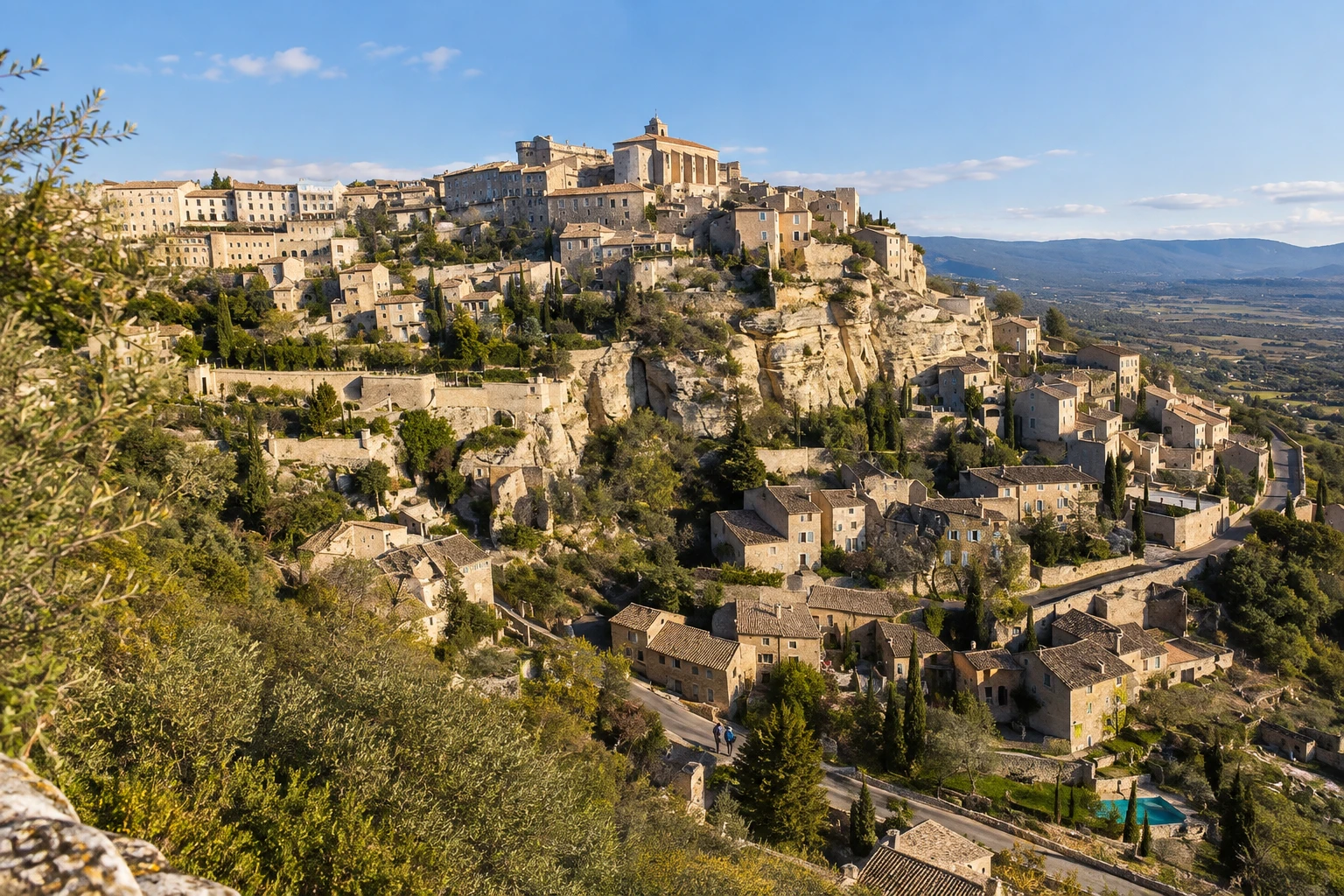
GordesStone village perched on a hill of the Monts de Vaucluse, on the edge of the Luberon, with a Renaissance castle at the top and houses that step down the slope.
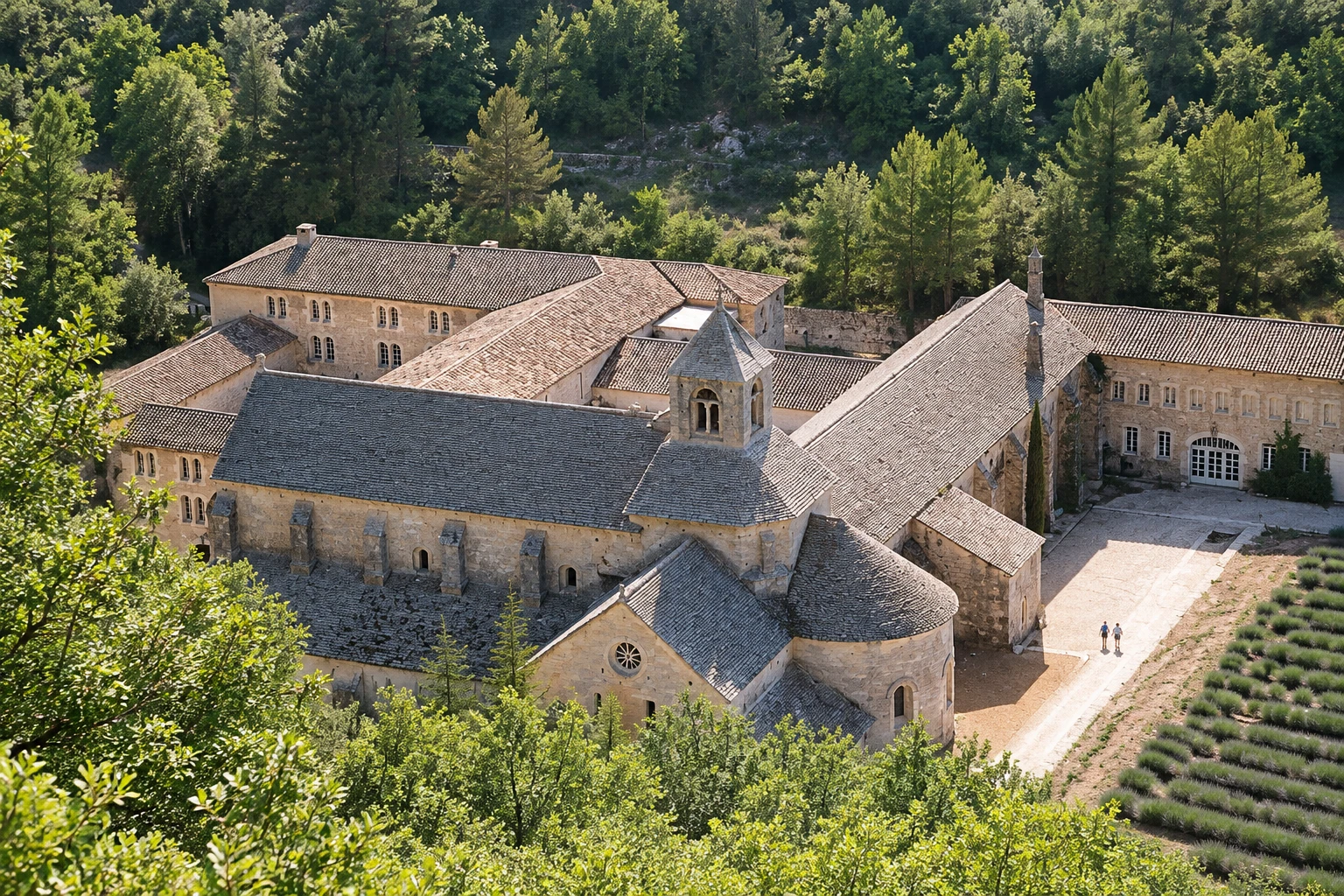
Sénanque Abbey12th-century Cistercian abbey still inhabited by monks, in an isolated valley near Gordes.
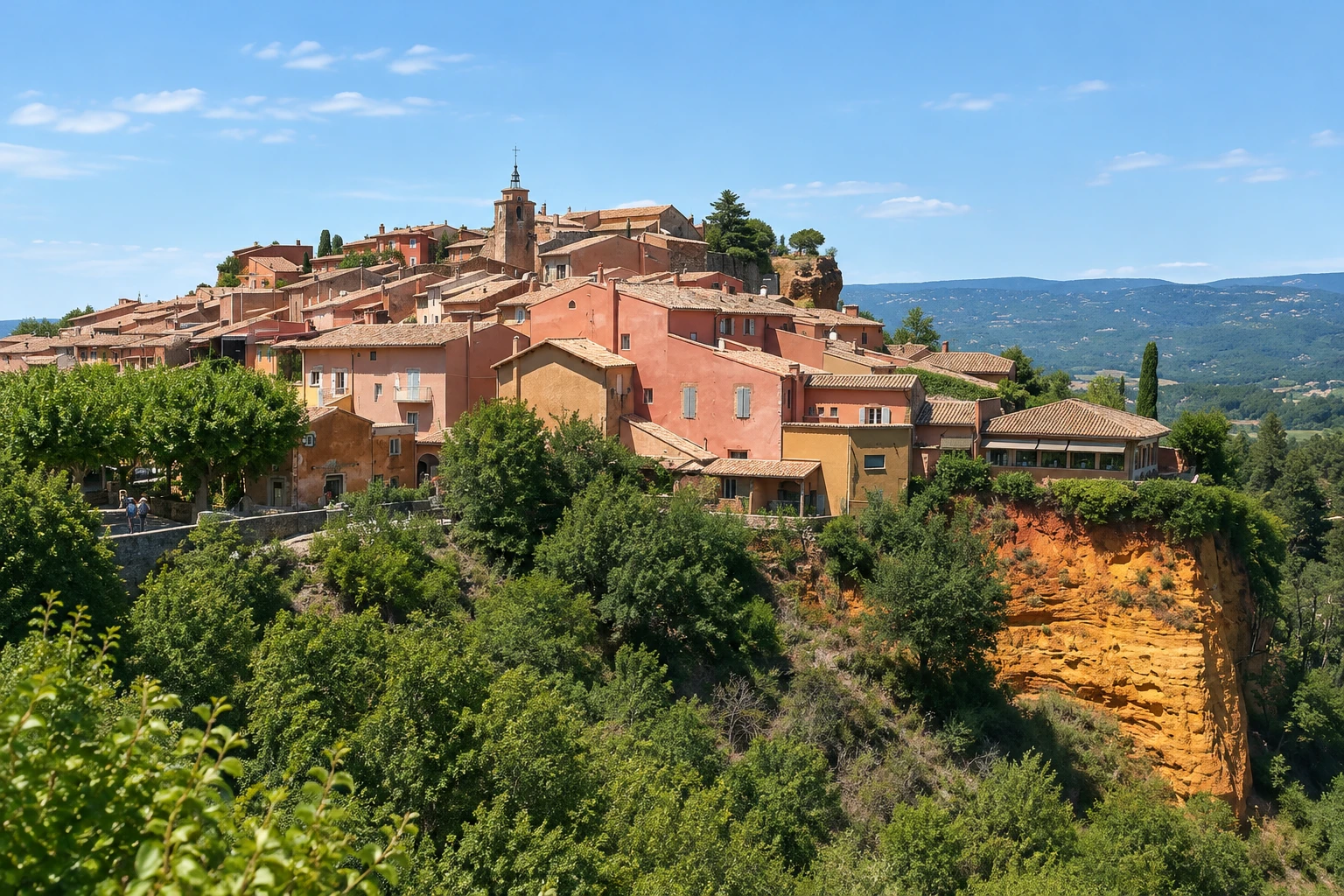
RoussillonLuberon village built on ochre deposits, with houses painted in shades of red and orange and the Sentier des Ocres trail winding among colorful cliffs.
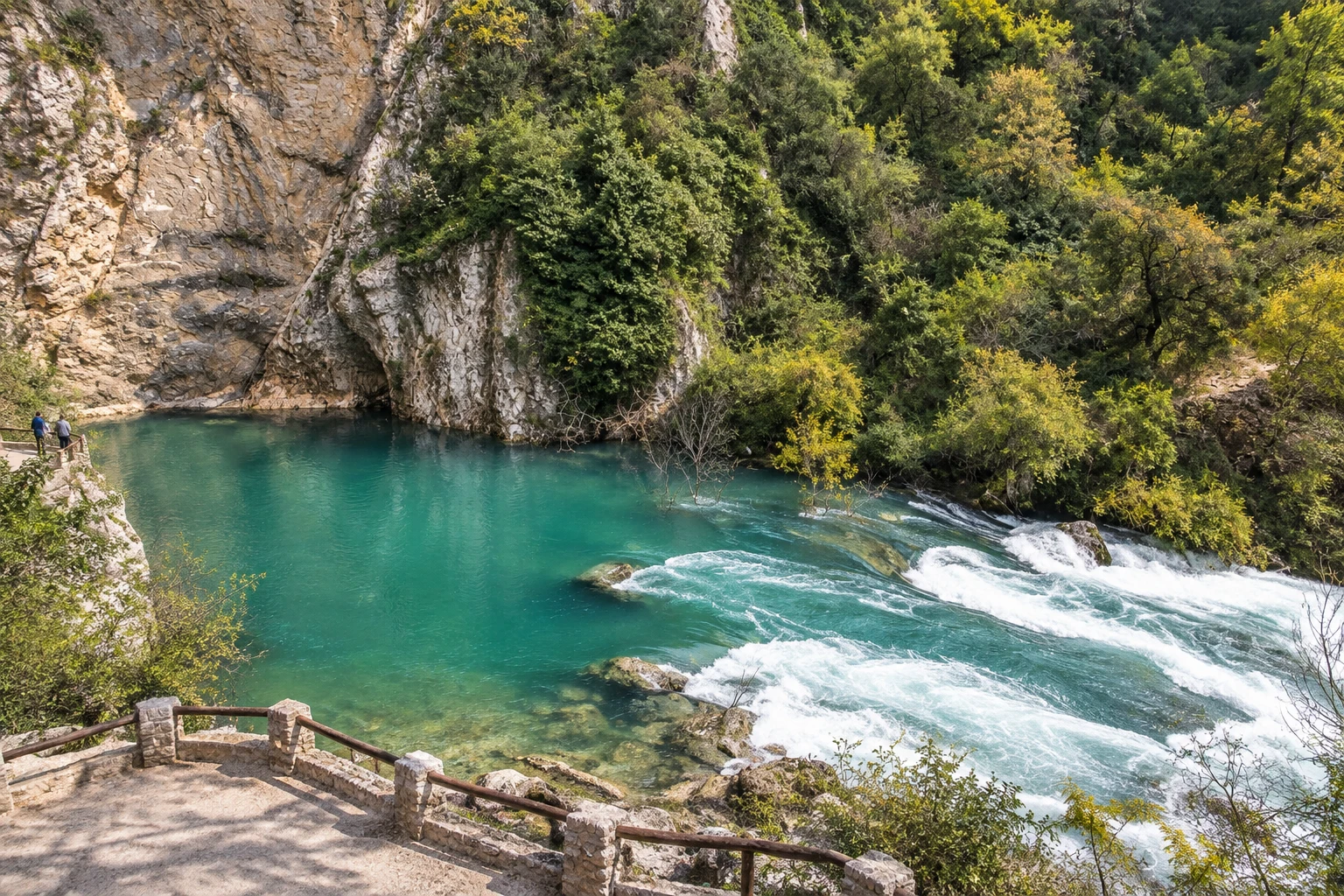
Fontaine de VaucluseThe source of the river Sorgue, at the foot of a rock cliff, the largest in metropolitan France by water volume.
The popes' residence in Avignon in the 14th century, one of the largest Gothic buildings in Europe, with ceremonial halls, chapels with frescoes and the Jardins pontificaux. It is the core of the historic ensemble listed by UNESCO.
The Avignon bridge from the children's song: four medieval arches that extend over the Rhône and stop in the middle of the river, with a small chapel on one of the piers.
Public garden on top of the rock where Avignon originated, beside the Palais des Papes, with views over the Rhône, the Pont Saint-Bénézet and Villeneuve-lès-Avignon. Admission is free.
Roman aqueduct of three tiers across the Gardon River, built in the 1st century to bring water to Nîmes. It is the tallest aqueduct-bridge known from the Roman world and a UNESCO World Heritage Site.
Small village surrounded by vineyards between Avignon and Orange, with the ruins of the popes' summer castle on the hill and dozens of wineries that welcome visitors for tastings.
Medieval fortress atop Mont Andaon in Villeneuve-lès-Avignon, on the far side of the Rhône, with twin towers, ramparts and views of the Palais des Papes.
Stone village perched on a hill of the Monts de Vaucluse, on the edge of the Luberon, with a Renaissance castle at the top and houses that step down the slope.
12th-century Cistercian abbey still inhabited by monks, in an isolated valley near Gordes. In front of it, a lavender field usually blooms from mid-June to mid-July.
Luberon village built on ochre deposits, with houses painted in shades of red and orange and the Sentier des Ocres trail winding among colorful cliffs.
The source of the river Sorgue, at the foot of a rock cliff, the largest in metropolitan France by water volume. A riverside path leads from the village to the cave where the water springs forth.


 Brazil
 Antarctica
 Argentina
 Bolivia
 Chile
 Colombia
 Ecuador
 Falkland Islands (Malvinas)
 French Guiana
 Guyana
 Paraguay
 Peru
 Suriname
 Uruguay
 Venezuela
 Albania
 Austria
 Belgium
 Croatia
 Denmark
 Finland
 Germany
 Greece
 Hungary
 Iceland
 Ireland
 Italy
 Luxembourg
 Norway
 Poland
 Portugal
 Slovakia
 Slovenia
 Spain
 Sweden
 Switzerland
 the Czech Republic
 the Netherlands
 the United Kingdom
 Turkey
 Bermuda
 Canada
 Greenland
 Mexico
 Saint Pierre and Miquelon
 the United States
 the Dominican Republic
 Japan
 Egypt
 South Africa
 Australia
 Fiji
 New Zealand
 Papua New Guinea