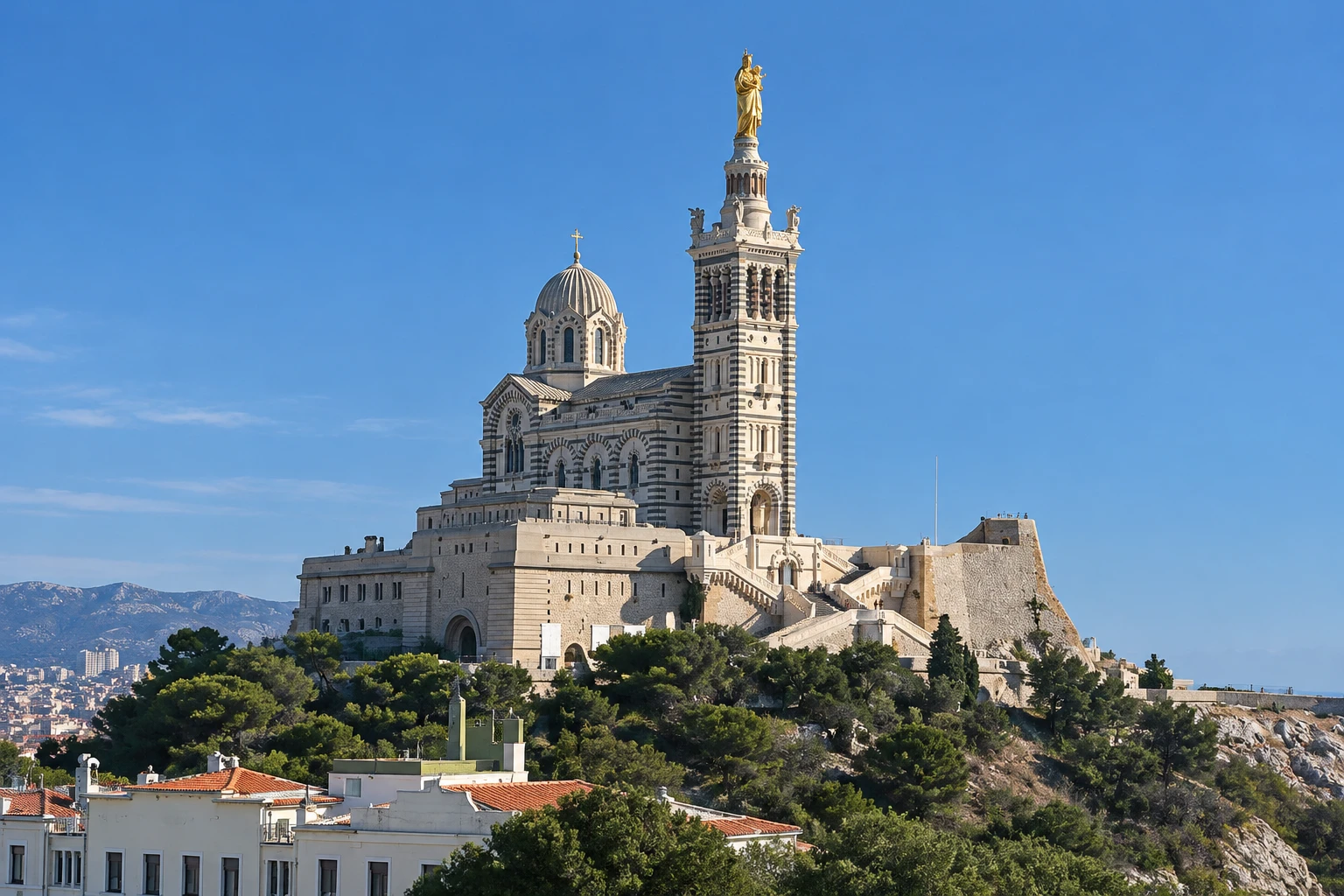
Notre-Dame de la Garde BasilicaThe 19th-century basilica at the highest point of the city, with the large gilded statue of the Virgin and Child.
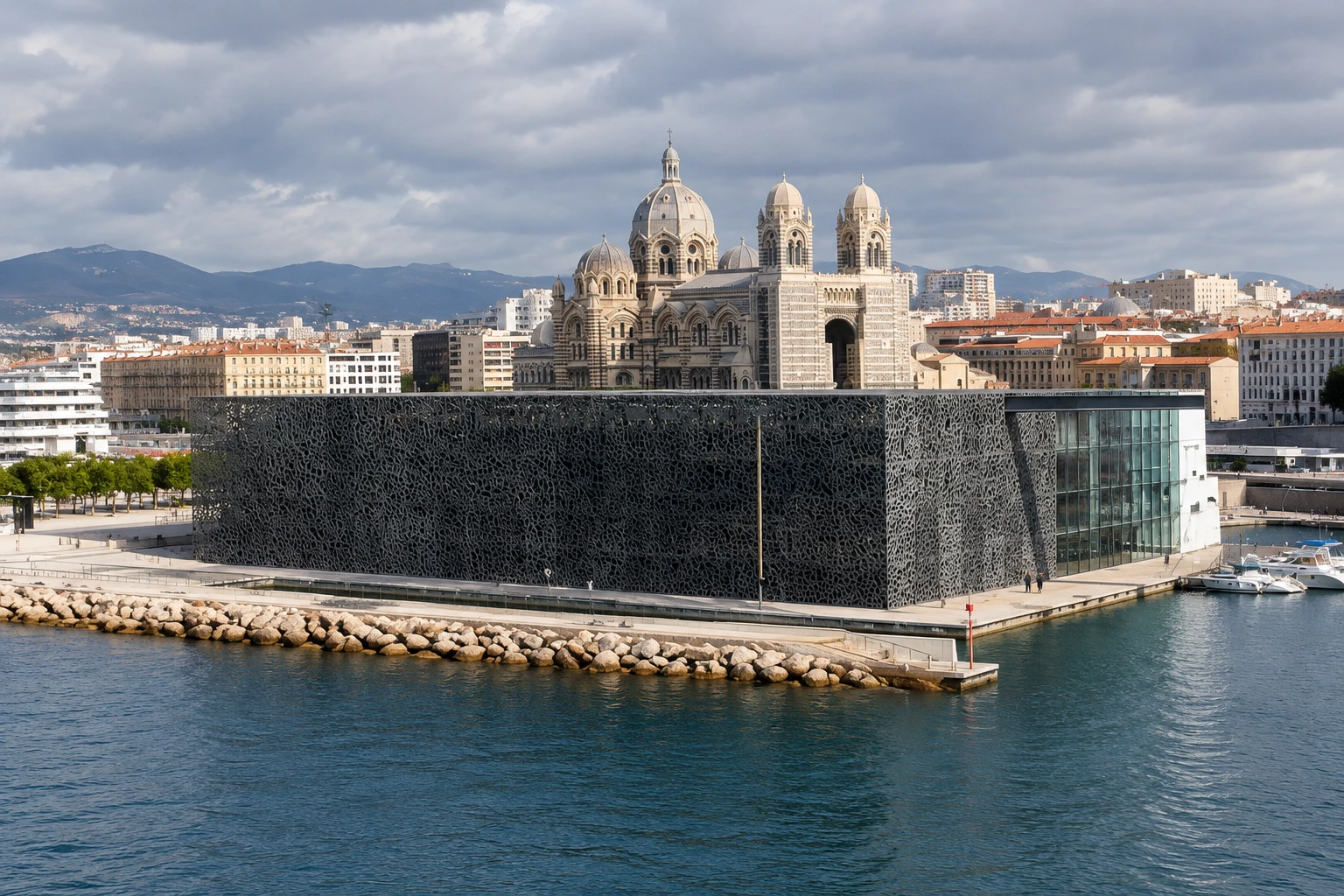
MuCEMNational museum dedicated to the civilizations of Europe and the Mediterranean, opened in 2013 in a cube covered by a concrete lace, at the entrance to the Vieux-Port.
Le PanierThe oldest neighborhood of Marselha, on the hill north of the Vieux-Port, where the Greek city once stood.
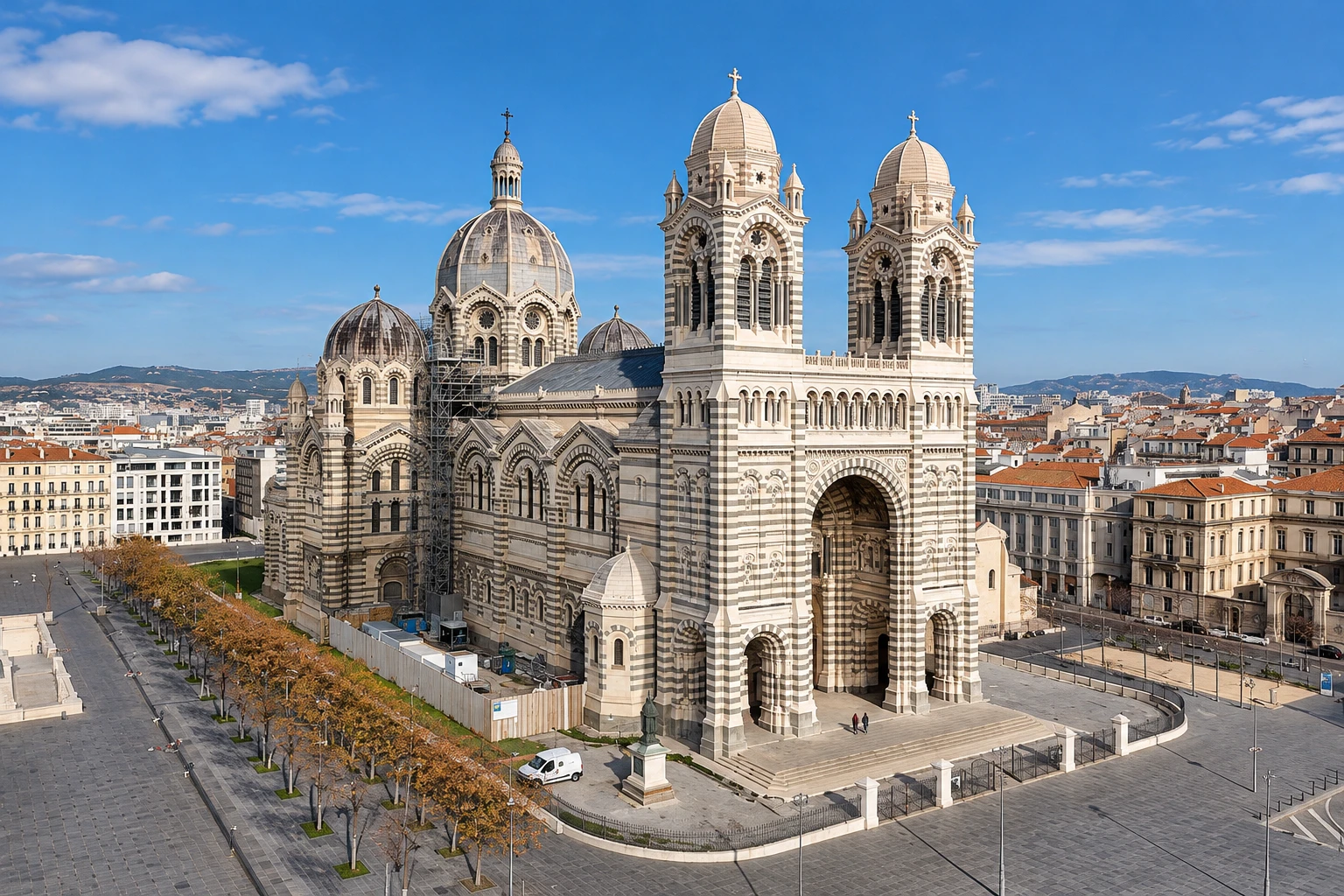
Marseille CathedralThe cathedral of Marselha, built from 1852 to 1893 in a neo-Byzantine style, with bands of light and dark stone and domes.
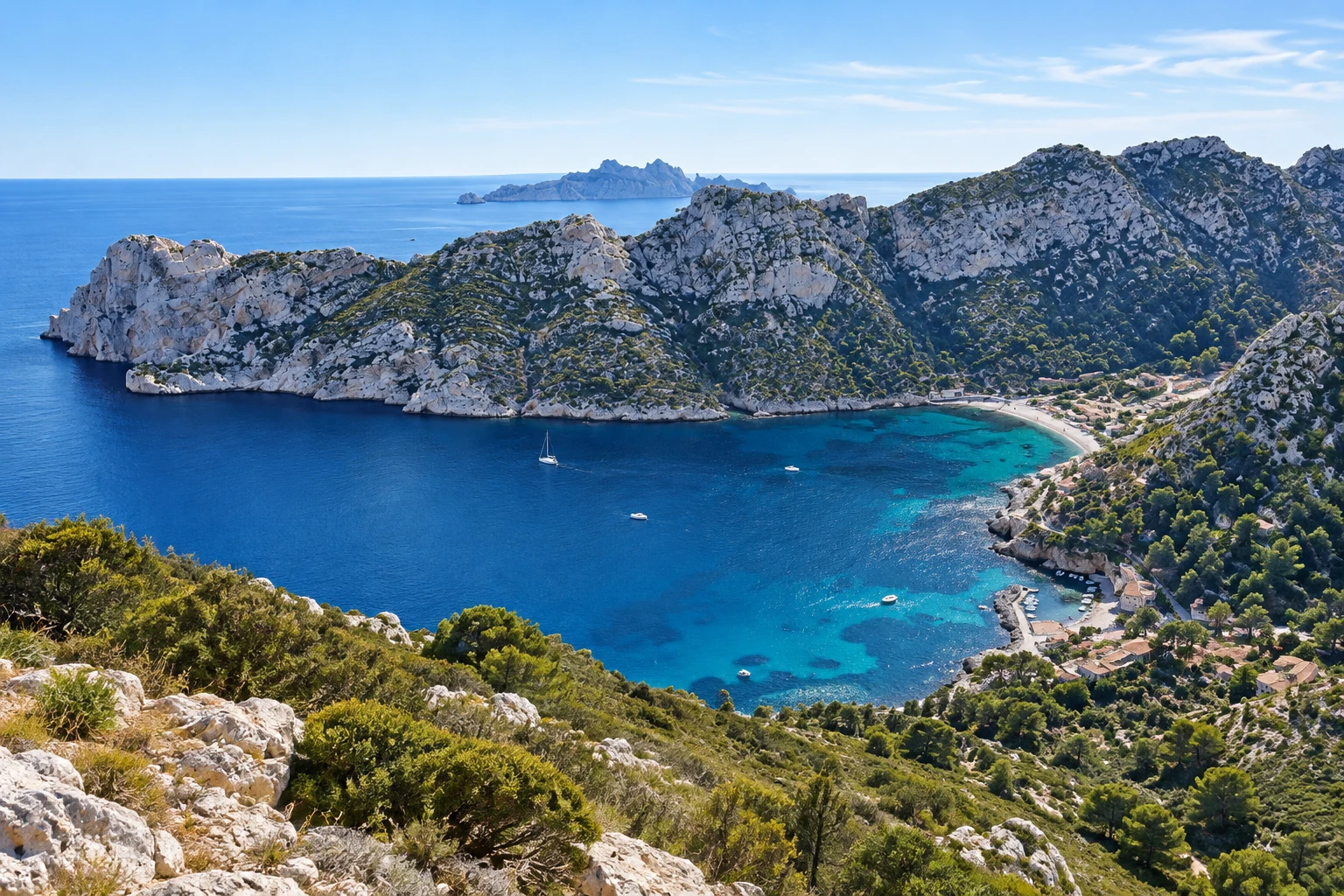
Calanque de SormiouOne of the largest calanques of Marselha, within the Parc national des Calanques, with a sandy beach, a small harbour and fishermen's cabanons.
Calanque de SugitonCalanque of clear waters next to the Luminy campus, with the Torpilleur rock in front.
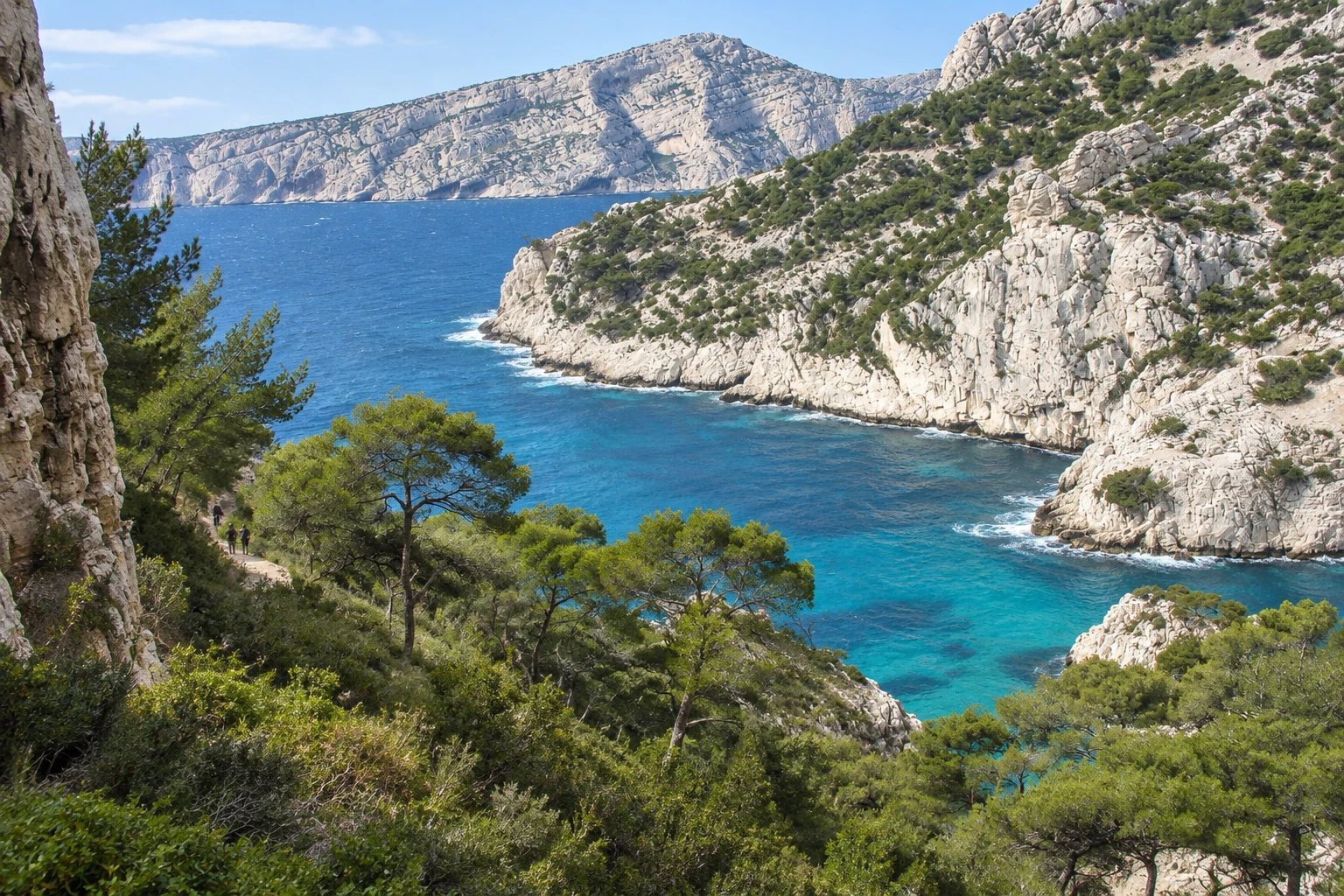
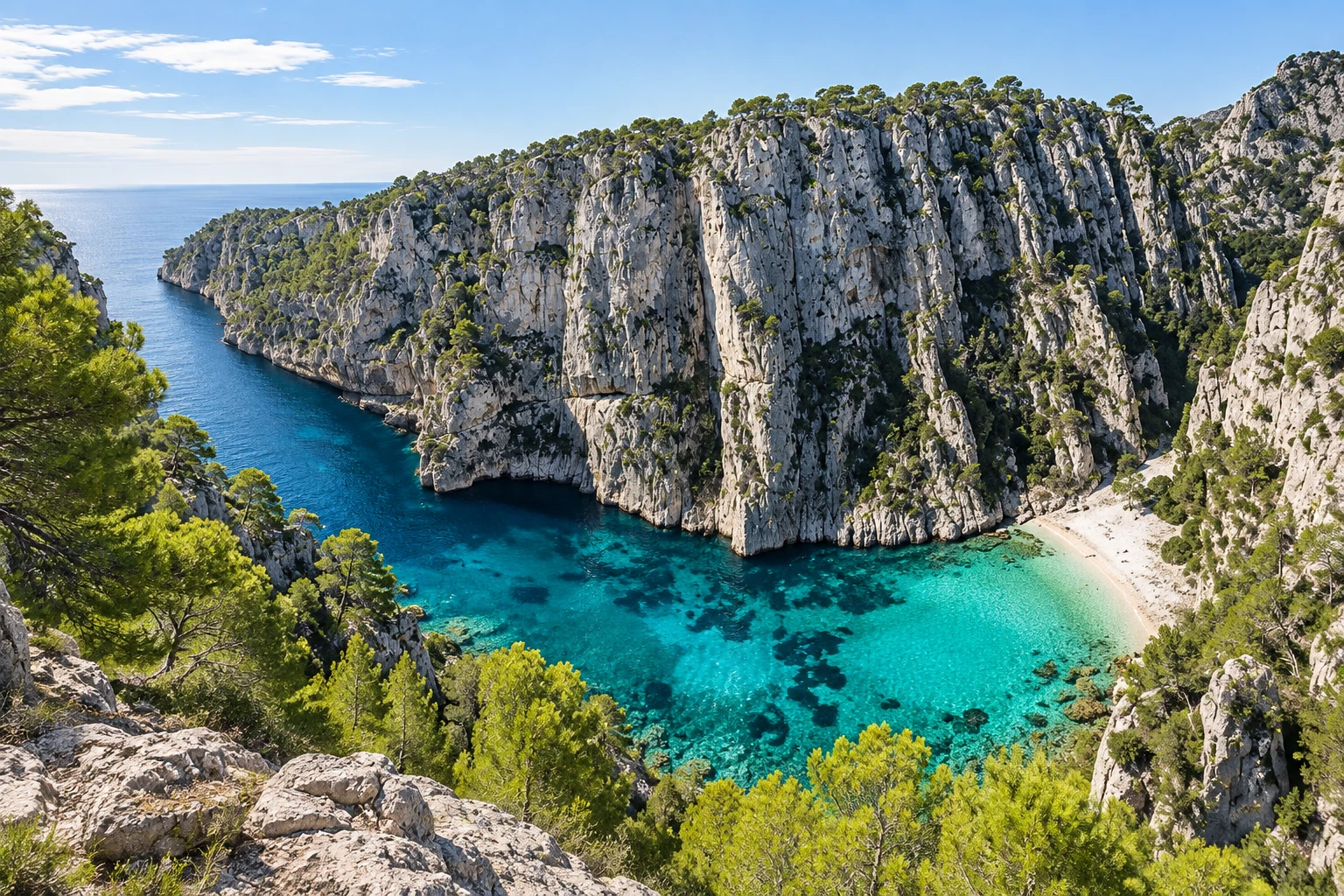
Calanque d'En-VauThe deepest, most enclosed calanque of the massif, with high cliffs, a pebble beach and green-blue water.
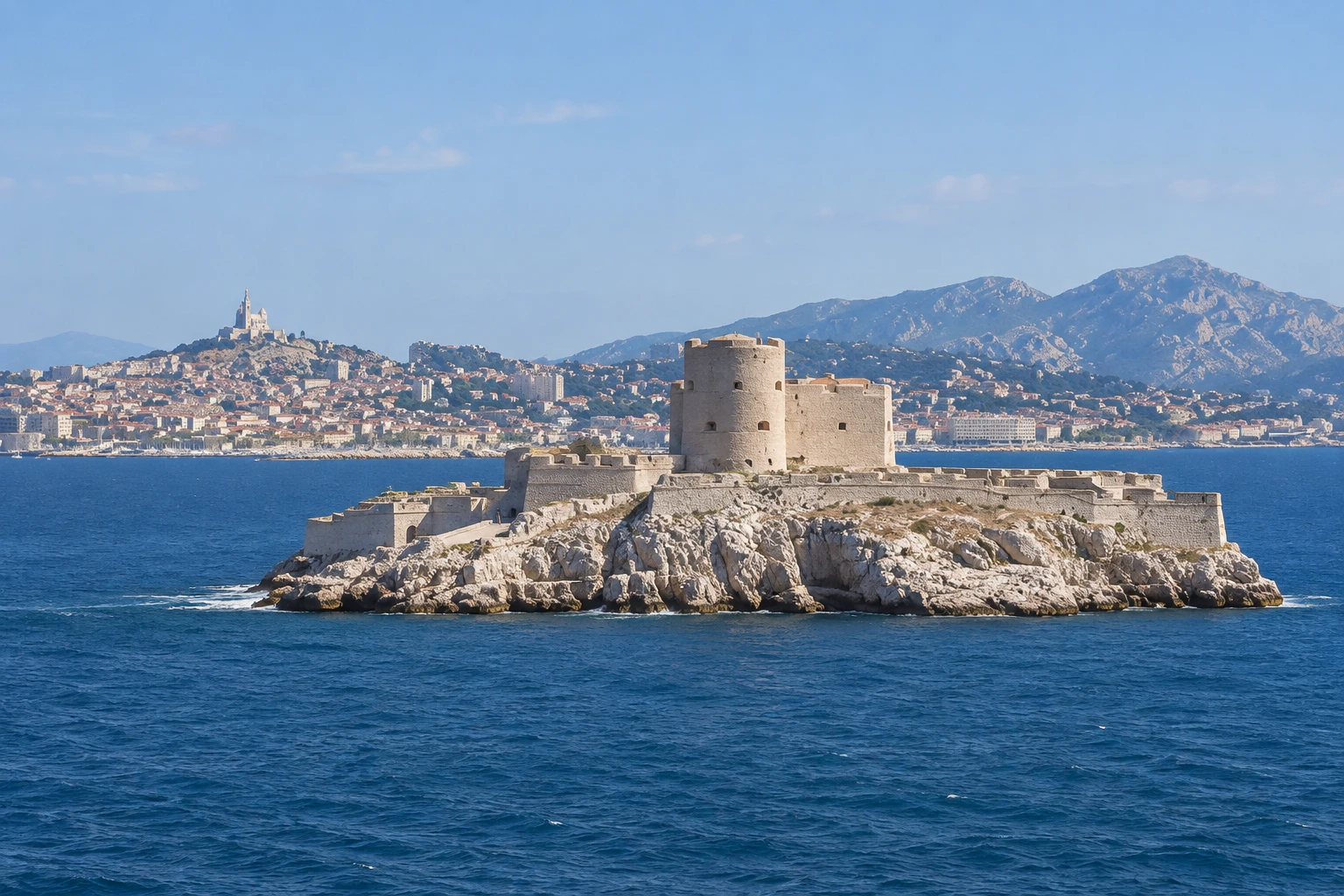
Château d'If16th-century fortress on a small islet in front of the harbor, which served as a prison for centuries and became famous as the setting of The Count of Monte Cristo by Alexandre...
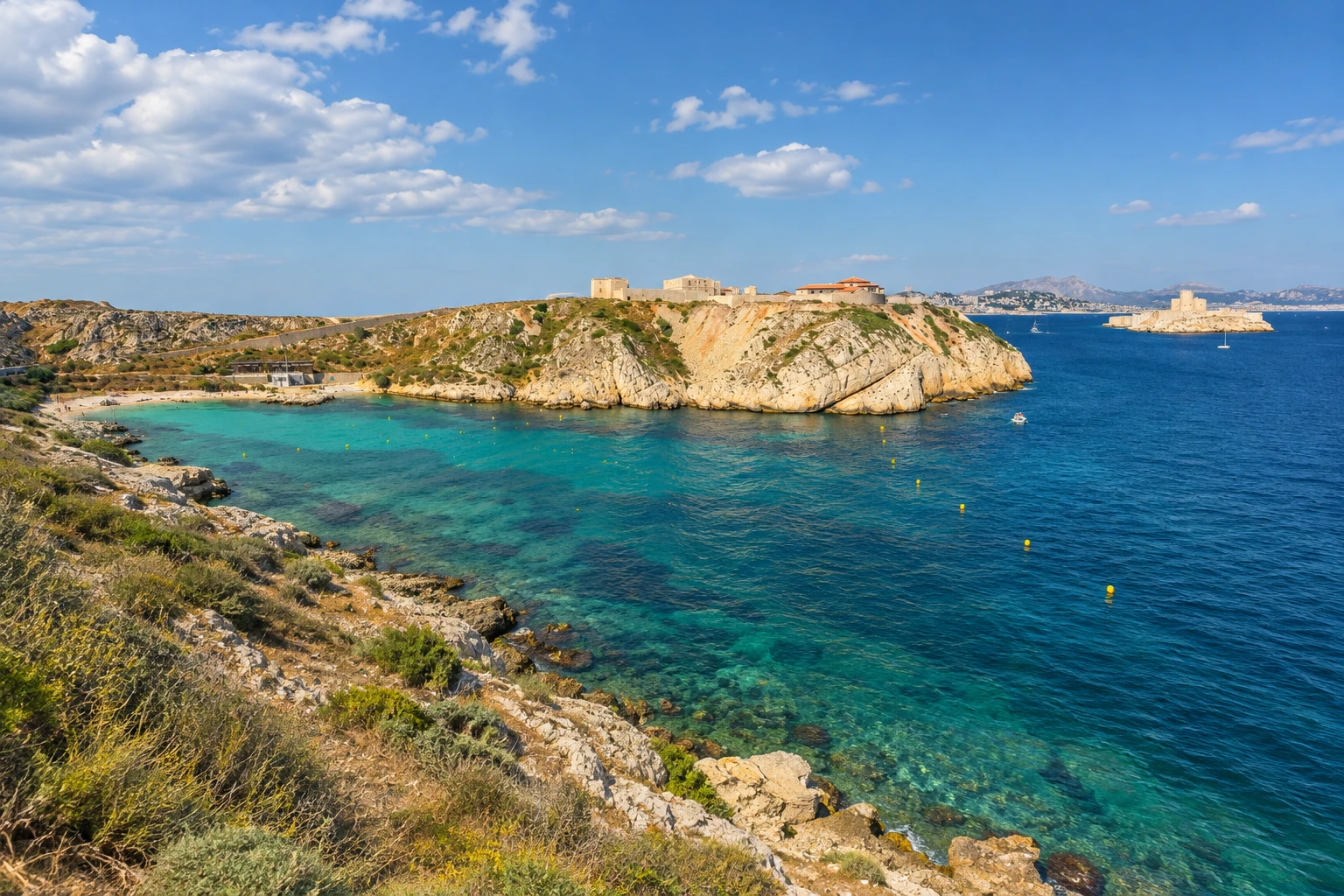
Frioul IslandsArchipelago off Marseille, part of the Parc national des Calanques.
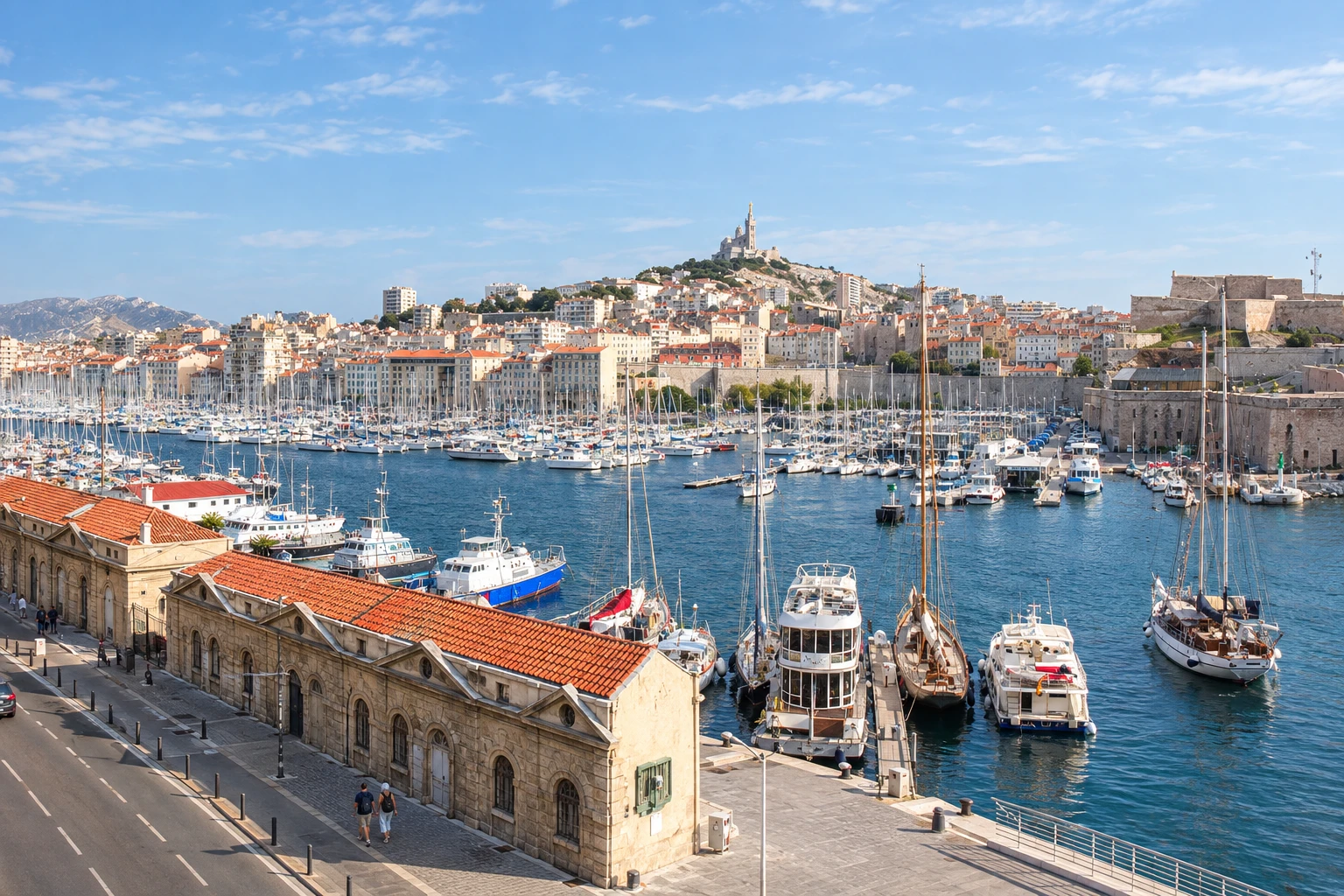
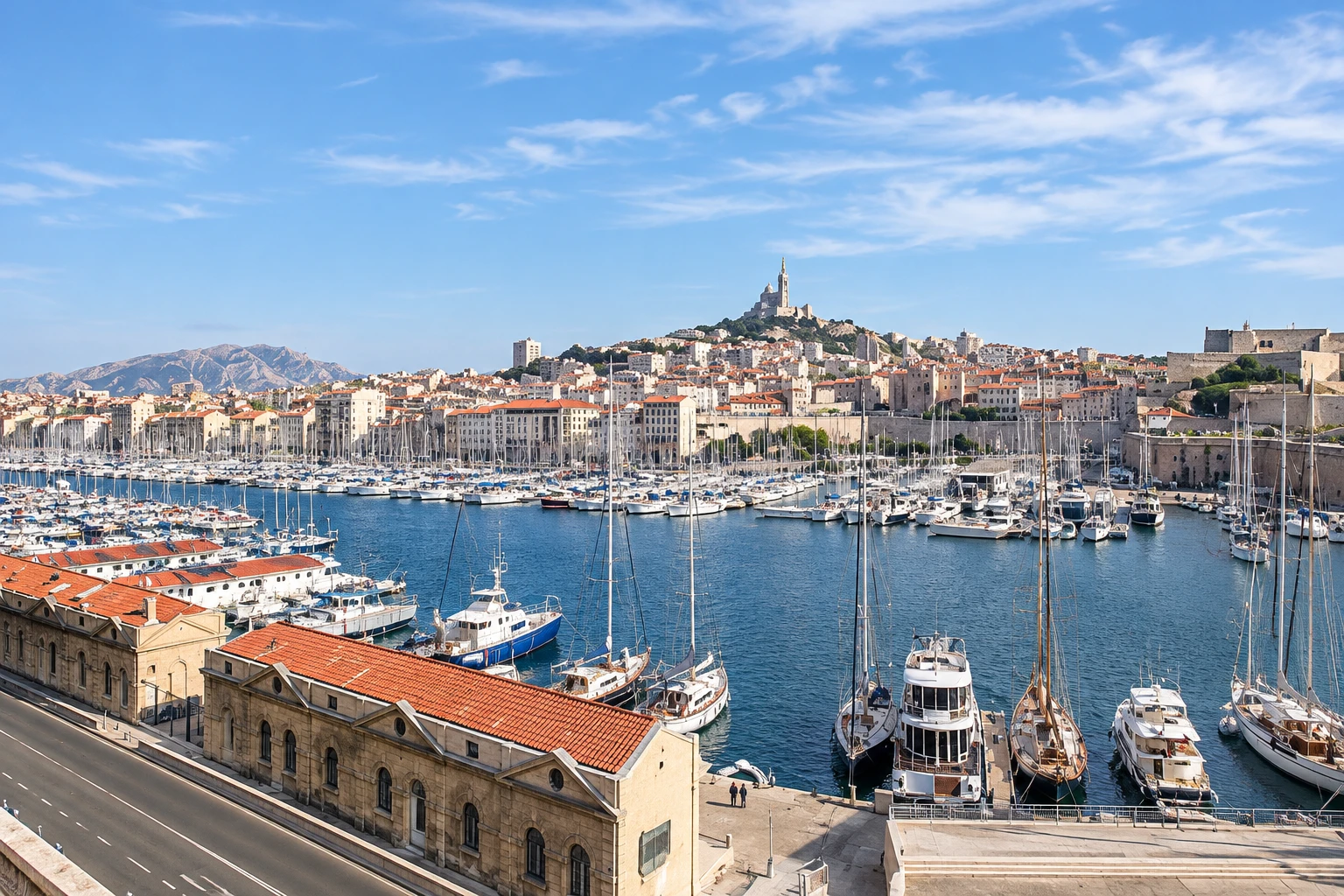
The old port where the Greeks founded the city around 600 BC. Today it is Marselha's central square, with fishing boats, a morning fish market, Norman Foster's mirrored Ombrière and the departure point for boats to Château d'If and Frioul.
The 19th-century basilica at the highest point of the city, with the large gilded statue of the Virgin and Child. The people of Marselha call it 'Bonne Mère'. From the terrace you can see the entire city, the port, the islands and the sea.
National museum dedicated to the civilizations of Europe and the Mediterranean, opened in 2013 in a cube covered by a concrete lace, at the entrance to the Vieux-Port. A footbridge links it to Fort Saint-Jean, with gardens and ramparts that can be accessed for free.
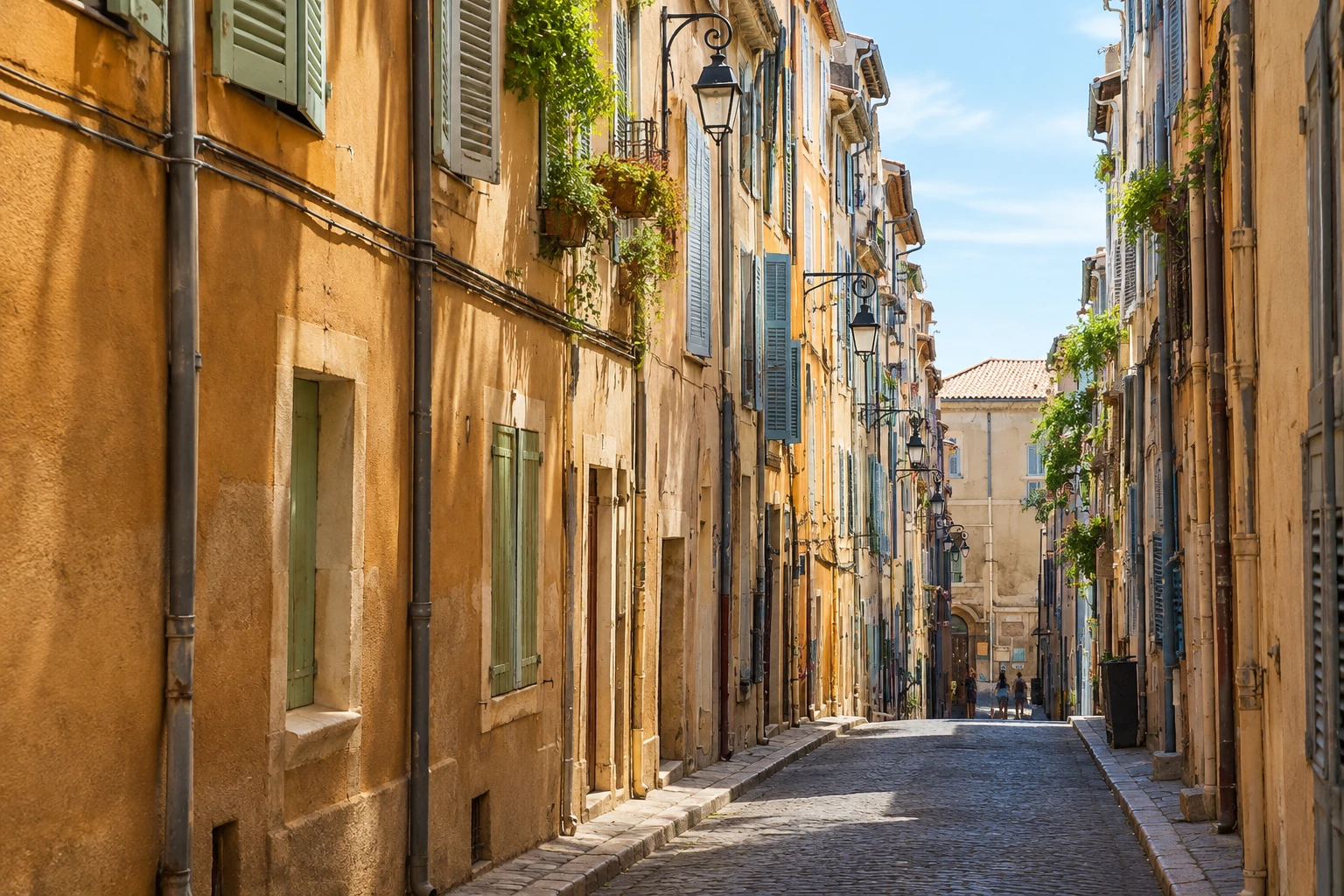
The oldest neighborhood of Marselha, on the hill north of the Vieux-Port, where the Greek city once stood. Narrow lanes, stairways, colorful facades, studios and Marseille soap shops, and the Centre de la Vieille Charité, a 17th-century almshouse that now houses museums.
The cathedral of Marselha, built from 1852 to 1893 in a neo-Byzantine style, with bands of light and dark stone and domes. It stands on an esplanade above the port, between the Panier and the MuCEM, next to the small Vieille Major, the earlier Romanesque cathedral.
One of the largest calanques of Marselha, within the Parc national des Calanques, with a sandy beach, a small harbour and fishermen's cabanons. It is the calanque with the easiest access from the city and a good first introduction to the calanques.
Calanque of clear waters next to the Luminy campus, with the Torpilleur rock in front. The trail from Luminy is one of the most used. For part of the summer access to the beach section may require a reservation, which is free of charge.
The deepest, most enclosed calanque of the massif, with high cliffs, a pebble beach and green-blue water. It's located between Marseille and Cassis and is reached by trail from Cassis, passing Port-Miou and Port-Pin, or by boat—without disembarking—on excursions that depart from the port.
16th-century fortress on a small islet in front of the harbor, which served as a prison for centuries and became famous as the setting of The Count of Monte Cristo by Alexandre Dumas. It is reached by boat from the Vieux-Port.
Archipelago off Marseille, part of the Parc national des Calanques. The islands of Ratonneau and Pomègues, connected by a causeway, have small beaches, coves and trails over limestone rock, with views of the city.
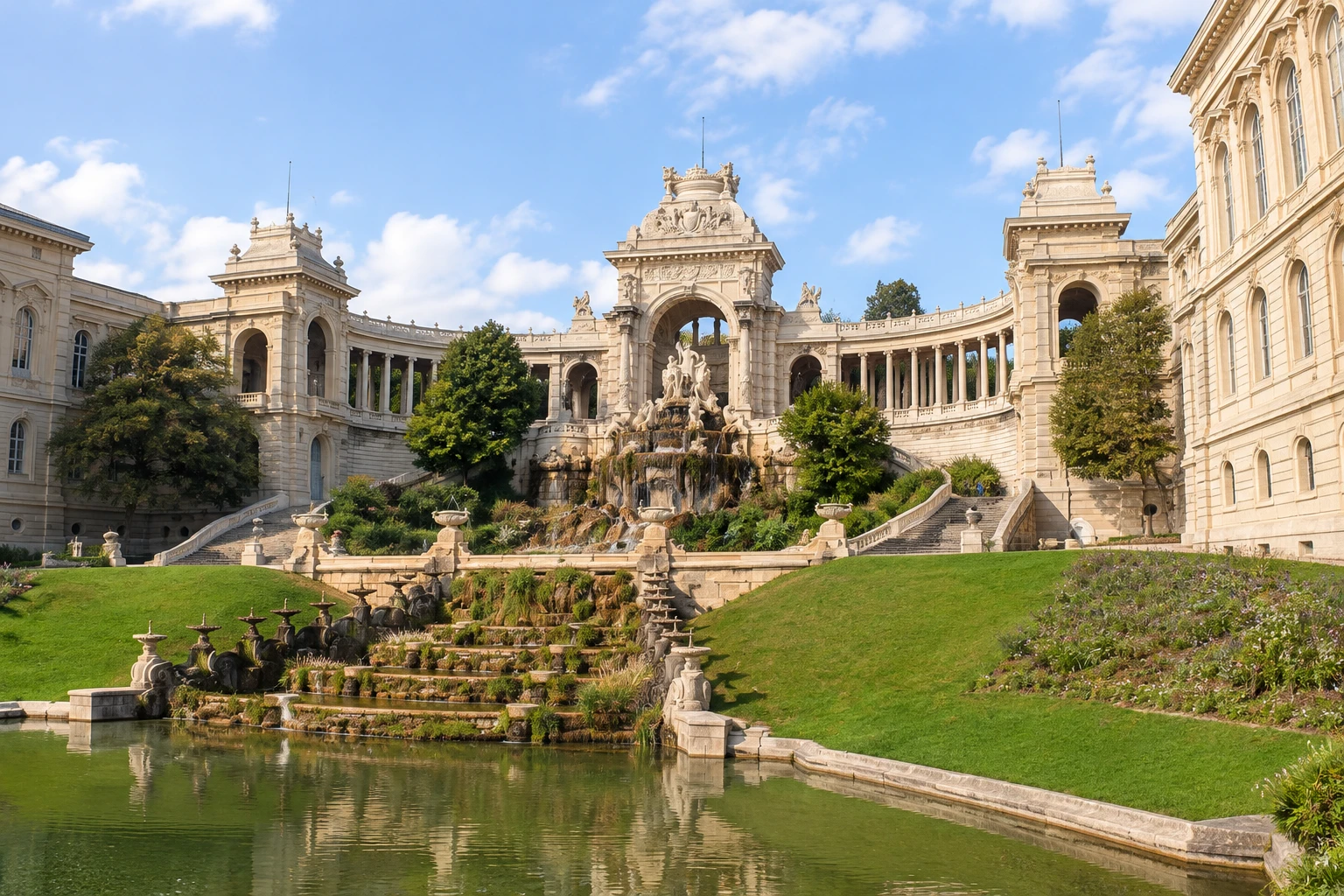
Monumental 19th-century palace with a cascading fountain, built to celebrate the arrival of water from the river Durance to Marseille. The wings house the Musée des Beaux-Arts and the Muséum d'histoire naturelle, and behind it lies the Parc Longchamp.
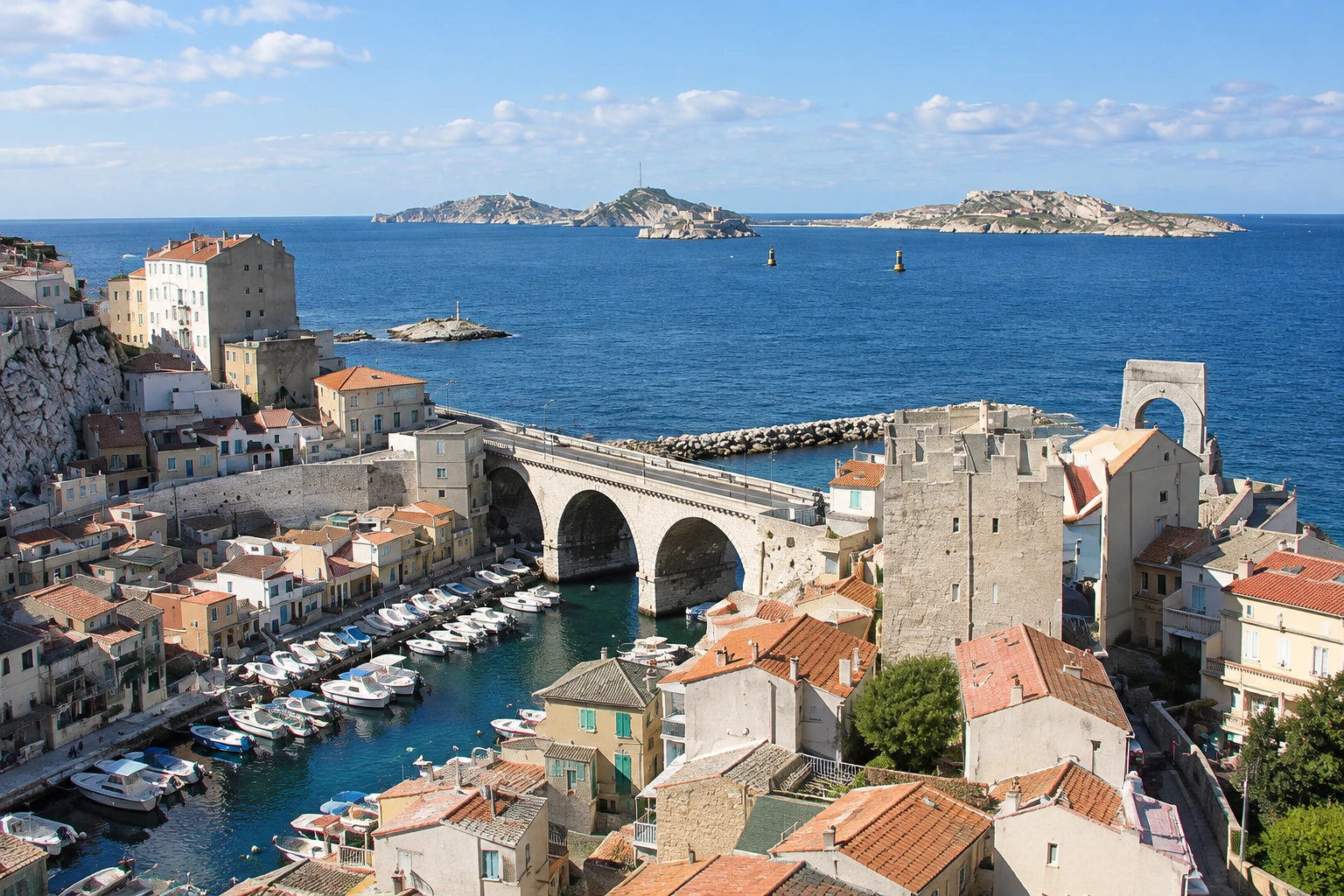
Small fishing port hidden under a three-arched bridge of the Corniche Kennedy, with colorful little houses and traditional boats. The Corniche runs for almost 4 km along the sea, with views of the islands.
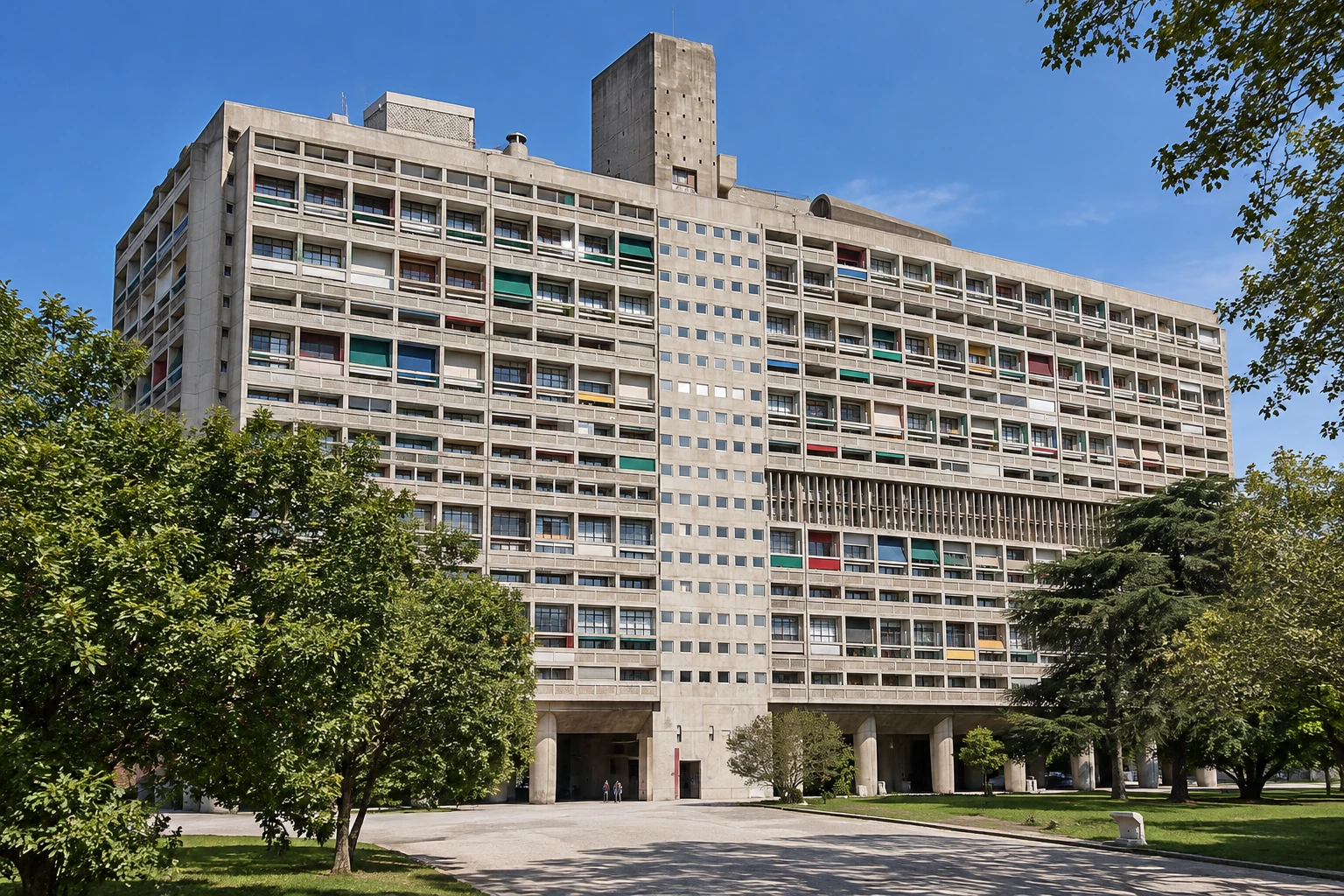
Residential building by Le Corbusier, built from 1947 to 1952, which put into practice the idea of a "vertical village" with internal streets, shops, a hotel and a roof terrace. It has been a UNESCO World Heritage Site since 2016 and remains inhabited.
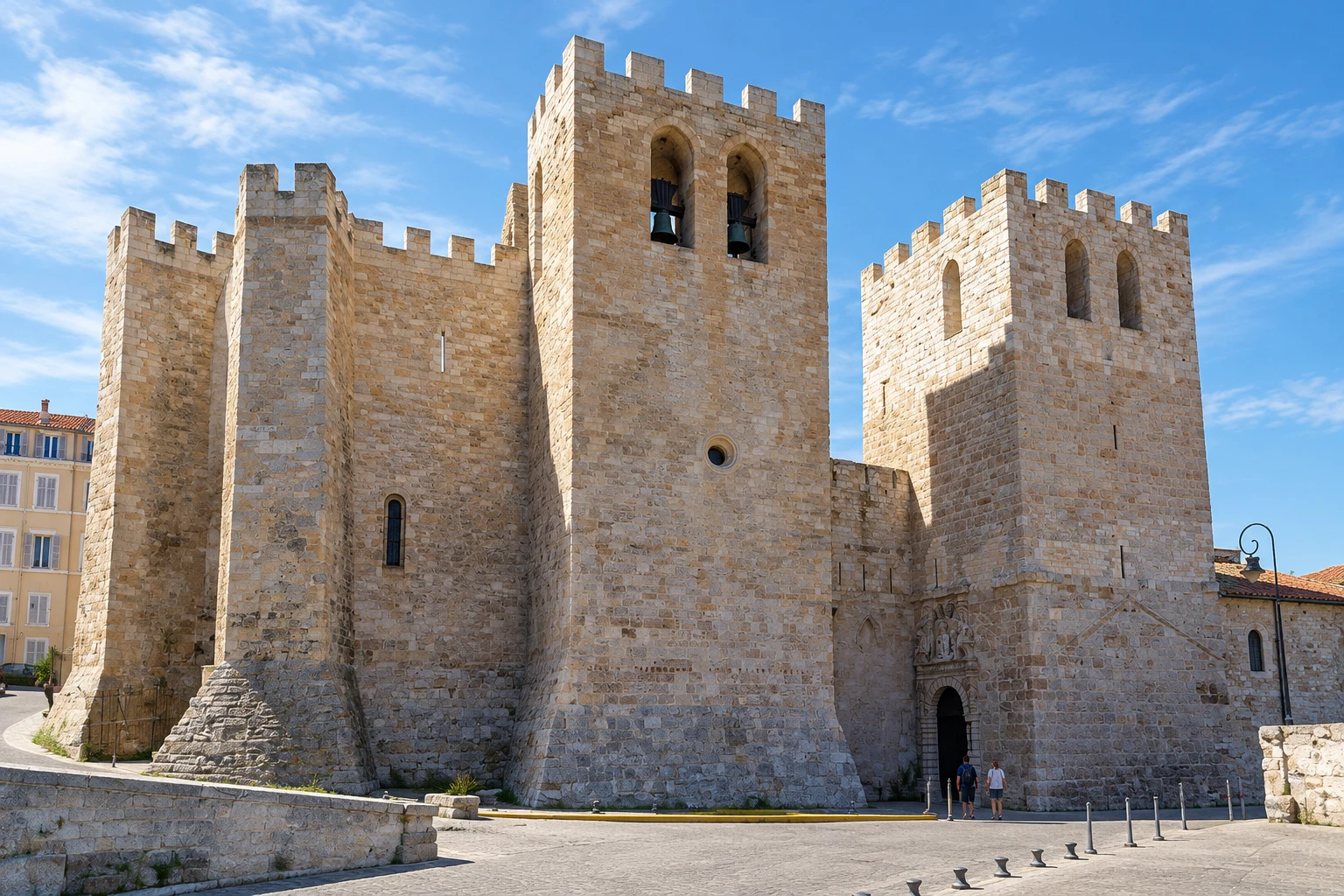
One of the oldest churches in France, with the appearance of a fortress, near the Vieux-Port. The crypts hold sarcophagi from the 4th and 5th centuries and the Black Virgin, venerated in the Candlemas procession on February 2.
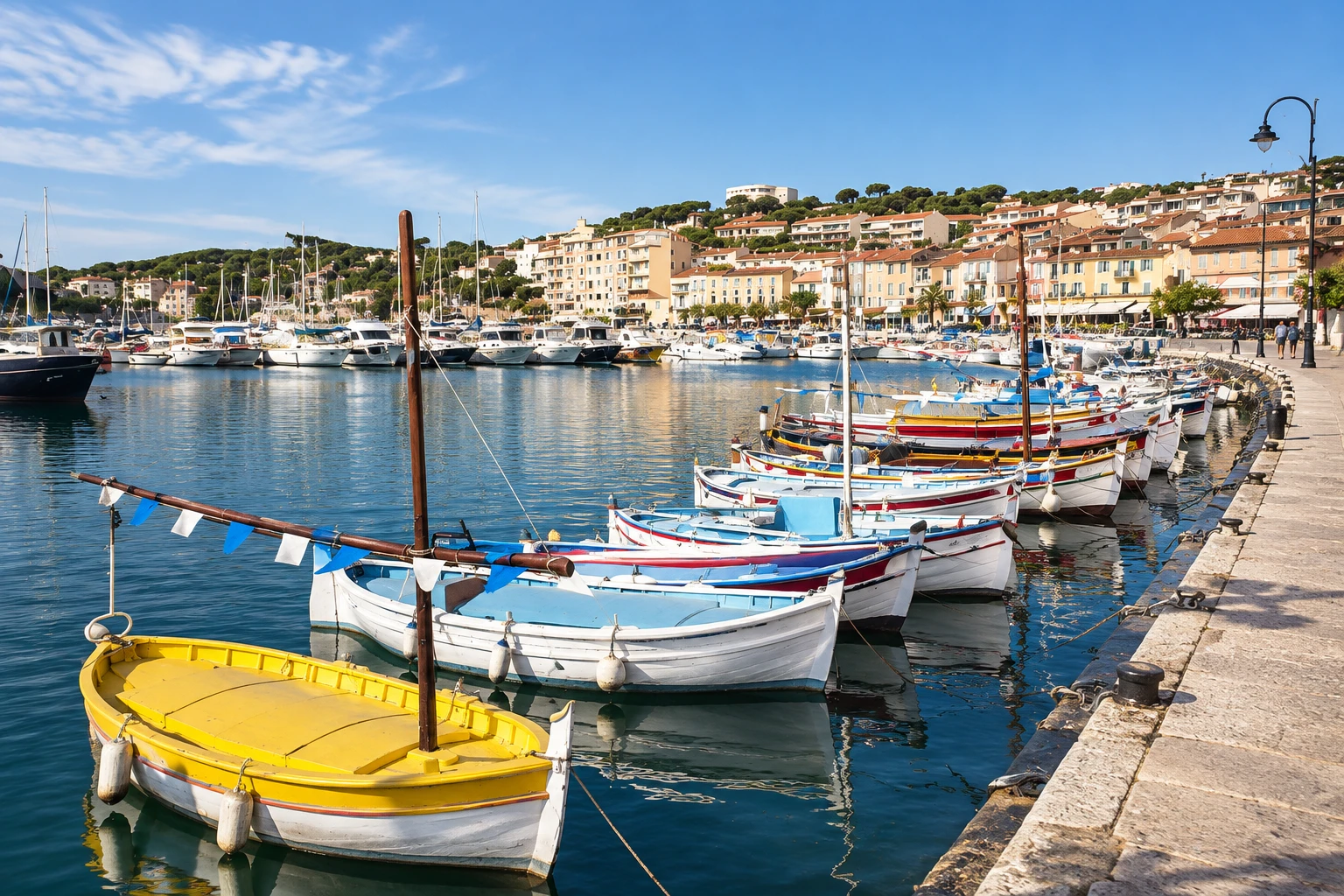
A fishing village about 20 km east of Marselha, with a harbor of colorful houses, beaches, its own white wines and boat departures for the calanques. Above it rises Cap Canaille, with the highest sea cliffs in France.
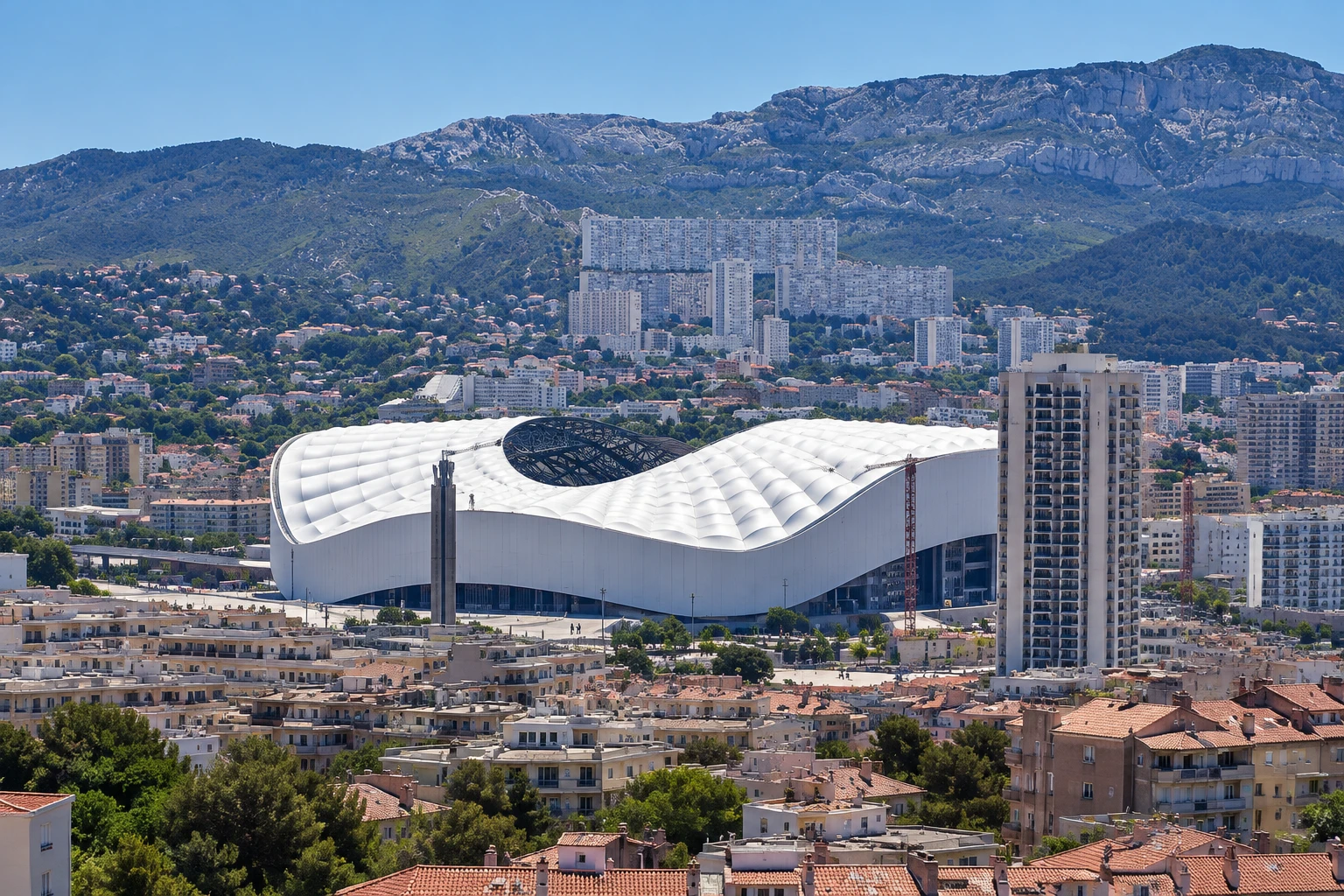
Home of Olympique de Marseille since 1937 and the second-largest stadium in France, with about 67,000 seats. It has hosted Football and Rugby World Cup matches and offers guided behind-the-scenes tours. Since 2026 it has been officially named CEPAC Vélodrome.


 Brazil
 Antarctica
 Argentina
 Bolivia
 Chile
 Colombia
 Ecuador
 Falkland Islands (Malvinas)
 French Guiana
 Guyana
 Paraguay
 Peru
 Suriname
 Uruguay
 Venezuela
 Albania
 Austria
 Belgium
 Croatia
 Denmark
 Finland
 Germany
 Greece
 Hungary
 Iceland
 Ireland
 Italy
 Luxembourg
 Norway
 Poland
 Portugal
 Slovakia
 Slovenia
 Spain
 Sweden
 Switzerland
 the Czech Republic
 the Netherlands
 the United Kingdom
 Turkey
 Bermuda
 Canada
 Greenland
 Mexico
 Saint Pierre and Miquelon
 the United States
 the Dominican Republic
 Japan
 Egypt
 South Africa
 Australia
 Fiji
 New Zealand
 Papua New Guinea