34 places to visit and 18 tours, chosen by the Cidade Turismo guide.
Updated
Illustrative images. The pictures in this guide are illustrations based on the real place, not photographs, and may differ from it.
To start
The 10 main places Toledo, Segovia, and Ávila
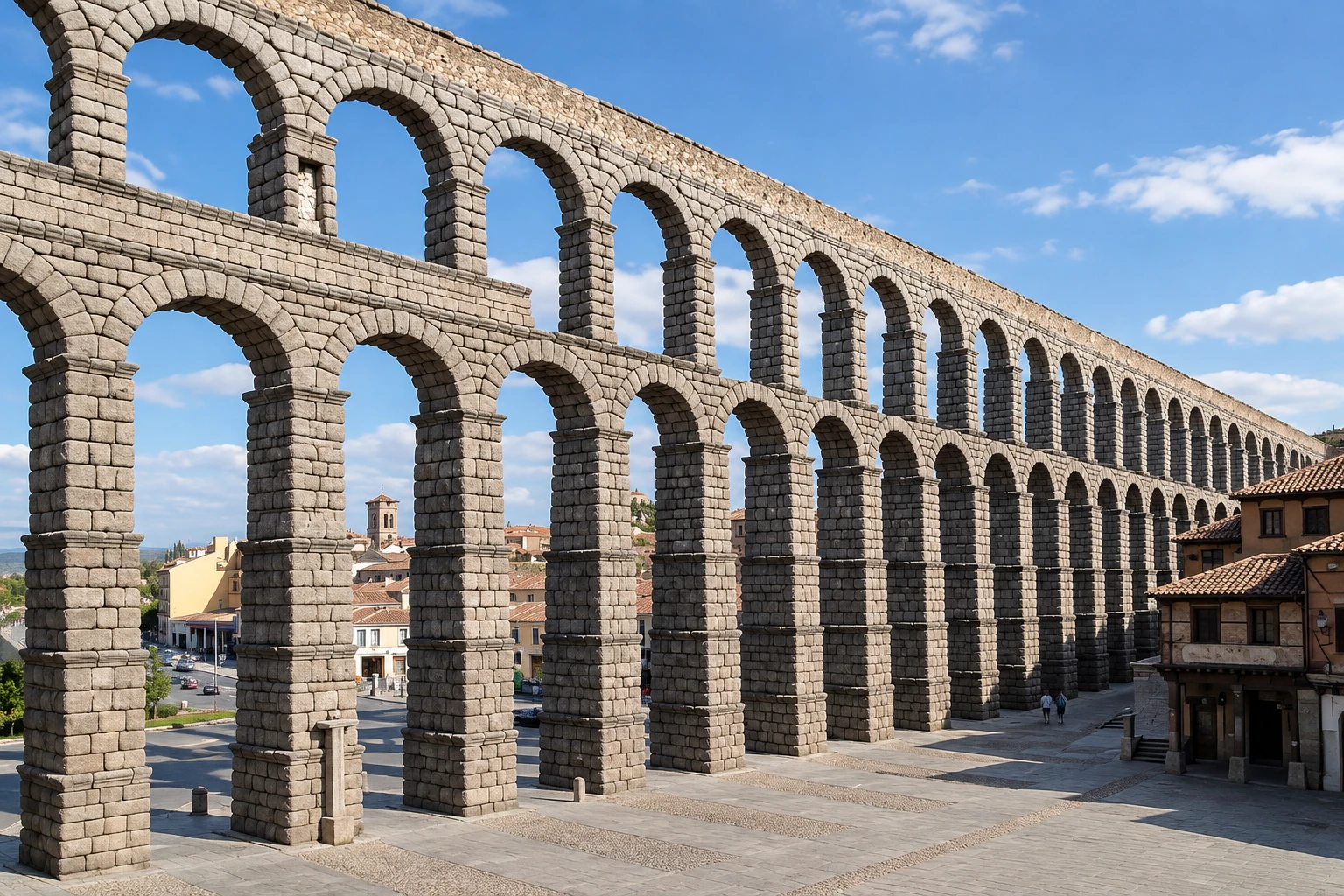
Aqueduct of Segovia · SegoviaRoman Aqueduto from the early 2nd century, with 167 granite arches assembled without mortar.
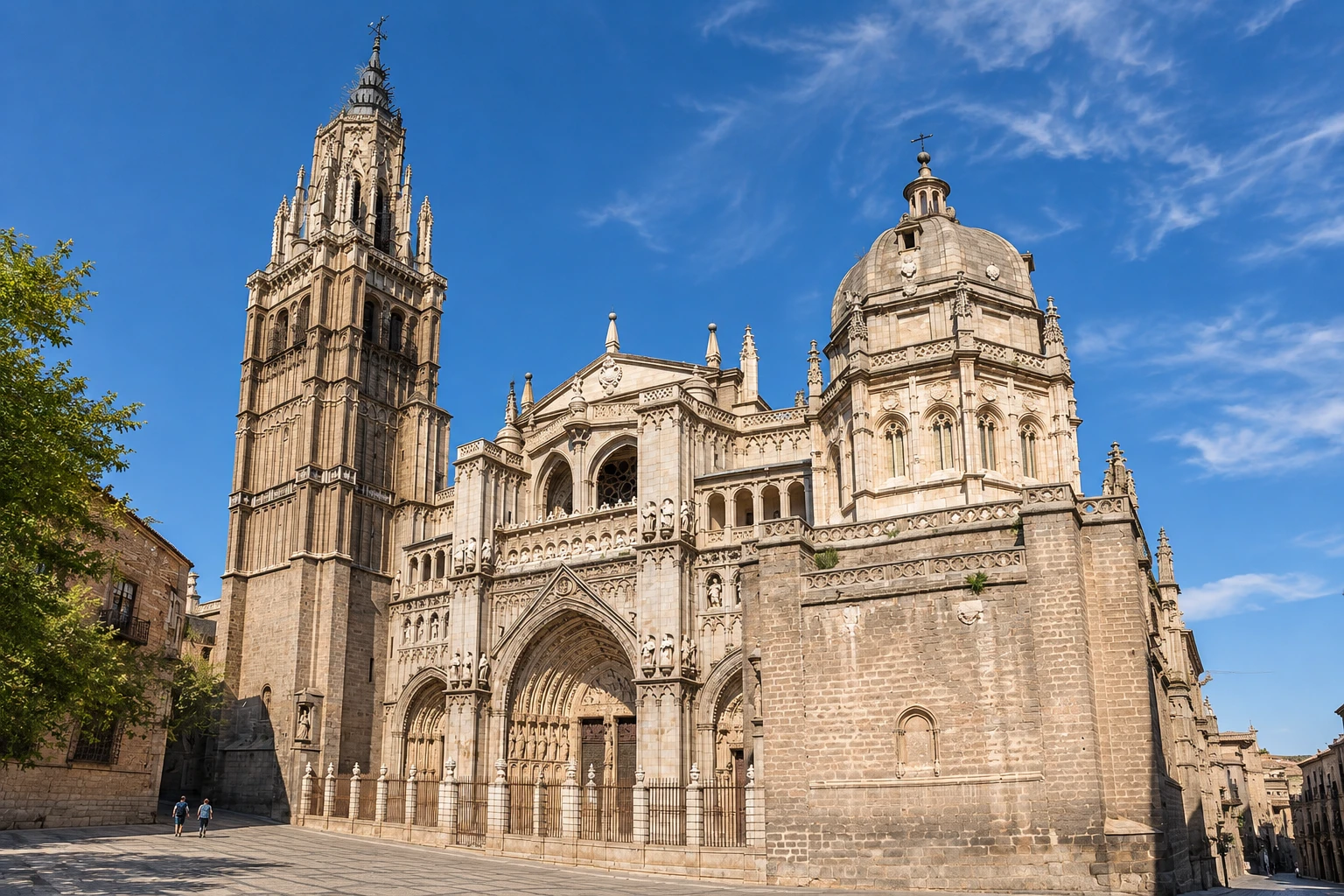
Toledo Cathedral · ToledoGothic cathedral begun in 1226, seat of the Primate Archbishop of Spain.
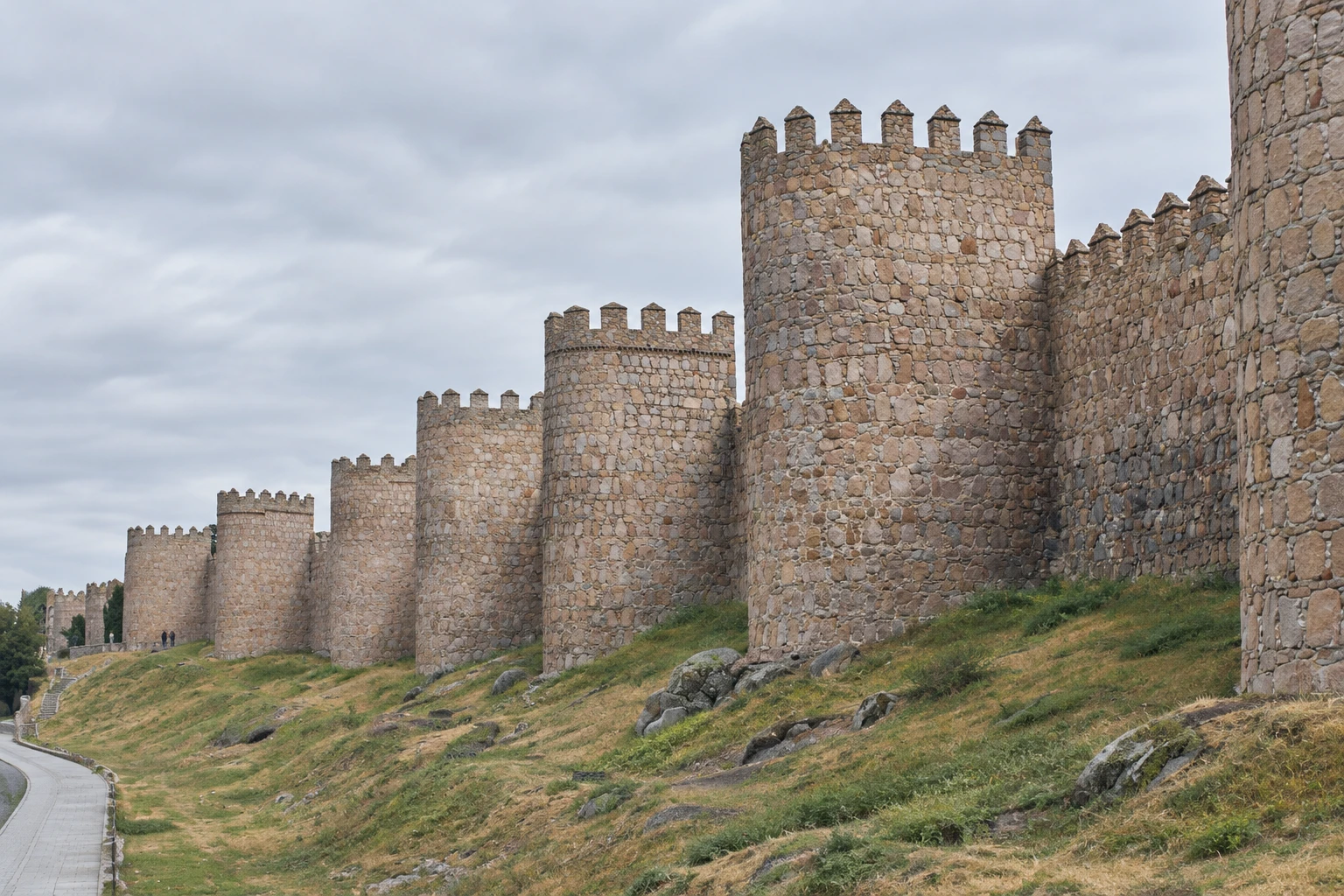
Walls of Ávila · ÁvilaMedieval wall enclosing the historic center, with 2,515 meters of perimeter, 87 towers and 9 gates.
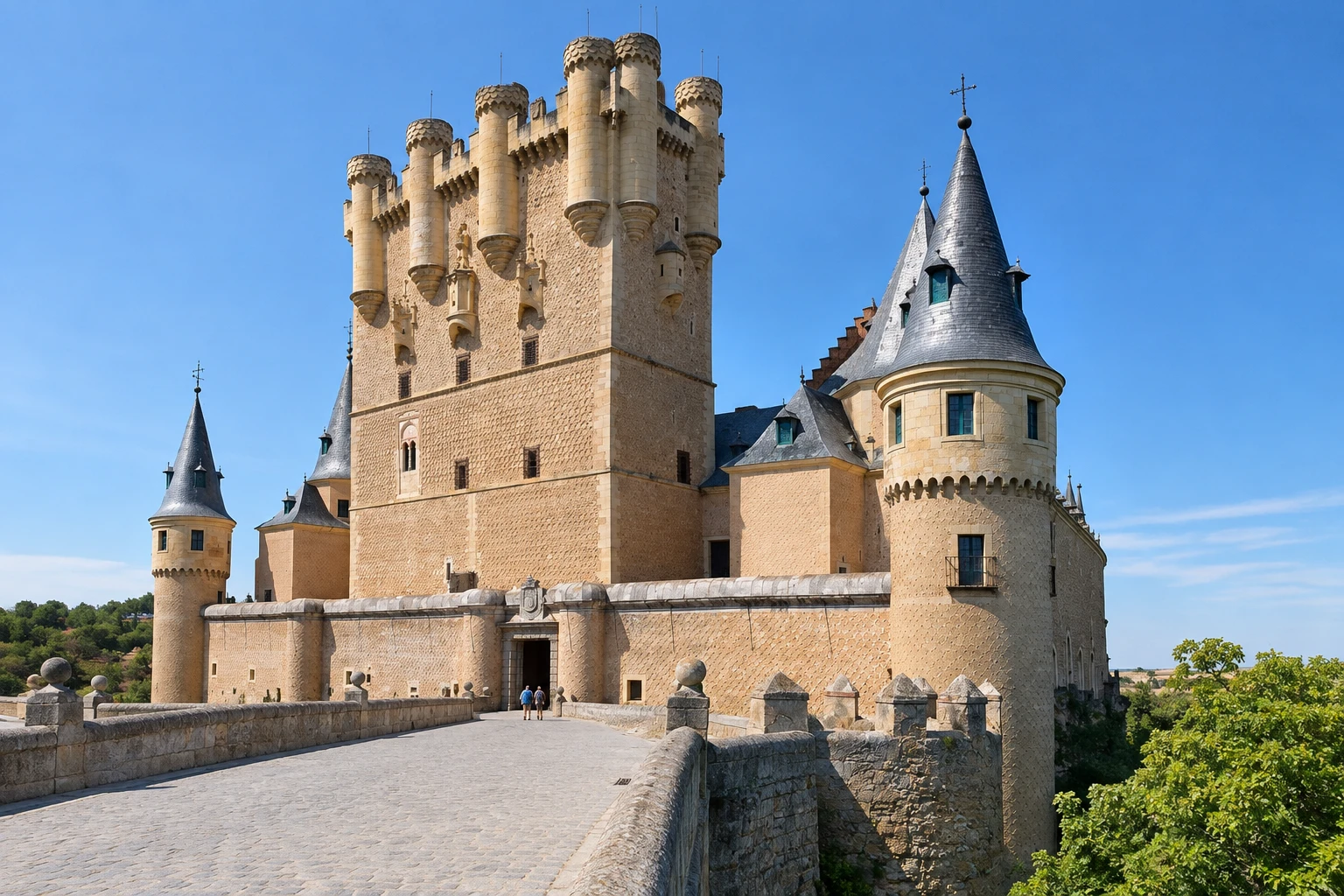
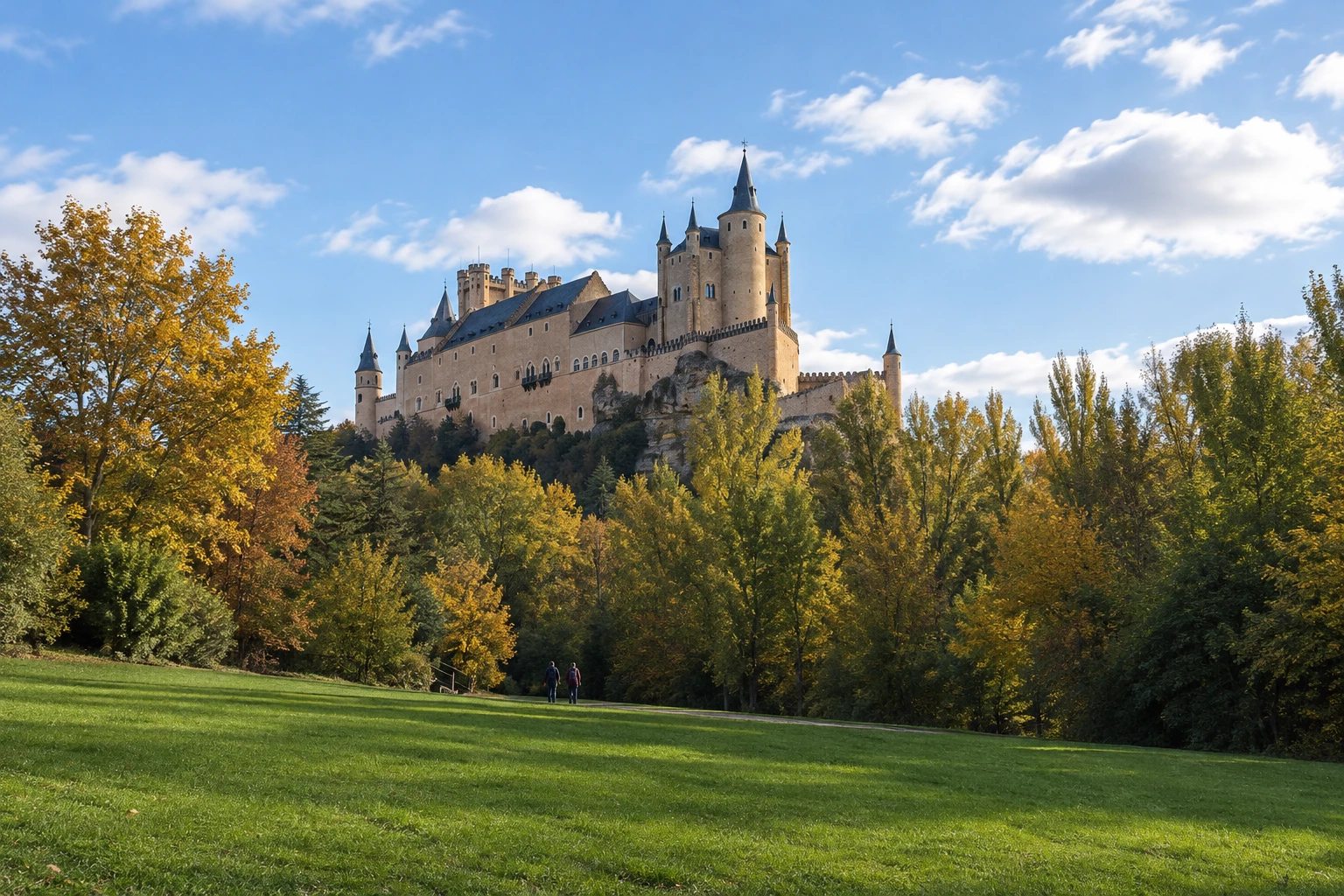
Alcázar of Segovia · SegoviaCastle-palace on the rocky spur of Segóvia, between the Eresma and Clamores valleys.
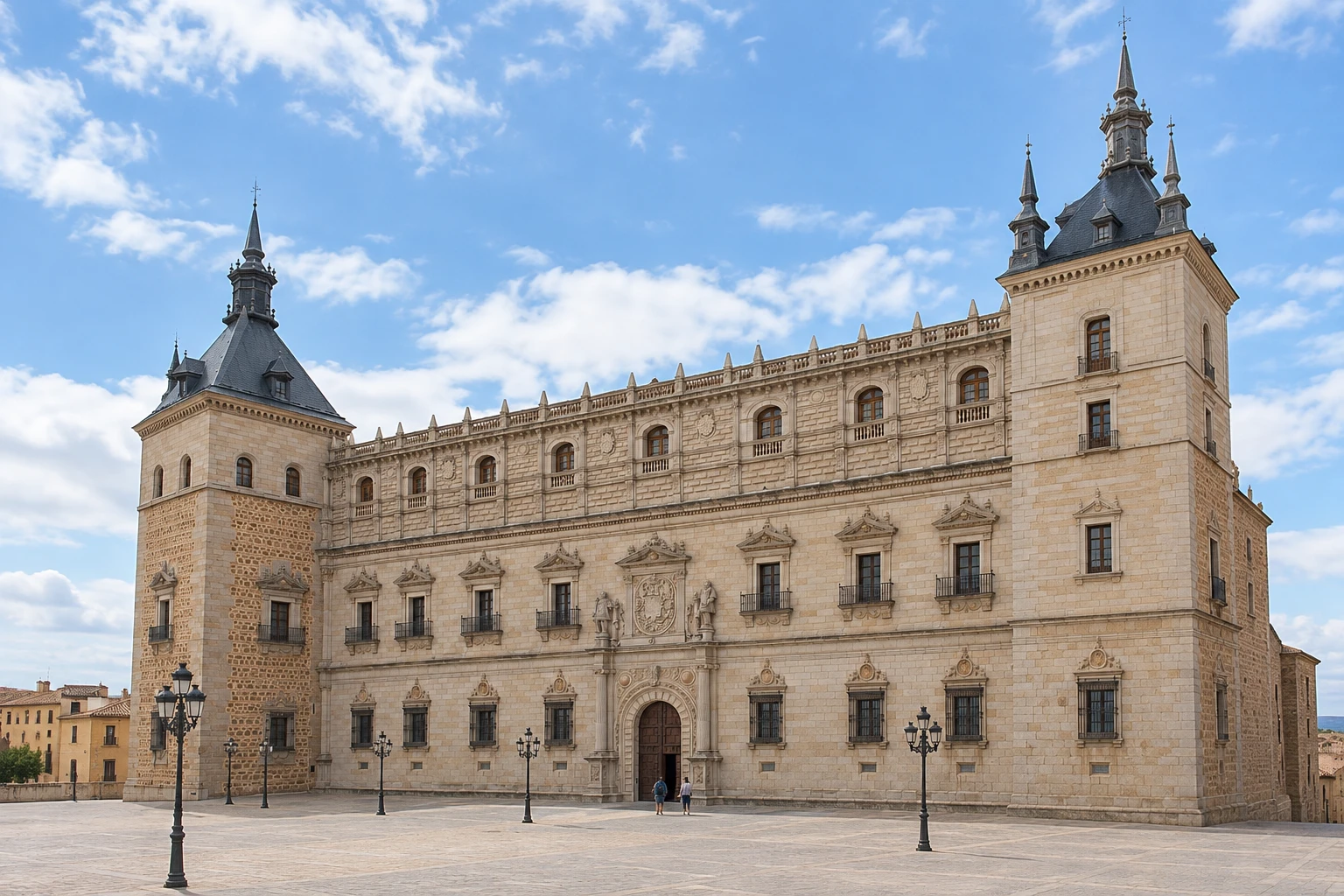
Alcázar of Toledo · ToledoSquare fortress at the highest point of the city, with four corner towers.
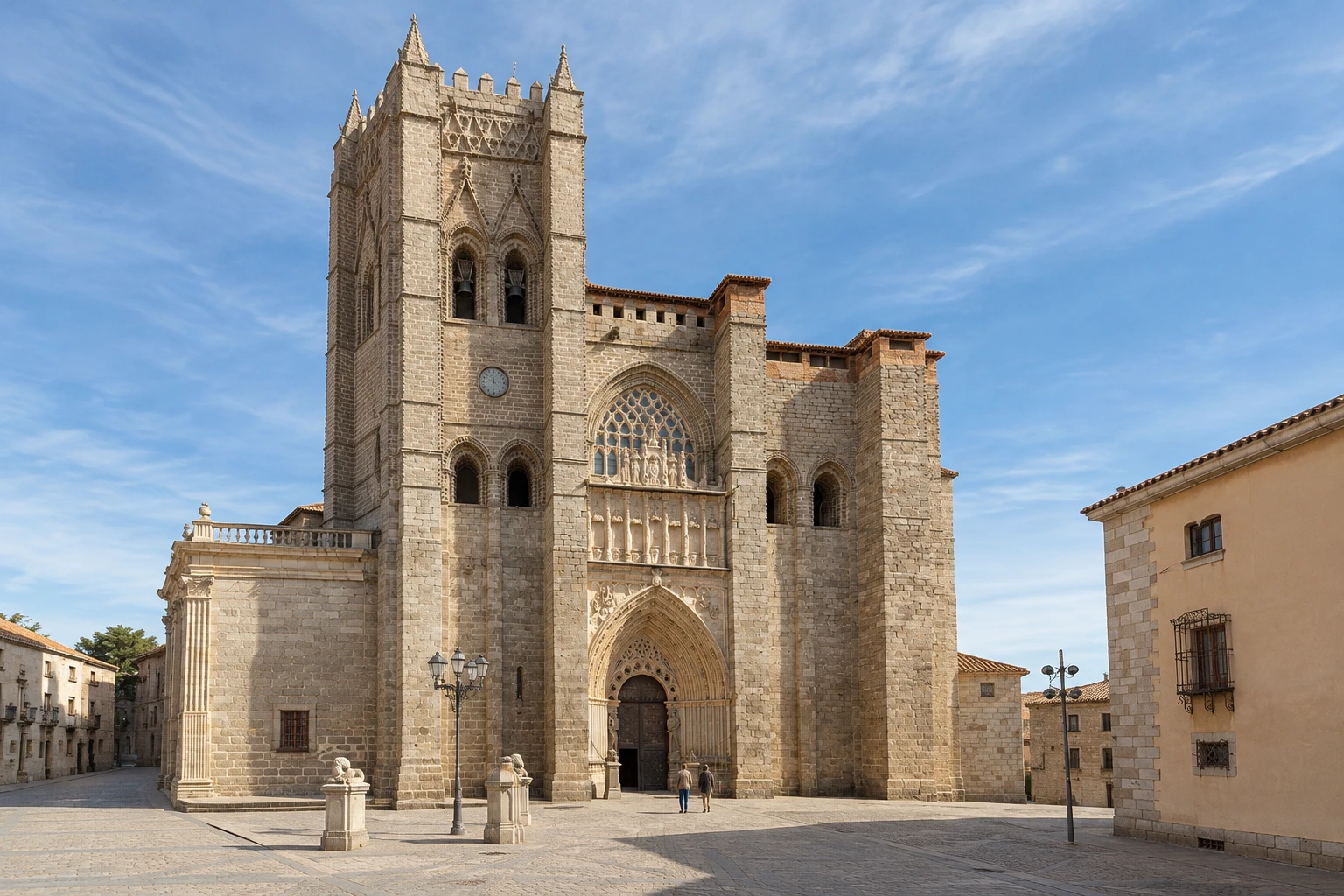
Ávila Cathedral · ÁvilaCathedral-fortress whose apse, the cimorro, is one of the towers of the wall.
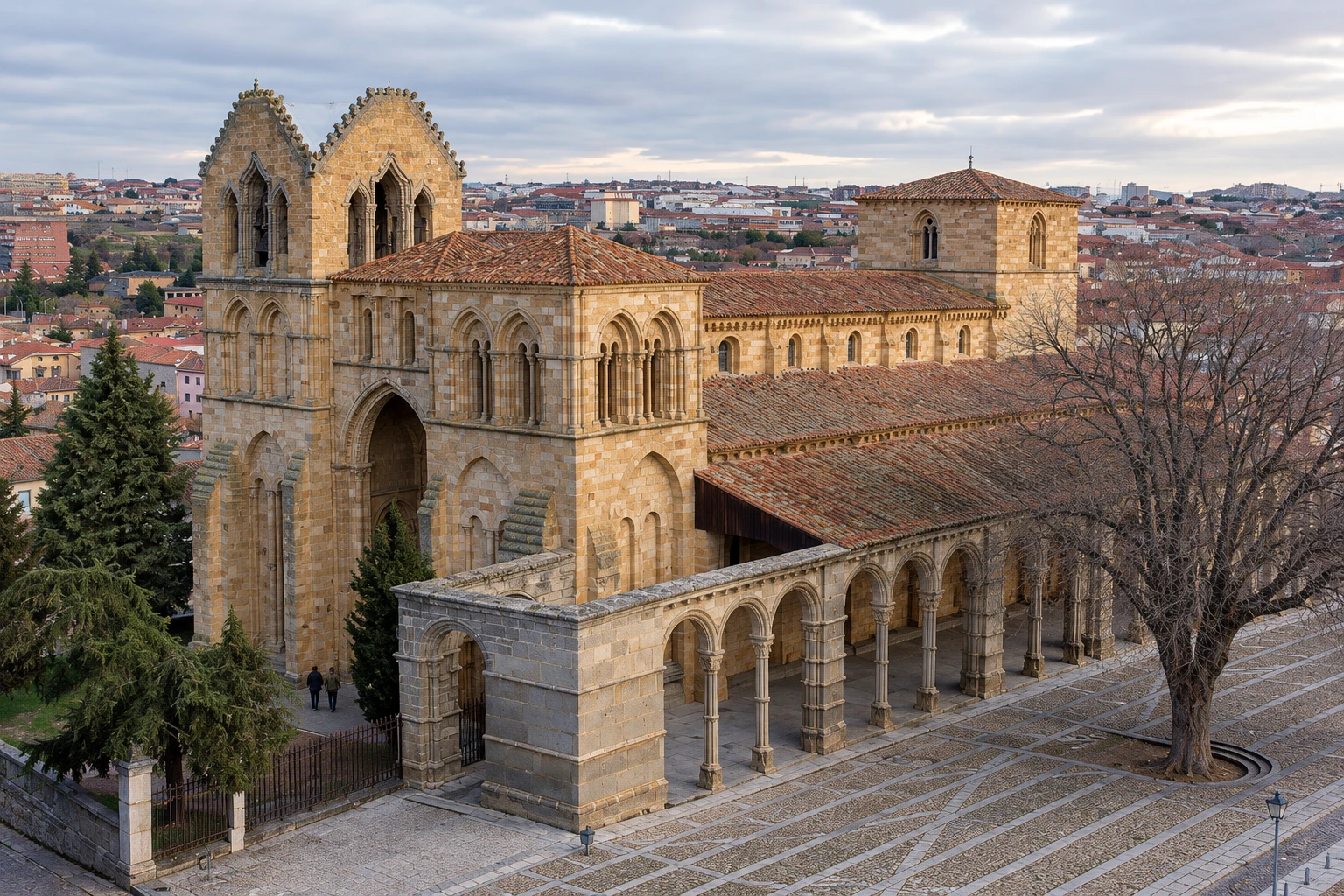
Basilica of San Vicente · ÁvilaLarge Romanesque church outside the wall, begun around 1120 on the site where, by tradition, the siblings Vicente, Sabina and Cristeta were martyred.
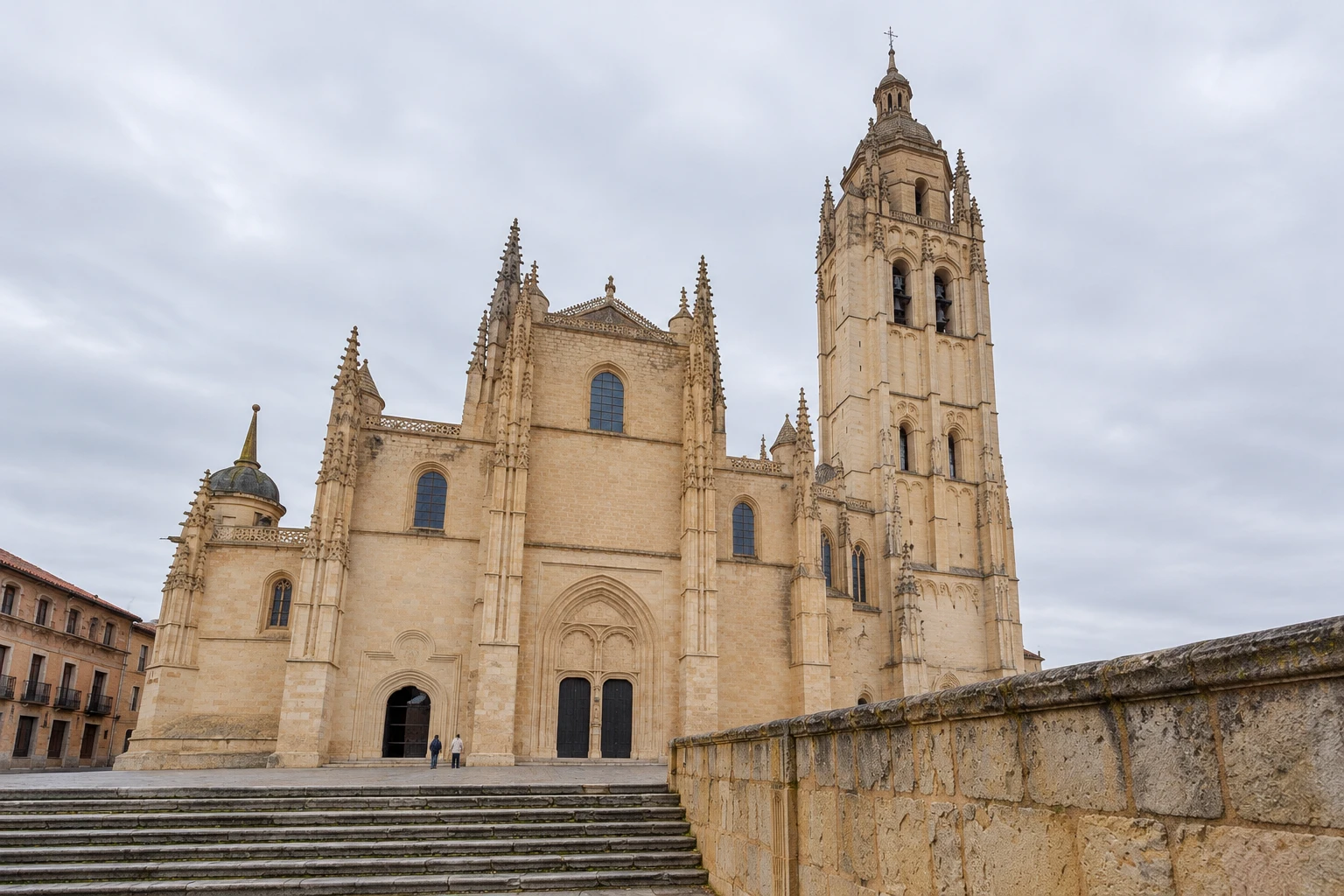
Segovia Cathedral · SegoviaLate Gothic cathedral begun in 1525 by Juan Gil de Hontañón, at the highest point of the city.
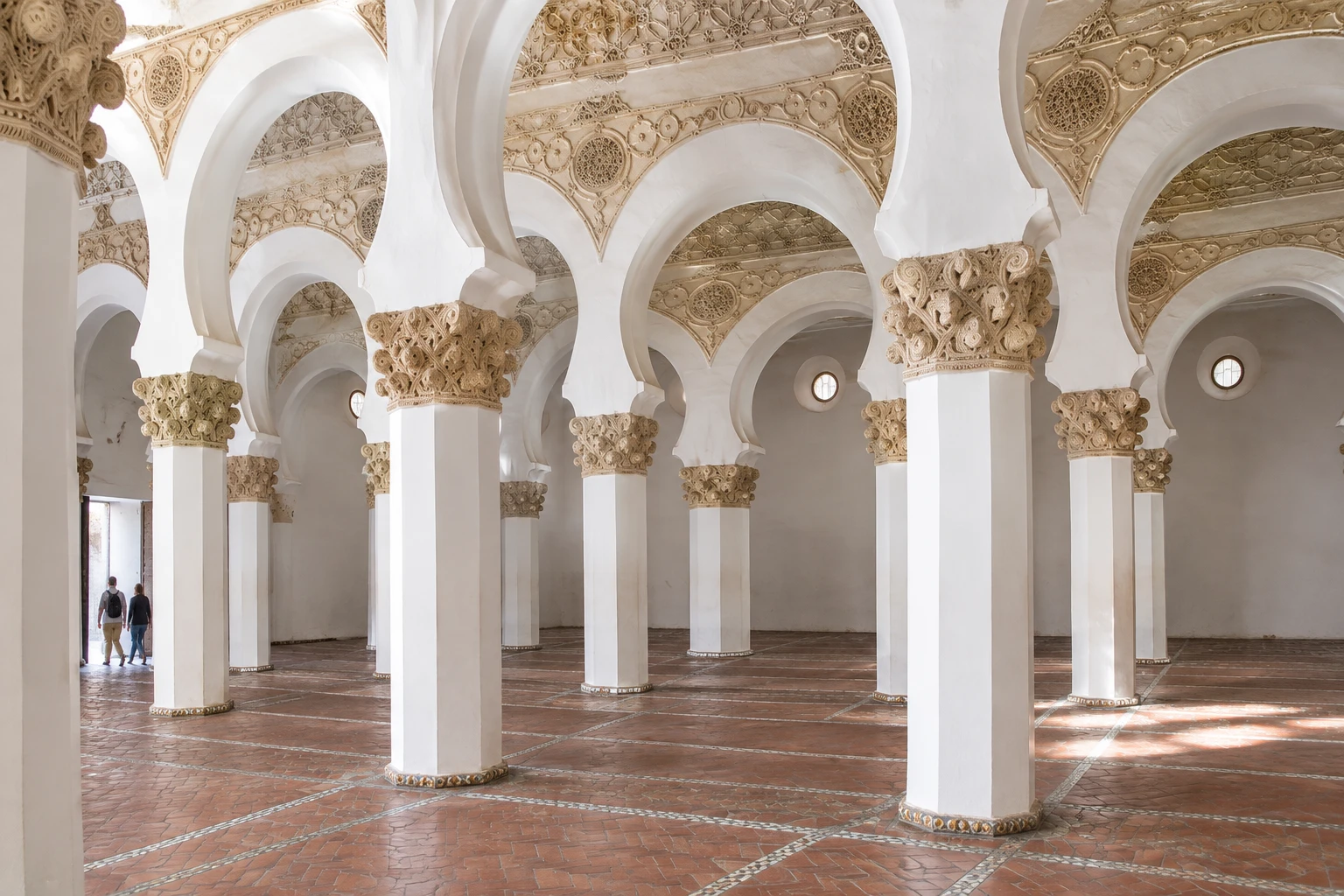
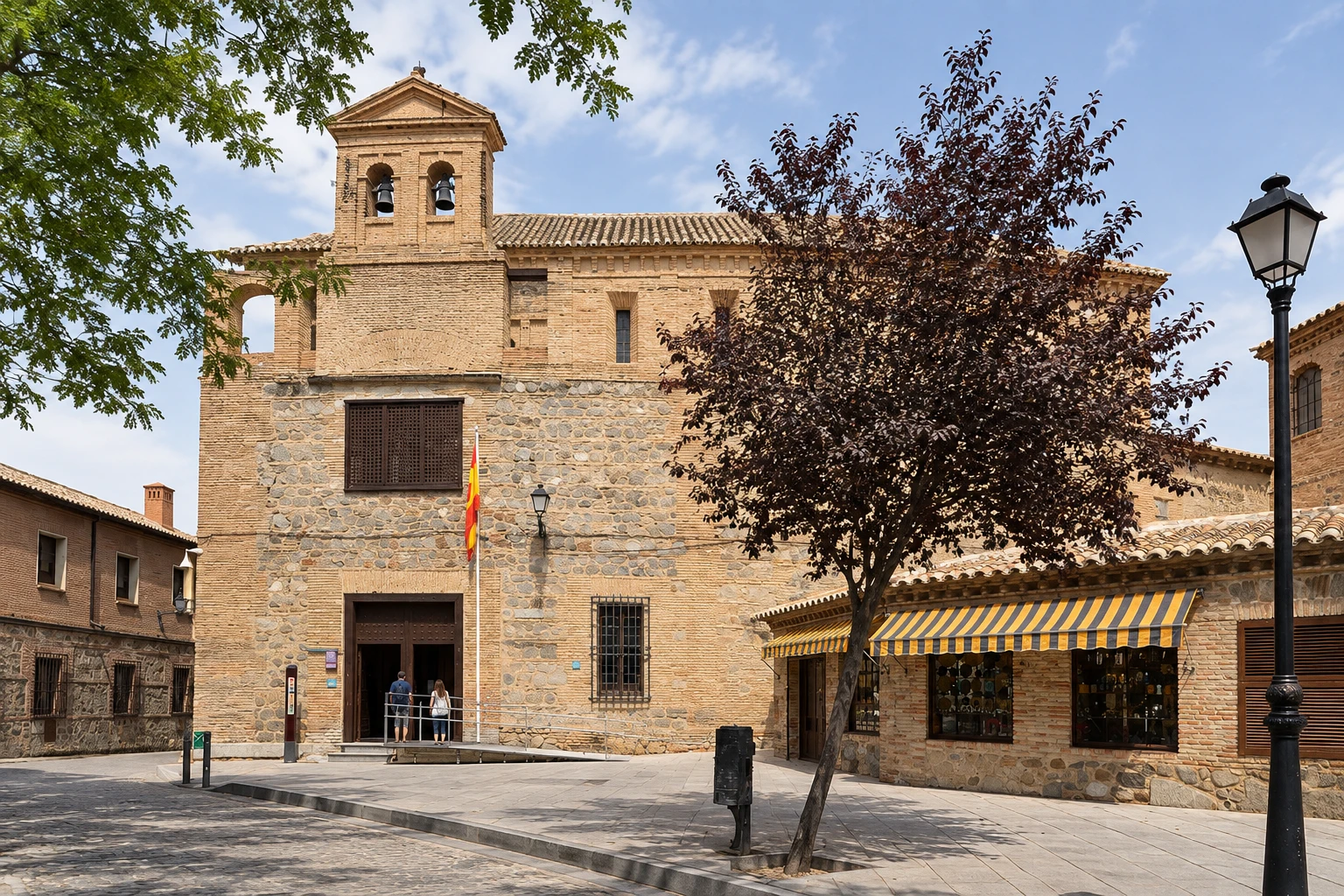
Santa María la Blanca Synagogue · ToledoOld Sinagoga Mayor de Toledo, dating from 1180, with five naves of horseshoe arches on white pillars.
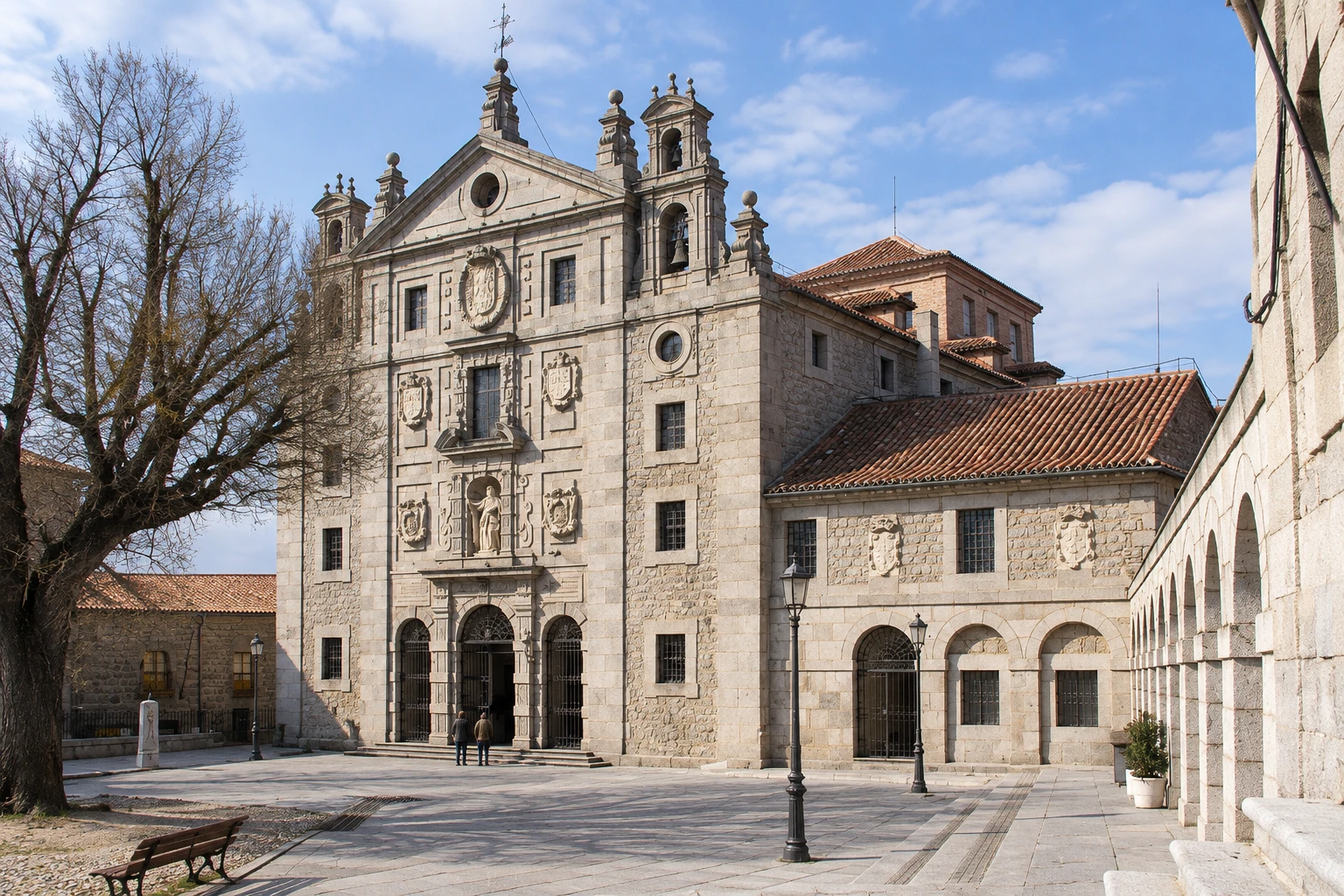
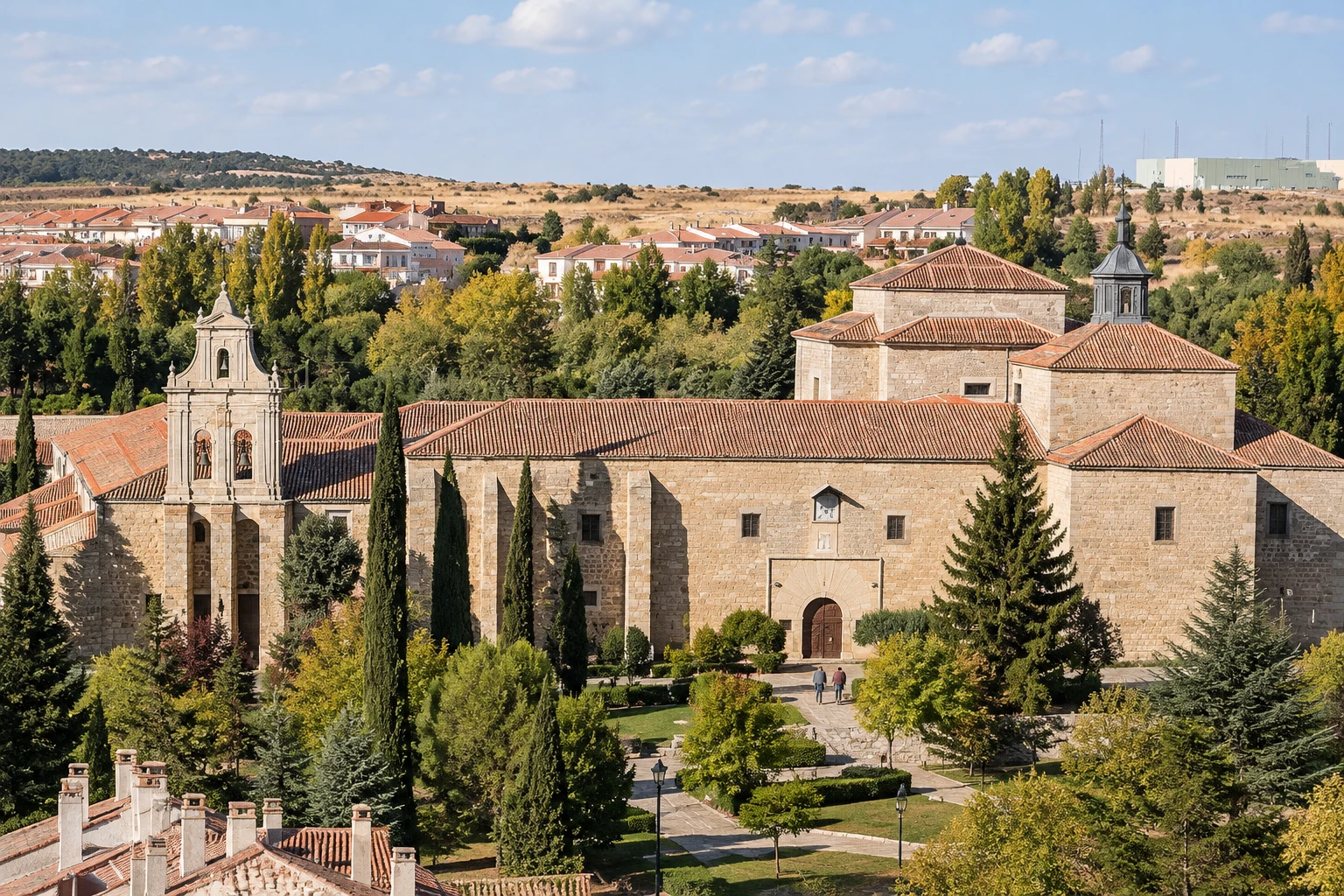
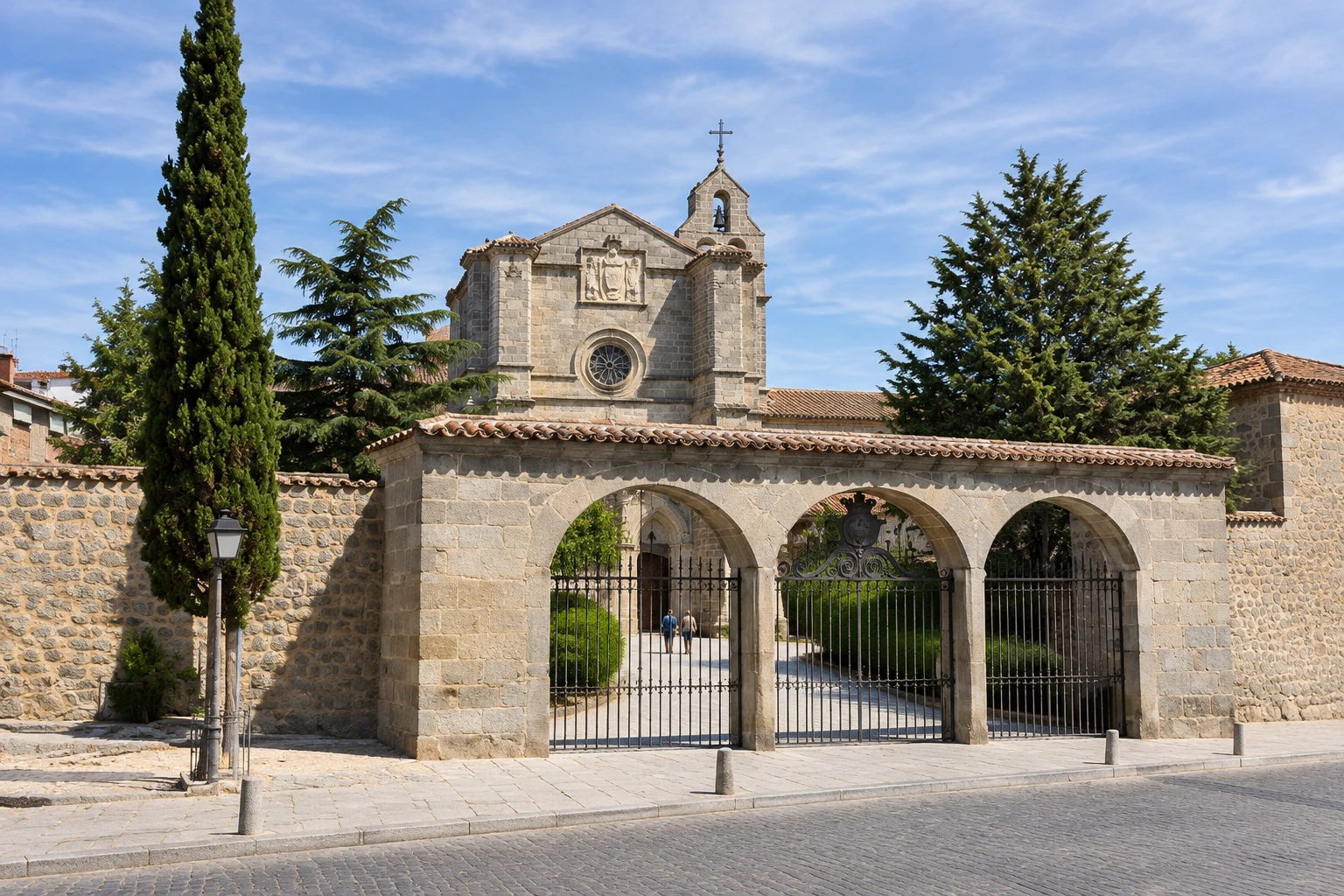
Convent of Saint Teresa · ÁvilaBaroque Carmelite church and convent built between 1629 and 1636 over the house where Santa Teresa de Jesús was born.
Roman Aqueduto from the early 2nd century, with 167 granite arches assembled without mortar. The arcade crosses the Plaza del Azoguejo and reaches 28 meters at its highest point.
Gothic cathedral begun in 1226, seat of the Primate Archbishop of Spain. It houses the Transparente by Narciso Tomé, the choir by Berruguete and Vigarny, El Expolio by El Greco and the monstrance by Enrique de Arfe.
Medieval wall enclosing the historic center, with 2,515 meters of perimeter, 87 towers and 9 gates. Several sections of the adarve, the walkway along the top of the wall, are open to visitors.
Castle-palace on the rocky spur of Segóvia, between the Eresma and Clamores valleys. It was a residence of the kings of Castile, a state prison and the Real Colegio de Artillería, and it has the Torre de Juan II open to visitors.
Square fortress at the highest point of the city, with four corner towers. Renovated by Carlos V and Felipe II, it now houses the Museo del Ejército and the Biblioteca de Castilla-La Mancha.
Cathedral-fortress whose apse, the cimorro, is one of the towers of the wall. It is considered the first Gothic cathedral in Spain, with works beginning in 1172 under the French master Fruchel.
Large Romanesque church outside the wall, begun around 1120 on the site where, by tradition, the siblings Vicente, Sabina and Cristeta were martyred. It houses the sculpted cenotaph of the saints.
Late Gothic cathedral begun in 1525 by Juan Gil de Hontañón, at the highest point of the city. It has a tower of about 88 metres with guided visits and a cloister brought from the old cathedral.
Old Sinagoga Mayor de Toledo, dating from 1180, with five naves of horseshoe arches on white pillars. Built by Muslim craftsmen for Toledo's Jewish community and later converted into a church.
Baroque Carmelite church and convent built between 1629 and 1636 over the house where Santa Teresa de Jesús was born. It has the chapel on the site of the saint's room and a Teresian museum in the crypt.
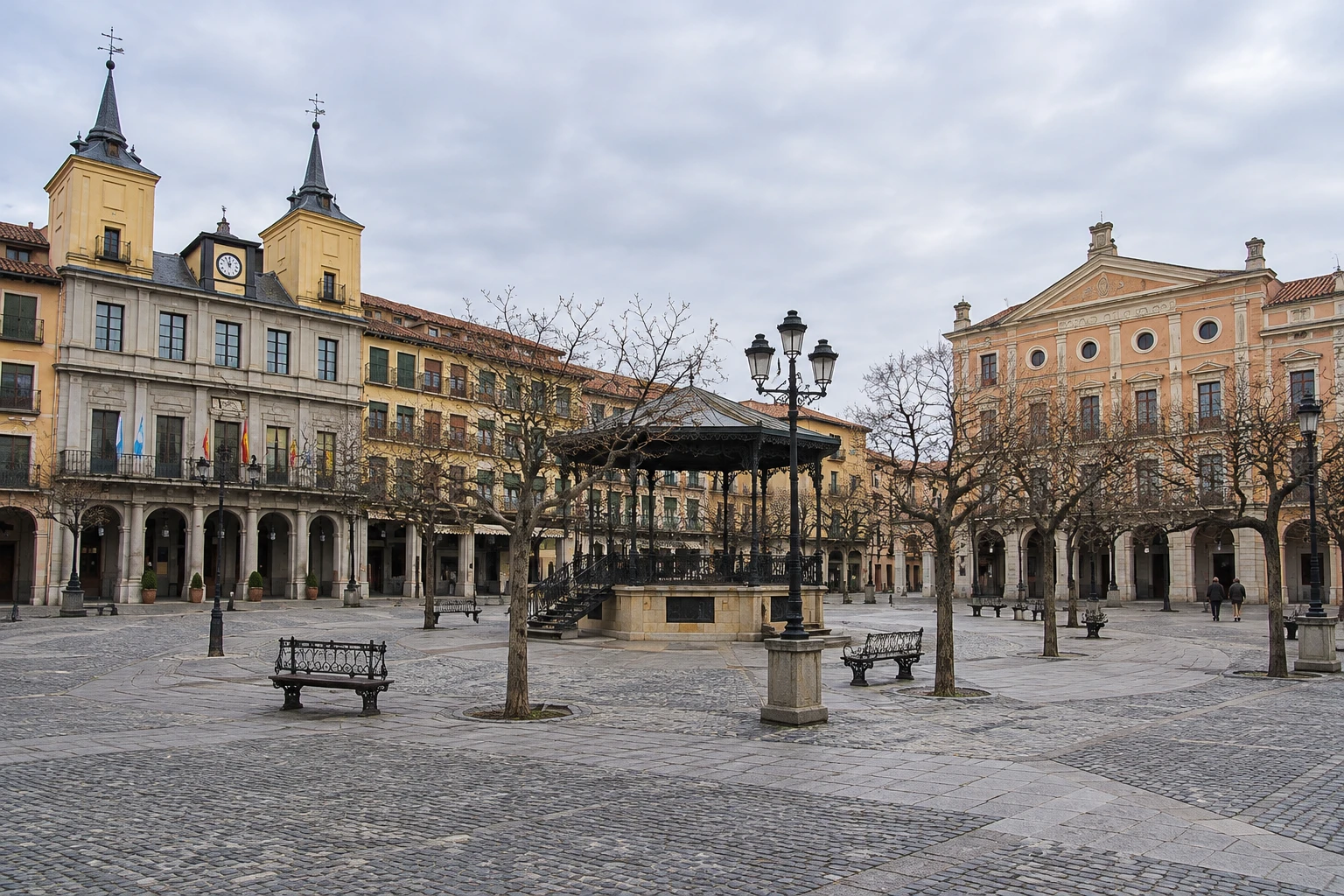
Main square of the old town, with the Cathedral's apse in the background, the town hall, the Teatro Juan Bravo and the Iglesia de San Miguel. It was there that Isabella the Catholic was proclaimed Queen of Castile in 1474.
Mudéjar synagogue dated to 1357, commissioned by Samuel ha‑Leví, treasurer to King Pedro I. The prayer hall features carved plasterwork with inscriptions in Hebrew and Arabic. It houses the Museo Sefardí.
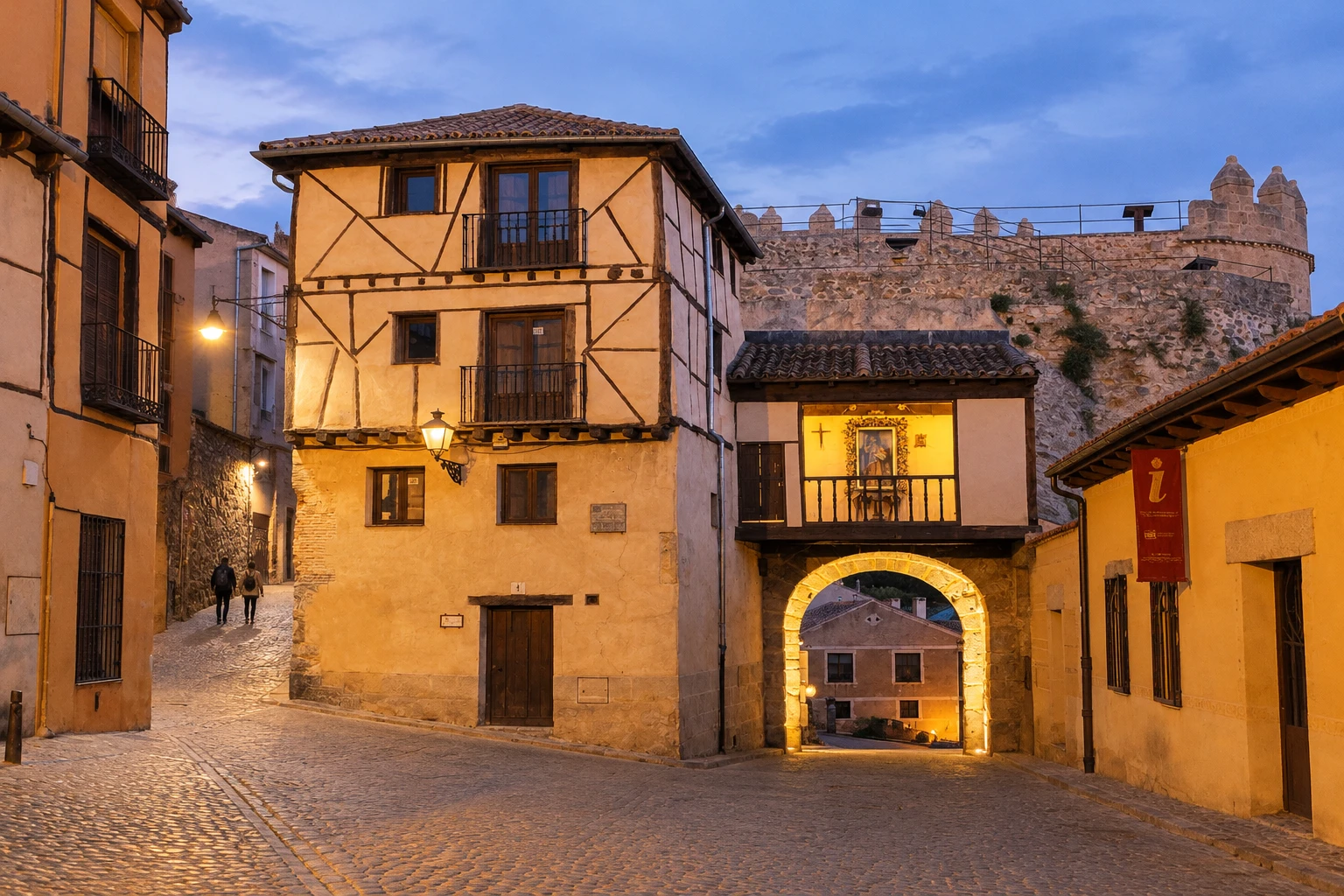
Former Jewish quarter in the southern part of the historic centre, between the Cathedral and the city wall. It has narrow streets, the old Sinagoga Mayor and the Puerta de San Andrés, one of the medieval gates of the city.
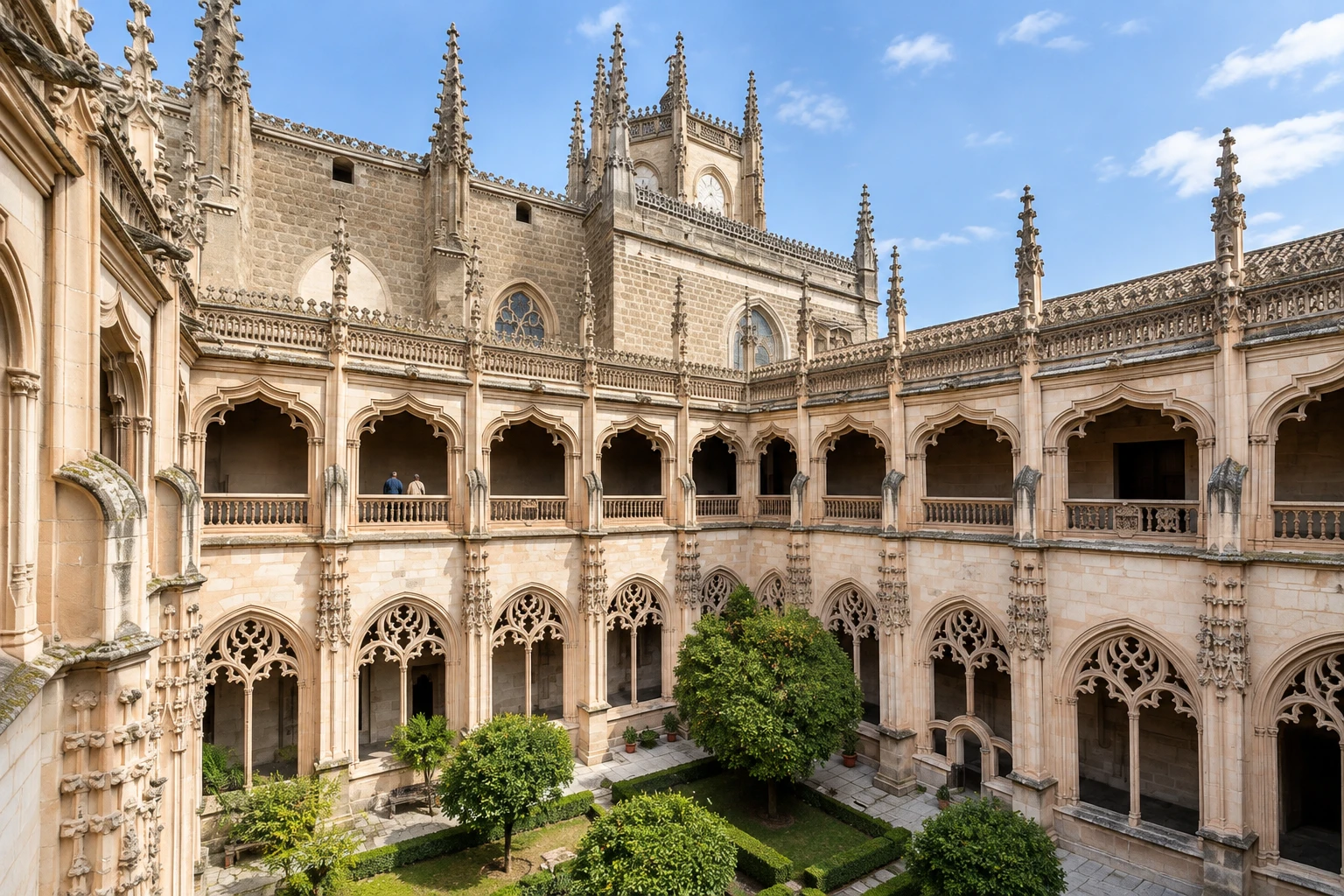
Franciscan monastery ordered built by the Catholic Monarchs to commemorate the Battle of Toro and the birth of Prince Juan. Work by Juan Guas, in the Isabelline Gothic style, with a two-storey cloister.
Carmelite monastery outside the wall where Santa Teresa lived from 1535 to 1574 and prepared the reform of the order. It preserves the chapel on the site of her cell and a museum with a drawing by Saint John of the Cross.
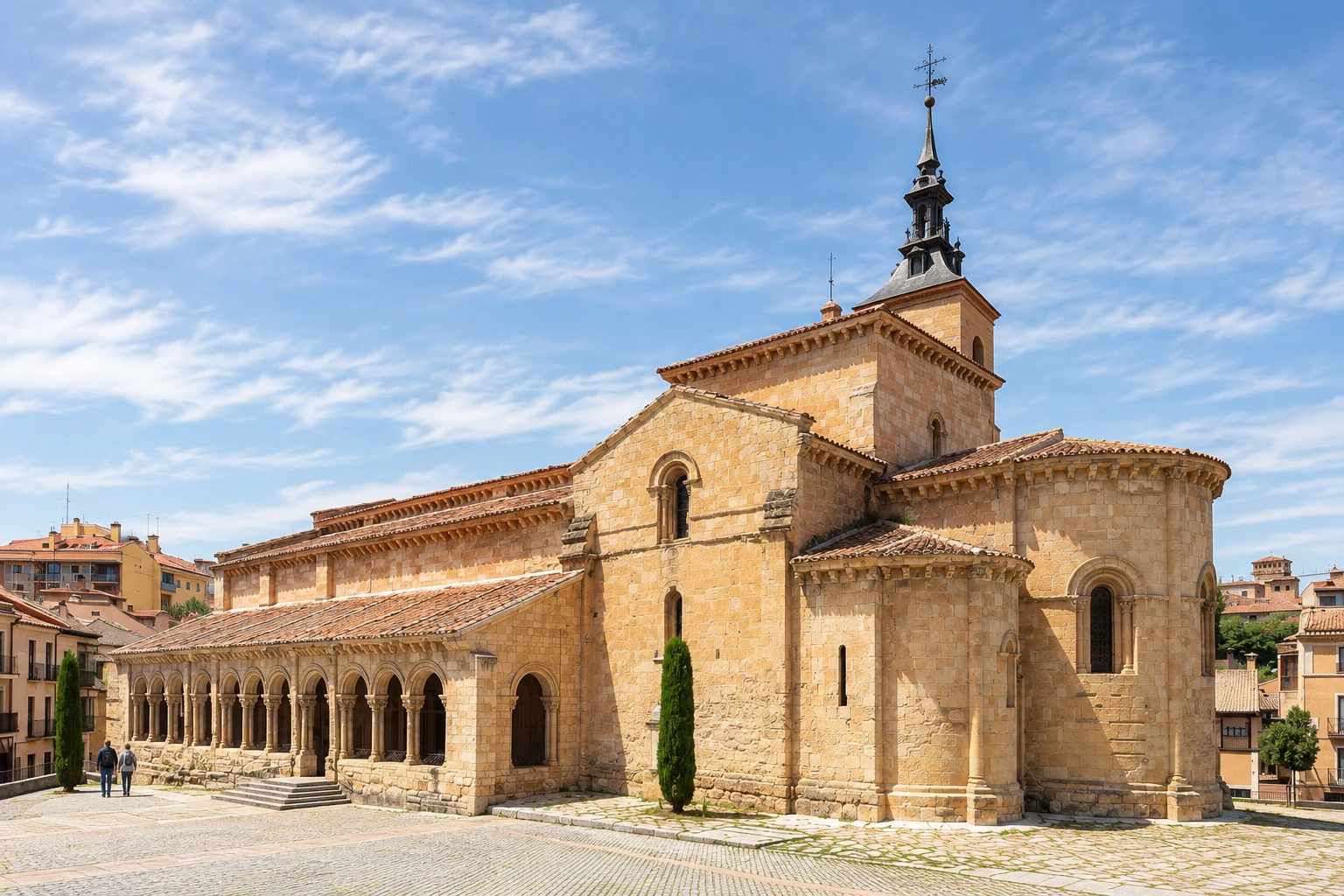
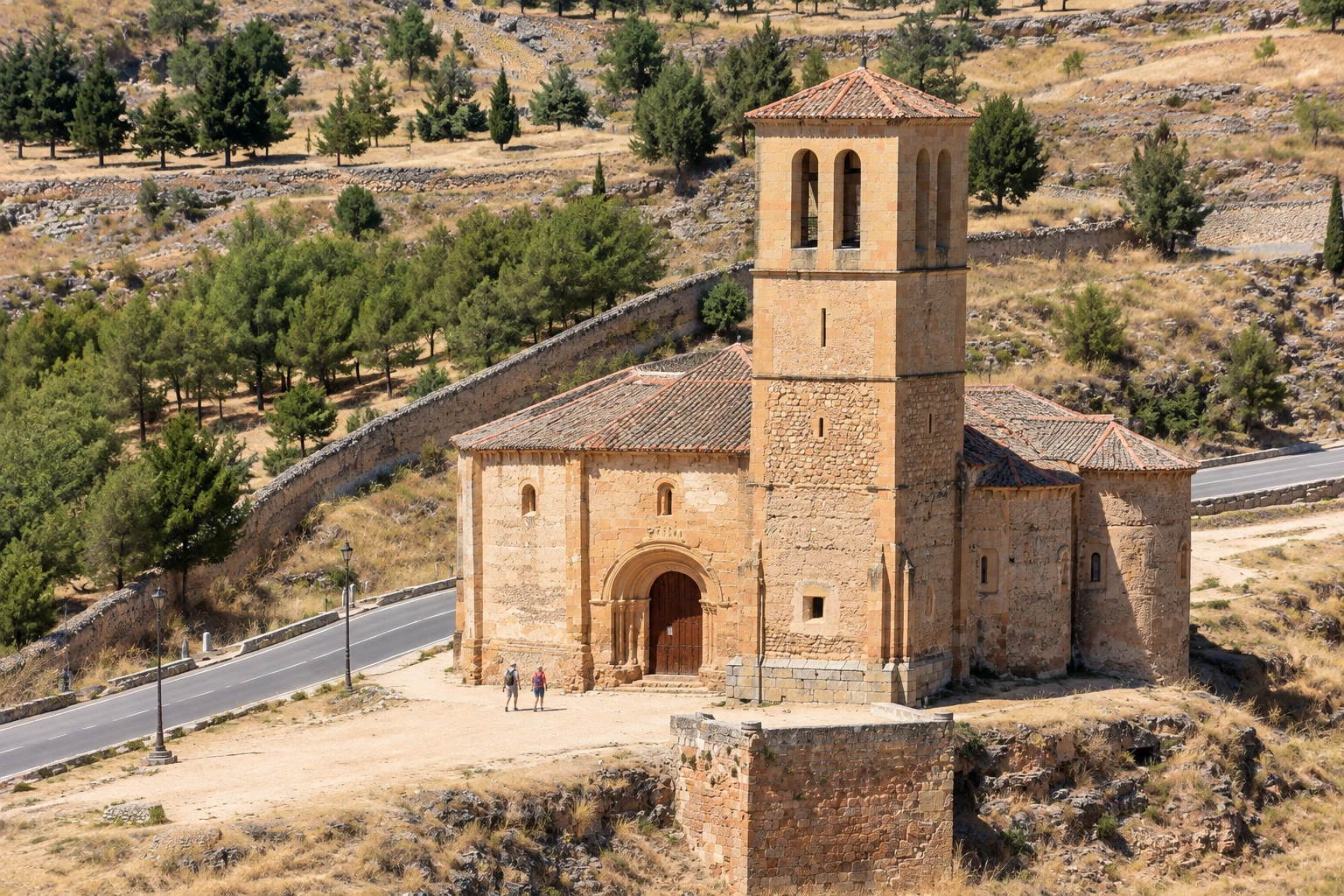
Romanesque church from 1111 to 1126, outside the city wall, near the Aqueduto. It has an 11th-century tower, arcaded galleries and a floor plan inspired by the cathedral of Jaca in Aragão.
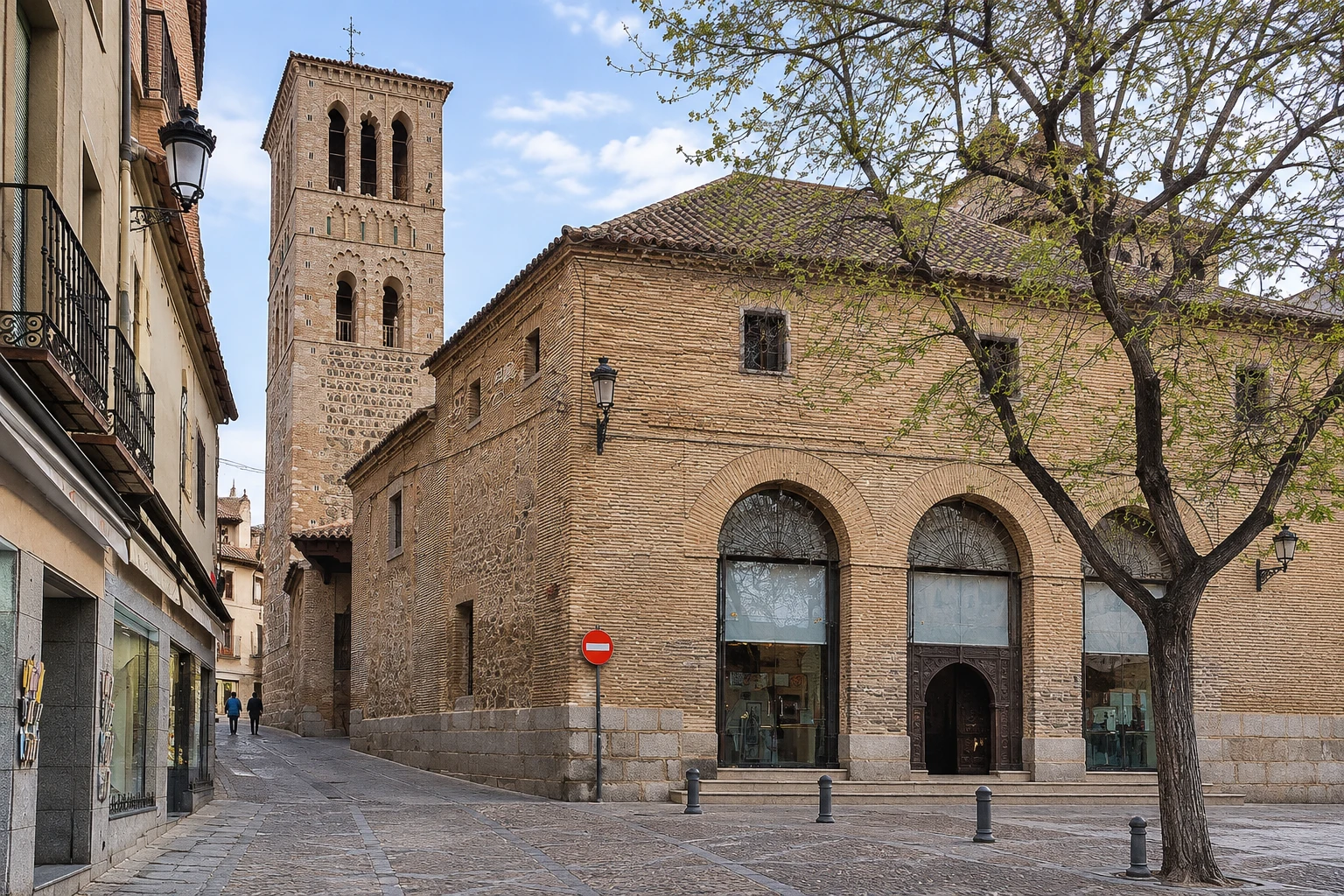
Mudejar-tower church that houses The Burial of the Lord of Orgaz, painted by El Greco in 1586 for the chapel where the lord of Orgaz himself was buried.
Gothic Dominican monastery from 1482 to 1493, associated with the Reyes Católicos and Torquemada. It has three cloisters, the tomb of Prince Dom João and a church with a façade sculpted by Gil de Siloé.
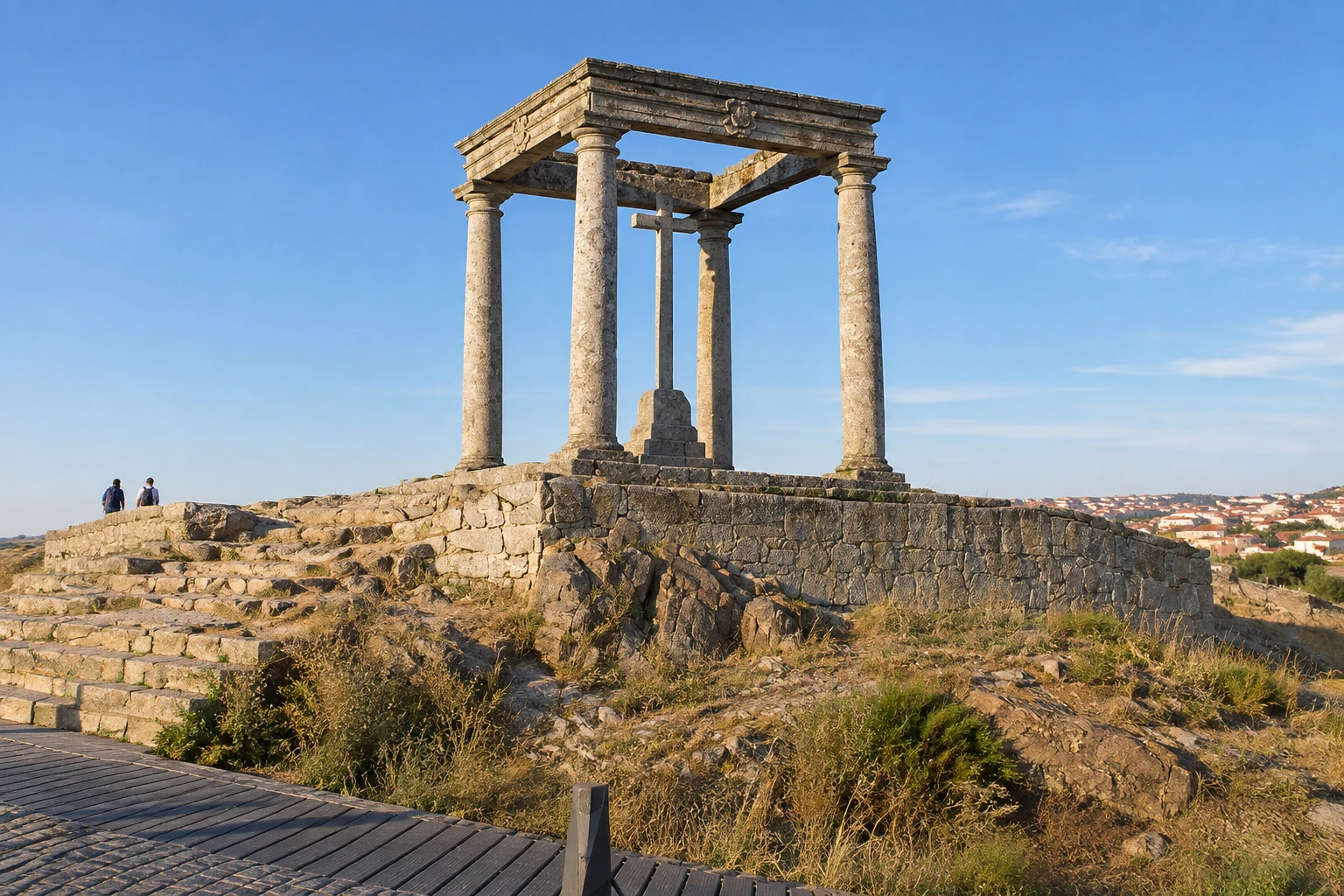
Small monument from 1566, with four Doric columns and a granite cross, on the other side of the Adaja river. It is the classic spot to view the whole wall of Ávila.
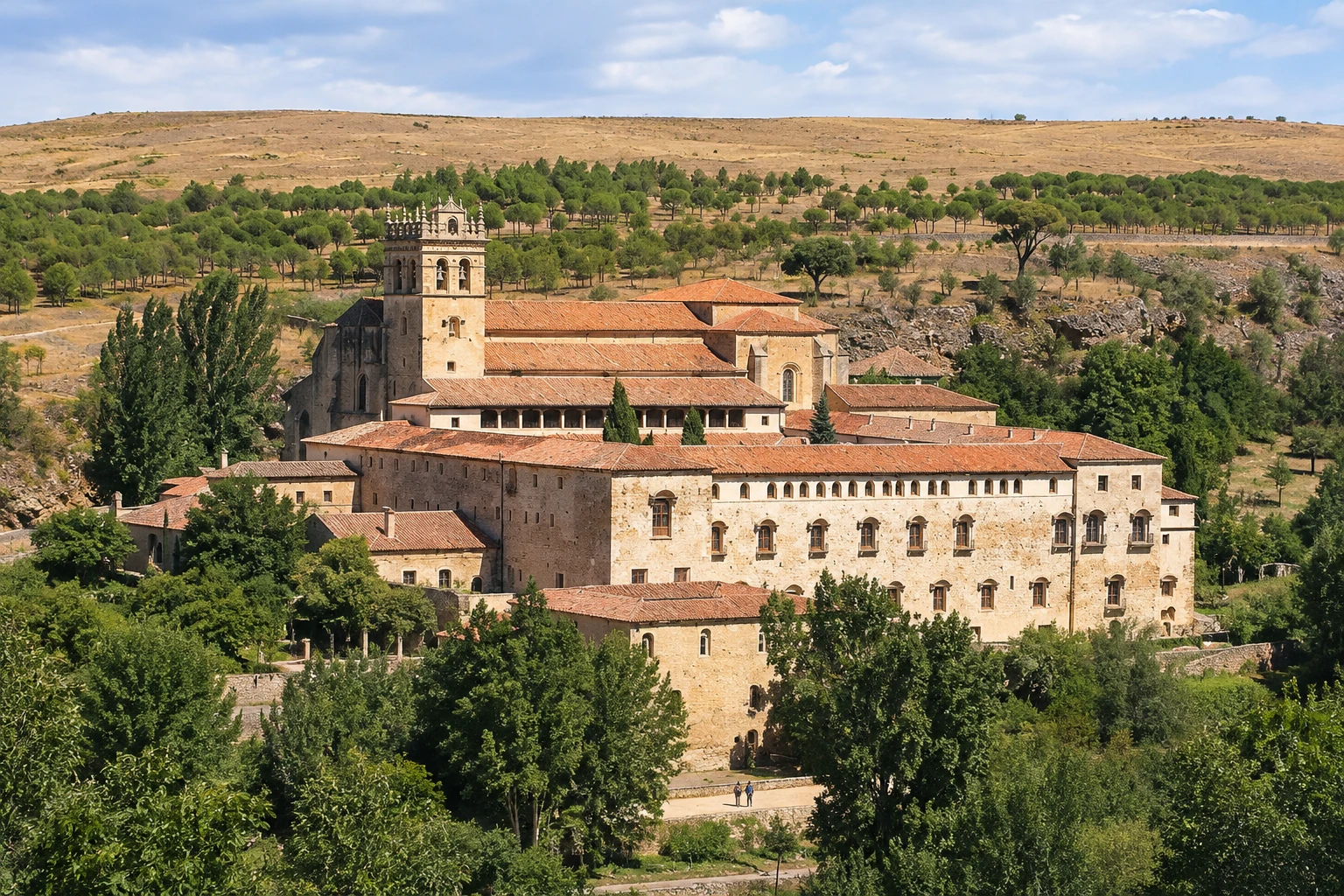
Hieronymite monastery founded in 1447 by Henrique IV, in the Eresma valley, below the Alcázar. It is still inhabited by monks, and visits are guided at a few fixed times.
House-museum opened in 1910 in the old judería, recreating the atmosphere of the painter's time. It houses the complete Apostolado and the View and Plan of Toledo by El Greco.
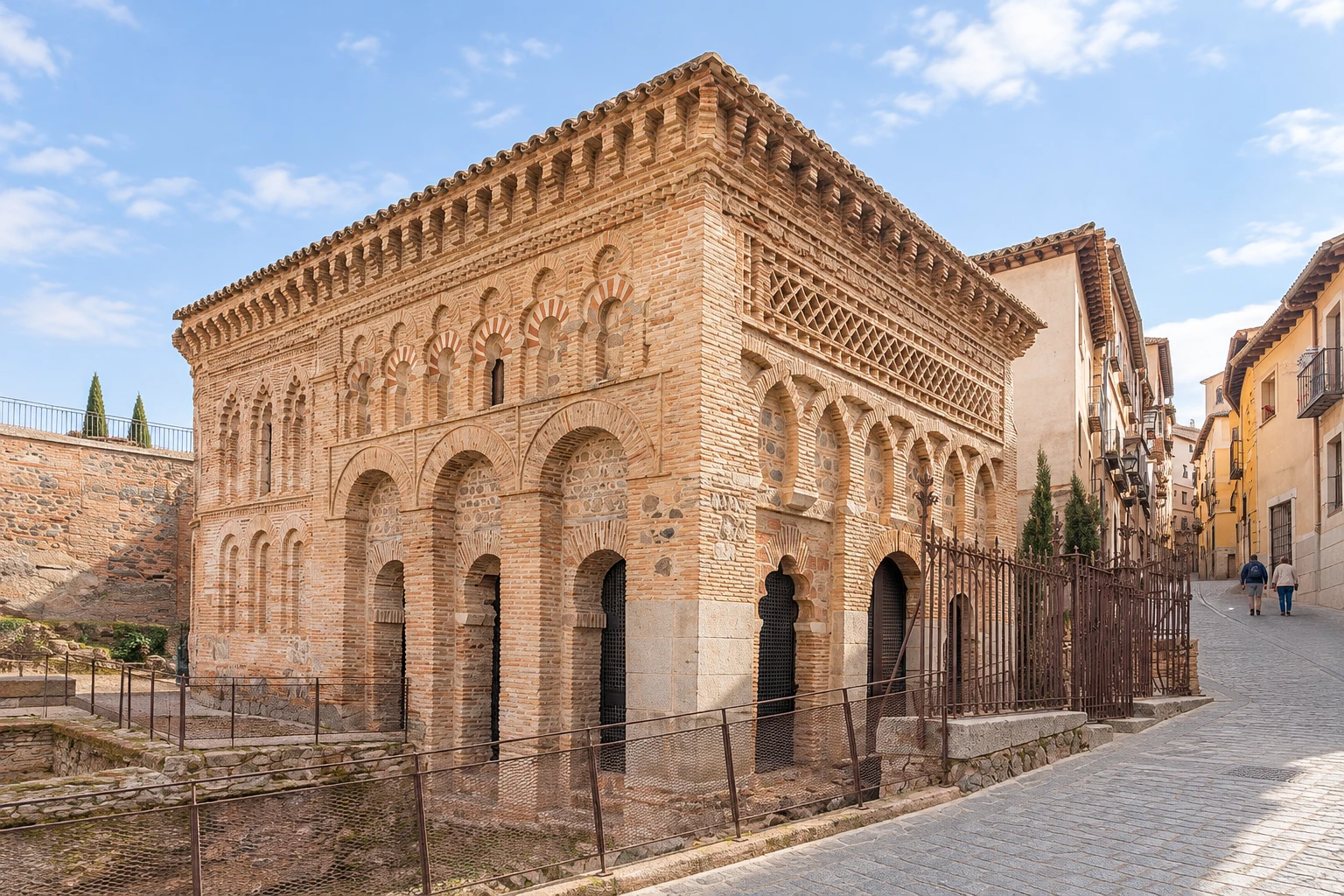
Small mosque completed in December 999, the best-preserved of the ten that Toledo once had. It has nine ribbed vaults and a Christian apse added in the 12th century.
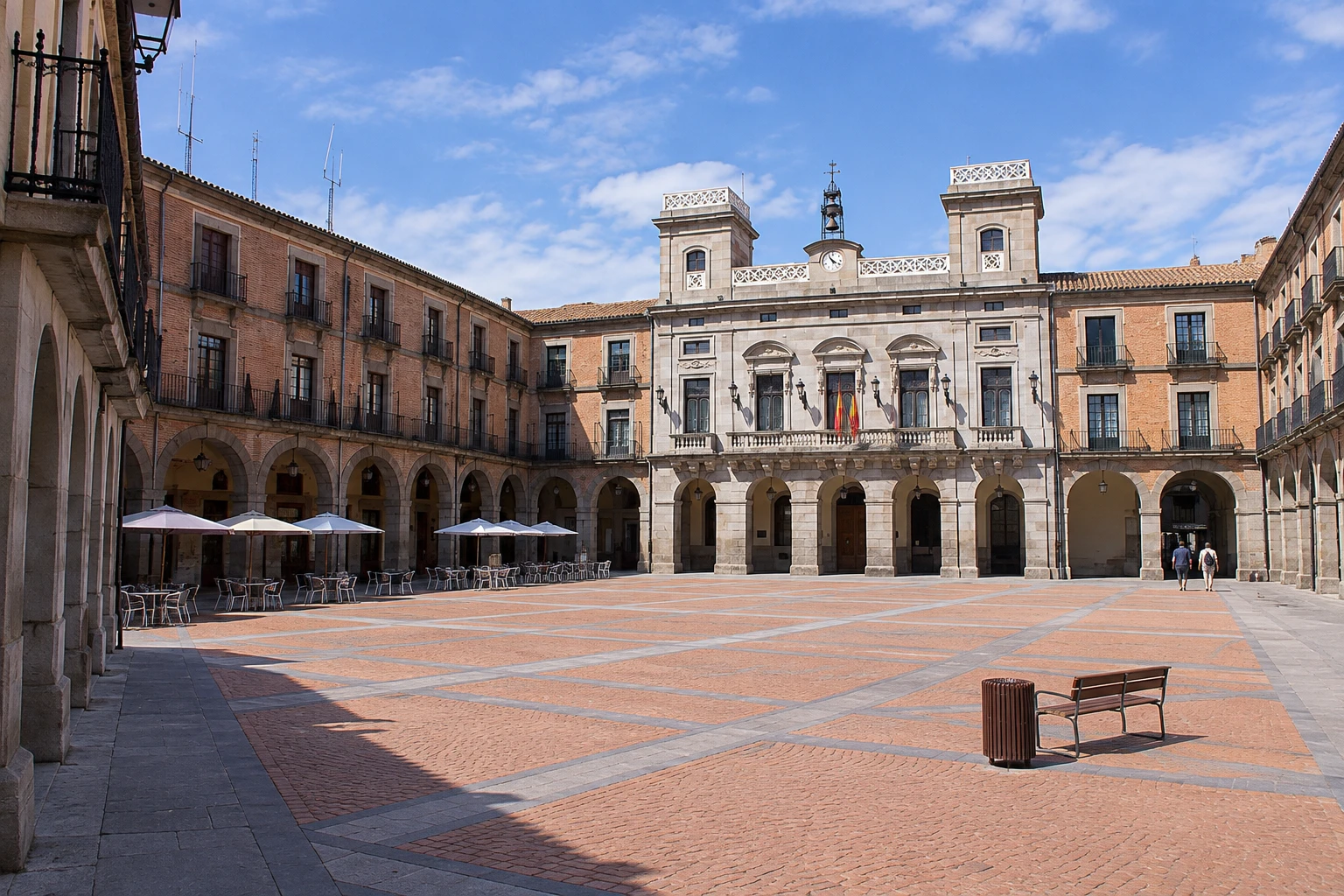
Ávila's main square, inside the wall, with arcades on three sides, the 19th-century town hall and the Iglesia de San Juan Bautista. It is the meeting point of the old town.
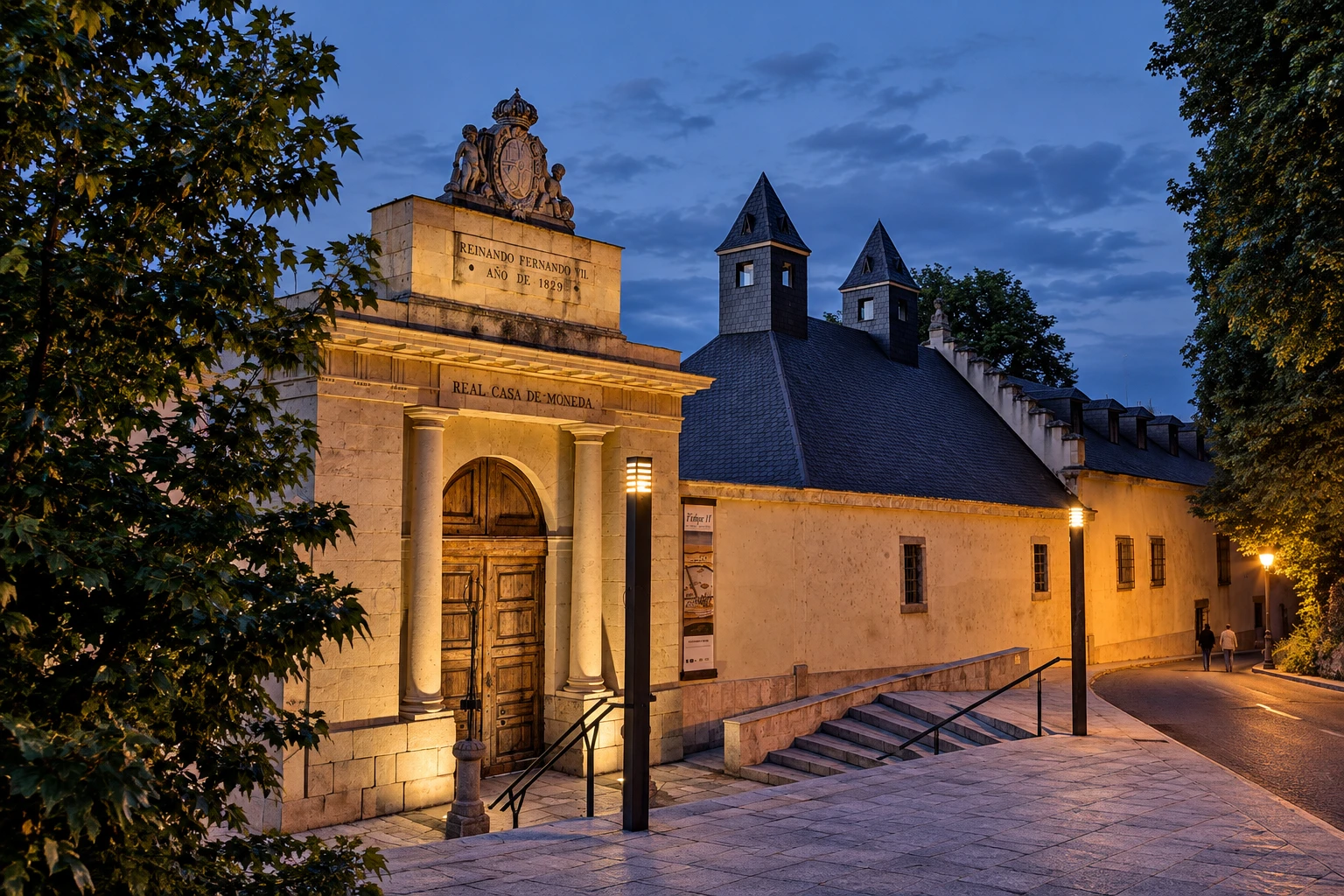
Coin factory commissioned by Filipe II between 1583 and 1588, designed by Juan de Herrera, on the banks of the Eresma. Today it is a museum, with a hydraulic wheel and the Centro de Interpretación del Acueducto.
Romanesque twelve-sided church, consecrated in 1208, on the road to Zamarramala, facing the Alcázar. In the center it has a small two-story shrine inspired by the Holy Sepulchre of Jerusalem.
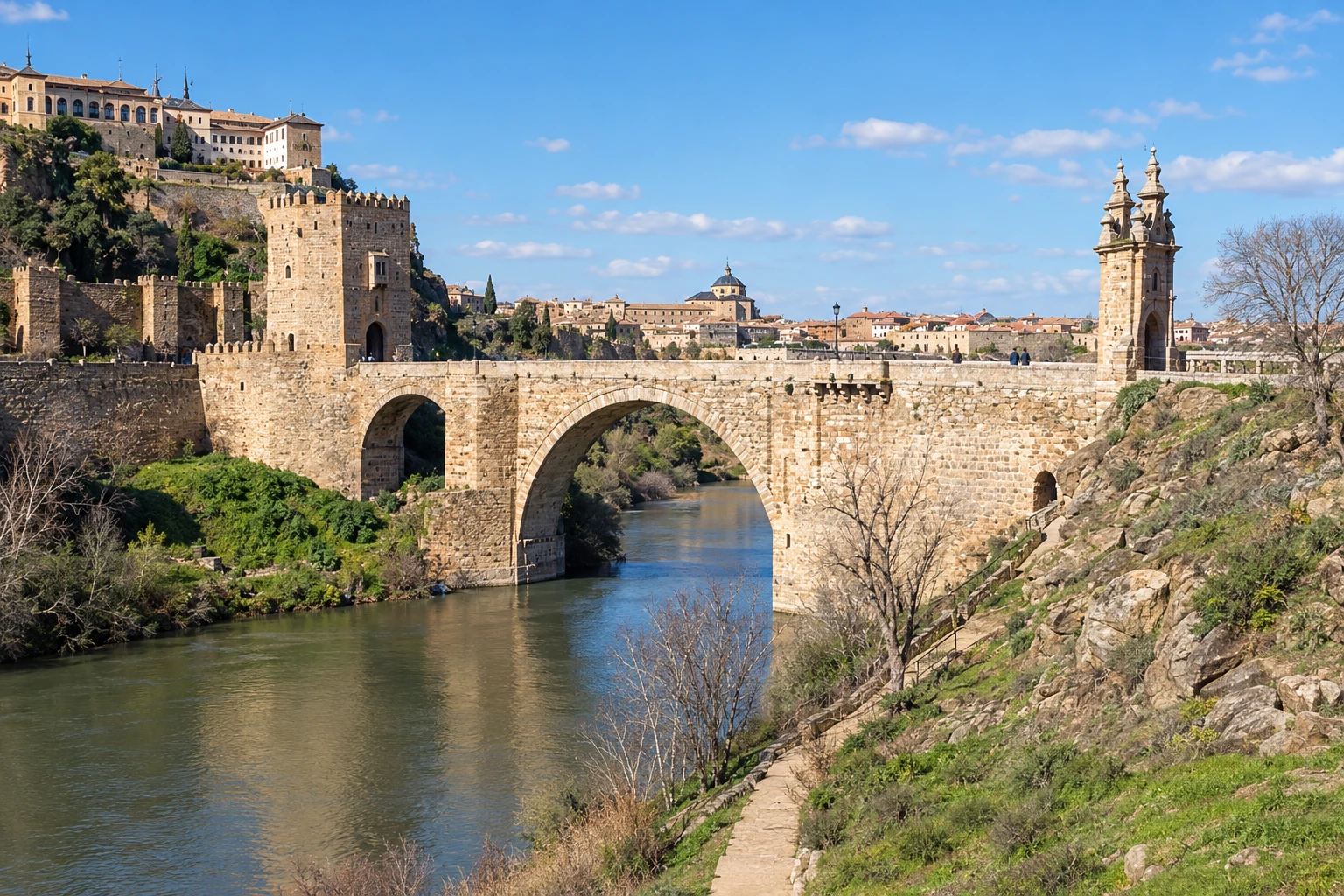
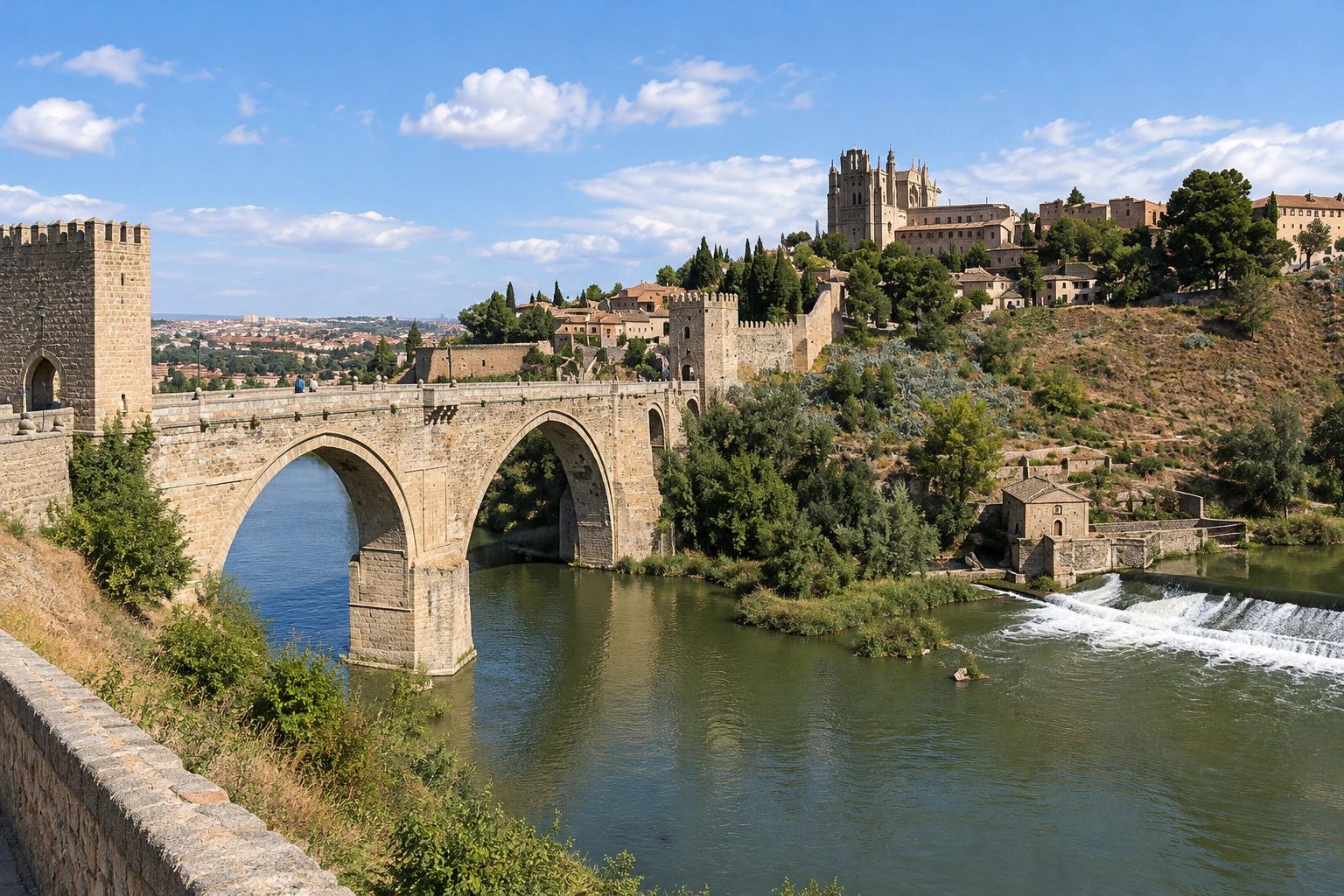
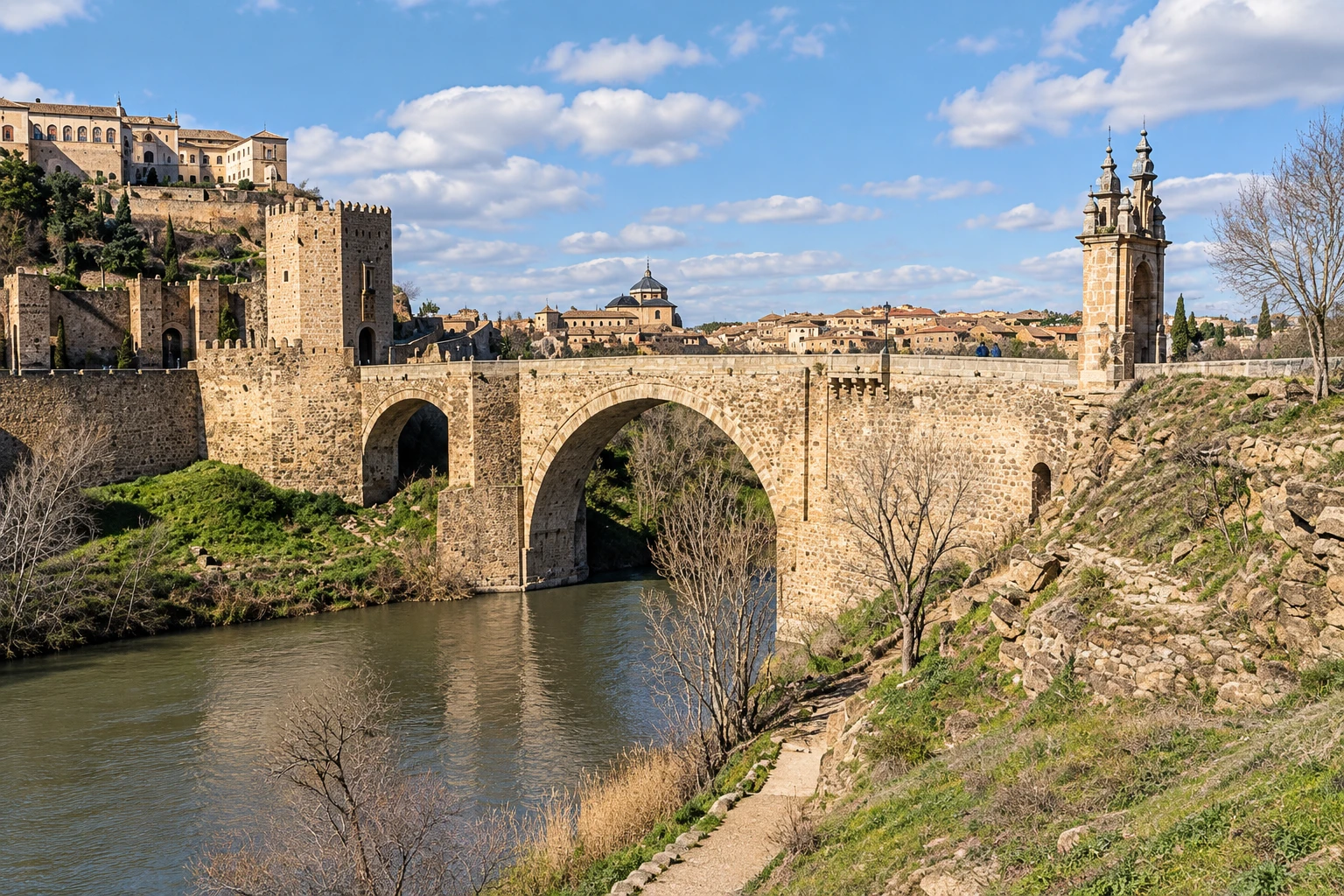
Medieval stone bridge over the Tagus at the western tip of the city, with a large central arch and a tower on each side. It was rebuilt around 1390 by Archbishop Pedro Tenorio.
Lawn on the banks of the Eresma, below the Alcázar, from where you can see the bow-like front of the castle on the rock. It's the classic spot to photograph the Alcázar from the north side.
Bridge of Roman origin over the Tagus at the eastern entrance to the city, at the foot of the Castillo de San Servando. It has a tower with the coats of arms of the Catholic Monarchs and a Baroque arch from 1721.
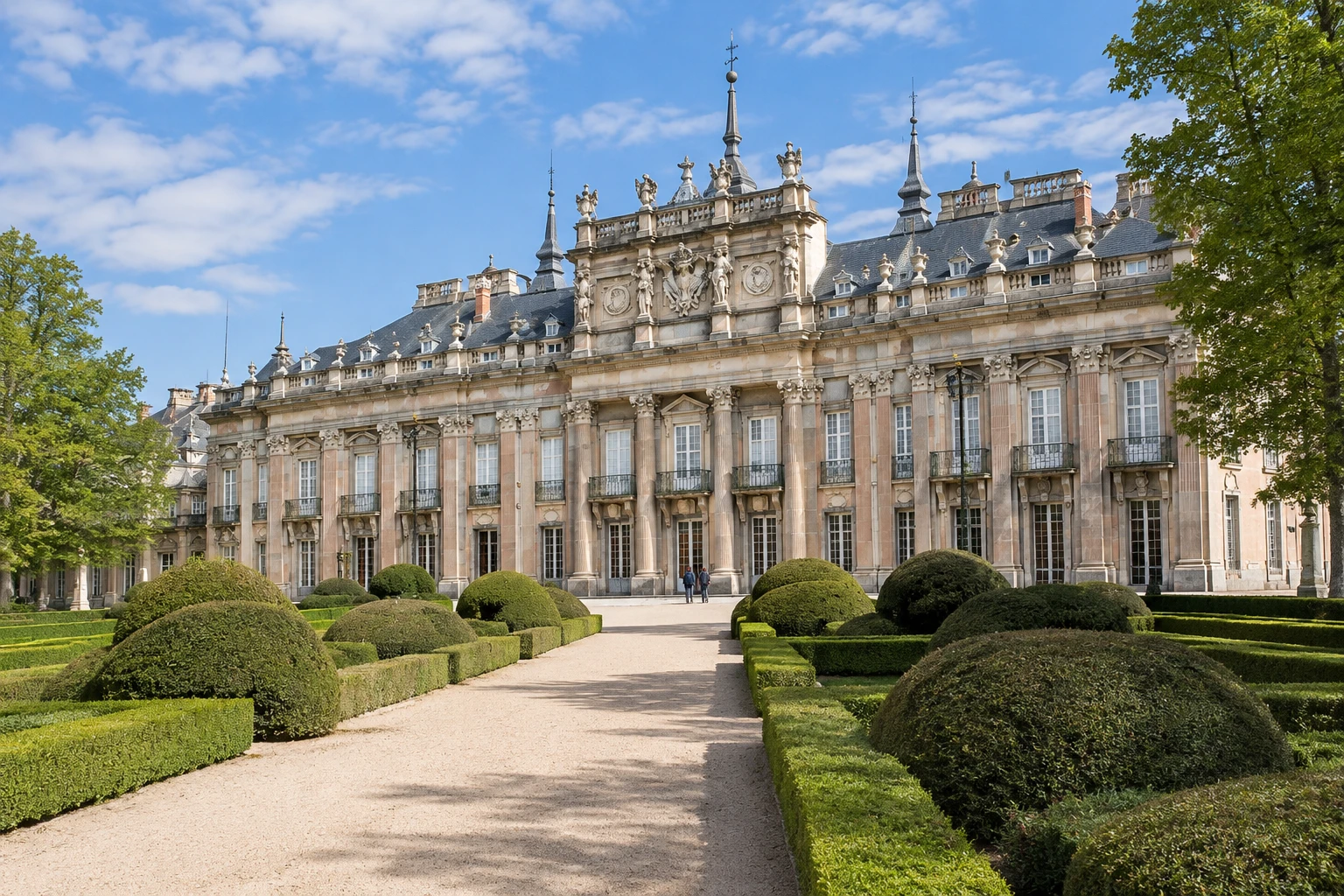
Summer palace of Filipe V, about 13 km from Segóvia, at the foot of the Sierra de Guadarrama. The French-style gardens have monumental fountains with lead sculptures.
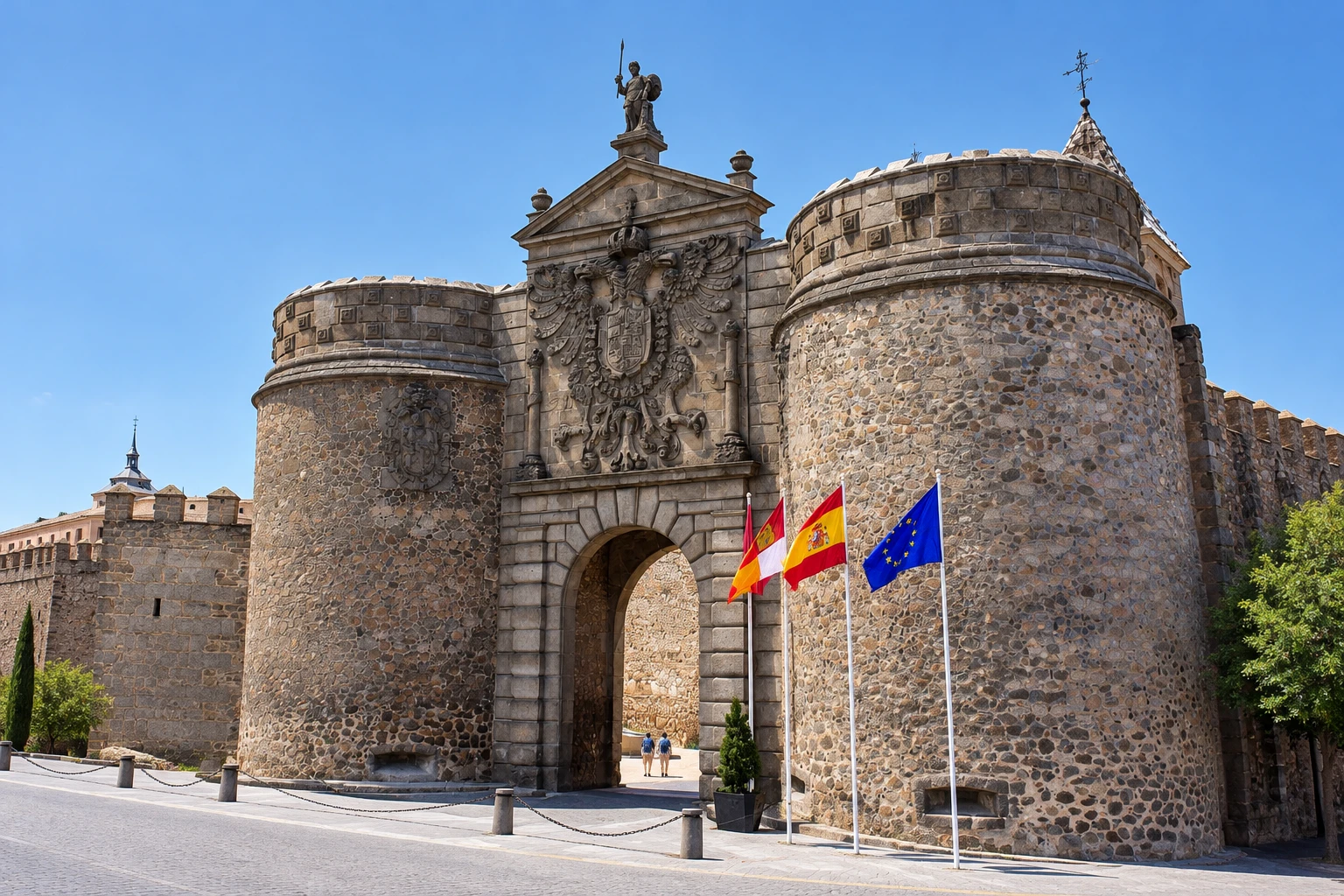
Main gate of Toledo's walls, rebuilt between 1540 and 1576 with the participation of Alonso de Covarrubias. It has two round towers, the two-headed eagle of the imperial city, and a statue of Charles V in the courtyard.
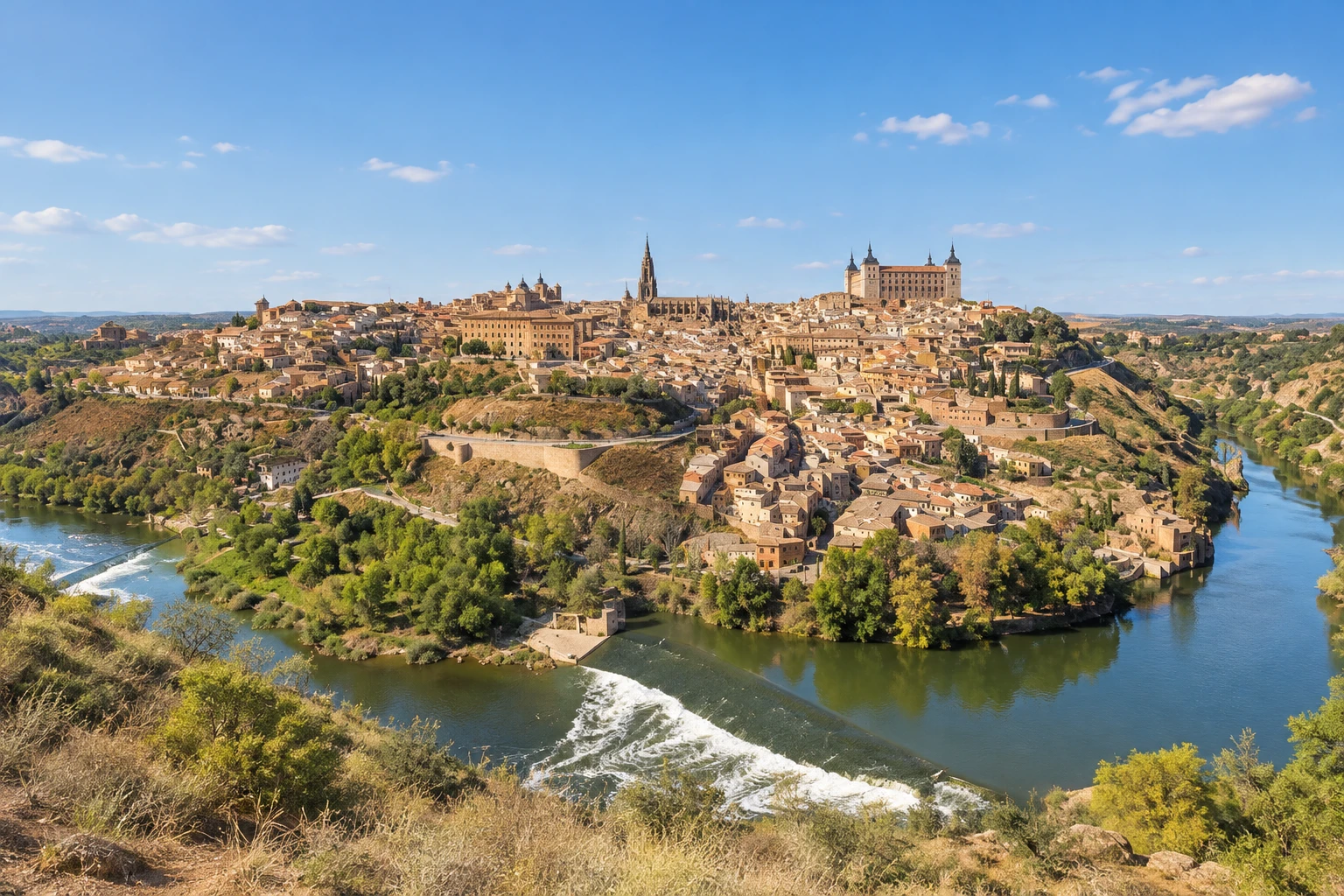
Viewpoint on the south bank of the Tejo, on the road that skirts the city, offering the classic view of Toledo: the historic quarter atop the hill, the Cathedral, the Alcázar and the river wrapping around it.
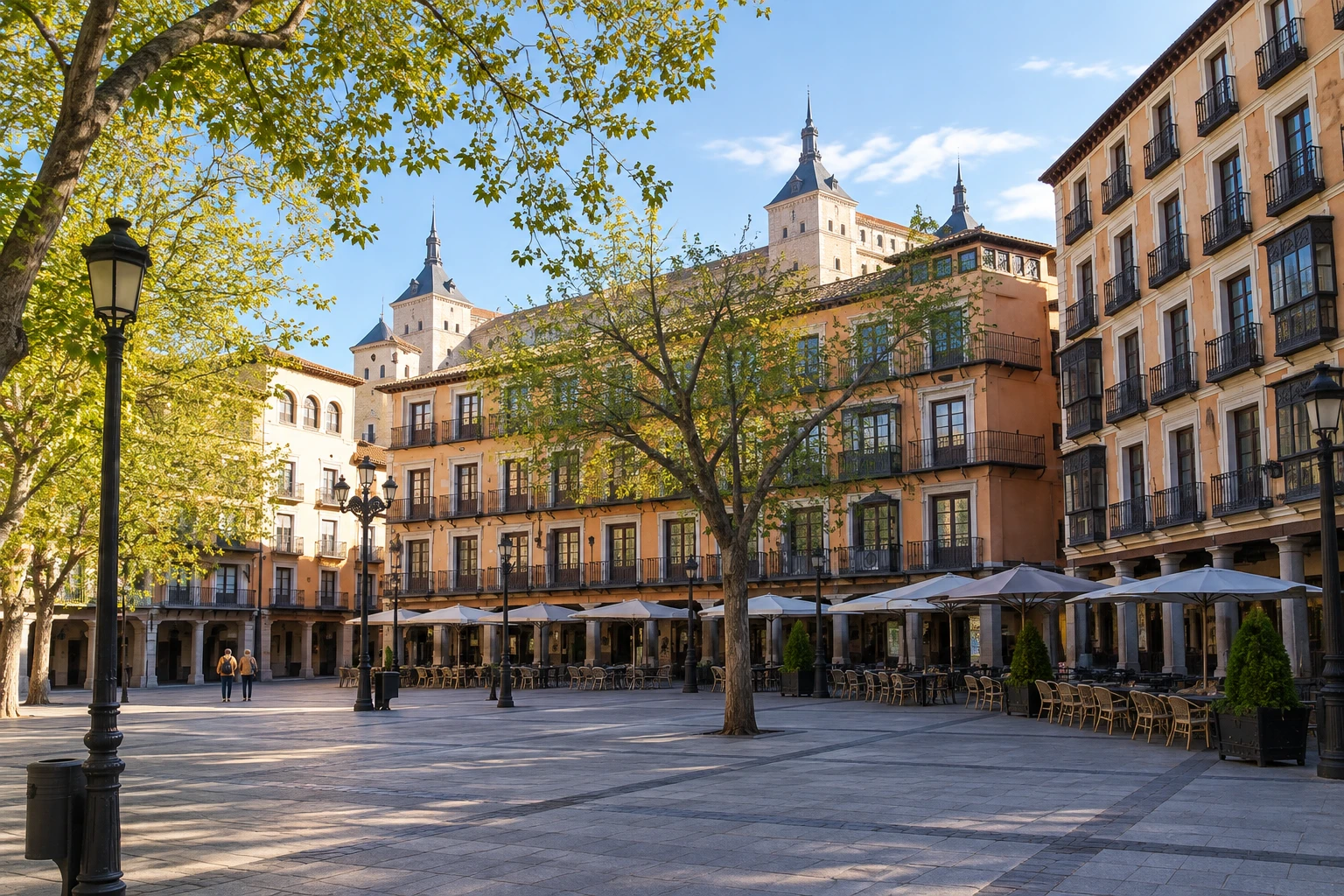
Main square of the old town, whose name comes from Arabic and means market for pack animals. It is a meeting point for locals, featuring the Arco de la Sangre and the terminus for the buses that climb up from the station.
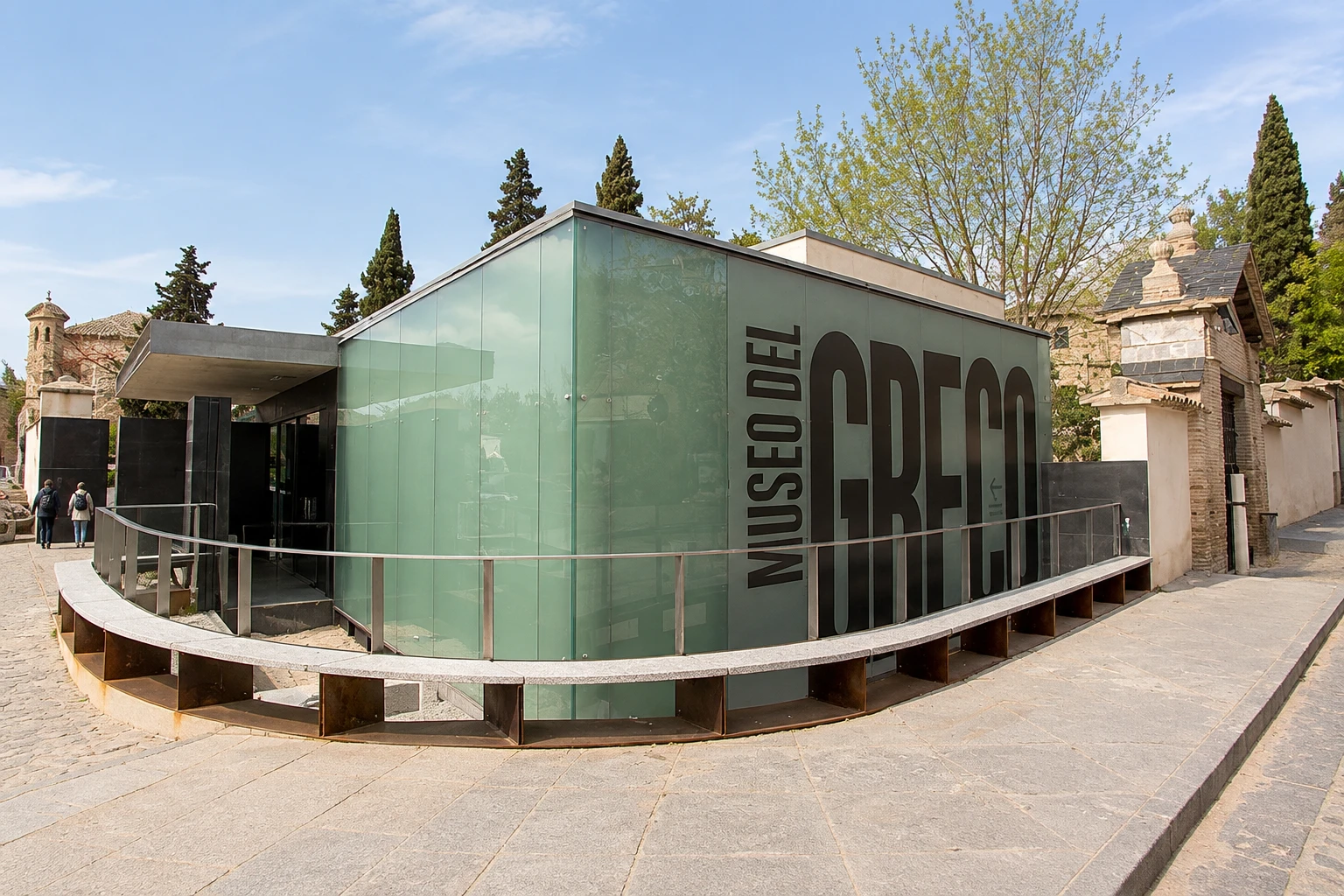
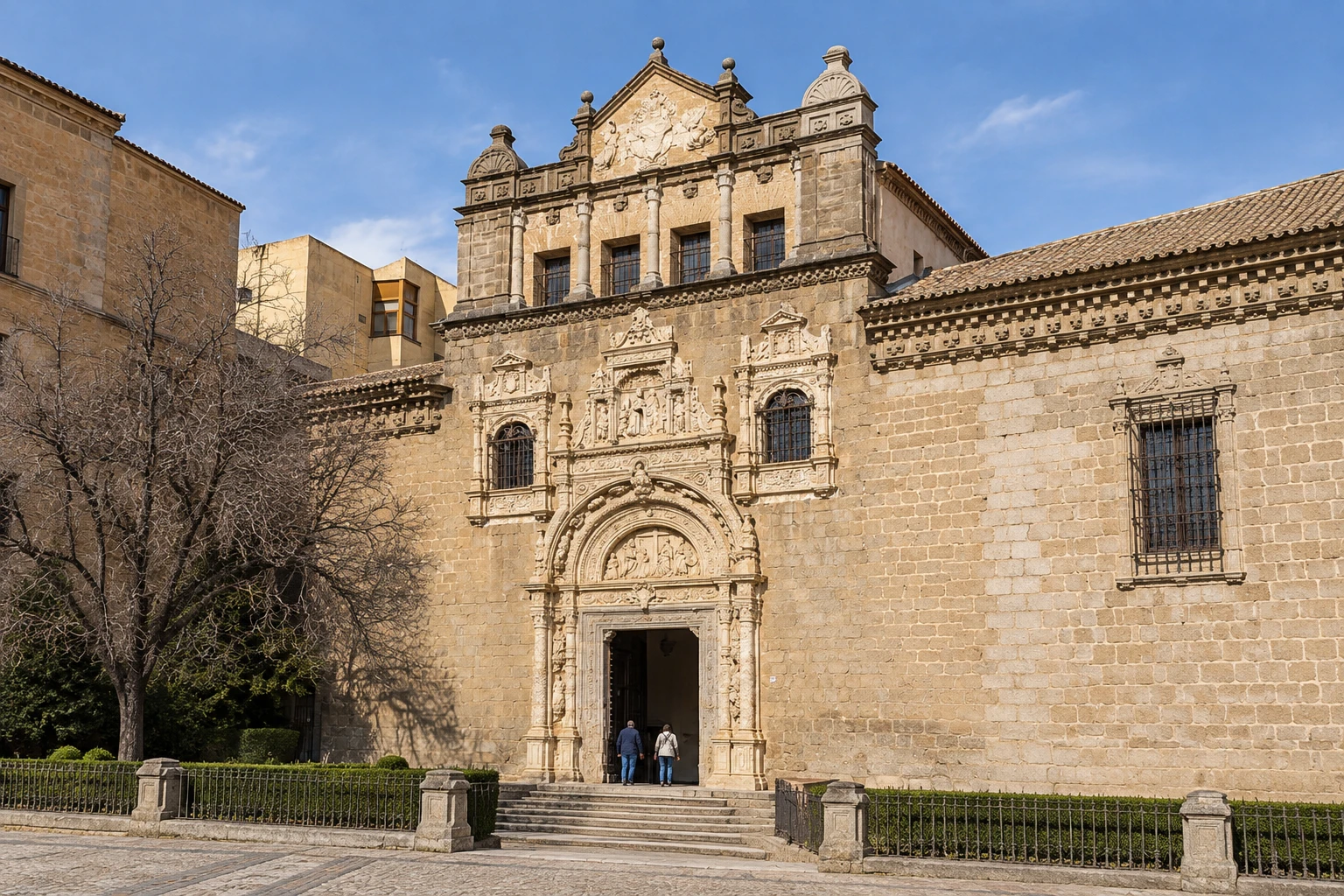
Museum in a former hospital from the early 16th century, with a plateresque portal by Alonso de Covarrubias. It contains paintings by El Greco from various periods, ceramics, tapestries and archaeological finds.
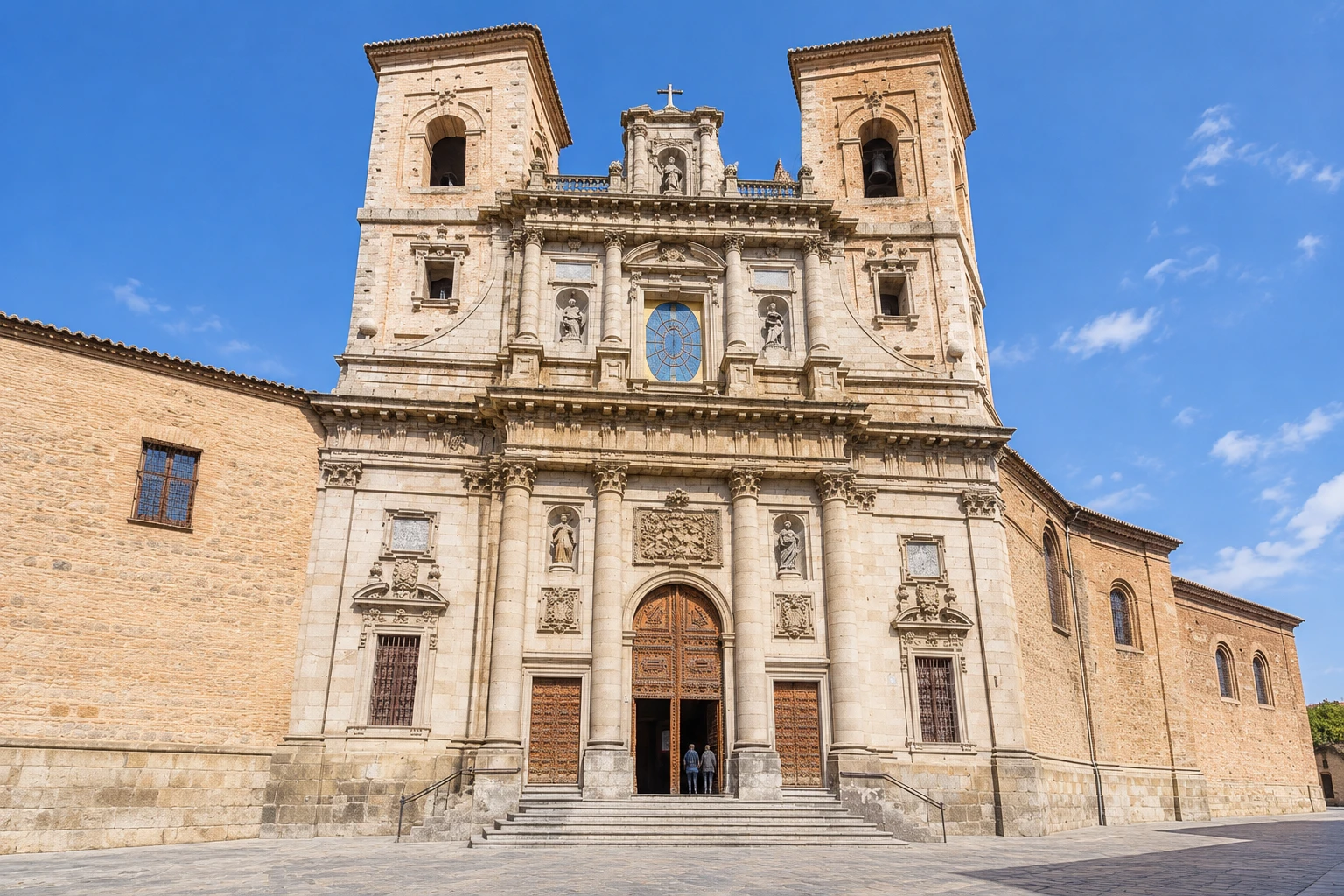
Baroque church of the Jesuits, built between 1629 and 1765 in the center of the old town. From the two towers on the façade you get one of the broadest views over the roofs of Toledo.
How many days should you set aside to see Toledo, Segovia, and Ávila?
The guide's itineraries cover 2, 3 and 5 days: Toledo and Segovia as two day trips from Madrid; The three cities in three days, based in Madrid; Five days with overnight stays in Toledo and in Segovia.
What to do Toledo, Segovia, and Ávila in one day?
Toledo: cathedral, Jewish Quarter and sunset at the Mirador del Valle. Avant from Atocha to Toledo early. From the station, bus or moving walkways to Zocodover. Morning at the Catedral Primada de Toledo and at the Alcázar of Toledo and the Army Museum. Lunch in the old town. Afternoon in Santo Tomé, the Museo del Greco and Toledo’s Jewish Quarter, with the two synagogues and the Monasterio de San Juan de los Reyes. Late afternoon at the Mirador del Valle and the bridges of San Martín and Alcántara; train back at night.
When is the best time to go to Toledo, Segovia, and Ávila?
It generally rains less in February and from June to September. The guide covers each month, with the weather and what changes on the tours.


 Brazil
 Antarctica
 Argentina
 Bolivia
 Chile
 Colombia
 Ecuador
 Falkland Islands (Malvinas)
 French Guiana
 Guyana
 Paraguay
 Peru
 Suriname
 Uruguay
 Venezuela
 Austria
 Belgium
 Croatia
 Denmark
 Finland
 France
 Germany
 Greece
 Hungary
 Iceland
 Ireland
 Italy
 Luxembourg
 Norway
 Poland
 Portugal
 Slovakia
 Slovenia
 Sweden
 Switzerland
 the Czech Republic
 the Netherlands
 the United Kingdom
 Turkey
 Bermuda
 Canada
 Greenland
 Mexico
 Saint Pierre and Miquelon
 the United States
 the Dominican Republic
 Japan
 Egypt
 South Africa
 Australia
 Fiji
 New Zealand
 Papua New Guinea