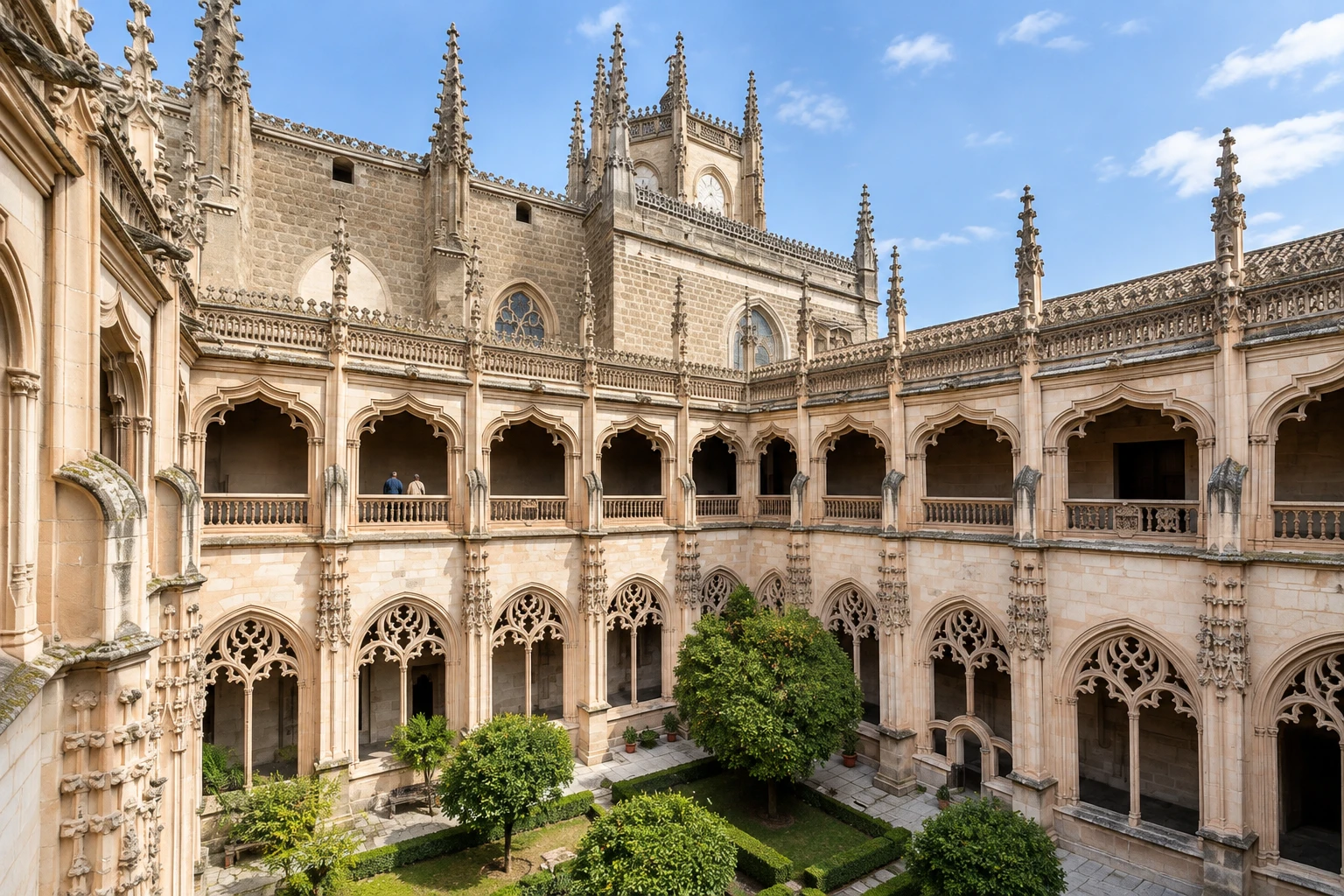
Monastery of San Juan de los ReyesFranciscan monastery ordered built by the Catholic Monarchs to commemorate the Battle of Toro and the birth of Prince Juan.
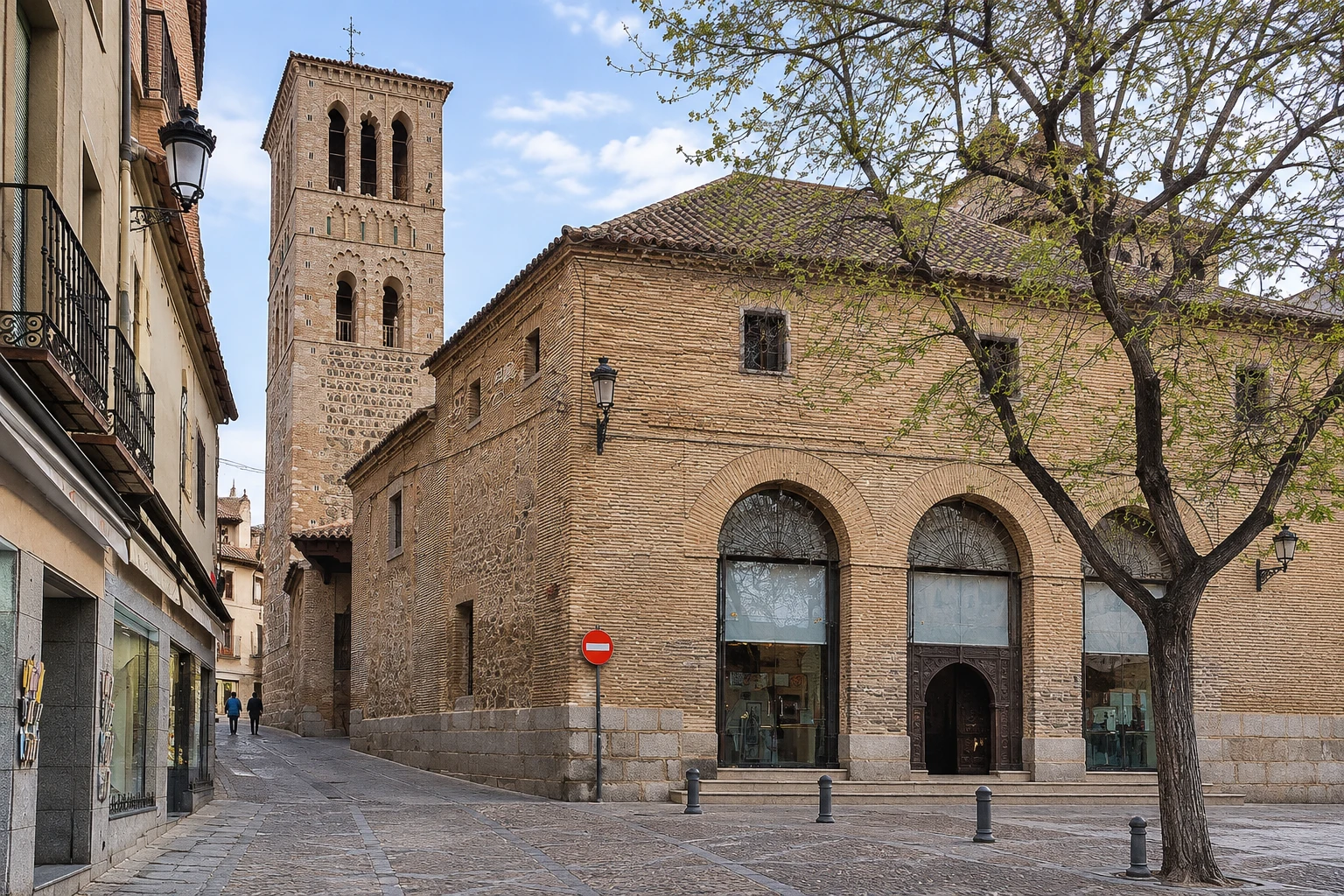
Church of Santo ToméMudejar-tower church that houses The Burial of the Lord of Orgaz, painted by El Greco in 1586 for the chapel where the lord of Orgaz himself was buried.
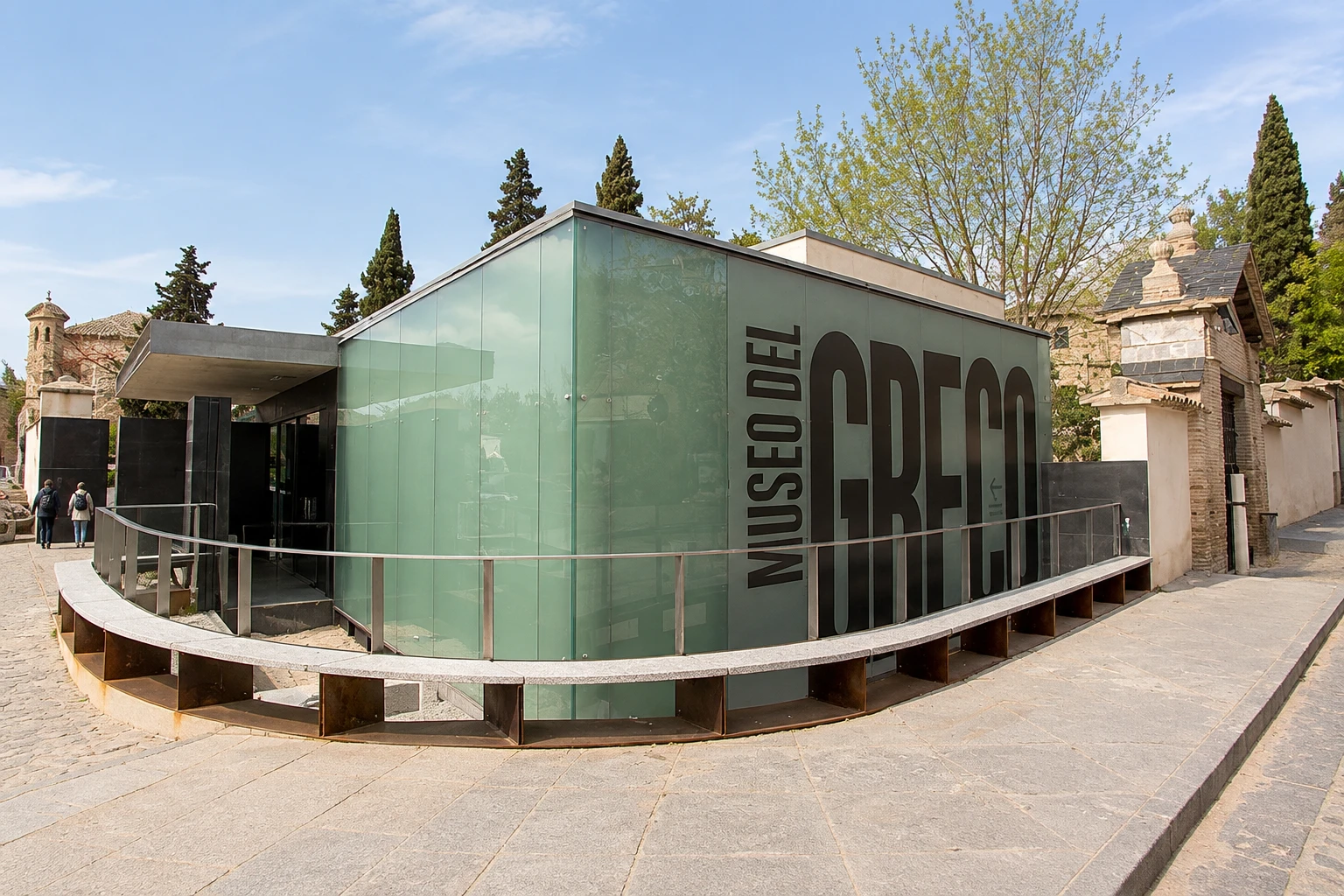
El Greco MuseumHouse-museum opened in 1910 in the old judería, recreating the atmosphere of the painter's time.
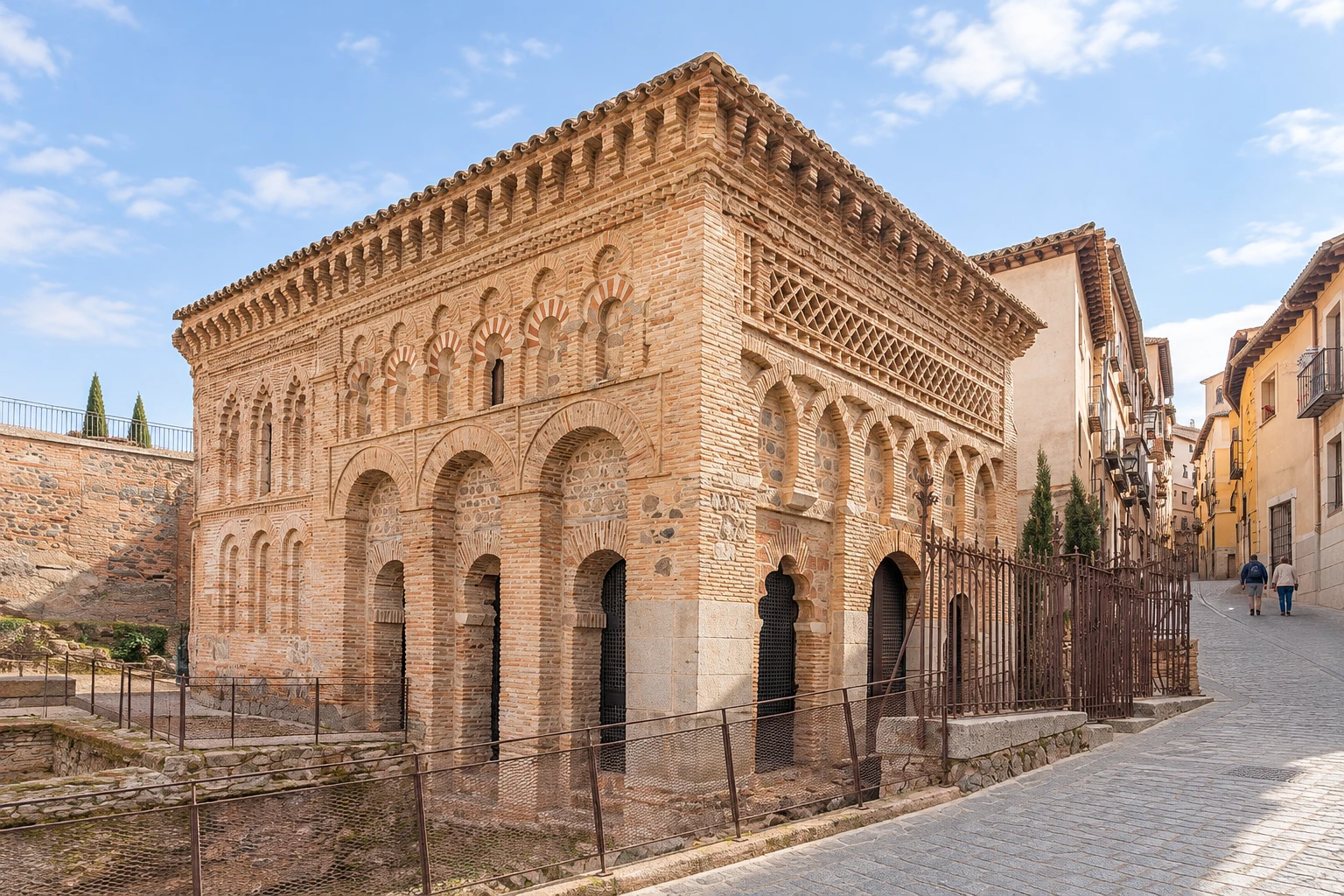
Mosque of Cristo de la LuzSmall mosque completed in December 999, the best-preserved of the ten that Toledo once had.
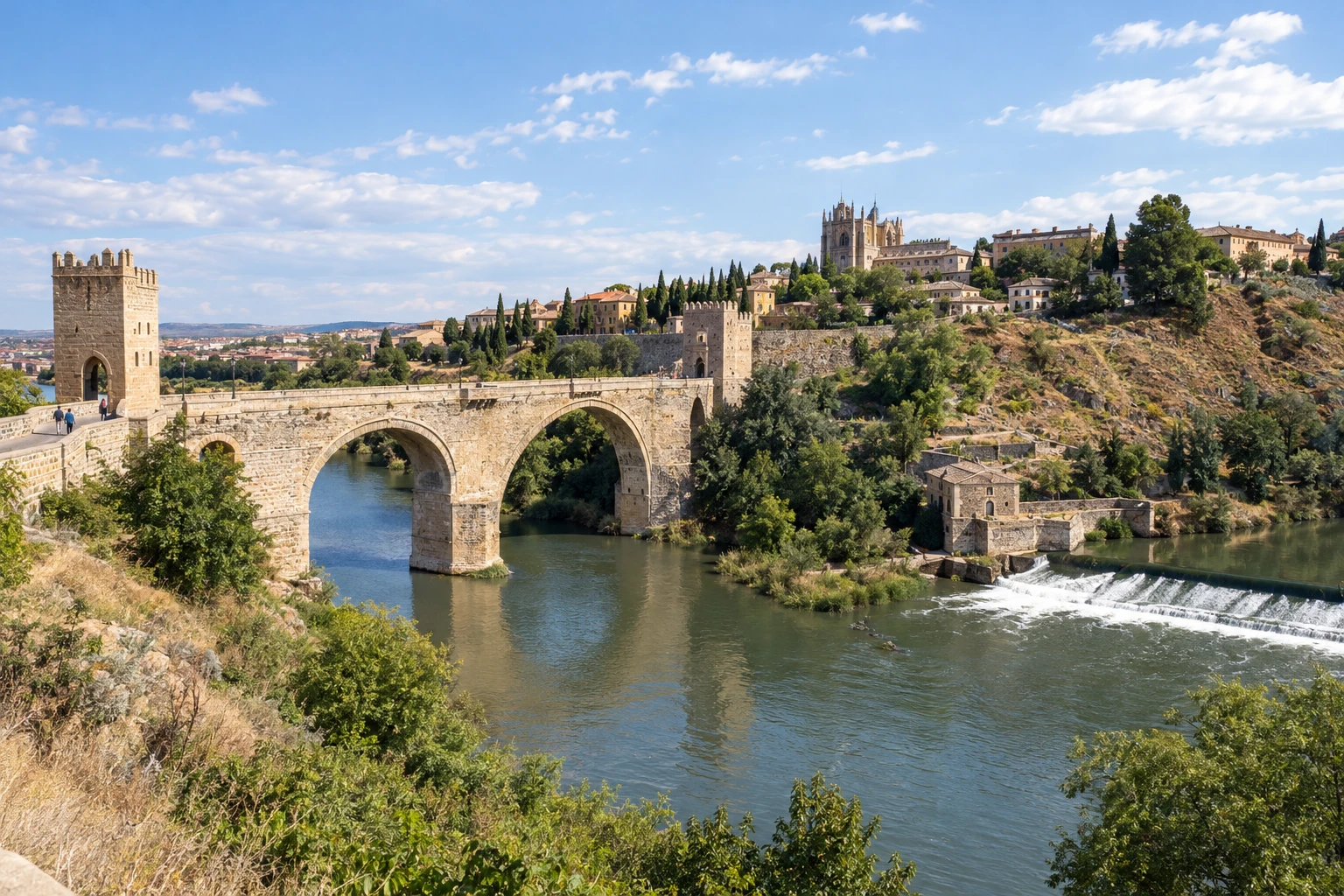
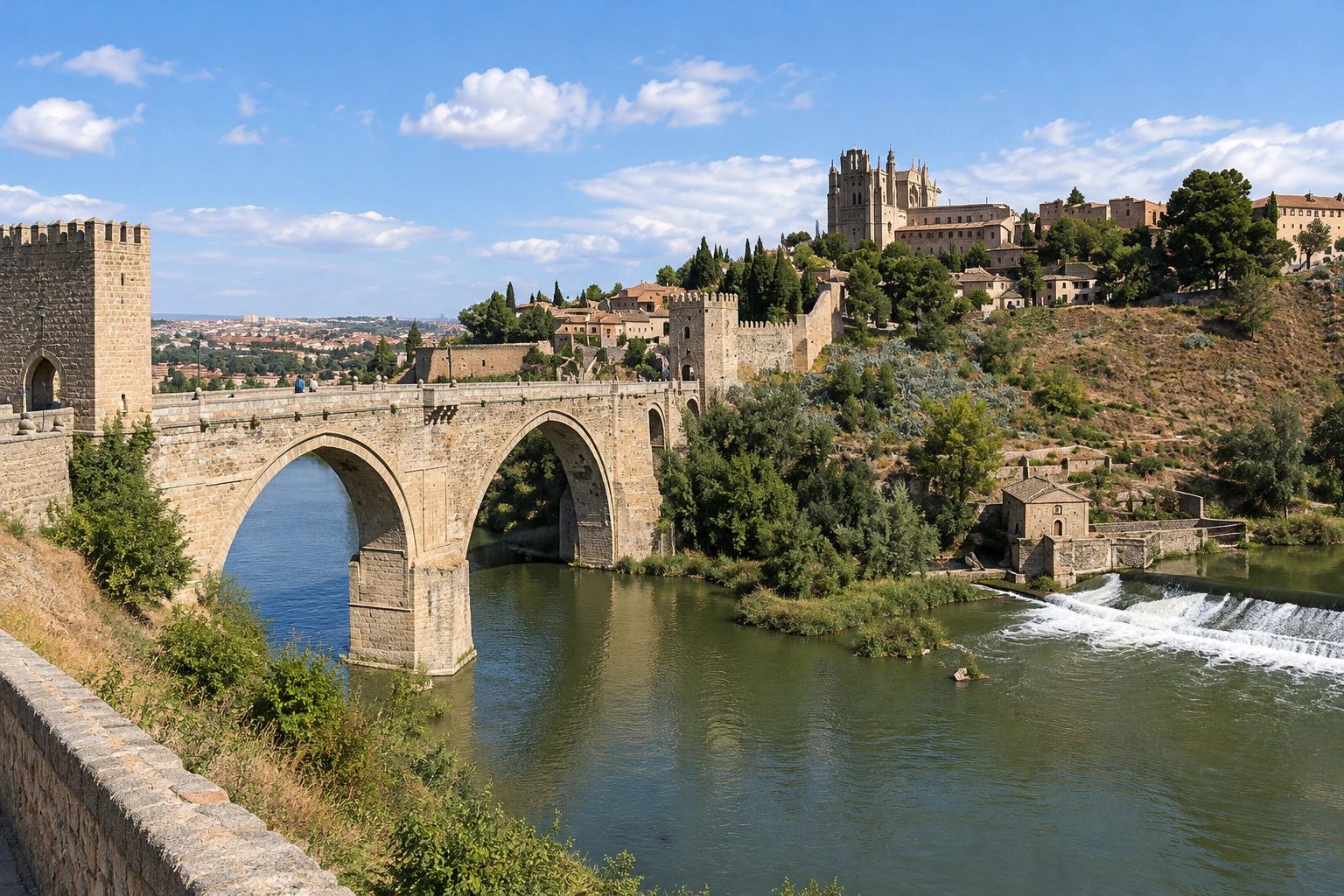
San Martín BridgeMedieval stone bridge over the Tagus at the western tip of the city, with a large central arch and a tower on each side.
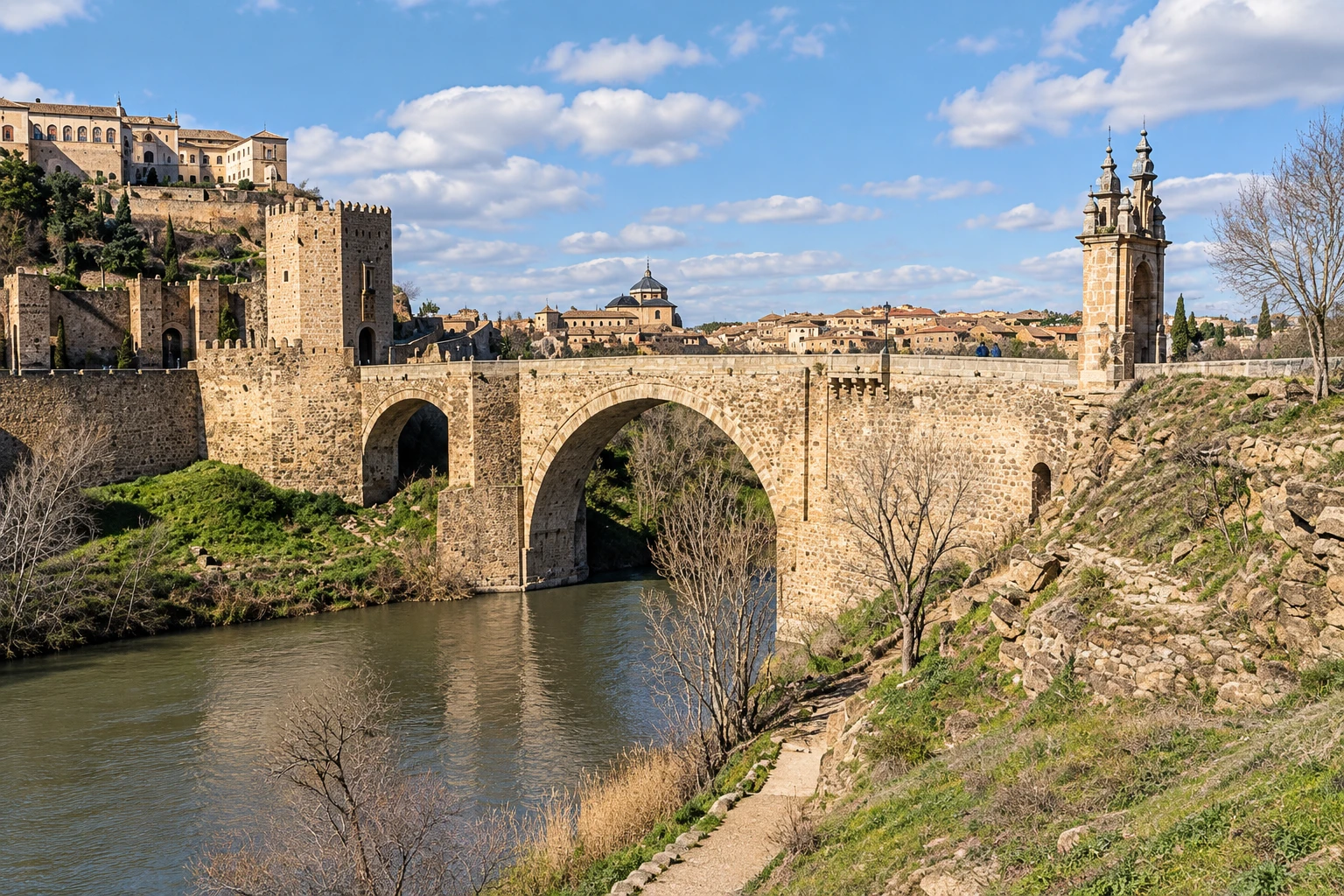
Alcántara BridgeBridge of Roman origin over the Tagus at the eastern entrance to the city, at the foot of the Castillo de San Servando.
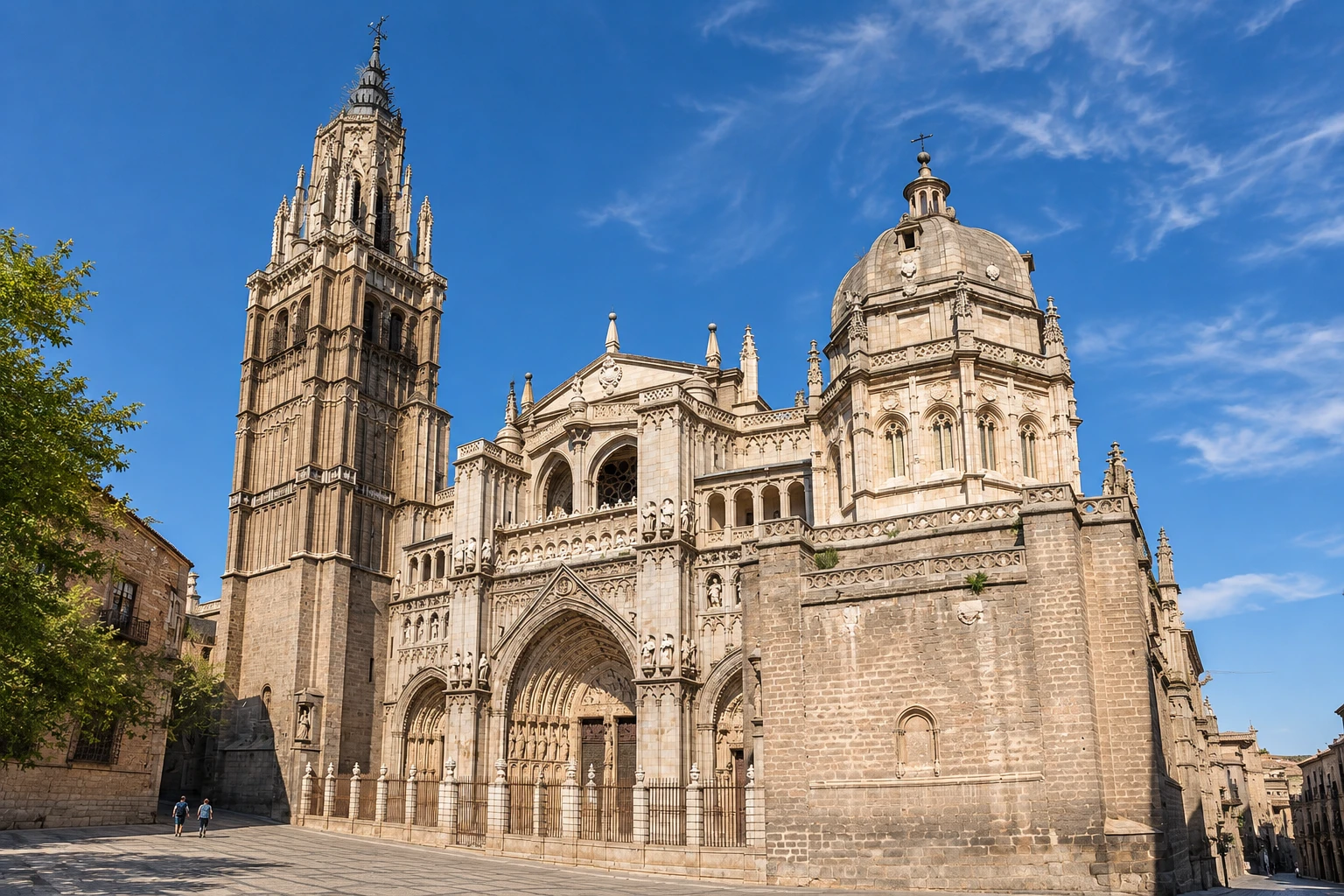
Gothic cathedral begun in 1226, seat of the Primate Archbishop of Spain. It houses the Transparente by Narciso Tomé, the choir by Berruguete and Vigarny, El Expolio by El Greco and the monstrance by Enrique de Arfe.
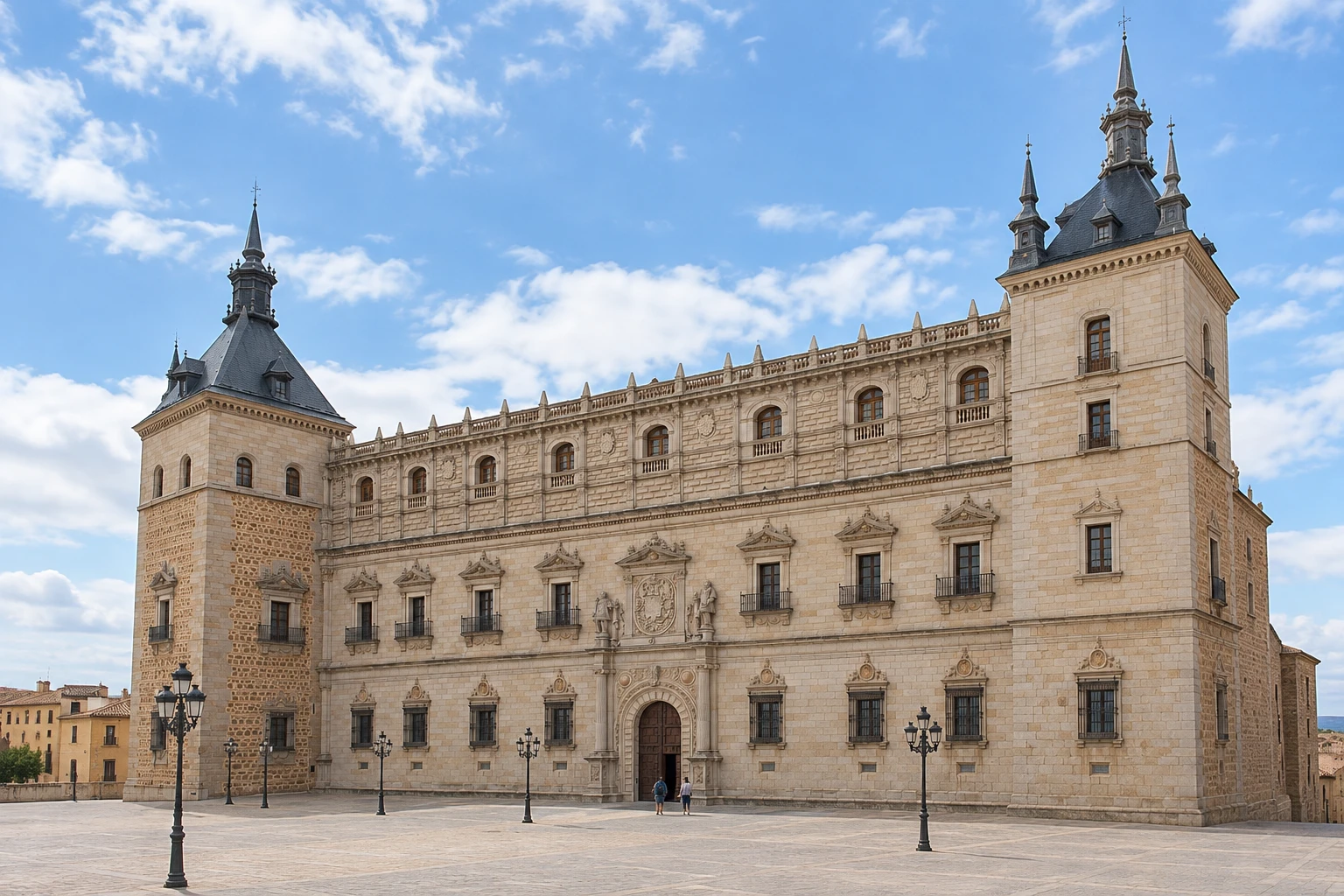
Square fortress at the highest point of the city, with four corner towers. Renovated by Carlos V and Felipe II, it now houses the Museo del Ejército and the Biblioteca de Castilla-La Mancha.
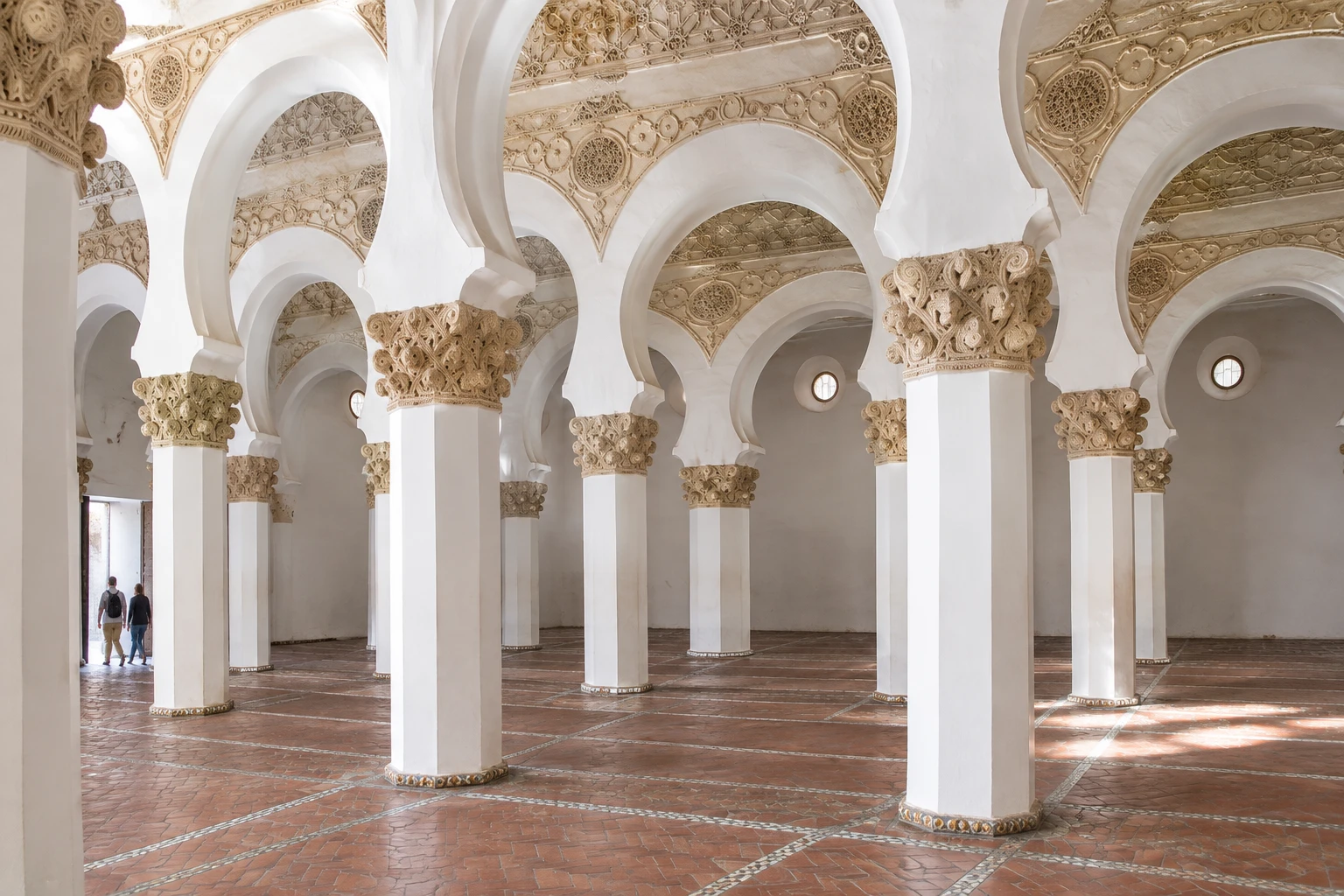
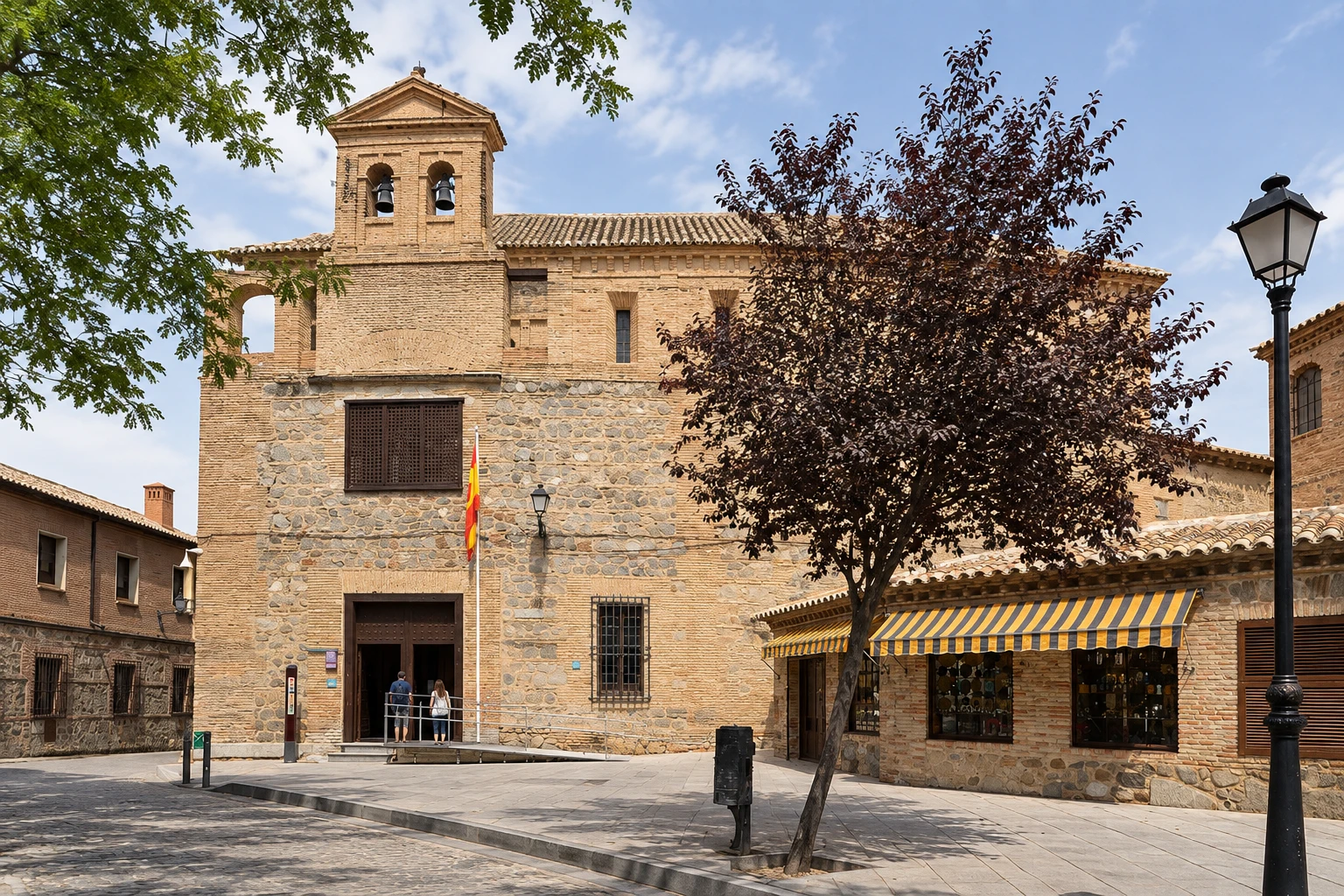
Old Sinagoga Mayor de Toledo, dating from 1180, with five naves of horseshoe arches on white pillars. Built by Muslim craftsmen for Toledo's Jewish community and later converted into a church.
Mudéjar synagogue dated to 1357, commissioned by Samuel ha‑Leví, treasurer to King Pedro I. The prayer hall features carved plasterwork with inscriptions in Hebrew and Arabic. It houses the Museo Sefardí.
Franciscan monastery ordered built by the Catholic Monarchs to commemorate the Battle of Toro and the birth of Prince Juan. Work by Juan Guas, in the Isabelline Gothic style, with a two-storey cloister.
Mudejar-tower church that houses The Burial of the Lord of Orgaz, painted by El Greco in 1586 for the chapel where the lord of Orgaz himself was buried.
House-museum opened in 1910 in the old judería, recreating the atmosphere of the painter's time. It houses the complete Apostolado and the View and Plan of Toledo by El Greco.
Small mosque completed in December 999, the best-preserved of the ten that Toledo once had. It has nine ribbed vaults and a Christian apse added in the 12th century.
Medieval stone bridge over the Tagus at the western tip of the city, with a large central arch and a tower on each side. It was rebuilt around 1390 by Archbishop Pedro Tenorio.
Bridge of Roman origin over the Tagus at the eastern entrance to the city, at the foot of the Castillo de San Servando. It has a tower with the coats of arms of the Catholic Monarchs and a Baroque arch from 1721.
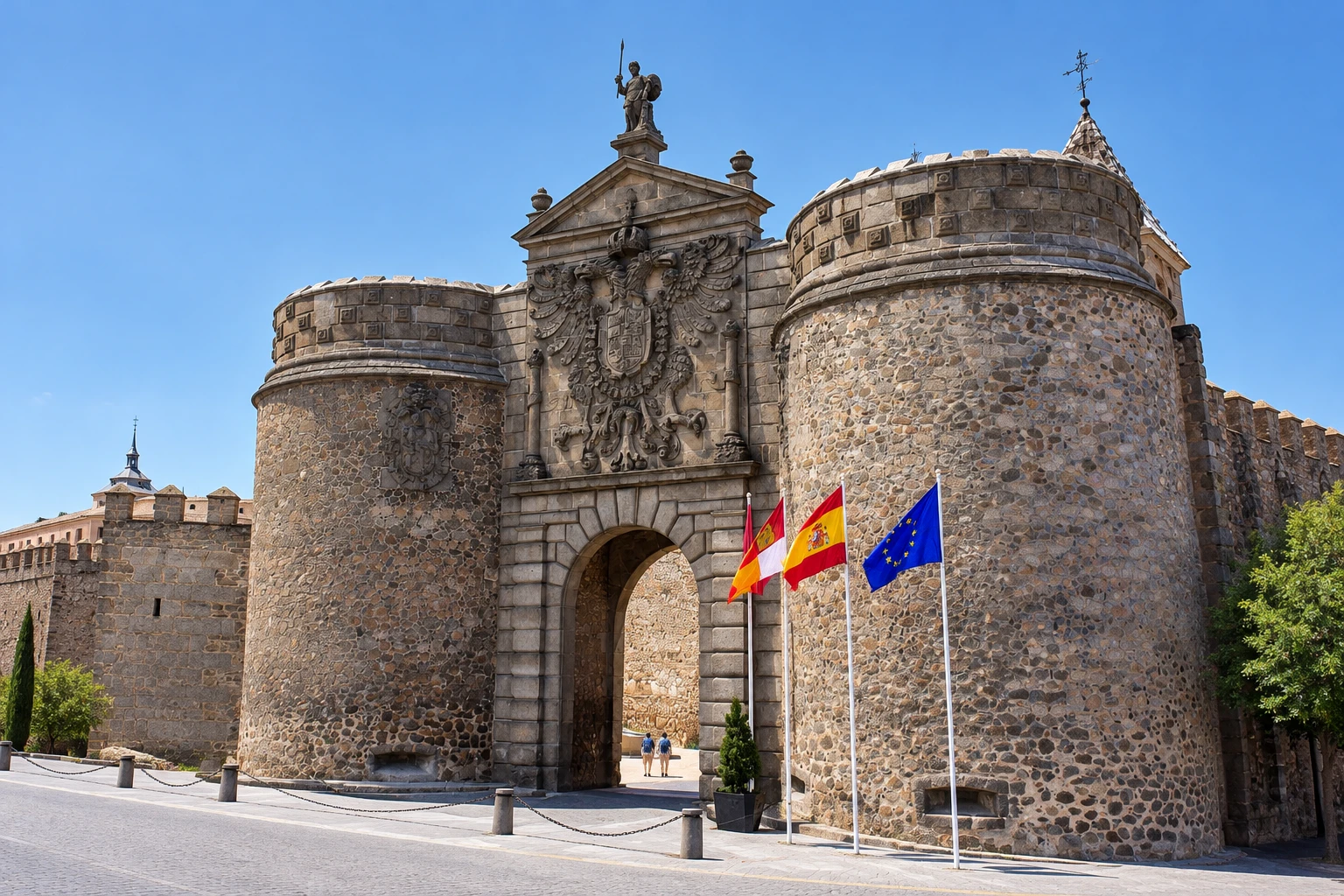
Main gate of Toledo's walls, rebuilt between 1540 and 1576 with the participation of Alonso de Covarrubias. It has two round towers, the two-headed eagle of the imperial city, and a statue of Charles V in the courtyard.
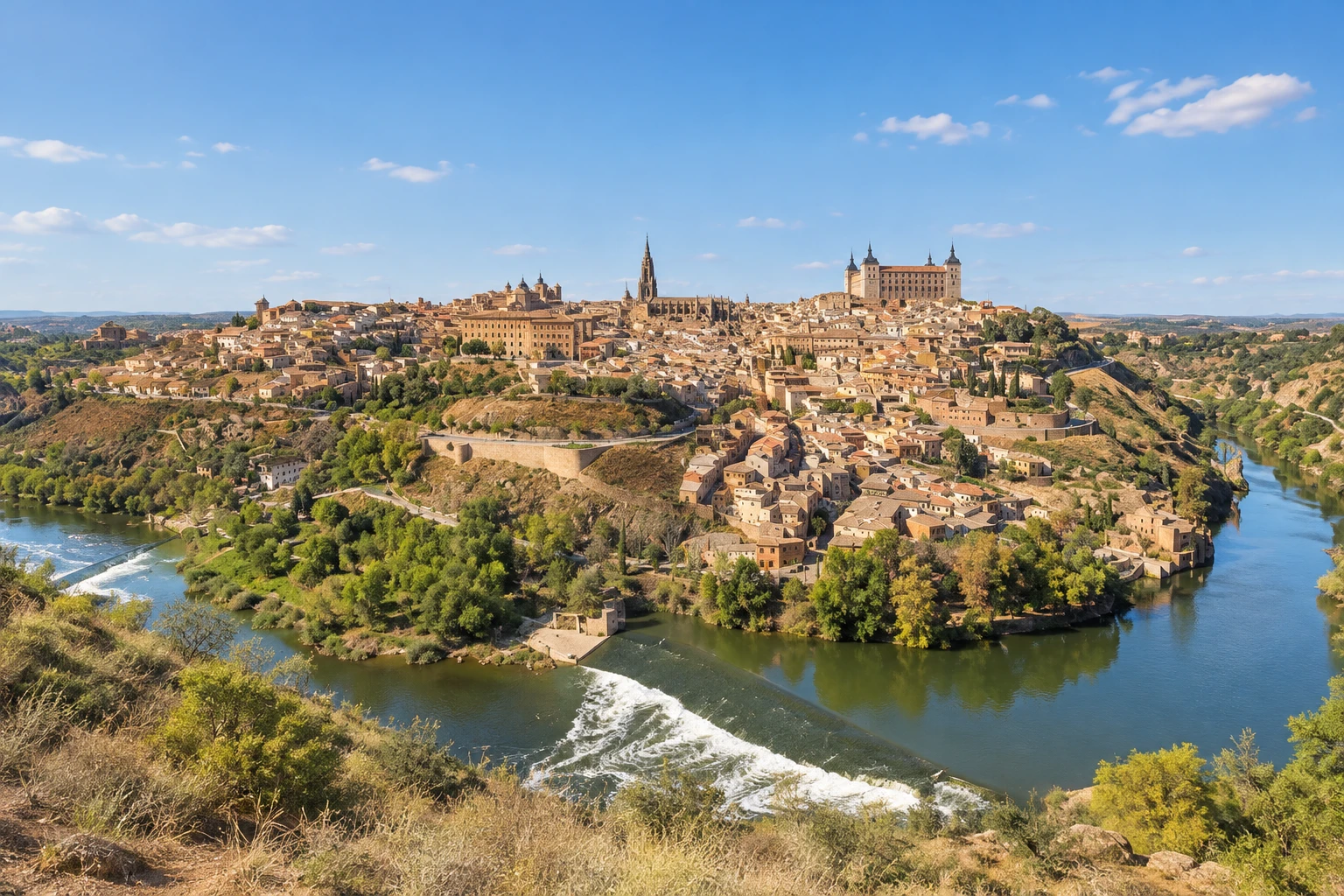
Viewpoint on the south bank of the Tejo, on the road that skirts the city, offering the classic view of Toledo: the historic quarter atop the hill, the Cathedral, the Alcázar and the river wrapping around it.
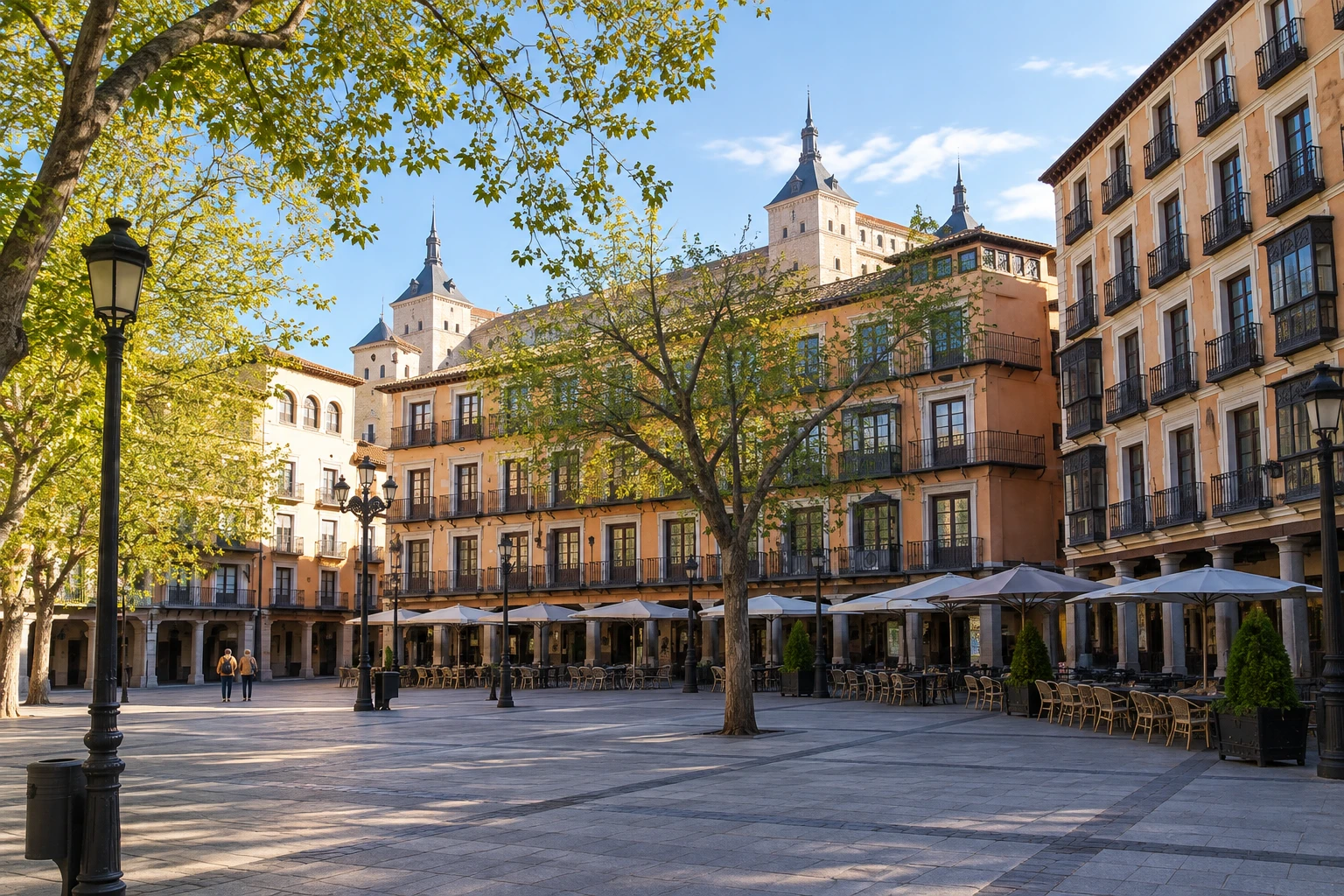
Main square of the old town, whose name comes from Arabic and means market for pack animals. It is a meeting point for locals, featuring the Arco de la Sangre and the terminus for the buses that climb up from the station.
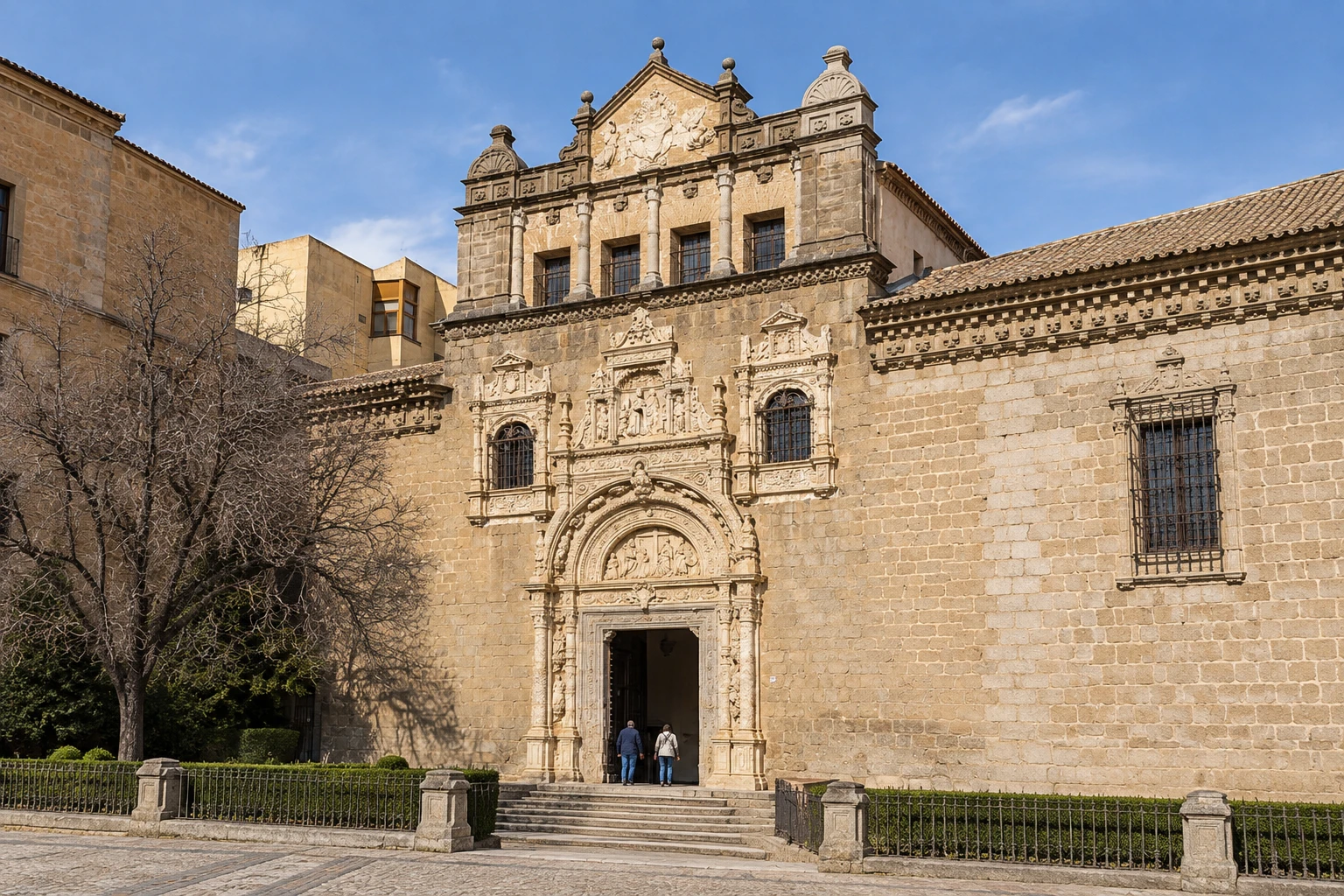
Museum in a former hospital from the early 16th century, with a plateresque portal by Alonso de Covarrubias. It contains paintings by El Greco from various periods, ceramics, tapestries and archaeological finds.
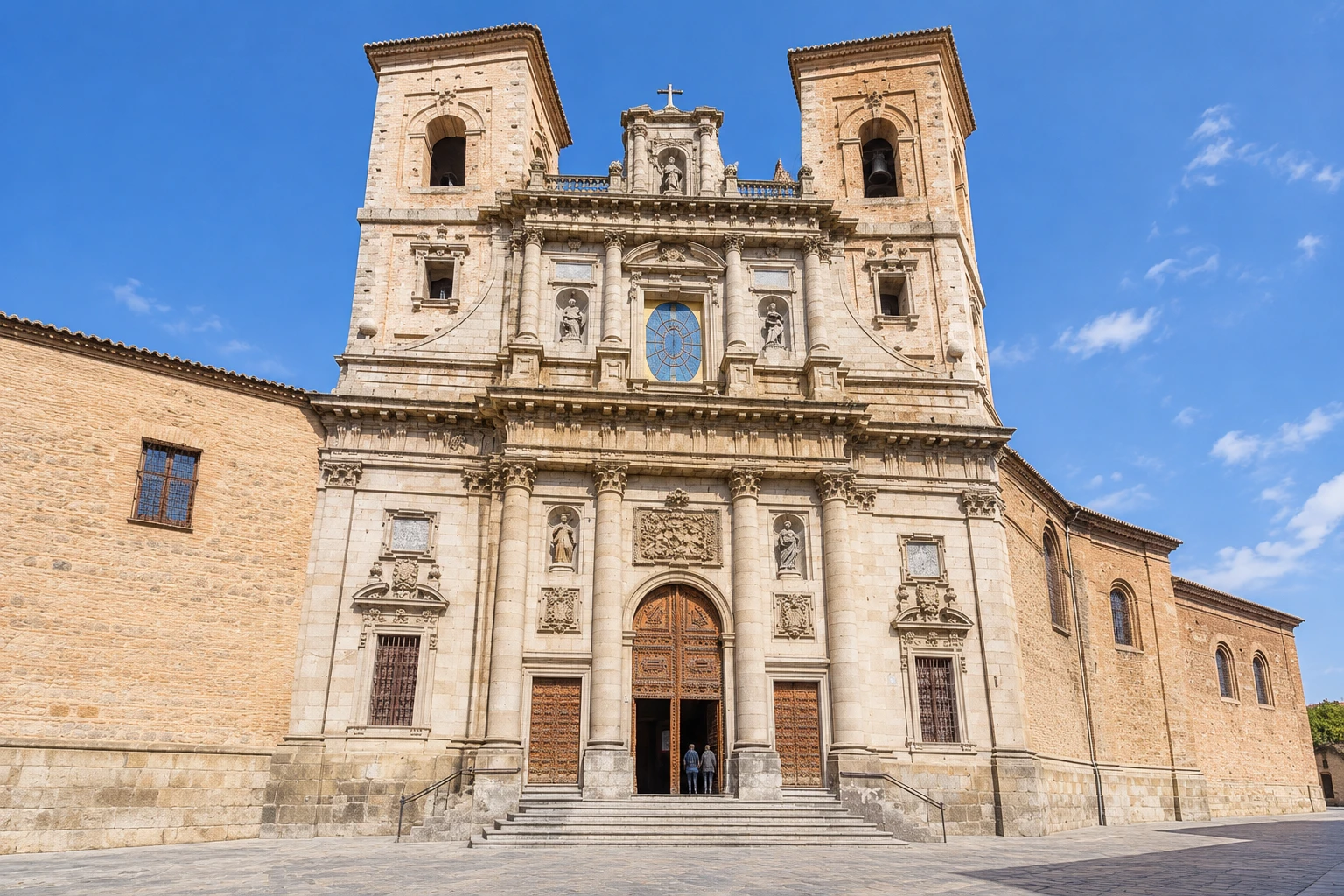
Baroque church of the Jesuits, built between 1629 and 1765 in the center of the old town. From the two towers on the façade you get one of the broadest views over the roofs of Toledo.


 Brazil
 Antarctica
 Argentina
 Bolivia
 Chile
 Colombia
 Ecuador
 Falkland Islands (Malvinas)
 French Guiana
 Guyana
 Paraguay
 Peru
 Suriname
 Uruguay
 Venezuela
 Austria
 Belgium
 Croatia
 Denmark
 Finland
 France
 Germany
 Greece
 Hungary
 Iceland
 Ireland
 Italy
 Luxembourg
 Norway
 Poland
 Portugal
 Slovakia
 Slovenia
 Sweden
 Switzerland
 the Czech Republic
 the Netherlands
 the United Kingdom
 Turkey
 Bermuda
 Canada
 Greenland
 Mexico
 Saint Pierre and Miquelon
 the United States
 the Dominican Republic
 Japan
 Egypt
 South Africa
 Australia
 Fiji
 New Zealand
 Papua New Guinea