Basque Country

Basque Country

Basque Country

Bilbao, of the Guggenheim and the old quarter by the ria, and San Sebastián, of La Concha bay and the pintxos, about an hour from each other, in the green Cantabrian coast.

North

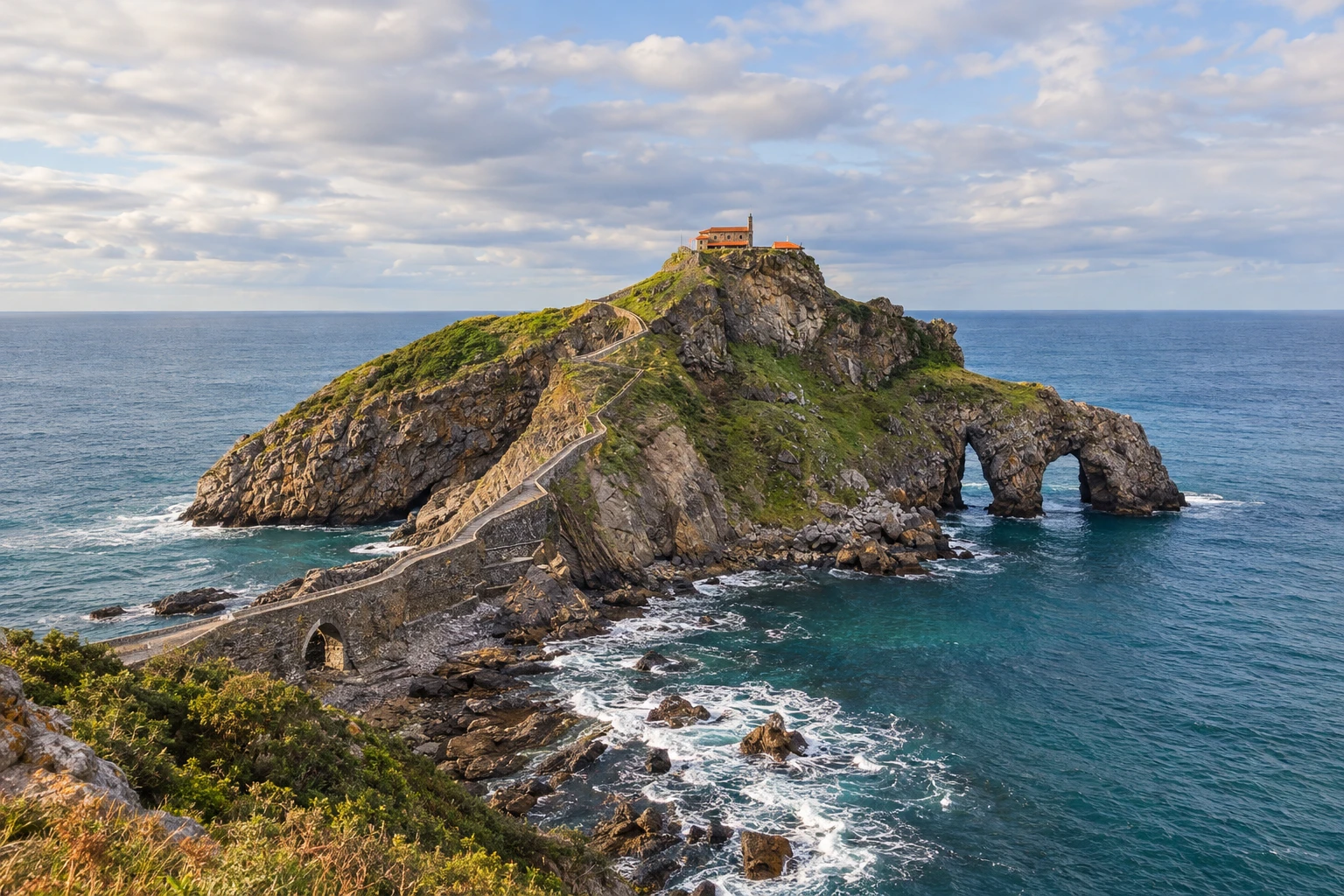
In the photo: San Juan de Gaztelugatxe

Illustrative images. The pictures in this guide are illustrations based on the real place, not photographs, and may differ from it.

Get it on Google Play

Get to know the place

A region to enjoy
at your own pace.

País Basco (Euskadi, in Basque) is in northern Spain, between the Cantabrian Sea, the Pyrenees and the border with France. It is an autonomous community with its own language, euskera, which has no known relatives among other European languages, and a strong culture visible in the double names of cities: Bilbao is Bilbo, San Sebastián is Donostia. The climate is Atlantic, with rain fairly evenly spread through the year, mild summers and green hills that descend to the sea.

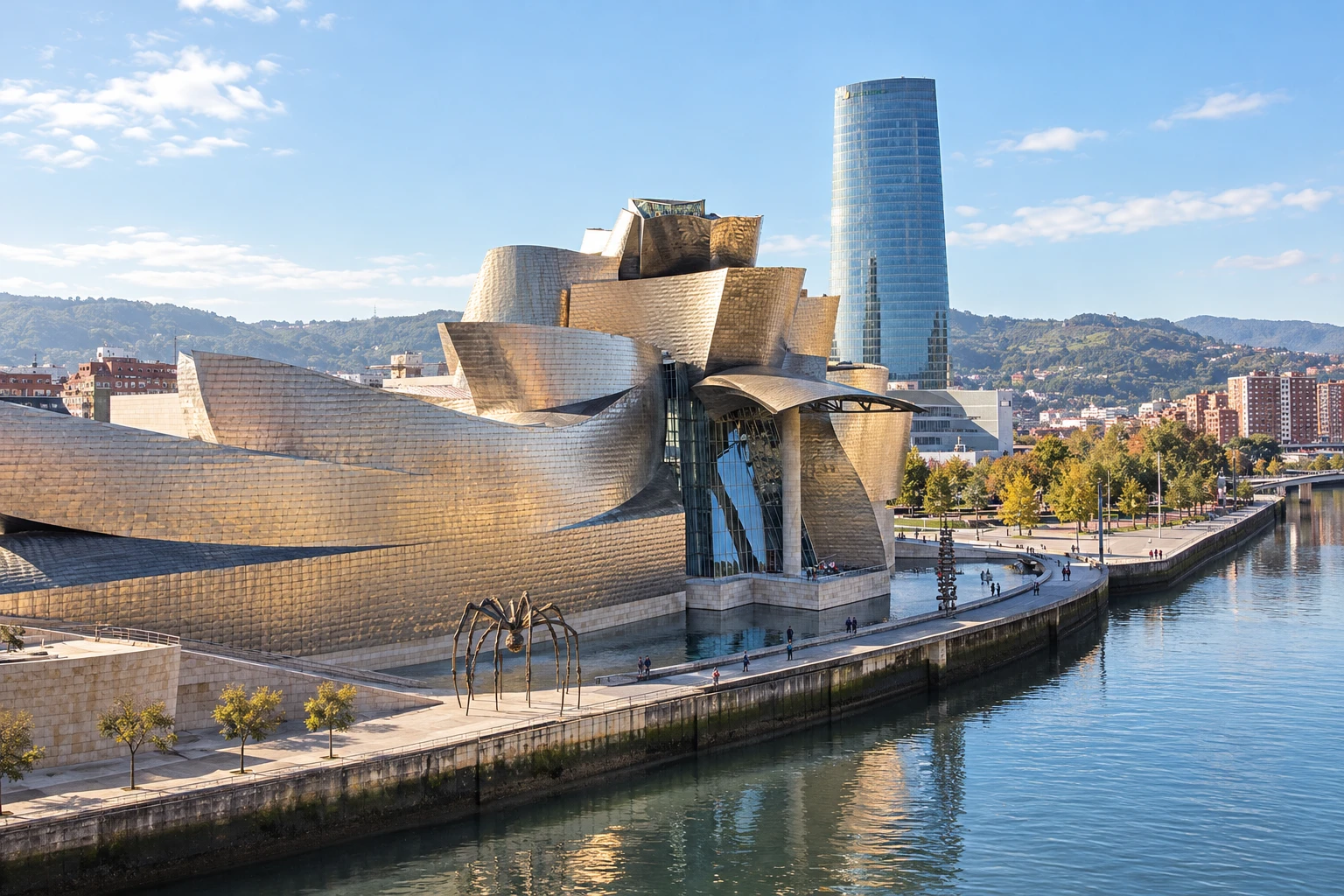
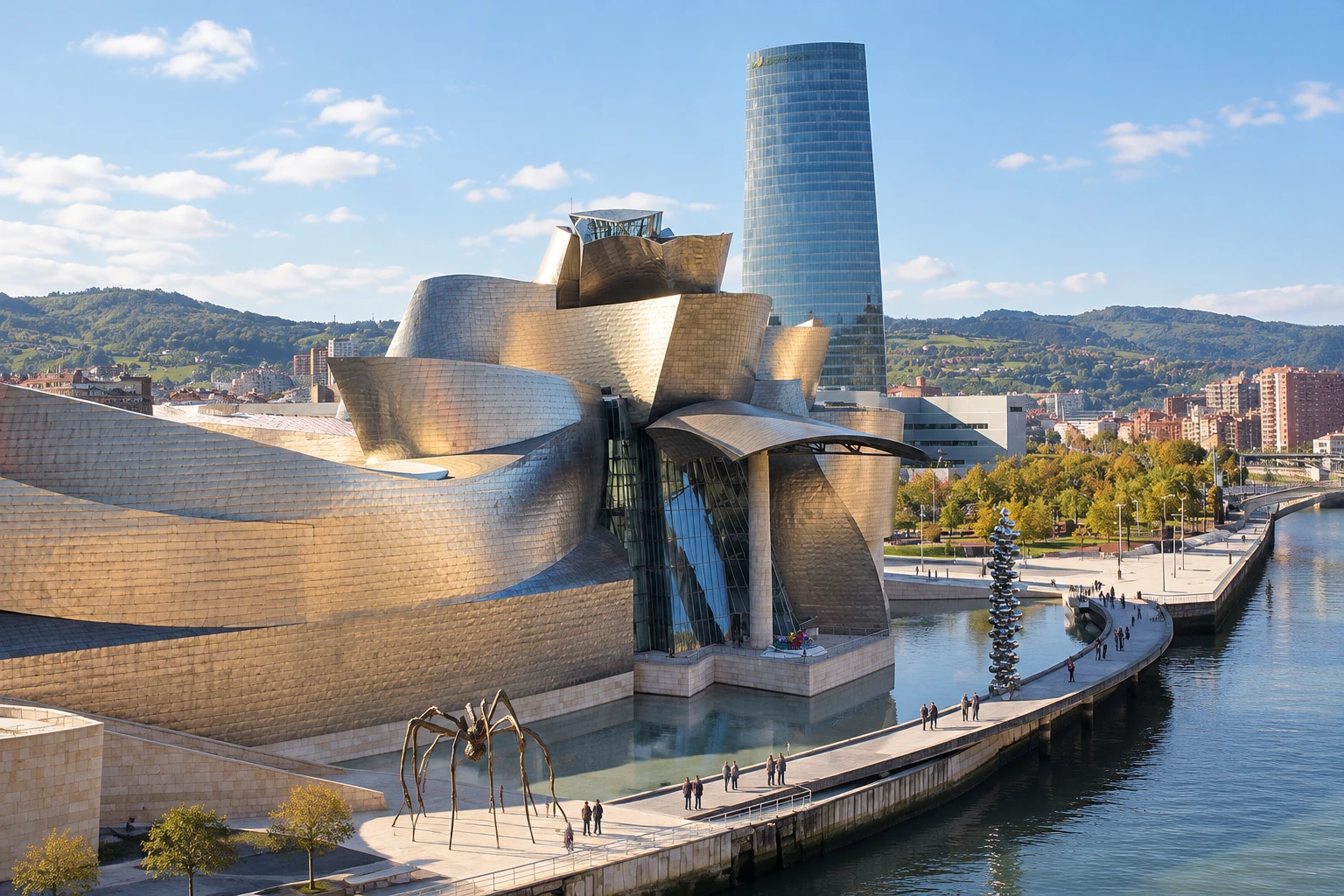
Bilbao, the largest city, grew with steelworks and shipyards on the Nervión ria. When the industry declined, the city bet on culture and architecture: the Museu Guggenheim by Frank Gehry, opened in 1997, changed Bilbao’s image and spurred the renewal of the ria’s banks. The Casco Viejo, with the Siete Calles, the Mercado de la Ribera and the Plaza Nueva, preserves the old city.

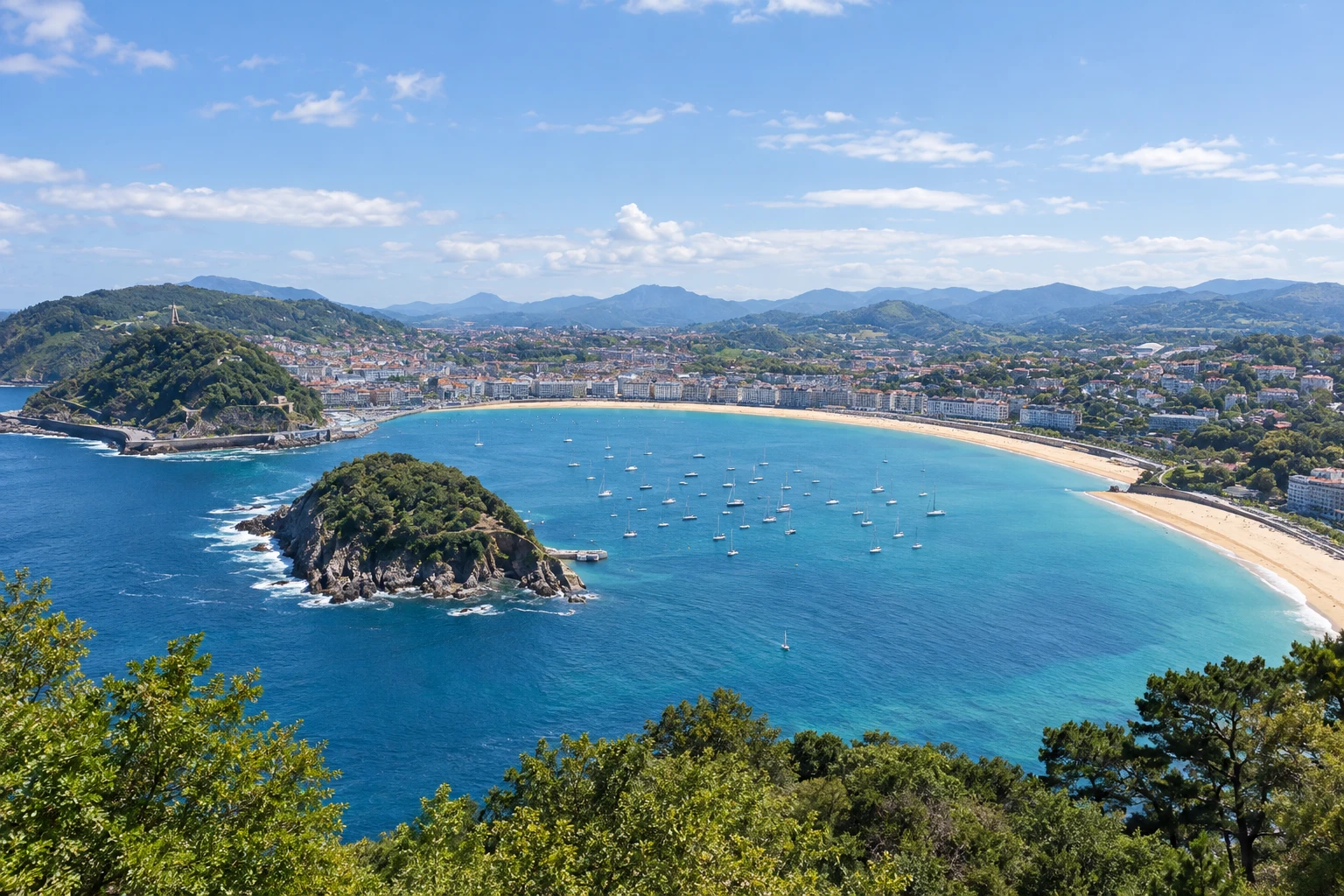
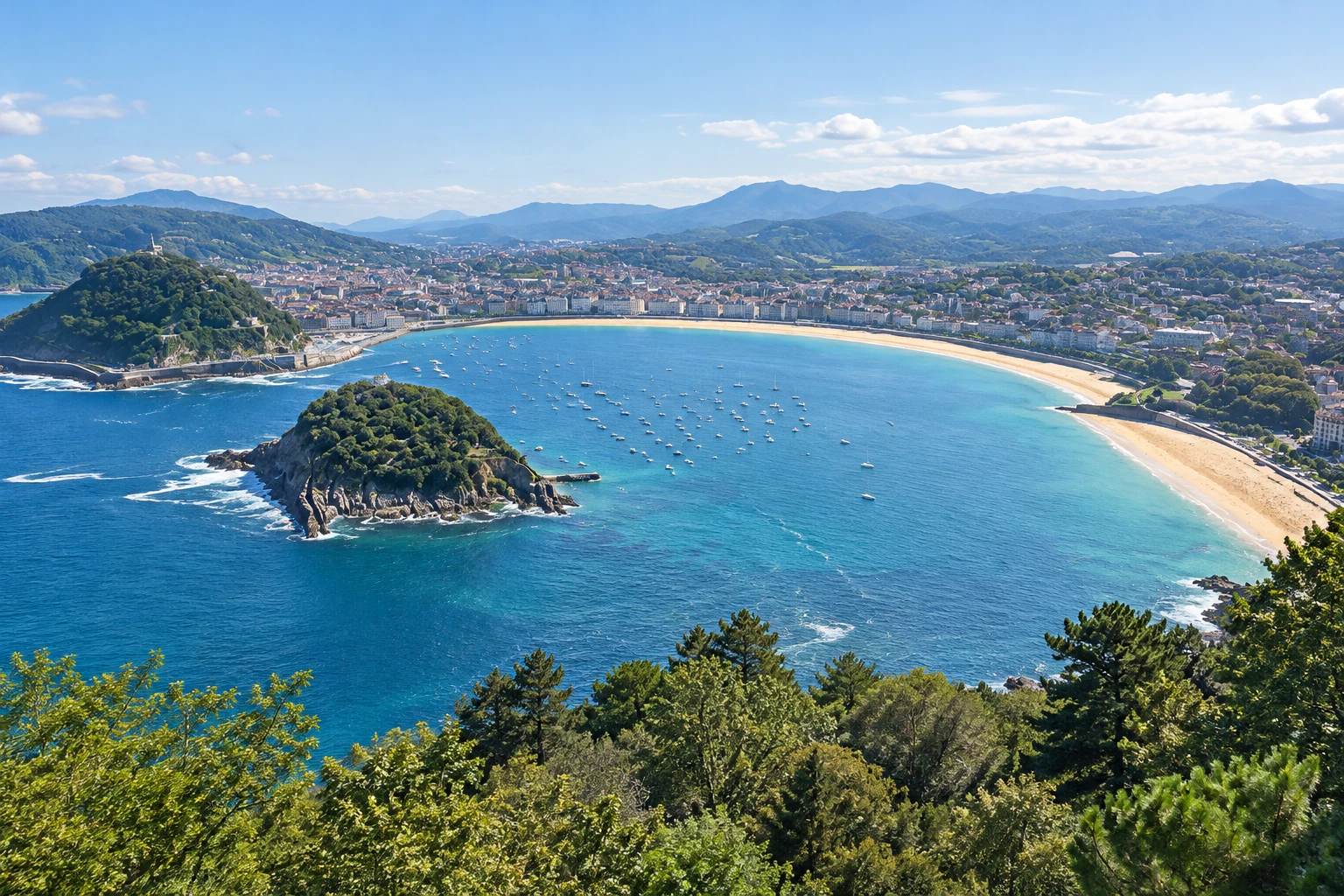
San Sebastián, about 100 km to the east, has been an elegant seaside resort since the 19th century, when Queen María Cristina began spending summers there. La Concha bay, sheltered by the island of Santa Clara and the Urgull and Igueldo hills, is the city’s center. The Parte Vieja concentrates the pintxos bars, snacks served at the counter, and the city has several Michelin-starred restaurants.

For a Brazilian traveler, País Basco calls for three to five days and pairs well with Madrid or southwest France. Bilbao has an international airport, and the two cities are a little over an hour apart by bus. The time difference is 4 or 5 hours ahead of Brasília, depending on the time of year.

This destination brings together 3 cities: San Sebastián, Bilbao, Irun.

Share: WhatsApp
Traveler, share your experiences through photos Up to 5 photos of each place you visited.

One destination, many paths

The cities on this trip

Start with one city or combine several in your itinerary.

Where Basque Country is The star marks the nearest capital, Pamplona.
PamplonaSan SebastiánBilbaoIrun

Outlines: IGN/CNIG, unidades administrativas, CC BY 4.0. Adapted by Cidade Turismo.

How to get there: Basque Country

Aeropuerto de San Sebastián (EAS), in Hondarribia · 20 km to San Sebastián

Aeropuerto de Bilbao (BIO), in Loiu · 100 km to San Sebastián

Connections from Brazil usually involve a stopover in another city. Confirm before you buy tickets. Bilbao airport receives flights from Europe; San Sebastián has a small airport in Hondarribia. From Madrid, the Alvia train takes about 5 hours to Bilbao and a bit longer to San Sebastián; many prefer to fly. Between the two cities, the bus takes around 1h20.

Suggested arrival point: San Sebastián

Irun
Basque Country · Basque Country

Irun

Irún is a city in the Basque Country on the banks of the Bidasoa river, on the border with France, opposite Hendaye. It was the Roman town of Oiasso, whose port and streets are shown in the Roman museum in the center. In the river is the ilha dos Faisões, administered half the year by Spain and half by France, where the Paz dos Pireneus was signed in 1659. The bay of Txingudi has a marsh park with birds, and on top of Monte San Marcial stands the hermitage that recalls the 1522 battle, celebrated every June 30 with the Alarde. It is the starting point of the Caminho do Norte. Basque and Spanish are spoken.

Festivals and events

Festivals Basque Country

Dates change every year: check this year's date before you travel.

Festival calendar in Spain

The local experience

Things to do in Basque Country

Irun · Basque Country · Museum

Oiasso Roman Museum

Archaeological museum about Oiasso, the Roman town and port discovered beneath the center of Irún, with objects from the excavations and the visit to the medieval hermitage of Santa Elena, above the Roman necropolis.

Explore Oiasso Roman Museum

San Sebastián · Basque Country · Beach

La Concha Beach

A light-sand, shell-shaped beach in the center of San Sebastián, protected by the island of Santa Clara, with a promenade featuring a white railing and iron lampposts from the early 20th century.

Explore La Concha Beach

See 23 more places in Basque Country

Before you go

Practical information

A little planning leaves more time to enjoy the journey.

When to go

From June to September the weather tends to be drier and warmer, good for La Concha beach, but accommodation is more in demand. May and October usually have mild days and fewer crowds. It rains at any time of year, more from November to April. In September, San Sebastián typically hosts its film festival.

The seasons shown are the most usual ones; nature doesn't always follow the calendar.

How many days to stay

Two days in Bilbao are enough for the Guggenheim, the Casco Viejo, the ria and the Puente de Vizcaya. Two days in San Sebastián cover La Concha, the hills, the Parte Vieja and a pintxos night. With one more day you can add San Juan de Gaztelugatxe and the coastline between them.

Which city to stay in

In Bilbao, the Casco Viejo is good for those who want bars and old streets within walking distance; Abando and the Ensanche, on the other side of the ria, have larger hotels near the station and the Guggenheim. In San Sebastián, the Parte Vieja is the pintxos hub but noisy at night; the Centro and the La Concha promenade are calmer, and Gros, near Zurriola beach, has a neighborhood feel.

Respect the place

Take your trash with you, follow the signs and support local businesses. In natural areas, follow the visiting guidelines.

Beyond the guide

Your questions

Frequently asked questions about Basque Country

What are pintxos?

Small snacks served at the bar in Basque bars, often on a slice of bread. The tradition is to go bar to bar, ordering one or two pintxos and a drink at each place, especially in the Parte Vieja of San Sebastián and the Casco Viejo of Bilbao.

What language is spoken in País Basco?

Spanish and euskera, the Basque language: both are official. Signs appear in both languages, and many places have two names, such as Donostia for San Sebastián. Everyone understands Spanish.

How to go from Bilbao to San Sebastián?

By bus, in about 1h20, with several daily departures from Bilbao Intermodal terminal. There is also the Euskotren train, slower, at around 2h40, and the AP-8 motorway, about 100 km.

Does it rain a lot in País Basco?

It rains considerably more than in the rest of Spain, even in summer, with drizzly days. Bring an umbrella and a light jacket at any time of year.

Do I need a car in País Basco?

Not for Bilbao and San Sebastián, which have good public transport and bus connections between them. A car helps for the coast, like San Juan de Gaztelugatxe and the fishing villages.

Routes in Spain

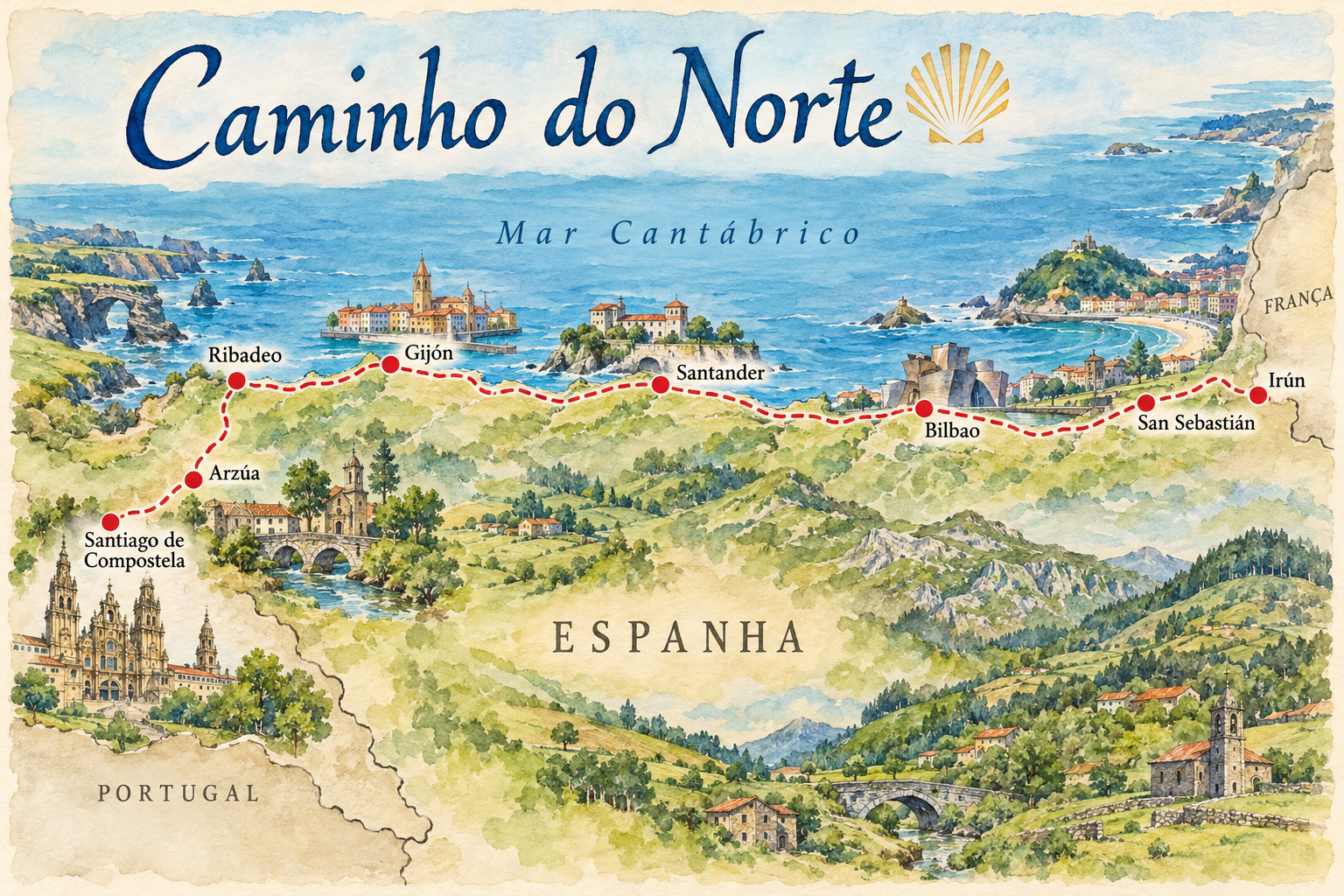
Basque Country is on the Northern Way (Camino del Norte) to Santiago on foot

The Camino de Santiago along the Cantabrian coast: from the Basque Country to Galicia on foot, via San Sebastián, Bilbao, Santander and Gijón, between the sea and the green mountains.

Illustrative map, not to scale. Tap a city to open its page.
Illustrated map of Northern Way (Camino del Norte) to Santiago on foot
Explore the Northern Way (Camino del Norte) to Santiago on foot
Explore other destinations Search by state and city