7 places to visit Zamora (Spain), chosen by the Cidade Turismo guide.
Illustrative images. The pictures in this guide are illustrations based on the real place, not photographs, and may differ from it.
To start
The 7 main places Zamora
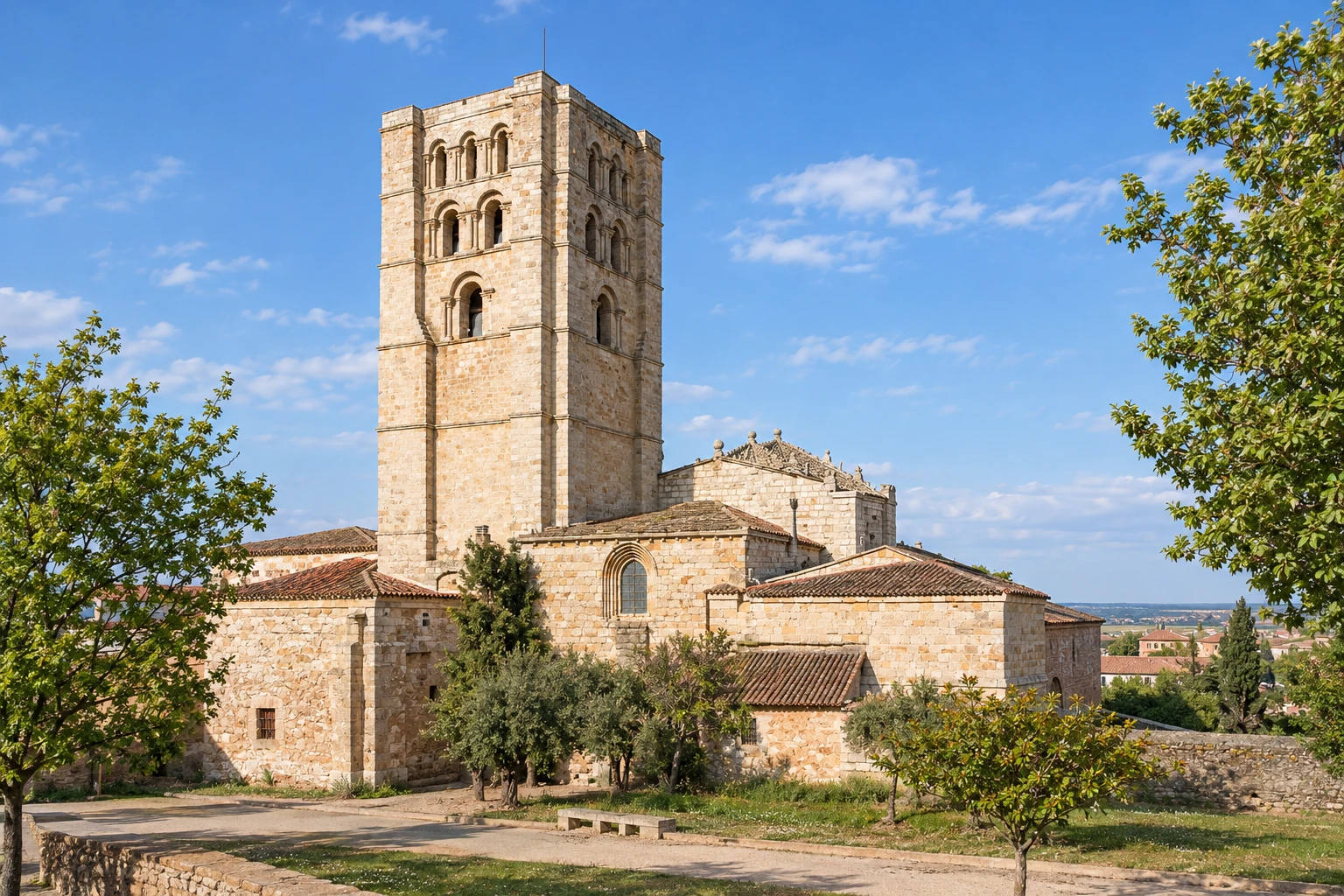
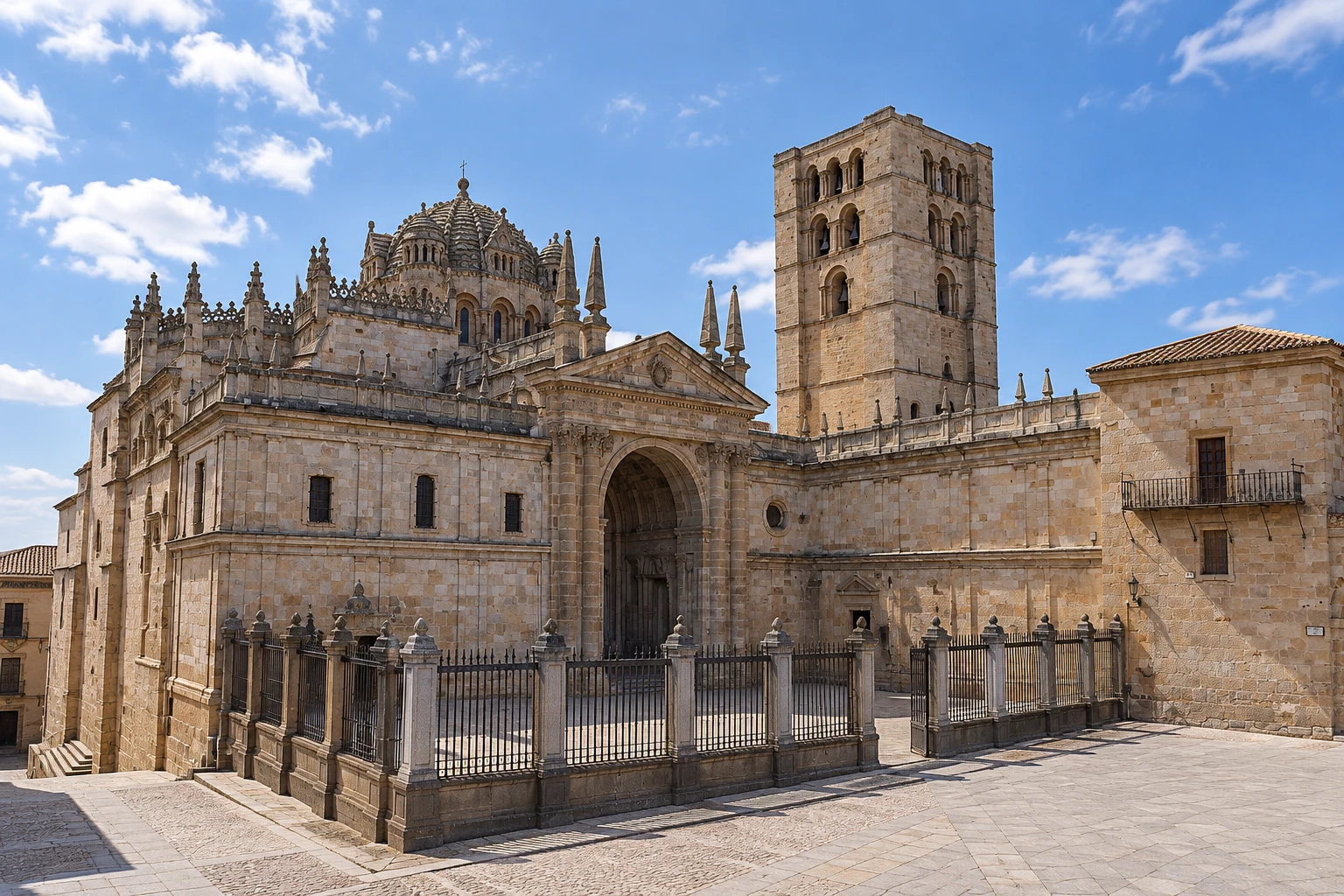
Zamora CathedralThe Cathedral of the Salvador, from the 12th century, is the oldest and smallest of the cathedrals of Castile and León.
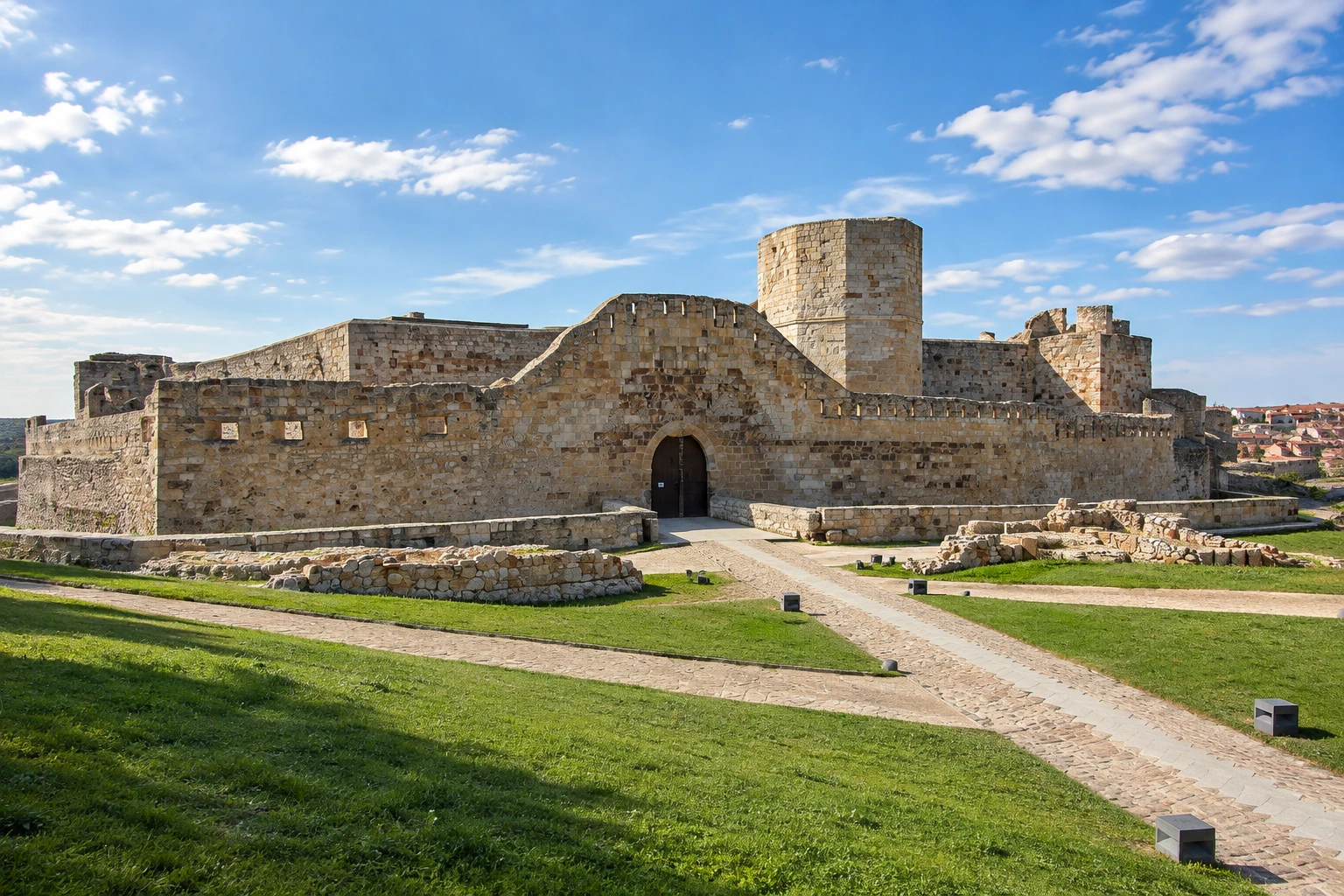
Zamora CastleThe Romanesque castle on the western tip of the plateau, next to the cathedral, with a moat, restored walls and gardens.
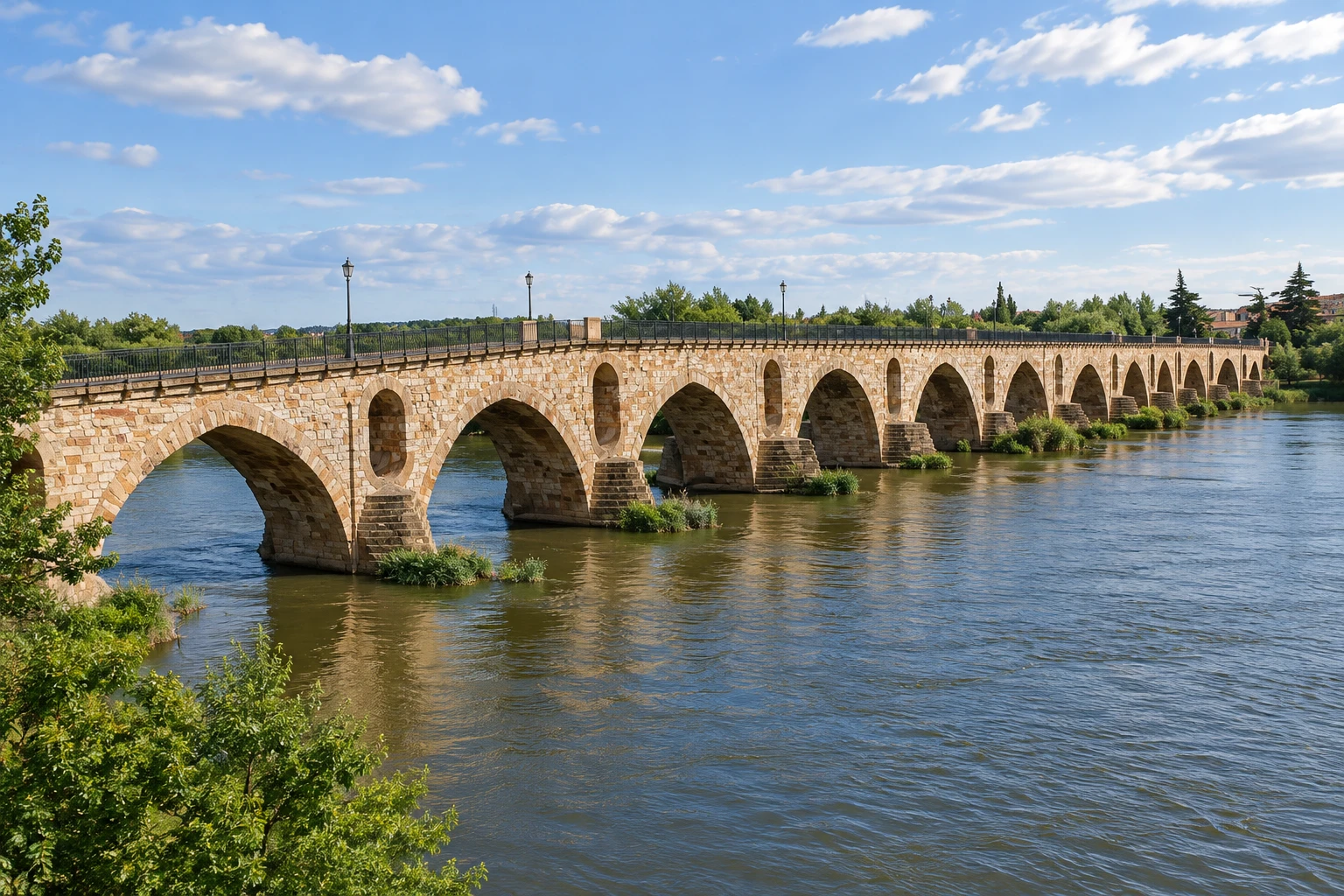
Puente de PiedraThe medieval bridge over the Duero, completed at the beginning of the 13th century, was for centuries the only crossing of the river in Zamora and lies on the route of the Via d...
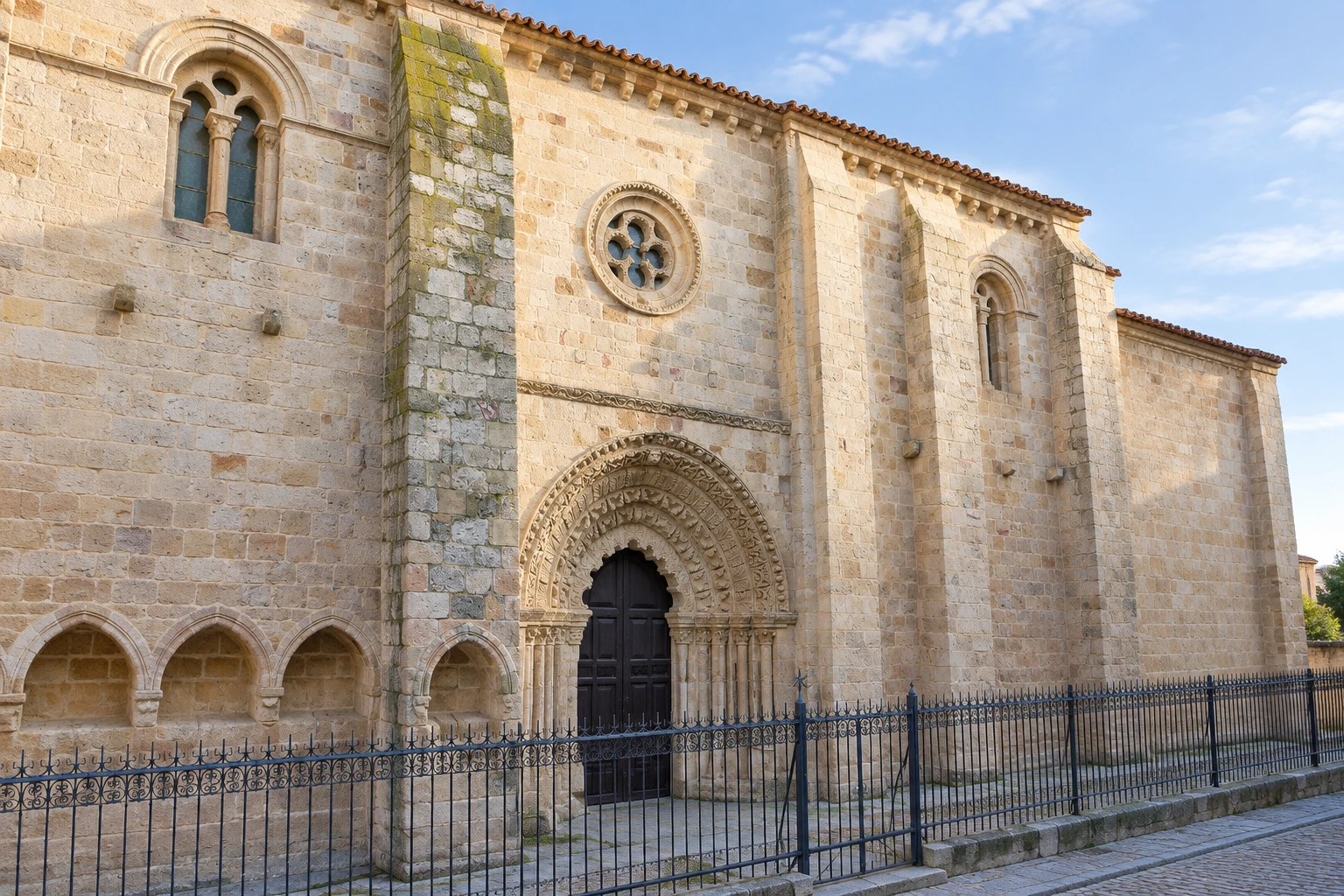
Church of Santa María MagdalenaRomanesque church from the 12th and 13th centuries on the rúa de los Francos, with a single tall nave and a southern portal among the most elaborately worked of Zamora's Romanes...
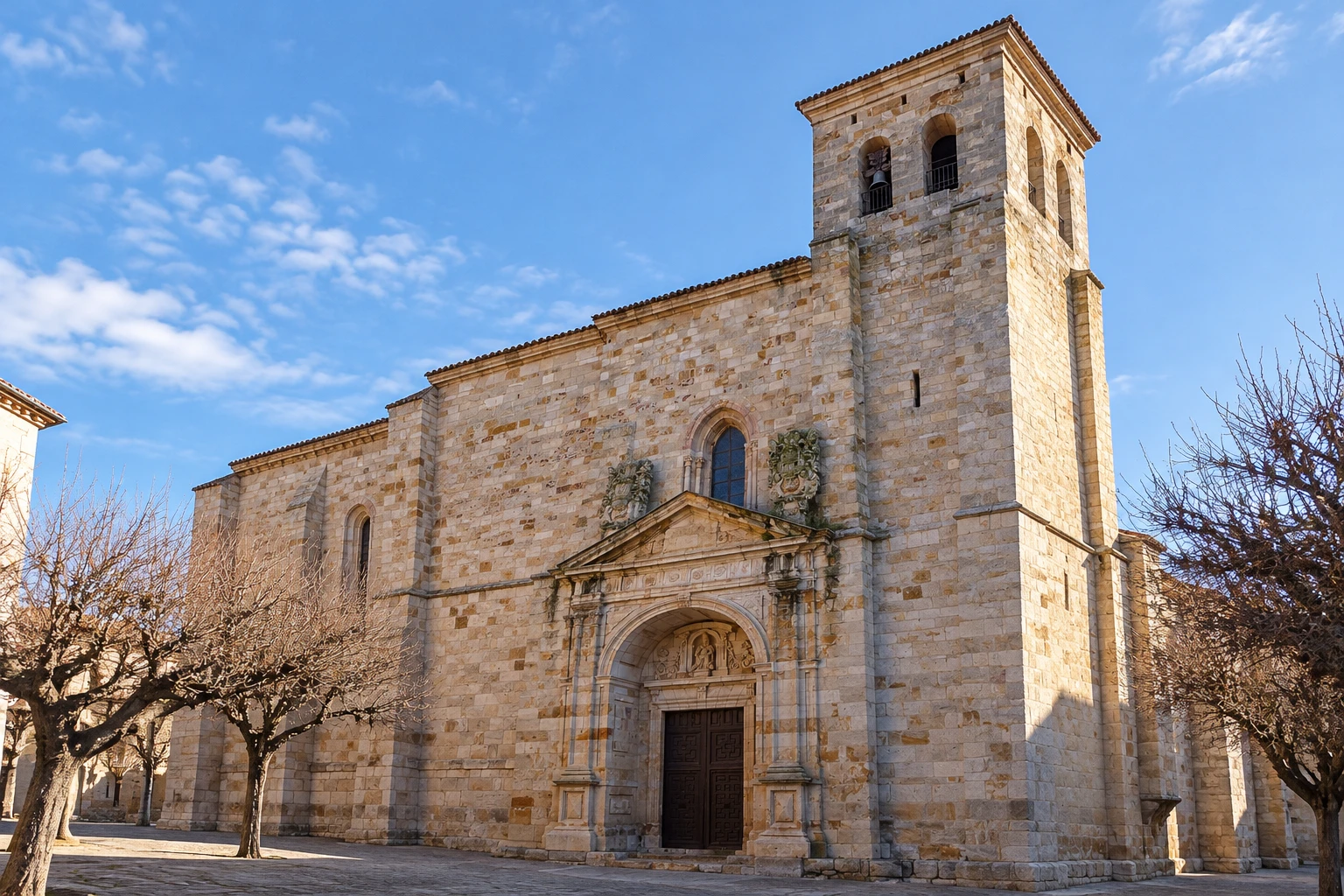
Church of San Pedro y San IldefonsoThe largest and most important church in Zamora after the cathedral, of Romanesque origin, with a Gothic nave and the relics of Saint Ildefonso and Saint Atilano, the city's pat...
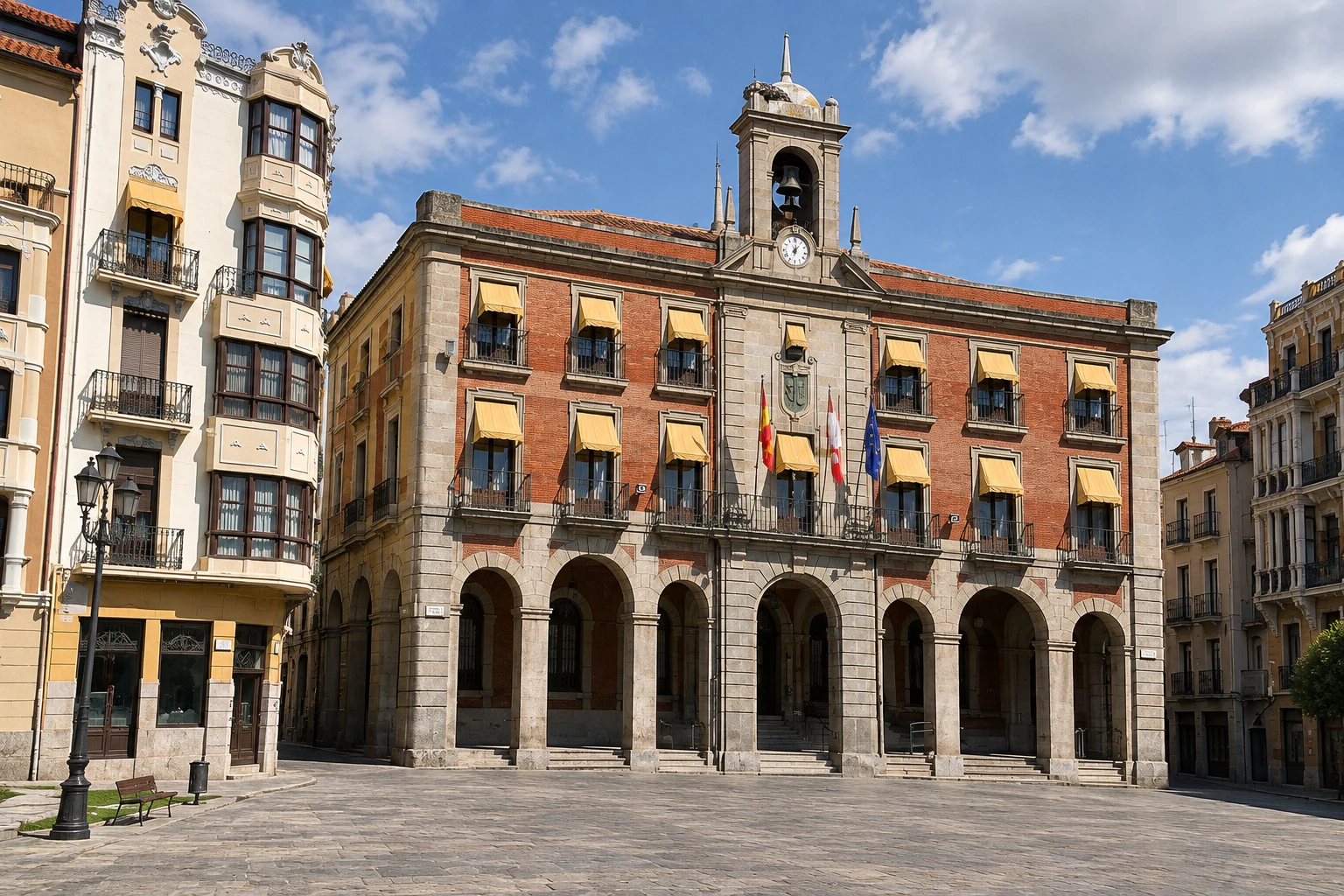
Plaza Mayor de ZamoraZamora's main square, with the Romanesque church of San Juan de Puerta Nueva, the old town hall, the statue of the Merlú and Modernist buildings on the surrounding streets.
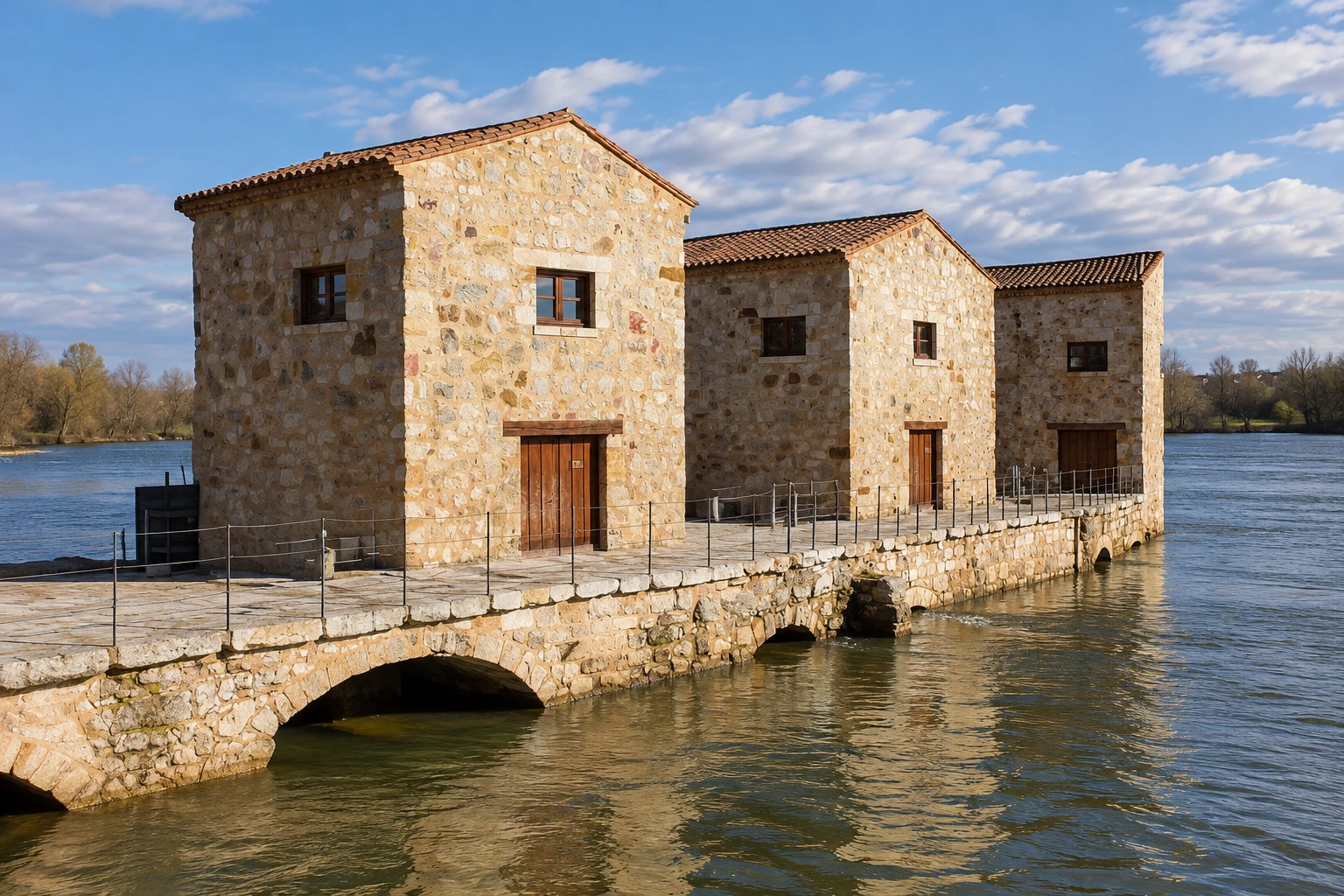
Olivares Water MillsOld medieval water mills on the Duero River, restored as an interpretation center of traditional water industries, at the foot of the cathedral.
The Cathedral of the Salvador, from the 12th century, is the oldest and smallest of the cathedrals of Castile and León. The cimborium with its stone-scaled dome, of Byzantine influence, is the symbol of the city. The museum houses Flemish tapestries.
The Romanesque castle on the western tip of the plateau, next to the cathedral, with a moat, restored walls and gardens. It houses a space dedicated to the Zamoran sculptor Baltasar Lobo.
The medieval bridge over the Duero, completed at the beginning of the 13th century, was for centuries the only crossing of the river in Zamora and lies on the route of the Via de la Plata.
Romanesque church from the 12th and 13th centuries on the rúa de los Francos, with a single tall nave and a southern portal among the most elaborately worked of Zamora's Romanesque.
The largest and most important church in Zamora after the cathedral, of Romanesque origin, with a Gothic nave and the relics of Saint Ildefonso and Saint Atilano, the city's patron saint.
Zamora's main square, with the Romanesque church of San Juan de Puerta Nueva, the old town hall, the statue of the Merlú and Modernist buildings on the surrounding streets.


 Brazil
 Antarctica
 Argentina
 Bolivia
 Chile
 Colombia
 Ecuador
 Falkland Islands (Malvinas)
 French Guiana
 Guyana
 Paraguay
 Peru
 Suriname
 Uruguay
 Venezuela
 Austria
 Belgium
 Croatia
 Denmark
 Finland
 France
 Germany
 Greece
 Hungary
 Iceland
 Ireland
 Italy
 Luxembourg
 Norway
 Poland
 Portugal
 Slovakia
 Slovenia
 Sweden
 Switzerland
 the Czech Republic
 the Netherlands
 the United Kingdom
 Turkey
 Bermuda
 Canada
 Greenland
 Mexico
 Saint Pierre and Miquelon
 the United States
 the Dominican Republic
 Japan
 Egypt
 South Africa
 Australia
 Fiji
 New Zealand
 Papua New Guinea