Rogaška Slatina

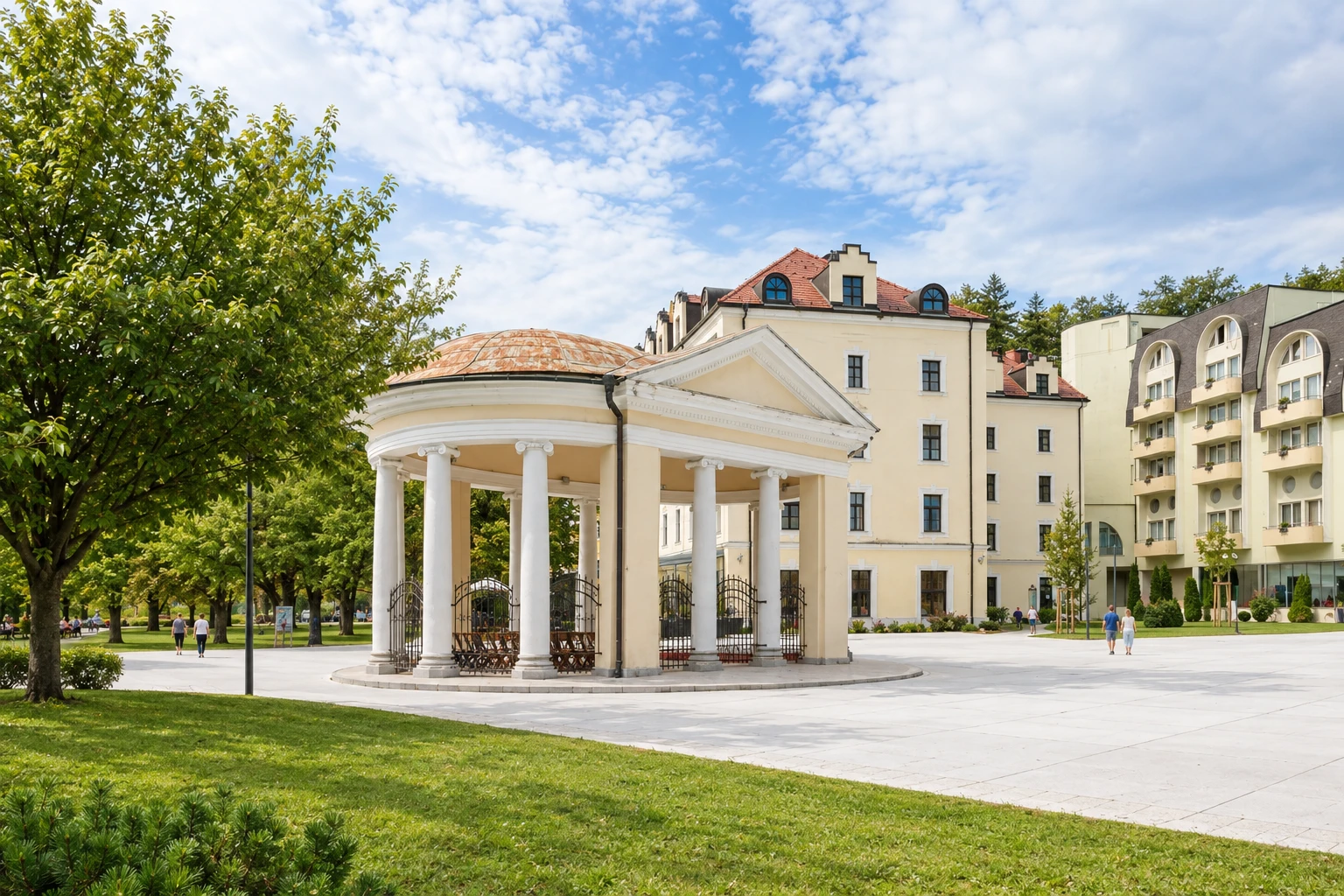
In the photo: Tempel Pavilion, in Rogaška Slatina

Illustrative images. The pictures in this guide are illustrations based on the real place, not photographs, and may differ from it.

Get it on Google Play

The city

What to expect from Rogaška Slatina.

Spa town in eastern Slovenia, near the border with Croatia, with centuries of treatment traditions. It is known for Donat water, high in magnesium, which is drunk in the Pivnica water hall, for the spa park with 19th-century buildings, and for its crystal tradition. The Anin dvor museum tells the town’s history.

Rogaška Slatina is a spa town in eastern Slovenia near the Croatian border, about 37 km from Celje. It grew up around a mineral spring first mentioned in 1141 and expanded from 1803, when Count Ferdinand Attems founded the regional spa. Two trades shaped the town: doctors and bathhouses working with Donat water, and glassmakers producing crystal by hand.

The center is small and flat and revolves around the Spa Park. Here are the European Platform, the Tempel pavilion, the Pegasus statue and the former Spa Hall with its Crystal Hall. Spa hotels and the medical center surround the park. Inside the medical center, the Pivnica is the round hall where visitors drink the waters. A few steps away, the Anin dvor museum tells the town’s story. The train and bus stations share a street near the center.

A second area lies at the foot of Tržaški hrib, where the 106 m Kristal Tower, the country’s tallest building, has an open viewing deck at 104 m. Beyond it, nine marked paths ranging from 1.5 km to 14.7 km cross the surrounding hills. The shorter routes include Janina, with its observation tower and small ski slope, Bellevue, Cvetlični hrib and Tržaški hrib.

Farther out but still within the municipality, Kostrivnica and Cerovec pod Bočem sit below Mount Boč, protected as a landscape park. Trails lead from here to the mountain hut and Boč observation tower. Nearby are vineyards, farms serving home cooking and a pavilion with more than seven thousand cacti.

Many visitors spend several days here for medically supervised drinking cures and wellness programs. For sightseeing, one day covers the center, and a second gives you time for the hills or Boč.

The climate is continental. Winters are cold, with averages near 0°C in December and January and possible snow, a time for pools, saunas and the Pivnica. From April to October the planted park comes into bloom, with 7,500 perennials and 700 rosebushes, and the tower stays open later. Summer is hot and has the most rain, often in late-afternoon showers. On July 26, a municipal holiday, the town honors its patron St. Anne with a festival and ball.

Try a glass of Donat straight from the spring in moderation, see the Crystal Hall during a concert or tour, enjoy the view from Kristal Tower on a clear day and watch a piece of crystal being blown at the factory.

Rogatec and its open-air museum lie 7 km east. Podčetrtek, with Terme Olimia and Olimje Monastery, and Celje, with the counts’ castle, have their own guides and make convenient day trips.

Share: WhatsApp

Where to stay

33 places to stay in Rogaška Slatina.

Where to eat

10 places to eat in Rogaška Slatina.

Mapa de Rogaška Slatina

21 lugares no mapa: onde ficar e onde comer, por bairro.

The local experience

Things to do in Rogaška Slatina

Rogaška Slatina · Slovenia · Park

Spa Park Rogaška Slatina

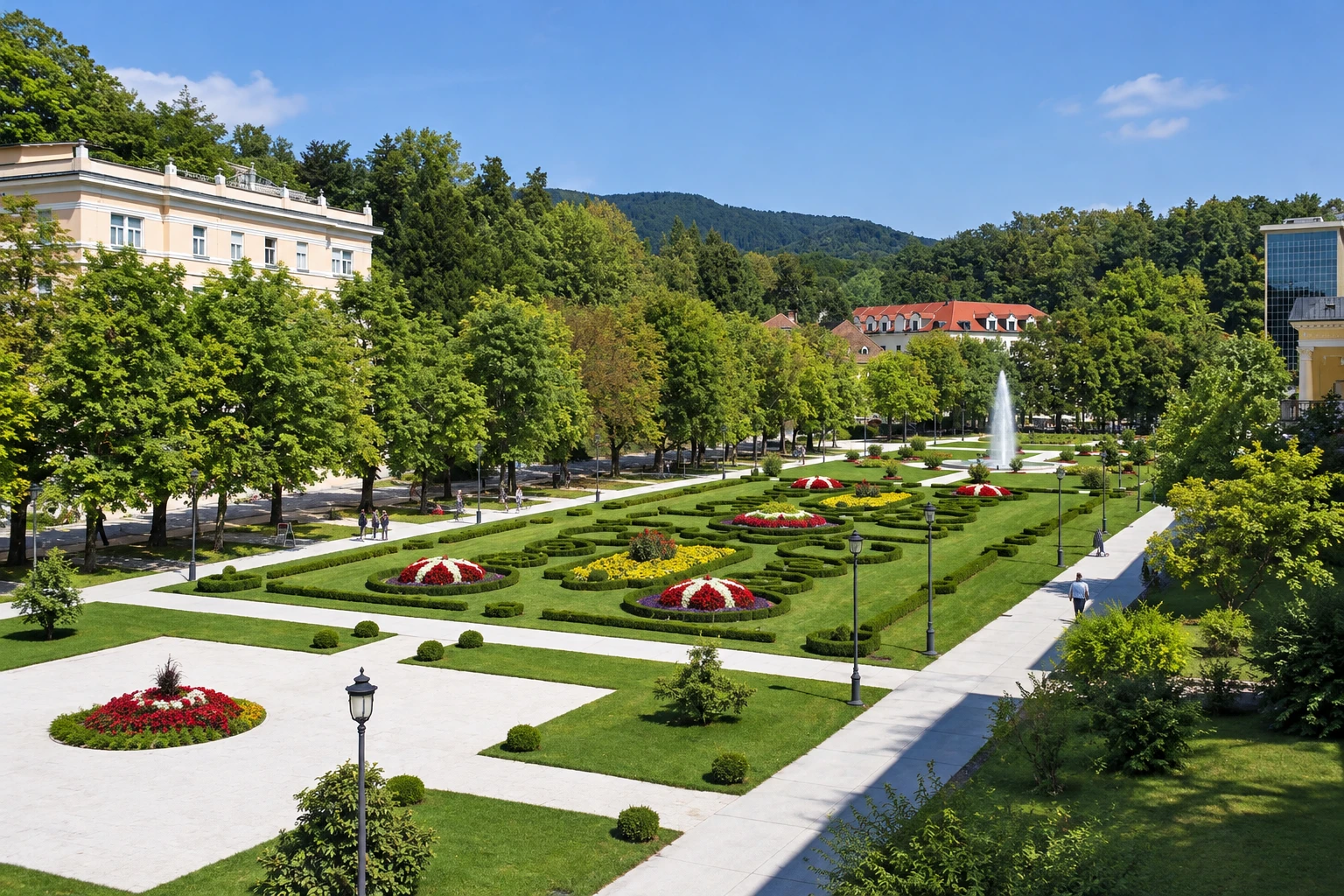
Park at the heart of the spa town, with about 10,000 m² of flower beds and boxwoods, the Tempel Pavilion beside the mineral spring, the statue of Count Attems, founder of the spa, and 19th-century buildings.

Explore Spa Park Rogaška Slatina

Rogaška Slatina · Slovenia · Museum

Anin dvor

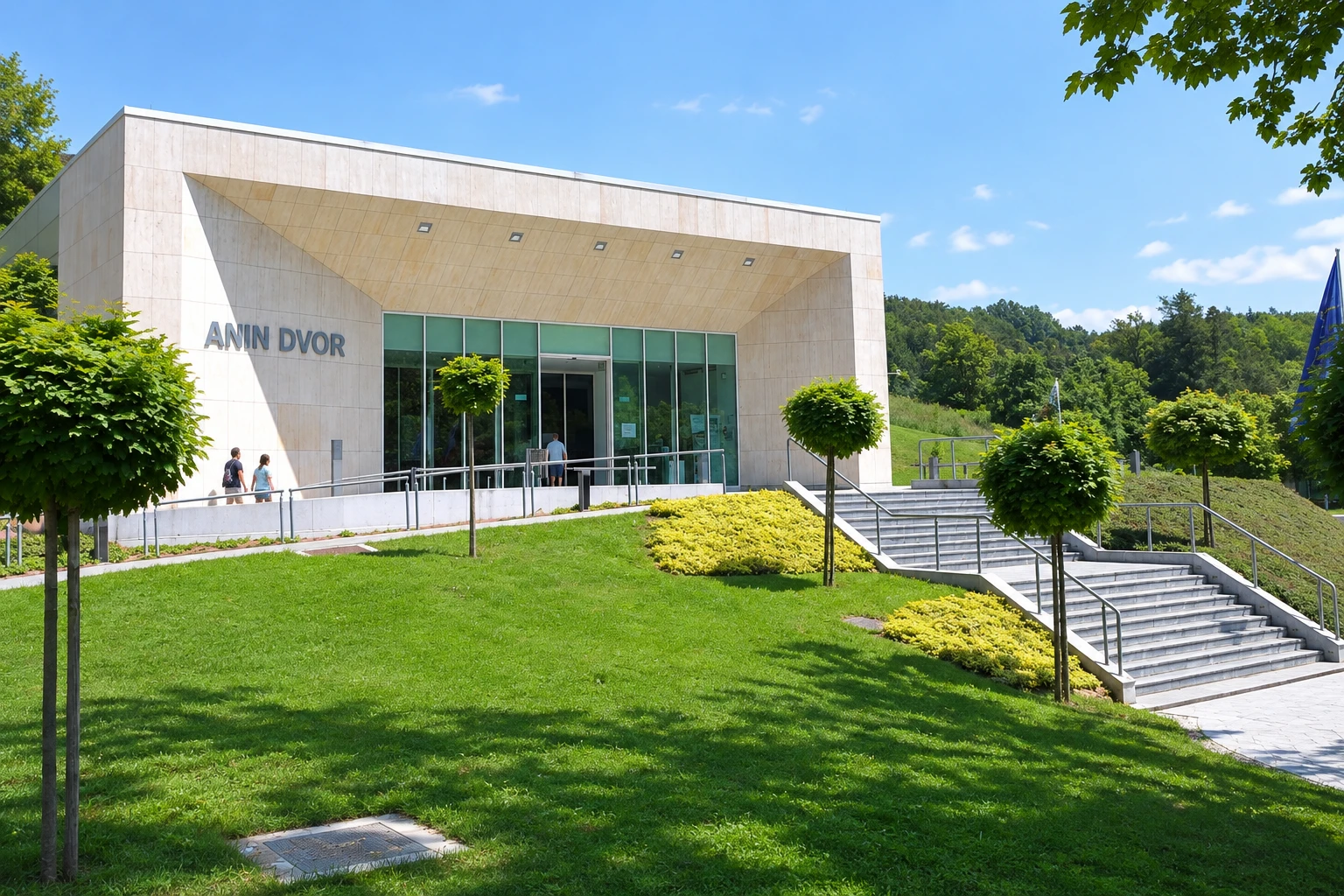
Rogaška Slatina’s cultural center and museum, near the spa park, with five collections: glass and crystal, historic prints of the town, a collection of autographs and memorabilia, the parks and the waters.

Explore Anin dvor

To choose before you go

Tours in Rogaška Slatina

Where each tour starts, how long it takes, how it is done, what is included and the price range.

Walking through the Spa Park from the European Platform to the Crystal Hall

From European Platform, in the center On foot About 2 hours Morning or late afternoon Easy

The Spa Park lies at the heart of the resort. Its 10,000 m² are planted with 7,500 perennials, 4,500 boxwoods and 700 rosebushes. The walk begins and ends at the European Platform, leading beneath the trees between hotels, restaurants and galleries. In the middle stand the former Spa Hall, a classical building now used as a hotel, and the Tempel pavilion of 1819. Trieste architect Nikola Pertsch built the pavilion where the old spring rose, replacing a roof on four wooden columns. Along the way are a monument to Count Attems, founder of the spa, a small weather station, a ginkgo tree considered a natural rarity, and a copy of the statue of St. John of Nepomuk, patron saint of waters, which Viennese apothecaries had placed here in 1782. The original is at Anin dvor. Two active springs, Forest Spring and Ivan’s Spring, are nearby. On the Pegasus Platform stands Vasilije Ćetković Vasko’s winged horse with its golden hoof. It recalls the town’s legend that Pegasus struck the ground and brought forth the spring. Engravings in a 1687 monograph on Rogaška water tell the story. St. Anne’s Chapel, built in 1805 for the resort’s patron saint, was renovated to plans by Jože Plečnik. The Crystal Hall in the former Spa Hall dates from the first half of the 19th century. Pianist Franz Liszt performed here in 1846. The hall caught fire in 1910 during Emperor Franz Joseph I’s birthday celebration and was rebuilt in two years, acquiring its present name. It holds five crystal chandeliers handmade at the town factory and paintings from 1912 depicting local history.

Stops: European Platform, Spa Park, Tempel pavilion, Pegasus statue, Monument to Count Attems, St. Anne’s Chapel, Crystal Hall.

Includes: The park is free. The Crystal Hall is inside a hotel and can be seen during concerts, balls and events.

Tip: Ask the tourist information center on Zdraviliški trg whether a concert or visit to the Crystal Hall is scheduled during your stay. The flower beds are planted from spring to fall.

Best time: April to October for flowering displays. The town puts up holiday lights in December.

Tasting Donat and Styria mineral water at the Pivnica

From Medical center beside the Spa Park On foot About 1 hour Morning Easy

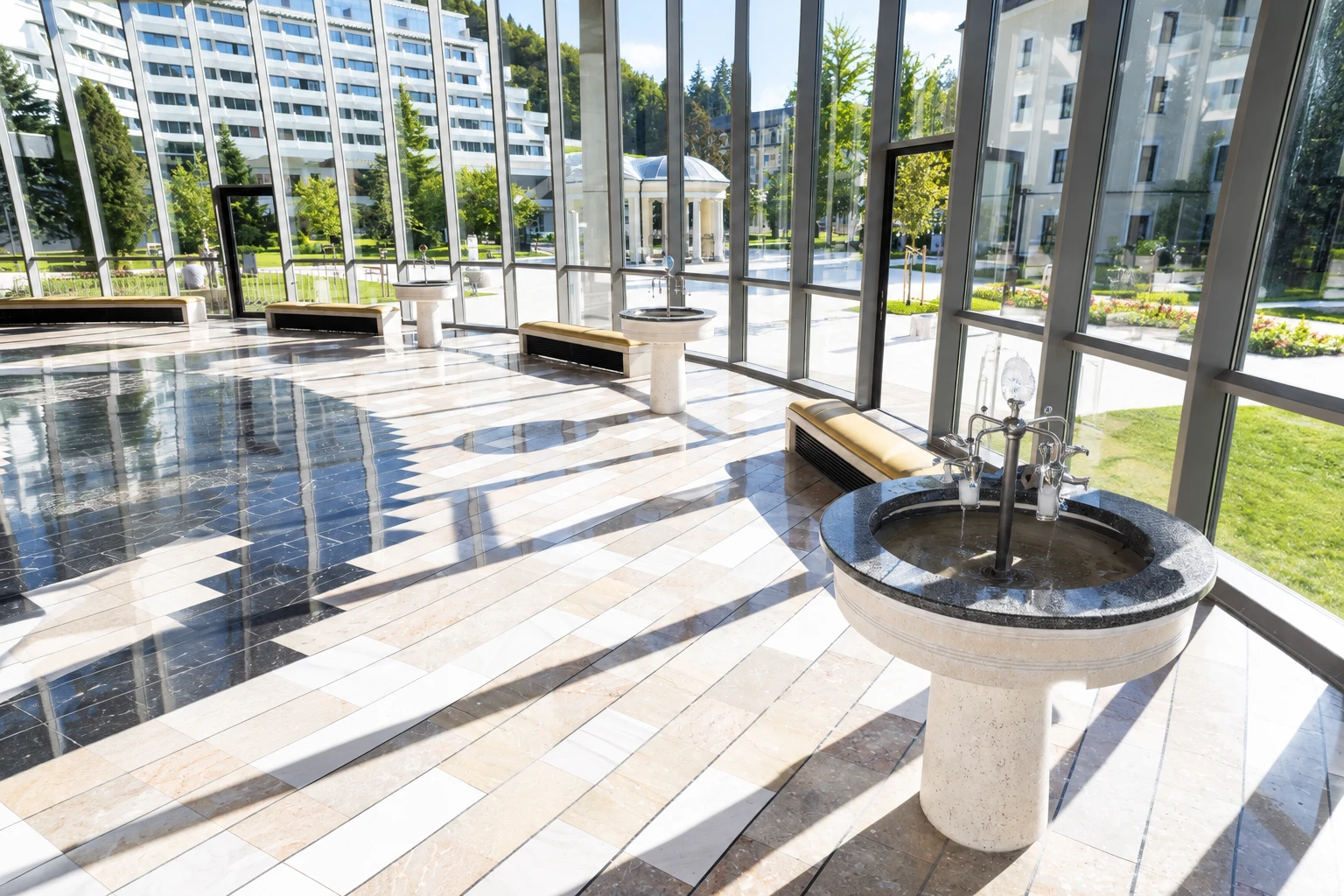
The Pivnica is the town’s mineral water drinking hall, a circular building constructed inside the medical center in 1967. Here you can taste the water that gave Rogaška Slatina its reason for being, straight from the spring. Donat water takes its name from nearby Mount Donačka gora. It comes from depths of 280 to 660 m, where it has dissolved rock for millennia. The local tourism office describes it as the world’s most magnesium-rich mineral water, with 300 milligrams in 0.3 liters. It also contains sodium, bicarbonates and sulfates, giving it a natural laxative effect. Styria, the other water served here, contains fewer minerals and is offered when Donat’s effect is too strong. Both are served cold or warm. The water’s reputation goes back centuries. In 1665 the Croatian ban Petar Zrinski took the waters and helped spread the word. In 1687 a Maribor physician published the first monograph on the spring. In 1804 the resort appointed its first doctor, who introduced mineral baths. Drinking cures continue under medical supervision in programs focused mainly on digestion and metabolism, offered by the medical center and some hotels.

Stops: Pivnica, Donat spring, Styria spring.

Includes: Pay separately for a glass of mineral water. Drinking cures and consultations are medical services booked separately.

Tip: Try a small amount. Donat has a strong laxative effect, while Styria is milder. If you have a medical condition or take medication, ask your doctor first. Check the hall’s hours before visiting.

Best time: Year-round.

Anin dvor and the town’s story in five collections

From Cvetlični hrib, a few steps from the Spa Park On foot 1 to 2 hours Morning or afternoon Easy

Anin dvor tells the story of Rogaška Slatina under one roof. As you enter, the crystal-decorated event hall introduces the museum’s two themes, glass and water. The glass collection shows every stage of crystal production. The prints were donated by Kurt Müller, a Swiss visitor who regularly stayed at the spa. The local history collection, assembled by a town resident, traces the resort’s growth and includes signatures of prominent visitors from around the world. Upstairs, the park collection introduces the trees in the town’s green spaces. The final room is devoted to the water that explains much of what you’ve seen. The museum also holds the original 1732 statue of St. John of Nepomuk, remains of the Wandelbahn, a covered promenade built in 1840 and demolished in 1982, and a large private collection on the Karađorđević dynasty from the periods of the Kingdom of Serbs, Croats and Slovenes and the Kingdom of Yugoslavia. St. Anne gives her name to the museum and much else in town. She is the spa’s patron saint and her feast is a municipal holiday. A themed path links Anin dvor with St. Anne’s Chapel.

Stops: Anin dvor, Glass collection, Print collection, Local history and autograph collection, Park collection, Water collection.

Includes: The museum charges separate admission.

Tip: The museum is a good first stop, especially on a rainy day. Afterward the park and Pivnica drinking hall make more sense. Check opening days.

Best time: Year-round.

Kristal Tower and the viewing deck at 104 m

From Foot of Tržaški hrib By car, by bike or on foot, then up by panoramic elevator 1 to 2 hours Morning or late afternoon Easy

At 106 m, Kristal Tower is Slovenia’s tallest tower and building. Its name and facade design honor the town’s glassmakers. The visit starts on the ground floor with a 35-second ride in a panoramic elevator carrying up to 21 people, with a window onto the landscape. On the first floor are a café and a stretch of transparent floor to walk across. The second floor has an indoor viewing deck open even on rainy days, an interactive panorama map and two virtual reality experiences. Fly with Pegasus to discover the spring’s legend, or travel through 1,111 historic postcards and compare them with today’s town. Continue to the outdoor deck at the top, 104 m above the ground, for views of Rogaška Slatina and its green hills. There’s a souvenir shop at the exit. The tower stands at the foot of Tržaški hrib with parking alongside. If the lot fills, spaces across the main road are connected to the tower by the curved steel Sonce bridge, 177.5 m long and reserved for walkers and cyclists. An automated station beneath the tower rents regular and electric bikes.

Stops: Kristal Tower (Stolp Kristal), Glass floor, Indoor viewing deck, Outdoor viewing deck, Sonce footbridge.

Includes: The tower charges admission, with reduced rates for students, retirees, families and groups. Virtual reality experiences cost extra. Parking beside the tower is free.

Tip: The tower opens daily, with longer hours from April to October. Choose a clear day, ideally late in the afternoon. Dogs aren’t allowed. Buy tickets at the entrance.

Best time: Year-round. Clear days offer the longest views.

Rogaška crystal, the glass factory and the glassmaking trail

From Steklarna Rogaška Follow the factory’s visitor route About 2 hours Morning Easy

Glassmaking is the other half of Rogaška Slatina’s story. Handcrafted crystal production in the area is documented from 1655. The town’s factory, Steklarna Rogaška, opened in 1927 with many of its glassworkers coming from Zagorje ob Savi. It specialized in crystal and by 1930 was selling to stores in the United States. The factory is described as one of the world’s largest in its field and as having the largest concentration of glassblowers and hand cutters. Its pieces are still handmade with the support of modern technology. The visitor route follows each stage, from preparing raw materials and blowing the glass to cutting, finishing and packing. Blowing a single stemmed crystal glass requires at least five people working together. Look for the crystal’s bluish gleam and listen for its distinctive ring. The factory shop sells cut and engraved pieces. The Slovenian state presents Rogaška crystal to heads of government as official gifts, and festivals and competitions award it as trophies. Back in the center, the Anin dvor glass collection illustrates the production stages, and the Crystal Hall chandeliers are products of the same factory.

Stops: Steklarna Rogaška, Factory visitor route, Factory shop, Anin dvor glass collection.

Includes: The factory visit and purchases at the shop are paid for separately.

Tip: Visits run on set days and at specific times and may require reservations. Check with the tourist information center before visiting.

Best time: Year-round. Check visiting days.

Janina, Bellevue and Cvetlični hrib in the hills above town

From Central Rogaška Slatina On foot along marked paths 1 to 3 hours, depending on the route Morning or afternoon Easy to moderate

Nine marked paths lead from the center into the surrounding hills and countryside. They range from 1.5 km to 14.7 km. Pick up a map at the tourist information center. Four short walks are easy to fit into a visit. The 2.2 km Janina route takes about 60 minutes and climbs to a lookout tower over the countryside. The well-maintained Bellevue path takes 45 minutes to cover 1.9 km to its namesake viewpoint. The 2.9 km Cvetlični hrib route takes 60 minutes, starting at St. Anne’s Chapel and passing Ivan’s hill. The shortest, 30-minute Tržaški hrib route is named for the many guests from Trieste who visited the spa. Kristal Tower stands at the foot of the hill. For a longer walk, the 8.3 km Grilov hrib route takes 2 hours 45 minutes, passing the Grill Chapel, built in gratitude for a cure. The 9.9 km Male Rodne route takes 3 hours and links several town sights. Ložno, the longest at 4 hours, is an easy countryside walk. The Polžkova route links Janina, Tržišče, Cvetlični hrib and Grilov hrib. Buy a stamp card at the information center to collect stamps from each hill. In winter, when there’s snow, the slope of Janina becomes a 400 m ski run with a 112 m vertical drop. At 362 m above sea level, it is described as Slovenia’s lowest ski area.

Stops: Janina, Bellevue viewpoint, Cvetlični hrib, Tržaški hrib, Grilov hrib.

Includes: The paths are free. Pick up a map and stamp card at the tourist information center.

Tip: Closed-toe shoes are sufficient on the short paths. Dirt sections turn slippery after rain. If you have only an hour, start with Janina or Bellevue.

Best time: April to October. The hills change color in fall.

See 2 more tours

Mount Boč from Kostrivnica, with trails, a lookout tower and the cactus pavilion

From Zgornja Kostrivnica Chapel Drive to Kostrivnica, then hike Half a day to a full day Full day Moderate

The area around the summit of Boč is protected as a landscape park for its rich and varied natural habitats. Most of it belongs to Europe’s Natura 2000 network. This is Rogaška Slatina’s local mountain, with marked trails from the Kostrivnica villages within the municipality. The main ascent begins at the chapel in Zgornja Kostrivnica. Via Sveti Lenart it takes about an hour and a half to reach the Boč mountain hut. On the route via the Velikonočnica hut, allow 45 minutes to that hut, 1 hour 15 minutes to the natural habitat of the pasqueflower that gives the place its name, and 2 hours to the summit. Another trail from Zgornji Gabrnik climbs via Galke in 2 hours. The trail from Pečica is steep, shaded and more demanding. For a full day on foot, start at Rogaška Slatina train station. It’s 4 hours to the mountain hut and 5 to the tower, one way. Near the top, three forest discovery trails explore the differences between managed woodland and the reserve, tree species, dry meadows and Finžgar’s Cross. In good weather the summit lookout tower offers views across much of Slovenia. On the way back, the cactus pavilion at Cerovec pod Bočem holds more than seven thousand cacti and other succulents from around the world, including rare species. The oldest specimen is over 60 years old and the smallest is less than 1 cm wide. The village also has vineyards cultivated since 1860 and farms serving wine and home cooking. In Kostrivnica, a themed path explores the springs and local life built around water.

Stops: Boč Landscape Park, Boč mountain hut, Boč observation tower, Velikonočnica mountain hut, Cactus pavilion (Cerovec pod Bočem).

Includes: Free trail access. The cactus pavilion and meals at the huts and farms cost extra.

Tip: Bring water, a warm layer and hiking shoes. Arrange the cactus pavilion visit through the tourist information center and check whether the mountain huts will be open. If traveling without a car, check bus service to Kostrivnica first.

Best time: April to October, with long days and dry trails.

The flavors of Rogaška, from Junež Farm to the Wine Road

From Central Rogaška Slatina Farm visit by appointment, with a car or bike for the vineyards Half a day Afternoon Easy

Junež Farm on Krpanova ulica is a protected open-air ethnographic museum. Its restored farmhouse is more than 200 years old and retains its original furniture and utensils. In the 19th-century black kitchen, smoke from the open fire darkened the walls. A shed, a partly enclosed hayrack and a beehouse complete the farmstead. A local association cares for the farm and welcomes visitors with three regional specialties from the wood-fired oven, served with a glass of house wine. Jerpica is yeasted bread topped with pork cracklings or cream. Zavihjenča is a farmhouse pastry filled with fresh cheese, a snack for harvest days. Mlinčofka has three to five layers of thin dough filled with walnuts or cheese and eggs. It was once baked only at Easter. Local cooking was simple, built around what each family produced and shaped in part by the glassworkers’ traditions. The Rogaška Wine Road winds through vineyards and vineyard cottages in the hills around town, especially toward Boč. Winemakers welcome visitors for tastings, and farms serve homemade cured meats, bread and juices. The town also has one of Europe’s largest organ-building workshops. Each instrument averages more than 200,000 parts.

Stops: Junež Farm, Rogaška Wine Road, Cerovec pod Bočem.

Includes: Book and pay separately for the visit and tasting at Junež Farm. Wine tastings also cost extra.

Tip: Arrange your farm visit through the tourist information center and confirm cellar tastings ahead of time. Choose a designated driver for wine tastings.

Best time: May to October. The grape harvest takes place in fall.

Day by day

1, 2 and 3-day itinerary in Rogaška Slatina

Suggestions to plan the trip. Change the order of the days according to the weather and tour availability.

1 day · 1 day in Rogaška Slatina for the park, mineral waters, museum and tower

For Day visitors from Celje, Podčetrtek or Zagreb · Based in Central Rogaška Slatina
  1. Day 1 · From Anin dvor to the top of Kristal Tower

    Start at Anin dvor. Its five collections give you the background to the town’s glass, water and park. Then walk the full Spa Park loop from the European Platform, taking in the Tempel pavilion, Pegasus statue and St. Anne’s Chapel. Before lunch, stop at the Pivnica to try small amounts of Donat and Styria water. Have lunch in the center. In the afternoon, visit Kristal Tower at the foot of Tržaški hrib and ride up to the viewing deck. Late afternoon usually has the best light over the hills. If you have a spare hour, try the short Bellevue or Janina walk. If you’re returning by train, check the last departure for Celje in advance. The branch line has few services.

2 days · 2 days in Rogaška Slatina exploring the town and its crystal, with time for the pools
For Overnight visitors who want a mix of sightseeing and relaxation · Based in Central Rogaška Slatina
  1. Day 1 · The Spa Park, Pivnica and Anin dvor

    Spend an unhurried morning in the park and at the Pivnica. After lunch visit Anin dvor. In the late afternoon climb one of the hills, Janina or Cvetlični hrib, and return through the park. In the evening, check for a concert in the Crystal Hall or another event in town.

  2. Day 2 · The crystal factory, Kristal Tower and pools

    In the morning, follow the visitor route through Steklarna Rogaška on a day it operates, stopping at the factory shop. Continue to Kristal Tower. Save the afternoon for thermal mineral pools at the hotels or town pool complex, with water at 27°C to 36°C and hydromassage. Check access for nonguests in advance.

3 days · 3 days in Rogaška Slatina with Mount Boč and local food in the countryside
For Travelers with a car who enjoy hiking · Based in Central Rogaška Slatina
  1. Day 1 · The spa town center

    Visit Anin dvor, the Spa Park and the Pivnica in whichever order you prefer, then head to Kristal Tower late in the afternoon if the sky is clear.

  2. Day 2 · Mount Boč and Cerovec pod Bočem

    Drive to the chapel at Zgornja Kostrivnica. Climb via Sveti Lenart to the Boč mountain hut in about an hour and a half, then continue to the summit observation tower. For variety, descend by another marked trail. In the afternoon, make a prearranged visit to the cactus pavilion in Cerovec pod Bočem and stop for a meal at a farm or cellar on the Wine Road. The designated driver should skip the tasting.

  3. Day 3 · Crystal, Junež Farm and the pools

    Spend the morning at Steklarna Rogaška. Then, if you’ve arranged a visit, go to Junež Farm for the black kitchen and a tasting of jerpica, zavihjenča and mlinčofka. Keep the afternoon free for pools and saunas or a side trip. Rogatec and its open-air museum are 7 km east, and Podčetrtek, home to Terme Olimia, has its own guide.

Best time to go

When to go: Rogaška Slatina month by month

The seasons shown are the most usual ones; nature doesn't always follow the calendar.

January Low rain

Winter · pools and Pivnica

At Celje weather station, the reference for this area, the 1981–2010 monthly averages are −0.3°C and about 47 mm of rain. It’s the driest month. Lows fall below freezing and snow is possible. This is the season for thermal pools, saunas and drinking cures. Kristal Tower opens daily on its winter schedule. The Janina ski run usually operates when there’s snow. The park has no flowers, but the promenade still makes a pleasant walk with a heavy coat.

February Low rain

Winter · quiet month

At Celje weather station, the reference for this area, the 1981–2010 monthly averages are 1.0°C and about 50 mm of rain. Many mornings are frosty. This is a quiet month with fewer hotel guests. Anin dvor, the Pivnica and the crystal factory are good options whatever the weather. On a clear day the tower’s views of snowy hills reward a bracing visit to the open deck.

March Some rain

Late winter · final month of winter tower hours

At Celje weather station, the reference for this area, the 1981–2010 monthly averages are 5.2°C and about 71 mm of rain. Highs approach 12°C. On dry days, short hill walks such as Bellevue and Janina are pleasant again. Bring a coat and a waterproof layer.

April Some rain

Spring · summer tower hours · park beds replanted

At Celje weather station, the reference for this area, the 1981–2010 monthly averages are 9.8°C and about 71 mm of rain. Days are mild with highs around 16°C and passing showers. Kristal Tower switches to summer hours, staying open into the evening. The Spa Park beds are replanted and begin flowering. It’s a good time for the Boč trails, while it’s still cool.

May Some rain

Spring · park in bloom

At Celje weather station, the reference for this area, the 1981–2010 monthly averages are 14.9°C and about 90 mm of rain. Highs exceed 21°C and days are long. The park is in full bloom and the hills are green. Combine walks, rides on marked cycling routes and the pools before summer crowds arrive. Late-afternoon thunderstorms become more common toward the end of the month.

June High rain

Early summer · rainiest month

At Celje weather station, the reference for this area, the 1981–2010 monthly averages are 18.3°C and about 132 mm of rain. It’s the wettest month, usually with settled mornings and late-afternoon showers and thunderstorms. Highs approach 25°C. Outdoor pools usually open this month. Check the date. Walk in the morning and save the museum, Pivnica and covered tower deck for the afternoon.

July High rain

Summer · St. Anne’s Day on July 26, a municipal holiday · Anna’s Festival

At Celje weather station, the reference for this area, the 1981–2010 monthly averages are 19.9°C and about 122 mm of rain. This is the hottest month, with average highs near 27°C. July 26 is the municipal holiday honoring St. Anne, the spa’s patron saint. Summer brings Anna’s Festival and Anna’s Ball in the Crystal Hall, a tradition going back nearly 200 years. Check this year’s dates and book accommodation ahead.

August High rain

Summer · outdoor pools

At Celje weather station, the reference for this area, the 1981–2010 monthly averages are 19.0°C and about 125 mm of rain. Temperatures are similar to July, with average highs around 26°C. Outdoor pools and hotels are at their busiest. Find shade in the park during the hottest hours, save the tower for late afternoon and walk the trails early. Afternoon thunderstorms are common.

September High rain

Early fall · grape harvest in the hills

At Celje weather station, the reference for this area, the 1981–2010 monthly averages are 14.6°C and about 118 mm of rain. Highs approach 22°C and visitor numbers fall. Longer rain fronts alternate with clear days, which are good for the tower and Boč. It’s grape harvest time in the Wine Road hills. Outdoor pools usually close early in the month.

October High rain

Fall · colors in the hills · final month of summer tower hours

At Celje weather station, the reference for this area, the 1981–2010 monthly averages are 10.1°C and about 115 mm of rain. The woods on Janina, Bellevue and Boč change color, and misty mornings are common. These are the last weeks for the park’s flower displays. The tower keeps longer hours until the end of the month. Bring a coat and umbrella.

November Some rain

Late fall · St. Martin’s Day · holiday lights

At Celje weather station, the reference for this area, the 1981–2010 monthly averages are 4.7°C and about 93 mm of rain. Days are short and damp, with the first frosts. On the 11th, St. Martin’s Day marks the traditional change of grape must into new wine in Slovenia. The tower switches to winter hours. The town usually turns on its holiday lights at the end of the month.

December Some rain

Winter · holiday lights · Christmas walk

At Celje weather station, the reference for this area, the 1981–2010 monthly averages are 0.6°C and about 78 mm of rain. Lows fall below freezing and snow is possible. The center and park light up for the holidays, and the cultural center hosts concerts and theater. After Christmas, the town usually holds its traditional late-afternoon walk past the dwarfs’ cottages. Hotels and pools fill up on holidays, so book ahead.

Plan the journey

How to get there: Rogaška Slatina

Flying via Zagreb, Graz or Ljubljana

Rogaška Slatina has no airport. According to road distances from the local tourism office, the town is 90 km from Zagreb in Croatia, 112 km from Graz in Austria and 135 km from Ljubljana. Zagreb’s Franjo Tuđman Airport (ZAG) is the closest. Ljubljana Jože Pučnik Airport (LJU) is Slovenia’s main airport. The tourism office also lists Klagenfurt in Austria and Maribor.

A rental car or transfer is the most practical option from the airport. Hotels offer their own transportation arrangements when you book. Public transportation requires changes via Ljubljana and Celje.

If you’re arriving from another continent, you’ll usually connect in a European city. Check connections before buying tickets.

Taking the branch train from Celje

The town has its own station on Kidričeva ulica near the center, on a regional branch from Celje. From Ljubljana or Maribor change trains at Celje on the main line. Ljubljana to Celje takes about 1 hour 10 minutes to 1 hour 30 minutes.

The branch has fewer departures than the main line, especially on weekends, so plan your outward and return trips around its schedule. Buy tickets at the station counter, operated by an agency during business hours, on the Slovenske železnice (SŽ) website or on the train.

By bus

Rogaška Slatina bus station stands on Kidričeva ulica, the same street as the train station. Nomago serves it with regional routes. Regional buses in Slovenia use the national integrated ticket (IJPP), and services are less frequent in the evenings and on weekends. The station ticket counter opens only on weekday mornings and in the early afternoon. Check schedules before traveling.

By car

From Celje, follow the regional road east for about 37 km. From Ljubljana or Maribor use the A1 motorway to the Celje area. Slovenian motorways require an electronic vignette (e-vinjeta) linked to the car’s license plate. Buy it before entering the motorway. The Croatian border is nearby, and the Zagreb road crosses it.

The local tourism office lists four central parking areas. The Promenada garage has 38 spaces, the theater platform 44 and the Center garage 78, all free. The paid Janina garage has 170 spaces. Kristal Tower has free parking and a 51-space Park & Ride linked to it by footbridge.

Getting around Rogaška Slatina

The center is easy to explore on foot. The park, Pivnica, Anin dvor, hotels and restaurants are just minutes apart. Kristal Tower stands at the foot of Tržaški hrib, with bus and train stops nearby.

An automated bike rental station beneath the tower has regular and electric bikes. The system operates in Rogaška Slatina and Podčetrtek. Around town, 20 marked cycling routes range from easy rides of 8.5 to 11 km suitable for everyone to routes of about 60 km for fit cyclists.

A car gives you more flexibility for Kostrivnica, Boč, the hillside wine cellars and Rogatec. The tourist information center on Zdraviliški trg has walking and cycling maps.

Your questions

Frequently asked questions about Rogaška Slatina

What to do in Rogaška Slatina?

Walk through the spa park, taste the mineral waters at the Pivnica, visit the Anin dvor museum and enjoy the pools and treatments at the spa.

What is Donat water from Rogaška Slatina?

It is the town’s best-known mineral water, one of the richest in magnesium in the world. It can be sampled in the Pivnica, the mineral water hall.

How to go from Celje to Rogaška Slatina?

By train, on the line that departs from Celje, or by car, about 37 km on a regional road. The station is close to the center.

Is Rogaška Slatina famous for crystal?

Yes. Glass and crystal production in the region has centuries of tradition, and the town hosts a well-known crystal factory. The Anin dvor museum has a collection on the subject.

How many days should you spend in Rogaška Slatina?

One day is enough to visit the Spa Park, Pivnica, Anin dvor, and Kristal Tower. With two days, you can also visit the crystal factory and spend an afternoon at the pools. Three days give you time to climb Mount Boč and visit farms and wineries in the hills. If you come for a course of mineral water treatment, you’ll usually stay several days, depending on your doctor’s advice.

Is Kristal Tower open every day?

Yes. The tower is open every day, with longer hours from April to October and shorter hours from November to March. You can buy tickets at the entrance. The covered observation deck stays open even on rainy days, while the open-air deck, 104 m up, is best on a clear day. Check the hours before you go.

Who is the Pegasus of Rogaška Slatina?

Pegasus is the town’s symbol. Legend has it that the winged horse struck the ground with his hoof, causing a mineral spring to flow. The story is depicted in engravings in a 1687 monograph on the water. Pegasus appears on the municipality’s coat of arms and flag. A statue by sculptor Vasilije Ćetković Vasko in the town center depicts him with a golden hoof.

Does Rogaška Slatina have thermal pools?

Yes. You can bathe in the hotel pools or at the town’s pool complex. The thermal mineral water ranges from 27 to 36 °C, and there are massage jets and saunas. The outdoor pools are open in summer. Check opening dates and hours in advance, as well as access for visitors who aren’t staying at a hotel.

Can you visit the crystal factory in Rogaška Slatina?

Yes. At Steklarna Rogaška, you can follow a visitor route that shows the stages of production, from glassblowing to cutting and packaging. The factory also has its own shop. Visits take place on set days and at set times, and there’s a separate admission fee. Check with the tourist information center before you go.

What should you eat in Rogaška Slatina?

Regional specialties include jerpica, a leavened bread topped with pork cracklings or cream; zavihjenča, a pastry filled with fresh cheese; and mlinčofka, a pie made with three to five layers of dough and a filling of either walnuts or cheese mixed with eggs. The pie was once made only at Easter. Farms that welcome visitors in the hills serve homemade cured meats, bread, and juices, along with wines from local producers.

Which hiking trails can you take in Rogaška Slatina?

Nine marked trails lead up into the hills near the town center. The shortest are the Janina trail (2.2 km, about 60 minutes, with an observation tower), the Bellevue trail (1.9 km, 45 minutes), and the Cvetlični hrib trail (2.9 km, 60 minutes). For a day in the mountains, the trails up Mount Boč start in Kostrivnica. From there, it takes about an hour and a half to reach the mountain hut and two hours to reach the summit, where there’s an observation tower.

What is Ana’s Ball?

Ana’s Ball (Anin ples) is Rogaška Slatina’s charity gala ball, a tradition that goes back nearly 200 years. It takes place in summer in the Crystal Hall. The ball is named after Saint Anne, the patron saint of the spa town, whose feast day on July 26 is a municipal holiday. The date of the ball changes each year, so check the schedule.

Can you ski in Rogaška Slatina?

Yes, if there’s snow. Janina, a hill next to the town center, has a 400 m ski run with a vertical drop of 112 m, suitable for both beginners and more experienced skiers. At an elevation of 362 m, it’s described as Slovenia’s lowest ski area, so skiing depends heavily on conditions each winter.

Where should I stay in Rogaška Slatina?

Spa hotels surround the Spa Park, steps from the Pivnica drinking hall and medical center. They’re convenient if you’re visiting for the waters and want to walk everywhere. There are also apartments and rooms in town, visitor farms in the hills and mountain huts on Boč for travelers arriving by car or coming to hike.

Where can I park in Rogaška Slatina?

The local tourism office lists three free parking areas in the center: the Promenada garage, the theater platform and the Center garage. Janina, the largest garage, charges a fee. Parking by Kristal Tower is also free. A footbridge links spaces on the other side of the road to the tower.

Traveler, share your experiences through photos Up to 5 photos of each place you visited.
See the destination Celje and the thermal spas Find another city