Celje Castle: walls, courtyards and the castle trails
From Parking at the confluence of the Voglajna and the Savinja, Celje Hike the castle trails, car or city bus about 3 hours morning or late afternoon moderate (140 m ascent on foot)
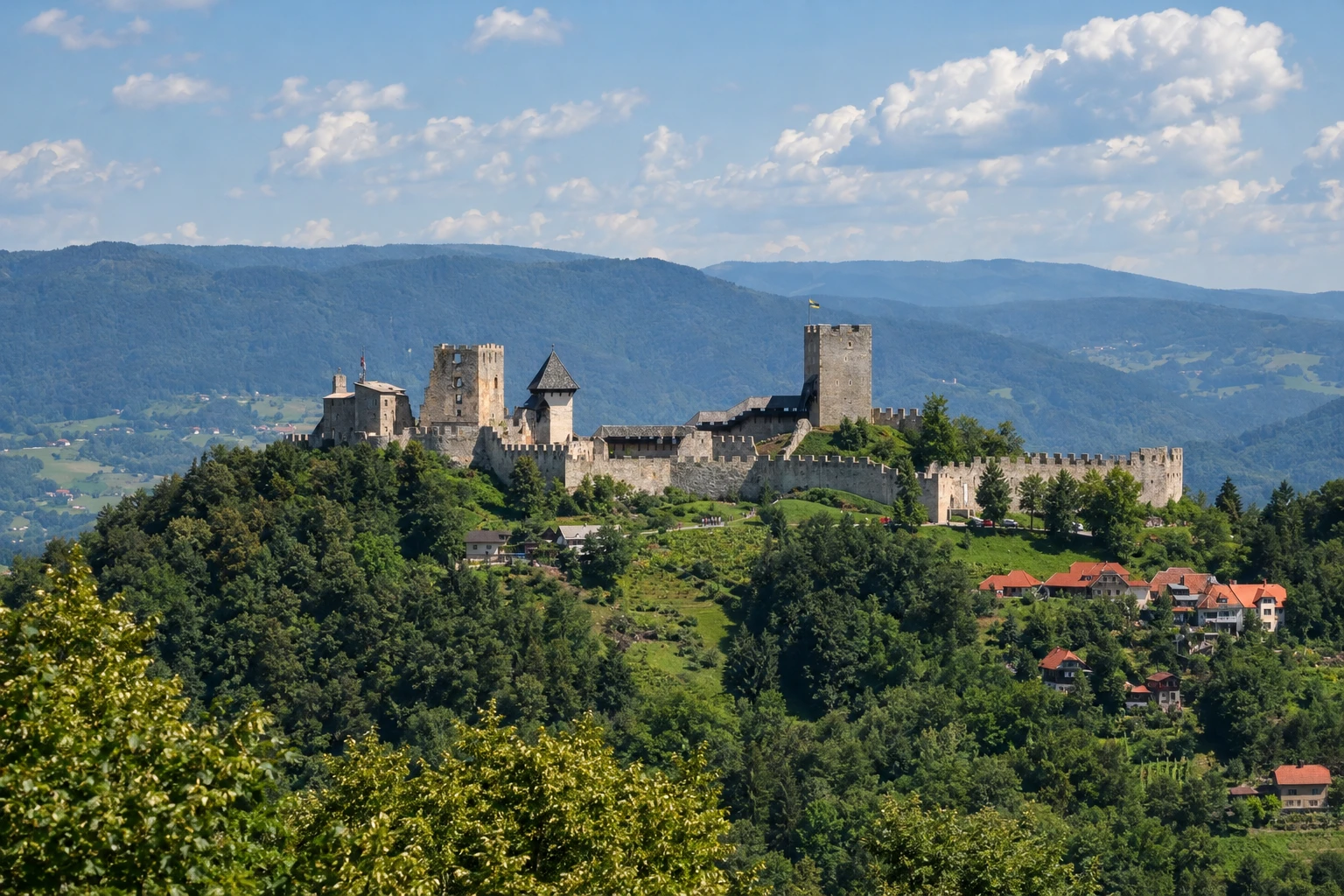
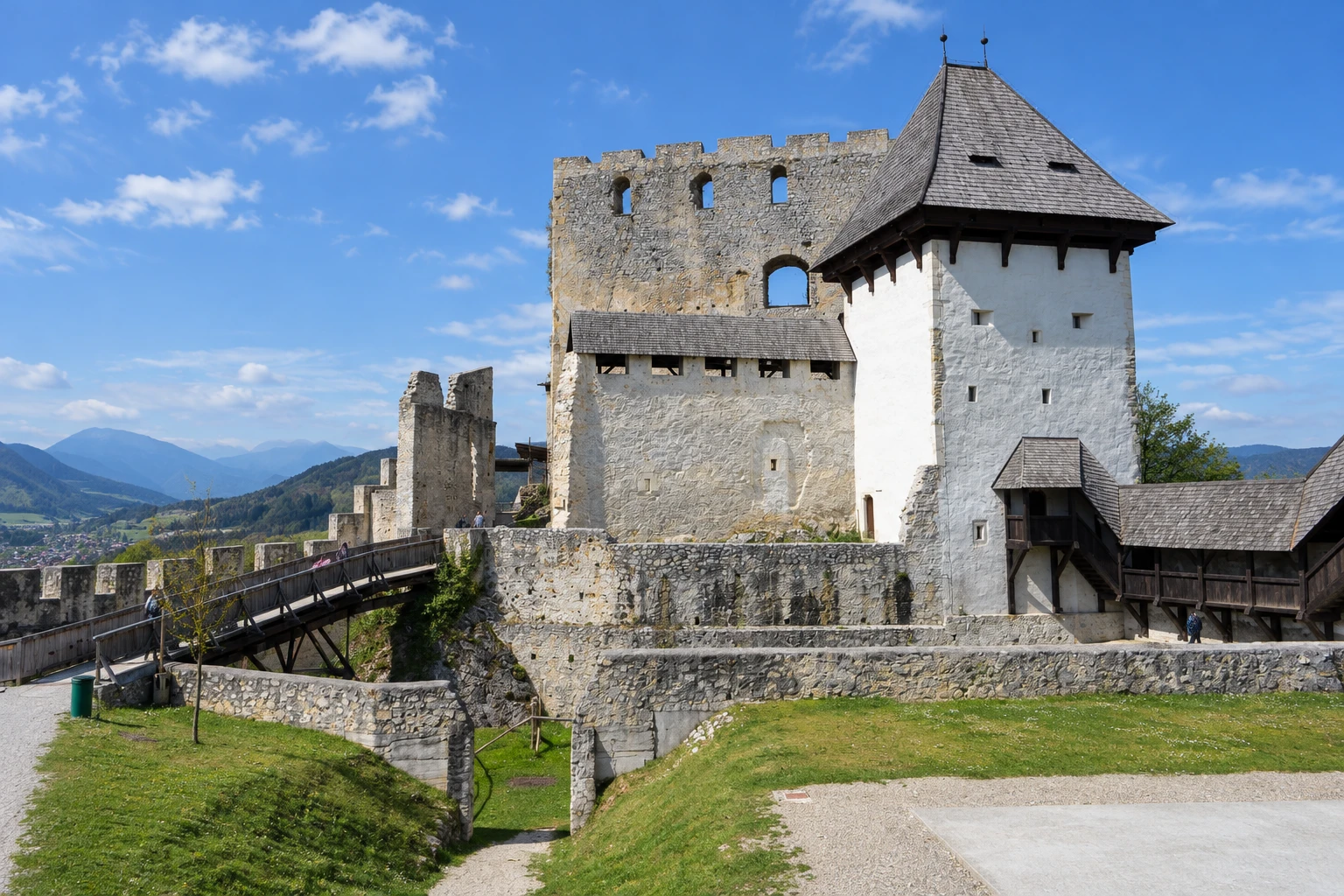
Celje Castle (Stari grad Celje) sits atop a hill above the town and is the largest medieval castle in Slovenia. Its earliest foundations date to the second half of the 12th century, and the site became known as the home of the Counts of Celje, the most influential dynasty in the country’s history, remembered in the three stars of the coat of arms. The visit follows the entrance, the walls and the courtyards, with exhibits about the counts and the stories of Barbara of Celje and of Friderik II and Veronika of Desenice. Hikers use the waymarked castle trails, about 2 km in total: the geological trail (900 m), the Pelikan trail (750 m) and the trail under the rocks (200 m). The elevation gain is 140 m and the circuit takes around 60 minutes, with wooden play features and benches along the way. At the top, a glass viewpoint projects over the slope with views of Celje and the Savinja valley. By car there is parking next to the castle; the Celebus city buses also go up there. In the warm season, historical reenactment groups run living history programs with knights and court ladies.
Stops: Celje Castle (Stari grad Celje), Castle trails, Glass viewpoint.
Includes: Castle entrance ticket required separately (family tickets and combined tickets with the Regional Museum and the Museum of Recent History are available); trails and viewpoint are free; parking by the castle is free.
Tip: The castle is open every day of the year, with shorter hours in winter and longer hours in summer; last entry is half an hour before closing. Parts of the castle, such as Friderik Tower, may be under maintenance: confirm what is open and the access route by car before you go.
Best time: From April to October, with long days; in summer there are living history programs.
Roman Celje and the Counts: Palace of the Princes and Stara grofija
From Celje old town Walk-through visit to the two buildings of the Regional Museum of Celje about 3 hours morning or afternoon easy
The Regional Museum of Celje (Pokrajinski muzej Celje) preserves the city’s history in two buildings in the old town. The Palace of the Princes (Knežji dvor) was the residence of the Counts and Princes of Celje in the 14th and 15th centuries; after the dynasty’s fall it became an administrative seat and, in the 18th century, a barracks. In the basement lies Celeia, the city under the city: more than 1,000 m² of streets, walls and houses of Roman Celeia, shown in the very place where they were found, the largest exhibition of its kind in the country. On the upper floors, the Counts of Celje exhibition occupies two levels and tells the family’s rise with Herman II, Friderik II and Ulrik II; in a darkened room the museum keeps the counts’ skulls. The same palace houses the Gallery of Contemporary Art. The Stara grofija, a few minutes on foot, is a Renaissance mansion built between 1580 and 1603 next to the southern section of the walls, with early 17th-century arcades. There is the Celje Ceiling (Celjski strop), a painting marking the transition from the Renaissance to the Baroque, discovered and restored in the 1930s, and at the rear an open-air lapidary with Roman stones. Among the museum’s permanent exhibitions is one dedicated to Alma M. Karlin, Celje’s best-known traveler.
Stops: Palace of the Princes (Knežji dvor), Celeia, the city under the city, Stara grofija, Celje Ceiling (Celjski strop).
Includes: Museum admission paid separately; there is a combined ticket with Celje Castle.
Tip: Start in the Roman basement and then go up to the counts’ exhibition; save the Celje Ceiling for last. City museums often close on Mondays: check opening days before you go.
Best time: All year; a good option for rainy or cold days.
Celje old town: squares, Water Tower, cathedral and Museum of Recent History
From Glavni trg, Celje Walk through the old town about 3 hours morning or afternoon easy
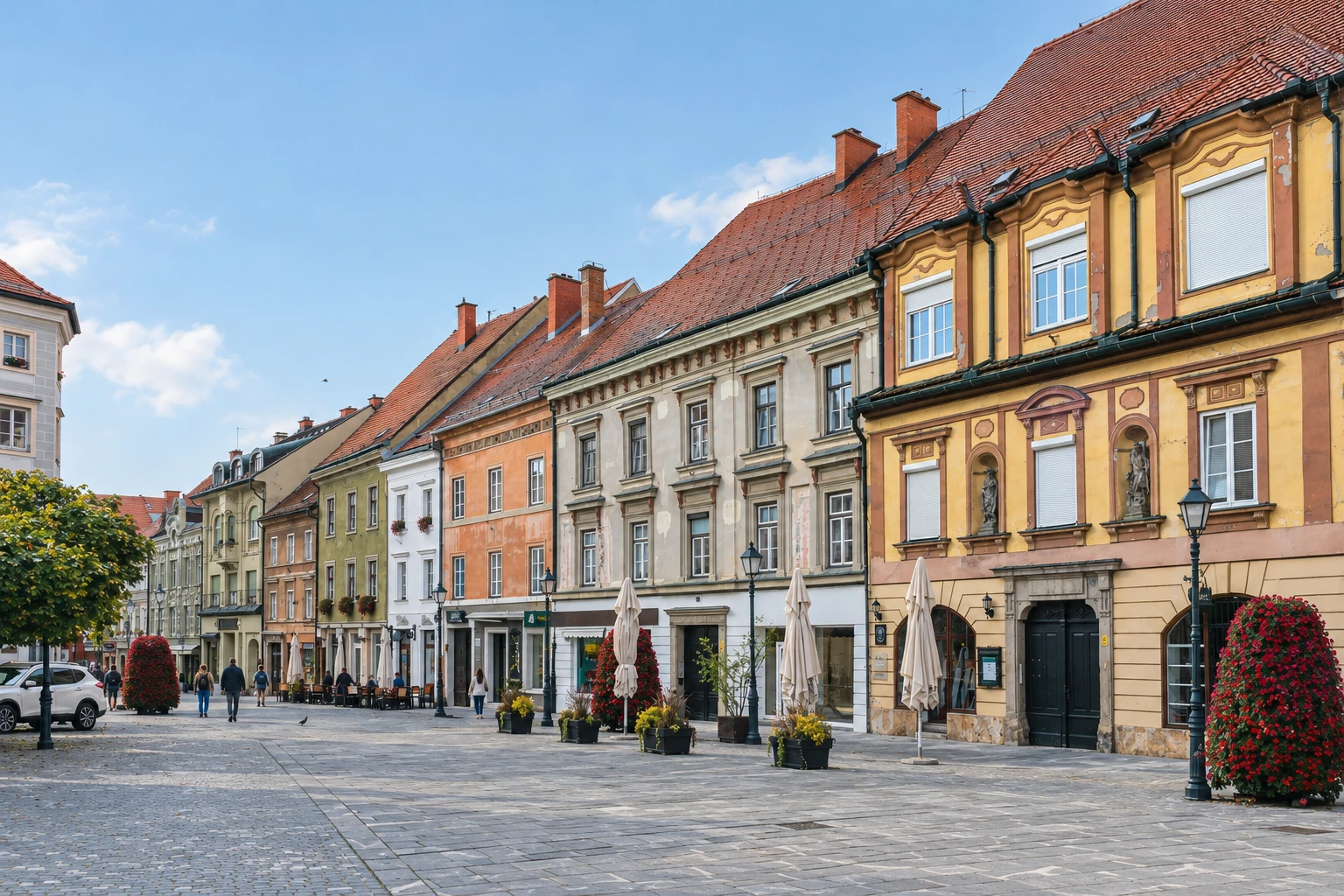
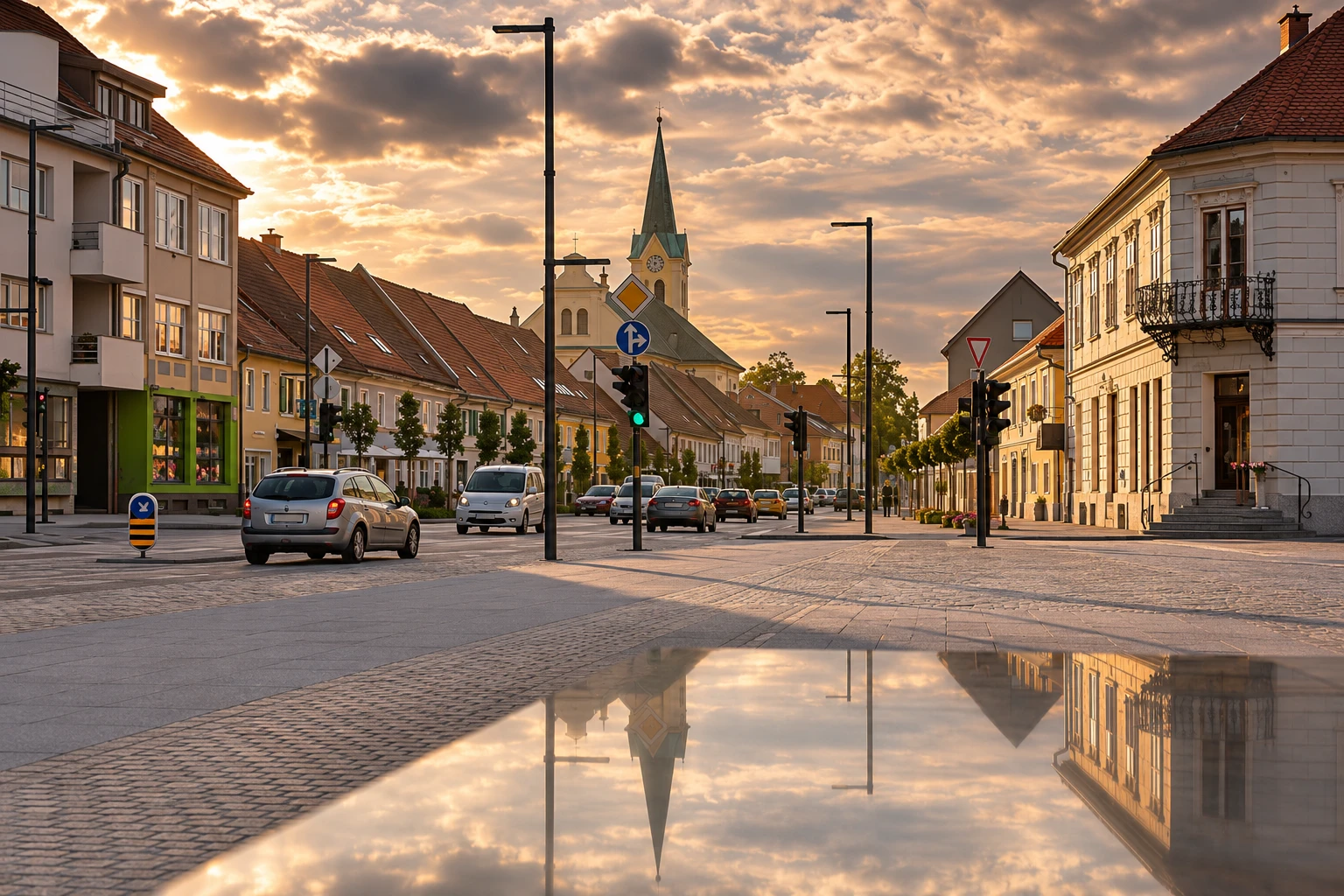
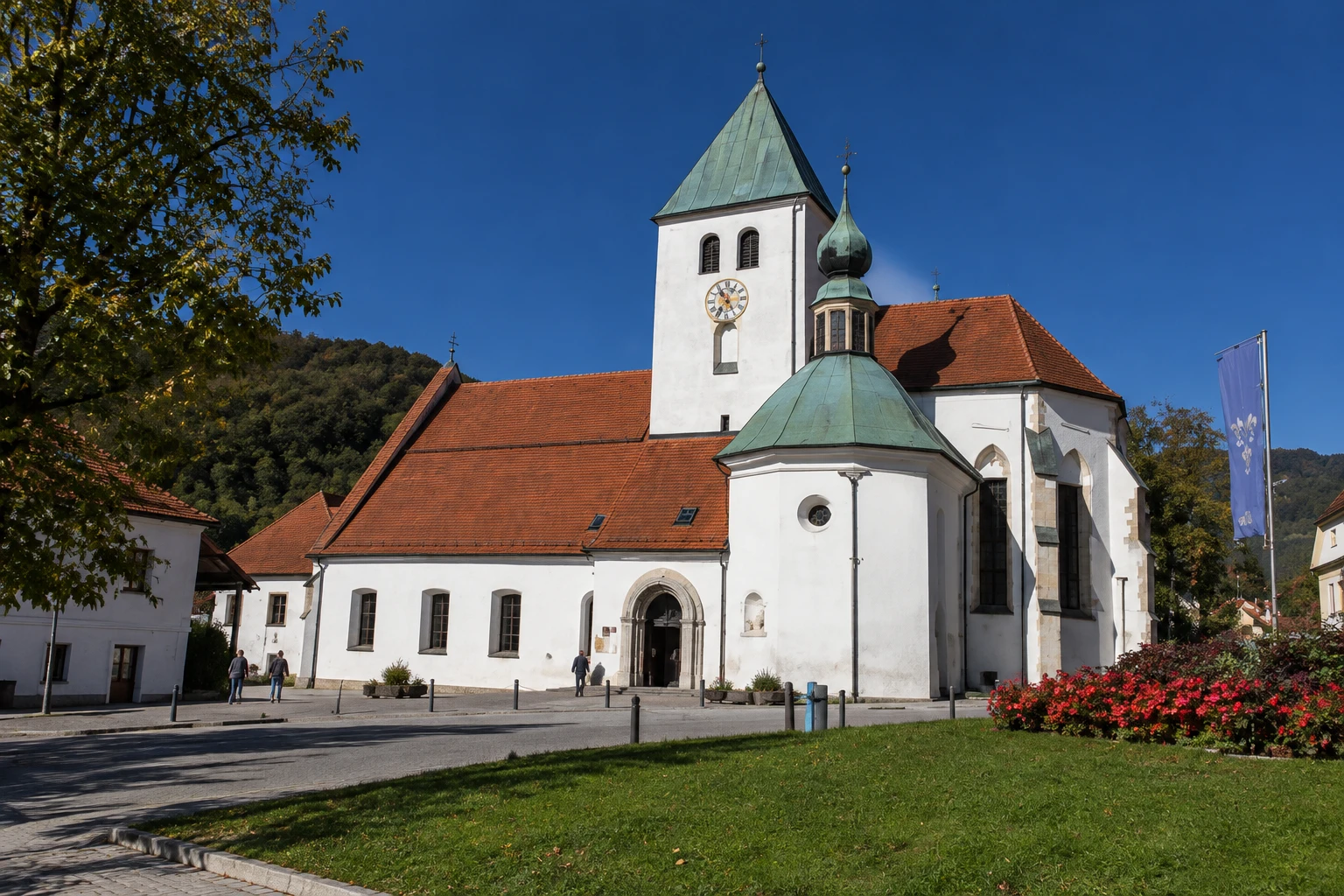
Celje’s old town is flat and best explored on foot. On Glavni trg, the main square, you’ll find the tourist information center. A short walk away is the Cathedral of Saint Daniel: a three-nave basilica built around 1306 that later received vaults, a tower and a chancel after 1379; the Chapel of Our Lady of Sorrows, from the early 15th century, houses a Pietà and is an example of regional Gothic. The church became a cathedral when Celje became a diocesan seat. In the southeast corner of the medieval core, the Water Tower (Vodni stolp), dating from the second half of the 15th century, is one of the four remaining towers of the town wall; a plaque with an outstretched finger marks the level of the 1672 flood. The Museum of Recent History of Celje occupies the old town hall and presents the 20th century in the exhibition Living in Celje, with a street of crafts workshops. The same museum houses Herman’s Den (Hermanov brlog), promoted as Slovenia’s only children’s museum, with 400 toys from different eras. The Pelikan Photographic Studio, with glass ceiling and walls to work with daylight, and the memorial of the former prison Stari pisker complete the route. On the bank of the Savinja, the raftman statue commemorates the river timber transport.
Stops: Glavni trg, Water Tower (Vodni stolp), Cathedral of Saint Daniel, Museum of Recent History of Celje, Savinja riverbank.
Includes: Self-guided walk; museums and the studio have separate admission (there is a combined ticket for the Museum of Recent History and the castle).
Tip: With children, allow more time for Herman’s Den. The Pelikan Studio is located outside the museum’s main building: ask at the ticket office how the visit runs on the day.
Best time: All year; in December the old town hosts Christmas programming.
Green Celje: Municipal Forest, tree house and Šmartinsko Lake
From Savinja riverbank, Celje Park walk and drive or cycle to the lake about 5 hours full day easy
From the Savinja riverbank, the Balseiros Bridge leads to the Municipal Park and shortly after to Celje Municipal Forest (Mestni gozd), just steps from the old town. The forest has seven leisure and adventure trails and an educational trail, plus a running track, outdoor gym and playground; the Miklavški hrib and Anski hrib hills offer views of the city. Among the treetops is the tree house, built entirely from local wood and presented as the largest in Slovenia; the regular season runs from April to mid-October, only in good weather. Šmartinsko Lake (Šmartinsko jezero), about 7 km north of the center, is one of the country’s largest artificial lakes. A waymarked trail follows the shore, partly on a wooden boardwalk, and a wooden bridge connects the two banks. At the lake there are rentals for boats, kayaks, pedal boats and stand-up paddleboards, a cable wakeboard park with 374 m and fishing spots. Panels along the route present the local flora and fauna. South of the Celje basin, the Celjska koča is another outdoor option: a plateau with trails, an adventure park and a summer toboggan run that in winter becomes a small ski area when there is snow.
Stops: Celje Municipal Park, Celje Municipal Forest, Tree house, Šmartinsko Lake (Šmartinsko jezero).
Includes: Trails and visit to the tree house free of charge; boat, board and wakeboard rentals paid separately.
Tip: The tree house opens on specific days and periods of the week: check the annual calendar. The city has shared bikes (KolesCE), some electric, and there is a marked cycling route to the lake.
Best time: From May to September for the lake; from April to mid-October for the tree house.
Lower Savinja Valley: Žalec beer spring, Roman necropolis and Pekel Cave
From Celje By car, through the valley west of Celje about 6 hours whole day easy (steps in the cave)
West of Celje, the Lower Savinja Valley is hop country: in summer, before harvest, the hop fields cover the plain and locals call the plant the green gold. In Žalec, 8.7 km from Celje, the Zeleno zlato (Green Gold) beer spring celebrates this tradition: visitors buy a tasting mug designed by Oskar Kogoj, which they keep as a souvenir, and sample beers poured from the spring’s taps, brewed with local hops. The spring operates seasonally, from April until the end of October. In Šempeter, 12.3 km from Celje, a Roman necropolis was found by chance when a seated female statue turned up in an orchard. The archaeological park brings together family tombs with reliefs, erected when the Roman road between Aquileia and Ptuj passed through Celeia, today’s Celje. Pekel Cave (the name means Hell), 14.8 km from Celje, was opened by the Ponikvica stream; in cold weather, warmer air coming from the entrance looks like smoke, which gave it the name. The cave has two levels with stalactites and other formations, and the 1,159 m route leads to a 4 m underground waterfall.
Stops: Zeleno zlato beer spring (Žalec), Šempeter Roman necropolis, Pekel Cave (Jama Pekel).
Includes: Tasting mug, necropolis entrance and guided cave tour are paid separately.
Tip: The beer spring, the necropolis and the cave operate seasonally and on specific days and hours: confirm before you leave. The cave temperature is constant and cool; bring a jacket and closed shoes. Drivers should not taste the beer.
Best time: From April to October; in summer the hop fields are tall.
Laško on foot: old squares, museum and the beer tradition
From Valvasorjev trg, Laško Walk through the town and guided brewery visit about 4 hours morning and early afternoon easy
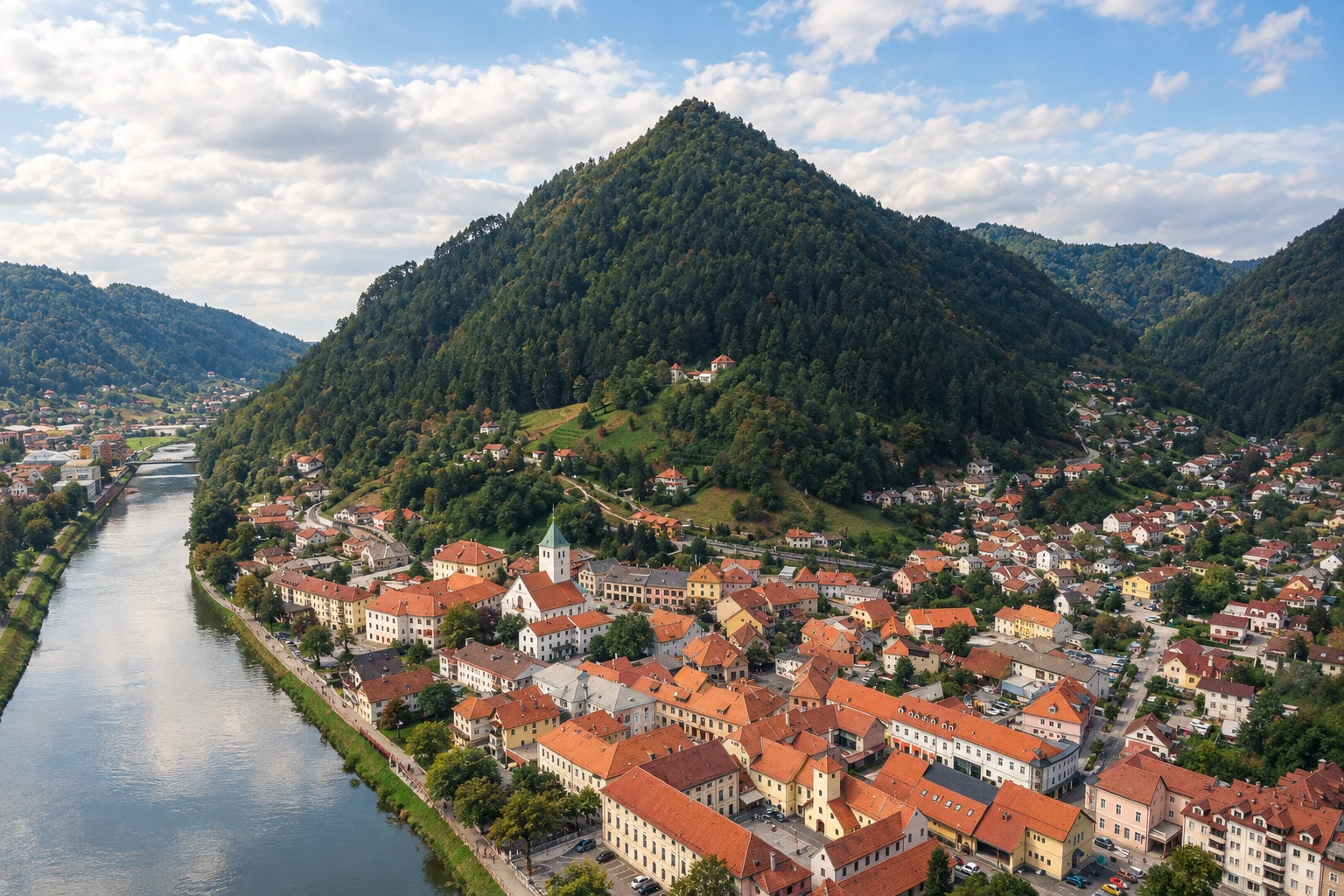
Laško is in the Savinja Valley, south of Celje, and combines two traditions: brewing and thermal waters. The old town center is organized around three squares. At Valvasorjev trg is the tourist information center, in the building where the city’s first beer barrel was made. At Orožnov trg, the former craftsmen’s square, a Medusa head recalls that the area was already inhabited in Roman times. Aškerčev trg, formed at the foot of the castle hill in the 12th and 13th centuries, has at its center a column topped by a statue of Mary. There is also the Laško Museum, founded in 1907 and housed in the old market barn, with three exhibitions: the city’s history from prehistory to the present, the brewing industry and thermal tourism, and the region’s geology. St. Martin’s Church, of Romanesque origin, is a short walk away. The guided tour of Laško Brewery goes inside a working plant: mash tun room, fermentation tanks, bottling line and, at the end, a tasting. The city’s brewing tradition is more than 200 years old. Overlooking the center, Tabor Castle, mentioned for the first time in 1270, belonged to the Counts of Celje who used it as a hunting base; it now houses a restaurant.
Stops: Valvasorjev trg, Orožnov trg, Aškerčev trg, Laško Museum, St. Martin’s Church, Laško Brewery.
Includes: Self-guided walk; museum admission separate; brewery tour paid separately and requires reservation.
Tip: The brewery tour runs only on certain days of the week, lasts about 2 hours, is for people 18 and over, and requires closed, flat shoes. Book in advance at the tourist information center.
Best time: All year; in July the town hosts the Pivo in cvetje (Beer and Flowers) festival.


 Brazil
 Antarctica
 Argentina
 Bolivia
 Chile
 Colombia
 Ecuador
 Falkland Islands (Malvinas)
 French Guiana
 Guyana
 Paraguay
 Peru
 Suriname
 Uruguay
 Venezuela
 Austria
 Belgium
 Croatia
 Denmark
 Finland
 France
 Germany
 Greece
 Hungary
 Iceland
 Ireland
 Italy
 Luxembourg
 Norway
 Poland
 Portugal
 Slovakia
 Spain
 Sweden
 Switzerland
 the Czech Republic
 the Netherlands
 the United Kingdom
 Turkey
 Bermuda
 Canada
 Greenland
 Mexico
 Saint Pierre and Miquelon
 the United States
 the Dominican Republic
 Japan
 Egypt
 South Africa
 Australia
 Fiji
 New Zealand
 Papua New Guinea