Celje

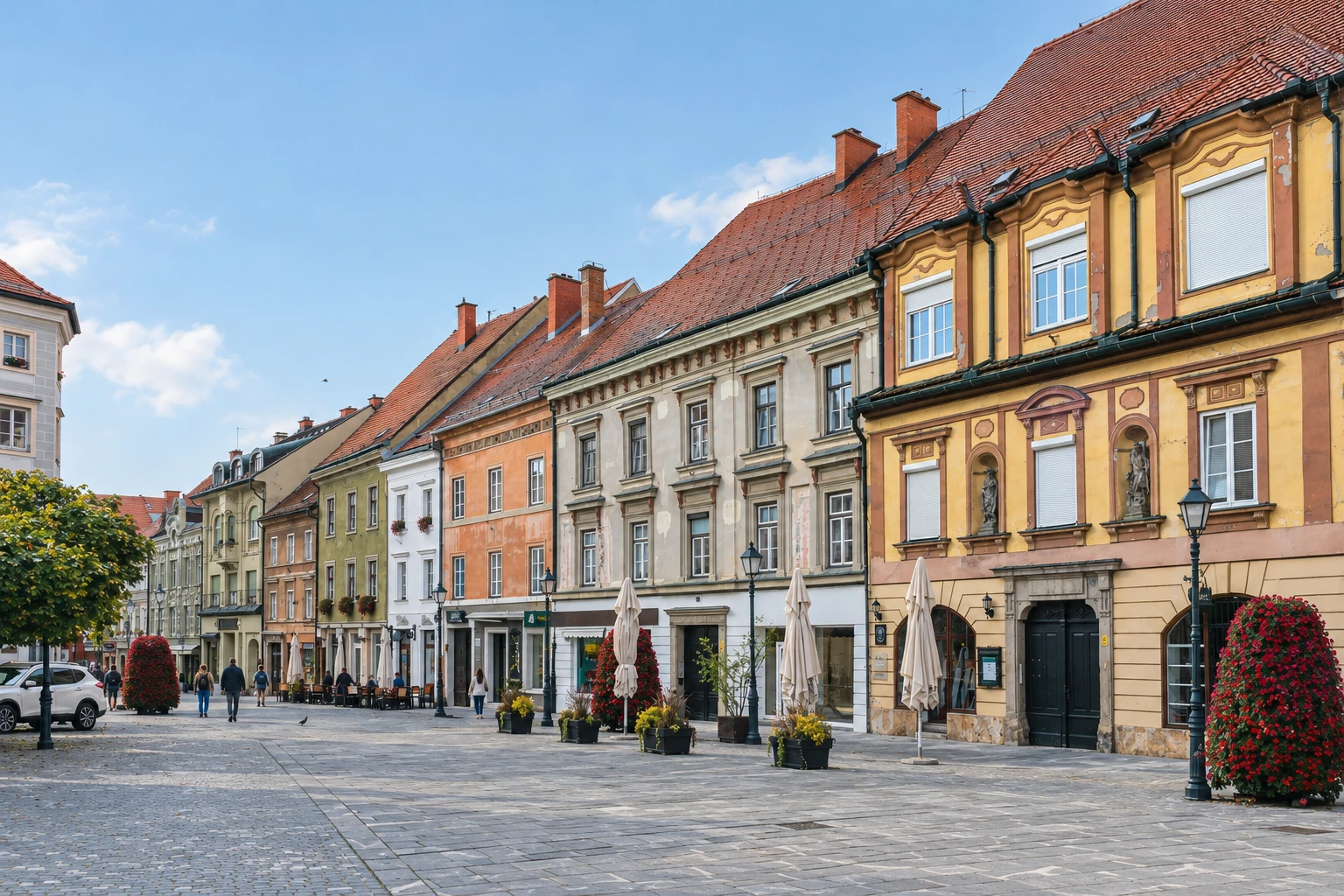
In the photo: Glavni trg, in Celje’s centre

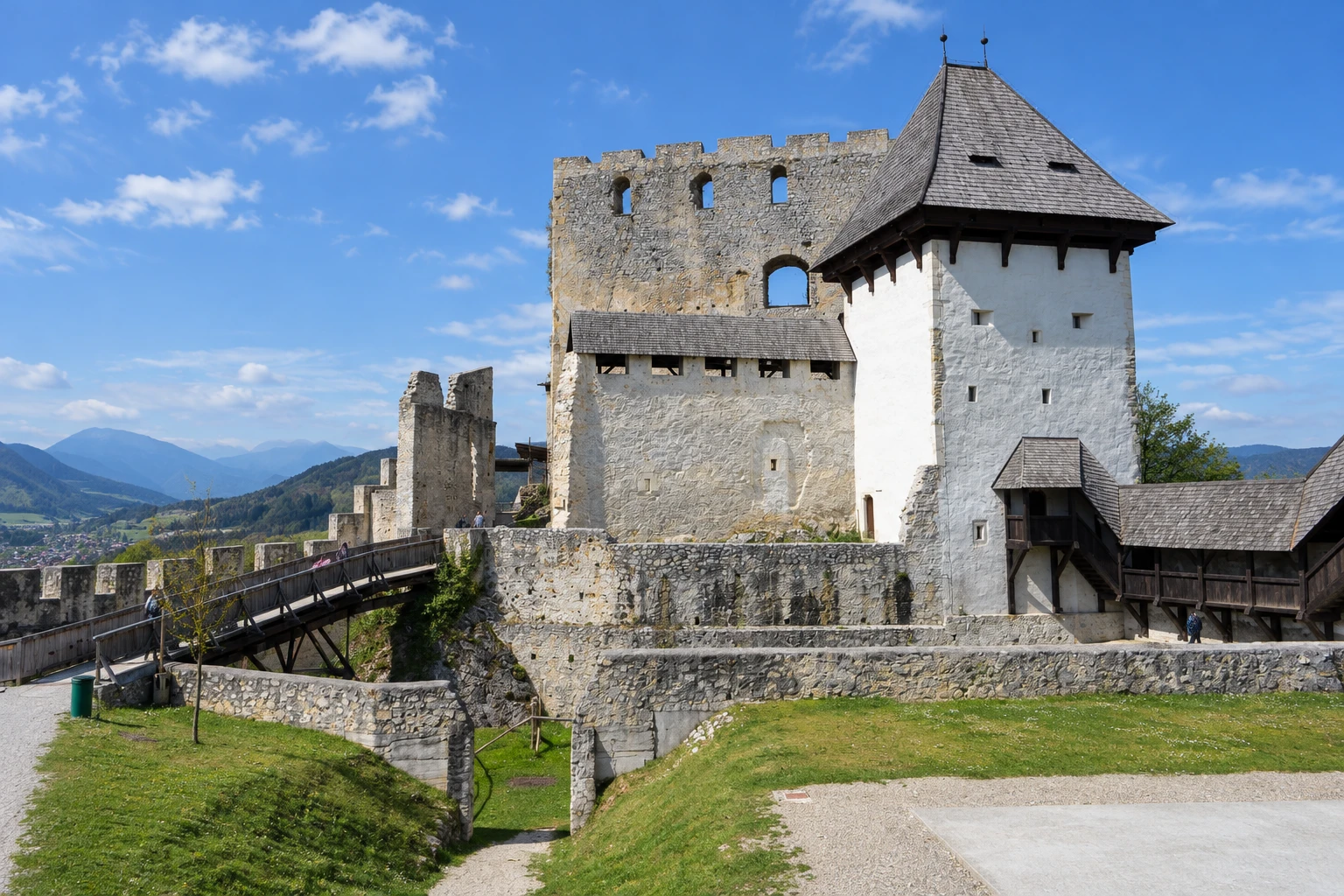
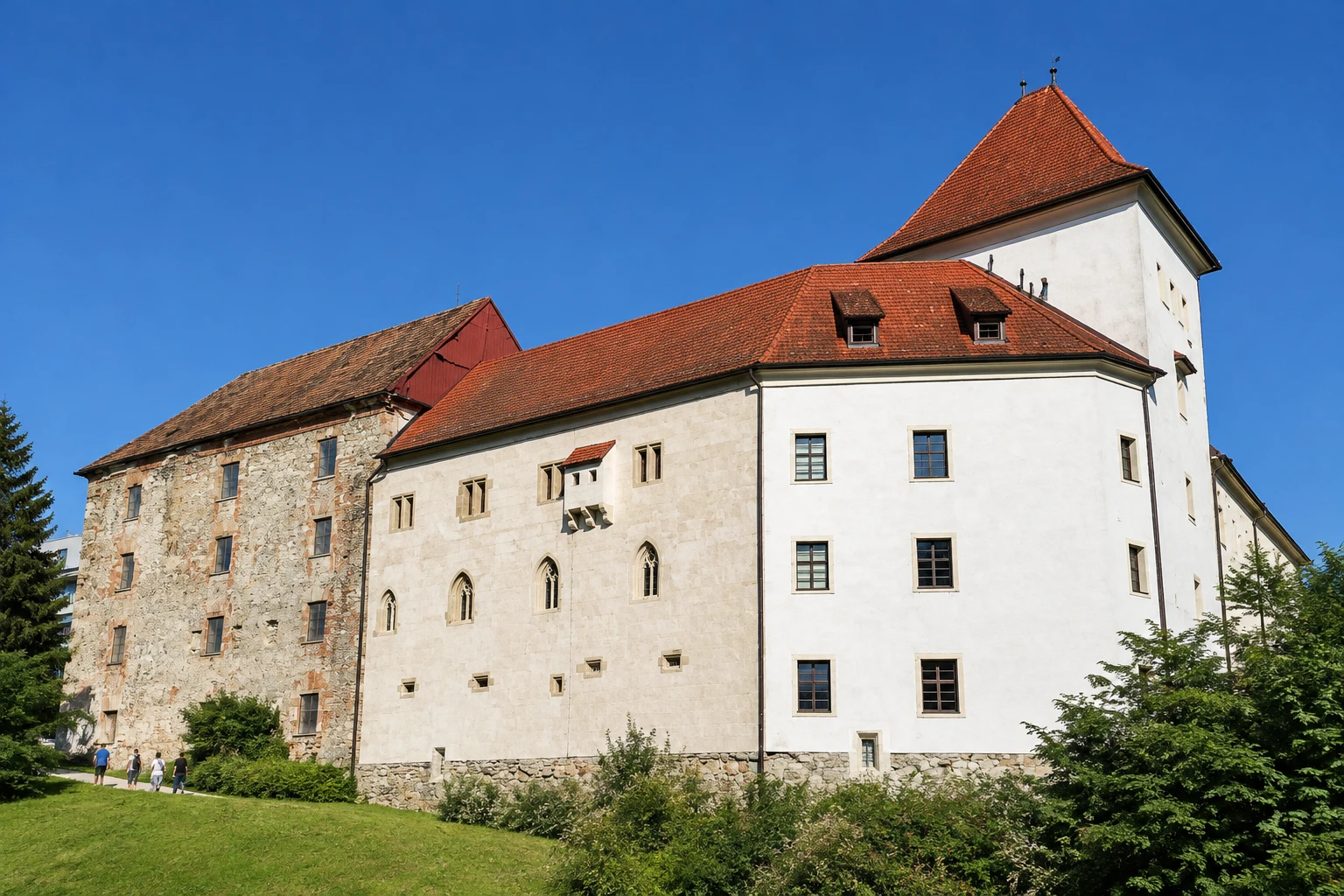
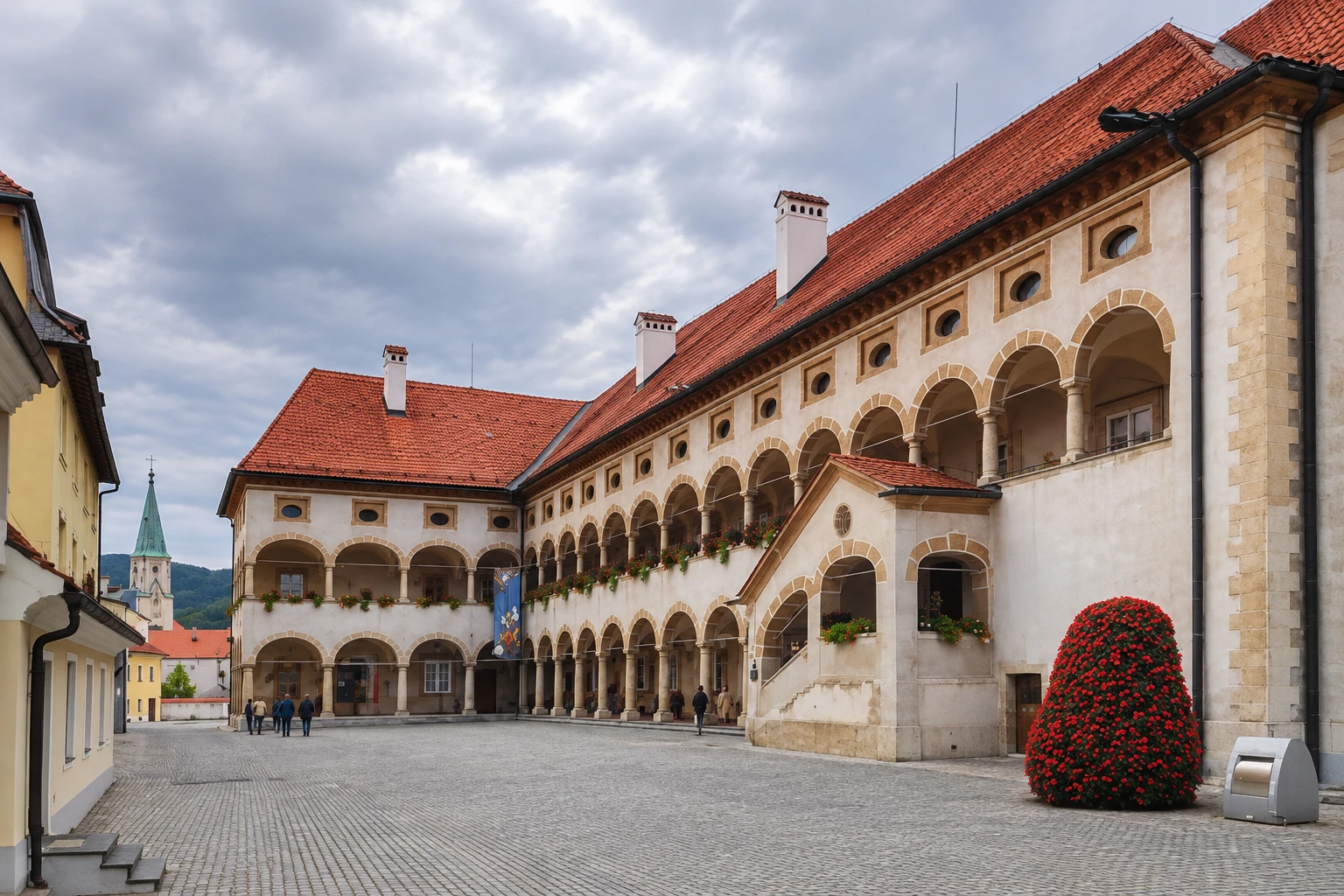
Illustrative images. The pictures in this guide are illustrations based on the real place, not photographs, and may differ from it.

Get it on Google Play

The city

What to expect from Celje.

Slovenia’s third-largest city, in the Savinja valley. It was the Roman Celeia and the seat of the Counts of Celje, who ruled much of the Slovenian lands in the 14th and 15th centuries. The family castle, on a hill to the southeast, is the country’s largest medieval fortification. In the old town, the Princes’ Palace preserves the skulls of the counts and the Roman ruins beneath the ground, and the Stara grofija features Celje’s painted ceiling.

Celje stands in the Savinja Valley, almost halfway between Ljubljana, 75 km away, and Maribor, 54 km away. You can explore two periods of its history in one day. Roman Celeia gained city status under Emperor Claudius between AD 41 and 54. Remains of its streets and houses lie beneath the modern center. In the Middle Ages the Counts of Celje ruled from here, and the three stars of their family arms passed to the coats of arms of both the city and Slovenia.

The old town is compact, flat and easy to walk. It lies against the Savinja, a few minutes’ walk from the train station. Here you’ll find Glavni trg, the main square with the tourist information center, the Princely Palace, Stara grofija, St. Daniel’s Cathedral and remnants of the 15th-century walls, including the riverside Water Tower. Cafés, pastry shops and stores line the streets. A courtyard near Stara grofija is home to a quarter of artists’ studios.

The castle is the next area to explore, outside the center on a hill to the southeast. Walk up the castle trails or take a city bus or car. Slovenia’s largest medieval castle opens every day of the year, with longer hours from June to August.

For green space, cross the Savinja footbridge to the City Park and City Forest, with trails and a treehouse. About 7 km north of the center, Lake Šmartinsko has a lakeside trail and summer water sports. To the south, the Celjska koča plateau has trails, a treetop adventure park and a zipline and becomes a small ski area when there’s snow.

The climate is continental. Winter is cold, with averages near 0°C in December and January, frost and possible snow. Visit museums or combine the city with nearby thermal baths. Mild spring and fall weather suits the trails and castle. Summer is hot, with July highs averaging nearly 27°C. It’s also the wettest season, usually with late-afternoon showers. Concerts and plays move into the squares and onto the riverbank. In December the center hosts the Pravljično Celje Christmas program.

Three sights make a good first visit: the Roman remains beneath the Princely Palace, the Celje Ceiling in Stara grofija and the castle view across the valley. With children, add Herman’s Den, the children’s museum, and Tehnopark, a science and technology park.

Celje is also a practical rail base. Laško, with its thermal baths and brewery, is a short ride on the main line. A branch line from Celje serves the spa town of Rogaška Slatina. Podčetrtek, home to Terme Olimia, lies farther east. Each has its own guide and makes a half-day or full-day trip from Celje.

Share: WhatsApp

Where to stay

22 places to stay in Celje.

Where to eat

18 places to eat in Celje.

Mapa de Celje

13 lugares no mapa: onde ficar e onde comer, por bairro.

The local experience

Things to do in Celje

Celje · Slovenia · Castle

Celje Castle

The largest medieval fortified complex in Slovenia, on a hill southeast of Celje, once the seat of the Counts of Celje. It has walls, courtyards and the four-storey Friderik Tower, with views over the Savinja valley.

Explore Celje Castle

Celje · Slovenia · Museum

Princes' Palace Celje

Palace in Celje’s old town that houses the regional museum, with the Counts of Celje exhibition, the family’s room of 18 skulls, and, in the basement, Roman Celeia streets and houses viewed from walkways.

Explore Princes' Palace Celje

Celje · Slovenia · Museum

Stara grofija

Renaissance mansion in Celje’s old town, headquarters of the Regional Museum, with the painted Celje ceiling (Celjski strop), an architectural and sky illusion made around 1600, and collections of art and history.

Explore Stara grofija

To choose before you go

Tours in Celje

Where each tour starts, how long it takes, how it is done, what is included and the price range.

Following the castle trails to Celje Castle

From Parking lot at the confluence of the Voglajna and Savinja rivers On foot along the trails, or by city bus or car 3 to 4 hours, including the climb and visit Morning or late afternoon Moderate (elevation change of 140 m)

The castle occupies the hill southeast of the center, where it once controlled the approaches to town. Its first foundations date from the second half of the 12th century. The Counts of Celje made it their home, and the visit centers on their story. Through the entrance, walls, courtyards and exhibitions, follow the family’s rise, the life of Barbara of Celje, daughter of Herman II and the highest-ranking crowned figure in Slovenian history, and the tragic love of Frederick II and Veronika of Desenice. Walking up is part of the outing. The castle trails total 2 km of marked paths from the parking lot where the Voglajna meets the Savinja. The 900 m geological trail has stone steps that illustrate the site’s formation. The 750 m Pelikan trail follows the Voglajna through the woods, and the trail beneath the rocks covers 200 m. The loop climbs 140 m and takes about 60 minutes. Along the way are a slide, a wooden nest, climbing pyramids and benches. At the top, a glass viewpoint projects over the slope, overlooking the center and valley. You can also drive up and park beside the entrance, or take the city bus from the train station to the foot of the castle, except on Sundays and holidays. In the warmer months, reenactors greet visitors as knights and court ladies, and the castle hosts concerts and living history events.

Stops: Celje Castle (Stari grad Celje), Geological trail, Pelikan trail, Glass viewpoint.

Includes: The castle charges admission, with family tickets and combined tickets for the Regional Museum or the Museum of Recent History. The trails, viewpoint and parking beside the castle are free.

Tip: Last admission is half an hour before closing. Parts of the castle, including Frederick’s Tower, may close for maintenance. Roadworks can change driving and bus access, so check before heading up. In July and August, short guided tours usually run on selected days.

Best time: April to October for longer days. From June to August the castle stays open into the evening.

The Princely Palace and Stara grofija, from Roman Celeia to the Counts of Celje

From Trg celjskih knezov, in the old town Walk between the two Celje Regional Museum buildings About 3 hours Morning or afternoon Easy

Celje Regional Museum (Pokrajinski muzej Celje) has collected the city’s history for more than 130 years. It occupies two old town buildings a few minutes’ walk apart. At the Princely Palace, the counts’ 14th- and 15th-century residence and a cultural monument of national importance, start below ground. More than 1,000 m² of Roman Celeia survive where they were found, including walls, frescoes, a stretch of road with cartwheel ruts and statues of Pohorje marble reused in medieval walls. Upstairs the Counts of Celje exhibition occupies two floors, including two knights’ halls, and ends in a dark room displaying the family skulls, held by the museum since 1956. On the first floor, the archaeology exhibition spans prehistory to the Iron Age. It includes a 35,000-year-old sewing needle made of cave bear bone found in Potočka zijalka cave. The palace also houses the Gallery of Contemporary Art. Stara grofija is a Renaissance mansion built between 1580 and 1603 beside the southern town wall. It has two stories of arcades, and its south facade faces the Savinja. Look up in the ceremonial hall for the Celje Ceiling, an illusionistic tempera painting on canvas from the early 17th century. Its artist and exact date are unknown. Look for the giants, the seasons and the Battle of Troy. The same building houses the lapidarium with Roman statues and monuments, and a cultural history collection spanning the 13th to 20th centuries. A permanent exhibition honors Celje traveler and writer Alma M. Karlin, who traveled around the world alone in the early 20th century.

Stops: Princely Palace (Knežji dvor), Celeia, the city beneath the city, Counts of Celje exhibition, Stara grofija, Celje Ceiling (Celjski strop), Lapidarium.

Includes: The museum charges admission. A combined ticket includes Celje Castle.

Tip: The museum closes on Mondays. From November to February it keeps shorter hours and also closes on Sundays. Start with the Roman remains below ground, head upstairs to the counts and save the Celje Ceiling for last. A first-floor exhibition at Stara grofija includes objects to touch and Braille text for visitors with visual impairments.

Best time: Year-round. A good city outing for cold or rainy days.

Walking the old town walls, Water Tower, cathedral and Savinja riverbank

From Tourist information center on Glavni trg On foot About 2 hours Morning or afternoon Easy

Start on Glavni trg, where the tourist information center was built over the counts’ former arsenal and Roman houses. Its archaeological pavilion won a Europa Nostra award for the way it displays the remains. A few steps away stands St. Daniel’s Cathedral. A three-aisled basilica was built here around 1306. The vaults, tower and chancel followed after 1379. In the early 15th century the Chapel of Our Lady of Sorrows was added, with a Pietà considered a fine example of Gothic art. The church became a cathedral when Celje became a diocesan seat. Built between 1450 and 1473, the town walls formed a quadrilateral with corner bastions, a moat and three gates. Auctioned off after 1785, they were demolished or incorporated into houses. Surviving stretches are visible on the Savinja bank and Vodnikova ulica. The Water Tower at the southeastern corner is one of four surviving towers. A plaque with a pointing finger marks the 1672 flood level. In summer the stage by the tower and the urban beach on the riverbank host concerts. On Gubčeva ulica, an early Christian baptistery holds an octagonal font dating from the late 4th or early 5th century. Between Stara grofija and the music school, Zagata alley leads to a courtyard with 11 studios used by painters, photographers and other artists. The walk ends at the Savinja footbridge beside Boris Kalin’s bronze statue of a raftsman. Dedicated in 1961 to mark the completion of flood control works on the Savinja, it honors the men who took timber downriver for centuries.

Stops: Glavni trg, St. Daniel’s Cathedral, Water Tower (Vodni stolp), Town walls, Early Christian baptistery, Raftsman statue, Arts Quarter.

Includes: Free, self-guided walk. The tourist information center arranges paid guided walks by reservation.

Tip: In July and August, a weekly guided walk through the center usually runs in Slovenian and English without reservations. Ask at the information center. On Jožefov hrib, a Calvary dating to 1717 has four chapels and a sculpture group depicting Golgotha on the hilltop.

Best time: Year-round. Summer brings outdoor concerts and December brings Christmas events.

20th-century Celje with kids, from the Museum of Recent History to Herman’s Den and Tehnopark

From Prešernova ulica, in the old town On foot 3 to 4 hours Morning or afternoon Easy

Celje’s Museum of Recent History occupies the former town hall and explores the 20th century through residents’ daily lives. The Living in Celje exhibition recreates a street of artisans’ workshops, a pharmacy and a middle-class apartment, and features diaries spanning three generations. The final section is devoted to the city’s workers. The museum also holds a dentistry collection with instruments used by dentists in the last century. The same building houses Herman’s Den, described as Slovenia’s only children’s museum. Its mascot, Herman the fox, leads children up to age 12 through the history of toys, with 400 Slovenian examples from different periods. The space is adapted for visitors with sensory or mobility disabilities. Outside the main building, photographer Josip Pelikan commissioned the Pelikan Photographic Studio around the turn of the 20th century. Its glass roof and walls let photographers work by daylight. The visit includes the gallery, retouching workshop and darkroom. By prior arrangement you can have your photograph taken using historic techniques. Nearby Stari pisker, a former Minorite monastery used as a prison during the German occupation, has a room commemorating victims of Nazism. For the rest of a day with children, Tehnopark Celje on Gubčeva ulica is a science, technology and innovation park with three levels, 57 interactive stations and a 360° viewpoint over the city on the top floor.

Stops: Celje Museum of Recent History, Herman’s Den (Hermanov brlog), Pelikan Photographic Studio, Stari pisker, Tehnopark Celje.

Includes: Museum, studio and Tehnopark admission are charged separately. A combined ticket covers the Museum of Recent History and the castle.

Tip: Ask at the museum ticket desk how visits to the Pelikan Studio work that day. The museums and science park keep their own opening days and hours, so check ahead.

Best time: Year-round. A good option for rainy days.

City Park, City Forest and the treehouse

From Raftsman statue on the Savinja riverbank On foot, with some sections also suitable for bikes 2 to 3 hours Morning or afternoon Easy to moderate

A footbridge from the old town leads in minutes to City Park on the former Savinja floodplain. The park has horse chestnuts, a paved, illuminated avenue of lindens, sculptures, playgrounds, tennis courts and a skating rink. Just beyond begins the City Forest, once the counts’ route down from the castle to town. It has seven recreation and adventure trails and a nature trail, as well as a running track, outdoor gym and playground. Walk or cycle up Miklavški hrib and Anski hrib, the hills edging the forest, for views of the center. Among the treetops stands a treehouse built entirely from local wood and described as Slovenia’s largest. It welcomes families and groups and hosts workshops, concerts and poetry evenings. The regular season runs from April to mid-October, in good weather and at selected times during the week. One morning a week, forestry staff talk with visitors about the trees and woods. Together, the forest, Celje hills and Lake Šmartinsko have ten hiking trails, shown on a map with walking times, elevation gains and difficulty. One of them, the Giantess Trail, is listed by the local tourism office among Slovenia’s best-known forest trails.

Stops: Celje City Park, Celje City Forest (Mestni gozd), Treehouse, Miklavški hrib, Anski hrib.

Includes: The park, trails and treehouse are free to visit.

Tip: Check this year’s treehouse schedule. It opens only at selected times each week and closes in rain. Pick up a trail map at the tourist information center. There’s parking beside the park.

Best time: April to mid-October for the treehouse. The park and trails are open year-round.

Lake Šmartinsko, its shore trail, boating and wakeboarding

From Central Celje By bike on the marked route, or by car Half a day Morning or afternoon Easy

Lake Šmartinsko lies about 7 km north of the center. Created in 1970 as a reservoir to control flooding on the Koprivnica and Jezernikov graben streams, it has 11 km of shoreline and is one of Slovenia’s largest artificial lakes. Over time it became a local recreation area and a refuge for wildlife. A marked shore trail, partly on a wooden boardwalk, serves walkers, runners and cyclists. Panels introduce the lake’s plants and animals. A wooden bridge joins the banks, with steps down to the water. Small beaches and shaded spots offer places to rest. You can rent boats, kayaks, pedal boats and paddleboards. The wakeboard park has a 374 m cable for one rider at a time, with adjustable speed. Instructors provide equipment and introduce beginners to the sport. Two diving platforms on the shore, 25 m and 17 m high, are used for high-diving practice and competitions. The lake is also popular for carp fishing. A marked cycle route leaves the Park & Ride lot in the center, follows the Savinja bank and Koprivnica stream to the lake and returns by a different route. The easy circuit is 16 km with 65 m of climbing and takes about 90 minutes.

Stops: Lake Šmartinsko (Šmartinsko jezero), Wooden boardwalk, Wooden bridge, Wakeboard park.

Includes: Free trail access. Boat and board rentals and wakeboard sessions cost extra.

Tip: The city’s KolesCE bike-sharing system includes some e-bikes. Water sports operate in the warmer months and depend on the weather. Check before visiting.

Best time: May to September for water sports. The lakeside trail is open year-round.

See 1 more tour

Celjska koča, with trails, a ropes course and a zipline above Celje

From Zagrad, south of Celje, on foot, or central Celje by car or bike By car, by bike or on foot Half a day to a full day Full day Moderate

Celjska koča is both a hill and a recreation area on the plateau enclosing the Celje basin to the south. It overlooks the city and is accessible by car, bike or on foot. The walk starts beside the fire station in Zagrad, with signs on the east side of the parking lot. The path alternates between woods and paved stretches before a fork. The tougher option climbs Mount Grmada to a wishing bell at the summit. The gentler route passes the Trobiš beech, a tree over 200 years old protected as a natural monument. Fit cyclists can follow 6.8 km of paved forest road from Celje. The highest point is just over 400 m above town. At the top, the treetop adventure park has a blue course for children ages 5 and up, and red and black courses with 26 obstacles for ages 8 and up. The zipline covers 829 m in two spans of 426 m and 403 m, and there’s a summer toboggan run. In winter, when snow allows, a small ski area operates six lifts, with equipment rentals and beginner schools. Forest and mushroom discovery trails start here, as does the descent through Hudičev graben gorge, where some stretches have iron rungs and cables. Among these hills at Pečovnik, the house where traveler Alma M. Karlin spent her last years is now a memorial. Climb 183 steps to reach it. Regular visits are on Saturdays from May to September in good weather. At Svetina, 12 km from Celje and nearly 700 m above sea level, you can visit the 15th-century Church of Our Lady of the Snows and Alma’s grave.

Stops: Celjska koča, Mount Grmada, Trobiš beech, Alma’s house (Pečovnik), Svetina.

Includes: The trails and Alma’s house are free. The ropes course, zipline, toboggan and skiing cost extra.

Tip: The ropes course and zipline open on selected days depending on the month, and some time slots require booking. Check before going up. Hudičev graben gorge requires hiking shoes and is unsuitable in rain.

Best time: April to October for the trails and ropes course. In winter, ski when there’s snow.

Day by day

1, 2 and 3-day itinerary in Celje

Suggestions to plan the trip. Change the order of the days according to the weather and tour availability.

1 day · 1 day in Celje exploring Roman Celeia, the counts and the castle

For Day visitors from Ljubljana or Maribor arriving by train or car · Based in Celje old town
  1. Day 1 · From underground Roman remains to the castle viewpoint

    The old town is a few minutes’ walk from the train station. Start at the Princely Palace. Descend to Roman Celeia, head upstairs to the Counts of Celje exhibition, then continue to Stara grofija for the Celje Ceiling and lapidarium. Have lunch in the center. Then make a short circuit of the squares, taking in Glavni trg, St. Daniel’s Cathedral and the Water Tower. Follow the Savinja bank to the statue of the raftsman. Save the afternoon for the castle. The castle trails start at the confluence of the Voglajna and Savinja rivers and take about 60 minutes to walk in a loop. By city bus or car, the ascent is quick. Explore the walls and courtyards and finish at the glass viewpoint. Last admission is half an hour before closing. In winter the castle closes early, so reverse the order and go up in the morning.

2 days · 2 days in Celje, with history on the first day and nature on the second
For Overnight visitors who want to explore beyond the museums · Based in Celje old town
  1. Day 1 · The Regional Museum, old town and castle

    Take your time at the Princely Palace and Stara grofija in the morning. Allow about three hours for the underground Roman remains, the counts, the Alma M. Karlin exhibition and the Celje Ceiling. After lunch, walk through the center to the cathedral, surviving stretches of wall, Water Tower and artists’ courtyard behind Stara grofija. Late in the afternoon climb the trails to the castle and, when seasonal hours allow, stay for the evening light at the glass viewpoint.

  2. Day 2 · City Forest and Lake Šmartinsko

    Cross the footbridge to City Park and enter the City Forest. Climb Miklavški hrib or Anski hrib for the views. From April to mid-October, time a stop at the treehouse to coincide with one of its opening periods. In the afternoon, head to Lake Šmartinsko, about 7 km north. Drive or follow the marked cycling route, a 16 km loop. Walk along the shore and wooden boardwalk. In summer, rent a boat, kayak or paddleboard. On a rainy day, visit the Museum of Recent History with Herman’s Den and Tehnopark instead.

3 days · 3 days in Celje exploring the city and a nearby spa town
For Travelers using Celje as a base and getting around by train · Based in Celje old town
  1. Day 1 · Roman Celje and the city of the counts

    Visit the Princely Palace and Stara grofija in the morning. After lunch, see St. Daniel’s Cathedral, the walls and the Water Tower in the old town. In the late afternoon, go up to the castle by trail or city bus. Have dinner downtown and take an evening walk along the Savinja.

  2. Day 2 · Outdoors in the forest, at the lake or on Celjska koča

    Choose according to the season and your interests. For an easy day, visit the City Forest in the morning and Lake Šmartinsko in the afternoon. For a mountain outing, walk from Zagrad to Celjska koča via Mount Grmada or the Trobiš beech, with a ropes course and zipline at the top on operating days. On a fine Saturday between May and September, add Alma M. Karlin’s house at Pečovnik. With young children, the Museum of Recent History, including Herman’s Den, and Tehnopark make a good half-day outing.

  3. Day 3 · A day trip to Laško or Rogaška Slatina

    Laško is a short train ride away on the main line. Its old town, museum and thermal pools beside the Savinja fit into a day, with a return in the early evening. Rogaška Slatina takes more planning. The branch line from Celje has fewer trains, especially on weekends, so check the outward and return schedules before leaving. Visit the Spa Park, taste the mineral waters and go up Kristal Tower. Both places have their own guides with details of each visit.

Best time to go

When to go: Celje month by month

The seasons shown are the most usual ones; nature doesn't always follow the calendar.

January Low rain

Winter · shorter castle hours

At Celje weather station the 1981–2010 monthly averages are −0.3°C and about 47 mm of rain. It’s the driest month of the year. Lows are usually below freezing and there may be snow on the ground. The castle opens daily but closes in midafternoon. The Regional Museum keeps winter hours and closes on Sundays and Mondays. Explore downtown museums, cafés and pastry shops. Celjska koča operates its lifts when there’s snow. Bring a heavy coat, gloves and closed-toe shoes.

February Low rain

Winter · museums

At Celje weather station the 1981–2010 monthly averages are 1.0°C and about 50 mm of rain. It stays cold, with frost on many mornings and possible snow. The city is quiet and you can visit museums without lines. The castle stays open a little longer than in January. Combine Celje with an afternoon in Laško’s thermal pools, a short train ride away.

March Some rain

Late winter · museums switch to summer hours

At Celje weather station the 1981–2010 monthly averages are 5.2°C and about 71 mm of rain. Highs approach 12°C but mornings are still cold. The Regional Museum starts its March-to-October schedule, opening Tuesday through Sunday, and the castle extends its hours. In dry weather, the castle and City Forest trails are good for walking again. Pack a coat and a waterproof layer.

April Some rain

Spring · treehouse reopens

At Celje weather station the 1981–2010 monthly averages are 9.8°C and about 71 mm of rain. Days are mild with highs around 16°C and passing showers. The regular treehouse season begins in the City Forest, weather permitting. The Celjska koča ropes course usually opens on weekends and holidays. The castle stays open until early evening.

May Some rain

Spring · Alma’s house on Saturdays

At Celje weather station the 1981–2010 monthly averages are 14.9°C and about 90 mm of rain. Highs exceed 21°C and days are long. Boats and boards begin appearing on Lake Šmartinsko, and Alma M. Karlin’s house in Pečovnik opens on fair-weather Saturdays through September. Late-afternoon thunderstorms become more common toward the end of the month. It’s a good time to combine museums, the castle and trails.

June High rain

Early summer · outdoor concerts

At Celje weather station the 1981–2010 monthly averages are 18.3°C and about 132 mm of rain. This is the wettest month. Most rain falls in late-afternoon showers or thunderstorms, with settled mornings and highs near 25°C. The castle stays open into the evening and usually hosts living history events. Summer concerts begin beside the Water Tower and the outdoor pool usually opens late in the month. Plan walks for the morning.

July High rain

Summer · Summer in Celje · guided walks

At Celje weather station the 1981–2010 monthly averages are 19.9°C and about 122 mm of rain. This is the hottest month, with average highs near 27°C and some days above 30°C. Summer in Celje brings concerts and theater to the squares, Water Tower and urban beach on the Savinja. Guided walks through the center and castle usually run on set weekdays. Lake Šmartinsko and the outdoor pool are busy. Afternoon thunderstorms are common.

August High rain

Summer · medieval day at the castle

At Celje weather station the 1981–2010 monthly averages are 19.0°C and about 125 mm of rain. Temperatures are similar to July, with average highs around 26°C. Summer concerts and guided walks continue. The castle usually holds a medieval day in late summer, with a knights’ tournament, jugglers and historical reenactors. Check this year’s date. The lake is at its busiest.

September High rain

Early fall · mild weather

At Celje weather station the 1981–2010 monthly averages are 14.6°C and about 118 mm of rain. Highs approach 22°C and the city empties after the holidays. Longer rain fronts alternate with clear days. The outdoor pool usually closes early in the month and Alma’s house has its last Saturday openings. It’s a good month for Celjska koča and the walk up to the castle. Bring an extra layer for the evening.

October High rain

Fall · forest colors · treehouse closes

At Celje weather station the 1981–2010 monthly averages are 10.1°C and about 115 mm of rain. The City Forest and surrounding hills change color, and misty mornings are common in the valley. The treehouse closes for the season in the first half of the month. This is the last month of the Regional Museum’s summer schedule. Bring a coat and umbrella.

November Some rain

Late fall · museums on winter hours

At Celje weather station the 1981–2010 monthly averages are 4.7°C and about 93 mm of rain. Days are short, gray and damp, with the first frosts. The Regional Museum switches to winter hours and the castle begins closing in the late afternoon again. On the 11th, St. Martin’s Day marks the traditional change of grape must into new wine in Slovenia. The Christmas lights usually come on downtown late in the month.

December Some rain

Winter · Pravljično Celje Christmas events

At Celje weather station the 1981–2010 monthly averages are 0.6°C and about 78 mm of rain. Lows drop below freezing and snow is possible. Pravljično Celje (Fairytale Celje) brings lights, concerts in the squares and a carousel downtown. In the second half of the month, fairies and other characters welcome children to Fairyland on Glavni trg. The castle usually holds a medieval winter day and a torchlit walk. There’s an outdoor celebration on the evening of the 31st.

Plan the journey

How to get there: Celje

Flying via Ljubljana, Zagreb or Graz

Celje has no airport with commercial flights. The most commonly used is Ljubljana Jože Pučnik Airport (LJU) in Brnik, about 95 km away. Continue in a rental car via the A1 motorway, or take public transportation to Ljubljana and catch a train to Celje.

Zagreb Airport in Croatia and Graz Airport in Austria are alternatives if you find a better flight. Continue by car or by train with a change en route.

If you’re arriving from another continent, you’ll usually connect in a European city. Check connections before buying tickets.

Taking the train on the Ljubljana–Maribor line

The train is the easiest way to reach Celje without a car. The city is on the Ljubljana–Maribor line, Slovenia’s main rail route, operated by Slovenske železnice (SŽ). From Ljubljana the journey takes about 1 hour 10 minutes to 1 hour 30 minutes, depending on the train. International trains between Ljubljana, Maribor and Graz also stop here.

The station stands beside the old town. The squares and museums are a few minutes’ walk away and the city bus to the castle leaves from here.

Trains also run from Celje to Laško on the main line. The regional branch to Rogaška Slatina has fewer departures, especially on weekends. Buy tickets at the station, on the SŽ website or on the train. Check the day’s schedules.

By bus

Scheduled buses link Ljubljana bus station with Celje in just under 2 hours, slower than the train. Celje bus station is near the railway station and old town. Regional routes use the national integrated ticket (IJPP), with fewer services in the evenings and on weekends. For nearby spa towns, the train is usually simpler. Check schedules before traveling.

Driving via the A1 motorway

The A1 motorway between Ljubljana and Maribor passes north of the city. It’s 75 km from Ljubljana and 54 km from Maribor. Slovenian motorways require an electronic vignette (e-vinjeta) linked to your car’s license plate. Buy it before entering the motorway.

In and around the old town, parking is available at City Park, beside the train station and across from it on Teharska cesta, and in the Celeiapark, Kocbekova and Glazija garages. Street parking is divided into the blue zone and zone II. Charges apply on weekdays during business hours and on some streets on Saturday mornings. Motorhomes have a designated area.

Castle parking is free during visiting hours. When the castle road is under construction the route changes, so check before driving up.

Getting around Celje

The old town is easy to explore on foot. Elsewhere in the city, Celebus operates six natural-gas bus routes, with single-ride, day and longer-term tickets. One line links the train station to the foot of the castle except on Sundays and holidays. Its number and route change during roadworks, so check the day’s service.

The KolesCE bike-sharing system operates 24 hours a day with online registration. Some stations have electric bikes. Marked cycle routes lead to Lake Šmartinsko on a 16 km circuit and to Laško along the Savinja on a flat, family-friendly route.

A car gives you more flexibility for Celjska koča, the lake and the village of Svetina.

Your questions

Frequently asked questions about Celje

What to do in Celje in one day?

See the Princes’ Palace, with the Counts of Celje exhibition and the Roman Celeia beneath the floors, the Stara grofija with its painted ceiling, and climb to the castle, the largest medieval fortification in Slovenia.

Who were the Counts of Celje?

The dynasty of greatest power in the medieval Slovenian lands. They ruled from Celje from 1341 to 1456 and became princes of the Empire. Their three stars appear on Slovenia’s coat of arms.

Is Celje railway station near the town centre?

Yes. It is next to the old town, a few minutes’ walk from the squares and the museums.

How do you get to Celje Castle?

On a hill to the southeast, about 2 km from the center. On foot, the climb via Cesta na grad takes about 30 minutes; by car, there is parking next to the entrance.

How many days should I spend in Celje?

One day is enough to see the Princely Palace, the Old Counts’ Mansion, the old town, and the castle. With two days, you can also visit the City Forest and Lake Šmartinsko, or head to Celjska koča instead. Three days give you time to use Celje as a base for a day trip by train to Laško or Rogaška Slatina.

Is Celje Castle open every day?

Yes, the castle is open every day of the year. Hours vary by month. They’re shortest in December and January and longest from June to August, when you can visit into the evening. Last admission is half an hour before closing. Parts of the castle may be closed for maintenance, so check before you go.

Are Celje’s museums open on Mondays?

The Celje Regional Museum, housed in the Princely Palace and the Old Counts’ Mansion, is closed on Mondays. From November to February, it has shorter hours and is also closed on Sundays. Other museums have their own schedules, so check before you go. The castle is open every day.

What can I do in Celje with children?

Herman’s Den, a children’s museum with 400 toys from different eras, and Tehnopark, a science and technology park with interactive exhibits, are both in the city center. Children will find a slide, a wooden nest, and climbing structures along the trails up to the castle. Seasonal options include the treehouse in the City Forest and the treetop ropes course at Celjska koča, which has a route for children ages 5 and up.

What was Roman Celeia, and where can I see its remains?

Celeia was the Roman city that stood on the site of present-day Celje. It gained municipal status during the reign of Emperor Claudius, between AD 41 and 54. Most of the visible remains are beneath the Princely Palace, where you can see walls, frescoes, and a section of road right where they were found. The Old Counts’ Mansion has a collection of stone statues and monuments, and there’s an early Christian baptistery on Gubčeva ulica.

Who was Alma Karlin?

Alma M. Karlin was a writer and traveler from Celje. In 1919, she set off on an eight-year solo journey around the world, earning a living by writing, translating, and teaching. The Regional Museum has a permanent exhibition about her travels. Her home in Pečovnik, where she spent her final years, is now a memorial open on Saturdays from May to September, weather permitting. Her grave is in the village of Svetina, 12 km from the city.

Is there anywhere to swim in Celje in the summer?

Yes. Lake Šmartinsko, about 7 km north of the city center, has small beaches and a wooden bridge with steps leading down to the water. You can also rent boats, kayaks, and paddleboards there. The city’s outdoor pool is usually open from late June to early September. For indoor thermal pools, Laško is just a few minutes away by train.

What should I eat in Celje?

Local restaurants have created dishes in honor of the counts: chicken stuffed with bread, mushrooms, goose liver, and truffles; wild boar with mushrooms and bread dumplings with bacon; and chicken soup with liver dumplings and buckwheat porridge. For dessert, there are apricot dumplings, apple strudel, and a cheese tart with wild strawberries created in memory of Friderik and Veronika.

Where should I stay in Celje?

The old town is a convenient choice if you’re arriving by train: the station, museums, squares, and restaurants are all within a few minutes’ walk of one another. If you’re driving and prefer to be closer to nature, you can stay up in the hills at Celjska koča or in the area around the city. If you’re staying in the center with a car, ask about parking when you book.

Can I cycle from Celje to Laško?

Yes. A marked cycling route follows the Savinja River between the two cities, almost entirely along the left bank. It’s flat, rated easy, and suitable for families. The full route is 24 km and takes 60 to 90 minutes. Celje has a bike-sharing system that includes some electric bikes.

What is Christmas like in Celje?

In December, the old town hosts Pravljično Celje (Fairytale Celje), with lights, concerts in the squares, a carousel, and Fairytale Land in Glavni trg. During the second half of the month, fairies and other characters welcome children there in the late afternoon. The castle usually holds a medieval winter day and a torchlit walk. Dates change each year, so check the schedule.

Traveler, share your experiences through photos Up to 5 photos of each place you visited.
See the destination Celje and the thermal spas Find another city