Dobrovo and Medana: the castle, the cooperative cellar and Vipolže Village
From Dobrovo Car or bicycle between the villages 4 to 5 hours full day easy
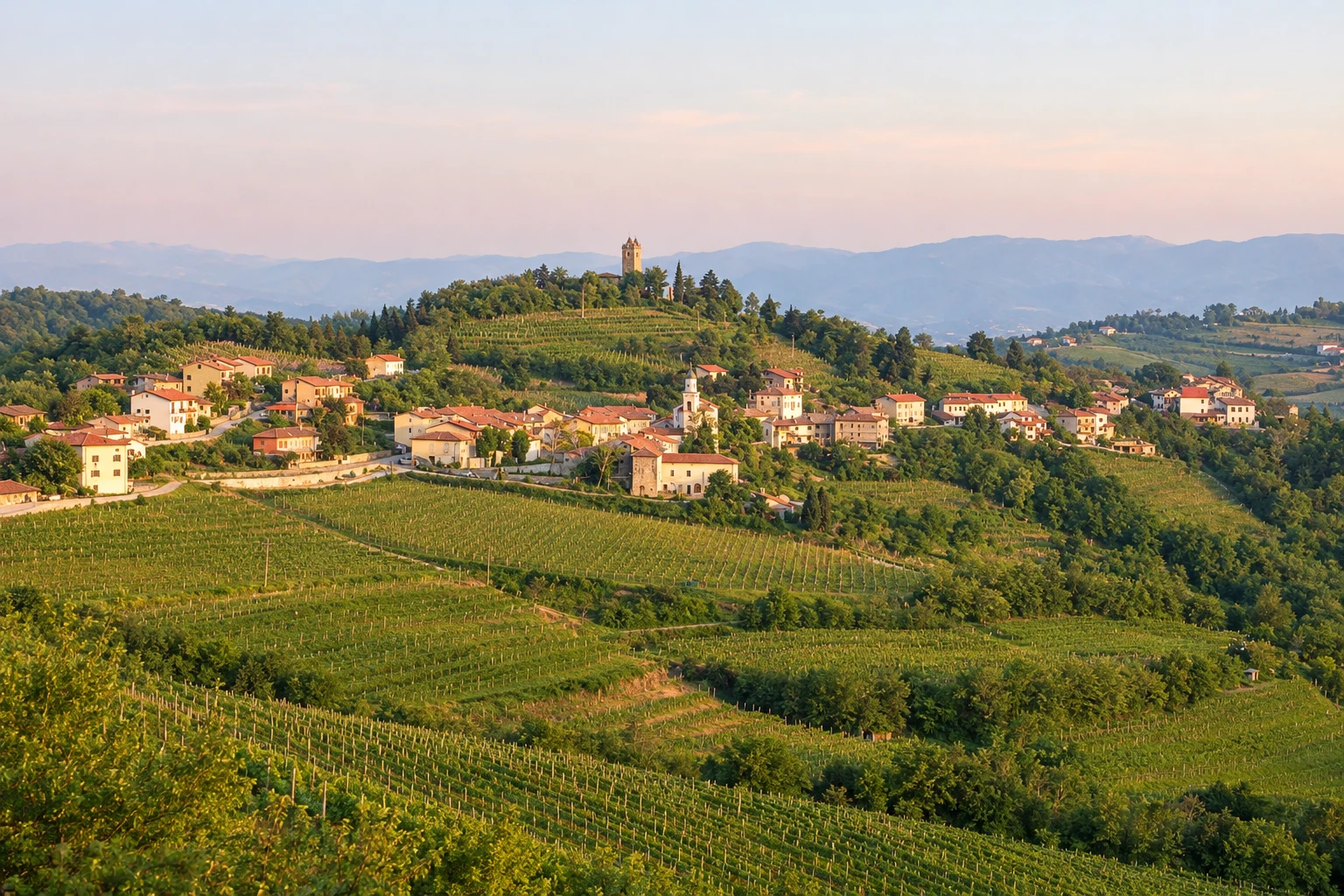
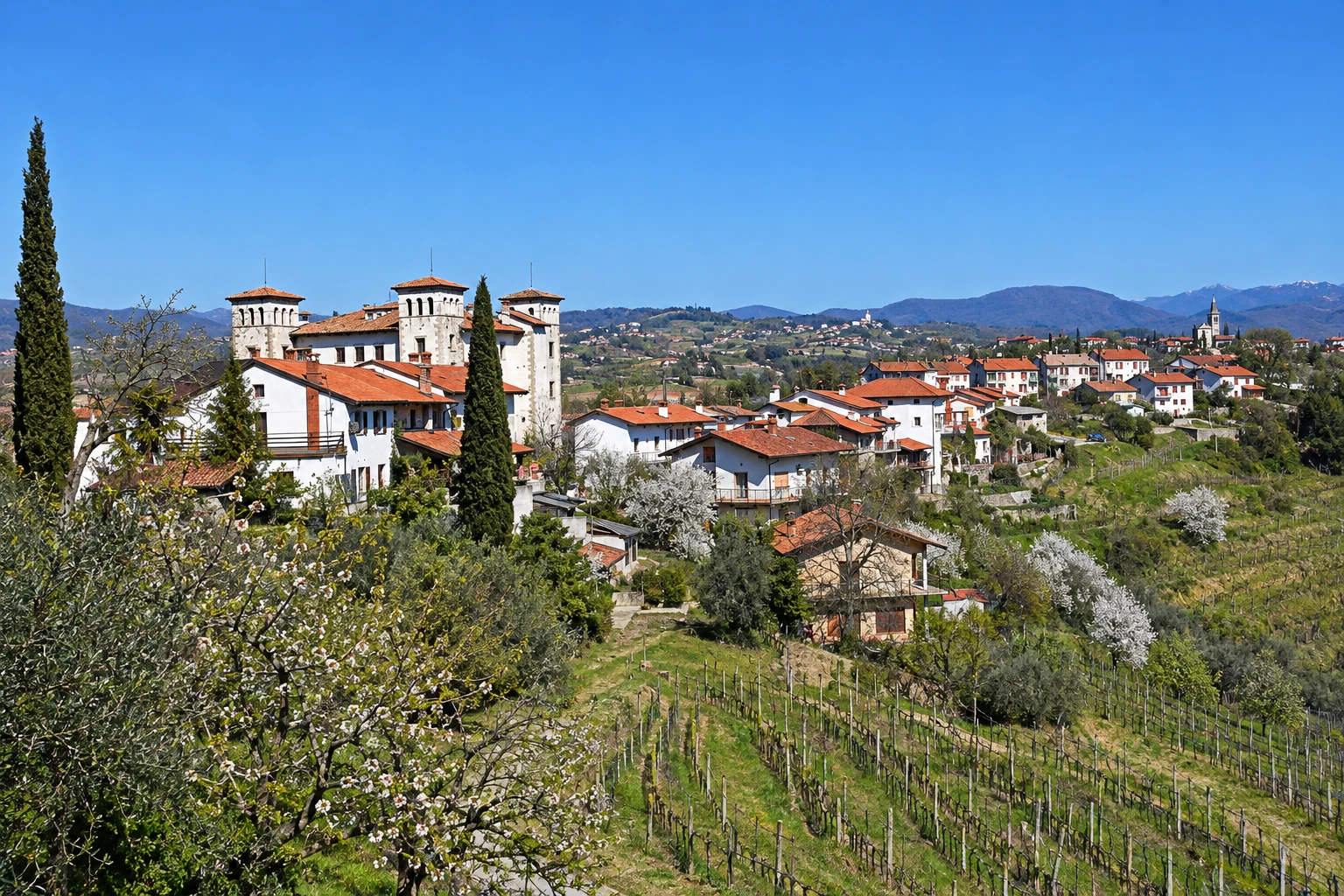
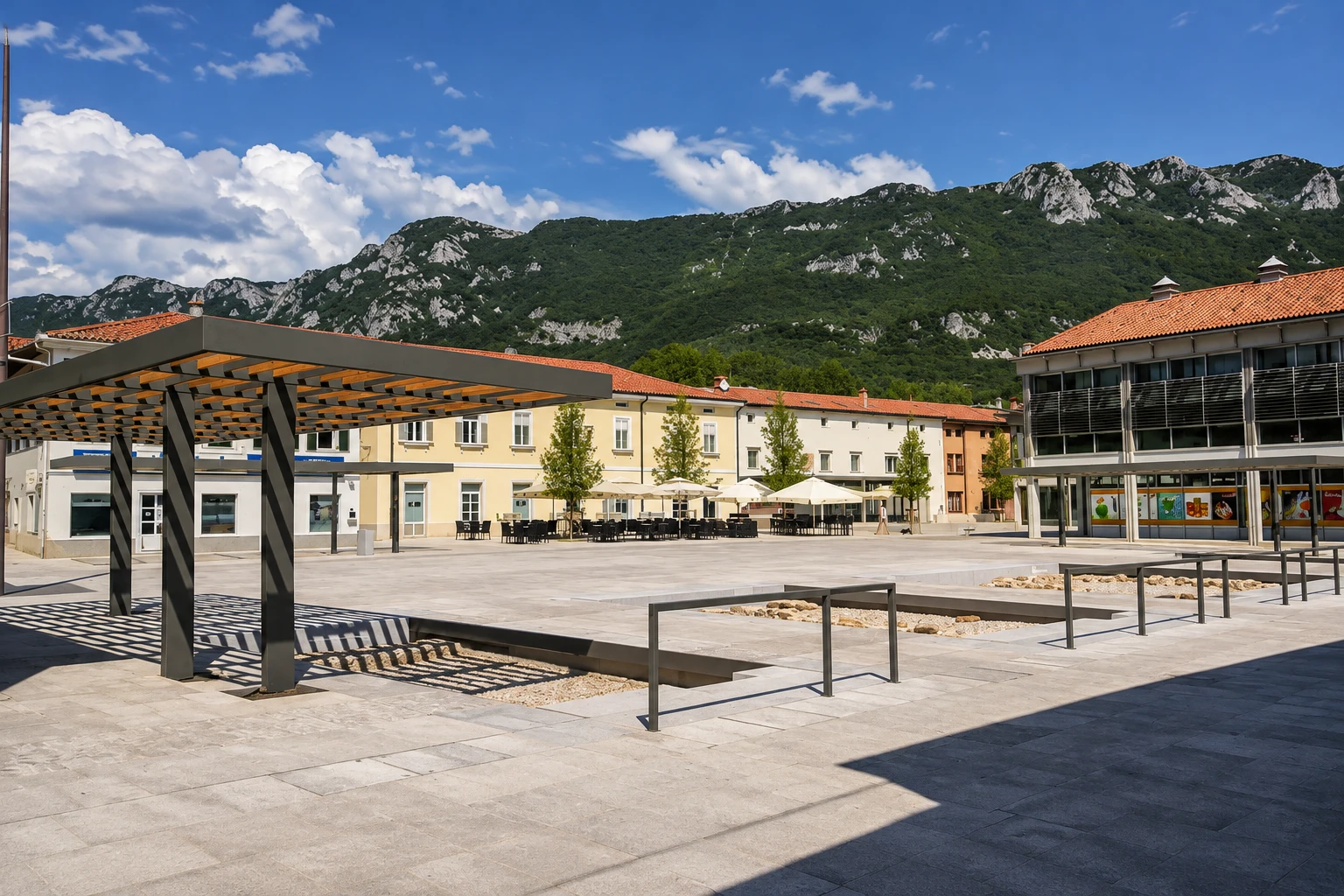
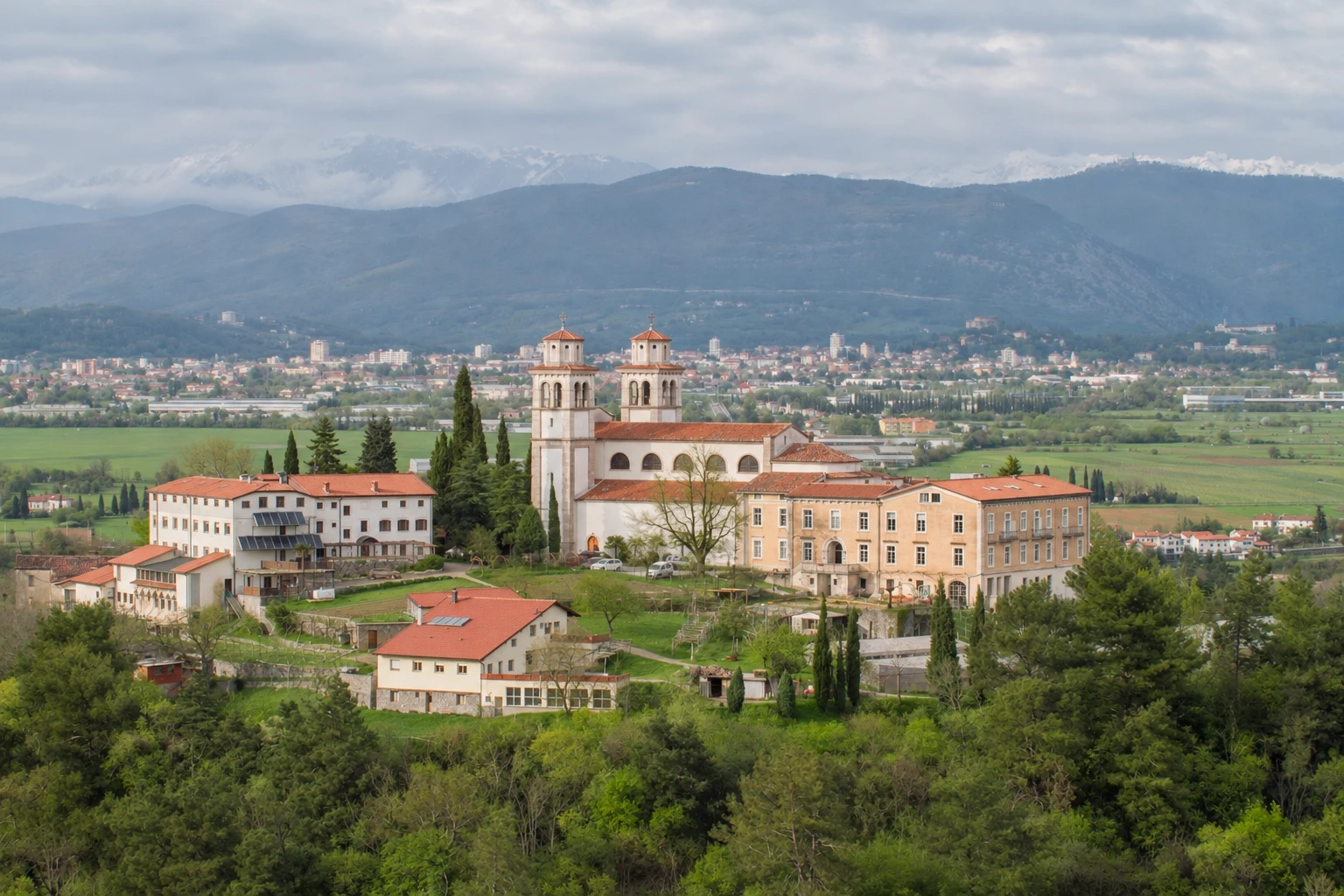
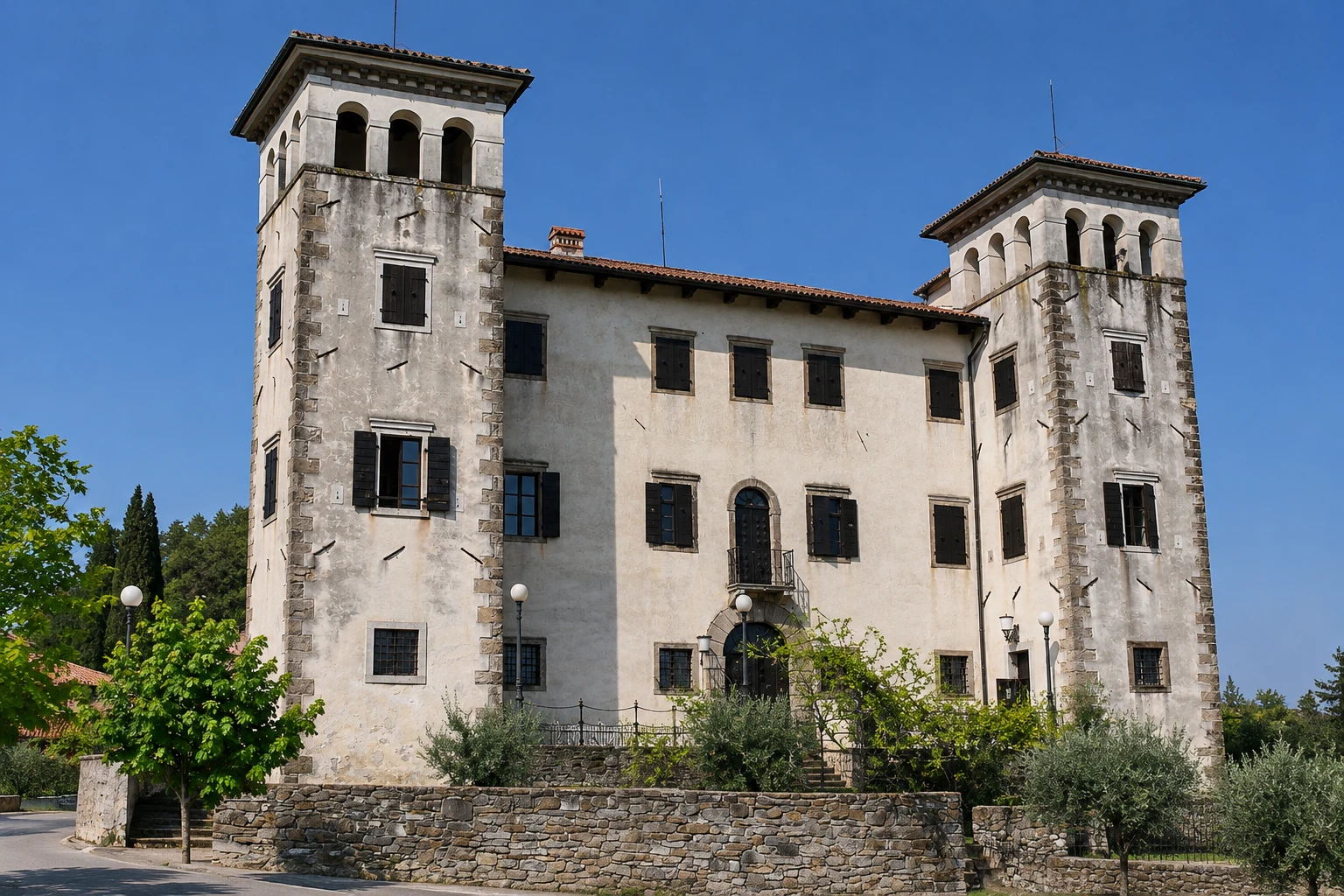
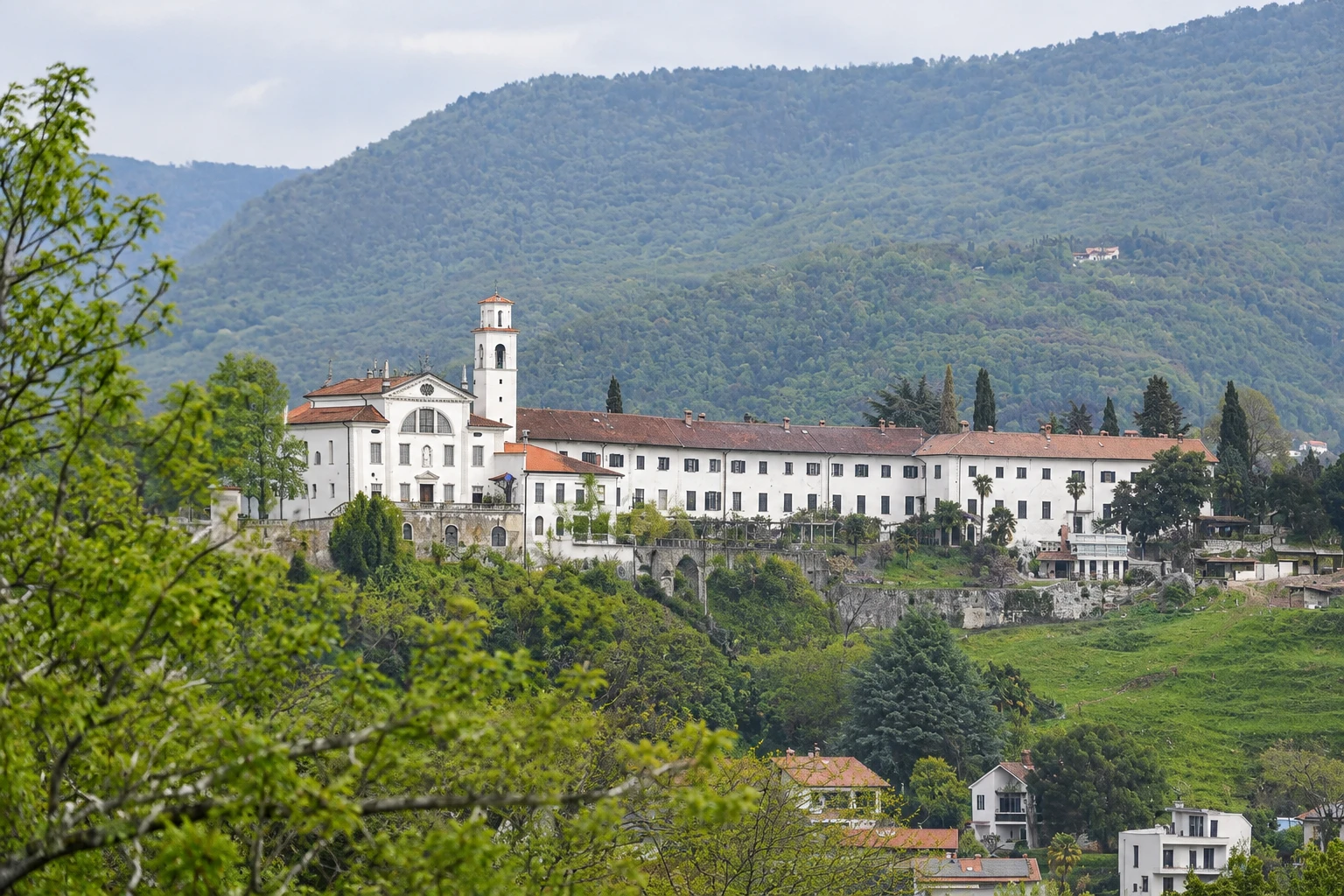
Dobrovo, with just over 400 inhabitants, is the seat of the Brda municipality and the center of the wine region. Dobrovo Castle, Renaissance in style, was built in the early 17th century on the site of a 13th-century castle and has changed little: it has an almost square plan and towers at the four corners, one of them converted into the chapel of Saint Anthony of Padua. On the first floor are the Knights’ Hall, with the coats of arms of the families who owned the castle, and the Hunters’ Hall, with paintings by Clemente Del Neri from 1894 showing the estate of the Count of Baguer. The castle houses the print collection of painter Zoran Mušič and displays about the history of Brda and the rebula grape. In the same locality, the Goriška Brda winery, founded in 1957, is Slovenia’s largest cooperative winery; it offers guided tours with wine tastings and has an exhibition on two thousand years of viticulture in Brda. Less than 3 km away is Medana, a winemaking village where poet Alojz Gradnik and Ludvik Zorzut, the first director of the Goriški muzej, were born in the same house; the house preserves personal items, editions and the restored fireplace. Nearby, Vipolže Village, Renaissance in style, was the hunting pavilion of the Counts of Gorizia and has centennial cypresses in front of its façade, the oldest in Slovenia.
Stops: Dobrovo Castle, Goriška Brda winery, Medana, House of Alojz Gradnik and Ludvik Zorzut, Vipolže Village.
Includes: Castle with separate paid admission, open Wednesday through Sunday and on public holidays; there is a combined ticket with Vipolže Village and the House of Brda in Šmartno. Gradnik’s house and Vipolže Village are visited by appointment. Wine tastings are paid separately.
Tip: The castle collections close from time to time for maintenance, and the village is not open to visitors on event days: check before you go. On August 15, Medana holds the Rožn'ca procession, in which the village youths carry a 500-kg image of Mary.
Best time: From April to October; in early June Dobrovo usually hosts the Cherry Festival.
Šmartno and the Gonjače lookout tower: the walled village and Brda viewpoint
From Dobrovo or Nova Gorica Car or bicycle and walk 2 to 3 hours morning or afternoon easy; 144 steps in the tower
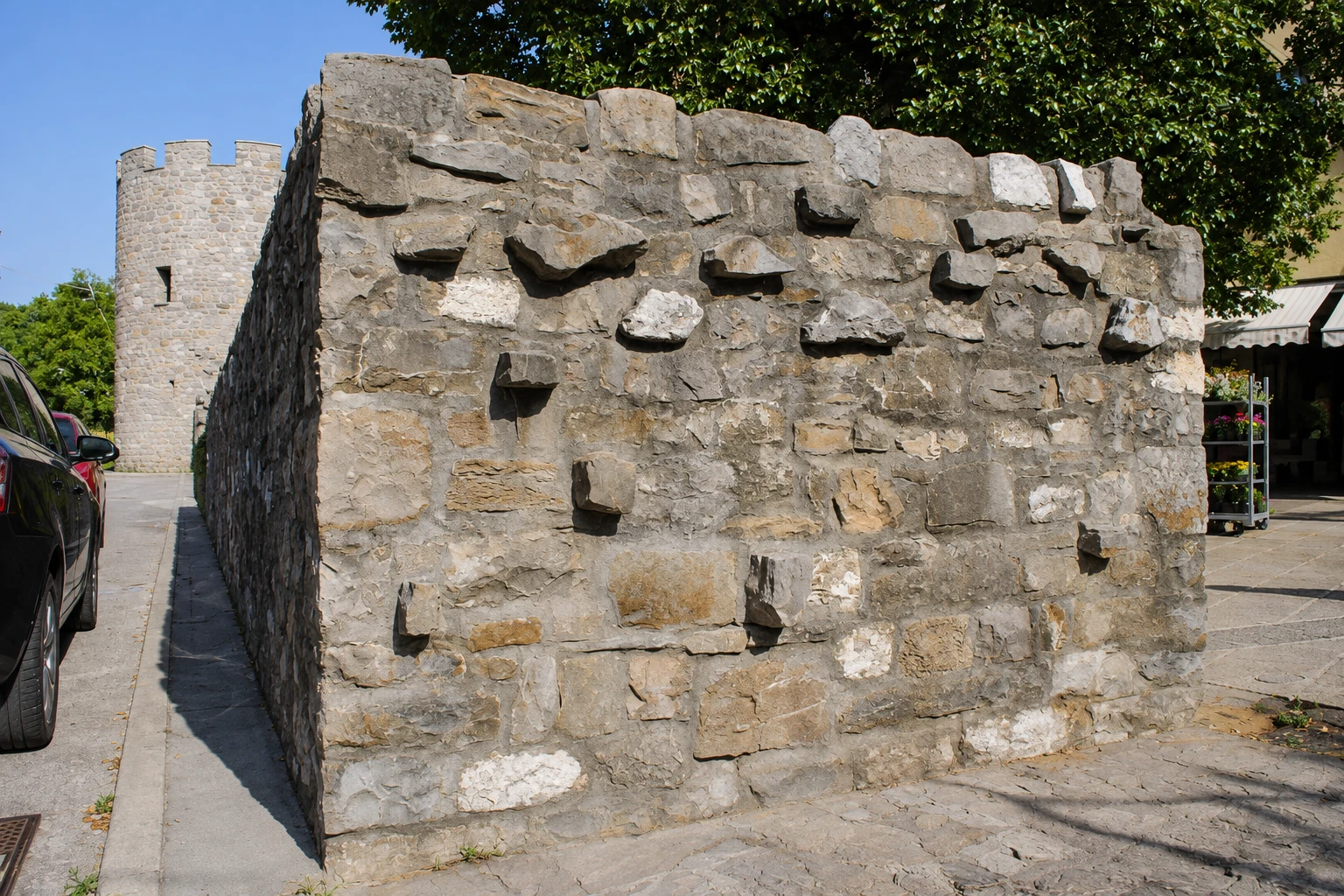
Šmartno sits atop a hill in the geographic center of Goriška Brda, about 6 km from Dobrovo. The village, surrounded by walls and defensive towers, was first mentioned in 1317. In the first half of the 16th century, on the remains of a Roman post, a fortress was built around the church to defend against Turkish incursions; it was later used in the wars between Venice and the Habsburgs. Šmartno remained a border fortress until the mid-18th century. Houses cluster around the Church of St. Martin, the largest parish church in Brda, whose bell tower was one of the fortress towers; the Baroque interior has three marble altars, and the presbytery and the Stations of the Cross were painted by Tone Kralj. The Casa de Brda, with a cellar next door, shows how people lived in the region, with a furnished kitchen, bedroom and barn, and a film about life in Brda in the mid-20th century. The village also has a gallery in the House of Culture and Brda’s tourist information center. In the neighboring village of Gonjače, on top of the Mejnik hill (321 meters), there is the monument to the 315 victims of World War II on the right bank of the Soča, by Janez Boljka, and a 23-meter observation tower built in 1961. From the top, in good weather, you can see Brda, the Julian and Carnic Alps, the Dolomites, the Friulian plain, the Gulf of Trieste, the Karst, the Vipava Valley and the Trnovo Forest.
Stops: Šmartno, Church of St. Martin, Casa de Brda, Gonjače Tower.
Includes: Village and tower with free access; no entrance fee; the tower is open year-round. The Casa de Brda has a separate paid ticket.
Tip: Climb the tower on a clear day, preferably after a windy day, when the air is more transparent. On festival days the village fills up: arrive early.
Best time: April to June and September to November; Šmartno hosts the Brda and Wine event in April and the St. Martin festival in November.
Krčnik and Kotline: the natural bridge and the pools of the Kožbanjšček stream
From Dobrovo, via Neblo and Hruševlje Car or bicycle to the valley and walk 2 to 3 hours morning or afternoon easy to moderate
In the northern part of Brda, below the village of Kožbana, the Kožbanjšček stream has carved a gorge 40 meters long into the limestone. It begins in a 6-meter-deep pothole, a rounded basin in the bed where water spins stones and sand and continues to erode the rock. In the middle of the gorge the same erosion left a smooth, rounded natural bridge, the Krčnik, protected as a monument. Downstream are the Kotline, three successive gorges the stream cut into a roughly 10-meter wall, with channels, small drops and pools; for a long time the young people of Brda have gone there to cool off on hot days, and visitors have started to do the same. Access is via the village of Neblo, heading toward Golo Brdo: at the junction at the end of Hruševlje, enter the Kožbanjšček valley on the road to Kožbana, first to the Kotline and then, higher up, to the Krčnik. You can reach it by car or bicycle, but the valley is better enjoyed on foot. Those who want a longer walk can climb Korada, 812 meters, on Brda’s northern edge, with a mountain hut and a church just below the summit and views from the Soča riverbed to the Adriatic.
Stops: Krčnik, Kotline, Kožbanjšček Valley, Kožbana.
Includes: Access free of charge.
Tip: Wet stones are slippery: wear footwear that can get wet and has a good sole. After heavy rain the stream rises: postpone the visit to another day.
Best time: From May to September to cool off in the pools; the gorge can be visited year-round.
Vipava: the springs, Lanthieri Palace and the Old Castle
From Vipava main square On foot 2 to 3 hours morning or afternoon easy; short climb to the castle
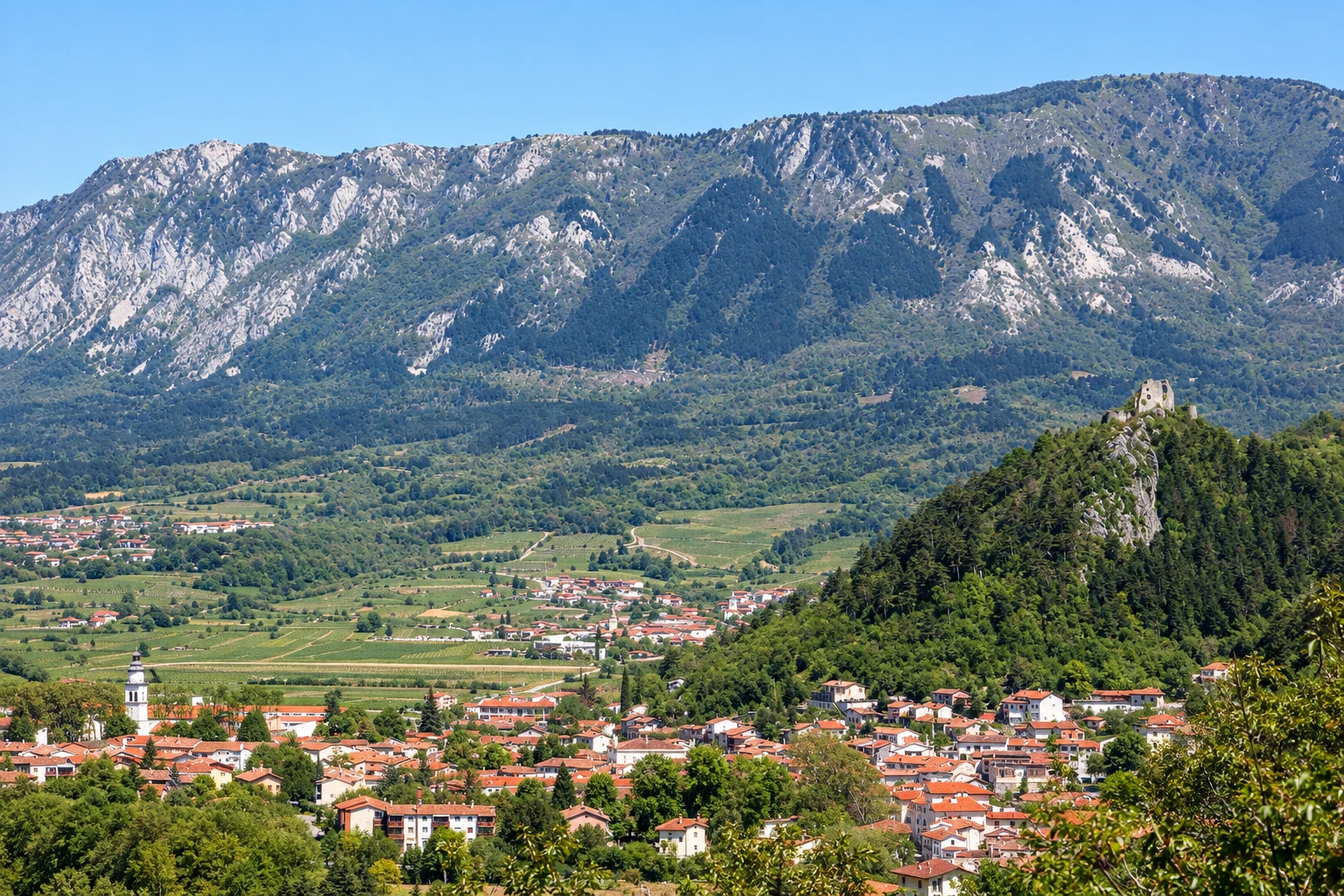
The Vipava River springs within the town of the same name, from several karst sources at the foot of the Nanos slope that join in an inverted delta; the tourism office presents this spring formation as unique in this part of Europe. To cross so many water arms, the town once had 25 bridges, which led to the comparison with Venice. In the main square stands Lanthieri Palace, a Baroque building erected by the family in 1659, with a park of cherub statues in front and, at the back, the largest of the river’s springs. It hosted the Venetian playwright Carlo Goldoni and houses the Viticulture and Enology School of the University of Nova Gorica and a wine museum. Across the bridges are the Baumkirchner tower, part of the old Tabor Castle, and the Church of Saint Stephen, with a white marble altar and frescoes from the 18th and 19th centuries. In the cemetery there are two Egyptian sarcophagi about 4,000 years old, brought by the diplomat Anton Laurin, who was born in Vipava. A path climbs to the ruins of the Old Castle, built around 1100 by the counts of Bogen, where the diplomat Sigismund von Herberstein was born in 1486; from the top you can see the valley. Less than 2 km away, on a vineyard-covered hill, Zemono manor, dating from around 1683, is a rare example of a late Renaissance manor house, with a cross-shaped hall decorated with frescoes. Vipava is surrounded by vineyards on three sides and is the home of the local grapes zelen and pinela.
Stops: Vipava Springs, Lanthieri Palace, Vipava Old Castle, Church of Saint Stephen, Zemono.
Includes: Springs and visitor centre are free to access. Lanthieri Palace and the Zemono manor are visited by appointment through the Vipava tourist information centre.
Tip: The climb to the Old Castle is short and gives the widest view over the town and the bridges. The Nanos cliffs, in the village of Gradišče pri Vipavi, are sought by climbers, especially in winter.
Best time: All year; in September the town usually holds the grape harvest festival (Vipavska trgatev).
Vipavski Križ: the walled town, the Capuchin monastery and the circular trail
From Vipava or Ajdovščina Car and walk 2 to 4 hours, depending on the trail morning or afternoon easy
Vipavski Križ occupies the top of a hill near Ajdovščina, about 11 km from Vipava, and for centuries was the valley’s centre. The village appears in records in the 13th century and owed its importance to the Ottomans: at the end of the 15th century, with incursions approaching Gorica, a four-tower castle was ordered built there, and soon the castle and village were surrounded by a wall. At the beginning of the 16th century the place gained market rights and, about twenty years later, city privileges; it was once described as the smallest town in the empire. The narrow streets have been restored and preserve their original layout. In the early 17th century the Attems family bought the castle and brought the Capuchins, for whom they built the monastery. It remains active and holds a library with manuscripts and rare books, among them the five volumes of sermons by Janez Svetokriški, a Baroque preacher born there. In the monastery church is the Baroque painting Glory of the Holy Trinity, one of the largest in the country; the parish Church of the Holy Cross has a Baroque interior with carvings, paintings and stuccoes. The ruins of the castle walls and the two bell towers shape the town’s silhouette. Around the hill, the Vipavski Križ Trail makes a 7.1 km circuit, almost flat, along rural paths through fields, vineyards, olive groves and orchards, passing the villages of Cesta, Plače and Male Žablje; with the climb up to the town it reaches 8.2 km.
Stops: Vipavski Križ, Capuchin monastery, Church of the Holy Cross, Vipavski Križ Castle.
Includes: Streets are freely accessible. Guided visits by the local institution are available year-round for a fee; the monastery can only be visited by reservation.
Tip: In June the town usually hosts the zelen wine festival, in August there are music nights on the castle walls, and in December nativity scenes are set up in the streets, windows and churches.
Best time: April to June and September to November for the trail; December for the nativity scenes.
Goče: the stone village and the cellars under the houses
From Vipava Car and walk around the village about 2 hours afternoon easy
Goče lies among vineyards on the ridge that separates the Vipava Valley from the Branica Valley, about 10 km from Vipava. The stone village is a Slovenian cultural heritage monument. The first records date from the 14th century, and its heyday came in the mid-18th century when the wine trade grew and Goče became known for its grapes. The houses have thick stone walls and curved-tile roofs, sometimes slab roofs; the wealthier ones enclose courtyards (borjač) with carved stone portals (kalona). Apart from the two main streets, the alleys are barely a meter wide. The two streets cross in an X, Saint Andrew’s cross, the village patron; the layout is clearly visible from the hill of the Church of Saint Mary of the Snows above the village. The Church of Saint Andrew, from the 17th century, has a stone portal, and the path to the cemetery passes four small chapels with reliefs of the Stations of the Cross. What sets Goče apart is underground: the vaulted cellars built of local stone. It is said that at the end of the 19th century there were more cellars than houses; about sixty remain, some without electricity, where wine rests in wooden barrels as it has for centuries. Cejkotova domačija, a restored house with a well in the courtyard and a smokehouse kitchen, welcomes visitors.
Stops: Goče, Church of Saint Andrew, Church of Saint Mary of the Snows, Cejkotova domačija.
Includes: Roads with free access. Winery visits and tastings are arranged with the producers and paid separately.
Tip: Leave the car at the entrance: the lanes do not fit vehicles. To enter a cellar, arrange in advance with a producer or ask for a recommendation at the Vipava tourist information center.
Best time: September and October, at harvest time, and from November until Christmas, when the valley wineries open their doors.
Ajdovščina: the Roman fortress Castra, the Hubelj spring and the Otliško okno
From Ajdovščina, at the Pale sports park On foot; by car to Otlica for the short route 2 to 5 hours, depending on the section morning easy at the spring; demanding on the ascent
Ajdovščina, less than 7 km from Vipava, began as a Roman posting station on the road from Aquileia to Emona (Ljubljana), called Fluvio Frigido, the cold river, today the Hubelj. Between the late 3rd and early 4th centuries the Romans built the fortress Castra there, part of the eastern border defences. Among Roman settlements in Slovenia, it is the one that preserves almost the entire walled enclosure, with 14 towers, which can be walked around in the centre. In 394, on the plain between Ajdovščina and Vipava, Emperor Theodosius defeated Eugenius; tradition says the burja wind decided the battle. From the Pale sports park starts the Hubelj nature trail, a 3,100-metre circular route with 24 stations about the valley’s geology, plants and animals. After about 20 minutes’ climb you reach the spring, at 249 m altitude, where water springs from the walls of the Trnovo plateau edge; after heavy rain it bursts from several fissures and forms cascades over the bridge 40 metres below. Nearby are the restored ruins of an old iron foundry. From the spring, a steep trail climbs to the Otliško okno, a natural window 12 metres high and 7 metres wide in the rock, with a view over the valley. The short path starts from the village of Otlica on the plateau top: half an hour of easy walking. A few minutes from the window is the Stone Snail, a spiral installation.
Stops: Castra, Hubelj spring, Otliško okno, Otlica.
Includes: Trails and ramparts are open access. Guided visits to Castra are available for an extra fee.
Tip: The spring is more impressive after several days of rain; in dry weather little water comes out. With strong burja, avoid the edge of the plateau. From Otlica the edge trail (Pot po Robu) continues between Col and Predmeja.
Best time: April to June and September to November; the spring usually has more water after rainy periods, more common in autumn.


 Brazil
 Antarctica
 Argentina
 Bolivia
 Chile
 Colombia
 Ecuador
 Falkland Islands (Malvinas)
 French Guiana
 Guyana
 Paraguay
 Peru
 Suriname
 Uruguay
 Venezuela
 Austria
 Belgium
 Croatia
 Denmark
 Finland
 France
 Germany
 Greece
 Hungary
 Iceland
 Ireland
 Italy
 Luxembourg
 Norway
 Poland
 Portugal
 Slovakia
 Spain
 Sweden
 Switzerland
 the Czech Republic
 the Netherlands
 the United Kingdom
 Turkey
 Bermuda
 Canada
 Greenland
 Mexico
 Saint Pierre and Miquelon
 the United States
 the Dominican Republic
 Japan
 Egypt
 South Africa
 Australia
 Fiji
 New Zealand
 Papua New Guinea