Walk around Lake Bled
From Lake shore, in central Bled Walk along the shore about 1 h 30 (6 km) morning or afternoon easy (flat)
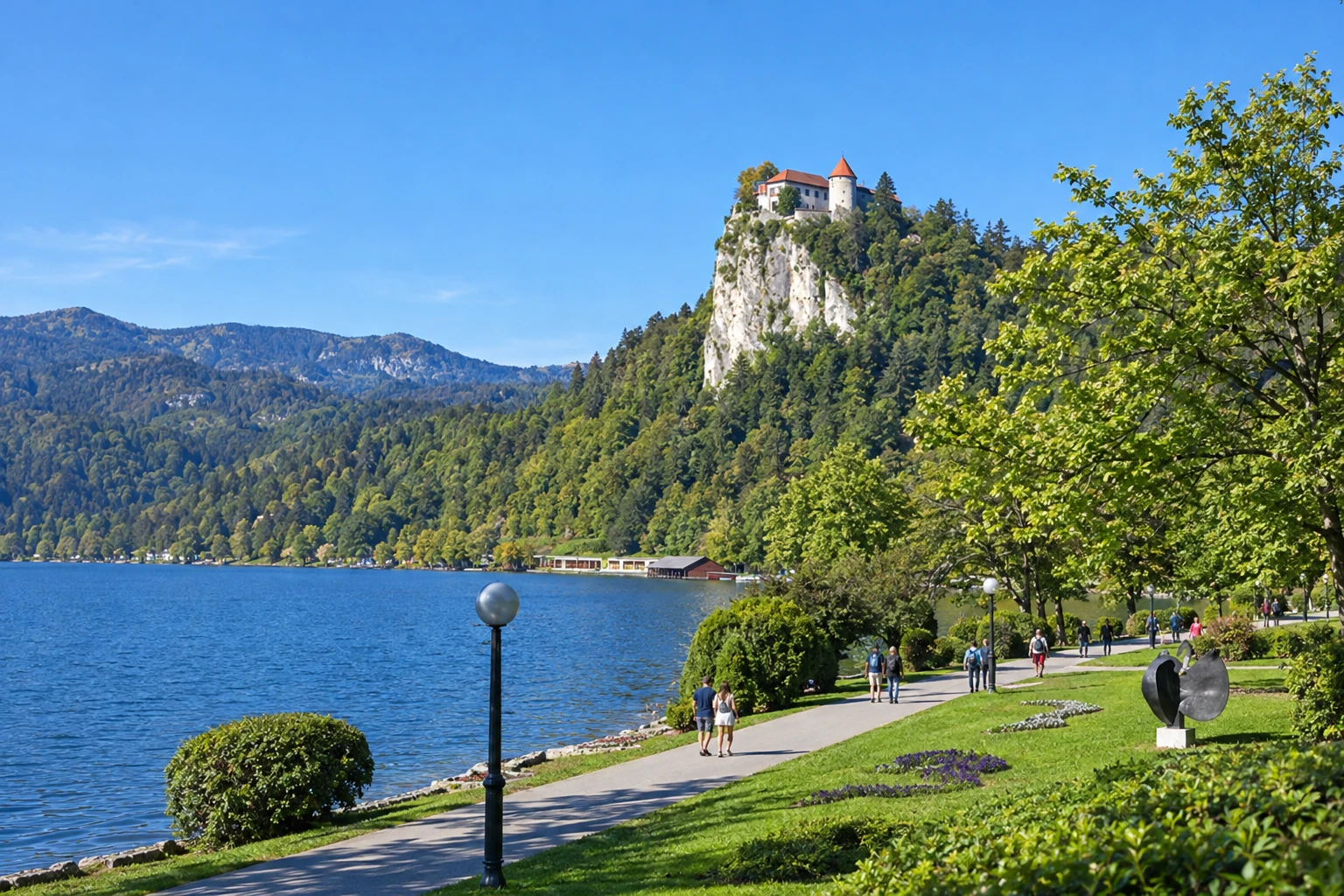
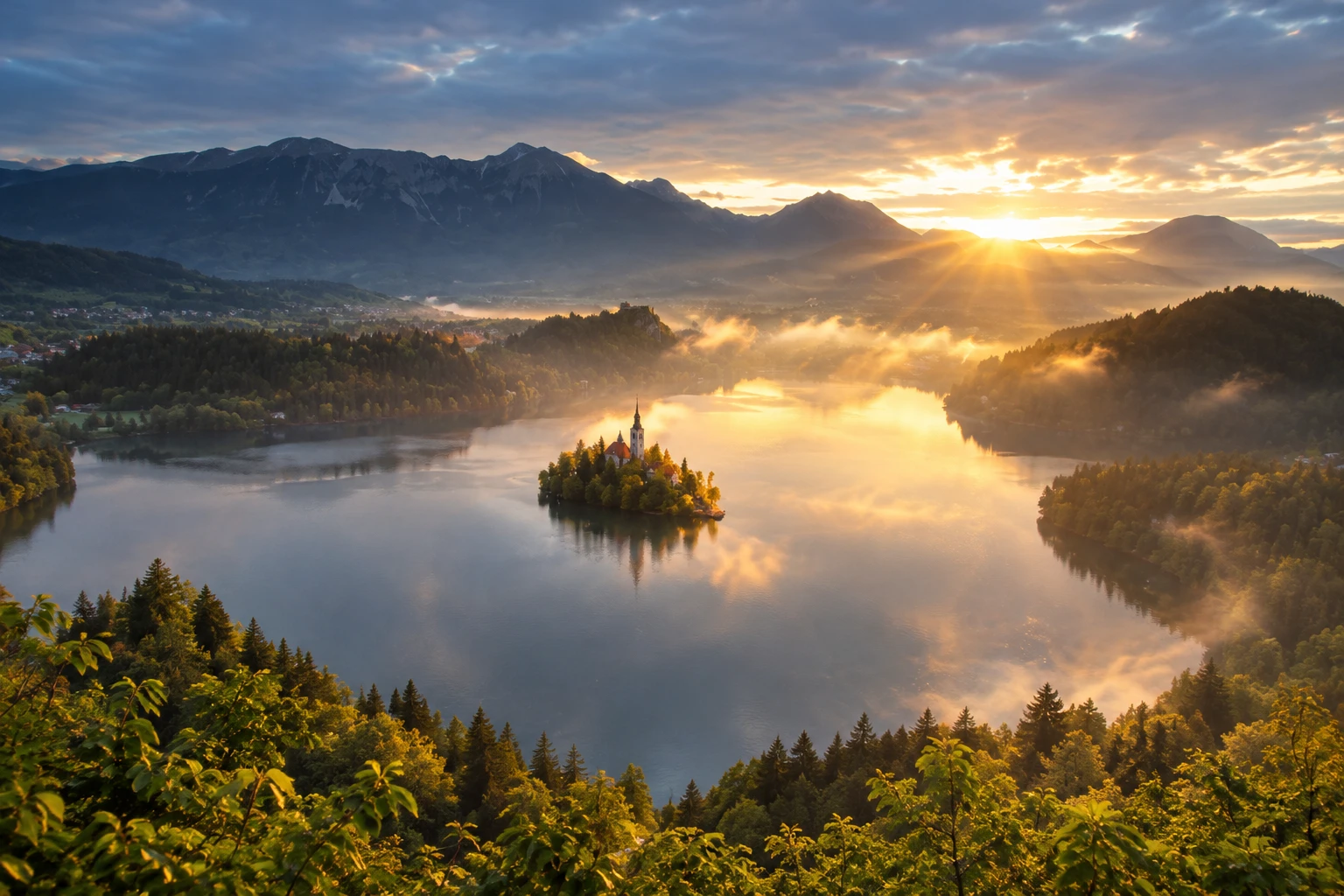
Lake Bled (Blejsko jezero) occupies a basin carved by the Bohinj glacier, reaches up to 30 m deep and has an island in the middle. A 6 km path goes all the way around the shore, partly on asphalt and partly on compacted earth, without climbs; on foot it takes about an hour and a half, or longer with photo stops. The route passes through the center, the village of Mlino, from where boats leave for the island, and the Velika Zaka and Mala Zaka inlets, home to the rowing Olympic center. There are benches at several points facing the island and the mountains. On the east side of the lake thermal springs emerge. In summer the water reaches 20 to 24 °C and there are marked bathing areas; in very cold winters the surface can freeze. Traditional carriages (fijakerji) and, in the warm months, a tourist train do the same circuit for those who prefer not to walk.
Stops: Lake Bled, Mlino, Velika Zaka, Mala Zaka.
Includes: Free walk, no charge. Carriage rides, tourist train and boat rental are paid separately.
Tip: Go around keeping the island always in view and allow time for the detours: the trails to the Ojstrica and Mala Osojnica viewpoints start from Velika Zaka, on the west tip.
Best time: Year-round; June to September for swimming; in autumn the trees’ colors reflect on the water.
Bled Island by pletna: the stairway, the church and the bell
From From the center quay, Mlino or Velika Žaka Traditional rowing boat (pletna) and on-foot visit about 1 h 30 morning or afternoon easy (99 stone steps)
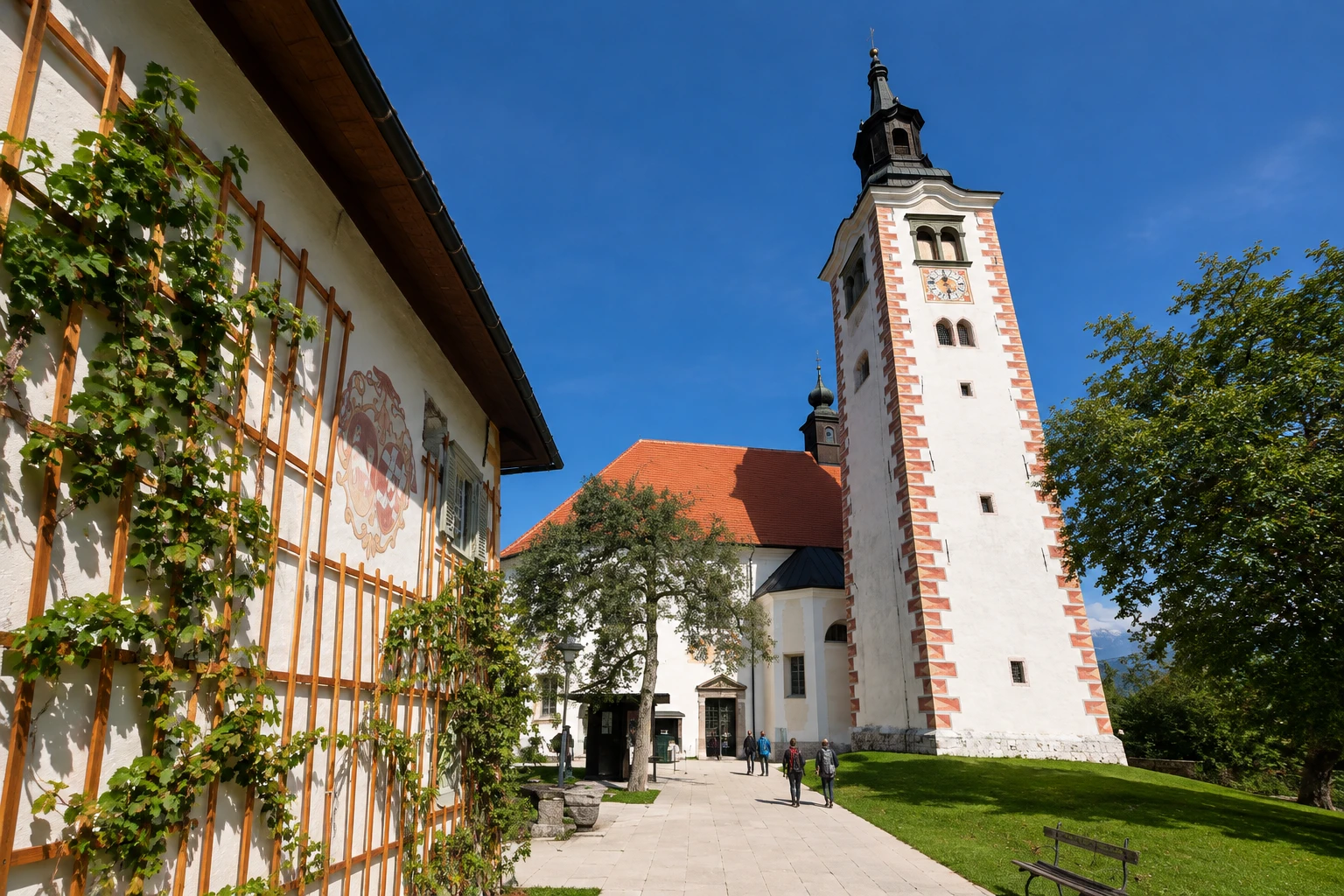
Bled Island (Blejski otok) is reached only by water. The traditional way is the pletna, the flat-bottomed wooden boat typical of Bled, with a colorful canopy, whose origin dates to 1590. It is 7 m long, carries up to 18 people and is steered by a standing boatman using two oars; the craft is passed down through the same families, and there are 23 pletnas on the lake. Boatmen pick up passengers at the center, in Mlino and in Velika Žaka. On the island, the south stairway has 99 stone steps and leads to the Church of the Mother of God on the Lake, which acquired its Baroque appearance in the 17th century. Inside is the wishing bell that visitors ring when making a wish, and beside it the 52 m bell tower, with views over the lake and the mountains. By tradition, the groom who marries in the church carries the bride up the 99 steps. At Potičnica you can try potica, the rolled sweet bread filled for Slovenian celebrations. An electric scheduled boat also links the center quay to the island, and those who prefer to row can rent a boat at the shore.
Stops: Bled Island, Lake Bled.
Includes: Pletna or scheduled-boat crossing is paid separately; the visit to the church and the bell tower is also paid. Check the current fee schedule.
Tip: Ask the boatman how long the pletna stays on the island before returning; if you rent a boat, the schedule is yours. With strong wind or very bad weather, the scheduled boats do not operate: check before you go.
Best time: All year; in winter there are fewer departures per day.
Bled Castle: the museum, the chapel and the terraces overlooking the lake
From Bled town centre, via the Grad Hill path Hike or drive up and visit the castle about 2 hours morning or afternoon easy (short but steep climb)
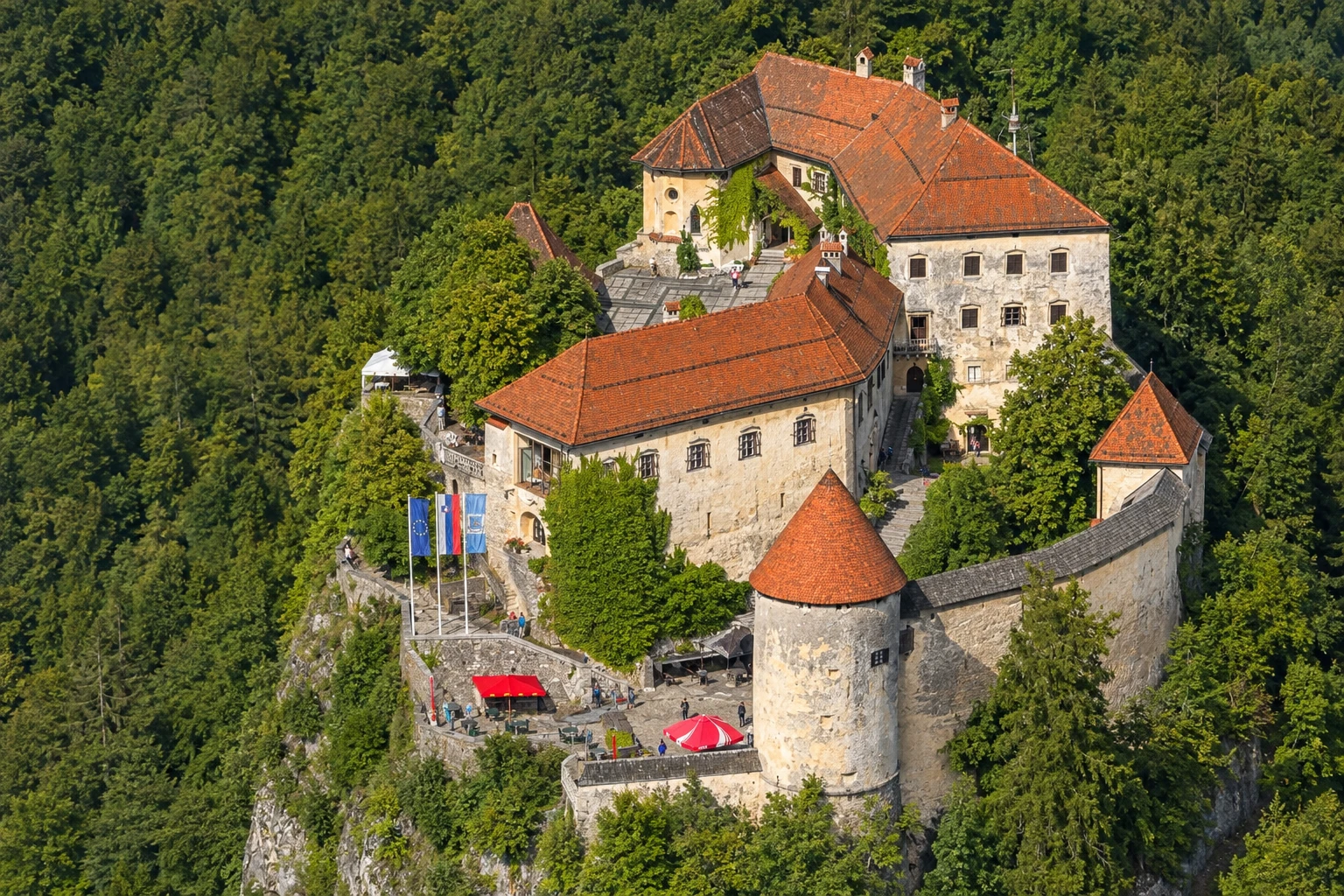
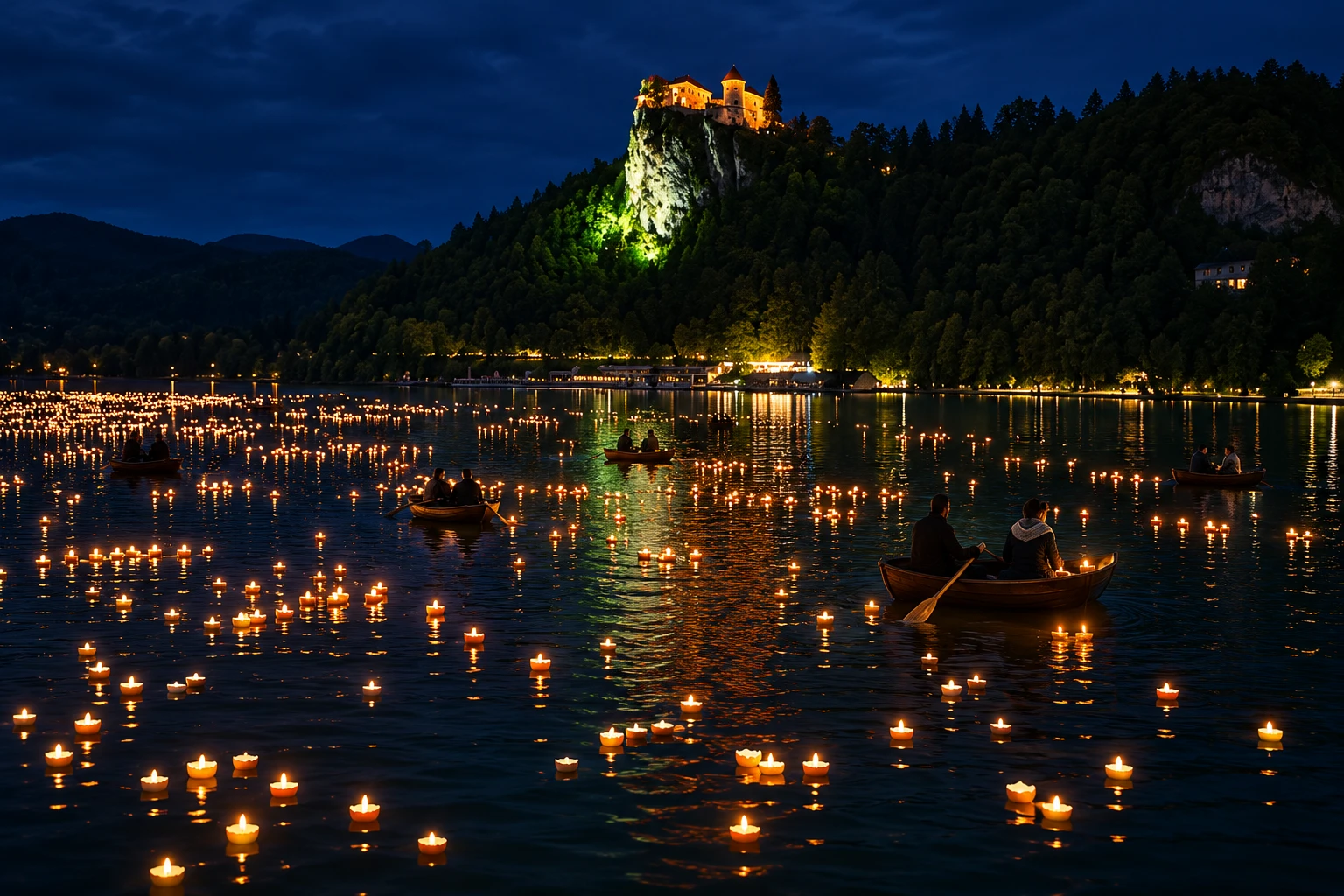
Bled Castle (Blejski grad) stands on a cliff about 130 m above the lake and is considered the oldest in Slovenia. Its history begins in 1004, when the German king Henry II donated the Bled estate to Bishop Albuin of Brixen; at that time there was only a Romanesque tower protected by a wall, and the first castle was built by the bishops around 1011 for defence. The complex has two courtyards: in the lower one are the castle’s print shop, with an old-style press, the wine cellar, a gallery and a well up to 12 m carved in the rock; in the upper courtyard is the museum that tells Bled’s story, the 16th-century Gothic chapel dedicated to Bishops Saint Albuin and Saint Ingenuin, and the terraces from which you can see the island, the lake and the mountains. Earthquakes in 1511 and 1690 damaged the castle, and after a fire in 1947 it was restored between 1951 and 1961. Events take place in the courtyard during the warm months, including Medieval Days with knights and craftsmen.
Stops: Bled Castle, Lake Bled.
Includes: Separate paid ticket granting access to the courtyards, the museum and the chapel. Paid parking next to the entrance. Check the current price list.
Tip: The castle is open every day of the year, with shorter hours from November to March; check before you go. On foot, you can climb the marked path up Grad Hill, which is lit and has a handrail, or use the trails through the Višce woods, which saves a search for parking.
Best time: All year round.
Ojstrica and Mala Osojnica viewpoints: the view of the lake from above
From Velika Žaka, on the lake’s western tip Out-and-back trail through the forest about 2 hours early morning or late afternoon moderate (short, steep trail)
The most famous photos of Bled, with the island in the foreground, the castle on the cliff and the Karavanke mountains behind, are taken from the hills on the west shore. Ojstrica, at 611 m, is the quickest: the trail starts on the south side of Velika Žaka, near the campsite, enters the forest and reaches the top in about 20 minutes of short, steep climbing; there is a wooden bench facing the lake. Mala Osojnica, at 685 m, takes about 45 minutes along a tougher forest path and offers the higher, more open view. Those who want to continue walk another 20 minutes to Velika Osojnica, at 756 m, from where you can also see the Kamnik and Savinja Alps and the Ljubljana basin. The trails are waymarked and run through the forest.
Stops: Ojstrica, Mala Osojnica, Velika Osojnica, Lake Bled.
Includes: Open trails, no fee.
Tip: Wear shoes with a firm sole: after rain the forest ground becomes slippery. Bring water.
Best time: From April to October; with snow or ice, trails require equipment and experience.
Straža: the chairlift, the viewpoint and the summer toboggan
From Base of Straža hill, in Bled Chairlift or short walk about 1 h 30 morning or afternoon easy
Straža is the 646 m hill next to Bled’s center, overlooking the lake’s southeast shore, the castle, the Jelovica plateau and Mount Stol. You can go up by chairlift or by an easy path through firs, oaks, lindens and birches that starts in the meadows and continues through the woods. In summer, the attraction is the rail toboggan, which descends the slope on a 520 m track; there are other sports and leisure activities at the bottom and at the top. The hill is linked to the memory of Arnold Rikli, who started health tourism in Bled: his method had guests wake early, walk, breathe fresh air, sunbathe and swim.
Stops: Straža, Lake Bled.
Includes: Chairlift and summer toboggan are paid separately; the uphill walk is free. Check the current price list.
Tip: The chairlift and the toboggan depend on weather and season: confirm operation before you go. It’s a short excursion that fits into the same day as a return to the lake.
Best time: From May to September for the toboggan; the walk is worth it year-round.
Vintgar Gorge: the walkways over the Radovna River
From Bled central bus station or Vintgar LIP parking lot Shuttle bus and one-way walking circuit about 3 hours (5.7 km) early morning or late afternoon moderate (5.7 km, with an ascent on the return)
The Vintgar Gorge (Soteska Vintgar) is 4 km from Bled, at the entrance to Triglav National Park. The Radovna River runs there between rock walls, and a 1.6 km trail follows wooden walkways attached to the rock, over pools and rapids, up to the Šum waterfall. The visit is one-way: after about 45 minutes in the gorge, the return to the visitor center is via a different path, the 4.1 km King of Triglav themed trail. The complete circuit totals 5.7 km and takes about 2 h 30 to 3 hours. The number of people allowed inside the gorge at the same time is limited: the digital pass must be purchased in advance with a timed entry. You cannot drive to the visitor center; cars stay in the official Vintgar LIP parking lot, and an electric shuttle bus takes visitors to the entrance. A shuttle bus also runs from Bled’s central bus station.
Stops: Vintgar Gorge, Šum Waterfall, Radovna River.
Includes: Separate paid entry pass with a timed slot; the shuttle bus is part of the visit system. Check the current price list.
Tip: Buy the pass in advance in summer: visitors arriving without one or missing their slot must wait for the next available. The gorge closes in winter; confirm the season before you go.
Best time: During the open season, which excludes winter; early morning or late afternoon are less crowded.


 Brazil
 Antarctica
 Argentina
 Bolivia
 Chile
 Colombia
 Ecuador
 Falkland Islands (Malvinas)
 French Guiana
 Guyana
 Paraguay
 Peru
 Suriname
 Uruguay
 Venezuela
 Austria
 Belgium
 Croatia
 Denmark
 Finland
 France
 Germany
 Greece
 Hungary
 Iceland
 Ireland
 Italy
 Luxembourg
 Norway
 Poland
 Portugal
 Slovakia
 Spain
 Sweden
 Switzerland
 the Czech Republic
 the Netherlands
 the United Kingdom
 Turkey
 Bermuda
 Canada
 Greenland
 Mexico
 Saint Pierre and Miquelon
 the United States
 the Dominican Republic
 Japan
 Egypt
 South Africa
 Australia
 Fiji
 New Zealand
 Papua New Guinea