Old town on foot: Linhartov trg, the moat, and the Sava River viewpoint
From Tourist information center at the entrance to the old town on foot, on your own or on a guided tour 1 to 2 hours, not including museum visits morning or afternoon easy
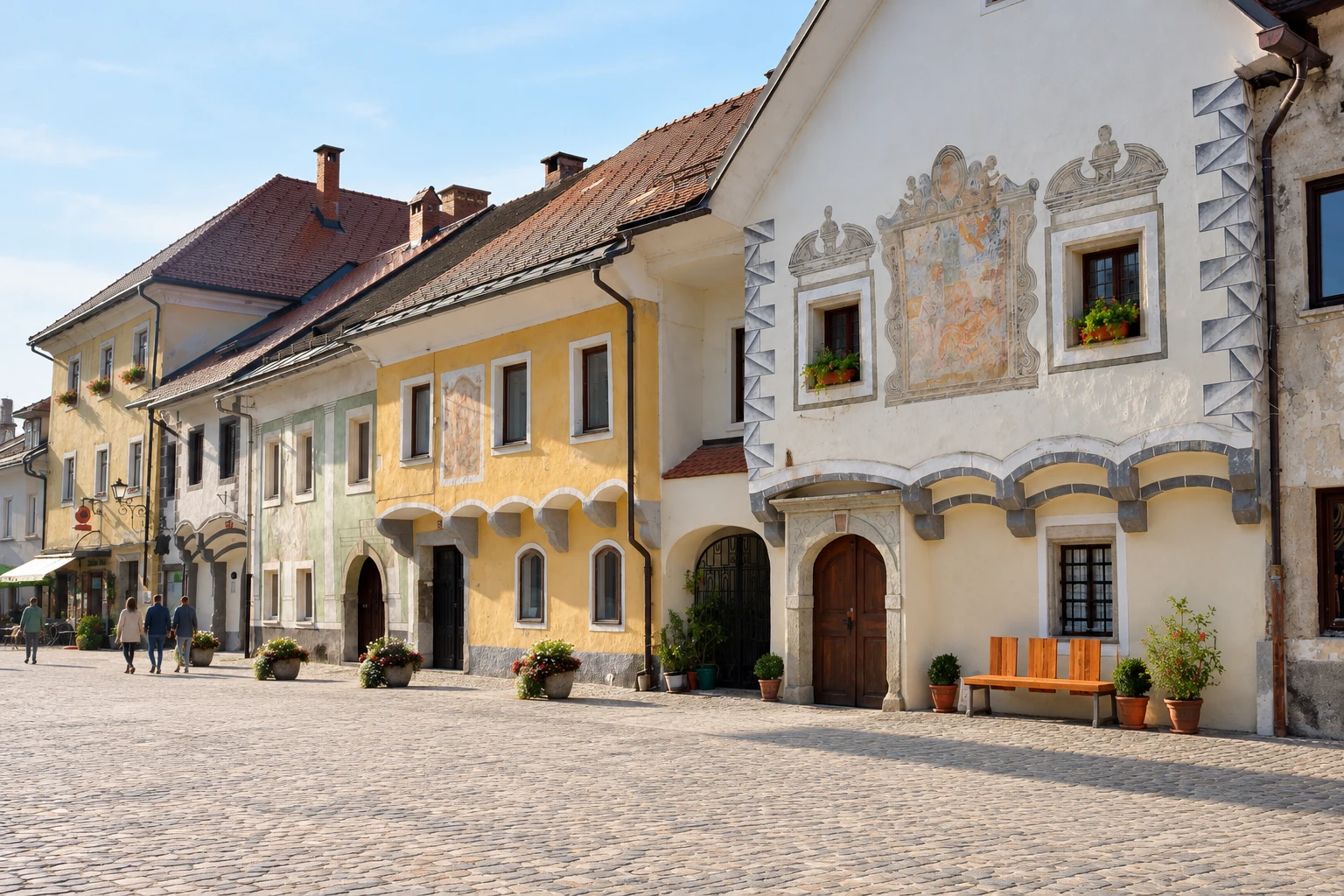
Radovljica’s old town fits along a single street that doubles as a square: Linhartov trg, on a promontory above the Sava River. The houses date from the 16th, 17th, and 18th centuries, and together they form an open-air museum.
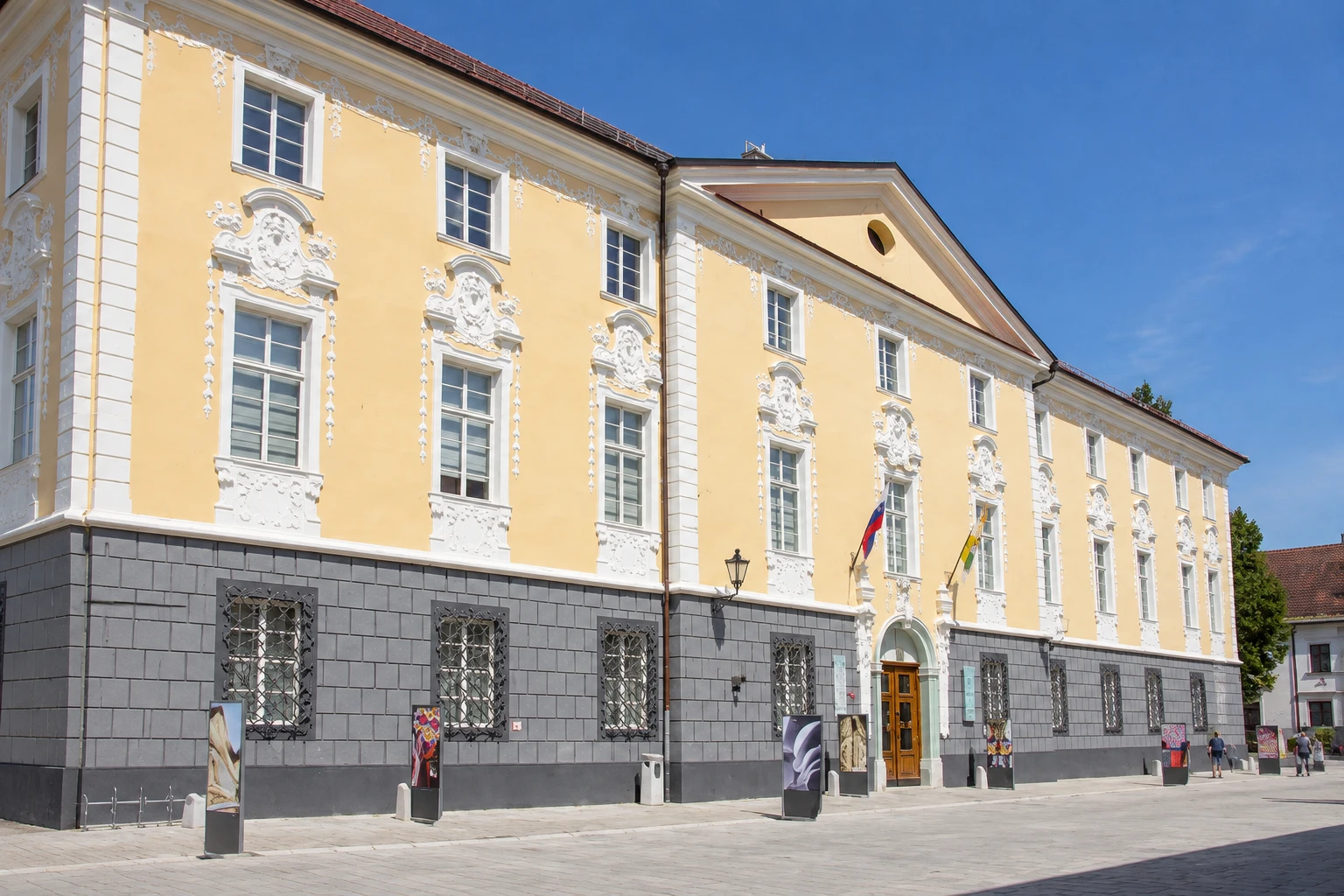
Enter from the park side. One of the first houses you pass is the birthplace of Anton Tomaž Linhart, the 18th-century playwright and historian for whom the square is named. The square widens by the fountain, where a monument honors Josipina Hočevar, a benefactor born in the town. A row of former artisans’ houses lines the right side. The most notable is Šivec House, a late Gothic burgher’s house with a 17th-century fresco on its facade depicting the creation of Eve. Opposite stands Radovljica Manor, with its ornate 18th-century facade.
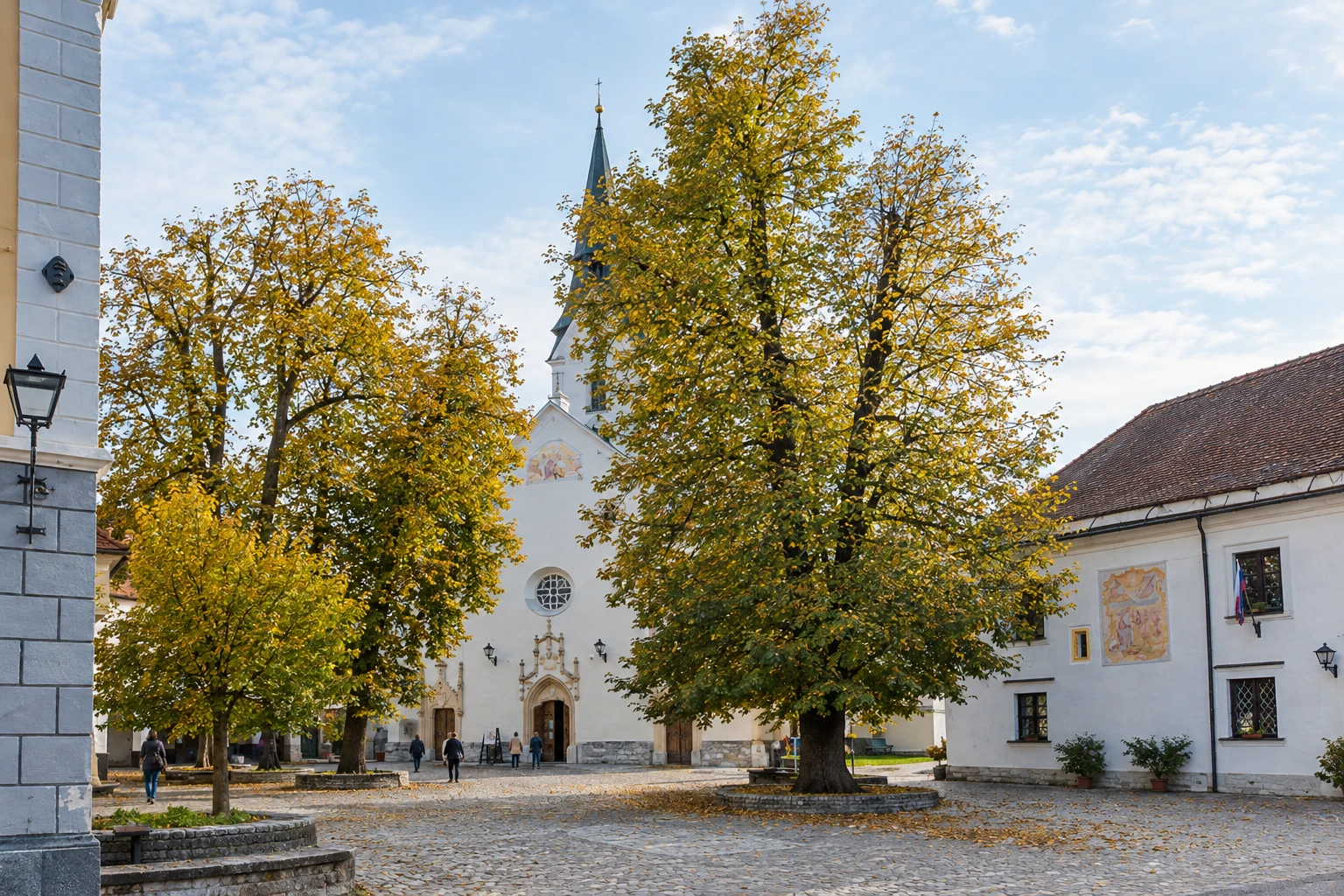
At the end of the square stands St. Peter’s Parish Church, a Gothic church with a nave and two aisles, star vaults, and an 18th-century black marble altar. Ivan Vurnik designed the tabernacle in one of the side aisles. In front of the church, a bronze statue of the art historian Cene Avguštin stands alongside an exhibition on the town’s growth. The viewpoint next to the church overlooks the Sava Valley and the Julian Alps.
On the way back, head down from the entrance to the old town to the moat. A wall was built around the town at the turn of the 16th century. The defensive moat, part of which is now a tunnel, is the only surviving example of its kind in Slovenia. Vurnik’s birthplace stands on the other side, and a dirt path leads back below the park walls.
Stops: Linhartov trg, St. Peter’s Church, Medieval moat, Sava viewpoint, Radovljica Park.
Includes: The self-guided walk is free. The guided tour and museum admissions are charged separately. Check current rates.
Tip: The information center offers a weekly guided tour of the old town in Slovenian and English. You need to sign up in advance. The tour takes you inside places that are otherwise closed, such as the Gothic tavern and the Chapel of St. Edith Stein. On the morning of the first Saturday of each month, there is a market in the square featuring local producers, crafts, and antiques.
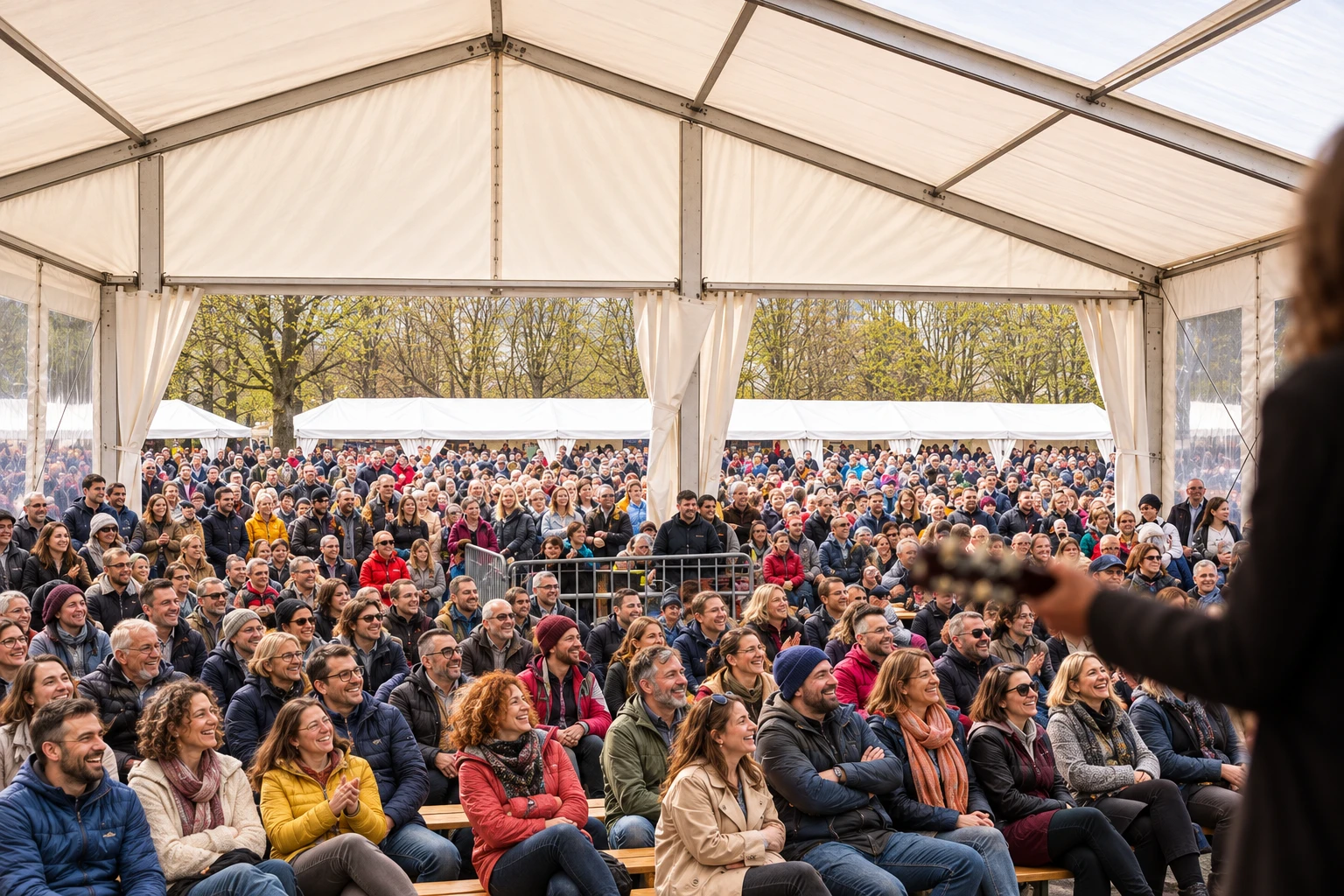
Best time: Year-round. The Chocolate Festival takes place in April, and December brings Christmas decorations and markets.
Radovljica Manor: the Museum of Apiculture and the Linhart Museum
From Linhartov trg on foot; self-guided 1 hour 30 minutes to 2 hours morning or afternoon easy
Radovljica Manor (Radovljiška graščina) dominates the center of Linhartov trg. In the 13th century, a small castle belonging to the Counts of Ortenburg stood on this site. The manor owes its present appearance to the Thurn-Valsassina family, who occupied the building from 1616 and enlarged it to its current size in 1668. The main doorway, carved from tuff, bears the counts’ coat of arms and is flanked by male figures. Inside, a staircase leads up to the Baroque hall and the ballroom, both used for concerts and weddings.
On the same floor is the Čebelarski muzej, the Museum of Apiculture, which has been here since 1959. Its permanent exhibition, Living Together: About Bees and People, focuses on the Carniolan honey bee, a gentle, hardy gray bee native to the region. The first section explores the bee’s biology and its role in the environment. The second looks at traditional beekeeping, its tools, and the hand-painted front panels of beehives, which depict religious scenes, rural life, and humorous subjects. The final section covers Slovenian beekeepers and the bee trade. A prominent place is given to Anton Janša, a pioneer of modern beekeeping whose birthday, May 20, is now World Bee Day. From May to October, you can watch bees come and go from an observation hive. The exhibit text is in Slovenian and English, and there are interactive stations for children.
The Municipal Museum next door explores the 18th century and the life of Radovljica native Anton Tomaž Linhart. He wrote the comedy Županova Micka, which marks the birth of Slovenian theater, as well as the country’s first work of scholarly history.
On the ground floor, the Pasaža Gallery hosts photography exhibitions.
Stops: Radovljica Manor, Museum of Apiculture, Radovljica Municipal Museum.
Includes: Museum admission costs extra, but the ground-floor gallery is free. Check the current prices.
Tip: Outside the summer season, the museums open on fewer days and for shorter hours. Check before you go. The upstairs halls can only be seen by prior arrangement or on the guided town tour.
Best time: Year-round; visit from May to October to see the observation hive. In August, the manor hosts concerts during the Radovljica Festival.
Traditional trades on the square: Lectar gingerbread, the old pharmacy, and pottery
From Linhartov trg on foot 1½ to 2 hours morning or afternoon easy
At three places on Linhartov trg, you can see traditional trades at work.
The first is the Lectar workshop, in the vaulted cellar of an inn next to the manor house. Lect is a type of gingerbread, almost always heart-shaped and decorated by hand. The building’s first gingerbread and candle workshop opened in 1766. In 1822, the owners also opened the inn, naming it after their trade. The tradition died out over time, but the current owners revived it. The hearts are made with the original equipment and the old recipe. You can see the tools, the molds, and a collection of pieces dating back decades. You can also order a heart with a name written on it.
The second stop is the Museum of Pharmacy and Alchemy, on the ground floor of a restored townhouse. The collection brings together items from around the world related to pharmacy, cosmetics, and alchemy, gathered over 40 years. It includes furniture from old apothecary shops, Spanish and Italian ceramic jars, scales, an alchemist’s laboratory, mortars, and books on pharmacy. The oldest mortar dates to the 12th century, and one of the books dates to the 15th. There are also objects related to ancient medicine and Asian medicine, along with a collection devoted to Slovenian folk medicine.
The third trade is pottery. Magušar House is made up of three houses linked by a 16th-century arcaded courtyard. Here, potter Urban Magušar has his studio and displays rural pottery from Gorenjska. Across the square, a small workshop makes pieces in limited batches, including miniature versions of houses in the old town.
Stops: Lectar Workshop and Museum, Museum of Pharmacy and Alchemy, Magušar House.
Includes: Admission to the Museum of Pharmacy and Alchemy costs extra. Purchases and orders are also charged separately.
Tip: You can visit the gingerbread workshop whenever the inn is open, but you’ll need to arrange ahead for a detailed explanation. Outside the summer season, the pharmacy museum is open only on certain days, and Magušar House welcomes visitors by appointment. Check before you go.
Best time: Year-round.
Ivan Vurnik’s Radovljica: the villas, the park, and the swimming pool
From Entrance to the old town on foot, self-guided about 1 hour 30 minutes morning or afternoon easy
Ivan Vurnik was born in Radovljica and is considered one of the pioneers of modern Slovenian architecture, alongside Jože Plečnik and Maks Fabiani. Several of his works are just a few minutes from the old town, and you can see them on a short walk.
Vurnik was born in a simple farmhouse near the moat. A corner niche holds a statue of the Madonna and Child, a copy of an original by Janez Vurnik now in the National Gallery in Ljubljana. The architect moved back into the house in 1957 and lived there for the rest of his life.
At the entrance to the old town stands Savnik Villa, built between 1922 and 1925 for a merchant who opened what was then the town’s largest store there. A figure of the god Hermes on the facade recalls the villa’s connection to trade. Cross the park, all that remains of the former Baroque garden, with its old linden trees and wrought-iron lamps made by master blacksmiths from Kropa. At the far end of the former castle park is another of Vurnik’s designs: a 1934 building with a symmetrical facade and large windows.
In 1932 and 1933, Vurnik designed the town swimming pool at the foot of the wooded hill of Obla Gorica, with a 50-meter central lane. Later expansions changed the original design, and the concrete diving platform is gone, but the pool still serves as Radovljica’s outdoor Olympic pool in summer. In the old cemetery, the architect built a mausoleum for his son, with elements of Egyptian architecture and mosaics by his wife, the painter Helena Kottler Vurnik.
Along the way, on Gorenjska cesta, you’ll see early 20th-century villas and the town hall. The building is called Čebelica, meaning “little bee,” after the bees that decorate its entrance.
Stops: Ivan Vurnik’s Birthplace, Savnik Villa, Radovljica Park, Čebelica.
Includes: The walk is free, and the buildings are viewed from the outside only. Pool admission costs extra when the pool is open for the season.
Tip: The information center has a map of the route. In June, Vurnik Days features exhibitions and events about the architect. Check this year’s schedule.
Best time: Year-round; June to August if you’d like to follow the walk with a swim.
Brezje: the Basilica of Mary Help of Christians and the Nativity Museum
From Radovljica (car or local bus) by car or bus, then on foot 1 hour 30 minutes to 2 hours morning or afternoon easy
Brezje, a village in the municipality of Radovljica, lies about 7 km from the town itself and is Slovenia’s main pilgrimage center. It became known in the 19th century after reports of healings before the painting of Mary Help of Christians. Pilgrims have been coming here since 1863.
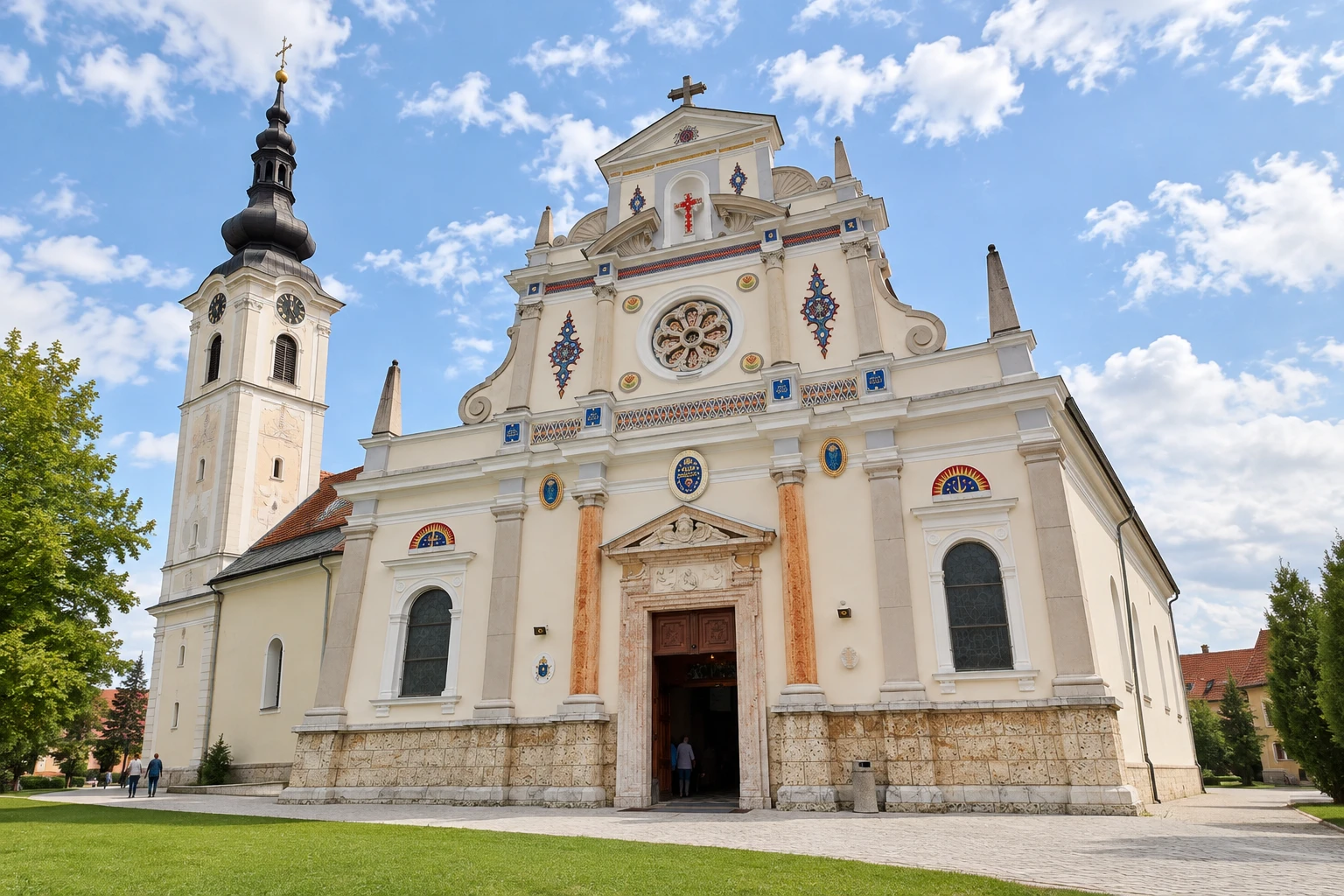
The present Neo-Renaissance church was consecrated in 1900 on the site of the old Church of St. Vitus. Pope John Paul II granted it the title of basilica in 1988. The facade features mosaics, inscriptions, and rose windows designed by Ivan Vurnik. Carvings on the doors depict prophets and women of the Old Testament. The focus of devotion is not the main altar but the chapel of Mary. In 1814, Leopold Layer painted the image of Mary in thanks for his release from prison. It hangs above a small white marble altar in a gilded frame set with stones gathered from across Slovenia.
The square in front of the church follows a design by Jože Plečnik. The park has a sculpture of the Holy Family and a monument to John Paul II. In the courtyard between the church and the Franciscan monastery, which dates to 1898, stands an oratory dedicated to St. Francis of Assisi. Shaped like a mountain hut, it was the last of Vurnik’s designs to be built.
Next to the basilica, in a former stable, the Nativity Museum displays more than 500 nativity scenes donated from around the world. It traces the history of the tradition, from Slovenian scenes set up in a corner of the home to those from other continents.
The Path of Peace starts in Brezje and leads mostly through forest to the Peračica waterfalls.
Stops: Basilica of Mary Help of Christians, Brezje Nativity Museum, Brezje.
Includes: Admission to the basilica is free. The Nativity Museum charges a separate admission fee.
Tip: This is an active shrine, so avoid walking around the church during services. The pilgrimage office next door has the service schedule. If you’re driving, take the Brezje exit off the A2.
Best time: Year-round; the Nativity Museum is open throughout the year.
Kropa and Kamna Gorica: the blacksmiths’ villages of the Lipnica Valley
From Radovljica (by car or local bus) by car or bus, then on foot through the villages 3 to 4 hours morning or afternoon easy
Across the Sava River, below the Jelovica Plateau, the Lipnica Valley is home to two villages that made their living from ironworking from the 15th to the 19th century.
Kropa was the center of a trade in hand-forged nails that were sold throughout Europe. In the protected historic center, you can see the forge owners’ houses, sluice gates, and channels along the Kroparica stream, where some 50 waterwheels once turned along a 1,200 m stretch. The Kovaški muzej, the blacksmithing museum, occupies the late-18th-century Klinar House on the main square. Working models show the village in the 19th century and how the foundries operated, and one room displays 94 different nail shapes. A five-minute walk away, on the road to Jamnik, Vigenjc Vice is a preserved nail forge with three hearths, bellows, and a waterwheel that still works. At the far end of the village are the remains of Slovenska peč, a 14th-century smelting furnace, the oldest to survive in the country. The iron grilles and lanterns on the houses come from the ornamental ironwork workshop that keeps the craft alive.
Neighboring Kamna Gorica has narrow streets, blacksmiths’ houses with green stone doorways and wrought-iron windows, and a network of water channels crossed by small bridges. A large linden tree and a park now occupy the site of the old blast furnace. A stone staircase leads up to the Church of the Holy Trinity, which overlooks the village.
Both villages keep a tradition on the eve of St. Gregory’s Day in March, when children set little candlelit houses afloat.
Stops: Kropa, Kovaški muzej, Vigenjc Vice, Slovenska peč, Kamna Gorica.
Includes: You can explore the villages on foot for free. Museum admission and forging demonstrations cost extra.
Tip: The Vigenjc Vice forge is open for guided tours arranged in advance through the museum. In summer, tours run on set days. Check local bus times for both the outward and return trips. If you’re driving, take the Brezje exit off the A2.
Best time: April to October. Kropa’s Blacksmiths’ Festival takes place on the first weekend in July.


 Brazil
 Antarctica
 Argentina
 Bolivia
 Chile
 Colombia
 Ecuador
 Falkland Islands (Malvinas)
 French Guiana
 Guyana
 Paraguay
 Peru
 Suriname
 Uruguay
 Venezuela
 Austria
 Belgium
 Croatia
 Denmark
 Finland
 France
 Germany
 Greece
 Hungary
 Iceland
 Ireland
 Italy
 Luxembourg
 Norway
 Poland
 Portugal
 Slovakia
 Spain
 Sweden
 Switzerland
 the Czech Republic
 the Netherlands
 the United Kingdom
 Turkey
 Bermuda
 Canada
 Greenland
 Mexico
 Saint Pierre and Miquelon
 the United States
 the Dominican Republic
 Japan
 Egypt
 South Africa
 Australia
 Fiji
 New Zealand
 Papua New Guinea

 April