

 Brazil
 Argentina
 Bolivia
 Chile
Chile Colombia
 Ecuador
 Guyana
 French Guiana
 Falkland Islands (Malvinas)
 Paraguay
 Suriname
 Uruguay
 Venezuela
 Germany
 Belgium
 Denmark
 Spain
Spain France
 Greece
 the Netherlands
 Ireland
 Italy
Italy Luxembourg
 Norway
 Portugal
 the United Kingdom
 Sweden
 Switzerland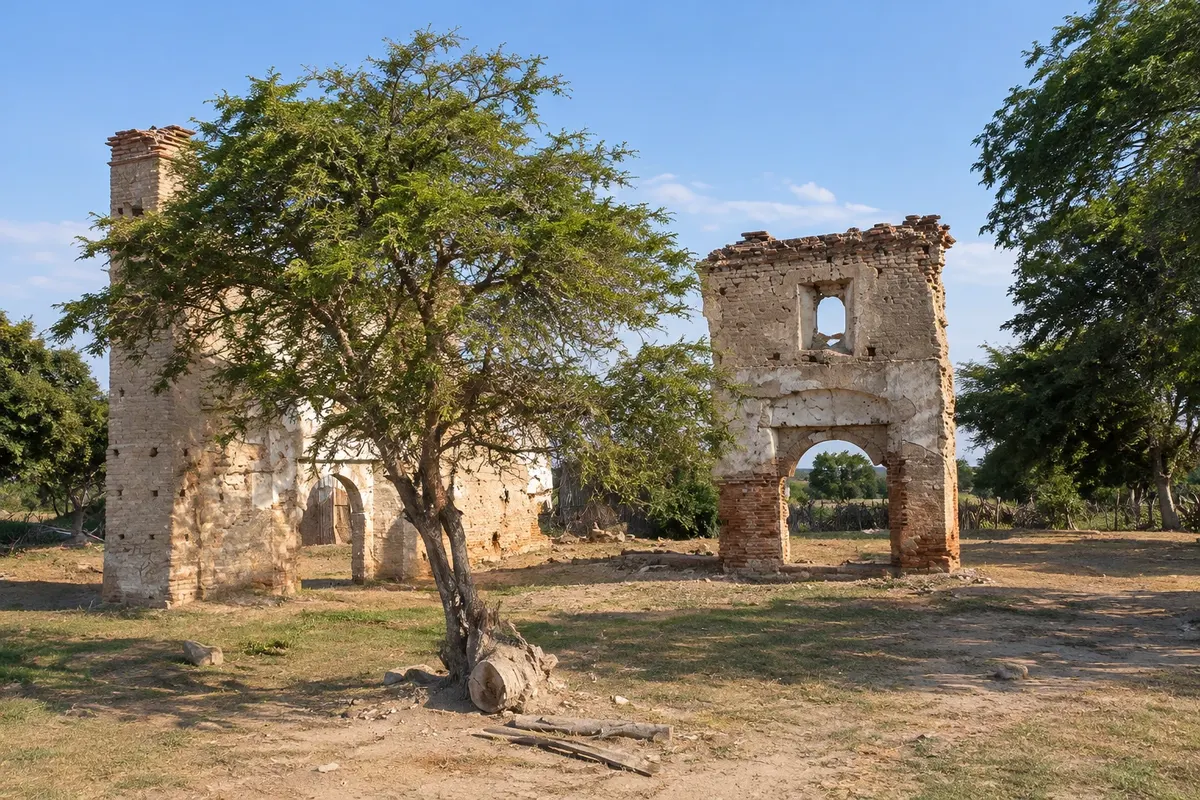
Ruins · Chiclayo, Lambayeque
Ruinas de Zaña
The ruins of the old Spanish town of Zaña, founded in 1563 and abandoned after a pirate raid in 1686 and the floods of 1720, featuring arches and walls of the churches of San Agustín, San Francisco and La Merced. A place of memory for Afro-Peruvian culture.
Illustrative images. The pictures in this guide are illustrations based on the real place, not photographs, and may differ from it.

Discover
About Ruinas de Zaña
Zaña, formerly spelled Saña, is about 45 km southeast of Chiclayo, in the Zaña river valley. It was founded in 1563 as the town of Santiago de Miraflores de Saña and became the regional capital. In the 17th century, wealthy from sugar and trade, it even rivaled Trujillo.
The decline came with the raid by the English pirate Edward Davis in 1686 and the great floods of the El Niño event in 1720, which destroyed much of the town. The wealthier residents moved to Lambayeque and Trujillo, and the churches fell into ruin.
Today the village coexists with the remains of colonial temples: arches, columns and brick walls of the churches of San Agustín, San Francisco and La Merced, amid fields and streets. The ruins of San Agustín, with the tall nave arches, are the most photographed.
Zaña is also a place of memory of the African presence in Peru. The Ministry of Culture recognizes it as a living repository of Afro-Peruvian memory, and UNESCO included it among sites of memory of slavery and African heritage. Afro-Peruvian music and dance are part of village life.
Before you go
Practical information
Cidade Turismo reviews its information regularly, but something may have changed. Check with the place before planning your trip.
How much time to set aside
About 1 to 2 hours.
Best time
In the morning or late afternoon, with low light over the arches and less heat.
How to get there
It's about 45 km southeast of Chiclayo, roughly a 1-hour drive. A hired taxi or an organized tour is most practical; there are shared vans to the village.
Tip
Start at the ruins of San Agustín and walk through the town to the other churches. Combine the visit with Huaca Rajada–Sipán in the same valley.
Get your questions answered
Frequently asked questions about Ruinas de Zaña
Why did Zaña fall into ruins?
The village was sacked by the pirate Edward Davis in 1686 and destroyed by the floods of 1720. The residents moved away and the churches were not rebuilt.
What ruins can be seen?
Arches, columns and walls of the colonial churches of San Agustín, San Francisco and La Merced.
What is Zaña's connection to Afro-Peruvian culture?
The village is recognized as a place of memory for the African presence in Peru, and Afro-Peruvian music and dance are part of local life.
Can you combine it with Sipán?
Yes, Zaña and Huaca Rajada–Sipán are on the same side of Chiclayo and can be visited on the same day.