

 Brazil
 Argentina
 Bolivia
 Chile
 Colombia
 Ecuador
 Guyana
 French Guiana
 Falkland Islands (Malvinas)
 Paraguay
 Suriname
 Uruguay
 Venezuela
 Germany
 Belgium
 Denmark
 Spain
 France
 Greece
 the Netherlands
 Ireland
 Italy
 Luxembourg
 Norway
 Portugal
 the United Kingdom
 Sweden
 Switzerland
Before you go
Your trip to Chivay.
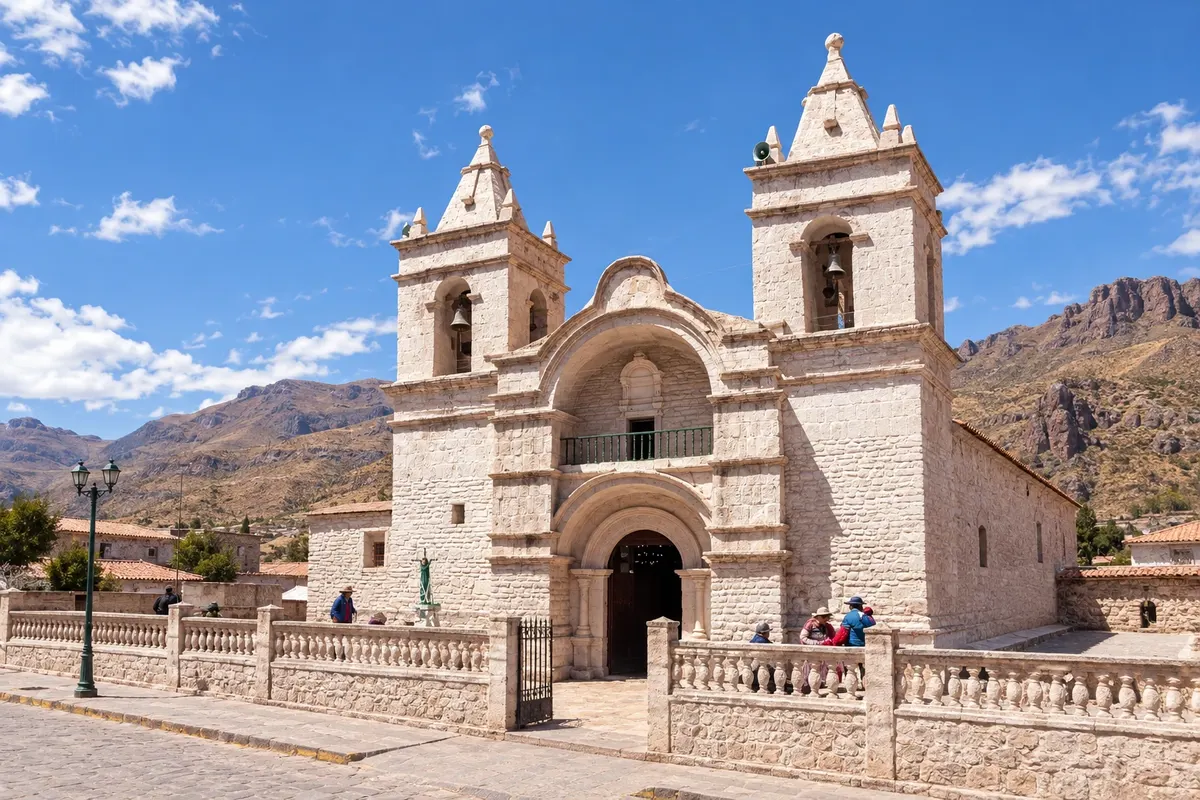
Illustrative images. The pictures in this guide are illustrations based on the real place, not photographs, and may differ from it.

Chivay – Arequipa Destination Arequipa and the Colca Canyon about 160 km from Arequipa
How to get there
-
Aeropuerto Internacional Alfredo Rodríguez Ballón (AQP) Arequipa · 165 km
-
Terminal Terrestre de Chivay 1 km
Approximate road distances. Check flights and bus schedules before you travel.
From Arequipa it is about 160 km on a paved road, a 3–4 hour drive, passing through the Reserva Nacional de Salinas y Aguada Blanca and the Patapampa overlook, at nearly 4,900 meters. There are regular buses from Arequipa's bus terminal and vans from tour operators. The nearest airport is Arequipa.
How many days
Two days: the first for the trip from Arequipa, with stops in the reserve, and the afternoon at the La Calera hot springs; the second for the Cruz del Cóndor in the morning, with stops in Yanque, Maca and the valley viewpoints, and the return to Arequipa. Those who want to hike down to the canyon floor add one or two days, starting from Cabanaconde.
When to go
The dry season usually runs from May to November, with clear skies and very cold nights, below zero. From December to March it usually rains in the afternoons and the terraces turn green. The condors tend to appear more often in the dry season. In July and August the villages hold festivals with dances, such as the wititi, recognized as Intangible Cultural Heritage by UNESCO.
The seasons shown are the most usual ones; nature doesn't always follow the calendar.
Do you need a car?
No. Agency tours leaving from Arequipa include all the stops, and there are regular buses to Chivay and Cabanaconde that pass by the Cruz del Cóndor. In Chivay, taxis and vans take you to La Calera and the villages. A car gives freedom, but the road rises above 4,800 meters.
Suggested itinerary
An order that works
Built with the places on this page. No rush: it's paced so you have time to see them.
2 days in Chivay
Day 1
-
Morning
Road from Arequipa
Leave Arequipa early and stop at Pampa Cañahuas in the Reserva Nacional de Salinas y Aguada Blanca to see vicuñas.
-
Afternoon
Patapampa and Chivay
Stop at the Patapampa overlook, at nearly 4,900 meters, and descend to the valley. Have a light lunch in Chivay and rest to acclimatize.
-
Late afternoon
La Calera
Bath in the La Calera thermal pools, 3 km from the village, on the riverbank.
-
Evening
Night in Chivay
Light dinner in the village. Nights are cold: bring warm clothes.
Day 2
-
Morning
Cruz del Cóndor
Leave at dawn for the Cruz del Cóndor and wait for the condors, which usually appear in the early morning hours.
-
Afternoon
Valley villages
On the way back, stop in Pinchollo, Maca and Yanque to see the colonial churches and the terraces.
-
Late afternoon
Viewpoints
Stop at the Choquetico viewpoint, above the pre-Inca terraces, then continue to Chivay.
-
Evening
Return to Arequipa
Return trip to Arequipa, arriving in the evening.
Check before you go. Opening hours and days change, and places may close for renovations, holidays or events. This itinerary is a suggestion from Cidade Turismo, not a commitment: plan yours by checking directly with each place you intend to visit.
Before you go
Frequently asked questions
What is the altitude of Chivay?
About 3,600 meters. Many travelers feel the altitude on the first day. Take it easy and, if possible, spend a few days in Arequipa beforehand. Talk to your doctor before traveling.
Can you do the Colca in one day?
You can, with tours that depart Arequipa at dawn and return at night, but the day is long and the altitude takes its toll. With one night in Chivay, the visit to the Cruz del Cóndor is more relaxed.
What is the distance from Chivay to the Cruz del Cóndor?
About 40 km, a 1.5–2 hour drive along the road that passes Yanque, Achoma, Maca and Pinchollo.
Is it cold in Chivay?
Nights are cold year-round, and from May to August temperatures often drop below zero at dawn. During the day, with sun, it can be warm. Bring layered clothing.
What is the wititi?
It is a traditional dance of the Colca Valley, associated with courtship, performed at village festivals, mainly from July to August. It was recognized as Intangible Cultural Heritage by UNESCO in 2015.