

 Brazil
 Antarctica
 Argentina
 Bolivia
 Chile
 Colombia
 Ecuador
 Falkland Islands (Malvinas)
 French Guiana
 Guyana
 Paraguay
 Peru
 Suriname
 Uruguay
 Venezuela
 Albania
 Austria
 Belgium
 Denmark
 Finland
 France
 Germany
 Greece
 Hungary
 Iceland
 Ireland
 Italy
 Luxembourg
 Norway
 Poland
 Portugal
 Slovakia
 Slovenia
 Spain
 Sweden
 Switzerland
 the Czech Republic
 the Netherlands
 the United Kingdom
 Turkey
 Bermuda
 Canada
 Greenland
 Mexico
 Saint Pierre and Miquelon
 the United States
 the Dominican Republic
 Japan
 Egypt
 South Africa
 Australia
 Fiji
 New Zealand
 Papua New Guinea
Cultural and heritage travel
Museums and galleries in Croatia
At the Museum of Broken Relationships in Zagreb, an object you might overlook on a shelf can hold your attention with just a few lines of text. The words come from the person who lived the story. At the Meštrović Gallery in Split, on the other hand, noticing a detail may mean looking up from the label for a moment and taking a few steps around the sculpture.
The setting can also help you choose which of Croatia’s museums to visit. In Vukovar, the Danube is part of the landscape that archaeologists are trying to reconstruct. In Pula, the institution dedicated to finds from Istria also looks after the Roman monument you can see from the city streets.
Objects and stories in Zagreb’s Upper Town
The Museum of Broken Relationships displays objects donated by people who wanted to tell the story of how a relationship ended. First, look at the object and imagine why someone kept it. Then read the donor’s account. What makes it interesting is the gap between what you might guess from its appearance and what it came to mean in the lives of two people.
Allow time to read during your visit. If you’re visiting as a pair or with family, each person can choose a story and, on the way out, share what made them stop at that object. Since so much of the experience depends on the text, it’s worth checking which languages are available. The museum’s location makes it easy to combine a visit with a walk through Zagreb’s Upper Town.
Meštrović’s sculpture in Split
The Meštrović Gallery occupies a property that once belonged to the sculptor Ivan Meštrović. Look at a sculpture from the front, then from the side. A change in viewpoint can reveal a space between two bodies, the way a figure’s weight rests on one leg, or the movement of an arm that blends into the torso when seen from the front.
Set aside part of your visit to look at the setting itself. Seeing a figure beside a door or framed by an opening gives you a different sense of its scale. If you’re interested in a particular sculpture or part of the property, check what’s included in the visit on your chosen date.
Archaeology on the banks of the Danube in Vukovar
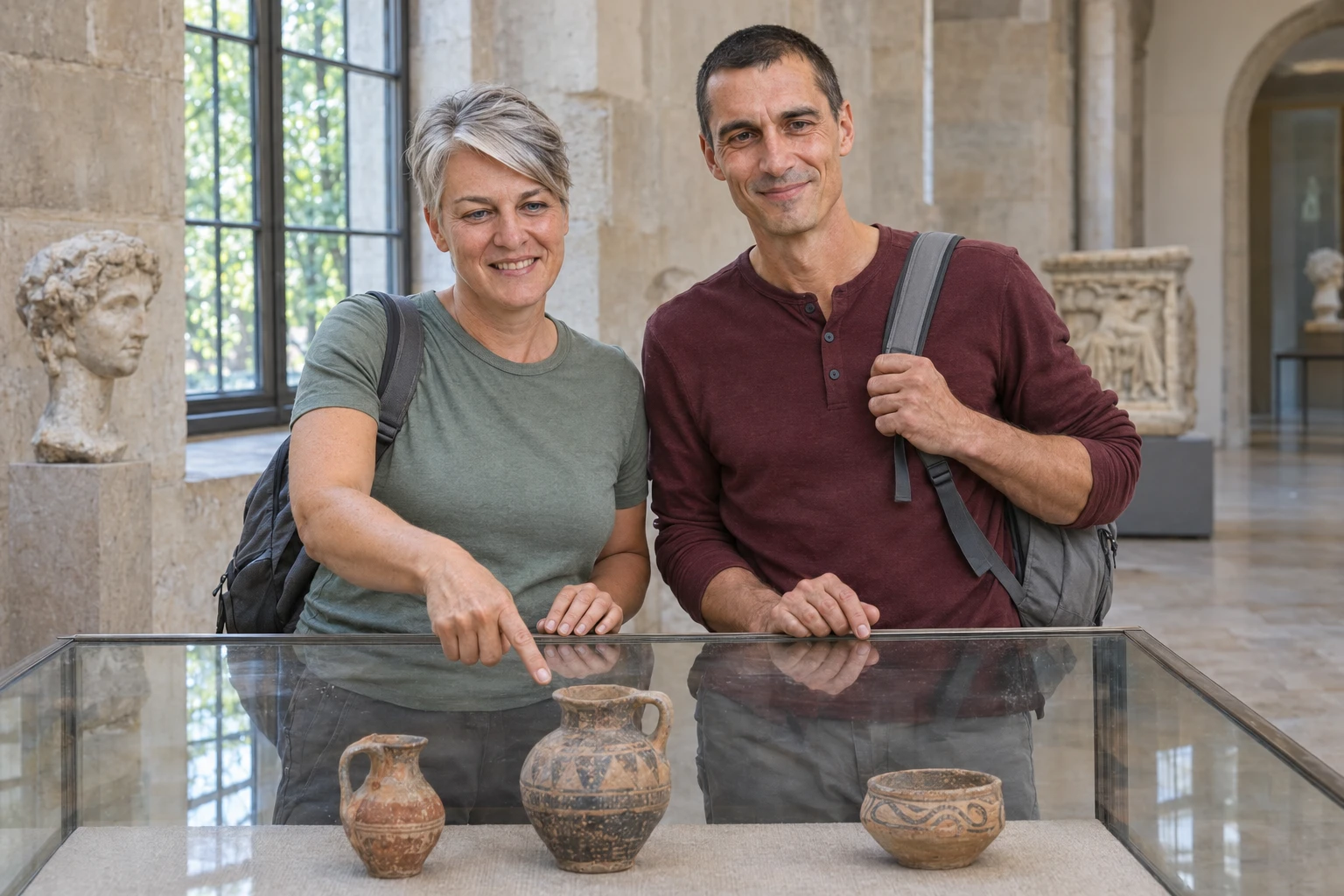
The Vučedol Culture Museum is next to the archaeological site it’s named after. Start by finding the settlement on a map and noting its position relative to the Danube. Its closeness to the river raises practical questions about how people traveled, what they ate, and how they worked. These questions help explain why an object’s description includes information about where it was found.
As you explore the exhibition, choose an everyday object and look for clues to its purpose. Its shape, its material, and the marks left by the person who made it can each tell you something different. If you’re with children, try asking how someone would have held the object or what might have fit inside. Then compare your ideas with the explanation in the gallery.
The Arena and the Archaeological Museum of Istria in Pula
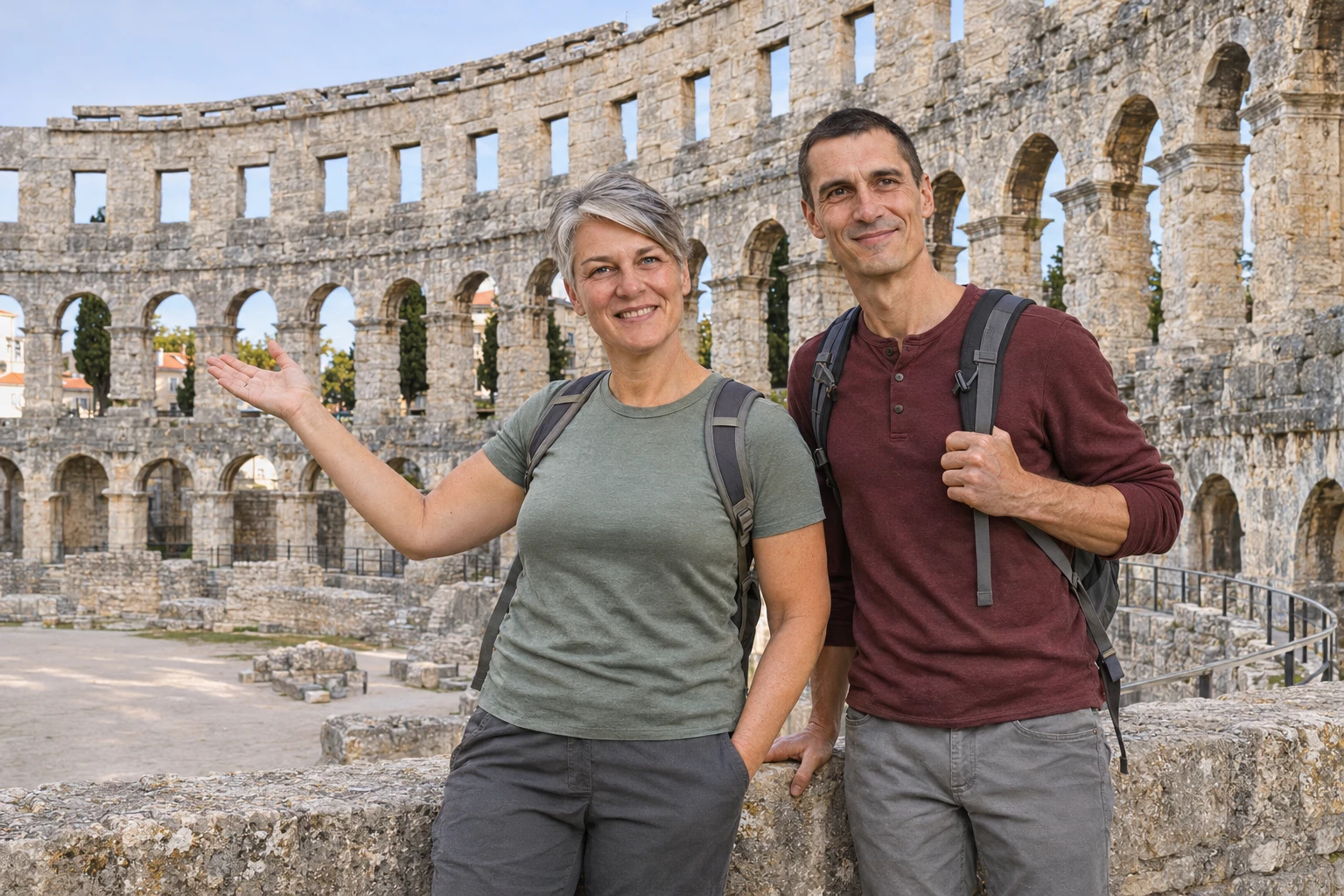
In Pula, the Archaeological Museum of Istria manages the Arena and cares for collections from the region. To explore the amphitheater, start by tracing its outline from the street. Once inside, focus on how the space for performances relates to the space for spectators. Here, the architecture itself is the largest object on display.
If you want to see an archaeological collection, first check the address and which areas are open to visitors. When the same museum is mentioned in guides to different monuments, it tells you who looks after those sites. Make a note of the exact name of the place you want to visit so you can check its schedule and plan your route through central Pula.
Frequently asked questions
Which museum should you visit in Zagreb’s Upper Town?
The Museum of Broken Relationships pairs personal objects with accounts by the people who donated them. It’s a good choice if you enjoy reading stories as you explore a museum.
Where can you see Ivan Meštrović’s sculptures?
At the Meštrović Gallery in Split. The property once belonged to the artist and gives you a sense of the scale he had in mind for his works.
Which city is the Vučedol Culture Museum in?
It’s in Vukovar, by the archaeological site on the Danube. Find the museum on a map when planning your trip from the city center.
Where to go: Museus
Pick a region or type what you are looking for to see the cities and who offers it in each.
-
Zagreb ZG
O Museu das Relações Terminadas reúne objetos e relatos pessoais na Cidade Alta.
-
Pula IS
O Museu Arqueológico da Ístria administra a Arena e apresenta acervos da região.
-
Split ST
A Galeria Meštrović apresenta esculturas no conjunto que pertenceu ao artista.
-
Vukovar VS
O Museu da Cultura de Vučedol interpreta o sítio arqueológico às margens do Danúbio.
More activities in Cultural and heritage travel



Beyond the guide


