

 Brazil
 Antarctica
 Argentina
 Bolivia
 Chile
 Colombia
 Ecuador
 Falkland Islands (Malvinas)
 French Guiana
 Guyana
 Paraguay
 Peru
 Suriname
 Uruguay
 Venezuela
 Albania
 Austria
 Belgium
 Denmark
 Finland
 France
 Germany
 Greece
 Hungary
 Iceland
 Ireland
 Italy
 Luxembourg
 Norway
 Poland
 Portugal
 Slovakia
 Slovenia
 Spain
 Sweden
 Switzerland
 the Czech Republic
 the Netherlands
 the United Kingdom
 Turkey
 Bermuda
 Canada
 Greenland
 Mexico
 Saint Pierre and Miquelon
 the United States
 the Dominican Republic
 Japan
 Egypt
 South Africa
 Australia
 Fiji
 New Zealand
 Papua New Guinea
Culture and history
Cultural and historical travel in Croatia
Walk through a palace that became a neighborhood, look for faces carved into a stone cathedral, and follow the Danube through the history of the people who lived on its banks.
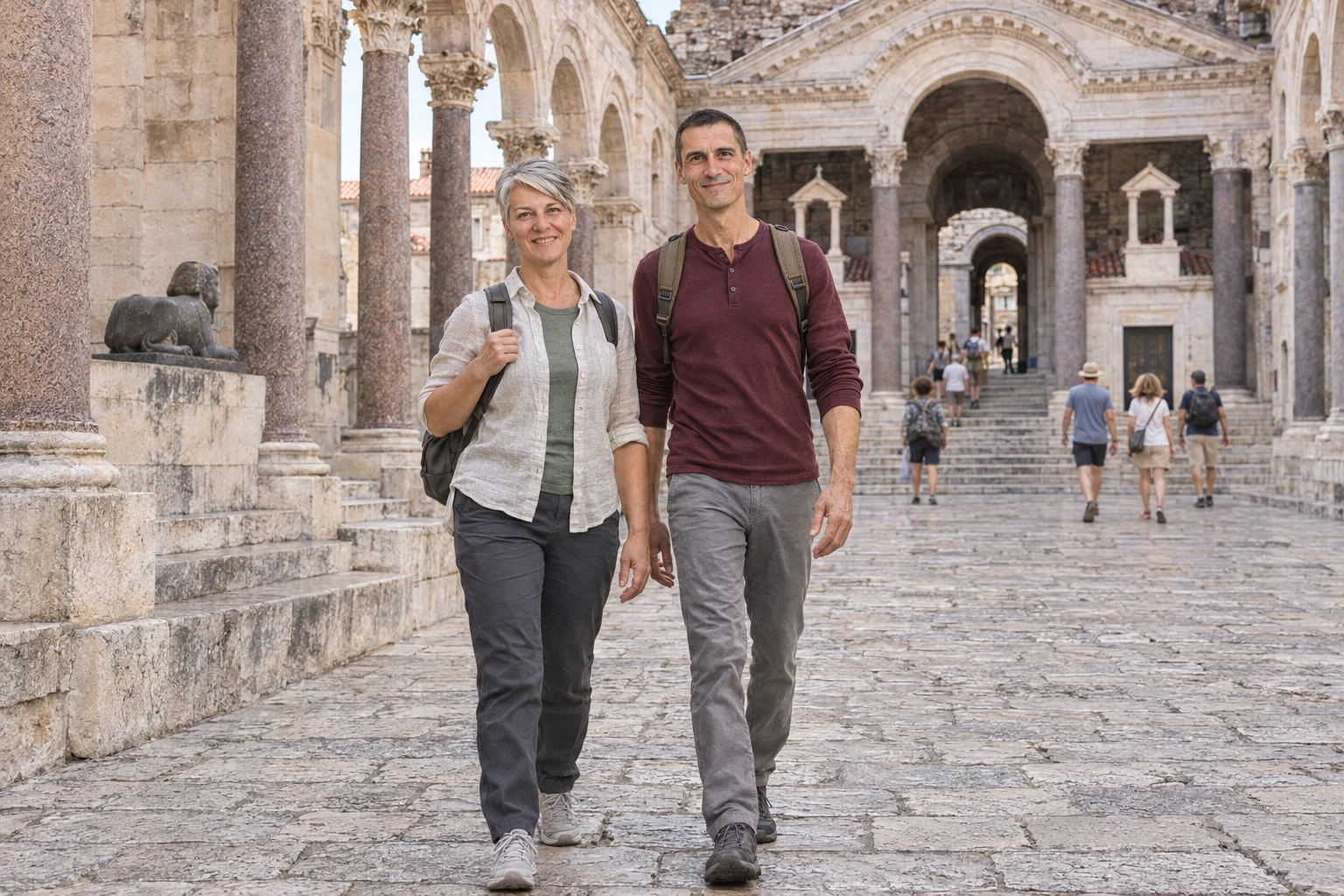
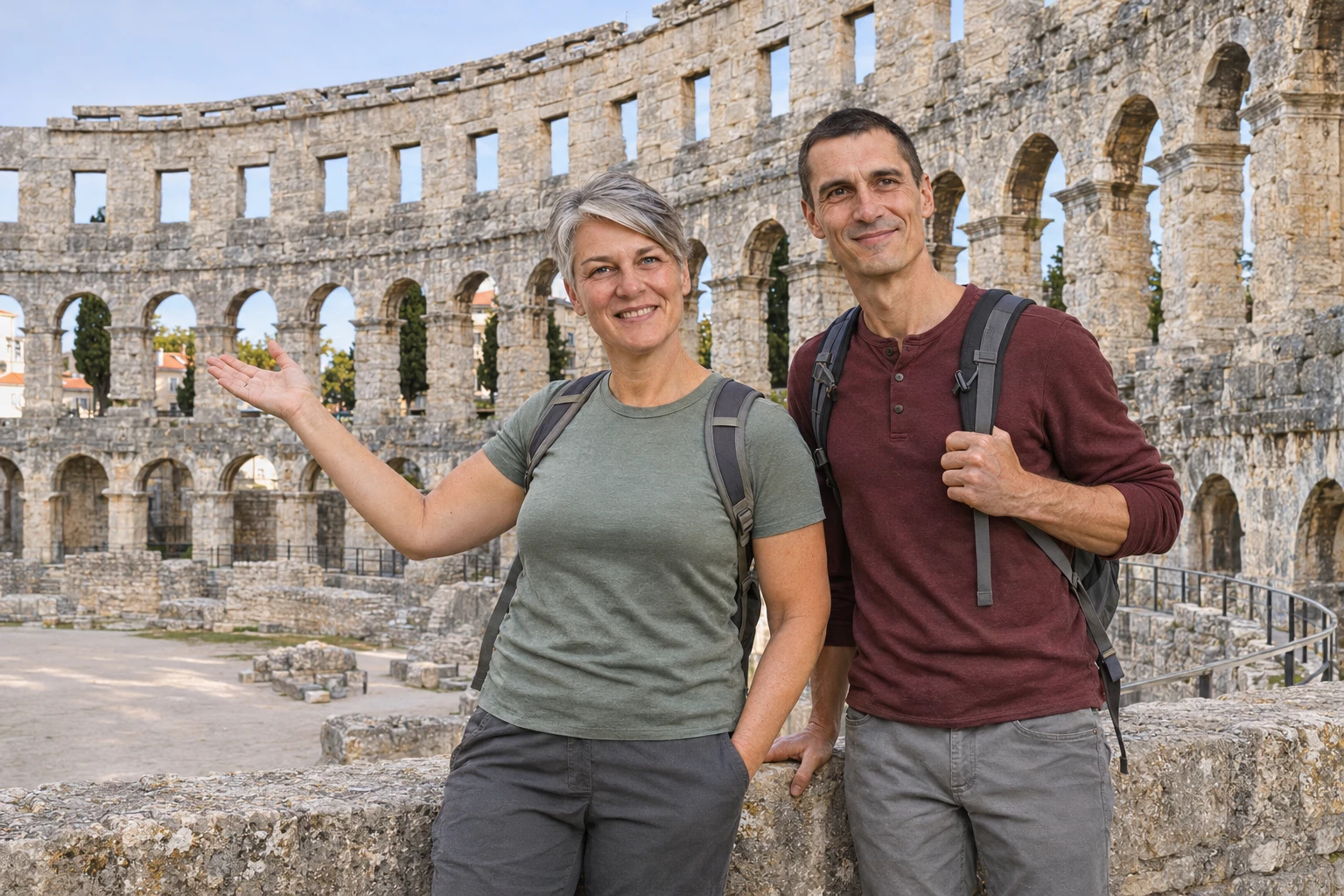
In Split, you can pass through a gate of Diocletian’s Palace on your way to a café. The former imperial residence takes up part of the city center and is still a place where people pass through, live, and meet. In Pula, the Roman legacy takes a different form and scale. Walk around the Arena and you can trace the outline of the ancient amphitheater in the curve of its facade.

Where to go in Brazil
Pick a region or type what you are looking for to see the cities and who offers each activity.
- Zagreb ZG
- Poreč IS
- Pula IS
- Opatija PG
- Rijeka PG
- Šibenik SK
- Zadar ZD
- Dubrovnik DN
- Korčula DN
- Ston DN
-
Hvar ST
Castelos e cidadelas · Visitar igrejas e arte sacra · Centros históricos
-
Split ST
Passear pela cidade · Visitar igrejas e arte sacra · Museus · Monumentos e sítios históricos · Centros históricos
- Trogir ST
- Osijek OB
- Ilok VS
- Vukovar VS
Where to go for a taste of Croatian culture depends on what you like to look at. There are cities you can explore from atop their walls, temples where a detail on a portal tells a story, and museums where a single personal object can give you plenty to read about. Inland, Zagreb and the cities along the Danube offer different themes to explore from those you’ll find in the ports of Dalmatia.
Streets and city walls of Dalmatia
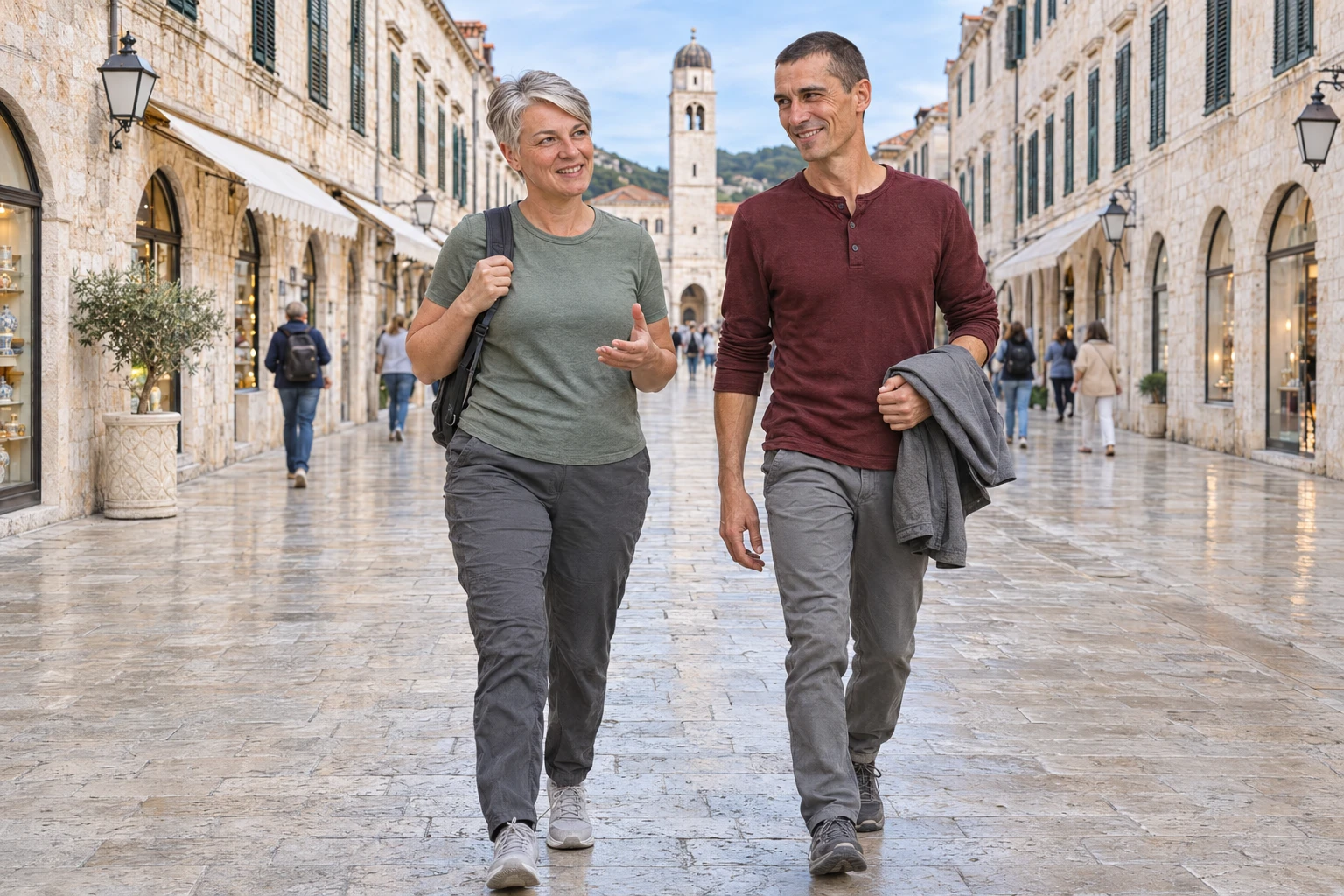
In Dubrovnik, start by walking through the Old Town along Stradun, looking for streets that branch off between the buildings. Then, from the top of the walls, you can trace your route among the rooftops and see how the defenses wrap around the city by the sea. In Ston, the wall follows a different course. It climbs the hillside and stretches all the way to Mali Ston. When choosing a section to walk, consider both the climb and the return route.
In Trogir, the island that holds the historic center gives your walk a natural boundary. Enter by one bridge and leave by another to get a sense of the old town’s width, even after several turns through its narrow streets. In Korčula, the peninsula guides your walk. Follow a side street to the water’s edge and look back to see how the houses are arranged between the center and the water.
Three encounters with the Roman city
The Pula Arena was built to bring spectators together. As you walk around it, notice the repeating arches and the distance from one end to the other. In Zadar, the Forum calls for a different approach. The remains of the Roman city square are spread across an open space. Step back from the stones to get a sense of where people walked and gathered.
At Diocletian’s Palace in Split, the most interesting part of the walk is tracing how a residence became a city. The former mausoleum now houses the Cathedral of Saint Domnius, and passages through the complex lead to streets where people live. Choose one of the gates as a landmark and follow the route to the heart of the palace. Seeing an ancient boundary and a street that continues beyond it helps explain how Split grew.
Museums that tell stories through objects
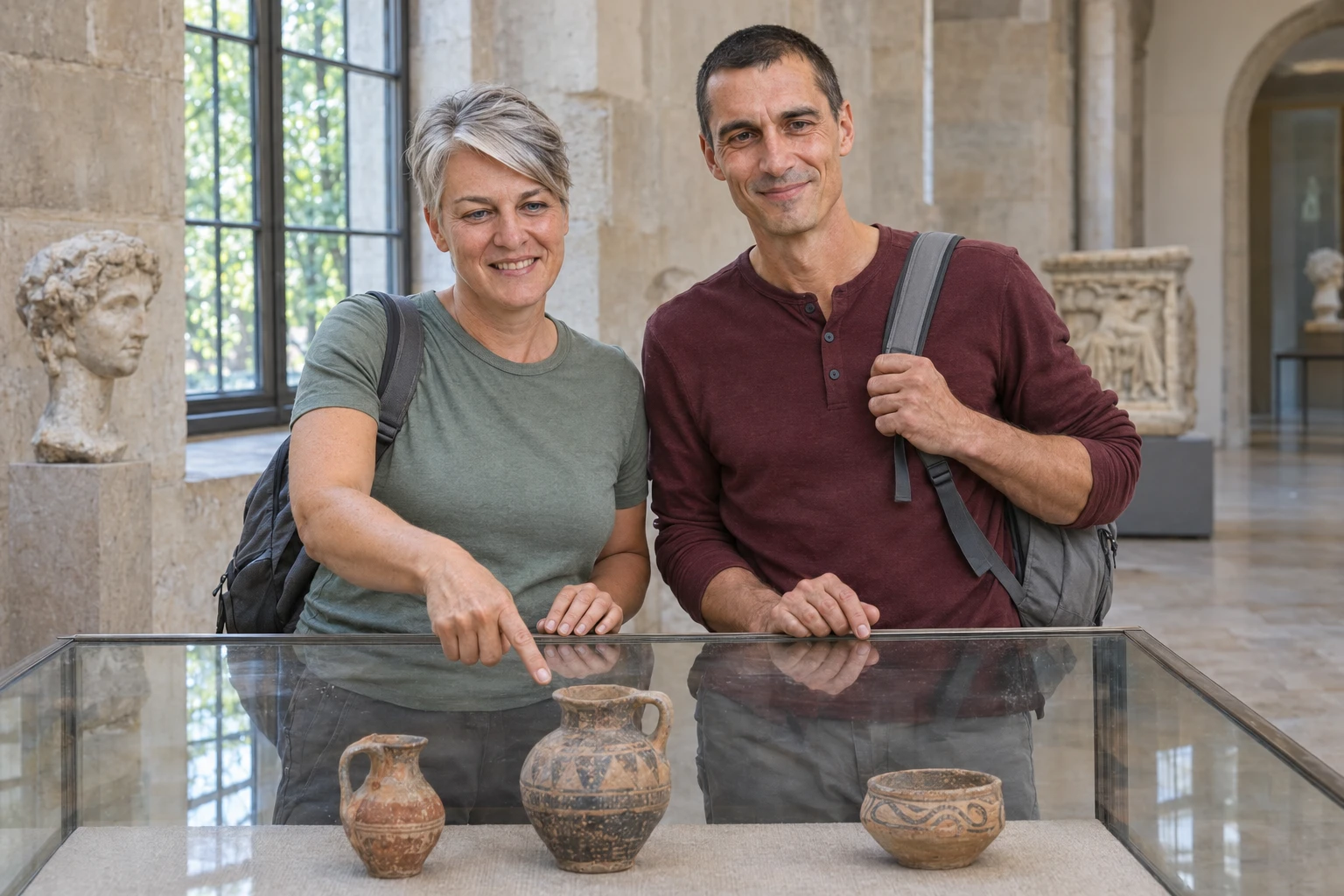
An everyday object can take longer to explore than a whole room. At the Museum of Broken Relationships in Zagreb’s Upper Town, each donor shares something about the relationship that ended. Take a look at the object before you read the donor’s account. In Split, the Meštrović Gallery invites you to walk around a sculpture and see how a gesture looks different in profile. The house that once belonged to the artist is also part of the visit.
If you prefer archaeology, the Vučedol Culture Museum brings you close to the place that gave the finds their meaning. The museum is on the grounds of the archaeological site, on the banks of the Danube in Vukovar. Consider what an object is thought to have been used for and what evidence supports that interpretation. In Pula, the Archaeological Museum of Istria manages the Arena. When planning your visit, check which venue covers the subject that interests you.
From the mosaics of Poreč to the portal of Trogir
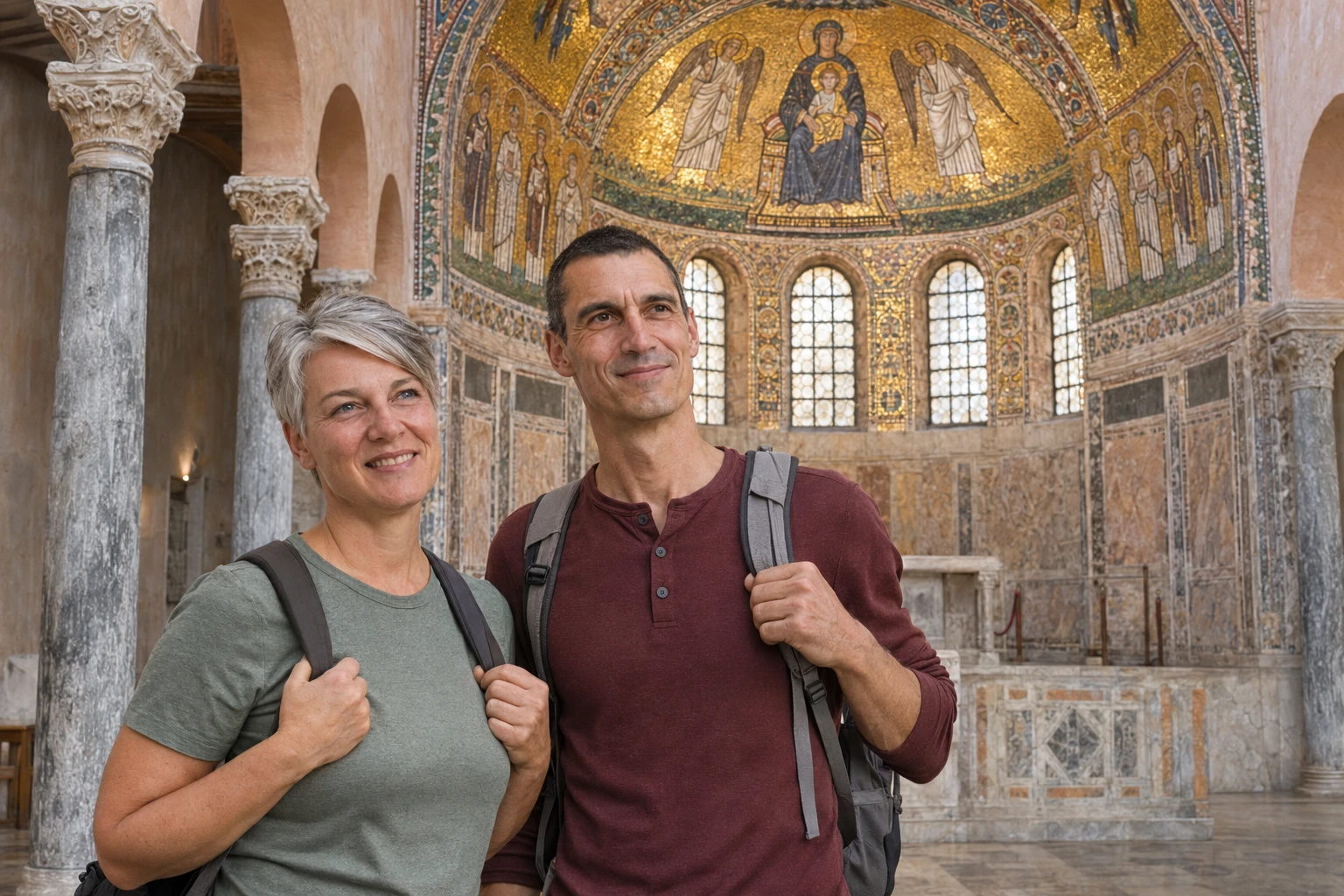
At the Euphrasian Basilica in Poreč, start by taking in the mosaics as a whole. Notice how the light defines the figures before looking for details in their clothing and faces. At the Cathedral of St. James in Šibenik, the stone both supports the building and gives shape to its images. Walk around the outside to see the sculptures up close, then step back to take in the entire building.
In Trogir, stop at Radovan’s Portal at the Cathedral of St. Lawrence. The carvings frame the entrance, and their meaning becomes clearer as you follow the sequence of figures around the doorway. In Hvar, St. Stephen’s Cathedral stands at the far end of the main square. As you walk from the harbor, you have time to see the facade grow larger in your view before you reach the steps. Check each church’s visiting hours if you plan to go inside.
Fortifications between the Adriatic and the Danube
You can see Fortica Fortress from Hvar’s harbor. From the top of the fortress, what stands out is the shelter the harbor provides. In Rijeka, Trsat Castle gives you a sense of the role a hill could play in a city’s defense. In Šibenik, you can compare several fortresses. Find St. Michael’s, Barone, and St. John’s on a map before deciding which climbs you have time for.
There are also two good reasons to set aside time for fortifications inland. In Zagreb, Medvedgrad stands on the slopes of Medvednica and calls for a separate trip from the city center. In Ilok, Odescalchi Castle is part of the fortified center above the Danube and houses the city museum. Here, it’s worth dividing your time between the museum rooms and a walk outside to see where the castle stands in relation to the river.
Routes for exploring cities on foot
A walk in Zagreb can take you from the Upper Town to the squares and parks of the Lower Town. In Opatija, the Lungomare follows the coast past the resort’s historic villas. Choose one as your turning point if you want a shorter walk. In Split, the Riva offers a place to pause by the sea, with several chances along the way to turn into the streets of the palace.
In Osijek, you get a sense of the city’s connection to the Drava as you walk from the streets of Tvrđa to the riverbank. The route works well even if you simply want to spend the morning outdoors. To combine a walk with an indoor visit on the same day, plan around the place with set opening hours first. Save the waterfront or square for the part of the outing when your group would rather walk without a schedule.
Frequently asked questions
Where should you start a cultural itinerary in Croatia?
In Split, you can bring three themes together in a single walk. Enter through the palace gates, see how the mausoleum became a cathedral, and finish on the Riva, facing the sea.
Which city should you choose for historic mosaics?
Poreč, in Istria. The mosaics of the Euphrasian Basilica are part of an early Christian episcopal complex. Allow time to study both the composition of the images and their placement in the building.
Where can you combine a museum visit with a riverside walk?
In Vukovar, the Vučedol Culture Museum stands beside the archaeological site overlooking the Danube. In Ilok, the museum inside the castle gives you context for a visit to the fortified center above the same river.
Which walk should we choose if our group wants to avoid uphill stretches?
Consider walking along part of the Riva in Split or following the Stradun in Dubrovnik. Check how to get there from where you are and what the walking surface is like. Towers and walks along the city walls have routes of their own.
More in Culture and history
Beyond the guide


