Elqui Valley

Coquimbo

Elqui Valley

Beaches and stone churches in La Serena, and a valley of pisco vineyards and astronomical observatories around Vicuña, in the Coquimbo region.

North

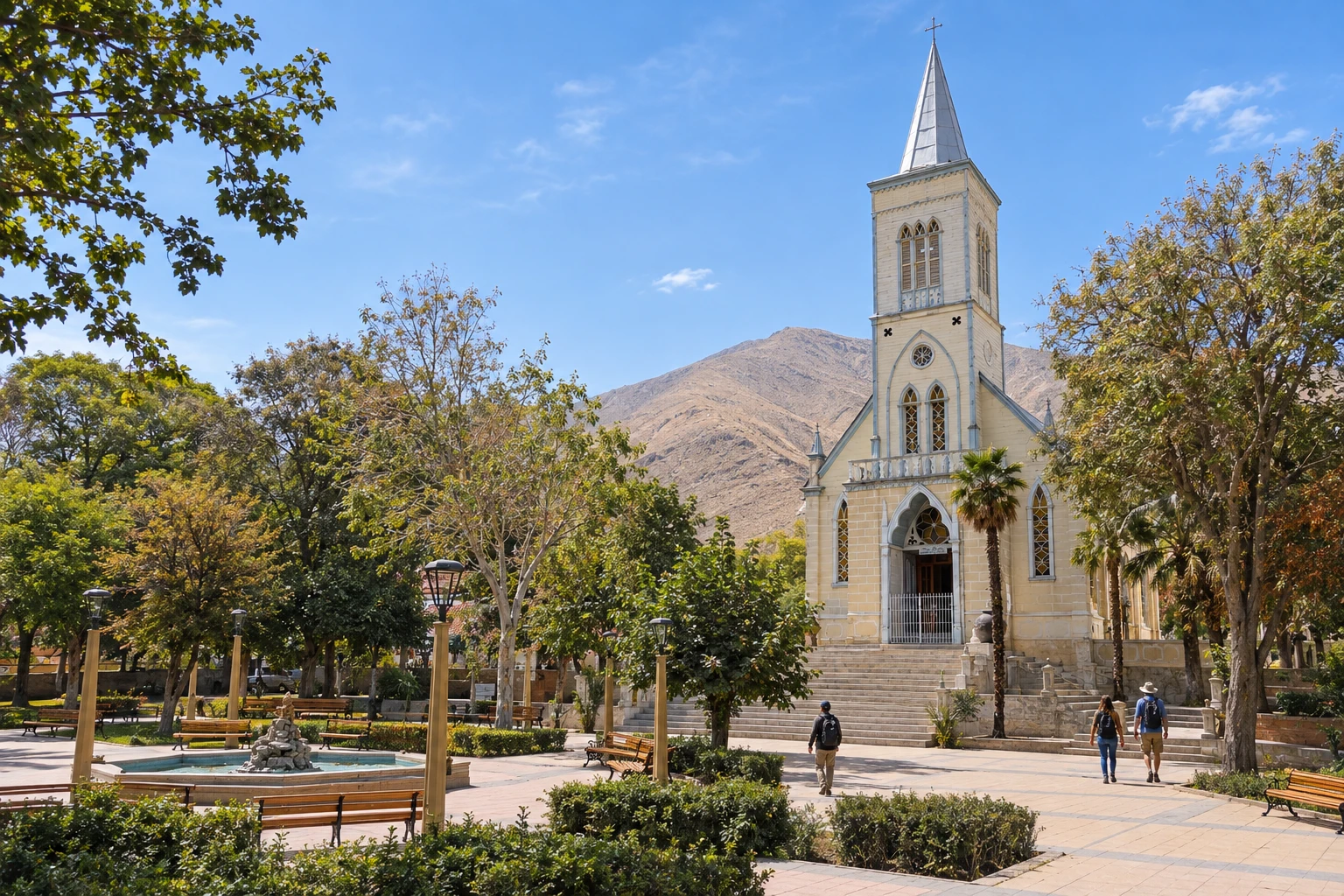
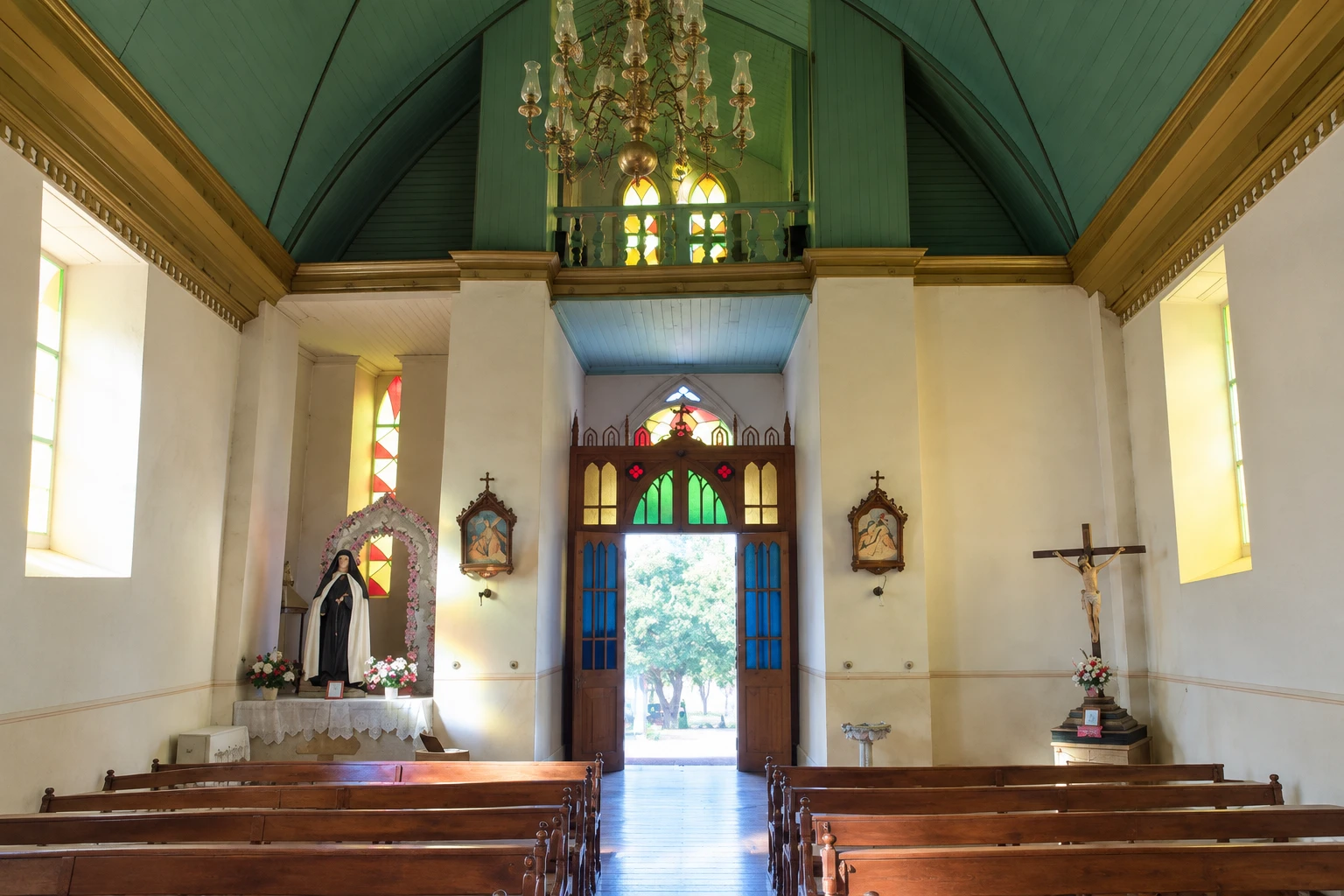
In the photo: Square and Iglesia Nuestra Señora del Rosario, Pisco Elqui

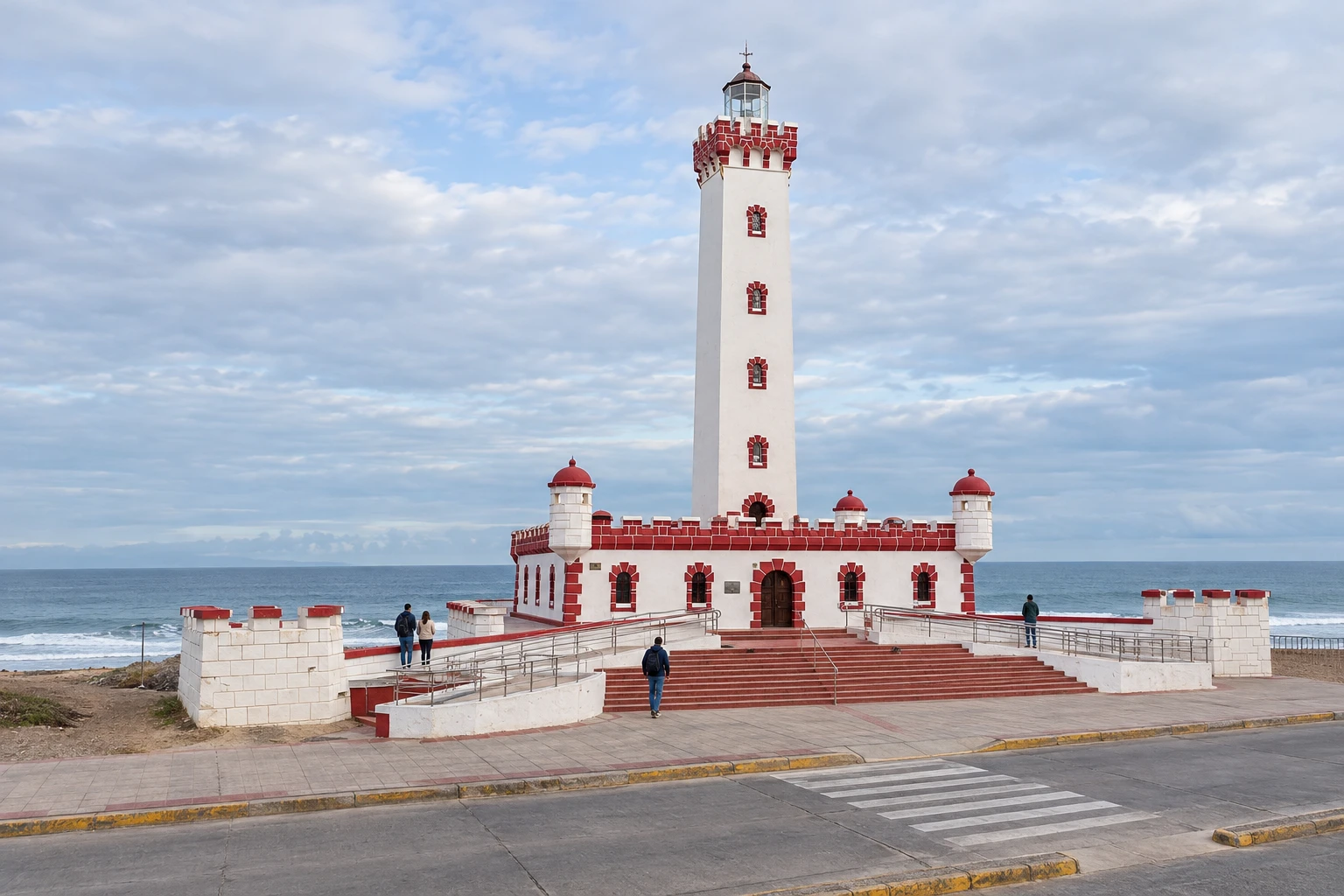
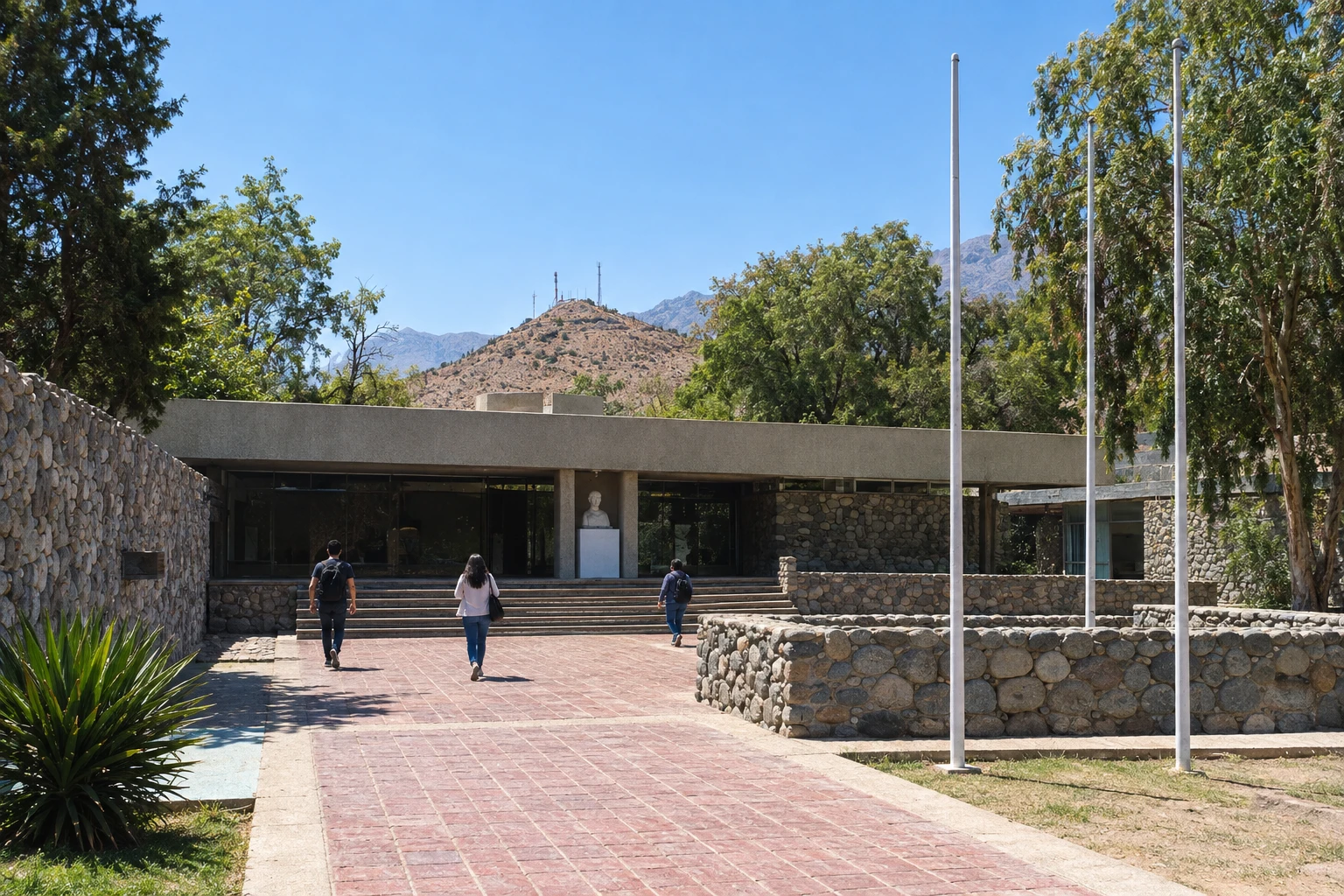
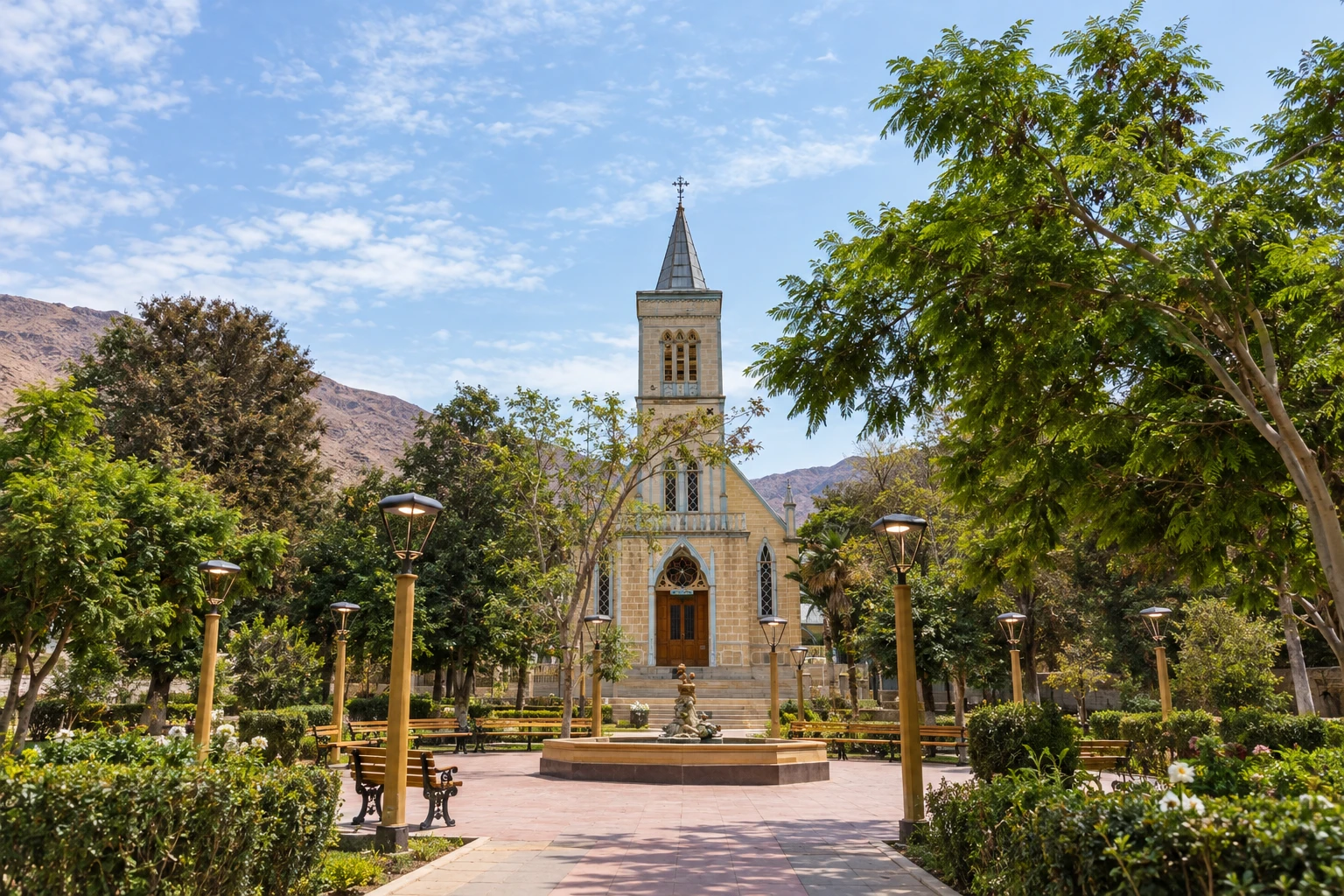
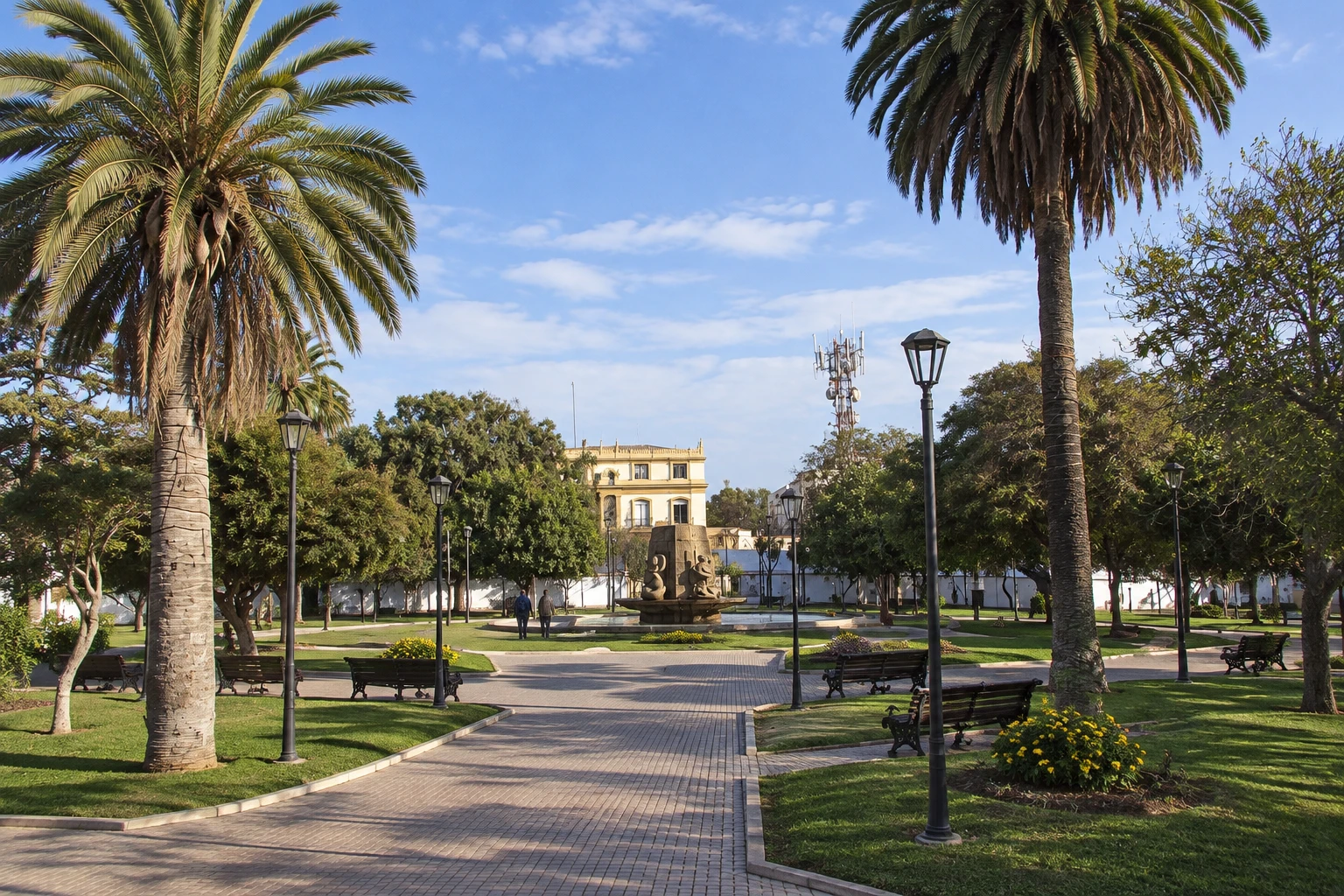
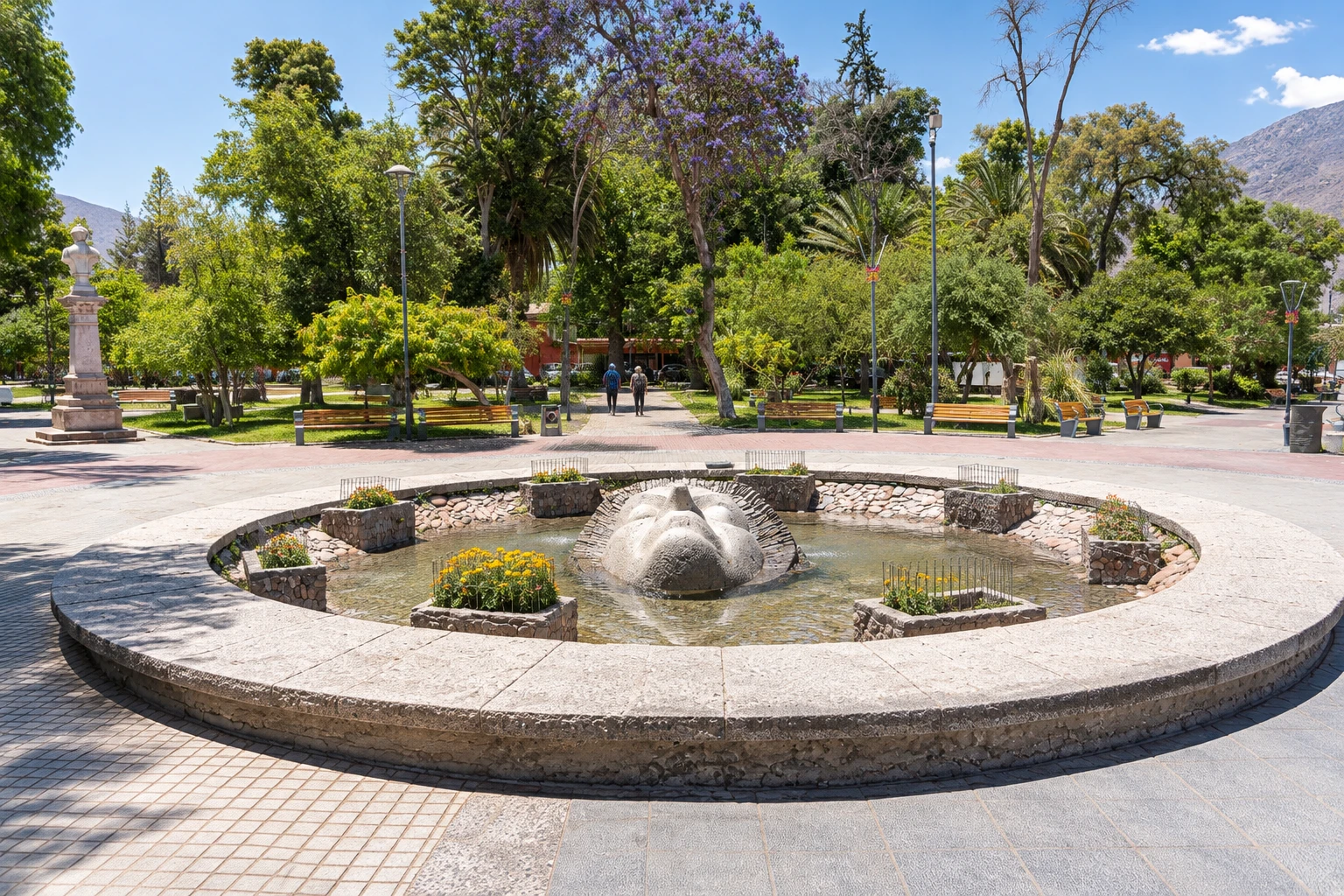
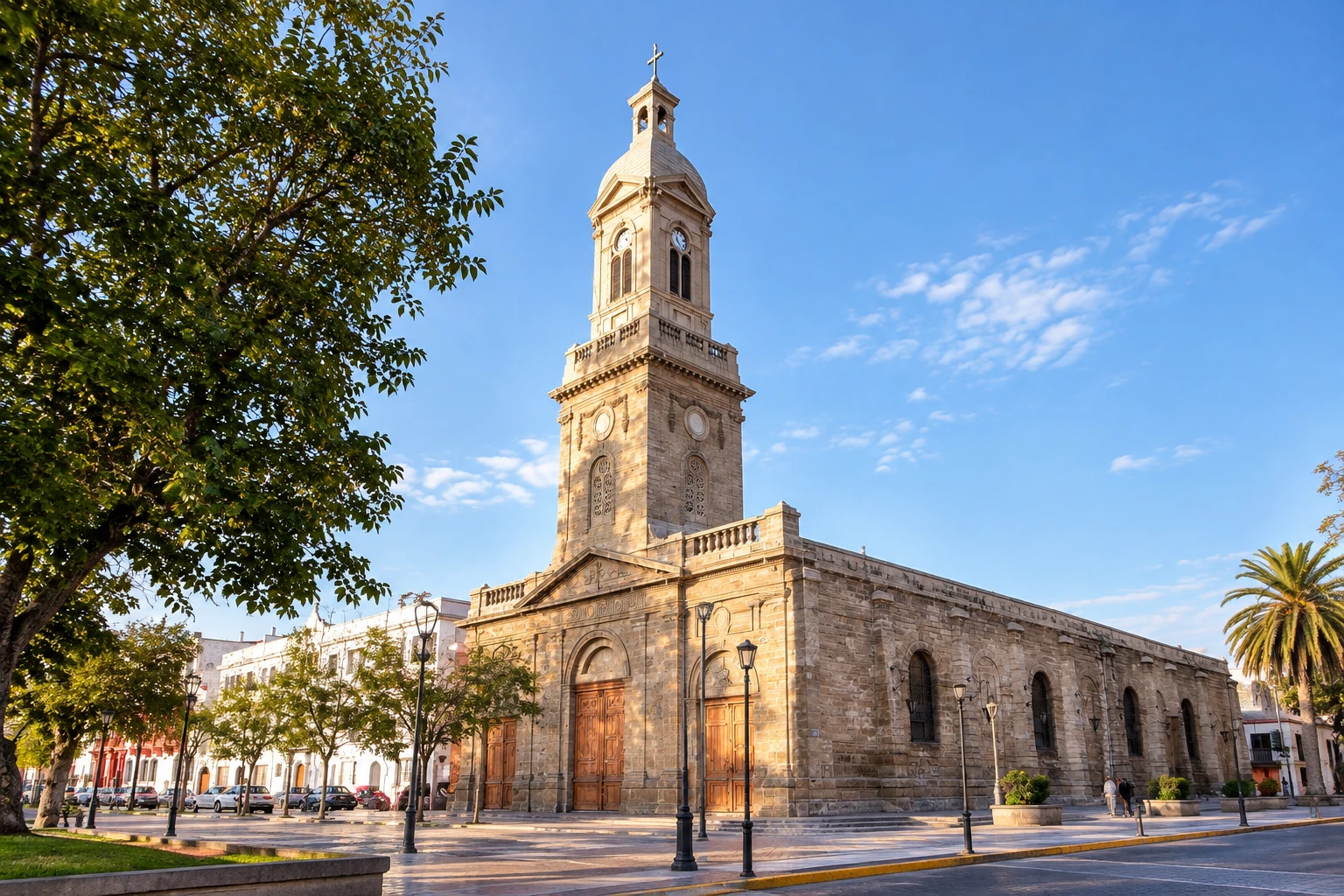
Illustrative images. The pictures in this guide are illustrations based on the real place, not photographs, and may differ from it.

Get it on Google Play

Get to know the place

A region to enjoy
at your own pace.

The Vale do Elqui cuts across the Coquimbo region, about 470 km north of Santiago, following the Rio Elqui from the Cordilheira dos Andes to the Pacific. At its mouth lies La Serena, the regional capital and one of the country's oldest cities, founded in the 16th century. Upriver, a little over an hour by road, is Vicuña, the town where poet Gabriela Mistral was born, Nobel Prize in Literature.

La Serena blends a historic center with the coast. Around the Plaza de Armas are the Cathedral and the Iglesia de San Francisco, with stone walls, as well as the Museo Arqueológico and the La Recova market. To the west, the Faro Monumental marks the beginning of the Avenida del Mar, the beachfront promenade that continues to Coquimbo, the neighboring port city with the Cruz del Tercer Milenio and the Barrio Inglés.

Inland, the climate changes: the low coastal clouds stay behind and the valley opens between dry hills and vineyards. The Elqui grapes become pisco, the grape brandy Chileans drink neat or in a pisco sour, and the distilleries of Vicuña and Pisco Elqui welcome visits. Montegrande, where Gabriela Mistral spent her childhood and is buried, is on the way.

The valley's dry air and dark nights attracted scientific observatories and also tourist observatories like Mamalluca and Del Pangue, which run nighttime telescope sessions. Viewing depends on the weather and the Moon phase. North of La Serena, the Reserva Nacional Pingüino de Humboldt offers boat trips around islands inhabited by birds and sea lions.

This destination brings together 3 cities: La Serena, Vicuña, Pisco Elqui.

Share: WhatsApp
Traveler, share your experiences through photos Up to 5 photos of each place you visited.

One destination, many paths

The cities on this trip

Start with one city or combine several in your itinerary.

Where Elqui Valley is The star marks the capital, La Serena.
La SerenaVicuñaPisco Elqui

Outlines: Natural Earth (public domain). Adapted by Cidade Turismo.

How to get there: Elqui Valley

Aeródromo La Florida (LSC) · 5 km to La Serena

The quickest route is to fly to La Florida airport in La Serena, with a connection in Santiago. Connections with Brazil may be direct flights or with a stopover, depending on the season and airline. Confirm before buying. By land, it’s about 470 km from Santiago via Ruta 5, around six to seven hours by bus. From La Serena to Vicuña, Ruta 41 climbs the valley.

Suggested arrival point: La Serena

La Serena
Coquimbo · Elqui Valley Capital Suggested arrival point

La Serena

La Serena, capital of the Coquimbo region, was founded in 1544 and is known for its stone churches. In the center are the Plaza de Armas, the Cathedral, the Iglesia de San Francisco, the Museo Arqueológico, the La Recova market and the Parque Japonés Kokoro No Niwa. On the coast are the Faro Monumental and the beaches of the Avenida del Mar; nearby, Coquimbo hosts the Cruz del Tercer Milenio and the Barrio Inglés. To the north, the Reserva Nacional Pingüino de Humboldt offers boat trips.

Pisco Elqui
Coquimbo · Elqui Valley

Pisco Elqui

Settlement in the upper Elqui Valley, at about 1,250 meters altitude, in the commune of Paihuano. It was called La Greda and later La Unión, and received its current name in 1936 in homage to the region’s spirit. Around the plaza are the church of Our Lady of the Rosary, with a tall wooden tower, artisan stalls and distilleries. Four kilometers away is Montegrande, where Gabriela Mistral spent her childhood and is buried. It is the land of Pisco, which Chile’s official tourism credits as originating here.

The local experience

Things to do in Elqui Valley

La Serena · Coquimbo · Historic square

Plaza de Armas de La Serena

Central square of La Serena, on the site where the city was refounded in 1549. It has a stone fountain, palm trees and jacarandas, and around it are the Catedral, neoclassical public buildings and the Museo Histórico Gabriel González Videla.

Explore Plaza de Armas de La Serena

La Serena · Coquimbo · Church

La Serena Cathedral

Neoclassical limestone Catedral, begun in 1844 opposite the Plaza de Armas. It houses French stained glass, a large organ and the tomb of the founder Francisco de Aguirre. It is a National Monument.

Explore La Serena Cathedral

See 16 more places in Elqui Valley

To choose before you go

Tours in Elqui Valley

Where each tour starts, how long it takes, how it is done, what is included and the price range.

La Serena historic center: Plaza de Armas, cathedral, stone churches and Mercado La Recova

From Plaza de Armas of La Serena On foot, self-guided or with a local guide about 3 hours morning easy

La Serena was founded in 1544 by Pedro de Valdivia, destroyed four years later and refounded afterwards. It is known as the city of churches: the historic center has more than 15 temples, almost all made of local limestone, which is rare in Chile. The walk begins at La Serena’s Plaza de Armas, the tree-lined square that is the city’s meeting point. There stand the Cathedral of La Serena (Cathedral of San Bartolomé), built in the 19th century, with a tall tower, painted ceiling, several altars and an organ donated by Juana Ross de Edwards, and the Iglesia de Santo Domingo. A few blocks away, at the corner of Balmaceda and De la Barra streets, is the Iglesia de San Francisco, one of the city’s oldest, with walls about one meter thick; the annex houses a museum of religious art with sculptures and paintings from the colonial period. The route ends at Mercado La Recova, which brings together handicrafts from northern Chile: wool textiles, lapis lazuli and combarbalita pieces (a local stone), as well as dried fruits and valley sweets.

Stops: Plaza de Armas of La Serena, Cathedral of La Serena, Iglesia de Santo Domingo, Iglesia de San Francisco, Mercado La Recova.

Includes: Self-guided walk. Entry to the churches is free; the religious art museum at the Iglesia de San Francisco may charge admission. Check the current fee.

Tip: Churches close during mass times and at midday; go in the morning. Wear appropriate clothing to enter the temples. At La Recova, compare prices before buying lapislázuli pieces.

Best time: All year. From May to August mornings tend to be cloudy and cold, with the camanchaca (coastal fog).

Museo Arqueológico de La Serena

From Downtown La Serena On foot, about 450 m from the Plaza de Armas about 1 hour 30 minutes morning or afternoon easy

The Museo Arqueológico de La Serena was founded in 1943 based on the work of researcher Francisco Cornely and the municipality. It is located at the corner of Cordovez and Cienfuegos streets, about 450 m from La Serena’s Plaza de Armas following Cordovez. The collection contains more than 12,000 items, divided into archaeology, ethnology and paleontology. The highlight is the ceramics of the diaguita culture, a people who occupied the valleys of northern Chile before the arrival of the Spaniards, with geometric designs in red, black and white. There are also objects from the older molle culture. One of the most sought-after pieces is a moai brought from Easter Island (Rapa Nui), displayed in the museum. The visit helps to understand human occupation of the Elqui and Limarí valleys before heading inland.

Stops: Museo Arqueológico de La Serena, Plaza de Armas de La Serena.

Includes: Self-guided visit to the exhibition rooms. Admission is free.

Tip: The museum is closed on Mondays and has reduced hours on Saturdays and Sundays; check before you go. Combine it with a walk through the historic center, which is next door.

Best time: All year round; a good option for cloudy winter mornings.

Parque Japonés Kokoro No Niwa

From La Serena city centre On foot, on Eduardo de la Barra street about 1 hour morning or afternoon easy

The Parque Japonés Kokoro No Niwa (Japanese Garden of La Serena), also called Parque Jardín del Corazón, is on Eduardo de la Barra street, between the Panamericana and Pedro Pablo Muñoz street, on the edge of the centre. It was inaugurated in 1994, on the city’s 450th anniversary, and covers 26,000 square meters. The path circles an artificial lake with a pier, crosses a stone bridge and a wooden zigzag bridge in the yatsuhashi style, and passes waterfalls, a rock garden, bamboos, cherry trees and small groves. The lake is home to koi carp, black swans, white swans and black-necked swans, turtles and ducks. It’s a short, peaceful walk that fits between the historic centre and Avenida del Mar.

Stops: Parque Japonés Kokoro No Niwa.

Includes: Self-guided visit. There is an entrance fee, with a reduced rate for seniors. Check the current fee table.

Tip: In summer it’s open every day; in winter it usually closes on Mondays.

Best time: All year round.

Avenida del Mar and Faro Monumental de La Serena

From La Serena downtown On foot, by bicycle, by taxi or by city bus about 2 to 3 hours afternoon easy

Avenida del Mar is La Serena’s waterfront: an avenue along a roughly 6 km beach, with a boardwalk, bike path, restaurants and seasonal apartment buildings, continuing south toward Coquimbo. At its beginning, near the mouth of the Elqui River, stands the Faro Monumental de La Serena (La Serena Lighthouse), built between 1950 and 1951 as part of the Plano Serena, the urban renewal project of President Gabriel González Videla. The neocolonial lighthouse has been a National Monument since 2010 and became a city symbol. Walking along the waterfront is the late-afternoon activity: the sun sets over the Pacific. In summer the beach fills; off season it is empty. The sea water is cold year-round.

Stops: Faro Monumental de La Serena, Avenida del Mar.

Includes: Self-guided visit. Entry to the waterfront and the lighthouse area is free.

Tip: Bring a jacket: it gets windy late in the afternoon. Many sections of the beach display a rough-sea flag; obey the signage and the lifeguards, who work during the summer season.

Best time: From December to March, when the weather is more settled and the beach is crowded. In winter, coastal fog often covers the waterfront in the morning.

Coquimbo: Cruz del Tercer Milenio, Barrio Inglés, Fuerte Lambert and Centro Cultural Mohammed VI

From La Serena (Coquimbo is about 11 km away) Car, taxi, local bus or half‑day tour about 4 to 5 hours morning or afternoon easy

Coquimbo, the region’s port, lies about 11 km south of La Serena; the two cities are linked along the waterfront. The most visible landmark is the Cruz del Tercer Milenio, on top of Cerro El Vigía: the concrete cross, over 80 m tall, was inaugurated in 2000. On the first level there is a chapel and a museum about the construction; higher up are viewpoints with views over the Coquimbo and La Serena bays. Heading down toward the center, Coquimbo’s Barrio Inglés features 19th‑century houses in an English style, in a historic preservation area around Plaza Vicuña Mackenna; many are now cafés, restaurants, bars and cultural centers. On the tip of the peninsula is Fuerte Lambert, a 19th‑century fort turned leisure area, with views of the bay and the Peñón Pelícano, where pelicans and sea lions appear. On another hill in the center is the Centro Cultural Mohammed VI, a mosque built between 2004 and 2007, inspired by the Kutubia of Marrakech, with a minaret, library and museum. From the fishing pier at the Caleta de Coquimbo catamarans depart across the bay to the Isla de Los Lobos.

Stops: Cruz del Tercer Milenio, Barrio Inglés de Coquimbo, Fuerte Lambert, Centro Cultural Mohammed VI, Caleta de Coquimbo.

Includes: Self-guided outing. The Cruz del Tercer Milenio may charge an admission fee for the viewpoints; the catamaran ride is paid separately. Check the current fee schedule.

Tip: Start at the cross in the morning, when the view is usually clearer. At the Centro Cultural Mohammed VI, wear clothing that covers shoulders and knees. The Barrio Inglés is livelier at night on weekends.

Best time: All year. In winter, the camanchaca may obscure the view of the cross in the morning.

Elqui Valley in one day: Embalse Puclaro, Vicuña, Montegrande and Pisco Elqui

From La Serena Van tour via Ruta 41 or private car about 10 hours full day easy

This is the classic tour for travelers with limited time. The van departs La Serena and climbs the valley along Ruta 41, beside the Río Elqui, between dry hills and green strips of vineyards. The first stop is usually the viewpoint at Embalse Puclaro, the valley’s reservoir, where the guide tells the history of the village of Gualliguaica. Next is Vicuña, about 62 km from La Serena, the birthplace of Gabriela Mistral, the first Latin American writer to win the Nobel Prize in Literature in 1945: there is time for the Plaza de Armas and, depending on the itinerary, the Museo Gabriela Mistral. After lunch the route leaves Ruta 41 and follows a narrow, winding road to Montegrande, where the poet spent her childhood and is buried, and to Pisco Elqui, at about 1,250 m altitude, with its square, church and handicrafts. Tours include a visit to a pisco distillery, the valley’s typical grape brandy, with an explanation of the production process. Return to La Serena is in the late afternoon.

Stops: Embalse Puclaro, Vicuña, Museo Gabriela Mistral, Montegrande, Pisco Elqui.

Includes: On tours, generally: hotel pickup in central La Serena, transportation, Spanish-speaking guide, lunch and visit to a distillery. Museum entrance fees may vary depending on the option. Check the current table.

Tip: Tastings at distilleries are for those 18 and older and are optional; the driver should not drink. Bring sunscreen and a hat: in the interior of the valley the sun is strong even in winter. Some tours require a minimum number of passengers.

Best time: All year. In March and April, the grape harvest season, the vineyards are active.

See 9 more tours

Vicuña on foot: Plaza de Armas, Torre Bauer and Museo Gabriela Mistral

From Plaza de Armas of Vicuña On foot about 2 to 3 hours morning easy

Vicuña, founded in 1821, is the main town of the valley and lies about 62 km from La Serena. The center is small and can be explored on foot from Vicuña’s Plaza de Armas, which is tree-lined and features the main church and the Torre Bauer, home to the tourist office. A few blocks away, on Gabriela Mistral Street, is the Museo Gabriela Mistral, dedicated to the poet born in Vicuña in 1889. The museum originated from a cultural center created by residents in 1936 and became a museum in 1957. At the entrance there is a reproduction of the house where she is believed to have been born, with period furniture donated by the community; inside are personal items, manuscripts, first editions and the desk she used as principal of a liceo in Santiago. The garden contains medicinal plants and fruit trees, and the building has a library and a temporary exhibition room.

Stops: Plaza de Armas of Vicuña, Torre Bauer, Museo Gabriela Mistral.

Includes: Self-guided visit. Check at the entrance whether the museum charges admission.

Tip: Combine it with a visit to the Centro Turístico Capel and reserve the night for an observatory. In summer, mid‑afternoon is hot in Vicuña: take the tour early.

Best time: All year.

Star viewing at Observatorio Cerro Mamalluca

From Vicuña (about 9 km) Private car, taxi or reserved van about 2 hours, plus transport night easy

The Elqui Valley has a dry sky and little light pollution, so the Coquimbo region concentrates scientific and tourist observatories. Observatorio Cerro Mamalluca, about 9 km from Vicuña on a paved road, is one of the better-known tourist observatories. The guided visit starts after nightfall and lasts about 2 hours, with an indoor part and an outdoor part: first, a talk about constellations and astronomy; then, observation with the naked eye and through telescopes, the main one being 12 inches, of planets, star clusters, double stars and nebulae, depending on the night's sky. Guides speak Spanish and, in some sessions, English. There are also planetarium sessions and options including sky photography. The visit depends on the weather: clouds can cancel or reduce observation.

Stops: Observatorio Cerro Mamalluca, Vicuña.

Includes: Generally: talk and guided observation with telescopes. Transport from Vicuña or from La Serena is paid separately, depending on the option. Check the current schedule/prices.

Tip: Admission is by reservation only, in small groups. Prefer nights without a moon or with a thin waxing crescent; the full moon washes out many of the stars. Bring a jacket, hat and gloves: it gets very cold at night, even in summer. Drive carefully on the road at night.

Best time: All year. From March to November the sky is usually drier and clearer; winter nights are cold.

Star viewing at Observatorio del Pangue

From Vicuña (office facing the Plaza de Armas) Observatory van from Vicuña, with reservation about 2 hours at the observatory night easy

Observatorio del Pangue is in the El Pangue area, on the road to Río Hurtado, about 17 km from Vicuña, away from city lights. It is a tourist observatory aimed at more technical observation, in small groups per telescope, with guides who speak Spanish and English. Participants meet at the office in Vicuña, in front of the Plaza de Armas, and ride a van at dusk, with two departures per night. The basic session lasts about 2 hours, with two guides, and shows deep-sky objects such as clusters, nebulae and galaxies, plus planets when visible. The observatory has a 25-inch telescope, among the largest open to the public in Chile. There are astrophotography sessions, longer and only for private groups.

Stops: Observatorio del Pangue, Vicuña.

Includes: Generally: round-trip transport from Vicuña, guides and observation with telescopes. There are departures from La Serena, paid separately. Check the current schedule/prices.

Tip: There are no sessions on full moon nights, and weather can cancel the outing. There is a minimum age for sessions: confirm before bringing children. Bring warm clothing, even in summer.

Best time: All year, except on full moon nights. From March to November the sky is usually drier.

Centro Turístico Capel and the Museo del Pisco

From Vicuña On foot or by car, in Vicuña about 1 hour morning or afternoon easy

Pisco is the grape brandy typical of northern Chile, and the Elqui Valley is one of the production areas with a protected designation of origin. The Centro Turístico Capel, run by the valley’s pisco cooperative, is in Vicuña and welcomes visitors year-round. The guided tour passes through the auditorium, the Museo del Pisco, which has old labels and documents on the drink’s origins in Chile, and the medals room, and explains the production stages from grape to distillation. The basic visit ends with a tasting; there are versions with a cocktail workshop and guided tasting served with a board of regional products. Tours are offered in Spanish and English, in groups. There is a shop and café on site.

Stops: Centro Turístico Capel, Vicuña.

Includes: Guided tour with tasting, depending on the chosen option. There is an entrance fee. Check the current price table.

Tip: The tasting is for those 18 and over and can be declined; the museum visit is worthwhile on its own. If you will be driving, do not drink. Book in advance on public holidays and during school vacations.

Best time: All year. In March and April is grape harvest season.

Montegrande and the Gabriela Mistral route

From Vicuña or Pisco Elqui Own car, valley bus or tour about 1 hour 30 minutes morning or afternoon easy

Montegrande (Monte Grande) is a small village in the upper Elqui Valley, in the Paihuano commune, at about 1,100 m elevation, a few kilometers from Pisco Elqui. Gabriela Mistral was born in Vicuña but considered Montegrande her land: she lived there from age 3 to 9 with her mother and half-sister. The one-story adobe house, which was also the school, became the Casa Escuela Gabriela Mistral, a museum since 1980 and a historic monument, with the classroom and the family rooms. On the square is the Iglesia de Montegrande, from the 19th century, where she made her first communion. On the hill of the old El Pozo estate is the mausoleum where the poet’s remains have rested since 1961. The whole village is a typical zone, with adobe houses, the square and the surrounding vineyards.

Stops: Montegrande, Casa Escuela Gabriela Mistral, Mausoleum of Gabriela Mistral, Iglesia de Montegrande.

Includes: Visit on your own. The Casa Escuela may charge an admission fee. Check the current rate.

Tip: Combine with Pisco Elqui on the same day. The buses that go up the valley stop in Montegrande. Respect the silence in the mausoleum.

Best time: All year round.

Pisco Elqui and the distilleries Pisco Mistral and Fundo Los Nichos

From Pisco Elqui On foot in the village; by car or bicycle to Los Nichos around 4 hours morning or afternoon easy (altitude about 1,250 m)

Pisco Elqui sits in the upper valley at about 1,250 m altitude, near the meeting of the Claro and Cochiguaz rivers. It was formerly called La Unión and received its current name by law in 1936 to strengthen the link with the spirit; Gabriela Mistral opposed the change. The village is small: a plaza with a church, dirt streets, handicrafts, and cafés. Facing the plaza is Destilería Pisco Mistral, which offers visits showing the production process and a museum with old machines and instruments in the old cellars, plus terraces with views over the valley. About 3.5 km away on the road to Horcón is Fundo Los Nichos, an artisanal distillery founded in 1868, considered the oldest operating distillery in Chile. The guided visit, about 30 minutes, goes through the cellar, the house and the small production plant, which has changed little over time, and the underground room where bottles age in niches in the wall—the feature that gives the place its name. Higher up, Horcón is a village of artisans with workshops and houses of adobe, stone, and taquara.

Stops: Pisco Elqui, Destilería Pisco Mistral, Fundo Los Nichos, Horcón.

Includes: Guided visits with tastings at the distilleries. There is an entrance fee. Check the current price list.

Tip: The visit is the main activity: tastings are for people 18 and older and can be refused. If you’re driving, don’t drink. Los Nichos tours depart at fixed times; arrive a little early. Bring water, a hat, and sunscreen.

Best time: All year. Grape harvest is from March to April.

Cochiguaz and the Cerro Cancana Observatory

From Montegrande Private car or local transport, on a dirt road about half a day, or the night at the observatory afternoon and night easy (altitude around 1,500 m)

Cochiguaz is a side valley of the Elqui, along the river of the same name, about 18 km from Montegrande on a dirt road with steep climbs. It sits at around 1,500 m altitude and is known as a place for retreat and meditation, with cabins, campgrounds and restaurants scattered through the valley, short trails along the river and a dark sky at night. On the way, about 11 km from Montegrande, is the Cerro Cancana Observatory, a private tourist observatory at 1,560 m altitude, offering guided sessions and two 14-inch telescopes, by reservation only. The outing pairs well with an afternoon in the valley and a twilight observing session. Further in, in the Quebrada del Cepo, are the lagunas Verde and Amarilla, which are difficult to access.

Stops: Cochiguaz, Cerro Cancana Observatory, Montegrande.

Includes: Self-guided outing. The observatory session has an entrance fee and requires reservation. Check the current price table.

Tip: Check the condition of the road before you go, especially after rain. Refuel in Vicuña. Bring a jacket for the night and check the moon phase before booking an observation session.

Best time: From September to May, with warmer days in the valley; for stargazing, from March to November the sky is usually drier.

Humboldt Penguin National Reserve: boat from Punta de Choros to Isla Damas

From La Serena (Punta de Choros is about 115 km away) Van tour or private car via Ruta 5, and boat about 10 hours full day easy (open-sea boat)

The Pingüino de Humboldt National Reserve, managed by CONAF, protects the islands Choros, Damas and Chañaral on the northern coast of the region. From La Serena the road covers about 115 km, roughly 2 hours: Ruta 5 northward and then a road west, passing the village of Los Choros, to the cove of Punta de Choros, where fishermen’s boats depart. The boat tour lasts about 2.5 to 3 hours and circles Isla Choros, home to colonies of Humboldt penguins, sea lions, chungungos (marine otters) and birds such as pato-yunco and guanay. A group of bottlenose dolphins lives in these waters and sometimes accompanies the boats; whales pass through the area, especially between October and April. Isla Damas is the only island where landing is allowed: the stop is about 1 hour, with white sand beaches and two short trails, Las Tijeras (1.8 km) and the viewpoint (800 m). Swimming and camping on the island are not permitted. Animal sightings and boat departures depend on sea conditions.

Stops: Pingüino de Humboldt National Reserve, Punta de Choros, Isla Choros, Isla Damas, Los Choros.

Includes: On tours, typically: round-trip transport from La Serena, boat, and guide. The reserve entrance fee for landing on Isla Damas and lunch are usually paid separately. Check the current price list.

Tip: CONAF changes opening days by season (generally fewer days in low season) and limits landings per day: confirm before you go and book early. The port authority may suspend departures depending on sea conditions. It is very windy: bring a windbreaker, cap, and sunscreen. If you get seasick, take precautions before boarding the boat.

Best time: From September to March the weather and sea are generally more stable. Between October and April there is a higher chance of seeing cetaceans.

Parque Nacional Bosque Fray Jorge

From La Serena (about 110 km) Own car or tour, via Ruta 5 and a dirt road about 7 hours full day easy

The Bosque Fray Jorge National Park, managed by CONAF, is about 110 km south of La Serena, roughly a 1 hour 45 minute drive: take Ruta 5 to km 387 and from there about 27 km on a dirt road west toward the sea. It has been a UNESCO biosphere reserve since 1977. In the middle of a semi-arid landscape with cacti and shrubs, the high coastal range shelters a Valdivian-type forest—moist and green—the northernmost in Chile, sustained by fog rising from the Pacific. The Sendero del Bosque Relicto is about 1 km long, takes around 40 minutes, and crosses the forest covered in mosses and ferns. There is also the Semiárido trail, a picnic area, and an environmental information center. There is no camping inside the park.

Stops: Bosque Fray Jorge National Park, Sendero del Bosque Relicto.

Includes: Self-guided excursion or with a tour. There is a park entrance fee. Check the current fee table.

Tip: CONAF closes trails and access sections after rain: check conditions before you go. Bring water, a snack and a jacket, because fog cools the top of the hill. Arrive early: the park closes in the afternoon.

Best time: All year round, depending on access conditions. From September to November the vegetation is usually greener after the winter rains.


Day by day

2, 3 and 5-day itinerary in Elqui Valley

Suggestions to plan the trip. Change the order of the days according to the weather and tour availability.

2 days · La Serena and the Elqui Valley in 2 days

For For those with little time who want to see La Serena’s center, the valley and one night of stargazing. · Based in La Serena
  1. Day 1 · Arrival from Brazil and La Serena city center

    Flight from Brazil to Santiago, preferably early in the morning, with a same-day connection to La Serena (about 1 hour 10 minutes flight). La Florida airport is about 5 km from the city center. If the flight from Brazil arrives at night, stay overnight in Santiago and continue to La Serena the next morning. In the afternoon, do the tour of La Serena’s Historic Center: Plaza de Armas, cathedral, stone churches and the Mercado La Recova. At sunset, walk along Avenida del Mar to the Faro Monumental.

  2. Day 2 · Elqui Valley by day and stars by night

    Take the Elqui Valley tour in one day: Embalse Puclaro, Vicuña, Montegrande and Pisco Elqui, with a visit to a distillery. For the evening, book stargazing at Observatorio Cerro Mamalluca or Observatorio del Pangue, with transport from La Serena, or sleep in Vicuña and go up to the observatory from there. Return to Santiago can be the next morning.

3 days · La Serena, Vicuña and the upper valley in 3 days
For For those who want to stay overnight in the valley, stargaze without hurry and visit the distilleries and the Gabriela Mistral route. · Based in La Serena and Vicuña
  1. Day 1 · Arrival from Brazil and La Serena city center

    Flight from Brazil to Santiago with a same-day connection to La Serena; if arrival in Santiago is at night, spend the night there and fly the following morning. With any spare time, visit La Serena’s Historic Center and the La Serena Archaeological Museum. At the end of the afternoon, stroll along Avenida del Mar and the Faro Monumental.

  2. Day 2 · Ascent to Vicuña and night at the observatory

    Follow the valley along Ruta 41 to Vicuña, about 62 km, by car or bus, with a stop at the Embalse Puclaro viewpoint if you drive. In the afternoon, explore Vicuña on foot: Plaza de Armas, Torre Bauer and Museo Gabriela Mistral, and visit the Centro Turístico Capel. At night, stargazing at Observatorio Cerro Mamalluca or Observatorio del Pangue. Stay overnight in Vicuña.

  3. Day 3 · Montegrande, Pisco Elqui and return

    Head in the morning to Montegrande and the Gabriela Mistral route: Casa Escuela, church and mausoleum. After that, Pisco Elqui and the distilleries Pisco Mistral and Fundo Los Nichos. Late afternoon, descend to La Serena; the flight to Santiago can be at night or the next morning.

5 days · Elqui Valley, coast and penguins in 5 days
For For those who want to combine the valley and stargazing with Coquimbo and the boat to Isla Damas. · Based in La Serena, Vicuña and Pisco Elqui
  1. Day 1 · Arrival from Brazil and La Serena downtown

    Flight from Brazil to Santiago with a same-day connection to La Serena; if the flight from Brazil arrives at night, stay overnight in Santiago and fly early. In the afternoon, La Serena’s Historic Center and the Japanese Park Kokoro No Niwa. At sunset, Avenida del Mar and the Faro Monumental.

  2. Day 2 · Reserva Nacional Pingüino de Humboldt

    Full day at Reserva Nacional Pingüino de Humboldt: drive to Punta de Choros, about 115 km, and a boat trip around Isla Choros with landing on Isla Damas. Confirm in advance whether the reserve is open that day of the week and whether sea conditions allow departures. Return to La Serena in the late afternoon.

  3. Day 3 · Coquimbo and ascent to Vicuña

    In the morning, Coquimbo: Cruz del Tercer Milenio, Barrio Inglés and Fuerte Lambert. After lunch, drive up Ruta 41 to Vicuña, about 62 km. In the evening, stargazing at Observatorio Cerro Mamalluca or Observatorio del Pangue. Stay overnight in Vicuña.

  4. Day 4 · Vicuña, Montegrande and Pisco Elqui

    Morning in Vicuña on foot: Plaza de Armas, Torre Bauer and Museo Gabriela Mistral, and visit the Centro Turístico Capel. Continue to Montegrande and the Gabriela Mistral route and finish the day in Pisco Elqui, visiting one of the distilleries. Stay in Pisco Elqui or in Cochiguaz and, with a reservation, attend stargazing at Observatorio Cerro Cancana.

  5. Day 5 · Upper valley and return

    In the morning, visit Fundo Los Nichos and the artisan village of Horcón, or stroll through Cochiguaz. Descend to La Serena, about 107 km from Pisco Elqui, in roughly 2 hours. The flight to Santiago can be late afternoon or the next day.

Best time to go

When to go: Elqui Valley month by month

You can go any month. From December to March the weather is dry and hot in the valley, and La Serena fills with Chilean holidaymakers. From April to November the beaches empty, the coast has cloudy mornings and the valley nights cool down. Rain, scarce, falls from May to August. For stargazing, prefer new-moon nights.

The seasons shown are the most usual ones; nature doesn't always follow the calendar.

January Low rain

dry summer · summer vacations

Summer. In La Serena, average highs near 21 °C and lows of 14 °C; inland, in Vicuña, highs exceed 28 °C, with cool nights. Almost no rain. The morning coastal fog usually clears early. Summer vacations in Chile and Brazil: Avenida del Mar beaches, tours and observatories are crowded; book ahead. The Reserva Nacional Pingüino de Humboldt opens more days during high season.

February Low rain

dry summer · busy beaches

Similar to January: highs around 21 °C in La Serena and 28 °C in Vicuña, lows of 14 °C on the coast and 11 °C in the valley, with no rain. It is still vacation time in Chile and Brazil, with busy beaches and tours. In the valley, midday heat calls for a hat and water. In some summers clouds appear at night in the valley; check the forecast before booking an observatory.

March Low rain

grape harvest · end of the vacations

End of summer. Highs around 20 °C in La Serena and 27 °C in Vicuña; cooler nights in the valley. The grape harvest season begins in the Elqui vineyards. School holidays end, and beaches and tours become quieter. CONAF reduces the open days of the Reserva Nacional Pingüino de Humboldt after high season; confirm before you go.

April Low rain

mild autumn · dry sky

Autumn. In La Serena, highs around 18 °C and lows of 11 °C; in Vicuña, days of 25 °C and nights of 8 °C. Almost no rain. The valley sky tends to be drier and more stable for stargazing. Vineyards at the end of the harvest. Low activity, except during Holy Week, when many Chileans travel.

May Low rain

cold nights · camanchaca

Late autumn. Highs around 17 °C and lows of 10 °C in La Serena; in the valley, 22 °C by day and near 7 °C at night. The first rains begin, still light. The camanchaca, coastal fog, becomes more frequent on mornings in La Serena and Coquimbo, while the valley interior usually has sun. Bring warm clothing for observatories.

June Some rain

winter · wettest month

Winter. In La Serena, highs around 16 °C and lows of 8 °C; in Vicuña, about 20 °C by day and 6 °C at night. It is the rainiest month, but rainfall is light and occurs on a few days. The camanchaca often covers the coast in the morning; in the valley, days are generally sunny. Nights are cold and long: good for those who want to stargaze, with winter clothing. Snow usually appears only in the high Andes.

July Some rain

winter · July vacations

Coldest month: highs near 15 °C and lows of 7 °C in La Serena; in Vicuña, around 20 °C by day and 6 °C at night. It can rain on some days. Winter vacations in Chile and Brazil: the valley’s observatories and tours become more in demand; book ahead. Bring a hat and gloves for night sessions. The camanchaca is common on coastal mornings.

August Some rain

late winter · long nights

Still winter. Highs around 16 °C and lows of 8 °C in La Serena; in Vicuña, 21 °C by day and 5 °C at night. It can rain on some days, and CONAF closes trails and park accesses after heavy rains. Coastal fog remains frequent in the morning. Low activity, good for visiting museums and the valley without queues.

September Low rain

spring · Fiestas Patrias

Spring. Highs around 16 °C and lows of 9 °C in La Serena; in Vicuña, 24 °C by day. Rainfall almost stops. In years with a rainy winter, the northern part of the region may experience a flowering desert, which does not happen every year. The Fiestas Patrias, in mid-month, pack the region with Chilean tourists; Coquimbo hosts the popular Pampilla celebration. Book in advance.

October Low rain

dry spring · cetaceans

Highs around 17 °C and lows of 10 °C in La Serena; in Vicuña, 25 °C by day and 8 °C at night. Almost no rain. This begins the period, lasting until April, when there is a higher chance of seeing cetaceans at Reserva Nacional Pingüino de Humboldt. Traffic is moderate and the valley’s sky is usually good for stargazing. The camanchaca still appears on coastal mornings.

November Low rain

late spring · green valley

Highs around 19 °C and lows of 11 °C in La Serena; in Vicuña, about 27 °C. No rain. The valley’s vineyards turn green and the days are long. Moderate crowds before the holidays. The sea becomes more stable for the boats from Punta de Choros. Nights get shorter, and observatory sessions start later.

December Low rain

early summer · year-end celebrations

Start of summer. Highs around 20 °C and lows of 13 °C in La Serena; in Vicuña, near 28 °C. No rain. From the second half of the month the high season begins: the Reserva Nacional Pingüino de Humboldt opens more days, and the beaches and the valley receive summer vacations from Chile and Brazil. Book observatories and tours in advance.

Plan the journey

How to get there: Elqui Valley

From Brazil by plane

There are direct flights from Brazil to Santiago, at Arturo Merino Benítez Airport (SCL), from São Paulo and Rio de Janeiro and, depending on season and carrier, also from other capitals such as Brasília, Florianópolis, Porto Alegre and Salvador. From other cities travel is via connection. Check before you buy. For the Elqui Valley the trip continues with a domestic flight from Santiago to La Serena, which can be done the same day if the flight from Brazil arrives early; if arrival is at night it’s simplest to stay overnight in Santiago. It’s also possible to continue by bus or car along Ruta 5.

By plane from Santiago to La Serena

The flight from Santiago (SCL) to La Florida Airport (LSC) in La Serena takes about 1 hour and 10 minutes. The route has several flights per day, operated by carriers such as LATAM, Sky and JetSMART. The airport is about 5 km from downtown La Serena via Ruta 41, the same road that climbs the Elqui Valley. Outside the terminal you’ll find taxis and transfer vans to the city center and Avenida del Mar; to get to Vicuña you need a rental car, transfer or bus from La Serena’s bus terminal.

By bus from Santiago

Several companies run the Santiago–La Serena route, including Turbus and Pullman Bus, with departures throughout the day and night in semi-reclining and sleeper seats. The trip takes 6 to 7 hours via Ruta 5. In Santiago the buses depart from Terminal Alameda and Estación San Borja, near Universidad de Santiago station and the Estación Central metro. La Serena’s bus terminal is south of the city center. There are also direct lines from Santiago to Vicuña.

By car

From Santiago to La Serena is about 470 km via Ruta 5 (Panamericana Norte), a toll road, taking around 6 hours. From La Serena, Ruta 41 climbs the Elqui Valley to Vicuña, about 62 km away, in roughly 45 minutes. After Rivadavia a narrow, winding road continues south to Montegrande and Pisco Elqui, about 107 km from La Serena. Cochiguaz is reached by dirt road from Montegrande. Vicuña has the last fuel station before the high valley. A 4x4 is not required for the main excursions.

Getting around the destination

La Serena’s center is walkable; to Avenida del Mar and Coquimbo, about 11 km away, use a taxi, colectivo (shared taxi on a fixed route) or urban bus. To go up the valley, companies Via Elqui and Sol de Elqui link La Serena with Vicuña and Pisco Elqui throughout the day, with stops in Montegrande; there are also colectivos between La Serena and Vicuña. Observatories are outside the towns: go with the observatory’s transport, on a tour, or by car. For the Reserva Nacional Pingüino de Humboldt and Parque Nacional Bosque Fray Jorge there is no regular public transport; access is by tour or rented car.

Documents and time zone

Brazilians enter Chile with a valid RG (identity card) or passport. Requirements can change: check before traveling. For minors, confirm the requirements before you go. Continental Chile, including La Serena and the Elqui Valley, is one hour behind Brasília or in the same time zone, depending on the time of year, because of Chilean daylight saving time.

Park, reserve and observatory admissions

The Pingüino de Humboldt National Reserve and the Fray Jorge National Park are managed by CONAF and require admission. In the reserve, landings on Isla Damas have a daily limit and opening days vary by season; at Fray Jorge trails and access can close after rains. Tourist observatories, such as Observatorio Cerro Mamalluca and Observatorio del Pangue, operate by reservation only and charge admission. Check the current schedule and conditions before you go.

Before you go

Practical information

A little planning leaves more time to enjoy the journey.

When to go

You can go any month. From December to March the weather is dry and hot in the valley, and La Serena fills with Chilean holidaymakers. From April to November the beaches empty, the coast has cloudy mornings and the valley nights cool down. Rain, scarce, falls from May to August. For stargazing, prefer new-moon nights.

The seasons shown are the most usual ones; nature doesn't always follow the calendar.

How many days to stay

Four days allow you to see La Serena’s center and coast, Coquimbo, Vicuña and one night at an observatory. With five or six days you can add a night in Pisco Elqui or Montegrande, the higher valley, and the boat trip to the Reserva Nacional Pingüino de Humboldt, which takes a full day.

Which city to stay in

In La Serena, the historic center puts everything within walking distance, with churches, museums and restaurants. Beachgoers tend to stay on the Avenida del Mar, between the Faro Monumental and Peñuelas, with apartment buildings and guesthouses facing the sea. In the valley, Vicuña has inns and cabins near the Plaza de Armas and is a practical base for the observatories. Higher up, Pisco Elqui and Montegrande offer cabins and rural lodgings amid the vineyards for those seeking quiet and dark skies.

Respect the place

Take your trash with you, follow the signs and support local businesses. In natural areas, follow the visiting guidelines.

Beyond the guide

Your questions

Frequently asked questions about Elqui Valley

How to get to the Vale do Elqui?

The gateway is La Serena, served by La Florida airport, connected to Santiago by flights of about one hour. Connections with Brazil may be direct or through a stopover, depending on season and airline. Confirm before purchasing. There are also buses from Santiago via Ruta 5. From La Serena, buses and vans travel Ruta 41 up to Vicuña and continue to Montegrande and Pisco Elqui.

How many days to set aside for the Vale do Elqui?

The ideal is four days: two in La Serena and Coquimbo and two in the valley, with one night in Vicuña for the observatory. Those who want to include Pisco Elqui at a relaxed pace and the boat trip to the islands of the Reserva Nacional Pingüino de Humboldt should allow five or six days.

When to go to the Vale do Elqui?

Each season has advantages. Summer, from December to March, is good for the beach and brings milder nights for the observatories. Autumn and spring have fewer people and pleasant days in the valley. In winter, from June to August, nights are cold and it can rain a few days, but the sky often clears between weather fronts.

Do you need a car in the Vale do Elqui?

It’s not mandatory. There are buses between La Serena, Vicuña and Pisco Elqui, and the observatories and the penguin reserve have tours with transportation. A car helps you stop at viewpoints and distilleries along the way and return at night from the observatories without relying on group schedules. Roads are paved up to Pisco Elqui.

Can you do a day trip from Santiago to the Vale do Elqui?

It’s not worth it. La Serena is about 470 km from Santiago, and Vicuña another 60 km into the valley. Even by plane, going and returning the same day leaves little time, and observatory visits take place at night. Plan for at least three nights in the region.

Explore other destinations Search by state and city