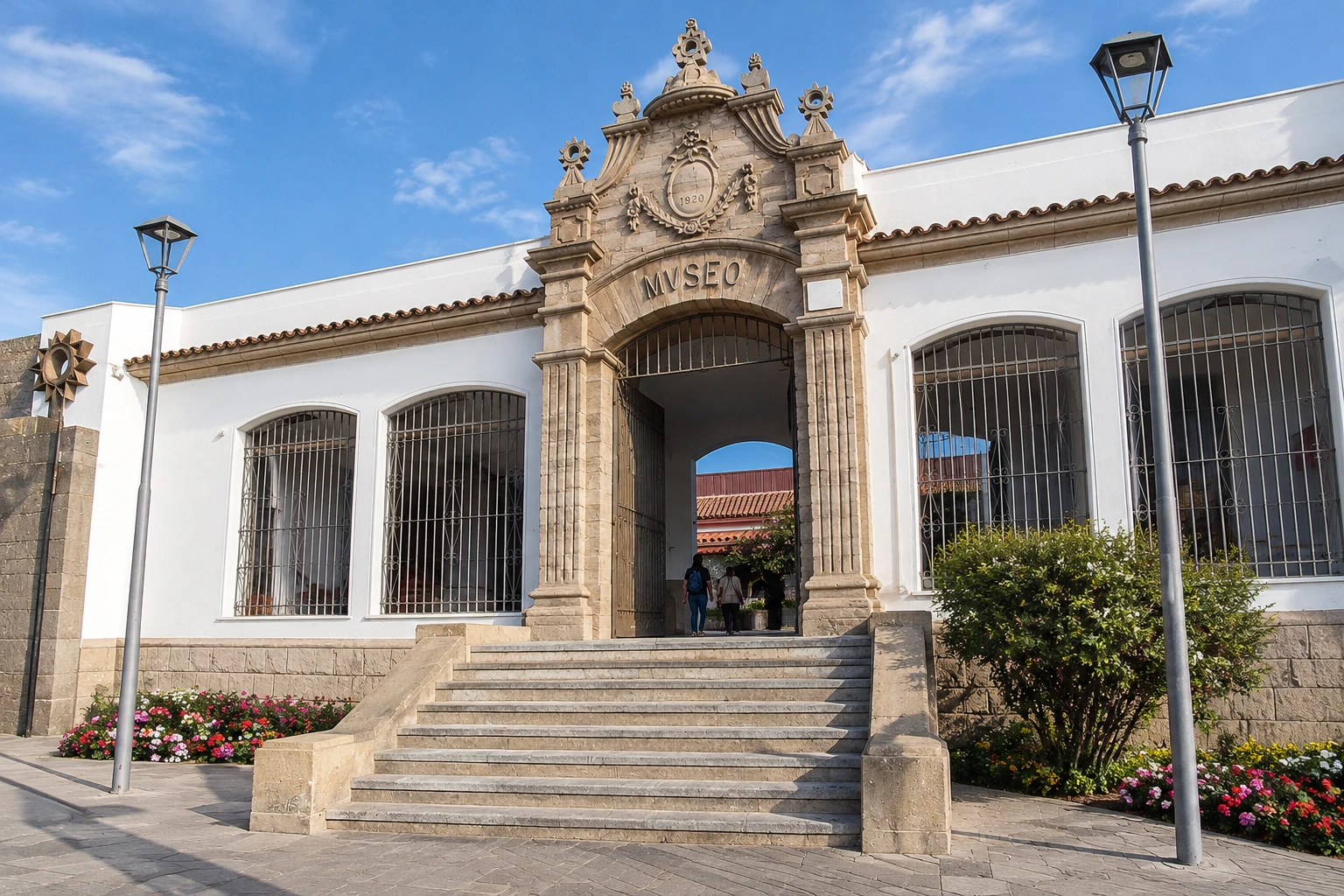
Illustrative images. The pictures in this guide are illustrations based on the real place, not photographs, and may differ from it.
The city
What to expect from La Serena.
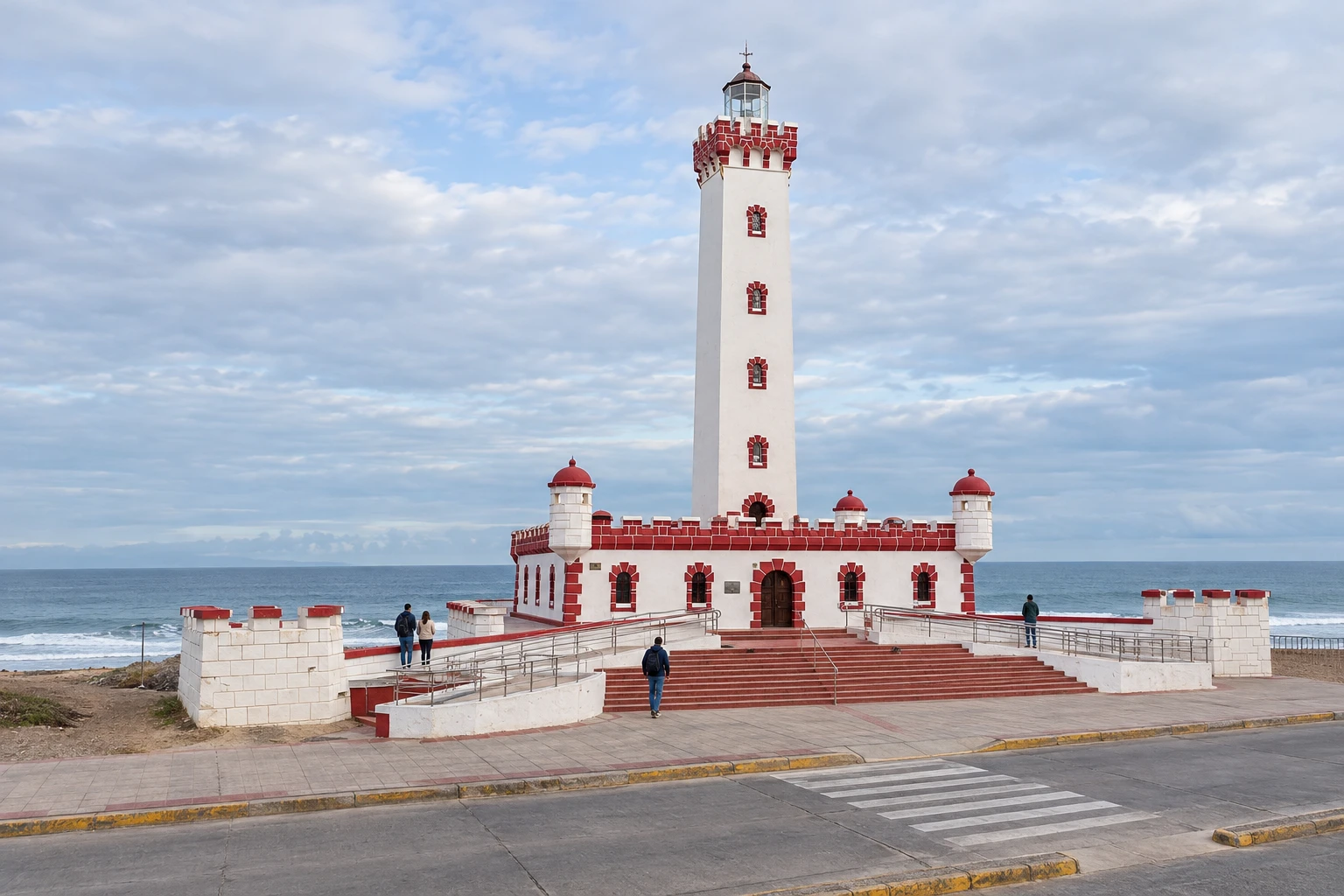
La Serena, capital of the Coquimbo region, was founded in 1544 and is known for its stone churches. In the center are the Plaza de Armas, the Cathedral, the Iglesia de San Francisco, the Museo Arqueológico, the La Recova market and the Parque Japonés Kokoro No Niwa. On the coast are the Faro Monumental and the beaches of the Avenida del Mar; nearby, Coquimbo hosts the Cruz del Tercer Milenio and the Barrio Inglés. To the north, the Reserva Nacional Pingüino de Humboldt offers boat trips.
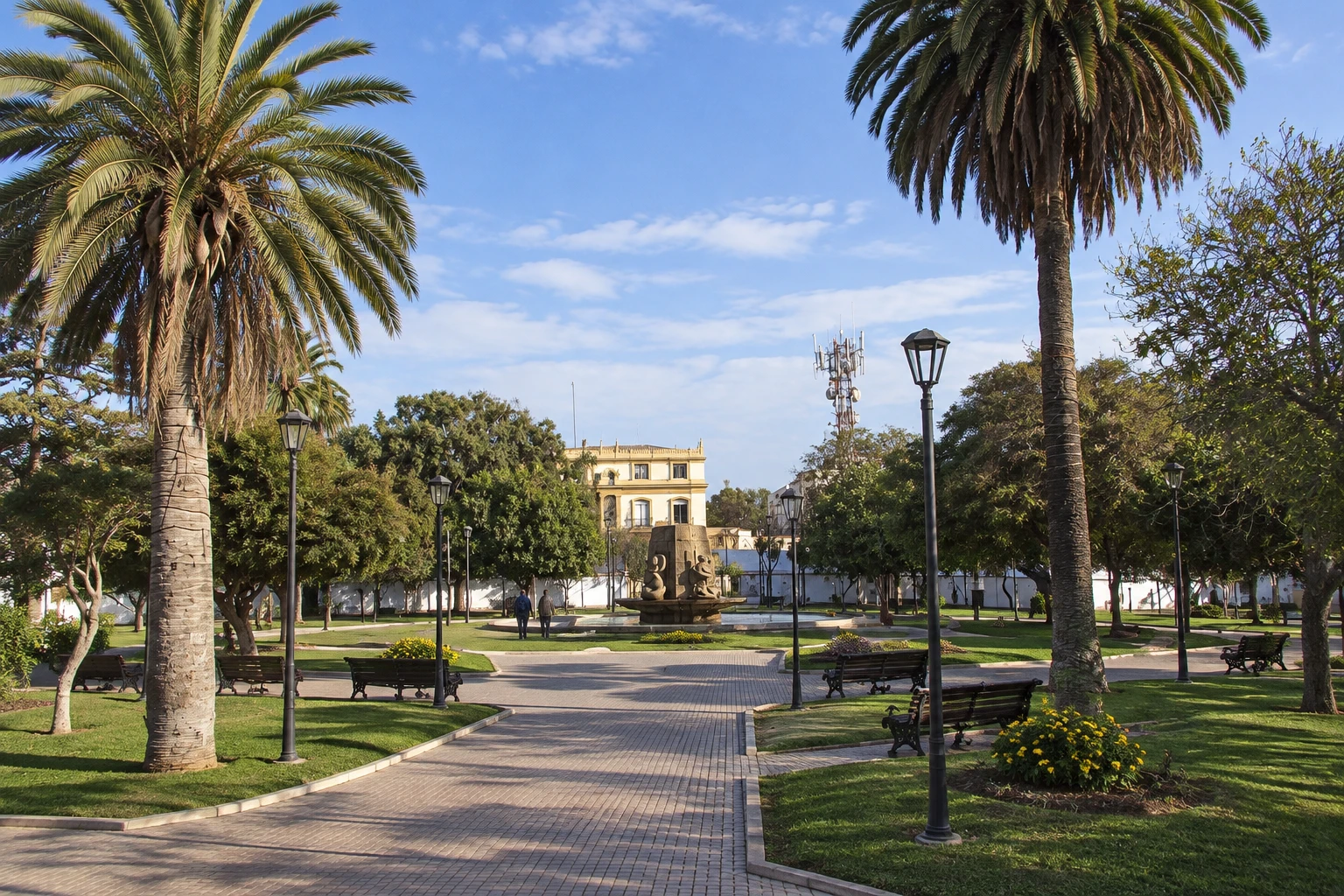
Central square of La Serena, on the site where the city was refounded in 1549. It has a stone fountain, palm trees and jacarandas, and around it are the Catedral, neoclassical public buildings and the Museo Histórico Gabriel González Videla.
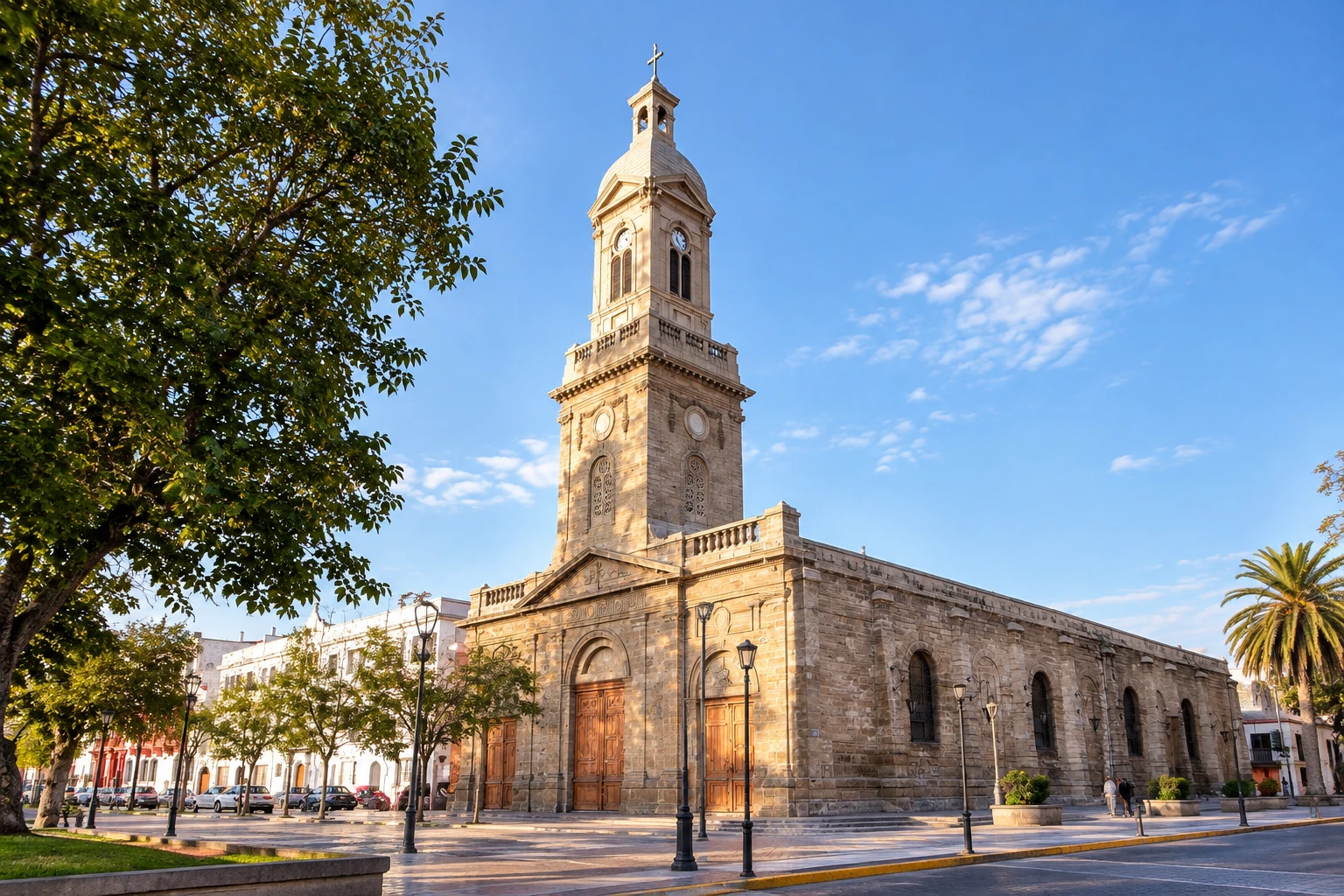
Neoclassical limestone Catedral, begun in 1844 opposite the Plaza de Armas. It houses French stained glass, a large organ and the tomb of the founder Francisco de Aguirre. It is a National Monument.
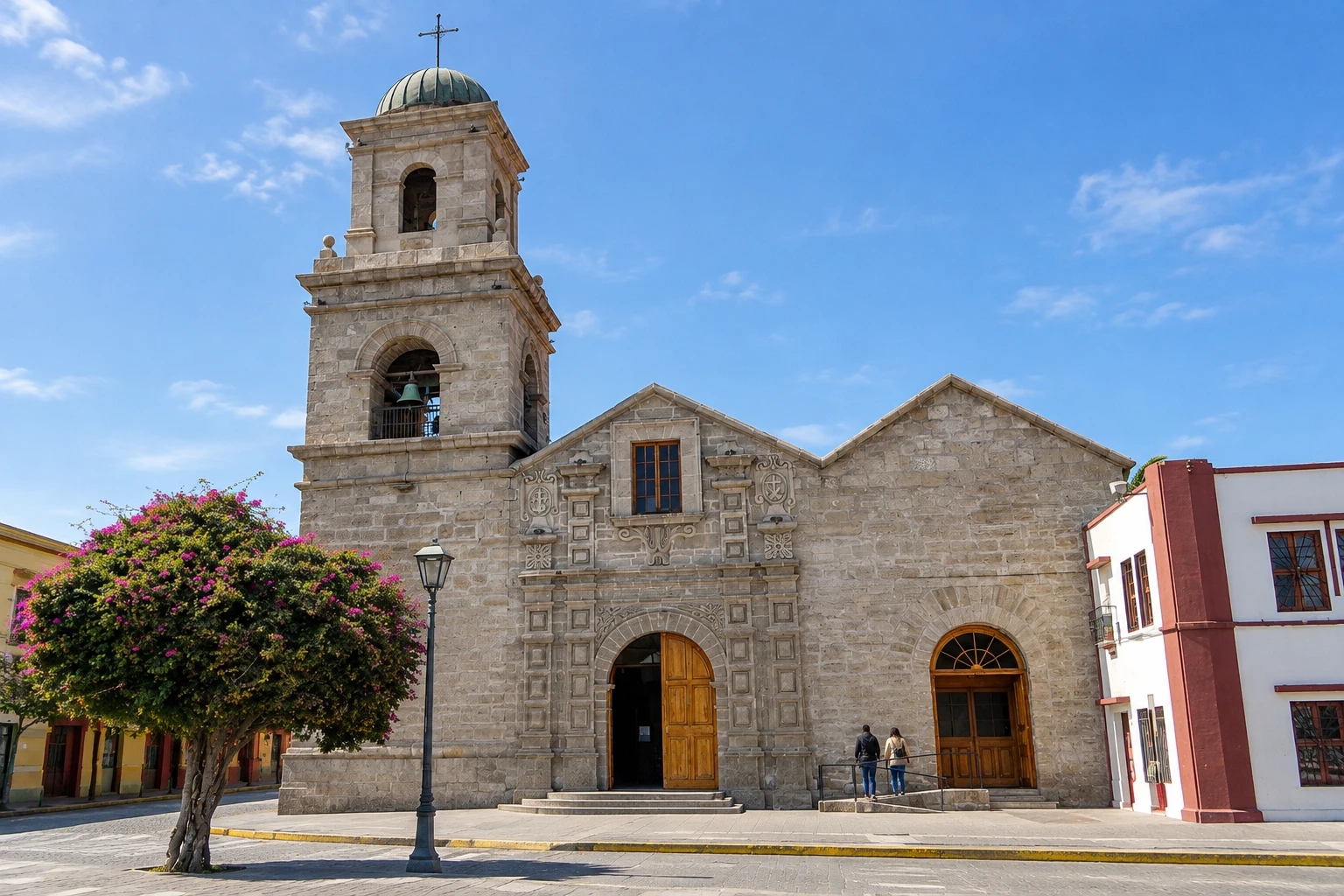
The first stone church of La Serena, completed in 1627 by the Franciscans, a few blocks from the Plaza de Armas. It escaped the pirate-set fire of 1680 and has been a Historic Monument since 1977.
A state museum founded in 1943, with Diaguita pottery, pieces from the El Molle culture and a moai brought from Easter Island. It is housed in a Plano Serena building about 500 meters from Plaza de Armas.
Approximate distances. Check flights and bus, train or boat schedules before you travel.
La Florida airport is about 5 km from the center, with flights from Santiago and northern cities; taxis and transfers depart from the terminal. Connections with Brazil may be direct or with a stopover, depending on season and airline. Confirm before purchasing. Buses from Santiago take six to seven hours via Ruta 5 and arrive at the city bus terminal, about one kilometer from the Plaza de Armas.
How many days
Two days are enough for the historic center, the coast and Coquimbo. Add a third day for the boat trip to the Reserva Nacional Pingüino de Humboldt. La Serena also serves as a base to go to and return from Vicuña in a day, although staying overnight in the valley is more comfortable for those visiting the observatory.
When to go
Summer, from December to March, has sunny days and beaches full of Chilean tourists. Outside that season, mornings often dawn cloudy and the temperature ranges from mild to cool, with little rain from May to August. The sea water is cold in any month.
The seasons shown are the most usual ones; nature doesn't always follow the calendar.
Do you need a car?
In the center and along the waterfront, no: you can get around on foot, by taxi, and by colectivo (fixed‑route shared taxis that carry several passengers). A car is useful for going to Coquimbo at night, for the valley, and for the Reserva Nacional Pingüino de Humboldt, which also has tours with transport leaving the city.
Suggested itinerary
An order that works
Built with the places on this page. No rush: it's paced so you have time to see them.
One day in La Serena
manhã
Historic center and stone churches
Start at the Plaza de Armas and go into the Catedral. Walk to the Iglesia de San Francisco and finish the morning at the Museo Arqueológico, which has Diaguita ceramics and the moai in the courtyard.
tarde
Lunch at the Recova and Jardim Japonês
Have lunch at the upstairs restaurants of the Recova and stroll through the craft stalls and papaya sweets. Then walk to the Parque Japonés Kokoro No Niwa to go around the lake.
fim de tarde
Lighthouse and Avenida del Mar
Go to the Faro Monumental and walk along the sand of the Avenida del Mar as the sun sets over the Pacific.
noite
Dinner in the Barrio Inglés
Head to Coquimbo to dine on fish or seafood in one of the large old houses of the Barrio Inglés, which concentrates the bay's bars.
2 days in La Serena
Day 1
manhã
Churches, museum and square
Do the center circuit: Plaza de Armas, Catedral, Iglesia de San Francisco and Museo Arqueológico, with a coffee break on Prat Street.
tarde
Recova and Parque Japonés
Have lunch at the Recova, buy pisco and lapis lazuli, and spend the mid‑afternoon in the Parque Japonés Kokoro No Niwa.
fim de tarde
Sunset at the Faro Monumental
End the day on the waterfront, in front of the lighthouse, and walk south along the boardwalk.
Day 2
manhã
Cruz del Tercer Milenio
Go early to Coquimbo and climb to the viewpoint of the Cruz del Tercer Milenio, with views of both bays.
tarde
Port and Barrio Inglés
Go down to Coquimbo's port, have lunch at the fish market and walk through the streets of the grand houses in the Barrio Inglés.
noite
Bar in Coquimbo or along the waterfront
Stay for a music bar in the Barrio Inglés or return to dine at a restaurant on the Avenida del Mar.
Check before you go. Opening hours and days change, and places may close for renovations, holidays or events. This itinerary is a suggestion from Cidade Turismo, not a commitment: plan yours by checking directly with each place you intend to visit.
Before you go
Frequently asked questions
How to get to La Serena from Brazil?
Fly to Santiago and take a domestic flight to La Florida airport, about 5 km from the center. Connections with Brazil may be direct or with a stopover, depending on the season and the airline. Check before booking. Another option is the bus from Santiago, six to seven hours.
How many days to stay in La Serena?
Two days for the center, the waterfront and Coquimbo. A third day allows for the boat trip to the islands of the Reserva Nacional Pingüino de Humboldt.
Does La Serena have beaches suitable for swimming?
The Avenida del Mar beaches are wide and have light sand, but the water is cold year‑round. In summer there are lifeguards on several stretches.
Why does La Serena wake up cloudy?
The region's coast has low clouds that form over the cold sea and usually dissipate around midday, especially from April to November.
What is the difference between La Serena and Coquimbo?
They are neighboring and almost contiguous cities. La Serena has the historic center and the churches; Coquimbo is the port, with the Cruz del Tercer Milenio and the Barrio Inglés.


 Brazil
 Antarctica
 Argentina
 Bolivia
 Colombia
 Ecuador
 Falkland Islands (Malvinas)
 French Guiana
 Guyana
 Paraguay
 Peru
 Suriname
 Uruguay
 Venezuela
 Austria
 Belgium
 Croatia
 Denmark
 Finland
 France
 Germany
 Greece
 Hungary
 Iceland
 Ireland
 Italy
 Luxembourg
 Norway
 Poland
 Portugal
 Slovakia
 Slovenia
 Spain
 Sweden
 Switzerland
 the Czech Republic
 the Netherlands
 the United Kingdom
 Turkey
 Bermuda
 Canada
 Greenland
 Mexico
 Saint Pierre and Miquelon
 the United States
 the Dominican Republic
 Japan
 Egypt
 South Africa
 Australia
 Fiji
 New Zealand
 Papua New Guinea